View allAll Photos Tagged precise
One of my favorite female Northern Harriers making a very precise approach to her postal perch in the coastal wetland.
“We cannot tell the precise moment when friendship is formed. As in filling a vessel drop by drop, there is at last a drop which makes it run over; so in a series of kindnesses there is at last one which makes the heart run over.” [Ray Bradbury, Fahrenheit 451]
It was momentous to leave North Saanich this time, knowing what we do. The beauty of friendship is often tinged with sadness. And that in itself is a far more beautiful thing than indifference.
looking at the back of Evelyn and Andrew's house
No matter how precise the manufacture of a mechanical instrument, proper servicing and regular use is necessary to keep it running smoothly. This is certainly the case with my vintage Leica IIf from 1952.
It is more than likely that this old camera has not been used to take photographs in decades. So what could go wrong?
Recently our fully mechanical Dugena clock manufactured in East Germany in 1960 simply stopped working. It is now undergoing a proper service. It appears the problem is simply one of lubrication. Over time the lubricants wear out and need to be replaced. Mechanically the clock is fine.
There are two problems with the camera that you can see in these samples: (1) One of the shutter curtains appears to be closing fractionally late and shows up "ghosting" in the sky. (2) Those little spots of light on the dark wood panels are telltale signs of pinholes that have formed in the cloth shutter curtains allowing light leaks onto the negative.
Tyvek (yes that building stuff) quilt blocks by Andre Mowbray currently on exhibit at Fruitlands Museum in Harvard, Massachusetts
121 in 2021
#73 - Precision
Thank you in advance for your views, comments, and faves. They are much appreciated!
Oh my little précises baby …..So you had to find out the hard way…..Love hurts ….So very much…..And now look at you with your heart all broken……But now sweetheart, Mother is by your side ….Now Come ….. Let me wipe away you’re heartbroken tears …. And ease your mind Billie Jean…… I too have had my heart broken, and like you….I thought it would never heal …..But soon …pretty soon…You will start to feel better…..As I did……. And yes there will be other favourite toys that you will have……that heads don’t fall off when you are playing with them…..Now…. will look and see what Di has done ….Why she has darned teddy head right back on..<3 <3 <3 …..So let’s see the BJ smile again …..xxxx
Ulak Tartysh is team riding horse game. It consist in a wrestle for possession of the headless carcass of a goat. The two teams of riders attempt to deliver it across the opposition s goal line, or into the opposition s goal, made with a big tub or a circle marked on the ground.
The goat is 35 kilogs, and the men on the horses carry it with 1 hand!
© Eric Lafforgue
© All rights reserved — any use, reproduction, or curation requires prior written permission via Flickr mail.
A close-up study taken in mid-February after extensive technical experimentation. Working with a single frame or a few shots required precise focusing, careful light control, and patience in cold conditions; this reflects the quiet resilience of the season's first flowers.
Winter study – Snowdrop (Galanthus nivalis)
Delicate in structure and long associated with snow, the snowdrop is often chosen as a subject for artistic study. Though fragile in appearance, it carries a quiet resilience. When photographing them, I always feel a sense of urgency — to capture their grace before they bow to the earth.
In close-up work, there is a particular excitement in catching the natural droplets formed after a freezing night, shimmering under the first light of morning. For those who love photography, this moment feels like a quiet reward.
For nearly three weeks, Leicestershire lay beneath grey skies and persistent rain. Checking the 14-day forecast on BBC did little to lift my spirits. The delicate white petals, especially when shaken by strong winds, begin to show signs of wear after about two weeks.
Yesterday morning, I checked the conditions once more. The car windows were frozen. With my Nikon Z 8 fitted with a 105mm lens, tripod and reflector packed, I headed toward Abbey Park. The temperature display showed below zero.
We all know the effect of soft early sunlight on snowdrop photography. For nearly two and a half hours, kneeling on the cold ground, I focused solely on the Z8 monitor.
Last night I chose rest.
This morning, clarity.
Among nine frames, a few stood apart — not because they were louder, but because they felt different.
A subtle shift in framing, a gentler control of focus, and a deeper awareness of light.
Growth, I believe, hides in these quiet refinements.
Snowdrop (Galanthus nivalis) is one of the earliest flowering plants across United Kingdom, often emerging from January to early March despite frost and low light. It is widely associated with resilience and the quiet transition from winter to early spring. Snowdrops thrive in woodland edges, gardens, and damp meadows, frequently appearing before most insects become active. Because of their delicate white petals and drooping bell shape, they are a favourite subject for close-up and macro photographers during the late winter season.
I've captured some unforgettable moments with my camera, and I hope you feel the same joy viewing these images as I did while creating them.
Thank you for visiting my gallery whether you leave a comment, add a favorite, or simply take a quiet moment to look around. Your presence and support truly mean a lot to me. I wish you good luck and beautiful light in all your endeavors.
© All rights belong to R. Ertuğ. Please refrain from using these images without my express written permission. If you are interested in purchasing or licensing any photograph, feel free to contact me via Flickr mail.
Tech Notes
Camera: Nikon Z 8 with Really Right Stuff Base Plate
Lens: Nikon AF-S Micro Nikkor 105mm f/2.8G IF-ED VR
Support: Gitzo GIGT0545T Traveler Series Carbon Fiber Tripod
Tripod Setup: Really Right Stuff BH-25 Ball Head with Compact Lever-Release Clamp
Stabilization: VR enabled when applicable
Aperture: Mostly f/5.6 – f/8
Format: Converted from RAW to JPEG
Your comments and constructive criticism are always welcome.
Thank you for stopping by and taking the time to explore. 😊
Primavera, is a large panel painting in tempera paint by the Italian Renaissance painter Sandro Botticelli made in the late 1470s or early 1480s (datings vary). It has been described as "one of the most written about, and most controversial paintings in the world", and also "one of the most popular paintings in Western art".
The painting depicts a group of figures from classical mythology in a garden, but no story has been found that brings this particular group together. Most critics agree that the painting is an allegory based on the lush growth of Spring, but accounts of any precise meaning vary, though many involve the Renaissance Neoplatonism which then fascinated intellectual circles in Florence. The subject was first described as Primavera by the art historian Giorgio Vasari who saw it at Villa Castello, just outside Florence, by 1550.
Although the two are now known not to be a pair, the painting is inevitably discussed with Botticelli's other very large mythological painting, The Birth of Venus, also in the Uffizi. They are among the most famous paintings in the world, and icons of the Italian Renaissance; of the two, the Birth is even better known than the Primavera. As depictions of subjects from classical mythology on a very large scale, they were virtually unprecedented in Western art since classical antiquity.
The history of the painting is not certainly known; it may have been commissioned by one of the Medici family, but the certainty of its commission is unknown. It draws from a number of classical and Renaissance literary sources, including the works of the Ancient Roman poet Ovid and, less certainly, Lucretius, and may also allude to a poem by Poliziano, the Medici house poet who may have helped Botticelli devise the composition. Since 1919 the painting has been part of the collection of the Uffizi Gallery in Florence, Italy.
The painting features six female figures and two male, along with a cupid, in an orange grove. The movement of the composition is from right to left, so following that direction the standard identification of the figures is: at far right "Zephyrus, the biting wind of March, kidnaps and possesses the nymph Chloris, whom he later marries and transforms into a deity; she becomes the goddess of Spring, eternal bearer of life, and is scattering roses on the ground." Chloris the nymph overlaps Flora, the goddess she transforms into.
In the centre (but not exactly so) and somewhat set back from the other figures stands Venus, a red-draped woman in blue. Like the flower-gatherer, she returns the viewer's gaze. The trees behind her form a broken arch to draw the eye. In the air above her a blindfolded Cupid aims his bow to the left. On the left of the painting the Three Graces, a group of three females also in diaphanous white, join hands in a dance. At the extreme left Mercury, clothed in red with a sword and a helmet, raises his caduceus or wooden rod towards some wispy gray clouds.
The interactions between the figures are enigmatic. Zephyrus and Chloris are looking at each other. Flora and Venus look out at the viewer, the Cupid is blindfolded, and Mercury has turned his back on the others, and looks up at the clouds. The central Grace looks towards him, while the other two seem to look at each other. Flora's smile was very unusual in painting at this date.
The pastoral scenery is elaborate. There are 500 identified plant species depicted in the painting, with about 190 different flowers, of which at least 130 can be specifically identified. The overall appearance, and size, of the painting is similar to that of the millefleur ("thousand flower") Flemish tapestries that were popular decorations for palaces at the time.
These tapestries had not caught up by the 1480s with the artistic developments of the Italian Renaissance, and the composition of the painting has aspects that belong to this still Gothic style. The figures are spread in a rough line across the front of the picture space, "set side by side like pearls on a string". It is now known that in the setting for which the painting was designed the bottom was about at eye level, or slightly above it, partly explaining "the gently rising plane" on which the figures stand.
The feet of Venus are considerably higher than those of the others, showing she is behind them, but she is at the same scale, if not larger, than the other figures. Overlapping of other figures by Mercury's sword and Chloris' hands shows that they stand slightly in front of the left Grace and Flora respectively, which might not be obvious otherwise, for example from their feet. It has been argued that the flowers do not grow smaller to the rear of the picture space, certainly a feature of the millefleur tapestries.
The costumes of the figures are versions of the dress of contemporary Florence, though the sort of "quasi-theatrical costumes designed for masquerades of the sort that Vasari wrote were invented by Lorenzo de' Medici for civic festivals and tournaments." The lack of an obvious narrative may relate to the world of pageants and tableaux vivants as well as typically static Gothic allegories.
Various interpretations of the figures have been set forth, but it is generally agreed that at least at one level the painting is "an elaborate mythological allegory of the burgeoning fertility of the world." It is thought that Botticelli had help devising the composition of the painting and whatever meanings it was intended to contain, as it appears that the painting reflects a deep knowledge of classical literature and philosophy that Botticelli is unlikely to have possessed. Poliziano is usually thought to have been involved in this, though Marsilio Ficino, another member of Lorenzo de' Medici's circle and a key figure in Renaissance Neoplatonism, has also often been mentioned.
One aspect of the painting is a depiction of the progress of the season of spring, reading from right to left. The wind of early Spring blows on the land and brings forth growth and flowers, presided over by Venus, goddess of April, with at the left Mercury, the god of the month of May in an early Roman calendar, chasing away the last clouds before summer. As well as being part of a sequence over the season, Mercury in dispelling the clouds is acting as the guard of the garden, partly explaining his military dress and his facing out of the picture space. A passage in Virgil's Aeneid describes him clearing the skies with his caduceus. A more positive, Neoplatonist view of the clouds is that they are "the benificent veils through which the splendour of transcendent truth may reach the beholder without destroying him."
Venus presides over the garden – an orange grove (a Medici symbol). It is also the Garden of the Hesperides of classical myth, from which the golden apples used in the Judgement of Paris came; the Hellenistic Greeks had decided that these were citrus fruits, exotic to them. According to Claudian, no clouds were allowed there. Venus stands in front of the dark leaves of a myrtle bush. According to Hesiod, Venus had been born of the sea after the semen of Uranus had fallen upon the waters. Coming ashore in a shell she had clothed her nakedness in myrtle, and so the plant became sacred to her. Venus appears here in her character as a goddess of marriage, clothed and with her hair modestly covered, as married women were expected to appear in public.
The Three Graces are sisters, and traditionally accompany Venus. In classical art (but not literature) they are normally nude, and typically stand still as they hold hands, but the depiction here is very close to one adapting Seneca by Leon Battista Alberti in his De pictura (1435), which Botticelli certainly knew. From the left they are identified by Edgar Wind as Voluptas, Castitas, and Pulchritudo (Pleasure, Chastity and Beauty), though other names are found in mythology, and it is noticeable that many writers, including Lightbown and the Ettlingers, refrain from naming Botticelli's Graces at all.
Botticelli's Pallas and the Centaur (1482) has been proposed as the companion piece to Primavera.
Cupid's arrow is aimed at the middle Grace — Chastity, according to Wind — and the impact of love on chastity, leading to a marriage, features in many interpretations. Chastity looks towards Mercury, and some interpretations, especially those identifying the figures as modelled on actual individuals, see this couple as one to match Chloris and Zephyrus on the other side of the painting.
In a different interpretation the Earthy carnal love represented by Zephyrus to the right is renounced by the central figure of the Graces, who has turned her back to the scene, unconcerned by the threat represented to her by Cupid. Her focus is on Mercury, who himself gazes beyond the canvas at what many believe hung as the companion piece to Primavera: Pallas and the Centaur, in which "love oriented towards knowledge" (embodied by Pallas Athena) proves triumphant over lust (symbolized by the centaur).
The basic identification of the figures is now widely agreed,but in the past other names have sometimes been used for the females on the right, who are two stages of the same person in the usual interpretation. The woman in the flowered dress may be called Primavera (a personification of Spring), with Flora the figure pursued by Zephyrus. One scholar suggested in 2011 that the central figure is not Venus at all, but Persephone.
In addition to its overt meaning, the painting has been interpreted as an illustration of the ideal of Neoplatonic love popularized among the Medicis and their followers by Marsilio Ficino. The Neoplatonic philosophers saw Venus as ruling over both Earthly and divine love and argued that she was the classical equivalent of the Virgin Mary; this is alluded to by the way she is framed in an altar-like setting that is similar to contemporary images of the Virgin Mary. Venus' hand gesture of welcome, probably directed to the viewer, is the same as that used by Mary to the Archangel Gabriel in contemporary paintings of the Annunciation.
Punning allusions to Medici names probably include the golden balls of the oranges, recalling those on the Medici coat of arms, the laurel trees at right, for either Lorenzo, and the flames on the costume of both Mercury (for whom they are a regular attribute) and Venus, which are also an attribute of Saint Laurence (Lorenzo in Italian). Mercury was the god of medicine and "doctors", medici in Italian. Such puns for the Medici, and in Venus and Mars the Vespucci, run through all Botticelli's mythological paintings.
The origin of the painting is unclear. Botticelli was away in Rome for many months in 1481/82, painting in the Sistine Chapel, and suggested dates are in recent years mostly later than this, but still sometimes before. Thinking has been somewhat changed by the publication in 1975 of an inventory from 1499 of the collection of Lorenzo di Pierfrancesco de' Medici.
The 1499 inventory records it hanging in the city palace of Lorenzo di Pierfrancesco de' Medici and his brother Giovanni "Il Popolano". They were the cousins of Lorenzo de' Medici ("Lorenzo il Magnifico"), who was effectively the ruler of Florence, and after their father's early death had been his wards. It hung over a large lettuccio, an elaborate piece of furniture including a raised base, a seat and a backboard, probably topped with a cornice. The bottom of the painting was probably at about the viewer's eye-level, so rather higher than it is hung today.
In the same room was Botticelli's Pallas and the Centaur, and also a large tondo with the Virgin and Child. The tondo is now unidentified, but is a type of painting especially associated with Botticelli. This was given the highest value of the three paintings, at 180 lire. A further inventory of 1503 records that the Primavera had a large white frame.
In the first edition of his Life of Botticelli, published in 1550, Giorgio Vasari said that he had seen this painting, and the Birth of Venus, hanging in the Medici country Villa di Castello. Before the inventory was known it was usually believed that both paintings were made for the villa, probably soon after it was acquired in 1477, either commissioned by Lorenzo di Pierfrancesco or perhaps given to him by his older cousin and guardian Lorenzo de' Medici. Rather oddly, Vasari says both paintings contained female nudes, which is not strictly the case here.
Most scholars now connect the painting to the marriage of Lorenzo di Pierfrancesco de' Medici. Paintings and furniture were often given as presents celebrating weddings. The marriage was on 19 July 1482, but had been postponed after the death of the elder Lorenzo's mother on 25 March. It was originally planned for May. Recent datings tend to prefer the early 1480s, after Botticelli's return from Rome, suggesting it was directly commissioned in connection with this wedding, a view supported by many.
Another older theory, assuming an early date, suggests the older Lorenzo commissioned the portrait to celebrate the birth of his nephew Giulio di Giuliano de' Medici (who later became Pope), but changed his mind after the assassination of Giulo's father, his brother Giuliano in 1478, having it instead completed as a wedding gift for Lorenzo di Pierfrancesco.
It is frequently suggested that Lorenzo di Pierfrancesco is the model for Mercury in the portrait, and his bride Semiramide represented as Flora (or Venus). In older theories, placing the painting in the 1470s, it was proposed that the model for Venus was Simonetta Vespucci, wife of Marco Vespucci and according to popular legend the mistress of Giuliano de' Medici (who is also sometimes said to have been the model for Mercury); these identifications largely depend on an early date, in the 1470s, as both were dead by 1478. Simonetta was the aunt of Lorenzo's bride Semiramide. Summarizing the many interpretations of the painting, Leopold Ettlinger includes "descending to the ludricous – a Wagnerian pantomime enacted in memory of the murdered Giuliano de' Medici and his beloved Simonetta Vespucci with the Germanic Norns disguised as the Mediterranean Graces."
Whenever this painting and the Birth of Venus were united at Castello, they have remained together ever since. They stayed in Castello until 1815, when they were transferred to the Uffizi. For some years until 1919 they were kept in the Galleria dell'Accademia, another government museum in Florence. Since 1919, it has hung in the Uffizi Gallery in Florence. During the Italian campaign of World War Two, the picture was moved to Montegufoni Castle about ten miles south west of Florence to protect it from wartime bombing.
It was returned to the Uffizi Gallery where it remains to the present day. In 1978, the painting was restored.[66] The work has darkened considerably over the course of time
First off, I'm glad this was accepted. And second off, I'm throwing this in as a scene from the future.
-----------------------------
Earth: Home of Peter Quill
Quill landed the ship.
"Ok Groot, Rocket. Time to get off."
"What the hell are we even doing here Quill?" asked Rocket.
"I am Groot?"
"We're here to deliver a message."
Quill took out a photo.
"To be precise, this message."
He handed the photo to Rocket.
"Is that you?"
"Yep. Before I started this whole thing. 5 years ago."
"Shit Quill. Why do you still have this?"
Quill looked at the house.
"That's a good question."
Quill hopped out of the Milano. He walked over to the door, and opened it.
"I am Groot."
"Yes we lock doors on Earth Groot. This one.. doesn't. He doesn't need to."
"And why's that Quill?" asked Rocket in a sarcastic voice.
"He's not a normal man...."
Quill dropped the photo on the ground.
"I am Groot?"
"I'm dropping it on the ground because it will remind him."
"I am Groot?"
"Of us. The Guardians. Remember a few years back when we stopped here? We pretended I was his friend Harry?"
"I am Groot."
"Yeah, great you remember."
"Ya know what else I remember?"
Quill looked at Rocket.
"I thought rodents couldn't remember. It's a disability they have... called, Not Human?"
"Why you......"
Rocket lunged at Quill, but Groot caught him mid air.
"I am Groot."
"Lemme at him! Come on one punch!"
"I... AM....GROOT."
"Yeah. Like the big guy said, no fighting."
"Ya know what I remember Quill?"
Groot put Rocket down.
"I remember you abandoning your crew. People died that day Quill. Don't forget that. The only reason I'm here... is to do good for NOVA Core."
Quill put his hand to his mouth, and then replied, "I know. I know what happened. I knew what was going to happen."
Rocket and Groot looked at each other.
"Then... why the hell did you leave? If you knew you could have helped...."
"Rocket. You don't understand. I can't tell you. If I did... many more would die."
"I am Groot."
"Yeah. We have the right to know." said Rocket.
Quill sat down.
"Alright... don't say I didn't warn you."
Nowhere: 5 years ago
Quill got into the ship. He walked to the front where he saw Cosmo waiting.
"Yo Quill. You ready?"
"Yeah. I'll go get the team."
He looked at a red, slimy object.
"Just... make sure that doesn't go anywhere."
Cosmo nodded, and went back to playing Tetris on the computer screen.
Quill hopped off the Milano. He was proud of his ride. It had gotten them through 204 missions together. Even stopping Thanos at one point. He walked to a door, and put a key card up to it.
"Quill, Peter. Enter."
Quill entered, and went to the training room. There he saw Drax, Vell, and Victory in there. They all were beating each other up.
He opened the door.
"Drax! Stop fighting with you're sister!"
"I'm sorry?" Drax said confused. "She is not related to me."
Vell just laughed.
"It was a joke."
"Ah... I see."
Major Victory got up and walked with Quill.
"They are learning. And well." Victory said.
"And how about yourself?"
"Fine. We're becoming a team.... just like you said we would."
"Alright. Well, we better go and head to the ship. We just got intell on..."
"Quill." Eric was calling his name.
Quill looked at Victory.
"Head to the ship. I'll be there soon."
Victory nodded, and told Drax and Vell to head to the ship. Quill walked towards Eric. Eric was smiling. For some unknown reason he was smiling. A major threat was coming to destroy Zandar, and he was smiling.
"Quill. I need to talk to you."
"Alright, but make it quick. We gotta go."
"I intend to make it quick."
They walked into the office that was once Eric's fathers. He had retired when Quill became the leader of the Guardians. He had said that he was never more proud.
Eric sat down at the desk.
"Quill, I'm going to make this quick."
"Good."
"But... you won't like it."
"Well I usually never do... if you're involved."
Eric straightened himself up.
"Have you ever heard of... blackmail?"
Quill laughed.
"Yeah. It's called credit card companies."
Eric did not laugh. He only smiled.
"Good. So you'll know what I'm about to do."
Quill ceased to laugh. He looked behind him to notice the door was locked, and the camera was off.
"Eric..."
"Listen Quill."
When Quill turned around he could see Eric holding a gun under his desk.
"I know you and I have had it rough. You're past... my future. It's all going to come into play here."
Quill knew he could take the gun from Eric two weeks ago. But now, since he had the full power of Nova... he could do nothing.
"The Guardians are a fantastic team... really they are. I like what you've done to the program. But... there's a bump in the road."
"What bump?"
"See.... you're the problem Quill. I don't like you. I never will. But you can do me a favor. I mean, you are the leader of the Guardians, and practically the Core."
Quill felt his palms getting sweaty.
"What you're going to do is... well, how to I say this." Eric said laughing.
"Just... just say it."
"You're going to kill your team."
Quill just took in those words. Kill you're team. Eric must have been crazy. Why would he want to do that?
"I'm sure you'll succeed. You were an excellent officer."
Quill wondered why. Why did he want him to do this?
"If I don't?"
"I'll make the officers of Nova Core kill every living thing on Zandar."
Eric could do that. With some convincing, he could command and army. He was the leader of the Core.
"Why do you want to me to kill them?"
"See, I don't like you Quill. And if you assembled you're team, they have to go. Good people, but I can't work with them."
"Why would you work with them?"
"Well, I would be the new leader of the Guardians obviously."
"Why?"
"Well, I would have everything. Power, fame, glory. Everything my father gave to you."
Quill was horrified with Eric. Why would he want this?
"I would assemble my team of Guardians. And then you would go to prison, and tortured to death. As you will kill them."
"No... I won't."
"Well then. Let me just announce that..."
"NO! Wait. I'll do it. I'll... do what you want."
"Excellent. Now when you go out to do your mission, just... kill them there."
Quill nodded. There was nothing he could do. He even thought of letting Eric kill him, but there was no point. Eric would have killed the team anyways. Quill could save them though. He was Star Lord after all.
He went back to the Milano. Everyone was on board. Quill climbed to the cockpit. There, Cosmo was waiting for him.
"Ready?"
"Yeah. I need you to help me with something though."
Quill told Cosmo everything. Cosmo demanded they storm into Eric's office and kill him themselves.
"No, that won't do. He would just get the Core Officers on us. I have an idea though. So just here me out."
Quill explained that he would get everyone off the ship before they reached their destinations. They would not be able to got to Zandar or Nowhere anymore. Quill would fly the Milano into the threat, hence destroying the ship, and killing him in the process. Cosmo tried to talk him out of it, but Quill was certain it was the only way. Eric had put a chip in Quill's suit and the Milano, which could view them doing the crime. Good thing it didn't have sound.
Cosmo finally agreed. He put the ship in drive, and started off. Quill was ready to die. He had to be.
When they got to the point of where Quill was going to tell everyone to get off, Cosmo stopped him.
"Lets take them out in groups.. so they won't be alone."
Quill nodded, as Cosmo set them into groups. Vell, Drax, and Victory all went together. Groot, Rocket, Venom and Cosmo were the other group. Cosmo didn't tell them what Eric had said. It was best left alone. Before anyone could do anything a mist started to appear. Adam Warlock had created it. He went up to Quill. The others in the back were almost asleep.
Adam Warlock approached Quill.
"I can read thoughts Peter."
"Well then. Great to know."
"I know you have no choice Peter."
"Yeah. So get in the back with the others and jump off."
"I have a better idea. You're a good man Quill. They'll understand. You need to stay alive."
"Look, Adam, someone has to die."
"Yes. The team."
Quill was shocked. Adam was with Eric. He was going to kill the team. Adam was the sense of right and wrong! And he thought this was right?
"Adam! What are you talking about! They don't have to die.."
"Quill. Please. Trust me."
With that Adam went to Victory. With one thrust, he drove a whole through his heart.
Quill ran to stop him, but it was no use. Adam pushed him out of the way. Quill still kept trying, and eventually got to the release button. He pressed it, and with that, all the members went flying into space. Adam shouted, and grabbed Vell, and Drax. Quill floated towards Adam, and managed to free Vell. He turned on his jetpack and tried to fly away, but Adam used his powers to return Vell to him. Quill stared in horror as Adam drove his fist through her also. He saw the blood come out of her mouth as he did so. Quill started to tear up. The one love of his life. Gone. Then Adam did the same to Drax. Quill dove at Adam, and pushed him back to the ship. He held off Adam, until he knew the other members could not have been harmed. Then, he kicked Adam through the front of the Milano. Quill flew off thinking of what would happen to Zandar.
Earth: Present Day
After Quill had finished explaining, Groot and Rocket were fired up. They were angry, sad, and horrified at the same time.
"I AM GROOT!"
"Yeah what he said!"
"Look, guys... Eric might still plan to do this. So just do what he says. Or the fate of Zandar might be altered."
--------------------------------------------------------------------------------------
Very loooooooonng issue to start with. But I wanted to tell the story of what happened to the other members. So there you have it.
San Lorenzo Maggiore is a church in Naples, Italy. It is located at the precise geographic center of the historic center of the ancient Greek-Roman city, at the intersection of via San Gregorio Armeno and via dei Tribunali. The name "San Lorenzo" may also refer to the new museum now opened on the premises, as well as to the ancient Roman market beneath the church itself, the Macellum of Naples.
The church's origins derive from the presence of the Franciscan order in Naples during the lifetime of St Francis of Assisi, himself. The site of the present church was to compensate the order for the loss of their earlier church on the grounds where Charles I of Anjou decided to build his new fortress, the Maschio Angioino in the late 13th century.
San Lorenzo actually is a church plus monastery. The new museum takes up the three floors above the courtyard and is given over to the entire history of the area that centers on San Lorenzo, beginning with classical archaeology and progressing to a chart display of historical shipping routes from Naples throughout Magna Grecia and the Roman Empire. The museum provides a detailed account of the local "city hall" that was demolished in order to put up the church in the 13th century and continues up past the Angevin period and into more recent history.
Beneath San Lorenzo, about half of an original Roman market has been excavated.The site has been open since 1992, the result of 25 years of painstaking excavation. The market place is the only large-scale Greek-Roman site excavated in the downtown area.
In this church Boccaccio met his beloved Fiammetta (1338) (Wikipedia)
Scan of a slide taken in November 1990; before precising the history of this vehicle, one of the odd traditions of the K&ESR's C&W Department was that Dave Dine cooked a Christmas Dinner for his fellow volunteers. I say odd, because this always seemed a slightly un-Dave thing to do but he made a fair stab at roast turkey with all the trimmings and I recall sometimes some of his work colleagues were invited too. Virtually all of us had to drive so it was a fairly abstemiousness affair (Gordon Young and Pete Carey never returned to 'work' if they had even as much as a half at lunchtime) and although memory plays tricks on me, I think the 1990 venue was this carriage. Also, if memory serves me right the interior was a bit odd, I recall Gordon describing it as a 'Formica Palace'. All would have seemed well in the world of C&W at that point; several Mark Ones were available for general services, the 'Wealden Pullman' wine and dine set had been maintained for yet another profitable season and progress was being made with the Maunsells and the vintage carriages..
This vehicle was built in 1931 at Eastleigh as a restriction '0' Corridor Composite for the restricted gauge Hasting line. It passed into Departmental Stock in 1962 as TDS70155 and arrived at Tenterden in 1990 becoming No. 91 in the K&ESR stock book. Presumably whilst we were scoffing our turkey we assumed this carriage would one day see service on the K&ESR (why else would Paul Ramsden have green lighted the purchase). However, it had move to Robertsbridge by 1995 and suffered fire damage at one end. It has since been reunited with Paul at Rampart Engineering and is most likely currently at Barrow Hill.
Buddy seems to be a very German male red squirrel. It appears she is checking if that branch has grown vertically plumb and horizontal 😂 (Squirrels-2019-9155.jpg)
This sunset was originally lacking color[well too much color to be precise] but the Color Selection tool I turned into this. But it you are wondering when I took this shot, it was taken on the way to Mexico on Winter break when I had just bought my Cybershot. I am starting to like framing my new pics
A CROSS marks the precise boundary between the town Kalampaka and the village Kastraki, Greece. The prominent lamdmark is located beneath the rock formation Bádovas in Meteora—one of UNESCO world heritage sites.
The Holy Symbol also defines a clear-cut boundary between Truth (pictorially represented by Clarity) and Propaganda (represented by Distortion):
In the fine art shot, the only clear part is the Cross and the Cross alone, because it represents truth, faith and heavens; the farther away from the Cross the surroundings are, the more distorted they get by a hell-like VORTEX of lies, deceit and sin.
Deceit, propaganda and lies lead to a Breakdown in communication. The latter is HELL (defined as the state of lack of communication or the state of being distanced); so, hell should be thought as a “state of being” rather than as a place. The Cross symbolizes sacrifice—the Almighty God’s power to “deliver us from evil.”
+ ✞
We are staying north of the border today, in Portstewart to be precise. Having had a good look at the photo I am struck by the three hard working (is that the correct word?) men on the middle pier, they seem to be very relaxed and laid back. I am expecting a very precise date range for this photo.
Among the commetary, insights and dating suggestions for this image is confirmation (from the StreetView provided by B-59) that the buildings in the middle of this image have been replaced or otherwise unrecognisable. Thankfully the buildings on the left of Harbour Place and the right of the Promenade remain. One of the other main takeaways from today is how excited we all are for tomorrow's launch of the Photo Detectives exhibition One more sleep indeed :)
Photographer: Robert French
Collection: Lawrence Photograph Collection
Date: Catalogue range c.1880-1900
NLI Ref: L_ROY_05579
You can also view this image, and many thousands of others, on the NLI’s catalogue at catalogue.nli.ie
Small and precise. Most of its prey is taken in flight, as it moves with ease through bare branches and dense thickets.
It feeds mainly on small songbirds, which is why it is often seen during the colder months in gardens where bird feeders attract tits and other small birds. As a result, the sparrowhawk also adapts well to the presence of people.
I have no idea where the precise figure of Euro 1269.74 comes from.
Hopefully people are suitably deterred by the specifics of the fine. Certainly i did not notice any dog poo there at all.
The Cardigans - Fine
ESA’s ultra-precise deep-space navigation technique – Delta-DOR – tells us where spacecraft are, accurate to within a few hundred metres, even at a distance of 100 000 000 km.
In order to navigate a spacecraft around our Solar System we have to know how far away it is, how fast it is travelling and in what direction. Each of these steps are explained in this new infographic, "How not to lose a spacecraft".
Credits: ESA
Friendship
We cannot tell the precise moment when friendship is formed. As in filling a vessel drop by drop, there is at last a drop which makes it run over; so in a series of kindnesses there is at last one which makes the heart run over.
—Ray Bradbury, Fahrenheit 451
Sponsored
Pose: {Pixel Baby} - Besties Pose @ Baby Mine Mar '22
Left:
Shape and Stylecard: {Pixel Baby} - Faith Shape and Stylecard @ Baby Mine Mar '22
♡ C/M/NT. For Lullabeebs Aquarius and Lullabeebs Infant Body
Dress: {Confetti} - Iris Dress - Fatpack @ Daydream Mar '22
♡ Rigged for LB Infant & TD Baby.
Shoes: {Little Tots} - Rue Baby Shoes @ Mainstore
Right:
Shape and Stylecard: {Pixel Baby} - Marie Shape and Stylecard @ Baby Mine Mar '22
♡ C/M/NT. For Lullabeebs Aquarius and Lullabeebs Infant Body
Dress: {Little Tots} - Willow Dress @ Daydream Mar '22
♡ TD Baby, Tweeneedoo, and LB Infant. 10 colors, Fatpack HUD includes 6 Bonus Colors.
Tights: Blush. Cute Tights - White Hearts - LullaBeebs - BOM @ MP
♡ BoM only for LB Infant.
Shoes: {Little Tots & Muriel} - Kara Shoes @ Mainstore
For shape, skin, eye, and hair credits, please consider purchasing the according Shape and Stylecard. <3
For direct links and remaining credits, take a look at my post on my blog, PixelBabe.
Just one artery, to be precise. This image is inspired by the incredible work of my friend @DanielKHC, who is well known as the ultimate master of breathtaking cityscapes (including Dubai). Even this title is shamelessly borrowed form him.
Of course, I can come nowhere near his image quality (this was taken by an older small-sensor camera, whereas he uses the ultimate full-frames), neither his editing precision - I impatiently 'paint with a broad brush' while he takes time to meticulously blend multiple shots into a single and perfect masterpiece. Neither do I talk security guards into letting me to the very top of the tallest towers - this was from my hotel balcony...
Yet I picked a Dubai photo from the archives after I saw his last transportation-themed piece, in an attempt to emulate the evening colours and feel, if not detail and precision. Next time I promise to take my phone with me and do better than this :)
View larger on black - press 'L' or click the image.
This is a shot of the precise spot where the Byzantine Cathedral of the Taxiarchs (of St. Michael the Archangel) once stood in Ioannina, Greece, within the South-Eastern citadel (aka Iç-Kale) of the Castle. The church was deliberately demolished in c.1430, then on the exactly same spot the ‘FETHİYE Câmii’ (Turkish for ‘mosque of the Conquest‘) was erected by the Ottoman Turks.
It was in writing that the latter had promised certain privileges (such as the freedom of worship with no conversion of churches into mosques etc.) to the people living in Ioannina as conditions of the surrender agreement reached (“Sinan Paşa’s designation”, ratified by imperial decree of Sultan Murad II).
Before taking off, the crew examines carefully the direction of the wind at various altitudes. The pilot needs a precise map of the direction and intensity of the wind at various altitudes to stir the balloon.
The precise construction date of the first Kaunas Castle is unknown. Archeological data suggests that a stone castle was built on the site during the middle of the 14th century. Situated on an elevated bank near the river junction about 100 kilometers (62 mi) from the capital city of Vilnius, it served as a strategic outpost and guarded nearby cities as well as trade routes.
A written account states that in 1361, the Grand Master of the Teutonic Knights Winrich von Kniprode issued an order to gather information about the castle, specifically the thickness of its walls, as preparation for an assault on the castle. During 1362, Kaunas Castle underwent a siege by the Teutonic Order. The siege of the castle lasted three weeks. During this attack, the Teutonic Knights constructed a siege tower and erected wall-penetration machinery; primitive fire arms might have been used, since gunpowder technology was emerging in Europe. At that time, the castle walls were over 11 meters (36 feet) high, when its firing galleries are factored in. According to Wigand of Marburg, the castle's garrison consisted of about 400 Lithuanian soldiers, commanded by Kęstutis's son Vaidotas. After three weeks, the Knights managed to breach the castle’s walls, and soon afterwards the castle was taken. On Easter Sunday in 1362, the knights conducted a Mass at the castle to commemorate their victory.
Apparently, of the castle's defense force of 400, only 36 survived. Questions remain with regard to the castle's defenders' lack of support from outside during the siege. In any event, Kęstutis soon regained and rebuilt Kaunas Castle, but it remained a point of contention between Lithuanians and Teutonic Knights for many years. In 1384 Kaunas Castle was re-captured by the Teutonic Knights. At this time Grand Master Konrad Zöllner von Rotenstein began reconstruction of Kaunas Castle and renamed it Marienwerder. The presence of the Knights in Kaunas meant that the entire defensive system of castles along the Nemunas was threatened. Confronting this situation, the Lithuanians launched an attack on the castle later the same year.
It seems likely that the Lithuanians mustered an army near Vilnius as a strategic maneuver, since Lithuanians could use the downstream flow of the Neris River to transport artillery and military provisions from Vilnius; the Knights were forced to use overland or upstream transport. During the 1384 assault, the Lithuanians deployed cannons and trebuchets; the besieged Teutonic Knights had also installed cannons in the castle, which apparently destroyed the Lithuanians' trebuchet. Nevertheless, the castle was retaken by the Lithuanians.
After 1398, the Teutonic Knights were no longer able to reconquer the castle. After the Battle of Grunwald, Kaunas Castle lost its strategic military importance and was used as a residence. The castle served administrative purposes after the death of Vytautas the Great. Sigismund Augustus gave this castle to his wife Barbara Radziwill in 1549. During the 16th century, the castle was strengthened and adapted to new defensive purposes by the construction of an artillery bastion near the round tower. The diameter of the bastion was about 40 meters (130 feet) and the height of the bastion's walls was about 12 meters (39 feet); the wall worked in conjunction with a defensive trench. At the bottom of the bastion a firing gallery was installed, which was linked with the tower.
In 1601, Kaunas Castle housed courts and an archive. At some time in 1611, part of the castle was flooded by the Neris River. Due to its convenient location, it was used by the Swedish military during its war with the Polish-Lithuanian Commonwealth, after which its military functions ceased. In the mid-17th century, large portions of the castle were again flooded. The castle was used as a prison in the 18th century; later the Russian administration granted permission for houses to be built in the castle's territory, which resulted in significant damage to the castle itself.
For many years afterwards, Kaunas Castle stood abandoned. In the 1960s the round tower was opened as a museum, but due to the tower's structural deterioration, the museum was transferred elsewhere.
Le Chrysler Building est un gratte-ciel situé à New York, aux États-Unis, et plus précisément à l’intersection de la Lexington Avenue et de la 42e rue, dans le quartier de Midtown dans l'arrondissement de Manhattan. D'une hauteur de 319 mètres jusqu'à la pointe de sa flèche, il fut la plus haute structure du monde, après la tour Eiffel (324m), en 1930 et 1931, jusqu'à la construction de l'Empire State Building.
En 2005, un sondage du Skyscraper Museum auprès de personnes dont le métier est lié à l'architecture a fait ressortir le Chrysler Building comme étant leur gratte-ciel favori de New York.
La construction du Chrysler Building, supervisée par l'architecte américain William Van Alen, s’est étalée entre 1928 et 1930, l'inauguration ayant eu lieu le 27 mai 1930. Il a été déclaré National Historic Landmark le 8 décembre 1976. Le Chrysler Building a été rénové en 1978, avec la construction d'un hall, composé essentiellement de marbre, d'acier et de granite, semblable à celui de l’Empire State Building. En outre, la flèche a été rénovée en 1995, car l’acier inoxydable avait perdu de son éclat avec le temps. Le bâtiment appartient aujourd’hui à Abu Dhabi Investment Council (75 %) et à Tishman Speyer Properties (25 %).
fr.wikipedia.org/wiki/Chrysler_Building
_______________________________
The Chrysler Building is an Art Deco style skyscraper in New York City, located on the east side of Manhattan in the Turtle Bay area at the intersection of 42nd Street and Lexington Avenue. At 1,046 feet (319 m), the structure was the world's tallest building for 11 months before it was surpassed by the Empire State Building in 1931. It is still the tallest brick building in the world, albeit with an internal steel skeleton. After the destruction of the World Trade Center, it was again the second-tallest building in New York City until December 2007, when the spire was raised on the 1,200-foot (365.8 m) Bank of America Tower, pushing the Chrysler Building into third position. In addition, The New York Times Building, which opened in 2007, is exactly level with the Chrysler Building in height. Both buildings were then pushed into 4th position, when the under construction One World Trade Center surpassed their height.
The Chrysler Building is a classic example of Art Deco architecture and considered by many contemporary architects to be one of the finest buildings in New York City. In 2007, it was ranked ninth on the List of America's Favorite Architecture by the American Institute of Architects. It was the headquarters of the Chrysler Corporation from 1930 until the mid-1950s. Although the building was built and designed specifically for the car manufacturer, the corporation did not pay for the construction of it and never owned it, as Walter P. Chrysler decided to pay for it himself, so that his children could inherit it.
A close-up of the sculpture 'Kontinuitat' by the Swiss architect, artist, painter, typeface designer, industrial designer and graphic designer Max Bill. This sculpture can be found in Frankfurt, Germany.
Bill was born in Winterthur. After an apprenticeship as a silversmith during 1924-1927, Bill took up studies at the Bauhaus in Dessau under many teachers including Wassily Kandinsky, Paul Klee and Oskar Schlemmer from 1927 to 1929, after which he moved to Zurich.
After working on graphic designs for the few modern buildings being constructed, he built his first work, his own house and studio in Zurich-Hongg. From 1937 onwards he was a prime mover behind the Allianz group of Swiss artists.
Bill is widely considered the single most decisive influence on Swiss graphic design beginning in the 1950s with his theoretical writing and progressive work. His connection to the days of the Modern Movement gave him special authority. As an industrial designer, his work is characterized by a clarity of design and precise proportions. Examples are the elegant clocks and watches designed for Junghans, a long-term client. Among Bill's most notable product designs is the "Ulmer Hocker" of 1954, a stool that can also be used as a shelf element, a speaker's desk, a tablet or a side table. Although the stool was a creation of Bill and Ulm school designer Hans Gugelot, it is often called "Bill Hocker" because the first sketch on a cocktail napkin was Bill's work.
As a designer and artist, Bill sought to create forms which visually represent the New Physics of the early 20th century. He sought to create objects so that the new science of form could be understood by the senses: that is as a concrete art. Thus Bill is not a rationalist – as is typically thought – but rather a phenomenologist. One who understands embodiment as the ultimate expression of a concrete art. In this way he is not so much extending as re-interpreting Bauhaus theory. Yet curiously Bill's critical interpreters have not really grasped this fundamental issue. He made spare geometric paintings and spherical sculptures, some based on the Mobius strip, in stone, wood, metal and plaster. His architectural work included an office building in Germany, a radio studio in Zurich, and a bridge in eastern Switzerland.
Flickr Lounge: simplicity
The face of a damselfly. Bluet, precise species unknown, southern Indiana.
I just got back from a weekend, well most of a weekend, at the coast. A bunch of us made a pilgrimage down to Astoria on Saturday night for a photography opening, my boss' to be precise. You tend to try not to miss your boss' opening galas. :-p It was an amazing show. My boss, Jake (I rarely think of him as my "boss" anymore) photographs with an 8x10 Deardorf view camera, then makes wonderful contact portraits of the work. The photography and the printing were both beautiful. He was also showing with another Portland photographer, Ray Bidegain, who also photographs with a variety of large format view cameras and prints platinum and palladium contact prints. Platinum printing is some of the most archival printing a photographer can do, you can expect the prints to not only outlive you, but your children, their children, their children and very likely their children. Perhaps longer than that even, but at a certain point you begin splitting hairs.
I enjoyed the show very much, as much for the photography as for the printing. It is rare to see such exceptional printing outside of a museum. I mean, I don't consider myself much of a slouch when it comes to printing my own images, but these prints made even mine look awkward and crude by contrast. So I found that inspiring. I switched over to digital printing a few years ago fairly firmly. Not because I believed I could get a digital print that equaled an optical print. I could not then and still don't believe even the best digital printing looks anywhere as good as the best optical printing. But I did and do believe I can produce a better image in the digital darkroom and to give digital printing its dues, it has come a long way and while it may not equal optical printing, you can sure make some pretty damn good digital prints these days.
But this image is a good example of that, and was actually going to be the subject of my discussion tonight before I got sidetracked and on the tangent regarding Jake and Ray's show.
This image really was a process, and though it was a brief process I wanted to share it, to illustrate how the process certainly begins with the taking up of a camera (or just before) but certainly doesn't end with the push of the shutter.
This was taken on a previous trip to Astoria, in fact on a day I was down there delivering my show to the same gallery that is hosting Jake's and Ray's works. It was a bright overcast day and Washington was just barely discernible. The Megler bridge looked like it was depositing traffic into the ether in fact, which was the idea that floated across my creative consciousness and initially inspired me to point my camera in that direction. I knew I wanted the bridge as one element, and I wanted to frame it in such a way as to swoop in from the side and terminate near the middle in that white, misty nothingness. Without making use of a telephoto lens, I had to include the ruins of the pilings in the frame, which I actually kind of like. The same as the bridge, they end up ending in nothing, their remainder not just invisible, but completely obliterated by time. So in a sense, they worked for me in emphasizing the mysterious and timeless feeling I was trying to go for in this image. I overexposed a bit, to blow the sky out just a tad more.
The original negative was shot on color, it happened to be what I had in the camera. So I scanned it in and hemmed and hawed over the photo a bit. It was mostly there for me, but not quite all the way. So I removed the color completely. In reality the muted tones were doing absolutely nothing to help the photo go in the direction I wanted them to. So if something is not helping a photo, it is weakening it. The colors went, perhaps to the same place as the tops of the pilings. We will never know.
The conversion to black and white cleaned the image up and simplified it beautifully. I really like simple images. The simpler the better most often. I adjusted levels a bit to make the sky a bit whiter and blow out what little detail was there. Again, the detail in the sky was only confusing the image and I wanted to make it simple and direct. Finally I cloned out a few pilings that occurred right at the edge of the frame. I had try to compose a clean edge in camera but that had turned out to not be possible with the alignment of the pilings, so I composed as clean as I could with the expectation of removing the offending rascals later.
And this is the result. It is not a stellar image, but I like it for its simplicity and calm nature.
Days at the beach are just that, days at the beach.
Anyway, I wanted to share a bit of the process I went through, or at least a bit of the mindset. Again, nothing severely enlightening, but nonetheless helpful. I also admit that I definitely had Michael Kenna's work on the brain while post processing this image, though not when I was originally shooting it.
San Lorenzo Maggiore is a church in Naples, Italy. It is located at the precise geographic center of the historic center of the ancient Greek-Roman city, at the intersection of via San Gregorio Armeno and via dei Tribunali. The name "San Lorenzo" may also refer to the new museum now opened on the premises, as well as to the ancient Roman market beneath the church itself, the Macellum of Naples.
The church's origins derive from the presence of the Franciscan order in Naples during the lifetime of St Francis of Assisi, himself. The site of the present church was to compensate the order for the loss of their earlier church on the grounds where Charles I of Anjou decided to build his new fortress, the Maschio Angioino in the late 13th century.
San Lorenzo actually is a church plus monastery. The new museum takes up the three floors above the courtyard and is given over to the entire history of the area that centers on San Lorenzo, beginning with classical archaeology and progressing to a chart display of historical shipping routes from Naples throughout Magna Grecia and the Roman Empire. The museum provides a detailed account of the local "city hall" that was demolished in order to put up the church in the 13th century and continues up past the Angevin period and into more recent history.
Beneath San Lorenzo, about half of an original Roman market has been excavated.The site has been open since 1992, the result of 25 years of painstaking excavation. The market place is the only large-scale Greek-Roman site excavated in the downtown area.
In this church Boccaccio met his beloved Fiammetta (1338) (Wikipedia)
Having refined and precise knowledge of schools is a must before selecting the best one for your kids. Enlisted below are the top 5 schools in East Delhi.
Thanks to those of you who made suggestions, I have reprocessed this to incorporate them. It uses 5 MAP points, a more precise RGB toe-point, a slight histogram stretch to brighten it and intensify the color (white point only), a very skinny S-curve applied to gamma, and a small unsharp mask in Photoshop.
Comparison shot (original) is here: static.flickr.com/120/302084017_e8c943ffdd.jpg
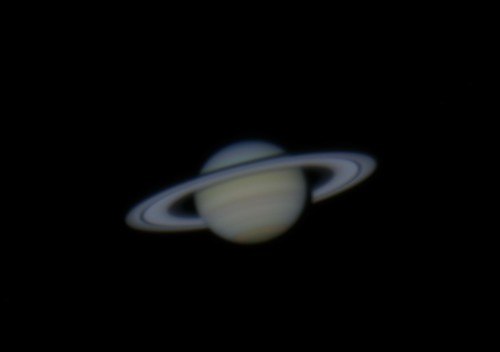
The scope was the historic Otto Struve 82" Telescope at The University of Texas' McDonald Observatory, Ft. Davis, Texas.
This was Astronomy Magazine's online Photo of the Day on November 28, 2006:
www.astronomy.com/asy/default.aspx?c=ga&id=99&aid...
Wow. Now NASA/JPL has it online!
JPL has since used it in a press release and another online composite for their Saturn Observation Campaign 2007.
Blogged by C|Net, alongside two NASA photos (from Hubble and Spitzer orbiting telescopes!):
news.com.com/2300-11397_3-6159390-3.html?tag=ne.gall.pg
PhysOrg.com lists it here: www.physorg.com/multimedia/pix478/
It accompanies a very nice Cassini spacecraft mission article with audio commentary on Scientific Frontline, here:
www.sflorg.com/control_room/cassini.html
NASA/JPL used it again (April 2007) in a PodCast at:
www.jpl.nasa.gov/videos/whatsup/whatsup20070405/
Blogged here, as a click-through link to Phil Plaitt's amazing video on Saturn from the Denver Museum:
It was used by NPR today on the occasion of the telescope's 75th Anniversary:
marfapublicradio.org/blog/mcdonald-observatory-75th-anniv...
First of my photos to hit 800 views (February 14, 2007) -- 1,000 views (March 26, 2007) -- 1,200 views (May 12, 2007) -- 1,500 views (July 21, 2007) -- 1,750 (August 12, 2007) -- 2,000 views (Oct. 2007) -- 4,000 views (Apr. 2008) -- 5,000 views (July 29, 2008) -- 10,000 views (Mar. 2010).
If you use this photo, please credit: Jeff Barton and Josh Walawender
A killer Sky on Skye ;-) in Elgol to be more precise. It got better an better that evening and this is the last shot I took before I got drenched by a stray wave from the left side. Good this photo was done as the wave hit. I had to dry my epuipment for a couple of minutes then. The filters where useless afterwards, the salt water made big smears as I tried to whipe em. Good I had a rain cloth around my cam so only the back of it got wet. Without it, it might well have been the end of my EOS 40d ;-)
When I was ready to shoot again it was more to test if the camera was still working, the color in the sky was nearly gone.
This is from one exposure, I used a Lee 0.6 hard GND and If I remember right I also had the 0.6 soft GND attached. I'm very happy this photo came out so well.. It really was a pain watching the show afterwards as I dried my camera and the filters and couldn't shoot.
PS: for the germans, I have a new article on kwerfeldein.de/index.php/2011/09/18/und-wieder-klingelt-d... which is about my scotland trip. check it out
cheers
« Il y avait infiniment à faire mais c’étaient des choses précises, successives, qui ne réclamaient que du temps, les outils adéquats, une quantité déterminée d’énergie et pour lesquelles il existait a priori une solution. » (P.B.)
One of my very few HDRs. At the time my goal was to make them as realistic as possible. The goal would have been the same had I persisted in the HDR way.
new website : this, random, RSS | random Flickr | © David Farreny.
Amber Rix designed brass dice machined by Cybernetic Research Labs. Machined metal is wonderful to see up close, and these dice are precise with their sharp edges and brushed metal facades.
Je tiens à préciser que cette photo a été réalisée sans aucune gêne pour les oiseaux. La prise de vue a été faite sous affut avec camouflage complet. Si il y avait eu une gêne, le nourrissage aurai été interrompue.
I want to clarify that this photo was carried out without any embarrassment for the birds. The shooting was done under cover with complete camouflage. If there had been any discomfort, the feeding would have been interrupted.
Crows, to be precise.
Fly big crows.
Not the prettiest flyers, y'know-- and definitely not the most gracious. BUT, they're pretty darn cool, aye?
Shot during the Am-Ifty-Di Dhanmondi Lake adventures!
www.cameralenscompare.com/photoAwardsCounterDetails.aspx?...
Großkopf-Ruderfrosch, Polypedates megacephalus an einer Glasscheibe
What I love most about photography is that I seem to forget everything else that is worrying me at the precise moment I pick up my camera. I could be facing a troublesome time in my life and as soon as the camera touches my hands, I simply live in that moment of adrenaline coursing through my veins as I get ready to shoot and as I start the process of taking pictures. Everything else fades out of sight. I can truly let go...To enter a world created wholly of my own imagination. Where floating cups are an everyday occurrence and where even though it has snowed you can wear a dress and not feel cold. Where you can be whatever and whoever you want to be without any worry or doubt connected. To be in a world without insecurity.
I am finding confidence in myself that I never knew I had. Whilst I was shooting this image there was a family moving out of their house right next to this location, so obviously there were removal men, friends and family helping them out. They came to ask me questions about what I was doing and they stood watching me jump, swirl and hold tea cups above my head! The thing is though, I didn't mind, not one little bit. I was happy to just be there on that sunny, yet extremely crisp morning and to just 'do my crazy weird thing'. I want to thank you guys for helping me out, you have given such positive feedback to me which is helping me to grow into the person I have always wanted to be. Someone who isn't afraid of doing what they love!
“It takes courage to grow up and become who you really are.” - E.E. Cummings
Copyright © 2013 Amy Morris. All Rights Reserved.
...this is, to be precise, near Torrenieri, near the old Cassia road from Torrenieri to San Quirico d'Orcia (Tuscany, Italy). And this is taken from the same place where I took "Trees in morning light" (in a different season, summer vs. spring, of course, and other direction :))...
Used my D200 and the Nikkor 12-24 @ 24.
I think bigger is much better here...

Sam Harris has always been a man of precise words and razor-sharp thoughts, his voice carrying the clipped cadence of someone who has spent a lifetime considering each syllable before speaking it aloud. When I photographed him in March of 2016 at Dove Mountain, Arizona, I was struck by his stillness. He has the presence of someone who is not merely thinking, but thinking about thinking, plumbing the depths of consciousness with the same intensity a mountaineer might study a precipice before making the ascent.
Born in 1967, Harris is best known as a neuroscientist, philosopher, and writer who has spent decades interrogating the human condition. He first gained widespread attention with his book The End of Faith (2004), a fierce and unflinching examination of religious belief that won the PEN/Martha Albrand Award for First Nonfiction. In it, Harris argued against the dangers of dogma with the kind of cool, analytical detachment usually reserved for lab reports, making the case that faith—unchecked and unquestioned—was one of civilization’s great existential threats. The book, written in the wake of September 11th, made him both a hero and a heretic, a role he seemed to accept with the quiet assurance of a man who expected no less.
His intellectual journey has been one of relentless inquiry, unafraid to step into the fray of controversy. Whether tackling free will, artificial intelligence, or the moral implications of neuroscience, Harris approaches each subject with the rigor of a scientist and the tenacity of a trial attorney. His book Free Will (2012) presents a case against the very idea of human volition, arguing that our actions and thoughts are dictated by prior causes beyond our control—a notion as unsettling as it is liberating. He moves easily between philosophy and empirical science, grounding his arguments in the latest research on the brain while never losing sight of their broader implications.
Yet, for all his cerebral intensity, Harris is not without a deep fascination with the subjective, with the inner world of experience. His book Waking Up (2014) is a testament to this—an attempt to reconcile the apparent contradiction between rigorous rationality and the profound states of consciousness explored in meditation. Having spent time in silent retreats, studying under Buddhist teachers, and experimenting with psychedelics, Harris has sought to strip spirituality of its supernatural trappings and ground it in something more defensible: the raw, unfiltered reality of direct experience.
This tension—between the rational and the experiential, the cold precision of science and the warmth of personal insight—is what makes Harris such a compelling figure. His Making Sense podcast, launched in 2013, serves as an intellectual salon of sorts, a place where he engages with scientists, philosophers, writers, and thinkers across disciplines, from artificial intelligence experts to moral philosophers. He is never afraid to challenge his guests, nor does he shy away from re-examining his own positions. In conversation, as in his writing, Harris wields clarity like a scalpel—his arguments honed to their sharpest edge, his questions cutting straight to the heart of a matter.
The man I met at Dove Mountain was much as I expected: deliberate, measured, and strikingly present. He had a way of looking at you that made it clear he was not just waiting for his turn to speak but genuinely absorbing what you said, weighing it against the vast architecture of ideas he carried within him. There was an intensity in his silence, the sense that his mind was constantly at work, peeling back layers of assumption to examine the bare scaffolding underneath.
Harris is, above all, a seeker—a man who has spent his life charting the contours of belief, knowledge, and consciousness with the precision of a cartographer mapping an undiscovered world. He does not offer easy answers, nor does he indulge in comforting illusions. Instead, he asks us to look unflinchingly at the reality before us, to question, to examine, to think. And in doing so, he invites us into the great, unfinished conversation that is the pursuit of truth.