View allAll Photos Tagged pigmentation
Today's search for examples of this Katiannid springtail, provided this maturing female. She's ~1.25mm in length. The largest I've seen have been 1.4mm.
I've noticed that as some females mature; they produce an increasing amount of orange/red pigmentation spots on the dorsal surface of the abdomen. On some individuals, this extend over the entire dorsal surface, making them difficult to distinguish from the red-backed males. This individual has a single orange pigment spot. Perhaps she will develop more in later instars.
Zebra Fin refers to the multiple striations on the dorsal fin. In angelfish, there is variation in fin patterns and at the moment there is no classification of the different fin patterns. Fin patterns seem to be independent for each fin ( dorsal, caudal and anal ) and also independent, partly, of body patterns. An alternate classification based on fin patterns may need to be established. In this Pinoy angelfish, the pattern on the anterior part of the dorsal fin is spotted while the posterior part is striated. Anal fin pattern is spotted. The name Zebra fin is just a temporary name until classification of fin patterns is established.
Actual fish is more beautiful than in this photo. And melanin pigmentation is darker. (D/g allele combination).
Buckeye Butterfly (Junonia coenia)
Junonia coenia is tawny-colored with conspicuous eyespots on both the fore- and hind-wings. Buckeyes occur through much of the United States, northern Mexico and Cuba, and frequent open, sunny habitats with some bare ground. Caterpillars feed on plantain, snapdragon, Gerardia, figworts, and vervains. By incorporating toxins (iridoid glycosides) from these plants, the caterpillars deter predatory ants. It cannot survive winters in the north, and in the autumn migrates overwinters in the deep South. Junonia coenia has several generations each year. In the autumn generation the underside of the wings is dark brown, but in the generations that grow up in the summer the undersides are a pale tan. This difference in pigmentation is controlled by ecdysone, a steroid hormone, whose secretion is affected by the shortening days in the autumn.
I thought initially this might be P. aurantiaca but they're supposed to be yellow while this one has a kind of washed out pigmentation... still got the white antennae though... And P. armata is only supposed to be white- I've only ever seen it white before as well.
www.drdarm.com "Dr. Jerry Darm" "Aesthetic Medicine Portland OR" "BBB rated A+" Laserlift Botox Dysport Juvederm Restylane "Acne treatments" ANSR "Rosacea treatments" "facial veins treatments" "mole removal" "skin tags removal" "skin pigmentation treatments" "skin lesion treatments" "laser tattoo removal" "dark spots treatments" "sun damage treatments" "laser hair removal" revlite "laser skin" "laser skin treatments" lipolift velashape mesoderm "exilis therapy" "laser lipolysis" "laser liposuction" "liposuction doctor portland" "oregon liposuction doctor" "vein therapy" sclerotherapy "spider veins treatments" "medical weight management" "medical weight loss" "dr. darm weight loss programs" "facial plastic surgeries" "plastic surgeon portland" "face lifts" "nose lifts" "brow lifts" "ear surgery" "double neck surgery" microdermabrasion n-lite, "Dr. Jerry Darm" "Jerry Darm MD"
Another Amazing La bella Donna Event Don’t Miss it!
One More day at Laguna Beach Montage Hotel Saturday 25th from 4 -7
Learn More About Kathy & Nicole Tracy
La Bella Donna Cosmetics co-founder Kathy Tracy, who runs the company's Los Angeles office, is a walking testimonial for her products. She credits La Bella Donna's signature product - Loose Mineral Foundation. "I never go out without my minerals," explains Kathy, who has always been in the public eye. The New York native, a former model, continued to work sporadically while raising her two children (son; David and daughter, La Bella Donna co-founder Nicole Tracy) in Los Angeles.
"I've always been involved in fashion. After David was born, I wanted to have flexibility, so I made the transition from modeling to wardrobe consulting, which evolved into image consulting. I worked for private clients and for corporations and I needed to look good - it was my business. But I started to have trouble with makeup. I have sensitive skin and I'm of Italian descent, which means that I have an unusual skin tone. Unfortunately, makeup would turn colour on me within an hour -it required constant touching up. Either it looked mask-like or it would fade away. I gave up on traditional foundations and became a sun-worshipper because I looked better with a suntan - it looked like makeup. Well, now we know what that does to the skin. I developed hyper-pigmentation and excessive dryness, and because of my colouring was not a good candidate for a peel. I was very frustrated."
At the same time, Nicole, who was in college, was modeling and developed adult acne. Their personal makeup challenges led the mother-daughter team to develop a foundation to meet their own high standards: no known irritants; superior, long-lasting coverage; colour that stays true; appropriate and beneficial for all ages and skin types (Kathy and Nicole have very different skin complexions). The result, La Bella Donna Loose Mineral Foundation, launched in 1994, has made them pioneers in the mineral makeup movement.
Nicole Tracy doesn't have to worry about acne any more. Although the co-founder of La Bella Donna Cosmetics currently spends more time behind a desk running a national cosmetics company than in front of a camera, she and her mother, Kathy, remain La Bella Donna's best advertisements. "Between my mother - who had her own problems with makeup - and me, we had drawers full of makeup we couldn't wear because of all the FD&C dyes, oil or alcohol, talc, fragrance and preservatives," says Nicole, who joined forces with Kathy in 1994 to develop a makeup formula that worked for both of them. "We especially wanted to bridge the gap between wellness and beauty; we didn't set out to create a 'natural' makeup, because those don't necessarily give you the coverage you need in shades close to your own skin tone," she explains. A savvy businesswoman, Nicole, who grew up in Los Angeles, relocated to her native New York in 1998 to establish an East Coast presence for La Bella Donna. She developed the line while completing her studies at the University of Southern California, from which she received a B.S. degree in Communications and Business. Nicole currently resides in Los Angeles,
California with her husband and two children.
Heracleum maximum, commonly known as cow parsnip, is the only member of the genus Heracleum native to North America. It is also known as American cow-parsnip, Indian celery, Indian rhubarb or pushki. It is sometimes referred to as Heracleum lanatum which is regarded as a synonym. The genus name Heracleum (from Heracles) refers to the very large size of all parts of these plants.
The leaves are very large, up to 40 cm (16 in) across, and divided into lobes.
The seeds are 8–12 mm (0.3–0.5 in) long and 5–8 mm (0.2–0.3 in) wide
Cow parsnip is a tall herbaceous perennial plant, reaching heights of over 2 m (7 ft). The stems are hollow and densely hairy. Cow parsnip has the characteristic flower umbels of the carrot family (Apiaceae). The umbels are about 20 centimeters (8 in) across, flat-topped or rounded, and composed of small white flowers.
It is commonly confused with Heracleum mantegazzianum (giant hogweed), which is a much larger plant that typically has purplish spots on the stems, as well as more sharply serrated leaves.
The species is native to North America, being distributed throughout most of the continental United States ranging from the Aleutian Islands and Alaska in the far northwest to Newfoundland on the east coast, extending south as far as California, New Mexico, Kansas, Ohio, and Georgia. It is especially prevalent in Alaska, where it is often found growing amongst plants like devil's club, which is nearly identical to in size and somewhat similar in appearance, and monkshood, a very toxic flower. In Canada, it is found in every province and territory except Nunavut. The plant is also found in Siberia, East Asia, and the Kuril Islands.
The species is widely recognized as a valuable pasture plant for cows, sheep, and goats. It is also known to be important in the diets of numerous wild animals, especially bears, both grizzly bears and black bears. The thick flower stems, coming into season in early summer, can be peeled and eaten cooked when young; caution should be taken as the flowers resemble those of the extremely poisonous Cicuta maculata.
Indigenous North Americans have had a variety of uses for cow parsnip, often traveling long distances in the spring—80 kilometres (50 miles) or more—to find the succulent plant shoots. The young stems and leafstalks were peeled and usually eaten raw, while early American settlers cooked the plant. In terms of taste, texture, and nutrients, the peeled stalks resembled celery, which gave rise to the common name "Indian celery". The natives were aware of the toxic effects of the plant, knowing that if the outer skin were not removed, one would get an "itchy mouth" or blistering skin. Pregnant women were warned away from the flower bud stalks to prevent newborns from asphyxiating when crying.
At least seven native groups in North America used the plant as a dermatological aid. It could be an ingredient in poultices applied to bruises or sores. A poultice prepared from the roots of cow parsnip was applied to swellings, especially of the feet. The dried stems were used as drinking straws for the old or infirm, or made into flutes for children. An infusion of the flowers can be rubbed on the body to repel flies and mosquitoes. A yellow dye can be made from the roots.
The plant contains furanocoumarins. Some of these furanocoumarins found in cow parsnip are known to have antimicrobial properties and are responsible for a rash producing erythematous vesicles (burn-like blisters) and hyperpigmentation that occurs after getting the clear sap onto one's skin. They are photosensitive, with the rash occurring only after exposure to ultraviolet light. Because of this, phytophotodermatitis causing skin blistering may occur after coming into contact with the sap on a sunny day. The scars and pigmentation from these blisters caused by some Heracleum species can last for months or years.
= Degeeria minuta Burmeister, 1838 = Entomobrya flava Lie-Pettersen, 1896 = Isotoma cursitans Bourlet, 1839 = Isotoma fusiformis Bourlet, 1839 = Podura annulata Fabricius, 1775 = Podura nigromaculata Templeton, 1835 = Podura nivalis Linnaeus, 1758 = Podura simplex Koch, 1840 = Podura striata Koch, 1840 = Podura variegata Guerin, 1838.
This is a "Cross Fox" - it is actually a Red Fox with different colouration. A percentage of red foxes have a recessive gene that change the pigmentation of their coats to different colour "morphs". You sometimes see a black / silver morph (called a "Silver Fox") or a combination red and silver morph ("Cross Fox") like this one.
Common Buckeyes exhibit seasonal polyphenism, or better known as polyphenic pigmentation, which is adaptive for insect species that undergo multiple matings each year. Different pigmentation patterns provide appropriate camouflage throughout the seasons, as well as alter heat retention as temperatures change. As seen above, the Summer version of the Common Buckeye has light yellowish ventral wings and is called "linea". The Fall morph has pinkish ventral wings, and is called the "rosa" morph.
ISO400, aperture f/11, exposure .006 seconds (1/180) focal length 300mm
Kind of like bar hopping?
Wonder if different colors have different flavors of nectar?
I got help in identifying it from the Google group,
sci . bio . entomology . lepidoptera,
with the answer being ...
Female Eastern Tiger Swallowtail, melanic form. Papilio glaucus.
Which is clear enough, except for "melanic form," a
new one for me. Upon looking up that term, I found that it means
an excess of black or nearly black pigmentation, and is
the opposite of albinism.
www.drdarm.com "Dr. Jerry Darm" "Aesthetic Medicine Portland OR" "BBB rated A+" Laserlift Botox Dysport Juvederm Restylane "Acne treatments" ANSR "Rosacea treatments" "facial veins treatments" "mole removal" "skin tags removal" "skin pigmentation treatments" "skin lesion treatments" "laser tattoo removal" "dark spots treatments" "sun damage treatments" "laser hair removal" revlite "laser skin" "laser skin treatments" lipolift velashape mesoderm "exilis therapy" "laser lipolysis" "laser liposuction" "liposuction doctor portland" "oregon liposuction doctor" "vein therapy" sclerotherapy "spider veins treatments" "medical weight management" "medical weight loss" "dr. darm weight loss programs" "facial plastic surgeries" "plastic surgeon portland" "face lifts" "nose lifts" "brow lifts" "ear surgery" "double neck surgery" microdermabrasion n-lite, "Dr. Jerry Darm" "Jerry Darm MD"
From Wikipedia -
Strongylodon macrobotrys, commonly known as Jade Vine, Emerald Vine or Turquoise Jade Vine, is a species of leguminous perennial woody vine, native to the tropical forests of the Philippines. Its local name is Tayabak. A member of the Fabaceae (the pea and bean family), it is closely related to beans such as kidney bean and runner bean.
Strongylodon macrobotrys is pollinated by bats.
The vine can grow up to 18 metres in height. The pale green foliage consists of three leaflets. The claw-shaped flowers are carried in pendent trusses or pseudoracemes of 75 or more flowers and can reach as much as 3 metres long. The turquoise flower color is similar to some forms of the minerals turquoise and jade, varying from blue-green to mint green. The short, oblong, fleshy seed pods are up to 15 cm long and contain up to 12 seeds.
The plant grows beside streams in damp forests, or in ravines. The inflorescences are only produced by mature vines. Each individual bloom resembles a stout-bodied butterfly with folded wings - they have evolved certain modifications to allow them to be pollinated by a species of bat that hangs upside down on the inflorescence to drink its nectar. The flowers are also visited by a species of wasp, and are home to a species of butterfly.
The characteristic flower coloration has been shown to be an example of copigmentation, a result of the presence of malvin (an anthocyanin) and saponarin (a flavone glucoside) in the ratio 1:9. Under the alkaline conditions (pH 7.9) found in the sap of the epidermal cells, this combination produced a pink pigmentation; the pH of the colorless inner floral tissue was found to be lower, at pH 5.6. Experiments showed that saponarin produced a strong yellow colouring in slightly alkaline conditions, resulting in the greenish tone of the flower.
Feeding him a varied diet, has changed his pigmentation - sorry for the particles, I had just fed them.
The black pigmentation and fibrosis are due to inhalation of carbon pigment and silica respectively in a coal worker. The large fibrotic nodules represent the progressive massive fibrosis variant of CWP/
Coal worker's pneumoconiosis (CWP), also known as black lung disease and anthracosilicosis, is a lung disease that results from breathing in dust from coal, graphite, or man-made carbon over a long period of time. It occurs primarily in coal miners and others with long time exposure to coal dust. CWP occurs in two forms: simple and complicated (also called progressive massive fibrosis, or PMF).
The risk for developing CWP depends on the length of time of exposure coal dust. Most people with this disease are older than 50. Smoking does not increase the risk for developing CWP. If CWP occurring together with rheumatoid arthritis is called Caplan syndrome.
today was fucked up
i can't protect anyone from anything and
you cannot give someone else self esteem
and you can also not help anyone with their insecurity
if you do it is only temporary
at least to me
it is something they have to actively decide to depart from
even though that is not always a choice
sometimes it is just something that happens
and i played a song today and hayley said good god what song is that
i said it is my favorite instrumental song of all time
why, she said
because, and then i explained why and
i feel very incapable of helping anyone
and i am working my hardest and i am still very behind on my work
thinking about people who would rather be alone when they are sad and i wonder if it is inherent in them or if it is because they are made to feel like they should be alone because it is annoying
to ask someone to give a damn about you for five minutes
or how something could make you feel
i have not cried in a very long time
i think it has been since tshabo
on the hill
when hayley was sick and i thought she might die
if someone doesn't die from that then what the hell do people die from
which sounds dramatic but
i honestly never seen anyone that sick in my entire life
and the kids knew i was sad because my friend was sick but not about what happened in the emergency room
and they pet my hair and said the xhosa word for ginger hair
and the xhosa word for doctor
and all of that and it was too much to deal with
reasons to cry:
love (if it is real, MAN will there ever be a day i don't have to put a comma after the word 'love')
beautiful things
confusion
frustration
loneliness
miscommunication
cello
plants
sex
death?
books
goodbyes
realizing an unfortunate truth you had previously been unaware of
weather (sometimes)
etc
and how i thought about how fifteen out of twenty people on this program have been very ill at least once
because "we are weak, or something" someone said
yeah, i probably am
the weakest motherfucker on this continent
eleventh grade high school drop out
teaching someone how to read
can i just get you some water
someone from home told me something about intense hiv and aids rates
and i forgot the situation i was in for a second
it must have been the heat or something
because i told them, unfiltered
i said in some people here you can see it in their face
see what
that they are infected
what, what do you mean
late onset antiretroviral immunodeficiency syndrome
late onset aids
you can see it in their face sometimes
the sweat, the smell, some of the older people in the clinics i've worked in who are infected
i said you can see it in their cheeks sometimes and in their face and their clouded eyes and the depletion of pigmentation in their skin
sweat
you can see that they are dying a bit faster, it's more certain
i mean it is always certain
but you know what i mean
i just fucking said it
i didn't think
i just said it, matter of factly
one of the most fucked up things i think i have learned
is not really a fact or a quote or a photograph
it's a feeling in a stomach
oh, fuck, fuck?
why didn't i realize this before?
BECAUSE I AM AMERICAN
and if i was from somewhere slightly less privileged in the same situation
i would be like, OF FUCKING COURSE
good god, no kidding!
i forgot who i was talking to
i forgot what we were talking about
i forgot the context of the situation
i fucked up
it was inappropriate to tell you that
you didn't sign up for that
you said that was really sad
i said i'm really sorry and i felt awful
and remembered what was happening
and felt very bad for telling you that
you didn't sign up for that, to know that
you can stop talking at any time
you could leave or just stop reading or whatever
i don't know what the fuck i was thinking
i felt very sorry and i wanted to take it back
so we talked about barack obama
and that was easier
because he is going to fix everything
right
right
Heracleum maximum, commonly known as cow parsnip, is the only member of the genus Heracleum native to North America. It is also known as American cow-parsnip, Indian celery, Indian rhubarb or pushki. It is sometimes referred to as Heracleum lanatum which is regarded as a synonym. The genus name Heracleum (from Heracles) refers to the very large size of all parts of these plants.
The leaves are very large, up to 40 cm (16 in) across, and divided into lobes.
The seeds are 8–12 mm (0.3–0.5 in) long and 5–8 mm (0.2–0.3 in) wide
Cow parsnip is a tall herbaceous perennial plant, reaching heights of over 2 m (7 ft). The stems are hollow and densely hairy. Cow parsnip has the characteristic flower umbels of the carrot family (Apiaceae). The umbels are about 20 centimeters (8 in) across, flat-topped or rounded, and composed of small white flowers.
It is commonly confused with Heracleum mantegazzianum (giant hogweed), which is a much larger plant that typically has purplish spots on the stems, as well as more sharply serrated leaves.
The species is native to North America, being distributed throughout most of the continental United States ranging from the Aleutian Islands and Alaska in the far northwest to Newfoundland on the east coast, extending south as far as California, New Mexico, Kansas, Ohio, and Georgia. It is especially prevalent in Alaska, where it is often found growing amongst plants like devil's club, which is nearly identical to in size and somewhat similar in appearance, and monkshood, a very toxic flower. In Canada, it is found in every province and territory except Nunavut. The plant is also found in Siberia, East Asia, and the Kuril Islands.
The species is widely recognized as a valuable pasture plant for cows, sheep, and goats. It is also known to be important in the diets of numerous wild animals, especially bears, both grizzly bears and black bears. The thick flower stems, coming into season in early summer, can be peeled and eaten cooked when young; caution should be taken as the flowers resemble those of the extremely poisonous Cicuta maculata.
Indigenous North Americans have had a variety of uses for cow parsnip, often traveling long distances in the spring—80 kilometres (50 miles) or more—to find the succulent plant shoots. The young stems and leafstalks were peeled and usually eaten raw, while early American settlers cooked the plant. In terms of taste, texture, and nutrients, the peeled stalks resembled celery, which gave rise to the common name "Indian celery". The natives were aware of the toxic effects of the plant, knowing that if the outer skin were not removed, one would get an "itchy mouth" or blistering skin. Pregnant women were warned away from the flower bud stalks to prevent newborns from asphyxiating when crying.
At least seven native groups in North America used the plant as a dermatological aid. It could be an ingredient in poultices applied to bruises or sores. A poultice prepared from the roots of cow parsnip was applied to swellings, especially of the feet. The dried stems were used as drinking straws for the old or infirm, or made into flutes for children. An infusion of the flowers can be rubbed on the body to repel flies and mosquitoes. A yellow dye can be made from the roots.
The plant contains furanocoumarins. Some of these furanocoumarins found in cow parsnip are known to have antimicrobial properties and are responsible for a rash producing erythematous vesicles (burn-like blisters) and hyperpigmentation that occurs after getting the clear sap onto one's skin. They are photosensitive, with the rash occurring only after exposure to ultraviolet light. Because of this, phytophotodermatitis causing skin blistering may occur after coming into contact with the sap on a sunny day. The scars and pigmentation from these blisters caused by some Heracleum species can last for months or years.
As sea otters age, they lose the pigmentation on their fur, similar to getting grey hair in human. However, sea otters turn blonde instead of grey.
Someone on a hair list described her silver hair as being fiberoptic-like.
That is exactly the experience that I have. Under the entry Human hair color, Wikipedia says this about "white" hair: "The clear hairs appear as gray or white because of the way light reflects from the hairs. "
People whose hair has lost its pigmentation don't have white hair. We have clear hair. The proteins in the hair act as mirrors and prisms and so the hair reflects the colors I wear and at various angles scintillates pastel rainbow color.
The effect is all the more so since I've stopped using shampoos with sulfates. Uncoated by chemicals, the clear hairs are essentially optical fibers.
In the photo where I show my hair circumference, you can see my hair reflecting the color of the gold ponytail holder I was wearing.
You can see it in this photo that when I go into my room when I have a red bed spread on the bed, my hair will look tinged pink. .
Globular springtails (Sminthurinus aureus)
Top row albino form, lacking dark pigmentation (forma apigmentatus).
Mother Nature made this place with her ancient giantess hands. She toiled for billions of years, just so we could pop in and be more impressed in two seconds than we've ever been - as we stood noting the immensity of the time in a brief moment that rushed by us almost undetected.
I've been here three times in my life. The Caverns haven't really changed since my first trip at age 4 to my last trip at age 32. Equally astounding every time I've been.
This is a relatively inexpensive place to take road trip to (depending on where you're coming from) if you're into that kinda thing... and totally worth every second you spend there. Also, this a great place to beat the summer heatwave. The caverns are deep below the melting and singed New Mexican landscape. They harbor air chilled to a lovely 56°F (13°C) which makes the long walk deep deep down inside of time, inside of our planet's crusted blanket of indiscretions, a super cooled journey into a Martian-like alien setting.
Imaginations run amok in the caves like a genome that's lost it's need for pigmentation or eyesight, they stumble and blunder until they sense everything on a deeper level of intuition, drawing out their paths on the canvases of time - or so we imagine.
Camera Model Name: Canon EOS 400D DIGITAL
Lens: EF-S18-55mm f/3.5-5.6
Tv (Shutter Speed): 1/13
Av (Aperture Value): 3.5
Metering: Evaluative Metering
ISO Speed: 400
Focal Length: 18.0 mm
Flash: Off
--------------------------------------------------------------------------------------------------------------------
DAY 17
Altitude: 3, 505 m / 11, 499 ft.
--------------------------------------------------------------------------------------------------------------------
We descend a level down to enter the dukhang through an entrance in the side wall. The assembly hall is well lit by the infiltrating light through the window glass panes. On right wall murals of 16 Buddhas and on the back wall the 8-armed Avalokitswara (The Buddha of Compassion) and Yamantaka can be seen. Innumerable oil/butter lamps and torma decorated with butter sculptor (an ancient Tibetan tradition) adorns the altar. Silken drapes and thangkas hang from the ceiling, which is embellished with paintings of deities, animals, birds and other religious objects.
Incidentally, Yamantaka or Dorje Jigje (as known in Tibet) is the ‘slayer of death’ who is a wrathful emanation of Manjushri (the god of divine wisdom). He is also known as Vajrabhirab and has a buffalo head.
Thangkas are Buddhist paintings which function as focal points for the practitioners. Traditional thangkas are painted using natural pigmentations and the color gold is particularly important.
Fig 1 Michiels et al BMC Ecology 2008, 8:16
Red fluorescence in reef fish: A novel signalling mechanism?
Nico K Michiels, Nils Anthes, Nathan S Hart, Jürgen Herler, Alfred J Meixner, Frank Schleifenbaum, Gregor Schulte, Ulrike E Siebeck, Dennis Sprenger and Matthias F Wucherer
a. The visual spectrum ranges from 400 to 700 nm at the water surface, but downwelling sunlight loses the red component (600–700 nm) rapidly within 10–15 m (modified from Pinet PR (2000) Invitation to Oceanography. Jones and Bartlett). UV and violet wavelengths are attenuated less rapidly. The attenuation with depth of spectral composition (and light intensity, not shown) varies strongly with the concentration of organic matter in the water column. b. Most red pigmentation is based on reflectance of the red component of ambient light and therefore only appears "red" when close to the surface during daytime or under broad spectral light (e.g. dive torch). Fish with this pigmentation appear dull grey in deeper water. Red fluorescent patterns, however, continue to appear reddish and bright, even in deeper water, where excitation of fluorescent pigments by shorter wavelengths induces redness. Note that red fluorescence is rarely perceived as pure red, but is mostly an enhancer of mixed colours such as pink, lilac or red brown. Even so, it remains clearly visible in deeper water as a contrast enhancer. Closer to the surface, fluorescent patterns are masked by reflective colouration (e.g. yellow and red in Eviota pellucida, Fig. 3). c. Since excitation frequencies (blue-green) are brighter than emission frequencies (red in our example) red fluorescence is best seen when viewed through a filter that blocks the excitation frequencies and only allows the emission frequencies to pass. When looking through a red filter in e.g. 20 m depth, all remaining red light must be "locally produced" through fluorescence or bioluminescence. Given that fluorescence exploits light energy from ambient light, it is more efficient than bioluminescence and therefore likely to be the mechanism of choice for diurnal fish.
Heracleum maximum, commonly known as cow parsnip, is the only member of the genus Heracleum native to North America. It is also known as American cow-parsnip, Indian celery, Indian rhubarb or pushki. It is sometimes referred to as Heracleum lanatum which is regarded as a synonym. The genus name Heracleum (from Heracles) refers to the very large size of all parts of these plants.
The leaves are very large, up to 40 cm (16 in) across, and divided into lobes.
The seeds are 8–12 mm (0.3–0.5 in) long and 5–8 mm (0.2–0.3 in) wide
Cow parsnip is a tall herbaceous perennial plant, reaching heights of over 2 m (7 ft). The stems are hollow and densely hairy. Cow parsnip has the characteristic flower umbels of the carrot family (Apiaceae). The umbels are about 20 centimeters (8 in) across, flat-topped or rounded, and composed of small white flowers.
It is commonly confused with Heracleum mantegazzianum (giant hogweed), which is a much larger plant that typically has purplish spots on the stems, as well as more sharply serrated leaves.
The species is native to North America, being distributed throughout most of the continental United States ranging from the Aleutian Islands and Alaska in the far northwest to Newfoundland on the east coast, extending south as far as California, New Mexico, Kansas, Ohio, and Georgia. It is especially prevalent in Alaska, where it is often found growing amongst plants like devil's club, which is nearly identical to in size and somewhat similar in appearance, and monkshood, a very toxic flower. In Canada, it is found in every province and territory except Nunavut. The plant is also found in Siberia, East Asia, and the Kuril Islands.
The species is widely recognized as a valuable pasture plant for cows, sheep, and goats. It is also known to be important in the diets of numerous wild animals, especially bears, both grizzly bears and black bears. The thick flower stems, coming into season in early summer, can be peeled and eaten cooked when young; caution should be taken as the flowers resemble those of the extremely poisonous Cicuta maculata.
Indigenous North Americans have had a variety of uses for cow parsnip, often traveling long distances in the spring—80 kilometres (50 miles) or more—to find the succulent plant shoots. The young stems and leafstalks were peeled and usually eaten raw, while early American settlers cooked the plant. In terms of taste, texture, and nutrients, the peeled stalks resembled celery, which gave rise to the common name "Indian celery". The natives were aware of the toxic effects of the plant, knowing that if the outer skin were not removed, one would get an "itchy mouth" or blistering skin. Pregnant women were warned away from the flower bud stalks to prevent newborns from asphyxiating when crying.
At least seven native groups in North America used the plant as a dermatological aid. It could be an ingredient in poultices applied to bruises or sores. A poultice prepared from the roots of cow parsnip was applied to swellings, especially of the feet. The dried stems were used as drinking straws for the old or infirm, or made into flutes for children. An infusion of the flowers can be rubbed on the body to repel flies and mosquitoes. A yellow dye can be made from the roots.
The plant contains furanocoumarins. Some of these furanocoumarins found in cow parsnip are known to have antimicrobial properties and are responsible for a rash producing erythematous vesicles (burn-like blisters) and hyperpigmentation that occurs after getting the clear sap onto one's skin. They are photosensitive, with the rash occurring only after exposure to ultraviolet light. Because of this, phytophotodermatitis causing skin blistering may occur after coming into contact with the sap on a sunny day. The scars and pigmentation from these blisters caused by some Heracleum species can last for months or years.
This is a melanistic adder (commonly known as a black adder). I saw it on Silchester Common basking near to a female adder. You can just about make out its diamond back pattern but the black pigmentation of its scales makes this difficult.
IT
Crema antirughe nutriente, antiossidante e rinnovatrice cellulare , contenente Ceramidi, Acido Mandelico, Pantrofina PC e Vitamina E. Questa crema è ricca di principi attivi altamente funzionali, quindi indispensabile nel trattamento del foto invecchiamento, della pigmentazione irregolare e delle rughe.
EN
This is a nourishing, antioxidant and cell renewal cream . It contains ceramides, mandelic acid, pinus pinaster ex¬tract and vitamin E. Rich in highly functional ac¬tive principles, this cream is indispensable in photo-ageing, irregular pigmentation and wrinkle treatments.
FR
Crème nourrissant antirides, antioxydant et de rénovateur cellulaires , elle contient céramides, acides mandélique, et de la vitamine E et Pantrofina PC. Cette crème est riche des principes actifs hautement fonctionnelle donc essentiel dans le traitement du photo vieillissement de la peau, des rides et la de la pigmentation inégale
brand site
websites.
blog
social network
video share
Nyah is part of Inamorata Vitiligo collection that celebrates the beauty of this unique type of pigmentation. The collection consists of three dolls in Chocolate resin: Nyah (Nnaji sculpt), Nala (Nnaji sculpt) and Imani (Nubia sculpt).
Nala has one blue and one brown eye, black lashes, red glossy lips and vitiligo pigmentation. The white lingerie is from Inamorata Cherub LE30 from 2013.
The jewellery and dolls are available for sale in my shop at emiliacouture.com/shop/
TAXONOMY
Kingdom: Animalia
Phylum: Chordata
Class: Actinopterygii (ray-finned fishes)
Order: Characiformes (Characins)
Family: Characidae (Characins)
Genus/species: Astyanax mexicanus
GENERAL CHARACTERISTICS: The head is notable for the absence of eyes. Young are born with functioning eyes which become completely enclosed in tissue as fish grows. The lack of sight is compensated by a highly developed lateral line that detects vibrations and changes in the water. The fish is without pigmentation and is plain pink with a silver sheen. They live in schools and grow to about 12 cm or 4.72 inches.
DISTRIBUTION/HABITAT: Texas, New Mexico, and eastern and central Mexico in freshwater pools within dark caves.
DIET IN THE WILD: A keen sense of smell and electrolocation aid in finding food. Blind cave fish are omnivores and feed on animal and plant remains that wash into the caves and on bat droppings from cave ceilings. Much of their time is spent searching for food; they are able to store four times more energy as fat than their surface-dwelling relatives, allowing them to deal with irregular food supplies.
REMARKS: Two forms of A. mexicanus (eyed and eyeless, being members of the same species,) are closely related and can interbreed.
The loss of eye tissue in the blind cavefish, which occurs within a few days of their development, happens through epigenetic silencing of eye-related genes, according to a study led by the National Institutes of Health. Epigenetic regulation is a process where genes are turned off or on, typically in a reversible or temporary manner. This mechanism differs from genetic mutations, which are permanent changes in the DNA code. The study appears in Nature Ecology & Evolution.
References
California Academy of Sciences Steinhart Aquarium Water planet Senses Cluster, Dr. Bart Sheperd
Ron's flickr www.flickr.com/photos/cas_docents/sets/72157608608528651/...
Ron's Wordpress Shortlink wp.me/p1DZ4b-11I
Read more at: phys.org/news/2018-05-eye-loss-cavefish.html#jCp
NIH phys.org/news/2018-05-eye-loss-cavefish.html
7-3-13, 1-20-16, 5-29-18, 1-25-19
A Morpho butterfly may be one of over 80 species of the genus Morpho. They are Neotropical butterflies found mostly in South America as well as Mexico and Central America.
Many Morpho butterflies are colored in metallic, shimmering shades of blue and green. These colors are not a result of pigmentation but are an example of iridescence: the microscopic scales covering the Morpho's wings reflect incident light repeatedly at successive layers, leading to interference effects that depend on both wavelength and angle of incidence/observance.
Source: Wikipedia.
7.Olay White Radiance Moisturiser
Olay White Radiance Moisturiser
6. Lotus Herbals Fairgel Liquorice
Lotus Herbals Fairgel Liquorice
5. Kaya Pigmentation Reducing Complex
Kaya Pigmentation Reducing Complex
4.L’Oreal Paris White Perfect Laser
L’Oreal Paris White Perfect Laser
3.Biotique Dandelion ...
punjabitoday.com/lifestyle/top-7-skin-care-whitening-prod...
Clarins Gloss Prodige is the crème de la crème of lip gloss – with its gel-like formulation, high pigmentation, and ultra glossiness, you’re getting all of the colour and shine that you love without any of the compromise. Added lip plumpers make for an enviable pout, while the delicious blackberry and liquorice scent and flavour will keep you reapplying all day long.
(L-R) Chocolate 01 is a red brown with purple shimmer, Nude 02 is neutral beige shade with silver shimmer, Rose 03 is a pale pink-toned nude with silver shimmer, Candy 04 is a rosy pink with golden shimmer, Grenadine 05 is a hot pink red with golden shimmer, Raspberry 06 is a magenta pink with golden shimmer, Blackberry 07 is plummy purple with golden shimmer, and Papaya 08 is a peachy coral with golden shimmer.
In traditional Bangladesh, holud which translates to turmeric, was specially used on brides-to-be before their wedding day. It was commonly believed that turmeric offers several benefits when applied on the skin, including reduction in spots and pigmentation, as well as body hair growth. It was also believed that it leaves the skin with a glow, while giving it a soft and fair appearance. Thus, to make the bride prettier before her big day, specially prepared turmeric (not the one used for cooking) was applied on her face, as well as the rest of her body which will be exposed upon wearing a saree. Thus, the term 'Gaye Holud' which literally translates to 'Body Turmeric', refers to the application of turmeric on the body before the wedding.
This tradition was originally followed by the bride's close family, who would each take turn in applying the paste on her, and then offer/feed her some traditional sweets to help start her new life with a sweet taste. Over the years, the tradition transformed into a formal event, and the groom's family also got invited to join in the ceremony. The groom however, was strictly not allowed to join as he could only see his new bride at the most beautiful state, which is on the wedding day.
After a while, the same traditions were also followed for the groom, whereby everyone except the bride were invited to follow the rituals. In recent times, this traditional has seen a further transformation, where bride and groom both sit together, and guests from both sides follow the rituals of turmeric paste and traditional sweets.
Photography By -SnapsBD Wedding Photography, Dhaka - Bangladesh.
Call: 01712058079, Web: www.snapsbd.com
Article Source: ezinearticles.com/?Gaye-Holud---Pre-Wedding-Celebration-%...
Photo Title: Albinism
Submitted by: Soumyabrata Roy
Category: Professional
Country: India
Organisation: Indian Red Cross Society Tehatta Sub-Div Branch
COVID-19 Photo: Yes
Photo Caption: A distribution of disability aids donation function was held at the initiative of the Indian Red Cross Society Tehatta Sub-Div Branch with the support of ALIMCO (Artificial Limbs Manufacturing Corporation of India) at Tehatta, Nadia, West Bengal; India on September 29, 2020. There were Braille kit & Smartcane, hearing aids, trail cycle, Wheelchairs, crutches, walking stick, MSIED KIT distributed to the disabled people.The little boy Sharafat (8), suffering from the congenital disorder Albinism. Albinism is associated with several vision defects, such as photophobia, nystagmus, and amblyopia. Lack of skin pigmentation makes for more susceptibility to sunburn and skin cancers. She came with the help of grandma.
----
Photo uploaded from the #HopeInSight Photo Competition on photocomp.iapb.org held for World Sight Day 2020.
www.messersmith.name/wordpress/2010/04/26/photgraphing-th...
ANZAC Day has past now, and I'm into the work week with a fury. Well, a flutter, anyway. I'm so far behind that some things are simply getting put into the If I Ever Get Around To It tray. My situation report this morning will be terse, but I do have some nice snaps for your amusement.
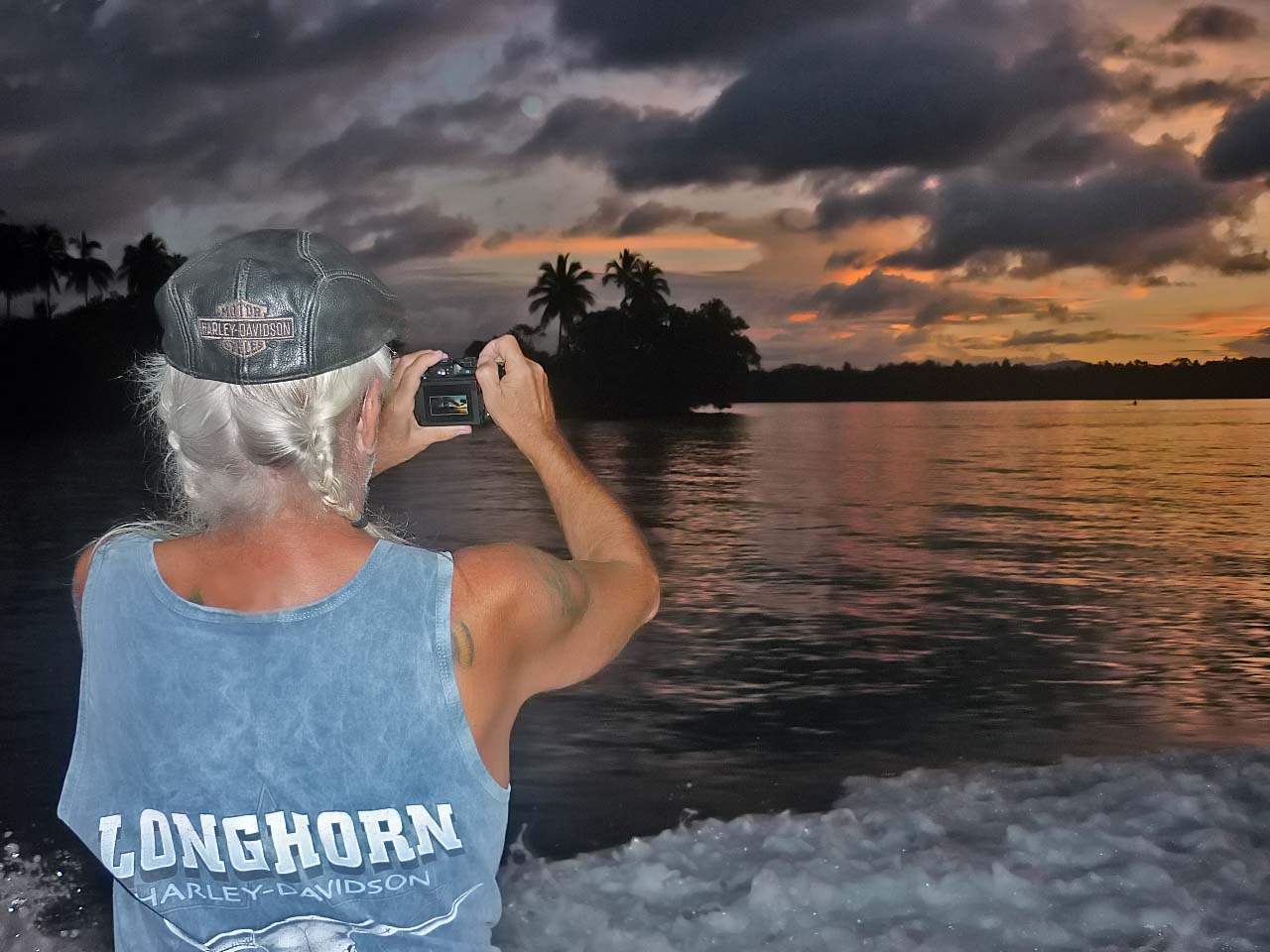
I'll begin by showing you my distressingly flabby triceps. As I was shooting a very nice sunset on Trevor Hattersley's Lyin' Dog, I kept noticing flashes coming from behind me. I took little notice, since everybody was ohhhing and ahhhhing at the pretty colours. I assumed it was someone who did not know enough to turn their flash off. Little did I suspect that I was the subject and the cameraman knew exactly what he was doing. Witness the work of Lt. Colonel Simon Watts: Thanks for sending that along, Simon. It will help me to get back to hitting the weights a couple of times a day.
Once in a great while, I get a shot that drops my jaw. So much is up to luck. You can do it perfectly ten times and only one will be good. A hundred times and maybe you'll say, "Oh, that's really nice." Give it a thousand times and you might get something like this: When the colours are so ethereal that it looks fake . . . no, painterly, then I feel as if I've been somehow blessed. It is, of course, a Spinecheek Anemonefish (Amphiprion biaculatus). There are presently two of them living in a Bulb Anemone (Entacmaea quadricolor) with incredible pigmentation at Planet Rock. I've been shooting this same anemone for at least fifteen years. I visit it every time I dive at Planet Rock. I've shown it to hundreds of divers. It' my anemone. I've made it the most famous Anemone in Madang, so it owes me.
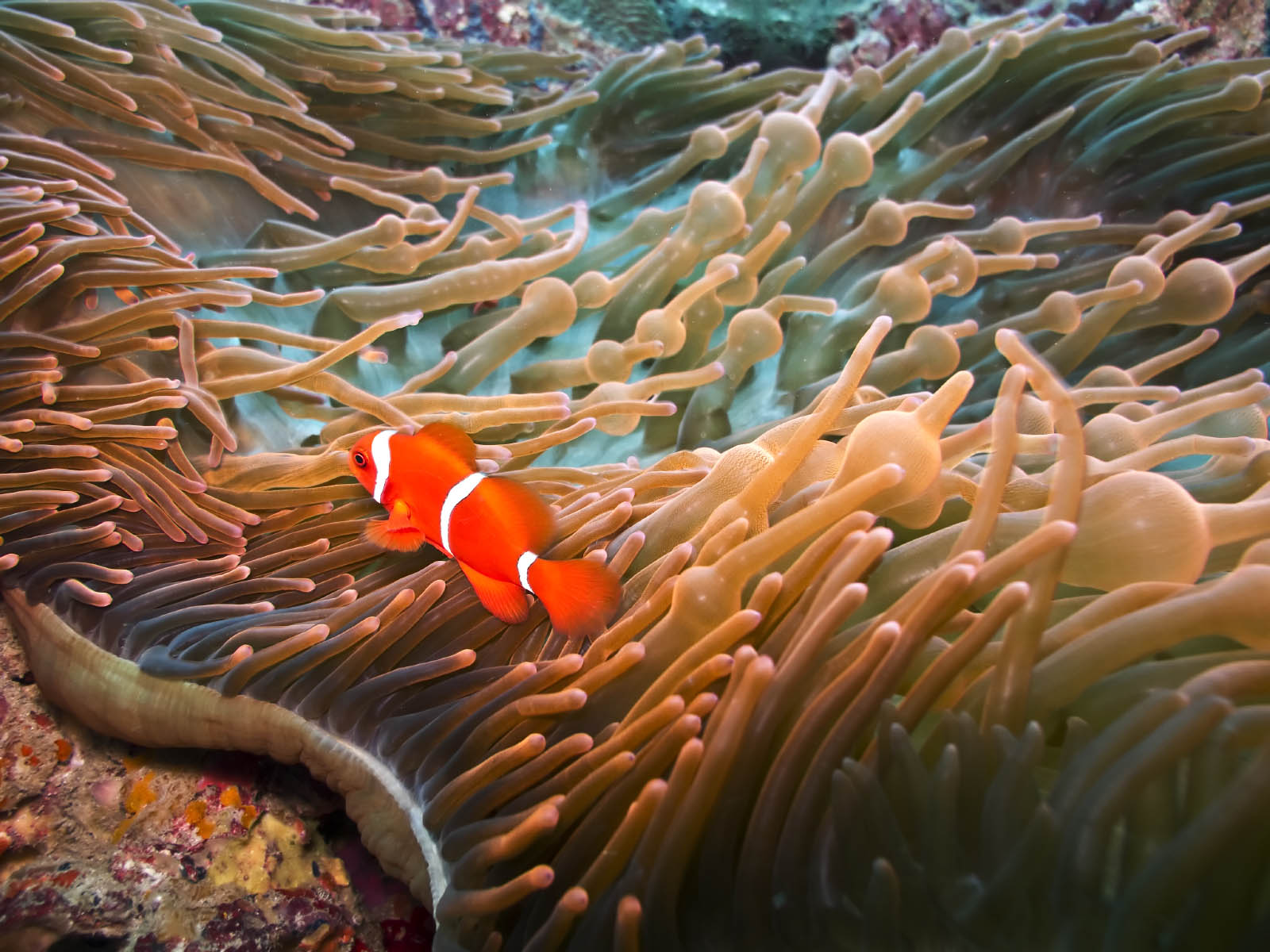
Bulb Anemones, like some other anemones, can display an almost unreal range of colours as you can see from the one in this post.
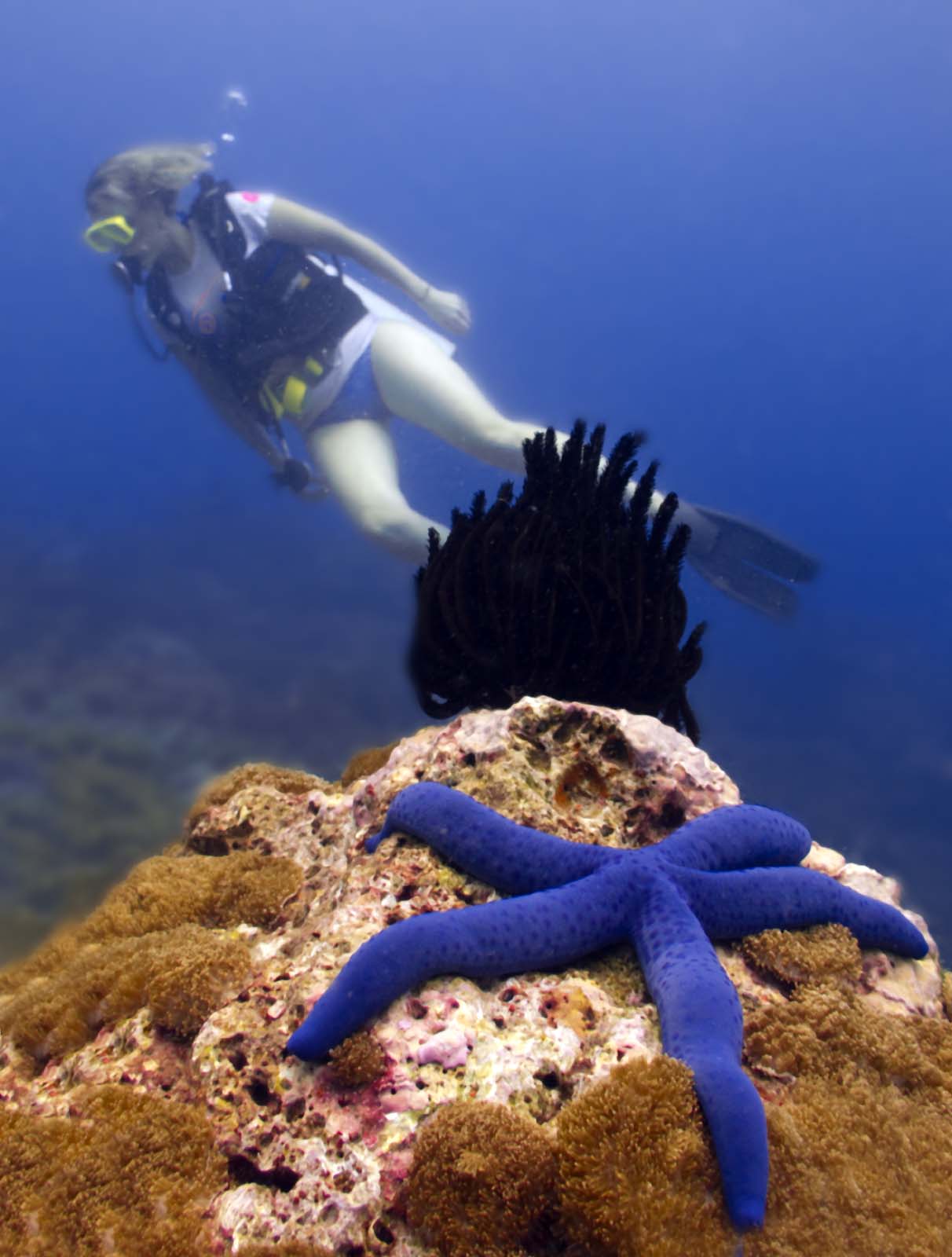
This is what happens when you stack beauty on beauty. Kate and I were the only divers on Saturday, so we had Planet Rock all to ourselves. Here a lazy Blue Plastic Toy Starfish (Linckia laevigata) lounges atop an ancient coral bomie wearing a feather star for a cap while Kate provides the real eye candy: Lots of blue there.
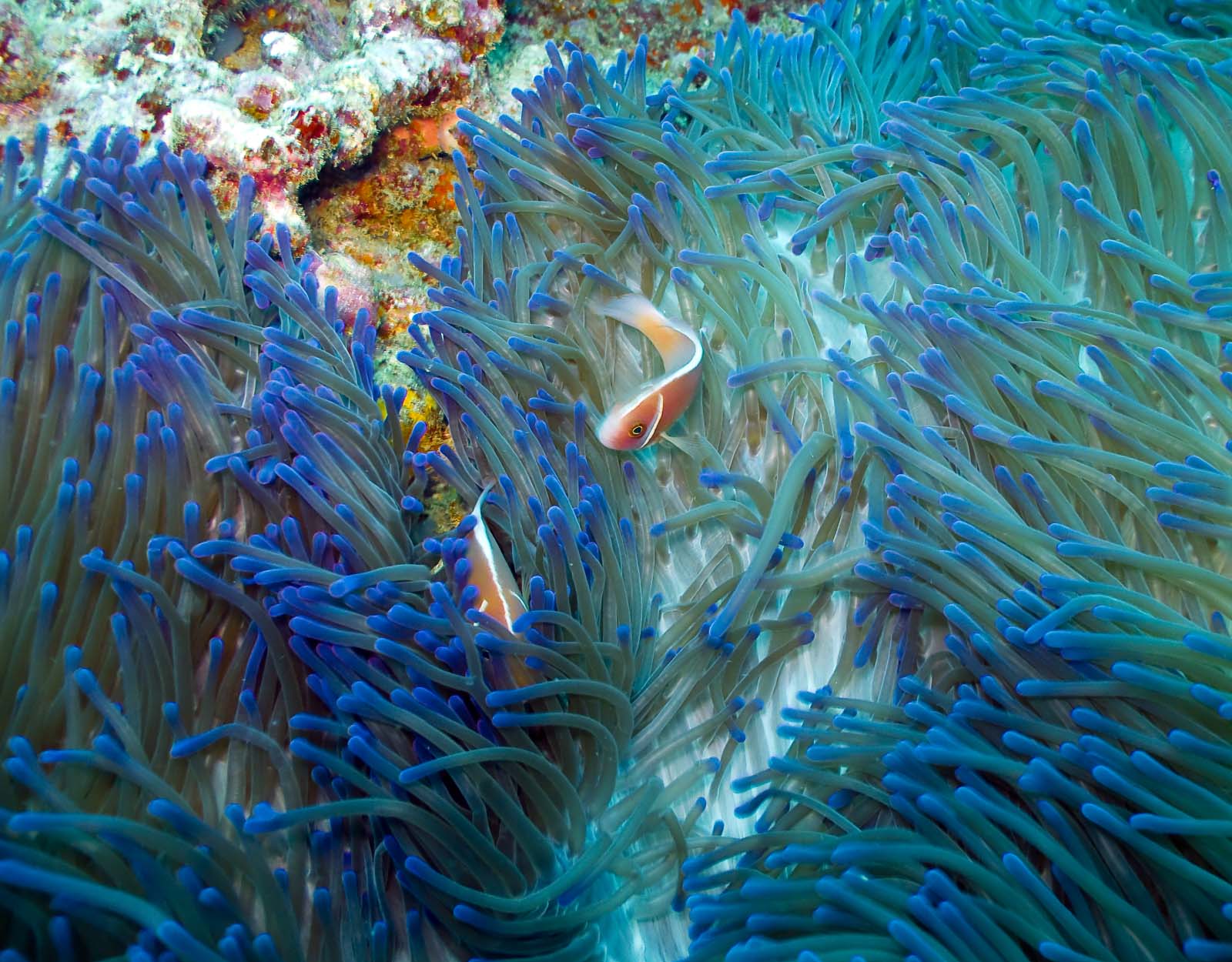
Since I've gotten started with blue, we'll just keep that theme. Here's an unfortunately motion-blurred shot of a Pink Anemonefish (Amphiprion perideraion) in a Magnificent Anemone (Heteractis magnifica): The tentacles of this anemone were absurdly blue. I don't think that I've seen one this bright, though there are several other colours which reach this level of saturation. Witness the wonderful green-tentacled Magnificent Anemone here.
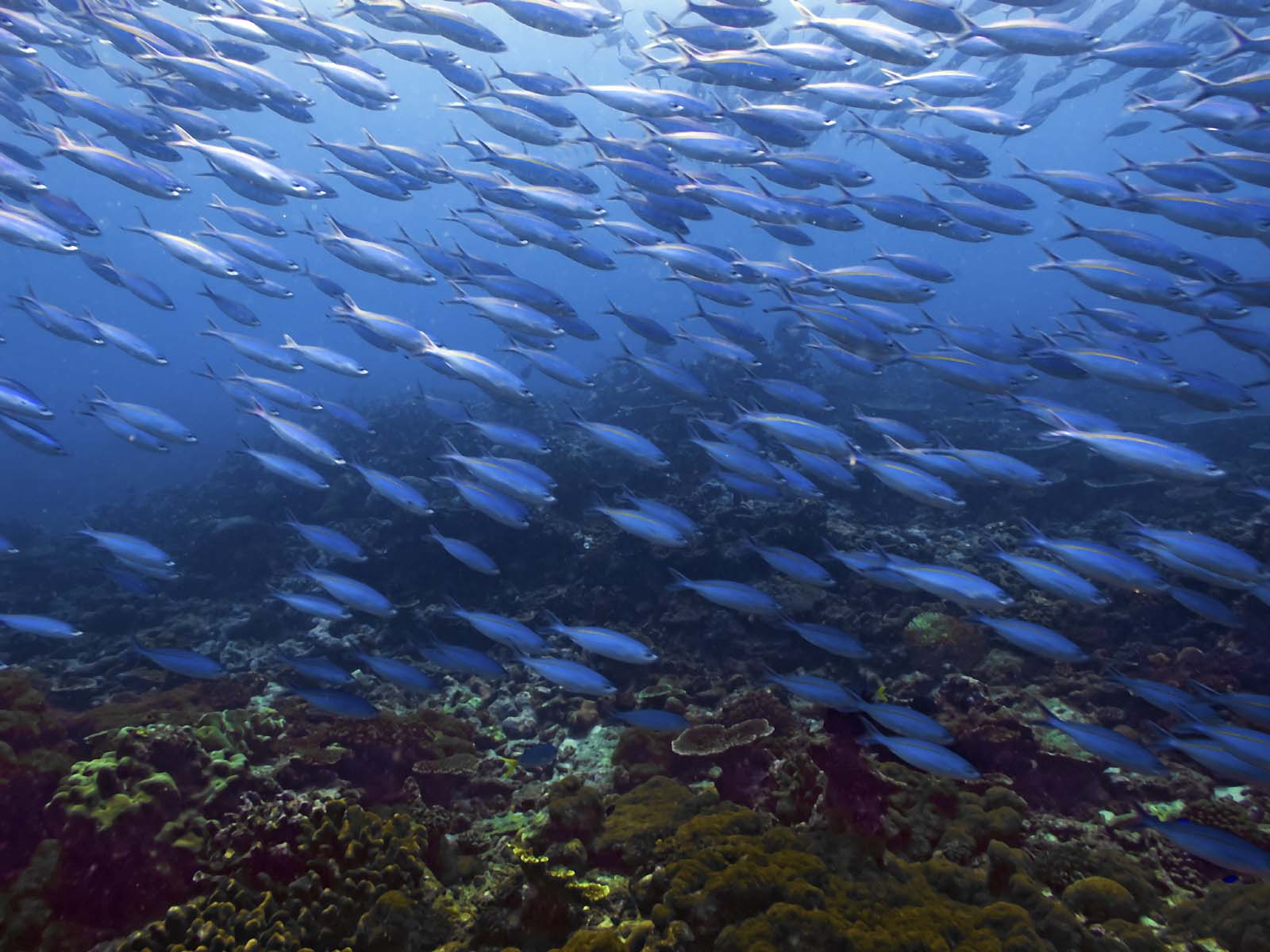
What this shot lacks in quality, it makes up for in blueness. It's a school of Fusiliers of some kind racing past me: We like to say that diving in Madang is very much the same as diving in a huge aquarium. We seldom have to deal with fussy weather or big seas. The water is not always crystalline, but the quantity and the wonderful nearness of the sea life makes up for the less than perfect visibility.
Not even Paradise is perfect. We don't care. It's close enough for us.
Built in 1919-1920, this Chicago School and Sullivanesque-style building was designed by Louis Sullivan for the Farmers and Merchants Union Bank in Columbus, Wisconsin as one of his late-career “jewel box” bank buildings that are largely located in smaller communities throughout the midwest. The building was the last “jewel box bank” designed by Sullivan, and the second-to-last commission of his career, and was intended to communicate the bank as a modern and progressive institution, rather than employing the stodgier and more traditional Classical design found on most other banks of the era. The bank was commissioned by the president of the bank, J. Russell Wheeler, whose wife, Anna May Wheeler, pushed him to commission Sullivan to design a new home for the bank. In addition to Louis Sullivan, the building’s stained glass windows, were designed by architectural decorator Louis J. Millet, and the terra cotta by clay modeler Kristian Schneider, whom developed moulds for the building’s terra cotta, metal, and plaster details. The two artisans worked alongside Sullivan on several other bank projects. The building was heavily documented in Sullivan’s 1924 “A System of Architectural Ornament”, published shortly before he died.
The building is clad in red tapestry brick, which features blue and green mixed with the red clay mixture in some bricks, creating variation in color and texture across the facade. The brick creates a backdrop to some of the best terra cotta on any of Sullivan’s projects. The terra cotta features many of the floral and geometric motifs found on Sullivan’s other works, and is arranged similarly to other Sullivan banks that utilized brick cladding. The building features two principal facades, with a narrower facade along James Street, and a broader facade facing Dickason Boulevard. The James Street facade features two openings close to ground level, with the eastern bay housing a large plate glass window, and the western bay housing a doorway flanked by skylights, both of which are recessed under a large terra cotta architrave and flanked by square pilasters with decorative Sullivanesque ornament panels at the capitals. The architrave above the doorway and window is divided into three segments by vertical terra cotta elements that feature floral motifs and, like many Sullivan buildings, appear like plants with roots, branches, and crowns. The outer panels of the architrave feature circular cartouches with hexagonal trim, leaves, and geometric elements, with circular central medallions featuring the years 1861, when the bank was founded, and 1919, when the bank was completed. The central panel is clad in marble with the words “Farmers & Merchants Union Bank” and “Louis Sullivan, Architect” engraved into the stone with yellow pigmentation, contrasting against the white and green marble background. Atop the two vertical elements on either side of the central panel are griffin sculptures holding shields, a common element on many of Sullivan’s “Jewel Box Banks,” while the base of the outer vertical elements features the initials of the bank at the base. Above the architrave is an arched bay that houses a stained glass window, trimmed with decorative terra cotta at the inner and outer rings of the arch, with the bay becoming more recessed after each concentric arch, much like the entrances to medieval Romanesque churches. Besides a band of belt coursing that runs on either side of the architrave and wraps the corner to a tapered buttress on the Dickason Boulevard facade, the only other adornment is an eagle sculpture on a vertical trim element at the center of the parapet, which terminates many brick courses above the arched opening below, and another band of terra cotta trim along the top of the parapet, which forms a cap on the parapet around the perimeter of the building’s low-slope roof. On the Dickason Boulevard facade, the building features five recessed clerestory arched bays housing stained glass windows, flanked by tapered buttresses. Surrounding the arched tops of the windows are decorative trim panels with floral motifs, which begin just below the base of the arches, and extend up above the top of the arches, terminating in a band of belt coursing. Atop the buttresses at either end are trim elements featuring large spheres atop rectilinear legs with floral motifs below, undulating in and out with the brick below. Additionally, a band of belt coursing, which wraps the corner of Dickson Boulevard and James Street, runs beneath the windows, only interrupted by the buttresses. Toward the back, on the building’s original rear wing, there are three windows at eye level in the original building, with bands of belt coursing below and at the top of the parapet. The rear window is a recessed bay window flanked by two pilasters with sullivanesque terra cotta panels, while the smaller windows are flanked by sullivanesque relief panels. The rear wing features a roof at multiple heights, and was extended in 1961 with a matching addition by Law, Potter and Nystrom, since removed. The rear of the taller portion of the building features a simple recessed bay with an arched window, and a similar eagle sculpture and vertical trim piece as on the front facade.
Inside, the front wing of the building features a tall banking hall with brick cladding on the walls up to the level of the windows, where it terminates at a wooden sill. The space is split down the middle by a row of brick piers and low walls framing the teller cages, which terminate at the sill line of the windows, dividing the space while still allowing it to read as a single continuous lofty space. The brick forms piers at the teller’s cages, pilasters separating desks on the exterior wall, and low brick walls with marble caps. The upper portion of the walls and the coffered ceiling in this space is finished with white plaster, which gives the space a very vertical and airy feeling, as do the cream-colored terrazzo floors, which feature black edges at the base of the walls, tying the space together. The space features a terra cotta water fountain, or bubbler, also designed by sullivan, which features intricate ornament by Schneider. The space also features two mezzanine balconies with metal railings that run below the arched windows at the front and rear of the space, allowing managers to observe the activities in the lobby and teller area below from the rear balcony, while the front balcony exists solely to balance the space and keep it symmetrical. An office for private conferences with customers was originally located near the front of the space, along with a manager’s office, allowing convenience for customers seeking a meeting with the bank management. The teller’s side of the space also housed the bank’s two vaults and several other private offices. The bank originally featured a large meeting room in the one-story rear wing, behind the vaults, with a women’s waiting room sitting along the Dickason Boulevard side of the rear wing, featuring a bay window and a restroom. The building’s interior has changed in function somewhat due to the growth of the bank, changes in bank operations, and expansion of the building with new additions to house offices and a drive-through in the rear.
The building was listed on the National Register of Historic Places in 1972, was designated a National Historic Landmark in 1976, and is a contributing structure in the Columbus Downtown Historic District, listed on the National Register of Historic Places in 1992. The building saw an addition in 2006, clad in buff brick, which replicated a historic building that formerly stood to the east, and wraps the building to the rear, with a two-story section behind a one-story annex that connects the one-story rear wing of the bank to the new building. This wing replaced older additions made in 1961, which matched the one-story rear wing of the historic building, and 1980, which was modern in appearance and slightly recessed along James Street to give precedence to the historic building. The building still functions as the main office branch of the Farmers and Merchants Union Bank, which has grown substantially. The building has been long considered to be among the best of Sullivan’s “Jewel Box Banks,” and has been kept in excellent condition by the bank’s careful and caring generational stewardship.
Juvenile millipede from the Polydesmida order, Xystodesmidae family. Probably a species in the genus Xystocheir. To determine the species, it is necessary to examine details of the genitalia of the mature male. This specimen has just recently molted and has not yet achieved full pigmentation. Portola Redwoods State Park. San Mateo Co., Calif.
Kingdom: Animalia
Phylum: Arthropoda
Class: Insecta
Order: Odonata
Family: Calopterygidae
Genus: Calopteryx
Species: C. virgo
Binomial name
Calopteryx virgo
The male usually has much more extensive pigmentation on the wings than other Calopteryx species in its range: in the south east of its range (the Balkans and Turkey) the wings are entirely metallic blue while in other areas, there are clear areas at the base and tip of the wing. Immature insects often have much paler, browner wings. They have metallic blue-green bodies and blue-green eyes.
The female has dark brown iridescent wings, a white patch near the tip of the wings (called a pseudopterostigma) and a metallic green body with a bronze tip of the abdomen
Females lay up to 300 eggs at a time on emergent or floating plants, often on water-crowfoot. Like the banded demoiselle, they often submerge to do so. The eggs hatch after around 14 days. Again, like the banded demoiselle, the larva is stick-like with long legs and develops over a period of two years in submerged vegetation, plant debris or roots. They usually overwinter in mud or slime.
The larvae of the beautiful demoiselle develop over 10 to 12 stages, each of which takes place between a molt. The body length is variable and highly dependent on environmental conditions. The final stage (F-0-stage) larvae are 3.5 to 4.6 millimeters and weigh about 4 milligrams, slightly below the banded demoiselle. Apart from the larvae of the demoiselles are difficult to distinguish from each other, the apparent differences lie mainly in the bristles and the severity of the tracheal gills on their abdomen. Compared to other damselflies demoiselles larvae fall immediately on the other hand, due to their much shorter mean gill lamella.
The body of the larvae shows only a relatively small adjustment to the fast-flowing waters of their habitat. The body is not flattened but very slim and turning around, the legs are long and have its end with strong claws, with which it can be stated in the vegetation. Because they reside within the water body, but mainly in the quieter areas, the danger of being swept with the flow, is relatively low. If this happens, they clearly its long body and legs stretched as far as possible to get in touch with the vegetation or the substrate to come.
The distribution of the beautiful demoiselle covers all of Europe with the exception of the southwestern Iberian Peninsula, the Balearic Islands and Iceland. In the north it extends to the Arctic polar sea, and thus much further north than that of the banded demoiselle. On the North African Mediterranean coast, its southern populations in Morocco and Algeria can be found.[1] The northern boundary in Asia following the 13-°C July isotherm, it is therefore not in the areas where the average temperature in summer below 13 °C falls, otherwise they are met with in temperate and cool regions in the entire continent with the exception of deserts and the mountains of. The eastern subspecies of C. v. japonica found on the Japanese islands is under debate as to whether it is a separate species. The beautiful demoiselle is mostly found in lowland locations. Regular findings come from areas up to a maximum height of 980 m above sea level. Occasionally they may be found up to 1,200 meters in altitude, such as in the Alps.
The blue-winged demoiselle lives mainly near small to medium sized streams and creeks. They prefer a relatively low water temperature and a moderate to fast flow. The water must not be nutrient rich (eutrophic). In the northern part of their range, such as in Norway and Finland, it is also found near medium-sized rivers or even larger streams. The waters are usually in the immediate vicinity of forests.
The larvae live in the streams mentioned before and are mainly dependent on the water plants. The larvae need the stems and leaves, especially in areas with stronger currents to hold on. Hence it is extremely rare to find them in barren locations, flat expiring banks, or areas with a smooth stone floor. They also live in small natural lakes or ponds characteristic for limestones bedrock. They live in quieter areas between alluvial leaves or on exposed roots of the vegetation. They can be found on submerged plants such as waterweed (Elodea sp.), floods for water crowfoot (Ranunculus fluitans) or other plants,submerged from a few centimetres to several decimetres. Compared with the larvae of the banded demoiselle the larvae of the blue-wing demoiselle prefer quieter areas of the water, since slower flow causes a more effective absorption of oxygen under water. Only in very rare cases the larvae are present in stagnant water. The substrate of the river has only a very minor importance, because the larvae reside mainly in the vegetation. An important factor for the occurrence of blue-wing demoiselles is the oxygen in the water. The larvae is much more sensitive to oxygen deficiency than the larvae of the banded demoiselle, hence it needs a sufficient oxygen saturation of the water. Waters with high levels of sediment and sludge, which is consumed by bacterial decomposition of oxygen are, accordingly not as a habitat for the larvae. This sensitivity qualifies it in water chemistry as a bioindicator for the assessment of water quality. Thus they will be an indication of value in the saprobic assigned of 1.9, which represents a low to moderately polluted waters type (β-mesosaprob) and a water quality class from I to II does. Another key factor for the occurrence of the larvae of the blue-wing demoiselle is the temperature of the water. This species prefers unlike the banded demoiselle, mainly the cooler and shadier areas of the water. The optimal temperature is a summer average 13 to 18 °C. At temperatures above 22 °C were often injuries of larvae observed and also a reduced hatch ability of eggs. The main reason is the oxygen content under higher temperatures. Individual populations may get used to permanently higher temperatures.
The habitat that the adults occupy, corresponds to the nearby larval habitat. Unlike the adults of the banded demoiselle you meet those of the beautiful demoiselle but also in forest clearings, but very rarely on the banks of larger ponds. As resting places, the animals need trees and shrubs, often resting on high herbaceous plants such as the large nettle ( Urtica Dioica ). The breeding habitats are similar to the Larval habitat, these are cool, shady water-courses largely with a more or less strong current and near-natural vegetation and bank structure. This is mostly meadow and pasture streams in the area, they rarely pass through the forest. A distinct riparian vegetation also plays a role as a windbreak. Due to their broad wings the beautiful demoiselle can be blown away by the wind more easily than other species of dragonflies.
Males are territorial, perching in bankside plants and trees. They chase passing insects, often returning to the same perch. Males can stray well away from water, females live away from water unless egg-laying or seeking a mate.
As with the banded demoiselle is also in the blue wing-demoiselle a pronounced territorial behavior of sexually mature males. These days occupy territories that they defend against other males. The defense consists mostly in threatening gestures. For this they spread their wings and put them on display so clearly visible, there is also Drohflügen and in rare cases to air combat between rival males. Optimal areas correspond to the optimal nesting places for the females and are characterized by a normally increased flow and a suitable oviposition substrate in the potential breeding sites from. The size of the spots and their distance apart is the density of the population dependent as well as the occurrences of the water and may be between several meters and a few decimetres. Males who do not occupy spots can keep themselves in the vegetation on the shore and try to mate with fly to females or to fill vacant spots. Especially when only a few males are present, the territorial defense is very aggressive, with a higher number of competing male aggression but decreases significantly. The males sit in their areas mostly in exposed places in the vegetation, which extends over the water, sometimes on vegetation or rocks cushions amid the waters. This seat is waiting at the same time the center of the district they do their gaze primarily on the aquatic center and will show a behavior that is referred to as "wingclapping" and in which the wings beat quickly down and slowly lifted. It is believed that it is mainly used for communication, it also supports the ventilation in the thorax and accordingly probably also plays a role in thermoregulation of the animals
The northern cardinal (Cardinalis cardinalis) is a North American bird in the genus Cardinalis; it is also known colloquially as the redbird or common cardinal. It can be found in southern Canada, through the eastern United States from Maine to Texas and south through Mexico. It is found in woodlands, gardens, shrublands, and swamps.
The northern cardinal is a mid-sized songbird with a body length of 21–23 cm (8.3–9.1 in). It has a distinctive crest on the head and a mask on the face which is black in the male and gray in the female. The male is a vibrant red, while the female is a dull reddish olive. The northern cardinal is mainly granivorous, but also feeds on insects and fruit. The male behaves territorially, marking out his territory with song. During courtship, the male feeds seed to the female beak-to-beak. A clutch of three to four eggs is laid, and two to four clutches are produced each year. It was once prized as a pet, but its sale as a cage bird was banned in the United States by the Migratory Bird Treaty Act of 1918.
The northern cardinal is a mid-sized songbird with a body length of 21–23.5 cm (8.3–9.3 in) and a wingspan of 25–31 cm (9.8–12.2 in). The adult weighs from 33.6–65 g (1.19–2.29 oz), with an average 44.8 g (1.58 oz). The male averages slightly larger than the female. The adult male is a brilliant crimson red color with a black face mask over the eyes, extending to the upper chest.
The color becomes duller and darker on the back and wings. The female is fawn, with mostly grayish-brown tones and a slight reddish tint on the wings, the crest, and the tail feathers.[11] The face mask of the female is gray to black and is less defined than that of the male. Both sexes possess prominent raised crests and bright coral-colored beaks.
The beak is cone-shaped and strong. Young birds, both male and female, show coloring similar to the adult female until the fall, when they molt and grow adult feathers. They are brown above and red-brown below, with brick-colored crest, forehead, wings, and tail. The legs and feet are a dark pink-brown. The iris of the eye is brown. The plumage color of the males is produced from carotenoid pigments in the diet. Coloration is produced from both red pigments and yellow carotenoid pigments.
Northern cardinal males possess the ability to metabolize carotenoid pigments to create plumage pigmentation of a color different from the ingested pigment. When fed only yellow pigments, males become a pale red color, rather than a yellow.
However, there are rare "yellow morph" cardinals, where all feathers (except for black face mask) and beak are a moderate yellow color. During the winter months, both male and female will fluff up their down feathers in order to trap warm air next to their body and keeping cold air from reaching their body. The down feathers are small and hairlike at the base of each flight feather. The legs and feet of almost all birds are thin and lack feathers, and so are vulnerable to rapid heat loss.Therefore, many take turns tucking one leg at a time into their body to keep them warm while still using the other to stand.
This image was taken at Kailua-Kona on the Big Island of Hawaii.
Bolivia. Somewhere between the Salar de Uyuni and the Chilean border close to San Pedro de Atacama.
Laguna Colorada (Red Lagoon) is a shallow salt lake in the southwest of the altiplano of Bolivia, within Eduardo Avaroa Andean Fauna National Reserve and close to the border with Chile.
The lake contains borax islands, whose white colour contrasts with the reddish colour of its waters, which is caused by red sediments and pigmentation of some algae.
You wouldn't want to swim in it! As well as that, it was bitterly cold and a thunderstorm unleashed its full fury! It was so wild.
The Eduardo Avaroa Andean Fauna National Reserve (Reserva Nacional de Fauna Andina Eduardo Avaroa) (REA) is located in Sur Lípez Province. Situated in the far southwestern region of Bolivia, it is the country's most visited protected area. It is considered the most important protected area in terms of tourist influx in the Potosí Department.
Located at an altitude between 4,200 m (13,800 ft) and 5,400 m (17,700 ft) in Bolivia, it extends over an area of 714,745 hectares (1,766,170 acres) and includes the Laguna Colorada National Wildlife Sanctuary. Categorized under IUCN Category IV, it is primarily for the protection of birds that inhabit the different lagoons in the reserve. The reserve protects part of the Central Andean dry puna (oligothermic) ecoregion. The reserve's major attractions are erupting volcanoes, hot springs, geysers, lakes, fumaroles, mountains and its three endemic species of flamingos in particular.
Established in 1973, the national park is named after Eduardo Avaroa (1838–1879), the Bolivian war hero of the 19th century. It was created by Supreme Decree of 13 December 1973 and extended on May 14, 1981. Since 2009, the entire reserve is part of the larger Los Lípez Ramsar site.
Lakes include Laguna Verde, Laguna Colorada, Laguna Salada, Laguna Busch and Laguna Hedionda. Laguna Colorada lies at an altitude of 4,278 m (14,035 ft) and covers 60 km2 (23 sq miles). It is named after the effect of wind and sun on the micro-organism that live in it. The lake is very shallow, less than 1 m (3 ft) deep, and supports some 40 bird species, providing pink algae to population of rare James's flamingoes who can walk across it.
An unusual natural feature of attraction in the reserve is an isolated rock formation projecting out of the sand dunes of Siloli at a place known as Árbol de Piedra. It is about 18 km (11 miles) north of Laguna Colorada. It is known as the “Stone Tree” as it is in the shape of a stunted tree, which is formed as a thin rock due to strong wind action.
The climate in winter (May to August) is dry, generally with no rain during the summer (December to April). The average temperature is 3 °C (37 °F). The lowest temperatures are recorded during the months of May, June and July.