View allAll Photos Tagged persistence

Painted in 1931 by Salvador Dalí “The Persictence of Sheepery” was planed as an angry accusation of the horrible, but in those times often practised, practise of sheep bathing and then leaving them hanging out to dry for days.


Unfortunately, just before he could put it on display and show the world what the poor sheep had to go through in his native country, Salvador Dalí went mad.


Forgetting all about being an ambassador of all things sheep he threw the painting away and made a new version with silly melting clocks and thus losing the heartbreaking message of the painting that could have saved so many sheep from their horrible ordeal.


Dalí, still quite mad, felt a deep resentment towards him whenever he encountered a sheep on his walks and soon after fled the country and settled in the United States where his madness went unnoticed.


“The Persistence of Sheepery” meanwhile disappeared, never to be seen again until it´s recent discovery in an attic by a certain sheep on a cookie search.

These little fellas are starting to take over!!


Thanks again to ghostbones for an awesome texture! www.flickr.com/photos/ghostbones/

Persistence finally paid off \o/


Fur: Annamite - Lantana

Eyes: Magma

Ears: Lop Ears

Shade: Classic


The Persistence of Dream: Echo of a Body in Suspension


A light meanders over the languid body, sliding like an electric whisper, a wave caressing space without ever stopping. It skims the skin, brushes against it, marking it with a spectral shiver, as if the visible hesitated to settle, as if the moment refused to be captured.


The scene is bathed in a soft, almost liquid glow, where the body seems to float on the border between wakefulness and dream. A spectral gleam dances, twisting and shifting, an elusive presence oscillating between matter and ether. Is it an inner force seeking expression? A thought materializing in the mist of reality?


The figure’s gaze, gentle yet questioning, seems to embrace this shifting light like a silent dialogue. Perhaps it is a thread connecting them to another reality, a path toward immaterial escape. The flesh is not restrained, but it allows itself to be traversed by the intangible, by this luminous trace undulating like an untamed memory.


A work that speaks of dissolution and connection, of a fluid and uncertain presence, of a world slipping away between shadows and clarity. A wave of light trying to write an ephemeral truth upon the skin of silence.

Lukes persistence to get into the Deat Star was not going unnoticed.

Lefthand Sector

The Top Shelf

Squamish


Prints and Image Licensing now available on all images. Contact: thomas@teacozydesign.com

You can now follow Teacozy on Facebook

Haven't we all been here at some point?

Unwilling to let go.

Church of St Sylvester, Chivelstone Devon is now the religious centre of this coastal parish known as Prawle point which is situated at the most southerly point in Devon and also incluldes the villages of South Allington, Ford, Lannacombe & East Prawle.


Mentioned as Cheveletone in the 1086 Domesday Survey, the Lord of the Manor was then Juhel de Totnes who was granted many manors in the south-west by William the Conqueror and who founded Totnes Priory in c.1087 but who , after the king's death , was expelled by his successor.

There was a chapelry here by the end of the 13c, attached to the parish of Stokenham held by Totnes Priory.


The church now consists of chancel, nave, north and south aisles, south porch, embattled three stage west tower with 5-sided stair turret on the south side , holding 5 bells, and is mainly Perpendicular in style.

The present building was constructed in the early 15c , though the chancel may be 14c, and enlarged with the rebuilding of the aisled nave, tower & porch in mid-16c.

It is the only one in Devon dedicated to Pope Sylvester who died in 325AD

Inside is a wonderful early 15c rood screen with painted saints www.flickr.com/gp/52219527@N00/5d01WbJ7P4 & a

later c1480 fine matching painted medieval pulpit hollowed out of the trunk of a large oak tree www.flickr.com/gp/52219527@N00/aCN1aNhKqJ

The registers date from 1630.


It was restored in 1897 but by the beginning of this century was badly in need of further extensive restoration.

The PCC also hoped to create a space that could be used more widely by the community as well as bringing in revenue to help make it more sustainable in the future - this in addition to providing better facilities for the loyal congregation.

Having been unsuccessful with previous grants the Church worked hard with the active support of Le Page Architects, to win a grant from the National Lottery Heritage Fund. The final interview for the grant on zoom released £400,000 during the 2020 lockdown, this supplemented with other fundraising for the match funding. There is an explanatory video that explains the project here: eastprawlehistorysociety.co.uk/church-repair-project

Work was done during 2021. www.youtube.com/watch?v=p0xs1N7-DnU

There have been interesting complications around structural and conservation repair, entailing 8m deep low impact piles to support the south porch, as well as repair to a reed reinforced plaster ceiling. Extensive repointing, upgrade of rainwater goods, other repairs to lead roof, and stonework repair to decayed windows has formed the majority of the external work.

Interior works are wide ranging, involving the installation of an accessible lavatory unusually with a shower. This is so that the Church may be used for overnight accommodation for walkers and tourists champing.co.uk. Grant of consent to allow for a shower was extremely hard won but eventually allowed. A bespoke hideaway kitchen offers simple catering for a variety of events.

Conservation work to the medieval pulpit was one of the highlights of the project and remains of late 17c / early 18c wall paintings have been found under layers of whitewash,


In the graveyard are numerous graves dating from 1712 , many to those who lost their lives in ships wrecked throughout the centuries,

In his book “Kingsbridge and its Surroundings” (1874) S P Fox wrote bout the wreck of the Gossamer:“A China tea clipper ship, of 735 tons register, was wrecked in December, 1868 and 13 lives were lost. There was a strong South-wrest breeze, and a heavy sea… The Captain was seen to lash his bride of just two weeks to a spar in the hope that she would stay afloat. For a time the two of them clung to the storm tossed bit of wood until the sea took them in its cold embrace…”


My sincerest apologies and credit to Salvador Dali on his painting entitled, "The Persistence of Memory" as it was the inspiration for me to capture this image. Hopefully this is the last of the snow until next season, as it just seems to want to linger forever. As I looked out on our patio today, I saw the remainder of our last snow fall slowly sliding off the edge of this side table, and couldn't stop thinking of the melting pocket watches, so I knew I had to get the image before it melted and broke away.

It's kinda hoaky, but it made me smile, and I hope it makes you smile too!


The question I have is should I do post and make it look more diffused, maybe a little gritty to be more reflective of the actual painting? Thoughts?

December 6, 2010.


I really, really enjoy black and white snowscapes.


Steps: 66.


See my entire "365 Steps" project here!

Persistence by both the model and the photographer pays off.

Der Berg des Friedens (Serie Gedichte von Mao Tse-tung)


Hora míru (Série Básně Mao-Ce-tounga), Lept


The Mountain of Peace (Series Poems by Mao-Tse-toung), etching


Salvador Dalí, vollständig ausgeschriebener Name, Salvador Domènec Felip Jacint Dalí i Domènech, wurde 1904 im spanischen Dorf Figueres, Katalonien, in eine Mittelklassefamilie hineingeboren. Sein Vater, Dalí i Cusí, war ein Staatsbeamter und seine Mutter, Felipa Domènech Ferres, war früher ein Dienstmädchen für ihren zukünftigen Ehemann. Salvador hatte zwei Geschwister, eine jüngere Schwester, Anna María, und einen älteren Bruder, auch Salvador, der im Alter von zwei Jahren starb. Dalí glaubte, die Reinkarnation seines toten Bruders zu sein.

Dalí zeigte bereits in der Kindheit künstlerische Talente. Im Jahre 1921 wurde er in der Madrider Schule der schönen Künste Academia de San Fernando aufgenommen. Hier machte er Bekanntschaft mit seinen zukünftigen Freunden und Kollegen Luis Buñuel und Federico García Lorca. Seine Werke dieser Periode zeigen Elemente des Futurismus, der metaphysischen Malerei und des Kubismus. 1925 fand seine erste Einzelausstellung in der Dalmauer Galerie in Barcelona statt. Ein Jahr später besuchte der Künstler Paris, wo er Pablo Picasso traf, der ihn den Künstlern der Pariser Avantgarde vorstellte. Beeinflusst von Diego Velázquez (der spanische Maler und führende künstlerische Persönlichkeit des Hofes von König Philip IV), wuchs Dalí sein unverwechselbarer Schnurrbart. Im selben Jahr wurde er aus der Madrider Akademie ausgeschlossen. Im Jahr 1929 arbeitete er mit Luis Buñuel an dem Film "Un Chien Andalou" (An Andalusian Dog), der seine offizielle Akzeptanz in der surrealistischen Gruppe markierte.

Im Sommer des gleichen Jahres traf er Gala, seine zukünftige lebenslange Partnerin, die seine Arbeit stark beeinflusste. Während dieser Periode begann Salvador seine "paranoisch-kritische Methode" zu entwickeln, die auf spontanem Zugriff auf das Unterbewusstsein beruhte, was zu solchen charakteristischen Bildern wie dem Lugubrious Game (1929) und The Persistence of Memory (1931) führte. 1932 nahm Dalí an der ersten surrealistischen Ausstellung in den USA teil, was ein triumphierender Erfolg war. Inzwischen brach der spanische Bürgerkrieg aus und Dalí, bekannt für seine extremen Ansichten, machte kein Geheimnis aus seiner Sympathie für die Politik von General Franco, die zu Konflikten mit den anderen Surrealisten führte. 1939 wurde er schließlich aus der surrealistischen Gruppe ausgeschlossen. Ein Jahr später wanderte er mit Gala nach den USA aus, wo er bis 1948 blieb. Dort veröffentlichte er seine Autobiographie "Das geheime Leben von Salvador Dalí" (1942) und arbeitete für die Filmindustrie, beispielsweise für ein Drehbuch für Walt Disney. Nach ihrer Rückkehr nach Spanien ließen sich Dalí und Gala in Katalonien nieder, wo sie den Rest ihres Lebens verbrachten. Zu dieser Zeit begann Dalí in seine Kompositionen mehr religiöse Elemente und optische Täuschungen zu inkludieren, was zu Gemälden wie die Madonna von Port Lligat (1950) und Kreuzigung (1954) führte. Von 1960 bis zur Fertigstellung 1974 arbeitete Dalí an seinem Theater und Museum in Figueres. Er wandte sich auch anderen Projekten zu wie der Werbung (das Logo für Chupa Chups Lutscher) und das Möbeldesign (z. B. ein Sofa in der Form der Lippen der Schauspielerin Mae West). Er schuf auch seine eigene Schmucksammlung und "Dalí" Parfüm.

Dalí benutzte eine breite Palette von Symbolen in seinen surrealistischen Werken, deren bekannteste die schmelzende Uhr ist, die die Relativität der Zeit symbolisiert, wie von Albert Einstein beschrieben. Der Ursprung dieser Idee ist Dalí's Beobachtung eines an einem heißen Sommertag schmelzenden Camembert-Käse zugeschrieben. Andere Symbole beinhalteten einen Elefanten auf schlanken Beinen und kriechenden Ameisen, die, nach Dalí, Tod und Angst symbolisierten. Das waren Empfindungen, die in der Kindheit des Künstlers ihren Ursprung hatten. Als er ein Kind war, hatte er eine Haustier-Fledermaus, die eines Tages starb, und Dalí fand es bedeckt mit Ameisen. Dalís Motive sind aus der Welt der Träume und freien Assoziationen gezogen.

1982 starb Dalís geliebte Frau Gala. Im selben Jahr wurde der Maler Salvador Felipe Jacinto Dalí von König Juan Carlos zum "Marquès de Dalí de Púbol" geadelt.. Im Jahr 1989 starb der zurückgetretene Dalí an Herzversagen in seinem Museum im Galatea Tower. Nach seinen Wünschen wurde er in der Krypta des Museums begraben. In seinem Testament vermachte er sein ganzes Vermögen und seine Werke dem spanischen Staat.

Die oft undurchdringliche Tiefe von Dalís Gemälden steht im Widerspruch zu seinen Skandalen und dem exhibitionistischen öffentlichen Verhalten. Während seines ganzen Lebens weigerte er sich, alle Speisen zu essen, die rot gefärbt waren und trug einen halbrasierten Schnurrbart. Er liebte es, ungewöhnliche Dinge zu tun, nur um die Aufmerksamkeit auf sich selbst zu lenken. Dennoch ist er einer der größten Künstler in Bezug auf die Qualität seiner Werke und wurde zu einem der wichtigsten Pioniere der neuen künstlerischen Trends seiner Zeit.


Salvador Dalí, full name Salvador Domènec Felip Jacint Dalí i Domènech, was born in 1904 in the Spanish village of Figueres, Catalonia to a middle class family. His father, Dalí i Cusí, was a state official and his mother, Felipa Domènech Ferres, was formerly a maid to her future husband. Salvador had two siblings, a younger sister, Anna María, and an older brother, also Salvador, who died at the age of two. Dalí believed himself to be the reincarnation of his dead brother.

Dalí already showed signs of artistic talent in childhood. In 1921 he was accepted into the Madrid school of fine arts Academia de San Fernando. Here he made acquaintance with his future friends and colleagues Luis Buñuel and Federico García Lorca. His works of this period display elements of Futurism, metaphysical painting and Cubism. In 1925 his first one-man exhibition took place in the Dalmau Gallery in Barcelona. A year later the artist visited Paris, where he met Pablo Picasso, who introduced him to the artists of the Paris avant-garde. Influenced by Diego Velázquez (the Spanish painter and leading artistic personality of the court of King Philip IV) Dalí grew his distinctive moustache. In the same year he was expelled from the Madrid Academia. In 1929 he collaborated with Luis Buñuel on the film Un Chien Andalou (An Andalusian Dog), which marked his official accepta

nce into the Surrealist Group.

In the summer of the same year he met Gala, his future lifelong partner, who greatly influenced his work. During this period, Salvador began to develop his “paranoiac-critical method” based on spontaneously accessing the subconscious, which resulted in such characteristic paintings as The Lugubrious Game (1929) and The Persistence of Memory (1931). In 1932 Dalí took part in the first Surrealist exhibition in the USA, which was a triumphant success. In the meanwhile, the Spanish Civil War broke out and Dalí, renowned for his extreme views, made no secret of his sympathy for the policies of General Franco, which resulted in conflicts with the other Surrealists. In 1939 he was finally expelled from the Surrealist Group. A year later he left with Gala for the USA, where they remained until 1948. There he published his autobiography The Secret Life of Salvador Dalí (1942) and worked for the film industry, for example drawing a storyboard for Walt Disney. Following their return to Spain, Dalí and Gala settled in Catalonia, where they spent the rest of their lives. At this time, Dalí began to include in his compositions more religious elements and optical illusions, resulting in paintings such as The Madonna of Port Lligat (1950) and Crucifixion (1954). From 1960 until their completion in 1974, Dalí worked on his theatre and museum in Figueres. He also turned his hand to other projects, such as advertising (the logo for Chupa Chups lollipops) and furniture design (for example a sofa in the shape of actress Mae West’s lips). He also created his own jewellery collection and “Dalí” perfume.

Dalí used a wide range of symbols in his surrealistic works, the most familiar of which is the melting watch, symbolising the relativity of time as described by Albert Einstein. The origin of this idea is ascribed to Dalí’s observation of a Camembert cheese melting on a hot summer’s day. Other symbols included an elephant on slender legs and crawling ants, the latter of which symbolised, according to Dalí, death and fear. These were sensations which had an origin in the artist’s childhood. When he was a child he had a pet bat, which died one day, and Dalí found it covered in ants. Dalí’s motifs are drawn from the world of dreams and free associations.

In 1982 Dalí’s beloved wife Gala died. In the same year the painter was knighted. In 1989 the resigned Dalí died of heart failure in his museum in Galatea Tower. In accordance with his wishes he was buried in the crypt of the museum. In his will he bequeathed all his property and works to the Spanish State.

The often impenetrable depth of Dalí’s paintings contrasts with his scandals and exhibitionistic public behaviour. Throughout his life he refused to eat any food that was red in colour and sported a half-shaven moustache. He was fond of doing unusual things just for the sake of drawing attention to himself. Nonetheless, he is one of the greatest artists in terms of the quality of his works and became one of the most important pioneers of the new artistic trends of his time.

www.goap.cz/salvador-dali-en

"Open up, I'm coming through."


Hosta plant in our front yard.

We take from nature, and although we may resist, the patience of nature always takes its own back. In this Bromoil image, a single pane of glass is fighting the inevitable, as the rest of the house has begun to accept its fate.

You put up a fence, we'll just cut a hole in it to get our shot. ;-)


Persistence of Vision on the Arduino... slow synch on the flash.

20.365 // Y3 // 18.03.2010


Showered and dressed before 7am. Preparation for a meeting 'til 7.45. Caught a train at 8.15. Arrived at university before the library opened. Waited for it to open, only to discover that all of the books I needed were on loan already.


Waited in my lecture room eating breakfast and reading lecture notes until 10am. One lecture on placenames. One essay returned. One dissertation 'group' meeting at 12pm. One presentation meeting at 2pm. One set of questions for the lovely Jenny. Three A4 pages of scribbled notes.


Caught a train home. Drunk three cups of tea. Slept until 6pm. Typed until my fingers were sore. Threw roses at my face. Went to Asda with Steve and Paul. Played a game of scrabble. Stared at my monitor without blinking. Went back to sleep at 1am.


---


I will have a draft of my dissertation finished by the deadline. I will.


__________________________________________________

Outlining a Theory of General Creativity . .

. . on a 'Pataphysical projectory


Entropy ≥ Memory ● Creativity ²

__________________________________________________


Study of the day:


[...] Il y a deux espèces de multiplicité : celle des objets matériels, qui forme un nombre immédiatement, et celle des faits de conscience, qui ne saurait prendre l'aspect d'un nombre sans l'intermédiaire de quelque représentation symbolique [...] Il faut admettre deux conceptions, l'une qualitative, l'autre quantitative, de la différence entre le même et l'autre. [...]


[...] There are two types of multiplicity : the one of material objects, which form a number immediately, and the one of consciousness facts, which does not take the appearance of a number without the intermediary of some symbolic representation [...] We must admit two approaches, one qualitative, an other one quantitative, of the difference between the same and the other.[...]


( Henri Bergson - Essai sur les données immédiates de la conscience - 1889 )


__________________________________________________

rectO-persO | E ≥ m.C² | co~errAnce | TiLt

Off camera one canon 600ex-rt speedlite flash fired by a canon speedlite transmitter with a Gary Fong Lightsphere Collapsible off to the left with a second 600 ex-rt speedlite behind the model on the right side

Remember those slick motivational poster from back in the early 2000s — with one word titles for a great image?


Like this?


i5.walmartimages.com/asr/57817e32-9947-446c-af22-bcfb87ab...
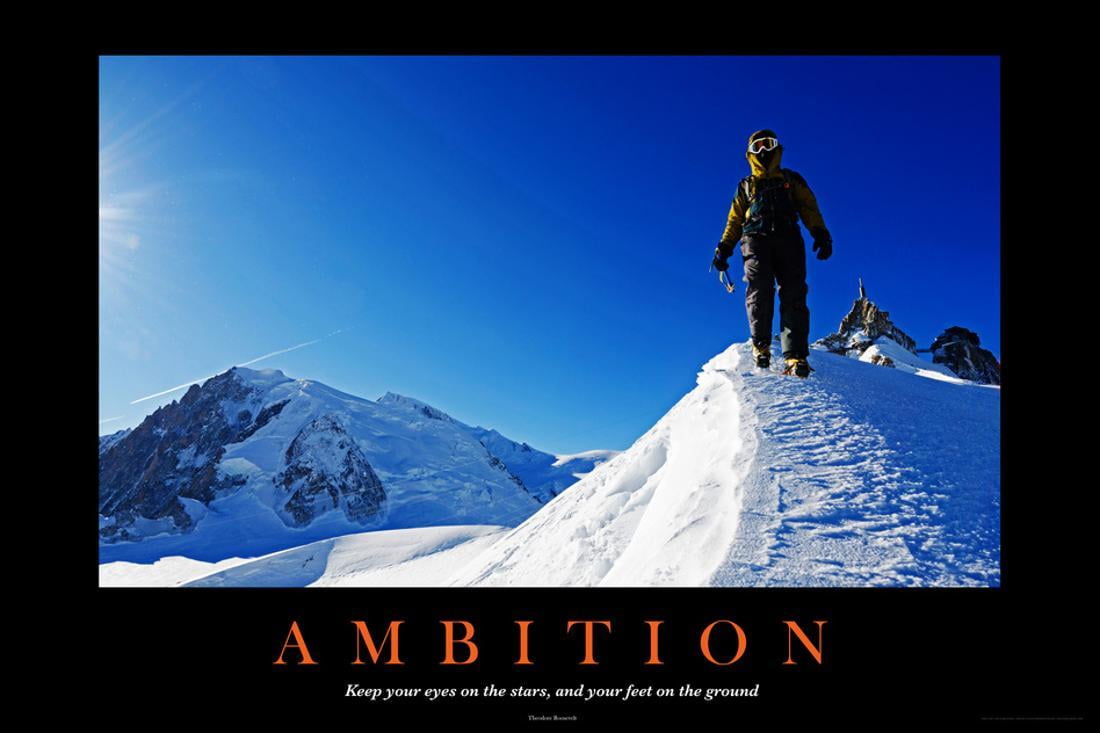
 

That’s what I thought of when I saw this tree. On the Wildflower Trail, Monte Sano Nature Preserve, Huntsville, Alabama.


Nikon D7200 — Nikon 18-300mm F6.3 ED VR

22mm

F22@0.8 seconds

ISO 400

Polarizer


DOL_6875.JPG

©Don Brown 2022

Just a short break from the landscapes, I made friends with this squirrel in the University Park last year, though this wasn't difficult! There was something rustling in my pocket and he became very curious. A pity for him that it was my house keys but I did have some red peanuts in my rucksack so his persistence was rewarded!

The squirrel strayed too far from the woods and the Red-shouldered Hawk saw his opportunity. The fur and feathers were flying!


__________________________________________________

Outlining a Theory of General Creativity . .

. . on a 'Pataphysical projectory


Entropy ≥ Memory ● Creativity ²

__________________________________________________


Study of the day:


La durée est une hétérogénéité persistante,

un devenir qui dure, un changement continuel.


The duration is a persistant heterogeneity,

a becoming that remains, a continual changing.


( Henri Bergson - L'évolution créatrice )


__________________________________________________


"Un fou, ce n'est pas seulement un mendiant qui se prend pour un Roi, c'est aussi un roi qui se prend pour Le Roi."


"A mad, this is not only a beggar who claims to be a King,

this is also a king who takes himself as The King."


( Jacques Lacan )


__________________________________________________

rectO-persO | E ≥ m.C² | co~errAnce | TiLt

Oil on canvas

9 1/2 x 13" (24.1 x 33 cm)


The Persistence of Memory - Salvador Dalí 1931


The Museum of Modern Art - MoMA

11 West 53 Street - New York, NY 10019-5497

www.moma.org

1 2 ••• 15 16 18 20 21 ••• 79 80