View allAll Photos Tagged microscopy
This is a photo stack of a female mosquito's head from above x100 times approx. Such sensitivity is built into these little animals. Little things are not so simple after all - just everything packed into a smaller area.
[This is a rough test run to see how my lighting would work with the compound microscope. I should be able to improve to some extent on future attempts. The image is a combination of many sectional photographs stacked with Helicon Focus. Next time I will try to get the proboscis and pulps focused as well] .
A leaf of moss (Brachythecium) under the microscope. The leaves have a single layer of cells. The chloroplasts in the individual cells are nicely arranged in a row.
An even larger magnification is here.
date: 2006-02-27
magnification: 100x
original filename: Img_4066
Mentioned on the dataisnature blog, 9/8/2006
The eye of a transgenic zebrafish embryo showing microtubules. Credit: Daniel Castranova, Weinstein Lab, NICHD/NIH
a trial of using double lens reverse macro technique for microphotography on a cross section of a plant root.
55-250IS@250mm on 500D body with 18-55IS@18mm reverse mounted. This was mounted above an old microscope (with viewing optics removed) to use the mount and light for lighting and micro adjustement of focus. Shake is a major issue and this set up requires alot of light, so even with the microscope illumination, i used both lenses wide open, ISO 6400, Av with -1Ev for 1/320s exposure.
lens set up gives a calculated magnification of 250/18=13.8x. On a canon APS-C 1.6x crop factor this gives a FOV of approximately 1.6mm. After softening and noise, resolution is a little shy of the micrometer range.
cross section: Older stem: Helianthus
common name: Sunflower
magnification: 400x
Berkshire Community College Bioscience Image Library
All vascular tissues in Helianthus are the product of primary growth. There are no signs of secondary growth (growth rings or lateral meristems) as might be seen in woody stems.
The uniseriate and cutinized epidermis contains large multicellular trichomes and occasional stomata.
The cortex consists of an outermost hypodermis of heavy walled collenchyma, a deeper layer of parenchyma and a deepest band of endodermis (starch sheath).
Within the stele the vascular bundles are arranged in a ring and separated from each other by wide medullary rays of parenchyma cells.
The collaterally arranged vascular bundles are almost entirely primary phloem and xylem. Each bundle consists of a large outer supportive cap of sclerenchyma fibers (phloem fiber cap), a deeper layer of primary phloem with well-defined sieve tubes and companion cells, and a deepest layer of primary xylem. In between the xylem and phloem, a narrow band of cambium may be seen. In some preparations, the highly lignified cells walls of xylem and mature sclerenchyma are stained red orange. These cells are dead at maturity and can also be distinguished by a heavy cell wall and absence of cytoplasm.
The center of the stem is occupied by a pith of parenchyma cells that contain numerous starch storing amyloplasts.
Technical Questions:bioimagesoer@gmail.com
Senior staff member Pamela Fleming trains users in the operation of the STEM (Scanning Transmission Electron Microscope). (l-r) Samantha Connell, Nahla Abu Hatab, Pamela Fleming.
The walmart gods have blessed me, the poor college student, with a new and affordable microscope desk!! Horay, WORKSPACE!!
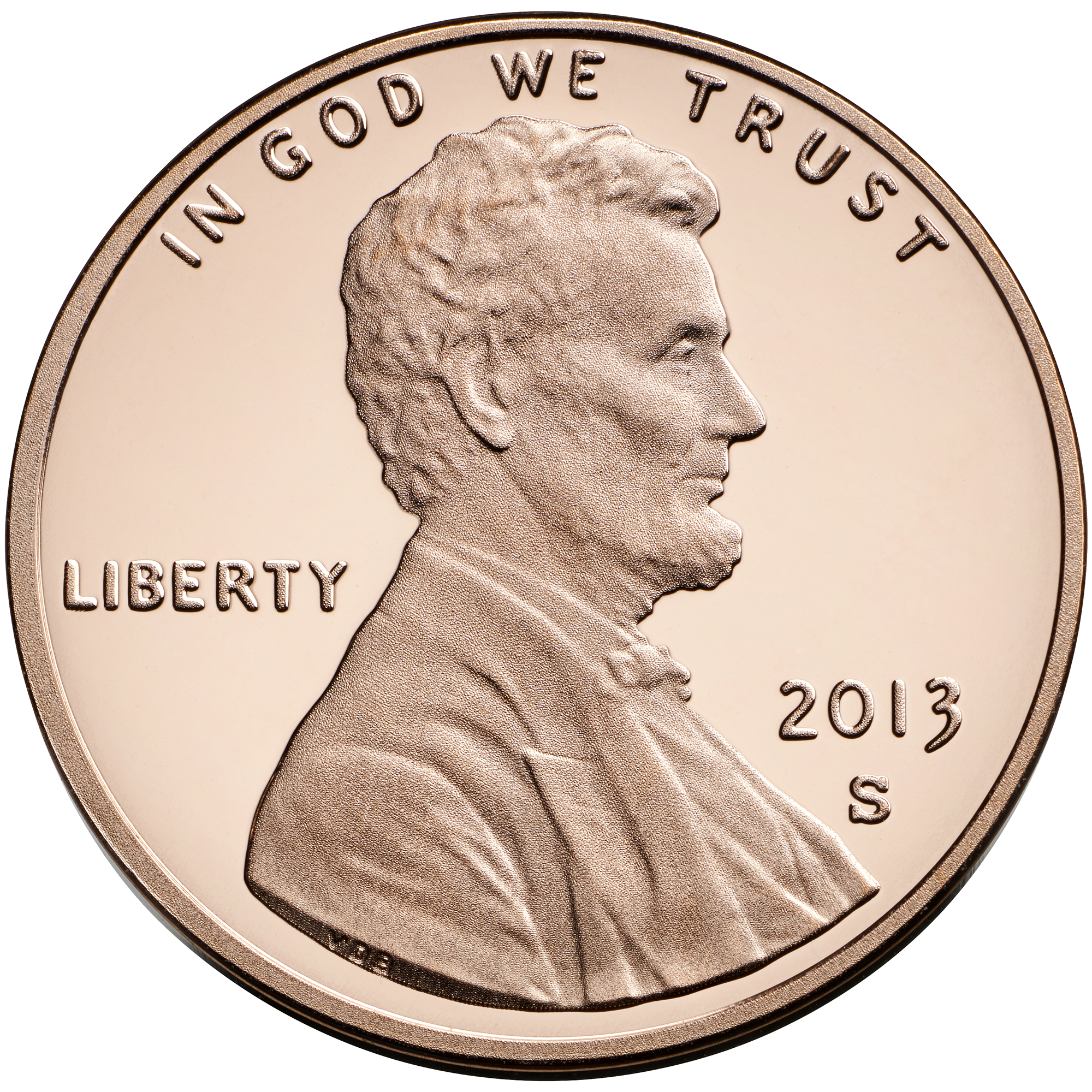
The tiny signature letters VDB on a US cent, imaged using a Therm-App thermal imager. The letters are about 360µm (0.36mm) high and, on the raw 384x288 thermal image, were about 30 pixels high. So I calculate the resolution in this image to be about 12µm per pixel. That’s about one wavelength of thermal ‘light’ and actually smaller than the size of the thermal imaging pixels themselves, which are on a 17µm pitch. This is probably about the physical limit of close-up work using thermal imaging.
According to Wikipedia, “An additional design detail that is not readily visible to the naked eye is found on the obverse side of the 1918 onward United States cent. The letters “VDB” stamped on the bottom sleeve of Abraham Lincoln represent the initials of Victor David Brenner, the primary designer of the Wheat cent.”
The thermal images were made using a Therm-App fitted with a 13mm f/1.0 lens, with a 6.8mm f/1.4 lens reversed in front of it. The depth of field is vanishingly thin and it’s not easy getting usable thermal contrast from a shiny metal surface.
The visible light image of the cent came from Wikipedia, upload.wikimedia.org/wikipedia/commons/2/2e/US_One_Cent_O...
Comments are warmly welcomed.
For more thermal images covering a diverse range of subjects please visit (and join!) the Therm-App (and others) thermal imaging group at www.flickr.com/groups/therm-app-users/
NanoMRI setup with micromechanical force detector (tiny vertical line in the center), laser lens pointing at it from the right, scanning stage at the top (gold surface with chip attached) and red semiconductor diode at the right edge. The entire setup measures just a few centimeters in reality and is suspended in vacuum at cryogenic temperatures.
Early April, I purchased a microscopy locally. It was a BX40, equipped with some plan objectives and a 100x apo, bundled with a binocular head. I wanted the 100x apo.
I bought some commercial slides and played with it. This opened a new door in my mind and I had a new vision. I want to see these illusive diatoms! Early May, I obtained a U-TLU tube lens, and a phase contrast condenser. It was a lot of fun, I was satisfied with what I was seeing, but my images weren't the best.
Fast forward to August. I learned various background replacing methods and obtained a 40x and 100x oil immersion phase objective. It was working out well.
Then comes September. My wallet took a blunder, I invested in DIC, which differentiated my bank account too. I started out with 40x and 100x. I was very fortunate to order some diatoms from the legendary diatomist, Klaus Kemp.
December arrived. My dream came true, a brand new 60x water immersion objective presented itself to me for a price I simply cannot resist. I landed on my roots, and took the final shot, this is purely brightfield.
Plans for 2021:
The last arrangement photographed with other techniques. DIC, phase contrast, and bright contrast phase contrast (negative PC).
Fluorescent added to the kit!
Make my own slides.
And of course, since I graduated in 2020, I want a stable job, hahaha.
4 NAND (2И-НЕ) элемента. Глядя на гигантский размер кристалла (944x854 µm) — становится очевидно что и «старые» микронные технологии до сих пор используются. Интересно обилие «резервных» via для увеличения выхода годных.
Human fibroblasts with fluorescent dyes staining their nuclear DNA (blue ovals) and their mitochondrial populations. These are colour coded by the network sizes in each cell. This is all overlaid on the DIC image showing the morphology of fibroblasts growing on glass.
This is a single snapshot- the mitochondria move around a lot inside the cell and are constantly fusing and dividing within their population.
coloured_mitochondrial_network_with_blue_colour_nuclei.png
Hygrocybe turundus var. turundus
20090914.3
Canada, BC, Wells Gray Park
Close-up of cap texture, showing the brown-tipped scales characteristic of this species of waxy-cap.
Experiments with digital camera and old microscope. Interesing for generating backgrounds and abstract compositions.
this is a slide I made of one of my malaria cultures living in red blood cells. sorry it's a little fuzzy.
Electron microscopy structure of the human RISC-loading complex, with the L-shaped Dicer enzyme shown as a wire map and the Argonaute2 protein, shown in purple.
Berkeley researchers have solved the structure of a protein complex that helps determine the fate of human cells. Called a RISC-loading complex, this structure consists of small RNA molecules that control whether genetic messages are silenced or expressed.