View allAll Photos Tagged materials
Materialer:
95% polyester, 5% elasthan
Pris: Kig på hjemmeside www.verdious-wardrobe.dk
Direkte link til disse leggins: www.verdious-wardrobe.dk/produkt.php?vareid=12
Andre bukser: www.verdious-wardrobe.dk/side4.php?varekat=4-5-7
Materials: oil on canvas. Dimensions: 75.5 x 105 cm. Nr.: AM-832-PS01. Source: commons.wikimedia.org/wiki/File:Marten_van_Valckenborch_t.... I have changed the contrast of the original photo.

Material Circulante: CP 1437 + 3 Corail + Furgão Gerador
Hora: 12:29
Data: 13-10-2013
Local: Estação de Viana do Castelo (PK 81 - Linha do Minho)
"old pond — frogs jumped in — sound of water." - matsuo basho, translated by lafcadio hearn -
scanned and altered image, august 31, 2006
Top grade Chrysocolla gem silica, a new find of natural, more durable,stable, unique,good colored and highly translucent material on this planet ever seen.
Materials: oil on canvas. Dimensions: 27 x 43 cm. Source: s006.radikal.ru/i213/1401/2b/9d8dbf818d56t.jpg. I have changed the light and contrast of the original photo.

!!! (Chk Chk Chk)
Sonar Reykjavik 2016
Reykjavik, Iceland
February 2016
© 2016 LEROE24FOTOS.COM
ALL RIGHTS RESERVED.
THIS MATERIAL MAY NOT BE PUBLISHED,
BROADCAST, REWRITTEN OR REDISTRIBUTED.
©All photographs on this site are copyright: DESPITE STRAIGHT LINES (Paul Williams) 2011 – 2021 & GETTY IMAGES ®
No license is given nor granted in respect of the use of any copyrighted material on this site other than with the express written agreement of DESPITE STRAIGHT LINES (Paul Williams) ©
.
.
Photograph taken at an altitude of Eighteen metres at 11:39am on Sunday 24th January 2021,during the first snow flurries of the year off New Road and B213 in Abbey Wood open space, Belvedere in Kent, England.
.
.
Nikon D850 Hand held with Sigma OS Otical Stabilization enabled on normal setting. Focal length 60mm Shutter speed: 1/125s Aperture f/4.5 iso800 Image area 1.2X L (6880 x 4584). NEF RAW L (14 bit uncompressed). Focus mode AF-C focus. AF-C Priority Selection: Release. Nikon Back button focusing enabled. AF-S Priority selection: Focus. Single point: Normal 55 Tracking points.AF-Area mode single point & 73 point switchable. Exposure mode: Aperture Priority mode. Matrix metering. Auto ISO sensitivity control on (Max iso 800/ Minimum shutter speed 64). White balance on: Auto1. Colour space: RGB. Active D-lighting: Normal. Vignette control: Normal. Nikon Distortion control: Enabled. Picture control: Auto (Sharpening A +1/Clarity A+1)
Sigma 60-600mm f/4.5-6.3DG OS HSM SPORTS. Lee SW150 MKI filter holder with MK2 light shield and custom made velcro fitting for the Sigma lens. Lee SW150 circular polariser glass filter.Lee SW150 Filters field pouch.Nikon GP-1 GPS module. Hoodman HEYENRG round eyepiece oversized eyecup.Mcoplus professional MB-D850 multi function battery grip 6960.Two Nikon EN-EL15a batteries (Priority to battery in Battery grip). Blackrapid sport quick release neckstrap. My Memory 128GB Class 10 SDXC 80MB/s card. Lowepro Flipside 400 AW camera bag.
.
.
LATITUDE: N 51d 29m 14.88s
LONGITUDE: E 0d 7m 38.56s
ALTITUDE: 22.0m
RAW (TIFF) FILE: 66.00MB NEF: 90.5MB
PROCESSED (JPeg) FILE: 43.10MB
.
.
PROCESSING POWER:
Nikon D850 Firmware versions C 1.20 (14/01/2021) LD Distortion Data 2.018 (18/02/20) LF 1.00
HP 110-352na Desktop PC with AMD Quad-Core A6-5200 APU 64Bit processor. Radeon HD8400 graphics. 8 GB DDR3 Memory with 1TB Data storage. 64-bit Windows 10. Verbatim USB 2.0 1TB desktop hard drive. WD My Passport Ultra 1tb USB3 Portable hard drive. Nikon ViewNX-1 64bit Version 1.4.1 (18/02/2020). Nikon Capture NX-D 64bit Version 1.6.2 (18/02/2020). Nikon Picture Control Utility 2 (Version 2.4.5 (18/02/2020). Nikon Transfer 2 Version 2.13.5. Adobe photoshop Elements 8 Version 8.0 64bit.
Material Circulante: UTE 2247
Hora: 16:15
Data: 01-04-2015
Local: Sorieira (PK 135 - Linha do Norte)
Serviço: R 4517 (Entroncamento --» Coimbra)
Handmade book with slides. Book 37 of a 365 challenge. Blogged at: craftyminimeg.blogspot.com/2013/03/books-037-040-and-art-...
“The Eye Moment photos by Nolan H. Rhodes”
nrhodesphotos@yahoo.com
www.flickr.com/photos/the_eye_of_the_moment
“Any users, found to replicate, reproduce, circulate, distribute, download, manipulate or otherwise use my images without my written consent will be in breach of copyright laws.” www.flickr.com/photos/the_eye_of_the_moment
Materials: tempera on parchment. Dimensions: 23 x 44 cm. Nr.: PC 74. Source: img-fotki.yandex.ru/get/9263/84064482.56/0_851d1_3887f87f.... I have changed the light, contrast and colors of the original photo.
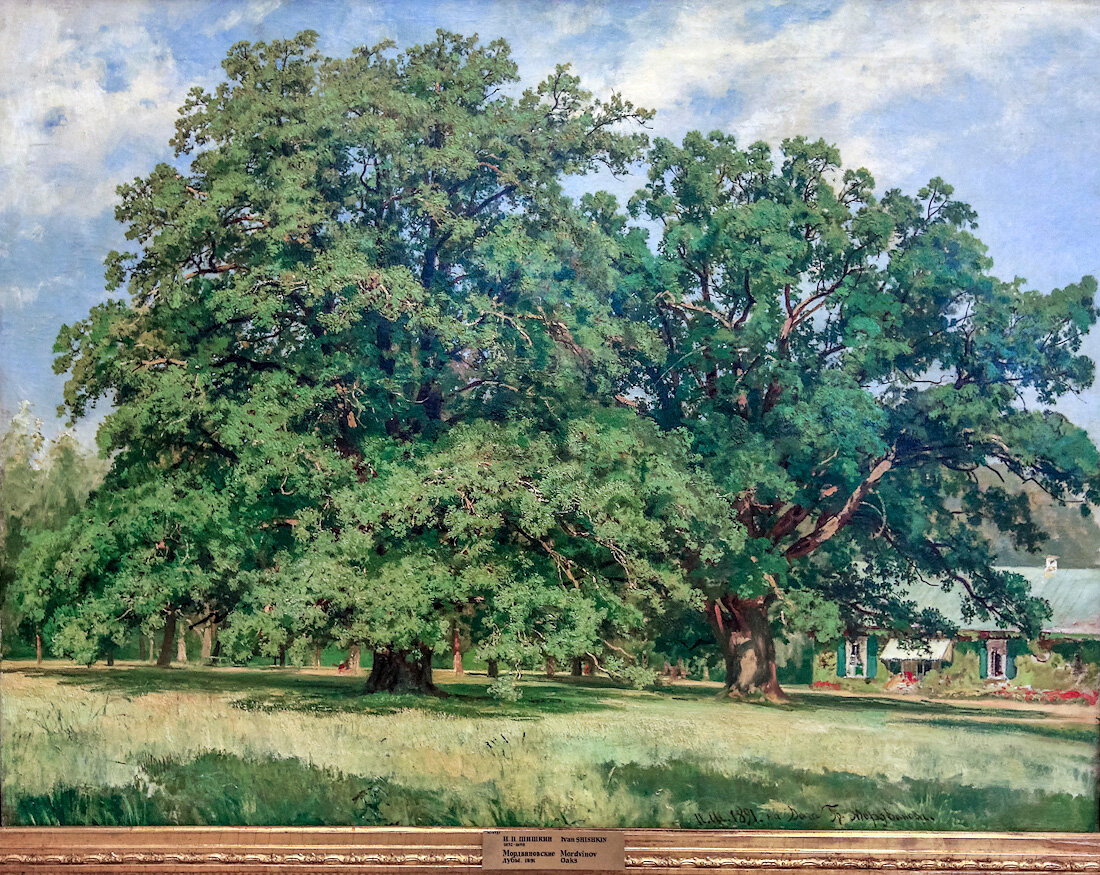
Materials: oil on canvas. Dimensions: 61.2 x 91.6 cm. Nr.: LEEAG.2000.0017. Source: www.janeredfern.co.uk/client-info/mercer/agpics/images/Bo....

Love the Craftcast tutorial with Melanie Muir - my first 'class', really. I don't really want to work with solid clay layers, so this is the result. A good beginning, but so far to go
Materials: oil on copper. Dimensions: 15.5 x 20.5 cm. Nr.: SK-A-66. Source: www.rijksmuseum.nl/en/collection/SK-A-66. I have changed the light and contrast of the original p
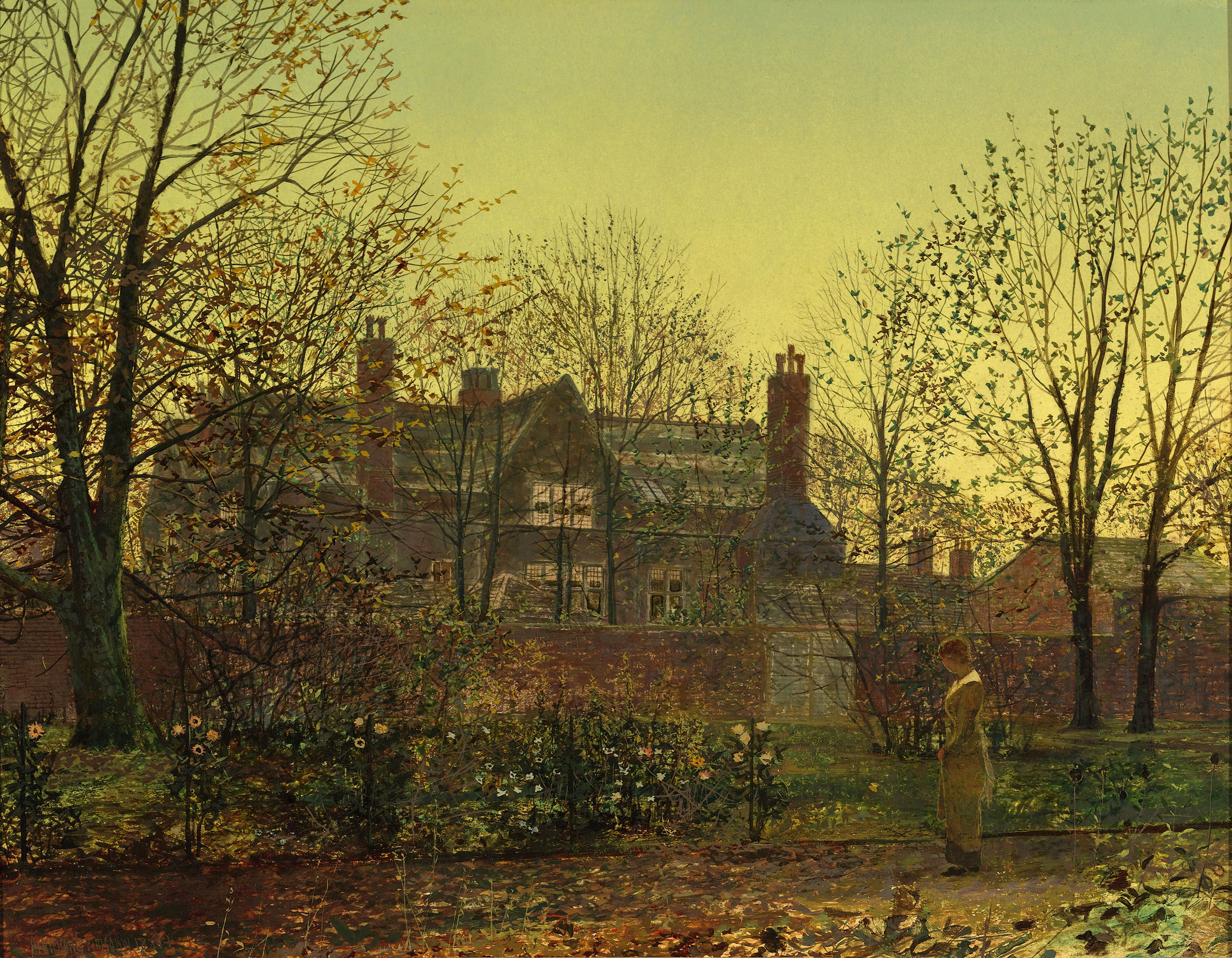
Materials: oil on panel. Dimensions: 35.6 x 45.7 cm. Inscriptions: Atkinson Grimshaw 1881 (lower left). Source: cp12.nevsepic.com.ua/55-3/1354924139-0600263-www.nevsepic.... P.S. I have changed the light and contrast of the original photo.
Auf dem Flughafen in Bamako wird Sanitätsmaterial aus einer Antonov entladen, am 20.03.2013.
©Bundeswehr/Falk Bärwald
Verlassene sowjetische Kaserne. Sie nutzten politische Propagandaposter als Baumaterial, wahrscheinlich müssen Sie diese ewig gleichen Postern über gehabt haben.
Some background:
With more and more experience through military mecha in Japan during the late Nineties, Schaft Enterprise’s Europe branch started the development of civil Labors for public use. These models included the Type-8FF firefighting Labor, which was originally created for the Japanese market but eventually only sold and operated in the European market, and the Type-10P, a dedicated police duty Labor and a direct competitor to Shinohara Industry’s highly successful AV-98 Ingram.
The Type-10P was based on a completely new chassis and introduced many composite material elements that lightened its structure and even gave it a light armor protection against small caliber rounds. It was designed to be effective in situations like dealing with stolen labor units or rogue labors, but also for more mundane duties like riot control and escorts. Its intimidating size certainly helped psychologically. However, the Type-10P was not designed to take on military labors in close combat, even though it could be outfitted with manual weapon that would offer considerable firepower at distance. Typical police service weapons included a shield and a stun stick (with an optional taser function) as well as a handheld revolver gun, but other equipment was available, too. Precise manipulator fingers (with three fingers and one thumb on each hand) allowed delicate handling.
The pilot sat in a fully enclosed, climatized cabin in the Labor’s breast section, with an excellent field of view and protected from water and gas. In order to ensure proper surveillance under harsh conditions in any weather and at day and night, the Type-10P received a complex sensor suite, including a telescopic camera boom, a close-range Lidar and a directional microphone. Communication with other units was ensured by both radio and laser communication systems.
Further special equipment could be attached to the Type-10P’s back. These easily interchangeable “backpacks” included an extra battery for extended operation, a fuel-powered external generator with one or two powerful searchlights, a pack with loudspeakers, a large, retractable LED matrix display, and two packs with pressurized canisters that were connected with a handheld spray gun each, either carrying CO2 as a fire extinguisher or OC spray for riot control. Even an inflatable lifeboat was available, as well as special weapons like an EMP pulse rifle, which necessitated an external auxiliary battery pack, and a rearward-facing “brown note” infranoise generator.
Officially baptised “Michael”, after the German police’s Christian patron saint, the Type-10P was in 2000 adopted by special units of the German Bundespolizei and by some major police departments on federal state level. Typical German Labor units would operate two or three of these vehicles, primarily as support units for standard units when called upon in an emergency and also to counter Labor crimes and accidents. Their psychological value in riot control duties was highly appreciated, and the Type 10Ps were also frequently sent to official political events for PR purposes.
The Type-10P was also promoted abroad, esp. in Japan, but it was rejected there due to its size and the strong (and established) competition from Shinohara Industry, namely the MPL-97S “Python” and the AV-98 “Ingram”. However, eight Type-10Ps were sold to the Austrian Bundespolizei and an undisclosed small number was bought by a private security service company in Northern America.
Technical Data:
Code name: Type-10P "Michael"
Unit type: police labor
Manufacturer: SEE (Schaft Enterprises Europe)
Operator: German Federal Police (Bundespolizei) and several major German federal state
police departments (Berlin, Northrhine-Westphalia, Bavaria), Austria, USA
Number built: 33
Accommodation: pilot only, in heat- and ABC-insulated cockpit in front torso
Dimensions:
Overall height 9.42 meters
Overall width 5.95 meters
Minimum revolving radius: 6.0 meters
Weight:
Standard 6.55 metric tons
Full 8.1 metric tons
Armor materials:
Light composite armor, effective against fire and small caliber rounds of up to 12.7 mm
Powerplant:
unknown
Maximum weight lifting capacity:
2.50 metric tons
Equipment and design features:
Visual and acoustic sensors, range unknown, with suitable recording and data transfer equipment
Retractable visor cover
Highly articulated manipulator hands
Searchlights
Flashlights and four claxons/loudspeakers on the shoulders
Armaments:
No internal weapons installed;
The Type-10P can operate a wide range of handheld equipment like an extendable baton,
anti-terror shields, and weapons like a 42 mm revolver handgun, a taser or a 90 mm pellet shotgun.
Two hardpoints on the lower arms to attach equipment/weapons, plus a single hardpoint on the
back with the option to carry a wide range of equipment packages.
The kit and its assembly:
Traditions can be nice to keep up, and this build is actually a kind of serial project: in 2015, a group build under the motto "De-/Militarize it" ran at whatifmodellers.com, and I submitted a thorough conversion of a 1:60 "SEE Type-7 Brocken" Labor it from Bandai – a pure military Labor turned into a firefighting mecha.
Now, in early 2021, the “Blue Lights” group build ran, and Patlabor – an anime near-SF universe circling around robot-assisted police work – lent itself for another mecha submission. I had an AV-X0 prototype as well as two Ingram kits in store, but I wanted “something different” and also not a Japanese police Labor, since I had just built a fictional Daihatsu Move police car of the Tokyo Metropolitan Police Department. So, the choice fell on the “Phantom” kit as basis, what called for considerable modifications. The “Phantom” is actually an unmanned robot, but I found its stature quite intimidating and more plausible for a non-Japanese police Labor than e. g. a re-badged AV-X0.
At an early stage I already settled for a German police Labor, and took inspiration in some heavier vehicles that are operated by special units of the Bundespolizei, e.g. armored cars or water throwers. This also defined the Labor’s paint scheme (see below). However, the new police Labor’s design was far from certain, it gradually evolved while building the separate OOB elements. Thankfully, this 3rd generation mecha kit allows such a gradual progress, and step by step the details that had to be changed or scratched became clearer.
This primarily included:
A completely new head section; the Phantom has a kind of fixed "hood" with a relatively small and fixed "face unit" in its front. This would be changed into a free-standing head unit, like the standard Labors. I was lucky to find a leftover head unit from a “Helldiver”, an airborne military Labor from the same model universe – its pilot helmet added a tough look to my build, and I added some sensor booms from an Ingram, too. Some PSR went into the head’s re-design, too, and, in the end, it adds to the “riot control” look of my build.
The completely new head necessitated the complete removal of the original “hood” of the “Phantom” and its fixed, small head, and this gap had to be filled/framed with a scratched collar and a new attachment point for the new head. Later, the OOB “neck” element was integrated into the opening, and scratched hydraulic pistons filled void space.
In the same wake, a cockpit fairing was added to the chest, since this would become a manned vehicle, not a robot. This, as well as the collar, were sculpted with 2C putty.
In order to change the Labor’s hull shape a little more, I added a pair of headlights to the flanks of the breast – these are 1:24 car parts, left over from my recent Daihatsu Move build. The parts were fitted into holes, received a shiny backing with chrome foil (hard to tell through the protective grates, though) and were blended into the hull via PSR.
The pack with retractable boosters in the back as well as the extentable upper body (with the visible innards and the spinning blades hidden there) were omitted. Instead, I implanted a donor piece to the back (a back pack from an 1:144 Yha-Giga mecha from Megaro Zamac), which looks very mechanical (a heat exchanger, maybe?) and natural.
Furthermore, the openings for the “Phantom”’s original optical sensors in the chest were faired over.
New hands were deemed necessary; the OOB hands are much too slender and claw-like, and I was able to use the hands from an 1:24 PA-36HD (from Dorvack).
While raiding the donor banks I also came across suitable new shoulder guards, from an 1:144 “Serpent Custom” (Gundam). They replaced the OOB parts, they are taller and more edgy, which is against the “Phantom”’s rather organic design – but they were too good to be rejected, with consoles that would later carry flashlights (scratched) and louvres that could easily hide (and protect) sirens inside.
However, in order to integrate the new shoulder parts better into an overall look, I decided to modify the knee and elbow guards into a more squarish shape – with the help of styrene sheet and some (more) PSR. This stunt worked surprisingly well.
During this modification I also added hardpoints to the lower arms for equipment. I did not want a gun but rather fancied a riot shield and a baton. The right hand was modified to carry a stun baton, sourced from an Ingram kit, and the transparent shield was scratched from a mouth wash bottle.
Lots of work, but it was necessary to move the build away from its “Phantom” basis.
Painting and markings:
Basically very simple: all-blue. The current ID color of German police vehicles is RAL 5017 (Verkehrsblau/Traffic Blue), and before 2006 it was RAL 6029 (Pfefferminzgrün/Peppermint Green), both combined on standard vehicles with white - normally, these are leased white or, more recently, silver vehicles with foil. For the Labor's time frame around 2000, the classic green would have been appropriate, but I eventually voted for the later blue because it looks IMHO less militaristic.
Further design background: German special police vehicles like water throwers or armored cars rather carry a uniform livery, contrasted with very dark grey around the lower areas, and that's what I adopted for the Michael I police Labor, too, using the “Phantom”’s original livery as benchmark.
In Gunze Sangyo’s Mr. Hobby H15 (Bright Blue) I found a pretty good guesstimate for the characteristic German police blue, and it was contrasted with Revell 06 (Tar Black; RAL 9021). The backpack became medium grey, a similar tone to the silicone covers (which were left unpainted, just treated with a washing with thinned dark grey acrylic artist paint), and this medium grey was also used for some detail contrasts around the hull. This looks rather dry, but it reflects the sobriety of German police items, and the uniform blue is also a good contrast to the Japanese police Labors in white and black in my collection, and the others, too. A few highlights in white and cream are the only distractions.
Even though I did not want to weather the model, I did some dry-brushing/post shading (Humbrol 25, Revell 09, 77 and 75 in some areas) to emphasize the shapes/edges and to make the large areas, esp. on the legs, less uniform.
The markings come from two aftermarket sheets for German police cars: one is a 1:43 scale sheet from IDC Decals, the other a 1:87 scale sheet from TL Modellbau. The provided not only suitably-sized “Polizei” letterings and emblems, the IDC set also came with the characteristic dotted trim lines (reflective material in real life) that decorate many typical German police cars and which help to visually structure the Labor’s lines – even though their application to the bulbous surface of the model was not easy, and I rather used them sparsely.
After some more detail painting (e. g. some fake black panel lines, created with a fine felt tip pen) the model’s sections were sealed with a mix of matt and some semi-gloss acrylic varnish on the blue areas for a sheen finish, while the dark grey areas were painted with pure matt varnish.
The build of the “Michael I” police Labor was quite a challenge – mostly because it was not easy to get away from the model’s “Phantom” basis. But with the completely new head/shoulder section and the slight mods on arms and legs it looks quite unrelated – but still intimidating. The all-blue livery is not spectacular, but true to German standards, and it works surprisingly well and convincingly.
Material Circulante: EM 120
Hora: 09:17
Data: 07-04-2014
Local: Entroncamento (PK 107 - Linha da Beira Baixa)
Serviço: Comboio n.º 30501 (Entroncamento --» Central do Pego)
Processed by: mavenimagery Lab, Universal Studio, Californa.
Hyper-Realistic HDR image PROCESSED with IRET (Iris Range Enhancement Technology)
IRET (Iris Range Enhancement Technology and MavenFilters are products of mavenimagery Labs Innovation.
Copyright 2012 by mavenimagery Labs Inc. All rights reserved.
This material may not be published, broadcast, rewritten or redistributed. For private, editorial or commercial use contact mavenimagery.
Brief On HDR: This image has been intentionally produced as Hyper-real HDR for a being a survey conducted by mavenimagery in association with Photomatix Pro 4 Beta. The result of the survey and gathered data will be published in UK's and US's major Photography magazines. We believe HDRI Technology has become a trend (HDR almost became synonymous with with particular style of tone mapping which is mostly used to produce images with a candy-like garrish colors and 'cartoonish' or more like impressionistic paintings), rather than what it initially was meant to be...it was meant to capture, at least, 14 EVs (Exposure Values) as opposed to the conventional high-end cameras' capability of capturing only a miserable 5-9EV's. Hello? The eye sees, on any given day, 24EV's (1.000.000.000:1 contrast ratio). All the HDR images at mavenimagery are not really HDR images. So are yours, my Flickr-HDR Groups-on-a-High Saturated-horse, sometimes with missing an ear or a tree yonder assailed by "Enemy Photons" that strike your sensor without you being aware...not that would matter if you were aware. You'd still be enslaved to your ignorance (not to be ashamed of) of tone mapping provided you by numerous HDR softwares who themselves are students of HDRI, learning, ripping you off along the way as they're trying to fund their experiments with your money. Think! Harry Potter and George Lucas' Star Trek were the only ones to be produced in HDRI Technology....Now! Do you see any resemblance to the "tone mapping" by current HDR imagine soft wares? I know you don’t! If I only point out excessive obliterated pixels and candy-like saturated colors, I'd make my points. Now, there's nothing with trends or fashion and that 'gritty, garrish HDR look' can be very appealing since we're so accustomed to the glossy images in the media. But they're here for limited time only...Just like break-dance. Fact: as of today, there is no market for HDR images (OK, mavenimagery sold a few for commercial use, but a few doesn't count)...you can't view it, you can print. HDR technology is still in its infancy and may take 10-15 years to be supported by all formats, conventional prints and displays etc. Remember. We're still in transition from DVD to Blu-Ray. It’s been more than 7 seven years and it will take perhaps another 5 years or more to acquire Blu-Ray supported devices. Yes, the current Blu-Ray technology is not real HD either, but this not a concern of this subject, although relatively connected to each other via display devices.
Finally, the image you and I can display or print is not a 32-bit HDR image, but a 32-bit image converted (tone mapped) to 16-bit TIFF (MDR, Medium Dynamic Range)...Aha! (Houston We've got Problem. We can’t post you the Heavenly Colors of the moon in 16-bit TIFF’s either, BUT ONLY in 8-bit jpeg’s. More data loss. We apologize for the inconvenience), and then to 8-bit jpeg for display and prints...an image has to always end in a print. Tip: Save your HDR Images as hdr.<Radiance RGBE until the day comes...and, mean while, enjoy trending and funking, but do not insult our intelligence. Get off your miserable Pony horses, smell the stimulus of coffee and label your work like "Unrealistic HDR. This is not how I saw this image, sorry. This is my interpretation of an artistic image" or "This is sur-realistic....” Whatever the Devil's Horn, it may be!" do not call it HDRI! I cannot stop you from kidding yourself...but the genuine quality and the naked truth will stop you! As it did stop all the trends and fashions...
Material Circulante: CP 1424 + CP 1805
Hora: 12:17
Data: 30-08-2012
Local: Estação de Contumil (PK 2 - Linha do Minho)
Serviço: CP 1424 a manobrar a 1805.
Realizing I'm over a year behind on posting pics, I'm going to try posting by month, and play a bit of catch up. Presenting Marchof '17 .
While Flickr will always have the most images of each outfit, follow me on Instagram (/secretjess42) to see the latest pics!
MØ
Secret Solstice Festival
June, 2015
Reykjavik, Iceland
© 2015 LEROE24FOTOS.COM
ALL RIGHTS RESERVED.
THIS MATERIAL MAY NOT BE PUBLISHED,
BROADCAST, REWRITTEN OR REDISTRIBUTED.
Materials: oil on canvas. Dimensions: 97 x 162 cm. Nr.: ? Source: www.histoire-image.org/photo/zoom/joseph-vernet-construct....
