View allAll Photos Tagged html
Austrian postcard by Iris Verlag, no. 5624. Photo: D'Ora (Dora Kallmus), Arthur Benda. Collection: Didier Hanson.
Ukrainian actress Vera Voronina (1905 - ?) had a short but shining career in the late silent era, in Berlin as well as in Hollywood.
See also European Film Star Postcards.
www.capitalgems.ca/aylmer-hydro-ruins.html
The Aylmer hydro ruins is located near the Deschênes Rapids. They are hard to miss since the path hugs the shore of the Ottawa River in the area next to the rapids. There are several places to stop and check things out, one of these offers a great view of the ruins of an old dam structure that was built in the late 1800s to harness hydroelectric power from the rapids. If the water is high and running fast (typically in spring), it is truly an impressive sight to see the force of the Ottawa River as it runs through these ruins. It is worth noting that there were plans to rebuild this dam across part of the river as recently as ten years ago (plans to do so fell apart in the face of local opposition).
[...]
In 1821, after the amalgamation of the North-West Company and the Hudson’s Bay Company, Hamar Hubble Day, an old fur trader, opened a small trading post on the Deschênes Portage. He went into business with another petty trader, Murdock McGillivray, and together until 1832 they traded furs in the Allumettes Lake Region and as far up as Lake Timiskaming. Having lost money in his dealings, Hamar Day broke off his association with McGillivray and left the Ottawa Region. The McConnell Brothers, who were very active in the timber industry on the Upper Ottawa, took up from where Day had left off and became part-time fur traders on the side. This lasted until approximately 18473.
H. Day operated a sawmill, a forge and a fulling mill at the Deschênes Rapids around 1828. Around 1840, Robert Conroy Senior seems to have followed in Day’s footsteps. Later on, around 1870, his two sons, Robert and William Conroy, had a large new sawmill built. From 1884 to 1888, they carried out improvements to increase the sawmill’s output capacity. During the same period, Narcisse Cormier operated a flour mill there. Wheat, oats and buckwheat, harvested by the region’s farms, were milled locally at Deschênes.
In 1895, the Deschênes Rapids industrial site was radically transformed. The site’s hydraulic powers were harnessed to produce electricity. The main shareholders of the Hull Electric Railway Company where William Conroy of Aylmer and Mr. Seybold of Ottawa. They decided to have a dam and hydro-electric power station built to supply electricity to the Town of Aylmer and to power the electric tramway network that was being planned to connect Aylmer, Hull and Ottawa. In 1899, the Canadian Pacific Railway bought out the Hull Electric Railway Company and ran it until 1926, when it was sold out to Canadian International Paper. In 1946, when the Hull Electric Company closed down, the Gatineau Power Company, a subsidiary of the CIP, was in charge of the site’s management.
Aylmer; Gatineau, Quebec.
June 8, 2019 - West Central, South Central Nebraska
Prints Available...Click Here
All Images are also available for...
stock photography & non exclusive licensing...
Watch the Storm Chasing Video from that day's Chase on Flickr Click Here
No tornadoes on this day's chase, but some incredible supercell structure out on the plains of Nebraska.
We started the day with a supercell that had several meso structures being reported from radar. This storm was tracking slowly about 12 knots cresting from the northwest to southeast. Classic June storm structure for this time of year in Nebraska. Northwest of North Platte Nebraska it had reported wall cloud and we definitely wanted a piece of this action.
We arrived as it was gaining strength as it has pushed through Maxwell Nebraska. We stopped in Brady, just to the southeast via I-80 corridor to get the bugs off of the windshield and as the storm was gaining strength. We had stopped just a few miles to the south of Brady we set up shop to catch this storm. Nice clear beautiful structure accompanied the underbelly of this supercell. Though we had a clear cut defined wall cloud this storm never did show us her tornadic teeth.
After about an hour on this storm in the same position (rare for us to do this) we eventually had to back off and get back to the east. We had to get south of Gothenburg just a few miles off the I-80 exit area for the next structured shot of this supercell. Oh we got just what we were looking for! Phenomenal base rotation!
Eventually we had backed off again as the hail core was approaching. Plus this cell was loosing its steam. We moved back to the I-80 corridor then south of Cozad Nebraska and this cell was in redevelopment mode and we had some waiting to do. Though not a long wait as this original cell fizzled out but we had one more chance for good structure south of Overten Nebraska. We headed to Loomis Nebraska for another treat to end the day. Oh did I say treat? We got a whole bunch more eye candy than expected.
Just to the east of Loomis Nebraska we encountered some incredible supercell structure. This storm wasn't going to be shy, and she eventually showed us some teeth.
Personal Note: For some odd reason I didn't clear my memory card on my last chase, and I ran out of room on my SD Card. I had to stop shooting after the wall cloud was right over my location my Loomis Nebraska. I didn't have time to pull out my spare card and load it due to the strength and this fast moving cell. This storm cell became outflow dominate and man do I mean dominate. We got caught in the outflow boundary several times with tons of gustnadoes and almost haboobish. I did have my trusty camera with me... I was in the drivers seat so when we had a chance, I did capture some incredible pics that blew me away literally. Either I'll make another short video to proceed this one or you'll have to wait till I get them posted on my Flickr site flickr.com/nebraskasc.
All in all. I'm not always about catching the tornado. I had some good friends and fellow storm chasers along side that day. In my opinion... just another EPIC chase day in Nebraska!!! Woot Woot. More to come!
*** Please NOTE and RESPECT the Copyright ***
Copyright 2019
Dale Kaminski @ NebraskaSC Photography
All Rights Reserved
This image may not be copied, reproduced, published or distributed in any medium without the expressed written permission of the copyright holder.
#ForeverChasing
#NebraskaSC
traveladventureeverywhere.blogspot.com/2018/04/moscow-in-...
..
..
.
.
.
.
.
.
.
.
.
.
.
.
.
.
.
.
.
.
.
.
.
.
.
.
.
.
.
ALBANIA
Albanian Trilogy: A Series of Devious Stratagems
Armando Lulaj
Commissioner: Ministry of Culture. Curator: Marco Scotini. Deputy Curator: Andris Brinkmanis. Venue: Pavilion at Arsenale
ANDORRA
Inner Landscapes
Roqué, Joan Xandri
Commissioner: Henry Périer. Deputy Commissioner: Joana Baygual, Sebastià Petit, Francesc Rodríguez
Curator: Paolo de Grandis, Josep M. Ubach. Venue: Spiazzi, Castello 3865
ANGOLA
On Ways of Travelling
António Ole, Binelde Hyrcan, Délio Jasse, Francisco Vidal, Nelo Teixeira
Commissioner: Ministry of Culture, Rita Guedes Tavares. Curator: António Ole. Deputy Curator: Antonia Gaeta. Venue: Conservatorio Benedetto Marcello - Palazzo Pisani, San Marco 2810
ARGENTINA
The Uprising of Form
Juan Carlos Diste´fano
Commissioner: Magdalena Faillace. Curator: Mari´a Teresa Constantin. Venue: Pavilion at Arsenale – Sale d’Armi
ARMENIA, Republic of
Armenity / Haiyutioun
Haig Aivazian, Lebanon; Nigol Bezjian, Syria/USA; Anna Boghiguian Egypt/Canada; Hera Büyüktasçiyan, Turkey; Silvina Der-Meguerditchian, Argentina/Germany; Rene Gabri & Ayreen Anastas, Iran/Palestine/USA; Mekhitar Garabedian, Belgium; Aikaterini Gegisian, Greece; Yervant Gianikian & Angela Ricci Lucchi, Italy; Aram Jibilian, USA; Nina Katchadourian, USA/Finland; Melik Ohanian, France; Mikayel Ohanjanyan, Armenia/Italy; Rosana Palazyan, Brazil; Sarkis, Turkey/France; Hrair Sarkissian, Syria/UK
Commissioner: Ministry of Culture of the Republic of Armenia. Deputy Commissioner: Art for the World, Mekhitarist Congregation of San Lazzaro Island, Embassy of the Republic of Armenia in Italy, Vartan Karapetian. Curator: Adelina Cüberyan von Fürstenberg. Venue: Monastery and Island of San Lazzaro degli Armeni
AUSTRALIA
Fiona Hall: Wrong Way Time
Fiona Hall
Commissioner: Simon Mordant AM. Deputy Commissioner: Charles Green. Curator: Linda Michael. Scientific Committee: Simon Mordant AM, Carolyn Christov-Bakargiev, Max Delany, Rachel Kent, Danie Mellor, Suhanya Raffel, Leigh Robb. Venue: Pavilion at Giardini
AUSTRIA
Heimo Zobernig
Commissioner: Yilmaz Dziewior. Curator: Yilmaz Dziewior. Scientific Committee: Friends of the Venice Biennale. Venue: Pavilion at Giardini
AZERBAIJAN, Republic of
Beyond the Line
Ashraf Murad, Javad Mirjavadov, Tofik Javadov, Rasim Babayev, Fazil Najafov, Huseyn Hagverdi, Shamil Najafzada
Commissioner: Heydar Aliyev Foundation. Curators: de Pury de Pury, Emin Mammadov. Venue: Palazzo Lezze, Campo S.Stefano, San Marco 2949
Vita Vitale
Edward Burtynsky, Mircea Cantor, Loris Cecchini, Gordon Cheung, Khalil Chishtee, Tony Cragg, Laura Ford, Noemie Goudal, Siobhán Hapaska, Paul Huxley, IDEA laboratory and Leyla Aliyeva, Chris Jordan with Rebecca Clark and Helena S.Eitel, Tania Kovats, Aida Mahmudova, Sayyora Muin, Jacco Olivier, Julian Opie, Julian Perry, Mike Perry, Bas Princen, Stephanie Quayle, Ugo Rondinone, Graham Stevens, Diana Thater, Andy Warhol, Bill Woodrow, Erwin Wurm, Rose Wylie
Commissioner: Heydar Aliyev Foundation. Curators: Artwise: Susie Allen, Laura Culpan, Dea Vanagan. Venue: Ca’ Garzoni, San Marco 3416
BELARUS, Republic of
War Witness Archive
Konstantin Selikhanov
Commissioner: Natallia Sharanhovich. Deputy Commissioners: Alena Vasileuskaya, Kamilia Yanushkevich. Curators: Aleksei Shinkarenko, Olga Rybchinskaya. Scientific Committee: Dmitry Korol, Daria Amelkovich, Julia Kondratyuk, Sergei Jeihala, Sheena Macfarlane, Yuliya Heisik, Hanna Samarskaya, Taras Kaliahin, Aliaksandr Stasevich. Venue: Riva San Biagio, Castello 2145
BELGIUM
Personnes et les autres
Vincent Meessen and Guests, Mathieu K. Abonnenc, Sammy Baloji, James Beckett, Elisabetta Benassi, Patrick Bernier & Olive Martin, Tamar Guimara~es & Kasper Akhøj, Maryam Jafri, Adam Pendleton
Commissioner: Wallonia-Brussels Federation and Wallonia-Brussels International. Curator: Katerina Gregos. Venue: Pavilion at Giardini
COSTA RICA
"Costa Rica, Paese di pace, invita a un linguaggio universale d'intesa tra i popoli".
Andrea Prandi, Beatrice Gallori, Beth Parin, Biagio Schembari, Carla Castaldo, Celestina Avanzini, Cesare Berlingeri, Erminio Tansini, Fabio Capitanio, Fausto Beretti, Giovan Battista Pedrazzini, Giovanni Lamberti, Giovanni Tenga, Iana Zanoskar, Jim Prescott, Leonardo Beccegato, Liliana Scocco, Lucia Bolzano, Marcela Vicuna, Marco Bellagamba, Marco Lodola, Maria Gioia dell’Aglio, Mario Bernardinello, Massimo Meucci, Nacha Piattini, Omar Ronda, Renzo Eusebi, Tita Patti, Romina Power, Rubens Fogacci, Silvio di Pietro, Stefano Sichel, Tino Stefanoni, Ufemia Ritz, Ugo Borlenghi, Umberto Mariani, Venere Chillemi, Jacqueline Gallicot Madar, Massimo Onnis, Fedora Spinelli
Commissioner: Ileana Ordonez Chacon. Curator: Gregorio Rossi. Venue: Palazzo Bollani
CROATIA
Studies on Shivering: The Third Degree
Damir Ocko
Commissioner: Ministry of Culture. Curator: Marc Bembekoff. Venue: Palazzo Pisani, S. Marina
CUBA
El artista entre la individualidad y el contexto
Lida Abdul, Celia-Yunior, Grethell Rasúa, Giuseppe Stampone, LinYilin, Luis Edgardo Gómez Armenteros, Olga Chernysheva, Susana Pilar Delahante Matienzo
Commissioner: Miria Vicini. Curators: Jorge Fernández Torres, Giacomo Zaza. Venue: San Servolo Island
CYPRUS, Republic of
Two Days After Forever
Christodoulos Panayiotou
Commissioner: Louli Michaelidou. Deputy Commissioner: Angela Skordi. Curator: Omar Kholeif. Deputy Curator: Daniella Rose King. Venue: Palazzo Malipiero, Sestiere San Marco 3079
CZECH Republic and SLOVAK Republic
Apotheosis
Jirí David
Commissioner: Adam Budak. Deputy Commissioner: Barbara Holomkova. Curator: Katarina Rusnakova. Venue: Pavilion at Giardini
ECUADOR
Gold Water: Apocalyptic Black Mirrors
Maria Veronica Leon Veintemilla in collaboration with Lucia Vallarino Peet
Commissioner: Andrea Gonzàlez Sanchez. Deputy Commissioner: PDG Arte Communications. Curator: Ileana Cornea. Deputy Curator: Maria Veronica Leon Veintemilla. Venue: Istituto Santa Maria della Pietà, Castello 3701
ESTONIA
NSFW. From the Abyss of History
Jaanus Samma
Commissioner: Maria Arusoo. Curator: Eugenio Viola. Venue: Palazzo Malipiero, campo San Samuele, San Marco 3199
EGYPT
CAN YOU SEE
Ahmed Abdel Fatah, Gamal Elkheshen, Maher Dawoud
Commissioner: Hany Al Ashkar. Curator: Ministry of Culture. Venue: Pavilion at Giardini
FINLAND (Pavilion Alvar Aalto)
Hours, Years, Aeons
IC-98
Commissioner: Frame Visual Art Finland, Raija Koli. Curator: Taru Elfving. Deputy Curator: Anna Virtanen. Venue: Pavilion at Giardini
FRANCE
revolutions
Céleste Boursier-Mougenot
Commissioner: Institut français, with Ministère de la Culture et de la Communication. Curator: Emma Lavigne. Venue: Pavilion at Giardini
GEORGIA
Crawling Border
Rusudan Gobejishvili Khizanishvili, Irakli Bluishvili, Dimitri Chikvaidze, Joseph Sabia
Commissioner: Ana Riaboshenko. Curator: Nia Mgaloblishvili. Venue: Pavilion at Arsenale – Sale d’Armi
GERMANY
Fabrik
Jasmina Metwaly / Philip Rizk, Olaf Nicolai, Hito Steyerl, Tobias Zielony
Commissioner: ifa (Institut für Auslandsbeziehungen) on behalf of the Federal Foreign Office. Deputy Commissioner: Elke aus dem Moore, Nina Hülsmeier. Curator: Florian Ebner. Deputy Curator: Tanja Milewsky, Ilina Koralova. Venue: Pavilion at Giardini
GREAT BRITAIN
Sarah Lucas
Commissioner: Emma Dexter. Curator: Richard Riley. Deputy Curator: Katrina Schwarz. Venue: Pavilion at Giardini
GRENADA *
Present Nearness
Oliver Benoit, Maria McClafferty, Asher Mains, Francesco Bosso and Carmine Ciccarini, Guiseppe Linardi
Commissioner: Ministry of Culture. Deputy Commissioner: Susan Mains. Curator: Susan Mains. Deputy Curator: Francesco Elisei. Venue: Opera don Orione Artigianelli, Sala Tiziano, Fondamenta delle Zattere ai Gesuati, Dorsoduro 919
GREECE
Why Look at Animals? AGRIMIKÁ.
Maria Papadimitriou
Commissioner: Hellenic Ministry of Culture, Education and Religious Affairs. Curator: Gabi Scardi. Deputy Curator: Alexios Papazacharias. Venue: Pavilion at Giardini
BRAZIL
So much that it doesn't fit here
Antonio Manuel, André Komatsu, Berna Reale
Commissioner: Luis Terepins. Curator: Luiz Camillo Osorio. Deputy Curator: Cauê Alves. Venue: Pavilion at Giardini
CANADA
Canadassimo
BGL
Commissioner: National Gallery of Canada, Marc Mayer. Deputy Commissioner: National Gallery of Canada, Yves Théoret. Curator: Marie Fraser. Venue: Pavilion at Giardini
CHILE
Poéticas de la disidencia | Poetics of dissent: Paz Errázuriz - Lotty Rosenfeld
Paz Errázuriz, Lotty Rosenfeld
Commissioner: Antonio Arèvalo. Deputy Commissioner: Juan Pablo Vergara Undurraga. Curator: Nelly Richard. Venue: Pavilion at Arsenale - Artiglierie
CHINA, People’s Republic of
Other Future
LIU Jiakun, LU Yang, TAN Dun, WEN Hui/Living Dance Studio, WU Wenguang/Caochangdi Work Station
Commissioner: China Arts and Entertainment Group, CAEG. Deputy Commissioners: Zhang Yu, Yan Dong. Curator: Beijing Contemporary Art Foundation. Scientific Committee: Fan Di’an, Zhang Zikang, Zhu Di, Gao Shiming, Zhu Qingsheng, Pu Tong, Shang Hui. Venue: Pavilion at Arsenale – Giardino delle Vergini
GUATEMALA
Sweet Death
Emma Anticoli Borza, Sabrina Bertolelli, Mariadolores Castellanos, Max Leiva, Pier Domenico Magri, Adriana Montalto, Elmar Rojas (Elmar René Rojas Azurdia), Paolo Schmidlin, Mónica Serra, Elsie Wunderlich, Collettivo La Grande Bouffe
Commissioner: Daniele Radini Tedeschi. Curators: Stefania Pieralice, Carlo Marraffa, Elsie Wunderlich. Deputy Curators: Luciano Carini, Simone Pieralice. Venue: Officina delle Zattere, Dorsoduro 947, Fondamenta Nani
HOLY SEE
Commissioner: Em.mo Card. Gianfranco Ravasi, Presidente del Pontificio Consiglio della Cultura. Venue: Pavilion at Arsenale – Sale d’Armi
HUNGARY
Sustainable Identities
Szilárd Cseke
Commissioner: Monika Balatoni. Deputy Commissioner: István Puskás, Sándor Fodor, Anna Karády. Curator: Kinga German. Venue: Pavilion at Giardini
ICELAND
Christoph Büchel
Commissioner: Björg Stefánsdóttir. Curator: Nína Magnúsdóttir. Venue: to be confirmed
INDONESIA, Republic of
Komodo Voyage
Heri Dono
Commissioner: Sapta Nirwandar. Deputy Commissioner: Soedarmadji JH Damais. Curator: Carla Bianpoen, Restu Imansari Kusumaningrum. Scientific Committee: Franco Laera, Asmudjo Jono Irianto, Watie Moerany, Elisabetta di Mambro. Venue: Venue: Arsenale
IRAN
Iranian Highlights
Samira Alikhanzaradeh, Mahmoud Bakhshi Moakhar, Jamshid Bayrami, Mohammed Ehsai
The Great Game
Lida Abdul, Bani Abidi, Adel Abidin, Amin Agheai, Ghodratollah Agheli, Shahriar Ahmadi, Parastou Ahovan, Farhad Ahrarnia, Rashad Alakbarov, Nazgol Ansarinia, Reza Aramesh, Alireza Astaneh, Sonia Balassanian, Mahmoud Bakhshi, Moakhar Wafaa Bilal, Mehdi Farhadian, Monir Farmanfarmaian, Shadi Ghadirian, Babak Golkar, Shilpa Gupta, Ghasem Hajizadeh, Shamsia Hassani, Sahand Hesamiyan, Sitara Ibrahimova, Pouran Jinchi, Amar Kanwar, Babak Kazemi, Ryas Komu, Ahmad Morshedloo, Farhad Moshiri, Mehrdad Mohebali, Huma Mulji, Azad Nanakeli, Jamal Penjweny, Imran Qureshi, Sara Rahbar, Rashid Rana, T.V. Santhosh, Walid Siti, Mohsen Taasha Wahidi, Mitra Tabrizian, Parviz Tanavoli, Newsha Tavakolian, Sadegh Tirafkan, Hema Upadhyay, Saira Wasim
Commissioner: Majid Mollanooruzi. Deputy Commissioners: Marco Meneguzzo, Mazdak Faiznia. Curators: Marco Meneguzzo, Mazdak Faiznia. Venue: Calle San Giovanni 1074/B, Cannaregio
IRAQ
Commissioner: Ruya Foundation for Contemporary Culture in Iraq (RUYA). Deputy Commissioner: Nuova Icona - Associazione Culturale per le Arti. Curator: Philippe Van Cauteren. Venue: Ca' Dandolo, San Polo 2879
IRELAND
Adventure: Capital
Sean Lynch
Commissioner: Mike Fitzpatrick. Curator: Woodrow Kernohan. Venue: Pavilion at Arsenale - Artiglierie
ISRAEL
Tsibi Geva | Archeology of the Present
Tsibi Geva
Commissioner: Arad Turgem, Michael Gov. Curator: Hadas Maor. Venue: Pavilion at Giardini
ITALY
Ministero dei Beni e delle attività culturali e del turismo - Direzione Generale Arte e Architettura Contemporanee e Periferie Urbane. Commissioner: Federica Galloni. Curator: Vincenzo Trione. Venue: Padiglione Italia, Tese delle Vergini at Arsenale
JAPAN
The Key in the Hand
Chiharu Shiota
Commissioner: The Japan Foundation. Deputy Commissioner: Yukihiro Ohira, Manako Kawata and Haruka Nakajima. Curator: Hitoshi Nakano. Venue : Pavilion at Giardini
KENYA
Creating Identities
Yvonne Apiyo Braendle-Amolo, Qin Feng, Shi Jinsong, Armando Tanzini, Li Zhanyang, Lan Zheng Hui, Li Gang, Double Fly Art Center
Commissioner: Paola Poponi. Curator: Sandro Orlandi Stagl. Deputy Curator: Ding Xuefeng. Venue: San Servolo Island
KOREA, Republic of
The Ways of Folding Space & Flying
MOON Kyungwon & JEON Joonho
Commissioner: Sook-Kyung Lee. Curator: Sook-Kyung Lee. Venue: Pavilion at Giardini
KOSOVO, Republic of
Speculating on the blue
Flaka Haliti
Commissioner: Ministry of Culture, Youth and Sports. Curator: Nicolaus Schafhausen. Deputy Curator: Katharina Schendl. Venue: Pavilion at Arsenale - Artiglierie
LATVIA
Armpit
Katrina Neiburga, Andris Eglitis
Commissioner: Solvita Krese (Latvian Centre for Contemporary Art). Deputy Commissioner: Kitija Vasiljeva. Curator: Kaspars Vanags. Venue: Pavilion at Arsenale
LITHUANIA
Museum
Dainius Liškevicius
Commissioner: Vytautas Michelkevicius. Deputy Commissioner: Rasa Antanaviciute. Curator: Vytautas Michelkevicius. Venue: Palazzo Zenobio, Fondamenta del Soccorso 2569, Dorsoduro
LUXEMBOURG, Grand Duchy of
Paradiso Lussemburgo
Filip Markiewicz
Commissioner: Ministry of Culture. Deputy Commissioner: MUDAM Luxembourg. Curator: Paul Ardenne. Venue: Cà Del Duca, Corte del Duca Sforza, San Marco 3052
MACEDONIA, Former Yugoslavian Republic of
We are all in this alone
Hristina Ivanoska and Yane Calovski
Commissioner: Maja Nedelkoska Brzanova, National Gallery of Macedonia. Deputy Commissioner: Olivija Stoilkova. Curator: Basak Senova. Deputy Curator: Maja Cankulovska Mihajlovska. Venue: Pavilion at Arsenale - Sale d’Armi
MAURITIUS *
From One Citizen You Gather an Idea
Sultana Haukim, Nirmal Hurry, Alix Le Juge, Olga Jürgenson, Helge Leiberg, Krishna Luchoomun, Neermala Luckeenarain, Kavinash Thomoo, Bik Van Der Pol, Laure Prouvost, Vitaly Pushnitsky, Römer + Römer
Commissioner: pARTage. Curators: Alfredo Cramerotti, Olga Jürgenson. Venue: Palazzo Flangini - Canareggio 252
MEXICO
Possesing Nature
Tania Candiani, Luis Felipe Ortega
Commissioner: Tomaso Radaelli. Deputy Commissioner: Magdalena Zavala Bonachea. Curator: Karla Jasso. Venue: Pavilion at Arsenale – Sale d’Armi
MONGOLIA *
Other Home
Enkhbold Togmidshiirev, Unen Enkh
Commissioner: Gantuya Badamgarav, MCASA. Curator: Uranchimeg Tsultemin. Scientific Committee: David A Ross, Boldbaatar Chultemin. Venue: European Cultural Centre - Palazzo Mora
MONTENEGRO
,,Ti ricordi Sjecaš li se You Remember "
Aleksandar Duravcevic
Commissioner/Curator: Anastazija Miranovic. Deputy Commissioner: Danica Bogojevic. Venue: Palazzo Malipiero (piano terra), San Marco 3078-3079/A, Ramo Malipiero
MOZAMBIQUE, Republic of *
Theme: Coexistence of Tradition and Modernity in Contemporary Mozambique
Mozambique Artists
Commissioner: Joel Matias Libombo. Deputy Commissioner: Gilberto Paulino Cossa. Curator: Comissariado-Geral para a Expo Milano 2015. Venue: Pavilion at Arsenale
NETHERLANDS, The
herman de vries - to be all ways to be
herman de vries
Commissioner: Mondriaan Fund. Curators: Colin Huizing, Cees de Boer. Venue: Pavilion ar Giardini
NEW ZEALAND
Secret Power
Simon Denny
Commissioner: Heather Galbraith. Curator: Robert Leonard. Venue: Biblioteca Nazionale Marciana, Marco Polo Airport
NORDIC PAVILION (NORWAY)
Camille Norment
Commissioner: OCA, Office for Contemporary Art Norway. Curator: Katya García-Antón. Deputy Curator: Antonio Cataldo. Venue: Pavilion at Giardini
PERU
Misplaced Ruins
Gilda Mantilla and Raimond Chaves
Commissioner: Armando Andrade de Lucio. Curator: Max Hernández-Calvo. Venue: Pavilion at Arsenale – Sale d’Armi
PHILIPPINES
Tie a String Around the World
Manuel Conde, Carlos Francisco, Manny Montelibano, Jose Tence Ruiz
Commissioner: National Commission for Culture and the Arts (NCCA), Felipe M. de Leon Jr. Curator: Patrick D. Flores. Venue: European Cultural Centre - Palazzo Mora
POLAND
Halka/Haiti. 18°48’05”N 72°23’01”W
C.T. Jasper, Joanna Malinowska
Commissioner: Hanna Wróblewska. Deputy Commissioner: Joanna Wasko. Curator: Magdalena Moskalewicz. Venue: Pavilion at Giardini
PORTUGAL
I Will Be Your Mirror / poems and problems
João Louro
Commissioner/Curator: María de Corral. Venue: Palazzo Loredan, campo S. Stefano
ROMANIA
Adrian Ghenie: Darwin’s Room
Adrian Ghenie
Commissioner: Monica Morariu. Deputy Commissioner: Alexandru Damian. Curator: Mihai Pop. Venue: Pavilion at Giardini
Inventing the Truth. On Fiction and Reality
Michele Bressan, Carmen Dobre-Hametner, Alex Mirutziu, Lea Rasovszky, Stefan Sava, Larisa Sitar
Commissioner: Monica Morariu. Deputy Commissioner: Alexandru Damian. Curator: Diana Marincu. Deputy Curators: Ephemair Association (Suzana Dan and Silvia Rogozea). Venue: New Gallery of the Romanian Institute for Culture and Humanistic Research in Venice
RUSSIA
The Green Pavilion
Irina Nakhova
Commissioner: Stella Kesaeva. Curator: Margarita Tupitsyn. Venue: Pavilion at Giardini
SERBIA
United Dead Nations
Ivan Grubanov
Commissioner: Lidija Merenik. Deputy Commissioner: Ana Bogdanovic. Curator: Lidija Merenik. Deputy Curator: Ana Bogdanovic. Scientific Committee: Jovan Despotovic. Venue: Pavilion at Giardini
SAN MARINO
Repubblica di San Marino “ Friendship Project “ China
Xu De Qi, Liu Dawei, Liu Ruo Wang, Ma Yuan, Li Lei, Zhang Hong Mei, Eleonora Mazza, Giuliano Giulianelli, Giancarlo Frisoni, Tony Margiotta, Elisa Monaldi, Valentina Pazzini
Commissioner: Istituti Culturali della Repubblica di San Marino. Curator: Vincenzo Sanfo. Venue: TBC
SEYCHELLES, Republic of *
A Clockwork Sunset
George Camille, Léon Wilma Loïs Radegonde
Commissioner: Seychelles Art Projects Foundation. Curators: Sarah J. McDonald, Victor Schaub Wong. Venue: European Cultural Centre - Palazzo Mora
SINGAPORE
Sea State
Charles Lim Yi Yong
Commissioner: Paul Tan, National Arts Council, Singapore. Curator: Shabbir Hussain Mustafa. Scientific Committee: Eugene Tan, Kathy Lai, Ahmad Bin Mashadi, June Yap, Emi Eu, Susie Lingham, Charles Merewether, Randy Chan. Venue: Pavilion at Arsenale – Sale d’Armi
SLOVENIA, Republic of
UTTER / The violent necessity for the embodied presence of hope
JAŠA
Commissioner: Simona Vidmar. Deputy Commissioner: Jure Kirbiš. Curators: Michele Drascek and Aurora Fonda. Venue: Pavilion at Arsenale - Artiglierie
SPAIN
Los Sujetos (The Subjects)
Pepo Salazar, Cabello/Carceller, Francesc Ruiz, + Salvador Dalí
Commissioner: Ministerio Asuntos Exteriores. Gobierno de España. Curator: Marti Manen. Venue: Pavilion at Giardini
SYRIAN ARAB REPUBLIC
Origini della civiltà
Narine Ali, Ehsan Alar, Felipe Cardeña, Fouad Dahdouh, Aldo Damioli, Svitlana Grebenyuk, Mauro Reggio, Liu Shuishi, Nass ouh Zaghlouleh, Andrea Zucchi, Helidon Xhixha
Commissioner: Christian Maretti. Curator: Duccio Trombadori. Venue: Redentore – Giudecca, San Servolo Island
SWEDEN
Excavation of the Image: Imprint, Shadow, Spectre, Thought
Lina Selander
Commissioner: Ann-Sofi Noring. Curator: Lena Essling. Venue: Pavilion at Arsenale
SWITZERLAND
Our Product
Pamela Rosenkranz
Commissioner: Swiss Arts Council Pro Helvetia, Sandi Paucic and Marianne Burki. Deputy-Commissioner: Swiss Arts Council Pro Helvetia, Rachele Giudici Legittimo. Curator: Susanne Pfeffer. Venue: Pavilion at Giardini
THAILAND
Earth, Air, Fire & Water
Kamol Tassananchalee
Commissioner: Chai Nakhonchai, Office of Contemporary Art and Culture (OCAC), Ministry of Culture. Curator: Richard David Garst. Deputy Curator: Pongdej Chaiyakut. Venue: Paradiso Gallerie, Giardini della Biennale, Castello 1260
TURKEY
Respiro
Sarkis
Commissioner: Istanbul Foundation for Culture and Arts. Curator: Defne Ayas. Deputy Curator: Ozge Ersoy. Venue: Pavilion at Arsenale – Sale d’Armi
TUVALU
Crossing the Tide
Vincent J.F. Huang
Commissioner: Taukelina Finikaso. Deputy Commissioner: Temate Melitiana. Curator: Thomas J. Berghuis. Scientific Committee: Andrea Bonifacio. Venue: Pavilion at Arsenale
UKRAINE
Hope!
Yevgenia Belorusets, Nikita Kadan, Zhanna Kadyrova, Mykola Ridnyi & SerhiyZhadan, Anna Zvyagintseva, Open Group, Artem Volokitin
Commissioner: Ministry of Culture. Curator: Björn Geldhof. Venue: Riva dei Sette Martiri
UNITED ARAB EMIRATES
1980 – Today: Exhibitions in the United Arab Emirates
Abdullah Al Saadi, Abdul Qader Al Rais, Abdulraheem Salim, Abdulrahman Zainal, Ahmed Al Ansari, Ahmed Sharif, Hassan Sharif, Mohamed Yousif, Mohammed Abdullah Bulhiah, Mohammed Al Qassab, Mohammed Kazem, Moosa Al Halyan, Najat Meky, Obaid Suroor, Salem Jawhar
Commissioner: Salama bint Hamdan Al Nahyan Foundation. Curator: Hoor Al Qasimi. Venue: Pavilion at Arsenale – Sale d'Armi
UNITED STATES OF AMERICA
Joan Jonas: They Come to Us Without a Word
Joan Jonas
Commissioner: Paul C. Ha. Deputy Commissioner: MIT List Visual Arts Center. Curators: Ute Meta Bauer, Paul C. Ha. Venue: Pavilion at Giardini
URUGUAY
Global Myopia II (Pencil & Paper)
Marco Maggi
Commissioner: Ricardo Pascale. Curator: Patricia Bentancour. Venue: Pavilion at Giardini
VENEZUELA, Bolivarian Republic of
Te doy mi palabra (I give you my word)
Argelia Bravo, Félix Molina (Flix)
Commissioner: Oscar Sotillo Meneses. Deputy Commissioner: Reinaldo Landaeta Díaz. Curator: Oscar Sotillo Meneses. Deputy Curator: Morella Jurado. Scientific Committee: Carlos Pou Ruan. Venue: Pavilion at Giardini
ZIMBABWE, Republic of
Pixels of Ubuntu/Unhu: - Exploring the social and cultural identities of the 21st century.
Chikonzero Chazunguza, Masimba Hwati, Gareth Nyandoro
Commissioner: Doreen Sibanda. Curator: Raphael Chikukwa. Deputy Curator: Tafadzwa Gwetai. Scientific Committee: Saki Mafundikwa, Biggie Samwanda, Fabian Kangai, Reverend Paul Damasane, Nontsikelelo Mutiti, Stephen Garan'anga, Dominic Benhura. Venue: Santa Maria della Pieta
ITALO-LATIN AMERICAN INSTITUTE
Voces Indígenas
Commissioner: Sylvia Irrazábal. Curator: Alfons Hug. Deputy Curator: Alberto Saraiva. Venue: Pavilion at Arsenale
ARGENTINA
Sofia Medici and Laura Kalauz
PLURINATIONAL STATE OF BOLIVIA
Sonia Falcone and José Laura Yapita
BRAZIL
Adriana Barreto
Paulo Nazareth
CHILE
Rainer Krause
COLOMBIA
León David Cobo,
María Cristina Rincón and Claudia Rodríguez
COSTA RICA
Priscilla Monge
ECUADOR
Fabiano Kueva
EL SALVADOR
Mauricio Kabistan
GUATEMALA
Sandra Monterroso
HAITI
Barbara Prézeau Stephenson
HONDURAS
Leonardo González
PANAMA
Humberto Vélez
NICARAGUA
Raúl Quintanilla
PARAGUAY
Erika Meza
Javier López
PERU
José Huamán Turpo
URUGUAY
Gustavo Tabares
Ellen Slegers
001 Inverso Mundus. AES+F
Magazzino del Sale n. 5, Dorsoduro, 265 (Fondamenta delle Zattere ai Saloni); Palazzo Nani Mocenigo, Dorsoduro, 960
May 9th – October 31st
Organization: VITRARIA Glass + A Museum
Catalonia in Venice: Singularity
Cantieri Navali, Castello, 40 (Calle Quintavalle)
May 9th - November 22nd
Organization: Institut Ramon Llull
venezia2015.llull.cat
Conversion. Recycle Group
Chiesa di Sant’Antonin, Castello (Campo Sant’Antonin)
May 6th - October 31st
Organization: Moscow Museum of Modern Art
Dansaekhwa
Palazzo Contarini-Polignac, Dorsoduro, 874 (Accademia)
May 7th – August 15th
Organization: The Boghossian Foundation
Dispossession
Palazzo Donà Brusa, Campo San Polo, 2177
May 9th - November 22nd
Organization: European Capital of Culture Wroclaw 2016
wroclaw2016.pl/biennale/
EM15 presents Doug Fishbone’s Leisure Land Golf
Arsenale Docks, Castello, 40A, 40B, 41C
May 6th - July 26th
Organization: EM15
Eredità e Sperimentazione
Grand Hotel Hungaria & Ausonia, Viale Santa Maria Elisabetta, 28, Lido di Venezia
May 9th - November 22nd
Organization: Istituto Nazionale di BioArchitettura - Sezione di Padova
Frontiers Reimagined
Palazzo Grimani, Castello, 4858 (Ramo Grimani)
May 9th - November 22nd
Organization: Tagore Foundation International; Polo museale del Veneto
Glasstress 2015 Gotika
Istituto Veneto di Scienze Lettere ed Arti, Palazzo Cavalli Franchetti, San Marco, 2847 (Campo Santo Stefano); Chiesa di Santa Maria della Visitazione, Centro Culturale Don Orione Artigianelli, Dorsoduro, 919 (Zattere); Fondazione Berengo, Campiello della Pescheria, 15, Murano;
May 9th — November 22nd
Organization: The State Hermitage Museum
Graham Fagen: Scotland + Venice 2015
Palazzo Fontana, Cannaregio, 3829 (Strada Nova)
May 9th - November 22nd
Organization: Scotland + Venice
Grisha Bruskin. An Archaeologist’s Collection
Former Chiesa di Santa Caterina, Cannaregio, 4941-4942
May 6th – November 22nd
Organization: Centro Studi sulle Arti della Russia (CSAR), Università Ca’ Foscari Venezia
Helen Sear, ... The Rest Is Smoke
Santa Maria Ausiliatrice, Castello, 450 (Fondamenta San Gioacchin)
May 9th - November 22nd
Organization: Cymru yn Fenis/Wales in Venice
Highway to Hell
Palazzo Michiel, Cannaregio, 4391/A (Strada Nova)
May 9th - November 22nd
Organization: Hubei Museum of Art
Humanistic Nature and Society (Shan-Shui) – An Insight into the Future
Palazzo Faccanon, San Marco, 5016 (Mercerie)
May 7th – August 4th
Organization: Shanghai Himalayas Museum
In the Eye of the Thunderstorm: Effervescent Practices from the Arab World & South Asia
Dorsoduro, 417 (Zattere)
May 6th - November 15th
Organization: ArsCulture
Italia Docet | Laboratorium- Artists, Participants, Testimonials and Activated Spectators
Palazzo Barbarigo Minotto, San Marco, 2504 (Fondamenta Duodo o Barbarigo)
May 9th – June 30th; September 11st – October 31st
Organization: Italian Art Motherboard Foundation (i-AM Foundation)
www.venicebiennale-italiadocet.org
Jaume Plensa: Together
Basilica di San Giorgio Maggiore, Isola di San Giorgio Maggiore
May 6th – November 22nd
Organization: Abbazia di San Giorgio Maggiore Benedicti Claustra Onlus
Jenny Holzer "War Paintings"
Museo Correr, San Marco, 52 (Piazza San Marco)
May 6th – November 22nd
Organization: The Written Art Foundation; Museo Correr, Fondazione Musei Civici di Venezia
correr.visitmuve.it
Jump into the Unknown
Palazzo Loredan dell’Ambasciatore, Dorsoduro, 1261-1262
May 9th – June 18th
Organization: Nine Dragon Heads
9dh-venice.com
Learn from Masters
Palazzo Bembo, San Marco, 4793 (Riva del Carbon)
May 9th – November 22nd
Organization: Pan Tianshou Foundation
pantianshou.caa.edu.cn/foundation_en
My East is Your West
Palazzo Benzon, San Marco, 3927
May 6th – October 31st
Organization: The Gujral Foundation
Ornamentalism. The Purvitis Prize
Arsenale Nord, Tesa 99
May 9th – November 22nd
Organization: The Secretariat of the Latvian Presidency of the Council of the European Union in 2015
www.purvisabalva.lv/en/ornamentalism
Path and Adventure
Arsenale, Castello, 2126/A (Campo della Tana)
May 9th – November 22nd
Organization: The Civic and Municipal Affairs Bureau; The Macao Museum of Art; The Cultural Affairs Bureau
Patricia Cronin: Shrine for Girls, Venice
Chiesa di San Gallo, San Marco, 1103 (Campo San Gallo)
May 9th – November 22nd
Organization: Brooklyn Rail Curatorial Projects
curatorialprojects.brooklynrail.org
Roberto Sebastian Matta. Sculture
Giardino di Palazzo Soranzo Cappello, Soprintendenza BAP per le Province di Venezia, Belluno, Padova e Treviso, Santa Croce, 770 (Fondamenta Rio Marin)
May 9th – November 22nd
Organization: Fondazione Echaurren Salaris
www.fondazioneechaurrensalaris.it
www.maggioregam.com/56Biennale_Matta
Salon Suisse: S.O.S. Dada - The World Is A Mess
Palazzo Trevisan degli Ulivi, Dorsoduro, 810 (Campo Sant'Agnese)
May 9th; June 4th - 6th; September 10th - 12th; October 15th - 17th; November 19th – 21st
Organization: Swiss Arts Council Pro Helvetia
Sean Scully: Land Sea
Palazzo Falier, San Marco, 2906
May 9th – November 22nd
Organization: Fondazione Volume!
Sepphoris. Alessandro Valeri
Molino Stucky, interior atrium, Giudecca, 812
May 9th – November 22nd
Organization: Assessorato alla Cultura del Comune di Narni(TR); a Sidereal Space of Art; Satellite Berlin
Tesla Revisited
Palazzo Nani Mocenigo, Dorsoduro, 960
May 9th – October 18th
Organization: VITRARIA Glass + A Museum
The Bridges of Graffiti
Arterminal c/o Terminal San Basilio, Dorsoduro (Fondamenta Zattere al Ponte Lungo)
May 9th - November 22nd
Organization: Associazione Culturale Inossidabile
The Dialogue of Fire. Ceramic and Glass Masters from Barcelona to Venice
Palazzo Tiepolo Passi, San Polo, 2774
May 6th - November 22nd
Organization: Fundaciò Artigas; ArsCulture
The Question of Beings
Istituto Santa Maria della Pietà, Castello, 3701
May 9th - November 22nd
Organization: Museum of Contemporary Art, Taipei (MoCA, Taipei)
The Revenge of the Common Place
Università Ca' Foscari, Ca' Bernardo, Dorsoduro, 3199 (Calle Bernardo)
May 9th – September 30th
Organization: Vrije Universiteit Brussel (Free University Brussels-VUB)
The Silver Lining. Contemporary Art from Liechtenstein and other Microstates
Palazzo Trevisan degli Ulivi, Dorsoduro, 810 (Campo Sant'Agnese)
October 24th – November 1st
Organization: Kunstmuseum Liechtenstein
The Sound of Creation. Paintings + Music by Beezy Bailey and Brian Eno
Conservatorio Benedetto Marcello, Palazzo Pisani, San Marco, 2810 (Campo Santo Stefano)
May 7th - November 22nd
Organization: ArsCulture
The Union of Fire and Water
Palazzo Barbaro, San Marco, 2840
May 9th - November 22nd
Organization: YARAT Contemporary Art Organisation
Thirty Light Years - Theatre of Chinese Art
Palazzo Rossini, San Marco, 4013 (Campo Manin)
May 9th - November 22nd
Organization: GAC Global Art Center Foundation; The Guangdong Museum of Art
Tsang Kin-Wah: The Infinite Nothing, Hong Kong in Venice
Arsenale, Castello, 2126 (Campo della Tana)
May 9th - November 22nd
Organization: M+, West Kowloon Cultural District; Hong Kong Arts Development Council
Under the Surface, Newfoundland and Labrador at Venice
Galleria Ca' Rezzonico, Dorsoduro, 2793
May 9th - November 22nd
Organization: Terra Nova Art Foundation
tnaf.ca
Ursula von Rydingsvard
Giardino della Marinaressa, Castello (Riva dei Sette Martiri)
May 6th - November 22nd
Organization:Yorkshire Sculpture Park
We Must Risk Delight: Twenty Artists from Los Angeles
Magazzino del Sale n. 3, Dorsoduro, 264 (Zattere)
May 7th - November 22nd
Organization: bardoLA
Wu Tien-Chang: Never Say Goodbye
Palazzo delle Prigioni, Castello, 4209 (San Marco)
May 9th - November 22nd
Organization: Taipei Fine Arts Museum of Taiwan
traveladventureeverywhere.blogspot.com/2020/08/holy-mosco...
..
..
.
.
.
.
.
.
.
.
.
.
.
.
.
.
.
.
.
.
.
.
.
.
.
.
.
.
.
ALBANIA
Albanian Trilogy: A Series of Devious Stratagems
Armando Lulaj
Commissioner: Ministry of Culture. Curator: Marco Scotini. Deputy Curator: Andris Brinkmanis. Venue: Pavilion at Arsenale
ANDORRA
Inner Landscapes
Roqué, Joan Xandri
Commissioner: Henry Périer. Deputy Commissioner: Joana Baygual, Sebastià Petit, Francesc Rodríguez
Curator: Paolo de Grandis, Josep M. Ubach. Venue: Spiazzi, Castello 3865
ANGOLA
On Ways of Travelling
António Ole, Binelde Hyrcan, Délio Jasse, Francisco Vidal, Nelo Teixeira
Commissioner: Ministry of Culture, Rita Guedes Tavares. Curator: António Ole. Deputy Curator: Antonia Gaeta. Venue: Conservatorio Benedetto Marcello - Palazzo Pisani, San Marco 2810
ARGENTINA
The Uprising of Form
Juan Carlos Diste´fano
Commissioner: Magdalena Faillace. Curator: Mari´a Teresa Constantin. Venue: Pavilion at Arsenale – Sale d’Armi
ARMENIA, Republic of
Armenity / Haiyutioun
Haig Aivazian, Lebanon; Nigol Bezjian, Syria/USA; Anna Boghiguian Egypt/Canada; Hera Büyüktasçiyan, Turkey; Silvina Der-Meguerditchian, Argentina/Germany; Rene Gabri & Ayreen Anastas, Iran/Palestine/USA; Mekhitar Garabedian, Belgium; Aikaterini Gegisian, Greece; Yervant Gianikian & Angela Ricci Lucchi, Italy; Aram Jibilian, USA; Nina Katchadourian, USA/Finland; Melik Ohanian, France; Mikayel Ohanjanyan, Armenia/Italy; Rosana Palazyan, Brazil; Sarkis, Turkey/France; Hrair Sarkissian, Syria/UK
Commissioner: Ministry of Culture of the Republic of Armenia. Deputy Commissioner: Art for the World, Mekhitarist Congregation of San Lazzaro Island, Embassy of the Republic of Armenia in Italy, Vartan Karapetian. Curator: Adelina Cüberyan von Fürstenberg. Venue: Monastery and Island of San Lazzaro degli Armeni
AUSTRALIA
Fiona Hall: Wrong Way Time
Fiona Hall
Commissioner: Simon Mordant AM. Deputy Commissioner: Charles Green. Curator: Linda Michael. Scientific Committee: Simon Mordant AM, Carolyn Christov-Bakargiev, Max Delany, Rachel Kent, Danie Mellor, Suhanya Raffel, Leigh Robb. Venue: Pavilion at Giardini
AUSTRIA
Heimo Zobernig
Commissioner: Yilmaz Dziewior. Curator: Yilmaz Dziewior. Scientific Committee: Friends of the Venice Biennale. Venue: Pavilion at Giardini
AZERBAIJAN, Republic of
Beyond the Line
Ashraf Murad, Javad Mirjavadov, Tofik Javadov, Rasim Babayev, Fazil Najafov, Huseyn Hagverdi, Shamil Najafzada
Commissioner: Heydar Aliyev Foundation. Curators: de Pury de Pury, Emin Mammadov. Venue: Palazzo Lezze, Campo S.Stefano, San Marco 2949
Vita Vitale
Edward Burtynsky, Mircea Cantor, Loris Cecchini, Gordon Cheung, Khalil Chishtee, Tony Cragg, Laura Ford, Noemie Goudal, Siobhán Hapaska, Paul Huxley, IDEA laboratory and Leyla Aliyeva, Chris Jordan with Rebecca Clark and Helena S.Eitel, Tania Kovats, Aida Mahmudova, Sayyora Muin, Jacco Olivier, Julian Opie, Julian Perry, Mike Perry, Bas Princen, Stephanie Quayle, Ugo Rondinone, Graham Stevens, Diana Thater, Andy Warhol, Bill Woodrow, Erwin Wurm, Rose Wylie
Commissioner: Heydar Aliyev Foundation. Curators: Artwise: Susie Allen, Laura Culpan, Dea Vanagan. Venue: Ca’ Garzoni, San Marco 3416
BELARUS, Republic of
War Witness Archive
Konstantin Selikhanov
Commissioner: Natallia Sharanhovich. Deputy Commissioners: Alena Vasileuskaya, Kamilia Yanushkevich. Curators: Aleksei Shinkarenko, Olga Rybchinskaya. Scientific Committee: Dmitry Korol, Daria Amelkovich, Julia Kondratyuk, Sergei Jeihala, Sheena Macfarlane, Yuliya Heisik, Hanna Samarskaya, Taras Kaliahin, Aliaksandr Stasevich. Venue: Riva San Biagio, Castello 2145
BELGIUM
Personnes et les autres
Vincent Meessen and Guests, Mathieu K. Abonnenc, Sammy Baloji, James Beckett, Elisabetta Benassi, Patrick Bernier & Olive Martin, Tamar Guimara~es & Kasper Akhøj, Maryam Jafri, Adam Pendleton
Commissioner: Wallonia-Brussels Federation and Wallonia-Brussels International. Curator: Katerina Gregos. Venue: Pavilion at Giardini
COSTA RICA
"Costa Rica, Paese di pace, invita a un linguaggio universale d'intesa tra i popoli".
Andrea Prandi, Beatrice Gallori, Beth Parin, Biagio Schembari, Carla Castaldo, Celestina Avanzini, Cesare Berlingeri, Erminio Tansini, Fabio Capitanio, Fausto Beretti, Giovan Battista Pedrazzini, Giovanni Lamberti, Giovanni Tenga, Iana Zanoskar, Jim Prescott, Leonardo Beccegato, Liliana Scocco, Lucia Bolzano, Marcela Vicuna, Marco Bellagamba, Marco Lodola, Maria Gioia dell’Aglio, Mario Bernardinello, Massimo Meucci, Nacha Piattini, Omar Ronda, Renzo Eusebi, Tita Patti, Romina Power, Rubens Fogacci, Silvio di Pietro, Stefano Sichel, Tino Stefanoni, Ufemia Ritz, Ugo Borlenghi, Umberto Mariani, Venere Chillemi, Jacqueline Gallicot Madar, Massimo Onnis, Fedora Spinelli
Commissioner: Ileana Ordonez Chacon. Curator: Gregorio Rossi. Venue: Palazzo Bollani
CROATIA
Studies on Shivering: The Third Degree
Damir Ocko
Commissioner: Ministry of Culture. Curator: Marc Bembekoff. Venue: Palazzo Pisani, S. Marina
CUBA
El artista entre la individualidad y el contexto
Lida Abdul, Celia-Yunior, Grethell Rasúa, Giuseppe Stampone, LinYilin, Luis Edgardo Gómez Armenteros, Olga Chernysheva, Susana Pilar Delahante Matienzo
Commissioner: Miria Vicini. Curators: Jorge Fernández Torres, Giacomo Zaza. Venue: San Servolo Island
CYPRUS, Republic of
Two Days After Forever
Christodoulos Panayiotou
Commissioner: Louli Michaelidou. Deputy Commissioner: Angela Skordi. Curator: Omar Kholeif. Deputy Curator: Daniella Rose King. Venue: Palazzo Malipiero, Sestiere San Marco 3079
CZECH Republic and SLOVAK Republic
Apotheosis
Jirí David
Commissioner: Adam Budak. Deputy Commissioner: Barbara Holomkova. Curator: Katarina Rusnakova. Venue: Pavilion at Giardini
ECUADOR
Gold Water: Apocalyptic Black Mirrors
Maria Veronica Leon Veintemilla in collaboration with Lucia Vallarino Peet
Commissioner: Andrea Gonzàlez Sanchez. Deputy Commissioner: PDG Arte Communications. Curator: Ileana Cornea. Deputy Curator: Maria Veronica Leon Veintemilla. Venue: Istituto Santa Maria della Pietà, Castello 3701
ESTONIA
NSFW. From the Abyss of History
Jaanus Samma
Commissioner: Maria Arusoo. Curator: Eugenio Viola. Venue: Palazzo Malipiero, campo San Samuele, San Marco 3199
EGYPT
CAN YOU SEE
Ahmed Abdel Fatah, Gamal Elkheshen, Maher Dawoud
Commissioner: Hany Al Ashkar. Curator: Ministry of Culture. Venue: Pavilion at Giardini
FINLAND (Pavilion Alvar Aalto)
Hours, Years, Aeons
IC-98
Commissioner: Frame Visual Art Finland, Raija Koli. Curator: Taru Elfving. Deputy Curator: Anna Virtanen. Venue: Pavilion at Giardini
FRANCE
revolutions
Céleste Boursier-Mougenot
Commissioner: Institut français, with Ministère de la Culture et de la Communication. Curator: Emma Lavigne. Venue: Pavilion at Giardini
GEORGIA
Crawling Border
Rusudan Gobejishvili Khizanishvili, Irakli Bluishvili, Dimitri Chikvaidze, Joseph Sabia
Commissioner: Ana Riaboshenko. Curator: Nia Mgaloblishvili. Venue: Pavilion at Arsenale – Sale d’Armi
GERMANY
Fabrik
Jasmina Metwaly / Philip Rizk, Olaf Nicolai, Hito Steyerl, Tobias Zielony
Commissioner: ifa (Institut für Auslandsbeziehungen) on behalf of the Federal Foreign Office. Deputy Commissioner: Elke aus dem Moore, Nina Hülsmeier. Curator: Florian Ebner. Deputy Curator: Tanja Milewsky, Ilina Koralova. Venue: Pavilion at Giardini
GREAT BRITAIN
Sarah Lucas
Commissioner: Emma Dexter. Curator: Richard Riley. Deputy Curator: Katrina Schwarz. Venue: Pavilion at Giardini
GRENADA *
Present Nearness
Oliver Benoit, Maria McClafferty, Asher Mains, Francesco Bosso and Carmine Ciccarini, Guiseppe Linardi
Commissioner: Ministry of Culture. Deputy Commissioner: Susan Mains. Curator: Susan Mains. Deputy Curator: Francesco Elisei. Venue: Opera don Orione Artigianelli, Sala Tiziano, Fondamenta delle Zattere ai Gesuati, Dorsoduro 919
GREECE
Why Look at Animals? AGRIMIKÁ.
Maria Papadimitriou
Commissioner: Hellenic Ministry of Culture, Education and Religious Affairs. Curator: Gabi Scardi. Deputy Curator: Alexios Papazacharias. Venue: Pavilion at Giardini
BRAZIL
So much that it doesn't fit here
Antonio Manuel, André Komatsu, Berna Reale
Commissioner: Luis Terepins. Curator: Luiz Camillo Osorio. Deputy Curator: Cauê Alves. Venue: Pavilion at Giardini
CANADA
Canadassimo
BGL
Commissioner: National Gallery of Canada, Marc Mayer. Deputy Commissioner: National Gallery of Canada, Yves Théoret. Curator: Marie Fraser. Venue: Pavilion at Giardini
CHILE
Poéticas de la disidencia | Poetics of dissent: Paz Errázuriz - Lotty Rosenfeld
Paz Errázuriz, Lotty Rosenfeld
Commissioner: Antonio Arèvalo. Deputy Commissioner: Juan Pablo Vergara Undurraga. Curator: Nelly Richard. Venue: Pavilion at Arsenale - Artiglierie
CHINA, People’s Republic of
Other Future
LIU Jiakun, LU Yang, TAN Dun, WEN Hui/Living Dance Studio, WU Wenguang/Caochangdi Work Station
Commissioner: China Arts and Entertainment Group, CAEG. Deputy Commissioners: Zhang Yu, Yan Dong. Curator: Beijing Contemporary Art Foundation. Scientific Committee: Fan Di’an, Zhang Zikang, Zhu Di, Gao Shiming, Zhu Qingsheng, Pu Tong, Shang Hui. Venue: Pavilion at Arsenale – Giardino delle Vergini
GUATEMALA
Sweet Death
Emma Anticoli Borza, Sabrina Bertolelli, Mariadolores Castellanos, Max Leiva, Pier Domenico Magri, Adriana Montalto, Elmar Rojas (Elmar René Rojas Azurdia), Paolo Schmidlin, Mónica Serra, Elsie Wunderlich, Collettivo La Grande Bouffe
Commissioner: Daniele Radini Tedeschi. Curators: Stefania Pieralice, Carlo Marraffa, Elsie Wunderlich. Deputy Curators: Luciano Carini, Simone Pieralice. Venue: Officina delle Zattere, Dorsoduro 947, Fondamenta Nani
HOLY SEE
Commissioner: Em.mo Card. Gianfranco Ravasi, Presidente del Pontificio Consiglio della Cultura. Venue: Pavilion at Arsenale – Sale d’Armi
HUNGARY
Sustainable Identities
Szilárd Cseke
Commissioner: Monika Balatoni. Deputy Commissioner: István Puskás, Sándor Fodor, Anna Karády. Curator: Kinga German. Venue: Pavilion at Giardini
ICELAND
Christoph Büchel
Commissioner: Björg Stefánsdóttir. Curator: Nína Magnúsdóttir. Venue: to be confirmed
INDONESIA, Republic of
Komodo Voyage
Heri Dono
Commissioner: Sapta Nirwandar. Deputy Commissioner: Soedarmadji JH Damais. Curator: Carla Bianpoen, Restu Imansari Kusumaningrum. Scientific Committee: Franco Laera, Asmudjo Jono Irianto, Watie Moerany, Elisabetta di Mambro. Venue: Venue: Arsenale
IRAN
Iranian Highlights
Samira Alikhanzaradeh, Mahmoud Bakhshi Moakhar, Jamshid Bayrami, Mohammed Ehsai
The Great Game
Lida Abdul, Bani Abidi, Adel Abidin, Amin Agheai, Ghodratollah Agheli, Shahriar Ahmadi, Parastou Ahovan, Farhad Ahrarnia, Rashad Alakbarov, Nazgol Ansarinia, Reza Aramesh, Alireza Astaneh, Sonia Balassanian, Mahmoud Bakhshi, Moakhar Wafaa Bilal, Mehdi Farhadian, Monir Farmanfarmaian, Shadi Ghadirian, Babak Golkar, Shilpa Gupta, Ghasem Hajizadeh, Shamsia Hassani, Sahand Hesamiyan, Sitara Ibrahimova, Pouran Jinchi, Amar Kanwar, Babak Kazemi, Ryas Komu, Ahmad Morshedloo, Farhad Moshiri, Mehrdad Mohebali, Huma Mulji, Azad Nanakeli, Jamal Penjweny, Imran Qureshi, Sara Rahbar, Rashid Rana, T.V. Santhosh, Walid Siti, Mohsen Taasha Wahidi, Mitra Tabrizian, Parviz Tanavoli, Newsha Tavakolian, Sadegh Tirafkan, Hema Upadhyay, Saira Wasim
Commissioner: Majid Mollanooruzi. Deputy Commissioners: Marco Meneguzzo, Mazdak Faiznia. Curators: Marco Meneguzzo, Mazdak Faiznia. Venue: Calle San Giovanni 1074/B, Cannaregio
IRAQ
Commissioner: Ruya Foundation for Contemporary Culture in Iraq (RUYA). Deputy Commissioner: Nuova Icona - Associazione Culturale per le Arti. Curator: Philippe Van Cauteren. Venue: Ca' Dandolo, San Polo 2879
IRELAND
Adventure: Capital
Sean Lynch
Commissioner: Mike Fitzpatrick. Curator: Woodrow Kernohan. Venue: Pavilion at Arsenale - Artiglierie
ISRAEL
Tsibi Geva | Archeology of the Present
Tsibi Geva
Commissioner: Arad Turgem, Michael Gov. Curator: Hadas Maor. Venue: Pavilion at Giardini
ITALY
Ministero dei Beni e delle attività culturali e del turismo - Direzione Generale Arte e Architettura Contemporanee e Periferie Urbane. Commissioner: Federica Galloni. Curator: Vincenzo Trione. Venue: Padiglione Italia, Tese delle Vergini at Arsenale
JAPAN
The Key in the Hand
Chiharu Shiota
Commissioner: The Japan Foundation. Deputy Commissioner: Yukihiro Ohira, Manako Kawata and Haruka Nakajima. Curator: Hitoshi Nakano. Venue : Pavilion at Giardini
KENYA
Creating Identities
Yvonne Apiyo Braendle-Amolo, Qin Feng, Shi Jinsong, Armando Tanzini, Li Zhanyang, Lan Zheng Hui, Li Gang, Double Fly Art Center
Commissioner: Paola Poponi. Curator: Sandro Orlandi Stagl. Deputy Curator: Ding Xuefeng. Venue: San Servolo Island
KOREA, Republic of
The Ways of Folding Space & Flying
MOON Kyungwon & JEON Joonho
Commissioner: Sook-Kyung Lee. Curator: Sook-Kyung Lee. Venue: Pavilion at Giardini
KOSOVO, Republic of
Speculating on the blue
Flaka Haliti
Commissioner: Ministry of Culture, Youth and Sports. Curator: Nicolaus Schafhausen. Deputy Curator: Katharina Schendl. Venue: Pavilion at Arsenale - Artiglierie
LATVIA
Armpit
Katrina Neiburga, Andris Eglitis
Commissioner: Solvita Krese (Latvian Centre for Contemporary Art). Deputy Commissioner: Kitija Vasiljeva. Curator: Kaspars Vanags. Venue: Pavilion at Arsenale
LITHUANIA
Museum
Dainius Liškevicius
Commissioner: Vytautas Michelkevicius. Deputy Commissioner: Rasa Antanaviciute. Curator: Vytautas Michelkevicius. Venue: Palazzo Zenobio, Fondamenta del Soccorso 2569, Dorsoduro
LUXEMBOURG, Grand Duchy of
Paradiso Lussemburgo
Filip Markiewicz
Commissioner: Ministry of Culture. Deputy Commissioner: MUDAM Luxembourg. Curator: Paul Ardenne. Venue: Cà Del Duca, Corte del Duca Sforza, San Marco 3052
MACEDONIA, Former Yugoslavian Republic of
We are all in this alone
Hristina Ivanoska and Yane Calovski
Commissioner: Maja Nedelkoska Brzanova, National Gallery of Macedonia. Deputy Commissioner: Olivija Stoilkova. Curator: Basak Senova. Deputy Curator: Maja Cankulovska Mihajlovska. Venue: Pavilion at Arsenale - Sale d’Armi
MAURITIUS *
From One Citizen You Gather an Idea
Sultana Haukim, Nirmal Hurry, Alix Le Juge, Olga Jürgenson, Helge Leiberg, Krishna Luchoomun, Neermala Luckeenarain, Kavinash Thomoo, Bik Van Der Pol, Laure Prouvost, Vitaly Pushnitsky, Römer + Römer
Commissioner: pARTage. Curators: Alfredo Cramerotti, Olga Jürgenson. Venue: Palazzo Flangini - Canareggio 252
MEXICO
Possesing Nature
Tania Candiani, Luis Felipe Ortega
Commissioner: Tomaso Radaelli. Deputy Commissioner: Magdalena Zavala Bonachea. Curator: Karla Jasso. Venue: Pavilion at Arsenale – Sale d’Armi
MONGOLIA *
Other Home
Enkhbold Togmidshiirev, Unen Enkh
Commissioner: Gantuya Badamgarav, MCASA. Curator: Uranchimeg Tsultemin. Scientific Committee: David A Ross, Boldbaatar Chultemin. Venue: European Cultural Centre - Palazzo Mora
MONTENEGRO
,,Ti ricordi Sjecaš li se You Remember "
Aleksandar Duravcevic
Commissioner/Curator: Anastazija Miranovic. Deputy Commissioner: Danica Bogojevic. Venue: Palazzo Malipiero (piano terra), San Marco 3078-3079/A, Ramo Malipiero
MOZAMBIQUE, Republic of *
Theme: Coexistence of Tradition and Modernity in Contemporary Mozambique
Mozambique Artists
Commissioner: Joel Matias Libombo. Deputy Commissioner: Gilberto Paulino Cossa. Curator: Comissariado-Geral para a Expo Milano 2015. Venue: Pavilion at Arsenale
NETHERLANDS, The
herman de vries - to be all ways to be
herman de vries
Commissioner: Mondriaan Fund. Curators: Colin Huizing, Cees de Boer. Venue: Pavilion ar Giardini
NEW ZEALAND
Secret Power
Simon Denny
Commissioner: Heather Galbraith. Curator: Robert Leonard. Venue: Biblioteca Nazionale Marciana, Marco Polo Airport
NORDIC PAVILION (NORWAY)
Camille Norment
Commissioner: OCA, Office for Contemporary Art Norway. Curator: Katya García-Antón. Deputy Curator: Antonio Cataldo. Venue: Pavilion at Giardini
PERU
Misplaced Ruins
Gilda Mantilla and Raimond Chaves
Commissioner: Armando Andrade de Lucio. Curator: Max Hernández-Calvo. Venue: Pavilion at Arsenale – Sale d’Armi
PHILIPPINES
Tie a String Around the World
Manuel Conde, Carlos Francisco, Manny Montelibano, Jose Tence Ruiz
Commissioner: National Commission for Culture and the Arts (NCCA), Felipe M. de Leon Jr. Curator: Patrick D. Flores. Venue: European Cultural Centre - Palazzo Mora
POLAND
Halka/Haiti. 18°48’05”N 72°23’01”W
C.T. Jasper, Joanna Malinowska
Commissioner: Hanna Wróblewska. Deputy Commissioner: Joanna Wasko. Curator: Magdalena Moskalewicz. Venue: Pavilion at Giardini
PORTUGAL
I Will Be Your Mirror / poems and problems
João Louro
Commissioner/Curator: María de Corral. Venue: Palazzo Loredan, campo S. Stefano
ROMANIA
Adrian Ghenie: Darwin’s Room
Adrian Ghenie
Commissioner: Monica Morariu. Deputy Commissioner: Alexandru Damian. Curator: Mihai Pop. Venue: Pavilion at Giardini
Inventing the Truth. On Fiction and Reality
Michele Bressan, Carmen Dobre-Hametner, Alex Mirutziu, Lea Rasovszky, Stefan Sava, Larisa Sitar
Commissioner: Monica Morariu. Deputy Commissioner: Alexandru Damian. Curator: Diana Marincu. Deputy Curators: Ephemair Association (Suzana Dan and Silvia Rogozea). Venue: New Gallery of the Romanian Institute for Culture and Humanistic Research in Venice
RUSSIA
The Green Pavilion
Irina Nakhova
Commissioner: Stella Kesaeva. Curator: Margarita Tupitsyn. Venue: Pavilion at Giardini
SERBIA
United Dead Nations
Ivan Grubanov
Commissioner: Lidija Merenik. Deputy Commissioner: Ana Bogdanovic. Curator: Lidija Merenik. Deputy Curator: Ana Bogdanovic. Scientific Committee: Jovan Despotovic. Venue: Pavilion at Giardini
SAN MARINO
Repubblica di San Marino “ Friendship Project “ China
Xu De Qi, Liu Dawei, Liu Ruo Wang, Ma Yuan, Li Lei, Zhang Hong Mei, Eleonora Mazza, Giuliano Giulianelli, Giancarlo Frisoni, Tony Margiotta, Elisa Monaldi, Valentina Pazzini
Commissioner: Istituti Culturali della Repubblica di San Marino. Curator: Vincenzo Sanfo. Venue: TBC
SEYCHELLES, Republic of *
A Clockwork Sunset
George Camille, Léon Wilma Loïs Radegonde
Commissioner: Seychelles Art Projects Foundation. Curators: Sarah J. McDonald, Victor Schaub Wong. Venue: European Cultural Centre - Palazzo Mora
SINGAPORE
Sea State
Charles Lim Yi Yong
Commissioner: Paul Tan, National Arts Council, Singapore. Curator: Shabbir Hussain Mustafa. Scientific Committee: Eugene Tan, Kathy Lai, Ahmad Bin Mashadi, June Yap, Emi Eu, Susie Lingham, Charles Merewether, Randy Chan. Venue: Pavilion at Arsenale – Sale d’Armi
SLOVENIA, Republic of
UTTER / The violent necessity for the embodied presence of hope
JAŠA
Commissioner: Simona Vidmar. Deputy Commissioner: Jure Kirbiš. Curators: Michele Drascek and Aurora Fonda. Venue: Pavilion at Arsenale - Artiglierie
SPAIN
Los Sujetos (The Subjects)
Pepo Salazar, Cabello/Carceller, Francesc Ruiz, + Salvador Dalí
Commissioner: Ministerio Asuntos Exteriores. Gobierno de España. Curator: Marti Manen. Venue: Pavilion at Giardini
SYRIAN ARAB REPUBLIC
Origini della civiltà
Narine Ali, Ehsan Alar, Felipe Cardeña, Fouad Dahdouh, Aldo Damioli, Svitlana Grebenyuk, Mauro Reggio, Liu Shuishi, Nass ouh Zaghlouleh, Andrea Zucchi, Helidon Xhixha
Commissioner: Christian Maretti. Curator: Duccio Trombadori. Venue: Redentore – Giudecca, San Servolo Island
SWEDEN
Excavation of the Image: Imprint, Shadow, Spectre, Thought
Lina Selander
Commissioner: Ann-Sofi Noring. Curator: Lena Essling. Venue: Pavilion at Arsenale
SWITZERLAND
Our Product
Pamela Rosenkranz
Commissioner: Swiss Arts Council Pro Helvetia, Sandi Paucic and Marianne Burki. Deputy-Commissioner: Swiss Arts Council Pro Helvetia, Rachele Giudici Legittimo. Curator: Susanne Pfeffer. Venue: Pavilion at Giardini
THAILAND
Earth, Air, Fire & Water
Kamol Tassananchalee
Commissioner: Chai Nakhonchai, Office of Contemporary Art and Culture (OCAC), Ministry of Culture. Curator: Richard David Garst. Deputy Curator: Pongdej Chaiyakut. Venue: Paradiso Gallerie, Giardini della Biennale, Castello 1260
TURKEY
Respiro
Sarkis
Commissioner: Istanbul Foundation for Culture and Arts. Curator: Defne Ayas. Deputy Curator: Ozge Ersoy. Venue: Pavilion at Arsenale – Sale d’Armi
TUVALU
Crossing the Tide
Vincent J.F. Huang
Commissioner: Taukelina Finikaso. Deputy Commissioner: Temate Melitiana. Curator: Thomas J. Berghuis. Scientific Committee: Andrea Bonifacio. Venue: Pavilion at Arsenale
UKRAINE
Hope!
Yevgenia Belorusets, Nikita Kadan, Zhanna Kadyrova, Mykola Ridnyi & SerhiyZhadan, Anna Zvyagintseva, Open Group, Artem Volokitin
Commissioner: Ministry of Culture. Curator: Björn Geldhof. Venue: Riva dei Sette Martiri
UNITED ARAB EMIRATES
1980 – Today: Exhibitions in the United Arab Emirates
Abdullah Al Saadi, Abdul Qader Al Rais, Abdulraheem Salim, Abdulrahman Zainal, Ahmed Al Ansari, Ahmed Sharif, Hassan Sharif, Mohamed Yousif, Mohammed Abdullah Bulhiah, Mohammed Al Qassab, Mohammed Kazem, Moosa Al Halyan, Najat Meky, Obaid Suroor, Salem Jawhar
Commissioner: Salama bint Hamdan Al Nahyan Foundation. Curator: Hoor Al Qasimi. Venue: Pavilion at Arsenale – Sale d'Armi
UNITED STATES OF AMERICA
Joan Jonas: They Come to Us Without a Word
Joan Jonas
Commissioner: Paul C. Ha. Deputy Commissioner: MIT List Visual Arts Center. Curators: Ute Meta Bauer, Paul C. Ha. Venue: Pavilion at Giardini
URUGUAY
Global Myopia II (Pencil & Paper)
Marco Maggi
Commissioner: Ricardo Pascale. Curator: Patricia Bentancour. Venue: Pavilion at Giardini
VENEZUELA, Bolivarian Republic of
Te doy mi palabra (I give you my word)
Argelia Bravo, Félix Molina (Flix)
Commissioner: Oscar Sotillo Meneses. Deputy Commissioner: Reinaldo Landaeta Díaz. Curator: Oscar Sotillo Meneses. Deputy Curator: Morella Jurado. Scientific Committee: Carlos Pou Ruan. Venue: Pavilion at Giardini
ZIMBABWE, Republic of
Pixels of Ubuntu/Unhu: - Exploring the social and cultural identities of the 21st century.
Chikonzero Chazunguza, Masimba Hwati, Gareth Nyandoro
Commissioner: Doreen Sibanda. Curator: Raphael Chikukwa. Deputy Curator: Tafadzwa Gwetai. Scientific Committee: Saki Mafundikwa, Biggie Samwanda, Fabian Kangai, Reverend Paul Damasane, Nontsikelelo Mutiti, Stephen Garan'anga, Dominic Benhura. Venue: Santa Maria della Pieta
ITALO-LATIN AMERICAN INSTITUTE
Voces Indígenas
Commissioner: Sylvia Irrazábal. Curator: Alfons Hug. Deputy Curator: Alberto Saraiva. Venue: Pavilion at Arsenale
ARGENTINA
Sofia Medici and Laura Kalauz
PLURINATIONAL STATE OF BOLIVIA
Sonia Falcone and José Laura Yapita
BRAZIL
Adriana Barreto
Paulo Nazareth
CHILE
Rainer Krause
COLOMBIA
León David Cobo,
María Cristina Rincón and Claudia Rodríguez
COSTA RICA
Priscilla Monge
ECUADOR
Fabiano Kueva
EL SALVADOR
Mauricio Kabistan
GUATEMALA
Sandra Monterroso
HAITI
Barbara Prézeau Stephenson
HONDURAS
Leonardo González
PANAMA
Humberto Vélez
NICARAGUA
Raúl Quintanilla
PARAGUAY
Erika Meza
Javier López
PERU
José Huamán Turpo
URUGUAY
Gustavo Tabares
Ellen Slegers
001 Inverso Mundus. AES+F
Magazzino del Sale n. 5, Dorsoduro, 265 (Fondamenta delle Zattere ai Saloni); Palazzo Nani Mocenigo, Dorsoduro, 960
May 9th – October 31st
Organization: VITRARIA Glass + A Museum
Catalonia in Venice: Singularity
Cantieri Navali, Castello, 40 (Calle Quintavalle)
May 9th - November 22nd
Organization: Institut Ramon Llull
venezia2015.llull.cat
Conversion. Recycle Group
Chiesa di Sant’Antonin, Castello (Campo Sant’Antonin)
May 6th - October 31st
Organization: Moscow Museum of Modern Art
Dansaekhwa
Palazzo Contarini-Polignac, Dorsoduro, 874 (Accademia)
May 7th – August 15th
Organization: The Boghossian Foundation
Dispossession
Palazzo Donà Brusa, Campo San Polo, 2177
May 9th - November 22nd
Organization: European Capital of Culture Wroclaw 2016
wroclaw2016.pl/biennale/
EM15 presents Doug Fishbone’s Leisure Land Golf
Arsenale Docks, Castello, 40A, 40B, 41C
May 6th - July 26th
Organization: EM15
Eredità e Sperimentazione
Grand Hotel Hungaria & Ausonia, Viale Santa Maria Elisabetta, 28, Lido di Venezia
May 9th - November 22nd
Organization: Istituto Nazionale di BioArchitettura - Sezione di Padova
Frontiers Reimagined
Palazzo Grimani, Castello, 4858 (Ramo Grimani)
May 9th - November 22nd
Organization: Tagore Foundation International; Polo museale del Veneto
Glasstress 2015 Gotika
Istituto Veneto di Scienze Lettere ed Arti, Palazzo Cavalli Franchetti, San Marco, 2847 (Campo Santo Stefano); Chiesa di Santa Maria della Visitazione, Centro Culturale Don Orione Artigianelli, Dorsoduro, 919 (Zattere); Fondazione Berengo, Campiello della Pescheria, 15, Murano;
May 9th — November 22nd
Organization: The State Hermitage Museum
Graham Fagen: Scotland + Venice 2015
Palazzo Fontana, Cannaregio, 3829 (Strada Nova)
May 9th - November 22nd
Organization: Scotland + Venice
Grisha Bruskin. An Archaeologist’s Collection
Former Chiesa di Santa Caterina, Cannaregio, 4941-4942
May 6th – November 22nd
Organization: Centro Studi sulle Arti della Russia (CSAR), Università Ca’ Foscari Venezia
Helen Sear, ... The Rest Is Smoke
Santa Maria Ausiliatrice, Castello, 450 (Fondamenta San Gioacchin)
May 9th - November 22nd
Organization: Cymru yn Fenis/Wales in Venice
Highway to Hell
Palazzo Michiel, Cannaregio, 4391/A (Strada Nova)
May 9th - November 22nd
Organization: Hubei Museum of Art
Humanistic Nature and Society (Shan-Shui) – An Insight into the Future
Palazzo Faccanon, San Marco, 5016 (Mercerie)
May 7th – August 4th
Organization: Shanghai Himalayas Museum
In the Eye of the Thunderstorm: Effervescent Practices from the Arab World & South Asia
Dorsoduro, 417 (Zattere)
May 6th - November 15th
Organization: ArsCulture
Italia Docet | Laboratorium- Artists, Participants, Testimonials and Activated Spectators
Palazzo Barbarigo Minotto, San Marco, 2504 (Fondamenta Duodo o Barbarigo)
May 9th – June 30th; September 11st – October 31st
Organization: Italian Art Motherboard Foundation (i-AM Foundation)
www.venicebiennale-italiadocet.org
Jaume Plensa: Together
Basilica di San Giorgio Maggiore, Isola di San Giorgio Maggiore
May 6th – November 22nd
Organization: Abbazia di San Giorgio Maggiore Benedicti Claustra Onlus
Jenny Holzer "War Paintings"
Museo Correr, San Marco, 52 (Piazza San Marco)
May 6th – November 22nd
Organization: The Written Art Foundation; Museo Correr, Fondazione Musei Civici di Venezia
correr.visitmuve.it
Jump into the Unknown
Palazzo Loredan dell’Ambasciatore, Dorsoduro, 1261-1262
May 9th – June 18th
Organization: Nine Dragon Heads
9dh-venice.com
Learn from Masters
Palazzo Bembo, San Marco, 4793 (Riva del Carbon)
May 9th – November 22nd
Organization: Pan Tianshou Foundation
pantianshou.caa.edu.cn/foundation_en
My East is Your West
Palazzo Benzon, San Marco, 3927
May 6th – October 31st
Organization: The Gujral Foundation
Ornamentalism. The Purvitis Prize
Arsenale Nord, Tesa 99
May 9th – November 22nd
Organization: The Secretariat of the Latvian Presidency of the Council of the European Union in 2015
www.purvisabalva.lv/en/ornamentalism
Path and Adventure
Arsenale, Castello, 2126/A (Campo della Tana)
May 9th – November 22nd
Organization: The Civic and Municipal Affairs Bureau; The Macao Museum of Art; The Cultural Affairs Bureau
Patricia Cronin: Shrine for Girls, Venice
Chiesa di San Gallo, San Marco, 1103 (Campo San Gallo)
May 9th – November 22nd
Organization: Brooklyn Rail Curatorial Projects
curatorialprojects.brooklynrail.org
Roberto Sebastian Matta. Sculture
Giardino di Palazzo Soranzo Cappello, Soprintendenza BAP per le Province di Venezia, Belluno, Padova e Treviso, Santa Croce, 770 (Fondamenta Rio Marin)
May 9th – November 22nd
Organization: Fondazione Echaurren Salaris
www.fondazioneechaurrensalaris.it
www.maggioregam.com/56Biennale_Matta
Salon Suisse: S.O.S. Dada - The World Is A Mess
Palazzo Trevisan degli Ulivi, Dorsoduro, 810 (Campo Sant'Agnese)
May 9th; June 4th - 6th; September 10th - 12th; October 15th - 17th; November 19th – 21st
Organization: Swiss Arts Council Pro Helvetia
Sean Scully: Land Sea
Palazzo Falier, San Marco, 2906
May 9th – November 22nd
Organization: Fondazione Volume!
Sepphoris. Alessandro Valeri
Molino Stucky, interior atrium, Giudecca, 812
May 9th – November 22nd
Organization: Assessorato alla Cultura del Comune di Narni(TR); a Sidereal Space of Art; Satellite Berlin
Tesla Revisited
Palazzo Nani Mocenigo, Dorsoduro, 960
May 9th – October 18th
Organization: VITRARIA Glass + A Museum
The Bridges of Graffiti
Arterminal c/o Terminal San Basilio, Dorsoduro (Fondamenta Zattere al Ponte Lungo)
May 9th - November 22nd
Organization: Associazione Culturale Inossidabile
The Dialogue of Fire. Ceramic and Glass Masters from Barcelona to Venice
Palazzo Tiepolo Passi, San Polo, 2774
May 6th - November 22nd
Organization: Fundaciò Artigas; ArsCulture
The Question of Beings
Istituto Santa Maria della Pietà, Castello, 3701
May 9th - November 22nd
Organization: Museum of Contemporary Art, Taipei (MoCA, Taipei)
The Revenge of the Common Place
Università Ca' Foscari, Ca' Bernardo, Dorsoduro, 3199 (Calle Bernardo)
May 9th – September 30th
Organization: Vrije Universiteit Brussel (Free University Brussels-VUB)
The Silver Lining. Contemporary Art from Liechtenstein and other Microstates
Palazzo Trevisan degli Ulivi, Dorsoduro, 810 (Campo Sant'Agnese)
October 24th – November 1st
Organization: Kunstmuseum Liechtenstein
The Sound of Creation. Paintings + Music by Beezy Bailey and Brian Eno
Conservatorio Benedetto Marcello, Palazzo Pisani, San Marco, 2810 (Campo Santo Stefano)
May 7th - November 22nd
Organization: ArsCulture
The Union of Fire and Water
Palazzo Barbaro, San Marco, 2840
May 9th - November 22nd
Organization: YARAT Contemporary Art Organisation
Thirty Light Years - Theatre of Chinese Art
Palazzo Rossini, San Marco, 4013 (Campo Manin)
May 9th - November 22nd
Organization: GAC Global Art Center Foundation; The Guangdong Museum of Art
Tsang Kin-Wah: The Infinite Nothing, Hong Kong in Venice
Arsenale, Castello, 2126 (Campo della Tana)
May 9th - November 22nd
Organization: M+, West Kowloon Cultural District; Hong Kong Arts Development Council
Under the Surface, Newfoundland and Labrador at Venice
Galleria Ca' Rezzonico, Dorsoduro, 2793
May 9th - November 22nd
Organization: Terra Nova Art Foundation
tnaf.ca
Ursula von Rydingsvard
Giardino della Marinaressa, Castello (Riva dei Sette Martiri)
May 6th - November 22nd
Organization:Yorkshire Sculpture Park
We Must Risk Delight: Twenty Artists from Los Angeles
Magazzino del Sale n. 3, Dorsoduro, 264 (Zattere)
May 7th - November 22nd
Organization: bardoLA
Wu Tien-Chang: Never Say Goodbye
Palazzo delle Prigioni, Castello, 4209 (San Marco)
May 9th - November 22nd
Organization: Taipei Fine Arts Museum of Taiwan
Most beautiful coffee house of the world
www.ucityguides.com/cities/top-10-cafes.html
epa.oszk.hu/00000/00003/00011/newyork.htm
The New York Palace is one of Budapest's many must-see sights. The grand building is home to a hotel and its ground floor houses the famous New York Café, a luxurious coffeehouse and restaurant - a great literary coffeehouse in the past.
It was built between 1890 and 1894 for the New York Insurance Company, hence its name. It was designed by the great Hungarian architect Alajos Hauszmann, who was assisted by his compatriots Flóris Korb and Kálmán Giergl.
The New York Café (New York kávéház)
The ground floor of the New York Palace was planned as a coffeehouse. In the nineteenth century coffeehouses were very popular in Budapest; at one point there were about five hundred of them. People visited them to discuss daily affairs, politics and even art - moreover writers, poets, journalists "lived" and worked there...
The New York Café was undoubtedly the most sumptuous of all the coffeehouses in Budapest. It was decorated with ornaments, frescos, chandeliers and spiraled columns, all made from precious materials. As soon as it opened the café was popular with writers and journalists. The legend says that on its opening day, the dramatist Ferenc Molnár threw the keys of the café in the Danube to ensure it would stay open day and night. In its heyday during the Belle Epoque, when many of Hungary's most renowned literary figures were regulars here, the New York Café was a center of intellectual life in Budapest.
The café remained popular throughout the 1920s and 1930s when it became known for its musical scene but after the building was damaged during World War II it closed in 1947. Later a sporting goods store settled here. In 1954 the building was restored and the café reopened as the Hungaria café and restaurant.
After the fall of Communism the building stood empty for a decade until, in 2001, the Italian luxury hotel chain Boscolo purchased the New York Palace and started a thorough renovation that was concluded in 2006, when the New York Café reopened in all its splendor.
Reference: Photo 24/(13)
From the Girdwood Collection held by the British Library.
This image is part of the Europeana Collections 1914-1918
Date: 1915
See also:
- View this at the British Library's site
The Volkswagen logo is alphabetical symbolism of the meshed letters "V" and "W" that exposes the swastika as intertwined "S" shapes symbolizing "Socialism" for the monstrous National Socialist German Workers' Party. It is more proof in support of discoveries by the noted historian and symbologist Dr. Rex Curry. rexcurry.net/bookchapter4a1a2a.html
Audi also supports Dr. Curry's discoveries. rexcurry.net/bookchapter4a1a2a1.html
Trabant also provides support for the discoveries. rexcurry.net/trabant-sachsenring-rex-curry.html
Maybach-Motorenbau GmbH provides additional evidence.
rexcurry.net/maybach-car-pictures.html
Organisation Todt under Dr. Ing. Fritz Todt also lends support. rexcurry.net/bookchapter4a1a2b.html
The Krit Motor Car Company of Detroit supports Dr. Curry's discoveries. It was an American car that bore a swastika long before it was associated with German cars and the Volkswagen VW. rexcurry.net/krit_motor_car_company_detroit.html
More graphic examples are at rexcurry.net/swastika-vw-logo.JPG

Many people forget that the word "Nazi" is a syncopation for "National Socialist German Workers Party." The group's actual full name indicates Nazism's clear affinities with collectivism.
Germany in the 1930's often used symbols for letters and words. Common symbols under the National Socialist German Workers' Party often used the "S" shape, including the side-by-side use in the "SS" Division and the overlapping use in the Hakenkreuz - swastika. The German word for "swastika" is "Hakenkreuz" ("hooked cross" or "armed cross").
Swastika images 1 rexcurry.net/swastika3clear.jpg

Swastika pictures 2 rexcurry.net/swastika3swastika.jpg

Swastika images 3 rexcurry.net/fascism-third-reich-hitler-nazism-swastika45...

Hitler was aware of the practice, and perhaps the source of the practice, in that he evolved "Adolf Hitler" into "S Hitler" in his own signature. rexcurry.net/bookchapter4a1a4.html
It was a manner of declaring his socialism every time he signed his name and it was equivalent to signing "Socialist Hitler."
It is part of growing evidence that supports the discovery by Dr. Rex Curry (in the book "Swastika Secrets") that the Hakenkreuz, although an ancient symbol, was used also to represent "S" shapes for "Socialism" and its victory under the horrid National Socialists.
rexcurry.net/book1a1contents-swastika.html
....................................................
Audi symbol related to Olympic rings via Nazism (National SocialistGerman Workers Party)
rexcurry.net/bookchapter4a1a2a1.html
The symbol of the Olympic Games is five interlocking rings and similar to the Audi symbol. It influenced the Audi symbol and is related to
other symbolism under the National Socialist German Workers Party.
rexcurry.net/bookchapter4a1a2a1.html
They Olympic ring symbol was originally designed in 1912 by Baron Pierre de Coubertin, the founder of the modern Olympic Games.
In his article published in the "Olympic Revue" the official magazine of the International Olympic Committee in November 1992, the American
historian Robert Barney explains that the idea of the interlaced rings came to Pierre de Coubertin when he was in charge of the USFSA, an
association founded by the union of two French sports associations and until 1925, responsible for representing the International Olympic Committee in France: The emblem of the union was two interlaced rings (like the vesica piscis typical interlaced marriage rings) and originally the idea of Swiss psychiatrist Carl Jung because for him
the ring meant continuity and the human being.
According to De Coubertin the different ring colors with the white background stand for those colors that appeared on all the national flags of the world at that time.
The 1914 Congress had to be suspended due to the outbreak of World War I, but the symbol (and flag) were later adopted. They would first
officially debut at the VIIth Olympiad in Antwerp, Belgium in 1920.
The symbol's popularity and wide use began during the lead-up to the 1936 Summer Olympics in Berlin under the National Socialist German
Workers Party. The rings would subsequently be featured prominently in German National Socialist (Nazi) images in 1936 as part of an effort
to glorify the union of socialists and socialist groups under Adolf Hitler, and is related to the joined rings for Audi cars and to the use of the swastika which, although an ancient symbol, was used to reperesent joined S-letters for "socialism" under the National Socialist German Workers Party, as shown by the symbologist Dr. Rex
Curry (author of "Swastika Secrets"). rexcurry.net/swastika-audi-logo.JPG

The Olympic ring symbol was used to promote Leni Riefenstahl's Olympic work, including the movie "Olympia." rexcurry.net/olympic-rings-symbol-audi.jpg
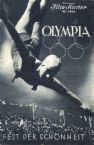
The official Olympic salute originated in the USA's Pledge of Allegiance, which used a stiff-armed salute, and was also the origin the Nazi salute and Nazi behavior adopted later under German National Socialism.
rexcurry.net/pledge-allegiance-pledge-allegiance2.jpg

Francis Bellamy (author of the Pledge) was cousin and cohort of Edward Bellamy and they were both national socialists in the United States
long before their dogma spread to Germany and worldwide. The Bellamys and socialist schools in the United States influenced German National
Socialism, its dogma, symbols and rituals.
rexcurry.net/bookchapter1a1c.html
The National Socialist German Workers' Party began in 1920, and achieved electoral breakthroughs in 1930, and dictatorship in 1933.
In 1932, Audi, Horch, Wanderer and DKW combined to form the Auto Union (AU). They adopted four rings as their logo, one for each of the founder companies. The marques were originally all based in Saxony – Audi and Horch in Zwickau, Wanderer in Chemnitz-Siegmar and DKW in Zschopau.
Adolf Hitler was aided by German unions of auto workers (compare that with how American auto workers in their unions have aided national socialist policies in the USA, including those of Barack Obama, and the unions were repaid with General Motors -Government Motors- and as the Europeans chewed up the GM European division). The Audi rings were joined in a union to glorify the union of socialists in Germany under Hitler.
During German National Socialism, the race track in Saxony developed its stylized "S" letter for "Sachsenring" that imitates the swastika's "S" for "socialism." It led to similar swastika-style symbolism that the Union of Soviet Socialist Republics used for its Sachsenring Trabant logo. rexcurry.net/trabant-sachsenring-rex-curry.html
Together the four Audi companies could cover the whole motor-vehicle market from motorbikes to luxury cars. Audi concentrated on the sports side, Horch on producing luxury vehicles, Wanderer (whose auto division had been bought in a hostile take over) on small to medium cars, and DKW on small cars. DKW was the main brand, producing around 80% of the conglomerate's cars, and only narrowly being beaten by VW (Volkswagen) to producing Hitler's 'people's car'. The acronym "DKW" originated from "Dampf Kraft Wagen" (steam-driven wagon).
This 4-circle badge was used, originally, only on Auto Union racing cars in that period while the member companies used their own names and emblems. Often, the 4 circles contain the original symbols of Audi, Horch, Wanderer, and DKW. Wanderer used a wide winged "W" letter; Horch used a large "H" letter; DKW used the letters "DKW"; Audi used an inverted triangle and the number "1."
The leader of the National Socialist German Workers' Party had determined to make German automobiles into world leaders, in order to promote his socialism. Hitler regarded racing as an integral part of this, and consequently 500,000 Reichmarks in government subsidies were pledged to make Mercedes the leading race team in the world - Hitler was a fan of Mercedes. AU sent a senior delegation to Hitler and persuaded him that having two competing racing programs would be better than one. He agreed to split the government money between Mercedes and AU. Although AU earned themselves the enmity of Mercedes, an enemy they could never hope to match in terms of size, they also won themselves an opportunity to make their name in the racing world.
Ferdinand Porsche had already done some work for Wanderer, before setting up his own consultancy in the wake of the Government-created depression and crash of 1929. Porsche had a car design, but no customers for it. AU signed him up.
Audi still uses the German tag line "Vorsprung durch Technik." The tag line is used either in original or in its English translation "Advantage through Technology." It is an odd reminder of socialist clichés from the 1930's such as "Kraft durch Freude" ("Strength through Joy" and "Kdf"); Schönheit der Arbeit ("Beauty of Labor"); "Arbeit macht frei" ("Work brings Freedom"). The "Strength through Joy" program was part of a scheme to provide holidays to workers at inexpensive rates, and was related to the "Beauty of Labor" office. When the early VW versions were introduced, Hitler abruptly changed the name of the car to KdF Wagen. The word "Volkswagen" itself meant "people's car" (cf. "folk's wagon"). Near the end of World War II many men, both young and old, were called upon to serve in the "People's Army " (Volksturm).
www.youtube.com/watch?v=OF82vuC-i_c
gabbyjaws.blogspot.com/2024/12/walkin-in-winter-wonderlan...
Tiffany Designs PROMO:: Rylee Outfit [Mesh] + Lara X
★★★ MESH WINTER OUTFIT ★★★
════════════════════════════════════════════════════
➣ Includes:
• Mesh Jacket
• Mesh Skirt
• Mesh Boots
• Texture HUD Driven
════════════════════════════════════════════════════
➣ Compatible with:
➠ LARA X, Petite
➠ MAITREYA, Petite
➠ LEGACY, Perky, Bombshell
➠ REBORN, Waifus
➠ GENX, Curvy
➠ KUPRA
➠ ERIKA
════════════════════════════════════════════════════
★ Before buying, please try the free demo.
★ Thank you for shopping at ::TIFFANY DESIGNS:: !
☎ In world assistance if you need additional help - please contact LucyHope.
Tiffany Designs
LM: maps.secondlife.com/secondlife/Hilton%20Villas/232/207/22
MP: marketplace.secondlife.com/stores/139726?
LaraX
RAONHair Virgo
TD Santa earrings
STUN Clairo 2 Curve
Original design by Dutch architect Pierre Cuypers (1827 – 1921). Renovation design by Spanish architects Antonio Cruz and Antonio Ortiz.
see also: pienw.blogspot.nl/2013/12/rijksmuseum-amsterdam.html
Descargar Aquí ► www.imagenesdeamor.pro/2016/11/18-imagenes-chidas-de-amor...
Si estás buscando las mejores imágenes chidas para descargar gratis, llegaste al lugar indicado. Hoy hemos preparado para ti una excelente colección de 18 imágenes chidas de amor perfectas para compartir con esa personita que te mueve el piso.
Ser romántico o romántica es la mejor opción cuando se trata de enamorar a alguien con quien quieres estar. Quizás quieres demostrarle a tu pareja lo mucho que la amas, o simplemente quieres expresarle al mundo tus sentimientos. Todo ello se puede lograr con estas hermosas imágenes chidas con frases, ideales para todo lo que desees.
Descargar imágenes chidas con frases
Te prometo que lo nuestro nunca va a terminar
Lo nuestro es para siempre
Esta bella imagen tiene una frase muy romántica para compartir con tu ser amado: La promesa de que pase lo que pase y cueste lo que cueste el amor que se tienen es para siempre. Es una de las imágenes chidas cargadas de amor que puedes compartir en tu Facebook o enviarla a tu pareja por Whatsapp, de seguro le va a encantar y le ayudará a sentirse mucho más seguro o segura en su relación.
Una rosa para demostrarte cuanto Te amo
Una rosa para ti
Dedicarle una rosa al amor de tu vida es, sin duda alguna, una de las mejores formas de conquistar su amor. Aquí compartimos contigo una hermosa imagen de una rosa con una frase perfecta para dar este detalle tan dulce. Además de ello, queremos regalarte 5 hermosas frases románticas que pueden acompañar un detalle especial como son estas imágenes chidas de amor.
Con haber conseguido sacarte una sonrisa me conformo. ¡Rosas hermosas para ti!
Te regalo esta hermosa rosa, porque yo nunca supe que tenía un sueño hasta que ese sueño fuiste tú.
Si tuviera una rosa para cada vez que pienso en ti, estaría siempre paseando en un jardín.
Las rosas, como los besos, ni se piden, ni se roban, se regalan.
No habrían flores suficientes para recordar cada momento juntos, por eso escojo esta rosa por toda una vida a tu lado.
Te amo. Eres lo mejor que me pasó en la vida
Eres el amor de mi vida
¡Qué vida más linda la que se vive a tu lado! Con estas imágenes de amor chidas queremos que le digas a tu amado o amada que es lo mejor que te pasó en la vida. Dile que conocerle fue el mayor regalo que Dios pudo haberte dado y que los días que pasan juntos son lo más preciado para ti. Recuérdale siempre cuanto es que le amas, y sobre todo, nunca olvides los detalles, que siempre son los que marcan la diferencia.
Contigo todo es bonito
Contigo la vida es bella
Estas bonitas imágenes de amor también son imágenes chidas para celular. Puedes descargar todas las que quieras y colocarlas de fondo de pantalla, ponerlas de foto de perfil o publicárselas en el muro de Facebook a la persona que quieres. ¿Te imaginas abrir tu Facebook y encontrar esto publicado en tu muro? Sería un detalle significativo y lleno de amor.
Tú déjate enamorar, y yo me encargo de hacerte feliz
6 Frases para decir TE AMO
Si te llamo de madrugada no es que padezca de insomnio, es que padezco del síndrome “sin ti no puedo dormir”.
Si tú decides estar conmigo, y cultivar este amor junto a mí, yo cuidaré de ti, tú cuidarás de mí, y Dios cuidará de nosotros.
El hecho de coincidir contigo en esta vida es algo por lo que viviré agradecido siempre.
Me gusta observarte mientras hablas, mientras lees, mientras comes, cuando duermes. Me gusta verte y preguntarme: “¿por qué tuve tanta suerte?”.
Te escogí a ti porque me di cuenta de que valías la pena, valías los riesgos, valías la vida.
Tuve la certeza de que el amor era esto, cuando empecé a contar las horas para verte.
La distancia impide un beso o un abrazo, pero jamás impide un sentimiento
La distancia no es límite para el amor
Cuando el amor es verdadero no hay nada ni nadie que impida que ese amor siga creciendo. El amor a distancia no es un límite, es sobre todo, una prueba de resistencia. Saber que esa persona está en otra parte, ya sea de la región, del país o del mundo, y que espera verte con la misma intensidad que tú, eso es amor del bueno. Tal y como dice una de nuestras imágenes chidas con frases de amor favorita: la distancia podrá impedirlo todo, menos un sentimiento.
Te quiero
Te quiero mucho mi amor
Si quieres decirle TE QUIERO a la persona de quien estás enamorado o enamorada, estas imágenes chidas de amor con corazones te ayudarán a conseguirlo.
Quizás aún piensas que un “te amo” es muy pronto para tu relación, o quieres ir poco a poco. Decir te quiero a esa persona única para ti es muy tierno y especial porque demuestra el interés que existe hacia él o ella. Díselo, aunque sea una sola vez. Esa persona lo valorará y guardará ese recuerdo en su mente y corazón por siempre
Por qué será que el amor prohibido es más intenso que el permitido
7 Frases chidas de amor para seducir
Estoy en la edad perfecta para quedarme con la culpa, no con las ganas.
Tu piel y mi boca tienen una cita, unas caricias y una vida pendiente.
Si supieras lo que quiero hacer contigo, seguramente el color de tus mejillas sufriría un leve enrojecimiento que no podrías disimular.
Hay espacios de mí que son tuyos, y tus manos lo saben.
Quiero darte un beso, de esos con los que sientes que la ropa te estorba.
Muero por ese beso tuyo que nos despierta las ganas y nos quita la ropa.
Deja de perder el tiempo con alguien que te deja en visto y ven conmigo ¡Que yo te desvisto!
No puedo dejar de quererte
Mi corazón te amará por siempre
Hay amores que se meten en tu corazón para vivir en ese lugar por siempre. Incluso, hay veces en las que el tiempo, la vida y las diferentes situaciones que cada quien atraviesa, influyen para que una relación no pueda darse.
Pero existe algo mucho más fuerte. Cuando dos personas son el uno para el otro no hay muralla que los separe. Estas imágenes chidas de amor hablan precisamente de eso y de cómo es que, a pesar de todos los obstáculos, el amor siempre sale vencedor.
Nunca te dejaré, porque eres el amor de mi vida y siempre lo serás
Cuando uno encuentra la persona ideal, la persona que uno quiere para su vida, está dispuesto a luchar a toda costa por estar a su lado. Existen diferentes situaciones que se pueden dar, incluso, puede llegar a pasar que la persona que amas ya tiene una relación. El verdadero amor está dispuesto a darlo todo.
Si tú te encuentras en una situación similar, recuerda que debes luchar con todas tus fuerzas, y si aquella persona de la que estás enamorado responde positivamente, no hay más vuelta que darle. Es la persona indicada. Pero si por el contrario, no está dispuesta a estar sólo contigo, pues es momento de buscar tu propio camino, a pesar de que nunca la dejarás de querer.
No es quien te besa bajo la lluvia, es quien te abraza durante la tormenta
8 Frases de besos para dedicar
Deseo escribir poemas sobre tu piel con mis labios.
Déjame darte un beso, de esos que no se olvidan, ni en otros labios, ni en otras noches, ni en otras vidas.
A mí no me mandes besos, a mí vienes y me los das.
Algún día te explicaré a besos por qué me tiembla el alma cuando tú me miras.
Lo mío fue un acto de justicia: te robé un beso porque tú llevabas meses robándome el sueño.
Si no era amor, era vicio. Porque jamás una boca me hizo regresar tantas veces por un beso.
Tengo tantas ganas de besarte que cada vez que te ven, mis labios sonríen.
Bésame con el atrevimiento de no saber si es lo correcto.
Amor es elegir a una persona, volverla a elegir cada día y compartir sueños
Te volvería a elegir mil veces más
¿Eliges a la misma persona cada día? Felicidades, estás enamorado. Eso es un verdadero reto en estos días en donde el amor sincero escasea con mayor frecuencia. Pero saber que una persona que complementa tu vida está ahí para ti es un motivo de felicidad. Si tienes a lado a alguien con quien compartir tus sueños, estas imágenes chidas gratis son para él o ella, compártesela y así sabrá lo feliz que te hace.
Te amo
Simplemente TE AMO
Cuando el bichito del amor te ha picado, decir lo contrario está demás. Lo mejor es dejarse llevar, y más, si ese amor que sientes es bien correspondido.
Queremos compartir contigo una hermosa dedicatoria de amor para que la compartas con la persona que tú más amas:
Y si te digo “te quiero”, no es un simple querer… Yo te quiero en todos los tiempos, te quiero en el beso de tus labios que anhela mi boca todas mis mañanas, te quiero en el abrazo que espera el pulmón de la tarde, te quiero en el sexo lascivo de cada noche… Te quiero para volar de amor en el cielo, te quiero para arder de amor en el infierno.
Eduardo Pacheco
Puedo negarlo todo, pero nuestras miradas lo delatan todo
Miradas que matan
Pero que matan de amor. Si tienes un cómplice de amor que interpreta tus miradas con picardía y sutileza, es digno de compartirle en secreto una de estas imágenes chidas con frases picantes para coquetear con sensualidad y hacer mucho más interesante esa relación
“Y si me ves mordiéndome los labios, es precisamente para evitar terminar arrancándote los tuyos”
Una rosa para otra rosa. Te amo
3 Mensajes de amor para mi novia
Y aprovechando el ambiente tan romántico que estas imágenes chidas con frases generan, vamos a compartir con ustedes 5 mensajes de amor que le pueden dedicar a su novia.
No te prometo amor eterno
No te voy a prometer amor eterno.
Voy a intentar que cada día sientas que te quiero.
Voy a hacer que tú descubras cómo realmente soy.
Voy a hacer que desees recorrer el mundo tomado de mi mano.
No te voy a dar discursos ni promesas, porque aprendí que el amor en palabras no tiene el mismo valor que el amor que se demuestra con hechos.
Quiero que al despertar me mires, sonrías y digas… ERES TODO LO QUE NECESITO EN ESTA VIDA.
Hoy te amo más que ayer y si ayer te amaba demasiado, imagina cuanto te amo hoy…
No quiero, porque te quiero
No quiero abrumarte con la pareja perfecta, porque perfecto no soy, ni busco que tú lo seas.
No quiero que calles tus cosas, para mi siempre es importante sabes cómo te sientes.
No busco adecuarme a ti, porque compartimos pasiones diversas y adversas.
No me hace falta un te quiero a cada momento, quiero mirarte a los ojos y saber que lo haces.
No quiero que te transformes en mi salvación, quiero extrañarte, porque valoro cada momento a tu lado.
No quiero llenarte de tiempo, sino compartir nuestros momento.
No quiero, porque te quiero.
Cuando estoy contigo nada más existe. En este mundo solo somos tú y yo
Te quiero
No te quiero perfecta
te quiero así incompleta
con tus heridas abiertas
tus confusiones no resultas
con tus dudas inciertas.
Te quiero así sin maquillaje
despeinada,
recién levantada
en tus días buenos
y en los peores.
Te quiero por quien eres
por lo que haces
nada mejor de ti que tu esencia
no restaría nada de tu autenticidad
eres plena en libertad
te quiero justo así, sin más.
Te amo desde el principio de tu vida hasta el final de tu historia, de nuestra historia juntos
Y qué mejor forma de cerrar con broche de oro esta hermosa selección de imágenes chidas que con esta bella imagen, la cual nos habla de un amor incondicional, de un amor que perdura en el tiempo y que se mantiene a pesar de las dificultades.
Esperamos que hayan disfrutado de estas imágenes chidas de amor y se animen a compartirlas con la persona que quieren. ¡Hasta la próxima!
El post 18 Imágenes chidas de amor con frases GRATIS aparece primero en Imágenes de Amor.
18 Imágenes chidas de amor con frases GRATIS | Imágenes Chidas, frases chidas, Frases de amor, imagenes chidas para whatsapp, imágenes de amor, imagenes para celular
Algarve
Common Reed Warbler (Acrocephalus scirpaceus) en plumage de transition.
L'effarvatte est la plus commune de nos "fauvettes aquatiques", lesquelles se reconnaissent à leur profil aigu (Acrocephalus), leur queue arrondie à l'extrémité et leurs longues sous-caudales. Elle fréquente la roselière à phragmites en période de reproduction.
traveladventureeverywhere.blogspot.com/2020/08/holy-mosco...
..
..
.
.
.
.
.
.
.
.
.
.
.
.
.
.
.
.
.
.
.
.
.
.
.
.
.
.
.
ALBANIA
Albanian Trilogy: A Series of Devious Stratagems
Armando Lulaj
Commissioner: Ministry of Culture. Curator: Marco Scotini. Deputy Curator: Andris Brinkmanis. Venue: Pavilion at Arsenale
ANDORRA
Inner Landscapes
Roqué, Joan Xandri
Commissioner: Henry Périer. Deputy Commissioner: Joana Baygual, Sebastià Petit, Francesc Rodríguez
Curator: Paolo de Grandis, Josep M. Ubach. Venue: Spiazzi, Castello 3865
ANGOLA
On Ways of Travelling
António Ole, Binelde Hyrcan, Délio Jasse, Francisco Vidal, Nelo Teixeira
Commissioner: Ministry of Culture, Rita Guedes Tavares. Curator: António Ole. Deputy Curator: Antonia Gaeta. Venue: Conservatorio Benedetto Marcello - Palazzo Pisani, San Marco 2810
ARGENTINA
The Uprising of Form
Juan Carlos Diste´fano
Commissioner: Magdalena Faillace. Curator: Mari´a Teresa Constantin. Venue: Pavilion at Arsenale – Sale d’Armi
ARMENIA, Republic of
Armenity / Haiyutioun
Haig Aivazian, Lebanon; Nigol Bezjian, Syria/USA; Anna Boghiguian Egypt/Canada; Hera Büyüktasçiyan, Turkey; Silvina Der-Meguerditchian, Argentina/Germany; Rene Gabri & Ayreen Anastas, Iran/Palestine/USA; Mekhitar Garabedian, Belgium; Aikaterini Gegisian, Greece; Yervant Gianikian & Angela Ricci Lucchi, Italy; Aram Jibilian, USA; Nina Katchadourian, USA/Finland; Melik Ohanian, France; Mikayel Ohanjanyan, Armenia/Italy; Rosana Palazyan, Brazil; Sarkis, Turkey/France; Hrair Sarkissian, Syria/UK
Commissioner: Ministry of Culture of the Republic of Armenia. Deputy Commissioner: Art for the World, Mekhitarist Congregation of San Lazzaro Island, Embassy of the Republic of Armenia in Italy, Vartan Karapetian. Curator: Adelina Cüberyan von Fürstenberg. Venue: Monastery and Island of San Lazzaro degli Armeni
AUSTRALIA
Fiona Hall: Wrong Way Time
Fiona Hall
Commissioner: Simon Mordant AM. Deputy Commissioner: Charles Green. Curator: Linda Michael. Scientific Committee: Simon Mordant AM, Carolyn Christov-Bakargiev, Max Delany, Rachel Kent, Danie Mellor, Suhanya Raffel, Leigh Robb. Venue: Pavilion at Giardini
AUSTRIA
Heimo Zobernig
Commissioner: Yilmaz Dziewior. Curator: Yilmaz Dziewior. Scientific Committee: Friends of the Venice Biennale. Venue: Pavilion at Giardini
AZERBAIJAN, Republic of
Beyond the Line
Ashraf Murad, Javad Mirjavadov, Tofik Javadov, Rasim Babayev, Fazil Najafov, Huseyn Hagverdi, Shamil Najafzada
Commissioner: Heydar Aliyev Foundation. Curators: de Pury de Pury, Emin Mammadov. Venue: Palazzo Lezze, Campo S.Stefano, San Marco 2949
Vita Vitale
Edward Burtynsky, Mircea Cantor, Loris Cecchini, Gordon Cheung, Khalil Chishtee, Tony Cragg, Laura Ford, Noemie Goudal, Siobhán Hapaska, Paul Huxley, IDEA laboratory and Leyla Aliyeva, Chris Jordan with Rebecca Clark and Helena S.Eitel, Tania Kovats, Aida Mahmudova, Sayyora Muin, Jacco Olivier, Julian Opie, Julian Perry, Mike Perry, Bas Princen, Stephanie Quayle, Ugo Rondinone, Graham Stevens, Diana Thater, Andy Warhol, Bill Woodrow, Erwin Wurm, Rose Wylie
Commissioner: Heydar Aliyev Foundation. Curators: Artwise: Susie Allen, Laura Culpan, Dea Vanagan. Venue: Ca’ Garzoni, San Marco 3416
BELARUS, Republic of
War Witness Archive
Konstantin Selikhanov
Commissioner: Natallia Sharanhovich. Deputy Commissioners: Alena Vasileuskaya, Kamilia Yanushkevich. Curators: Aleksei Shinkarenko, Olga Rybchinskaya. Scientific Committee: Dmitry Korol, Daria Amelkovich, Julia Kondratyuk, Sergei Jeihala, Sheena Macfarlane, Yuliya Heisik, Hanna Samarskaya, Taras Kaliahin, Aliaksandr Stasevich. Venue: Riva San Biagio, Castello 2145
BELGIUM
Personnes et les autres
Vincent Meessen and Guests, Mathieu K. Abonnenc, Sammy Baloji, James Beckett, Elisabetta Benassi, Patrick Bernier & Olive Martin, Tamar Guimara~es & Kasper Akhøj, Maryam Jafri, Adam Pendleton
Commissioner: Wallonia-Brussels Federation and Wallonia-Brussels International. Curator: Katerina Gregos. Venue: Pavilion at Giardini
COSTA RICA
"Costa Rica, Paese di pace, invita a un linguaggio universale d'intesa tra i popoli".
Andrea Prandi, Beatrice Gallori, Beth Parin, Biagio Schembari, Carla Castaldo, Celestina Avanzini, Cesare Berlingeri, Erminio Tansini, Fabio Capitanio, Fausto Beretti, Giovan Battista Pedrazzini, Giovanni Lamberti, Giovanni Tenga, Iana Zanoskar, Jim Prescott, Leonardo Beccegato, Liliana Scocco, Lucia Bolzano, Marcela Vicuna, Marco Bellagamba, Marco Lodola, Maria Gioia dell’Aglio, Mario Bernardinello, Massimo Meucci, Nacha Piattini, Omar Ronda, Renzo Eusebi, Tita Patti, Romina Power, Rubens Fogacci, Silvio di Pietro, Stefano Sichel, Tino Stefanoni, Ufemia Ritz, Ugo Borlenghi, Umberto Mariani, Venere Chillemi, Jacqueline Gallicot Madar, Massimo Onnis, Fedora Spinelli
Commissioner: Ileana Ordonez Chacon. Curator: Gregorio Rossi. Venue: Palazzo Bollani
CROATIA
Studies on Shivering: The Third Degree
Damir Ocko
Commissioner: Ministry of Culture. Curator: Marc Bembekoff. Venue: Palazzo Pisani, S. Marina
CUBA
El artista entre la individualidad y el contexto
Lida Abdul, Celia-Yunior, Grethell Rasúa, Giuseppe Stampone, LinYilin, Luis Edgardo Gómez Armenteros, Olga Chernysheva, Susana Pilar Delahante Matienzo
Commissioner: Miria Vicini. Curators: Jorge Fernández Torres, Giacomo Zaza. Venue: San Servolo Island
CYPRUS, Republic of
Two Days After Forever
Christodoulos Panayiotou
Commissioner: Louli Michaelidou. Deputy Commissioner: Angela Skordi. Curator: Omar Kholeif. Deputy Curator: Daniella Rose King. Venue: Palazzo Malipiero, Sestiere San Marco 3079
CZECH Republic and SLOVAK Republic
Apotheosis
Jirí David
Commissioner: Adam Budak. Deputy Commissioner: Barbara Holomkova. Curator: Katarina Rusnakova. Venue: Pavilion at Giardini
ECUADOR
Gold Water: Apocalyptic Black Mirrors
Maria Veronica Leon Veintemilla in collaboration with Lucia Vallarino Peet
Commissioner: Andrea Gonzàlez Sanchez. Deputy Commissioner: PDG Arte Communications. Curator: Ileana Cornea. Deputy Curator: Maria Veronica Leon Veintemilla. Venue: Istituto Santa Maria della Pietà, Castello 3701
ESTONIA
NSFW. From the Abyss of History
Jaanus Samma
Commissioner: Maria Arusoo. Curator: Eugenio Viola. Venue: Palazzo Malipiero, campo San Samuele, San Marco 3199
EGYPT
CAN YOU SEE
Ahmed Abdel Fatah, Gamal Elkheshen, Maher Dawoud
Commissioner: Hany Al Ashkar. Curator: Ministry of Culture. Venue: Pavilion at Giardini
FINLAND (Pavilion Alvar Aalto)
Hours, Years, Aeons
IC-98
Commissioner: Frame Visual Art Finland, Raija Koli. Curator: Taru Elfving. Deputy Curator: Anna Virtanen. Venue: Pavilion at Giardini
FRANCE
revolutions
Céleste Boursier-Mougenot
Commissioner: Institut français, with Ministère de la Culture et de la Communication. Curator: Emma Lavigne. Venue: Pavilion at Giardini
GEORGIA
Crawling Border
Rusudan Gobejishvili Khizanishvili, Irakli Bluishvili, Dimitri Chikvaidze, Joseph Sabia
Commissioner: Ana Riaboshenko. Curator: Nia Mgaloblishvili. Venue: Pavilion at Arsenale – Sale d’Armi
GERMANY
Fabrik
Jasmina Metwaly / Philip Rizk, Olaf Nicolai, Hito Steyerl, Tobias Zielony
Commissioner: ifa (Institut für Auslandsbeziehungen) on behalf of the Federal Foreign Office. Deputy Commissioner: Elke aus dem Moore, Nina Hülsmeier. Curator: Florian Ebner. Deputy Curator: Tanja Milewsky, Ilina Koralova. Venue: Pavilion at Giardini
GREAT BRITAIN
Sarah Lucas
Commissioner: Emma Dexter. Curator: Richard Riley. Deputy Curator: Katrina Schwarz. Venue: Pavilion at Giardini
GRENADA *
Present Nearness
Oliver Benoit, Maria McClafferty, Asher Mains, Francesco Bosso and Carmine Ciccarini, Guiseppe Linardi
Commissioner: Ministry of Culture. Deputy Commissioner: Susan Mains. Curator: Susan Mains. Deputy Curator: Francesco Elisei. Venue: Opera don Orione Artigianelli, Sala Tiziano, Fondamenta delle Zattere ai Gesuati, Dorsoduro 919
GREECE
Why Look at Animals? AGRIMIKÁ.
Maria Papadimitriou
Commissioner: Hellenic Ministry of Culture, Education and Religious Affairs. Curator: Gabi Scardi. Deputy Curator: Alexios Papazacharias. Venue: Pavilion at Giardini
BRAZIL
So much that it doesn't fit here
Antonio Manuel, André Komatsu, Berna Reale
Commissioner: Luis Terepins. Curator: Luiz Camillo Osorio. Deputy Curator: Cauê Alves. Venue: Pavilion at Giardini
CANADA
Canadassimo
BGL
Commissioner: National Gallery of Canada, Marc Mayer. Deputy Commissioner: National Gallery of Canada, Yves Théoret. Curator: Marie Fraser. Venue: Pavilion at Giardini
CHILE
Poéticas de la disidencia | Poetics of dissent: Paz Errázuriz - Lotty Rosenfeld
Paz Errázuriz, Lotty Rosenfeld
Commissioner: Antonio Arèvalo. Deputy Commissioner: Juan Pablo Vergara Undurraga. Curator: Nelly Richard. Venue: Pavilion at Arsenale - Artiglierie
CHINA, People’s Republic of
Other Future
LIU Jiakun, LU Yang, TAN Dun, WEN Hui/Living Dance Studio, WU Wenguang/Caochangdi Work Station
Commissioner: China Arts and Entertainment Group, CAEG. Deputy Commissioners: Zhang Yu, Yan Dong. Curator: Beijing Contemporary Art Foundation. Scientific Committee: Fan Di’an, Zhang Zikang, Zhu Di, Gao Shiming, Zhu Qingsheng, Pu Tong, Shang Hui. Venue: Pavilion at Arsenale – Giardino delle Vergini
GUATEMALA
Sweet Death
Emma Anticoli Borza, Sabrina Bertolelli, Mariadolores Castellanos, Max Leiva, Pier Domenico Magri, Adriana Montalto, Elmar Rojas (Elmar René Rojas Azurdia), Paolo Schmidlin, Mónica Serra, Elsie Wunderlich, Collettivo La Grande Bouffe
Commissioner: Daniele Radini Tedeschi. Curators: Stefania Pieralice, Carlo Marraffa, Elsie Wunderlich. Deputy Curators: Luciano Carini, Simone Pieralice. Venue: Officina delle Zattere, Dorsoduro 947, Fondamenta Nani
HOLY SEE
Commissioner: Em.mo Card. Gianfranco Ravasi, Presidente del Pontificio Consiglio della Cultura. Venue: Pavilion at Arsenale – Sale d’Armi
HUNGARY
Sustainable Identities
Szilárd Cseke
Commissioner: Monika Balatoni. Deputy Commissioner: István Puskás, Sándor Fodor, Anna Karády. Curator: Kinga German. Venue: Pavilion at Giardini
ICELAND
Christoph Büchel
Commissioner: Björg Stefánsdóttir. Curator: Nína Magnúsdóttir. Venue: to be confirmed
INDONESIA, Republic of
Komodo Voyage
Heri Dono
Commissioner: Sapta Nirwandar. Deputy Commissioner: Soedarmadji JH Damais. Curator: Carla Bianpoen, Restu Imansari Kusumaningrum. Scientific Committee: Franco Laera, Asmudjo Jono Irianto, Watie Moerany, Elisabetta di Mambro. Venue: Venue: Arsenale
IRAN
Iranian Highlights
Samira Alikhanzaradeh, Mahmoud Bakhshi Moakhar, Jamshid Bayrami, Mohammed Ehsai
The Great Game
Lida Abdul, Bani Abidi, Adel Abidin, Amin Agheai, Ghodratollah Agheli, Shahriar Ahmadi, Parastou Ahovan, Farhad Ahrarnia, Rashad Alakbarov, Nazgol Ansarinia, Reza Aramesh, Alireza Astaneh, Sonia Balassanian, Mahmoud Bakhshi, Moakhar Wafaa Bilal, Mehdi Farhadian, Monir Farmanfarmaian, Shadi Ghadirian, Babak Golkar, Shilpa Gupta, Ghasem Hajizadeh, Shamsia Hassani, Sahand Hesamiyan, Sitara Ibrahimova, Pouran Jinchi, Amar Kanwar, Babak Kazemi, Ryas Komu, Ahmad Morshedloo, Farhad Moshiri, Mehrdad Mohebali, Huma Mulji, Azad Nanakeli, Jamal Penjweny, Imran Qureshi, Sara Rahbar, Rashid Rana, T.V. Santhosh, Walid Siti, Mohsen Taasha Wahidi, Mitra Tabrizian, Parviz Tanavoli, Newsha Tavakolian, Sadegh Tirafkan, Hema Upadhyay, Saira Wasim
Commissioner: Majid Mollanooruzi. Deputy Commissioners: Marco Meneguzzo, Mazdak Faiznia. Curators: Marco Meneguzzo, Mazdak Faiznia. Venue: Calle San Giovanni 1074/B, Cannaregio
IRAQ
Commissioner: Ruya Foundation for Contemporary Culture in Iraq (RUYA). Deputy Commissioner: Nuova Icona - Associazione Culturale per le Arti. Curator: Philippe Van Cauteren. Venue: Ca' Dandolo, San Polo 2879
IRELAND
Adventure: Capital
Sean Lynch
Commissioner: Mike Fitzpatrick. Curator: Woodrow Kernohan. Venue: Pavilion at Arsenale - Artiglierie
ISRAEL
Tsibi Geva | Archeology of the Present
Tsibi Geva
Commissioner: Arad Turgem, Michael Gov. Curator: Hadas Maor. Venue: Pavilion at Giardini
ITALY
Ministero dei Beni e delle attività culturali e del turismo - Direzione Generale Arte e Architettura Contemporanee e Periferie Urbane. Commissioner: Federica Galloni. Curator: Vincenzo Trione. Venue: Padiglione Italia, Tese delle Vergini at Arsenale
JAPAN
The Key in the Hand
Chiharu Shiota
Commissioner: The Japan Foundation. Deputy Commissioner: Yukihiro Ohira, Manako Kawata and Haruka Nakajima. Curator: Hitoshi Nakano. Venue : Pavilion at Giardini
KENYA
Creating Identities
Yvonne Apiyo Braendle-Amolo, Qin Feng, Shi Jinsong, Armando Tanzini, Li Zhanyang, Lan Zheng Hui, Li Gang, Double Fly Art Center
Commissioner: Paola Poponi. Curator: Sandro Orlandi Stagl. Deputy Curator: Ding Xuefeng. Venue: San Servolo Island
KOREA, Republic of
The Ways of Folding Space & Flying
MOON Kyungwon & JEON Joonho
Commissioner: Sook-Kyung Lee. Curator: Sook-Kyung Lee. Venue: Pavilion at Giardini
KOSOVO, Republic of
Speculating on the blue
Flaka Haliti
Commissioner: Ministry of Culture, Youth and Sports. Curator: Nicolaus Schafhausen. Deputy Curator: Katharina Schendl. Venue: Pavilion at Arsenale - Artiglierie
LATVIA
Armpit
Katrina Neiburga, Andris Eglitis
Commissioner: Solvita Krese (Latvian Centre for Contemporary Art). Deputy Commissioner: Kitija Vasiljeva. Curator: Kaspars Vanags. Venue: Pavilion at Arsenale
LITHUANIA
Museum
Dainius Liškevicius
Commissioner: Vytautas Michelkevicius. Deputy Commissioner: Rasa Antanaviciute. Curator: Vytautas Michelkevicius. Venue: Palazzo Zenobio, Fondamenta del Soccorso 2569, Dorsoduro
LUXEMBOURG, Grand Duchy of
Paradiso Lussemburgo
Filip Markiewicz
Commissioner: Ministry of Culture. Deputy Commissioner: MUDAM Luxembourg. Curator: Paul Ardenne. Venue: Cà Del Duca, Corte del Duca Sforza, San Marco 3052
MACEDONIA, Former Yugoslavian Republic of
We are all in this alone
Hristina Ivanoska and Yane Calovski
Commissioner: Maja Nedelkoska Brzanova, National Gallery of Macedonia. Deputy Commissioner: Olivija Stoilkova. Curator: Basak Senova. Deputy Curator: Maja Cankulovska Mihajlovska. Venue: Pavilion at Arsenale - Sale d’Armi
MAURITIUS *
From One Citizen You Gather an Idea
Sultana Haukim, Nirmal Hurry, Alix Le Juge, Olga Jürgenson, Helge Leiberg, Krishna Luchoomun, Neermala Luckeenarain, Kavinash Thomoo, Bik Van Der Pol, Laure Prouvost, Vitaly Pushnitsky, Römer + Römer
Commissioner: pARTage. Curators: Alfredo Cramerotti, Olga Jürgenson. Venue: Palazzo Flangini - Canareggio 252
MEXICO
Possesing Nature
Tania Candiani, Luis Felipe Ortega
Commissioner: Tomaso Radaelli. Deputy Commissioner: Magdalena Zavala Bonachea. Curator: Karla Jasso. Venue: Pavilion at Arsenale – Sale d’Armi
MONGOLIA *
Other Home
Enkhbold Togmidshiirev, Unen Enkh
Commissioner: Gantuya Badamgarav, MCASA. Curator: Uranchimeg Tsultemin. Scientific Committee: David A Ross, Boldbaatar Chultemin. Venue: European Cultural Centre - Palazzo Mora
MONTENEGRO
,,Ti ricordi Sjecaš li se You Remember "
Aleksandar Duravcevic
Commissioner/Curator: Anastazija Miranovic. Deputy Commissioner: Danica Bogojevic. Venue: Palazzo Malipiero (piano terra), San Marco 3078-3079/A, Ramo Malipiero
MOZAMBIQUE, Republic of *
Theme: Coexistence of Tradition and Modernity in Contemporary Mozambique
Mozambique Artists
Commissioner: Joel Matias Libombo. Deputy Commissioner: Gilberto Paulino Cossa. Curator: Comissariado-Geral para a Expo Milano 2015. Venue: Pavilion at Arsenale
NETHERLANDS, The
herman de vries - to be all ways to be
herman de vries
Commissioner: Mondriaan Fund. Curators: Colin Huizing, Cees de Boer. Venue: Pavilion ar Giardini
NEW ZEALAND
Secret Power
Simon Denny
Commissioner: Heather Galbraith. Curator: Robert Leonard. Venue: Biblioteca Nazionale Marciana, Marco Polo Airport
NORDIC PAVILION (NORWAY)
Camille Norment
Commissioner: OCA, Office for Contemporary Art Norway. Curator: Katya García-Antón. Deputy Curator: Antonio Cataldo. Venue: Pavilion at Giardini
PERU
Misplaced Ruins
Gilda Mantilla and Raimond Chaves
Commissioner: Armando Andrade de Lucio. Curator: Max Hernández-Calvo. Venue: Pavilion at Arsenale – Sale d’Armi
PHILIPPINES
Tie a String Around the World
Manuel Conde, Carlos Francisco, Manny Montelibano, Jose Tence Ruiz
Commissioner: National Commission for Culture and the Arts (NCCA), Felipe M. de Leon Jr. Curator: Patrick D. Flores. Venue: European Cultural Centre - Palazzo Mora
POLAND
Halka/Haiti. 18°48’05”N 72°23’01”W
C.T. Jasper, Joanna Malinowska
Commissioner: Hanna Wróblewska. Deputy Commissioner: Joanna Wasko. Curator: Magdalena Moskalewicz. Venue: Pavilion at Giardini
PORTUGAL
I Will Be Your Mirror / poems and problems
João Louro
Commissioner/Curator: María de Corral. Venue: Palazzo Loredan, campo S. Stefano
ROMANIA
Adrian Ghenie: Darwin’s Room
Adrian Ghenie
Commissioner: Monica Morariu. Deputy Commissioner: Alexandru Damian. Curator: Mihai Pop. Venue: Pavilion at Giardini
Inventing the Truth. On Fiction and Reality
Michele Bressan, Carmen Dobre-Hametner, Alex Mirutziu, Lea Rasovszky, Stefan Sava, Larisa Sitar
Commissioner: Monica Morariu. Deputy Commissioner: Alexandru Damian. Curator: Diana Marincu. Deputy Curators: Ephemair Association (Suzana Dan and Silvia Rogozea). Venue: New Gallery of the Romanian Institute for Culture and Humanistic Research in Venice
RUSSIA
The Green Pavilion
Irina Nakhova
Commissioner: Stella Kesaeva. Curator: Margarita Tupitsyn. Venue: Pavilion at Giardini
SERBIA
United Dead Nations
Ivan Grubanov
Commissioner: Lidija Merenik. Deputy Commissioner: Ana Bogdanovic. Curator: Lidija Merenik. Deputy Curator: Ana Bogdanovic. Scientific Committee: Jovan Despotovic. Venue: Pavilion at Giardini
SAN MARINO
Repubblica di San Marino “ Friendship Project “ China
Xu De Qi, Liu Dawei, Liu Ruo Wang, Ma Yuan, Li Lei, Zhang Hong Mei, Eleonora Mazza, Giuliano Giulianelli, Giancarlo Frisoni, Tony Margiotta, Elisa Monaldi, Valentina Pazzini
Commissioner: Istituti Culturali della Repubblica di San Marino. Curator: Vincenzo Sanfo. Venue: TBC
SEYCHELLES, Republic of *
A Clockwork Sunset
George Camille, Léon Wilma Loïs Radegonde
Commissioner: Seychelles Art Projects Foundation. Curators: Sarah J. McDonald, Victor Schaub Wong. Venue: European Cultural Centre - Palazzo Mora
SINGAPORE
Sea State
Charles Lim Yi Yong
Commissioner: Paul Tan, National Arts Council, Singapore. Curator: Shabbir Hussain Mustafa. Scientific Committee: Eugene Tan, Kathy Lai, Ahmad Bin Mashadi, June Yap, Emi Eu, Susie Lingham, Charles Merewether, Randy Chan. Venue: Pavilion at Arsenale – Sale d’Armi
SLOVENIA, Republic of
UTTER / The violent necessity for the embodied presence of hope
JAŠA
Commissioner: Simona Vidmar. Deputy Commissioner: Jure Kirbiš. Curators: Michele Drascek and Aurora Fonda. Venue: Pavilion at Arsenale - Artiglierie
SPAIN
Los Sujetos (The Subjects)
Pepo Salazar, Cabello/Carceller, Francesc Ruiz, + Salvador Dalí
Commissioner: Ministerio Asuntos Exteriores. Gobierno de España. Curator: Marti Manen. Venue: Pavilion at Giardini
SYRIAN ARAB REPUBLIC
Origini della civiltà
Narine Ali, Ehsan Alar, Felipe Cardeña, Fouad Dahdouh, Aldo Damioli, Svitlana Grebenyuk, Mauro Reggio, Liu Shuishi, Nass ouh Zaghlouleh, Andrea Zucchi, Helidon Xhixha
Commissioner: Christian Maretti. Curator: Duccio Trombadori. Venue: Redentore – Giudecca, San Servolo Island
SWEDEN
Excavation of the Image: Imprint, Shadow, Spectre, Thought
Lina Selander
Commissioner: Ann-Sofi Noring. Curator: Lena Essling. Venue: Pavilion at Arsenale
SWITZERLAND
Our Product
Pamela Rosenkranz
Commissioner: Swiss Arts Council Pro Helvetia, Sandi Paucic and Marianne Burki. Deputy-Commissioner: Swiss Arts Council Pro Helvetia, Rachele Giudici Legittimo. Curator: Susanne Pfeffer. Venue: Pavilion at Giardini
THAILAND
Earth, Air, Fire & Water
Kamol Tassananchalee
Commissioner: Chai Nakhonchai, Office of Contemporary Art and Culture (OCAC), Ministry of Culture. Curator: Richard David Garst. Deputy Curator: Pongdej Chaiyakut. Venue: Paradiso Gallerie, Giardini della Biennale, Castello 1260
TURKEY
Respiro
Sarkis
Commissioner: Istanbul Foundation for Culture and Arts. Curator: Defne Ayas. Deputy Curator: Ozge Ersoy. Venue: Pavilion at Arsenale – Sale d’Armi
TUVALU
Crossing the Tide
Vincent J.F. Huang
Commissioner: Taukelina Finikaso. Deputy Commissioner: Temate Melitiana. Curator: Thomas J. Berghuis. Scientific Committee: Andrea Bonifacio. Venue: Pavilion at Arsenale
UKRAINE
Hope!
Yevgenia Belorusets, Nikita Kadan, Zhanna Kadyrova, Mykola Ridnyi & SerhiyZhadan, Anna Zvyagintseva, Open Group, Artem Volokitin
Commissioner: Ministry of Culture. Curator: Björn Geldhof. Venue: Riva dei Sette Martiri
UNITED ARAB EMIRATES
1980 – Today: Exhibitions in the United Arab Emirates
Abdullah Al Saadi, Abdul Qader Al Rais, Abdulraheem Salim, Abdulrahman Zainal, Ahmed Al Ansari, Ahmed Sharif, Hassan Sharif, Mohamed Yousif, Mohammed Abdullah Bulhiah, Mohammed Al Qassab, Mohammed Kazem, Moosa Al Halyan, Najat Meky, Obaid Suroor, Salem Jawhar
Commissioner: Salama bint Hamdan Al Nahyan Foundation. Curator: Hoor Al Qasimi. Venue: Pavilion at Arsenale – Sale d'Armi
UNITED STATES OF AMERICA
Joan Jonas: They Come to Us Without a Word
Joan Jonas
Commissioner: Paul C. Ha. Deputy Commissioner: MIT List Visual Arts Center. Curators: Ute Meta Bauer, Paul C. Ha. Venue: Pavilion at Giardini
URUGUAY
Global Myopia II (Pencil & Paper)
Marco Maggi
Commissioner: Ricardo Pascale. Curator: Patricia Bentancour. Venue: Pavilion at Giardini
VENEZUELA, Bolivarian Republic of
Te doy mi palabra (I give you my word)
Argelia Bravo, Félix Molina (Flix)
Commissioner: Oscar Sotillo Meneses. Deputy Commissioner: Reinaldo Landaeta Díaz. Curator: Oscar Sotillo Meneses. Deputy Curator: Morella Jurado. Scientific Committee: Carlos Pou Ruan. Venue: Pavilion at Giardini
ZIMBABWE, Republic of
Pixels of Ubuntu/Unhu: - Exploring the social and cultural identities of the 21st century.
Chikonzero Chazunguza, Masimba Hwati, Gareth Nyandoro
Commissioner: Doreen Sibanda. Curator: Raphael Chikukwa. Deputy Curator: Tafadzwa Gwetai. Scientific Committee: Saki Mafundikwa, Biggie Samwanda, Fabian Kangai, Reverend Paul Damasane, Nontsikelelo Mutiti, Stephen Garan'anga, Dominic Benhura. Venue: Santa Maria della Pieta
ITALO-LATIN AMERICAN INSTITUTE
Voces Indígenas
Commissioner: Sylvia Irrazábal. Curator: Alfons Hug. Deputy Curator: Alberto Saraiva. Venue: Pavilion at Arsenale
ARGENTINA
Sofia Medici and Laura Kalauz
PLURINATIONAL STATE OF BOLIVIA
Sonia Falcone and José Laura Yapita
BRAZIL
Adriana Barreto
Paulo Nazareth
CHILE
Rainer Krause
COLOMBIA
León David Cobo,
María Cristina Rincón and Claudia Rodríguez
COSTA RICA
Priscilla Monge
ECUADOR
Fabiano Kueva
EL SALVADOR
Mauricio Kabistan
GUATEMALA
Sandra Monterroso
HAITI
Barbara Prézeau Stephenson
HONDURAS
Leonardo González
PANAMA
Humberto Vélez
NICARAGUA
Raúl Quintanilla
PARAGUAY
Erika Meza
Javier López
PERU
José Huamán Turpo
URUGUAY
Gustavo Tabares
Ellen Slegers
001 Inverso Mundus. AES+F
Magazzino del Sale n. 5, Dorsoduro, 265 (Fondamenta delle Zattere ai Saloni); Palazzo Nani Mocenigo, Dorsoduro, 960
May 9th – October 31st
Organization: VITRARIA Glass + A Museum
Catalonia in Venice: Singularity
Cantieri Navali, Castello, 40 (Calle Quintavalle)
May 9th - November 22nd
Organization: Institut Ramon Llull
venezia2015.llull.cat
Conversion. Recycle Group
Chiesa di Sant’Antonin, Castello (Campo Sant’Antonin)
May 6th - October 31st
Organization: Moscow Museum of Modern Art
Dansaekhwa
Palazzo Contarini-Polignac, Dorsoduro, 874 (Accademia)
May 7th – August 15th
Organization: The Boghossian Foundation
Dispossession
Palazzo Donà Brusa, Campo San Polo, 2177
May 9th - November 22nd
Organization: European Capital of Culture Wroclaw 2016
wroclaw2016.pl/biennale/
EM15 presents Doug Fishbone’s Leisure Land Golf
Arsenale Docks, Castello, 40A, 40B, 41C
May 6th - July 26th
Organization: EM15
Eredità e Sperimentazione
Grand Hotel Hungaria & Ausonia, Viale Santa Maria Elisabetta, 28, Lido di Venezia
May 9th - November 22nd
Organization: Istituto Nazionale di BioArchitettura - Sezione di Padova
Frontiers Reimagined
Palazzo Grimani, Castello, 4858 (Ramo Grimani)
May 9th - November 22nd
Organization: Tagore Foundation International; Polo museale del Veneto
Glasstress 2015 Gotika
Istituto Veneto di Scienze Lettere ed Arti, Palazzo Cavalli Franchetti, San Marco, 2847 (Campo Santo Stefano); Chiesa di Santa Maria della Visitazione, Centro Culturale Don Orione Artigianelli, Dorsoduro, 919 (Zattere); Fondazione Berengo, Campiello della Pescheria, 15, Murano;
May 9th — November 22nd
Organization: The State Hermitage Museum
Graham Fagen: Scotland + Venice 2015
Palazzo Fontana, Cannaregio, 3829 (Strada Nova)
May 9th - November 22nd
Organization: Scotland + Venice
Grisha Bruskin. An Archaeologist’s Collection
Former Chiesa di Santa Caterina, Cannaregio, 4941-4942
May 6th – November 22nd
Organization: Centro Studi sulle Arti della Russia (CSAR), Università Ca’ Foscari Venezia
Helen Sear, ... The Rest Is Smoke
Santa Maria Ausiliatrice, Castello, 450 (Fondamenta San Gioacchin)
May 9th - November 22nd
Organization: Cymru yn Fenis/Wales in Venice
Highway to Hell
Palazzo Michiel, Cannaregio, 4391/A (Strada Nova)
May 9th - November 22nd
Organization: Hubei Museum of Art
Humanistic Nature and Society (Shan-Shui) – An Insight into the Future
Palazzo Faccanon, San Marco, 5016 (Mercerie)
May 7th – August 4th
Organization: Shanghai Himalayas Museum
In the Eye of the Thunderstorm: Effervescent Practices from the Arab World & South Asia
Dorsoduro, 417 (Zattere)
May 6th - November 15th
Organization: ArsCulture
Italia Docet | Laboratorium- Artists, Participants, Testimonials and Activated Spectators
Palazzo Barbarigo Minotto, San Marco, 2504 (Fondamenta Duodo o Barbarigo)
May 9th – June 30th; September 11st – October 31st
Organization: Italian Art Motherboard Foundation (i-AM Foundation)
www.venicebiennale-italiadocet.org
Jaume Plensa: Together
Basilica di San Giorgio Maggiore, Isola di San Giorgio Maggiore
May 6th – November 22nd
Organization: Abbazia di San Giorgio Maggiore Benedicti Claustra Onlus
Jenny Holzer "War Paintings"
Museo Correr, San Marco, 52 (Piazza San Marco)
May 6th – November 22nd
Organization: The Written Art Foundation; Museo Correr, Fondazione Musei Civici di Venezia
correr.visitmuve.it
Jump into the Unknown
Palazzo Loredan dell’Ambasciatore, Dorsoduro, 1261-1262
May 9th – June 18th
Organization: Nine Dragon Heads
9dh-venice.com
Learn from Masters
Palazzo Bembo, San Marco, 4793 (Riva del Carbon)
May 9th – November 22nd
Organization: Pan Tianshou Foundation
pantianshou.caa.edu.cn/foundation_en
My East is Your West
Palazzo Benzon, San Marco, 3927
May 6th – October 31st
Organization: The Gujral Foundation
Ornamentalism. The Purvitis Prize
Arsenale Nord, Tesa 99
May 9th – November 22nd
Organization: The Secretariat of the Latvian Presidency of the Council of the European Union in 2015
www.purvisabalva.lv/en/ornamentalism
Path and Adventure
Arsenale, Castello, 2126/A (Campo della Tana)
May 9th – November 22nd
Organization: The Civic and Municipal Affairs Bureau; The Macao Museum of Art; The Cultural Affairs Bureau
Patricia Cronin: Shrine for Girls, Venice
Chiesa di San Gallo, San Marco, 1103 (Campo San Gallo)
May 9th – November 22nd
Organization: Brooklyn Rail Curatorial Projects
curatorialprojects.brooklynrail.org
Roberto Sebastian Matta. Sculture
Giardino di Palazzo Soranzo Cappello, Soprintendenza BAP per le Province di Venezia, Belluno, Padova e Treviso, Santa Croce, 770 (Fondamenta Rio Marin)
May 9th – November 22nd
Organization: Fondazione Echaurren Salaris
www.fondazioneechaurrensalaris.it
www.maggioregam.com/56Biennale_Matta
Salon Suisse: S.O.S. Dada - The World Is A Mess
Palazzo Trevisan degli Ulivi, Dorsoduro, 810 (Campo Sant'Agnese)
May 9th; June 4th - 6th; September 10th - 12th; October 15th - 17th; November 19th – 21st
Organization: Swiss Arts Council Pro Helvetia
Sean Scully: Land Sea
Palazzo Falier, San Marco, 2906
May 9th – November 22nd
Organization: Fondazione Volume!
Sepphoris. Alessandro Valeri
Molino Stucky, interior atrium, Giudecca, 812
May 9th – November 22nd
Organization: Assessorato alla Cultura del Comune di Narni(TR); a Sidereal Space of Art; Satellite Berlin
Tesla Revisited
Palazzo Nani Mocenigo, Dorsoduro, 960
May 9th – October 18th
Organization: VITRARIA Glass + A Museum
The Bridges of Graffiti
Arterminal c/o Terminal San Basilio, Dorsoduro (Fondamenta Zattere al Ponte Lungo)
May 9th - November 22nd
Organization: Associazione Culturale Inossidabile
The Dialogue of Fire. Ceramic and Glass Masters from Barcelona to Venice
Palazzo Tiepolo Passi, San Polo, 2774
May 6th - November 22nd
Organization: Fundaciò Artigas; ArsCulture
The Question of Beings
Istituto Santa Maria della Pietà, Castello, 3701
May 9th - November 22nd
Organization: Museum of Contemporary Art, Taipei (MoCA, Taipei)
The Revenge of the Common Place
Università Ca' Foscari, Ca' Bernardo, Dorsoduro, 3199 (Calle Bernardo)
May 9th – September 30th
Organization: Vrije Universiteit Brussel (Free University Brussels-VUB)
The Silver Lining. Contemporary Art from Liechtenstein and other Microstates
Palazzo Trevisan degli Ulivi, Dorsoduro, 810 (Campo Sant'Agnese)
October 24th – November 1st
Organization: Kunstmuseum Liechtenstein
The Sound of Creation. Paintings + Music by Beezy Bailey and Brian Eno
Conservatorio Benedetto Marcello, Palazzo Pisani, San Marco, 2810 (Campo Santo Stefano)
May 7th - November 22nd
Organization: ArsCulture
The Union of Fire and Water
Palazzo Barbaro, San Marco, 2840
May 9th - November 22nd
Organization: YARAT Contemporary Art Organisation
Thirty Light Years - Theatre of Chinese Art
Palazzo Rossini, San Marco, 4013 (Campo Manin)
May 9th - November 22nd
Organization: GAC Global Art Center Foundation; The Guangdong Museum of Art
Tsang Kin-Wah: The Infinite Nothing, Hong Kong in Venice
Arsenale, Castello, 2126 (Campo della Tana)
May 9th - November 22nd
Organization: M+, West Kowloon Cultural District; Hong Kong Arts Development Council
Under the Surface, Newfoundland and Labrador at Venice
Galleria Ca' Rezzonico, Dorsoduro, 2793
May 9th - November 22nd
Organization: Terra Nova Art Foundation
tnaf.ca
Ursula von Rydingsvard
Giardino della Marinaressa, Castello (Riva dei Sette Martiri)
May 6th - November 22nd
Organization:Yorkshire Sculpture Park
We Must Risk Delight: Twenty Artists from Los Angeles
Magazzino del Sale n. 3, Dorsoduro, 264 (Zattere)
May 7th - November 22nd
Organization: bardoLA
Wu Tien-Chang: Never Say Goodbye
Palazzo delle Prigioni, Castello, 4209 (San Marco)
May 9th - November 22nd
Organization: Taipei Fine Arts Museum of Taiwan
8/5/2015
COPENHAGEN ULTRACONTEMPORARY BIENNALE @ Venice Biennale
-------
The COPENHAGEN ULTRACONTEMPORARY BIENNALE will be done in 3 platforms
the parliament is platform 2
Artist have to express closer to decision makers . in time , in the NOW
--------------
a presentation of COPENHAGEN ULTRACONTEMPORARY BIENNALE will be done at the Venice Biennale 2015 ---
check date and place here www.facebook.com/CopenhagenBiennale
COPENHAGEN ULTRACONTEMPORARY BIENNALE
main : copenhagenbiennale.org/
www.facebook.com/CopenhagenBiennale
www.emergencyrooms.org/formats.html
meanwhile during Venice Biennale contemporary art will be shown by
ABBOUD, Jumana Emil .ABDESSEMED, Adel .ABONNENC, Mathieu Kleyebe
ABOUNADDARA.ACHOUR, Boris ADKINS, Terry AFIF, Saâdane
AKERMAN, Chantal AKOMFRAH, John AKPOKIERE, Karo
AL SOLH, Mounira ALGÜN RINGBORG, Meriç ALLORA, Jennifer & CALZADILLA, Guillermo
ATAMAN, Kutlug BAJEVIC, Maja BALLESTEROS, Ernesto
BALOJI, Sammy BARBA, Rosa
BASELITZ, Georg BASUALDO, Eduardo BAUER, Petra
BESHTY, Walead BHABHA, Huma BOLTANSKI, Christian
BONVICINI, Monica BOYCE, Sonia
BOYD, Daniel BREY, Ricardo BROODTHAERS, Marcel BRUGUERA, Tania
BURGA, Teresa CALHOUN, Keith & McCORMICK, Chandra CAO, Fei
CHAMEKH, Nidhal CHERNYSHEVA, Olga CHUNG, Tiffany
COOPERATIVA CRÁTER INVERTIDO CREATIVE TIME SUMMIT
DAMIANI, Elena DELLER, Jeremy DJORDAJDZE, Thea DUMAS, Marlene
E-FLUX JOURNAL EDWARDS, Melvin EFFLATOUN, Inji EHMANN, Antje & FAROCKI, Harun
EICHHORN, Maria EVANS, Walker FAROCKI, Harun FLOYD, Emily
FRIEDL, Peter FUSCO, Coco FUSINATO, Marco
GAINES, Charles GALLAGHER, Ellen GALLARDO, Ana GARCIA, Dora
GATES, Theaster GENZKEN, Isa GLUKLYA GOMES, Sônia GROSSE, Katharina
GULF LABOR GURSKY, Andreas HAACKE, Hans
HADJITHOMAS, Joana & JOREIGE, Khalil HARRY, Newell HASSAN, Kay
HIRSCHHORN, Thomas HÖLLER, Carsten HOLT, Nancy & SMITHSON, Robert
IM, Heung Soon INVISIBLE BORDERS: Trans-African Photographers ISHIDA, Tetsuya
JI, Dachun JULIEN, Isaac K., Hiwa KAMBALU, Samson KIM, Ayoung
KLUGE, Alexander KNGWARREYE, Emily Kame LAGOMARSINO, Runo LEBER, Sonia & CHESWORTH, David
LIGON, Glenn MABUNDA, Gonçalo MADHUSUDHANAN MAHAMA, Ibrahim
MALJKOVIC, David MAN, Victor MANSARAY, Abu Bakarr MARKER, Chris
MARSHALL, Kerry James MARTEN, Helen MAURI, Fabio McQUEEN, Steve
MOHAIEMEN, Naeem MORAN, Jason MÜLLER, Ivana MUNROE, Lavar MURILLO, Oscar
MUTU, Wangechi NAM, Hwayeon NAUMAN, Bruce NDIAYE, Cheikh NICOLAI, Olaf
OFILI, Chris OGBOH, Emeka PARRENO, Philippe PASCALI, Pino PIPER, Adrian
PONIFASIO, Lemi QIU, Zhijie RAISSNIA, Raha RAQS MEDIA COLLECTIVE
(NARULA, Monica; BAGCHI, Jeebesh; SENGUPTA, Shuddhabrata) REYNAUD-DEWAR, Lili
RIDNYI, Mykola ROBERTS, Liisa ROTTENBERG, Mika SCHÖNFELDT, Joachim SELMANI, Massinissa
SENGHOR, Fatou Kand SHETTY, Prasad & GUPTE, Rupal SIBONY, Gedi
SIMMONS, Gary SIMON, Taryn SIMPSON, Lorna SMITHSON, Robert SUBOTZKY, Mikhael
SUHAIL, Mariam SZE, Sarah THE PROPELLER GROUPthe TOMORROW
TIRAVANIJA, Rirkrit TOGUO, Barthélémy XU, Bing YOUNIS, Ala
ALBANIA
Albanian Trilogy: A Series of Devious Stratagems
Armando Lulaj
Commissioner: Ministry of Culture. Curator: Marco Scotini. Deputy Curator: Andris Brinkmanis. Venue: Pavilion at Arsenale
ANDORRA
Inner Landscapes
Roqué, Joan Xandri
Commissioner: Henry Périer. Deputy Commissioner: Joana Baygual, Sebastià Petit, Francesc Rodríguez
Curator: Paolo de Grandis, Josep M. Ubach. Venue: Spiazzi, Castello 3865
ANGOLA
On Ways of Travelling
António Ole, Binelde Hyrcan, Délio Jasse, Francisco Vidal, Nelo Teixeira
Commissioner: Ministry of Culture, Rita Guedes Tavares. Curator: António Ole. Deputy Curator: Antonia Gaeta. Venue: Conservatorio Benedetto Marcello - Palazzo Pisani, San Marco 2810
ARGENTINA
The Uprising of Form
Juan Carlos Diste´fano
Commissioner: Magdalena Faillace. Curator: Mari´a Teresa Constantin. Venue: Pavilion at Arsenale – Sale d’Armi
ARMENIA, Republic of
Armenity / Haiyutioun
Haig Aivazian, Lebanon; Nigol Bezjian, Syria/USA; Anna Boghiguian Egypt/Canada; Hera Büyüktasçiyan, Turkey; Silvina Der-Meguerditchian, Argentina/Germany; Rene Gabri & Ayreen Anastas, Iran/Palestine/USA; Mekhitar Garabedian, Belgium; Aikaterini Gegisian, Greece; Yervant Gianikian & Angela Ricci Lucchi, Italy; Aram Jibilian, USA; Nina Katchadourian, USA/Finland; Melik Ohanian, France; Mikayel Ohanjanyan, Armenia/Italy; Rosana Palazyan, Brazil; Sarkis, Turkey/France; Hrair Sarkissian, Syria/UK
Commissioner: Ministry of Culture of the Republic of Armenia. Deputy Commissioner: Art for the World, Mekhitarist Congregation of San Lazzaro Island, Embassy of the Republic of Armenia in Italy, Vartan Karapetian. Curator: Adelina Cüberyan von Fürstenberg. Venue: Monastery and Island of San Lazzaro degli Armeni
AUSTRALIA
Fiona Hall: Wrong Way Time
Fiona Hall
Commissioner: Simon Mordant AM. Deputy Commissioner: Charles Green. Curator: Linda Michael. Scientific Committee: Simon Mordant AM, Carolyn Christov-Bakargiev, Max Delany, Rachel Kent, Danie Mellor, Suhanya Raffel, Leigh Robb. Venue: Pavilion at Giardini
AUSTRIA
Heimo Zobernig
Commissioner: Yilmaz Dziewior. Curator: Yilmaz Dziewior. Scientific Committee: Friends of the Venice Biennale. Venue: Pavilion at Giardini
AZERBAIJAN, Republic of
Beyond the Line
Ashraf Murad, Javad Mirjavadov, Tofik Javadov, Rasim Babayev, Fazil Najafov, Huseyn Hagverdi, Shamil Najafzada
Commissioner: Heydar Aliyev Foundation. Curators: de Pury de Pury, Emin Mammadov. Venue: Palazzo Lezze, Campo S.Stefano, San Marco 2949
Vita Vitale
Edward Burtynsky, Mircea Cantor, Loris Cecchini, Gordon Cheung, Khalil Chishtee, Tony Cragg, Laura Ford, Noemie Goudal, Siobhán Hapaska, Paul Huxley, IDEA laboratory and Leyla Aliyeva, Chris Jordan with Rebecca Clark and Helena S.Eitel, Tania Kovats, Aida Mahmudova, Sayyora Muin, Jacco Olivier, Julian Opie, Julian Perry, Mike Perry, Bas Princen, Stephanie Quayle, Ugo Rondinone, Graham Stevens, Diana Thater, Andy Warhol, Bill Woodrow, Erwin Wurm, Rose Wylie
Commissioner: Heydar Aliyev Foundation. Curators: Artwise: Susie Allen, Laura Culpan, Dea Vanagan. Venue: Ca’ Garzoni, San Marco 3416
BELARUS, Republic of
War Witness Archive
Konstantin Selikhanov
Commissioner: Natallia Sharanhovich. Deputy Commissioners: Alena Vasileuskaya, Kamilia Yanushkevich. Curators: Aleksei Shinkarenko, Olga Rybchinskaya. Scientific Committee: Dmitry Korol, Daria Amelkovich, Julia Kondratyuk, Sergei Jeihala, Sheena Macfarlane, Yuliya Heisik, Hanna Samarskaya, Taras Kaliahin, Aliaksandr Stasevich. Venue: Riva San Biagio, Castello 2145
BELGIUM
Personnes et les autres
Vincent Meessen and Guests, Mathieu K. Abonnenc, Sammy Baloji, James Beckett, Elisabetta Benassi, Patrick Bernier & Olive Martin, Tamar Guimara~es & Kasper Akhøj, Maryam Jafri, Adam Pendleton
Commissioner: Wallonia-Brussels Federation and Wallonia-Brussels International. Curator: Katerina Gregos. Venue: Pavilion at Giardini
COSTA RICA
"Costa Rica, Paese di pace, invita a un linguaggio universale d'intesa tra i popoli".
Andrea Prandi, Beatrice Gallori, Beth Parin, Biagio Schembari, Carla Castaldo, Celestina Avanzini, Cesare Berlingeri, Erminio Tansini, Fabio Capitanio, Fausto Beretti, Giovan Battista Pedrazzini, Giovanni Lamberti, Giovanni Tenga, Iana Zanoskar, Jim Prescott, Leonardo Beccegato, Liliana Scocco, Lucia Bolzano, Marcela Vicuna, Marco Bellagamba, Marco Lodola, Maria Gioia dell’Aglio, Mario Bernardinello, Massimo Meucci, Nacha Piattini, Omar Ronda, Renzo Eusebi, Tita Patti, Romina Power, Rubens Fogacci, Silvio di Pietro, Stefano Sichel, Tino Stefanoni, Ufemia Ritz, Ugo Borlenghi, Umberto Mariani, Venere Chillemi, Jacqueline Gallicot Madar, Massimo Onnis, Fedora Spinelli
Commissioner: Ileana Ordonez Chacon. Curator: Gregorio Rossi. Venue: Palazzo Bollani
CROATIA
Studies on Shivering: The Third Degree
Damir Ocko
Commissioner: Ministry of Culture. Curator: Marc Bembekoff. Venue: Palazzo Pisani, S. Marina
CUBA
El artista entre la individualidad y el contexto
Lida Abdul, Celia-Yunior, Grethell Rasúa, Giuseppe Stampone, LinYilin, Luis Edgardo Gómez Armenteros, Olga Chernysheva, Susana Pilar Delahante Matienzo
Commissioner: Miria Vicini. Curators: Jorge Fernández Torres, Giacomo Zaza. Venue: San Servolo Island
CYPRUS, Republic of
Two Days After Forever
Christodoulos Panayiotou
Commissioner: Louli Michaelidou. Deputy Commissioner: Angela Skordi. Curator: Omar Kholeif. Deputy Curator: Daniella Rose King. Venue: Palazzo Malipiero, Sestiere San Marco 3079
CZECH Republic and SLOVAK Republic
Apotheosis
Jirí David
Commissioner: Adam Budak. Deputy Commissioner: Barbara Holomkova. Curator: Katarina Rusnakova. Venue: Pavilion at Giardini
ECUADOR
Gold Water: Apocalyptic Black Mirrors
Maria Veronica Leon Veintemilla in collaboration with Lucia Vallarino Peet
Commissioner: Andrea Gonzàlez Sanchez. Deputy Commissioner: PDG Arte Communications. Curator: Ileana Cornea. Deputy Curator: Maria Veronica Leon Veintemilla. Venue: Istituto Santa Maria della Pietà, Castello 3701
ESTONIA
NSFW. From the Abyss of History
Jaanus Samma
Commissioner: Maria Arusoo. Curator: Eugenio Viola. Venue: Palazzo Malipiero, campo San Samuele, San Marco 3199
EGYPT
CAN YOU SEE
Ahmed Abdel Fatah, Gamal Elkheshen, Maher Dawoud
Commissioner: Hany Al Ashkar. Curator: Ministry of Culture. Venue: Pavilion at Giardini
FINLAND (Pavilion Alvar Aalto)
Hours, Years, Aeons
IC-98
Commissioner: Frame Visual Art Finland, Raija Koli. Curator: Taru Elfving. Deputy Curator: Anna Virtanen. Venue: Pavilion at Giardini
FRANCE
revolutions
Céleste Boursier-Mougenot
Commissioner: Institut français, with Ministère de la Culture et de la Communication. Curator: Emma Lavigne. Venue: Pavilion at Giardini
GEORGIA
Crawling Border
Rusudan Gobejishvili Khizanishvili, Irakli Bluishvili, Dimitri Chikvaidze, Joseph Sabia
Commissioner: Ana Riaboshenko. Curator: Nia Mgaloblishvili. Venue: Pavilion at Arsenale – Sale d’Armi
GERMANY
Fabrik
Jasmina Metwaly / Philip Rizk, Olaf Nicolai, Hito Steyerl, Tobias Zielony
Commissioner: ifa (Institut für Auslandsbeziehungen) on behalf of the Federal Foreign Office. Deputy Commissioner: Elke aus dem Moore, Nina Hülsmeier. Curator: Florian Ebner. Deputy Curator: Tanja Milewsky, Ilina Koralova. Venue: Pavilion at Giardini
GREAT BRITAIN
Sarah Lucas
Commissioner: Emma Dexter. Curator: Richard Riley. Deputy Curator: Katrina Schwarz. Venue: Pavilion at Giardini
GRENADA *
Present Nearness
Oliver Benoit, Maria McClafferty, Asher Mains, Francesco Bosso and Carmine Ciccarini, Guiseppe Linardi
Commissioner: Ministry of Culture. Deputy Commissioner: Susan Mains. Curator: Susan Mains. Deputy Curator: Francesco Elisei. Venue: Opera don Orione Artigianelli, Sala Tiziano, Fondamenta delle Zattere ai Gesuati, Dorsoduro 919
GREECE
Why Look at Animals? AGRIMIKÁ.
Maria Papadimitriou
Commissioner: Hellenic Ministry of Culture, Education and Religious Affairs. Curator: Gabi Scardi. Deputy Curator: Alexios Papazacharias. Venue: Pavilion at Giardini
BRAZIL
So much that it doesn't fit here
Antonio Manuel, André Komatsu, Berna Reale
Commissioner: Luis Terepins. Curator: Luiz Camillo Osorio. Deputy Curator: Cauê Alves. Venue: Pavilion at Giardini
CANADA
Canadassimo
BGL
Commissioner: National Gallery of Canada, Marc Mayer. Deputy Commissioner: National Gallery of Canada, Yves Théoret. Curator: Marie Fraser. Venue: Pavilion at Giardini
CHILE
Poéticas de la disidencia | Poetics of dissent: Paz Errázuriz - Lotty Rosenfeld
Paz Errázuriz, Lotty Rosenfeld
Commissioner: Antonio Arèvalo. Deputy Commissioner: Juan Pablo Vergara Undurraga. Curator: Nelly Richard. Venue: Pavilion at Arsenale - Artiglierie
CHINA, People’s Republic of
Other Future
LIU Jiakun, LU Yang, TAN Dun, WEN Hui/Living Dance Studio, WU Wenguang/Caochangdi Work Station
Commissioner: China Arts and Entertainment Group, CAEG. Deputy Commissioners: Zhang Yu, Yan Dong. Curator: Beijing Contemporary Art Foundation. Scientific Committee: Fan Di’an, Zhang Zikang, Zhu Di, Gao Shiming, Zhu Qingsheng, Pu Tong, Shang Hui. Venue: Pavilion at Arsenale – Giardino delle Vergini
GUATEMALA
Sweet Death
Emma Anticoli Borza, Sabrina Bertolelli, Mariadolores Castellanos, Max Leiva, Pier Domenico Magri, Adriana Montalto, Elmar Rojas (Elmar René Rojas Azurdia), Paolo Schmidlin, Mónica Serra, Elsie Wunderlich, Collettivo La Grande Bouffe
Commissioner: Daniele Radini Tedeschi. Curators: Stefania Pieralice, Carlo Marraffa, Elsie Wunderlich. Deputy Curators: Luciano Carini, Simone Pieralice. Venue: Officina delle Zattere, Dorsoduro 947, Fondamenta Nani
HOLY SEE
Commissioner: Em.mo Card. Gianfranco Ravasi, Presidente del Pontificio Consiglio della Cultura. Venue: Pavilion at Arsenale – Sale d’Armi
HUNGARY
Sustainable Identities
Szilárd Cseke
Commissioner: Monika Balatoni. Deputy Commissioner: István Puskás, Sándor Fodor, Anna Karády. Curator: Kinga German. Venue: Pavilion at Giardini
ICELAND
Christoph Büchel
Commissioner: Björg Stefánsdóttir. Curator: Nína Magnúsdóttir. Venue: to be confirmed
INDONESIA, Republic of
Komodo Voyage
Heri Dono
Commissioner: Sapta Nirwandar. Deputy Commissioner: Soedarmadji JH Damais. Curator: Carla Bianpoen, Restu Imansari Kusumaningrum. Scientific Committee: Franco Laera, Asmudjo Jono Irianto, Watie Moerany, Elisabetta di Mambro. Venue: Venue: Arsenale
IRAN
Iranian Highlights
Samira Alikhanzaradeh, Mahmoud Bakhshi Moakhar, Jamshid Bayrami, Mohammed Ehsai
The Great Game
Lida Abdul, Bani Abidi, Adel Abidin, Amin Agheai, Ghodratollah Agheli, Shahriar Ahmadi, Parastou Ahovan, Farhad Ahrarnia, Rashad Alakbarov, Nazgol Ansarinia, Reza Aramesh, Alireza Astaneh, Sonia Balassanian, Mahmoud Bakhshi, Moakhar Wafaa Bilal, Mehdi Farhadian, Monir Farmanfarmaian, Shadi Ghadirian, Babak Golkar, Shilpa Gupta, Ghasem Hajizadeh, Shamsia Hassani, Sahand Hesamiyan, Sitara Ibrahimova, Pouran Jinchi, Amar Kanwar, Babak Kazemi, Ryas Komu, Ahmad Morshedloo, Farhad Moshiri, Mehrdad Mohebali, Huma Mulji, Azad Nanakeli, Jamal Penjweny, Imran Qureshi, Sara Rahbar, Rashid Rana, T.V. Santhosh, Walid Siti, Mohsen Taasha Wahidi, Mitra Tabrizian, Parviz Tanavoli, Newsha Tavakolian, Sadegh Tirafkan, Hema Upadhyay, Saira Wasim
Commissioner: Majid Mollanooruzi. Deputy Commissioners: Marco Meneguzzo, Mazdak Faiznia. Curators: Marco Meneguzzo, Mazdak Faiznia. Venue: Calle San Giovanni 1074/B, Cannaregio
IRAQ
Commissioner: Ruya Foundation for Contemporary Culture in Iraq (RUYA). Deputy Commissioner: Nuova Icona - Associazione Culturale per le Arti. Curator: Philippe Van Cauteren. Venue: Ca' Dandolo, San Polo 2879
IRELAND
Adventure: Capital
Sean Lynch
Commissioner: Mike Fitzpatrick. Curator: Woodrow Kernohan. Venue: Pavilion at Arsenale - Artiglierie
ISRAEL
Tsibi Geva | Archeology of the Present
Tsibi Geva
Commissioner: Arad Turgem, Michael Gov. Curator: Hadas Maor. Venue: Pavilion at Giardini
ITALY
Ministero dei Beni e delle attività culturali e del turismo - Direzione Generale Arte e Architettura Contemporanee e Periferie Urbane. Commissioner: Federica Galloni. Curator: Vincenzo Trione. Venue: Padiglione Italia, Tese delle Vergini at Arsenale
JAPAN
The Key in the Hand
Chiharu Shiota
Commissioner: The Japan Foundation. Deputy Commissioner: Yukihiro Ohira, Manako Kawata and Haruka Nakajima. Curator: Hitoshi Nakano. Venue : Pavilion at Giardini
KENYA
Creating Identities
Yvonne Apiyo Braendle-Amolo, Qin Feng, Shi Jinsong, Armando Tanzini, Li Zhanyang, Lan Zheng Hui, Li Gang, Double Fly Art Center
Commissioner: Paola Poponi. Curator: Sandro Orlandi Stagl. Deputy Curator: Ding Xuefeng. Venue: San Servolo Island
KOREA, Republic of
The Ways of Folding Space & Flying
MOON Kyungwon & JEON Joonho
Commissioner: Sook-Kyung Lee. Curator: Sook-Kyung Lee. Venue: Pavilion at Giardini
KOSOVO, Republic of
Speculating on the blue
Flaka Haliti
Commissioner: Ministry of Culture, Youth and Sports. Curator: Nicolaus Schafhausen. Deputy Curator: Katharina Schendl. Venue: Pavilion at Arsenale - Artiglierie
LATVIA
Armpit
Katrina Neiburga, Andris Eglitis
Commissioner: Solvita Krese (Latvian Centre for Contemporary Art). Deputy Commissioner: Kitija Vasiljeva. Curator: Kaspars Vanags. Venue: Pavilion at Arsenale
LITHUANIA
Museum
Dainius Liškevicius
Commissioner: Vytautas Michelkevicius. Deputy Commissioner: Rasa Antanaviciute. Curator: Vytautas Michelkevicius. Venue: Palazzo Zenobio, Fondamenta del Soccorso 2569, Dorsoduro
LUXEMBOURG, Grand Duchy of
Paradiso Lussemburgo
Filip Markiewicz
Commissioner: Ministry of Culture. Deputy Commissioner: MUDAM Luxembourg. Curator: Paul Ardenne. Venue: Cà Del Duca, Corte del Duca Sforza, San Marco 3052
MACEDONIA, Former Yugoslavian Republic of
We are all in this alone
Hristina Ivanoska and Yane Calovski
Commissioner: Maja Nedelkoska Brzanova, National Gallery of Macedonia. Deputy Commissioner: Olivija Stoilkova. Curator: Basak Senova. Deputy Curator: Maja Cankulovska Mihajlovska. Venue: Pavilion at Arsenale - Sale d’Armi
MAURITIUS *
From One Citizen You Gather an Idea
Sultana Haukim, Nirmal Hurry, Alix Le Juge, Olga Jürgenson, Helge Leiberg, Krishna Luchoomun, Neermala Luckeenarain, Kavinash Thomoo, Bik Van Der Pol, Laure Prouvost, Vitaly Pushnitsky, Römer + Römer
Commissioner: pARTage. Curators: Alfredo Cramerotti, Olga Jürgenson. Venue: Palazzo Flangini - Canareggio 252
MEXICO
Possesing Nature
Tania Candiani, Luis Felipe Ortega
Commissioner: Tomaso Radaelli. Deputy Commissioner: Magdalena Zavala Bonachea. Curator: Karla Jasso. Venue: Pavilion at Arsenale – Sale d’Armi
MONGOLIA *
Other Home
Enkhbold Togmidshiirev, Unen Enkh
Commissioner: Gantuya Badamgarav, MCASA. Curator: Uranchimeg Tsultemin. Scientific Committee: David A Ross, Boldbaatar Chultemin. Venue: European Cultural Centre - Palazzo Mora
MONTENEGRO
,,Ti ricordi Sjecaš li se You Remember "
Aleksandar Duravcevic
Commissioner/Curator: Anastazija Miranovic. Deputy Commissioner: Danica Bogojevic. Venue: Palazzo Malipiero (piano terra), San Marco 3078-3079/A, Ramo Malipiero
MOZAMBIQUE, Republic of *
Theme: Coexistence of Tradition and Modernity in Contemporary Mozambique
Mozambique Artists
Commissioner: Joel Matias Libombo. Deputy Commissioner: Gilberto Paulino Cossa. Curator: Comissariado-Geral para a Expo Milano 2015. Venue: Pavilion at Arsenale
NETHERLANDS, The
herman de vries - to be all ways to be
herman de vries
Commissioner: Mondriaan Fund. Curators: Colin Huizing, Cees de Boer. Venue: Pavilion ar Giardini
NEW ZEALAND
Secret Power
Simon Denny
Commissioner: Heather Galbraith. Curator: Robert Leonard. Venue: Biblioteca Nazionale Marciana, Marco Polo Airport
NORDIC PAVILION (NORWAY)
Camille Norment
Commissioner: OCA, Office for Contemporary Art Norway. Curator: Katya García-Antón. Deputy Curator: Antonio Cataldo. Venue: Pavilion at Giardini
PERU
Misplaced Ruins
Gilda Mantilla and Raimond Chaves
Commissioner: Armando Andrade de Lucio. Curator: Max Hernández-Calvo. Venue: Pavilion at Arsenale – Sale d’Armi
PHILIPPINES
Tie a String Around the World
Manuel Conde, Carlos Francisco, Manny Montelibano, Jose Tence Ruiz
Commissioner: National Commission for Culture and the Arts (NCCA), Felipe M. de Leon Jr. Curator: Patrick D. Flores. Venue: European Cultural Centre - Palazzo Mora
POLAND
Halka/Haiti. 18°48’05”N 72°23’01”W
C.T. Jasper, Joanna Malinowska
Commissioner: Hanna Wróblewska. Deputy Commissioner: Joanna Wasko. Curator: Magdalena Moskalewicz. Venue: Pavilion at Giardini
PORTUGAL
I Will Be Your Mirror / poems and problems
João Louro
Commissioner/Curator: María de Corral. Venue: Palazzo Loredan, campo S. Stefano
ROMANIA
Adrian Ghenie: Darwin’s Room
Adrian Ghenie
Commissioner: Monica Morariu. Deputy Commissioner: Alexandru Damian. Curator: Mihai Pop. Venue: Pavilion at Giardini
Inventing the Truth. On Fiction and Reality
Michele Bressan, Carmen Dobre-Hametner, Alex Mirutziu, Lea Rasovszky, Stefan Sava, Larisa Sitar
Commissioner: Monica Morariu. Deputy Commissioner: Alexandru Damian. Curator: Diana Marincu. Deputy Curators: Ephemair Association (Suzana Dan and Silvia Rogozea). Venue: New Gallery of the Romanian Institute for Culture and Humanistic Research in Venice
RUSSIA
The Green Pavilion
Irina Nakhova
Commissioner: Stella Kesaeva. Curator: Margarita Tupitsyn. Venue: Pavilion at Giardini
SERBIA
United Dead Nations
Ivan Grubanov
Commissioner: Lidija Merenik. Deputy Commissioner: Ana Bogdanovic. Curator: Lidija Merenik. Deputy Curator: Ana Bogdanovic. Scientific Committee: Jovan Despotovic. Venue: Pavilion at Giardini
SAN MARINO
Repubblica di San Marino “ Friendship Project “ China
Xu De Qi, Liu Dawei, Liu Ruo Wang, Ma Yuan, Li Lei, Zhang Hong Mei, Eleonora Mazza, Giuliano Giulianelli, Giancarlo Frisoni, Tony Margiotta, Elisa Monaldi, Valentina Pazzini
Commissioner: Istituti Culturali della Repubblica di San Marino. Curator: Vincenzo Sanfo. Venue: TBC
SEYCHELLES, Republic of *
A Clockwork Sunset
George Camille, Léon Wilma Loïs Radegonde
Commissioner: Seychelles Art Projects Foundation. Curators: Sarah J. McDonald, Victor Schaub Wong. Venue: European Cultural Centre - Palazzo Mora
SINGAPORE
Sea State
Charles Lim Yi Yong
Commissioner: Paul Tan, National Arts Council, Singapore. Curator: Shabbir Hussain Mustafa. Scientific Committee: Eugene Tan, Kathy Lai, Ahmad Bin Mashadi, June Yap, Emi Eu, Susie Lingham, Charles Merewether, Randy Chan. Venue: Pavilion at Arsenale – Sale d’Armi
SLOVENIA, Republic of
UTTER / The violent necessity for the embodied presence of hope
JAŠA
Commissioner: Simona Vidmar. Deputy Commissioner: Jure Kirbiš. Curators: Michele Drascek and Aurora Fonda. Venue: Pavilion at Arsenale - Artiglierie
SPAIN
Los Sujetos (The Subjects)
Pepo Salazar, Cabello/Carceller, Francesc Ruiz, + Salvador Dalí
Commissioner: Ministerio Asuntos Exteriores. Gobierno de España. Curator: Marti Manen. Venue: Pavilion at Giardini
SYRIAN ARAB REPUBLIC
Origini della civiltà
Narine Ali, Ehsan Alar, Felipe Cardeña, Fouad Dahdouh, Aldo Damioli, Svitlana Grebenyuk, Mauro Reggio, Liu Shuishi, Nass ouh Zaghlouleh, Andrea Zucchi, Helidon Xhixha
Commissioner: Christian Maretti. Curator: Duccio Trombadori. Venue: Redentore – Giudecca, San Servolo Island
SWEDEN
Excavation of the Image: Imprint, Shadow, Spectre, Thought
Lina Selander
Commissioner: Ann-Sofi Noring. Curator: Lena Essling. Venue: Pavilion at Arsenale
SWITZERLAND
Our Product
Pamela Rosenkranz
Commissioner: Swiss Arts Council Pro Helvetia, Sandi Paucic and Marianne Burki. Deputy-Commissioner: Swiss Arts Council Pro Helvetia, Rachele Giudici Legittimo. Curator: Susanne Pfeffer. Venue: Pavilion at Giardini
THAILAND
Earth, Air, Fire & Water
Kamol Tassananchalee
Commissioner: Chai Nakhonchai, Office of Contemporary Art and Culture (OCAC), Ministry of Culture. Curator: Richard David Garst. Deputy Curator: Pongdej Chaiyakut. Venue: Paradiso Gallerie, Giardini della Biennale, Castello 1260
TURKEY
Respiro
Sarkis
Commissioner: Istanbul Foundation for Culture and Arts. Curator: Defne Ayas. Deputy Curator: Ozge Ersoy. Venue: Pavilion at Arsenale – Sale d’Armi
TUVALU
Crossing the Tide
Vincent J.F. Huang
Commissioner: Taukelina Finikaso. Deputy Commissioner: Temate Melitiana. Curator: Thomas J. Berghuis. Scientific Committee: Andrea Bonifacio. Venue: Pavilion at Arsenale
UKRAINE
Hope!
Yevgenia Belorusets, Nikita Kadan, Zhanna Kadyrova, Mykola Ridnyi & SerhiyZhadan, Anna Zvyagintseva, Open Group, Artem Volokitin
Commissioner: Ministry of Culture. Curator: Björn Geldhof. Venue: Riva dei Sette Martiri
UNITED ARAB EMIRATES
1980 – Today: Exhibitions in the United Arab Emirates
Abdullah Al Saadi, Abdul Qader Al Rais, Abdulraheem Salim, Abdulrahman Zainal, Ahmed Al Ansari, Ahmed Sharif, Hassan Sharif, Mohamed Yousif, Mohammed Abdullah Bulhiah, Mohammed Al Qassab, Mohammed Kazem, Moosa Al Halyan, Najat Meky, Obaid Suroor, Salem Jawhar
Commissioner: Salama bint Hamdan Al Nahyan Foundation. Curator: Hoor Al Qasimi. Venue: Pavilion at Arsenale – Sale d'Armi
UNITED STATES OF AMERICA
Joan Jonas: They Come to Us Without a Word
Joan Jonas
Commissioner: Paul C. Ha. Deputy Commissioner: MIT List Visual Arts Center. Curators: Ute Meta Bauer, Paul C. Ha. Venue: Pavilion at Giardini
URUGUAY
Global Myopia II (Pencil & Paper)
Marco Maggi
Commissioner: Ricardo Pascale. Curator: Patricia Bentancour. Venue: Pavilion at Giardini
VENEZUELA, Bolivarian Republic of
Te doy mi palabra (I give you my word)
Argelia Bravo, Félix Molina (Flix)
Commissioner: Oscar Sotillo Meneses. Deputy Commissioner: Reinaldo Landaeta Díaz. Curator: Oscar Sotillo Meneses. Deputy Curator: Morella Jurado. Scientific Committee: Carlos Pou Ruan. Venue: Pavilion at Giardini
ZIMBABWE, Republic of
Pixels of Ubuntu/Unhu: - Exploring the social and cultural identities of the 21st century.
Chikonzero Chazunguza, Masimba Hwati, Gareth Nyandoro
Commissioner: Doreen Sibanda. Curator: Raphael Chikukwa. Deputy Curator: Tafadzwa Gwetai. Scientific Committee: Saki Mafundikwa, Biggie Samwanda, Fabian Kangai, Reverend Paul Damasane, Nontsikelelo Mutiti, Stephen Garan'anga, Dominic Benhura. Venue: Santa Maria della Pieta
ITALO-LATIN AMERICAN INSTITUTE
Voces Indígenas
Commissioner: Sylvia Irrazábal. Curator: Alfons Hug. Deputy Curator: Alberto Saraiva. Venue: Pavilion at Arsenale
ARGENTINA
Sofia Medici and Laura Kalauz
PLURINATIONAL STATE OF BOLIVIA
Sonia Falcone and José Laura Yapita
BRAZIL
Adriana Barreto
Paulo Nazareth
CHILE
Rainer Krause
COLOMBIA
León David Cobo,
María Cristina Rincón and Claudia Rodríguez
COSTA RICA
Priscilla Monge
ECUADOR
Fabiano Kueva
EL SALVADOR
Mauricio Kabistan
GUATEMALA
Sandra Monterroso
HAITI
Barbara Prézeau Stephenson
HONDURAS
Leonardo González
PANAMA
Humberto Vélez
NICARAGUA
Raúl Quintanilla
PARAGUAY
Erika Meza
Javier López
PERU
José Huamán Turpo
URUGUAY
Gustavo Tabares
Ellen Slegers
001 Inverso Mundus. AES+F
Magazzino del Sale n. 5, Dorsoduro, 265 (Fondamenta delle Zattere ai Saloni); Palazzo Nani Mocenigo, Dorsoduro, 960
May 9th – October 31st
Organization: VITRARIA Glass + A Museum
Catalonia in Venice: Singularity
Cantieri Navali, Castello, 40 (Calle Quintavalle)
May 9th - November 22nd
Organization: Institut Ramon Llull
Conversion. Recycle Group
Chiesa di Sant’Antonin, Castello (Campo Sant’Antonin)
May 6th - October 31st
Organization: Moscow Museum of Modern Art
Dansaekhwa
Palazzo Contarini-Polignac, Dorsoduro, 874 (Accademia)
May 7th – August 15th
Organization: The Boghossian Foundation
Dispossession
Palazzo Donà Brusa, Campo San Polo, 2177
May 9th - November 22nd
Organization: European Capital of Culture Wroclaw 2016
EM15 presents Doug Fishbone’s Leisure Land Golf
Arsenale Docks, Castello, 40A, 40B, 41C
May 6th - July 26th
Organization: EM15
Eredità e Sperimentazione
Grand Hotel Hungaria & Ausonia, Viale Santa Maria Elisabetta, 28, Lido di Venezia
May 9th - November 22nd
Organization: Istituto Nazionale di BioArchitettura - Sezione di Padova
Frontiers Reimagined
Palazzo Grimani, Castello, 4858 (Ramo Grimani)
May 9th - November 22nd
Organization: Tagore Foundation International; Polo museale del Veneto
Glasstress 2015 Gotika
Istituto Veneto di Scienze Lettere ed Arti, Palazzo Cavalli Franchetti, San Marco, 2847 (Campo Santo Stefano); Chiesa di Santa Maria della Visitazione, Centro Culturale Don Orione Artigianelli, Dorsoduro, 919 (Zattere); Fondazione Berengo, Campiello della Pescheria, 15, Murano;
May 9th — November 22nd
Organization: The State Hermitage Museum
Graham Fagen: Scotland + Venice 2015
Palazzo Fontana, Cannaregio, 3829 (Strada Nova)
May 9th - November 22nd
Organization: Scotland + Venice
Grisha Bruskin. An Archaeologist’s Collection
Former Chiesa di Santa Caterina, Cannaregio, 4941-4942
May 6th – November 22nd
Organization: Centro Studi sulle Arti della Russia (CSAR), Università Ca’ Foscari Venezia
Helen Sear, ... The Rest Is Smoke
Santa Maria Ausiliatrice, Castello, 450 (Fondamenta San Gioacchin)
May 9th - November 22nd
Organization: Cymru yn Fenis/Wales in Venice
Highway to Hell
Palazzo Michiel, Cannaregio, 4391/A (Strada Nova)
May 9th - November 22nd
Organization: Hubei Museum of Art
Humanistic Nature and Society (Shan-Shui) – An Insight into the Future
Palazzo Faccanon, San Marco, 5016 (Mercerie)
May 7th – August 4th
Organization: Shanghai Himalayas Museum
In the Eye of the Thunderstorm: Effervescent Practices from the Arab World & South Asia
Dorsoduro, 417 (Zattere)
May 6th - November 15th
Organization: ArsCulture
Italia Docet | Laboratorium- Artists, Participants, Testimonials and Activated Spectators
Palazzo Barbarigo Minotto, San Marco, 2504 (Fondamenta Duodo o Barbarigo)
May 9th – June 30th; September 11st – October 31st
Organization: Italian Art Motherboard Foundation (i-AM Foundation)
www.venicebiennale-italiadocet.org
Jaume Plensa: Together
Basilica di San Giorgio Maggiore, Isola di San Giorgio Maggiore
May 6th – November 22nd
Organization: Abbazia di San Giorgio Maggiore Benedicti Claustra Onlus
Jenny Holzer "War Paintings"
Museo Correr, San Marco, 52 (Piazza San Marco)
May 6th – November 22nd
Organization: The Written Art Foundation; Museo Correr, Fondazione Musei Civici di Venezia
correr.visitmuve.it
Jump into the Unknown
Palazzo Loredan dell’Ambasciatore, Dorsoduro, 1261-1262
May 9th – June 18th
Organization: Nine Dragon Heads
9dh-venice.com
Learn from Masters
Palazzo Bembo, San Marco, 4793 (Riva del Carbon)
May 9th – November 22nd
Organization: Pan Tianshou Foundation
pantianshou.caa.edu.cn/foundation_en
My East is Your West
Palazzo Benzon, San Marco, 3927
May 6th – October 31st
Organization: The Gujral Foundation
Ornamentalism. The Purvitis Prize
Arsenale Nord, Tesa 99
May 9th – November 22nd
Organization: The Secretariat of the Latvian Presidency of the Council of the European Union in 2015
www.purvisabalva.lv/en/ornamentalism
Path and Adventure
Arsenale, Castello, 2126/A (Campo della Tana)
May 9th – November 22nd
Organization: The Civic and Municipal Affairs Bureau; The Macao Museum of Art; The Cultural Affairs Bureau
Patricia Cronin: Shrine for Girls, Venice
Chiesa di San Gallo, San Marco, 1103 (Campo San Gallo)
May 9th – November 22nd
Organization: Brooklyn Rail Curatorial Projects
curatorialprojects.brooklynrail.org
Roberto Sebastian Matta. Sculture
Giardino di Palazzo Soranzo Cappello, Soprintendenza BAP per le Province di Venezia, Belluno, Padova e Treviso, Santa Croce, 770 (Fondamenta Rio Marin)
May 9th – November 22nd
Organization: Fondazione Echaurren Salaris
www.fondazioneechaurrensalaris.it
www.maggioregam.com/56Biennale_Matta
Salon Suisse: S.O.S. Dada - The World Is A Mess
Palazzo Trevisan degli Ulivi, Dorsoduro, 810 (Campo Sant'Agnese)
May 9th; June 4th - 6th; September 10th - 12th; October 15th - 17th; November 19th – 21st
Organization: Swiss Arts Council Pro Helvetia
Sean Scully: Land Sea
Palazzo Falier, San Marco, 2906
May 9th – November 22nd
Organization: Fondazione Volume!
Sepphoris. Alessandro Valeri
Molino Stucky, interior atrium, Giudecca, 812
May 9th – November 22nd
Organization: Assessorato alla Cultura del Comune di Narni(TR); a Sidereal Space of Art; Satellite Berlin
Tesla Revisited
Palazzo Nani Mocenigo, Dorsoduro, 960
May 9th – October 18th
Organization: VITRARIA Glass + A Museum
The Bridges of Graffiti
Arterminal c/o Terminal San Basilio, Dorsoduro (Fondamenta Zattere al Ponte Lungo)
May 9th - November 22nd
Organization: Associazione Culturale Inossidabile
The Dialogue of Fire. Ceramic and Glass Masters from Barcelona to Venice
Palazzo Tiepolo Passi, San Polo, 2774
May 6th - November 22nd
Organization: Fundaciò Artigas; ArsCulture
The Question of Beings
Istituto Santa Maria della Pietà, Castello, 3701
May 9th - November 22nd
Organization: Museum of Contemporary Art, Taipei (MoCA, Taipei)
The Revenge of the Common Place
Università Ca' Foscari, Ca' Bernardo, Dorsoduro, 3199 (Calle Bernardo)
May 9th – September 30th
Organization: Vrije Universiteit Brussel (Free University Brussels-VUB)
The Silver Lining. Contemporary Art from Liechtenstein and other Microstates
Palazzo Trevisan degli Ulivi, Dorsoduro, 810 (Campo Sant'Agnese)
October 24th – November 1st
Organization: Kunstmuseum Liechtenstein
The Sound of Creation. Paintings + Music by Beezy Bailey and Brian Eno
Conservatorio Benedetto Marcello, Palazzo Pisani, San Marco, 2810 (Campo Santo Stefano)
May 7th - November 22nd
Organization: ArsCulture
The Union of Fire and Water
Palazzo Barbaro, San Marco, 2840
May 9th - November 22nd
Organization: YARAT Contemporary Art Organisation
Thirty Light Years - Theatre of Chinese Art
Palazzo Rossini, San Marco, 4013 (Campo Manin)
May 9th - November 22nd
Organization: GAC Global Art Center Foundation; The Guangdong Museum of Art
Tsang Kin-Wah: The Infinite Nothing, Hong Kong in Venice
Arsenale, Castello, 2126 (Campo della Tana)
May 9th - November 22nd
Organization: M+, West Kowloon Cultural District; Hong Kong Arts Development Council
Under the Surface, Newfoundland and Labrador at Venice
Galleria Ca' Rezzonico, Dorsoduro, 2793
May 9th - November 22nd
Organization: Terra Nova Art Foundation
Ursula von Rydingsvard
Giardino della Marinaressa, Castello (Riva dei Sette Martiri)
May 6th - November 22nd
Organization:Yorkshire Sculpture Park
We Must Risk Delight: Twenty Artists from Los Angeles
Magazzino del Sale n. 3, Dorsoduro, 264 (Zattere)
May 7th - November 22nd
Organization: bardoLA
Wu Tien-Chang: Never Say Goodbye
Palazzo delle Prigioni, Castello, 4209 (San Marco)
May 9th - November 22nd
Organization: Taipei Fine Arts Museum of Taiwan
Xanadu
Istituto Santa Maria della Pietà, Castello, 3701
May 9th - November 22nd
Organization: Dream Amsterdam Foundation
Universities and Associations that have joined the project
Sotheby’s Institute of Art, London / St Lucas University College of Art & Design, Antwerp / University of Washington - College of Arts & Sciences, Seattle / Iowa State University - College of Design, Ames / Universität für angewandte Kunst, Vienna
Venice International University / Università Ca’ Foscari, Venezia / Università Ca’ Foscari, Venezia - Dipartimento di Filosofia e Beni Culturali / Università IUAV di Venezia / Università Commerciale Luigi Bocconi, Milano - Dipartimento di Marketing / Accademia di Belle Arti di Brera, Milano - Ufficio Relazioni Internazionali. Erasmus Office / Politecnico di Milano - Scuola del Design. Laurea in Design degli Interni / Università di Roma Sapienza - Facoltà di Architettura / Associazione Cinemavvenire, Roma / Università per Stranieri di Perugia / Università per Stranieri di Siena
Central Pavilion at the Giardini (3,000 sq.m.) to the Arsenale
Bice Curiger Massimiliano Gioni
A Parliament for a Biennale
Paolo Baratta, President of la Biennale di Venezia
Okwui Enwezor the ARENA Karl Marx’s Das Kapital
Theaster Gates Chris Rehberger Joseph Haydn Cesare Paveset David Adjaye Olaf Nicolai Joana Hadjithomas and Khalil Joreige Marsilio Editori. emergency cinema.” Abounaddara
Mathieu KleyebeCharles Gaines’Jeremy Deller Jason Moran , venedig biennale biennial
other Biennale :(Biennials ) :
Venice Biennial , Documenta Havana Biennial,Istanbul Biennial ( Istanbuli),Biennale de Lyon ,Dak'Art Berlin Biennial,Mercosul Visual Arts Biennial ,Bienal do Mercosul Porto Alegre.,Berlin Biennial ,Echigo-Tsumari Triennial .Yokohama Triennial Aichi Triennale,manifesta ,Copenhagen Biennale,Aichi Triennale
Yokohama Triennial,Echigo-Tsumari Triennial.Sharjah Biennial ,Biennale of Sydney, Liverpool , São Paulo Biennial ; Athens Biennale , Bienal do Mercosul ,Göteborg International Biennial for Contemporary Art
Star Trek: The Motion Picture (Paramount, 1979).
putlocker.bz/watch-star-trek-the-motion-picture-online-fr... Full Feature
Starring William Shatner, Leonard Nimoy, DeForest Kelley, James Doohan, George Takei, Majel Barrett, Walter Koenig, Nichelle Nichols, Persis Khambatta, Stephen Collins, Grace Lee Whitney, Mark Lenard. Directed by Robert Wise.
In Klingon space, three Klingon battle cruisers encounter a huge cloud-like anomaly. On the bridge of one of the ships, the captain (Mark Lenard) orders his crew to fire torpedoes at it, but they have no effect. The ships take evasive action.
Meanwhile, in Federation space, a monitoring station, Epsilon 9, picks up a distress signal from one of the Klingon ships. As the three ships are attempting to escape the cloud, energy beams shoot out and engulf each ship one by one, and they vanish. On Epsilon 9, the crew tracks the course of the cloud and discovers that it is headed for Earth.
On Vulcan, Spock (Leonard Nimoy) has been undergoing the kohlinahr ritual, in which he has been learning how to purge all of his emotions, and is nearly finished with his training. A female Vulcan Master (Edna Glover), surrounded by two men, is about to give him an ornate necklace as a symbol of pure logic, when Spock holds out his hand to stop her. Confused, she mind-melds with him and senses a consciousness calling to him from space that is affecting his human side. She drops the necklace. "You have not yet achieved kohlinahr. You must look elsewhere for your answer," she says as they leave Spock. "You will not find it here."
In San Francisco, Admiral James T. Kirk (William Shatner) arrives at Starfleet Headquarters in a shuttlecraft. He sees Commander Sonak (Jon Rashad Kamal), a Vulcan science officer who is joining the Enterprise crew and recommended for the position by Kirk himself. Kirk is bothered as to why Sonak is not on board yet. Sonak explains that Captain Willard Decker (Stephen Collins), the new captain of the Enterprise, wanted him to complete his science briefing at Headquarters before they left on their mission. The Enterprise has been undergoing a complete "refitting" for the past 18 months and is now under final preparations to leave, which would take at least 20 hours, but Kirk informs him that they only have 12. He tells Sonak to report to him on the Enterprise in one hour; he has a short meeting with Admiral Nogura and is intent on being on the ship.
Kirk transports to an office complex orbiting Earth and meets Montgomery Scott (James Doohan), the Enterprise's chief engineer. Scotty expresses his concern about the tight departure time. The cloud is less than three days away from Earth, and the Enterprise has been ordered to intercept it because they are the only ship in range. Scotty says that the refit can't be finished in 12 hours, and tries to convince him that the ship needs more work done as well as a shakedown cruise. Kirk insists that they are leaving, ready or not. They board a travel pod and begin the journey over to the drydock in orbit that houses the Enterprise.
Scotty tells Kirk that the crew hasn't had enough transition time with all the new equipment and that the engines haven't even been tested at warp power, not to mention that they have an untried captain. Kirk tells Scotty that two and a half years as Chief of Starfleet Operations may have made him a little stale, but that he wouldn't exactly consider himself untried. Kirk then tells a surprised Scotty that Starfleet gave him back his command of the Enterprise. Scotty doubts it, saying that he doesn't think it was that easy with Admiral Nogura, who gave Kirk his orders. They arrive at the Enterprise, and Scotty indulges Kirk with a brief tour of the new exterior of the ship.
Upon docking with the ship, Scotty is summoned to Engineering. Kirk goes up to the bridge, and is informed by Lt. Uhura (Nichelle Nichols) that Starfleet has just transferred command from Captain Decker over to him. Kirk finds Decker in engineering, whom is visibly upset when Kirk breaks the news that he is assuming command, but recognizes it is because Kirk has more experience. Decker will remain on the ship as 2nd officer. As Decker storms off, an alarm sounds. Someone is trying to beam over to the ship, but the transporter is malfunctioning. Kirk and Scotty race to the transporter room. Transporter operator Janice Rand (Grace Lee Whitney) is frantically trying to tell Starfleet to abort the transport, but it is too late. Commander Sonak and an unknown female officer are beaming in, but their bodies aren't re-forming properly in the beam. The female officer screams, and then their bodies disappear. Starfleet signals to them that they have died. Kirk tells Starfleet to express his sympathies to their families.
In the corridor, Kirk sees Decker and tells him they will have to replace Commander Sonak and wants another Vulcan. Decker tells him that no one is available that is familiar with the ship's new design. Kirk tells Decker he will have to double his duties as science officer as well.
In the recreation room, as Kirk briefs the assembled crew on the mission, they receive a transmission from Epsilon 9. Commander Branch (David Gautreaux) tells them they have analyzed the mysterious cloud. It generates an immense amount of energy and measures 2 A.U.s (300 million km) in diameter. There is also a vessel of some kind in the center. They've tried to communicate with it and have performed scans, but the cloud reflects them back. It seems to think of the scans as hostile and attacks them. Like the Klingon ships earlier, Epsilon 9 disappears.
Later on the bridge, Uhura informs Kirk that the transporter is working now. Lt. Ilia, (Persis Khambatta), a bald being from the planet Delta IV, arrives. Decker is happy to see her, as they developed a romantic relationship when he was assigned to her planet several years earlier. Ilia is curious about Decker's reduction in rank and Kirk interrupts and tells her about Decker being the executive and science officer. Decker tells her, with slight sarcasm, that Kirk has the utmost confidence in him. Ilia tells Kirk that her oath of celibacy is on record and asks permission to assume her duties. Uhura tells Kirk that one of the last few crew members to arrive is refusing to beam up. Kirk goes to the transporter room to ensure that "he" beams up.
Kirk tells Starfleet to beam the officer aboard. Dr. Leonard "Bones" McCoy (DeForest Kelley) materializes on the platform. McCoy is angry that his Starfleet commission was reactivated and that it was Kirk's idea for him to be brought along on the mission. His attitude changes, however, when Kirk says he desperately needs him. McCoy leaves to check out the new sickbay.
The crew finishes its repairs and the Enterprise leaves drydock and into the solar system. Dr. McCoy comes up to the bridge and complains that the new sickbay is nothing but a computer center. Kirk is anxious to intercept the cloud intruder, and orders Hikaru Sulu (George Takei) to go to warp speed. Suddenly, the ship enters a wormhole, which was created by an engine imbalance, and is about to collide with an asteroid that has been pulled inside. Kirk orders the phasers to be fired on it, but Decker tells Pavel Chekov (Walter Koenig) to fire photon torpedoes instead. The asteroid and the wormhole are destroyed. Annoyed, Kirk wants to meet with Decker in his quarters. Dr. McCoy decides to go along.
Kirk demands an explanation from Decker. Decker pointed out that the redesigned Enterprise channeled the phasers through the main engines and because they were imbalanced, the phasers were cut off. Kirk acknowledged that he had saved the ship; however, he accuses Decker of competing with him. Decker tells Kirk that, because of his unfamiliarity with the ship's new design, the mission is in jeopardy. Decker tells Kirk that he will gladly help Kirk understand the new design. Kirk then dismisses him from the room. In the corridor, Decker runs into Ilia. Ilia asked if the confrontation was difficult, and he tells her that it was about as difficult as seeing her again, and apologizes. She asked if he was sorry for leaving Delta IV, or for not saying goodbye. He said that if he had seen her again, would she be able to say goodbye? She says "no," and walked around him and entered her quarters nearby.
Back in Kirk's quarters, McCoy accuses Kirk of being the one who was competing, and the fact that it was Kirk who used the emergency to pressure Starfleet into letting him get command of the Enterprise. McCoy thinks that Kirk is obsessed with keeping his command. On Kirk's console viewscreen, Uhura informs Kirk that a shuttlecraft is approaching and that the occupant wishes to dock. Chekov also pipes in and replies that it appears to be a courier vessel. Kirk tells Chekov to handle the situation.
The shuttle approaches the Enterprise from behind, and the top portion of it detaches and docks at an airlock behind the bridge. Chekov is waiting by the airlock doors and is surprised to see Spock come aboard. Moments later, Spock arrives on the bridge, and everyone is shocked and pleased to see him, yet Spock ignores them. He moves over to the science station and tells Kirk that he is aware of the crisis and knows about the ship's engine design difficulties. He offers to step in as the science officer. McCoy and Dr. Christine Chapel (Majel Barret Roddenberry) come to the bridge to greet Spock, but Spock just stares alarmingly at their emotional outburst. Spock leaves to discuss fuel equations with Scotty in engineering.
With Spock's assistance, the engines are now rebalanced for full warp capacity. The ship successfully goes to warp to intercept the cloud. In the officers lounge, Spock meets with Kirk and McCoy. They discuss Spock's kohlinahr training on Vulcan, and how Spock broke off from his training to join them. Spock describes how he sensed the consciousness of the intruder, from a source more powerful that he has ever encountered, with perfect, logical thought patterns. He believes that it holds the answers he seeks. Uhura tells Kirk over the intercom that they have visual contact with the intruder.
The cloud scans the ship, but Kirk orders no return scans. Spock determines that the scans are coming from the center of the cloud. Uhura tries sending "linguacode" messages, but there is no response. Decker suggests raising the shields for protection, but Kirk determines that that might be considered hostile to the cloud. Spock analyzes the clouds composition, and discovers it has a 12-power energy field, the equivalent of power generated by thousands of starships.
Sitting at the science station, Spock awakens from a brief trance. He reveals to Kirk that the alien was communicating with him. The alien is puzzled; it contacted the Enterprise--why has the Enterprise not replied? A red alert sounds, and an energy beam from within the cloud touches the ship, and begins to overload the ship's systems. Bolts of lightning surround the warp core and nearly injure some engineering officers, and Chekov is also hurt--his hand is burned while sitting at the weapons station on the bridge. The energy beam then disappears. A medical team is summoned to the bridge, and Ilia is able to use her telepathic powers to soothe Chekov's pain.
Spock confirms to Kirk that the alien has been attempting to communicate. It communicates at a frequency of more than one million megahertz, and at such a high rate of speed, the message only lasts a millisecond. Spock programs to computer to send linguacode messages at that frequency. Another energy beam is sent out, but Spock transmits a message just in time, and the beam disappears. The ship continues on course through the cloud. They pass through many expansive and colorful cloud layers and upon clearing these, a giant vessel is revealed. It is roughly cylindrical in shape, with large spikes jutting out from the surface at equidistant angles between each other, forming a hexagon-like shape.
Kirk tells Uhura to transmit an image of the alien to Starfleet, but she explains that any transmission sent out of the cloud is being reflected back to them. Kirk orders Sulu to fly above and along the top of the vessel. The Enterprise is so small compared to the size of the alien vessel that it appears only as a little white dot next to it. The ship travels past many oddly-shaped structures, including a sunken area where the energy beams originate.
An alarm sounds, and yet another energy bolt approaches the ship. It appears on the bridge as a column of bright light that emits a very loud noise. The crew struggles to shield their eyes from its brilliant glow. Chekov asks Spock if it is one of the alien's crew, and Spock replies that it is a probe sent from the vessel. The probe slowly moves around the room and stops in front of the science station. Bolts of lightning shoot out from it and surround the console--it is trying to access the ship's computer. Spock manages to smash the controls to prevent further access, and the probe gives him an electric shock that sends him rolling onto the floor. The probe approaches the helm/navigation console and it scans Lt. Ilia. Suddenly, she vanishes, along with the probe.
Ahead of the ship looms another giant section of the vessel. A tractor beam is drawing the Enterprise toward an opening aperture. Decker calls for Chief DiFalco (Marcy Lafferty) to come up to the bridge as Ilia's replacement. The ship travels deep into the next chamber. Decker wonders why they were brought inside--they could have been easily destroyed outside. Spock deduces that the alien is curious about them. Uhura's monitor shows that the aperture is closing; they are trapped. The ship is released from the tractor beam and suddenly, an intruder alert goes off. Someone has come aboard the ship and is in the crew quarters section.
Kirk and Spock arrive inside a crewman's quarters to discover that the intruder is inside the sonic shower. It is revealed to be Ilia, although it isn't really her--there is a small red device attached to her neck. In a mechanized voice, she replies "You are the Kirk unit--you will listen to me." She explains that she has been programmed by an entity called "V'Ger" to observe and record the normal functions of the carbon-based units (humans) "infesting" the Enterprise. Kirk opens the shower door and "Ilia" steps out, wearing a small white garment that just materialized around her. Dr. McCoy and a security officer enter the room, and Kirk tells McCoy to scan her with a tricorder.
Kirk asks her who V'Ger is. She replies "V'Ger is that which programmed me." McCoy tells Kirk that Ilia is a mechanism and Spock confirms she is a probe that assumed Ilia's physical form. Kirk asks where the real Ilia is, and the probe states that "that unit" no longer functions. Kirk also asks why V'Ger is traveling to Earth, and the probe answers that it wishes to find the Creator, join with him, and become one with it. Spock suggests that McCoy perform a complete examination of the probe.
In sickbay, the Ilia probe lays on a diagnostic table, its sensors slowly taking readings. All normal body functions, down to the microscopic level, are exactly duplicated by the probe. Decker arrives and is stunned to see her there. She looks up at him and addresses him as "Decker", rather than "Decker unit," which intrigues Spock. Spock talks with Kirk and Decker in an adjoining room, and Spock locks the door. Spock theorizes that the real Ilia's memories and feelings have been duplicated by the probe as well as her body. Decker is angry that the probe killed Ilia, but Kirk convinces him that their only contact with the vessel is through the probe, and they need to use that advantage to find out more about the alien. Suddenly, the probe bursts through the door, and demands that Kirk assist her with her observations. He tells her that Decker will do it with more efficiency.
Decker and Ilia are seen walking around in the recreation room. He shows her pictures of previous ships that were named Enterprise. Decker has been trying to see if Ilia's memories or emotions can resurface, but to no avail. Kirk and McCoy are observing them covertly on a monitor from his quarters. Decker shows her a game that the crew enjoys playing. She is not interested and states that recreation and enjoyment has no meaning to her programming. At another game, which Ilia enjoyed and nearly always won, they both press one of their hands down onto a table to play it. The table lights up, indicating she won the game, and she gazes into Deckers eyes. This moment of emotion ends suddenly, and she returns to normal. "This device serves no purpose."
"Why does the Enterprise require the presence of carbon units?" she asks. Decker tells her the ship couldn't function without them. She tells him that more information is needed before the crew can be patterned for data storage. Horrified, he asks her what this means. "When my examination is complete, all carbon units will be reduced to data patterns." He tells her that within her are the memory patterns of a certain carbon unit. He convinces her to let him help her revive those patterns so that she can understand their functions better. She allows him to proceed.
Spock slowly enters an airlock room. He sees an officer standing at a console, his back to Spock. Spock quietly approaches him, and gives him the Vulcan nerve pinch to render him unconscious.
Decker, the probe, Dr. McCoy, and Dr. Chapel are in Ilia's quarters. Dr. Chapel gives the probe a decorative headband that Ilia used to wear. Chapel puts it over "Ilia's" head and turns her toward a mirror. Decker asks her if she remembers wearing it on Delta IV. The probe shows another moment of emotion, saying Dr. Chapel's name, and putting her hand on Decker's face, calling him Will. Behind them, McCoy reminds Decker that she is a mechanism. Decker asks "Ilia" to help them make contact with V'Ger. She says that she can't, and Decker asks her who the Creator is. She says V'Ger does not know. The probe becomes emotionless again and removes the headband.
Spock is now outside the ship in a space suit with an attached thruster pack. He begins recording a log entry for Kirk detailing his attempt to contact the alien. He activates a panel on the suit and calculates thruster ignition and acceleration to coincide with the opening of an aperture ahead of him. He hopes to get a better view of the spacecraft interior.
Kirk comes up to the bridge and Uhura tells him that Starfleet signals are growing stronger, indicating they are very close to Earth. Starfleet is monitoring the intruder and notifies Uhura that it is slowing down in its approach. Sulu confirms this and says that lunar beacons show the intruder is entering into orbit. Chekov tells Kirk that Airlock 4 has been opened and a thruster suit is missing. Kirk figures out that Spock has done it, and orders Chekov to get Spock back on the ship. He changes his mind, and instead tells him to determine his position.
Spock touches a button on his thruster panel and his thruster engine ignites. He is propelled forward rapidly, and enters the next chamber of the vessel just before the aperture closes behind him. The thruster engine shuts down, and the momentum carries Spock ahead further. He disconnects the thruster pack from his suit and it falls away from him.
Continuing his log entry, Spock sees an image of what he believes to be V'Gers home planet. He passes through a tunnel filled with crackling plasma energy, possibly a power source for a gigantic imaging system. Next, he sees several more images of planets, moons, stars, and galaxies stored and recorded. Spock theorizes that this may be a visual representation of V'Gers entire journey. "But who or what are we dealing with?" he ponders.
He sees the Epsilon 9 station, and notes to Kirk that he is convinced that all of what he is seeing is V'Ger; and that they are inside a living machine. Then he sees a giant image of Lt. Ilia with the sensor on her neck. Spock decides it must have some special meaning, so he attempts to mind-meld with it. He is quickly overwhelmed by the multitude of images flooding his mind, and is thrown backward.
Kirk is now in a space suit and has exited the ship. The aperture in front of the Enterprise opens, and Spock's unconscious body floats toward him. Later, Dr. Chapel and Dr. McCoy are examining Spock in sickbay. Dr. McCoy performs scans and determines that Spock endured massive neurological trauma from the mind-meld. Spock tells Kirk he should have known and Kirk asks if he was right about V'Ger. Spock calls it a conscious, living entity. Kirk explains that V'Ger considers the Enterprise a living machine and it's why "Ilia" refers to the ship as an entity and the crew as an infestation.
Spock describes V'Ger's homeworld as a planet populated by living machines with unbelievable technology. But with all that logic and knowledge, V'Ger is barren, with no mystery or meaning. He momentarily lapses into sleep but Kirk rouses him awake to ask what Spock should have known. Spock grasps Kirk's hand and tells him "This simple feeling is beyond V'Ger's comprehension. No meaning, no hope. And Jim, no answers. It's asking questions. 'Is this all that I am? Is there nothing more?'"
Uhura chimes in and tells Kirk that they are getting a faint signal from Starfleet. The intruder has been on their monitors for a while and the cloud is rapidly dissipating as it approaches. Sulu also comments that the intruder has slowed to sub-warp speed and is three minutes from Earth orbit. Kirk acknowledges and he, McCoy and Spock go up to the bridge.
Starfleet sends the Enterprise a tactical report on the intruders position. Uhura tells Kirk that V'Ger is transmitting a signal. Decker and "Ilia" come up to the bridge, and she says that V'Ger is signaling the Creator. Spock determines that the transmission is a radio signal. Decker tells Kirk that V'Ger expects an answer, but Kirk doesn't know the question. Then "Ilia" says that the Creator has not responded. An energy bolt is released from V'Ger and positions itself above Earth. Chekov reports that all planetary defense systems have just gone inoperative. Several more bolts are released, and they all split apart to form smaller ones and they assume equidistant positions around the planet.
McCoy notices that the bolts are the same ones that hit the ship earlier, and Spock says that these are hundreds of times more powerful, and from those positions, they can destroy all life on Earth. "Why?" Kirk asks "Ilia." She says that the carbon unit infestation will be removed from the Creator's planet as they are interfering with the Creator's ability to respond and accuses the crew of infesting the Enterprise and interfering in the same manner. Kirk tells "Ilia" that carbon units are a natural function of the Creator's planet and they are living things, not infestations. However "Ilia" says they are not true life forms like the Creator. McCoy realizes V'Ger must think its creator is a machine.
Spock compares V'Ger to a child, and suggests they treat it like one. McCoy retorts that this child is about to wipe out every living thing on Earth. To get "Ilia's" attention, Kirk says that the carbon units know why the Creator hasn't responded. The Ilia probe demands that the Creator "disclose the information." Kirk won't do it until V'Ger withdraws all the orbiting devices. In response to this, V'Ger cuts off the ship's communications with Starfleet. She tells him again to disclose the information. He refuses, and a plasma energy attack shakes the ship. McCoy tells Spock that the child is having a "tantrum."
Kirk tells the probe that if V'Ger destroys the Enterprise, then the information it needs will also be destroyed. Ilia says that it is illogical to withhold the required information, and asks him why he won't disclose it. Kirk explains it is because V'Ger is going to destroy all life on Earth. "Ilia" says that they have oppressed the Creator, and Kirk makes it clear he will not disclose anything. V'Ger needs the information, says "Ilia." Kirk says that V'Ger will have to withdraw all the orbiting devices. "Ilia" says that V'Ger will comply, if the carbon units give the information.
Spock tells Kirk that V'Ger must have a central brain complex. Kirk theorizes that the orbiting devices are controlled from there. Kirk tells "Ilia" that the information cant be disclosed to V'Ger's probe, but only to V'Ger itself. "Ilia" stares at the viewscreen, and, in response, the aperture opens and drags the ship forward with a tractor beam into the next chamber. Chekov tells Kirk that the energy bolts will reach their final positions and activate in 27 minutes. Kirk calls to Scotty on the intercom and tells him to stand by to execute Starfleet Order 2005; the self-destruct command. A female crewmember asks Scotty why Kirk ordered self-destruct, and Scotty tells her that Kirk hopes that when they explode, so will the intruder.
The countdown is now down to 18 minutes. DiFalco reports that they have traveled 17 kilometers inside the vessel. Kirk goes over to Spock's station, and sees that Spock has been crying. "Not for us," Kirk realizes. Spock tells him he is crying for V'Ger, and that he weeps for V'Ger as he would for a brother. As he was when he came aboard the Enterprise, so is V'Ger now--empty, incomplete, and searching. Logic and knowledge are not enough. McCoy realizes Spock has found what he needed, but that V'Ger hasn't. Decker wonders what V'Ger would need to fulfill itself.
Spock comments that each one of us, at some point in our lives asks, "Why am I here?" "What was I meant to be?" V'Ger hopes to touch its Creator and find those answers. DiFalco directs Kirk's attention to the viewscreen. Ahead of them is a structure with a bright light. Sulu reports that forward motion has stopped. Chekov replies that an oxygen/gravity envelope has formed outside of the ship. "Ilia" points to the structure on the screen and identifies it as V'Ger. Uhura has located the source of the radio signal and it is straight ahead. A passageway forms outside the ship as Kirk Spock, McCoy, Decker, and "Ilia" enter a turbolift.
The landing party exits an airlock on the top of the saucer section and walks up the passageway. At the end of the path is a concave structure, and in the center of it is an old NASA probe from three centuries earlier. Kirk tries to rub away the smudges on the nameplate and makes out the letters V G E R. He continues to rub, and discovers that the craft is actually Voyager 6. Kirk recalls the history of the Voyager program--it was designed to collect data and transmit it back to Earth. Decker tells Kirk that Voyager 6 disappeared through a black hole.
Kirk says that it must have emerged on the far side of the galaxy and got caught in the machine planet's gravity. Spock theorizes that the planet's inhabitants found the probe to be one of their own kind--primitive, yet kindred. They discovered the probe's 20th century programming, which was to collect data and return that information to its creator. The machines interpreted that instruction literally, and constructed the entire vessel so that Voyager could fulfill its programming. Kirk continues by saying that on its journey back, it amassed so much knowledge that it gained its own consciousness.
"Ilia" tells Kirk that V'Ger awaits the information. Kirk calls Uhura on his communicator and tells her to find information on the probe in the ship's computer, specifically the NASA code signal, which will allow the probe to transmit its data. Decker realizes that that is what the probe was signaling--it's ready to transmit everything. Kirk then says that there is no one on Earth who recognizes the old-style signal--the Creator does not answer.
Kirk calls out to V'Ger and says that they are the Creator. "Ilia" says that is not logical--carbon units are not true life forms. Kirk says they will prove it by allowing V'Ger to complete its programming. Uhura calls Kirk on his communicator and tells him she has retrieved the code. Kirk tells her to set the Enterprise transmitter to the code frequency and to transmit the signal. Decker reads off the numerical code on his tricorder, and is about to read the final sequence, but Voyager's circuitry burns out, an effort by V'Ger itself to prevent the last part of the code from being transmitted.
"Ilia" says that the Creator must join with V'Ger, and turns toward Decker. McCoy warns Kirk that they only have 10 minutes left. Decker figures out that V'Ger wanted to bring the Creator here and transmit the code in person. Spock tells Kirk that V'Ger's knowledge has reached the limits of the universe and it must evolve. Kirk says that V'Ger needs a human quality in order to evolve. Decker thinks that V'Ger joining with the Creator will accomplish that. He then goes over to the damaged circuitry and fixes the wires so he can manually enter the rest of the code through the ground test computer. Kirk tries to stop him, but "Ilia" tosses him aside. Decker tells Kirk that he wants this as much as Kirk wanted the Enterprise.
Suddenly, a bright light forms around Decker's body. "Ilia" moves over to him, and the light encompasses them both as they merge together. Their bodies disappear, and the light expands and begins to consume the area. Kirk, Spock, and McCoy retreat back to the Enterprise. V'Ger explodes, leaving the Enterprise above Earth, unharmed. On the bridge, Kirk wonders if they just saw the beginning of a new life form, and Spock says yes and that it is possibly the next step in their evolution. McCoy says that its been a while since he "delivered" a baby, and hopes that they got this one off to a good start.
Uhura tells Kirk that Starfleet is requesting the ship's damage and injury reports and vessel status. Kirk reports that there were only two casualties: Lt. Ilia and Captain Decker. He quickly corrects his statement and changes their status to "missing." Vessel status: fully operational. Scotty comes on the bridge and agrees with Kirk that it's time to give the Enterprise a proper shakedown. When Scotty offers to have Spock back on Vulcan in four days, Spock says that's unnecessary, as his task on Vulcan is completed.
Kirk tells Sulu to proceed ahead at warp factor one. When DiFalco asks for a heading, Kirk simply says "Out there, thataway." With that, the Enterprise flies overhead and engages warp drive.
youtu.be/4n2dGwYcp9k?t=8s Star Trek Theme
[Una versión más legible se encontrará en la entrada correspondiente del blog, cuyo enlace se señala a continuación]
enriqueviolanevado.blogspot.com/2022/02/las-propuestas-de...
En el curso 2018-2019 los exámenes anteriores se publicaron a finales de septiembre de 2019, fecha que batió todas las marcas. En el siguiente también se fulminaron todos los récords… pero de tardanza, pues no aparecieron hasta febrero de 2021, que se dice pronto. En el presente curso escolar se pusieron a disposición pública a mediados de noviembre de 2021. Esta era la fecha tradicional en que veían la luz las propuestas, pero eso ocurría en los años en los que la prueba extraordinaria se realizaba en septiembre. En el curso en el que esta convocatoria quedó fijada en julio resultaba razonable esperar que los plazos se adelantaran.
Otra previsión razonable establecía que la revelación de las directrices y orientaciones del presente año académico se publicase antes o, cuando menos, de forma simultánea a la presentación de los juegos de pruebas del curso pasado. No obstante, y pese a varias (y vanas) promesas la aparición de las dichosas directrices se han ido retardando hasta el momento en que escribimos esta reseña. Y la reunión, aun no se ha celebrado. Tiene como fecha la primera semana de marzo, o sea cuando el curso está ya más que mediado. Todos sabíamos que el diseño de exámenes iba a seguir marcado por la pandemia, pero, a lo que parece, las ponencias han estado esperando un milagro que no se ha producido.
Al menos, al publicar las pruebas, en esta ocasión sí se ha indicado cuál examen fue titular en junio o en julio y cuál se quedó en el limbo de las reservas. Ya no queda otro camino para identificar al examen de la prueba extraordinaria, por la sencilla razón de los alumnos que se presentan se cuentan con los dedos de una mano y, desde luego, no habrán contado con la ayuda de profesores que les acompañen. En esta menguada convocatoria, conseguir un examen o una copia de examen es una empresa punto menos que imposible.
Por su parte, el juego de propuestas de exámenes de Historia del Arte del curso 2019-2020 merece las siguientes consideraciones:
Las pruebas han seguido escrupulosamente las normas expuestas en la respectiva adaptación de la materia y ejemplificada en el modelo al que acabamos de aludir.
De esta forma, la estructura de cuatro preguntas teóricas y cuatro imágenes con cuestionario se mantiene, pero el examen solo tendrá una opción y el estudiante podrá escoger las preguntas de desarrollo y las preguntas de cuestiones que considere más oportuno, siempre que redacte dos de las primeras y dos de la segunda.
Se ha modificado la antigua maquetación y ahora primero se enuncian las cuatro preguntas de desarrollo y, seguidamente, se muestran compartimentadas en viñetas las imágenes y las cuestiones que se realizan sobre la misma. Como se advierte en las instrucciones, la elección de las dos preguntas de cuestiones (A, B, C o D) no están vinculadas a la elección de las preguntas de desarrollo elegidas (1, 2, 3 o 4) y viceversa.
Esta disposición facilita, una vez más, enormemente la preparación de la asignatura:
El alumno puede prepararse cualquiera de las dos mitades del temario (u opciones) e incluso puede limitarse a la parte que comparten ambas alternativas (románico, el gótico, el renacimiento-manierismo, el barroco, el neoclásico, Goya). Si bien, se trata de una solución que nosotros no aconsejaríamos. En cualquier caso, otorga mucha seguridad al alumno el disponer de más posibilidades en el que caso de que no reconozca una imagen o se le complique alguna de las preguntas teóricas.
Pasando al análisis de los contenidos del juego de exámenes, las preguntas aparecidas en las siete propuestas de examen de Historia del Arte son las siguientes:
1. El templo griego: el Partenón.
2. Los edificios bizantinos y la cúpula: Santa Sofía.
3. Arte califal: la mezquita de Córdoba, arquitectura y decoración.
4. El arte nazarí: La Alhambra y el Generalife.
5. Arquitectura románica: la iglesia de peregrinación.
6. El arte románico. La escultura y la pintura.
7. La arquitectura del renacimiento: Brunelleschi y Alberti.
8. La escultura del Quattrocento: Ghiberti y Donatello.
9. La escultura del Quattrocento italiano: Donatello y Ghiberti.
10. El “Cinquecento”. Escultura: Miguel Ángel.
11. La escultura del Cinquecento en Italia: Miguel Ángel.
12. España: arquitectura del Plateresco al Escorial.
13. La pintura barroca en Holanda: Rembrandt.
14. La pintura en Flandes y Holanda: Rubens y Rembrandt.
15. La pintura barroca española. Realismo: Velázquez y Murillo.
16. El realismo barroco español: Velázquez y Murillo.
17. Francisco de Goya (en dos pruebas).
18. Impresionismo: Monet, Renoir y Degas (en dos pruebas).
19. La arquitectura del movimiento moderno. Racionalismo: Le Corbusier; Organicismo: Frank Lloyd Wright (en dos pruebas).
20. La arquitectura del movimiento moderno. Organicismo: Frank Lloyd Wright.
21. Las vanguardias históricas: Fauvismo y Cubismo.
Y las obras de arte reproducidas son las que se refieren a continuación:
a) Teatro de Epidauro de Policleto el Joven.
b) El Doríforo de Policleto (en dos pruebas).
c) Hermes y Dionisio niño de Praxiteles.
d) El Augusto de Prima Porta.
e) Maiestas Domini del ábside de San Clemente de Tahull.
f) Cúpula de la catedral de Florencia de Brunelleschi.
g) La Villa Rotonda o Villa Capra de Palladio.
h) El David de Miguel Ángel.
i) La Escuela de Atenas de Rafael Sanzio.
j) Carlos V en la Batalla de Mühlberg de Tiziano.
k) Interior de San Carlo alle Quattro Fontane de Borromini.
l) Apolo y Dafne de Bernini.
m) El aguador de Sevilla de Diego Velázquez.
n) El dos de mayo de 1808 en Madrid de Francisco de Goya
o) Los fusilamientos del 3 de mayo de Francisco de Goya (en 3 pruebas).
p) La Noche Estrellada de Vincent van Gogh.
q) La Villa Saboya de Le Corbusier (en 2 pruebas).
r) El Profeta de Pablo Gargallo.
s) El Museo Guggenheim de Bilbao de Frank Owen Gehry.
t) Marilyn Monroe de Andy Warhol.
Como es sabido, el actual modelo de examen se implantó en las pruebas de 2017. Si se establece un repertorio de preguntas e imágenes a partir de entonces, las novedades del juego de propuestas de 2021 en el caso de las preguntas serían las siguientes:
1. Arte califal: la mezquita de Córdoba, arquitectura y decoración.
2. Arquitectura románica: la iglesia de peregrinación.
3. La arquitectura del renacimiento: Brunelleschi y Alberti.
4. La pintura barroca en Holanda: Rembrandt
5. La arquitectura del movimiento moderno. Organicismo: Frank Lloyd Wright.
6. Las vanguardias históricas: Fauvismo y Cubismo.
Y las novedades del juego de propuestas de 2020 en el caso de las imágenes serían las que se refieren a continuación:
a) El Teatro de Epidauro de Policleto el Joven.
b) Cúpula de la catedral de Florencia de Brunelleschi.
c) La Villa Rotonda o Villa Capra de Palladio.
d) El David de Miguel Ángel.
e) Carlos V en la Batalla de Mühlberg de Tiziano.
f) Apolo y Dafne de Bernini.
g) Interior de San Carlo alle Quattro Fontane de Borromini.
h) El dos de mayo de 1808 en Madrid de Francisco de Goya
i) Marilyn Monroe de Andy Warhol.
El retrato de Marilyn Monroe de Andy Warhol y el retrato de Carlos V en Mühlberg son novedades absolutas, esto es, que no han aparecido en el repertorio de los exámenes publicados. En cualquier caso sus reproducciones adornan el incombustible manual de don Jesús Palomero Páramo.
A partir de estos contenidos teóricos y prácticos (o sea, repertorio de preguntas e imágenes) se pueden extraer las siguientes conclusiones:
a) En cuanto a la selección de preguntas e imágenes, el nivel de la prueba resulta de escasa dificultad mientras que en el examen asignado al alumno no sea el que incluya el Teatro de Epidauro o el Tiziano. Vamos, que realmente existen notables diferencias en la resolución de la prueba entre unas propuestas y otras. Si la última propuesta hubiera sido escogida como examen titular de junio o de julio, no cabe duda de que la estadística de aprobados hubiera sido mucho menos halagüeña.
b) Se observan bastantes repeticiones de preguntas y de obras de arte, práctica que, por habitual que ya resulte, no deja de constituir un despropósito. Si la Ponencia ha establecido las preguntas que ha considerado oportunas, será porque todas presentan la misma importancia. Idéntico razonamiento se puede aplicar a las imágenes. Reiterar contenidos en las pruebas desacredita al profesor que insiste en impartir todo el temario y desarrollar todos los ejercicios prácticos.
Igualmente, pone contra las cuerdas al alumno que se presenta a la evaluación extraordinaria tras haber suspendido la ordinaria o no haber conseguido en ella la calificación que pretendía. Lógicamente este escolar no se preparará las preguntas y ejercicios que encontró en la prueba de junio. No obstante, y si existen repeticiones, puede volverlas a encontrar en julio, pues el sistema de sorteo no tiene en cuenta esta posibilidad. Y es que estas reiteraciones no tendrían que existir, porque un profesor que plantea las mismas cuestiones en dos exámenes consecutivos no está realizando bien su trabajo, francamente.
Otra cuestión, muy distinta, es que vuelvan a escogerse preguntas y obras de arte para comentar que ya aparecieron en pruebas de años anteriores. La libertad de la Ponencia que diseña las pruebas comienza ahí. Además, si se no se pudiera volver a seleccionar, se recaería en el mismo error, pues entonces partirían con más posibilidades de ser escogidos los contenidos que en el curso anterior quedaron inéditos. En resumen: en un mismo juego de exámenes no deben reiterarse preguntas y ejercicios prácticos y cada tanda de propuesta debe partir de cero a la hora de seleccionar sus contenidos.
En un rápido repaso de las reiteraciones encontramos que Goya, los tres impresionistas, Le Corbusier y Frank Lloyd Wright lideran el elenco. Merece la pena reseñarse la sobredosis de Goya. El hijo ilustre de Fuendetodos se luce en todas las pruebas (sí, en todas) ya sea como pregunta o como imagen (y esta es siempre el dos o el tres de mayo). Respecto al arte andaluz, su representación resulta bastante escueta y se reduce a preguntas teóricas sobre la Alhambra y sobre Velázquez y Murillo, o sea nuestras aportaciones más destacadas al panorama del arte universal. Un curso más se evidencia que la minusvaloración de los monumentos, imaginería y demás producciones artísticas de la Tierra de María Santísima, se viene observando en la Prueba de Arte desde tiempo inmemorial.
c) Cuando se diseñó el presente modelo de examen, allá por el curso 2016-2017, la gran novedad era la incorporación del arte de la segunda mitad del siglo XX. Tras cinco convocatorias, la presencia de este tema (en preguntas y obras de artes) en las propuestas se queda entre exigua y risible. En este curso se reduce al Guggenheim de Bilbao (que es el ejemplo más socorrido) y el retrato de Marilyn de Warhol.
d) Una superstición que se resiste a desaparecer pero que todavía se propala en algún Centro con docente (normalmente profesora) a punto de jubilarse, sostiene que los centenarios, cincuentenarios, exposiciones magnas y hasta coronaciones canónicas celebrados en el curso en cuestión resultan determinantes para la selección de las obras de arte de la prueba de ese año. Siempre afirmamos que esta aseveración no se ha cumplido nunca. Principalmente, porque se elaboran seis propuestas distintas y se efectúa un sorteo para decidir la prueba ordinaria, la extraordinaria y los exámenes de suplemento.
Look up: Sycamore trees in winter
Sycamore tree on Hunter Drive, Murrysville.
How many people get depressed or sad in winter because of the weather and conditions outside? What are you missing. You are missing the beauty that still exists out there, but is harder to grasp. It may be cold, colourless and drab, but there is beauty there, nevertheless, and alwaysthemore. Just look at the Sycamore trees, if you have them near you. All of the rest of the trees I would still characterize as beautiful, even in winter, but the Sycamore trees out shine them all. You just can't deny it. They have lost their giant leaves, which aren't necessarily the nicest of leaves, so in summer if you were a sycamore tree you might feel inferior. But in winter it is now your time to shine. The other trees are sort of a dull drab gray or brown, but the sycamores have a beautiful white bark, especially as you ascend the trunk to the upper places. Just look up. Perhaps if you walk all day just looking at your feet, which if you are walking in the woods might be good advice, so that you don't trip over a root or fallen branch, but you must resist that urge and look up at some of that beauty just above you. Whoever endowed you with two sharp eyes to perceive perhaps left out maybe one more to look skyward. But seriously the times I find myself looking up, especially at nature, are the most joyous. The white bark of the sycamore is a great sight to see in winter, so go see it. I've tried to photograph it, and that looks nice, but without the effect of walking around or even driving by one of these great trees, you don't get the full effect. In Pittsburgh old sycamores line many of the roads, but the younger ones in the parks and woods outshine these and deserve a look. One of these days I'll find a way to ascend one of these great beauties to try to get a close up photo of the white bark, just to see how that would turn out.
I wrote this a few years ago, and now that I have my new camera with the 12x zoom, I no longer feel the need to climb the tree to get a good shot :)
Add đi :X
---------------------------------------------------------
♥ Nếu có một Cự Giải nói yêu anh…
- Nghĩa là Cự Giải thật sự có tình cảm với anh rất nhiều đấy. Vì bản tính của Cự Giải khá nghiêm túc trong tình cảm nên nó sẽ suy nghĩ kỹ trước khi nói ra quyết định của mình.
- Có thể là Cự Giải cũng đam mê cái đẹp đấy...Có thể Cự Giải cũng sẽ nhìn một chàng trai khác khi bước ngang qua. Nhưng chỉ là thoáng qua và Cự Giải cũng chẳng bận tâm gì...Vì sau cùng, Cự Giải lại chú ý nhiều nhất đến anh - Người luôn quan tâm âm thầm đến những người khác. Nếu phải lựa chọn giữa 1 chàng trai đẹp và 1 chàng trai thông minh thì Cự Giải sẽ nghiêng hẳn về anh chàng thứ 2 đấy anh à!
- Không biết nên gọi đây là một tính tốt hay xấu của Cự Giải nữa- Cự Giải rất là si tình, đã yêu một ai rồi là yêu cực kỳ. Cho dù đôi lúc Cự Giải và anh đều bảo " chuyện chúng mình sẽ chẳng đến đâu" thì Cự Giải cũng khó mà dứt ra được và vì Cự Giải luôn cố chứng minh điều ngược lại.
- Cự Giải khi yêu anh thì sẽ suy nghĩ rất nhiều về anh- như là anh đã ăn chưa, anh đang làm gì, giờ này có lẽ vẫn đang ngủ vùi trong chăn… Nếu những việc Cự Giải có thể làm được thì nó sẽ cố giúp anh chỉ để anh không mệt mỏi vì bản tính gần đến sát ngày mới bắt đầu thực hiện công việc...Anh nên tự hào đấy! Vì những hành động này Cự Giải chỉ dành riêng cho anh, nó sẽ bỏ những sự quan tâm của người khác sang một bên…
♥ Anh này! Nếu anh yêu một Cự Giải
- Thì anh yêu cả những tính cách của Cự Giải nhé. Thực chất Cự Giải rất yếu lòng, dễ bị cảm động, tủi thân mặc dù cho nó luôn tỏ vẻ rất kiên cường, cứng cáp trước mặt anh.
- Thì anh nhịn bước trước những cư xử vô cớ của Cự Giải nhé. Cự Giải biết là nó sai thật đấy, nhưng vì tự ái và thích cãi lại anh nên nó mới cư xử như thế thôi. Chỉ cần anh nhẹ nhàng là tự nó biết lỗi và sẽ tìm cách làm hòa với anh ngay.
- Thì anh quan tâm Cự Giải nhiều hơn một chút nhé. Vì Cự Giải rất sợ cảm giác cô đơn, bị bỏ mặc. Những lúc như thế, nó thường khép mình lại và không nói cho anh nghe cảm giác thật đâu.
- Thì anh đừng bực về cái tính lải nhải của nó nhé. Cự Giải có khả năng nhớ chuyện cũ cao siêu lắm. Nó nhớ rõ những kỉ niệm vui vẻ cùng anh, nhưng đồng thời đôi khi cũng sẵn sang bới móc những chuyện xa xưa ra để cãi vã…Nhưng thực chất, nó chỉ nói thế thôi chứ không có suy nghĩ xấu gì cả.
- Thì anh hãy chia sẻ những tâm sự, suy nghĩ của anh cho nó được không? Vì nó rất muốn hiểu anh đang nghĩ gì, muốn quan tâm và chia sẻ với anh thật nhiều.
- Thì anh chẳng cần nói những lời quá đỗi ngọt ngào đâu. Đối với Cự Giải, cuộc đời này dài rộng và mênh mông lắm, có những nỗi sợ không gọi thành tên cứ len lỏi trong đầu nó. Vì vậy chỉ cần một cái ôm hay những cái xiết tay chặt của anh là nó sẽ cảm thấy yên trong lòng.
♥ Và anh này ! Nếu Cự Giải và anh phải chia tay nhau.
Là em- một Cự Giải, muốn níu kéo anh lại lắm- nhưng nó lại sợ sẽ làm anh mệt mỏi vì bản tính của nó. Cự Giải chẳng bao giờ bỏ cuộc nếu chỉ vì những lời tác động của người khác- nhưng nó sẽ rất đau nếu biết chính nó làm người nó yêu quý bị tổn thương...
- Những câu nói xin lỗi muốn được thốt ra nhưng nó lại vụng về, lúng túng trong cách trình bày những suy nghĩ thành lời.Sẽ cám ơn anh vì đã cho nó những kỉ niệm đẹp - dẫu có đôi lúc kỉ niệm là những lần cãi vã vì chính nó gây ra nhưng nó trân trọng tất cả. Anh hãy bỏ qua nhé nếu Cự Giải đã không tin tưởng anh thật nhiều, như anh đã nói:" Niềm tin thì khó xây, nhưng đạp đổ thì rất dễ".
- Anh đừng hỏi " Em có khóc không? Đừng cố giả vờ" – Anh biết rõ là Cự Giải luôn giả vờ để tạo ra vỏ bọc cho bản thân nó mà. Nó không muốn anh thấy cái sự đau , cái nhói của nó và vì nó muốn giữ hình ảnh thật đẹp, lúc nào cũng tươi cười trước mặt anh của nó.Cự Giải mâu thuẫn lắm. Mặc dù nó vẫn muốn được anh gọi nó là "em" nhưng mỗi lần nghe thấy điều đó nó sẽ không kiểm soát được cảm xúc của mình.
- Anh đừng nói những câu như " xin lỗi, đã làm em buồn và mệt mỏi nhiều"- Đó không phải là điều nó muốn nghe..anh đừng bắt Cự Giải phải đối diện với anh như một người bạn ngay lập tức – Đối với Cự Giải- có rất nhiều thói quen mà nó chẳng muốn bỏ đi- một trong những điều đó là quên anh.
Và anh này… Thật sự em không muốn nói điều này đâu- vì bản tính Cự Giải đôi khi cũng ích kỉ lắm- Nếu sau này anh yêu một ai đó- Anh hãy yêu luôn cả phần tình cảm chưa kịp đong đầy của chúng ta nhé ♥
---------------------------------------------------------
Bạn đã bao giờ gặp cô gái Cự Giải? Bạn có thấy bối rối không hiểu cô ấy thân thiện, lạnh nhạt hay khó gần? Những điều trên đều có thể là hoàn toàn đúng với nàng, cũng có thể là không đúng chút nào.
Bạn vẫn còn phân vân? Đàn bà Cự Giải thay đổi tâm trạng luôn luôn, những nét trên chính là những nét bạn hay gặp nhất ở nàng.
Tuy nhiên, tính cách cơ bản của nàng không thay đổi. Nàng rất nhạy cảm, tâm lý, tốt bụng và quan tâm đến người khác. Tuy vậy, hầu hết các đặc điểm tiêu biểu này đều bị ẩn đi dưới lớp vỏ hờ hững và khó gần của nàng.
Bạn sẽ phải nhẹ nhàng tháo bỏ lớp vỏ ấy của Cự Giải để thấy được hết bản chất của nàng. Khi yêu, đàn bà Cự Giải mềm yếu, rất "đàn bà", rụt rè và thùy mị.
Cô ấy không thích chỉ trích, không thể chịu nổi sự cự tuyệt và sẽ bị tổn thương sâu sắc bởi những lời lẽ thô bỉ.
Thái độ quá "xông xáo" của bạn sẽ khiến cô ấy lưỡng lự. Cự Giải không bao giờ "tiến tới" trước; cô ấy chỉ biết đến lùi lại hoặc yên vị. Có 2 lý do cho việc này, đó là sự nhút nhát và nỗi sợ bị cự tuyệt.
Cô ấy rất yêu mẹ, vì thế bạn cũng nên kính trọng bà ấy. Cô ấy cũng thích giữ bí mật và không bao giờ muốn thấy bạn bạn tò mò quanh cuốn nhật ký của nàng.
Cô ấy luôn có cảm giác không an toàn trong tình yêu và sẽ rất cần sự kiên định của bạn.
Sẽ chẳng có vấn đề gì nếu cô ấy hiện là Hoa hậu Hoàn Vũ hay có hàng tá đàn ông đang theo đuổi, điều nàng quan tâm nhất chỉ là liệu bạn có chú ý và khuyến khích nàng hay không.
Đàn bà Cự Giải là những người rất giỏi nấu ăn, những bữa ăn của họ thậm chí còn ngon hơn cả những đầu bếp ở khách sạn 5 sao!
Có điều bạn sẽ phải học cách chung sống với tính cách thất thường của cô ấy, song điều ấy không quá khó vì nhìn từ nhiều góc độ, cô ấy vẫn là một cô gái rất tuyệt vời.
Cô gái Cự Giải là một người hoàn toàn chung thủy. Bằng tình cảm và sự hài hước của mình, cô ấy sẽ luôn mang đến cho bạn hạnh phúc.
Một khi đã yêu, cô ấy sẽ nguyện gắn bó với bạn suốt cuộc đời. Tuy nhiên, khi yêu cô gái Cự giải, bạn phải thực sự cẩn trọng với từng lời nói, vì cô ấy là người rẩt nhạy cảm và dễ bị tổn thương. Khi ấy, cô ấy có thể khóc như một đứa trẻ lên 2, và bạn sẽ là người phải đứng cạnh lau khô những giọt nước mắt ấy.
Cô gái Cự giải đặc biệt cẩn thận trong vấn đề tài chính. Không keo kiệt, cũng không quá hoang phí, họ có thói quen tiết kiệm những thứ có thể sử dụng lại được, cho dù nó là tiền hay thậm chí chỉ là những cái cúc áo hay những cái chai không. Họ cũng cẩn thận gìn giữ những vật có giá trị tinh thần, chẳng hạn như chiếc áo len được bà đan tặng nhân ngày sinh nhật.
Cô ấy cũng là một người cảnh giác cao, kể cả đối với bạn nữa đấy.
Tuy nhiên, cô ấy không hề sở hữu hay quá ghen tuông, nhưng bạn hãy nhớ rằng chẳng ai thích chia sẻ tình yêu của mình cả.
Cô ấy cũng là một trong những người không bao giờ lùi bước trước những điều kém may mắn. Cô ấy có thể cũng thất vọng và khóc một mình, nhưng sẽ kiên nhẫn chờ đợi sự thay đổi trong những lần sau.
Hầu hết các cô gái Cự giải đều muốn mình được chiều chuộng như những đứa trẻ.
Đừng quên hãy quan tâm nhiều hơn một chút khi nàng có chuyện buồn, nều không cô ấy sẽ núp sâu hơn vào vỏ bọc bản thân mình. Khi ấy, giúp cô ấy trở lại là chính mình sẽ vô cùng khó.
Cô ấy luôn muốn được an ủi động viên rằng mình là người đầy khao khát và rằng bạn luôn cần có cô ấy bên cạnh.
Tuy vậy, cô ấy không hẳn là một người quá yếu đuối, mà hoàn toàn có khả năng tự chăm sóc mình. Thực tế đàn bà Cự giải là một người giàu đức hy sinh, cô ấy có thể làm mọi điều cho người mình yêu.
Cô ấy có thể rất dễ bị tổn thương khi tình cảm của mình bị chà đạp, thế nhưng khi bạn cần cô ấy, cố ấy lại có thể cứng rắn như "những tảng đá của Gibraltar".
Cô ấy cũng là một người mẹ tốt luôn che chở bảo vệ và mang lại cảm giác bình an nhất cho những đứa con của mình.
Với cô ấy, bọn trẻ là tất cả, và chúng chắc chắn sẽ nhận được sự chăm sóc tuyệt vời với tất cả tình yêu, sự quan tâm, và che chở. Tất nhiên, bọn trẻ cũng vô cùng yêu mẹ, cho dù chúng có đi đâu xa nhà, chúng nhất định sẽ tìm về bên cạnh mẹ.
Cự Giải luôn cần có bạn ở bên che chở và chăm sóc nhưng sẽ không bao giờ tỏ ra buồn phiền khi bạn không thể đứng bên cô ấy. Cô ấy biết rằng bạn sẽ nhanh chóng trở về, theo sát ước mơ của bạn, và là một người vợ lý tưởng trên mọi nẻo đường bạn đi qua.
Quyến rũ và dịu dàng hơn bao giờ hết, cô ấy luôn chờ bạn với bữa ăn nóng hổi, chăm sóc bạn, lắng nghe những phiền muộn của bạn, và đem nụ cười trở về cùng bạn.
^^
with the ART DELEGATION
--------
www.emergencyrooms.org/formats.html
----
a presentation of COPENHAGEN ULTRACONTEMPORARY BIENNALE will be done at the Venice Biennale 2015 ---
check date and place here www.facebook.com/CopenhagenBiennale
COPENHAGEN ULTRACONTEMPORARY BIENNALE
main : copenhagenbiennale.org/
www.facebook.com/CopenhagenBiennale
www.emergencyrooms.org/formats.html
meanwhile during Venice Biennale contemporary art will be shown by
ABBOUD, Jumana Emil .ABDESSEMED, Adel .ABONNENC, Mathieu Kleyebe
ABOUNADDARA.ACHOUR, Boris ADKINS, Terry AFIF, Saâdane
AKERMAN, Chantal AKOMFRAH, John AKPOKIERE, Karo
AL SOLH, Mounira ALGÜN RINGBORG, Meriç ALLORA, Jennifer & CALZADILLA, Guillermo
ATAMAN, Kutlug BAJEVIC, Maja BALLESTEROS, Ernesto
BALOJI, Sammy BARBA, Rosa
BASELITZ, Georg BASUALDO, Eduardo BAUER, Petra
BESHTY, Walead BHABHA, Huma BOLTANSKI, Christian
BONVICINI, Monica BOYCE, Sonia
BOYD, Daniel BREY, Ricardo BROODTHAERS, Marcel BRUGUERA, Tania
BURGA, Teresa CALHOUN, Keith & McCORMICK, Chandra CAO, Fei
CHAMEKH, Nidhal CHERNYSHEVA, Olga CHUNG, Tiffany
COOPERATIVA CRÁTER INVERTIDO CREATIVE TIME SUMMIT
DAMIANI, Elena DELLER, Jeremy DJORDAJDZE, Thea DUMAS, Marlene
E-FLUX JOURNAL EDWARDS, Melvin EFFLATOUN, Inji EHMANN, Antje & FAROCKI, Harun
EICHHORN, Maria EVANS, Walker FAROCKI, Harun FLOYD, Emily
FRIEDL, Peter FUSCO, Coco FUSINATO, Marco
GAINES, Charles GALLAGHER, Ellen GALLARDO, Ana GARCIA, Dora
GATES, Theaster GENZKEN, Isa GLUKLYA GOMES, Sônia GROSSE, Katharina
GULF LABOR GURSKY, Andreas HAACKE, Hans
HADJITHOMAS, Joana & JOREIGE, Khalil HARRY, Newell HASSAN, Kay
HIRSCHHORN, Thomas HÖLLER, Carsten HOLT, Nancy & SMITHSON, Robert
IM, Heung Soon INVISIBLE BORDERS: Trans-African Photographers ISHIDA, Tetsuya
JI, Dachun JULIEN, Isaac K., Hiwa KAMBALU, Samson KIM, Ayoung
KLUGE, Alexander KNGWARREYE, Emily Kame LAGOMARSINO, Runo LEBER, Sonia & CHESWORTH, David
LIGON, Glenn MABUNDA, Gonçalo MADHUSUDHANAN MAHAMA, Ibrahim
MALJKOVIC, David MAN, Victor MANSARAY, Abu Bakarr MARKER, Chris
MARSHALL, Kerry James MARTEN, Helen MAURI, Fabio McQUEEN, Steve
MOHAIEMEN, Naeem MORAN, Jason MÜLLER, Ivana MUNROE, Lavar MURILLO, Oscar
MUTU, Wangechi NAM, Hwayeon NAUMAN, Bruce NDIAYE, Cheikh NICOLAI, Olaf
OFILI, Chris OGBOH, Emeka PARRENO, Philippe PASCALI, Pino PIPER, Adrian
PONIFASIO, Lemi QIU, Zhijie RAISSNIA, Raha RAQS MEDIA COLLECTIVE
(NARULA, Monica; BAGCHI, Jeebesh; SENGUPTA, Shuddhabrata) REYNAUD-DEWAR, Lili
RIDNYI, Mykola ROBERTS, Liisa ROTTENBERG, Mika SCHÖNFELDT, Joachim SELMANI, Massinissa
SENGHOR, Fatou Kand SHETTY, Prasad & GUPTE, Rupal SIBONY, Gedi
SIMMONS, Gary SIMON, Taryn SIMPSON, Lorna SMITHSON, Robert SUBOTZKY, Mikhael
SUHAIL, Mariam SZE, Sarah THE PROPELLER GROUPthe TOMORROW
TIRAVANIJA, Rirkrit TOGUO, Barthélémy XU, Bing YOUNIS, Ala
ALBANIA
Albanian Trilogy: A Series of Devious Stratagems
Armando Lulaj
Commissioner: Ministry of Culture. Curator: Marco Scotini. Deputy Curator: Andris Brinkmanis. Venue: Pavilion at Arsenale
ANDORRA
Inner Landscapes
Roqué, Joan Xandri
Commissioner: Henry Périer. Deputy Commissioner: Joana Baygual, Sebastià Petit, Francesc Rodríguez
Curator: Paolo de Grandis, Josep M. Ubach. Venue: Spiazzi, Castello 3865
ANGOLA
On Ways of Travelling
António Ole, Binelde Hyrcan, Délio Jasse, Francisco Vidal, Nelo Teixeira
Commissioner: Ministry of Culture, Rita Guedes Tavares. Curator: António Ole. Deputy Curator: Antonia Gaeta. Venue: Conservatorio Benedetto Marcello - Palazzo Pisani, San Marco 2810
ARGENTINA
The Uprising of Form
Juan Carlos Diste´fano
Commissioner: Magdalena Faillace. Curator: Mari´a Teresa Constantin. Venue: Pavilion at Arsenale – Sale d’Armi
ARMENIA, Republic of
Armenity / Haiyutioun
Haig Aivazian, Lebanon; Nigol Bezjian, Syria/USA; Anna Boghiguian Egypt/Canada; Hera Büyüktasçiyan, Turkey; Silvina Der-Meguerditchian, Argentina/Germany; Rene Gabri & Ayreen Anastas, Iran/Palestine/USA; Mekhitar Garabedian, Belgium; Aikaterini Gegisian, Greece; Yervant Gianikian & Angela Ricci Lucchi, Italy; Aram Jibilian, USA; Nina Katchadourian, USA/Finland; Melik Ohanian, France; Mikayel Ohanjanyan, Armenia/Italy; Rosana Palazyan, Brazil; Sarkis, Turkey/France; Hrair Sarkissian, Syria/UK
Commissioner: Ministry of Culture of the Republic of Armenia. Deputy Commissioner: Art for the World, Mekhitarist Congregation of San Lazzaro Island, Embassy of the Republic of Armenia in Italy, Vartan Karapetian. Curator: Adelina Cüberyan von Fürstenberg. Venue: Monastery and Island of San Lazzaro degli Armeni
AUSTRALIA
Fiona Hall: Wrong Way Time
Fiona Hall
Commissioner: Simon Mordant AM. Deputy Commissioner: Charles Green. Curator: Linda Michael. Scientific Committee: Simon Mordant AM, Carolyn Christov-Bakargiev, Max Delany, Rachel Kent, Danie Mellor, Suhanya Raffel, Leigh Robb. Venue: Pavilion at Giardini
AUSTRIA
Heimo Zobernig
Commissioner: Yilmaz Dziewior. Curator: Yilmaz Dziewior. Scientific Committee: Friends of the Venice Biennale. Venue: Pavilion at Giardini
AZERBAIJAN, Republic of
Beyond the Line
Ashraf Murad, Javad Mirjavadov, Tofik Javadov, Rasim Babayev, Fazil Najafov, Huseyn Hagverdi, Shamil Najafzada
Commissioner: Heydar Aliyev Foundation. Curators: de Pury de Pury, Emin Mammadov. Venue: Palazzo Lezze, Campo S.Stefano, San Marco 2949
Vita Vitale
Edward Burtynsky, Mircea Cantor, Loris Cecchini, Gordon Cheung, Khalil Chishtee, Tony Cragg, Laura Ford, Noemie Goudal, Siobhán Hapaska, Paul Huxley, IDEA laboratory and Leyla Aliyeva, Chris Jordan with Rebecca Clark and Helena S.Eitel, Tania Kovats, Aida Mahmudova, Sayyora Muin, Jacco Olivier, Julian Opie, Julian Perry, Mike Perry, Bas Princen, Stephanie Quayle, Ugo Rondinone, Graham Stevens, Diana Thater, Andy Warhol, Bill Woodrow, Erwin Wurm, Rose Wylie
Commissioner: Heydar Aliyev Foundation. Curators: Artwise: Susie Allen, Laura Culpan, Dea Vanagan. Venue: Ca’ Garzoni, San Marco 3416
BELARUS, Republic of
War Witness Archive
Konstantin Selikhanov
Commissioner: Natallia Sharanhovich. Deputy Commissioners: Alena Vasileuskaya, Kamilia Yanushkevich. Curators: Aleksei Shinkarenko, Olga Rybchinskaya. Scientific Committee: Dmitry Korol, Daria Amelkovich, Julia Kondratyuk, Sergei Jeihala, Sheena Macfarlane, Yuliya Heisik, Hanna Samarskaya, Taras Kaliahin, Aliaksandr Stasevich. Venue: Riva San Biagio, Castello 2145
BELGIUM
Personnes et les autres
Vincent Meessen and Guests, Mathieu K. Abonnenc, Sammy Baloji, James Beckett, Elisabetta Benassi, Patrick Bernier & Olive Martin, Tamar Guimara~es & Kasper Akhøj, Maryam Jafri, Adam Pendleton
Commissioner: Wallonia-Brussels Federation and Wallonia-Brussels International. Curator: Katerina Gregos. Venue: Pavilion at Giardini
COSTA RICA
"Costa Rica, Paese di pace, invita a un linguaggio universale d'intesa tra i popoli".
Andrea Prandi, Beatrice Gallori, Beth Parin, Biagio Schembari, Carla Castaldo, Celestina Avanzini, Cesare Berlingeri, Erminio Tansini, Fabio Capitanio, Fausto Beretti, Giovan Battista Pedrazzini, Giovanni Lamberti, Giovanni Tenga, Iana Zanoskar, Jim Prescott, Leonardo Beccegato, Liliana Scocco, Lucia Bolzano, Marcela Vicuna, Marco Bellagamba, Marco Lodola, Maria Gioia dell’Aglio, Mario Bernardinello, Massimo Meucci, Nacha Piattini, Omar Ronda, Renzo Eusebi, Tita Patti, Romina Power, Rubens Fogacci, Silvio di Pietro, Stefano Sichel, Tino Stefanoni, Ufemia Ritz, Ugo Borlenghi, Umberto Mariani, Venere Chillemi, Jacqueline Gallicot Madar, Massimo Onnis, Fedora Spinelli
Commissioner: Ileana Ordonez Chacon. Curator: Gregorio Rossi. Venue: Palazzo Bollani
CROATIA
Studies on Shivering: The Third Degree
Damir Ocko
Commissioner: Ministry of Culture. Curator: Marc Bembekoff. Venue: Palazzo Pisani, S. Marina
CUBA
El artista entre la individualidad y el contexto
Lida Abdul, Celia-Yunior, Grethell Rasúa, Giuseppe Stampone, LinYilin, Luis Edgardo Gómez Armenteros, Olga Chernysheva, Susana Pilar Delahante Matienzo
Commissioner: Miria Vicini. Curators: Jorge Fernández Torres, Giacomo Zaza. Venue: San Servolo Island
CYPRUS, Republic of
Two Days After Forever
Christodoulos Panayiotou
Commissioner: Louli Michaelidou. Deputy Commissioner: Angela Skordi. Curator: Omar Kholeif. Deputy Curator: Daniella Rose King. Venue: Palazzo Malipiero, Sestiere San Marco 3079
CZECH Republic and SLOVAK Republic
Apotheosis
Jirí David
Commissioner: Adam Budak. Deputy Commissioner: Barbara Holomkova. Curator: Katarina Rusnakova. Venue: Pavilion at Giardini
ECUADOR
Gold Water: Apocalyptic Black Mirrors
Maria Veronica Leon Veintemilla in collaboration with Lucia Vallarino Peet
Commissioner: Andrea Gonzàlez Sanchez. Deputy Commissioner: PDG Arte Communications. Curator: Ileana Cornea. Deputy Curator: Maria Veronica Leon Veintemilla. Venue: Istituto Santa Maria della Pietà, Castello 3701
ESTONIA
NSFW. From the Abyss of History
Jaanus Samma
Commissioner: Maria Arusoo. Curator: Eugenio Viola. Venue: Palazzo Malipiero, campo San Samuele, San Marco 3199
EGYPT
CAN YOU SEE
Ahmed Abdel Fatah, Gamal Elkheshen, Maher Dawoud
Commissioner: Hany Al Ashkar. Curator: Ministry of Culture. Venue: Pavilion at Giardini
FINLAND (Pavilion Alvar Aalto)
Hours, Years, Aeons
IC-98
Commissioner: Frame Visual Art Finland, Raija Koli. Curator: Taru Elfving. Deputy Curator: Anna Virtanen. Venue: Pavilion at Giardini
FRANCE
revolutions
Céleste Boursier-Mougenot
Commissioner: Institut français, with Ministère de la Culture et de la Communication. Curator: Emma Lavigne. Venue: Pavilion at Giardini
GEORGIA
Crawling Border
Rusudan Gobejishvili Khizanishvili, Irakli Bluishvili, Dimitri Chikvaidze, Joseph Sabia
Commissioner: Ana Riaboshenko. Curator: Nia Mgaloblishvili. Venue: Pavilion at Arsenale – Sale d’Armi
GERMANY
Fabrik
Jasmina Metwaly / Philip Rizk, Olaf Nicolai, Hito Steyerl, Tobias Zielony
Commissioner: ifa (Institut für Auslandsbeziehungen) on behalf of the Federal Foreign Office. Deputy Commissioner: Elke aus dem Moore, Nina Hülsmeier. Curator: Florian Ebner. Deputy Curator: Tanja Milewsky, Ilina Koralova. Venue: Pavilion at Giardini
GREAT BRITAIN
Sarah Lucas
Commissioner: Emma Dexter. Curator: Richard Riley. Deputy Curator: Katrina Schwarz. Venue: Pavilion at Giardini
GRENADA *
Present Nearness
Oliver Benoit, Maria McClafferty, Asher Mains, Francesco Bosso and Carmine Ciccarini, Guiseppe Linardi
Commissioner: Ministry of Culture. Deputy Commissioner: Susan Mains. Curator: Susan Mains. Deputy Curator: Francesco Elisei. Venue: Opera don Orione Artigianelli, Sala Tiziano, Fondamenta delle Zattere ai Gesuati, Dorsoduro 919
GREECE
Why Look at Animals? AGRIMIKÁ.
Maria Papadimitriou
Commissioner: Hellenic Ministry of Culture, Education and Religious Affairs. Curator: Gabi Scardi. Deputy Curator: Alexios Papazacharias. Venue: Pavilion at Giardini
BRAZIL
So much that it doesn't fit here
Antonio Manuel, André Komatsu, Berna Reale
Commissioner: Luis Terepins. Curator: Luiz Camillo Osorio. Deputy Curator: Cauê Alves. Venue: Pavilion at Giardini
CANADA
Canadassimo
BGL
Commissioner: National Gallery of Canada, Marc Mayer. Deputy Commissioner: National Gallery of Canada, Yves Théoret. Curator: Marie Fraser. Venue: Pavilion at Giardini
CHILE
Poéticas de la disidencia | Poetics of dissent: Paz Errázuriz - Lotty Rosenfeld
Paz Errázuriz, Lotty Rosenfeld
Commissioner: Antonio Arèvalo. Deputy Commissioner: Juan Pablo Vergara Undurraga. Curator: Nelly Richard. Venue: Pavilion at Arsenale - Artiglierie
CHINA, People’s Republic of
Other Future
LIU Jiakun, LU Yang, TAN Dun, WEN Hui/Living Dance Studio, WU Wenguang/Caochangdi Work Station
Commissioner: China Arts and Entertainment Group, CAEG. Deputy Commissioners: Zhang Yu, Yan Dong. Curator: Beijing Contemporary Art Foundation. Scientific Committee: Fan Di’an, Zhang Zikang, Zhu Di, Gao Shiming, Zhu Qingsheng, Pu Tong, Shang Hui. Venue: Pavilion at Arsenale – Giardino delle Vergini
GUATEMALA
Sweet Death
Emma Anticoli Borza, Sabrina Bertolelli, Mariadolores Castellanos, Max Leiva, Pier Domenico Magri, Adriana Montalto, Elmar Rojas (Elmar René Rojas Azurdia), Paolo Schmidlin, Mónica Serra, Elsie Wunderlich, Collettivo La Grande Bouffe
Commissioner: Daniele Radini Tedeschi. Curators: Stefania Pieralice, Carlo Marraffa, Elsie Wunderlich. Deputy Curators: Luciano Carini, Simone Pieralice. Venue: Officina delle Zattere, Dorsoduro 947, Fondamenta Nani
HOLY SEE
Commissioner: Em.mo Card. Gianfranco Ravasi, Presidente del Pontificio Consiglio della Cultura. Venue: Pavilion at Arsenale – Sale d’Armi
HUNGARY
Sustainable Identities
Szilárd Cseke
Commissioner: Monika Balatoni. Deputy Commissioner: István Puskás, Sándor Fodor, Anna Karády. Curator: Kinga German. Venue: Pavilion at Giardini
ICELAND
Christoph Büchel
Commissioner: Björg Stefánsdóttir. Curator: Nína Magnúsdóttir. Venue: to be confirmed
INDONESIA, Republic of
Komodo Voyage
Heri Dono
Commissioner: Sapta Nirwandar. Deputy Commissioner: Soedarmadji JH Damais. Curator: Carla Bianpoen, Restu Imansari Kusumaningrum. Scientific Committee: Franco Laera, Asmudjo Jono Irianto, Watie Moerany, Elisabetta di Mambro. Venue: Venue: Arsenale
IRAN
Iranian Highlights
Samira Alikhanzaradeh, Mahmoud Bakhshi Moakhar, Jamshid Bayrami, Mohammed Ehsai
The Great Game
Lida Abdul, Bani Abidi, Adel Abidin, Amin Agheai, Ghodratollah Agheli, Shahriar Ahmadi, Parastou Ahovan, Farhad Ahrarnia, Rashad Alakbarov, Nazgol Ansarinia, Reza Aramesh, Alireza Astaneh, Sonia Balassanian, Mahmoud Bakhshi, Moakhar Wafaa Bilal, Mehdi Farhadian, Monir Farmanfarmaian, Shadi Ghadirian, Babak Golkar, Shilpa Gupta, Ghasem Hajizadeh, Shamsia Hassani, Sahand Hesamiyan, Sitara Ibrahimova, Pouran Jinchi, Amar Kanwar, Babak Kazemi, Ryas Komu, Ahmad Morshedloo, Farhad Moshiri, Mehrdad Mohebali, Huma Mulji, Azad Nanakeli, Jamal Penjweny, Imran Qureshi, Sara Rahbar, Rashid Rana, T.V. Santhosh, Walid Siti, Mohsen Taasha Wahidi, Mitra Tabrizian, Parviz Tanavoli, Newsha Tavakolian, Sadegh Tirafkan, Hema Upadhyay, Saira Wasim
Commissioner: Majid Mollanooruzi. Deputy Commissioners: Marco Meneguzzo, Mazdak Faiznia. Curators: Marco Meneguzzo, Mazdak Faiznia. Venue: Calle San Giovanni 1074/B, Cannaregio
IRAQ
Commissioner: Ruya Foundation for Contemporary Culture in Iraq (RUYA). Deputy Commissioner: Nuova Icona - Associazione Culturale per le Arti. Curator: Philippe Van Cauteren. Venue: Ca' Dandolo, San Polo 2879
IRELAND
Adventure: Capital
Sean Lynch
Commissioner: Mike Fitzpatrick. Curator: Woodrow Kernohan. Venue: Pavilion at Arsenale - Artiglierie
ISRAEL
Tsibi Geva | Archeology of the Present
Tsibi Geva
Commissioner: Arad Turgem, Michael Gov. Curator: Hadas Maor. Venue: Pavilion at Giardini
ITALY
Ministero dei Beni e delle attività culturali e del turismo - Direzione Generale Arte e Architettura Contemporanee e Periferie Urbane. Commissioner: Federica Galloni. Curator: Vincenzo Trione. Venue: Padiglione Italia, Tese delle Vergini at Arsenale
JAPAN
The Key in the Hand
Chiharu Shiota
Commissioner: The Japan Foundation. Deputy Commissioner: Yukihiro Ohira, Manako Kawata and Haruka Nakajima. Curator: Hitoshi Nakano. Venue : Pavilion at Giardini
KENYA
Creating Identities
Yvonne Apiyo Braendle-Amolo, Qin Feng, Shi Jinsong, Armando Tanzini, Li Zhanyang, Lan Zheng Hui, Li Gang, Double Fly Art Center
Commissioner: Paola Poponi. Curator: Sandro Orlandi Stagl. Deputy Curator: Ding Xuefeng. Venue: San Servolo Island
KOREA, Republic of
The Ways of Folding Space & Flying
MOON Kyungwon & JEON Joonho
Commissioner: Sook-Kyung Lee. Curator: Sook-Kyung Lee. Venue: Pavilion at Giardini
KOSOVO, Republic of
Speculating on the blue
Flaka Haliti
Commissioner: Ministry of Culture, Youth and Sports. Curator: Nicolaus Schafhausen. Deputy Curator: Katharina Schendl. Venue: Pavilion at Arsenale - Artiglierie
LATVIA
Armpit
Katrina Neiburga, Andris Eglitis
Commissioner: Solvita Krese (Latvian Centre for Contemporary Art). Deputy Commissioner: Kitija Vasiljeva. Curator: Kaspars Vanags. Venue: Pavilion at Arsenale
LITHUANIA
Museum
Dainius Liškevicius
Commissioner: Vytautas Michelkevicius. Deputy Commissioner: Rasa Antanaviciute. Curator: Vytautas Michelkevicius. Venue: Palazzo Zenobio, Fondamenta del Soccorso 2569, Dorsoduro
LUXEMBOURG, Grand Duchy of
Paradiso Lussemburgo
Filip Markiewicz
Commissioner: Ministry of Culture. Deputy Commissioner: MUDAM Luxembourg. Curator: Paul Ardenne. Venue: Cà Del Duca, Corte del Duca Sforza, San Marco 3052
MACEDONIA, Former Yugoslavian Republic of
We are all in this alone
Hristina Ivanoska and Yane Calovski
Commissioner: Maja Nedelkoska Brzanova, National Gallery of Macedonia. Deputy Commissioner: Olivija Stoilkova. Curator: Basak Senova. Deputy Curator: Maja Cankulovska Mihajlovska. Venue: Pavilion at Arsenale - Sale d’Armi
MAURITIUS *
From One Citizen You Gather an Idea
Sultana Haukim, Nirmal Hurry, Alix Le Juge, Olga Jürgenson, Helge Leiberg, Krishna Luchoomun, Neermala Luckeenarain, Kavinash Thomoo, Bik Van Der Pol, Laure Prouvost, Vitaly Pushnitsky, Römer + Römer
Commissioner: pARTage. Curators: Alfredo Cramerotti, Olga Jürgenson. Venue: Palazzo Flangini - Canareggio 252
MEXICO
Possesing Nature
Tania Candiani, Luis Felipe Ortega
Commissioner: Tomaso Radaelli. Deputy Commissioner: Magdalena Zavala Bonachea. Curator: Karla Jasso. Venue: Pavilion at Arsenale – Sale d’Armi
MONGOLIA *
Other Home
Enkhbold Togmidshiirev, Unen Enkh
Commissioner: Gantuya Badamgarav, MCASA. Curator: Uranchimeg Tsultemin. Scientific Committee: David A Ross, Boldbaatar Chultemin. Venue: European Cultural Centre - Palazzo Mora
MONTENEGRO
,,Ti ricordi Sjecaš li se You Remember "
Aleksandar Duravcevic
Commissioner/Curator: Anastazija Miranovic. Deputy Commissioner: Danica Bogojevic. Venue: Palazzo Malipiero (piano terra), San Marco 3078-3079/A, Ramo Malipiero
MOZAMBIQUE, Republic of *
Theme: Coexistence of Tradition and Modernity in Contemporary Mozambique
Mozambique Artists
Commissioner: Joel Matias Libombo. Deputy Commissioner: Gilberto Paulino Cossa. Curator: Comissariado-Geral para a Expo Milano 2015. Venue: Pavilion at Arsenale
NETHERLANDS, The
herman de vries - to be all ways to be
herman de vries
Commissioner: Mondriaan Fund. Curators: Colin Huizing, Cees de Boer. Venue: Pavilion ar Giardini
NEW ZEALAND
Secret Power
Simon Denny
Commissioner: Heather Galbraith. Curator: Robert Leonard. Venue: Biblioteca Nazionale Marciana, Marco Polo Airport
NORDIC PAVILION (NORWAY)
Camille Norment
Commissioner: OCA, Office for Contemporary Art Norway. Curator: Katya García-Antón. Deputy Curator: Antonio Cataldo. Venue: Pavilion at Giardini
PERU
Misplaced Ruins
Gilda Mantilla and Raimond Chaves
Commissioner: Armando Andrade de Lucio. Curator: Max Hernández-Calvo. Venue: Pavilion at Arsenale – Sale d’Armi
PHILIPPINES
Tie a String Around the World
Manuel Conde, Carlos Francisco, Manny Montelibano, Jose Tence Ruiz
Commissioner: National Commission for Culture and the Arts (NCCA), Felipe M. de Leon Jr. Curator: Patrick D. Flores. Venue: European Cultural Centre - Palazzo Mora
POLAND
Halka/Haiti. 18°48’05”N 72°23’01”W
C.T. Jasper, Joanna Malinowska
Commissioner: Hanna Wróblewska. Deputy Commissioner: Joanna Wasko. Curator: Magdalena Moskalewicz. Venue: Pavilion at Giardini
PORTUGAL
I Will Be Your Mirror / poems and problems
João Louro
Commissioner/Curator: María de Corral. Venue: Palazzo Loredan, campo S. Stefano
ROMANIA
Adrian Ghenie: Darwin’s Room
Adrian Ghenie
Commissioner: Monica Morariu. Deputy Commissioner: Alexandru Damian. Curator: Mihai Pop. Venue: Pavilion at Giardini
Inventing the Truth. On Fiction and Reality
Michele Bressan, Carmen Dobre-Hametner, Alex Mirutziu, Lea Rasovszky, Stefan Sava, Larisa Sitar
Commissioner: Monica Morariu. Deputy Commissioner: Alexandru Damian. Curator: Diana Marincu. Deputy Curators: Ephemair Association (Suzana Dan and Silvia Rogozea). Venue: New Gallery of the Romanian Institute for Culture and Humanistic Research in Venice
RUSSIA
The Green Pavilion
Irina Nakhova
Commissioner: Stella Kesaeva. Curator: Margarita Tupitsyn. Venue: Pavilion at Giardini
SERBIA
United Dead Nations
Ivan Grubanov
Commissioner: Lidija Merenik. Deputy Commissioner: Ana Bogdanovic. Curator: Lidija Merenik. Deputy Curator: Ana Bogdanovic. Scientific Committee: Jovan Despotovic. Venue: Pavilion at Giardini
SAN MARINO
Repubblica di San Marino “ Friendship Project “ China
Xu De Qi, Liu Dawei, Liu Ruo Wang, Ma Yuan, Li Lei, Zhang Hong Mei, Eleonora Mazza, Giuliano Giulianelli, Giancarlo Frisoni, Tony Margiotta, Elisa Monaldi, Valentina Pazzini
Commissioner: Istituti Culturali della Repubblica di San Marino. Curator: Vincenzo Sanfo. Venue: TBC
SEYCHELLES, Republic of *
A Clockwork Sunset
George Camille, Léon Wilma Loïs Radegonde
Commissioner: Seychelles Art Projects Foundation. Curators: Sarah J. McDonald, Victor Schaub Wong. Venue: European Cultural Centre - Palazzo Mora
SINGAPORE
Sea State
Charles Lim Yi Yong
Commissioner: Paul Tan, National Arts Council, Singapore. Curator: Shabbir Hussain Mustafa. Scientific Committee: Eugene Tan, Kathy Lai, Ahmad Bin Mashadi, June Yap, Emi Eu, Susie Lingham, Charles Merewether, Randy Chan. Venue: Pavilion at Arsenale – Sale d’Armi
SLOVENIA, Republic of
UTTER / The violent necessity for the embodied presence of hope
JAŠA
Commissioner: Simona Vidmar. Deputy Commissioner: Jure Kirbiš. Curators: Michele Drascek and Aurora Fonda. Venue: Pavilion at Arsenale - Artiglierie
SPAIN
Los Sujetos (The Subjects)
Pepo Salazar, Cabello/Carceller, Francesc Ruiz, + Salvador Dalí
Commissioner: Ministerio Asuntos Exteriores. Gobierno de España. Curator: Marti Manen. Venue: Pavilion at Giardini
SYRIAN ARAB REPUBLIC
Origini della civiltà
Narine Ali, Ehsan Alar, Felipe Cardeña, Fouad Dahdouh, Aldo Damioli, Svitlana Grebenyuk, Mauro Reggio, Liu Shuishi, Nass ouh Zaghlouleh, Andrea Zucchi, Helidon Xhixha
Commissioner: Christian Maretti. Curator: Duccio Trombadori. Venue: Redentore – Giudecca, San Servolo Island
SWEDEN
Excavation of the Image: Imprint, Shadow, Spectre, Thought
Lina Selander
Commissioner: Ann-Sofi Noring. Curator: Lena Essling. Venue: Pavilion at Arsenale
SWITZERLAND
Our Product
Pamela Rosenkranz
Commissioner: Swiss Arts Council Pro Helvetia, Sandi Paucic and Marianne Burki. Deputy-Commissioner: Swiss Arts Council Pro Helvetia, Rachele Giudici Legittimo. Curator: Susanne Pfeffer. Venue: Pavilion at Giardini
THAILAND
Earth, Air, Fire & Water
Kamol Tassananchalee
Commissioner: Chai Nakhonchai, Office of Contemporary Art and Culture (OCAC), Ministry of Culture. Curator: Richard David Garst. Deputy Curator: Pongdej Chaiyakut. Venue: Paradiso Gallerie, Giardini della Biennale, Castello 1260
TURKEY
Respiro
Sarkis
Commissioner: Istanbul Foundation for Culture and Arts. Curator: Defne Ayas. Deputy Curator: Ozge Ersoy. Venue: Pavilion at Arsenale – Sale d’Armi
TUVALU
Crossing the Tide
Vincent J.F. Huang
Commissioner: Taukelina Finikaso. Deputy Commissioner: Temate Melitiana. Curator: Thomas J. Berghuis. Scientific Committee: Andrea Bonifacio. Venue: Pavilion at Arsenale
UKRAINE
Hope!
Yevgenia Belorusets, Nikita Kadan, Zhanna Kadyrova, Mykola Ridnyi & SerhiyZhadan, Anna Zvyagintseva, Open Group, Artem Volokitin
Commissioner: Ministry of Culture. Curator: Björn Geldhof. Venue: Riva dei Sette Martiri
UNITED ARAB EMIRATES
1980 – Today: Exhibitions in the United Arab Emirates
Abdullah Al Saadi, Abdul Qader Al Rais, Abdulraheem Salim, Abdulrahman Zainal, Ahmed Al Ansari, Ahmed Sharif, Hassan Sharif, Mohamed Yousif, Mohammed Abdullah Bulhiah, Mohammed Al Qassab, Mohammed Kazem, Moosa Al Halyan, Najat Meky, Obaid Suroor, Salem Jawhar
Commissioner: Salama bint Hamdan Al Nahyan Foundation. Curator: Hoor Al Qasimi. Venue: Pavilion at Arsenale – Sale d'Armi
UNITED STATES OF AMERICA
Joan Jonas: They Come to Us Without a Word
Joan Jonas
Commissioner: Paul C. Ha. Deputy Commissioner: MIT List Visual Arts Center. Curators: Ute Meta Bauer, Paul C. Ha. Venue: Pavilion at Giardini
URUGUAY
Global Myopia II (Pencil & Paper)
Marco Maggi
Commissioner: Ricardo Pascale. Curator: Patricia Bentancour. Venue: Pavilion at Giardini
VENEZUELA, Bolivarian Republic of
Te doy mi palabra (I give you my word)
Argelia Bravo, Félix Molina (Flix)
Commissioner: Oscar Sotillo Meneses. Deputy Commissioner: Reinaldo Landaeta Díaz. Curator: Oscar Sotillo Meneses. Deputy Curator: Morella Jurado. Scientific Committee: Carlos Pou Ruan. Venue: Pavilion at Giardini
ZIMBABWE, Republic of
Pixels of Ubuntu/Unhu: - Exploring the social and cultural identities of the 21st century.
Chikonzero Chazunguza, Masimba Hwati, Gareth Nyandoro
Commissioner: Doreen Sibanda. Curator: Raphael Chikukwa. Deputy Curator: Tafadzwa Gwetai. Scientific Committee: Saki Mafundikwa, Biggie Samwanda, Fabian Kangai, Reverend Paul Damasane, Nontsikelelo Mutiti, Stephen Garan'anga, Dominic Benhura. Venue: Santa Maria della Pieta
ITALO-LATIN AMERICAN INSTITUTE
Voces Indígenas
Commissioner: Sylvia Irrazábal. Curator: Alfons Hug. Deputy Curator: Alberto Saraiva. Venue: Pavilion at Arsenale
ARGENTINA
Sofia Medici and Laura Kalauz
PLURINATIONAL STATE OF BOLIVIA
Sonia Falcone and José Laura Yapita
BRAZIL
Adriana Barreto
Paulo Nazareth
CHILE
Rainer Krause
COLOMBIA
León David Cobo,
María Cristina Rincón and Claudia Rodríguez
COSTA RICA
Priscilla Monge
ECUADOR
Fabiano Kueva
EL SALVADOR
Mauricio Kabistan
GUATEMALA
Sandra Monterroso
HAITI
Barbara Prézeau Stephenson
HONDURAS
Leonardo González
PANAMA
Humberto Vélez
NICARAGUA
Raúl Quintanilla
PARAGUAY
Erika Meza
Javier López
PERU
José Huamán Turpo
URUGUAY
Gustavo Tabares
Ellen Slegers
001 Inverso Mundus. AES+F
Magazzino del Sale n. 5, Dorsoduro, 265 (Fondamenta delle Zattere ai Saloni); Palazzo Nani Mocenigo, Dorsoduro, 960
May 9th – October 31st
Organization: VITRARIA Glass + A Museum
Catalonia in Venice: Singularity
Cantieri Navali, Castello, 40 (Calle Quintavalle)
May 9th - November 22nd
Organization: Institut Ramon Llull
Conversion. Recycle Group
Chiesa di Sant’Antonin, Castello (Campo Sant’Antonin)
May 6th - October 31st
Organization: Moscow Museum of Modern Art
Dansaekhwa
Palazzo Contarini-Polignac, Dorsoduro, 874 (Accademia)
May 7th – August 15th
Organization: The Boghossian Foundation
Dispossession
Palazzo Donà Brusa, Campo San Polo, 2177
May 9th - November 22nd
Organization: European Capital of Culture Wroclaw 2016
EM15 presents Doug Fishbone’s Leisure Land Golf
Arsenale Docks, Castello, 40A, 40B, 41C
May 6th - July 26th
Organization: EM15
Eredità e Sperimentazione
Grand Hotel Hungaria & Ausonia, Viale Santa Maria Elisabetta, 28, Lido di Venezia
May 9th - November 22nd
Organization: Istituto Nazionale di BioArchitettura - Sezione di Padova
Frontiers Reimagined
Palazzo Grimani, Castello, 4858 (Ramo Grimani)
May 9th - November 22nd
Organization: Tagore Foundation International; Polo museale del Veneto
Glasstress 2015 Gotika
Istituto Veneto di Scienze Lettere ed Arti, Palazzo Cavalli Franchetti, San Marco, 2847 (Campo Santo Stefano); Chiesa di Santa Maria della Visitazione, Centro Culturale Don Orione Artigianelli, Dorsoduro, 919 (Zattere); Fondazione Berengo, Campiello della Pescheria, 15, Murano;
May 9th — November 22nd
Organization: The State Hermitage Museum
Graham Fagen: Scotland + Venice 2015
Palazzo Fontana, Cannaregio, 3829 (Strada Nova)
May 9th - November 22nd
Organization: Scotland + Venice
Grisha Bruskin. An Archaeologist’s Collection
Former Chiesa di Santa Caterina, Cannaregio, 4941-4942
May 6th – November 22nd
Organization: Centro Studi sulle Arti della Russia (CSAR), Università Ca’ Foscari Venezia
Helen Sear, ... The Rest Is Smoke
Santa Maria Ausiliatrice, Castello, 450 (Fondamenta San Gioacchin)
May 9th - November 22nd
Organization: Cymru yn Fenis/Wales in Venice
Highway to Hell
Palazzo Michiel, Cannaregio, 4391/A (Strada Nova)
May 9th - November 22nd
Organization: Hubei Museum of Art
Humanistic Nature and Society (Shan-Shui) – An Insight into the Future
Palazzo Faccanon, San Marco, 5016 (Mercerie)
May 7th – August 4th
Organization: Shanghai Himalayas Museum
In the Eye of the Thunderstorm: Effervescent Practices from the Arab World & South Asia
Dorsoduro, 417 (Zattere)
May 6th - November 15th
Organization: ArsCulture
Italia Docet | Laboratorium- Artists, Participants, Testimonials and Activated Spectators
Palazzo Barbarigo Minotto, San Marco, 2504 (Fondamenta Duodo o Barbarigo)
May 9th – June 30th; September 11st – October 31st
Organization: Italian Art Motherboard Foundation (i-AM Foundation)
www.venicebiennale-italiadocet.org
Jaume Plensa: Together
Basilica di San Giorgio Maggiore, Isola di San Giorgio Maggiore
May 6th – November 22nd
Organization: Abbazia di San Giorgio Maggiore Benedicti Claustra Onlus
Jenny Holzer "War Paintings"
Museo Correr, San Marco, 52 (Piazza San Marco)
May 6th – November 22nd
Organization: The Written Art Foundation; Museo Correr, Fondazione Musei Civici di Venezia
correr.visitmuve.it
Jump into the Unknown
Palazzo Loredan dell’Ambasciatore, Dorsoduro, 1261-1262
May 9th – June 18th
Organization: Nine Dragon Heads
9dh-venice.com
Learn from Masters
Palazzo Bembo, San Marco, 4793 (Riva del Carbon)
May 9th – November 22nd
Organization: Pan Tianshou Foundation
pantianshou.caa.edu.cn/foundation_en
My East is Your West
Palazzo Benzon, San Marco, 3927
May 6th – October 31st
Organization: The Gujral Foundation
Ornamentalism. The Purvitis Prize
Arsenale Nord, Tesa 99
May 9th – November 22nd
Organization: The Secretariat of the Latvian Presidency of the Council of the European Union in 2015
www.purvisabalva.lv/en/ornamentalism
Path and Adventure
Arsenale, Castello, 2126/A (Campo della Tana)
May 9th – November 22nd
Organization: The Civic and Municipal Affairs Bureau; The Macao Museum of Art; The Cultural Affairs Bureau
Patricia Cronin: Shrine for Girls, Venice
Chiesa di San Gallo, San Marco, 1103 (Campo San Gallo)
May 9th – November 22nd
Organization: Brooklyn Rail Curatorial Projects
curatorialprojects.brooklynrail.org
Roberto Sebastian Matta. Sculture
Giardino di Palazzo Soranzo Cappello, Soprintendenza BAP per le Province di Venezia, Belluno, Padova e Treviso, Santa Croce, 770 (Fondamenta Rio Marin)
May 9th – November 22nd
Organization: Fondazione Echaurren Salaris
www.fondazioneechaurrensalaris.it
www.maggioregam.com/56Biennale_Matta
Salon Suisse: S.O.S. Dada - The World Is A Mess
Palazzo Trevisan degli Ulivi, Dorsoduro, 810 (Campo Sant'Agnese)
May 9th; June 4th - 6th; September 10th - 12th; October 15th - 17th; November 19th – 21st
Organization: Swiss Arts Council Pro Helvetia
Sean Scully: Land Sea
Palazzo Falier, San Marco, 2906
May 9th – November 22nd
Organization: Fondazione Volume!
Sepphoris. Alessandro Valeri
Molino Stucky, interior atrium, Giudecca, 812
May 9th – November 22nd
Organization: Assessorato alla Cultura del Comune di Narni(TR); a Sidereal Space of Art; Satellite Berlin
Tesla Revisited
Palazzo Nani Mocenigo, Dorsoduro, 960
May 9th – October 18th
Organization: VITRARIA Glass + A Museum
The Bridges of Graffiti
Arterminal c/o Terminal San Basilio, Dorsoduro (Fondamenta Zattere al Ponte Lungo)
May 9th - November 22nd
Organization: Associazione Culturale Inossidabile
The Dialogue of Fire. Ceramic and Glass Masters from Barcelona to Venice
Palazzo Tiepolo Passi, San Polo, 2774
May 6th - November 22nd
Organization: Fundaciò Artigas; ArsCulture
The Question of Beings
Istituto Santa Maria della Pietà, Castello, 3701
May 9th - November 22nd
Organization: Museum of Contemporary Art, Taipei (MoCA, Taipei)
The Revenge of the Common Place
Università Ca' Foscari, Ca' Bernardo, Dorsoduro, 3199 (Calle Bernardo)
May 9th – September 30th
Organization: Vrije Universiteit Brussel (Free University Brussels-VUB)
The Silver Lining. Contemporary Art from Liechtenstein and other Microstates
Palazzo Trevisan degli Ulivi, Dorsoduro, 810 (Campo Sant'Agnese)
October 24th – November 1st
Organization: Kunstmuseum Liechtenstein
The Sound of Creation. Paintings + Music by Beezy Bailey and Brian Eno
Conservatorio Benedetto Marcello, Palazzo Pisani, San Marco, 2810 (Campo Santo Stefano)
May 7th - November 22nd
Organization: ArsCulture
The Union of Fire and Water
Palazzo Barbaro, San Marco, 2840
May 9th - November 22nd
Organization: YARAT Contemporary Art Organisation
Thirty Light Years - Theatre of Chinese Art
Palazzo Rossini, San Marco, 4013 (Campo Manin)
May 9th - November 22nd
Organization: GAC Global Art Center Foundation; The Guangdong Museum of Art
Tsang Kin-Wah: The Infinite Nothing, Hong Kong in Venice
Arsenale, Castello, 2126 (Campo della Tana)
May 9th - November 22nd
Organization: M+, West Kowloon Cultural District; Hong Kong Arts Development Council
Under the Surface, Newfoundland and Labrador at Venice
Galleria Ca' Rezzonico, Dorsoduro, 2793
May 9th - November 22nd
Organization: Terra Nova Art Foundation
Ursula von Rydingsvard
Giardino della Marinaressa, Castello (Riva dei Sette Martiri)
May 6th - November 22nd
Organization:Yorkshire Sculpture Park
We Must Risk Delight: Twenty Artists from Los Angeles
Magazzino del Sale n. 3, Dorsoduro, 264 (Zattere)
May 7th - November 22nd
Organization: bardoLA
Wu Tien-Chang: Never Say Goodbye
Palazzo delle Prigioni, Castello, 4209 (San Marco)
May 9th - November 22nd
Organization: Taipei Fine Arts Museum of Taiwan
Xanadu
Istituto Santa Maria della Pietà, Castello, 3701
May 9th - November 22nd
Organization: Dream Amsterdam Foundation
Universities and Associations that have joined the project
Sotheby’s Institute of Art, London / St Lucas University College of Art & Design, Antwerp / University of Washington - College of Arts & Sciences, Seattle / Iowa State University - College of Design, Ames / Universität für angewandte Kunst, Vienna
Venice International University / Università Ca’ Foscari, Venezia / Università Ca’ Foscari, Venezia - Dipartimento di Filosofia e Beni Culturali / Università IUAV di Venezia / Università Commerciale Luigi Bocconi, Milano - Dipartimento di Marketing / Accademia di Belle Arti di Brera, Milano - Ufficio Relazioni Internazionali. Erasmus Office / Politecnico di Milano - Scuola del Design. Laurea in Design degli Interni / Università di Roma Sapienza - Facoltà di Architettura / Associazione Cinemavvenire, Roma / Università per Stranieri di Perugia / Università per Stranieri di Siena
Central Pavilion at the Giardini (3,000 sq.m.) to the Arsenale
Bice Curiger Massimiliano Gioni
A Parliament for a Biennale
Paolo Baratta, President of la Biennale di Venezia
Okwui Enwezor the ARENA Karl Marx’s Das Kapital
Theaster Gates Chris Rehberger Joseph Haydn Cesare Paveset David Adjaye Olaf Nicolai Joana Hadjithomas and Khalil Joreige Marsilio Editori. emergency cinema.” Abounaddara
Mathieu KleyebeCharles Gaines’Jeremy Deller Jason Moran , venedig biennale biennial
other Biennale :(Biennials ) :
Venice Biennial , Documenta Havana Biennial,Istanbul Biennial ( Istanbuli),Biennale de Lyon ,Dak'Art Berlin Biennial,Mercosul Visual Arts Biennial ,Bienal do Mercosul Porto Alegre.,Berlin Biennial ,Echigo-Tsumari Triennial .Yokohama Triennial Aichi Triennale,manifesta ,Copenhagen Biennale,Aichi Triennale
Yokohama Triennial,Echigo-Tsumari Triennial.Sharjah Biennial ,Biennale of Sydney, Liverpool , São Paulo Biennial ; Athens Biennale , Bienal do Mercosul ,Göteborg International Biennial for Contemporary Art
thomashawk.com/2007/01/top-10-hacks-on-flickr.html
8. Slickr. One of the things that is cool about Flickr is that there is an amazing amount of fanastic images online. This is cool and all but Flickr's slide show functionality sucks, it's not full screen, etc. This is where Slickr comes in. Slickr allows you the ability to point Slickr to someone's photostream, your photos marked favorites, etc., etc. and then actually download full high res photos of all of whatever you point it to to your computer. It was developed by Gabriel Hanford. Once on your hard drive you can better make use of these images for your screen saver or for your desktop backgrounds and all that. One of my favorite things to do is to sit back and watch my Media Center PC rotate through my favorites from Flickr on beautiful full high res clarity.
One note with this. You might want to check out the photo license of the photos that you choose to download with Slickr. Although Slickr works with all licenses, technically you'd be breaking the rules by downloading an all rights reserved licensed photo. Creative Commons licensed photos of course (like mine) are free to use for non commercial (in my case) use and if you want to download all of my images for your screen saver, desktop, etc., or even just one of my sets like Superfaves, feel free.
If you like these Flickr hacks feel free to digg them here.
traveladventureeverywhere.blogspot.com/2020/08/holy-mosco...
..
..
.
.
.
.
.
.
.
.
.
.
.
.
.
.
.
.
.
.
.
.
.
.
.
.
.
.
.
ALBANIA
Albanian Trilogy: A Series of Devious Stratagems
Armando Lulaj
Commissioner: Ministry of Culture. Curator: Marco Scotini. Deputy Curator: Andris Brinkmanis. Venue: Pavilion at Arsenale
ANDORRA
Inner Landscapes
Roqué, Joan Xandri
Commissioner: Henry Périer. Deputy Commissioner: Joana Baygual, Sebastià Petit, Francesc Rodríguez
Curator: Paolo de Grandis, Josep M. Ubach. Venue: Spiazzi, Castello 3865
ANGOLA
On Ways of Travelling
António Ole, Binelde Hyrcan, Délio Jasse, Francisco Vidal, Nelo Teixeira
Commissioner: Ministry of Culture, Rita Guedes Tavares. Curator: António Ole. Deputy Curator: Antonia Gaeta. Venue: Conservatorio Benedetto Marcello - Palazzo Pisani, San Marco 2810
ARGENTINA
The Uprising of Form
Juan Carlos Diste´fano
Commissioner: Magdalena Faillace. Curator: Mari´a Teresa Constantin. Venue: Pavilion at Arsenale – Sale d’Armi
ARMENIA, Republic of
Armenity / Haiyutioun
Haig Aivazian, Lebanon; Nigol Bezjian, Syria/USA; Anna Boghiguian Egypt/Canada; Hera Büyüktasçiyan, Turkey; Silvina Der-Meguerditchian, Argentina/Germany; Rene Gabri & Ayreen Anastas, Iran/Palestine/USA; Mekhitar Garabedian, Belgium; Aikaterini Gegisian, Greece; Yervant Gianikian & Angela Ricci Lucchi, Italy; Aram Jibilian, USA; Nina Katchadourian, USA/Finland; Melik Ohanian, France; Mikayel Ohanjanyan, Armenia/Italy; Rosana Palazyan, Brazil; Sarkis, Turkey/France; Hrair Sarkissian, Syria/UK
Commissioner: Ministry of Culture of the Republic of Armenia. Deputy Commissioner: Art for the World, Mekhitarist Congregation of San Lazzaro Island, Embassy of the Republic of Armenia in Italy, Vartan Karapetian. Curator: Adelina Cüberyan von Fürstenberg. Venue: Monastery and Island of San Lazzaro degli Armeni
AUSTRALIA
Fiona Hall: Wrong Way Time
Fiona Hall
Commissioner: Simon Mordant AM. Deputy Commissioner: Charles Green. Curator: Linda Michael. Scientific Committee: Simon Mordant AM, Carolyn Christov-Bakargiev, Max Delany, Rachel Kent, Danie Mellor, Suhanya Raffel, Leigh Robb. Venue: Pavilion at Giardini
AUSTRIA
Heimo Zobernig
Commissioner: Yilmaz Dziewior. Curator: Yilmaz Dziewior. Scientific Committee: Friends of the Venice Biennale. Venue: Pavilion at Giardini
AZERBAIJAN, Republic of
Beyond the Line
Ashraf Murad, Javad Mirjavadov, Tofik Javadov, Rasim Babayev, Fazil Najafov, Huseyn Hagverdi, Shamil Najafzada
Commissioner: Heydar Aliyev Foundation. Curators: de Pury de Pury, Emin Mammadov. Venue: Palazzo Lezze, Campo S.Stefano, San Marco 2949
Vita Vitale
Edward Burtynsky, Mircea Cantor, Loris Cecchini, Gordon Cheung, Khalil Chishtee, Tony Cragg, Laura Ford, Noemie Goudal, Siobhán Hapaska, Paul Huxley, IDEA laboratory and Leyla Aliyeva, Chris Jordan with Rebecca Clark and Helena S.Eitel, Tania Kovats, Aida Mahmudova, Sayyora Muin, Jacco Olivier, Julian Opie, Julian Perry, Mike Perry, Bas Princen, Stephanie Quayle, Ugo Rondinone, Graham Stevens, Diana Thater, Andy Warhol, Bill Woodrow, Erwin Wurm, Rose Wylie
Commissioner: Heydar Aliyev Foundation. Curators: Artwise: Susie Allen, Laura Culpan, Dea Vanagan. Venue: Ca’ Garzoni, San Marco 3416
BELARUS, Republic of
War Witness Archive
Konstantin Selikhanov
Commissioner: Natallia Sharanhovich. Deputy Commissioners: Alena Vasileuskaya, Kamilia Yanushkevich. Curators: Aleksei Shinkarenko, Olga Rybchinskaya. Scientific Committee: Dmitry Korol, Daria Amelkovich, Julia Kondratyuk, Sergei Jeihala, Sheena Macfarlane, Yuliya Heisik, Hanna Samarskaya, Taras Kaliahin, Aliaksandr Stasevich. Venue: Riva San Biagio, Castello 2145
BELGIUM
Personnes et les autres
Vincent Meessen and Guests, Mathieu K. Abonnenc, Sammy Baloji, James Beckett, Elisabetta Benassi, Patrick Bernier & Olive Martin, Tamar Guimara~es & Kasper Akhøj, Maryam Jafri, Adam Pendleton
Commissioner: Wallonia-Brussels Federation and Wallonia-Brussels International. Curator: Katerina Gregos. Venue: Pavilion at Giardini
COSTA RICA
"Costa Rica, Paese di pace, invita a un linguaggio universale d'intesa tra i popoli".
Andrea Prandi, Beatrice Gallori, Beth Parin, Biagio Schembari, Carla Castaldo, Celestina Avanzini, Cesare Berlingeri, Erminio Tansini, Fabio Capitanio, Fausto Beretti, Giovan Battista Pedrazzini, Giovanni Lamberti, Giovanni Tenga, Iana Zanoskar, Jim Prescott, Leonardo Beccegato, Liliana Scocco, Lucia Bolzano, Marcela Vicuna, Marco Bellagamba, Marco Lodola, Maria Gioia dell’Aglio, Mario Bernardinello, Massimo Meucci, Nacha Piattini, Omar Ronda, Renzo Eusebi, Tita Patti, Romina Power, Rubens Fogacci, Silvio di Pietro, Stefano Sichel, Tino Stefanoni, Ufemia Ritz, Ugo Borlenghi, Umberto Mariani, Venere Chillemi, Jacqueline Gallicot Madar, Massimo Onnis, Fedora Spinelli
Commissioner: Ileana Ordonez Chacon. Curator: Gregorio Rossi. Venue: Palazzo Bollani
CROATIA
Studies on Shivering: The Third Degree
Damir Ocko
Commissioner: Ministry of Culture. Curator: Marc Bembekoff. Venue: Palazzo Pisani, S. Marina
CUBA
El artista entre la individualidad y el contexto
Lida Abdul, Celia-Yunior, Grethell Rasúa, Giuseppe Stampone, LinYilin, Luis Edgardo Gómez Armenteros, Olga Chernysheva, Susana Pilar Delahante Matienzo
Commissioner: Miria Vicini. Curators: Jorge Fernández Torres, Giacomo Zaza. Venue: San Servolo Island
CYPRUS, Republic of
Two Days After Forever
Christodoulos Panayiotou
Commissioner: Louli Michaelidou. Deputy Commissioner: Angela Skordi. Curator: Omar Kholeif. Deputy Curator: Daniella Rose King. Venue: Palazzo Malipiero, Sestiere San Marco 3079
CZECH Republic and SLOVAK Republic
Apotheosis
Jirí David
Commissioner: Adam Budak. Deputy Commissioner: Barbara Holomkova. Curator: Katarina Rusnakova. Venue: Pavilion at Giardini
ECUADOR
Gold Water: Apocalyptic Black Mirrors
Maria Veronica Leon Veintemilla in collaboration with Lucia Vallarino Peet
Commissioner: Andrea Gonzàlez Sanchez. Deputy Commissioner: PDG Arte Communications. Curator: Ileana Cornea. Deputy Curator: Maria Veronica Leon Veintemilla. Venue: Istituto Santa Maria della Pietà, Castello 3701
ESTONIA
NSFW. From the Abyss of History
Jaanus Samma
Commissioner: Maria Arusoo. Curator: Eugenio Viola. Venue: Palazzo Malipiero, campo San Samuele, San Marco 3199
EGYPT
CAN YOU SEE
Ahmed Abdel Fatah, Gamal Elkheshen, Maher Dawoud
Commissioner: Hany Al Ashkar. Curator: Ministry of Culture. Venue: Pavilion at Giardini
FINLAND (Pavilion Alvar Aalto)
Hours, Years, Aeons
IC-98
Commissioner: Frame Visual Art Finland, Raija Koli. Curator: Taru Elfving. Deputy Curator: Anna Virtanen. Venue: Pavilion at Giardini
FRANCE
revolutions
Céleste Boursier-Mougenot
Commissioner: Institut français, with Ministère de la Culture et de la Communication. Curator: Emma Lavigne. Venue: Pavilion at Giardini
GEORGIA
Crawling Border
Rusudan Gobejishvili Khizanishvili, Irakli Bluishvili, Dimitri Chikvaidze, Joseph Sabia
Commissioner: Ana Riaboshenko. Curator: Nia Mgaloblishvili. Venue: Pavilion at Arsenale – Sale d’Armi
GERMANY
Fabrik
Jasmina Metwaly / Philip Rizk, Olaf Nicolai, Hito Steyerl, Tobias Zielony
Commissioner: ifa (Institut für Auslandsbeziehungen) on behalf of the Federal Foreign Office. Deputy Commissioner: Elke aus dem Moore, Nina Hülsmeier. Curator: Florian Ebner. Deputy Curator: Tanja Milewsky, Ilina Koralova. Venue: Pavilion at Giardini
GREAT BRITAIN
Sarah Lucas
Commissioner: Emma Dexter. Curator: Richard Riley. Deputy Curator: Katrina Schwarz. Venue: Pavilion at Giardini
GRENADA *
Present Nearness
Oliver Benoit, Maria McClafferty, Asher Mains, Francesco Bosso and Carmine Ciccarini, Guiseppe Linardi
Commissioner: Ministry of Culture. Deputy Commissioner: Susan Mains. Curator: Susan Mains. Deputy Curator: Francesco Elisei. Venue: Opera don Orione Artigianelli, Sala Tiziano, Fondamenta delle Zattere ai Gesuati, Dorsoduro 919
GREECE
Why Look at Animals? AGRIMIKÁ.
Maria Papadimitriou
Commissioner: Hellenic Ministry of Culture, Education and Religious Affairs. Curator: Gabi Scardi. Deputy Curator: Alexios Papazacharias. Venue: Pavilion at Giardini
BRAZIL
So much that it doesn't fit here
Antonio Manuel, André Komatsu, Berna Reale
Commissioner: Luis Terepins. Curator: Luiz Camillo Osorio. Deputy Curator: Cauê Alves. Venue: Pavilion at Giardini
CANADA
Canadassimo
BGL
Commissioner: National Gallery of Canada, Marc Mayer. Deputy Commissioner: National Gallery of Canada, Yves Théoret. Curator: Marie Fraser. Venue: Pavilion at Giardini
CHILE
Poéticas de la disidencia | Poetics of dissent: Paz Errázuriz - Lotty Rosenfeld
Paz Errázuriz, Lotty Rosenfeld
Commissioner: Antonio Arèvalo. Deputy Commissioner: Juan Pablo Vergara Undurraga. Curator: Nelly Richard. Venue: Pavilion at Arsenale - Artiglierie
CHINA, People’s Republic of
Other Future
LIU Jiakun, LU Yang, TAN Dun, WEN Hui/Living Dance Studio, WU Wenguang/Caochangdi Work Station
Commissioner: China Arts and Entertainment Group, CAEG. Deputy Commissioners: Zhang Yu, Yan Dong. Curator: Beijing Contemporary Art Foundation. Scientific Committee: Fan Di’an, Zhang Zikang, Zhu Di, Gao Shiming, Zhu Qingsheng, Pu Tong, Shang Hui. Venue: Pavilion at Arsenale – Giardino delle Vergini
GUATEMALA
Sweet Death
Emma Anticoli Borza, Sabrina Bertolelli, Mariadolores Castellanos, Max Leiva, Pier Domenico Magri, Adriana Montalto, Elmar Rojas (Elmar René Rojas Azurdia), Paolo Schmidlin, Mónica Serra, Elsie Wunderlich, Collettivo La Grande Bouffe
Commissioner: Daniele Radini Tedeschi. Curators: Stefania Pieralice, Carlo Marraffa, Elsie Wunderlich. Deputy Curators: Luciano Carini, Simone Pieralice. Venue: Officina delle Zattere, Dorsoduro 947, Fondamenta Nani
HOLY SEE
Commissioner: Em.mo Card. Gianfranco Ravasi, Presidente del Pontificio Consiglio della Cultura. Venue: Pavilion at Arsenale – Sale d’Armi
HUNGARY
Sustainable Identities
Szilárd Cseke
Commissioner: Monika Balatoni. Deputy Commissioner: István Puskás, Sándor Fodor, Anna Karády. Curator: Kinga German. Venue: Pavilion at Giardini
ICELAND
Christoph Büchel
Commissioner: Björg Stefánsdóttir. Curator: Nína Magnúsdóttir. Venue: to be confirmed
INDONESIA, Republic of
Komodo Voyage
Heri Dono
Commissioner: Sapta Nirwandar. Deputy Commissioner: Soedarmadji JH Damais. Curator: Carla Bianpoen, Restu Imansari Kusumaningrum. Scientific Committee: Franco Laera, Asmudjo Jono Irianto, Watie Moerany, Elisabetta di Mambro. Venue: Venue: Arsenale
IRAN
Iranian Highlights
Samira Alikhanzaradeh, Mahmoud Bakhshi Moakhar, Jamshid Bayrami, Mohammed Ehsai
The Great Game
Lida Abdul, Bani Abidi, Adel Abidin, Amin Agheai, Ghodratollah Agheli, Shahriar Ahmadi, Parastou Ahovan, Farhad Ahrarnia, Rashad Alakbarov, Nazgol Ansarinia, Reza Aramesh, Alireza Astaneh, Sonia Balassanian, Mahmoud Bakhshi, Moakhar Wafaa Bilal, Mehdi Farhadian, Monir Farmanfarmaian, Shadi Ghadirian, Babak Golkar, Shilpa Gupta, Ghasem Hajizadeh, Shamsia Hassani, Sahand Hesamiyan, Sitara Ibrahimova, Pouran Jinchi, Amar Kanwar, Babak Kazemi, Ryas Komu, Ahmad Morshedloo, Farhad Moshiri, Mehrdad Mohebali, Huma Mulji, Azad Nanakeli, Jamal Penjweny, Imran Qureshi, Sara Rahbar, Rashid Rana, T.V. Santhosh, Walid Siti, Mohsen Taasha Wahidi, Mitra Tabrizian, Parviz Tanavoli, Newsha Tavakolian, Sadegh Tirafkan, Hema Upadhyay, Saira Wasim
Commissioner: Majid Mollanooruzi. Deputy Commissioners: Marco Meneguzzo, Mazdak Faiznia. Curators: Marco Meneguzzo, Mazdak Faiznia. Venue: Calle San Giovanni 1074/B, Cannaregio
IRAQ
Commissioner: Ruya Foundation for Contemporary Culture in Iraq (RUYA). Deputy Commissioner: Nuova Icona - Associazione Culturale per le Arti. Curator: Philippe Van Cauteren. Venue: Ca' Dandolo, San Polo 2879
IRELAND
Adventure: Capital
Sean Lynch
Commissioner: Mike Fitzpatrick. Curator: Woodrow Kernohan. Venue: Pavilion at Arsenale - Artiglierie
ISRAEL
Tsibi Geva | Archeology of the Present
Tsibi Geva
Commissioner: Arad Turgem, Michael Gov. Curator: Hadas Maor. Venue: Pavilion at Giardini
ITALY
Ministero dei Beni e delle attività culturali e del turismo - Direzione Generale Arte e Architettura Contemporanee e Periferie Urbane. Commissioner: Federica Galloni. Curator: Vincenzo Trione. Venue: Padiglione Italia, Tese delle Vergini at Arsenale
JAPAN
The Key in the Hand
Chiharu Shiota
Commissioner: The Japan Foundation. Deputy Commissioner: Yukihiro Ohira, Manako Kawata and Haruka Nakajima. Curator: Hitoshi Nakano. Venue : Pavilion at Giardini
KENYA
Creating Identities
Yvonne Apiyo Braendle-Amolo, Qin Feng, Shi Jinsong, Armando Tanzini, Li Zhanyang, Lan Zheng Hui, Li Gang, Double Fly Art Center
Commissioner: Paola Poponi. Curator: Sandro Orlandi Stagl. Deputy Curator: Ding Xuefeng. Venue: San Servolo Island
KOREA, Republic of
The Ways of Folding Space & Flying
MOON Kyungwon & JEON Joonho
Commissioner: Sook-Kyung Lee. Curator: Sook-Kyung Lee. Venue: Pavilion at Giardini
KOSOVO, Republic of
Speculating on the blue
Flaka Haliti
Commissioner: Ministry of Culture, Youth and Sports. Curator: Nicolaus Schafhausen. Deputy Curator: Katharina Schendl. Venue: Pavilion at Arsenale - Artiglierie
LATVIA
Armpit
Katrina Neiburga, Andris Eglitis
Commissioner: Solvita Krese (Latvian Centre for Contemporary Art). Deputy Commissioner: Kitija Vasiljeva. Curator: Kaspars Vanags. Venue: Pavilion at Arsenale
LITHUANIA
Museum
Dainius Liškevicius
Commissioner: Vytautas Michelkevicius. Deputy Commissioner: Rasa Antanaviciute. Curator: Vytautas Michelkevicius. Venue: Palazzo Zenobio, Fondamenta del Soccorso 2569, Dorsoduro
LUXEMBOURG, Grand Duchy of
Paradiso Lussemburgo
Filip Markiewicz
Commissioner: Ministry of Culture. Deputy Commissioner: MUDAM Luxembourg. Curator: Paul Ardenne. Venue: Cà Del Duca, Corte del Duca Sforza, San Marco 3052
MACEDONIA, Former Yugoslavian Republic of
We are all in this alone
Hristina Ivanoska and Yane Calovski
Commissioner: Maja Nedelkoska Brzanova, National Gallery of Macedonia. Deputy Commissioner: Olivija Stoilkova. Curator: Basak Senova. Deputy Curator: Maja Cankulovska Mihajlovska. Venue: Pavilion at Arsenale - Sale d’Armi
MAURITIUS *
From One Citizen You Gather an Idea
Sultana Haukim, Nirmal Hurry, Alix Le Juge, Olga Jürgenson, Helge Leiberg, Krishna Luchoomun, Neermala Luckeenarain, Kavinash Thomoo, Bik Van Der Pol, Laure Prouvost, Vitaly Pushnitsky, Römer + Römer
Commissioner: pARTage. Curators: Alfredo Cramerotti, Olga Jürgenson. Venue: Palazzo Flangini - Canareggio 252
MEXICO
Possesing Nature
Tania Candiani, Luis Felipe Ortega
Commissioner: Tomaso Radaelli. Deputy Commissioner: Magdalena Zavala Bonachea. Curator: Karla Jasso. Venue: Pavilion at Arsenale – Sale d’Armi
MONGOLIA *
Other Home
Enkhbold Togmidshiirev, Unen Enkh
Commissioner: Gantuya Badamgarav, MCASA. Curator: Uranchimeg Tsultemin. Scientific Committee: David A Ross, Boldbaatar Chultemin. Venue: European Cultural Centre - Palazzo Mora
MONTENEGRO
,,Ti ricordi Sjecaš li se You Remember "
Aleksandar Duravcevic
Commissioner/Curator: Anastazija Miranovic. Deputy Commissioner: Danica Bogojevic. Venue: Palazzo Malipiero (piano terra), San Marco 3078-3079/A, Ramo Malipiero
MOZAMBIQUE, Republic of *
Theme: Coexistence of Tradition and Modernity in Contemporary Mozambique
Mozambique Artists
Commissioner: Joel Matias Libombo. Deputy Commissioner: Gilberto Paulino Cossa. Curator: Comissariado-Geral para a Expo Milano 2015. Venue: Pavilion at Arsenale
NETHERLANDS, The
herman de vries - to be all ways to be
herman de vries
Commissioner: Mondriaan Fund. Curators: Colin Huizing, Cees de Boer. Venue: Pavilion ar Giardini
NEW ZEALAND
Secret Power
Simon Denny
Commissioner: Heather Galbraith. Curator: Robert Leonard. Venue: Biblioteca Nazionale Marciana, Marco Polo Airport
NORDIC PAVILION (NORWAY)
Camille Norment
Commissioner: OCA, Office for Contemporary Art Norway. Curator: Katya García-Antón. Deputy Curator: Antonio Cataldo. Venue: Pavilion at Giardini
PERU
Misplaced Ruins
Gilda Mantilla and Raimond Chaves
Commissioner: Armando Andrade de Lucio. Curator: Max Hernández-Calvo. Venue: Pavilion at Arsenale – Sale d’Armi
PHILIPPINES
Tie a String Around the World
Manuel Conde, Carlos Francisco, Manny Montelibano, Jose Tence Ruiz
Commissioner: National Commission for Culture and the Arts (NCCA), Felipe M. de Leon Jr. Curator: Patrick D. Flores. Venue: European Cultural Centre - Palazzo Mora
POLAND
Halka/Haiti. 18°48’05”N 72°23’01”W
C.T. Jasper, Joanna Malinowska
Commissioner: Hanna Wróblewska. Deputy Commissioner: Joanna Wasko. Curator: Magdalena Moskalewicz. Venue: Pavilion at Giardini
PORTUGAL
I Will Be Your Mirror / poems and problems
João Louro
Commissioner/Curator: María de Corral. Venue: Palazzo Loredan, campo S. Stefano
ROMANIA
Adrian Ghenie: Darwin’s Room
Adrian Ghenie
Commissioner: Monica Morariu. Deputy Commissioner: Alexandru Damian. Curator: Mihai Pop. Venue: Pavilion at Giardini
Inventing the Truth. On Fiction and Reality
Michele Bressan, Carmen Dobre-Hametner, Alex Mirutziu, Lea Rasovszky, Stefan Sava, Larisa Sitar
Commissioner: Monica Morariu. Deputy Commissioner: Alexandru Damian. Curator: Diana Marincu. Deputy Curators: Ephemair Association (Suzana Dan and Silvia Rogozea). Venue: New Gallery of the Romanian Institute for Culture and Humanistic Research in Venice
RUSSIA
The Green Pavilion
Irina Nakhova
Commissioner: Stella Kesaeva. Curator: Margarita Tupitsyn. Venue: Pavilion at Giardini
SERBIA
United Dead Nations
Ivan Grubanov
Commissioner: Lidija Merenik. Deputy Commissioner: Ana Bogdanovic. Curator: Lidija Merenik. Deputy Curator: Ana Bogdanovic. Scientific Committee: Jovan Despotovic. Venue: Pavilion at Giardini
SAN MARINO
Repubblica di San Marino “ Friendship Project “ China
Xu De Qi, Liu Dawei, Liu Ruo Wang, Ma Yuan, Li Lei, Zhang Hong Mei, Eleonora Mazza, Giuliano Giulianelli, Giancarlo Frisoni, Tony Margiotta, Elisa Monaldi, Valentina Pazzini
Commissioner: Istituti Culturali della Repubblica di San Marino. Curator: Vincenzo Sanfo. Venue: TBC
SEYCHELLES, Republic of *
A Clockwork Sunset
George Camille, Léon Wilma Loïs Radegonde
Commissioner: Seychelles Art Projects Foundation. Curators: Sarah J. McDonald, Victor Schaub Wong. Venue: European Cultural Centre - Palazzo Mora
SINGAPORE
Sea State
Charles Lim Yi Yong
Commissioner: Paul Tan, National Arts Council, Singapore. Curator: Shabbir Hussain Mustafa. Scientific Committee: Eugene Tan, Kathy Lai, Ahmad Bin Mashadi, June Yap, Emi Eu, Susie Lingham, Charles Merewether, Randy Chan. Venue: Pavilion at Arsenale – Sale d’Armi
SLOVENIA, Republic of
UTTER / The violent necessity for the embodied presence of hope
JAŠA
Commissioner: Simona Vidmar. Deputy Commissioner: Jure Kirbiš. Curators: Michele Drascek and Aurora Fonda. Venue: Pavilion at Arsenale - Artiglierie
SPAIN
Los Sujetos (The Subjects)
Pepo Salazar, Cabello/Carceller, Francesc Ruiz, + Salvador Dalí
Commissioner: Ministerio Asuntos Exteriores. Gobierno de España. Curator: Marti Manen. Venue: Pavilion at Giardini
SYRIAN ARAB REPUBLIC
Origini della civiltà
Narine Ali, Ehsan Alar, Felipe Cardeña, Fouad Dahdouh, Aldo Damioli, Svitlana Grebenyuk, Mauro Reggio, Liu Shuishi, Nass ouh Zaghlouleh, Andrea Zucchi, Helidon Xhixha
Commissioner: Christian Maretti. Curator: Duccio Trombadori. Venue: Redentore – Giudecca, San Servolo Island
SWEDEN
Excavation of the Image: Imprint, Shadow, Spectre, Thought
Lina Selander
Commissioner: Ann-Sofi Noring. Curator: Lena Essling. Venue: Pavilion at Arsenale
SWITZERLAND
Our Product
Pamela Rosenkranz
Commissioner: Swiss Arts Council Pro Helvetia, Sandi Paucic and Marianne Burki. Deputy-Commissioner: Swiss Arts Council Pro Helvetia, Rachele Giudici Legittimo. Curator: Susanne Pfeffer. Venue: Pavilion at Giardini
THAILAND
Earth, Air, Fire & Water
Kamol Tassananchalee
Commissioner: Chai Nakhonchai, Office of Contemporary Art and Culture (OCAC), Ministry of Culture. Curator: Richard David Garst. Deputy Curator: Pongdej Chaiyakut. Venue: Paradiso Gallerie, Giardini della Biennale, Castello 1260
TURKEY
Respiro
Sarkis
Commissioner: Istanbul Foundation for Culture and Arts. Curator: Defne Ayas. Deputy Curator: Ozge Ersoy. Venue: Pavilion at Arsenale – Sale d’Armi
TUVALU
Crossing the Tide
Vincent J.F. Huang
Commissioner: Taukelina Finikaso. Deputy Commissioner: Temate Melitiana. Curator: Thomas J. Berghuis. Scientific Committee: Andrea Bonifacio. Venue: Pavilion at Arsenale
UKRAINE
Hope!
Yevgenia Belorusets, Nikita Kadan, Zhanna Kadyrova, Mykola Ridnyi & SerhiyZhadan, Anna Zvyagintseva, Open Group, Artem Volokitin
Commissioner: Ministry of Culture. Curator: Björn Geldhof. Venue: Riva dei Sette Martiri
UNITED ARAB EMIRATES
1980 – Today: Exhibitions in the United Arab Emirates
Abdullah Al Saadi, Abdul Qader Al Rais, Abdulraheem Salim, Abdulrahman Zainal, Ahmed Al Ansari, Ahmed Sharif, Hassan Sharif, Mohamed Yousif, Mohammed Abdullah Bulhiah, Mohammed Al Qassab, Mohammed Kazem, Moosa Al Halyan, Najat Meky, Obaid Suroor, Salem Jawhar
Commissioner: Salama bint Hamdan Al Nahyan Foundation. Curator: Hoor Al Qasimi. Venue: Pavilion at Arsenale – Sale d'Armi
UNITED STATES OF AMERICA
Joan Jonas: They Come to Us Without a Word
Joan Jonas
Commissioner: Paul C. Ha. Deputy Commissioner: MIT List Visual Arts Center. Curators: Ute Meta Bauer, Paul C. Ha. Venue: Pavilion at Giardini
URUGUAY
Global Myopia II (Pencil & Paper)
Marco Maggi
Commissioner: Ricardo Pascale. Curator: Patricia Bentancour. Venue: Pavilion at Giardini
VENEZUELA, Bolivarian Republic of
Te doy mi palabra (I give you my word)
Argelia Bravo, Félix Molina (Flix)
Commissioner: Oscar Sotillo Meneses. Deputy Commissioner: Reinaldo Landaeta Díaz. Curator: Oscar Sotillo Meneses. Deputy Curator: Morella Jurado. Scientific Committee: Carlos Pou Ruan. Venue: Pavilion at Giardini
ZIMBABWE, Republic of
Pixels of Ubuntu/Unhu: - Exploring the social and cultural identities of the 21st century.
Chikonzero Chazunguza, Masimba Hwati, Gareth Nyandoro
Commissioner: Doreen Sibanda. Curator: Raphael Chikukwa. Deputy Curator: Tafadzwa Gwetai. Scientific Committee: Saki Mafundikwa, Biggie Samwanda, Fabian Kangai, Reverend Paul Damasane, Nontsikelelo Mutiti, Stephen Garan'anga, Dominic Benhura. Venue: Santa Maria della Pieta
ITALO-LATIN AMERICAN INSTITUTE
Voces Indígenas
Commissioner: Sylvia Irrazábal. Curator: Alfons Hug. Deputy Curator: Alberto Saraiva. Venue: Pavilion at Arsenale
ARGENTINA
Sofia Medici and Laura Kalauz
PLURINATIONAL STATE OF BOLIVIA
Sonia Falcone and José Laura Yapita
BRAZIL
Adriana Barreto
Paulo Nazareth
CHILE
Rainer Krause
COLOMBIA
León David Cobo,
María Cristina Rincón and Claudia Rodríguez
COSTA RICA
Priscilla Monge
ECUADOR
Fabiano Kueva
EL SALVADOR
Mauricio Kabistan
GUATEMALA
Sandra Monterroso
HAITI
Barbara Prézeau Stephenson
HONDURAS
Leonardo González
PANAMA
Humberto Vélez
NICARAGUA
Raúl Quintanilla
PARAGUAY
Erika Meza
Javier López
PERU
José Huamán Turpo
URUGUAY
Gustavo Tabares
Ellen Slegers
001 Inverso Mundus. AES+F
Magazzino del Sale n. 5, Dorsoduro, 265 (Fondamenta delle Zattere ai Saloni); Palazzo Nani Mocenigo, Dorsoduro, 960
May 9th – October 31st
Organization: VITRARIA Glass + A Museum
Catalonia in Venice: Singularity
Cantieri Navali, Castello, 40 (Calle Quintavalle)
May 9th - November 22nd
Organization: Institut Ramon Llull
venezia2015.llull.cat
Conversion. Recycle Group
Chiesa di Sant’Antonin, Castello (Campo Sant’Antonin)
May 6th - October 31st
Organization: Moscow Museum of Modern Art
Dansaekhwa
Palazzo Contarini-Polignac, Dorsoduro, 874 (Accademia)
May 7th – August 15th
Organization: The Boghossian Foundation
Dispossession
Palazzo Donà Brusa, Campo San Polo, 2177
May 9th - November 22nd
Organization: European Capital of Culture Wroclaw 2016
wroclaw2016.pl/biennale/
EM15 presents Doug Fishbone’s Leisure Land Golf
Arsenale Docks, Castello, 40A, 40B, 41C
May 6th - July 26th
Organization: EM15
Eredità e Sperimentazione
Grand Hotel Hungaria & Ausonia, Viale Santa Maria Elisabetta, 28, Lido di Venezia
May 9th - November 22nd
Organization: Istituto Nazionale di BioArchitettura - Sezione di Padova
Frontiers Reimagined
Palazzo Grimani, Castello, 4858 (Ramo Grimani)
May 9th - November 22nd
Organization: Tagore Foundation International; Polo museale del Veneto
Glasstress 2015 Gotika
Istituto Veneto di Scienze Lettere ed Arti, Palazzo Cavalli Franchetti, San Marco, 2847 (Campo Santo Stefano); Chiesa di Santa Maria della Visitazione, Centro Culturale Don Orione Artigianelli, Dorsoduro, 919 (Zattere); Fondazione Berengo, Campiello della Pescheria, 15, Murano;
May 9th — November 22nd
Organization: The State Hermitage Museum
Graham Fagen: Scotland + Venice 2015
Palazzo Fontana, Cannaregio, 3829 (Strada Nova)
May 9th - November 22nd
Organization: Scotland + Venice
Grisha Bruskin. An Archaeologist’s Collection
Former Chiesa di Santa Caterina, Cannaregio, 4941-4942
May 6th – November 22nd
Organization: Centro Studi sulle Arti della Russia (CSAR), Università Ca’ Foscari Venezia
Helen Sear, ... The Rest Is Smoke
Santa Maria Ausiliatrice, Castello, 450 (Fondamenta San Gioacchin)
May 9th - November 22nd
Organization: Cymru yn Fenis/Wales in Venice
Highway to Hell
Palazzo Michiel, Cannaregio, 4391/A (Strada Nova)
May 9th - November 22nd
Organization: Hubei Museum of Art
Humanistic Nature and Society (Shan-Shui) – An Insight into the Future
Palazzo Faccanon, San Marco, 5016 (Mercerie)
May 7th – August 4th
Organization: Shanghai Himalayas Museum
In the Eye of the Thunderstorm: Effervescent Practices from the Arab World & South Asia
Dorsoduro, 417 (Zattere)
May 6th - November 15th
Organization: ArsCulture
Italia Docet | Laboratorium- Artists, Participants, Testimonials and Activated Spectators
Palazzo Barbarigo Minotto, San Marco, 2504 (Fondamenta Duodo o Barbarigo)
May 9th – June 30th; September 11st – October 31st
Organization: Italian Art Motherboard Foundation (i-AM Foundation)
www.venicebiennale-italiadocet.org
Jaume Plensa: Together
Basilica di San Giorgio Maggiore, Isola di San Giorgio Maggiore
May 6th – November 22nd
Organization: Abbazia di San Giorgio Maggiore Benedicti Claustra Onlus
Jenny Holzer "War Paintings"
Museo Correr, San Marco, 52 (Piazza San Marco)
May 6th – November 22nd
Organization: The Written Art Foundation; Museo Correr, Fondazione Musei Civici di Venezia
correr.visitmuve.it
Jump into the Unknown
Palazzo Loredan dell’Ambasciatore, Dorsoduro, 1261-1262
May 9th – June 18th
Organization: Nine Dragon Heads
9dh-venice.com
Learn from Masters
Palazzo Bembo, San Marco, 4793 (Riva del Carbon)
May 9th – November 22nd
Organization: Pan Tianshou Foundation
pantianshou.caa.edu.cn/foundation_en
My East is Your West
Palazzo Benzon, San Marco, 3927
May 6th – October 31st
Organization: The Gujral Foundation
Ornamentalism. The Purvitis Prize
Arsenale Nord, Tesa 99
May 9th – November 22nd
Organization: The Secretariat of the Latvian Presidency of the Council of the European Union in 2015
www.purvisabalva.lv/en/ornamentalism
Path and Adventure
Arsenale, Castello, 2126/A (Campo della Tana)
May 9th – November 22nd
Organization: The Civic and Municipal Affairs Bureau; The Macao Museum of Art; The Cultural Affairs Bureau
Patricia Cronin: Shrine for Girls, Venice
Chiesa di San Gallo, San Marco, 1103 (Campo San Gallo)
May 9th – November 22nd
Organization: Brooklyn Rail Curatorial Projects
curatorialprojects.brooklynrail.org
Roberto Sebastian Matta. Sculture
Giardino di Palazzo Soranzo Cappello, Soprintendenza BAP per le Province di Venezia, Belluno, Padova e Treviso, Santa Croce, 770 (Fondamenta Rio Marin)
May 9th – November 22nd
Organization: Fondazione Echaurren Salaris
www.fondazioneechaurrensalaris.it
www.maggioregam.com/56Biennale_Matta
Salon Suisse: S.O.S. Dada - The World Is A Mess
Palazzo Trevisan degli Ulivi, Dorsoduro, 810 (Campo Sant'Agnese)
May 9th; June 4th - 6th; September 10th - 12th; October 15th - 17th; November 19th – 21st
Organization: Swiss Arts Council Pro Helvetia
Sean Scully: Land Sea
Palazzo Falier, San Marco, 2906
May 9th – November 22nd
Organization: Fondazione Volume!
Sepphoris. Alessandro Valeri
Molino Stucky, interior atrium, Giudecca, 812
May 9th – November 22nd
Organization: Assessorato alla Cultura del Comune di Narni(TR); a Sidereal Space of Art; Satellite Berlin
Tesla Revisited
Palazzo Nani Mocenigo, Dorsoduro, 960
May 9th – October 18th
Organization: VITRARIA Glass + A Museum
The Bridges of Graffiti
Arterminal c/o Terminal San Basilio, Dorsoduro (Fondamenta Zattere al Ponte Lungo)
May 9th - November 22nd
Organization: Associazione Culturale Inossidabile
The Dialogue of Fire. Ceramic and Glass Masters from Barcelona to Venice
Palazzo Tiepolo Passi, San Polo, 2774
May 6th - November 22nd
Organization: Fundaciò Artigas; ArsCulture
The Question of Beings
Istituto Santa Maria della Pietà, Castello, 3701
May 9th - November 22nd
Organization: Museum of Contemporary Art, Taipei (MoCA, Taipei)
The Revenge of the Common Place
Università Ca' Foscari, Ca' Bernardo, Dorsoduro, 3199 (Calle Bernardo)
May 9th – September 30th
Organization: Vrije Universiteit Brussel (Free University Brussels-VUB)
The Silver Lining. Contemporary Art from Liechtenstein and other Microstates
Palazzo Trevisan degli Ulivi, Dorsoduro, 810 (Campo Sant'Agnese)
October 24th – November 1st
Organization: Kunstmuseum Liechtenstein
The Sound of Creation. Paintings + Music by Beezy Bailey and Brian Eno
Conservatorio Benedetto Marcello, Palazzo Pisani, San Marco, 2810 (Campo Santo Stefano)
May 7th - November 22nd
Organization: ArsCulture
The Union of Fire and Water
Palazzo Barbaro, San Marco, 2840
May 9th - November 22nd
Organization: YARAT Contemporary Art Organisation
Thirty Light Years - Theatre of Chinese Art
Palazzo Rossini, San Marco, 4013 (Campo Manin)
May 9th - November 22nd
Organization: GAC Global Art Center Foundation; The Guangdong Museum of Art
Tsang Kin-Wah: The Infinite Nothing, Hong Kong in Venice
Arsenale, Castello, 2126 (Campo della Tana)
May 9th - November 22nd
Organization: M+, West Kowloon Cultural District; Hong Kong Arts Development Council
Under the Surface, Newfoundland and Labrador at Venice
Galleria Ca' Rezzonico, Dorsoduro, 2793
May 9th - November 22nd
Organization: Terra Nova Art Foundation
tnaf.ca
Ursula von Rydingsvard
Giardino della Marinaressa, Castello (Riva dei Sette Martiri)
May 6th - November 22nd
Organization:Yorkshire Sculpture Park
We Must Risk Delight: Twenty Artists from Los Angeles
Magazzino del Sale n. 3, Dorsoduro, 264 (Zattere)
May 7th - November 22nd
Organization: bardoLA
Wu Tien-Chang: Never Say Goodbye
Palazzo delle Prigioni, Castello, 4209 (San Marco)
May 9th - November 22nd
Organization: Taipei Fine Arts Museum of Taiwan
en.easternlightning.org/testimonies/nothing-God-cannot-do...
Eastern Lightning | There Is Nothing God Cannot Do (Part 1)
Zhen’ai answered her daughter’s call, her face beaming with joy as she awaited the good news.
“Hi mom, I’ve spoken with my mother-in-law’s relative to see whether or not they could allocate you and dad a ground floor apartment, as access would be a lot easier for you, but there are so many people in the village who want to live in ground floor apartments, and the village cadre says that it’s just not possible.” Zhen’ai’s daughter patiently explained.
“Oh no, what shall we do?” Zhen’ai’s expression drooped markedly, and it was a long time before she finally hung up the phone. Zhen’ai lay back against the sofa, frowning, and every now and then her daughter’s words would replay in her mind. She thought of how they would soon have to move to a high floor in a high-rise building with an elevator, and she agonized over it.
…
With this experience, Zhen’ai understood these words of God: “The breadth of God’s authority and power surpasses the imagination of man; it is unfathomable to man, unimaginable to man, and shall never be completely known by man” (“God Himself, the Unique I” in The Word Appears in the Flesh). She also came to understand that, through the difficulties she encountered, God was enabling her to learn to rely on Him and look to Him, and was leading her to achieve true knowledge of His almightiness and sovereignty within her practical experiences.
After this experience, Zhen’ai’s faith in God increased, and she made a resolution that, after she had moved into the new building, she would do all in her power to fulfill her duty well to repay God’s love!
Recommende More:
20 Articles Will Tell You - Concerning Personal Spiritual Growth - Christians Must Grasp
Gospel Reading and Reflection - Rich Study Resources - Resolving Your Confusion
Image Source: The Church of Almighty God
Terms of Use: en.easternlightning.org/disclaimer.html
traveladventureeverywhere.blogspot.com/2024/06/saint-pete...
.
.
.
.
.
.
.
.
.
.
.
.
.
.
.
.
.
.
.
.
.
.
.
.
.
.
ALBANIA
Albanian Trilogy: A Series of Devious Stratagems
Armando Lulaj
Commissioner: Ministry of Culture. Curator: Marco Scotini. Deputy Curator: Andris Brinkmanis. Venue: Pavilion at Arsenale
ANDORRA
Inner Landscapes
Roqué, Joan Xandri
Commissioner: Henry Périer. Deputy Commissioner: Joana Baygual, Sebastià Petit, Francesc Rodríguez
Curator: Paolo de Grandis, Josep M. Ubach. Venue: Spiazzi, Castello 3865
ANGOLA
On Ways of Travelling
António Ole, Binelde Hyrcan, Délio Jasse, Francisco Vidal, Nelo Teixeira
Commissioner: Ministry of Culture, Rita Guedes Tavares. Curator: António Ole. Deputy Curator: Antonia Gaeta. Venue: Conservatorio Benedetto Marcello - Palazzo Pisani, San Marco 2810
ARGENTINA
The Uprising of Form
Juan Carlos Diste´fano
Commissioner: Magdalena Faillace. Curator: Mari´a Teresa Constantin. Venue: Pavilion at Arsenale – Sale d’Armi
ARMENIA, Republic of
Armenity / Haiyutioun
Haig Aivazian, Lebanon; Nigol Bezjian, Syria/USA; Anna Boghiguian Egypt/Canada; Hera Büyüktasçiyan, Turkey; Silvina Der-Meguerditchian, Argentina/Germany; Rene Gabri & Ayreen Anastas, Iran/Palestine/USA; Mekhitar Garabedian, Belgium; Aikaterini Gegisian, Greece; Yervant Gianikian & Angela Ricci Lucchi, Italy; Aram Jibilian, USA; Nina Katchadourian, USA/Finland; Melik Ohanian, France; Mikayel Ohanjanyan, Armenia/Italy; Rosana Palazyan, Brazil; Sarkis, Turkey/France; Hrair Sarkissian, Syria/UK
Commissioner: Ministry of Culture of the Republic of Armenia. Deputy Commissioner: Art for the World, Mekhitarist Congregation of San Lazzaro Island, Embassy of the Republic of Armenia in Italy, Vartan Karapetian. Curator: Adelina Cüberyan von Fürstenberg. Venue: Monastery and Island of San Lazzaro degli Armeni
AUSTRALIA
Fiona Hall: Wrong Way Time
Fiona Hall
Commissioner: Simon Mordant AM. Deputy Commissioner: Charles Green. Curator: Linda Michael. Scientific Committee: Simon Mordant AM, Carolyn Christov-Bakargiev, Max Delany, Rachel Kent, Danie Mellor, Suhanya Raffel, Leigh Robb. Venue: Pavilion at Giardini
AUSTRIA
Heimo Zobernig
Commissioner: Yilmaz Dziewior. Curator: Yilmaz Dziewior. Scientific Committee: Friends of the Venice Biennale. Venue: Pavilion at Giardini
AZERBAIJAN, Republic of
Beyond the Line
Ashraf Murad, Javad Mirjavadov, Tofik Javadov, Rasim Babayev, Fazil Najafov, Huseyn Hagverdi, Shamil Najafzada
Commissioner: Heydar Aliyev Foundation. Curators: de Pury de Pury, Emin Mammadov. Venue: Palazzo Lezze, Campo S.Stefano, San Marco 2949
Vita Vitale
Edward Burtynsky, Mircea Cantor, Loris Cecchini, Gordon Cheung, Khalil Chishtee, Tony Cragg, Laura Ford, Noemie Goudal, Siobhán Hapaska, Paul Huxley, IDEA laboratory and Leyla Aliyeva, Chris Jordan with Rebecca Clark and Helena S.Eitel, Tania Kovats, Aida Mahmudova, Sayyora Muin, Jacco Olivier, Julian Opie, Julian Perry, Mike Perry, Bas Princen, Stephanie Quayle, Ugo Rondinone, Graham Stevens, Diana Thater, Andy Warhol, Bill Woodrow, Erwin Wurm, Rose Wylie
Commissioner: Heydar Aliyev Foundation. Curators: Artwise: Susie Allen, Laura Culpan, Dea Vanagan. Venue: Ca’ Garzoni, San Marco 3416
BELARUS, Republic of
War Witness Archive
Konstantin Selikhanov
Commissioner: Natallia Sharanhovich. Deputy Commissioners: Alena Vasileuskaya, Kamilia Yanushkevich. Curators: Aleksei Shinkarenko, Olga Rybchinskaya. Scientific Committee: Dmitry Korol, Daria Amelkovich, Julia Kondratyuk, Sergei Jeihala, Sheena Macfarlane, Yuliya Heisik, Hanna Samarskaya, Taras Kaliahin, Aliaksandr Stasevich. Venue: Riva San Biagio, Castello 2145
BELGIUM
Personnes et les autres
Vincent Meessen and Guests, Mathieu K. Abonnenc, Sammy Baloji, James Beckett, Elisabetta Benassi, Patrick Bernier & Olive Martin, Tamar Guimara~es & Kasper Akhøj, Maryam Jafri, Adam Pendleton
Commissioner: Wallonia-Brussels Federation and Wallonia-Brussels International. Curator: Katerina Gregos. Venue: Pavilion at Giardini
COSTA RICA
"Costa Rica, Paese di pace, invita a un linguaggio universale d'intesa tra i popoli".
Andrea Prandi, Beatrice Gallori, Beth Parin, Biagio Schembari, Carla Castaldo, Celestina Avanzini, Cesare Berlingeri, Erminio Tansini, Fabio Capitanio, Fausto Beretti, Giovan Battista Pedrazzini, Giovanni Lamberti, Giovanni Tenga, Iana Zanoskar, Jim Prescott, Leonardo Beccegato, Liliana Scocco, Lucia Bolzano, Marcela Vicuna, Marco Bellagamba, Marco Lodola, Maria Gioia dell’Aglio, Mario Bernardinello, Massimo Meucci, Nacha Piattini, Omar Ronda, Renzo Eusebi, Tita Patti, Romina Power, Rubens Fogacci, Silvio di Pietro, Stefano Sichel, Tino Stefanoni, Ufemia Ritz, Ugo Borlenghi, Umberto Mariani, Venere Chillemi, Jacqueline Gallicot Madar, Massimo Onnis, Fedora Spinelli
Commissioner: Ileana Ordonez Chacon. Curator: Gregorio Rossi. Venue: Palazzo Bollani
CROATIA
Studies on Shivering: The Third Degree
Damir Ocko
Commissioner: Ministry of Culture. Curator: Marc Bembekoff. Venue: Palazzo Pisani, S. Marina
CUBA
El artista entre la individualidad y el contexto
Lida Abdul, Celia-Yunior, Grethell Rasúa, Giuseppe Stampone, LinYilin, Luis Edgardo Gómez Armenteros, Olga Chernysheva, Susana Pilar Delahante Matienzo
Commissioner: Miria Vicini. Curators: Jorge Fernández Torres, Giacomo Zaza. Venue: San Servolo Island
CYPRUS, Republic of
Two Days After Forever
Christodoulos Panayiotou
Commissioner: Louli Michaelidou. Deputy Commissioner: Angela Skordi. Curator: Omar Kholeif. Deputy Curator: Daniella Rose King. Venue: Palazzo Malipiero, Sestiere San Marco 3079
CZECH Republic and SLOVAK Republic
Apotheosis
Jirí David
Commissioner: Adam Budak. Deputy Commissioner: Barbara Holomkova. Curator: Katarina Rusnakova. Venue: Pavilion at Giardini
ECUADOR
Gold Water: Apocalyptic Black Mirrors
Maria Veronica Leon Veintemilla in collaboration with Lucia Vallarino Peet
Commissioner: Andrea Gonzàlez Sanchez. Deputy Commissioner: PDG Arte Communications. Curator: Ileana Cornea. Deputy Curator: Maria Veronica Leon Veintemilla. Venue: Istituto Santa Maria della Pietà, Castello 3701
ESTONIA
NSFW. From the Abyss of History
Jaanus Samma
Commissioner: Maria Arusoo. Curator: Eugenio Viola. Venue: Palazzo Malipiero, campo San Samuele, San Marco 3199
EGYPT
CAN YOU SEE
Ahmed Abdel Fatah, Gamal Elkheshen, Maher Dawoud
Commissioner: Hany Al Ashkar. Curator: Ministry of Culture. Venue: Pavilion at Giardini
FINLAND (Pavilion Alvar Aalto)
Hours, Years, Aeons
IC-98
Commissioner: Frame Visual Art Finland, Raija Koli. Curator: Taru Elfving. Deputy Curator: Anna Virtanen. Venue: Pavilion at Giardini
FRANCE
revolutions
Céleste Boursier-Mougenot
Commissioner: Institut français, with Ministère de la Culture et de la Communication. Curator: Emma Lavigne. Venue: Pavilion at Giardini
GEORGIA
Crawling Border
Rusudan Gobejishvili Khizanishvili, Irakli Bluishvili, Dimitri Chikvaidze, Joseph Sabia
Commissioner: Ana Riaboshenko. Curator: Nia Mgaloblishvili. Venue: Pavilion at Arsenale – Sale d’Armi
GERMANY
Fabrik
Jasmina Metwaly / Philip Rizk, Olaf Nicolai, Hito Steyerl, Tobias Zielony
Commissioner: ifa (Institut für Auslandsbeziehungen) on behalf of the Federal Foreign Office. Deputy Commissioner: Elke aus dem Moore, Nina Hülsmeier. Curator: Florian Ebner. Deputy Curator: Tanja Milewsky, Ilina Koralova. Venue: Pavilion at Giardini
GREAT BRITAIN
Sarah Lucas
Commissioner: Emma Dexter. Curator: Richard Riley. Deputy Curator: Katrina Schwarz. Venue: Pavilion at Giardini
GRENADA *
Present Nearness
Oliver Benoit, Maria McClafferty, Asher Mains, Francesco Bosso and Carmine Ciccarini, Guiseppe Linardi
Commissioner: Ministry of Culture. Deputy Commissioner: Susan Mains. Curator: Susan Mains. Deputy Curator: Francesco Elisei. Venue: Opera don Orione Artigianelli, Sala Tiziano, Fondamenta delle Zattere ai Gesuati, Dorsoduro 919
GREECE
Why Look at Animals? AGRIMIKÁ.
Maria Papadimitriou
Commissioner: Hellenic Ministry of Culture, Education and Religious Affairs. Curator: Gabi Scardi. Deputy Curator: Alexios Papazacharias. Venue: Pavilion at Giardini
BRAZIL
So much that it doesn't fit here
Antonio Manuel, André Komatsu, Berna Reale
Commissioner: Luis Terepins. Curator: Luiz Camillo Osorio. Deputy Curator: Cauê Alves. Venue: Pavilion at Giardini
CANADA
Canadassimo
BGL
Commissioner: National Gallery of Canada, Marc Mayer. Deputy Commissioner: National Gallery of Canada, Yves Théoret. Curator: Marie Fraser. Venue: Pavilion at Giardini
CHILE
Poéticas de la disidencia | Poetics of dissent: Paz Errázuriz - Lotty Rosenfeld
Paz Errázuriz, Lotty Rosenfeld
Commissioner: Antonio Arèvalo. Deputy Commissioner: Juan Pablo Vergara Undurraga. Curator: Nelly Richard. Venue: Pavilion at Arsenale - Artiglierie
CHINA, People’s Republic of
Other Future
LIU Jiakun, LU Yang, TAN Dun, WEN Hui/Living Dance Studio, WU Wenguang/Caochangdi Work Station
Commissioner: China Arts and Entertainment Group, CAEG. Deputy Commissioners: Zhang Yu, Yan Dong. Curator: Beijing Contemporary Art Foundation. Scientific Committee: Fan Di’an, Zhang Zikang, Zhu Di, Gao Shiming, Zhu Qingsheng, Pu Tong, Shang Hui. Venue: Pavilion at Arsenale – Giardino delle Vergini
GUATEMALA
Sweet Death
Emma Anticoli Borza, Sabrina Bertolelli, Mariadolores Castellanos, Max Leiva, Pier Domenico Magri, Adriana Montalto, Elmar Rojas (Elmar René Rojas Azurdia), Paolo Schmidlin, Mónica Serra, Elsie Wunderlich, Collettivo La Grande Bouffe
Commissioner: Daniele Radini Tedeschi. Curators: Stefania Pieralice, Carlo Marraffa, Elsie Wunderlich. Deputy Curators: Luciano Carini, Simone Pieralice. Venue: Officina delle Zattere, Dorsoduro 947, Fondamenta Nani
HOLY SEE
Commissioner: Em.mo Card. Gianfranco Ravasi, Presidente del Pontificio Consiglio della Cultura. Venue: Pavilion at Arsenale – Sale d’Armi
HUNGARY
Sustainable Identities
Szilárd Cseke
Commissioner: Monika Balatoni. Deputy Commissioner: István Puskás, Sándor Fodor, Anna Karády. Curator: Kinga German. Venue: Pavilion at Giardini
ICELAND
Christoph Büchel
Commissioner: Björg Stefánsdóttir. Curator: Nína Magnúsdóttir. Venue: to be confirmed
INDONESIA, Republic of
Komodo Voyage
Heri Dono
Commissioner: Sapta Nirwandar. Deputy Commissioner: Soedarmadji JH Damais. Curator: Carla Bianpoen, Restu Imansari Kusumaningrum. Scientific Committee: Franco Laera, Asmudjo Jono Irianto, Watie Moerany, Elisabetta di Mambro. Venue: Venue: Arsenale
IRAN
Iranian Highlights
Samira Alikhanzaradeh, Mahmoud Bakhshi Moakhar, Jamshid Bayrami, Mohammed Ehsai
The Great Game
Lida Abdul, Bani Abidi, Adel Abidin, Amin Agheai, Ghodratollah Agheli, Shahriar Ahmadi, Parastou Ahovan, Farhad Ahrarnia, Rashad Alakbarov, Nazgol Ansarinia, Reza Aramesh, Alireza Astaneh, Sonia Balassanian, Mahmoud Bakhshi, Moakhar Wafaa Bilal, Mehdi Farhadian, Monir Farmanfarmaian, Shadi Ghadirian, Babak Golkar, Shilpa Gupta, Ghasem Hajizadeh, Shamsia Hassani, Sahand Hesamiyan, Sitara Ibrahimova, Pouran Jinchi, Amar Kanwar, Babak Kazemi, Ryas Komu, Ahmad Morshedloo, Farhad Moshiri, Mehrdad Mohebali, Huma Mulji, Azad Nanakeli, Jamal Penjweny, Imran Qureshi, Sara Rahbar, Rashid Rana, T.V. Santhosh, Walid Siti, Mohsen Taasha Wahidi, Mitra Tabrizian, Parviz Tanavoli, Newsha Tavakolian, Sadegh Tirafkan, Hema Upadhyay, Saira Wasim
Commissioner: Majid Mollanooruzi. Deputy Commissioners: Marco Meneguzzo, Mazdak Faiznia. Curators: Marco Meneguzzo, Mazdak Faiznia. Venue: Calle San Giovanni 1074/B, Cannaregio
IRAQ
Commissioner: Ruya Foundation for Contemporary Culture in Iraq (RUYA). Deputy Commissioner: Nuova Icona - Associazione Culturale per le Arti. Curator: Philippe Van Cauteren. Venue: Ca' Dandolo, San Polo 2879
IRELAND
Adventure: Capital
Sean Lynch
Commissioner: Mike Fitzpatrick. Curator: Woodrow Kernohan. Venue: Pavilion at Arsenale - Artiglierie
ISRAEL
Tsibi Geva | Archeology of the Present
Tsibi Geva
Commissioner: Arad Turgem, Michael Gov. Curator: Hadas Maor. Venue: Pavilion at Giardini
ITALY
Ministero dei Beni e delle attività culturali e del turismo - Direzione Generale Arte e Architettura Contemporanee e Periferie Urbane. Commissioner: Federica Galloni. Curator: Vincenzo Trione. Venue: Padiglione Italia, Tese delle Vergini at Arsenale
JAPAN
The Key in the Hand
Chiharu Shiota
Commissioner: The Japan Foundation. Deputy Commissioner: Yukihiro Ohira, Manako Kawata and Haruka Nakajima. Curator: Hitoshi Nakano. Venue : Pavilion at Giardini
KENYA
Creating Identities
Yvonne Apiyo Braendle-Amolo, Qin Feng, Shi Jinsong, Armando Tanzini, Li Zhanyang, Lan Zheng Hui, Li Gang, Double Fly Art Center
Commissioner: Paola Poponi. Curator: Sandro Orlandi Stagl. Deputy Curator: Ding Xuefeng. Venue: San Servolo Island
KOREA, Republic of
The Ways of Folding Space & Flying
MOON Kyungwon & JEON Joonho
Commissioner: Sook-Kyung Lee. Curator: Sook-Kyung Lee. Venue: Pavilion at Giardini
KOSOVO, Republic of
Speculating on the blue
Flaka Haliti
Commissioner: Ministry of Culture, Youth and Sports. Curator: Nicolaus Schafhausen. Deputy Curator: Katharina Schendl. Venue: Pavilion at Arsenale - Artiglierie
LATVIA
Armpit
Katrina Neiburga, Andris Eglitis
Commissioner: Solvita Krese (Latvian Centre for Contemporary Art). Deputy Commissioner: Kitija Vasiljeva. Curator: Kaspars Vanags. Venue: Pavilion at Arsenale
LITHUANIA
Museum
Dainius Liškevicius
Commissioner: Vytautas Michelkevicius. Deputy Commissioner: Rasa Antanaviciute. Curator: Vytautas Michelkevicius. Venue: Palazzo Zenobio, Fondamenta del Soccorso 2569, Dorsoduro
LUXEMBOURG, Grand Duchy of
Paradiso Lussemburgo
Filip Markiewicz
Commissioner: Ministry of Culture. Deputy Commissioner: MUDAM Luxembourg. Curator: Paul Ardenne. Venue: Cà Del Duca, Corte del Duca Sforza, San Marco 3052
MACEDONIA, Former Yugoslavian Republic of
We are all in this alone
Hristina Ivanoska and Yane Calovski
Commissioner: Maja Nedelkoska Brzanova, National Gallery of Macedonia. Deputy Commissioner: Olivija Stoilkova. Curator: Basak Senova. Deputy Curator: Maja Cankulovska Mihajlovska. Venue: Pavilion at Arsenale - Sale d’Armi
MAURITIUS *
From One Citizen You Gather an Idea
Sultana Haukim, Nirmal Hurry, Alix Le Juge, Olga Jürgenson, Helge Leiberg, Krishna Luchoomun, Neermala Luckeenarain, Kavinash Thomoo, Bik Van Der Pol, Laure Prouvost, Vitaly Pushnitsky, Römer + Römer
Commissioner: pARTage. Curators: Alfredo Cramerotti, Olga Jürgenson. Venue: Palazzo Flangini - Canareggio 252
MEXICO
Possesing Nature
Tania Candiani, Luis Felipe Ortega
Commissioner: Tomaso Radaelli. Deputy Commissioner: Magdalena Zavala Bonachea. Curator: Karla Jasso. Venue: Pavilion at Arsenale – Sale d’Armi
MONGOLIA *
Other Home
Enkhbold Togmidshiirev, Unen Enkh
Commissioner: Gantuya Badamgarav, MCASA. Curator: Uranchimeg Tsultemin. Scientific Committee: David A Ross, Boldbaatar Chultemin. Venue: European Cultural Centre - Palazzo Mora
MONTENEGRO
,,Ti ricordi Sjecaš li se You Remember "
Aleksandar Duravcevic
Commissioner/Curator: Anastazija Miranovic. Deputy Commissioner: Danica Bogojevic. Venue: Palazzo Malipiero (piano terra), San Marco 3078-3079/A, Ramo Malipiero
MOZAMBIQUE, Republic of *
Theme: Coexistence of Tradition and Modernity in Contemporary Mozambique
Mozambique Artists
Commissioner: Joel Matias Libombo. Deputy Commissioner: Gilberto Paulino Cossa. Curator: Comissariado-Geral para a Expo Milano 2015. Venue: Pavilion at Arsenale
NETHERLANDS, The
herman de vries - to be all ways to be
herman de vries
Commissioner: Mondriaan Fund. Curators: Colin Huizing, Cees de Boer. Venue: Pavilion ar Giardini
NEW ZEALAND
Secret Power
Simon Denny
Commissioner: Heather Galbraith. Curator: Robert Leonard. Venue: Biblioteca Nazionale Marciana, Marco Polo Airport
NORDIC PAVILION (NORWAY)
Camille Norment
Commissioner: OCA, Office for Contemporary Art Norway. Curator: Katya García-Antón. Deputy Curator: Antonio Cataldo. Venue: Pavilion at Giardini
PERU
Misplaced Ruins
Gilda Mantilla and Raimond Chaves
Commissioner: Armando Andrade de Lucio. Curator: Max Hernández-Calvo. Venue: Pavilion at Arsenale – Sale d’Armi
PHILIPPINES
Tie a String Around the World
Manuel Conde, Carlos Francisco, Manny Montelibano, Jose Tence Ruiz
Commissioner: National Commission for Culture and the Arts (NCCA), Felipe M. de Leon Jr. Curator: Patrick D. Flores. Venue: European Cultural Centre - Palazzo Mora
POLAND
Halka/Haiti. 18°48’05”N 72°23’01”W
C.T. Jasper, Joanna Malinowska
Commissioner: Hanna Wróblewska. Deputy Commissioner: Joanna Wasko. Curator: Magdalena Moskalewicz. Venue: Pavilion at Giardini
PORTUGAL
I Will Be Your Mirror / poems and problems
João Louro
Commissioner/Curator: María de Corral. Venue: Palazzo Loredan, campo S. Stefano
ROMANIA
Adrian Ghenie: Darwin’s Room
Adrian Ghenie
Commissioner: Monica Morariu. Deputy Commissioner: Alexandru Damian. Curator: Mihai Pop. Venue: Pavilion at Giardini
Inventing the Truth. On Fiction and Reality
Michele Bressan, Carmen Dobre-Hametner, Alex Mirutziu, Lea Rasovszky, Stefan Sava, Larisa Sitar
Commissioner: Monica Morariu. Deputy Commissioner: Alexandru Damian. Curator: Diana Marincu. Deputy Curators: Ephemair Association (Suzana Dan and Silvia Rogozea). Venue: New Gallery of the Romanian Institute for Culture and Humanistic Research in Venice
RUSSIA
The Green Pavilion
Irina Nakhova
Commissioner: Stella Kesaeva. Curator: Margarita Tupitsyn. Venue: Pavilion at Giardini
SERBIA
United Dead Nations
Ivan Grubanov
Commissioner: Lidija Merenik. Deputy Commissioner: Ana Bogdanovic. Curator: Lidija Merenik. Deputy Curator: Ana Bogdanovic. Scientific Committee: Jovan Despotovic. Venue: Pavilion at Giardini
SAN MARINO
Repubblica di San Marino “ Friendship Project “ China
Xu De Qi, Liu Dawei, Liu Ruo Wang, Ma Yuan, Li Lei, Zhang Hong Mei, Eleonora Mazza, Giuliano Giulianelli, Giancarlo Frisoni, Tony Margiotta, Elisa Monaldi, Valentina Pazzini
Commissioner: Istituti Culturali della Repubblica di San Marino. Curator: Vincenzo Sanfo. Venue: TBC
SEYCHELLES, Republic of *
A Clockwork Sunset
George Camille, Léon Wilma Loïs Radegonde
Commissioner: Seychelles Art Projects Foundation. Curators: Sarah J. McDonald, Victor Schaub Wong. Venue: European Cultural Centre - Palazzo Mora
SINGAPORE
Sea State
Charles Lim Yi Yong
Commissioner: Paul Tan, National Arts Council, Singapore. Curator: Shabbir Hussain Mustafa. Scientific Committee: Eugene Tan, Kathy Lai, Ahmad Bin Mashadi, June Yap, Emi Eu, Susie Lingham, Charles Merewether, Randy Chan. Venue: Pavilion at Arsenale – Sale d’Armi
SLOVENIA, Republic of
UTTER / The violent necessity for the embodied presence of hope
JAŠA
Commissioner: Simona Vidmar. Deputy Commissioner: Jure Kirbiš. Curators: Michele Drascek and Aurora Fonda. Venue: Pavilion at Arsenale - Artiglierie
SPAIN
Los Sujetos (The Subjects)
Pepo Salazar, Cabello/Carceller, Francesc Ruiz, + Salvador Dalí
Commissioner: Ministerio Asuntos Exteriores. Gobierno de España. Curator: Marti Manen. Venue: Pavilion at Giardini
SYRIAN ARAB REPUBLIC
Origini della civiltà
Narine Ali, Ehsan Alar, Felipe Cardeña, Fouad Dahdouh, Aldo Damioli, Svitlana Grebenyuk, Mauro Reggio, Liu Shuishi, Nass ouh Zaghlouleh, Andrea Zucchi, Helidon Xhixha
Commissioner: Christian Maretti. Curator: Duccio Trombadori. Venue: Redentore – Giudecca, San Servolo Island
SWEDEN
Excavation of the Image: Imprint, Shadow, Spectre, Thought
Lina Selander
Commissioner: Ann-Sofi Noring. Curator: Lena Essling. Venue: Pavilion at Arsenale
SWITZERLAND
Our Product
Pamela Rosenkranz
Commissioner: Swiss Arts Council Pro Helvetia, Sandi Paucic and Marianne Burki. Deputy-Commissioner: Swiss Arts Council Pro Helvetia, Rachele Giudici Legittimo. Curator: Susanne Pfeffer. Venue: Pavilion at Giardini
THAILAND
Earth, Air, Fire & Water
Kamol Tassananchalee
Commissioner: Chai Nakhonchai, Office of Contemporary Art and Culture (OCAC), Ministry of Culture. Curator: Richard David Garst. Deputy Curator: Pongdej Chaiyakut. Venue: Paradiso Gallerie, Giardini della Biennale, Castello 1260
TURKEY
Respiro
Sarkis
Commissioner: Istanbul Foundation for Culture and Arts. Curator: Defne Ayas. Deputy Curator: Ozge Ersoy. Venue: Pavilion at Arsenale – Sale d’Armi
TUVALU
Crossing the Tide
Vincent J.F. Huang
Commissioner: Taukelina Finikaso. Deputy Commissioner: Temate Melitiana. Curator: Thomas J. Berghuis. Scientific Committee: Andrea Bonifacio. Venue: Pavilion at Arsenale
UKRAINE
Hope!
Yevgenia Belorusets, Nikita Kadan, Zhanna Kadyrova, Mykola Ridnyi & SerhiyZhadan, Anna Zvyagintseva, Open Group, Artem Volokitin
Commissioner: Ministry of Culture. Curator: Björn Geldhof. Venue: Riva dei Sette Martiri
UNITED ARAB EMIRATES
1980 – Today: Exhibitions in the United Arab Emirates
Abdullah Al Saadi, Abdul Qader Al Rais, Abdulraheem Salim, Abdulrahman Zainal, Ahmed Al Ansari, Ahmed Sharif, Hassan Sharif, Mohamed Yousif, Mohammed Abdullah Bulhiah, Mohammed Al Qassab, Mohammed Kazem, Moosa Al Halyan, Najat Meky, Obaid Suroor, Salem Jawhar
Commissioner: Salama bint Hamdan Al Nahyan Foundation. Curator: Hoor Al Qasimi. Venue: Pavilion at Arsenale – Sale d'Armi
UNITED STATES OF AMERICA
Joan Jonas: They Come to Us Without a Word
Joan Jonas
Commissioner: Paul C. Ha. Deputy Commissioner: MIT List Visual Arts Center. Curators: Ute Meta Bauer, Paul C. Ha. Venue: Pavilion at Giardini
URUGUAY
Global Myopia II (Pencil & Paper)
Marco Maggi
Commissioner: Ricardo Pascale. Curator: Patricia Bentancour. Venue: Pavilion at Giardini
VENEZUELA, Bolivarian Republic of
Te doy mi palabra (I give you my word)
Argelia Bravo, Félix Molina (Flix)
Commissioner: Oscar Sotillo Meneses. Deputy Commissioner: Reinaldo Landaeta Díaz. Curator: Oscar Sotillo Meneses. Deputy Curator: Morella Jurado. Scientific Committee: Carlos Pou Ruan. Venue: Pavilion at Giardini
ZIMBABWE, Republic of
Pixels of Ubuntu/Unhu: - Exploring the social and cultural identities of the 21st century.
Chikonzero Chazunguza, Masimba Hwati, Gareth Nyandoro
Commissioner: Doreen Sibanda. Curator: Raphael Chikukwa. Deputy Curator: Tafadzwa Gwetai. Scientific Committee: Saki Mafundikwa, Biggie Samwanda, Fabian Kangai, Reverend Paul Damasane, Nontsikelelo Mutiti, Stephen Garan'anga, Dominic Benhura. Venue: Santa Maria della Pieta
ITALO-LATIN AMERICAN INSTITUTE
Voces Indígenas
Commissioner: Sylvia Irrazábal. Curator: Alfons Hug. Deputy Curator: Alberto Saraiva. Venue: Pavilion at Arsenale
ARGENTINA
Sofia Medici and Laura Kalauz
PLURINATIONAL STATE OF BOLIVIA
Sonia Falcone and José Laura Yapita
BRAZIL
Adriana Barreto
Paulo Nazareth
CHILE
Rainer Krause
COLOMBIA
León David Cobo,
María Cristina Rincón and Claudia Rodríguez
COSTA RICA
Priscilla Monge
ECUADOR
Fabiano Kueva
EL SALVADOR
Mauricio Kabistan
GUATEMALA
Sandra Monterroso
HAITI
Barbara Prézeau Stephenson
HONDURAS
Leonardo González
PANAMA
Humberto Vélez
NICARAGUA
Raúl Quintanilla
PARAGUAY
Erika Meza
Javier López
PERU
José Huamán Turpo
URUGUAY
Gustavo Tabares
Ellen Slegers
001 Inverso Mundus. AES+F
Magazzino del Sale n. 5, Dorsoduro, 265 (Fondamenta delle Zattere ai Saloni); Palazzo Nani Mocenigo, Dorsoduro, 960
May 9th – October 31st
Organization: VITRARIA Glass + A Museum
Catalonia in Venice: Singularity
Cantieri Navali, Castello, 40 (Calle Quintavalle)
May 9th - November 22nd
Organization: Institut Ramon Llull
venezia2015.llull.cat
Conversion. Recycle Group
Chiesa di Sant’Antonin, Castello (Campo Sant’Antonin)
May 6th - October 31st
Organization: Moscow Museum of Modern Art
Dansaekhwa
Palazzo Contarini-Polignac, Dorsoduro, 874 (Accademia)
May 7th – August 15th
Organization: The Boghossian Foundation
Dispossession
Palazzo Donà Brusa, Campo San Polo, 2177
May 9th - November 22nd
Organization: European Capital of Culture Wroclaw 2016
wroclaw2016.pl/biennale/
EM15 presents Doug Fishbone’s Leisure Land Golf
Arsenale Docks, Castello, 40A, 40B, 41C
May 6th - July 26th
Organization: EM15
Eredità e Sperimentazione
Grand Hotel Hungaria & Ausonia, Viale Santa Maria Elisabetta, 28, Lido di Venezia
May 9th - November 22nd
Organization: Istituto Nazionale di BioArchitettura - Sezione di Padova
Frontiers Reimagined
Palazzo Grimani, Castello, 4858 (Ramo Grimani)
May 9th - November 22nd
Organization: Tagore Foundation International; Polo museale del Veneto
Glasstress 2015 Gotika
Istituto Veneto di Scienze Lettere ed Arti, Palazzo Cavalli Franchetti, San Marco, 2847 (Campo Santo Stefano); Chiesa di Santa Maria della Visitazione, Centro Culturale Don Orione Artigianelli, Dorsoduro, 919 (Zattere); Fondazione Berengo, Campiello della Pescheria, 15, Murano;
May 9th — November 22nd
Organization: The State Hermitage Museum
Graham Fagen: Scotland + Venice 2015
Palazzo Fontana, Cannaregio, 3829 (Strada Nova)
May 9th - November 22nd
Organization: Scotland + Venice
Grisha Bruskin. An Archaeologist’s Collection
Former Chiesa di Santa Caterina, Cannaregio, 4941-4942
May 6th – November 22nd
Organization: Centro Studi sulle Arti della Russia (CSAR), Università Ca’ Foscari Venezia
Helen Sear, ... The Rest Is Smoke
Santa Maria Ausiliatrice, Castello, 450 (Fondamenta San Gioacchin)
May 9th - November 22nd
Organization: Cymru yn Fenis/Wales in Venice
Highway to Hell
Palazzo Michiel, Cannaregio, 4391/A (Strada Nova)
May 9th - November 22nd
Organization: Hubei Museum of Art
Humanistic Nature and Society (Shan-Shui) – An Insight into the Future
Palazzo Faccanon, San Marco, 5016 (Mercerie)
May 7th – August 4th
Organization: Shanghai Himalayas Museum
In the Eye of the Thunderstorm: Effervescent Practices from the Arab World & South Asia
Dorsoduro, 417 (Zattere)
May 6th - November 15th
Organization: ArsCulture
Italia Docet | Laboratorium- Artists, Participants, Testimonials and Activated Spectators
Palazzo Barbarigo Minotto, San Marco, 2504 (Fondamenta Duodo o Barbarigo)
May 9th – June 30th; September 11st – October 31st
Organization: Italian Art Motherboard Foundation (i-AM Foundation)
www.venicebiennale-italiadocet.org
Jaume Plensa: Together
Basilica di San Giorgio Maggiore, Isola di San Giorgio Maggiore
May 6th – November 22nd
Organization: Abbazia di San Giorgio Maggiore Benedicti Claustra Onlus
Jenny Holzer "War Paintings"
Museo Correr, San Marco, 52 (Piazza San Marco)
May 6th – November 22nd
Organization: The Written Art Foundation; Museo Correr, Fondazione Musei Civici di Venezia
correr.visitmuve.it
Jump into the Unknown
Palazzo Loredan dell’Ambasciatore, Dorsoduro, 1261-1262
May 9th – June 18th
Organization: Nine Dragon Heads
9dh-venice.com
Learn from Masters
Palazzo Bembo, San Marco, 4793 (Riva del Carbon)
May 9th – November 22nd
Organization: Pan Tianshou Foundation
pantianshou.caa.edu.cn/foundation_en
My East is Your West
Palazzo Benzon, San Marco, 3927
May 6th – October 31st
Organization: The Gujral Foundation
Ornamentalism. The Purvitis Prize
Arsenale Nord, Tesa 99
May 9th – November 22nd
Organization: The Secretariat of the Latvian Presidency of the Council of the European Union in 2015
www.purvisabalva.lv/en/ornamentalism
Path and Adventure
Arsenale, Castello, 2126/A (Campo della Tana)
May 9th – November 22nd
Organization: The Civic and Municipal Affairs Bureau; The Macao Museum of Art; The Cultural Affairs Bureau
Patricia Cronin: Shrine for Girls, Venice
Chiesa di San Gallo, San Marco, 1103 (Campo San Gallo)
May 9th – November 22nd
Organization: Brooklyn Rail Curatorial Projects
curatorialprojects.brooklynrail.org
Roberto Sebastian Matta. Sculture
Giardino di Palazzo Soranzo Cappello, Soprintendenza BAP per le Province di Venezia, Belluno, Padova e Treviso, Santa Croce, 770 (Fondamenta Rio Marin)
May 9th – November 22nd
Organization: Fondazione Echaurren Salaris
www.fondazioneechaurrensalaris.it
www.maggioregam.com/56Biennale_Matta
Salon Suisse: S.O.S. Dada - The World Is A Mess
Palazzo Trevisan degli Ulivi, Dorsoduro, 810 (Campo Sant'Agnese)
May 9th; June 4th - 6th; September 10th - 12th; October 15th - 17th; November 19th – 21st
Organization: Swiss Arts Council Pro Helvetia
Sean Scully: Land Sea
Palazzo Falier, San Marco, 2906
May 9th – November 22nd
Organization: Fondazione Volume!
Sepphoris. Alessandro Valeri
Molino Stucky, interior atrium, Giudecca, 812
May 9th – November 22nd
Organization: Assessorato alla Cultura del Comune di Narni(TR); a Sidereal Space of Art; Satellite Berlin
Tesla Revisited
Palazzo Nani Mocenigo, Dorsoduro, 960
May 9th – October 18th
Organization: VITRARIA Glass + A Museum
The Bridges of Graffiti
Arterminal c/o Terminal San Basilio, Dorsoduro (Fondamenta Zattere al Ponte Lungo)
May 9th - November 22nd
Organization: Associazione Culturale Inossidabile
The Dialogue of Fire. Ceramic and Glass Masters from Barcelona to Venice
Palazzo Tiepolo Passi, San Polo, 2774
May 6th - November 22nd
Organization: Fundaciò Artigas; ArsCulture
The Question of Beings
Istituto Santa Maria della Pietà, Castello, 3701
May 9th - November 22nd
Organization: Museum of Contemporary Art, Taipei (MoCA, Taipei)
The Revenge of the Common Place
Università Ca' Foscari, Ca' Bernardo, Dorsoduro, 3199 (Calle Bernardo)
May 9th – September 30th
Organization: Vrije Universiteit Brussel (Free University Brussels-VUB)
The Silver Lining. Contemporary Art from Liechtenstein and other Microstates
Palazzo Trevisan degli Ulivi, Dorsoduro, 810 (Campo Sant'Agnese)
October 24th – November 1st
Organization: Kunstmuseum Liechtenstein
The Sound of Creation. Paintings + Music by Beezy Bailey and Brian Eno
Conservatorio Benedetto Marcello, Palazzo Pisani, San Marco, 2810 (Campo Santo Stefano)
May 7th - November 22nd
Organization: ArsCulture
The Union of Fire and Water
Palazzo Barbaro, San Marco, 2840
May 9th - November 22nd
Organization: YARAT Contemporary Art Organisation
Thirty Light Years - Theatre of Chinese Art
Palazzo Rossini, San Marco, 4013 (Campo Manin)
May 9th - November 22nd
Organization: GAC Global Art Center Foundation; The Guangdong Museum of Art
Tsang Kin-Wah: The Infinite Nothing, Hong Kong in Venice
Arsenale, Castello, 2126 (Campo della Tana)
May 9th - November 22nd
Organization: M+, West Kowloon Cultural District; Hong Kong Arts Development Council
Under the Surface, Newfoundland and Labrador at Venice
Galleria Ca' Rezzonico, Dorsoduro, 2793
May 9th - November 22nd
Organization: Terra Nova Art Foundation
tnaf.ca
Ursula von Rydingsvard
Giardino della Marinaressa, Castello (Riva dei Sette Martiri)
May 6th - November 22nd
Organization:Yorkshire Sculpture Park
We Must Risk Delight: Twenty Artists from Los Angeles
Magazzino del Sale n. 3, Dorsoduro, 264 (Zattere)
May 7th - November 22nd
Organization: bardoLA
Wu Tien-Chang: Never Say Goodbye
Palazzo delle Prigioni, Castello, 4209 (San Marco)
May 9th - November 22nd
Organization: Taipei Fine Arts Museum of Taiwan
el.kingdomsalvation.org/gospel/on-the-third-day.html
Η χιλιετής βασιλεία
Ο Θεός λέει:« ...«Και είπεν ο Θεός, Ας βλαστήση η γη χλωρόν χόρτον, χόρτον κάμνοντα σπόρον, και δένδρον κάρπιμον κάμνον καρπόν κατά το είδος αυτού, του οποίου το σπέρμα να ήναι εν αυτώ επί της γης. Και έγεινεν ούτω». Καθώς ο Θεός μιλούσε, όλα αυτά τα πράγματα άρχισαν να δημιουργούνται με τη σκέψη και μόνο του Θεού και σε μια στιγμή, μια ποικιλία από λεπτεπίλεπτες μικρές μορφές ζωής έβγαλαν τα τρεμάμενα κεφαλάκια τους από το χώμα και πριν ακόμα τινάξουν τη σκόνη από πάνω τους, έγνεφαν ενθουσιωδώς χαιρετώντας το ένα το άλλο, κουνώντας τα κεφάλια τους και χαμογελώντας στον κόσμο. Ευχαρίστησαν τον Δημιουργό για τη ζωή που τους δόθηκε από Εκείνον κι ανήγγειλαν στον κόσμο ότι αυτά είναι μέρος όλων των πραγμάτων κι ότι το καθένα χωριστά θα αφιερώσει τη ζωή του στο να αναδεικνύει την εξουσία του Δημιουργού. Καθώς ο Θεός εκστόμιζε τα λόγια Του, η γη έγινε πλούσια και πράσινη, όλων των ειδών τα βότανα που μπορούσε να απολαύσει ο άνθρωπος φύτρωσαν στο χώμα και τα βουνά και οι πεδιάδες γέμισαν με δέντρα και δάση… Αυτός ο άγονος κόσμος, όπου δεν υπήρχε ίχνος ζωής, καλύφθηκε τάχιστα με μια αφθονία από χορτάρια, βότανα και δέντρα και ξεχείλισε από πρασινάδα… Η ευωδία από το χόρτο και το άρωμα από το χώμα σκόρπισαν στον αέρα και μια ποικιλία φυτών άρχισε να αναπνέει μαζί με τον αέρα που κυκλοφορούσε κι άρχισε η διαδικασία της ανάπτυξης.... »
από το βιβλίο «Ο Λόγος Ενσαρκώνεται»
Πηγή εικόνας: Εκκλησία του Παντοδύναμου Θεού
traveladventureeverywhere.blogspot.com/2019/06/istra-town...
..
..
.
.
.
.
.
.
.
.
.
.
.
.
.
.
.
.
.
.
.
.
.
.
.
.
.
.
.
ALBANIA
Albanian Trilogy: A Series of Devious Stratagems
Armando Lulaj
Commissioner: Ministry of Culture. Curator: Marco Scotini. Deputy Curator: Andris Brinkmanis. Venue: Pavilion at Arsenale
ANDORRA
Inner Landscapes
Roqué, Joan Xandri
Commissioner: Henry Périer. Deputy Commissioner: Joana Baygual, Sebastià Petit, Francesc Rodríguez
Curator: Paolo de Grandis, Josep M. Ubach. Venue: Spiazzi, Castello 3865
ANGOLA
On Ways of Travelling
António Ole, Binelde Hyrcan, Délio Jasse, Francisco Vidal, Nelo Teixeira
Commissioner: Ministry of Culture, Rita Guedes Tavares. Curator: António Ole. Deputy Curator: Antonia Gaeta. Venue: Conservatorio Benedetto Marcello - Palazzo Pisani, San Marco 2810
ARGENTINA
The Uprising of Form
Juan Carlos Diste´fano
Commissioner: Magdalena Faillace. Curator: Mari´a Teresa Constantin. Venue: Pavilion at Arsenale – Sale d’Armi
ARMENIA, Republic of
Armenity / Haiyutioun
Haig Aivazian, Lebanon; Nigol Bezjian, Syria/USA; Anna Boghiguian Egypt/Canada; Hera Büyüktasçiyan, Turkey; Silvina Der-Meguerditchian, Argentina/Germany; Rene Gabri & Ayreen Anastas, Iran/Palestine/USA; Mekhitar Garabedian, Belgium; Aikaterini Gegisian, Greece; Yervant Gianikian & Angela Ricci Lucchi, Italy; Aram Jibilian, USA; Nina Katchadourian, USA/Finland; Melik Ohanian, France; Mikayel Ohanjanyan, Armenia/Italy; Rosana Palazyan, Brazil; Sarkis, Turkey/France; Hrair Sarkissian, Syria/UK
Commissioner: Ministry of Culture of the Republic of Armenia. Deputy Commissioner: Art for the World, Mekhitarist Congregation of San Lazzaro Island, Embassy of the Republic of Armenia in Italy, Vartan Karapetian. Curator: Adelina Cüberyan von Fürstenberg. Venue: Monastery and Island of San Lazzaro degli Armeni
AUSTRALIA
Fiona Hall: Wrong Way Time
Fiona Hall
Commissioner: Simon Mordant AM. Deputy Commissioner: Charles Green. Curator: Linda Michael. Scientific Committee: Simon Mordant AM, Carolyn Christov-Bakargiev, Max Delany, Rachel Kent, Danie Mellor, Suhanya Raffel, Leigh Robb. Venue: Pavilion at Giardini
AUSTRIA
Heimo Zobernig
Commissioner: Yilmaz Dziewior. Curator: Yilmaz Dziewior. Scientific Committee: Friends of the Venice Biennale. Venue: Pavilion at Giardini
AZERBAIJAN, Republic of
Beyond the Line
Ashraf Murad, Javad Mirjavadov, Tofik Javadov, Rasim Babayev, Fazil Najafov, Huseyn Hagverdi, Shamil Najafzada
Commissioner: Heydar Aliyev Foundation. Curators: de Pury de Pury, Emin Mammadov. Venue: Palazzo Lezze, Campo S.Stefano, San Marco 2949
Vita Vitale
Edward Burtynsky, Mircea Cantor, Loris Cecchini, Gordon Cheung, Khalil Chishtee, Tony Cragg, Laura Ford, Noemie Goudal, Siobhán Hapaska, Paul Huxley, IDEA laboratory and Leyla Aliyeva, Chris Jordan with Rebecca Clark and Helena S.Eitel, Tania Kovats, Aida Mahmudova, Sayyora Muin, Jacco Olivier, Julian Opie, Julian Perry, Mike Perry, Bas Princen, Stephanie Quayle, Ugo Rondinone, Graham Stevens, Diana Thater, Andy Warhol, Bill Woodrow, Erwin Wurm, Rose Wylie
Commissioner: Heydar Aliyev Foundation. Curators: Artwise: Susie Allen, Laura Culpan, Dea Vanagan. Venue: Ca’ Garzoni, San Marco 3416
BELARUS, Republic of
War Witness Archive
Konstantin Selikhanov
Commissioner: Natallia Sharanhovich. Deputy Commissioners: Alena Vasileuskaya, Kamilia Yanushkevich. Curators: Aleksei Shinkarenko, Olga Rybchinskaya. Scientific Committee: Dmitry Korol, Daria Amelkovich, Julia Kondratyuk, Sergei Jeihala, Sheena Macfarlane, Yuliya Heisik, Hanna Samarskaya, Taras Kaliahin, Aliaksandr Stasevich. Venue: Riva San Biagio, Castello 2145
BELGIUM
Personnes et les autres
Vincent Meessen and Guests, Mathieu K. Abonnenc, Sammy Baloji, James Beckett, Elisabetta Benassi, Patrick Bernier & Olive Martin, Tamar Guimara~es & Kasper Akhøj, Maryam Jafri, Adam Pendleton
Commissioner: Wallonia-Brussels Federation and Wallonia-Brussels International. Curator: Katerina Gregos. Venue: Pavilion at Giardini
COSTA RICA
"Costa Rica, Paese di pace, invita a un linguaggio universale d'intesa tra i popoli".
Andrea Prandi, Beatrice Gallori, Beth Parin, Biagio Schembari, Carla Castaldo, Celestina Avanzini, Cesare Berlingeri, Erminio Tansini, Fabio Capitanio, Fausto Beretti, Giovan Battista Pedrazzini, Giovanni Lamberti, Giovanni Tenga, Iana Zanoskar, Jim Prescott, Leonardo Beccegato, Liliana Scocco, Lucia Bolzano, Marcela Vicuna, Marco Bellagamba, Marco Lodola, Maria Gioia dell’Aglio, Mario Bernardinello, Massimo Meucci, Nacha Piattini, Omar Ronda, Renzo Eusebi, Tita Patti, Romina Power, Rubens Fogacci, Silvio di Pietro, Stefano Sichel, Tino Stefanoni, Ufemia Ritz, Ugo Borlenghi, Umberto Mariani, Venere Chillemi, Jacqueline Gallicot Madar, Massimo Onnis, Fedora Spinelli
Commissioner: Ileana Ordonez Chacon. Curator: Gregorio Rossi. Venue: Palazzo Bollani
CROATIA
Studies on Shivering: The Third Degree
Damir Ocko
Commissioner: Ministry of Culture. Curator: Marc Bembekoff. Venue: Palazzo Pisani, S. Marina
CUBA
El artista entre la individualidad y el contexto
Lida Abdul, Celia-Yunior, Grethell Rasúa, Giuseppe Stampone, LinYilin, Luis Edgardo Gómez Armenteros, Olga Chernysheva, Susana Pilar Delahante Matienzo
Commissioner: Miria Vicini. Curators: Jorge Fernández Torres, Giacomo Zaza. Venue: San Servolo Island
CYPRUS, Republic of
Two Days After Forever
Christodoulos Panayiotou
Commissioner: Louli Michaelidou. Deputy Commissioner: Angela Skordi. Curator: Omar Kholeif. Deputy Curator: Daniella Rose King. Venue: Palazzo Malipiero, Sestiere San Marco 3079
CZECH Republic and SLOVAK Republic
Apotheosis
Jirí David
Commissioner: Adam Budak. Deputy Commissioner: Barbara Holomkova. Curator: Katarina Rusnakova. Venue: Pavilion at Giardini
ECUADOR
Gold Water: Apocalyptic Black Mirrors
Maria Veronica Leon Veintemilla in collaboration with Lucia Vallarino Peet
Commissioner: Andrea Gonzàlez Sanchez. Deputy Commissioner: PDG Arte Communications. Curator: Ileana Cornea. Deputy Curator: Maria Veronica Leon Veintemilla. Venue: Istituto Santa Maria della Pietà, Castello 3701
ESTONIA
NSFW. From the Abyss of History
Jaanus Samma
Commissioner: Maria Arusoo. Curator: Eugenio Viola. Venue: Palazzo Malipiero, campo San Samuele, San Marco 3199
EGYPT
CAN YOU SEE
Ahmed Abdel Fatah, Gamal Elkheshen, Maher Dawoud
Commissioner: Hany Al Ashkar. Curator: Ministry of Culture. Venue: Pavilion at Giardini
FINLAND (Pavilion Alvar Aalto)
Hours, Years, Aeons
IC-98
Commissioner: Frame Visual Art Finland, Raija Koli. Curator: Taru Elfving. Deputy Curator: Anna Virtanen. Venue: Pavilion at Giardini
FRANCE
revolutions
Céleste Boursier-Mougenot
Commissioner: Institut français, with Ministère de la Culture et de la Communication. Curator: Emma Lavigne. Venue: Pavilion at Giardini
GEORGIA
Crawling Border
Rusudan Gobejishvili Khizanishvili, Irakli Bluishvili, Dimitri Chikvaidze, Joseph Sabia
Commissioner: Ana Riaboshenko. Curator: Nia Mgaloblishvili. Venue: Pavilion at Arsenale – Sale d’Armi
GERMANY
Fabrik
Jasmina Metwaly / Philip Rizk, Olaf Nicolai, Hito Steyerl, Tobias Zielony
Commissioner: ifa (Institut für Auslandsbeziehungen) on behalf of the Federal Foreign Office. Deputy Commissioner: Elke aus dem Moore, Nina Hülsmeier. Curator: Florian Ebner. Deputy Curator: Tanja Milewsky, Ilina Koralova. Venue: Pavilion at Giardini
GREAT BRITAIN
Sarah Lucas
Commissioner: Emma Dexter. Curator: Richard Riley. Deputy Curator: Katrina Schwarz. Venue: Pavilion at Giardini
GRENADA *
Present Nearness
Oliver Benoit, Maria McClafferty, Asher Mains, Francesco Bosso and Carmine Ciccarini, Guiseppe Linardi
Commissioner: Ministry of Culture. Deputy Commissioner: Susan Mains. Curator: Susan Mains. Deputy Curator: Francesco Elisei. Venue: Opera don Orione Artigianelli, Sala Tiziano, Fondamenta delle Zattere ai Gesuati, Dorsoduro 919
GREECE
Why Look at Animals? AGRIMIKÁ.
Maria Papadimitriou
Commissioner: Hellenic Ministry of Culture, Education and Religious Affairs. Curator: Gabi Scardi. Deputy Curator: Alexios Papazacharias. Venue: Pavilion at Giardini
BRAZIL
So much that it doesn't fit here
Antonio Manuel, André Komatsu, Berna Reale
Commissioner: Luis Terepins. Curator: Luiz Camillo Osorio. Deputy Curator: Cauê Alves. Venue: Pavilion at Giardini
CANADA
Canadassimo
BGL
Commissioner: National Gallery of Canada, Marc Mayer. Deputy Commissioner: National Gallery of Canada, Yves Théoret. Curator: Marie Fraser. Venue: Pavilion at Giardini
CHILE
Poéticas de la disidencia | Poetics of dissent: Paz Errázuriz - Lotty Rosenfeld
Paz Errázuriz, Lotty Rosenfeld
Commissioner: Antonio Arèvalo. Deputy Commissioner: Juan Pablo Vergara Undurraga. Curator: Nelly Richard. Venue: Pavilion at Arsenale - Artiglierie
CHINA, People’s Republic of
Other Future
LIU Jiakun, LU Yang, TAN Dun, WEN Hui/Living Dance Studio, WU Wenguang/Caochangdi Work Station
Commissioner: China Arts and Entertainment Group, CAEG. Deputy Commissioners: Zhang Yu, Yan Dong. Curator: Beijing Contemporary Art Foundation. Scientific Committee: Fan Di’an, Zhang Zikang, Zhu Di, Gao Shiming, Zhu Qingsheng, Pu Tong, Shang Hui. Venue: Pavilion at Arsenale – Giardino delle Vergini
GUATEMALA
Sweet Death
Emma Anticoli Borza, Sabrina Bertolelli, Mariadolores Castellanos, Max Leiva, Pier Domenico Magri, Adriana Montalto, Elmar Rojas (Elmar René Rojas Azurdia), Paolo Schmidlin, Mónica Serra, Elsie Wunderlich, Collettivo La Grande Bouffe
Commissioner: Daniele Radini Tedeschi. Curators: Stefania Pieralice, Carlo Marraffa, Elsie Wunderlich. Deputy Curators: Luciano Carini, Simone Pieralice. Venue: Officina delle Zattere, Dorsoduro 947, Fondamenta Nani
HOLY SEE
Commissioner: Em.mo Card. Gianfranco Ravasi, Presidente del Pontificio Consiglio della Cultura. Venue: Pavilion at Arsenale – Sale d’Armi
HUNGARY
Sustainable Identities
Szilárd Cseke
Commissioner: Monika Balatoni. Deputy Commissioner: István Puskás, Sándor Fodor, Anna Karády. Curator: Kinga German. Venue: Pavilion at Giardini
ICELAND
Christoph Büchel
Commissioner: Björg Stefánsdóttir. Curator: Nína Magnúsdóttir. Venue: to be confirmed
INDONESIA, Republic of
Komodo Voyage
Heri Dono
Commissioner: Sapta Nirwandar. Deputy Commissioner: Soedarmadji JH Damais. Curator: Carla Bianpoen, Restu Imansari Kusumaningrum. Scientific Committee: Franco Laera, Asmudjo Jono Irianto, Watie Moerany, Elisabetta di Mambro. Venue: Venue: Arsenale
IRAN
Iranian Highlights
Samira Alikhanzaradeh, Mahmoud Bakhshi Moakhar, Jamshid Bayrami, Mohammed Ehsai
The Great Game
Lida Abdul, Bani Abidi, Adel Abidin, Amin Agheai, Ghodratollah Agheli, Shahriar Ahmadi, Parastou Ahovan, Farhad Ahrarnia, Rashad Alakbarov, Nazgol Ansarinia, Reza Aramesh, Alireza Astaneh, Sonia Balassanian, Mahmoud Bakhshi, Moakhar Wafaa Bilal, Mehdi Farhadian, Monir Farmanfarmaian, Shadi Ghadirian, Babak Golkar, Shilpa Gupta, Ghasem Hajizadeh, Shamsia Hassani, Sahand Hesamiyan, Sitara Ibrahimova, Pouran Jinchi, Amar Kanwar, Babak Kazemi, Ryas Komu, Ahmad Morshedloo, Farhad Moshiri, Mehrdad Mohebali, Huma Mulji, Azad Nanakeli, Jamal Penjweny, Imran Qureshi, Sara Rahbar, Rashid Rana, T.V. Santhosh, Walid Siti, Mohsen Taasha Wahidi, Mitra Tabrizian, Parviz Tanavoli, Newsha Tavakolian, Sadegh Tirafkan, Hema Upadhyay, Saira Wasim
Commissioner: Majid Mollanooruzi. Deputy Commissioners: Marco Meneguzzo, Mazdak Faiznia. Curators: Marco Meneguzzo, Mazdak Faiznia. Venue: Calle San Giovanni 1074/B, Cannaregio
IRAQ
Commissioner: Ruya Foundation for Contemporary Culture in Iraq (RUYA). Deputy Commissioner: Nuova Icona - Associazione Culturale per le Arti. Curator: Philippe Van Cauteren. Venue: Ca' Dandolo, San Polo 2879
IRELAND
Adventure: Capital
Sean Lynch
Commissioner: Mike Fitzpatrick. Curator: Woodrow Kernohan. Venue: Pavilion at Arsenale - Artiglierie
ISRAEL
Tsibi Geva | Archeology of the Present
Tsibi Geva
Commissioner: Arad Turgem, Michael Gov. Curator: Hadas Maor. Venue: Pavilion at Giardini
ITALY
Ministero dei Beni e delle attività culturali e del turismo - Direzione Generale Arte e Architettura Contemporanee e Periferie Urbane. Commissioner: Federica Galloni. Curator: Vincenzo Trione. Venue: Padiglione Italia, Tese delle Vergini at Arsenale
JAPAN
The Key in the Hand
Chiharu Shiota
Commissioner: The Japan Foundation. Deputy Commissioner: Yukihiro Ohira, Manako Kawata and Haruka Nakajima. Curator: Hitoshi Nakano. Venue : Pavilion at Giardini
KENYA
Creating Identities
Yvonne Apiyo Braendle-Amolo, Qin Feng, Shi Jinsong, Armando Tanzini, Li Zhanyang, Lan Zheng Hui, Li Gang, Double Fly Art Center
Commissioner: Paola Poponi. Curator: Sandro Orlandi Stagl. Deputy Curator: Ding Xuefeng. Venue: San Servolo Island
KOREA, Republic of
The Ways of Folding Space & Flying
MOON Kyungwon & JEON Joonho
Commissioner: Sook-Kyung Lee. Curator: Sook-Kyung Lee. Venue: Pavilion at Giardini
KOSOVO, Republic of
Speculating on the blue
Flaka Haliti
Commissioner: Ministry of Culture, Youth and Sports. Curator: Nicolaus Schafhausen. Deputy Curator: Katharina Schendl. Venue: Pavilion at Arsenale - Artiglierie
LATVIA
Armpit
Katrina Neiburga, Andris Eglitis
Commissioner: Solvita Krese (Latvian Centre for Contemporary Art). Deputy Commissioner: Kitija Vasiljeva. Curator: Kaspars Vanags. Venue: Pavilion at Arsenale
LITHUANIA
Museum
Dainius Liškevicius
Commissioner: Vytautas Michelkevicius. Deputy Commissioner: Rasa Antanaviciute. Curator: Vytautas Michelkevicius. Venue: Palazzo Zenobio, Fondamenta del Soccorso 2569, Dorsoduro
LUXEMBOURG, Grand Duchy of
Paradiso Lussemburgo
Filip Markiewicz
Commissioner: Ministry of Culture. Deputy Commissioner: MUDAM Luxembourg. Curator: Paul Ardenne. Venue: Cà Del Duca, Corte del Duca Sforza, San Marco 3052
MACEDONIA, Former Yugoslavian Republic of
We are all in this alone
Hristina Ivanoska and Yane Calovski
Commissioner: Maja Nedelkoska Brzanova, National Gallery of Macedonia. Deputy Commissioner: Olivija Stoilkova. Curator: Basak Senova. Deputy Curator: Maja Cankulovska Mihajlovska. Venue: Pavilion at Arsenale - Sale d’Armi
MAURITIUS *
From One Citizen You Gather an Idea
Sultana Haukim, Nirmal Hurry, Alix Le Juge, Olga Jürgenson, Helge Leiberg, Krishna Luchoomun, Neermala Luckeenarain, Kavinash Thomoo, Bik Van Der Pol, Laure Prouvost, Vitaly Pushnitsky, Römer + Römer
Commissioner: pARTage. Curators: Alfredo Cramerotti, Olga Jürgenson. Venue: Palazzo Flangini - Canareggio 252
MEXICO
Possesing Nature
Tania Candiani, Luis Felipe Ortega
Commissioner: Tomaso Radaelli. Deputy Commissioner: Magdalena Zavala Bonachea. Curator: Karla Jasso. Venue: Pavilion at Arsenale – Sale d’Armi
MONGOLIA *
Other Home
Enkhbold Togmidshiirev, Unen Enkh
Commissioner: Gantuya Badamgarav, MCASA. Curator: Uranchimeg Tsultemin. Scientific Committee: David A Ross, Boldbaatar Chultemin. Venue: European Cultural Centre - Palazzo Mora
MONTENEGRO
,,Ti ricordi Sjecaš li se You Remember "
Aleksandar Duravcevic
Commissioner/Curator: Anastazija Miranovic. Deputy Commissioner: Danica Bogojevic. Venue: Palazzo Malipiero (piano terra), San Marco 3078-3079/A, Ramo Malipiero
MOZAMBIQUE, Republic of *
Theme: Coexistence of Tradition and Modernity in Contemporary Mozambique
Mozambique Artists
Commissioner: Joel Matias Libombo. Deputy Commissioner: Gilberto Paulino Cossa. Curator: Comissariado-Geral para a Expo Milano 2015. Venue: Pavilion at Arsenale
NETHERLANDS, The
herman de vries - to be all ways to be
herman de vries
Commissioner: Mondriaan Fund. Curators: Colin Huizing, Cees de Boer. Venue: Pavilion ar Giardini
NEW ZEALAND
Secret Power
Simon Denny
Commissioner: Heather Galbraith. Curator: Robert Leonard. Venue: Biblioteca Nazionale Marciana, Marco Polo Airport
NORDIC PAVILION (NORWAY)
Camille Norment
Commissioner: OCA, Office for Contemporary Art Norway. Curator: Katya García-Antón. Deputy Curator: Antonio Cataldo. Venue: Pavilion at Giardini
PERU
Misplaced Ruins
Gilda Mantilla and Raimond Chaves
Commissioner: Armando Andrade de Lucio. Curator: Max Hernández-Calvo. Venue: Pavilion at Arsenale – Sale d’Armi
PHILIPPINES
Tie a String Around the World
Manuel Conde, Carlos Francisco, Manny Montelibano, Jose Tence Ruiz
Commissioner: National Commission for Culture and the Arts (NCCA), Felipe M. de Leon Jr. Curator: Patrick D. Flores. Venue: European Cultural Centre - Palazzo Mora
POLAND
Halka/Haiti. 18°48’05”N 72°23’01”W
C.T. Jasper, Joanna Malinowska
Commissioner: Hanna Wróblewska. Deputy Commissioner: Joanna Wasko. Curator: Magdalena Moskalewicz. Venue: Pavilion at Giardini
PORTUGAL
I Will Be Your Mirror / poems and problems
João Louro
Commissioner/Curator: María de Corral. Venue: Palazzo Loredan, campo S. Stefano
ROMANIA
Adrian Ghenie: Darwin’s Room
Adrian Ghenie
Commissioner: Monica Morariu. Deputy Commissioner: Alexandru Damian. Curator: Mihai Pop. Venue: Pavilion at Giardini
Inventing the Truth. On Fiction and Reality
Michele Bressan, Carmen Dobre-Hametner, Alex Mirutziu, Lea Rasovszky, Stefan Sava, Larisa Sitar
Commissioner: Monica Morariu. Deputy Commissioner: Alexandru Damian. Curator: Diana Marincu. Deputy Curators: Ephemair Association (Suzana Dan and Silvia Rogozea). Venue: New Gallery of the Romanian Institute for Culture and Humanistic Research in Venice
RUSSIA
The Green Pavilion
Irina Nakhova
Commissioner: Stella Kesaeva. Curator: Margarita Tupitsyn. Venue: Pavilion at Giardini
SERBIA
United Dead Nations
Ivan Grubanov
Commissioner: Lidija Merenik. Deputy Commissioner: Ana Bogdanovic. Curator: Lidija Merenik. Deputy Curator: Ana Bogdanovic. Scientific Committee: Jovan Despotovic. Venue: Pavilion at Giardini
SAN MARINO
Repubblica di San Marino “ Friendship Project “ China
Xu De Qi, Liu Dawei, Liu Ruo Wang, Ma Yuan, Li Lei, Zhang Hong Mei, Eleonora Mazza, Giuliano Giulianelli, Giancarlo Frisoni, Tony Margiotta, Elisa Monaldi, Valentina Pazzini
Commissioner: Istituti Culturali della Repubblica di San Marino. Curator: Vincenzo Sanfo. Venue: TBC
SEYCHELLES, Republic of *
A Clockwork Sunset
George Camille, Léon Wilma Loïs Radegonde
Commissioner: Seychelles Art Projects Foundation. Curators: Sarah J. McDonald, Victor Schaub Wong. Venue: European Cultural Centre - Palazzo Mora
SINGAPORE
Sea State
Charles Lim Yi Yong
Commissioner: Paul Tan, National Arts Council, Singapore. Curator: Shabbir Hussain Mustafa. Scientific Committee: Eugene Tan, Kathy Lai, Ahmad Bin Mashadi, June Yap, Emi Eu, Susie Lingham, Charles Merewether, Randy Chan. Venue: Pavilion at Arsenale – Sale d’Armi
SLOVENIA, Republic of
UTTER / The violent necessity for the embodied presence of hope
JAŠA
Commissioner: Simona Vidmar. Deputy Commissioner: Jure Kirbiš. Curators: Michele Drascek and Aurora Fonda. Venue: Pavilion at Arsenale - Artiglierie
SPAIN
Los Sujetos (The Subjects)
Pepo Salazar, Cabello/Carceller, Francesc Ruiz, + Salvador Dalí
Commissioner: Ministerio Asuntos Exteriores. Gobierno de España. Curator: Marti Manen. Venue: Pavilion at Giardini
SYRIAN ARAB REPUBLIC
Origini della civiltà
Narine Ali, Ehsan Alar, Felipe Cardeña, Fouad Dahdouh, Aldo Damioli, Svitlana Grebenyuk, Mauro Reggio, Liu Shuishi, Nass ouh Zaghlouleh, Andrea Zucchi, Helidon Xhixha
Commissioner: Christian Maretti. Curator: Duccio Trombadori. Venue: Redentore – Giudecca, San Servolo Island
SWEDEN
Excavation of the Image: Imprint, Shadow, Spectre, Thought
Lina Selander
Commissioner: Ann-Sofi Noring. Curator: Lena Essling. Venue: Pavilion at Arsenale
SWITZERLAND
Our Product
Pamela Rosenkranz
Commissioner: Swiss Arts Council Pro Helvetia, Sandi Paucic and Marianne Burki. Deputy-Commissioner: Swiss Arts Council Pro Helvetia, Rachele Giudici Legittimo. Curator: Susanne Pfeffer. Venue: Pavilion at Giardini
THAILAND
Earth, Air, Fire & Water
Kamol Tassananchalee
Commissioner: Chai Nakhonchai, Office of Contemporary Art and Culture (OCAC), Ministry of Culture. Curator: Richard David Garst. Deputy Curator: Pongdej Chaiyakut. Venue: Paradiso Gallerie, Giardini della Biennale, Castello 1260
TURKEY
Respiro
Sarkis
Commissioner: Istanbul Foundation for Culture and Arts. Curator: Defne Ayas. Deputy Curator: Ozge Ersoy. Venue: Pavilion at Arsenale – Sale d’Armi
TUVALU
Crossing the Tide
Vincent J.F. Huang
Commissioner: Taukelina Finikaso. Deputy Commissioner: Temate Melitiana. Curator: Thomas J. Berghuis. Scientific Committee: Andrea Bonifacio. Venue: Pavilion at Arsenale
UKRAINE
Hope!
Yevgenia Belorusets, Nikita Kadan, Zhanna Kadyrova, Mykola Ridnyi & SerhiyZhadan, Anna Zvyagintseva, Open Group, Artem Volokitin
Commissioner: Ministry of Culture. Curator: Björn Geldhof. Venue: Riva dei Sette Martiri
UNITED ARAB EMIRATES
1980 – Today: Exhibitions in the United Arab Emirates
Abdullah Al Saadi, Abdul Qader Al Rais, Abdulraheem Salim, Abdulrahman Zainal, Ahmed Al Ansari, Ahmed Sharif, Hassan Sharif, Mohamed Yousif, Mohammed Abdullah Bulhiah, Mohammed Al Qassab, Mohammed Kazem, Moosa Al Halyan, Najat Meky, Obaid Suroor, Salem Jawhar
Commissioner: Salama bint Hamdan Al Nahyan Foundation. Curator: Hoor Al Qasimi. Venue: Pavilion at Arsenale – Sale d'Armi
UNITED STATES OF AMERICA
Joan Jonas: They Come to Us Without a Word
Joan Jonas
Commissioner: Paul C. Ha. Deputy Commissioner: MIT List Visual Arts Center. Curators: Ute Meta Bauer, Paul C. Ha. Venue: Pavilion at Giardini
URUGUAY
Global Myopia II (Pencil & Paper)
Marco Maggi
Commissioner: Ricardo Pascale. Curator: Patricia Bentancour. Venue: Pavilion at Giardini
VENEZUELA, Bolivarian Republic of
Te doy mi palabra (I give you my word)
Argelia Bravo, Félix Molina (Flix)
Commissioner: Oscar Sotillo Meneses. Deputy Commissioner: Reinaldo Landaeta Díaz. Curator: Oscar Sotillo Meneses. Deputy Curator: Morella Jurado. Scientific Committee: Carlos Pou Ruan. Venue: Pavilion at Giardini
ZIMBABWE, Republic of
Pixels of Ubuntu/Unhu: - Exploring the social and cultural identities of the 21st century.
Chikonzero Chazunguza, Masimba Hwati, Gareth Nyandoro
Commissioner: Doreen Sibanda. Curator: Raphael Chikukwa. Deputy Curator: Tafadzwa Gwetai. Scientific Committee: Saki Mafundikwa, Biggie Samwanda, Fabian Kangai, Reverend Paul Damasane, Nontsikelelo Mutiti, Stephen Garan'anga, Dominic Benhura. Venue: Santa Maria della Pieta
ITALO-LATIN AMERICAN INSTITUTE
Voces Indígenas
Commissioner: Sylvia Irrazábal. Curator: Alfons Hug. Deputy Curator: Alberto Saraiva. Venue: Pavilion at Arsenale
ARGENTINA
Sofia Medici and Laura Kalauz
PLURINATIONAL STATE OF BOLIVIA
Sonia Falcone and José Laura Yapita
BRAZIL
Adriana Barreto
Paulo Nazareth
CHILE
Rainer Krause
COLOMBIA
León David Cobo,
María Cristina Rincón and Claudia Rodríguez
COSTA RICA
Priscilla Monge
ECUADOR
Fabiano Kueva
EL SALVADOR
Mauricio Kabistan
GUATEMALA
Sandra Monterroso
HAITI
Barbara Prézeau Stephenson
HONDURAS
Leonardo González
PANAMA
Humberto Vélez
NICARAGUA
Raúl Quintanilla
PARAGUAY
Erika Meza
Javier López
PERU
José Huamán Turpo
URUGUAY
Gustavo Tabares
Ellen Slegers
001 Inverso Mundus. AES+F
Magazzino del Sale n. 5, Dorsoduro, 265 (Fondamenta delle Zattere ai Saloni); Palazzo Nani Mocenigo, Dorsoduro, 960
May 9th – October 31st
Organization: VITRARIA Glass + A Museum
Catalonia in Venice: Singularity
Cantieri Navali, Castello, 40 (Calle Quintavalle)
May 9th - November 22nd
Organization: Institut Ramon Llull
venezia2015.llull.cat
Conversion. Recycle Group
Chiesa di Sant’Antonin, Castello (Campo Sant’Antonin)
May 6th - October 31st
Organization: Moscow Museum of Modern Art
Dansaekhwa
Palazzo Contarini-Polignac, Dorsoduro, 874 (Accademia)
May 7th – August 15th
Organization: The Boghossian Foundation
Dispossession
Palazzo Donà Brusa, Campo San Polo, 2177
May 9th - November 22nd
Organization: European Capital of Culture Wroclaw 2016
wroclaw2016.pl/biennale/
EM15 presents Doug Fishbone’s Leisure Land Golf
Arsenale Docks, Castello, 40A, 40B, 41C
May 6th - July 26th
Organization: EM15
Eredità e Sperimentazione
Grand Hotel Hungaria & Ausonia, Viale Santa Maria Elisabetta, 28, Lido di Venezia
May 9th - November 22nd
Organization: Istituto Nazionale di BioArchitettura - Sezione di Padova
Frontiers Reimagined
Palazzo Grimani, Castello, 4858 (Ramo Grimani)
May 9th - November 22nd
Organization: Tagore Foundation International; Polo museale del Veneto
Glasstress 2015 Gotika
Istituto Veneto di Scienze Lettere ed Arti, Palazzo Cavalli Franchetti, San Marco, 2847 (Campo Santo Stefano); Chiesa di Santa Maria della Visitazione, Centro Culturale Don Orione Artigianelli, Dorsoduro, 919 (Zattere); Fondazione Berengo, Campiello della Pescheria, 15, Murano;
May 9th — November 22nd
Organization: The State Hermitage Museum
Graham Fagen: Scotland + Venice 2015
Palazzo Fontana, Cannaregio, 3829 (Strada Nova)
May 9th - November 22nd
Organization: Scotland + Venice
Grisha Bruskin. An Archaeologist’s Collection
Former Chiesa di Santa Caterina, Cannaregio, 4941-4942
May 6th – November 22nd
Organization: Centro Studi sulle Arti della Russia (CSAR), Università Ca’ Foscari Venezia
Helen Sear, ... The Rest Is Smoke
Santa Maria Ausiliatrice, Castello, 450 (Fondamenta San Gioacchin)
May 9th - November 22nd
Organization: Cymru yn Fenis/Wales in Venice
Highway to Hell
Palazzo Michiel, Cannaregio, 4391/A (Strada Nova)
May 9th - November 22nd
Organization: Hubei Museum of Art
Humanistic Nature and Society (Shan-Shui) – An Insight into the Future
Palazzo Faccanon, San Marco, 5016 (Mercerie)
May 7th – August 4th
Organization: Shanghai Himalayas Museum
In the Eye of the Thunderstorm: Effervescent Practices from the Arab World & South Asia
Dorsoduro, 417 (Zattere)
May 6th - November 15th
Organization: ArsCulture
Italia Docet | Laboratorium- Artists, Participants, Testimonials and Activated Spectators
Palazzo Barbarigo Minotto, San Marco, 2504 (Fondamenta Duodo o Barbarigo)
May 9th – June 30th; September 11st – October 31st
Organization: Italian Art Motherboard Foundation (i-AM Foundation)
www.venicebiennale-italiadocet.org
Jaume Plensa: Together
Basilica di San Giorgio Maggiore, Isola di San Giorgio Maggiore
May 6th – November 22nd
Organization: Abbazia di San Giorgio Maggiore Benedicti Claustra Onlus
Jenny Holzer "War Paintings"
Museo Correr, San Marco, 52 (Piazza San Marco)
May 6th – November 22nd
Organization: The Written Art Foundation; Museo Correr, Fondazione Musei Civici di Venezia
correr.visitmuve.it
Jump into the Unknown
Palazzo Loredan dell’Ambasciatore, Dorsoduro, 1261-1262
May 9th – June 18th
Organization: Nine Dragon Heads
9dh-venice.com
Learn from Masters
Palazzo Bembo, San Marco, 4793 (Riva del Carbon)
May 9th – November 22nd
Organization: Pan Tianshou Foundation
pantianshou.caa.edu.cn/foundation_en
My East is Your West
Palazzo Benzon, San Marco, 3927
May 6th – October 31st
Organization: The Gujral Foundation
Ornamentalism. The Purvitis Prize
Arsenale Nord, Tesa 99
May 9th – November 22nd
Organization: The Secretariat of the Latvian Presidency of the Council of the European Union in 2015
www.purvisabalva.lv/en/ornamentalism
Path and Adventure
Arsenale, Castello, 2126/A (Campo della Tana)
May 9th – November 22nd
Organization: The Civic and Municipal Affairs Bureau; The Macao Museum of Art; The Cultural Affairs Bureau
Patricia Cronin: Shrine for Girls, Venice
Chiesa di San Gallo, San Marco, 1103 (Campo San Gallo)
May 9th – November 22nd
Organization: Brooklyn Rail Curatorial Projects
curatorialprojects.brooklynrail.org
Roberto Sebastian Matta. Sculture
Giardino di Palazzo Soranzo Cappello, Soprintendenza BAP per le Province di Venezia, Belluno, Padova e Treviso, Santa Croce, 770 (Fondamenta Rio Marin)
May 9th – November 22nd
Organization: Fondazione Echaurren Salaris
www.fondazioneechaurrensalaris.it
www.maggioregam.com/56Biennale_Matta
Salon Suisse: S.O.S. Dada - The World Is A Mess
Palazzo Trevisan degli Ulivi, Dorsoduro, 810 (Campo Sant'Agnese)
May 9th; June 4th - 6th; September 10th - 12th; October 15th - 17th; November 19th – 21st
Organization: Swiss Arts Council Pro Helvetia
Sean Scully: Land Sea
Palazzo Falier, San Marco, 2906
May 9th – November 22nd
Organization: Fondazione Volume!
Sepphoris. Alessandro Valeri
Molino Stucky, interior atrium, Giudecca, 812
May 9th – November 22nd
Organization: Assessorato alla Cultura del Comune di Narni(TR); a Sidereal Space of Art; Satellite Berlin
Tesla Revisited
Palazzo Nani Mocenigo, Dorsoduro, 960
May 9th – October 18th
Organization: VITRARIA Glass + A Museum
The Bridges of Graffiti
Arterminal c/o Terminal San Basilio, Dorsoduro (Fondamenta Zattere al Ponte Lungo)
May 9th - November 22nd
Organization: Associazione Culturale Inossidabile
The Dialogue of Fire. Ceramic and Glass Masters from Barcelona to Venice
Palazzo Tiepolo Passi, San Polo, 2774
May 6th - November 22nd
Organization: Fundaciò Artigas; ArsCulture
The Question of Beings
Istituto Santa Maria della Pietà, Castello, 3701
May 9th - November 22nd
Organization: Museum of Contemporary Art, Taipei (MoCA, Taipei)
The Revenge of the Common Place
Università Ca' Foscari, Ca' Bernardo, Dorsoduro, 3199 (Calle Bernardo)
May 9th – September 30th
Organization: Vrije Universiteit Brussel (Free University Brussels-VUB)
The Silver Lining. Contemporary Art from Liechtenstein and other Microstates
Palazzo Trevisan degli Ulivi, Dorsoduro, 810 (Campo Sant'Agnese)
October 24th – November 1st
Organization: Kunstmuseum Liechtenstein
The Sound of Creation. Paintings + Music by Beezy Bailey and Brian Eno
Conservatorio Benedetto Marcello, Palazzo Pisani, San Marco, 2810 (Campo Santo Stefano)
May 7th - November 22nd
Organization: ArsCulture
The Union of Fire and Water
Palazzo Barbaro, San Marco, 2840
May 9th - November 22nd
Organization: YARAT Contemporary Art Organisation
Thirty Light Years - Theatre of Chinese Art
Palazzo Rossini, San Marco, 4013 (Campo Manin)
May 9th - November 22nd
Organization: GAC Global Art Center Foundation; The Guangdong Museum of Art
Tsang Kin-Wah: The Infinite Nothing, Hong Kong in Venice
Arsenale, Castello, 2126 (Campo della Tana)
May 9th - November 22nd
Organization: M+, West Kowloon Cultural District; Hong Kong Arts Development Council
Under the Surface, Newfoundland and Labrador at Venice
Galleria Ca' Rezzonico, Dorsoduro, 2793
May 9th - November 22nd
Organization: Terra Nova Art Foundation
tnaf.ca
Ursula von Rydingsvard
Giardino della Marinaressa, Castello (Riva dei Sette Martiri)
May 6th - November 22nd
Organization:Yorkshire Sculpture Park
We Must Risk Delight: Twenty Artists from Los Angeles
Magazzino del Sale n. 3, Dorsoduro, 264 (Zattere)
May 7th - November 22nd
Organization: bardoLA
Wu Tien-Chang: Never Say Goodbye
Palazzo delle Prigioni, Castello, 4209 (San Marco)
May 9th - November 22nd
Organization: Taipei Fine Arts Museum of Taiwan
traveladventureeverywhere.blogspot.com/2024/06/saint-pete...
.
.
.
.
.
.
.
.
.
.
.
.
.
.
.
.
.
.
.
.
.
.
.
.
.
.
ALBANIA
Albanian Trilogy: A Series of Devious Stratagems
Armando Lulaj
Commissioner: Ministry of Culture. Curator: Marco Scotini. Deputy Curator: Andris Brinkmanis. Venue: Pavilion at Arsenale
ANDORRA
Inner Landscapes
Roqué, Joan Xandri
Commissioner: Henry Périer. Deputy Commissioner: Joana Baygual, Sebastià Petit, Francesc Rodríguez
Curator: Paolo de Grandis, Josep M. Ubach. Venue: Spiazzi, Castello 3865
ANGOLA
On Ways of Travelling
António Ole, Binelde Hyrcan, Délio Jasse, Francisco Vidal, Nelo Teixeira
Commissioner: Ministry of Culture, Rita Guedes Tavares. Curator: António Ole. Deputy Curator: Antonia Gaeta. Venue: Conservatorio Benedetto Marcello - Palazzo Pisani, San Marco 2810
ARGENTINA
The Uprising of Form
Juan Carlos Diste´fano
Commissioner: Magdalena Faillace. Curator: Mari´a Teresa Constantin. Venue: Pavilion at Arsenale – Sale d’Armi
ARMENIA, Republic of
Armenity / Haiyutioun
Haig Aivazian, Lebanon; Nigol Bezjian, Syria/USA; Anna Boghiguian Egypt/Canada; Hera Büyüktasçiyan, Turkey; Silvina Der-Meguerditchian, Argentina/Germany; Rene Gabri & Ayreen Anastas, Iran/Palestine/USA; Mekhitar Garabedian, Belgium; Aikaterini Gegisian, Greece; Yervant Gianikian & Angela Ricci Lucchi, Italy; Aram Jibilian, USA; Nina Katchadourian, USA/Finland; Melik Ohanian, France; Mikayel Ohanjanyan, Armenia/Italy; Rosana Palazyan, Brazil; Sarkis, Turkey/France; Hrair Sarkissian, Syria/UK
Commissioner: Ministry of Culture of the Republic of Armenia. Deputy Commissioner: Art for the World, Mekhitarist Congregation of San Lazzaro Island, Embassy of the Republic of Armenia in Italy, Vartan Karapetian. Curator: Adelina Cüberyan von Fürstenberg. Venue: Monastery and Island of San Lazzaro degli Armeni
AUSTRALIA
Fiona Hall: Wrong Way Time
Fiona Hall
Commissioner: Simon Mordant AM. Deputy Commissioner: Charles Green. Curator: Linda Michael. Scientific Committee: Simon Mordant AM, Carolyn Christov-Bakargiev, Max Delany, Rachel Kent, Danie Mellor, Suhanya Raffel, Leigh Robb. Venue: Pavilion at Giardini
AUSTRIA
Heimo Zobernig
Commissioner: Yilmaz Dziewior. Curator: Yilmaz Dziewior. Scientific Committee: Friends of the Venice Biennale. Venue: Pavilion at Giardini
AZERBAIJAN, Republic of
Beyond the Line
Ashraf Murad, Javad Mirjavadov, Tofik Javadov, Rasim Babayev, Fazil Najafov, Huseyn Hagverdi, Shamil Najafzada
Commissioner: Heydar Aliyev Foundation. Curators: de Pury de Pury, Emin Mammadov. Venue: Palazzo Lezze, Campo S.Stefano, San Marco 2949
Vita Vitale
Edward Burtynsky, Mircea Cantor, Loris Cecchini, Gordon Cheung, Khalil Chishtee, Tony Cragg, Laura Ford, Noemie Goudal, Siobhán Hapaska, Paul Huxley, IDEA laboratory and Leyla Aliyeva, Chris Jordan with Rebecca Clark and Helena S.Eitel, Tania Kovats, Aida Mahmudova, Sayyora Muin, Jacco Olivier, Julian Opie, Julian Perry, Mike Perry, Bas Princen, Stephanie Quayle, Ugo Rondinone, Graham Stevens, Diana Thater, Andy Warhol, Bill Woodrow, Erwin Wurm, Rose Wylie
Commissioner: Heydar Aliyev Foundation. Curators: Artwise: Susie Allen, Laura Culpan, Dea Vanagan. Venue: Ca’ Garzoni, San Marco 3416
BELARUS, Republic of
War Witness Archive
Konstantin Selikhanov
Commissioner: Natallia Sharanhovich. Deputy Commissioners: Alena Vasileuskaya, Kamilia Yanushkevich. Curators: Aleksei Shinkarenko, Olga Rybchinskaya. Scientific Committee: Dmitry Korol, Daria Amelkovich, Julia Kondratyuk, Sergei Jeihala, Sheena Macfarlane, Yuliya Heisik, Hanna Samarskaya, Taras Kaliahin, Aliaksandr Stasevich. Venue: Riva San Biagio, Castello 2145
BELGIUM
Personnes et les autres
Vincent Meessen and Guests, Mathieu K. Abonnenc, Sammy Baloji, James Beckett, Elisabetta Benassi, Patrick Bernier & Olive Martin, Tamar Guimara~es & Kasper Akhøj, Maryam Jafri, Adam Pendleton
Commissioner: Wallonia-Brussels Federation and Wallonia-Brussels International. Curator: Katerina Gregos. Venue: Pavilion at Giardini
COSTA RICA
"Costa Rica, Paese di pace, invita a un linguaggio universale d'intesa tra i popoli".
Andrea Prandi, Beatrice Gallori, Beth Parin, Biagio Schembari, Carla Castaldo, Celestina Avanzini, Cesare Berlingeri, Erminio Tansini, Fabio Capitanio, Fausto Beretti, Giovan Battista Pedrazzini, Giovanni Lamberti, Giovanni Tenga, Iana Zanoskar, Jim Prescott, Leonardo Beccegato, Liliana Scocco, Lucia Bolzano, Marcela Vicuna, Marco Bellagamba, Marco Lodola, Maria Gioia dell’Aglio, Mario Bernardinello, Massimo Meucci, Nacha Piattini, Omar Ronda, Renzo Eusebi, Tita Patti, Romina Power, Rubens Fogacci, Silvio di Pietro, Stefano Sichel, Tino Stefanoni, Ufemia Ritz, Ugo Borlenghi, Umberto Mariani, Venere Chillemi, Jacqueline Gallicot Madar, Massimo Onnis, Fedora Spinelli
Commissioner: Ileana Ordonez Chacon. Curator: Gregorio Rossi. Venue: Palazzo Bollani
CROATIA
Studies on Shivering: The Third Degree
Damir Ocko
Commissioner: Ministry of Culture. Curator: Marc Bembekoff. Venue: Palazzo Pisani, S. Marina
CUBA
El artista entre la individualidad y el contexto
Lida Abdul, Celia-Yunior, Grethell Rasúa, Giuseppe Stampone, LinYilin, Luis Edgardo Gómez Armenteros, Olga Chernysheva, Susana Pilar Delahante Matienzo
Commissioner: Miria Vicini. Curators: Jorge Fernández Torres, Giacomo Zaza. Venue: San Servolo Island
CYPRUS, Republic of
Two Days After Forever
Christodoulos Panayiotou
Commissioner: Louli Michaelidou. Deputy Commissioner: Angela Skordi. Curator: Omar Kholeif. Deputy Curator: Daniella Rose King. Venue: Palazzo Malipiero, Sestiere San Marco 3079
CZECH Republic and SLOVAK Republic
Apotheosis
Jirí David
Commissioner: Adam Budak. Deputy Commissioner: Barbara Holomkova. Curator: Katarina Rusnakova. Venue: Pavilion at Giardini
ECUADOR
Gold Water: Apocalyptic Black Mirrors
Maria Veronica Leon Veintemilla in collaboration with Lucia Vallarino Peet
Commissioner: Andrea Gonzàlez Sanchez. Deputy Commissioner: PDG Arte Communications. Curator: Ileana Cornea. Deputy Curator: Maria Veronica Leon Veintemilla. Venue: Istituto Santa Maria della Pietà, Castello 3701
ESTONIA
NSFW. From the Abyss of History
Jaanus Samma
Commissioner: Maria Arusoo. Curator: Eugenio Viola. Venue: Palazzo Malipiero, campo San Samuele, San Marco 3199
EGYPT
CAN YOU SEE
Ahmed Abdel Fatah, Gamal Elkheshen, Maher Dawoud
Commissioner: Hany Al Ashkar. Curator: Ministry of Culture. Venue: Pavilion at Giardini
FINLAND (Pavilion Alvar Aalto)
Hours, Years, Aeons
IC-98
Commissioner: Frame Visual Art Finland, Raija Koli. Curator: Taru Elfving. Deputy Curator: Anna Virtanen. Venue: Pavilion at Giardini
FRANCE
revolutions
Céleste Boursier-Mougenot
Commissioner: Institut français, with Ministère de la Culture et de la Communication. Curator: Emma Lavigne. Venue: Pavilion at Giardini
GEORGIA
Crawling Border
Rusudan Gobejishvili Khizanishvili, Irakli Bluishvili, Dimitri Chikvaidze, Joseph Sabia
Commissioner: Ana Riaboshenko. Curator: Nia Mgaloblishvili. Venue: Pavilion at Arsenale – Sale d’Armi
GERMANY
Fabrik
Jasmina Metwaly / Philip Rizk, Olaf Nicolai, Hito Steyerl, Tobias Zielony
Commissioner: ifa (Institut für Auslandsbeziehungen) on behalf of the Federal Foreign Office. Deputy Commissioner: Elke aus dem Moore, Nina Hülsmeier. Curator: Florian Ebner. Deputy Curator: Tanja Milewsky, Ilina Koralova. Venue: Pavilion at Giardini
GREAT BRITAIN
Sarah Lucas
Commissioner: Emma Dexter. Curator: Richard Riley. Deputy Curator: Katrina Schwarz. Venue: Pavilion at Giardini
GRENADA *
Present Nearness
Oliver Benoit, Maria McClafferty, Asher Mains, Francesco Bosso and Carmine Ciccarini, Guiseppe Linardi
Commissioner: Ministry of Culture. Deputy Commissioner: Susan Mains. Curator: Susan Mains. Deputy Curator: Francesco Elisei. Venue: Opera don Orione Artigianelli, Sala Tiziano, Fondamenta delle Zattere ai Gesuati, Dorsoduro 919
GREECE
Why Look at Animals? AGRIMIKÁ.
Maria Papadimitriou
Commissioner: Hellenic Ministry of Culture, Education and Religious Affairs. Curator: Gabi Scardi. Deputy Curator: Alexios Papazacharias. Venue: Pavilion at Giardini
BRAZIL
So much that it doesn't fit here
Antonio Manuel, André Komatsu, Berna Reale
Commissioner: Luis Terepins. Curator: Luiz Camillo Osorio. Deputy Curator: Cauê Alves. Venue: Pavilion at Giardini
CANADA
Canadassimo
BGL
Commissioner: National Gallery of Canada, Marc Mayer. Deputy Commissioner: National Gallery of Canada, Yves Théoret. Curator: Marie Fraser. Venue: Pavilion at Giardini
CHILE
Poéticas de la disidencia | Poetics of dissent: Paz Errázuriz - Lotty Rosenfeld
Paz Errázuriz, Lotty Rosenfeld
Commissioner: Antonio Arèvalo. Deputy Commissioner: Juan Pablo Vergara Undurraga. Curator: Nelly Richard. Venue: Pavilion at Arsenale - Artiglierie
CHINA, People’s Republic of
Other Future
LIU Jiakun, LU Yang, TAN Dun, WEN Hui/Living Dance Studio, WU Wenguang/Caochangdi Work Station
Commissioner: China Arts and Entertainment Group, CAEG. Deputy Commissioners: Zhang Yu, Yan Dong. Curator: Beijing Contemporary Art Foundation. Scientific Committee: Fan Di’an, Zhang Zikang, Zhu Di, Gao Shiming, Zhu Qingsheng, Pu Tong, Shang Hui. Venue: Pavilion at Arsenale – Giardino delle Vergini
GUATEMALA
Sweet Death
Emma Anticoli Borza, Sabrina Bertolelli, Mariadolores Castellanos, Max Leiva, Pier Domenico Magri, Adriana Montalto, Elmar Rojas (Elmar René Rojas Azurdia), Paolo Schmidlin, Mónica Serra, Elsie Wunderlich, Collettivo La Grande Bouffe
Commissioner: Daniele Radini Tedeschi. Curators: Stefania Pieralice, Carlo Marraffa, Elsie Wunderlich. Deputy Curators: Luciano Carini, Simone Pieralice. Venue: Officina delle Zattere, Dorsoduro 947, Fondamenta Nani
HOLY SEE
Commissioner: Em.mo Card. Gianfranco Ravasi, Presidente del Pontificio Consiglio della Cultura. Venue: Pavilion at Arsenale – Sale d’Armi
HUNGARY
Sustainable Identities
Szilárd Cseke
Commissioner: Monika Balatoni. Deputy Commissioner: István Puskás, Sándor Fodor, Anna Karády. Curator: Kinga German. Venue: Pavilion at Giardini
ICELAND
Christoph Büchel
Commissioner: Björg Stefánsdóttir. Curator: Nína Magnúsdóttir. Venue: to be confirmed
INDONESIA, Republic of
Komodo Voyage
Heri Dono
Commissioner: Sapta Nirwandar. Deputy Commissioner: Soedarmadji JH Damais. Curator: Carla Bianpoen, Restu Imansari Kusumaningrum. Scientific Committee: Franco Laera, Asmudjo Jono Irianto, Watie Moerany, Elisabetta di Mambro. Venue: Venue: Arsenale
IRAN
Iranian Highlights
Samira Alikhanzaradeh, Mahmoud Bakhshi Moakhar, Jamshid Bayrami, Mohammed Ehsai
The Great Game
Lida Abdul, Bani Abidi, Adel Abidin, Amin Agheai, Ghodratollah Agheli, Shahriar Ahmadi, Parastou Ahovan, Farhad Ahrarnia, Rashad Alakbarov, Nazgol Ansarinia, Reza Aramesh, Alireza Astaneh, Sonia Balassanian, Mahmoud Bakhshi, Moakhar Wafaa Bilal, Mehdi Farhadian, Monir Farmanfarmaian, Shadi Ghadirian, Babak Golkar, Shilpa Gupta, Ghasem Hajizadeh, Shamsia Hassani, Sahand Hesamiyan, Sitara Ibrahimova, Pouran Jinchi, Amar Kanwar, Babak Kazemi, Ryas Komu, Ahmad Morshedloo, Farhad Moshiri, Mehrdad Mohebali, Huma Mulji, Azad Nanakeli, Jamal Penjweny, Imran Qureshi, Sara Rahbar, Rashid Rana, T.V. Santhosh, Walid Siti, Mohsen Taasha Wahidi, Mitra Tabrizian, Parviz Tanavoli, Newsha Tavakolian, Sadegh Tirafkan, Hema Upadhyay, Saira Wasim
Commissioner: Majid Mollanooruzi. Deputy Commissioners: Marco Meneguzzo, Mazdak Faiznia. Curators: Marco Meneguzzo, Mazdak Faiznia. Venue: Calle San Giovanni 1074/B, Cannaregio
IRAQ
Commissioner: Ruya Foundation for Contemporary Culture in Iraq (RUYA). Deputy Commissioner: Nuova Icona - Associazione Culturale per le Arti. Curator: Philippe Van Cauteren. Venue: Ca' Dandolo, San Polo 2879
IRELAND
Adventure: Capital
Sean Lynch
Commissioner: Mike Fitzpatrick. Curator: Woodrow Kernohan. Venue: Pavilion at Arsenale - Artiglierie
ISRAEL
Tsibi Geva | Archeology of the Present
Tsibi Geva
Commissioner: Arad Turgem, Michael Gov. Curator: Hadas Maor. Venue: Pavilion at Giardini
ITALY
Ministero dei Beni e delle attività culturali e del turismo - Direzione Generale Arte e Architettura Contemporanee e Periferie Urbane. Commissioner: Federica Galloni. Curator: Vincenzo Trione. Venue: Padiglione Italia, Tese delle Vergini at Arsenale
JAPAN
The Key in the Hand
Chiharu Shiota
Commissioner: The Japan Foundation. Deputy Commissioner: Yukihiro Ohira, Manako Kawata and Haruka Nakajima. Curator: Hitoshi Nakano. Venue : Pavilion at Giardini
KENYA
Creating Identities
Yvonne Apiyo Braendle-Amolo, Qin Feng, Shi Jinsong, Armando Tanzini, Li Zhanyang, Lan Zheng Hui, Li Gang, Double Fly Art Center
Commissioner: Paola Poponi. Curator: Sandro Orlandi Stagl. Deputy Curator: Ding Xuefeng. Venue: San Servolo Island
KOREA, Republic of
The Ways of Folding Space & Flying
MOON Kyungwon & JEON Joonho
Commissioner: Sook-Kyung Lee. Curator: Sook-Kyung Lee. Venue: Pavilion at Giardini
KOSOVO, Republic of
Speculating on the blue
Flaka Haliti
Commissioner: Ministry of Culture, Youth and Sports. Curator: Nicolaus Schafhausen. Deputy Curator: Katharina Schendl. Venue: Pavilion at Arsenale - Artiglierie
LATVIA
Armpit
Katrina Neiburga, Andris Eglitis
Commissioner: Solvita Krese (Latvian Centre for Contemporary Art). Deputy Commissioner: Kitija Vasiljeva. Curator: Kaspars Vanags. Venue: Pavilion at Arsenale
LITHUANIA
Museum
Dainius Liškevicius
Commissioner: Vytautas Michelkevicius. Deputy Commissioner: Rasa Antanaviciute. Curator: Vytautas Michelkevicius. Venue: Palazzo Zenobio, Fondamenta del Soccorso 2569, Dorsoduro
LUXEMBOURG, Grand Duchy of
Paradiso Lussemburgo
Filip Markiewicz
Commissioner: Ministry of Culture. Deputy Commissioner: MUDAM Luxembourg. Curator: Paul Ardenne. Venue: Cà Del Duca, Corte del Duca Sforza, San Marco 3052
MACEDONIA, Former Yugoslavian Republic of
We are all in this alone
Hristina Ivanoska and Yane Calovski
Commissioner: Maja Nedelkoska Brzanova, National Gallery of Macedonia. Deputy Commissioner: Olivija Stoilkova. Curator: Basak Senova. Deputy Curator: Maja Cankulovska Mihajlovska. Venue: Pavilion at Arsenale - Sale d’Armi
MAURITIUS *
From One Citizen You Gather an Idea
Sultana Haukim, Nirmal Hurry, Alix Le Juge, Olga Jürgenson, Helge Leiberg, Krishna Luchoomun, Neermala Luckeenarain, Kavinash Thomoo, Bik Van Der Pol, Laure Prouvost, Vitaly Pushnitsky, Römer + Römer
Commissioner: pARTage. Curators: Alfredo Cramerotti, Olga Jürgenson. Venue: Palazzo Flangini - Canareggio 252
MEXICO
Possesing Nature
Tania Candiani, Luis Felipe Ortega
Commissioner: Tomaso Radaelli. Deputy Commissioner: Magdalena Zavala Bonachea. Curator: Karla Jasso. Venue: Pavilion at Arsenale – Sale d’Armi
MONGOLIA *
Other Home
Enkhbold Togmidshiirev, Unen Enkh
Commissioner: Gantuya Badamgarav, MCASA. Curator: Uranchimeg Tsultemin. Scientific Committee: David A Ross, Boldbaatar Chultemin. Venue: European Cultural Centre - Palazzo Mora
MONTENEGRO
,,Ti ricordi Sjecaš li se You Remember "
Aleksandar Duravcevic
Commissioner/Curator: Anastazija Miranovic. Deputy Commissioner: Danica Bogojevic. Venue: Palazzo Malipiero (piano terra), San Marco 3078-3079/A, Ramo Malipiero
MOZAMBIQUE, Republic of *
Theme: Coexistence of Tradition and Modernity in Contemporary Mozambique
Mozambique Artists
Commissioner: Joel Matias Libombo. Deputy Commissioner: Gilberto Paulino Cossa. Curator: Comissariado-Geral para a Expo Milano 2015. Venue: Pavilion at Arsenale
NETHERLANDS, The
herman de vries - to be all ways to be
herman de vries
Commissioner: Mondriaan Fund. Curators: Colin Huizing, Cees de Boer. Venue: Pavilion ar Giardini
NEW ZEALAND
Secret Power
Simon Denny
Commissioner: Heather Galbraith. Curator: Robert Leonard. Venue: Biblioteca Nazionale Marciana, Marco Polo Airport
NORDIC PAVILION (NORWAY)
Camille Norment
Commissioner: OCA, Office for Contemporary Art Norway. Curator: Katya García-Antón. Deputy Curator: Antonio Cataldo. Venue: Pavilion at Giardini
PERU
Misplaced Ruins
Gilda Mantilla and Raimond Chaves
Commissioner: Armando Andrade de Lucio. Curator: Max Hernández-Calvo. Venue: Pavilion at Arsenale – Sale d’Armi
PHILIPPINES
Tie a String Around the World
Manuel Conde, Carlos Francisco, Manny Montelibano, Jose Tence Ruiz
Commissioner: National Commission for Culture and the Arts (NCCA), Felipe M. de Leon Jr. Curator: Patrick D. Flores. Venue: European Cultural Centre - Palazzo Mora
POLAND
Halka/Haiti. 18°48’05”N 72°23’01”W
C.T. Jasper, Joanna Malinowska
Commissioner: Hanna Wróblewska. Deputy Commissioner: Joanna Wasko. Curator: Magdalena Moskalewicz. Venue: Pavilion at Giardini
PORTUGAL
I Will Be Your Mirror / poems and problems
João Louro
Commissioner/Curator: María de Corral. Venue: Palazzo Loredan, campo S. Stefano
ROMANIA
Adrian Ghenie: Darwin’s Room
Adrian Ghenie
Commissioner: Monica Morariu. Deputy Commissioner: Alexandru Damian. Curator: Mihai Pop. Venue: Pavilion at Giardini
Inventing the Truth. On Fiction and Reality
Michele Bressan, Carmen Dobre-Hametner, Alex Mirutziu, Lea Rasovszky, Stefan Sava, Larisa Sitar
Commissioner: Monica Morariu. Deputy Commissioner: Alexandru Damian. Curator: Diana Marincu. Deputy Curators: Ephemair Association (Suzana Dan and Silvia Rogozea). Venue: New Gallery of the Romanian Institute for Culture and Humanistic Research in Venice
RUSSIA
The Green Pavilion
Irina Nakhova
Commissioner: Stella Kesaeva. Curator: Margarita Tupitsyn. Venue: Pavilion at Giardini
SERBIA
United Dead Nations
Ivan Grubanov
Commissioner: Lidija Merenik. Deputy Commissioner: Ana Bogdanovic. Curator: Lidija Merenik. Deputy Curator: Ana Bogdanovic. Scientific Committee: Jovan Despotovic. Venue: Pavilion at Giardini
SAN MARINO
Repubblica di San Marino “ Friendship Project “ China
Xu De Qi, Liu Dawei, Liu Ruo Wang, Ma Yuan, Li Lei, Zhang Hong Mei, Eleonora Mazza, Giuliano Giulianelli, Giancarlo Frisoni, Tony Margiotta, Elisa Monaldi, Valentina Pazzini
Commissioner: Istituti Culturali della Repubblica di San Marino. Curator: Vincenzo Sanfo. Venue: TBC
SEYCHELLES, Republic of *
A Clockwork Sunset
George Camille, Léon Wilma Loïs Radegonde
Commissioner: Seychelles Art Projects Foundation. Curators: Sarah J. McDonald, Victor Schaub Wong. Venue: European Cultural Centre - Palazzo Mora
SINGAPORE
Sea State
Charles Lim Yi Yong
Commissioner: Paul Tan, National Arts Council, Singapore. Curator: Shabbir Hussain Mustafa. Scientific Committee: Eugene Tan, Kathy Lai, Ahmad Bin Mashadi, June Yap, Emi Eu, Susie Lingham, Charles Merewether, Randy Chan. Venue: Pavilion at Arsenale – Sale d’Armi
SLOVENIA, Republic of
UTTER / The violent necessity for the embodied presence of hope
JAŠA
Commissioner: Simona Vidmar. Deputy Commissioner: Jure Kirbiš. Curators: Michele Drascek and Aurora Fonda. Venue: Pavilion at Arsenale - Artiglierie
SPAIN
Los Sujetos (The Subjects)
Pepo Salazar, Cabello/Carceller, Francesc Ruiz, + Salvador Dalí
Commissioner: Ministerio Asuntos Exteriores. Gobierno de España. Curator: Marti Manen. Venue: Pavilion at Giardini
SYRIAN ARAB REPUBLIC
Origini della civiltà
Narine Ali, Ehsan Alar, Felipe Cardeña, Fouad Dahdouh, Aldo Damioli, Svitlana Grebenyuk, Mauro Reggio, Liu Shuishi, Nass ouh Zaghlouleh, Andrea Zucchi, Helidon Xhixha
Commissioner: Christian Maretti. Curator: Duccio Trombadori. Venue: Redentore – Giudecca, San Servolo Island
SWEDEN
Excavation of the Image: Imprint, Shadow, Spectre, Thought
Lina Selander
Commissioner: Ann-Sofi Noring. Curator: Lena Essling. Venue: Pavilion at Arsenale
SWITZERLAND
Our Product
Pamela Rosenkranz
Commissioner: Swiss Arts Council Pro Helvetia, Sandi Paucic and Marianne Burki. Deputy-Commissioner: Swiss Arts Council Pro Helvetia, Rachele Giudici Legittimo. Curator: Susanne Pfeffer. Venue: Pavilion at Giardini
THAILAND
Earth, Air, Fire & Water
Kamol Tassananchalee
Commissioner: Chai Nakhonchai, Office of Contemporary Art and Culture (OCAC), Ministry of Culture. Curator: Richard David Garst. Deputy Curator: Pongdej Chaiyakut. Venue: Paradiso Gallerie, Giardini della Biennale, Castello 1260
TURKEY
Respiro
Sarkis
Commissioner: Istanbul Foundation for Culture and Arts. Curator: Defne Ayas. Deputy Curator: Ozge Ersoy. Venue: Pavilion at Arsenale – Sale d’Armi
TUVALU
Crossing the Tide
Vincent J.F. Huang
Commissioner: Taukelina Finikaso. Deputy Commissioner: Temate Melitiana. Curator: Thomas J. Berghuis. Scientific Committee: Andrea Bonifacio. Venue: Pavilion at Arsenale
UKRAINE
Hope!
Yevgenia Belorusets, Nikita Kadan, Zhanna Kadyrova, Mykola Ridnyi & SerhiyZhadan, Anna Zvyagintseva, Open Group, Artem Volokitin
Commissioner: Ministry of Culture. Curator: Björn Geldhof. Venue: Riva dei Sette Martiri
UNITED ARAB EMIRATES
1980 – Today: Exhibitions in the United Arab Emirates
Abdullah Al Saadi, Abdul Qader Al Rais, Abdulraheem Salim, Abdulrahman Zainal, Ahmed Al Ansari, Ahmed Sharif, Hassan Sharif, Mohamed Yousif, Mohammed Abdullah Bulhiah, Mohammed Al Qassab, Mohammed Kazem, Moosa Al Halyan, Najat Meky, Obaid Suroor, Salem Jawhar
Commissioner: Salama bint Hamdan Al Nahyan Foundation. Curator: Hoor Al Qasimi. Venue: Pavilion at Arsenale – Sale d'Armi
UNITED STATES OF AMERICA
Joan Jonas: They Come to Us Without a Word
Joan Jonas
Commissioner: Paul C. Ha. Deputy Commissioner: MIT List Visual Arts Center. Curators: Ute Meta Bauer, Paul C. Ha. Venue: Pavilion at Giardini
URUGUAY
Global Myopia II (Pencil & Paper)
Marco Maggi
Commissioner: Ricardo Pascale. Curator: Patricia Bentancour. Venue: Pavilion at Giardini
VENEZUELA, Bolivarian Republic of
Te doy mi palabra (I give you my word)
Argelia Bravo, Félix Molina (Flix)
Commissioner: Oscar Sotillo Meneses. Deputy Commissioner: Reinaldo Landaeta Díaz. Curator: Oscar Sotillo Meneses. Deputy Curator: Morella Jurado. Scientific Committee: Carlos Pou Ruan. Venue: Pavilion at Giardini
ZIMBABWE, Republic of
Pixels of Ubuntu/Unhu: - Exploring the social and cultural identities of the 21st century.
Chikonzero Chazunguza, Masimba Hwati, Gareth Nyandoro
Commissioner: Doreen Sibanda. Curator: Raphael Chikukwa. Deputy Curator: Tafadzwa Gwetai. Scientific Committee: Saki Mafundikwa, Biggie Samwanda, Fabian Kangai, Reverend Paul Damasane, Nontsikelelo Mutiti, Stephen Garan'anga, Dominic Benhura. Venue: Santa Maria della Pieta
ITALO-LATIN AMERICAN INSTITUTE
Voces Indígenas
Commissioner: Sylvia Irrazábal. Curator: Alfons Hug. Deputy Curator: Alberto Saraiva. Venue: Pavilion at Arsenale
ARGENTINA
Sofia Medici and Laura Kalauz
PLURINATIONAL STATE OF BOLIVIA
Sonia Falcone and José Laura Yapita
BRAZIL
Adriana Barreto
Paulo Nazareth
CHILE
Rainer Krause
COLOMBIA
León David Cobo,
María Cristina Rincón and Claudia Rodríguez
COSTA RICA
Priscilla Monge
ECUADOR
Fabiano Kueva
EL SALVADOR
Mauricio Kabistan
GUATEMALA
Sandra Monterroso
HAITI
Barbara Prézeau Stephenson
HONDURAS
Leonardo González
PANAMA
Humberto Vélez
NICARAGUA
Raúl Quintanilla
PARAGUAY
Erika Meza
Javier López
PERU
José Huamán Turpo
URUGUAY
Gustavo Tabares
Ellen Slegers
001 Inverso Mundus. AES+F
Magazzino del Sale n. 5, Dorsoduro, 265 (Fondamenta delle Zattere ai Saloni); Palazzo Nani Mocenigo, Dorsoduro, 960
May 9th – October 31st
Organization: VITRARIA Glass + A Museum
Catalonia in Venice: Singularity
Cantieri Navali, Castello, 40 (Calle Quintavalle)
May 9th - November 22nd
Organization: Institut Ramon Llull
venezia2015.llull.cat
Conversion. Recycle Group
Chiesa di Sant’Antonin, Castello (Campo Sant’Antonin)
May 6th - October 31st
Organization: Moscow Museum of Modern Art
Dansaekhwa
Palazzo Contarini-Polignac, Dorsoduro, 874 (Accademia)
May 7th – August 15th
Organization: The Boghossian Foundation
Dispossession
Palazzo Donà Brusa, Campo San Polo, 2177
May 9th - November 22nd
Organization: European Capital of Culture Wroclaw 2016
wroclaw2016.pl/biennale/
EM15 presents Doug Fishbone’s Leisure Land Golf
Arsenale Docks, Castello, 40A, 40B, 41C
May 6th - July 26th
Organization: EM15
Eredità e Sperimentazione
Grand Hotel Hungaria & Ausonia, Viale Santa Maria Elisabetta, 28, Lido di Venezia
May 9th - November 22nd
Organization: Istituto Nazionale di BioArchitettura - Sezione di Padova
Frontiers Reimagined
Palazzo Grimani, Castello, 4858 (Ramo Grimani)
May 9th - November 22nd
Organization: Tagore Foundation International; Polo museale del Veneto
Glasstress 2015 Gotika
Istituto Veneto di Scienze Lettere ed Arti, Palazzo Cavalli Franchetti, San Marco, 2847 (Campo Santo Stefano); Chiesa di Santa Maria della Visitazione, Centro Culturale Don Orione Artigianelli, Dorsoduro, 919 (Zattere); Fondazione Berengo, Campiello della Pescheria, 15, Murano;
May 9th — November 22nd
Organization: The State Hermitage Museum
Graham Fagen: Scotland + Venice 2015
Palazzo Fontana, Cannaregio, 3829 (Strada Nova)
May 9th - November 22nd
Organization: Scotland + Venice
Grisha Bruskin. An Archaeologist’s Collection
Former Chiesa di Santa Caterina, Cannaregio, 4941-4942
May 6th – November 22nd
Organization: Centro Studi sulle Arti della Russia (CSAR), Università Ca’ Foscari Venezia
Helen Sear, ... The Rest Is Smoke
Santa Maria Ausiliatrice, Castello, 450 (Fondamenta San Gioacchin)
May 9th - November 22nd
Organization: Cymru yn Fenis/Wales in Venice
Highway to Hell
Palazzo Michiel, Cannaregio, 4391/A (Strada Nova)
May 9th - November 22nd
Organization: Hubei Museum of Art
Humanistic Nature and Society (Shan-Shui) – An Insight into the Future
Palazzo Faccanon, San Marco, 5016 (Mercerie)
May 7th – August 4th
Organization: Shanghai Himalayas Museum
In the Eye of the Thunderstorm: Effervescent Practices from the Arab World & South Asia
Dorsoduro, 417 (Zattere)
May 6th - November 15th
Organization: ArsCulture
Italia Docet | Laboratorium- Artists, Participants, Testimonials and Activated Spectators
Palazzo Barbarigo Minotto, San Marco, 2504 (Fondamenta Duodo o Barbarigo)
May 9th – June 30th; September 11st – October 31st
Organization: Italian Art Motherboard Foundation (i-AM Foundation)
www.venicebiennale-italiadocet.org
Jaume Plensa: Together
Basilica di San Giorgio Maggiore, Isola di San Giorgio Maggiore
May 6th – November 22nd
Organization: Abbazia di San Giorgio Maggiore Benedicti Claustra Onlus
Jenny Holzer "War Paintings"
Museo Correr, San Marco, 52 (Piazza San Marco)
May 6th – November 22nd
Organization: The Written Art Foundation; Museo Correr, Fondazione Musei Civici di Venezia
correr.visitmuve.it
Jump into the Unknown
Palazzo Loredan dell’Ambasciatore, Dorsoduro, 1261-1262
May 9th – June 18th
Organization: Nine Dragon Heads
9dh-venice.com
Learn from Masters
Palazzo Bembo, San Marco, 4793 (Riva del Carbon)
May 9th – November 22nd
Organization: Pan Tianshou Foundation
pantianshou.caa.edu.cn/foundation_en
My East is Your West
Palazzo Benzon, San Marco, 3927
May 6th – October 31st
Organization: The Gujral Foundation
Ornamentalism. The Purvitis Prize
Arsenale Nord, Tesa 99
May 9th – November 22nd
Organization: The Secretariat of the Latvian Presidency of the Council of the European Union in 2015
www.purvisabalva.lv/en/ornamentalism
Path and Adventure
Arsenale, Castello, 2126/A (Campo della Tana)
May 9th – November 22nd
Organization: The Civic and Municipal Affairs Bureau; The Macao Museum of Art; The Cultural Affairs Bureau
Patricia Cronin: Shrine for Girls, Venice
Chiesa di San Gallo, San Marco, 1103 (Campo San Gallo)
May 9th – November 22nd
Organization: Brooklyn Rail Curatorial Projects
curatorialprojects.brooklynrail.org
Roberto Sebastian Matta. Sculture
Giardino di Palazzo Soranzo Cappello, Soprintendenza BAP per le Province di Venezia, Belluno, Padova e Treviso, Santa Croce, 770 (Fondamenta Rio Marin)
May 9th – November 22nd
Organization: Fondazione Echaurren Salaris
www.fondazioneechaurrensalaris.it
www.maggioregam.com/56Biennale_Matta
Salon Suisse: S.O.S. Dada - The World Is A Mess
Palazzo Trevisan degli Ulivi, Dorsoduro, 810 (Campo Sant'Agnese)
May 9th; June 4th - 6th; September 10th - 12th; October 15th - 17th; November 19th – 21st
Organization: Swiss Arts Council Pro Helvetia
Sean Scully: Land Sea
Palazzo Falier, San Marco, 2906
May 9th – November 22nd
Organization: Fondazione Volume!
Sepphoris. Alessandro Valeri
Molino Stucky, interior atrium, Giudecca, 812
May 9th – November 22nd
Organization: Assessorato alla Cultura del Comune di Narni(TR); a Sidereal Space of Art; Satellite Berlin
Tesla Revisited
Palazzo Nani Mocenigo, Dorsoduro, 960
May 9th – October 18th
Organization: VITRARIA Glass + A Museum
The Bridges of Graffiti
Arterminal c/o Terminal San Basilio, Dorsoduro (Fondamenta Zattere al Ponte Lungo)
May 9th - November 22nd
Organization: Associazione Culturale Inossidabile
The Dialogue of Fire. Ceramic and Glass Masters from Barcelona to Venice
Palazzo Tiepolo Passi, San Polo, 2774
May 6th - November 22nd
Organization: Fundaciò Artigas; ArsCulture
The Question of Beings
Istituto Santa Maria della Pietà, Castello, 3701
May 9th - November 22nd
Organization: Museum of Contemporary Art, Taipei (MoCA, Taipei)
The Revenge of the Common Place
Università Ca' Foscari, Ca' Bernardo, Dorsoduro, 3199 (Calle Bernardo)
May 9th – September 30th
Organization: Vrije Universiteit Brussel (Free University Brussels-VUB)
The Silver Lining. Contemporary Art from Liechtenstein and other Microstates
Palazzo Trevisan degli Ulivi, Dorsoduro, 810 (Campo Sant'Agnese)
October 24th – November 1st
Organization: Kunstmuseum Liechtenstein
The Sound of Creation. Paintings + Music by Beezy Bailey and Brian Eno
Conservatorio Benedetto Marcello, Palazzo Pisani, San Marco, 2810 (Campo Santo Stefano)
May 7th - November 22nd
Organization: ArsCulture
The Union of Fire and Water
Palazzo Barbaro, San Marco, 2840
May 9th - November 22nd
Organization: YARAT Contemporary Art Organisation
Thirty Light Years - Theatre of Chinese Art
Palazzo Rossini, San Marco, 4013 (Campo Manin)
May 9th - November 22nd
Organization: GAC Global Art Center Foundation; The Guangdong Museum of Art
Tsang Kin-Wah: The Infinite Nothing, Hong Kong in Venice
Arsenale, Castello, 2126 (Campo della Tana)
May 9th - November 22nd
Organization: M+, West Kowloon Cultural District; Hong Kong Arts Development Council
Under the Surface, Newfoundland and Labrador at Venice
Galleria Ca' Rezzonico, Dorsoduro, 2793
May 9th - November 22nd
Organization: Terra Nova Art Foundation
tnaf.ca
Ursula von Rydingsvard
Giardino della Marinaressa, Castello (Riva dei Sette Martiri)
May 6th - November 22nd
Organization:Yorkshire Sculpture Park
We Must Risk Delight: Twenty Artists from Los Angeles
Magazzino del Sale n. 3, Dorsoduro, 264 (Zattere)
May 7th - November 22nd
Organization: bardoLA
Wu Tien-Chang: Never Say Goodbye
Palazzo delle Prigioni, Castello, 4209 (San Marco)
May 9th - November 22nd
Organization: Taipei Fine Arts Museum of Taiwan
-Kamanishi NIK1, Willow Grove NAS, PA, June 1973---Note: This material may be protected by Copyright Law (Title 17 U.S.C.)--Repository: San Diego Air and Space Museum
Pseudolaureola sp. Found on Hilltop Rd bibbulmun track just southwest of Hilltop Lookout, ESE of Walpole. Western Australia, Australia.
A millipede ambled through while I was taking pics.
Possibly Pseudolaureola wilsmorei (Nicholls & Barnes, 1926)? Looks very similar to the Pseudolaureola found in the same area/locale on this page. Found under bark of log/fallen tree in tingle and karri forest.
Single exposure, uncropped, handheld, in situ. Canon MT-24EX flash unit, Ian McConnachie diffuser.
Blog
diamondswithjewel.blogspot.com/2014/10/miss-virtual-world...
Once upon a time there lived a young girl who loved her father very much.
My inspiration is Danielle from my all time favorite movie Ever After, A Cinderella Story, Not long after marrying, her father passes away leaving Danielle with a step mother and two step sisters. She is called Cinderella by her step sister for reading by the cinder and ash of the fire. By chance the Prince tries to evade an arranged marriage, steals Danielle's father's horse, and meets Micheal Angelo on the highway. Setting off a chain of events of no return. Danielle goes to court to free one of the servants, meets the prince and a romance ensues. The only problem is that the step sister has her sights on the Prince. When the step mother becomes aware of what the little Cinder girl is up to, she is locked in the cellar and away from the ball.
Micheal Angelo saves the day and sets her free.
"A bird may love a fish Senior, but where would they live?" Danielle asks Angelo.
"Then I shall make you wings." He replies.
So he builds her a costume from her mothers wedding dress to wear to the ball, to tell the Prince the truth about her social standing.
Breath, just Breath, she utters to herself as she stands at the castle walls. Waiting for the prince to recognize her.
When the Prince learns who she is, he turns her away, she flees in tears. Immediately following she is sold into slavery to an unsavory man. She stands up to him and demands her freedom. Just in time for the Prince to come to her rescue.
The reason this is my favorite movie is simple;
Although she loses her mother, then her father and is forced to be a servant to her step mother, she never loses her fight. She works hard to keep the land that her step mother is bound to loose. When she loses the prince she still has inner strength enough to stand on her own and demand her own freedom. She did not need anyone to rescue her, which made her perfect to be a princess. The Prince comes back after all to wed her and create a happily ever after.
ID: 003628
This picture is (c) Copyright Frank Titze, all rights reserved.
It may NOT be reproduced, copied, edited, published, transmitted or uploaded in any way without my permission.
See more pictures on frank-titze.art.
------------------------------------------------
Exposure: Digital
Developing: ---
Enlarging: ---
Scanning: ---
Processing: Digital
------------------------------------------------
Exposure: 06/2015
Processing: 06/2015
Published: 10/2015
------------------------------------------------
Flickr "taken" date set as actual publish date.
------------------------------------------------
traveladventureeverywhere.blogspot.com/2020/08/holy-mosco...
..
..
.
.
.
.
.
.
.
.
.
.
.
.
.
.
.
.
.
.
.
.
.
.
.
.
.
.
.
ALBANIA
Albanian Trilogy: A Series of Devious Stratagems
Armando Lulaj
Commissioner: Ministry of Culture. Curator: Marco Scotini. Deputy Curator: Andris Brinkmanis. Venue: Pavilion at Arsenale
ANDORRA
Inner Landscapes
Roqué, Joan Xandri
Commissioner: Henry Périer. Deputy Commissioner: Joana Baygual, Sebastià Petit, Francesc Rodríguez
Curator: Paolo de Grandis, Josep M. Ubach. Venue: Spiazzi, Castello 3865
ANGOLA
On Ways of Travelling
António Ole, Binelde Hyrcan, Délio Jasse, Francisco Vidal, Nelo Teixeira
Commissioner: Ministry of Culture, Rita Guedes Tavares. Curator: António Ole. Deputy Curator: Antonia Gaeta. Venue: Conservatorio Benedetto Marcello - Palazzo Pisani, San Marco 2810
ARGENTINA
The Uprising of Form
Juan Carlos Diste´fano
Commissioner: Magdalena Faillace. Curator: Mari´a Teresa Constantin. Venue: Pavilion at Arsenale – Sale d’Armi
ARMENIA, Republic of
Armenity / Haiyutioun
Haig Aivazian, Lebanon; Nigol Bezjian, Syria/USA; Anna Boghiguian Egypt/Canada; Hera Büyüktasçiyan, Turkey; Silvina Der-Meguerditchian, Argentina/Germany; Rene Gabri & Ayreen Anastas, Iran/Palestine/USA; Mekhitar Garabedian, Belgium; Aikaterini Gegisian, Greece; Yervant Gianikian & Angela Ricci Lucchi, Italy; Aram Jibilian, USA; Nina Katchadourian, USA/Finland; Melik Ohanian, France; Mikayel Ohanjanyan, Armenia/Italy; Rosana Palazyan, Brazil; Sarkis, Turkey/France; Hrair Sarkissian, Syria/UK
Commissioner: Ministry of Culture of the Republic of Armenia. Deputy Commissioner: Art for the World, Mekhitarist Congregation of San Lazzaro Island, Embassy of the Republic of Armenia in Italy, Vartan Karapetian. Curator: Adelina Cüberyan von Fürstenberg. Venue: Monastery and Island of San Lazzaro degli Armeni
AUSTRALIA
Fiona Hall: Wrong Way Time
Fiona Hall
Commissioner: Simon Mordant AM. Deputy Commissioner: Charles Green. Curator: Linda Michael. Scientific Committee: Simon Mordant AM, Carolyn Christov-Bakargiev, Max Delany, Rachel Kent, Danie Mellor, Suhanya Raffel, Leigh Robb. Venue: Pavilion at Giardini
AUSTRIA
Heimo Zobernig
Commissioner: Yilmaz Dziewior. Curator: Yilmaz Dziewior. Scientific Committee: Friends of the Venice Biennale. Venue: Pavilion at Giardini
AZERBAIJAN, Republic of
Beyond the Line
Ashraf Murad, Javad Mirjavadov, Tofik Javadov, Rasim Babayev, Fazil Najafov, Huseyn Hagverdi, Shamil Najafzada
Commissioner: Heydar Aliyev Foundation. Curators: de Pury de Pury, Emin Mammadov. Venue: Palazzo Lezze, Campo S.Stefano, San Marco 2949
Vita Vitale
Edward Burtynsky, Mircea Cantor, Loris Cecchini, Gordon Cheung, Khalil Chishtee, Tony Cragg, Laura Ford, Noemie Goudal, Siobhán Hapaska, Paul Huxley, IDEA laboratory and Leyla Aliyeva, Chris Jordan with Rebecca Clark and Helena S.Eitel, Tania Kovats, Aida Mahmudova, Sayyora Muin, Jacco Olivier, Julian Opie, Julian Perry, Mike Perry, Bas Princen, Stephanie Quayle, Ugo Rondinone, Graham Stevens, Diana Thater, Andy Warhol, Bill Woodrow, Erwin Wurm, Rose Wylie
Commissioner: Heydar Aliyev Foundation. Curators: Artwise: Susie Allen, Laura Culpan, Dea Vanagan. Venue: Ca’ Garzoni, San Marco 3416
BELARUS, Republic of
War Witness Archive
Konstantin Selikhanov
Commissioner: Natallia Sharanhovich. Deputy Commissioners: Alena Vasileuskaya, Kamilia Yanushkevich. Curators: Aleksei Shinkarenko, Olga Rybchinskaya. Scientific Committee: Dmitry Korol, Daria Amelkovich, Julia Kondratyuk, Sergei Jeihala, Sheena Macfarlane, Yuliya Heisik, Hanna Samarskaya, Taras Kaliahin, Aliaksandr Stasevich. Venue: Riva San Biagio, Castello 2145
BELGIUM
Personnes et les autres
Vincent Meessen and Guests, Mathieu K. Abonnenc, Sammy Baloji, James Beckett, Elisabetta Benassi, Patrick Bernier & Olive Martin, Tamar Guimara~es & Kasper Akhøj, Maryam Jafri, Adam Pendleton
Commissioner: Wallonia-Brussels Federation and Wallonia-Brussels International. Curator: Katerina Gregos. Venue: Pavilion at Giardini
COSTA RICA
"Costa Rica, Paese di pace, invita a un linguaggio universale d'intesa tra i popoli".
Andrea Prandi, Beatrice Gallori, Beth Parin, Biagio Schembari, Carla Castaldo, Celestina Avanzini, Cesare Berlingeri, Erminio Tansini, Fabio Capitanio, Fausto Beretti, Giovan Battista Pedrazzini, Giovanni Lamberti, Giovanni Tenga, Iana Zanoskar, Jim Prescott, Leonardo Beccegato, Liliana Scocco, Lucia Bolzano, Marcela Vicuna, Marco Bellagamba, Marco Lodola, Maria Gioia dell’Aglio, Mario Bernardinello, Massimo Meucci, Nacha Piattini, Omar Ronda, Renzo Eusebi, Tita Patti, Romina Power, Rubens Fogacci, Silvio di Pietro, Stefano Sichel, Tino Stefanoni, Ufemia Ritz, Ugo Borlenghi, Umberto Mariani, Venere Chillemi, Jacqueline Gallicot Madar, Massimo Onnis, Fedora Spinelli
Commissioner: Ileana Ordonez Chacon. Curator: Gregorio Rossi. Venue: Palazzo Bollani
CROATIA
Studies on Shivering: The Third Degree
Damir Ocko
Commissioner: Ministry of Culture. Curator: Marc Bembekoff. Venue: Palazzo Pisani, S. Marina
CUBA
El artista entre la individualidad y el contexto
Lida Abdul, Celia-Yunior, Grethell Rasúa, Giuseppe Stampone, LinYilin, Luis Edgardo Gómez Armenteros, Olga Chernysheva, Susana Pilar Delahante Matienzo
Commissioner: Miria Vicini. Curators: Jorge Fernández Torres, Giacomo Zaza. Venue: San Servolo Island
CYPRUS, Republic of
Two Days After Forever
Christodoulos Panayiotou
Commissioner: Louli Michaelidou. Deputy Commissioner: Angela Skordi. Curator: Omar Kholeif. Deputy Curator: Daniella Rose King. Venue: Palazzo Malipiero, Sestiere San Marco 3079
CZECH Republic and SLOVAK Republic
Apotheosis
Jirí David
Commissioner: Adam Budak. Deputy Commissioner: Barbara Holomkova. Curator: Katarina Rusnakova. Venue: Pavilion at Giardini
ECUADOR
Gold Water: Apocalyptic Black Mirrors
Maria Veronica Leon Veintemilla in collaboration with Lucia Vallarino Peet
Commissioner: Andrea Gonzàlez Sanchez. Deputy Commissioner: PDG Arte Communications. Curator: Ileana Cornea. Deputy Curator: Maria Veronica Leon Veintemilla. Venue: Istituto Santa Maria della Pietà, Castello 3701
ESTONIA
NSFW. From the Abyss of History
Jaanus Samma
Commissioner: Maria Arusoo. Curator: Eugenio Viola. Venue: Palazzo Malipiero, campo San Samuele, San Marco 3199
EGYPT
CAN YOU SEE
Ahmed Abdel Fatah, Gamal Elkheshen, Maher Dawoud
Commissioner: Hany Al Ashkar. Curator: Ministry of Culture. Venue: Pavilion at Giardini
FINLAND (Pavilion Alvar Aalto)
Hours, Years, Aeons
IC-98
Commissioner: Frame Visual Art Finland, Raija Koli. Curator: Taru Elfving. Deputy Curator: Anna Virtanen. Venue: Pavilion at Giardini
FRANCE
revolutions
Céleste Boursier-Mougenot
Commissioner: Institut français, with Ministère de la Culture et de la Communication. Curator: Emma Lavigne. Venue: Pavilion at Giardini
GEORGIA
Crawling Border
Rusudan Gobejishvili Khizanishvili, Irakli Bluishvili, Dimitri Chikvaidze, Joseph Sabia
Commissioner: Ana Riaboshenko. Curator: Nia Mgaloblishvili. Venue: Pavilion at Arsenale – Sale d’Armi
GERMANY
Fabrik
Jasmina Metwaly / Philip Rizk, Olaf Nicolai, Hito Steyerl, Tobias Zielony
Commissioner: ifa (Institut für Auslandsbeziehungen) on behalf of the Federal Foreign Office. Deputy Commissioner: Elke aus dem Moore, Nina Hülsmeier. Curator: Florian Ebner. Deputy Curator: Tanja Milewsky, Ilina Koralova. Venue: Pavilion at Giardini
GREAT BRITAIN
Sarah Lucas
Commissioner: Emma Dexter. Curator: Richard Riley. Deputy Curator: Katrina Schwarz. Venue: Pavilion at Giardini
GRENADA *
Present Nearness
Oliver Benoit, Maria McClafferty, Asher Mains, Francesco Bosso and Carmine Ciccarini, Guiseppe Linardi
Commissioner: Ministry of Culture. Deputy Commissioner: Susan Mains. Curator: Susan Mains. Deputy Curator: Francesco Elisei. Venue: Opera don Orione Artigianelli, Sala Tiziano, Fondamenta delle Zattere ai Gesuati, Dorsoduro 919
GREECE
Why Look at Animals? AGRIMIKÁ.
Maria Papadimitriou
Commissioner: Hellenic Ministry of Culture, Education and Religious Affairs. Curator: Gabi Scardi. Deputy Curator: Alexios Papazacharias. Venue: Pavilion at Giardini
BRAZIL
So much that it doesn't fit here
Antonio Manuel, André Komatsu, Berna Reale
Commissioner: Luis Terepins. Curator: Luiz Camillo Osorio. Deputy Curator: Cauê Alves. Venue: Pavilion at Giardini
CANADA
Canadassimo
BGL
Commissioner: National Gallery of Canada, Marc Mayer. Deputy Commissioner: National Gallery of Canada, Yves Théoret. Curator: Marie Fraser. Venue: Pavilion at Giardini
CHILE
Poéticas de la disidencia | Poetics of dissent: Paz Errázuriz - Lotty Rosenfeld
Paz Errázuriz, Lotty Rosenfeld
Commissioner: Antonio Arèvalo. Deputy Commissioner: Juan Pablo Vergara Undurraga. Curator: Nelly Richard. Venue: Pavilion at Arsenale - Artiglierie
CHINA, People’s Republic of
Other Future
LIU Jiakun, LU Yang, TAN Dun, WEN Hui/Living Dance Studio, WU Wenguang/Caochangdi Work Station
Commissioner: China Arts and Entertainment Group, CAEG. Deputy Commissioners: Zhang Yu, Yan Dong. Curator: Beijing Contemporary Art Foundation. Scientific Committee: Fan Di’an, Zhang Zikang, Zhu Di, Gao Shiming, Zhu Qingsheng, Pu Tong, Shang Hui. Venue: Pavilion at Arsenale – Giardino delle Vergini
GUATEMALA
Sweet Death
Emma Anticoli Borza, Sabrina Bertolelli, Mariadolores Castellanos, Max Leiva, Pier Domenico Magri, Adriana Montalto, Elmar Rojas (Elmar René Rojas Azurdia), Paolo Schmidlin, Mónica Serra, Elsie Wunderlich, Collettivo La Grande Bouffe
Commissioner: Daniele Radini Tedeschi. Curators: Stefania Pieralice, Carlo Marraffa, Elsie Wunderlich. Deputy Curators: Luciano Carini, Simone Pieralice. Venue: Officina delle Zattere, Dorsoduro 947, Fondamenta Nani
HOLY SEE
Commissioner: Em.mo Card. Gianfranco Ravasi, Presidente del Pontificio Consiglio della Cultura. Venue: Pavilion at Arsenale – Sale d’Armi
HUNGARY
Sustainable Identities
Szilárd Cseke
Commissioner: Monika Balatoni. Deputy Commissioner: István Puskás, Sándor Fodor, Anna Karády. Curator: Kinga German. Venue: Pavilion at Giardini
ICELAND
Christoph Büchel
Commissioner: Björg Stefánsdóttir. Curator: Nína Magnúsdóttir. Venue: to be confirmed
INDONESIA, Republic of
Komodo Voyage
Heri Dono
Commissioner: Sapta Nirwandar. Deputy Commissioner: Soedarmadji JH Damais. Curator: Carla Bianpoen, Restu Imansari Kusumaningrum. Scientific Committee: Franco Laera, Asmudjo Jono Irianto, Watie Moerany, Elisabetta di Mambro. Venue: Venue: Arsenale
IRAN
Iranian Highlights
Samira Alikhanzaradeh, Mahmoud Bakhshi Moakhar, Jamshid Bayrami, Mohammed Ehsai
The Great Game
Lida Abdul, Bani Abidi, Adel Abidin, Amin Agheai, Ghodratollah Agheli, Shahriar Ahmadi, Parastou Ahovan, Farhad Ahrarnia, Rashad Alakbarov, Nazgol Ansarinia, Reza Aramesh, Alireza Astaneh, Sonia Balassanian, Mahmoud Bakhshi, Moakhar Wafaa Bilal, Mehdi Farhadian, Monir Farmanfarmaian, Shadi Ghadirian, Babak Golkar, Shilpa Gupta, Ghasem Hajizadeh, Shamsia Hassani, Sahand Hesamiyan, Sitara Ibrahimova, Pouran Jinchi, Amar Kanwar, Babak Kazemi, Ryas Komu, Ahmad Morshedloo, Farhad Moshiri, Mehrdad Mohebali, Huma Mulji, Azad Nanakeli, Jamal Penjweny, Imran Qureshi, Sara Rahbar, Rashid Rana, T.V. Santhosh, Walid Siti, Mohsen Taasha Wahidi, Mitra Tabrizian, Parviz Tanavoli, Newsha Tavakolian, Sadegh Tirafkan, Hema Upadhyay, Saira Wasim
Commissioner: Majid Mollanooruzi. Deputy Commissioners: Marco Meneguzzo, Mazdak Faiznia. Curators: Marco Meneguzzo, Mazdak Faiznia. Venue: Calle San Giovanni 1074/B, Cannaregio
IRAQ
Commissioner: Ruya Foundation for Contemporary Culture in Iraq (RUYA). Deputy Commissioner: Nuova Icona - Associazione Culturale per le Arti. Curator: Philippe Van Cauteren. Venue: Ca' Dandolo, San Polo 2879
IRELAND
Adventure: Capital
Sean Lynch
Commissioner: Mike Fitzpatrick. Curator: Woodrow Kernohan. Venue: Pavilion at Arsenale - Artiglierie
ISRAEL
Tsibi Geva | Archeology of the Present
Tsibi Geva
Commissioner: Arad Turgem, Michael Gov. Curator: Hadas Maor. Venue: Pavilion at Giardini
ITALY
Ministero dei Beni e delle attività culturali e del turismo - Direzione Generale Arte e Architettura Contemporanee e Periferie Urbane. Commissioner: Federica Galloni. Curator: Vincenzo Trione. Venue: Padiglione Italia, Tese delle Vergini at Arsenale
JAPAN
The Key in the Hand
Chiharu Shiota
Commissioner: The Japan Foundation. Deputy Commissioner: Yukihiro Ohira, Manako Kawata and Haruka Nakajima. Curator: Hitoshi Nakano. Venue : Pavilion at Giardini
KENYA
Creating Identities
Yvonne Apiyo Braendle-Amolo, Qin Feng, Shi Jinsong, Armando Tanzini, Li Zhanyang, Lan Zheng Hui, Li Gang, Double Fly Art Center
Commissioner: Paola Poponi. Curator: Sandro Orlandi Stagl. Deputy Curator: Ding Xuefeng. Venue: San Servolo Island
KOREA, Republic of
The Ways of Folding Space & Flying
MOON Kyungwon & JEON Joonho
Commissioner: Sook-Kyung Lee. Curator: Sook-Kyung Lee. Venue: Pavilion at Giardini
KOSOVO, Republic of
Speculating on the blue
Flaka Haliti
Commissioner: Ministry of Culture, Youth and Sports. Curator: Nicolaus Schafhausen. Deputy Curator: Katharina Schendl. Venue: Pavilion at Arsenale - Artiglierie
LATVIA
Armpit
Katrina Neiburga, Andris Eglitis
Commissioner: Solvita Krese (Latvian Centre for Contemporary Art). Deputy Commissioner: Kitija Vasiljeva. Curator: Kaspars Vanags. Venue: Pavilion at Arsenale
LITHUANIA
Museum
Dainius Liškevicius
Commissioner: Vytautas Michelkevicius. Deputy Commissioner: Rasa Antanaviciute. Curator: Vytautas Michelkevicius. Venue: Palazzo Zenobio, Fondamenta del Soccorso 2569, Dorsoduro
LUXEMBOURG, Grand Duchy of
Paradiso Lussemburgo
Filip Markiewicz
Commissioner: Ministry of Culture. Deputy Commissioner: MUDAM Luxembourg. Curator: Paul Ardenne. Venue: Cà Del Duca, Corte del Duca Sforza, San Marco 3052
MACEDONIA, Former Yugoslavian Republic of
We are all in this alone
Hristina Ivanoska and Yane Calovski
Commissioner: Maja Nedelkoska Brzanova, National Gallery of Macedonia. Deputy Commissioner: Olivija Stoilkova. Curator: Basak Senova. Deputy Curator: Maja Cankulovska Mihajlovska. Venue: Pavilion at Arsenale - Sale d’Armi
MAURITIUS *
From One Citizen You Gather an Idea
Sultana Haukim, Nirmal Hurry, Alix Le Juge, Olga Jürgenson, Helge Leiberg, Krishna Luchoomun, Neermala Luckeenarain, Kavinash Thomoo, Bik Van Der Pol, Laure Prouvost, Vitaly Pushnitsky, Römer + Römer
Commissioner: pARTage. Curators: Alfredo Cramerotti, Olga Jürgenson. Venue: Palazzo Flangini - Canareggio 252
MEXICO
Possesing Nature
Tania Candiani, Luis Felipe Ortega
Commissioner: Tomaso Radaelli. Deputy Commissioner: Magdalena Zavala Bonachea. Curator: Karla Jasso. Venue: Pavilion at Arsenale – Sale d’Armi
MONGOLIA *
Other Home
Enkhbold Togmidshiirev, Unen Enkh
Commissioner: Gantuya Badamgarav, MCASA. Curator: Uranchimeg Tsultemin. Scientific Committee: David A Ross, Boldbaatar Chultemin. Venue: European Cultural Centre - Palazzo Mora
MONTENEGRO
,,Ti ricordi Sjecaš li se You Remember "
Aleksandar Duravcevic
Commissioner/Curator: Anastazija Miranovic. Deputy Commissioner: Danica Bogojevic. Venue: Palazzo Malipiero (piano terra), San Marco 3078-3079/A, Ramo Malipiero
MOZAMBIQUE, Republic of *
Theme: Coexistence of Tradition and Modernity in Contemporary Mozambique
Mozambique Artists
Commissioner: Joel Matias Libombo. Deputy Commissioner: Gilberto Paulino Cossa. Curator: Comissariado-Geral para a Expo Milano 2015. Venue: Pavilion at Arsenale
NETHERLANDS, The
herman de vries - to be all ways to be
herman de vries
Commissioner: Mondriaan Fund. Curators: Colin Huizing, Cees de Boer. Venue: Pavilion ar Giardini
NEW ZEALAND
Secret Power
Simon Denny
Commissioner: Heather Galbraith. Curator: Robert Leonard. Venue: Biblioteca Nazionale Marciana, Marco Polo Airport
NORDIC PAVILION (NORWAY)
Camille Norment
Commissioner: OCA, Office for Contemporary Art Norway. Curator: Katya García-Antón. Deputy Curator: Antonio Cataldo. Venue: Pavilion at Giardini
PERU
Misplaced Ruins
Gilda Mantilla and Raimond Chaves
Commissioner: Armando Andrade de Lucio. Curator: Max Hernández-Calvo. Venue: Pavilion at Arsenale – Sale d’Armi
PHILIPPINES
Tie a String Around the World
Manuel Conde, Carlos Francisco, Manny Montelibano, Jose Tence Ruiz
Commissioner: National Commission for Culture and the Arts (NCCA), Felipe M. de Leon Jr. Curator: Patrick D. Flores. Venue: European Cultural Centre - Palazzo Mora
POLAND
Halka/Haiti. 18°48’05”N 72°23’01”W
C.T. Jasper, Joanna Malinowska
Commissioner: Hanna Wróblewska. Deputy Commissioner: Joanna Wasko. Curator: Magdalena Moskalewicz. Venue: Pavilion at Giardini
PORTUGAL
I Will Be Your Mirror / poems and problems
João Louro
Commissioner/Curator: María de Corral. Venue: Palazzo Loredan, campo S. Stefano
ROMANIA
Adrian Ghenie: Darwin’s Room
Adrian Ghenie
Commissioner: Monica Morariu. Deputy Commissioner: Alexandru Damian. Curator: Mihai Pop. Venue: Pavilion at Giardini
Inventing the Truth. On Fiction and Reality
Michele Bressan, Carmen Dobre-Hametner, Alex Mirutziu, Lea Rasovszky, Stefan Sava, Larisa Sitar
Commissioner: Monica Morariu. Deputy Commissioner: Alexandru Damian. Curator: Diana Marincu. Deputy Curators: Ephemair Association (Suzana Dan and Silvia Rogozea). Venue: New Gallery of the Romanian Institute for Culture and Humanistic Research in Venice
RUSSIA
The Green Pavilion
Irina Nakhova
Commissioner: Stella Kesaeva. Curator: Margarita Tupitsyn. Venue: Pavilion at Giardini
SERBIA
United Dead Nations
Ivan Grubanov
Commissioner: Lidija Merenik. Deputy Commissioner: Ana Bogdanovic. Curator: Lidija Merenik. Deputy Curator: Ana Bogdanovic. Scientific Committee: Jovan Despotovic. Venue: Pavilion at Giardini
SAN MARINO
Repubblica di San Marino “ Friendship Project “ China
Xu De Qi, Liu Dawei, Liu Ruo Wang, Ma Yuan, Li Lei, Zhang Hong Mei, Eleonora Mazza, Giuliano Giulianelli, Giancarlo Frisoni, Tony Margiotta, Elisa Monaldi, Valentina Pazzini
Commissioner: Istituti Culturali della Repubblica di San Marino. Curator: Vincenzo Sanfo. Venue: TBC
SEYCHELLES, Republic of *
A Clockwork Sunset
George Camille, Léon Wilma Loïs Radegonde
Commissioner: Seychelles Art Projects Foundation. Curators: Sarah J. McDonald, Victor Schaub Wong. Venue: European Cultural Centre - Palazzo Mora
SINGAPORE
Sea State
Charles Lim Yi Yong
Commissioner: Paul Tan, National Arts Council, Singapore. Curator: Shabbir Hussain Mustafa. Scientific Committee: Eugene Tan, Kathy Lai, Ahmad Bin Mashadi, June Yap, Emi Eu, Susie Lingham, Charles Merewether, Randy Chan. Venue: Pavilion at Arsenale – Sale d’Armi
SLOVENIA, Republic of
UTTER / The violent necessity for the embodied presence of hope
JAŠA
Commissioner: Simona Vidmar. Deputy Commissioner: Jure Kirbiš. Curators: Michele Drascek and Aurora Fonda. Venue: Pavilion at Arsenale - Artiglierie
SPAIN
Los Sujetos (The Subjects)
Pepo Salazar, Cabello/Carceller, Francesc Ruiz, + Salvador Dalí
Commissioner: Ministerio Asuntos Exteriores. Gobierno de España. Curator: Marti Manen. Venue: Pavilion at Giardini
SYRIAN ARAB REPUBLIC
Origini della civiltà
Narine Ali, Ehsan Alar, Felipe Cardeña, Fouad Dahdouh, Aldo Damioli, Svitlana Grebenyuk, Mauro Reggio, Liu Shuishi, Nass ouh Zaghlouleh, Andrea Zucchi, Helidon Xhixha
Commissioner: Christian Maretti. Curator: Duccio Trombadori. Venue: Redentore – Giudecca, San Servolo Island
SWEDEN
Excavation of the Image: Imprint, Shadow, Spectre, Thought
Lina Selander
Commissioner: Ann-Sofi Noring. Curator: Lena Essling. Venue: Pavilion at Arsenale
SWITZERLAND
Our Product
Pamela Rosenkranz
Commissioner: Swiss Arts Council Pro Helvetia, Sandi Paucic and Marianne Burki. Deputy-Commissioner: Swiss Arts Council Pro Helvetia, Rachele Giudici Legittimo. Curator: Susanne Pfeffer. Venue: Pavilion at Giardini
THAILAND
Earth, Air, Fire & Water
Kamol Tassananchalee
Commissioner: Chai Nakhonchai, Office of Contemporary Art and Culture (OCAC), Ministry of Culture. Curator: Richard David Garst. Deputy Curator: Pongdej Chaiyakut. Venue: Paradiso Gallerie, Giardini della Biennale, Castello 1260
TURKEY
Respiro
Sarkis
Commissioner: Istanbul Foundation for Culture and Arts. Curator: Defne Ayas. Deputy Curator: Ozge Ersoy. Venue: Pavilion at Arsenale – Sale d’Armi
TUVALU
Crossing the Tide
Vincent J.F. Huang
Commissioner: Taukelina Finikaso. Deputy Commissioner: Temate Melitiana. Curator: Thomas J. Berghuis. Scientific Committee: Andrea Bonifacio. Venue: Pavilion at Arsenale
UKRAINE
Hope!
Yevgenia Belorusets, Nikita Kadan, Zhanna Kadyrova, Mykola Ridnyi & SerhiyZhadan, Anna Zvyagintseva, Open Group, Artem Volokitin
Commissioner: Ministry of Culture. Curator: Björn Geldhof. Venue: Riva dei Sette Martiri
UNITED ARAB EMIRATES
1980 – Today: Exhibitions in the United Arab Emirates
Abdullah Al Saadi, Abdul Qader Al Rais, Abdulraheem Salim, Abdulrahman Zainal, Ahmed Al Ansari, Ahmed Sharif, Hassan Sharif, Mohamed Yousif, Mohammed Abdullah Bulhiah, Mohammed Al Qassab, Mohammed Kazem, Moosa Al Halyan, Najat Meky, Obaid Suroor, Salem Jawhar
Commissioner: Salama bint Hamdan Al Nahyan Foundation. Curator: Hoor Al Qasimi. Venue: Pavilion at Arsenale – Sale d'Armi
UNITED STATES OF AMERICA
Joan Jonas: They Come to Us Without a Word
Joan Jonas
Commissioner: Paul C. Ha. Deputy Commissioner: MIT List Visual Arts Center. Curators: Ute Meta Bauer, Paul C. Ha. Venue: Pavilion at Giardini
URUGUAY
Global Myopia II (Pencil & Paper)
Marco Maggi
Commissioner: Ricardo Pascale. Curator: Patricia Bentancour. Venue: Pavilion at Giardini
VENEZUELA, Bolivarian Republic of
Te doy mi palabra (I give you my word)
Argelia Bravo, Félix Molina (Flix)
Commissioner: Oscar Sotillo Meneses. Deputy Commissioner: Reinaldo Landaeta Díaz. Curator: Oscar Sotillo Meneses. Deputy Curator: Morella Jurado. Scientific Committee: Carlos Pou Ruan. Venue: Pavilion at Giardini
ZIMBABWE, Republic of
Pixels of Ubuntu/Unhu: - Exploring the social and cultural identities of the 21st century.
Chikonzero Chazunguza, Masimba Hwati, Gareth Nyandoro
Commissioner: Doreen Sibanda. Curator: Raphael Chikukwa. Deputy Curator: Tafadzwa Gwetai. Scientific Committee: Saki Mafundikwa, Biggie Samwanda, Fabian Kangai, Reverend Paul Damasane, Nontsikelelo Mutiti, Stephen Garan'anga, Dominic Benhura. Venue: Santa Maria della Pieta
ITALO-LATIN AMERICAN INSTITUTE
Voces Indígenas
Commissioner: Sylvia Irrazábal. Curator: Alfons Hug. Deputy Curator: Alberto Saraiva. Venue: Pavilion at Arsenale
ARGENTINA
Sofia Medici and Laura Kalauz
PLURINATIONAL STATE OF BOLIVIA
Sonia Falcone and José Laura Yapita
BRAZIL
Adriana Barreto
Paulo Nazareth
CHILE
Rainer Krause
COLOMBIA
León David Cobo,
María Cristina Rincón and Claudia Rodríguez
COSTA RICA
Priscilla Monge
ECUADOR
Fabiano Kueva
EL SALVADOR
Mauricio Kabistan
GUATEMALA
Sandra Monterroso
HAITI
Barbara Prézeau Stephenson
HONDURAS
Leonardo González
PANAMA
Humberto Vélez
NICARAGUA
Raúl Quintanilla
PARAGUAY
Erika Meza
Javier López
PERU
José Huamán Turpo
URUGUAY
Gustavo Tabares
Ellen Slegers
001 Inverso Mundus. AES+F
Magazzino del Sale n. 5, Dorsoduro, 265 (Fondamenta delle Zattere ai Saloni); Palazzo Nani Mocenigo, Dorsoduro, 960
May 9th – October 31st
Organization: VITRARIA Glass + A Museum
Catalonia in Venice: Singularity
Cantieri Navali, Castello, 40 (Calle Quintavalle)
May 9th - November 22nd
Organization: Institut Ramon Llull
venezia2015.llull.cat
Conversion. Recycle Group
Chiesa di Sant’Antonin, Castello (Campo Sant’Antonin)
May 6th - October 31st
Organization: Moscow Museum of Modern Art
Dansaekhwa
Palazzo Contarini-Polignac, Dorsoduro, 874 (Accademia)
May 7th – August 15th
Organization: The Boghossian Foundation
Dispossession
Palazzo Donà Brusa, Campo San Polo, 2177
May 9th - November 22nd
Organization: European Capital of Culture Wroclaw 2016
wroclaw2016.pl/biennale/
EM15 presents Doug Fishbone’s Leisure Land Golf
Arsenale Docks, Castello, 40A, 40B, 41C
May 6th - July 26th
Organization: EM15
Eredità e Sperimentazione
Grand Hotel Hungaria & Ausonia, Viale Santa Maria Elisabetta, 28, Lido di Venezia
May 9th - November 22nd
Organization: Istituto Nazionale di BioArchitettura - Sezione di Padova
Frontiers Reimagined
Palazzo Grimani, Castello, 4858 (Ramo Grimani)
May 9th - November 22nd
Organization: Tagore Foundation International; Polo museale del Veneto
Glasstress 2015 Gotika
Istituto Veneto di Scienze Lettere ed Arti, Palazzo Cavalli Franchetti, San Marco, 2847 (Campo Santo Stefano); Chiesa di Santa Maria della Visitazione, Centro Culturale Don Orione Artigianelli, Dorsoduro, 919 (Zattere); Fondazione Berengo, Campiello della Pescheria, 15, Murano;
May 9th — November 22nd
Organization: The State Hermitage Museum
Graham Fagen: Scotland + Venice 2015
Palazzo Fontana, Cannaregio, 3829 (Strada Nova)
May 9th - November 22nd
Organization: Scotland + Venice
Grisha Bruskin. An Archaeologist’s Collection
Former Chiesa di Santa Caterina, Cannaregio, 4941-4942
May 6th – November 22nd
Organization: Centro Studi sulle Arti della Russia (CSAR), Università Ca’ Foscari Venezia
Helen Sear, ... The Rest Is Smoke
Santa Maria Ausiliatrice, Castello, 450 (Fondamenta San Gioacchin)
May 9th - November 22nd
Organization: Cymru yn Fenis/Wales in Venice
Highway to Hell
Palazzo Michiel, Cannaregio, 4391/A (Strada Nova)
May 9th - November 22nd
Organization: Hubei Museum of Art
Humanistic Nature and Society (Shan-Shui) – An Insight into the Future
Palazzo Faccanon, San Marco, 5016 (Mercerie)
May 7th – August 4th
Organization: Shanghai Himalayas Museum
In the Eye of the Thunderstorm: Effervescent Practices from the Arab World & South Asia
Dorsoduro, 417 (Zattere)
May 6th - November 15th
Organization: ArsCulture
Italia Docet | Laboratorium- Artists, Participants, Testimonials and Activated Spectators
Palazzo Barbarigo Minotto, San Marco, 2504 (Fondamenta Duodo o Barbarigo)
May 9th – June 30th; September 11st – October 31st
Organization: Italian Art Motherboard Foundation (i-AM Foundation)
www.venicebiennale-italiadocet.org
Jaume Plensa: Together
Basilica di San Giorgio Maggiore, Isola di San Giorgio Maggiore
May 6th – November 22nd
Organization: Abbazia di San Giorgio Maggiore Benedicti Claustra Onlus
Jenny Holzer "War Paintings"
Museo Correr, San Marco, 52 (Piazza San Marco)
May 6th – November 22nd
Organization: The Written Art Foundation; Museo Correr, Fondazione Musei Civici di Venezia
correr.visitmuve.it
Jump into the Unknown
Palazzo Loredan dell’Ambasciatore, Dorsoduro, 1261-1262
May 9th – June 18th
Organization: Nine Dragon Heads
9dh-venice.com
Learn from Masters
Palazzo Bembo, San Marco, 4793 (Riva del Carbon)
May 9th – November 22nd
Organization: Pan Tianshou Foundation
pantianshou.caa.edu.cn/foundation_en
My East is Your West
Palazzo Benzon, San Marco, 3927
May 6th – October 31st
Organization: The Gujral Foundation
Ornamentalism. The Purvitis Prize
Arsenale Nord, Tesa 99
May 9th – November 22nd
Organization: The Secretariat of the Latvian Presidency of the Council of the European Union in 2015
www.purvisabalva.lv/en/ornamentalism
Path and Adventure
Arsenale, Castello, 2126/A (Campo della Tana)
May 9th – November 22nd
Organization: The Civic and Municipal Affairs Bureau; The Macao Museum of Art; The Cultural Affairs Bureau
Patricia Cronin: Shrine for Girls, Venice
Chiesa di San Gallo, San Marco, 1103 (Campo San Gallo)
May 9th – November 22nd
Organization: Brooklyn Rail Curatorial Projects
curatorialprojects.brooklynrail.org
Roberto Sebastian Matta. Sculture
Giardino di Palazzo Soranzo Cappello, Soprintendenza BAP per le Province di Venezia, Belluno, Padova e Treviso, Santa Croce, 770 (Fondamenta Rio Marin)
May 9th – November 22nd
Organization: Fondazione Echaurren Salaris
www.fondazioneechaurrensalaris.it
www.maggioregam.com/56Biennale_Matta
Salon Suisse: S.O.S. Dada - The World Is A Mess
Palazzo Trevisan degli Ulivi, Dorsoduro, 810 (Campo Sant'Agnese)
May 9th; June 4th - 6th; September 10th - 12th; October 15th - 17th; November 19th – 21st
Organization: Swiss Arts Council Pro Helvetia
Sean Scully: Land Sea
Palazzo Falier, San Marco, 2906
May 9th – November 22nd
Organization: Fondazione Volume!
Sepphoris. Alessandro Valeri
Molino Stucky, interior atrium, Giudecca, 812
May 9th – November 22nd
Organization: Assessorato alla Cultura del Comune di Narni(TR); a Sidereal Space of Art; Satellite Berlin
Tesla Revisited
Palazzo Nani Mocenigo, Dorsoduro, 960
May 9th – October 18th
Organization: VITRARIA Glass + A Museum
The Bridges of Graffiti
Arterminal c/o Terminal San Basilio, Dorsoduro (Fondamenta Zattere al Ponte Lungo)
May 9th - November 22nd
Organization: Associazione Culturale Inossidabile
The Dialogue of Fire. Ceramic and Glass Masters from Barcelona to Venice
Palazzo Tiepolo Passi, San Polo, 2774
May 6th - November 22nd
Organization: Fundaciò Artigas; ArsCulture
The Question of Beings
Istituto Santa Maria della Pietà, Castello, 3701
May 9th - November 22nd
Organization: Museum of Contemporary Art, Taipei (MoCA, Taipei)
The Revenge of the Common Place
Università Ca' Foscari, Ca' Bernardo, Dorsoduro, 3199 (Calle Bernardo)
May 9th – September 30th
Organization: Vrije Universiteit Brussel (Free University Brussels-VUB)
The Silver Lining. Contemporary Art from Liechtenstein and other Microstates
Palazzo Trevisan degli Ulivi, Dorsoduro, 810 (Campo Sant'Agnese)
October 24th – November 1st
Organization: Kunstmuseum Liechtenstein
The Sound of Creation. Paintings + Music by Beezy Bailey and Brian Eno
Conservatorio Benedetto Marcello, Palazzo Pisani, San Marco, 2810 (Campo Santo Stefano)
May 7th - November 22nd
Organization: ArsCulture
The Union of Fire and Water
Palazzo Barbaro, San Marco, 2840
May 9th - November 22nd
Organization: YARAT Contemporary Art Organisation
Thirty Light Years - Theatre of Chinese Art
Palazzo Rossini, San Marco, 4013 (Campo Manin)
May 9th - November 22nd
Organization: GAC Global Art Center Foundation; The Guangdong Museum of Art
Tsang Kin-Wah: The Infinite Nothing, Hong Kong in Venice
Arsenale, Castello, 2126 (Campo della Tana)
May 9th - November 22nd
Organization: M+, West Kowloon Cultural District; Hong Kong Arts Development Council
Under the Surface, Newfoundland and Labrador at Venice
Galleria Ca' Rezzonico, Dorsoduro, 2793
May 9th - November 22nd
Organization: Terra Nova Art Foundation
tnaf.ca
Ursula von Rydingsvard
Giardino della Marinaressa, Castello (Riva dei Sette Martiri)
May 6th - November 22nd
Organization:Yorkshire Sculpture Park
We Must Risk Delight: Twenty Artists from Los Angeles
Magazzino del Sale n. 3, Dorsoduro, 264 (Zattere)
May 7th - November 22nd
Organization: bardoLA
Wu Tien-Chang: Never Say Goodbye
Palazzo delle Prigioni, Castello, 4209 (San Marco)
May 9th - November 22nd
Organization: Taipei Fine Arts Museum of Taiwan
(What is Johnny Kitties? Visit my blog to find out: melissaconnolly.blogspot.com/2010/06/johnnys-kitties-john...)
"We've talked about it for many years, but this was the first project that I ever remember Johnny saying he'd wanted to play this ever since he was a little boy. It was one of those things where the show had a lot of impact on us. Johnny, Michelle (Pfeiffer), and I were there at the time it came out, and we just recall it being a very strong, interesting property." Tim Burton on bringing Dark Shadows to the big screen
Curses!
From Liverpool, the Collins family emigrated to Maine and built their new life in the fishing business during the 1700s. The family's good fortune takes a tragic turn when Barnabas Collins (Johnny Depp) ends his brief affair with servant girl Angelique (Eva Green), who hones her witchcraft to exact revenge. Following the untimely death of his parents, Barnabas Collins inherits and keeps the family business afloat. But seeing his true love Josette (Bella Heathcote) fall off a cliff to her death proves too much to bear. Though he falls after her and crashes into the rocks below, Barnabas survives because Angelique turned him into a vampire on the way down. After transforming him into this monster so that he can suffer eternally, she decides to lock him in a coffin and bury him, giving him a quiet, compact place to think about how he's wronged her. The lesson here is don't upset the help.
Nearly 200 years later, a construction crew discovers Barnabas's coffin. He frees himself from the box and finds that the world has changed. The town of Collinsport is no longer headed by his family but by Angelique, whose influence has reached nearly all corners. It's 1972. The Collins family home is in disarray and occupied by only a few remaining distant relatives, a psychiatrist, and a nanny. Always devoted to family, Barnabas commits to adapting to this new era, rebuilding the business, restoring the tarnished family name, and dealing with Angelique once and for all. Dark Shadows is Tim Burton's comic tribute to the 1960s soap opera, celebrating the generations of weirdos that comprise the Collins family history.
This has got to be better than Twilight.
I'd never heard of Dark Shadows, the soap opera, but the idea of it was intriguing! I was excited to see this movie, primarily because I knew that Dark Shadows was a show that Johnny and Tim Burton both watched as kids. I'm sure it took a bit longer, but it seemed to me that Johnny suggest they make a movie together based on Dark Shadows and about five minutes later, it was done and previews for it were showing up everywhere. (In reality, Johnny first brought up the idea to his director on the set of Sweeney Todd, and it took some time before all the right people got involved and everything clicked into action.)
When I saw my first Dark Shadows preview on TV and discovered that Tim Burton decided to make it a comedy, I was kind of disappointed. If anybody could make a scary vampire movie that I could stand to watch without having nightmares, it's him and Johnny. The previews seemed goofy, and my vision for the project was shattered! The original show was a drama, and its loyal fans were angry about the change, but I still had faith. I had nothing to compare it to, and they had their reasons for sticking a 18th century vampire in the 1970s. "Barnabas extols the virtues of family and rejects people who are insincere and selfish. We wanted to pit this selfless family-first hero against the Me Decade," Producer Graham King says. For Tim Burton, the '70s were the most awkward time in his life and seemed the perfect decade to plant a vampire. "The '70s were weird then, and they're weird now," he says. And how could you not use these two elements to make a comedy? Whatever happened, I was sure Dark Shadows would be a unique experience.
What's to love?
This movie is funny! Capturing the spirit of the original soap opera's campy melodrama, everyone teeters on the edge of really bad acting in this movie, and I love it! "It's a tricky tone, and we all recognize that," Tim Burton says. "When we talked about Dark Shadows, part of the appeal was the weird nature of all the elements that went into it. It was very serious, but it was on in the afternoon, on a daily basis. There were certain reasons why we loved the show, but you couldn't necessarily adopt to a film. It was the weirdest challenge to get the acting tone and the soap opera nature of the tone. That's a weird thing to go for in a Hollywood movie." For Johnny Kitties, I ended up watching Dark Shadows twice on DVD before figuring out what I wanted to draw as tribute. By that time, their overdramatic conversations were cracking me up! In fact, the more I watched, the more moments I caught that tie the story together, and the more I laughed. My advice to you is to watch Dark Shadows more than once. Give it a chance and it will grow on you.
The stars are out. The exciting cast includes Michelle Pfeiffer as the current matriarch of the family Elizabeth Collins Stoddard, Chloe Grace Moretz as her teenage daughter Carolyn, and Jonny Lee Miller as her slimy brother-in-law Roger. Some familiar faces, like Christopher Lee and Helena Bonham Carter, are in this movie too. "I don't know how flattered Helena was to be offered the role of an aging alcoholic psychiatrist, but somebody's got to do it," Tim Burton jokes. Newcomers Gulliver McGrath as Roger's son David and Bella Heathcote as both Barnabas's long-lost love Josette and the nanny Victoria, are impressive, but my favorite casting surprise is Eva Green as Angelique. Best known as a Bond Girl, Eva Green always dreamed about working with Tim Burton and dropped another project to take the role in Dark Shadows. Good choice! She's fantastic as a disgruntled witch seeking revenge! (Diehard fans of the Dark Shadows soap opera will find the original Barnabas Collins, Jonathan Frid, who makes a cameo and his final film appearance in the party crowd.)
It's a Tim Burton movie! Based on its previews, I worried that Dark Shadows would be just too silly, but I was pleasantly surprised that it has a healthy balance of comedy and drama. It looks and feels like a Tim Burton movie all the way through. Yes, there are a few too many "I'm-an-out-of-place vampire-stuck-in-the-'70s" moments in this movie, but it also has its creepy moments with a Gothic backdrop and special effects that only Tim Burton could imagine:
- Johnny's vampire look incorporated Nosferatu's creepy fingernails! "In every film I've been lucky enough to do with Tim, there's always some form of torture," Johnny says. "The nails were Tim's idea." (If you want to see a good vampire, rent that classic. Nosferatu may be silent, but it will still scare you!)
- The ethereal ghosts in this movie reminded me of the beautiful undead characters Tim Burton created for The Corpse Bride.
- My favorite touch is that Angelique's bewitching beauty literally starts to crack under pressure. Seeing her skin turn to eggshells as she gets more stressed brings new meaning to age wrinkles.
- The Gothic family mansion is the perfect setting for the over-the-top, questionable family members who live there. (When I first saw the mansion's grand staircase and window, I knew–for better or worse–I had to include it in the Johnny Kitties tribute.)
It's a family affair. While Dark Shadows was not well received by critics, as a fan, I love that I can instantly tell that this film is a distinctive Tim Burton/Johnny Depp collaboration. In fact, Dark Shadows marks their eighth movie together since they met more than 20 years ago. "I feel as though he's my brother," Johnny says of the director. "It's a weird understanding, this kind of shorthand we have. I truly understand him, I think, just as well as anybody can. He certainly knows me as well as anybody can." I can pinpoint jokes in the movie that they must have come up with themselves, from the closet stash of macrame to the Alice Cooper cameo. "None of us get their jokes," Helena Bonham Carter says. "But they get their jokes, and they're laughing, so whatever." (This may be my favorite quote ever.)
Also, this is the first time I read the opening credits of a movie and recognized nearly everyone, cast and crew, from previous projects. Are these all signs that I 1) know too much about Johnny Depp and Tim Burton and 2) watch too many movies? "A film family is a family, and it's a beautifully dysfunctional family," Tim Burton says. "It's kind of positive on one hand, but everyone has their issues, too." In any case, it's clear that this family effort was a labor of love!
Cat fight!
I think the end of this movie is my favorite part. That's when Angelique is fully exposed as the witch she is, and she and Barnabas battle it out. Here, Angelique (Ashes) is literally cracking up, but she's still poised for a fight. Elizabeth (The Mother Kitty) is prepared to defend her home, but the home may be turning against her since Angelique awakened it in her special way. (Notice the snake banister ready to attack and the portraits laughing at the chaos.) But even Elizabeth's daughter Carolyn (Lily), whom Angelique cursed into a werewolf, is coming down from her room to help save the family. I added Josette (Mini) to this scene just because I liked the ghosts in this movie. Who's to say she wasn't there watching?
Don't you want to know how this turns out? Rent the movie to find out.
What else was going on?
I'm not sure when Johnny sleeps, as he seems busy all the time, everywhere. Here are a few other things he put on his schedule in 2012:
- Play with my friends! Johnny started showing up for his friends' (e.g., Patti Smith, Bill Carter, Aerosmith, Marilyn Manson) concerts, special events, and album recordings to play a little guitar on the side. The most exciting one for me was his appearance at the 2012 MTV Movie Awards, where he picked up some golden popcorn (just for being awesome all these years) and played with The Black Keys (because he and they are awesome).
- Revisit 21 Jump Street. I was torn when I heard that Jonah Hill was making a movie based on 21 Jump Street, but I had to see it because I heard that Johnny and other members of the original TV show cast might make cameo appearances. The previews made me laugh out loud, so I was excited by the time the movie was released....Oh, it's good. You have to see it for yourself.
- Stop in on Family Guy. Johnny showed up in cartoon form as Edward Scissorhands in a Family Guy episode called "Lois Comes Out of Her Shell." It's a very quick cameo that's a bit underwhelming after all the media attention his forthcoming appearance received. I actually think the best part of this episode is Stewie's evil pet turtle.
- Meet a Beatle! Johnny and Paul McCartney are friends!!! Can you believe it? Well, actually, yes, I can; of course, that would happen. In 2012, Paul McCartney asked Johnny and Natalie Portman to star in his video for "My Valentine," during which they present the song through sign language and Johnny plays guitar. Paul McCartney directed the video and released three versions because he's an overachiever: one features Natalie Portman only, one features Johnny only, and one has both Johnny and Natalie together. In 2013, Johnny also showed up (with a zillion other celebrities) in another cool Paul McCartney video, for "Queenie Eye." And, earlier this year, when Paul McCartney won a Grammy for "Cut Me Some Slack," the song he wrote with Dave Grohl, Kris Novoselic, and Pat Smear, he said, "I blame Johnny Depp because he had given me this little cigar box guitar that I was wildly excited to play!" Johnny and Paul McCartney are friends!!!
- Read and write. If you're a Johnny fan, you know that he loves to read. He reads about everything and always has four of five books open at the same time. So, hearing that he was starting a publishing imprint with his friend author/historian Douglas Brinkley wasn't surprising but nevertheless ridiculously exciting! The imprint shares the name of Johnny's production company, Infinitum Nihil, and is part of HarperCollins Publishers. "I pledge on behalf of Infinitum Nihil, that we will do our best to deliver publications worthy of peoples' time, of peoples' concern, publications that might ordinarily never have breached the parapet," Johnny said in a statement. "For this dream realized, we would like to salute HarperCollins for their faith in us and look forward to a long and fruitful relationship together." The first book release was Woody Guthrie's long-lost and only novel House of Earth. Coming in 2015 will be The Unravelled Tales of Bob Dylan. So, add these to your library queue or go support your local bookstore, and start reading.
What's Next?
Johnny gives Tonto some flair and reigns in The Lone Ranger!
To see more images from Dark Shadows, photos of Johnny's side projects, the Paul McCartney videos he participated in, or more Johnny Kitties tributes, visit my original blog post here: melissaconnolly.blogspot.com/2014/05/johnny-kitties-celeb....
La salvación de Dios | Sin la salvación de Dios, yo no estaría aquí hoy
Soy una hermana anciana con las piernas dañadas. Incluso cuando el clima es bueno, tengo algunos problemas al andar, pero cuando las aguas estuvieron a punto de tragarme, Dios permitió que escapara milagrosamente del peligro.
Fue el 21 de julio de 2012. Ese día cayó una lluvia torrencial, y resulta que yo estaba fuera desempeñando mi deber. Después de las 4 de la tarde, la lluvia no había parado aún. Cuando terminó nuestra reunión, desafié a la lluvia y tomé un autobús a casa. Durante el trayecto, llovía con más y más fuerza, y cuando el autobús llegó a la parada anterior a la mía, el conductor nos dijo a todos los pasajeros: “Este autobús no puede llegar más lejos; la carretera se ha colapsado más adelante”. No se podía hacer nada, así que no tuve otra elección que bajarme del autobús e ir a pie el resto del camino. No me atrevía a dejar a Dios y oraba continuamente en mi corazón. A causa de la fuerza del diluvio, el agua se había tragado completamente la carretera. Traté de seguir agarrándome a las columnas de cemento que bordeaban la carretera, y fui avanzando paso a paso. Justo entonces, oí a alguien gritar detrás de mí: “¡No siga avanzando! ¡Rápido; gírese y vuelva! No puede pasar; esa agua es profunda y la corriente demasiado rápida. ¡Si la arrastra, no podré salvarla!”. En ese momento, sin embargo, yo no podía avanzar ni retroceder porque el agua ya me llegaba al pecho. No me atrevía a seguir avanzando, así que todo lo que podía hacer era orar a Dios e implorarle que me abriera una salida: “¡Dios! Tú has permitido que este entorno me sobrevenga, y si vivo o muero está en Tus manos ahora. Si el nivel del agua bajara sólo 15 centímetros, yo podría seguir caminando. Dios, haz Tu voluntad; ¡yo estoy dispuesta a confiarte mi vida!”. Después de esta oración, me sentí muy tranquila y serena. Recordé una de las declaraciones de Dios: “Los cielos y la tierra y todas las cosas son establecidos y hechos completos por las palabras de Mi boca y conmigo todo puede lograrse” (“Declaraciones y testimonios de Cristo en el principio”). Las palabras de Dios me dieron fe y valentía. Como los cielos y la tierra y todas las cosas están en las manos de Dios, yo sabía que por muy implacable que fuera ese diluvio, no podía escapar de la orquestación de Dios. Nadie podía apoyarse más en nadie; mi hijo, mi hija… nadie podía cuidar del otro. Yo creía que mientras confiara en Dios, no existía dificultad que no pudiera superar. Justo en ese momento, se produjo un milagro. La corriente fue yendo cada vez más lenta hasta que dejó de ser tan violenta como lo había sido poco antes, y las columnas de cemento que bordeaban la carretera aparecieron gradualmente. En efecto, el nivel del agua descendió 15 centímetros del nivel de mi pecho. Y justo así, salí de allí, paso a paso, bajo la dirección de Dios. De no haber sido por Su benevolencia y protección, no sé dónde me habría llevado la inundación. Desde lo profundo de mi corazón, expresé mi gratitud y alabanza, y di gracias a Dios Todopoderoso por haberme dado una segunda oportunidad en la vida.
Más tarde, oí la descripción de las lluvias por parte de mi hijo: Ese día, después de llegar a casa tras cumplir con su deber, fue primero al baño.
...
Fuente: es.easternlightning.org/testimonies/without-God-s-salvati...
Recomendación: Palabras de Dios
A Lego recreation of Henri Cartier-Bresson's 1933 photograph simply titled "Seville, Spain". A photo I've been meaning to take ever since I got my 35mm (and therefore wide-ish angle) macro lens.
Original here : www.artnet.com/artwork/425957438/141091/henri-cartier-bre...
Setup shot here : www.flickr.com/photos/balakovsetup/3717268019/
traveladventureeverywhere.blogspot.com/2017/08/moscow-voy...
..
..
.
.
.
.
.
.
.
.
.
.
.
.
.
.
.
.
.
.
.
.
.
.
.
.
.
.
.
ALBANIA
Albanian Trilogy: A Series of Devious Stratagems
Armando Lulaj
Commissioner: Ministry of Culture. Curator: Marco Scotini. Deputy Curator: Andris Brinkmanis. Venue: Pavilion at Arsenale
ANDORRA
Inner Landscapes
Roqué, Joan Xandri
Commissioner: Henry Périer. Deputy Commissioner: Joana Baygual, Sebastià Petit, Francesc Rodríguez
Curator: Paolo de Grandis, Josep M. Ubach. Venue: Spiazzi, Castello 3865
ANGOLA
On Ways of Travelling
António Ole, Binelde Hyrcan, Délio Jasse, Francisco Vidal, Nelo Teixeira
Commissioner: Ministry of Culture, Rita Guedes Tavares. Curator: António Ole. Deputy Curator: Antonia Gaeta. Venue: Conservatorio Benedetto Marcello - Palazzo Pisani, San Marco 2810
ARGENTINA
The Uprising of Form
Juan Carlos Diste´fano
Commissioner: Magdalena Faillace. Curator: Mari´a Teresa Constantin. Venue: Pavilion at Arsenale – Sale d’Armi
ARMENIA, Republic of
Armenity / Haiyutioun
Haig Aivazian, Lebanon; Nigol Bezjian, Syria/USA; Anna Boghiguian Egypt/Canada; Hera Büyüktasçiyan, Turkey; Silvina Der-Meguerditchian, Argentina/Germany; Rene Gabri & Ayreen Anastas, Iran/Palestine/USA; Mekhitar Garabedian, Belgium; Aikaterini Gegisian, Greece; Yervant Gianikian & Angela Ricci Lucchi, Italy; Aram Jibilian, USA; Nina Katchadourian, USA/Finland; Melik Ohanian, France; Mikayel Ohanjanyan, Armenia/Italy; Rosana Palazyan, Brazil; Sarkis, Turkey/France; Hrair Sarkissian, Syria/UK
Commissioner: Ministry of Culture of the Republic of Armenia. Deputy Commissioner: Art for the World, Mekhitarist Congregation of San Lazzaro Island, Embassy of the Republic of Armenia in Italy, Vartan Karapetian. Curator: Adelina Cüberyan von Fürstenberg. Venue: Monastery and Island of San Lazzaro degli Armeni
AUSTRALIA
Fiona Hall: Wrong Way Time
Fiona Hall
Commissioner: Simon Mordant AM. Deputy Commissioner: Charles Green. Curator: Linda Michael. Scientific Committee: Simon Mordant AM, Carolyn Christov-Bakargiev, Max Delany, Rachel Kent, Danie Mellor, Suhanya Raffel, Leigh Robb. Venue: Pavilion at Giardini
AUSTRIA
Heimo Zobernig
Commissioner: Yilmaz Dziewior. Curator: Yilmaz Dziewior. Scientific Committee: Friends of the Venice Biennale. Venue: Pavilion at Giardini
AZERBAIJAN, Republic of
Beyond the Line
Ashraf Murad, Javad Mirjavadov, Tofik Javadov, Rasim Babayev, Fazil Najafov, Huseyn Hagverdi, Shamil Najafzada
Commissioner: Heydar Aliyev Foundation. Curators: de Pury de Pury, Emin Mammadov. Venue: Palazzo Lezze, Campo S.Stefano, San Marco 2949
Vita Vitale
Edward Burtynsky, Mircea Cantor, Loris Cecchini, Gordon Cheung, Khalil Chishtee, Tony Cragg, Laura Ford, Noemie Goudal, Siobhán Hapaska, Paul Huxley, IDEA laboratory and Leyla Aliyeva, Chris Jordan with Rebecca Clark and Helena S.Eitel, Tania Kovats, Aida Mahmudova, Sayyora Muin, Jacco Olivier, Julian Opie, Julian Perry, Mike Perry, Bas Princen, Stephanie Quayle, Ugo Rondinone, Graham Stevens, Diana Thater, Andy Warhol, Bill Woodrow, Erwin Wurm, Rose Wylie
Commissioner: Heydar Aliyev Foundation. Curators: Artwise: Susie Allen, Laura Culpan, Dea Vanagan. Venue: Ca’ Garzoni, San Marco 3416
BELARUS, Republic of
War Witness Archive
Konstantin Selikhanov
Commissioner: Natallia Sharanhovich. Deputy Commissioners: Alena Vasileuskaya, Kamilia Yanushkevich. Curators: Aleksei Shinkarenko, Olga Rybchinskaya. Scientific Committee: Dmitry Korol, Daria Amelkovich, Julia Kondratyuk, Sergei Jeihala, Sheena Macfarlane, Yuliya Heisik, Hanna Samarskaya, Taras Kaliahin, Aliaksandr Stasevich. Venue: Riva San Biagio, Castello 2145
BELGIUM
Personnes et les autres
Vincent Meessen and Guests, Mathieu K. Abonnenc, Sammy Baloji, James Beckett, Elisabetta Benassi, Patrick Bernier & Olive Martin, Tamar Guimara~es & Kasper Akhøj, Maryam Jafri, Adam Pendleton
Commissioner: Wallonia-Brussels Federation and Wallonia-Brussels International. Curator: Katerina Gregos. Venue: Pavilion at Giardini
COSTA RICA
"Costa Rica, Paese di pace, invita a un linguaggio universale d'intesa tra i popoli".
Andrea Prandi, Beatrice Gallori, Beth Parin, Biagio Schembari, Carla Castaldo, Celestina Avanzini, Cesare Berlingeri, Erminio Tansini, Fabio Capitanio, Fausto Beretti, Giovan Battista Pedrazzini, Giovanni Lamberti, Giovanni Tenga, Iana Zanoskar, Jim Prescott, Leonardo Beccegato, Liliana Scocco, Lucia Bolzano, Marcela Vicuna, Marco Bellagamba, Marco Lodola, Maria Gioia dell’Aglio, Mario Bernardinello, Massimo Meucci, Nacha Piattini, Omar Ronda, Renzo Eusebi, Tita Patti, Romina Power, Rubens Fogacci, Silvio di Pietro, Stefano Sichel, Tino Stefanoni, Ufemia Ritz, Ugo Borlenghi, Umberto Mariani, Venere Chillemi, Jacqueline Gallicot Madar, Massimo Onnis, Fedora Spinelli
Commissioner: Ileana Ordonez Chacon. Curator: Gregorio Rossi. Venue: Palazzo Bollani
CROATIA
Studies on Shivering: The Third Degree
Damir Ocko
Commissioner: Ministry of Culture. Curator: Marc Bembekoff. Venue: Palazzo Pisani, S. Marina
CUBA
El artista entre la individualidad y el contexto
Lida Abdul, Celia-Yunior, Grethell Rasúa, Giuseppe Stampone, LinYilin, Luis Edgardo Gómez Armenteros, Olga Chernysheva, Susana Pilar Delahante Matienzo
Commissioner: Miria Vicini. Curators: Jorge Fernández Torres, Giacomo Zaza. Venue: San Servolo Island
CYPRUS, Republic of
Two Days After Forever
Christodoulos Panayiotou
Commissioner: Louli Michaelidou. Deputy Commissioner: Angela Skordi. Curator: Omar Kholeif. Deputy Curator: Daniella Rose King. Venue: Palazzo Malipiero, Sestiere San Marco 3079
CZECH Republic and SLOVAK Republic
Apotheosis
Jirí David
Commissioner: Adam Budak. Deputy Commissioner: Barbara Holomkova. Curator: Katarina Rusnakova. Venue: Pavilion at Giardini
ECUADOR
Gold Water: Apocalyptic Black Mirrors
Maria Veronica Leon Veintemilla in collaboration with Lucia Vallarino Peet
Commissioner: Andrea Gonzàlez Sanchez. Deputy Commissioner: PDG Arte Communications. Curator: Ileana Cornea. Deputy Curator: Maria Veronica Leon Veintemilla. Venue: Istituto Santa Maria della Pietà, Castello 3701
ESTONIA
NSFW. From the Abyss of History
Jaanus Samma
Commissioner: Maria Arusoo. Curator: Eugenio Viola. Venue: Palazzo Malipiero, campo San Samuele, San Marco 3199
EGYPT
CAN YOU SEE
Ahmed Abdel Fatah, Gamal Elkheshen, Maher Dawoud
Commissioner: Hany Al Ashkar. Curator: Ministry of Culture. Venue: Pavilion at Giardini
FINLAND (Pavilion Alvar Aalto)
Hours, Years, Aeons
IC-98
Commissioner: Frame Visual Art Finland, Raija Koli. Curator: Taru Elfving. Deputy Curator: Anna Virtanen. Venue: Pavilion at Giardini
FRANCE
revolutions
Céleste Boursier-Mougenot
Commissioner: Institut français, with Ministère de la Culture et de la Communication. Curator: Emma Lavigne. Venue: Pavilion at Giardini
GEORGIA
Crawling Border
Rusudan Gobejishvili Khizanishvili, Irakli Bluishvili, Dimitri Chikvaidze, Joseph Sabia
Commissioner: Ana Riaboshenko. Curator: Nia Mgaloblishvili. Venue: Pavilion at Arsenale – Sale d’Armi
GERMANY
Fabrik
Jasmina Metwaly / Philip Rizk, Olaf Nicolai, Hito Steyerl, Tobias Zielony
Commissioner: ifa (Institut für Auslandsbeziehungen) on behalf of the Federal Foreign Office. Deputy Commissioner: Elke aus dem Moore, Nina Hülsmeier. Curator: Florian Ebner. Deputy Curator: Tanja Milewsky, Ilina Koralova. Venue: Pavilion at Giardini
GREAT BRITAIN
Sarah Lucas
Commissioner: Emma Dexter. Curator: Richard Riley. Deputy Curator: Katrina Schwarz. Venue: Pavilion at Giardini
GRENADA *
Present Nearness
Oliver Benoit, Maria McClafferty, Asher Mains, Francesco Bosso and Carmine Ciccarini, Guiseppe Linardi
Commissioner: Ministry of Culture. Deputy Commissioner: Susan Mains. Curator: Susan Mains. Deputy Curator: Francesco Elisei. Venue: Opera don Orione Artigianelli, Sala Tiziano, Fondamenta delle Zattere ai Gesuati, Dorsoduro 919
GREECE
Why Look at Animals? AGRIMIKÁ.
Maria Papadimitriou
Commissioner: Hellenic Ministry of Culture, Education and Religious Affairs. Curator: Gabi Scardi. Deputy Curator: Alexios Papazacharias. Venue: Pavilion at Giardini
BRAZIL
So much that it doesn't fit here
Antonio Manuel, André Komatsu, Berna Reale
Commissioner: Luis Terepins. Curator: Luiz Camillo Osorio. Deputy Curator: Cauê Alves. Venue: Pavilion at Giardini
CANADA
Canadassimo
BGL
Commissioner: National Gallery of Canada, Marc Mayer. Deputy Commissioner: National Gallery of Canada, Yves Théoret. Curator: Marie Fraser. Venue: Pavilion at Giardini
CHILE
Poéticas de la disidencia | Poetics of dissent: Paz Errázuriz - Lotty Rosenfeld
Paz Errázuriz, Lotty Rosenfeld
Commissioner: Antonio Arèvalo. Deputy Commissioner: Juan Pablo Vergara Undurraga. Curator: Nelly Richard. Venue: Pavilion at Arsenale - Artiglierie
CHINA, People’s Republic of
Other Future
LIU Jiakun, LU Yang, TAN Dun, WEN Hui/Living Dance Studio, WU Wenguang/Caochangdi Work Station
Commissioner: China Arts and Entertainment Group, CAEG. Deputy Commissioners: Zhang Yu, Yan Dong. Curator: Beijing Contemporary Art Foundation. Scientific Committee: Fan Di’an, Zhang Zikang, Zhu Di, Gao Shiming, Zhu Qingsheng, Pu Tong, Shang Hui. Venue: Pavilion at Arsenale – Giardino delle Vergini
GUATEMALA
Sweet Death
Emma Anticoli Borza, Sabrina Bertolelli, Mariadolores Castellanos, Max Leiva, Pier Domenico Magri, Adriana Montalto, Elmar Rojas (Elmar René Rojas Azurdia), Paolo Schmidlin, Mónica Serra, Elsie Wunderlich, Collettivo La Grande Bouffe
Commissioner: Daniele Radini Tedeschi. Curators: Stefania Pieralice, Carlo Marraffa, Elsie Wunderlich. Deputy Curators: Luciano Carini, Simone Pieralice. Venue: Officina delle Zattere, Dorsoduro 947, Fondamenta Nani
HOLY SEE
Commissioner: Em.mo Card. Gianfranco Ravasi, Presidente del Pontificio Consiglio della Cultura. Venue: Pavilion at Arsenale – Sale d’Armi
HUNGARY
Sustainable Identities
Szilárd Cseke
Commissioner: Monika Balatoni. Deputy Commissioner: István Puskás, Sándor Fodor, Anna Karády. Curator: Kinga German. Venue: Pavilion at Giardini
ICELAND
Christoph Büchel
Commissioner: Björg Stefánsdóttir. Curator: Nína Magnúsdóttir. Venue: to be confirmed
INDONESIA, Republic of
Komodo Voyage
Heri Dono
Commissioner: Sapta Nirwandar. Deputy Commissioner: Soedarmadji JH Damais. Curator: Carla Bianpoen, Restu Imansari Kusumaningrum. Scientific Committee: Franco Laera, Asmudjo Jono Irianto, Watie Moerany, Elisabetta di Mambro. Venue: Venue: Arsenale
IRAN
Iranian Highlights
Samira Alikhanzaradeh, Mahmoud Bakhshi Moakhar, Jamshid Bayrami, Mohammed Ehsai
The Great Game
Lida Abdul, Bani Abidi, Adel Abidin, Amin Agheai, Ghodratollah Agheli, Shahriar Ahmadi, Parastou Ahovan, Farhad Ahrarnia, Rashad Alakbarov, Nazgol Ansarinia, Reza Aramesh, Alireza Astaneh, Sonia Balassanian, Mahmoud Bakhshi, Moakhar Wafaa Bilal, Mehdi Farhadian, Monir Farmanfarmaian, Shadi Ghadirian, Babak Golkar, Shilpa Gupta, Ghasem Hajizadeh, Shamsia Hassani, Sahand Hesamiyan, Sitara Ibrahimova, Pouran Jinchi, Amar Kanwar, Babak Kazemi, Ryas Komu, Ahmad Morshedloo, Farhad Moshiri, Mehrdad Mohebali, Huma Mulji, Azad Nanakeli, Jamal Penjweny, Imran Qureshi, Sara Rahbar, Rashid Rana, T.V. Santhosh, Walid Siti, Mohsen Taasha Wahidi, Mitra Tabrizian, Parviz Tanavoli, Newsha Tavakolian, Sadegh Tirafkan, Hema Upadhyay, Saira Wasim
Commissioner: Majid Mollanooruzi. Deputy Commissioners: Marco Meneguzzo, Mazdak Faiznia. Curators: Marco Meneguzzo, Mazdak Faiznia. Venue: Calle San Giovanni 1074/B, Cannaregio
IRAQ
Commissioner: Ruya Foundation for Contemporary Culture in Iraq (RUYA). Deputy Commissioner: Nuova Icona - Associazione Culturale per le Arti. Curator: Philippe Van Cauteren. Venue: Ca' Dandolo, San Polo 2879
IRELAND
Adventure: Capital
Sean Lynch
Commissioner: Mike Fitzpatrick. Curator: Woodrow Kernohan. Venue: Pavilion at Arsenale - Artiglierie
ISRAEL
Tsibi Geva | Archeology of the Present
Tsibi Geva
Commissioner: Arad Turgem, Michael Gov. Curator: Hadas Maor. Venue: Pavilion at Giardini
ITALY
Ministero dei Beni e delle attività culturali e del turismo - Direzione Generale Arte e Architettura Contemporanee e Periferie Urbane. Commissioner: Federica Galloni. Curator: Vincenzo Trione. Venue: Padiglione Italia, Tese delle Vergini at Arsenale
JAPAN
The Key in the Hand
Chiharu Shiota
Commissioner: The Japan Foundation. Deputy Commissioner: Yukihiro Ohira, Manako Kawata and Haruka Nakajima. Curator: Hitoshi Nakano. Venue : Pavilion at Giardini
KENYA
Creating Identities
Yvonne Apiyo Braendle-Amolo, Qin Feng, Shi Jinsong, Armando Tanzini, Li Zhanyang, Lan Zheng Hui, Li Gang, Double Fly Art Center
Commissioner: Paola Poponi. Curator: Sandro Orlandi Stagl. Deputy Curator: Ding Xuefeng. Venue: San Servolo Island
KOREA, Republic of
The Ways of Folding Space & Flying
MOON Kyungwon & JEON Joonho
Commissioner: Sook-Kyung Lee. Curator: Sook-Kyung Lee. Venue: Pavilion at Giardini
KOSOVO, Republic of
Speculating on the blue
Flaka Haliti
Commissioner: Ministry of Culture, Youth and Sports. Curator: Nicolaus Schafhausen. Deputy Curator: Katharina Schendl. Venue: Pavilion at Arsenale - Artiglierie
LATVIA
Armpit
Katrina Neiburga, Andris Eglitis
Commissioner: Solvita Krese (Latvian Centre for Contemporary Art). Deputy Commissioner: Kitija Vasiljeva. Curator: Kaspars Vanags. Venue: Pavilion at Arsenale
LITHUANIA
Museum
Dainius Liškevicius
Commissioner: Vytautas Michelkevicius. Deputy Commissioner: Rasa Antanaviciute. Curator: Vytautas Michelkevicius. Venue: Palazzo Zenobio, Fondamenta del Soccorso 2569, Dorsoduro
LUXEMBOURG, Grand Duchy of
Paradiso Lussemburgo
Filip Markiewicz
Commissioner: Ministry of Culture. Deputy Commissioner: MUDAM Luxembourg. Curator: Paul Ardenne. Venue: Cà Del Duca, Corte del Duca Sforza, San Marco 3052
MACEDONIA, Former Yugoslavian Republic of
We are all in this alone
Hristina Ivanoska and Yane Calovski
Commissioner: Maja Nedelkoska Brzanova, National Gallery of Macedonia. Deputy Commissioner: Olivija Stoilkova. Curator: Basak Senova. Deputy Curator: Maja Cankulovska Mihajlovska. Venue: Pavilion at Arsenale - Sale d’Armi
MAURITIUS *
From One Citizen You Gather an Idea
Sultana Haukim, Nirmal Hurry, Alix Le Juge, Olga Jürgenson, Helge Leiberg, Krishna Luchoomun, Neermala Luckeenarain, Kavinash Thomoo, Bik Van Der Pol, Laure Prouvost, Vitaly Pushnitsky, Römer + Römer
Commissioner: pARTage. Curators: Alfredo Cramerotti, Olga Jürgenson. Venue: Palazzo Flangini - Canareggio 252
MEXICO
Possesing Nature
Tania Candiani, Luis Felipe Ortega
Commissioner: Tomaso Radaelli. Deputy Commissioner: Magdalena Zavala Bonachea. Curator: Karla Jasso. Venue: Pavilion at Arsenale – Sale d’Armi
MONGOLIA *
Other Home
Enkhbold Togmidshiirev, Unen Enkh
Commissioner: Gantuya Badamgarav, MCASA. Curator: Uranchimeg Tsultemin. Scientific Committee: David A Ross, Boldbaatar Chultemin. Venue: European Cultural Centre - Palazzo Mora
MONTENEGRO
,,Ti ricordi Sjecaš li se You Remember "
Aleksandar Duravcevic
Commissioner/Curator: Anastazija Miranovic. Deputy Commissioner: Danica Bogojevic. Venue: Palazzo Malipiero (piano terra), San Marco 3078-3079/A, Ramo Malipiero
MOZAMBIQUE, Republic of *
Theme: Coexistence of Tradition and Modernity in Contemporary Mozambique
Mozambique Artists
Commissioner: Joel Matias Libombo. Deputy Commissioner: Gilberto Paulino Cossa. Curator: Comissariado-Geral para a Expo Milano 2015. Venue: Pavilion at Arsenale
NETHERLANDS, The
herman de vries - to be all ways to be
herman de vries
Commissioner: Mondriaan Fund. Curators: Colin Huizing, Cees de Boer. Venue: Pavilion ar Giardini
NEW ZEALAND
Secret Power
Simon Denny
Commissioner: Heather Galbraith. Curator: Robert Leonard. Venue: Biblioteca Nazionale Marciana, Marco Polo Airport
NORDIC PAVILION (NORWAY)
Camille Norment
Commissioner: OCA, Office for Contemporary Art Norway. Curator: Katya García-Antón. Deputy Curator: Antonio Cataldo. Venue: Pavilion at Giardini
PERU
Misplaced Ruins
Gilda Mantilla and Raimond Chaves
Commissioner: Armando Andrade de Lucio. Curator: Max Hernández-Calvo. Venue: Pavilion at Arsenale – Sale d’Armi
PHILIPPINES
Tie a String Around the World
Manuel Conde, Carlos Francisco, Manny Montelibano, Jose Tence Ruiz
Commissioner: National Commission for Culture and the Arts (NCCA), Felipe M. de Leon Jr. Curator: Patrick D. Flores. Venue: European Cultural Centre - Palazzo Mora
POLAND
Halka/Haiti. 18°48’05”N 72°23’01”W
C.T. Jasper, Joanna Malinowska
Commissioner: Hanna Wróblewska. Deputy Commissioner: Joanna Wasko. Curator: Magdalena Moskalewicz. Venue: Pavilion at Giardini
PORTUGAL
I Will Be Your Mirror / poems and problems
João Louro
Commissioner/Curator: María de Corral. Venue: Palazzo Loredan, campo S. Stefano
ROMANIA
Adrian Ghenie: Darwin’s Room
Adrian Ghenie
Commissioner: Monica Morariu. Deputy Commissioner: Alexandru Damian. Curator: Mihai Pop. Venue: Pavilion at Giardini
Inventing the Truth. On Fiction and Reality
Michele Bressan, Carmen Dobre-Hametner, Alex Mirutziu, Lea Rasovszky, Stefan Sava, Larisa Sitar
Commissioner: Monica Morariu. Deputy Commissioner: Alexandru Damian. Curator: Diana Marincu. Deputy Curators: Ephemair Association (Suzana Dan and Silvia Rogozea). Venue: New Gallery of the Romanian Institute for Culture and Humanistic Research in Venice
RUSSIA
The Green Pavilion
Irina Nakhova
Commissioner: Stella Kesaeva. Curator: Margarita Tupitsyn. Venue: Pavilion at Giardini
SERBIA
United Dead Nations
Ivan Grubanov
Commissioner: Lidija Merenik. Deputy Commissioner: Ana Bogdanovic. Curator: Lidija Merenik. Deputy Curator: Ana Bogdanovic. Scientific Committee: Jovan Despotovic. Venue: Pavilion at Giardini
SAN MARINO
Repubblica di San Marino “ Friendship Project “ China
Xu De Qi, Liu Dawei, Liu Ruo Wang, Ma Yuan, Li Lei, Zhang Hong Mei, Eleonora Mazza, Giuliano Giulianelli, Giancarlo Frisoni, Tony Margiotta, Elisa Monaldi, Valentina Pazzini
Commissioner: Istituti Culturali della Repubblica di San Marino. Curator: Vincenzo Sanfo. Venue: TBC
SEYCHELLES, Republic of *
A Clockwork Sunset
George Camille, Léon Wilma Loïs Radegonde
Commissioner: Seychelles Art Projects Foundation. Curators: Sarah J. McDonald, Victor Schaub Wong. Venue: European Cultural Centre - Palazzo Mora
SINGAPORE
Sea State
Charles Lim Yi Yong
Commissioner: Paul Tan, National Arts Council, Singapore. Curator: Shabbir Hussain Mustafa. Scientific Committee: Eugene Tan, Kathy Lai, Ahmad Bin Mashadi, June Yap, Emi Eu, Susie Lingham, Charles Merewether, Randy Chan. Venue: Pavilion at Arsenale – Sale d’Armi
SLOVENIA, Republic of
UTTER / The violent necessity for the embodied presence of hope
JAŠA
Commissioner: Simona Vidmar. Deputy Commissioner: Jure Kirbiš. Curators: Michele Drascek and Aurora Fonda. Venue: Pavilion at Arsenale - Artiglierie
SPAIN
Los Sujetos (The Subjects)
Pepo Salazar, Cabello/Carceller, Francesc Ruiz, + Salvador Dalí
Commissioner: Ministerio Asuntos Exteriores. Gobierno de España. Curator: Marti Manen. Venue: Pavilion at Giardini
SYRIAN ARAB REPUBLIC
Origini della civiltà
Narine Ali, Ehsan Alar, Felipe Cardeña, Fouad Dahdouh, Aldo Damioli, Svitlana Grebenyuk, Mauro Reggio, Liu Shuishi, Nass ouh Zaghlouleh, Andrea Zucchi, Helidon Xhixha
Commissioner: Christian Maretti. Curator: Duccio Trombadori. Venue: Redentore – Giudecca, San Servolo Island
SWEDEN
Excavation of the Image: Imprint, Shadow, Spectre, Thought
Lina Selander
Commissioner: Ann-Sofi Noring. Curator: Lena Essling. Venue: Pavilion at Arsenale
SWITZERLAND
Our Product
Pamela Rosenkranz
Commissioner: Swiss Arts Council Pro Helvetia, Sandi Paucic and Marianne Burki. Deputy-Commissioner: Swiss Arts Council Pro Helvetia, Rachele Giudici Legittimo. Curator: Susanne Pfeffer. Venue: Pavilion at Giardini
THAILAND
Earth, Air, Fire & Water
Kamol Tassananchalee
Commissioner: Chai Nakhonchai, Office of Contemporary Art and Culture (OCAC), Ministry of Culture. Curator: Richard David Garst. Deputy Curator: Pongdej Chaiyakut. Venue: Paradiso Gallerie, Giardini della Biennale, Castello 1260
TURKEY
Respiro
Sarkis
Commissioner: Istanbul Foundation for Culture and Arts. Curator: Defne Ayas. Deputy Curator: Ozge Ersoy. Venue: Pavilion at Arsenale – Sale d’Armi
TUVALU
Crossing the Tide
Vincent J.F. Huang
Commissioner: Taukelina Finikaso. Deputy Commissioner: Temate Melitiana. Curator: Thomas J. Berghuis. Scientific Committee: Andrea Bonifacio. Venue: Pavilion at Arsenale
UKRAINE
Hope!
Yevgenia Belorusets, Nikita Kadan, Zhanna Kadyrova, Mykola Ridnyi & SerhiyZhadan, Anna Zvyagintseva, Open Group, Artem Volokitin
Commissioner: Ministry of Culture. Curator: Björn Geldhof. Venue: Riva dei Sette Martiri
UNITED ARAB EMIRATES
1980 – Today: Exhibitions in the United Arab Emirates
Abdullah Al Saadi, Abdul Qader Al Rais, Abdulraheem Salim, Abdulrahman Zainal, Ahmed Al Ansari, Ahmed Sharif, Hassan Sharif, Mohamed Yousif, Mohammed Abdullah Bulhiah, Mohammed Al Qassab, Mohammed Kazem, Moosa Al Halyan, Najat Meky, Obaid Suroor, Salem Jawhar
Commissioner: Salama bint Hamdan Al Nahyan Foundation. Curator: Hoor Al Qasimi. Venue: Pavilion at Arsenale – Sale d'Armi
UNITED STATES OF AMERICA
Joan Jonas: They Come to Us Without a Word
Joan Jonas
Commissioner: Paul C. Ha. Deputy Commissioner: MIT List Visual Arts Center. Curators: Ute Meta Bauer, Paul C. Ha. Venue: Pavilion at Giardini
URUGUAY
Global Myopia II (Pencil & Paper)
Marco Maggi
Commissioner: Ricardo Pascale. Curator: Patricia Bentancour. Venue: Pavilion at Giardini
VENEZUELA, Bolivarian Republic of
Te doy mi palabra (I give you my word)
Argelia Bravo, Félix Molina (Flix)
Commissioner: Oscar Sotillo Meneses. Deputy Commissioner: Reinaldo Landaeta Díaz. Curator: Oscar Sotillo Meneses. Deputy Curator: Morella Jurado. Scientific Committee: Carlos Pou Ruan. Venue: Pavilion at Giardini
ZIMBABWE, Republic of
Pixels of Ubuntu/Unhu: - Exploring the social and cultural identities of the 21st century.
Chikonzero Chazunguza, Masimba Hwati, Gareth Nyandoro
Commissioner: Doreen Sibanda. Curator: Raphael Chikukwa. Deputy Curator: Tafadzwa Gwetai. Scientific Committee: Saki Mafundikwa, Biggie Samwanda, Fabian Kangai, Reverend Paul Damasane, Nontsikelelo Mutiti, Stephen Garan'anga, Dominic Benhura. Venue: Santa Maria della Pieta
ITALO-LATIN AMERICAN INSTITUTE
Voces Indígenas
Commissioner: Sylvia Irrazábal. Curator: Alfons Hug. Deputy Curator: Alberto Saraiva. Venue: Pavilion at Arsenale
ARGENTINA
Sofia Medici and Laura Kalauz
PLURINATIONAL STATE OF BOLIVIA
Sonia Falcone and José Laura Yapita
BRAZIL
Adriana Barreto
Paulo Nazareth
CHILE
Rainer Krause
COLOMBIA
León David Cobo,
María Cristina Rincón and Claudia Rodríguez
COSTA RICA
Priscilla Monge
ECUADOR
Fabiano Kueva
EL SALVADOR
Mauricio Kabistan
GUATEMALA
Sandra Monterroso
HAITI
Barbara Prézeau Stephenson
HONDURAS
Leonardo González
PANAMA
Humberto Vélez
NICARAGUA
Raúl Quintanilla
PARAGUAY
Erika Meza
Javier López
PERU
José Huamán Turpo
URUGUAY
Gustavo Tabares
Ellen Slegers
001 Inverso Mundus. AES+F
Magazzino del Sale n. 5, Dorsoduro, 265 (Fondamenta delle Zattere ai Saloni); Palazzo Nani Mocenigo, Dorsoduro, 960
May 9th – October 31st
Organization: VITRARIA Glass + A Museum
Catalonia in Venice: Singularity
Cantieri Navali, Castello, 40 (Calle Quintavalle)
May 9th - November 22nd
Organization: Institut Ramon Llull
venezia2015.llull.cat
Conversion. Recycle Group
Chiesa di Sant’Antonin, Castello (Campo Sant’Antonin)
May 6th - October 31st
Organization: Moscow Museum of Modern Art
Dansaekhwa
Palazzo Contarini-Polignac, Dorsoduro, 874 (Accademia)
May 7th – August 15th
Organization: The Boghossian Foundation
Dispossession
Palazzo Donà Brusa, Campo San Polo, 2177
May 9th - November 22nd
Organization: European Capital of Culture Wroclaw 2016
wroclaw2016.pl/biennale/
EM15 presents Doug Fishbone’s Leisure Land Golf
Arsenale Docks, Castello, 40A, 40B, 41C
May 6th - July 26th
Organization: EM15
Eredità e Sperimentazione
Grand Hotel Hungaria & Ausonia, Viale Santa Maria Elisabetta, 28, Lido di Venezia
May 9th - November 22nd
Organization: Istituto Nazionale di BioArchitettura - Sezione di Padova
Frontiers Reimagined
Palazzo Grimani, Castello, 4858 (Ramo Grimani)
May 9th - November 22nd
Organization: Tagore Foundation International; Polo museale del Veneto
Glasstress 2015 Gotika
Istituto Veneto di Scienze Lettere ed Arti, Palazzo Cavalli Franchetti, San Marco, 2847 (Campo Santo Stefano); Chiesa di Santa Maria della Visitazione, Centro Culturale Don Orione Artigianelli, Dorsoduro, 919 (Zattere); Fondazione Berengo, Campiello della Pescheria, 15, Murano;
May 9th — November 22nd
Organization: The State Hermitage Museum
Graham Fagen: Scotland + Venice 2015
Palazzo Fontana, Cannaregio, 3829 (Strada Nova)
May 9th - November 22nd
Organization: Scotland + Venice
Grisha Bruskin. An Archaeologist’s Collection
Former Chiesa di Santa Caterina, Cannaregio, 4941-4942
May 6th – November 22nd
Organization: Centro Studi sulle Arti della Russia (CSAR), Università Ca’ Foscari Venezia
Helen Sear, ... The Rest Is Smoke
Santa Maria Ausiliatrice, Castello, 450 (Fondamenta San Gioacchin)
May 9th - November 22nd
Organization: Cymru yn Fenis/Wales in Venice
Highway to Hell
Palazzo Michiel, Cannaregio, 4391/A (Strada Nova)
May 9th - November 22nd
Organization: Hubei Museum of Art
Humanistic Nature and Society (Shan-Shui) – An Insight into the Future
Palazzo Faccanon, San Marco, 5016 (Mercerie)
May 7th – August 4th
Organization: Shanghai Himalayas Museum
In the Eye of the Thunderstorm: Effervescent Practices from the Arab World & South Asia
Dorsoduro, 417 (Zattere)
May 6th - November 15th
Organization: ArsCulture
Italia Docet | Laboratorium- Artists, Participants, Testimonials and Activated Spectators
Palazzo Barbarigo Minotto, San Marco, 2504 (Fondamenta Duodo o Barbarigo)
May 9th – June 30th; September 11st – October 31st
Organization: Italian Art Motherboard Foundation (i-AM Foundation)
www.venicebiennale-italiadocet.org
Jaume Plensa: Together
Basilica di San Giorgio Maggiore, Isola di San Giorgio Maggiore
May 6th – November 22nd
Organization: Abbazia di San Giorgio Maggiore Benedicti Claustra Onlus
Jenny Holzer "War Paintings"
Museo Correr, San Marco, 52 (Piazza San Marco)
May 6th – November 22nd
Organization: The Written Art Foundation; Museo Correr, Fondazione Musei Civici di Venezia
correr.visitmuve.it
Jump into the Unknown
Palazzo Loredan dell’Ambasciatore, Dorsoduro, 1261-1262
May 9th – June 18th
Organization: Nine Dragon Heads
9dh-venice.com
Learn from Masters
Palazzo Bembo, San Marco, 4793 (Riva del Carbon)
May 9th – November 22nd
Organization: Pan Tianshou Foundation
pantianshou.caa.edu.cn/foundation_en
My East is Your West
Palazzo Benzon, San Marco, 3927
May 6th – October 31st
Organization: The Gujral Foundation
Ornamentalism. The Purvitis Prize
Arsenale Nord, Tesa 99
May 9th – November 22nd
Organization: The Secretariat of the Latvian Presidency of the Council of the European Union in 2015
www.purvisabalva.lv/en/ornamentalism
Path and Adventure
Arsenale, Castello, 2126/A (Campo della Tana)
May 9th – November 22nd
Organization: The Civic and Municipal Affairs Bureau; The Macao Museum of Art; The Cultural Affairs Bureau
Patricia Cronin: Shrine for Girls, Venice
Chiesa di San Gallo, San Marco, 1103 (Campo San Gallo)
May 9th – November 22nd
Organization: Brooklyn Rail Curatorial Projects
curatorialprojects.brooklynrail.org
Roberto Sebastian Matta. Sculture
Giardino di Palazzo Soranzo Cappello, Soprintendenza BAP per le Province di Venezia, Belluno, Padova e Treviso, Santa Croce, 770 (Fondamenta Rio Marin)
May 9th – November 22nd
Organization: Fondazione Echaurren Salaris
www.fondazioneechaurrensalaris.it
www.maggioregam.com/56Biennale_Matta
Salon Suisse: S.O.S. Dada - The World Is A Mess
Palazzo Trevisan degli Ulivi, Dorsoduro, 810 (Campo Sant'Agnese)
May 9th; June 4th - 6th; September 10th - 12th; October 15th - 17th; November 19th – 21st
Organization: Swiss Arts Council Pro Helvetia
Sean Scully: Land Sea
Palazzo Falier, San Marco, 2906
May 9th – November 22nd
Organization: Fondazione Volume!
Sepphoris. Alessandro Valeri
Molino Stucky, interior atrium, Giudecca, 812
May 9th – November 22nd
Organization: Assessorato alla Cultura del Comune di Narni(TR); a Sidereal Space of Art; Satellite Berlin
Tesla Revisited
Palazzo Nani Mocenigo, Dorsoduro, 960
May 9th – October 18th
Organization: VITRARIA Glass + A Museum
The Bridges of Graffiti
Arterminal c/o Terminal San Basilio, Dorsoduro (Fondamenta Zattere al Ponte Lungo)
May 9th - November 22nd
Organization: Associazione Culturale Inossidabile
The Dialogue of Fire. Ceramic and Glass Masters from Barcelona to Venice
Palazzo Tiepolo Passi, San Polo, 2774
May 6th - November 22nd
Organization: Fundaciò Artigas; ArsCulture
The Question of Beings
Istituto Santa Maria della Pietà, Castello, 3701
May 9th - November 22nd
Organization: Museum of Contemporary Art, Taipei (MoCA, Taipei)
The Revenge of the Common Place
Università Ca' Foscari, Ca' Bernardo, Dorsoduro, 3199 (Calle Bernardo)
May 9th – September 30th
Organization: Vrije Universiteit Brussel (Free University Brussels-VUB)
The Silver Lining. Contemporary Art from Liechtenstein and other Microstates
Palazzo Trevisan degli Ulivi, Dorsoduro, 810 (Campo Sant'Agnese)
October 24th – November 1st
Organization: Kunstmuseum Liechtenstein
The Sound of Creation. Paintings + Music by Beezy Bailey and Brian Eno
Conservatorio Benedetto Marcello, Palazzo Pisani, San Marco, 2810 (Campo Santo Stefano)
May 7th - November 22nd
Organization: ArsCulture
The Union of Fire and Water
Palazzo Barbaro, San Marco, 2840
May 9th - November 22nd
Organization: YARAT Contemporary Art Organisation
Thirty Light Years - Theatre of Chinese Art
Palazzo Rossini, San Marco, 4013 (Campo Manin)
May 9th - November 22nd
Organization: GAC Global Art Center Foundation; The Guangdong Museum of Art
Tsang Kin-Wah: The Infinite Nothing, Hong Kong in Venice
Arsenale, Castello, 2126 (Campo della Tana)
May 9th - November 22nd
Organization: M+, West Kowloon Cultural District; Hong Kong Arts Development Council
Under the Surface, Newfoundland and Labrador at Venice
Galleria Ca' Rezzonico, Dorsoduro, 2793
May 9th - November 22nd
Organization: Terra Nova Art Foundation
tnaf.ca
Ursula von Rydingsvard
Giardino della Marinaressa, Castello (Riva dei Sette Martiri)
May 6th - November 22nd
Organization:Yorkshire Sculpture Park
We Must Risk Delight: Twenty Artists from Los Angeles
Magazzino del Sale n. 3, Dorsoduro, 264 (Zattere)
May 7th - November 22nd
Organization: bardoLA
Wu Tien-Chang: Never Say Goodbye
Palazzo delle Prigioni, Castello, 4209 (San Marco)
May 9th - November 22nd
Organization: Taipei Fine Arts Museum of Taiwan
The Astro-View towers, from the New York State Pavilion at the 1964-65 New York World's Fair. If you don’t know the buildings, you might still recognise them, having been brought to life on-screen in Men in Black, and forming part of a Federation starbase in one of the most iconic matte paintings seen in Star Trek: The Original Series (you can find out more about the Star Trek connection on The Trek Collective).
If you like the model, I have also submitted it as a Lego Ideas project, feel free to support :)
Kiss headlinede zondag op Arrow Rock (Nijmegen) en zette, of had u anders verwacht, een daverende en spectaculaire show neer!
VERSLAG:
markec.blogspot.com/2008/06/arrow-rock-08-rockfestijn-van...
a wild palestinian tortoise (Testudo graeca - not sure of subspecies, for those interested check www.tortoisetrust.org/articles/newfloweri.html ), on our project site land. our old palestinian farmhouse in the background - bethlehem, west bank. if anyone is interested in visiting, volunteering on our permaculture farm, or donating - please contact me. for project brief see below...
BUSTAN QARAAQA
The Project:
Bustan Qaraaqa (the Tortoise Garden) is a permaculture initiative in the Palestinian West Bank, near to the city of Bethlehem. Working closely with our neighbours, we are creating a model permaculture farm and carrying out environmental education activities with the local community, youth, and farmers.
The aims of the project are fourfold:
•To address and combat the degradation of the Palestinian environment, and to actively pursue the conservation of native Palestinian species.
•To provide a space for experimentation and demonstration of easily replicable Permaculture methods for sustainable living systems, and to nurture an ongoing interest in these methods within the local community.
•To carry out environmental education activities with Palestinian youth groups, fostering the knowledge and skills to appreciate human impact on the environment and to take action for positive change in the way we interact with it.
•To encourage volunteers from all over the world to visit Palestine, and learn skills for sustainable living, whilst also learning about the situation in the Palestinian Territories, and the reality of life under military occupation.
The Site:
Bustan Qaraaqa takes its name from the numerous tortoises found roaming the site. The ancient farmhouse that is at the heart of the project is nestled in a beautiful wadi (valley) between the verdant mountains of Bethlehem and the spectacular Judean desert. The site includes twelve dunums (4 acres) of terraces and valley floor, as well as a large rooftop space, outbuildings and a number of caves.
We have room to house 8 short-term visitors in dormitory rooms in the oldest part of the house, which consists of beautiful caves carved into the side of the hill, in addition to three private rooms for long-term volunteers. There is also plentiful space on the roof for those who wish to sleep under the stars, or for camping in the caves that are spread throughout the site.
The prices include breakfast and are as follows:
Accomodation in the house – 60 shekels per night (1-14 days)
–50 shekels per night (> 14 days)
–1200 shekels per month (> 1 month)
–1000 shekels per month (> 2 months)
Sleeping on the roof – 25 shekels per night (150 shekels per week)
Camping in the caves – 25 shekels per night (150 shekels per week)
The Context:
The Palestinian environment and the Palestinian people face a unique set of challenges as a result of the ongoing Israeli military occupation and colonization of the Palestinian Territories. The Palestinian environment is degrading rapidly as a result of the combined pressures of population growth, industrialization and climate change. As an arid to semi-arid area, the Palestinian Territories faces problems with water scarcity and desertification which are likely to escalate as a result of global climate change. Overlaying these problems is the structure of the Israeli military occupation and the restrictions it imposes on Palestinian access to resources and the ability of Palestinians to manage and control their environment and their impact on it. Further complication is added by the network of Israeli settlements across the West Bank with their associated effects of land confiscation, movement restriction and monopolization of resources. These serious factors further compound on an already dire environmental situation which directly affects Palestinian lives; the very people who have no control over the land in which they live.
Over 60% of the land area of the West Bank is designated as Area C, which means that Israel retains full military and civil control over it. Palestinians cannot carry out development projects in Area C, such as the construction of sanitary landfills or sewage treatment plants, without first getting a permit from the Israeli authorities, a process that often takes years. The areas over which the Palestinian authorities do have control mainly comprise towns and villages which are densely populated and not suitable locations for such projects. Thus pollution of soil, air and groundwater as a result of almost non-existent waste management facilities is a serious and widespread problem.
Palestinian access to water is restricted and the Palestinian Territories are in the midst of an ongoing and worsening water crisis. Over 200 000 Palestinians are not connected to the public water network and are reliant on delivery of water by tankers which are often obstructed from reaching their destinations by road blocks, curfews and closures. The water supply to the population who are connected to the network is unreliable, with frequent cut-offs being experienced, particularly during summer months. 40% of the population receive an average of less than 50 litres of water per person per day, which is half the amount recommended by the World Health Organization to maintain a decent standard of living. Lack of access to water and high water prices limit the ability of Palestinians to grow their own food.
On top of all this, the Palestinian people are becoming increasingly urbanised and disconnected from the environment as a result of the construction of the Separation Wall (which will annex approximately 10% of the land area of the West Bank to Israel) and the ongoing expansion of Israeli settlements. In the Bethlehem area alone, over 18 000 acres of land are being cut off by the Wall, devastating the local farming economy and ghettoizing the population. As a result of this and of the general economic crisis in the Palestinian Territories, the food security of Palestinians is threatened, and Palestinian children are growing up in crumbling ghettoes under conflict conditions, disconnected from their natural heritage and facing daily hardships as environmental and economic conditions worsen.
Finding ways to live sustainably under such circumstances is an enormous challenge, and one that will require innovative thinking and determination. However, the difficulty of the problem is equalled by its urgency. Palestinians are struggling for their very existence in the midst of political, economic and environmental crises that threaten to destroy all quality of life, while resolution of the conflict with Israel at a political level seems as far away as ever. Therefore, work at a grassroots level which empowers people to take control of their lives and their environment is crucial.
Why Permaculture?
Permaculture is an integrated approach to the care of the earth and its people. It is about creating sustainable human habitats by following nature's patterns, using the stability and resilience of natural ecosystems to provide a framework and guidance for people to develop their own sustainable solutions to the problems facing their world. Permaculture seeks to foster the skills, confidence and imagination to enable people to become self-reliant, and to seek creative solutions to problems on a global or local scale.
Permaculture techniques can help restore and improve degraded soils, encourage species diversity, harvest and recycle water, maximize efficiency of water use throughout the system, and minimize harmful impacts on the environment from human activities through composting, creatively reusing materials and good waste management practice. Permaculture techniques are highly adaptable, cheap and easy to implement.
We believe that the application of Permaculture design and ethics to the Palestinian context can help ameliorate some of the problems faced by Palestinians. Restoration of robust natural ecosystems that also provide goods and services to the population can help to counteract environmental degradation, conserve species, provide food and materials to people suffering from economic crisis, and restore a sense of independence and dignity to people suffering under brutal military occupation.
Current Activities:
We are currently in the process of renovating the farmhouse to turn it into a functioning permaculture centre and guesthouse. The guesthouse is expected to open in May, when work will begin on laying the foundations of the permaculture farm: building rainwater harvesting systems, laying the graywater system, building greenhouses and propagating seeds. The construction of each of these components will be used as the framework for open workshops on permaculture techniques, when we will invite local youth groups to join us in learning about environmental problems, and ways of taking action to improve the situation.
In addition, we are partnering with Paidia (www.pidev.org) to hold a series of environmental awareness workshops with groups of Palestinian youth, focussing on the theme of environmental responsibility and solid waste management. The central activity of these workshops is to build a picnic area close to Paidia’s adventure playground out of discarded tyres and rubbish collected from the surrounding area.
We are also working on creating a community garden together with Lighting Candles (www.lightingcandles.org), a local Palestinian NGO working to support women and children whose lives are being adversely affected by the conflict. We are holding a series of workshops on Permaculture themes as we work together with the children to create a beautiful space for people to enjoy.
Upcoming Events:
We plan to hold a week long Permaculture course in July this year consisting of a series of workshops and lectures, with tuition from locally renowned Permaculturalists. The course will be open to both Palestinians and international participants, and will also incorporate lectures on the Palestinian environmental situation from representatives of local NGOs. The week’s activities will also serve as an opportunity to open our doors to the local community and share with them our vision as well as beginning an ongoing dialogue about ways in which we can support each other in creating positive change on the ground.
Funding:
We have so far successfully raised €8500 from donors based in the Netherlands for renovation of the farmhouse, and a further £1300 from UK sources to help with the ongoing material expenses of the project.
The running costs of the project each month including the rent for the site, utility bills, salaries for part-time Palestinian staff and pocket money for long-term international volunteers total £865. Ultimately we hope to be able to defray these costs from revenues raised from the guesthouse. However, we are still seeking small grants to help us secure the rent for the site, pay for set-up costs of the farm (including plants and building materials), support us in holding environmental education workshops with local youth groups, and to support the salaries of Palestinian project staff.
Long-term Vision
We have secured a renewable 5 year lease contract with the owners of the site, in which time we will aim to turn Bustan Qaraaqa into a fully functioning model Permaculture farm. During this time we also intend to create links and build trust within the local community, helping to propagate many permaculture initiatives with local partners and reaching out to many Palestinian youths. By the end of the first five years, it is our objective to have handed over decision making power and control over project activities to Palestinians. At this stage we will renegotiate the terms of the lease with the landowners, with the objective of securing a stable, long-term agreement to continue our work of building a grassroots Permaculture movement in the Palestinian Territories.
www.greenintifada.blogspot.com
for details about Bustan Qaraaqa guest house including rates and photos of rooms see: www.flickr.com/people/bustanqaraaqa/