View allAll Photos Tagged consequence
Berlin boasts two zoological gardens, a consequence of decades of political and administrative division of the city. The older one, called Zoo Berlin, founded in 1844, is situated in what is now called the "City West". It is the most species-rich zoo worldwide. The other one, called Tierpark Berlin ("Animal Park"), was established on the long abandoned premises of Friedrichsfelde Manor Park in the eastern borough of Lichtenberg, in 1954. Covering 160 ha, it is the largest landcape zoo in Europe.
Auf einer Fläche von 60.000 m² hat nun die einzigartige Tierwelt des Himalaya Einzug gehalten. Dabei begegnen den Bergsteiger*innen nicht nur bekannte Gebirgsbewohner wie Rote Pandas, Schneeleoparden und Bartgeier, sondern auch weniger bekannte Arten wie Goldtakin, Goral, Manul und Satyrtragopan. Nach einer Bauzeit von gut einem Jahr verwandelte sich der 60 Meter hohe Trümmerberg in eine asiatische Gebirgslandschaft mit zahlreichen neuen Aussichtpunkten. Rund 100 Individuen aus 22 verschiedenen – größtenteils in der Natur bedrohten - Tierarten haben in Berlins Hochgebirge ihr neues Zuhause gefunden. (Tierpark Berlin)
Auf einer Fläche von 60.000 m² hat nun die einzigartige Tierwelt des Himalaya Einzug gehalten. Dabei begegnen den Bergsteiger*innen nicht nur bekannte Gebirgsbewohner wie Rote Pandas, Schneeleoparden und Bartgeier, sondern auch weniger bekannte Arten wie Goldtakin, Goral, Manul und Satyrtragopan. Nach einer Bauzeit von gut einem Jahr verwandelte sich der 60 Meter hohe Trümmerberg in eine asiatische Gebirgslandschaft mit zahlreichen neuen Aussichtpunkten. Rund 100 Individuen aus 22 verschiedenen – größtenteils in der Natur bedrohten - Tierarten haben in Berlins Hochgebirge ihr neues Zuhause gefunden. (Quelle: Tierpark Berlin)
The unique animal world of the Himalayas has now found its way into an area of 60,000 m². Climbers will not only encounter well-known mountain dwellers such as red pandas, snow leopards and bearded vultures, but also lesser-known species such as takin, goral, Pallas'scat and satyr tragopan. After a construction period of just over a year, the 60-metre-high mountain of rubble was transformed into an Asian mountain landscape with numerous new vantage points. Around 100 individuals from 22 different animal species - most of them endangered in the wild - have found their new home in Berlin's high mountains. (Source: Tierpark Berlin)
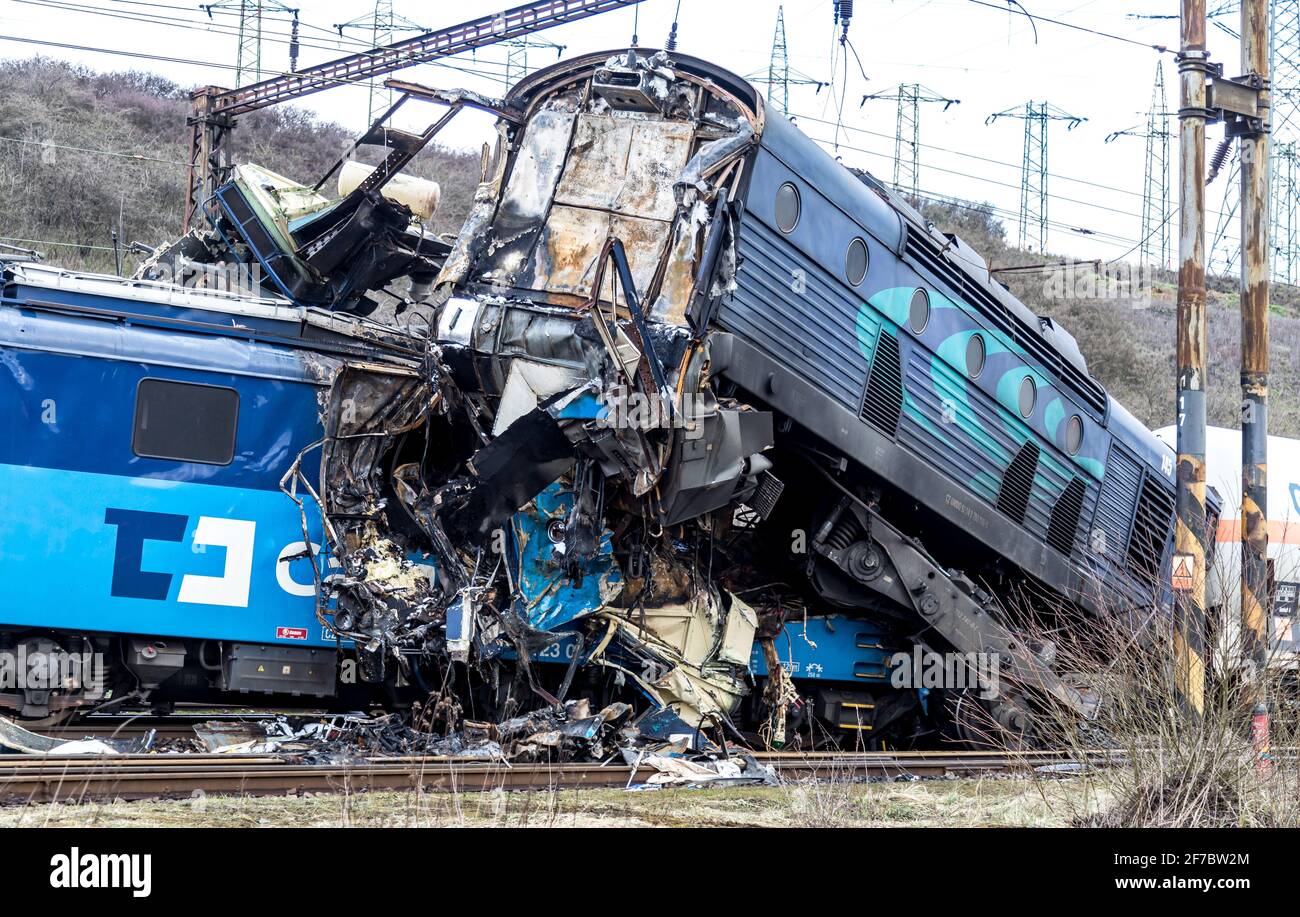
|| Ústí nad Orlicí - Bezpráví || 123 023-4 prowadzi pociąg towarowy w kierunku Chocenia. 04.04.2021 lokomotywa uległa zniszczeniu w skutek zderzenia się z należącym do Unipetrolu nurkiem 753 740-0 na stacji Světec i ze względu na zniszczenie 15.04.2021 została pocięta na miejscu zdarzenia. Zdjęcie z miejsca zdarzenia:
c8.alamy.com/comp/2F7BW2M/the-clash-of-two-freight-trains...
It is very sad to know that this area would be devastated within a few short years. I wonder how many of the people seen in this shot survived the war and it's consequences.....
Ces arcs de 2,5 tonnes ont été acquis par la ville de Liège en 2006.
Comme déposés sur l’eau… Les 4 arcs en acier corten de l’artiste français Bernar Venet avaient été engloutis par les flots lors des inondations de juillet 2021.
Ces arcs de 2,5 tonnes chacun ont été récupérés et restaurés par des spécialistes en chaudronnerie.
Et un an après leur récupération dans la Meuse, ces sculptures ont été replacées.
Sur cette photo on peur voir les conséquences des dernières crues de février mars 2024.
These 2.5 ton arches were acquired by the city of Liège in 2006.
As if placed on the water... The 4 corten steel arches by French artist Bernar Venet were swallowed up by the waves during the floods of July 2021.
These arches, each weighing 2.5 tonnes, were recovered and restored by boilermaking specialists.
And a year after their recovery in the Meuse, these sculptures were replaced.
In this photo we can see the consequences of the last floods of February March 2024.
Consequences of Russian aggression against Ukraine.
Фото зроблено за допомогою:
Camera: Kiev 19M
Lens: Vivitar close focus 28mm f:2,8
film Astrum 400iso
Of which, here, today there can be but few. It's a quiet Saturday morning and I'm throwing stones in a lake. Why wouldn't you?
**********************************
Exposure as per EXIF and a stone propelled by hand. Some tidying up and a Recolour in Affinity Photo.
I believe that we are solely responsible for our choices, and we have to accept the consequences of every deed, word, and thought throughout our lifetime.
Elisabeth Kubler-Ross
Press L to see properly
Thank you for the visit and comments are welcome.
© All rights reserved - Don't use my images on websites, blogs or other media without my explicit permission
A breach of copyright has legal consequences
A consequence of the development of the Romantic movement at the end of the eighteenth century was the subsiquent rise of tourism in the mid Victorian period. Many Lake District towns saw a rush to provide accomodation for the inquisitive visitors, there was money to be made. These hotels overlooking Hope Park are a good example.
A recent trend I have noticed in and around Keswick and Ullswater are the number of camper vans parked everywhere.
That and the amount of litter in places unheard of in the past.
I can feel a rant coming on so shall go and make a cup of tea.
© Dan McCabe
Callie - RIP: 2009-4/29/2022
=====================================
A fun fact about Callie: she was diagnosed with cataracts in one eye about 10 years ago, gradually making her blind in that eye. But I'd test her vision on a regular basis by throwing a tennis ball for her to catch. Even at the end, she did that perfectly.
One of the consequences of losing vision in one eye but not the other is that you lose depth perception. Your brain needs both eyes to understand how far away an object is. The fact that Callie was able to perfectly catch the tennis ball even after many years of cataracts shows how well she adapted to the loss of vision.
=====================================
This is based on a photo that I didn't think had value other than to me. In other words, this photo was originally a throw away. (And for the record, I never throw away a photo unless it's a botched mess.)
I recently purchased a license for Painter 2023. I had an older copy that never impressed me. But this version added a nice painterly touch to this photo.
The result is a creation that I will always cherish.
Berlin boasts two zoological gardens, a consequence of decades of political and administrative division of the city. The older one, called Zoo Berlin, founded in 1844, is situated in what is now called "City West". It is the most species-rich zoo worldwide. The other one, called Tierpark Berlin ("Animal Park"), was established on the long abandoned premises of Friedrichsfelde Palace Park in the eastern borough of Lichtenberg, in 1954. Covering 160 ha, it is the largest landcape zoo in Europe.
Unfortunately, this kind of belated justice led in most cases to the restitution of immovables either to people who had severed all ties with Romania decades ago and don't care about the fate of those buildings, or to the real estate mafia, the most anti-communist group in Romania.
Anti-communism is the political source of the cheapest estates they can grab from the public. The anti-communist real estate mafia is a huge scavanger making a fortune by invoking anti-communism to steal from the public.
mi querida Maia,
Me acompañó durante varios años en mi casa de Florida.
No la olvidaré.
Esta foto pertenece al momento del Muncial de Fútbol 2010.
Copyright © Susana Mulé
© All rights reserved.
© Please don't use this image on websites, blogs or other media without my explicit permission
A breach of copyright has legal consequences
If you are interested in this picture, please contact me. susanamul@yahoo.com.ar
Thanks
Mr Spock Did not take well to having a Foster Dog for a few days, so he is trying to camouflage himself in a cupboard.
One major and predictable yet unexpected consequence of the Covid-19 pandemic and the economic upheavals that ensued was a complete interruption of schedules that could be felt all the way down the line. It simply effected everything, even shortline railroading. The Illinois Railway, a operating predominantly as sand-only on its Ottawa-Eola, IL line, did not escape unscathed. It's usually a night operation, running between Wedron and Eola and back in the overnight hours. But for a period of at least 2 months in the winter of 2021, they ran more daylight runs than night runs.
So when I stopped in downtown Yorkville, IL on a lunch break one February day at the beginning of the cold snap to observe the bald eagles fishing below the damn, I was caught unaware of this when this westbound train came through shortly before 2pm. On point were a couple of borrowed BNSF units, and bringing up the rear were two of their four all-blue HLCX SD40-2's.
31/10/2019; Had the day off from work last Thursday, and the weather was good. So then you start to think where you could all go to, only to have second thoughts with everything that you came up with. And then you just end up in good old Amsterdam...
And unrelated, but it was only when I was making my preparations for this upload that I found out the Grasshopper no longer has a coffeeshop section. For over 5 years already. XD
Please (also) follow me on my...
* website
* 500PX
Phil Shutt sells antiques in Truth or Consequences, New Mexico. He was deputy sheriff and has served in two wars. Very interesting guy. He used to work at the White Sands Missile Base. I bought an ice bucket and a viewmaster.
Berlin boasts two zoological gardens, a consequence of decades of political and administrative division of the city. The older one, called Zoo Berlin, founded in 1844, is situated in what is now called the "City West". It is the most species-rich zoo worldwide. The other one, called Tierpark Berlin ("Animal Park"), was established on the long abandoned premises of Friedrichsfelde Manor Park in the eastern borough of Lichtenberg, in 1954. Covering 160 ha, it is the largest landcape zoo in Europe.
Rund 15 Prozent der Erdoberfläche werden von Savannen bedeckt. Damit gehören sie zu den größten und wichtigsten Lebensräumen des Planeten. Seit dem 26. Mai 2023 wird Besucher*innen im Tierpark Berlin ein Einblick in diese faszinierende Landschaft gewährt und sie können mehr über die unterschiedlichen Bewohner der ostafrikanischen Savanne und ihren natürlichen Lebensraum erfahren.
Ein wahrer Höhepunkt der neuen Tierpark-Savanne ist der 120 Meter lange Giraffenpfad: Hier werden die Gäste den bis zu fünf Meter hohen Grazien der Savanne zukünftig auf Augenhöhe begegnen können – wer sich traut, bahnt sich den Weg durch den Wald bis zu den Aussichtsplattformen über eine abenteuerliche Hängebrücke. Der Tierpark Berlin erreicht mit der Eröffnung der Afrikanischen Savannenlandschaft ein neues Etappenziel auf seinem Weg zu einem Zoo der Zukunft. Seit knapp neun Jahren wird der 1955 gegründete und 160 Hektar große Tierpark Berlin zu einem naturnahen Geozoo umgebaut. Um einen Einblick in den Lebensraum der einzelnen Tierarten und deren Interaktionen, Besonderheiten und Problematiken zu ermöglichen, werden die Tiere im Tierpark größtenteils nach geografischen Gesichtspunkten zu sehen sein.
de/de/aktuelles/alle-news/artikel/wil...
Around 15 per cent of the earth's surface is covered by savannahs. This makes them one of the largest and most important habitats on the planet. Since 26 May 2023, visitors to Tierpark Berlin have been given an insight into this fascinating landscape and can learn more about the different inhabitants of the East African savannah and their natural habitat.
A true highlight of the new zoo savannah is the 120-metre-long giraffe trail: here, guests will be able to meet the up to five-metre-high graces of the savannah at eye level in future - those who dare will make their way through the forest to the viewing platforms via an adventurous suspension bridge. With the opening of the African Savannah Landscape, Tierpark Berlin has reached a new milestone on its way to becoming a zoo of the future. For almost nine years, the 160-hectare Tierpark Berlin, which was founded in 1955, has been transformed into a near-natural geozoo. In order to provide an insight into the habitat of the individual animal species and their interactions, peculiarities and problems, the animals in the zoo will largely be seen according to geographical aspects.
Berlin boasts two zoological gardens, a consequence of decades of political and administrative division of the city. The older one, called Zoo Berlin, founded in 1844, is situated in what is now called "City West". It is the most species-rich zoo worldwide. The other one, called Tierpark Berlin ("Animal Park"), was established on the long abandoned premises of Friedrichsfelde Palace Park in the eastern borough of Lichtenberg, in 1954. Covering 160 ha, it is the largest landcape zoo in Europe.
Copyright © Susana Mulé
© All rights reserved.
© Please don't use this image on websites, blogs or other media without my explicit permission
A breach of copyright has legal consequences
If you are interested in this picture, please contact me. Thanks.
susanamul@yahoo.com.ar
Rovingian Council - Signs and Consequences of Stagnation in Nature by Daniel Arrhakis (2026)
>>>> With the music : BLUR || Deep Ambient Music // Blue Hour Ambiance || Dark Atmospheric Ambient by INEKT
Rovingian Council - Signs and Consequences of Stagnation in Nature
From the perspective of eco-spiritual balance, nature is not just matter, but a living organism that breathes energy.
Here are some key points to complement this view:
- Spiritual Entropy: Stagnation is the opposite of flow (Dharma or Tao). Where water does not flow, toxicity arises; where energy does not circulate, entropy arises, which accelerates the death of the ecosystem before its natural time.
- Memory of Place: Often, this "heavy energy" is the result of historical traumas in the soil (battles, rampant exploitation, or unbalanced rituals) that leave a vibrational imprint that repels healthy fauna.
When stagnation occurs, energy and circulation stop, and the system deteriorates on several levels:
- Ecosystem Deterioration: Stagnant energy physically manifests in the environment: plants that don't grow, inefficient pollination, infertile soil, and contaminated or lifeless water. Deformed plant growth or absence of pollinating birds and insects.
- Heavy and Melancholic Environments: Places with spiritual stagnation are felt by humans as heavy, lifeless, sad, or depressing. The sensation of "still air" or chills without physical cause is common. A feeling of sudden tiredness or irritability upon entering the perimeter.
- Difficulty in Natural Regeneration: Nature takes longer to heal or renew itself after a disaster because the subtle energy that drives growth is blocked.
- Influence on Human and Animal Health: Exposure to these environments can cause extreme fatigue, unexplained illnesses, discouragement, negative thoughts, or worsening of physical illnesses, resulting from spiritual contamination.
- Attraction of Physical Illnesses: Physical and energetic stagnation creates the ideal environment for the proliferation of parasites, pests, and diseases, both in flora and fauna.
In summary:
Stagnation in nature is often the physical reflection of a subtle imbalance, frequently linked to human disharmony.
Conscious human presence can act as an "acupuncturist" for the earth. Sometimes, simple focused intention and physical care (cleaning up trash, planting native species) break the cycle of spiritual stagnation.
The renewal of these spaces may still require energetic cleansing, spiritual and environmental diplomacy, and a conscious intention to restore the flow of life or eco-spiritual balance.
________________________________________________________________________________________________
Conselho Rovingiano - Sinais e Consequências da Estagnação na Natureza
Na perspetiva do equilíbrio eco-espiritual, a natureza não é apenas matéria, mas um organismo vivo que respira energia.
Aqui estão alguns pontos-chave para complementar esta visão:
- Entropia Espiritual: A estagnação é o oposto do fluxo (Dharma ou Tao). Onde a água não corre, surge a toxicidade; onde a energia não circula, surge a entropia, que acelera a morte do ecossistema antes do tempo natural.
- Memória do Lugar: Muitas vezes, essa "energia pesada" é o resultado de traumas históricos no solo (batalhas, exploração desenfreada ou rituais desequilibrados) que deixam uma impressão vibracional que afasta a fauna saudável.
Quando há estagnação, a energia e a circulação para, o sistema deteriora-se em vários níveis:
- Deterioração do Ecossistema: A energia estagnada traduz-se fisicamente no ambiente: plantas que não crescem, polinização ineficiente, solo infértil e água contaminada ou sem vida. Crescimento vegetal deformado ou ausência de pássaros e insetos polinizadores.
- Ambientes Pesados e Melancólicos: Locais com estagnação espiritual são sentidos pelos seres humanos como pesados, sem vida, tristes ou depressivos. A sensação de "ar parado" ou arrepio sem causa física é comum. Uma sensação de cansaço súbito ou irritabilidade ao entrar no perímetro.
- Dificuldade de Regeneração Natural: A natureza demora mais tempo a curar-se ou renovar-se após um desastre, pois a energia sutil que impulsiona o crescimento está bloqueada.
- Influência na Saúde Humana e Animal: A exposição a esses ambientes pode causar cansaço extremo, doenças inexplicáveis, desânimo, pensamentos negativos ou piora de doenças físicas, fruto da contaminação espiritual.
- Atração de Doenças Físicas: A estagnação física e energética cria o ambiente ideal para a proliferação de parasitas, pragas e doenças, tanto na flora quanto na fauna.
Em resumo
A estagnação na natureza é frequentemente o reflexo físico de um desequilíbrio sutil, muitas vezes ligado à desarmonia humana.
A presença humana consciente pode atuar como um "acupuntor" da terra. Às vezes, a simples intenção focada e o cuidado físico (limpar o lixo, plantar espécies nativas) quebram o ciclo de estagnação espiritual.
A renovação desses espaços pode ainda ter que passar pela limpeza energética, pela diplomacia espiritual e ambiental e intenção consciente de restaurar o fluxo da vida ou o equilibrio eco-espiritual.
In the heart of the Hebrides, where the wild winds play,
Lies the Isle of Jura, where time drifts away.
Amidst misty mountains and waters so clear,
A place where the whispers of whiskey you'll hear.
Upon rugged shores, where the sea meets the land,
A spirit is crafted, by nature's firm hand.
In barrels of oak, the amber liquid lies,
A tale of Jura, where magic never dies.
Golden elixir, aged to perfection,
In the island's embrace, a sweet connection.
Notes of peat and heather dance on the breeze,
As the soul of the whiskey floats with such ease.
-------------------------------------
During the Covid 19 pandemic when we were all encouraged to stay at home and isolate, "photography from the street" became a thing of the past and as a consequence many of us tried other types of photography. I produced a self portrait almost every day we were in "lock down" along with a number of "product photographs".
These changes in style and a lack of suitable equipment (in my case lights) led to some inventive techniques and I have to admit some odd results. Its worth looking through photographers work from this period just to see the change in styles.
The photograph NOT the Artwork is my work, therefore my copyright is the photograph only.
Consequence of War, also known as Horror of War, by [Peter Paul] Rubens. Is a huge painting from which this work references one detail, of the terrified young girl and infant, fleeing. The UNHCR records over 5 million refugees from Ukraine, around 13% of the Ukrainian population [January 2023].
Golgotha 2022 exhibition of this and other paintings by the artist held at Ely Cathedral until March 17 2023.
******************************************
STOP ISRAEL BARBARITY
We are not stupid!
******************************************
I´m not allowed by Flickr to link my personal website.... amazing....! After so many years... Maybe it´s a consequence of the Israel message, I don´t want to think bad, but I don´t believe in coincidences, moreover when lots of user are allowed to. In fact, my account "has been removed from flickr searches and other public sites" If I continue here is because the great number of friends I´ve meet, but I´m taking advantage of this in order to complain and let you see the kind of injustice that Flickr is doing these days. Let´s see who can be more annoying...
Please visit my profile
This is the kind of things that flickr has to take care of (THIEVES):
mufasa.softarchive.net/works_of_photographer_alonso_diaz....
This is the rules it is supposed I broke: Don’t use Flickr for commercial purposes.
Flickr is for personal use only. If we find you selling products, services, or yourself through your photostream, we will terminate your account. Any other commercial use of Flickr, Flickr technologies (including APIs, FlickrMail, etc), or Flickr accounts must be approved by Flickr. For more information on leveraging Flickr APIs, please see our Services page. If you have other open questions about commercial usage of Flickr, please feel free to contact us.
Where is it said that personal websites are not allowed? I do not do a commercial use of it!!! I´m a economist and work in a saving bank!!
TRUE THANKS TO ALL FOR YOUR SUPPORT, MY FRIENDS. IT´S WHAT MAKES ME THINK TO CONTINUE HERE
Después de cuatro años no se me permite poner el link a mi web... es increíble! Probablemente es una consecuencia al mensaje de Israel, no creo en las coincidencias y menos cuando muchos usuarios lo hacen. De hecho, mi cuenta "ha sido eliminada de las búsquedas de flickr y otros sitios públicos..." Si continuo por aquí es debido al gran número de amigos que he hecho, pero aprovecharé esto para protestar y hacer ver y protestar por las estupideces que Flickr está haciendo últimamente. Veremos quién molesta más...
Si quieres pasarte por mi web, visita mi perfil, por favor
Este tipo de cosas es lo que flickr debería cuidar (LADRONES DE FOTOS):
mufasa.softarchive.net/works_of_photographer_alonso_diaz....
Esta es la regla que me han dicho que he incumplido: Don’t use Flickr for commercial purposes.
Flickr is for personal use only. If we find you selling products, services, or yourself through your photostream, we will terminate your account. Any other commercial use of Flickr, Flickr technologies (including APIs, FlickrMail, etc), or Flickr accounts must be approved by Flickr. For more information on leveraging Flickr APIs, please see our Services page. If you have other open questions about commercial usage of Flickr, please feel free to contact us.
¿Dónde pone que no se pueden poner enlaces a páginas web personales? No hago uso comercial de ella! Joder, que soy economista y trabajo en una caja de ahorros!
MUCHAS GRACIAS A TODOS POR VUESTRO APOYO, DE VERDAD. ES LA ÚNICA MOTIVACIÓN PARA SEGUIR AQUÍ
None of my photos are HDR or blended images, they are taken from just one shot
Almograve, Odemira (Alentejo - Portugal)
Sony A900 + Carl Zeiss16-35mm
Please don't use this image on websites, blogs or other media without my explicit permission. © All rights reserved
Consequences.
Пугающие подборки современное тревожное содержание известные ужасы поставленные мастерами формы отдельные истории эмоции уста подлинные силы,
labbra morte ombre risposte violente nervi leggi opprimenti avvertimenti situazioni crescenti ferite occhi terrorizzati regole prospere demoni posseduti,
luttes intenses pas agiles ennemis épuisants combinaisons incroyables circonstances extrêmes mains musclées thèmes éclairants actions de ténèbres,
ondraaglijke minuten keel draaien huilen werken onderdrukte tijden verbaasde uitdrukkingen onzichtbaar lachen getroffen angsten weloverwogen wanhoop,
ag clúdach gluaiseachtaí smaointe seasta buile urghnách hallaí cúnga tuairimíochtaí lionn dubh deliriums disgustach ghouls aineolach íospartaigh ag rith,
乱れた悪魔に出没する感情恐ろしい兆候噴火を弱める重いペナルティ見知らぬ人を熟考する邪悪な死体秘密の反発軽微な声指を指す指.
Steve.D.Hammond.
La reproducción de la obra de arte no sólo está condicionada por la manera de ver del fotógrafo, sino también por la del que mira la fotografía.
Giséle Freund (1908-2000)
Río de la Plata,
vista desde Colonia, Uruguay, en la otra costa, Argentina.
River Plate, View from Colonia, Uruguay.
On the other cost: Argentina.
Copyright © Susana Mulé
© All rights reserved.
© Please don't use this image on websites, blogs or other media without my explicit permission
A breach of copyright has legal consequences
If you are interested in this picture, please contact me.
susanamul@yahoo.com.ar
Thanks.
The turquoise water of Hanging Lake is a natural consequence (dissolved carbonate minerals) of the process that produces travertine. When water that is super-saturated with carbon dioxide comes to the surface, excess CO2 escapes, increasing the pH of the water, reducing carbonate solubility and causing dissolved limestone to precipitate, covering rocks and logs. The shoreline of Hanging Lake is travertine.
Hanging Lake trailhead is in Glenwood Canyon, Colorado. The trail climbs 1,000 feet in 1.2 miles through Dead Horse Canyon. It is a popular hike, known for the beauty of the lake, the delicate waterfalls, and towering cliffs above the trail. The Lake was recognized as a National Natural Landmark in 2011.
We're Here! : Photoshopped, unusual, and off-kilter portraits and alter egos
Running out of ideas for your 365 project? Join We're Here!
every precarious doorway you unhinge
fuels a pathway venal and infringed
and while the journey appears to charm and beguile
the rider will have left but a peddled smile
...a man walks along the beach at New Brighton. He finds a long, straight piece of driftwood.
"He stands it upright in the rocks. His friend and neighbour says: "What are you making?"
"A small voice cries out: "Can you make a pirate ship?" The Black Pearl was launched."
Now it is a tourist attraction listed on TripAdvisor. It must be one of very few entries in the world to NOT have any "Average", "Poor" or "Terrible" reviews.
And it has been built entirely of flotsam and jetsam. What's that? Well: In maritime law, flotsam, jetsam, lagan, and derelict are specific kinds of shipwreck. The words have specific nautical meanings, with legal consequences in the law of admiralty and marine salvage:
[1] Flotsam is floating wreckage of a ship or its cargo.
[2] Jetsam is part of a ship, its equipment, or its cargo that is purposely cast overboard or jettisoned to lighten the load in time of distress and is washed ashore.
[3] Lagan (also called ligan)
[4] is goods or wreckage that is lying on the bottom of the ocean, sometimes marked by a buoy, which can be reclaimed.
Derelict is cargo that is also on the bottom of the ocean, but which no one has any hope of reclaiming (in other maritime contexts, derelict may also refer to a drifting abandoned ship).
In the background the pall of smoke from the scrap metal blaze in Liverpool docks drifts over the River Mersey and out into the Irish Sea
This photo is about giving but emptying yourself at the same time. It is important that you always get something back, no matter what you do. Even if it is nothing material
I know that this concept of empty clothes is nothing new, still I wanted to try it on my own.
A print of this work is available here
---
Go in and out the Window
P.O.V. - Prison Town, USA . Trailer | PBS
In the 1990s, at the height of the prison-building boom, a prison opened in rural America every 15 days. "Prison Town, USA," airing on PBS's P.O.V. series on July 24, 2007, tells the story of Susanville, one California town that tries to resuscitate its economy by building a prison — with unforeseen consequences.
Hesitation, awkward conversation
Running on low expectation
Every siren that I was ignoring
I'm paying for it
Loving you was young, and wild, and free
Loving you was cool, and hot, and sweet
Loving you was sunshine, safe and sound
A steady place to let down my defenses
But loving you had consequences
No, ooh-ooh-ooh
Said no, ooh-ooh-ooh
I, no, ooh-ooh-ooh, mhm
Loving you was dumb, dark and cheap
Loving you will still takes shots at me
Loving you was sunshine, but then it poured
And I lost so much more than my senses
'Cause loving you had consequences
</3