View allAll Photos Tagged compact
results of some extra work around the house.
*********************
HIT THE 'L' KEY FOR A BETTER VIEW! Thanks for the favs and comments. Much Appreciated.
*********************
All of my photographs are under copyright ©. None of these photographs may be reproduced and/or used in any way without my permission.
© VanveenJF Photography
ANPAC Start Season Circuito Estoril. Qualifying - CPV Super Legends.
Driver: Hugo Lisboa
Team: Hugo Lisboa
Car: BMW 323 Compact
I didn't know drops of water have dents.
Shots with compact sony and mini tripod.
Too little sunlight and poor processing of jpg.
Still a bit rough around the edges (which isn't helped by the potatopicture) but I think I'll stick with it.
A female White-breasted Nuthatch. A compact bird that clings to tree bark moving down, up and around the trees. Females look like males but have a grayer cap.
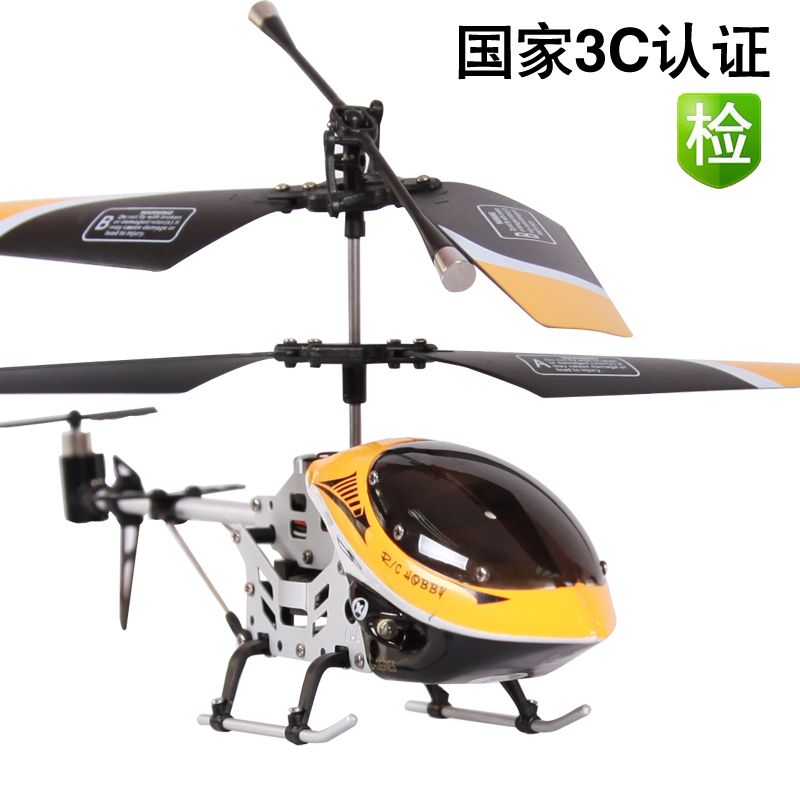
My kids have remote control helicopters that look kind of like this, with much shorter, wider rotor blades than a typical full-size helicopter. It allows for a smaller overall size for the aircraft, which makes it easier to maneuver and land. I don't know if it's a practical design for a full-size chopper, but I wanted to make one in Lego anyway.
Also on display is a bunch of stuff I picked up at Brickfair. I think the minifig cat miniguns I got from MBW work great with Chris' drones because of their larger size relative to minifigs. I also love the eclipseGrafx torsos and Brickarms pulse rifles I got from contributing to the Cyberpocalypse collaboration. Thanks Vic and Will!
This is actually from 9/23, but never came through from Instagram. Two mirrors actually. These were my mother’s. Small compact and larger 2-sided clutch with built-in makeup compartments, places for bills and coins, and in the other side cigarettes and missing matching lighter.
Just a quick MOC with parts I had on hand.
Keeping it close to minifig scale meant I had to sacrifice a row of seats but I think the model turned out pretty accurate and compact otherwise.
Car: Ford Fiesta 1.6 DL .
Date of first registration: 20th May 1988.
Registration region: Ipswich.
Latest recorded mileage: 38,486 (MOT 8th August 2018), currently on SORN.
Date taken: 3rd July 2018.
Album: Carspotting
Strobist info : 1 speedlight with softbox on my right, trigger with wireless triger Pt 4ne. on my left is light from window/windowlight.
Located at the foot of Jarvis St. and Queen’s Quay on the side of the Redpath Sugar Factory, is Toronto’s whales. The mural was part of the Whaling Wall series of outdoor art by the artist Wyland. The Whaling Wall started in the 80s and were meant to change the way people thought about the environment and were created via invitation of the cities and buildings which they were painted on. Toronto’s mural ‘Heavenly Waters’, was #70 in the series and was dedicated on September 1, 1997 and is 146 Feet Long x 97 Feet High. The 100th mural was finally finished on June 2008 and completed Wyland’s dream to share his love of marine life with 100 communities around the world.
Minolta XD-s
MD Rokkor 50mm f/1.7
Kodak TMAX 400
1/250, f/5.6
Xtol (1+1), 9:15 min @ 20°C
Plustek 8100i Scanner
My newest sketch gear. The bag takes 7x10 inch paper or books. The two front pockets take my pens, a quarter pan watercolor set, water brush, and a spray unit. Compact with little wasted space. Love it.
Würzburg is een stad met overzichtelijke afmetingen en de trams die er tijdens mijn eerste bezoek in 1977 dienst deden, waren compact. Ook de grootte van het in 1954 opgeleverde stationsgebouw is afgestemd op de behoefte van een provinciestad. Het voor de jaren vijftig karakteristieke stationsgebouw is ontworpen door architect Hans Kern. De kraam met worstjes voor de uitgang van het station ontbreekt uiteraard niet.
De enkelgelede Düwag-tram heeft ook deuren aan de linker zijde. Op het achterbalkon is een hulpstuurstand aangebracht. De wagens konden zodoende bij behoefte in tweerichtingbedrijf gebruikt worden. Primair zijn de wagens echter voor eenrichtingbedrijf ingericht. Men sprak in dit geval ook wel van anderhalfrichtingwagens. Op de kopwand zien we de verschillende contactdozen voor bijwagenbedrijf. Destijds werd er op werkdagen nog met kleine tweeassige bijwagens achter deze gelede trams gereden.
Tram 233 maakt deel uit van een serie van tien enkelgelde zesassers die in 1967 en 1968 door Düwag werden geleverd. Vanwege het krappe profiel van vrij ruimte zijn de koppen sterk afgeschuind. In 1982 werden de wagens door het invoegen van een nieuwe tussenbak verlengd tot dubbelgelede achtassers.
Bekijk mijn fotoalbum in de klassieke versie.
The final to my future-auto exploration. This time, based on several retro-future compact-car designs (including by Syd Mead of course). Ironically, this is the only of the three that actually fits a full figure.
The purpose of the three cars was to look at what I consider the three main areas of consumer-cars in futuristic media: Luxury, Show, and Utility. I am disregarding Industrial and Military as I have made a ton of the former already and I don't really like the latter.
Hi!
I made a remake of an old photo, but this time, with a stop motion clip: www.youtube.com/watch?v=q5d9783-Ib4
Enjoy!
1998 BMW 316i Compact.
Previously registered G2 OTL.
Subsequently re-registered S255 SBJ in June 2025.
Last (extended) MoT test expired in November 2020 (SORN).
No previous keepers.
To me, it would seem that a dandelion bloom would be somehow different than this. I think that it's because a dandelion's fibers are all so scattered, at first glance, that it seems unlikely that they start out so orderly. Then the reasoning kicks in that dandelions use air dispersal to get their offspring away from the parent plant. Of course, then, there isn't a random combination of structures. They must be grown specifically to take advantage of being both light and fluffy.
Still with me? Gone to take a snooze?