View allAll Photos Tagged bubbles
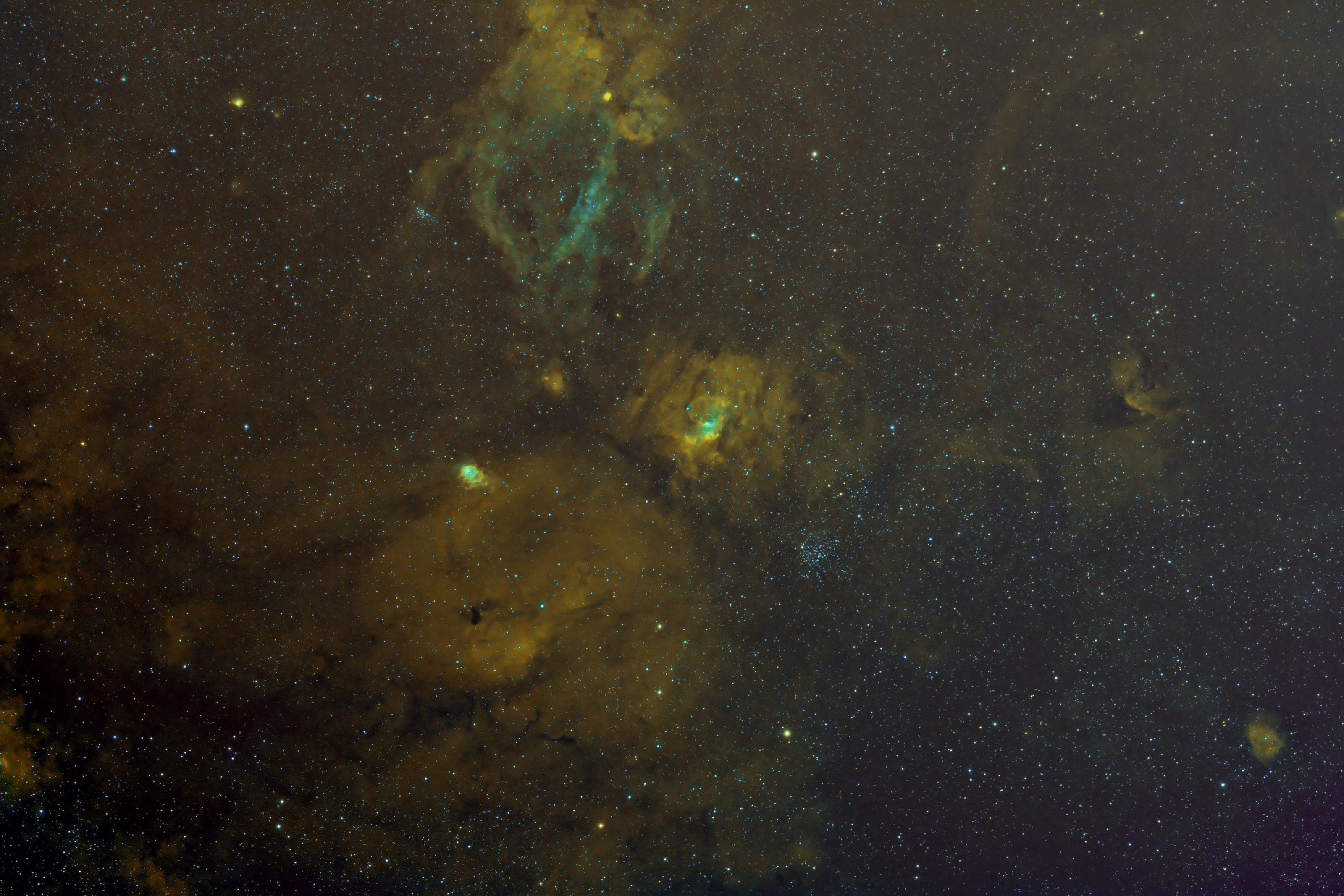
The Bubble Nebula is an emission nebulae in the constellation Cassiopeia. The "bubble" is created by the stellar wind from a massive hot young central star. It was discovered in 1787 by William Herschel.
FSQ-106EDX F3.6 Exposure: SII 5x20 min., Ha 8x20 min., OIII 4x20 min. Binned 1x1
High Resolution Image Available Here:
www.willowriseobservatory.com/ImageUploads/Bubble(2012_06_08).jpg
Some experiments photographing bubbles with the new Sigma 55mm F/1.4 lens. Not easy since I had to blow the bubbles then grab the camera hanging on my neck. Some have the focus in the bubble reflections, others the bubble themselves is crisp...then there are a couple I kept simply for the incredible color and bokeh whether there was a clearly focused point or not
Some experiments photographing bubbles with the new Sigma 55mm F/1.4 lens. Not easy since I had to blow the bubbles then grab the camera hanging on my neck. Some have the focus in the bubble reflections, others the bubble themselves is crisp...then there are a couple I kept simply for the incredible color and bokeh whether there was a clearly focused point or not
You can download at least One Full Hi Resolution version of this Image (or one from a set of the same type, at least) for FREE on my site at: http://www.andrewkelsall.com/freestockphotos/ Most images are 12.2 MP (4000 x 3000 resolution)
Some experiments photographing bubbles with the new Sigma 55mm F/1.4 lens. Not easy since I had to blow the bubbles then grab the camera hanging on my neck. Some have the focus in the bubble reflections, others the bubble themselves is crisp...then there are a couple I kept simply for the incredible color and bokeh whether there was a clearly focused point or not
Testing out my new bubble machine!!!
Check us out at www.facebook.com/pages/Kenney-Photography/139044019477430 !
This rendition of NGC7635 is a result of 199 exposures, 65 and 70 sec each, taken 7-7, 7-10, and 10-24 2024 with T2i, AT8IN, and Paracorr Type2 on Atlas Pro AZ/EQ-G. About 3 hrs 44 mins integration time processed using Siril and GraXpert. Kind of an experiment as the final image is a stack of the stacks from each night rather than a stack of individual subs from all nights as I usually (and correctly) do.