View allAll Photos Tagged absorption
Zircon spectra vary a lot - both the absorption and fluorescence lines. I have a few other examples that I have not examined in detail yet. The fluorescence lines here are from dysprosium and samarium at least. In these fluorescence spectra I have corrected for the yellow filter absorption down to 450nm. The purple (upper) and brown (lower) lines refer to the larger, round zircon.
Note that the sharp line at 808nm is the 404nm laser line in the second order of the grating diffraction. Also, I believe that the line at 695nm is a ghost or reflection due to the large amount of laser light entering the spectrometer during this observation.
This shows the same data as for the previous (Absorbance) plot using Transmission and Wavelength axes. In addition, it shows the red fluorescence (excited with a 404nm laser) of the Australian Xtal. (thin black line - the transmission is the light blue line).
Of the other sapphires in the plot, both the synth and the lp-br show some chromium fluorescence (the ruby R-lines). The Aus and the sbp do not visibly fluoresce at all under the laser.
The presence of chromium in blue sapphires is thought, possibly, to contribute to their colouration.
Audimute Acoustic Absorption Panels are an eco-friendly acoustic absorption product that gets rid of mid and high frequencies. Great for homes, apartments, studios, auditoriums - ANY place where echoes and reverb are a concern. Acoustic Absorption Panels are available in many sizes, shapes, & colors - can even be customizes with ANY image, photo or logo.
Nike Air Force 1 Mid 07, Obsidian, Denim, Sail, Gum, Light Brown, 315123-408, Men’s, Size 10.5, Off White, leather and textile upper, padded ankle collar, provides a comfortable fit, VELCRO closure across the ankle adds stability and support, Full-length Phylon midsole with heel Air-Sole unit provides added shock absorption, Rubber outsole supplies durable traction, Basketball, Classic/Retro, Mid-Top, Bruce Kilgore, Release Year 2015, AF1, Uptowns, Basketball, Classic/Retro, Mid-Top
Atomic Absorption measurements of candidate Reference Materials- filling of the sample change. (IAEA Chemistry Unit, Seibersdorf, Austria, 2 July 2007)
Photo Credit: Dean Calma / IAEA
Sonata Vario Acoustic Absorbers installed to the ceiling within Keighley Civic Centre
www.soundreduction.co.uk/Blog/Article/Arresting-Acoustics...
www.soundreduction.co.uk/Products/Sound-Absorption-Soluti...
This is another improvement on previous attempts to capture the weak and elusive luminescence spectrum of titanite (sphene). This sample was excited by a powerful (500mW) violet 404nm diode laser and the spectrometer protected with a yellow filter cutting at 500nm. The filter exhibits an orange continuum fluorescence which slightly contaminates the luminescence spectum of the crystal spectrum. The maximum contamination is shown by the grey line.
The emission lines are from rare earth elements (REE) and the elements terbium, erbium, europium, samarium and neodymium have been identified.
True lovers are as shadows, and when the sun shines in glory the shadows vanish away. He is a true lover of God to whom God says, "I am thine, and thou art mine!"
- MEVLANA RUMI (r.a) -
Atomic Absorption measurements of candidate Reference Materials- filling of the sample changer. (IAEA Chemistry Unit, Seibersdorf, Austria, 2 July 2007)
Photo Credit: Dean Calma / IAEA
In a survey of 1,000 parents, it found more than half of children under the age of 16 regularly use one. Some parents give their children handsets at a very young age. More than 13 per cent of parents with three-year-olds said their youngster had used a phone. Among three to six-year-olds, the figure was 23 per cent. By secondary school, about 94 per cent of children had their own phone.
Most parents place restrictions on how much their children spend on calls and texts. Three-quarters said they only allowed their youngsters pay-as-you-go phones to avoid them running up huge bills. But only 36 per cent of parents questioned said they stopped their children from accessing the internet on their mobile and just under a third barred them from calling premium rate numbers. But over two-thirds said they did nothing to stop their children downloading ringtones and screensavers that cost up to £3.50 each.
Sonata Vario acoustic absorbers installed within the hall at Aldwyn Primary School Hall in Audenshaw.
Atomic Absorption measurements of candidate Reference Materials- filling of the sample changer. (IAEA Chemistry Unit, Seibersdorf, Austria, 2 July 2007)
Photo Credit: Dean Calma / IAEA
- MERINO sheepskin lining offers all of the advantages of wool over synthetic fibers, providing efficient shock absorption and superior thermal comfort. Sheepskin contains lanolin, a natural substance, which soothes the horse's sensitive or inflamed skin. When sheepskin is set directly against the animal's body, it stimulates blood circulation and promotes a therapeutic effect.
- The Non-Slip mesh upper assures perfect grip and steadily secures the MerinoLUX Half-Pad under the saddle.
- Breathable 3-Dimensional Spacer fabric reduces heat build-up and provides excellent moisture vapor transfer.
- The black non-slip mesh is not visible under the saddle, conforming to the FEI rules and regulations.
- Optimum thickness of the MerinoLUX Half-Pad does not compromise the fit of the saddle.
Sonata Vario and Memo acoustic absorbers used within the hall at Brownhill School, Leeds
Full case study here: www.soundreduction.co.uk/Blog/Article/Acoustic-Treatment-...
The Cellulite massage therapy acts on the most painful cellulite, activating lymphatic drainage, and combating sagging arms and thighs. It can be used with creams and oils, multiplying their effect and increasing their absorption.You can use it for a relaxing massage as well. Know more about this multi-purpose machine, contact Glo at support@glo.international
Jojoba Oil Similar structure with human’s sebum, excellent absorption, moisturizing, soften skin without stickiness *Sweet Almond Oil Ease itching, specially for dry skin, recovers tired skin to soften Lip balm and tint combined lip brush container. Delivers moist lips anytime. Menthol ingredient gives cool feelings and plumping effect.
More natural and vivid color as time goes on!
Más info en Español: cosmeticacoreana.blogspot.com.es/2012/03/tony-moly-backst...
Jojoba Oil Similar structure with human’s sebum, excellent absorption, moisturizing, soften skin without stickiness *Sweet Almond Oil Ease itching, specially for dry skin, recovers tired skin to soften Lip balm and tint combined lip brush container. Delivers moist lips anytime. Menthol ingredient gives cool feelings and plumping effect.
More natural and vivid color as time goes on!
Más info en Español: cosmeticacoreana.blogspot.com.es/2012/03/tony-moly-backst...
Got some more shots of the male Hornbill today : )
Top - The male Hornbill keeps up a continuous supply of dry bark 'chips' to assist in absorption of
droppings & moisture in the nest cavity. He also removes dried excreta, eggshells & old pieces of
bark.
Bottom - Since the female is confined to the nest along with the chicks (for around 6 weeks) the
male is kept busy throughout the day, bringing a variety of foods.
a) a couple of larvae of some type ( I think )
b) a lizard ( originally posted on 18th May )
Yummmmm !
La storia del frigorifero risale al 1922, quando due inventori svedesi, Baltazar von Platen e Axel Munters, scoprirono il principio di produrre il freddo per mezzo del calore.
Settantacinque anni fa il frigorifero era un oggetto di lusso dovunque, e in alcuni luoghi lo è ancora Electrolux, il maggior produttore mondiale di elettrodomestici, ha proposto un’analisi, tra il serio e il faceto, che indaga tra i gusti dei vari paesi.
Per dare alcuni esempi, in Svezia il colore più diffuso è il bianco. In Cina e India, dove questo elettrodomestico spesso troneggia in soggiorno come oggetto da ostentare, il frigorifero è più decorato e colorato. Chi produce frigoriferi deve quindi tener conto delle esigenze culturali, affidandosi a buoni designer e – ovviamente – al buon senso.
The absorption refrigerator was invented by Baltzar von Platen and Carl Munters in 1922, while they were still students at the Royal Institute of Technology in Stockholm. It became a worldwide success and was commercialized by Electrolux. Other pioneers included Charles Tellier, David Boyle, and Raoul Pictet. Carl von Linde was the first to patent and make a practical and compact refrigerator.
- MERINO sheepskin lining offers all of the advantages of wool over synthetic fibers, providing efficient shock absorption and superior thermal comfort. Sheepskin contains lanolin, a natural substance, which soothes the horse's sensitive or inflamed skin. When sheepskin is set directly against the animal's body, it stimulates blood circulation and promotes a therapeutic effect.
- "Open-channel" design alleviates excessive pressure from the horse's spine and promotes increased air circulation.
- Two large pockets are designed specifically to ensure proper fit of the saddle and comfort for the horse by accommodating both specialized and custom-made shims.
- High Resiliency open-cell foam shims (included in the package) allow for the overall weight to be redistributed over a larger area, thus minimizing pressure points.
- Breathable 3-Dimensional Spacer fabric reduces heat build-up and provides excellent moisture vapor transfer.
- The Non-Slip mesh upper assures perfect grip and steadily secures the ComfortLUX Half-Pad under the saddle.
www.mgnstore.com Huge Impact is Muscle Gauge’s most convenient, high quality all-in-one supplement. No longer do you need to take pills upon pills or buy product upon product to achieve your target physique.
The Muscle Gauge team has taken our tried and true formula with its 20g of protein per serving, L-Arginine, Beta Alanine, Taurine, and Creatine Monohydrate and taken it to the next level by increasing protein to 24 grams per serving while introducing a new multi-functional protein blend.
We took our blend of Whey Protein Isolate and Whey Protein Concentrate, and added 3 more proteins (Micellar Casein, Calcium Caseinate, and Milk Protein) each with varying digestion rates and distinct amino acid profiles to provide sustained amino acid absorption both pre and post workout. Huge Impact is a truly innovative supplement that will change the face of sports nutrition, as we know it.
Let this innovative MGN product make a huge impact in your life.
Sonata Vario and Memo acoustic absorbers installed within the foyer of the Oriental Institute building at Oxford University. Many thanks to Phil Rust at the Oxford University Estates Directorate for his help with this project
In addition to being a fine poet, Emily Dickinson was also a student of botany. We can see the effect of that study on her poetry, as in this poem, in which she defines how nature and mankind grow—from within. Sun and atmosphere have their effect, but the stirring—read growth—comes from inside. We become who we are, in other words, through absorption and then flowering into what we are. Her metaphor holds much truth and is why much care must be taken with the young. Which is why, looked at in one way, I'm such a plant! What? Wait a second . . .
Here's the whole poem:
Growth of Man—like Growth of Nature—
Gravitates within—
Atmosphere, and Sun endorse it—
But it stir—alone—
Each—its difficult Ideal
Must achieve—Itself—
Through the solitary prowess
Of a Silent Life—
Effort—is the sole condition—
Patience of Itself—
Patience of opposing forces—
And intact Belief—
Looking on—is the Department
Of its Audience—
But Transaction—is assisted
By no Countenance—
—from "Growth of Man—like Growth of Nature—, by Emily Dickinson
(For Poetography, Theme 125—Growth; and for Literary Reference in Pictures)
NPK +Humic Acid compound #fertilizers
NPK:15-6-9 / Humic acid
1) Enhance capability to optimize N.P.K absorption and utilization by plants
2) Neutralize both acid and alkaline soil; regulate the pH value of the soil; increase and stimulate beneficial soil microorganisms.
3) Increase the germination of seeds; promote root development; stimulate plant growth, increase the yield and quality.
4) Provide a well balanced nutrient ratio to plants. Increase the effectiveness of fertilizers and reduces nutrient leaching and protect the groundwater.
5) Increase the effectiveness of herbicide, pesticide and fungicide, immobilize or reduce their harmful residues
6) Increase soil fertility and water holding capacity, accordingly increase plants harvest and quality.
#Khumic--the largest humic & fulvic acid manufacturer in China
Phone:+ 86-371-60992820
WhatsApp:+8615937221603
E-mail: Nika@khumic.com | Website: www.khumic.com
Office:Juyimogen Business Center,No.59 Huayuan Road,Zhengzhou,China(Mainland).
Factory: Naomaohu Industrial Park, Hami City, Xinjiang Province, China.
Main products:Humic Acid, Potassium Humate, Fulvic Acid, Potassium Fulvate,Seaweed Extract,Amino Acid,etc.
Just like a bodybuilder, Buzzwole is often seen striking poses that show off its massive, abnormally swollen muscles. The creature’s body covered in red blood-like filled sacs with veins that are said to be as hard as steel. Buzzwole’s crushing power and unbridled rage give way to fearsome physical damage, and worst of all, a stabbing attack from its silver proboscis which can drain and steal opponents’ energy! This giant extra-dimensional anthropomorphic mosquito packs quite a pulverizing punch!
Built for the Ultra Beasts Collab! Find the other powerful Ultra Beasts from these talented builders!
@_ezreel_ as Nihilego
@anderson_builder as Buzzwole
@dv_mocs as Pheromosa
@carecreations_ as Xurkitree
@aidan_jh as Celesteela
@rons_oc as Kartana
@petersheikah as Guzzlord
@space_glove as Nekrozma
@panuvara as Naganadel
@danielbrickson as Stakataka
@brick_diamonds as Blacephalon
These berry-looking nano particles are thermal evaporated tin dots. A specially designed process makes their shape and size suitable for ultraviolet light absorption. They will be used in a novel UV detector designed and fabricated at Thayer.
Submitted as part of the 2015 Visionaries in Technology student contest.
Image courtesy of PhD candidate Zhiyuan Wang (advisor: Professor Jifeng Liu.)
Spectra:
[note that these are plotted with blue to the RIGHT]
Blue: Twilight sky in east with Sun ~3° below the horizon
Red: Model fit to the spectrum including Rayleigh and aerosol scattering and ozone Chappuis band absorption.
Green: Sunset spectrum observation with the scattering and ozone components removed, i,e., showing the telluric O_2, O_4 (Collision Induced Absorption) and H_2O absorptions.
Lower panel:
Spectral drawings by Piazzi Smyth made in 1875/6.
See: www.hssonline.org/publications/Newsletter2008/NewsletterJ...
Couldn't decide if I liked this treatment or the bluer version, so I decided to upload them both. :)
©2010 Tanya Harrison, all rights reserved. Do not reproduce or re-distribute without permission.
A map of Eastern Europe showing CO2 absorbed and emitted in Belarus, Ukraine and Moldova. / Карта Восточной Европы, отображающая выбросы и поглощение углекислого газа в Беларуси, Украине и Молдове.
English version here.
Transmission spectrum measured along the axis of the boule (80mm long) using a JAZ for the visible/nir and a USB4000 (higher spectral resolution) spectrometer for the blue/uv part. These two spectra are joined at 480nm. For the UV observation, a Schott BG38 filter was used after the sample to reduce the amount of red light entering the spectrometer to lessen the straylight contribution in the UV spectrum. The higher transmission region in the blue and the absorption line triplet has been enlarged on the plot.
The transitions causing the broad and narrow absorption bands/lines are marked.
Wetlands are biodiversity rich sensitive ecosystems that harbor hundreds of plants, insects, birds and other animals uniquely adapted to their wetland mode of life.They are crucial to maintain the regional water balance through ground water recharge and absorption of flood waters and also serve as the rice bowl of developing countries. Nevertheless, wetlands play immense role in the socio-economic and livelihood aspects of local communities living around the wetland. In India, rural communities depend wetland for livelihood through farming, mat making etc; for food through fishing and hunting; for roof thatching by collection of reeds and palm leaf ; for firewood; for fodder etc. However, these wetlands are now under a threat of conversion for big industrial and real estate projects, change in lifestyle of local community, over extraction of resources by increased population, pollution,waste dumping, eutrophication and pesticide farming. There are three important wetlands in the Puducherry region namely Oussudu, Bahour and Kaliveli that provide important resources for local communities and also are a home to tens of thousands of migratory birds that visit the Puducherry region in winter. These wetlands have been acknowledged as Important Bird Areas(IBAs) by IBCN, since many of these birds are represented in more than 1% of their global population.
The recent threat on wetlands of Puducherry is more due to the change in life style of local community living around these wetlands. The younger generation is not much dependent on wetland resources, The younger and modern generation has lost the compassion and bonding to the wetland which their forefathers maintained through sustainable livelihood practices. This has resulted in a change in attitude and perception of the community towards unsustainable farming and resource extraction, game hunting, intensive fishing and reclamation, ultimately resulting in shrinking of wetland area and loss of biodiversity at an alarming pace. Local community is leaving the traditional farming practices for more fertilizer and pesticide based farming; fish stock is depleted using invasive Gill nets. Since Puducherry is fast developing region with rapidly growing commercial tourism and industrial establishments, these wetlands are under the threat of reclamation for resort construction and other commercial establishments. Poaching for a sport as well as open selling of birds including the threatened species is common. School drop-out are noticed to get attracted to such practices to make easy money as well as hunting for a sport with peers. With time, they may grow into expert hunters who will depend on poaching as the main source of income for the family. There are many wetland awareness programs organized by Forest Department as well as NGOs targeting school kids and educated community through workshops. School drop-outs are often not specially targeted by any of such programs and often not brought under the ambit of such programs. This gap needs to be addressed for local conservation efforts to be fully effective. We have chosen birds as the umbrella species whose conservation will in turn protect the lake and biodiversity as a whole. Birds are attractive and beautiful; ,which may easily get compassion from drop-out kids if guided appropriately. With proper efforts, the poachers can be turned to protectors and expert tour guides to facilitate ecotourism.
Dock workers unhook a "Versabar" lift apparatus during the unloading of an absorption tower off of the ship Thorco Clairvaux at the France Street Wharf in New Orleans on Saturday, May 17, 2014. (Photo by Peter G. Forest)
Anhydrite is a mineral—anhydrous calcium sulfate, CaSO4. Distinctly developed crystals are somewhat rare, the mineral usually presenting the form of cleavage masses. The hardness is 3.5 and the specific gravity 2.9. The color is white, sometimes greyish, bluish, or purple. When exposed to water, anhydrite readily transforms to the more commonly occurring gypsum, (CaSO4·2H2O) by the absorption of water. This transformation is reversible, with gypsum or calcium sulfate hemihydrate forming anhydrite by heating to ~200°C under normal atmospheric conditions. Anhydrite is commonly associated with calcite and halite.
www.researchgate.net/publication/259338144_Proposal_for_A...
The anhydritic horizon is a horizon in which anhydrite has accumulated through neoformation or transformation to a significant extent. It typically occurs as a subsurface horizon. It commonly occurs in conjunction with a salic horizon.
Identification of anhydrite (75-135 cm) is important when determining soil strength. Soils high in anhydrite exhibit fluidity and lack soil strength and load bearing capacity. Moisture content strongly influences soil’s consistence and a water table is commonly within the soil profile. The manner in which specimens of soil fail under increasing force ranges widely and usually is highly dependent on water state. To test for fluidity, a handful of soil material is squeezed in the hand. For moderately fluid materials after exerting full pressure, most flows through the fingers; a small residue remains in the palm of the hand.
For example, if some of the soil flows between the fingers with difficulty, the nvalue is between 0.7 and less than 1.0 (slightly fluid manner of failure class); if the soil flows easily between the fingers, the nvalue is 1 or more (moderately fluid or very fluid manner of failure class) depending on what remains in the palm of the hand.
For more information about describing and sampling soils, visit:
www.nrcs.usda.gov/resources/guides-and-instructions/field...
or Chapter 3 of the Soil Survey manual:
www.nrcs.usda.gov/sites/default/files/2022-09/The-Soil-Su...
For additional information on "How to Use the Field Book for Describing and Sampling Soils" (video reference), visit:
www.youtube.com/watch?v=e_hQaXV7MpM
For additional information about soil classification using USDA-NRCS Soil Taxonomy, visit:
www.nrcs.usda.gov/resources/guides-and-instructions/keys-...
or;
www.nrcs.usda.gov/resources/guides-and-instructions/soil-...
For more information about soil classification in the UAE, visit:
vdocument.in/united-arab-emirates-keys-to-soil-taxonomy.h...
Sonata Vario acoustic absorbers installed within the hall at Aldwyn Primary School Hall in Audenshaw.
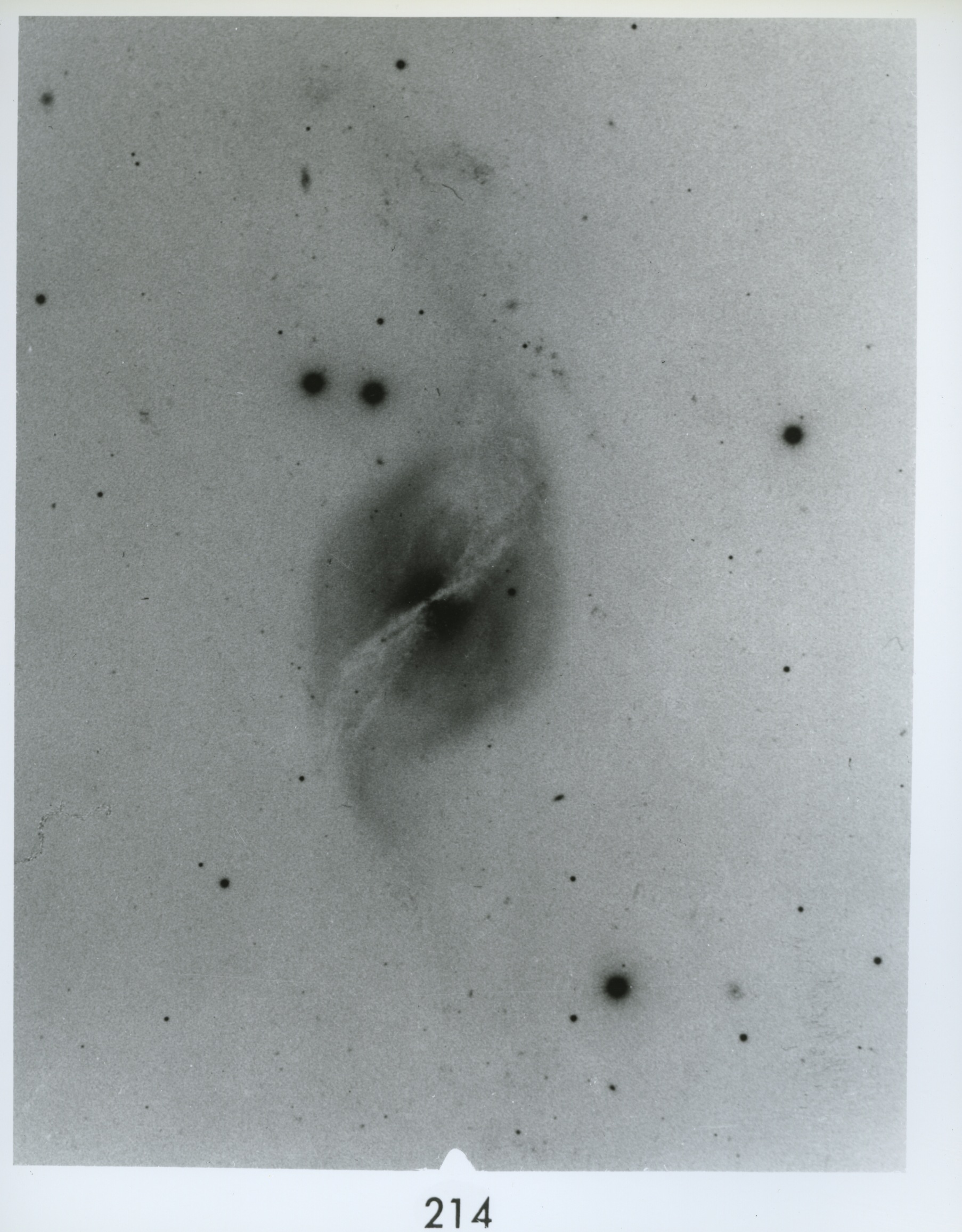
NGC 3718 (PGC 35616 = Arp 214)
Discovered (Apr 12, 1789) by William Herschel
An 11th-magnitude spiral galaxy (type SBa? pec) in Ursa Major (RA 11 32 34.7, Dec +53 04 02) Gravitationally interacting with NGC 3729. Apparent size 8.1 by 4.0 arcmin? Used by the Arp Atlas as an example of a galaxy with irregularities, absorption, and resolution.
"Excerpt courtesy of Courtney Seligman"
cseligman.com/text/atlas/ngc37.htm#3718
Image... Cherryvalley Observatory (I83). Telescope: 0.2-m SCT & SBIG STL-1301E CCD Camera @f7.6. Image Scale 2.17 arcsec/pixel, Field of View 46 x 37 arcmins.
Flat field and dark subtract calibration frames. Combined Stack of four images of 220 seconds each unfiltered and unbinned. CCD operating temperature: -42 degrees. Image acquisition and processing: CCD Soft v5, TheSky6 Professional and Mira Pro v7. December 27th 2014.
Dr. Halton Arp originally compiled the Atlas of peculiar galaxies with photographs he made mainly using the Palomar 200-inch telescope and the 48-inch Schmidt telescope between the years 1961 to 1966. Original image can be found here: ned.ipac.caltech.edu/level5/Arp/Figures/big_arp214.jpeg
left to right
Urine Collection and Transfer Assembly
Skylab 3
This device was carried in the Skylab 3 command module in 1973. It was assigned to Alan Bean but was not used. Liquid waste (urine) was collected in such a unit, which was worn by an astronaut and had roll-on cuffs to provide personal sanitary protection. The urine was transferred through a tube to a tank, then vented into space.
Fecal Collection Bag
Skylab
Porous bags like this were installed in the Skylab toilet to capture solid waste, which was then dried, stored, and returned to Earth for analysis of the astronauts’ digestion and metabolism.
Fecal Collection Assembly
Apollo
These two bags make up the Fecal collection assembly, part of the personal hygiene system used by Apollo astronauts. These bags were not flown. This self-contained system gave the astronaut flexibility and control in a weightless environment and allowed for simple and hygienic disposal.
Disposable Absorption Trunk
Space Shuttle
This type undergarment was developed for female astronauts on early Shuttle flights to wear during launch and spacewalks. Male astronauts could wear a urine collection hose and bag assembly. Now, most astronauts, male and female, choose to use ordinary, commercially available disposable undergarments when wearing pressure suits.
The color of a cloud tells much about what is going on inside the cloud. Clouds form when relatively warm air containing water vapor is lighter than its surrounding air and this causes it to rise. As it rises it cools and the vapor condenses out of the air as micro-droplets. These tiny particles of water are relatively densely packed and sunlight cannot penetrate far into the cloud before it is reflected out, giving a cloud its characteristic white color. As a cloud matures, the droplets may combine to produce larger droplets, which may combine to form droplets large enough to fall as rain. In this process of accumulation, the space between droplets becomes larger and larger, permitting light to penetrate much farther into the cloud. If the cloud is sufficiently large and the droplets within are spaced far enough apart, it may be that a percentage of the light which enters the cloud is not reflected back out before it is absorbed (Think of how much farther one can see in a heavy rain as opposed to how far one can see in a heavy fog). This process of reflection/absorption is what leads to the range of cloud color from white through grey through black. For the same reason, the undersides of large clouds and heavy overcasts appear various degrees of grey; little light is being reflected or transmitted back to the observer.
It praises to the greatest artist, the Creator, Jehovah. Gen 1:1
These 9 images are illustrations of the principal Fraunhofer absorption lines in the solar spectrum. The data were taken as part of a programme to study the effect on the solar spectrum of a transit of the Earth across the solar disk as seen from the Moon during a lunar eclipse: to be published by Fei Yan et al. (2015, in prep.)
The spectra were obtained using HARPS (High Accuracy Radial velocity Planet Searcher) on the ESO 3.6m telescope at La Silla in Chile on the night of the 15 April 2014. This is the equipment that has been used to find many of the known exoplanets that have been discovered by exploiting the 'wobble' induced in the parent star's radial velocity by an orbiting planet or planets. The spectrometer produces one sample of the spectrum each hundredth of an Ångstrom (a thousand samples per nm). See: www.eso.org/sci/facilities/lasilla/instruments/harps.html
for details.
The data plotted here are from just one of the 382 spectra obtained on that night by pointing the telescope at the Tycho crater on the Moon to look at the reflected light in the umbral and the penumbral shadow of the Earth and, for this spectrum, the fully illuminated Moon. It has been used to extract high resolution spectra of the principal Fraunhofer absorption lines from the telluric molecular oxygen B-band in the far-red to the L-line from atomic iron in the ultraviolet.
The Mg I b triplet is a strong absorption in the solar spectrum and can be seen clearly by eye with a small pocket spectroscope. This transition, from 3p 3P0 - 4s 3S, is not a resonance line like the Na I D and Ca II H & K lines. However, the lower level has no allowed transition to the ground state, 3s2 1S, and so it can build up to a significant level of occupation, allowing absorption to occur. There is an analogous triplet absorption in the ultraviolet, 3p 3P0 - 3d 3D, at at 3838.3, 3832.3 and 3829.4 which is also strong.