View allAll Photos Tagged UltraHighDefinition
This is our version, via our artificial intelligence model, of the image provided by JWST about the massive galaxy cluster RX J2129 on 28 February 2023.
This JWST observation by the NirCam instrument shows the massive galaxy cluster RX J2129. Due to gravitational lensing, this observation contains three different images of the same galaxy hosting a supernova. Gravitational lensing occurs when a massive celestial body causes sufficient curvature of space to bend the path of light passing through it, almost like a large lens. In this case, the lens is the galaxy cluster RX J2129, located about 3.2 billion light years from Earth in the constellation Aquarius. Gravitational lensing can make background objects appear strangely distorted, as can be seen by the concentric arcs of light in the top right of this image.
The file is available at 0.98 billion pixels for download at a resolution of 35000x28000pixels.
Map of wavelengths/colours:
Blue: F115W+F150W;
Green: F200W+F277W;
Red: F356W+F444W.
Constellation: Aquarius.
Object Description: Galaxy Cluster and Gravitational Lens.
Distance: 3.2 billion light-years to cluster.
Release Date: February 28, 2023 06:00 (UTC).
Credits: ESA/Webb, NASA & CSA, P. Kelly. Magnification and reconstruction via AI by PipploIMP.
Our Facebook page: bit.ly/PipploFB
Our YouTube channel: bit.ly/PipploYT
This image was provided by ASI, the Italian space agency. The photo was taken by the Italian nanoprobe ArgoMoon, released during the launch of Artemis 1 from the second stage of the SLS, the Interim Cryogenic Propulsion Stage (ICPS), at 10:34 UTC on 16 November 2022. The nanoprobe is managed by Argotec . The photo was taken on November 16, 2022 at 23:15:00 UTC.
The photo has been reprocessed using our artificial intelligence model to improve the quality and resolution as much as possible. It is available at 47.15 million pixels for download with a resolution of 7500x6287 pixels.
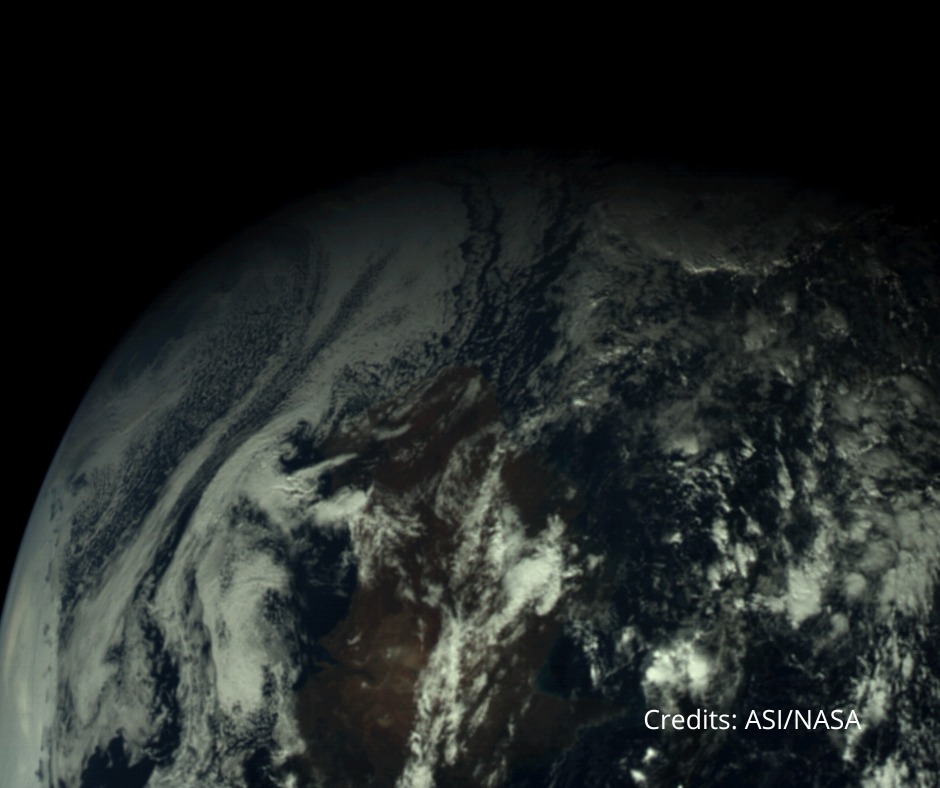
Credit: NASA/ASI/PipploIMP (for AI magnification and reconstruction)
Our Facebook page: bit.ly/PipploFB
Our YouTube channel: bit.ly/PipploYT
Reconstruction using our artificial intelligence model of the photo acquired by the JWST through both the MIRI (Mid-Infrared Instrument) and the NIRCam (Near-Infrared Camera).This image is constructed from almost 1,000 separate image files, the generated file was entirely reconstructed by our artificial intelligence model to bring the document to a resolution of almost 2.46 billion pixels (50616x48528 pixels).
Credit: NASA/ESA/CSA/STScI/PipploIMP
Our Facebook Page: bit.ly/PipploFB
Our YouTube Channel: bit.ly/PipploYT
Reconstruction using our artificial intelligence model from an image provided by Chandra X-ray Observatory about M74.
Messier 74 is a spiral galaxy (like our Milky Way) that we see face-on from our vantage point on Earth. It is about 32 million light-years away. Messier 74 is nicknamed the Phantom Galaxy because it is relatively dim, making it harder to spot with small telescopes than other galaxies in Charles Messier’s famous catalog from the 18th century. Webb outlines gas and dust in the infrared while Chandra data spotlights high-energy activity from stars at X-ray wavelengths. Hubble optical data showcases additional stars and dust along the dust lanes. (X-ray: purple; optical: orange, cyan, blue, infrared: green, yellow, red, magenta).
The file is available at 302.49 millions of pixels for download at a resolution of 21600x14004 pixels.
Credits for X-ray: Chandra: NASA/CXC/SAO, XMM: ESA/XMM-Newton; for Infrared: JWST: NASA/ESA/CSA/STScI, Spitzer: NASA/JPL/CalTech; for Optical: Hubble: NASA/ESA/STScI, ESO; for Image Processing: L. Frattare, J. Major, and K. Arcand. Reconstruction and magnification via AI by PipploIMP.
Our Facebook Page: bit.ly/PipploFB
Our YouTube Channel: bit.ly/PipploYT
Reconstruction, using our artificial intelligence model. What you see is the last image from the DRACO Cam before the impact of NASA's DART probe against the moon Dimorphos. The image has been heavily reworked to capture every detail of the surface of this small moon. What you see now no longer exists. In all likelihood there is now a crater there caused by the probe and the rocks you see have either melted, been crushed or scattered around.The impact occurred at 23:14 UTC on 26 September 2022.
The file is available at 100 million pixels for download at a resolution of 10000x10000 pixels.
Credit: NASA/ASI/PipploIMP
Our Facebook Page: bit.ly/PipploFB
Our YouTube Channel: bit.ly/PipploYT
The Pillars of Creation are a particular area of the Eagle Nebula, 6500 light years from Earth. This image was taken by the JWST using the NIRCam (Near-Infrared Camera). Our artificial intelligence model has thoroughly reprocessed the captured image, expanding the colour gamut and significantly increasing detail and sharpness. The result is an image of 32000x55334 pixels (1.771 billion pixels total). It should currently be the most defined image of this area of space.
Credit: NASA/ESA/CSA/STScI; Joseph DePasquale (STScI), Anton M. Koekemoer (STScI), Alyssa Pagan (STScI), PipploIMP (for AI magnification and reconstruction)
Our Facebook Page: bit.ly/PipploFB
Our YouTube Channel: bit.ly/PipploYT
Reconstruction using our artificial intelligence model of the photo acquired by the JWST published by the NASA website at 22:30 UTC on 11 July 2022. The file is available at 881.91 million pixels for download at a resolution of 29397x30000 pixels.
Credit: NASA/ESA/CSA/STScI/PipploIMP
Our Facebook Page: bit.ly/PipploFB
Our YouTube Channel: bit.ly/PipploYT
Nothing like a creepy little girl & her doll to send chills down your spine!
If you enjoyed this image, be sure to check out my Modeling & CosPlay Collection and check out more of my Modeling & CosPlay photos.
Hey, come to think of it, if you have some CosPlay shot in context you’d like to share, come on over to the Real World CosPlay ~ CosPlay In Context Group, join up & share away!
If you’re feeling ’a little more adventuress’ then come on over look through all my Albums and browse my collection.
Cheers. ‘Squiz’
Image reconstructed using our artificial intelligence model. This image was taken by the Orion spacecraft (Artemis 1 mission), through the cameras mounted on the crew module, during the second flyover of the Moon on the 20th day of the flight (5 December 2022).
The resulting document is 16000x12643 pixels (202.29 million pixels).
Credit: NASA/PipploIMP (for AI reconstruction/enlargement)
Our Facebook page: bit.ly/PipploFB
Our YouTube channel: bit.ly/PipploYT
Reconstruction with our artificial intelligence model of a photo captured by Hubble. This is HH24, a young star 1500 light years from Earth in the constellation Orion. The file is available for download at 189.9 million pixels with a resolution of 12660x15000 pixels.
Credits: ESA/Hubble and NASA/D. Padgett (GSFC)/T. Megeath (University of Toledo)/B. Reipurth (University of Hawaii)/PipploIMP
To view this same image in 3D parallax AI: bit.ly/3vrqqjC
Our Facebook page: bit.ly/PipploFB
Our YouTube channel: bit.ly/PipploYT
On 8 October 2014, the Sun's active regions combined to resemble the face of a pumpkin for Halloween. The active regions appear brighter because they are areas that emit more light and energy, markers of an intense and complex set of magnetic fields hovering in the Sun's atmosphere, the corona. This image is in the 193 angstrom wavelength. The image has been magnified using our artificial intelligence model. It can be downloaded at a resolution of 625 million pixels (25000x25000 pixels).
Credit: NASA/SDO/PipploIMP (for magnification via AI).
Our Facebook page: bit.ly/PipploFB
Our YouTube channel: bit.ly/PipploYT
Located in the approaches to #Darwin, Bathurst Island has had a long association with the defence of #Australia.
On February 19, 1942, a priest working on the island, Father John McGrath, reported the approaching Japanese enemy aircraft to Area Combined Headquarters in Darwin.
Cape Fourcroy, where a lighthouse now stands, was the site of the Air Force’s No. 38 Radar Station (38RS) from 1942 to 1945. During its time, 38RS were equipped with the Australian-built Light Weight Air Warning radar set, highly regarded by allied Air Forces in the South-West Pacific for its ruggedness and capacity to endure the harsh tropical climate.
Today, a newer installation stands guard.
Thanks stopping by & checking out my image!
If you enjoyed this image, be sure to check out my Modeling & CosPlay Collection and check out more of my Modeling & CosPlay photos.
Hey, come to think of it, if you have some CosPlay shot in context you’d like to share, come on over to the Real World CosPlay ~ CosPlay In Context Group, join up & share away!
If you’re feeling ’a little more adventuress’ then come on over look through all my Albums and browse my collection.
Cheers. ‘Squiz’
This is our version, via AI (for magnification and colouring), of a a radar image from NASA’s Magellan mission shows circular fracture patterns surrounding the “Aine” Corona, located in Venus’ southern hemisphere. This corona is about 200 kilometers across and shows various features that may be associated with volcanic activity. Coronae are circular or oval regions defined by a ring of ridges and are centres of tectonic and volcanic activity.
The file is available at 78.63 millions of pixels for download at a resolution of 10000x7863 pixels.
Credit: NASA/JPL/PipploIMP
Our Facebook Page: bit.ly/PipploFB
Our YouTube Channel: bit.ly/PipploYT
Thanks for taking the time to check out my image!
If you really enjoyed this image, be sure to click on over to my Urbex & Street Art Collection and check out more of my Urbex & Street Art photos.
Even better, if you have some Urbex & Street Art to share, come on over to the Urbex & Street Art (NSW & ACT) Group, join up & share away!
If you’re feeling ’a little more adventuress’ then click on over to all my Albums and browse through my collection.
Cheers. ‘Squiz’
Image reconstructed using our artificial intelligence model. The image you see is from the Orion spacecraft and the Artemis 1 mission. This image, provided by NASA, shows the Orion spacecraft while observing the Earth system (Earth and Moon).
The resulting document is 15000x11250 pixels (168.75 million pixels).
Credit: NASA/PipploIMP (for AI reconstruction/enlargement)
Our Facebook page: bit.ly/PipploFB
Our YouTube channel: bit.ly/PipploYT
Image reconstructed and enlarged with our artificial intelligence model from a photo taken by NASA's DSCOVR satellite. The image shows the Earth during the solar eclipse of 20 April 2023. The file is available for download with a resolution of 56.25 million pixels (7500x7500 pixels).
Credit: NASA/DSCOVR/PipploIMP
Our Facebook page: bit.ly/PipploFB
Our YouTube channel: bit.ly/PipploYT
Image reconstructed using our artificial intelligence model. The image you see is from the Orion spacecraft and the Artemis 1 mission. The image depicts the Moon on 6th day of flight (21 November 2022) just before the Orion's flyby.
The resulting document is 25000x24662 pixels (616.55 million pixels).
Credit: NASA/PipploIMP (for reconstruction/enlargement via AI)
Our Facebook page: bit.ly/PipploFB
Our YouTube channel: bit.ly/PipploYT
Video instructions: youtu.be/DgLEzGi28nw
All my 3D designs are available for free on the Tinkercad or Thingiverse.
Please visit the new "4K World" group. If you have good resolution images...post to that group.
20160801_IMG_9133
CosPlay Session with the wonderful Miss Gabby in her awesome Wonder Woman threads.
If you enjoyed this image, be sure to check out my Modeling & CosPlay Collection and check out more of my Modeling & CosPlay photos.
Hey, come to think of it, if you have some CosPlay shot in context you’d like to share, come on over to the Real World CosPlay ~ CosPlay In Context Group, join up & share away!
If you’re feeling ’a little more adventuress’ then come on over look through all my Albums and browse my collection.
Cheers. ‘Squiz’
Reconstruction using our artificial intelligence model of a historical photo taken seventy years ago by the Sacramento Peack Observatory (National Solar Observatory) in 1952. The file is available at 181.35 millions of pixels for download at a resolution of 15000x12090 pixels.
Credit: National Solar Observatory/Sacramento Peak Observatory/PipploIMP
Our Facebook Page: bit.ly/PipploFB
Our YouTube Channel: bit.ly/PipploYT
Image from 47th perijove from the NASA's Juno probe. Image acquired via Junocam on December 14, 2022. This image was reconstructed using our artificial intelligence model. The file is available for download at 93.25 MP at 6217x15000 pixels.
Original image: JNCE_2022349_47C00082_V01
Image Credit: NASA/JPL-Caltech/SwRI/MSSS/PipploIMP
Our Facebook page: bit.ly/PipploFB
Our YouTube channel: bit.ly/PipploYT
Reconstruction using our artificial intelligence model of the photo acquired by the JWST through the NIRCam.
Dozens of previously hidden jets and outflows from young stars are revealed in this new image of the Cosmic Cliffs from NASA’s James Webb Space Telescope’s Near-Infrared Camera (NIRCam). The Cosmic Cliffs, a region at the edge of a gigantic, gaseous cavity within NGC 3324, has long intrigued astronomers as a hotbed for star formation.
In this image, red, green, and blue were assigned to Webb’s NIRCam data at 4.7, 4.44, and 1.87 microns (F470N, F444W, and F187N filters, respectively).
The file is available at 928.16 million pixels for download at a resolution of 40000x23204 pixels.
Credits:
for science Megan Reiter (Rice University);
for image NASA, ESA, CSA, STScI;
for image processing: Joseph DePasquale (STScI), Anton M. Koekemoer (STScI);
for AI magnification and reconstruction PipploIMP
Our Facebook Page: bit.ly/PipploFB
Our YouTube Channel: bit.ly/PipploYT
Thanks stopping by & checking out my image!
If you enjoyed this image, be sure to check out my Modeling & CosPlay Collection and check out more of my Modeling & CosPlay photos.
Hey, come to think of it, if you have some CosPlay shot in context you’d like to share, come on over to the Real World CosPlay ~ CosPlay In Context Group, join up & share away!
If you’re feeling ’a little more adventuress’ then come on over look through all my Albums and browse my collection.
Cheers. ‘Squiz’
This is our version, via AI (for magnification and colouring), of a composite image generated by approximately 70 orbits of data from NASA's Magellan probe on Venus; it shows a geologically complex region in the southern hemisphere of Venus. You can see on the right, the Quetzalpetlatl Corona, which dimensionally is about 700 km in diameter. Coronae are circular or oval regions defined by a ring of ridges and are centres of tectonic and volcanic activity.
The file is available at 43.57 millions of pixels for download at a resolution of 10001x4357 pixels.
Credit: NASA/JPL/PipploIMP
Our Facebook Page: bit.ly/PipploFB
Our YouTube Channel: bit.ly/PipploYT
Panorama of Barcelona at sunset. This photograph was taken from the top of the Mount Tibidabo, overlooking the beautiful cityscape. The full resolution of this ultra high resolution photograph is 144 megapixel (15,176 × 9,485 pixels at 300 dpi). You may download a free high resolution wallpaper version for personal use here: crevisio.com/photo/g1NsXj. For commercial use, please contact Crevisio.
Reconstruction using our artificial intelligence model of the photo acquired by the JWST through the MIRI (Mid-Infrared Instrument) of the NGC 628/M74 and processed by Judy Schmidt.
Red (screen layer mode): MIRI F2100W
Orange: MIRI F1130W
Cyan: MIRI F770W
Extra overall brightness in grayscale: MIRI F1000W
The generated file was upscaled by our artificial intelligence model to bring the document to a resolution of 355.05 million pixels (25000x14202 pixels).
Credit: NASA/ESA/CSA/STScI/Judy Schmidt/PipploIMP
Our Facebook Page: bit.ly/PipploFB
Our YouTube Channel: bit.ly/PipploYT
Reconstruction using our artificial intelligence model of the photo acquired by the JWST through MIRI (Mid-Infrared Instrument). This composite image has one more MIRI filter than the one used for the NIRCam-MIRI hybrid composite image. Image processing specialists at the Space Telescope Science Institute in Baltimore chose to use all three MIRI filters and the colours red, green and blue to more clearly differentiate the characteristics of the galaxies from each other and the shock waves between the galaxies. The file is available at 522.75 million pixels for download at a resolution of 25000x20910 pixels.
Credit: NASA/ESA/CSA/STScI/PipploIMP
Our Facebook Page: bit.ly/PipploFB
Our YouTube Channel: bit.ly/PipploYT
Image reconstructed and enlarged with our artificial intelligence model from a photo taken by NASA's DSCOVR satellite. The image shows the Earth during the solar eclipse of 20 April 2023. The file is available for download with a resolution of 56.25 million pixels (7500x7500 pixels).
Credit: NASA/DSCOVR/PipploIMP
Our Facebook page: bit.ly/PipploFB
Our YouTube channel: bit.ly/PipploYT
Thanks for taking the time to check out my image!
If you really enjoyed this image, be sure to click on over to my Urbex & Street Art Collection and check out more of my Urbex & Street Art photos.
Even better, if you have some Urbex & Street Art to share, come on over to the Urbex & Street Art (NSW & ACT) Group, join up & share away!
If you’re feeling ’a little more adventuress’ then click on over to all my Albums and browse through my collection.
Cheers. ‘Squiz’
Reconstruction using our artificial intelligence model of 2 photos captured by Perseverance at SOL 801 (May 22, 2023) between 12:10:59 and 12:12:34 LMST using both MastCam-Zs (one from the left and one from the right).
This is a secial focus about the same rock of the previus image.
The file is available at 59.25 millions of pixels for download at a resolution of 7500x7500 pixels.
Credit: NASA/JPL-Caltech/ASU/PipploIMP
Our Facebook Page: bit.ly/PipploFB
Our YouTube Channel: bit.ly/PipploYT
Image reconstructed and enlarged with our artificial intelligence model from a photo taken by UAESA's Mars Hope mission during a flyby over Deimos (the smallest moon of Mars) at a distance of about 100 km from this satellite.
The file is available for download with a resolution of 192 million pixels (16000x12000 pixels).
Credit: original image courtesy UAE Space Agency/Mars Hope mission. Full AI processing by PipploIMP.
Our Facebook page: bit.ly/PipploFB
Our YouTube channel: bit.ly/PipploYT
Thanks stopping by & checking out my image!
If you enjoyed this image, be sure to check out my Modeling & CosPlay Collection and check out more of my Modeling & CosPlay photos.
Hey, come to think of it, if you have some CosPlay shot in context you’d like to share, come on over to the Real World CosPlay ~ CosPlay In Context Group, join up & share away!
If you’re feeling ’a little more adventuress’ then come on over look through all my Albums and browse my collection.
Cheers. ‘Squiz’
Hey you, yes you, thanks for taking the time to check out my image!
If you really enjoyed this image, be sure to click on over to my Urbex & Street Art Collection and check out more of my Urbex & Street Art photos.
Even better, if you have some Urbex & Street Art to share, come on over to the Urbex & Street Art (NSW & ACT) Group, join up & share away!
If you’re feeling ’a little more adventuress’ then click on over to all my Albums and browse through my collection.
Cheers. ‘Squiz’
Project #365; A Photo A Day
This image is a reconstruction, using our artificial intelligence model, of the composite image provided by ESA in several observations of the Taurus molecular cloud made by ESA's Herschel Observatory. This cloud, located about 450 light years from us in the constellation Taurus, is a complex and vast cluster of interstellar clouds and is the nearest large star-forming area. This four-colour image combines Herschel observations at 160 microns (blue), 250 microns (green), 350 microns (split between green and red) and 500 microns (red), with an extent of 13.8° by 7.3°. ESA's Herschel Observatory observed the sky at far-infrared and submillimetre wavelengths from 2009 to 2013.
The result of this processing is an image of 40000x20555 pixels (822.2 million pixels in total).
Credit: ESA/Herschel/NASA/JPL-Caltech/R. Hurt (JPL-Caltech)/ PipploIMP (for AI magnification and reconstruction).
Our Facebook Page: bit.ly/PipploFB
Our YouTube Channel: bit.ly/PipploYT
What lies beyond the Razor Wire where the lights are? Is it freedom? Is it a new life? A better world? Or is it just another battle ground?
This image is part of my ’On Assignment Album’ which contains images from my 4 month assignment in Afghanistan ‘08/’09. If you liked this image why not check out the rest of my images in the album.
If you’re feeling a little more inquisitive, then be sure to take a look through all my Albums and browse my collection.
Cheers. ‘Squiz’
This is our version, via our artificial intelligence model, of the image provided by JWST about WR124, a Wolf-Rayet star in the constellation of Sagitta, emphasising the filamentary structure of the cloud of gas and dust enveloping the star.
Cooler cosmic dust glows at the longer mid-infrared wavelengths, displaying the structure of WR 124’s nebula. The 10 light-years-wide nebula is made of material cast off from the aging star in random ejections, and from dust produced in the ensuing turbulence. This brilliant stage of mass loss precedes the star’s eventual supernova, when nuclear fusion in its core stops and the pressure of gravity causes it to collapse in on itself and then explode.
The file is available at 76.29 million pixels for download at a resolution of 10000x7629 pixels.
Map of wavelengths/colours:
Blue: F770W;
Green: F1130W;
Red: F1280W+F1800W.
Constellation: Sagitta.
Object Description: Wolf–Rayet star.
Distance: 15,000 light-years.
Dimensions: 10 lightyears.
Exposure Date for MIRI: 10 June 2022.
Release Date: March 14, 2023 18:00 (UTC).
Credits: NASA, ESA, CSA, STScI, Webb ERO Production Team. Magnification and reconstruction via AI by PipploIMP.
Our Facebook page: bit.ly/PipploFB
Our YouTube channel: bit.ly/PipploYT