View allAll Photos Tagged Those
Those Deadbeat Cats performing in their unmistakable rockabilly style at North Walsham Children's Day on 2nd May 2022 (c)John Newstead
Those Blue Andean Morning Skies...
(Cayambe, Ecuador revisited - Lived and worked here for about four years...)
Photographed by Chris Sikich
Some photos and a review were published by Philadelphia Magazine here: www.phillymag.com/ticket/2016/03/21/concert-review-those-...
During my working days a large part of the business I was directly involved in was the international forwarding of hi-tech industry and through that I was a Director within the HTFN ... Hi-Tech Forwarders Network.
We had many conferences and this is one of the posters held in Miami, which I had framed. Although travelling to many parts of the world was most interesting it was somewhat exhausting ~ fly overseas, be met and taken to a hotel, then a conference for a few days and then business and then back on a flight and off to another city and or country .... I did that for a good number of years!
Flickr Lounge ~ Weekly Theme (Week 50) ~ Memorabilia ...
Stay Safe and Healthy Everyone!
Thanks to everyone who views this photo, adds a note, leaves a comment and of course BIG thanks to anyone who chooses to favourite my photo .... Thanks to you all!
Those flowers dedicated to Gautama Buddha @ the Buddha Temple..
Preface _ Three Hundred Sixty Five Project : 33/365
BANGLADESH, a Land of Fertility and Dhaka is the capital city a Country of Land, boat /river , hills and sea, The Longest sea beach Cox Bazar and Famous Mango groves Sundorban is the tourist attraction with heritage of Old days makes One Nostalgic. BANGLADESH is born out of series of political movements ,Those Started with Language movement in 1952 , followed by Non cooperation Movement in 1969 and finally ended up with Liberation war in 1971,
Jute , The Golden Fiber of Bangladesh is world wide famous while now Garmentsbecame the economical backbone of the country, Bangladesh has a Long rich cultural and Literatures heritage, with our noble Laurent Poet Nobel Laurent Rabindranath Tagore., Followed by Kazi Nazrul Islam and Jibanananda Das.
The country BANGLASDESH is a land of fertility for Agriculture, while Livestock’s are the main driving force for the rural life, Education had been the prime concerned for people of these days . Bangladesh has the glory to Inaugurate ICC World cup Cricket in 2011 at Mirpur stadium,
Season has Lot of credit in photography , along with the landscape. Heritage. Rivers cape, and Life style, People here enjoy festival in Bangladesh almost every month, Sometimes they are religious an most of the time seasonal, thus allow good subjects for Image capturing,
Let’s we EXPLORE Our Beautiful BANGLADESH.
Shot at dawn. A memorial at the National Memorial Arboretum to those tied to a wooden stake and executed by firing squad for showing cowardice the face of the enemy.
They were sick, cold, hungry, tired and terrified. They saw their friends bombed, gassed and cut to pieces in spectacular numbers and they were reduced to trembling wrecks by relentless shellfire and the imminence of their own demise.
Many had lied about their age to fight for King and Country. But 307 of them were executed by their comrades, often for little more than being frightened, confused young men.
Between 1914 and 1920, more than 3,000 British soldiers were sentenced to death by courts martial for desertion, cowardice, striking an officer, disobedience, falling asleep on duty or casting away arms. Although only 11 per cent of the sentences were carried out, those who were shot at dawn were denied legal representation and the right of appeal. Medical evidence which showed that many were suffering from shell-shock - or post traumatic stress disorder - was either not submitted to the courts or was ignored. Most hearings lasted no more than 20 minutes.
Transcripts made public 75 years after the events suggest that some of the men were underage. Others appeared to have wandered away from the battlefield in states of extreme distress and confusion, yet they were charged with desertion.
One 19-year-old, Pte George Roe of the King's Own Yorkshire Light Infantry, was executed for desertion, even though one witness told his court martial: "[Roe] came up to me and asked if I was a policeman. He told me that he had lost his way and had been wandering about for two days."
Another 19-year-old, Pte James Archibald of the 17th Royal Scots, told his comrades he "felt queer" while en route to the trenches at 6.30pm on 14 May 1916. At 3pm the next day, he was found asleep in a barn. He was shot by firing squad three weeks later.
Sgt Joe Stones of the Durham Light Infantry was arrested in January 1917 after an ambush in which his commanding officer was killed. Stones, whose previous bravery had been acknowledged by officers, had wedged his non- functioning rifle across a narrow trench to slow down Germans who were pursuing him. He was deemed to have "cast away his arms" and was executed.
Pte Joseph Byers was underage when he enlisted in 1914. By January 1915, the war had ground the young man down and he went absent without leave. After being caught, he admitted attempting to desert in the naive belief that his honesty and contrition would earn him a prison sentence. He was shot at dawn two weeks later.
Andrew Mackinlay, the Labour MP for Thurrock who has been campaigning for pardons for the men for five years, said: "When the suppressed documents relating to these courts martial were released, they showed that these men were demonstrably shell-shocked."
"Even where we can't prove the men were ill, we can say that there was one common denominator - they were all denied natural justice. None was given access to legal representation or the right of appeal. Most of them were not given proper medical examinations and so their conditions were ignored."
Mr Mackinlay would like to see either a blanket pardon by royal prerogative - which would not require legislation - or each case to be examined on its merits by High Court judges. None of the cases he is concerned with involves treason or mutiny.
Julian Putkowski, co-author of Shot at Dawn (Pen & Sword), said: "The function of these executions was to intimidate and frighten soldiers in the battlefield to get them to take part in pointless exercises in which thousands were slaughtered."
"The composite soldier in the trenches would be suffering from chronic insomnia and anxiety attacks. He would be wet and cold in wind-chill factors that dragged temperatures as low as minus-18.
"It was enough to drive anyone crazy. To say that all these men who were shot were bad and deserved their punishment is to ignore all these factors. Most just couldn't take any more."
By 1930, Parliament had introduced legislation banning the death sentence for the offences for which the 307 were shot.
Sgt Joe Stones stood at just 5ft 2ins tall, but he was promoted over the heads of stronger men because of his acknowledged bravery and leadership qualities.
Time and again he led barbed-wire parties out into No Man's Land, risking his life while caring for the men in his charge. But he was executed for "casting away his arms" in one of the most bizarre tragedies of the war.
Stones, 25, of the 19th Durham Light Infantry, had been in the trenches of northern France for a year when, one cold morning in January 1917, he went on patrol with his commanding officer. The men were ambushed by Germans and the officer was killed, but Stones couldn't to return fire because he had not removed a protective cover from the breach of his rifle.
The young sergeant turned and ran but had the presence of mind to wedge his rifle across a narrow trench to slow the Germans. He reached his comrades in the rear, shouting: "The Hun are upon us," and gave them enough time to escape.
However, he was charged with casting away his arms and two corporals, John McDonald and Peter Goggins, were charged with quitting their posts as they made their escape.
At Stones's court martial, one officer, Lt J.Rider, wrote: "I have personally been out with him in No Man's Land and always found him keen and bold. In the trenches, he never showed the least sign of funk. ...I have had countless opportunities of seeing him under bad circumstances. I can safely say that he was the last man I would have thought capable of any cowardly action."
But Stones, along with the corporals, was executed anyway.
Like many families whose sons were shot at dawn, Stones's never spoke of him again. His great nephew, Tom Stones, 56, found out about him only last year.
"My grandfather was a lay preacher and he kept a bible with details of family members, the war and battles written inside - but there was no mention of my great uncle Joe," he said.
"What they did to him makes me very angry. They shot him like a rat. It's clear that the poor bugger was no coward. I don't want a medal for him, but I do think he should get a pardon and an apology."
Pte Harry Farr of the West Yorkshire Regiment had been in hospital for five months recovering from shell shock before they sent him back to the trenches.
For two years, the 26-year-old married man from Kensington, west London, had been through some of the worst action of the war before he cracked up in 1916. And, four months after sending him back into the fray, he cracked up again.
The transcript of his court martial at Ville-sur-Ancre records that Farr failed to report for duty on 17 September. He fell out without permission, intending to find an officer to report sick to. However, his pleas fell on deaf ears and he was dragged, kicking and screaming, towards the front before being charged with cowardice.
He told the court martial: "I returned to the 1st Line Transport hoping to report sick to some medical officer there. On the sergeant major's return I reported to him and said I was sick and I could not stand it.
"He then said: `You are a fucking coward and you will go to the trenches. I give fuck all for my life and I give fuck all for yours and I'll get you fucking well shot.'" He was shot at dawn on 18 October.
While he was in the hospital suffering from shell shock, a nurse wrote a letter home for him to his wife, Gertrude, because his hands were shaking too much to hold a pen. It was the last she heard from him.
Gertrude kept her husband's fate a secret for more than 70 years. She was 99 when the papers relating to his case were released and her granddaughter, Janet Booth, was able to explain that he had not been a coward, but was simply a sick young man unable to take any more killing.
"After all those years not mentioning him, she spent the last days of her life talking about Harry Farr," said Mrs Booth. "It meant an awful lot to her to have the stigma removed. Now I'd like to see my grandfather pardoned."
This is my little girl.
Always positive and happy in life. Perhaps thats why she never is still long enough for me to get a good shot of her.
Here is one of the few I'm happy to show. A bit edited with just a tad more exposure and sharpness in the eyes and of cause converted to black and white.
It was taken with a Fujifilm X-T10 and 56mm f/1.2 R APD @ f/1.2.
And yes, she really got such bright, clear eyes to begin with. I just gave it a little extra oompf.
The white material will be spread over and mixed into the soil. Stabilization of road subgrades using lime, Littleton, Colorado.
She wants to say thanks to all of you who gave her all those sweet compliments :)
(and also hopes the weather tomorrow will be better to have a photo session before going to my beloved niece's Bday party)
……………………………….
Poster:
Locandina:
pad.mymovies.it/filmclub/2022/09/120/coverlg_home.jpg

pad.mymovies.it/filmclub/2022/09/120/locandina.jpg

www.cinematografo.it/image-service/version/c:M2QyY2FiZTct...
www.artribune.com/wp-content/uploads/2024/06/vangelo-seco...
www.nuovodialogo.com/wp-content/uploads/2024/05/vangelo-s...
.............................................................................
click to activate the small icon of slideshow: the small triangle inscribed in the small rectangle, at the top right, in the photostream (it means the monitor);
or…. Press the “L” button to zoom in the image;
clicca sulla piccola icona per attivare lo slideshow: sulla facciata principale del photostream, in alto a destra c'è un piccolo rettangolo (rappresenta il monitor) con dentro un piccolo triangolo nero;
oppure…. premi il tasto “L” per ingrandire l'immagine;
www.fotografidigitali.it/gallery/2726/opere-italiane-segn...
………………………………………………………………………
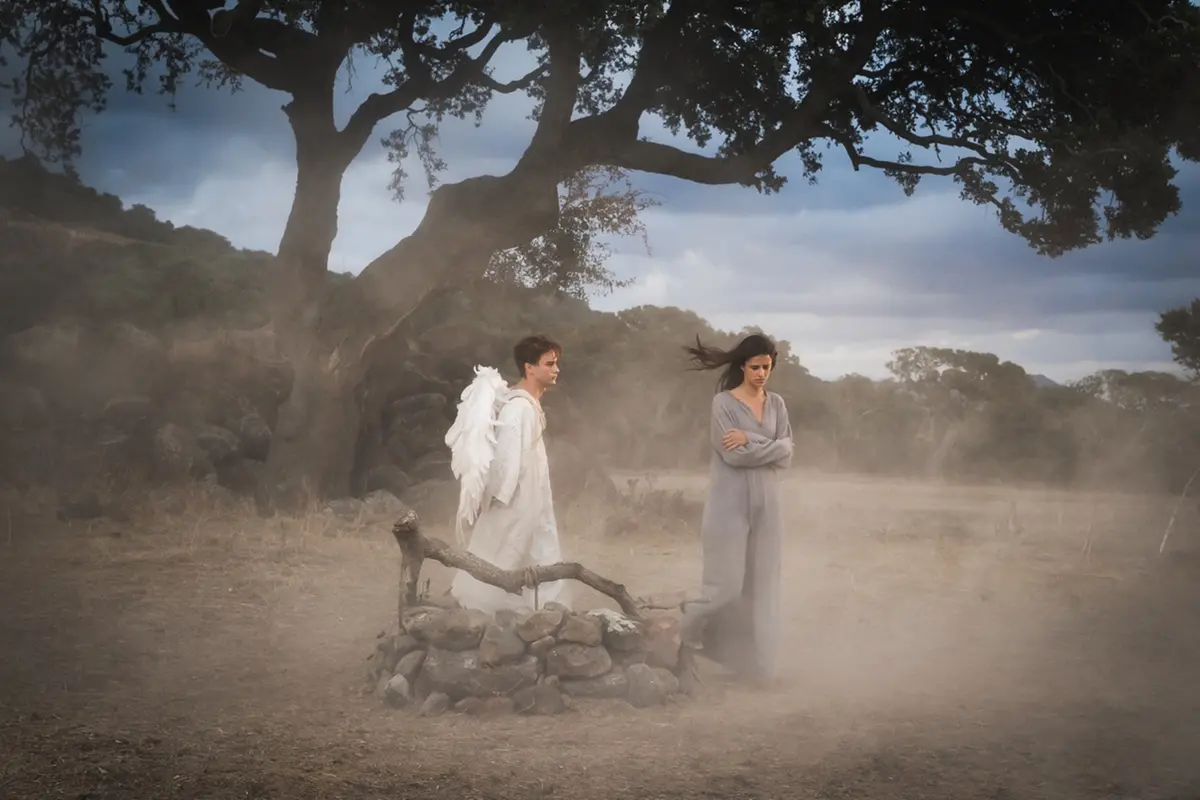
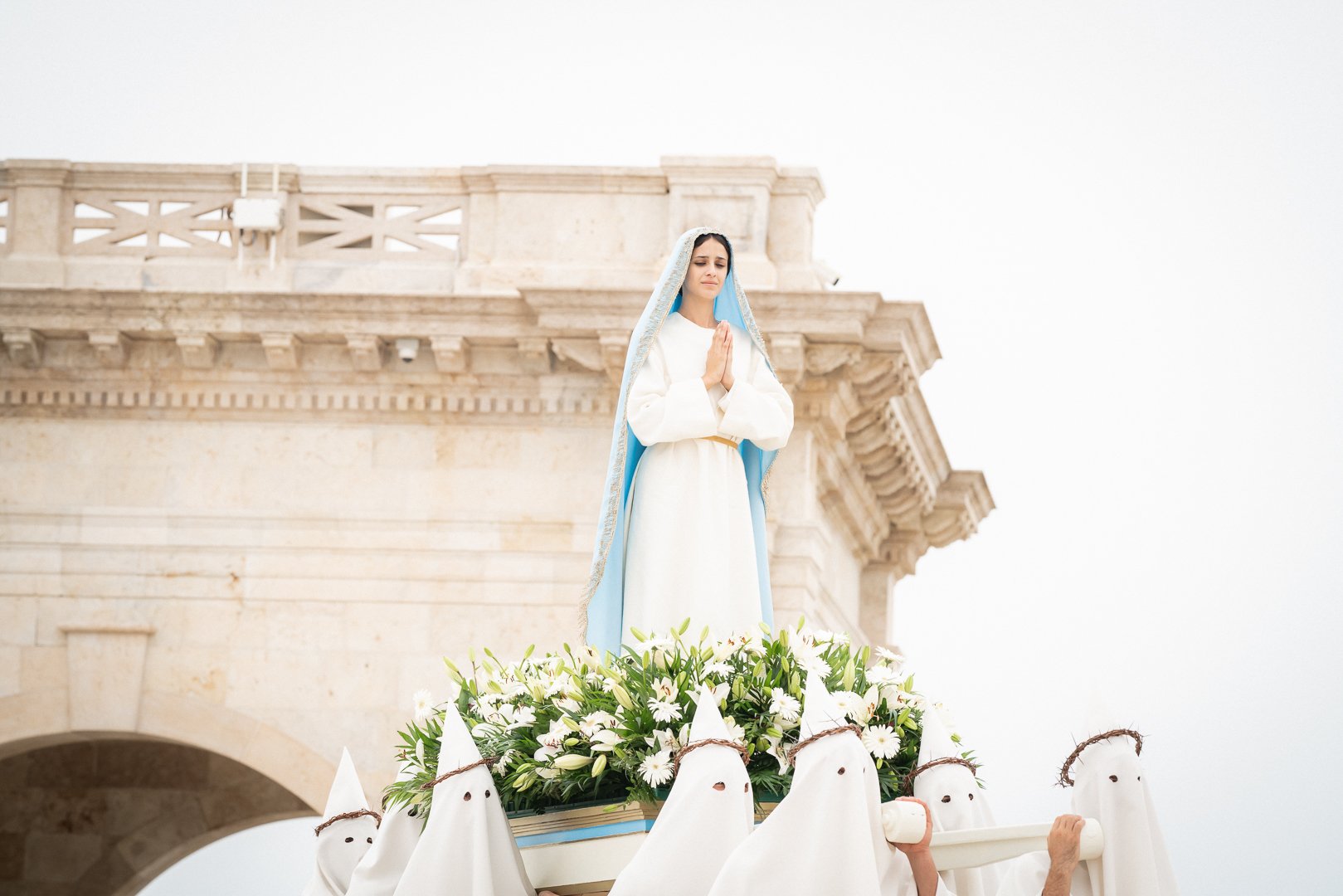
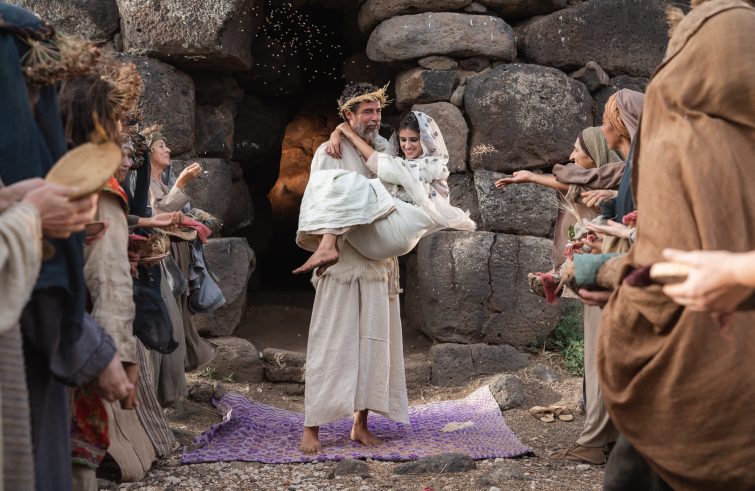
I propose here, on Flickr, a photographic story, with descriptive text, of a traditional Sicilian popular festival that is always highly anticipated, it takes place in the town of Fiumedinisi (Messina), in the last 18 years what is called the "Great Feast" has been celebrated only 3 times, always on the second Sunday of August, it was celebrated in 2007, in 2016, this year 2025, in all three editions I took photographs, those that I now present are almost all of the "Great Feast" of this year 2025. The town of Fiumedinisi is inextricably linked to her patron saint, Our Lady of the Annunciation, every year a traditional procession is held on March 24th and 25th, on the 24th the procession is made by the faithful on their knees, they carry a large lit candle with which they help themselves to support themselves, it takes place along a straight path in what is called "street of float" (it joins two churches), the next day there is another traditional procession, the two "Sacred Float," that of the Our Lady of the Annunciation and that of the Archangel Gabriel, are carried on the shoulders, followed by the faithful, through the narrow streets of the town. Then comes the "Great Feast" in August, also linked to the Annunciation, which occurs every year after many years. It is on Christmas Eve that it is announced whether that year will be the year of the Great Feast. At Christmas, "the Son of Man" is born, incarnated in Mary's womb. It is the Archangel Gabriel who announces to Mary the conception of the Son of the Most High. The iconography of the Sacred Representations depicts him kneeling before her, offering her a lily, a symbol of Mary's purity. The "Great Feast" in August has ancient origins dating back to the 16th century, the period of Spanish rule in Sicily. It was initially celebrated on March 25th, the religious feast of the Annunciation of the Lord. Later, towards the end of the 19th century, it was moved to August to allow the many emigrants from all over the world to attend. In short, the "Great Feast" includes a "morning procession" led by three young men who will impersonate the three main characters on the "living float"—the Mary, the Archangel Gabriel, and the Eternal Father. Around 11:00 a.m., the "Great Living Float," a very heavy object carried on shoulders, will make its first journey along the "street of float" (the one traveled on one's knees in March, but also on the eve of the Great Feast) with the barefoot bearers in ordinary clothing. In the afternoon, many boys and girls dressed as angels take their places on special seats on the "Great Living Float", the "three characters" (the Mary, the Archangel Gabriel, and the "Eternal Father" at the top) take their places. Now the Great Float will make the same journey in reverse, carried on the shoulders of devotee-bearers dressed entirely in white, barefoot, thus arriving in the square in front of the church-sanctuary dedicated to Maria SS Annunziata. Once the journey has finished and the Float has been placed on the ground, the ceremony includes, and ends, with an ancient dialect song sung by the children, with microphones, who dress up as Mary and the Archangel Gabriel. A curiosity, this "Great Float", an enormous metal and wood structure, extremely heavy, requires perfect coordination between the bearers. It is essential to raise and lower it in perfect synchrony, with all its "inhabitants" atop it. It is therefore crucial to avoid any oscillations that would be transmitted to the children seated at various heights, and to the Eternal Father, seated very high up. The moments preceding the float's departure, and those following its arrival, are of great concentration, silence is absolute, the launch occurs at the third blow of the hammer, all the devotee-bearers rise in perfect synchrony and "the magic comes to life"...! The Great Machine travels the "street of float" upon its arrival, there is maximum silence, and at the third blow of the hammer the devotee-bearers lower themselves, placing the incredible Living Float on the ground, renewing before our eyes an event of beauty and absolute wonder, the unique magic of an ancient Sicilian feast tradition.
…………………………………
Propongo qui, su Flickr, un racconto fotografico, con testo descrittivo, di una festa tradizionale popolare siciliana sempre molto attesa, si svolge nel paese di Fiumedinisi (Messina), negli ultimi 18 anni quella che è chiamata la “Festa Grande” si è celebrata solo 3 volte, sempre la seconda domenica di agosto, è stata celebrata nel 2007, nel 2016, quest’anno 2025, in tutte e tre le edizioni ho realizzato fotografie, quelle che ora presento sono quasi tutte della “Festa Grande” di quest’anno 2025. Il paese di Fiumedinisi è indissolubilmente legato alla sua santa patrona, Maria SS. Annunziata, ogni anno si tiene una tradizionale processione il 24 e 25 marzo, il 24 la processione viene fatta dai fedeli in ginocchio, essi recano una grossa candela accesa con la quale si aiutano nel sostenersi, si svolge lungo un percorso rettilineo in quella che è chiamata “strada vara” (unisce due chiese), il giorno dopo si ha un’altra processione, classica, le due “Sacre Vare”, quella di Maria SS. Annunziata e quella dell’Arcangelo Gabriele, vengono portate in spalla, seguite dai fedeli, nelle stradine del paese; poi la “Festa Grande” di agosto, legata anch’essa all’Annunciazione, che avviene ogni volta dopo molti anni: è la notte di Natale che si annuncia se quello sarà l’anno della Festa Grande, a Natale nasce “il Figlio dell’Uomo” incarnatosi nel ventre materno di Maria, è l’Arcangelo Gabriele che annuncia a Maria il concepimento del Figlio dell’Altissimo, l’iconografia delle Sacre Rappresentazioni lo raffigura inginocchiarsi al cospetto di Lei porgendole un giglio, simbolo della purezza di Maria. La “Festa Grande” di agosto ha origini antiche che risalgono al XVI secolo, periodo della dominazione spagnola in Sicilia, essa inizialmente veniva celebrata il 25 marzo, con la ricorrenza religiosa dell’Annunciazione del Signore, successivamente verso la fine del XIX secolo venne spostata ad agosto, per consentire ai molti emigrati, provenienti da ogni dove, di potervi assistere. In maniera sintetica, la “Festa Grande” prevede una “processione mattutina” con in testa i tre ragazzi che impersoneranno sulla “vara vivente” i tre principali personaggi, la Maria, l’Arcangelo Gabriele ed il Padre Eterno; verso le ore 11:00 la “Grande Vara Vivente”, pesantissima, portata in spalla farà un primo viaggio lungo la “strada vara” (quella che viene percorsa in ginocchio a marzo, ma anche la vigilia della Festa Grande) con i portatori scalzi, in abiti comuni; il pomeriggio sulla “Grande Vara Vivente” prendono posto su appositi seggiolini tanti bimbi e bimbe, vestiti da angeli, prendono posto i “tre personaggi” (Maria, l’Arcangelo Gabriele, in alto prende posto il “Padre Eterno”), adesso la Grande Vara farà lo stesso percorso inverso, portata sulle spalle dei devoti-portatori vestiti completamente di bianco, scalzi, così giungendo nella piazza davanti la chiesa-santuario dedicata a Maria SS Annunziata, terminato il percorso e deposta a terra la vara, la cerimonia prevede, e termina, con un antico canto dialettale intonato dai ragazzi, microfonati, che vestono i panni di Maria e dell’Arcangelo Gabriele. Una “curiosità”, questa “Vara Ranni” (dialettalmente, Vara Grande), enorme struttura in metallo e legno, pesantissima, necessita di una perfetta coordinazione tra i portatori, è fondamentale alzarla ed abbassarla in perfetto sincronismo, con sopra tutti i suoi “abitanti”, importantissimo quindi evitare qualsiasi oscillazione che si trasmetterebbe sui bimbi seduti a varie altezze, ed al Padre Eterno, seduto molto in alto: gli attimi che precedono la partenza della vara, e quelli che fanno seguito all’arrivo sono di grande concentrazione, il silenzio è massimo, la partenza avviene al terzo colpo di martello, tutti i devoti-portatori si alzano in perfetta sincronia e “la magia prende vita”…! La Grande Macchina percorre la “strada vara”, al suo arrivo, silenzio massimo, al terzo colpo di martello i devoti-portatori si abbassano deponendo a terra quella incredibile Vara Vivente che rinnova davanti ai nostri occhi un evento fatto di bellezza ed assoluta meraviglia, magia unica di una antica tradizione popolare Siciliana.
.....................
Do You Have Any Experience That You Meet Something, And You Have The Feeling That You should Know Them Bofore? We All Have The Chance To Be Amazing. That Is The Truly Us. Christian Louboutin Shoes. Start To Live a Different Life. Start To Make Something Happen.
Those who give to the poor will lack nothing, but those who close their eyes to them receive many curses. Proverbs 28:27
Nikon D800E, nikkor 24/3,5 PC-E
in those cold days the only thing you can do is put heating at maximum :))
Strobist:
1 monolight with wide reflector in a boom 45° above the subject set at 1:5
1 monolight with a 70X70cm softbox right of camera (about 90° to the subject) set at 1,3:5
1 monolight with a 70X70cm softbox left of camera (about 90° to the subject) at 1,3:5
1 nikon speedlight sb800 with red gel below the camera (about 45° to the subjec) set at 8:1 through a translucent umbrella
triggered with elinchrom el-skyport
www.analogica.it/universi-paralleli-t9522-20.html
I thought that was a Contarex Electronic and Planar... and instead... a soviet mussel ! ;/)
(*) Киев 15 TEE (Kiev 15 TEE) "the Mussel" by Zavod Arsenal (Kiev)
Юпитер 11 Abtomat (Jupiter 11 Abtomat) 4/135 by Zavod Arsenal (Kiev
1/250 - F5.6 (Automat mode)
Kodak TMax 100 @ 90 Gost
Adox Adonal, 1+25 - 7min. 20 °C
Epson V600
The Manhattan Beach Pier is a pier located in Manhattan Beach, California, on the coast of the Pacific Ocean. The pier is 928 feet (283 m) long and located at the end of Manhattan Beach Boulevard.[4] An octagonal Mediterranean-style building sits at the end of the pier and houses the Roundhouse Marine Studies Lab & Aquarium. Surfers can be seen below the pier and sometimes weave in and out of the mussel-covered pilings. The pier is popular with locals, tourists, photographers, and artists and for fishing. It offers sunsets and vantage points from the shore and hillside.
History
Pre-history
In 1897, the Potencia Company was incorporated to develop land in the area and proposed a seaside resort with wharves and piers.[1] The area was named Potencia, but the city of Manhattan was incorporated in 1912 with the word "Beach" being added in 1927.[1] The name was chosen by land developer John Merrill[disambiguation needed], a native of New York.[1]
A pier is believed to have been one of the first features built when the Manhattan Beach community was developed.[5] Two wooden piers were built in 1901, one at Center Street (later renamed Manhattan Beach Boulevard[6]) and one at Marine Avenue called Peck's Pier and Pavilion.[2]
The Center Street Pier was 900 feet (270 m) long and pylons were made by fastening three railroad rails together and driving them into the ocean floor.[5] It supported a narrow wooden deck and wave motor to generate power for the Strand lighting system, but sources disagree about whether the system worked.[1][2][5] Part of the wave motor may still be buried in the sands at the shore end of the present pier.[2] This "old iron pier", as it was called, was destroyed by a major storm in 1913.[5]
Current pier
The pier from Manhattan Beach Boulevard
Lack of money, lawsuits, storms, World War I and debates about when and where to build another pier delayed Manhattan Beach from having a pier completed until 1920.[1][5] Engineer A.L. Harris developed the concept of the circular end for less exposure and damage to the pilings by the waves.[1] The pier was completed and dedicated on July 5, 1920.[1][2] The next version built was a cement pier with a rounded end and it was 928 feet (283 m) long.[5] Octagonal house that now holds a lunch restaurant was completed in 1922.[5] In 1928, a 200-foot (61 m) wooden extension was added but it was destroyed in a storm in 1940.[5] In 1991 the pier was restored to its 1920s appearance with a dedication ceremony in 1992.[5]
In 1928 the pier was extended out 200 feet (at no cost to the city) when a Captain Larsen of Redondo Beach offered to pay for an extension in exchange for the rights to run a shoreboat between the pier and his barge Georgina.[1] On January 9, 1940, 90 feet (27 m) of the extension were ripped away during a winter storm. The extension was never repaired and the remaining section was swept away in February 1941.[1]
In 1946 the pier and adjoining beach were deeded over from the city of Manhattan Beach to the state.[1] During the next four decades the pier would remain a focus of beachfront activity, but Mother Nature and old age took their toll and by the 1980s the pier was in sad shape and in need of renovation.[1]
Restoration took place in the early 1990s with a focus on retention of the old time appearance, much like Pier 7 in San Francisco.[1] The original pier had to be fixed as old age and decay required extensive repair, and in fact made it unsafe by the late 1980s (when a jogger was injured by falling concrete).[1]
In 1995, the pier was declared a state historic landmark.[3][7] It is the oldest standing concrete pier on the West Coast.[7][8] It is managed by the County of Los Angeles, Department of Beaches and Harbors.[1] Correction: The Pier is managed by the City of Manhattan Beach Public Works
Attractions
Roundhouse Marine Studies Lab & Aquarium
The Roundhouse Marine Studies Lab and Aquarium is located at the end of the pier, and is free to the public. The Aquarium includes a shark tank, tide pool touch tank with animals common to Southern California, tanks with lobsters, and baby sharks as well as brightly colored, non-native fish and invertebrates.[2] The aquarium is open Saturdays & Sundays 10 a.m. to sunset and Monday through Friday 3 p.m. to sunset and group and education tours offered.[2]
The octagonal building includes a Spanish tile roof and large gooseneck reflectors to improve lighting.[1]
Fishing
According to Pierfishing.com the sandy beach area yields the normal surf species; barred surfperch, croakers, small rays and guitarfish (shovelnose shark). The pier is especially known for its magnificent barred surfperch fishing. At times, anglers catch hundreds of them within an hour of time, using mainly small jigs and sandcrabs. The area around the pilings yield pileperch, walleye surfperch, silver surfperch, and other common pier species. Mid-pier, casting away from the pier, yields small tom cod (white croaker) and herring (queenfish), jacksmelt, yellowfin croaker and an occasional halibut. Action at the end of the pier is improved by the surrounding artificial reef which is located about 65 feet (20 m) from the end. Fish at the deepest water end include bonito, Pacific mackerel, jack mackerel, barracuda, an occasional white seabass or even yellowtail, and reef visitors like kelp bass, sand bass and sculpin (scorpionfish).[1] The resident species in Santa Monica Bay may be dangerous to eat, but those that migrate in and out of the bay are considered safe to eat.[1] A variety of baits are utilized.
Surfing
The pier played a significant role in the history of surfing. The pier was a popular spot for Southern California surfers in the 1940s, the early days of modern surfing. Dale Velzy, the first commercial surfboard shaper, started his business building and repairing boards under the pier before renting a nearby storefront in 1949, starting what is considered the first surf shop.[9]
In film
It is used in
Point Break (1991) - Keanu Reeves buys his surfboard from a shop located on the pier.
Starsky & Hutch (2004) - Starsky (Ben Stiller), can be seen stretching under the pier.
Tequila Sunrise (1988) - Mel Gibson's character lives on the beach near the pier.
111 pictures in 2011 #108 reminder of old times
ATSH #71 nobody did it
Texture by French Kiss
Sometimes I get to feelin'
I was back in the old days - long ago
When we were kids, when we were young
Things seemed so perfect - you know ?
The days were endless, we were crazy - we were young
The sun was always shinin' - we just lived for fun
Queen, 1991
MAY YOU ALWAYS FEEL LOVED
May you find serenity and tranquillity in a world
You may not always understand.
May the pain you have known and conflict you have experienced
Give you the strength to walk through life,
Facing each new situation with courage and optimism.
Always know that there are those whose love and understanding
Will always be there, even when you feel most alone.
May you discover enough goodness in others
To believe in a world of peace.
May a kind word, a reassuring touch, a warm smile be yours
Every day of your life,
And may you give these gifts as well as receive them.
Remember the sunshine when the storm seems unending.
Teach love to those who know hate,
And let that love embrace you as you go into the world.
May the teaching of those you admire become part of you,
So that you may call upon them.
Remember, those whose lives you have touched
And who have touched yours are always a part of you,
Even if the encounters were less than you would have wished.
It is the content of the encounter that is more important than it's form.
May you not become too concerned with material matters,
But instead place immeasurable value on the goodness in your heart.
Find time in each day to see the beauty and love in the world around you.
Realize that each person has limitless abilities,
But each of us is different in our own way.
What you may feel you lack in one regard
May be more than compensated for in another.
What you feel you lack in the present
May become one of your strengths in the future.
May you see your future as one filled with promise and possibility.
Learn to view everything as a worthwhile experience.
May you find enough inner strength to determine your own worth by yourself,
And not be dependent on another’s judgments of your accomplishments.
May you always feel loved.
© Sandra Sturtz Hauss (1987)
I LOVE this poem because it expresses all my wishes for my family and friends so beautifully. It's a long but simple poem and it hopefully contains everything YOU might want to wish for yourself.
Have a wonderful, wild, calm, serene, exciting, fulfilled, healthy, but most importantly HAPPY New Year (not suitable wishes may be crossed out, e.g. wild…, others may be added to my and your joy!)
Created with fd's Flickr Toys
View my whole Christmas Season as a slideshow here!
© All rights reserved
Kindly visit my Flickr DNA for more information on me and my work. Thanks!
Ian's on the road again, wearing different shoes again.
Or something.
Yes, have audit will travel is taking me back to the north west and head office (UK) in Warrington.
I wasn't keen to go, as I would be one of those being audited, rather than being the auditor.
So it goes.
Up even earlier than usual, Jools went swimming first thing, while I woke up and packed.
It was to be a bright if cold day, and the promise of actual snow once I reached Manchester, so that was something to look forward to. No?
Jools dropped me off on the prom so I could have a walk, take some snaps before picking up the car.
It was cold.
Not Canada cold, clearly.
Minus three. And too cold to linger to watch the actual sunrise, so made do with snapping the reflected light of the hotels and a ferry coming into the harbour. I walked over Townwall Street, now cold to the bone, hoping the car hire place would be open on time.
It wasn't, but a couple of minutes later, a guy came to open up and let me inside where it was slightly warmer.
My old ruse of getting an automatic thus getting a larger car was ruined this time was I was given a Toyota Yaris. It struggled to get up Jubilee Way without the engine screaming. You'd better behave yourself for the next three days I told it.
Back home for breakfast, load the car and say goodbye to the cats. One last look, and I was off. The car had no sat nav, so had to use the phone.
Before going to the hotel, I was going to visit a former colleague who lives in Warrington, or nearly St Helens as I found out later, so programmed her address in, and off I went, along our street and towards the A2 and the long slog up to Dartford.
I connected my phone to charge, and straight away tunes from my Apple music store started playing. So, apart from the free U2 album it forced on all users, the rest was good if a little Skids and Velvet Underground heavy.
The miles were eaten up, even if I had to turn the music way up to drown the sound of the screaming engine.
Like all trips, I had something extra to sweeten the time away, and in this case it was a church. But not just any church, as you will see.
I watched a short documentary on Monday about Mary Queen of Scots, and remembered that she had been imprisoned and executed at Fotheringhay Castle in what is now Northamptonshire, and if I went over the Dartford Crossing, up the M11 to Cambridge, then were the A14 crossed the Great North Road, ten miles north was Fotheringhay.
So, I pressed on, under the river and into Essex, then along to the bottom of the M11, and north past Stanstead to Cambridge. Traffic wasn't bad, so I made good time, my phone telling me I would reach Fotheringhay at midday.
Turning off the A1, down narrow lanes, then the view to the church opens up, in what is possibly one of the finest vistas in all of England. St Mary and All Saints, 15th century and in its Perpendicular finest, it looks too good to be that old, but is.
Not only is the church mostly as it was, if plain inside, this was the parish church of the House of York, of several Kings including the final, Richard III.
This is real history.
I crossed over the narrow hump-back bridge that spanned the fast flowing, and nearly flooding, River Neane, into the village and parked outside the church. A set of grand gates lead off the main road to the northern porch, lined with fine trees, naked it being winter.
The tower seems over-large for the Nave and Chancel, it stands 116 feet tall, and is a chonker, the rest of the church seems small beside it, but the interior of the church is a large space, high to its vaulted roof.
I take shots, not as many as perhaps I should, but the church doesn't have centuries of memorials, but does have two House of York tombs, or mausoleums.
I had some time, so I thought I would visit any interesting church I might see before getting back on the A14.
That was the plan.
The road took me round Oundle, which had at least two interesting looking churches, but them being what you might call "urban", I passed both and carried on over the rolling hills of Northamptonshire, much hillier than you might have thought.
Just before the A14, I see a large tower, and a lane lead to the village of Titchmarsh.
Titchmarsh is the name of a very famous TV gardener over here in Britain, not sure if this is where he hails from.
The village itself is set along a long high street, lined with half-timbered houses, most thatched, which was very picturesque.
I parked up, screams from the primary school, out for lunch, filled the air. But I had eyes on the church.
Oddly, on the north side, the churchyard is marked by a haha, or half of one.
A ha?
Certainly not a ditch, but there was a grille in the wall to allow water to get out.
Access to the church was over a small bridge, the grand porch in front.
The door opened easily, and I saw first, lots of wall paintings. Not old, perhaps Victorian.
I set to work taking shots, using the compact to snap close ups of the windows.
In truth, not much of great interest, and I was aware from the radio there being talk of snow.
Better get going and head north.
Back outside, my phone tells me I should be in Warrington by four, my friend, Teresa, wouldn't be home until half past, so I could have another break on the way.
The sat nav took me back to the A14, and from there it is just a 60 mile drive to the bottom of the M6 and then the hike two hours north.
At least it was a sunny day, though clouds were building, and was it my imagination, or did it look like snow falling already?
No, it was snow. big, fat, wet flakes at first, not much to worry about, but I pressed on past Coventry to the toll road, I sopped for half an hour there, enough time to have a drink and some crisps, then back outside where darkness was falling, as well as more snow.
The M6 might have had its upgrade complete, but a trip on it is rarely without delays. And for me, an hour delayed just before Warrington due to a crash, so we inched along in near darkness.
Teresa lived the other side of Warrington, so I had to press on further north, then along other main roads, round a bonkers roundabout before entering the town. Roads were lined with two up/two downs, doors leading straight onto the pavement. Cozy and northern.
They have two dog-mountains, I'm not sure of the breed, but think of something like a St Bernard and go bigger. They had just been for a walk, were damp and happy to be inside, laying on the kitchen floor. Taking up all the kitchen floor.
We talked for an hour, then I received a call from a guy I was supposed to be meeting up with: heavy snow was falling, I should get there sooner than later. So, I said my goodbyes and programmed the route to the hotel. Sorry, resort. Golf resort.
16 miles.
Snow was falling heavy, not too bad on main roads back to the motorway, though traffic on that was only going 40, it was fast enough. But the final six miles was long a main road, but it was covered in snow, with more falling.
The the fuel warning light went on.
Ignore that, I just wanted to get to the hotel safe and have dinner. Not end up in a hedge.
The final mile was very scary, snow only an inch deep, but slippery. There was a gatehouse marking the entrance to the golf club, I turned in and parked in the first space I came to.
Phew.
I checked in, and the place is huge, swish, but full of golfers.
But it does a sideline in conferences, training centre and a hotel. It was full.
I checked in, walked to the room, which is huge, and very comfortable, dropped my bags and went to the bar for dinner of beer and burgers. The place was almost empty, I watched cricket live from South Africa while I ate and drank.
Would I be tempted by the cheeseboard?
I would, dear reader, I would.
To my room to watch the football and relax while snow fell outside.
--------------------------------------------------
Another bike ride into the wilds and wolds of Northamptonshire. I set off from Huntingdon railway station, and after a sixteen mile slog into the wind I crossed the county boundary at Clopton, a church I visited three weeks ago. Now, the real bike ride could now begin. Resisting a revisit to the church, I turned off on a very lonely, narrow lane through the woodlands. The Cambs/Northants borderlands are often like this, remote and lonely, wooded and rolling, devoid of houses outside the villages and with only the rare car, horse or other cyclist. It reminds me of parts of France.
After a couple of miles I came to Titchmarsh, and its splendid church, a big church in a pretty stone village. The tower is enormous ('The finest church tower in England outside of Somerset' - FJ Allen) and there is no spire. The churchyard is surrounded by a haha, with a little bridge across the moat. The church was being prepared for a rock concert, with a stage built up under the tower and tables and chairs in the nave. Not a huge amount to see in any case, although I liked the memorial to a servant who saved his master's life by getting in the way of an assassin's knife, only to later drown in the Nene. As you'd expect in this part of the world, good stone capitals in the arcades, with stiffleaves you could cut yourself on as well as dripping fruit.
And then it was on past the IKEA warehouse ('the largest building in the British Isles') into the town of Thrapston.
Simon Knott, July 2017.
www.flickr.com/photos/norfolkodyssey/35483761652/in/photo...
----------------------------------------------------
The Parish Church of St Mary the Virgin, standing in a prominent position on the higher ground to the North of the village, has been the centre of the Christian community in Titchmarsh for some 800 years.
The name of Tichmarsh (or the modern version Titchmarsh) seems to date from Anglo-Saxon times when a piece of land was granted to one Ticcea and became known as Ticcea’s marsh (Ticceanmersce, Tychemerche, etc).
The earliest records of the church date from 1240. It was from Tichmarsh that Viscount Lovell left his manor to fight with Richard III at Bosworth. Before that he had employed his Somerset mason to build what Pevsner described as “the noblest village tower outside Somerset”, on top of which in 1588 an Armada beacon was lit.
The church is remarkable for its magnificent tower, its long and lofty clerestory, its spacious chancel, and for its light and uncluttered interior. It also houses a collection of unique and interesting wall monuments, fine stained glass windows and a recently restored 1870 TC Lewis organ. (see separate links)
The building that you see today is not the first church to have existed on this site. The remains of a 12th century doorway in the chancel is the only relic of the Norman building, and the subsequent centuries have each made their distinctive architectural contribution. The building assumed its present appearance when, late in the 15th century, the tower, clerestory and porch were added, and the present perpendicular style windows were inserted. In the late 17th and early 18th century the Pickering family contributed a number of important memorials, including one to John Dryden the poet- laureate, who spent his childhood in Titchmarsh. In the 19th century a number of the windows had stained glass inserted, a vestry was added in the northwest corner, and much of the internal woodwork was replaced (including the pews, recently adapted to provide more mobile seating).
The focus of the church, both architecturally and spiritually, is the Altar. This is God’s table, at which the faithful share in the power of Christ’s Risen Life, by feeding on the Sacrament of his Body and Blood under the forms of bread and wine. The reredos of Caen stone and Derby alabaster (1866) depicts the Old Testament scenes of Melchizedek’s offering of bread and wine, and Abraham’s offering of his only son Isaac, illustrating different aspects of the eucharistic theme.
The semi-circular Norman arch to the south side is a visible reminder that Christian worship has been offered on this site for at least some eight centuries.
The two-level sedilia and the piscine are of the 13th century, as is also the arcading which opens into the north chapel (now occupied by the organ). The opening known as a hagioscope or squint, gave additional visual access from the north chapel to the High Altar. The low, pointed 13th century doorway to the north of the Altar probably led to a tomb or chantry adjoining the Chancel on the north side. Much of this work can be attributed to the patronage of the Lovel family, who were Lords of the Manor from about 1268 until 1485.
Piercing the north-west corner of the Chancel wall are the remains of the stairway which originally led to the Rood-loft.
Dimly discernible in the apex of the Chancel arch is a crowned head. Experts suggest that it most closely resembles Edward IV who died in 1483 when Francis 1st (and only) Viscount Lovel was Lord of the Manor. The last years of the reign of Edward IV covered a peaceful period, favourable to the rebuilding of a church. In 1486 Henry VII granted the Manor of Tichmarsh to Sir Charles Somerset when Francis Lord Lovel who had supported Richard III was deprived of his estates at the end of the War of the Roses. This is the Lovell, who as Richard III’s Chamberlain and friend, was lampooned in the contemporary rhyme:
‘The Cat, the Rat, and Lovell our dog
Rule all England under the Hog’.
The walls and windows of the chancel were much embellished in Victorian times. The stained glass in the chancel windows is all by Messrs. Hardman of Birmingham. The east window depicts Christ’s Nativity, Baptism, Crucifixion and Ascension, and several episodes from the life of the Blessed Virgin Mary, to whom the church is dedicated. The windows on the south side of the chancel depict various incidents from the New Testament, giving particular prominence to St Mary Magdalene and St Peter.
The reredos of Caen stone and Derby alabaster were completed.
The organ, a good example of the work of TC Lewis was installed and first used in 1870. (fully restored in 2016). We learn from the Parish Magazine that prior to the installation of the instrument, music for Devine service had been supplied by a barrel organ, the introduction of which in 1837 replaced the services of the eight singers who had occupied a musicians gallery under the tower, and sang very loud. Singing was also led by string and woodwind instruments until 1861.
According to the parish magazines, the paintings on the chancel walls were by Miss Agnes Saunders, who was sister-in-law to the Rev. F M Stopford, (rector 1861-1912). The fine limed oak chancel screen was the gift of Canon A M Luckock, (rector 1912-1962).
The North Chapel and Transept
This was largely rebuilt in the 14th century, and now houses many mural memorials to the Pickering family
Gilbert Pickering bought the manor of Tichmarsh from Charles Somerset’s grandson in 1553, and for more than two hundred years it remained in the possession of his descendants. When the direct line came to an end, the estates were acquired in 1778 by Thomas Powys, later the first Lord Lilford.
John Pickering married Susannah Dryden of Canons Ashby in 1609, and twenty-one years later, Susannah’s brother Erasmus married John’s cousin Mary Pickering. Of these unions were born two men well known in the highest circles of their day, the notorious Sir Gilbert Pickering (1613-1668) and the famous John Dryden the poet (1631-1700).
Sir Gilbert was a convinced Parliamentarian, and became Lord Chamberlain to Oliver Cromwell. John Dryden’s upbringing in Tichmarsh is mentioned in one of the memorials. This and another were painted by Sir Gilbert’s daughter, Elizabeth, who became the wife of John Creed.
A woman of talent with needle, pen and brush, Elizabeth Creed was responsible also for the wording of the altar tomb and wall angle memorials of the south aisle as well as the Dryden monument which has been moved to the north transept.
The South Aisle
Here we find Mrs Creed lamenting the death of her husband, a boon companion of Samuel Pepys, of their son Christ’s family. By ancient custom the Font stands near the main (west) door of the physical building, as a reminder that it is through Baptism that we enter Christ’s Church.
The West Window
The tracery of the tower window is 15th century, (extensively restored in 2016). In 1904 the west window was filled with stained glass, the gift of Rev’d F M Stopford to mark his 50th year in Holy Orders. It is a powerful representation of Christ’s Second Coming and the Day of Judgement, and approximately balances the episodes of Christ’s first Advent depicted in the east window. The same firm of artists, Messrs Hardman of Birmingham, was employed for the work, and it is interesting to notice how the passage of some forty years makes a considerable difference in style and taste between the tower window and their earlier work.
The Bells
The tower houses a fine ring of eight bells. All were recast and re-hung in 1913 as a memorial to Rev’d F M Stopford who died in office in 1912 having been rector for 51 years, and a chaplain to Queen Victoria, Edward VII and George V. Before recasting, the oldest bells dated from 1688, with additions in 1708 and 1781. The ring was completed in1885 by the gift of two bells in memory of Florence Augusta Stopford, the rector’s first wife. At the same time the present church clock, which strikes the hours and quarters, replaced the previous one made by George Eayre in 1745.
At the base of the tower are some interesting photographs of the re-hanging of the bells.
The South Porch
The original porch was a single storey structure, with window openings to east and west. The upper storey was added in1583 and housed the Pickering family pew, complete with fire place! After the death of the last Tichmarsh Pickerings the wall opening was blocked up. It was reopened in 1931, when Canon Luckock (rector 1912-1962) and his wife put in the present glass panel and hung the massive oak south door as a thanksgiving for their silver wedding. The seating around the walls of the porch is a reminder of its earlier function as a place of meeting.
The Exterior
The large and splendid tower is built in four stages, richly decorated with triple bands of quatrefoils in circles on the ground storey and similar bands on the second and third stages. The niches on the west face contain modern stone figures representing Moses and Aaron, the Blessed Virgin Mary and St. Peter, and the archangels Michael and Gabriel. The parish magazine for 1901 records that the rector’s wife paid for the replacements by breeding and selling black fantail pigeons.
The ‘crown’, ie. parapet and pinnacles above the fourth stage is considered by experts to date from about 1500. The will of one Thomas Gryndall, dated 1474, bequeaths money towards the building of the tower, probably completed except for the ‘crown’ in about 1480.
The prominence and size of the tower made it a significant landmark. In 1585 when the country prepared to resist the threatened invasion from Spain, the Lord Lieutenant, Sir Christopher Hatton of Kirby Hall, gave order for Beacons to be made in places accustomed and that ‘Tychemershe Beacon’ be sett upon Tychemershe church steeple
On the south wall of the tower is a painted sundial, dated 1798, and below it a disused clock face made in 1745. There are three scratch dials on the south side of the church – on the porch and on two of the buttresses.
The churchyard, which contains many good examples of local stonemasons’ work of the 18th and 19th centuries, is remarkable and perhaps unique in being bounded almost entirely by a ha-ha.
Acknowlegements: The Victoria County History of Northamptonshire; Northamptonshire by Niklaus Pevsner; and to various numbers of the Titchmarsh Parish Magazine; Titchmarsh Past and Present by Helen Belgion, published 1979
titchmarsh.info/church-of-st-mary-the-virgin/church-history/
I was very happy to attend this sunday meeting.
For those who don't know news about my country : Cote d'Ivoire. We live in difficult times because of elections.
But look at how my bible's study's singing. She is happy to find the true christians where true love exist. She attended meeting despite violences in the city, no food, curfew and fear.
Jesus foretold we live in the last days and when we will see these signs, raise ourrselves erect and lift YOUR heads up, because OUR deliverance is getting near. Luke, 21 : 28
Tiki had a spring hairdo. Now both of her ears stand-up. When her hair is longer, one stands up & the other flops.
Are they facing the right way or wrong way?
The Riviera is a hotel and casino located on the Las Vegas Strip.........Wikipedia
The Marx Brothers once owned slightly under 10% of the hotel.
Dean Martin held a minority ownership stake while he was a headliner in the showroom.
Liberace was the featured headliner at the resort's opening in 1955.
The 1997 film, Austin Powers: International Man of Mystery, had scenes filmed here.
Riviera, Las Vegas Blvd, Las Vegas, Nevada, United States (Monday 5 Oct 2009 @ 5:21 pm)
First place winner in Spring 2009 Tsinghua university int'l students photography competition
I've been exploring different types of photography lately. From conceptual, strobist, and even the occasional self portrait. But left to my own devices, this is the stuff I love most. Travel portraiture.
I'm having an utterly amazing time in Beijing. Can't believe a whole month has flown by! Between studying, working and having a social life, I haven't had much time to see the city much less get some time shooting. This weekend my friends and I ventured to the Temple of Heaven. Once built for the emperor's ritual prayers to heaven, it's now packed full of citizens playing, dancing, singing and just being alive. Being a people-person (and photographer) I had a field day chatting with the Beijingers who were amazingly friendly and eager to be photographed. My favorite by far was this precious little princess.. I could have taken her home with me!
Explored May 29, 2009