View allAll Photos Tagged Testbed
On static display at RIAT 2022, RAF Fairford, complete with the nose radome belonging to a Eurofighter Typhoon.
Tempus Jets Gulfstream II-SP N510AG climbs away from Runway 15R at BWI. Note all of the attachments on the aircraft.
Seen at Technik-Museum Speyer
The VFW 614 was a 40 seat airliner that was conceived in 1961 as a replacement for the then still widely used DC-3. However development was delayed so much that it didn't enter service until 1975. Only 16 were made, the last being used until 2012 by the German aerospace research centre as a flying testbed.
Although the prototype crashed during flight testing. the ultimate aircraft had good handling characteristics and was suitable for short or unprepared runways and small airfields. However, the unusual engine placement on pods above the wing made the cabin very noisy.
The scans I received from the lab were incredibly clean. I noticed that several times before - especially TMZ shots seem to attract very little dust and appear to be particularly scratch-resistant.
Camera: Nikon F5
Lens: AF Nikkor 50mm 1:1.8
Kodak TMAX P3200 professional grade high sensitivity black&white negative film, shot at ISO 1000
Developed and scanned by www.meinfilmlab.de
Airbus A380-861
MSN 004 [Engine Alliance testbed]
F-WWDD 'VNO' ['#A380' 'iflyA380.com' decals]
Airbus S.A.S.
Copyright © 2016 A380spotter. All rights reserved.
Lots of power sits around the engine terminal in Galesburg, IL. Included is the former BN 7149, which served as a testbed unit for nitrogen fuel back in the day, and a UP C40-8.
This life-size copy of the world-famous Rosetta spacecraft is living out its retirement at ESA’s European Space Operations Centre in Darmstadt, Germany.
Engineering models are an important part of spacecraft operations – acting as faithful and realistic testbeds for all sorts of trials and tricks too risky to attempt, first-go, on the original.
Models like this also serve as mementos of our human endeavours in space, which are so often hard to visualise, and even harder to get close to.
The original Rosetta probe carried out its final manoeuvre at 20:50 GMT (22:50 CEST) on 29 September 2016, setting itself down on comet 67P/Churyumov–Gerasimenko and sending its final image from just 24 or so metres above the surface.
While we no longer receive updates from the plucky comet-chaser, our super model in Germany reminds us every day of what a remarkable achievement this was.
Credits: ESA/J. Mai
Airbus A.340-213X (c/n 204)
Government of Saudi Arabia
Zürich-Kloten (ZRH/LSZH) (homespotting)
10 July 2025
It is quite some time since I have last seen an Airbus A.340-200, but last night this example paid a most welcome visit on a flight from Jeddah and London-Stansted to Zürich.
Registered as HZ-HMS2 to the Government of the Kingdom of Saudi Arabia and operated by the Saudi flag carrier Saudia, it was captured on finals to runway 14 as SVA002, and sporting full Saudia livery.
Only 28 of the short A.340 ultra-long range version were built, and as of today only a handful remain active. HZ-HMS2 was built in 1997 for the Government of Brunei, and was the unique A.340-8000 testbed, capable of flying for over 8,000 miles/14,800 km non-stop, for example from Brunei to Europe or the USA. Also dubbed the "A.340-8000" while with the manufacturer, the aircraft never entered service with Brunei and remained at Hamburg for a good ten years, becoming a famous - and expensive - hangar queen. In 2007 it was eventually acquired by Saudi Arabia, initially as HZ-HMS, and becoming HZ-HMS2 in 2010.
The photo of HZ-HMS2 is a "homespotting" shot and is not up to my normal quality standards. The aircraft was taken at four miles final for runway 14, at about 2,900 ft and with a side distance of over 3 kms at a focal length of 1600mm. The camera was a Nikon P950, which is a fun cam for snap shots, has a 24-2000mm zoom lens and a 2x digital zoom boosting focal length to 4000mm, but all at a quality which is clearly below that of the average mobile phone camera, not to speak of a DSLR.
“The no. 1 XB-70A (62-0001) is viewed from above in cruise configuration with the wing tips drooped for improved controllability.”
I’ll refrain from my usual hyperbole. But then again, is there anything really hyperbolic when it comes to describing the appearance of this aircraft? I think not.
Suffice it to say, be thankful for having your sight.
Above & image at:
www.nasa.gov/centers/dryden/multimedia/imagegallery/XB-70...
USAF C-130 Hercules Propeller Driven Cargo Plane Returns to Davis-Monthan Air Force Base in Tucson, Arizona.
The plane can fly home non-stop from anywhere in the world.
I did not have a camera with me, so I used my iPhone 12 Pro Max at its longest focal length.
Cropped and post processed in Apple’s Photos app.
______________________________
C-130 Hercules military transport plane heading east over my house and turning south to approach the Davis-Monthan AFB runway from the southeast to the northwest.
______________________________
Lockheed C-130 Hercules
From Wikipedia, the free encyclopedia
en.wikipedia.org/wiki/Lockheed_C-130_Hercules
C-130 Hercules
Straight-wing, four-engine turboprop-driven aircraft overflying water
USAF C-130E
Role: Military transport aircraft
National origin: United States
ManufacturerLockheed
Lockheed Martin
First flight23 August 1954
Status: In service
Primary users:
United States Air Force
United States Marine Corps
Royal Air Force
Royal Canadian Air Force
Produced: 1954–present
Number built: Over 2,500 as of 2015[1]
Unit cost
C-130E $11.9 million[2]
C-130H $30.1 million[3]
Variants:
AC-130 Spectre/Spooky
Lockheed DC-130
Lockheed EC-130
Lockheed HC-130
Lockheed Martin KC-130
Lockheed LC-130
Lockheed MC-130
Lockheed WC-130
Lockheed L-100 Hercules
Developed into: Lockheed Martin C-130J Super Hercules
The Lockheed C-130 Hercules is a four-engine turboprop military transport aircraft designed and built originally by Lockheed, now Lockheed Martin.
Capable of using unprepared runways for takeoffs and landings, the C-130 was originally designed as a troop, medivac, and cargo transport aircraft. The versatile airframe has found uses in a variety of other roles, including as a gunship (AC-130),for
airborne assault,
search and rescue,
scientific research support,
weather reconnaissance,
aerial refueling,
maritime patrol, and
aerial firefighting.
It is now the main tactical airlifter for many military forces worldwide. Over forty models and variants of the Hercules, including a civilian one marketed as Lockheed L-100, operate in more than sixty nations.
The C-130 entered service with the U.S. in the 1950s, followed by Australia and others. During its years of service, the Hercules family has participated in numerous military, civilian and humanitarian aid operations. In 2007, the C-130 became the fifth aircraft—after the English Electric Canberra, B-52 Stratofortress, Tu-95, and KC-135 Stratotanker—to mark 50 years of continuous service with its original primary customer, in this case, the United States Air Force. The C-130 Hercules is the longest continuously produced military aircraft at over 60 years, with the updated C-130J Super Hercules being produced today.[4]
Contents [hide]
1Design and development
1.1Background and requirements
1.2Design phase
1.3Improved versions
1.4More improvements
1.5Later models
1.6Next generation
1.7Upgrades and changes
1.8Replacement
2Operational history
2.1Military
2.2Civilian
3Variants
4Operators
5Accidents
6Aircraft on display
6.1Australia
6.2Canada
6.3Colombia
6.4Indonesia
6.5Norway
6.6Saudi Arabia
6.7United Kingdom
6.8United States
7Specifications (C-130H)
8See also
9References
10External links
Design and development[edit]
This section needs additional citations for verification. Please help improve this article by adding citations to reliable sources. Unsourced material may be challenged and removed. (February 2014)
Background and requirements[edit]
The Korean War, which began in June 1950, showed that World War II-era piston-engine transports—Fairchild C-119 Flying Boxcars, Douglas C-47 Skytrains and Curtiss C-46 Commandos—were inadequate for modern warfare. Thus, on 2 February 1951, the United States Air Force issued a General Operating Requirement (GOR) for a new transport to Boeing, Douglas, Fairchild, Lockheed, Martin, Chase Aircraft, North American, Northrop, and Airlifts Inc. The new transport would have a capacity of 92 passengers, 72 combat troops or 64 paratroopers in a cargo compartment that was approximately 41 feet (12 m) long, 9 feet (2.7 m) high, and 10 feet (3.0 m) wide. Unlike transports derived from passenger airliners, it was to be designed from the ground-up as a combat transport with loading from a hinged loading ramp at the rear of the fuselage.
A key feature was the introduction of the Allison T56 turboprop powerplant, first developed specifically for the C-130. At the time, the turboprop was a new application of turbine engines that used exhaust gases to turn a propeller, which offered greater range at propeller-driven speeds compared to pure turbojets, which were faster but consumed more fuel. As was the case on helicopters of that era, such as the UH-1 Huey, turboshafts produced much more power for their weight than piston engines. Lockheed would subsequently use the same engines and technology in the Lockheed L-188 Electra. That aircraft failed financially in its civilian configuration but was successfully adapted into the Lockheed P-3 Orion maritime patrol and submarine attack aircraft where the efficiency and endurance of turboprops excelled.
Design phase[edit]
The Hercules resembled a larger four-engine brother to the C-123 Provider with a similar wing and cargo ramp layout that evolved from the Chase XCG-20 Avitruc, which in turn, was first designed and flown as a cargo glider in 1947.[5] The Boeing C-97 Stratofreighter also had a rear ramp, which made it possible to drive vehicles onto the plane (also possible with forward ramp on a C-124). The ramp on the Hercules was also used to airdrop cargo, which included low-altitude extraction for Sheridan tanks and even dropping large improvised "daisy cutter" bombs.
The new Lockheed cargo plane design possessed a range of 1,100 nmi (1,270 mi; 2,040 km), takeoff capability from short and unprepared strips, and the ability to fly with one engine shut down. Fairchild, North American, Martin, and Northrop declined to participate. The remaining five companies tendered a total of ten designs: Lockheed two, Boeing one, Chase three, Douglas three, and Airlifts Inc. one. The contest was a close affair between the lighter of the two Lockheed (preliminary project designation L-206) proposals and a four-turboprop Douglas design.
The Lockheed design team was led by Willis Hawkins, starting with a 130-page proposal for the Lockheed L-206.[6] Hall Hibbard, Lockheed vice president and chief engineer, saw the proposal and directed it to Kelly Johnson, who did not care for the low-speed, unarmed aircraft, and remarked, "If you sign that letter, you will destroy the Lockheed Company."[6] Both Hibbard and Johnson signed the proposal and the company won the contract for the now-designated Model 82 on 2 July 1951.[7]
The first flight of the YC-130 prototype was made on 23 August 1954 from the Lockheed plant in Burbank, California. The aircraft, serial number 53-3397, was the second prototype, but the first of the two to fly. The YC-130 was piloted by Stanley Beltz and Roy Wimmer on its 61-minute flight to Edwards Air Force Base; Jack Real and Dick Stanton served as flight engineers. Kelly Johnson flew chase in a Lockheed P2V Neptune.[8]
After the two prototypes were completed, production began in Marietta, Georgia, where over 2,300 C-130s have been built through 2009.[9]
The initial production model, the C-130A, was powered by Allison T56-A-9 turboprops with three-blade propellers and originally equipped with the blunt nose of the prototypes. Deliveries began in December 1956, continuing until the introduction of the C-130B model in 1959. Some A-models were equipped with skis and re-designated C-130D.
As the C-130A became operational with Tactical Air Command (TAC), the C-130's lack of range became apparent and additional fuel capacity was added in the form of external pylon-mounted tanks at the end of the wings.
Improved versions[edit]
A Michigan Air National Guard C-130E dispatches its flares during a low-level training mission
The C-130B model was developed to complement the A-models that had previously been delivered, and incorporated new features, particularly increased fuel capacity in the form of auxiliary tanks built into the center wing section and an AC electrical system. Four-bladed Hamilton Standard propellers replaced the Aeroproducts three-blade propellers that distinguished the earlier A-models. The C-130B had ailerons with increased boost—3,000 psi (21 MPa) versus 2,050 psi (14 MPa)—as well as uprated engines and four-blade propellers that were standard until the J-model's introduction.
An electronic reconnaissance variant of the C-130B was designated C-130B-II. A total of 13 aircraft were converted. The C-130B-II was distinguished by its false external wing fuel tanks, which were disguised signals intelligence (SIGINT) receiver antennas. These pods were slightly larger than the standard wing tanks found on other C-130Bs. Most aircraft featured a swept blade antenna on the upper fuselage, as well as extra wire antennas between the vertical fin and upper fuselage not found on other C-130s. Radio call numbers on the tail of these aircraft were regularly changed so as to confuse observers and disguise their true mission.
The extended-range C-130E model entered service in 1962 after it was developed as an interim long-range transport for the Military Air Transport Service. Essentially a B-model, the new designation was the result of the installation of 1,360 US gal (5,150 L) Sargent Fletcher external fuel tanks under each wing's midsection and more powerful Allison T56-A-7A turboprops. The hydraulic boost pressure to the ailerons was reduced back to 2050 psi as a consequence of the external tanks' weight in the middle of the wingspan. The E model also featured structural improvements, avionics upgrades and a higher gross weight. Australia took delivery of 12 C130E Hercules during 1966–67 to supplement the 12 C-130A models already in service with the RAAF. Sweden and Spain fly the TP-84T version of the C-130E fitted for aerial refueling capability.
The KC-130 tankers, originally C-130F procured for the US Marine Corps (USMC) in 1958 (under the designation GV-1) are equipped with a removable 3,600 US gal (13,626 L) stainless steel fuel tank carried inside the cargo compartment. The two wing-mounted hose and drogue aerial refueling pods each transfer up to 300 US gal per minute (19 L per second) to two aircraft simultaneously, allowing for rapid cycle times of multiple-receiver aircraft formations, (a typical tanker formation of four aircraft in less than 30 minutes). The US Navy's C-130G has increased structural strength allowing higher gross weight operation.
More improvements[edit]
Royal Australian Air Force C-130H, 2007
The C-130H model has updated Allison T56-A-15 turboprops, a redesigned outer wing, updated avionics and other minor improvements. Later H models had a new, fatigue-life-improved, center wing that was retrofitted to many earlier H-models. For structural reasons, some models are required to land with certain amounts of fuel when carrying heavy cargo, reducing usable range.[10] The H model remains in widespread use with the United States Air Force (USAF) and many foreign air forces. Initial deliveries began in 1964 (to the RNZAF), remaining in production until 1996. An improved C-130H was introduced in 1974, with Australia purchasing 12 of type in 1978 to replace the original 12 C-130A models, which had first entered RAAF Service in 1958.
The United States Coast Guard employs the HC-130H for long-range search and rescue, drug interdiction, illegal migrant patrols, homeland security, and logistics.
C-130H models produced from 1992 to 1996 were designated as C-130H3 by the USAF. The "3" denoting the third variation in design for the H series. Improvements included ring laser gyros for the INUs, GPS receivers, a partial glass cockpit (ADI and HSI instruments), a more capable APN-241 color radar, night vision device compatible instrument lighting, and an integrated radar and missile warning system. The electrical system upgrade included Generator Control Units (GCU) and Bus Switching units (BSU)to provide stable power to the more sensitive upgraded components.[citation needed]
Royal Air Force C-130K (C.3)
The equivalent model for export to the UK is the C-130K, known by the Royal Air Force (RAF) as the Hercules C.1. The C-130H-30 (Hercules C.3 in RAF service) is a stretched version of the original Hercules, achieved by inserting a 100 in (2.54 m) plug aft of the cockpit and an 80 in (2.03 m) plug at the rear of the fuselage. A single C-130K was purchased by the Met Office for use by its Meteorological Research Flight, where it was classified as the Hercules W.2. This aircraft was heavily modified (with its most prominent feature being the long red and white striped atmospheric probe on the nose and the move of the weather radar into a pod above the forward fuselage). This aircraft, named Snoopy, was withdrawn in 2001 and was then modified by Marshall of Cambridge Aerospace as flight-testbed for the A400M turbine engine, the TP400. The C-130K is used by the RAF Falcons for parachute drops. Three C-130K (Hercules C Mk.1P) were upgraded and sold to the Austrian Air Force in 2002.[11]
Later models[edit]
The MC-130E Combat Talon was developed for the USAF during the Vietnam War to support special operations missions in Southeast Asia, and led to both the MC-130H Combat Talon II as well as a family of other special missions aircraft. 37 of the earliest models currently operating with the Air Force Special Operations Command (AFSOC) are scheduled to be replaced by new-production MC-130J versions. The EC-130 Commando Solo is another special missions variant within AFSOC, albeit operated solely by an AFSOC-gained wing in the Pennsylvania Air National Guard, and is a psychological operations/information operations (PSYOP/IO) platform equipped as an aerial radio station and television stations able to transmit messaging over commercial frequencies. Other versions of the EC-130, most notably the EC-130H Compass Call, are also special variants, but are assigned to the Air Combat Command (ACC). The AC-130 gunship was first developed during the Vietnam War to provide close air support and other ground-attack duties.
USAF HC-130P refuels a HH-60G Pavehawk helicopter
The HC-130 is a family of long-range search and rescue variants used by the USAF and the U.S. Coast Guard. Equipped for deep deployment of Pararescuemen (PJs), survival equipment, and (in the case of USAF versions) aerial refueling of combat rescue helicopters, HC-130s are usually the on-scene command aircraft for combat SAR missions (USAF only) and non-combat SAR (USAF and USCG). Early USAF versions were also equipped with the Fulton surface-to-air recovery system, designed to pull a person off the ground using a wire strung from a helium balloon. The John Wayne movie The Green Berets features its use. The Fulton system was later removed when aerial refueling of helicopters proved safer and more versatile. The movie The Perfect Storm depicts a real life SAR mission involving aerial refueling of a New York Air National Guard HH-60G by a New York Air National Guard HC-130P.
The C-130R and C-130T are U.S. Navy and USMC models, both equipped with underwing external fuel tanks. The USN C-130T is similar, but has additional avionics improvements. In both models, aircraft are equipped with Allison T56-A-16 engines. The USMC versions are designated KC-130R or KC-130T when equipped with underwing refueling pods and pylons and are fully night vision system compatible.
The RC-130 is a reconnaissance version. A single example is used by the Islamic Republic of Iran Air Force, the aircraft having originally been sold to the former Imperial Iranian Air Force.
The Lockheed L-100 (L-382) is a civilian variant, equivalent to a C-130E model without military equipment. The L-100 also has two stretched versions.
Next generation[edit]
Main article: Lockheed Martin C-130J Super Hercules
In the 1970s, Lockheed proposed a C-130 variant with turbofan engines rather than turboprops, but the U.S. Air Force preferred the takeoff performance of the existing aircraft. In the 1980s, the C-130 was intended to be replaced by the Advanced Medium STOL Transport project. The project was canceled and the C-130 has remained in production.
Building on lessons learned, Lockheed Martin modified a commercial variant of the C-130 into a High Technology Test Bed (HTTB). This test aircraft set numerous short takeoff and landing performance records and significantly expanded the database for future derivatives of the C-130.[12] Modifications made to the HTTB included extended chord ailerons, a long chord rudder, fast-acting double-slotted trailing edge flaps, a high-camber wing leading edge extension, a larger dorsal fin and dorsal fins, the addition of three spoiler panels to each wing upper surface, a long-stroke main and nose landing gear system, and changes to the flight controls and a change from direct mechanical linkages assisted by hydraulic boost, to fully powered controls, in which the mechanical linkages from the flight station controls operated only the hydraulic control valves of the appropriate boost unit.[13] The HTTB first flew on 19 June 1984, with civil registration of N130X. After demonstrating many new technologies, some of which were applied to the C-130J, the HTTB was lost in a fatal accident on 3 February 1993, at Dobbins Air Reserve Base, in Marietta, Georgia.[14] The crash was attributed to disengagement of the rudder fly-by-wire flight control system, resulting in a total loss of rudder control capability while conducting ground minimum control speed tests (Vmcg). The disengagement was a result of the inadequate design of the rudder's integrated actuator package by its manufacturer; the operator's insufficient system safety review failed to consider the consequences of the inadequate design to all operating regimes. A factor which contributed to the accident was the flight crew's lack of engineering flight test training.[15]
In the 1990s, the improved C-130J Super Hercules was developed by Lockheed (later Lockheed Martin). This model is the newest version and the only model in production. Externally similar to the classic Hercules in general appearance, the J model has new turboprop engines, six-bladed propellers, digital avionics, and other new systems.[16]
Upgrades and changes[edit]
In 2000, Boeing was awarded a US$1.4 billion contract to develop an Avionics Modernization Program kit for the C-130. The program was beset with delays and cost overruns until project restructuring in 2007.[17] On 2 September 2009, Bloomberg news reported that the planned Avionics Modernization Program (AMP) upgrade to the older C-130s would be dropped to provide more funds for the F-35, CV-22 and airborne tanker replacement programs.[18] However, in June 2010, Department of Defense approved funding for the initial production of the AMP upgrade kits.[19][20] Under the terms of this agreement, the USAF has cleared Boeing to begin low-rate initial production (LRIP) for the C-130 AMP. A total of 198 aircraft are expected to feature the AMP upgrade. The current cost per aircraft is US$14 million although Boeing expects that this price will drop to US$7 million for the 69th aircraft.[17]
An engine enhancement program saving fuel and providing lower temperatures in the T56 engine has been approved, and the US Air Force expects to save $2 billion and extend the fleet life.[21]
Replacement[edit]
In October 2010, the Air Force released a capabilities request for information (CRFI) for the development of a new airlifter to replace the C-130. The new aircraft is to carry a 190 percent greater payload and assume the mission of mounted vertical maneuver (MVM). The greater payload and mission would enable it to carry medium-weight armored vehicles and drop them off at locations without long runways. Various options are being considered, including new or upgraded fixed-wing designs, rotorcraft, tiltrotors, or even an airship. Development could start in 2014, and become operational by 2024. The C-130 fleet of around 450 planes would be replaced by only 250 aircraft.[22] The Air Force had attempted to replace the C-130 in the 1970s through the Advanced Medium STOL Transport project, which resulted in the C-17 Globemaster III that instead replaced the C-141 Starlifter.[23] The Air Force Research Laboratory funded Lockheed and Boeing demonstrators for the Speed Agile concept, which had the goal of making a STOL aircraft that can take off and land at speeds as low as 70 kn (130 km/h; 81 mph) on airfields less than 2,000 ft (610 m) long and cruise at Mach 0.8-plus. Boeing's design used upper-surface blowing from embedded engines on the inboard wing and blown flaps for circulation control on the outboard wing. Lockheed's design also used blown flaps outboard, but inboard used patented reversing ejector nozzles. Boeing's design completed over 2,000 hours of windtunnel tests in late 2009. It was a 5 percent-scale model of a narrowbody design with a 55,000 lb (25,000 kg) payload. When the AFRL increased the payload requirement to 65,000 lb (29,000 kg), they tested a 5% scale model of a widebody design with a 303,000 lb (137,000 kg) take-off gross weight and an "A400M-size" 158 in (4.0 m) wide cargo box. It would be powered by four IAE V2533 turbofans.[24] In August 2011, the AFRL released pictures of the Lockheed Speed Agile concept demonstrator. A 23% scale model went through wind tunnel tests to demonstrate its hybrid powered lift, which combines a low drag airframe with simple mechanical assembly to reduce weight and better aerodynamics. The model had four engines, including two Williams FJ44 turbofans.[23][25] On 26 March 2013, Boeing was granted a patent for its swept-wing powered lift aircraft.[26]
As of January 2014, Air Mobility Command, Air Force Materiel Command and the Air Force Research Lab are in the early stages of defining requirements for the C-X next generation airlifter program to replace both the C-130 and C-17. An aircraft would be produced from the early 2030s to the 2040s. If requirements are decided for operating in contested airspace, Air Force procurement of C-130s would end by the end of the decade to not have them serviceable by the 2030s and operated when they can't perform in that environment. Development of the airlifter depends heavily on the Army's "tactical and operational maneuver" plans. Two different cargo planes could still be created to separately perform tactical and strategic missions, but which course to pursue is to be decided before C-17s need to be retired.[27]
Operational history[edit]
This section needs additional citations for verification. Please help improve this article by adding citations to reliable sources. Unsourced material may be challenged and removed. (February 2014)
Military[edit]
USMC KC-130F Hercules performing takeoffs and landings aboard the aircraft carrier Forrestal in 1963. The aircraft is now displayed at the National Museum of Naval Aviation.
The first production aircraft, C-130As were first delivered beginning in 1956 to the 463d Troop Carrier Wing at Ardmore AFB, Oklahoma and the 314th Troop Carrier Wing at Sewart AFB, Tennessee. Six additional squadrons were assigned to the 322d Air Division in Europe and the 315th Air Division in the Far East. Additional aircraft were modified for electronics intelligence work and assigned to Rhein-Main Air Base, Germany while modified RC-130As were assigned to the Military Air Transport Service (MATS) photo-mapping division.
In 1958, a U.S. reconnaissance C-130A-II of the 7406th Support Squadron was shot down over Armenia by MiG-17s.[28]
Australia became the first non-American force to operate the C-130A Hercules with 12 examples being delivered from late 1958. These aircraft were fitted with AeroProducts three-blade, 15-foot diameter propellers. The Royal Canadian Air Force became another early user with the delivery of four B-models (Canadian designation C-130 Mk I) in October / November 1960.[29]
In 1963, a Hercules achieved and still holds the record for the largest and heaviest aircraft to land on an aircraft carrier.[30] During October and November that year, a USMC KC-130F (BuNo 149798), loaned to the U.S. Naval Air Test Center, made 29 touch-and-go landings, 21 unarrested full-stop landings and 21 unassisted take-offs on Forrestal at a number of different weights.[31] The pilot, LT (later RADM) James H. Flatley III, USN, was awarded the Distinguished Flying Cross for his role in this test series. The tests were highly successful, but the idea was considered too risky for routine "Carrier Onboard Delivery" (COD) operations. Instead, the Grumman C-2 Greyhound was developed as a dedicated COD aircraft. The Hercules used in the test, most recently in service with Marine Aerial Refueler Squadron 352 (VMGR-352) until 2005, is now part of the collection of the National Museum of Naval Aviation at NAS Pensacola, Florida.
In 1964, C-130 crews from the 6315th Operations Group at Naha Air Base, Okinawa commenced forward air control (FAC; "Flare") missions over the Ho Chi Minh Trail in Laos supporting USAF strike aircraft. In April 1965 the mission was expanded to North Vietnam where C-130 crews led formations of B-57 bombers on night reconnaissance/strike missions against communist supply routes leading to South Vietnam. In early 1966 Project Blind Bat/Lamplighter was established at Ubon RTAFB, Thailand. After the move to Ubon the mission became a four-engine FAC mission with the C-130 crew searching for targets then calling in strike aircraft. Another little-known C-130 mission flown by Naha-based crews was Operation Commando Scarf, which involved the delivery of chemicals onto sections of the Ho Chi Minh Trail in Laos that were designed to produce mud and landslides in hopes of making the truck routes impassable.[citation needed]
In November 1964, on the other side of the globe, C-130Es from the 464th Troop Carrier Wing but loaned to 322d Air Division in France, flew one of the most dramatic missions in history in the former Belgian Congo. After communist Simba rebels took white residents of the city of Stanleyville hostage, the U.S. and Belgium developed a joint rescue mission that used the C-130s to airlift and then drop and air-land a force of Belgian paratroopers to rescue the hostages. Two missions were flown, one over Stanleyville and another over Paulis during Thanksgiving weeks.[32] The headline-making mission resulted in the first award of the prestigious MacKay Trophy to C-130 crews.
In the Indo-Pakistani War of 1965, as a desperate measure the transport No. 6 Squadron of the Pakistan Air Force modified its entire small fleet of C-130Bs for use as heavy bombers, capable of carrying up to 20,000 lb (9,072 kg) of bombs on pallets. These improvised bombers were used to hit Indian targets such as bridges, heavy artillery positions, tank formations and troop concentrations.[33][34] Some C-130s even flew with anti-aircraft guns fitted on their ramp, apparently shooting down some 17 aircraft and damaging 16 others.[35]
The C-130 Hercules were used in the Battle of Kham Duc in 1968, when the North Vietnamese Army forced U.S.-led forces to abandon the Kham Duc Special Forces Camp.
In October 1968, a C-130Bs from the 463rd Tactical Airlift Wing dropped a pair of M-121 10,000 pound bombs that had been developed for the massive B-36 bomber but had never been used. The U.S. Army and U.S. Air Force resurrected the huge weapons as a means of clearing landing zones for helicopters and in early 1969 the 463rd commenced Commando Vault missions. Although the stated purpose of COMMANDO VAULT was to clear LZs, they were also used on enemy base camps and other targets.[citation needed]
During the late 1960s, the U.S. was eager to get information on Chinese nuclear capabilities. After the failure of the Black Cat Squadron to plant operating sensor pods near the Lop Nur Nuclear Weapons Test Base using a Lockheed U-2, the CIA developed a plan, named Heavy Tea, to deploy two battery-powered sensor pallets near the base. To deploy the pallets, a Black Bat Squadron crew was trained in the U.S. to fly the C-130 Hercules. The crew of 12, led by Col Sun Pei Zhen, took off from Takhli Royal Thai Air Force Base in an unmarked U.S. Air Force C-130E on 17 May 1969. Flying for six and a half hours at low altitude in the dark, they arrived over the target and the sensor pallets were dropped by parachute near Anxi in Gansu province. After another six and a half hours of low altitude flight, they arrived back at Takhli. The sensors worked and uploaded data to a U.S. intelligence satellite for six months, before their batteries wore out. The Chinese conducted two nuclear tests, on 22 September 1969 and 29 September 1969, during the operating life of the sensor pallets. Another mission to the area was planned as Operation Golden Whip, but was called off in 1970.[36] It is most likely that the aircraft used on this mission was either C-130E serial number 64-0506 or 64-0507 (cn 382-3990 and 382-3991). These two aircraft were delivered to Air America in 1964.[37] After being returned to the U.S. Air Force sometime between 1966 and 1970, they were assigned the serial numbers of C-130s that had been destroyed in accidents. 64-0506 is now flying as 62-1843, a C-130E that crashed in Vietnam on 20 December 1965 and 64-0507 is now flying as 63-7785, a C-130E that had crashed in Vietnam on 17 June 1966.[38]
The A-model continued in service through the Vietnam War, where the aircraft assigned to the four squadrons at Naha AB, Okinawa and one at Tachikawa Air Base, Japan performed yeoman's service, including operating highly classified special operations missions such as the BLIND BAT FAC/Flare mission and FACT SHEET leaflet mission over Laos and North Vietnam. The A-model was also provided to the South Vietnamese Air Force as part of the Vietnamization program at the end of the war, and equipped three squadrons based at Tan Son Nhut AFB. The last operator in the world is the Honduran Air Force, which is still flying one of five A model Hercules (FAH 558, c/n 3042) as of October 2009.[39] As the Vietnam War wound down, the 463rd Troop Carrier/Tactical Airlift Wing B-models and A-models of the 374th Tactical Airlift Wing were transferred back to the United States where most were assigned to Air Force Reserve and Air National Guard units.
U.S. Marines disembark from C-130 transports at the Da Nang Airbase on 8 March 1965
Another prominent role for the B model was with the United States Marine Corps, where Hercules initially designated as GV-1s replaced C-119s. After Air Force C-130Ds proved the type's usefulness in Antarctica, the U.S. Navy purchased a number of B-models equipped with skis that were designated as LC-130s. C-130B-II electronic reconnaissance aircraft were operated under the SUN VALLEY program name primarily from Yokota Air Base, Japan. All reverted to standard C-130B cargo aircraft after their replacement in the reconnaissance role by other aircraft.
The C-130 was also used in the 1976 Entebbe raid in which Israeli commando forces carried a surprise assault to rescue 103 passengers of an airliner hijacked by Palestinian and German terrorists at Entebbe Airport, Uganda. The rescue force — 200 soldiers, jeeps, and a black Mercedes-Benz (intended to resemble Ugandan Dictator Idi Amin's vehicle of state) — was flown over 2,200 nmi (4,074 km; 2,532 mi) almost entirely at an altitude of less than 100 ft (30 m) from Israel to Entebbe by four Israeli Air Force (IAF) Hercules aircraft without mid-air refueling (on the way back, the planes refueled in Nairobi, Kenya).
During the Falklands War (Spanish: Guerra de las Malvinas) of 1982, Argentine Air Force C-130s undertook highly dangerous, daily re-supply night flights as blockade runners to the Argentine garrison on the Falkland Islands. They also performed daylight maritime survey flights. One was lost during the war. Argentina also operated two KC-130 tankers during the war, and these refueled both the Douglas A-4 Skyhawks and Navy Dassault-Breguet Super Étendards; some C-130s were modified to operate as bombers with bomb-racks under their wings. The British also used RAF C-130s to support their logistical operations.
USMC C-130T Fat Albert performing a rocket-assisted takeoff (RATO)
During the Gulf War of 1991 (Operation Desert Storm), the C-130 Hercules was used operationally by the U.S. Air Force, U.S. Navy and U.S. Marine Corps, along with the air forces of Australia, New Zealand, Saudi Arabia, South Korea and the UK. The MC-130 Combat Talon variant also made the first attacks using the largest conventional bombs in the world, the BLU-82 "Daisy Cutter" and GBU-43/B "Massive Ordnance Air Blast" bomb, (MOAB). Daisy Cutters were used to clear landing zones and to eliminate mine fields. The weight and size of the weapons make it impossible or impractical to load them on conventional bombers. The GBU-43/B MOAB is a successor to the BLU-82 and can perform the same function, as well as perform strike functions against hardened targets in a low air threat environment.
Since 1992, two successive C-130 aircraft named Fat Albert have served as the support aircraft for the U.S. Navy Blue Angels flight demonstration team. Fat Albert I was a TC-130G (151891),[40] while Fat Albert II is a C-130T (164763).[41] Although Fat Albert supports a Navy squadron, it is operated by the U.S. Marine Corps (USMC) and its crew consists solely of USMC personnel. At some air shows featuring the team, Fat Albert takes part, performing flyovers. Until 2009, it also demonstrated its rocket-assisted takeoff (RATO) capabilities; these ended due to dwindling supplies of rockets.[42]
The AC-130 also holds the record for the longest sustained flight by a C-130. From 22 to 24 October 1997, two AC-130U gunships flew 36 hours nonstop from Hurlburt Field Florida to Taegu (Daegu), South Korea while being refueled seven times by KC-135 tanker aircraft. This record flight shattered the previous record longest flight by over 10 hours while the two gunships took on 410,000 lb (190,000 kg) of fuel. The gunship has been used in every major U.S. combat operation since Vietnam, except for Operation El Dorado Canyon, the 1986 attack on Libya.[43]
C-130 Hercules performs a tactical landing on a dirt strip
During the invasion of Afghanistan in 2001 and the ongoing support of the International Security Assistance Force (Operation Enduring Freedom), the C-130 Hercules has been used operationally by Australia, Belgium, Canada, Denmark, France, Italy, the Netherlands, New Zealand, Norway, Portugal, South Korea, Spain, the UK and the United States.
During the 2003 invasion of Iraq (Operation Iraqi Freedom), the C-130 Hercules was used operationally by Australia, the UK and the United States. After the initial invasion, C-130 operators as part of the Multinational force in Iraq used their C-130s to support their forces in Iraq.
Since 2004, the Pakistan Air Force has employed C-130s in the War in North-West Pakistan. Some variants had forward looking infrared (FLIR Systems Star Safire III EO/IR) sensor balls, to enable close tracking of Islamist militants.[44]
Civilian[edit]
A C-130E fitted with a MAFFS-1 dropping fire retardant
The U.S. Forest Service developed the Modular Airborne FireFighting System for the C-130 in the 1970s, which allows regular aircraft to be temporarily converted to an airtanker for fighting wildfires.[45] In the late 1980s, 22 retired USAF C-130As were removed from storage at Davis-Monthan Air Force Base and transferred to the U.S. Forest Service who then sold them to six private companies to be converted into air tankers (see U.S. Forest Service airtanker scandal). After one of these aircraft crashed due to wing separation in flight as a result of fatigue stress cracking, the entire fleet of C-130A air tankers was permanently grounded in 2004 (see 2002 airtanker crashes). C-130s have been used to spread chemical dispersants onto the massive oil slick in the Gulf Coast in 2010.[46]
A recent development of a C-130–based airtanker is the Retardant Aerial Delivery System developed by Coulson Aviation USA . The system consists of a C-130H/Q retrofitted with an in-floor discharge system, combined with a removable 3,500- or 4,000-gallon water tank. The combined system is FAA certified.[47]
Variants[edit]
This section needs additional citations for verification. Please help improve this article by adding citations to reliable sources. Unsourced material may be challenged and removed. (February 2014)
C-130H Hercules flight deck
A U.S. JC-130 aircraft retrieving a reconnaissance satellite film capsule under parachute.
C-130s from the: U.S., Canada, Australia and Israel (foreground to background)
RAAF C-130J-30 at Point Cook, 2006
Brazilian Air Force C-130 (L-382)
For civilian versions, see Lockheed L-100 Hercules.
Significant military variants of the C-130 include:
C-130A/B/E/F/G/H/K/T
Tactical airlifter basic models
C-130A-II Dreamboat
Early version Electronic Intelligence/Signals Intelligence (ELINT/SIGINT) aircraft[48]
C-130J Super Hercules
Tactical airlifter, with new engines, avionics, and updated systems
C-130K
Designation for RAF Hercules C1/W2/C3 aircraft (C-130Js in RAF service are the Hercules C.4 and Hercules C.5)
AC-130A/E/H/J/U/W
Gunship variants
C-130D/D-6
Ski-equipped version for snow and ice operations United States Air Force / Air National Guard
CC-130E/H/J Hercules
Designation for Canadian Armed Forces / Royal Canadian Air Force Hercules aircraft. U.S. Air Force used the CC-130J designation to differentiate standard C-130Js from "stretched" C-130Js (Company designation C-130J-30s).
DC-130A/E/H
USAF and USN Drone control
EC-130
EC-130E/J Commando Solo – USAF / Air National Guard psychological operations version
EC-130E – Airborne Battlefield Command and Control Center (ABCCC)
EC-130E Rivet Rider – Airborne psychological warfare aircraft
EC-130H Compass Call – Electronic warfare and electronic attack.[49]
EC-130V – Airborne early warning and control (AEW&C) variant used by USCG for counter-narcotics missions[50]
GC-130
Permanently Grounded "Static Display"
HC-130
HC-130B/E/H – Early model combat search and rescue
HC-130P/N Combat King – USAF aerial refueling tanker and combat search and rescue
HC-130J Combat King II – Next generation combat search and rescue tanker
HC-130H/J – USCG long-range surveillance and search and rescue
JC-130
Temporary conversion for flight test operations
KC-130F/R/T/J
United States Marine Corps aerial refueling tanker and tactical airlifter
LC-130F/H/R
USAF / Air National Guard – Ski-equipped version for Arctic and Antarctic support operations; LC-130F previously operated by USN
MC-130
MC-130E/H Combat Talon I/II – Special operations infiltration/extraction variant
MC-130W Combat Spear/Dragon Spear – Special operations tanker/gunship[51]
MC-130P Combat Shadow – Special operations tanker
MC-130J Commando II (formerly Combat Shadow II) – Special operations tanker Air Force Special Operations Command[52]
YMC-130H – Modified aircraft under Operation Credible Sport for second Iran hostage crisis rescue attempt
NC-130
Permanent conversion for flight test operations
PC-130/C-130-MP
Maritime patrol
RC-130A/S
Surveillance aircraft for reconnaissance
SC-130J Sea Herc
Proposed maritime patrol version of the C-130J, designed for coastal surveillance and anti-submarine warfare.[53][54]
TC-130
Aircrew training
VC-130H
VIP transport
WC-130A/B/E/H/J
Weather reconnaissance ("Hurricane Hunter") version for USAF / Air Force Reserve Command's 53d Weather Reconnaissance Squadron in support of the National Weather Service's National Hurricane Center
_________________________________
Photo taken by Norbert Kröpfl. Scan kindly provided by Stephan Barth for inclusion on this page.
München-Riem
September 1978
G-AXCK
BAC 111-401AK One-Eleven
90
Dan-Air London
Dan-Air One-Elevens were regulars at Riem during the 1970s. G-AXCK would become the last One-Eleven to fly, making its last flight as the N164W electronic testbed with Northrop Grumman on 6 May 2019 from Baltimore/Washington (BWI).
Information from flick - thanks to Paul:
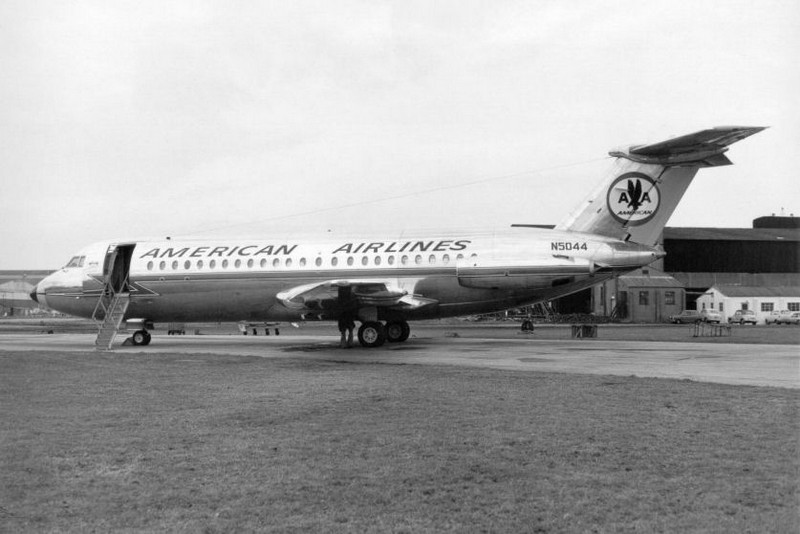
c/n 090. Delivered to American Airlines as N5044 in 1966. To Dan-Air as G-AXCK in 1969 then to Westinghouse Electric Corp as N164W in 1983 and used as a radar test aircraft, To Northrop Grumman Systems Corp in 1996. Still operational in 2018.
Registration details for this airframe:
www.planelogger.com/Aircraft/Registration/G-AXCK/834907
A report on N164W’s final mission including many photos:
photorecon.net/northrop-grummans-final-mission-in-the-bac...
This airframe as N5044 with American Airlines:
www.danairremembered.com/gallery/dan_axck4.jpg
G-AXCK with Dan-Air at PMI in February 1973 (earlier colours):
imgproc.airliners.net/photos/airliners/6/1/9/0487916.jpg

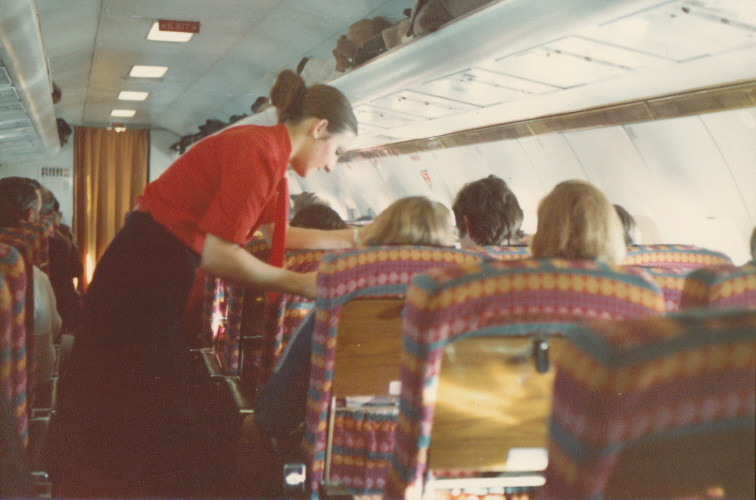
Interior of G-AXCK in 1976:
www.danairremembered.com/gallery/dan_axck_interior.jpg
G-AXCK with Dan-Air landing at Riem in February 1981 (later colours):
cdn.jetphotos.com/full/6/26893_1483109268.jpg

This airframe as N164W with Westinghouse at BWI in October 1985 (basic Dan-Air colours):
www.flickr.com/photos/23032926@N05/4968865269
N164W with Northrop Grumman at BWI in May 2011:
www.flickr.com/photos/42637873@N06/5793534954
N164W with Northrop Grumman at BWI in March 2013 (later colours):
www.flickr.com/photos/planes/8574179445
N164W fly-by prior to its final landing at BWI on 6 May 2019:
photorecon.net/wp-content/uploads/2019/05/1May6flyby1.jpg

Scan from Kodachrome slide.
Description: Shock waves stream from the exhaust nozzles of the two engines of NASA's SR-71B as it leaves the runway on a 1992 flight from the Ames-Dryden Flight Research Facility (later, Dryden Flight Research Center), Edwards, California. The twin-cockpit "B" model is one of three SR-71s initially loaned to NASA from the Air Force for use in a high-speed, high-altitude research program. Two SR-71 aircraft have been used by NASA as testbeds for high-speed and high-altitude aeronautical research. The aircraft, an SR-71A and an SR-71B pilot trainer aircraft, have been based here at NASA's Dryden Flight Research Center, Edwards, California. They were transferred to NASA after the U.S. Air Force program was cancelled. As research platforms, the aircraft can cruise at Mach 3 for more than one hour. For thermal experiments, this can produce heat soak temperatures of over 600 degrees Fahrenheit (F). This operating environment makes these aircraft excellent platforms to carry out research and experiments in a variety of areas -- aerodynamics, propulsion, structures, thermal protection materials, high-speed and high-temperature instrumentation, atmospheric studies, and sonic boom characterization. The SR-71 was used in a program to study ways of reducing sonic booms or over pressures that are heard on the ground, much like sharp thunderclaps, when an aircraft exceeds the speed of sound. Data from this Sonic Boom Mitigation Study could eventually lead to aircraft designs that would reduce the "peak" overpressures of sonic booms and minimize the startling affect they produce on the ground. One of the first major experiments to be flown in the NASA SR-71 program was a laser air data collection system. It used laser light instead of air pressure to produce airspeed and attitude reference data, such as angle of attack and sideslip, which are normally obtained with small tubes and vanes extending into the airstream. One of Dryden's SR-71s was used for the Linear Aerospike Rocket Engine, or LASRE Experiment. Another earlier project consisted of a series of flights using the SR-71 as a science camera platform for NASA's Jet Propulsion Laboratory in Pasadena, California. An upward-looking ultraviolet video camera placed in the SR-71's nosebay studied a variety of celestial objects in wavelengths that are blocked to ground-based astronomers. Earlier in its history, Dryden had a decade of past experience at sustained speeds above Mach 3. Two YF-12A aircraft and an SR-71 designated as a YF-12C were flown at the center between December 1969 and November 1979 in a joint NASA/USAF program to learn more about the capabilities and limitations of high-speed, high-altitude flight. The YF-12As were prototypes of a planned interceptor aircraft based on a design that later evolved into the SR-71 reconnaissance aircraft. Dave Lux was the NASA SR-71 project manger for much of the decade of the 1990s, followed by Steve Schmidt. Developed for the USAF as reconnaissance aircraft more than 30 years ago, SR-71s are still the world's fastest and highest-flying production aircraft. The aircraft can fly at speeds of more than 2,200 miles per hour (Mach 3+, or more than three times the speed of sound) and at altitudes of over 85,000 feet. The Lockheed Skunk Works (now Lockheed Martin) built the original SR-71 aircraft. Each aircraft is 107.4 feet long, has a wingspan of 55.6 feet, and is 18.5 feet high (from the ground to the top of the rudders, when parked). Gross takeoff weight is about 140,000 pounds, including a possible fuel weight of 80,280 pounds. The airframes are built almost entirely of titanium and titanium alloys to withstand heat generated by sustained Mach 3 flight. Aerodynamic control surfaces consist of all-moving vertical tail surfaces, ailerons on the outer wings, and elevators on the trailing edges between the engine exhaust nozzles. The two SR-71s at Dryden have been assigned the following NASA tail numbers: NASA 844 (A model), military serial 61-7980 and NASA 831 (B model), military serial 61-7956. From 1990 through 1994, Dryden also had another "A" model, NASA 832, military serial 61-7971. This aircraft was returned to the USAF inventory and was the first aircraft reactivated for USAF reconnaissance purposes in 1995. It has since returned to Dryden along with SR-71A 61-7967.
Credit: NASA
Image Number: EC92-1284-1
Date: 1992
And to celebrate the event, here displayed in
Washington DC's Air & Space Museum is one of NASA's Lifting Bodies - the Northrop M2-F2, NASA803, designed and built to test 're-entry' aero-dynamic designs during NASA's Space program.
The connection??
If you're old enough to remember the TV series 'The Six Million Dollar Man' - it's one of these that 'Steve Austin' crashed in during the intro sequence.
Taken from real footage you can see it here:
www.youtube.com/watch?v=HoLs0V8T5AA
These 'wingless' craft were hung below the wing of their 'Mother-ship', a NASA NB-52 and after being airlifted to a great height, released to test their flying characteristics as they made the 'brick-like' descent back down to Earth.
Their shape generated just enough lift to make a controlled landing on the giant desert complex at Edwards AFB, California.
Several different designs were constructed and tested over a period in the 1960's with much of the knowledge applied to the later Space Shuttle program.
In the sequence in the link, the pilot did survive but with life changing injuries
See the full story here
en.wikipedia.org/wiki/Northrop_M2-F2
and some better footage here
www.youtube.com/watch?v=50dDWT48b9M
Scanned Kodak 35mm Transparency
(Y701 LRB) 701 was delivered in June of 2001 wearing Nottingham transports champagne livery, which is now the colours of preserved example 704 (FE02 AKV) owned by Nottingham Heritage Vehicles.
701 was a testbed vehicle, the two more bendies joined the fleet later that year, and all were on the 58 (City Centre - Arnold Killisick Estate), 704 joined the fleet the following Spring.
In 2002 both 701 and the brand new 705 received the navy blue livery for route 48 (Clifton - Nottingham). This was a trial for potentially ordering more bendies, although this never came to light, therefore by 2003 all of the 4 original Solar Fusions and newly acquired 705 were reunited on the 58 once again..... for two more years.
By 2005 they were replaced on that particular route and would begin their career as unilink buses, being repainted and branded for the Unilink 4 (Clifton Campus via Trent Bridge and Wilford Green). With the popularity of the route growing the capacity needed to be increased. Therefore ex-demonstrator Scania Omnicity (YN54 ALO) was acquired in 2010 and repainted into the Unilink colours. A couple years later 3 tri-axle Omnilinks were acquired which had increased the frequency from every 15 minutes to every 7.
The end of the road came for them in June of 2014, being replaced by '55' plate Scania Omnidekkas in August 2014 ready for the next academic year That even meant that the 54 plate Scania OmniCity artic btw! 704 is now the only surviving mechanically complete example as all the others except 702 were cannibalized for parts by NCT and then scrapped. 702 was converted for use by a school in Chilwell as a library.
The 1947 London Transport information film Moving Millions contains various sequences at Chiswick Works.
On the right is Prewar RT57 (FXT232) fresh after a repaint.
On the left is a working testbed for the proposed 8ft wide RT, nominally type 4RT4 but never produced. Board approval had already been granted to purchase 8ft wide Leyland PD2/3s, the RTW class type 6RT6 which first arrived in London in 1949.
Crown Film Unit.
Neil F.
I hope everyone is keeping well and staying safe.
Still deep in the lockdown due to this Coronavirus, Easter 2020 had a very strange feel to it.
It is so ironic that its been such a gloriously sunny fortnight and unable to go out and enjoy it.
Plus point, the todo list is shrinking fast........
So something to help the bus enthusiast colleagues occupy the time for those who are furloughed at home.
A rather battered looking Leyland prototype Titan B15-01 is seen on trade plates 2188B undertaking its regular (weekly ??? Wednesdays ???) run which brought it to Bolton down the A666 Blackburn Road, around the ring road and back up the B6226 Chorley Old Road and is seen approaching Bobs Smithy on the way to Horwich.
Dull day, none too clever camera, a Praktica, so theory top of Chorley Old Road where speed will be down to a crawl. Not a chance ! So not the best of shots. But notice all the equipment on board.
From a slide dated September 1979
The original shot although some else claims to have the same shot ...... In actual fact I had a print taken from the slide and gave to said claimant ....
The setting sun peeks beneath a SR-71B Blackbird, silhouetted against the orange hues of the western sky on a 1995 flight from at NASA's Dryden Flight Research Center, Edwards, California. Two SR-71 aircraft have been used by NASA as testbeds for high-speed and high-altitude aeronautical research. The aircraft, an SR-71A and an SR-71B pilot trainer aircraft, have been based here at NASA's Dryden Flight Research Center, Edwards, California. They were transferred to NASA after the U.S. Air Force program was cancelled.
Credit: NASA
Image Number: EC95-43351-2
Date: November 1995
Brush testbed class 56 'Grid' no. 56201 (alias 56009) at Shackerstone on the Battlefield Line Railway, 21/03/2015.
Photo taken with the permission of railway staff who kindly gave me a tour of the station environs.
In 1955, Lockheed built the first of 17 YF-104A pre-production Starfighters. These aircraft were used extensively as test aircraft or assigned to special projects. The YF-104A was similar to the XF-104 but included an additional 5’-6” lengthened fuselage and an upgraded J79-GE-3A engine. New half-cone were added to each inlet and a narrow dorsal spine integrated into the taller tail fin. Later, the YF-104A was upgraded again and became the basis for the production F-104A.
In 1956, 12 of the YF-104As were assigned to the National Advisory Committee for Aeronautics (NACA, the predecessor of NASA) and performed high-speed and altitude flight research at Dryden Flight Research Center at Edwards AFB. The YF-104A set and broke many different performance records and was the first aircraft to simultaneously hold the world altitude record (91,246 ft.) and the world speed record (1,404 mph) in 1958. In addition to flight-testing, the YF-104A was also the testbed for advanced flight systems used on the X-15 and the Space Shuttle. NASA retired the YF-104 on 31 January 1994, ending 38 years of service after completing more than 18,000 test flights.
In this image, YF-104A 55-2961 flies high during a test flight over Edwards AFB. Renumbered with a civilian serial code, N818NA, it was one of the few YF-104As to survive the close to 40 years of flight testing or being converted to test drones and resides in the National Air and Space Museum (NASM) in Washington, DC.
On static display at RIAT 2022, RAF Fairford, complete with the nose radome belonging to a Eurofighter Typhoon.
Tupolev Tu.104 (c/n 5400?)
Tupolev Design Bureau (OKB-156)
Zürich-Kloten (ZRH/LSZH)
June 1957
The Tupolev Tu.104 was the first successful jet airliner, with its prototype, CCCP-L5400, first flying on 17 June 1955. Painted in full Aeroflot colours of that time, it made a surprise visit to Heathrow on a diplomatic mission in 1956, and was eventually displayed at the Salon du Bourget in June 1957.
Shortly after the Salon, the aircraft visited Zürich for the 1957 Zürich International Aviation Exhibition, and was captured parked within the show area on runway 16, attracting huge interest by the crowd.
Despite wearing Aeroflot colours, CCCP-L5400 was never part of Aeroflot's official fleet, but rather remained with the manufacturer as a testbed. Its further fate is widely unknown, but since prototypes were rarely preserved it may be safe to assume it has been broken-up, perhaps as early as the late fifties, when production Tu.104s entered service.
(from my collection - credit due to photographer)
Been a real Concorde theme this week with me, but I've been on a bit of a buzz and thus have been churning them out one by one, but I'm happy with the shading and perspective I got on this one. :)
The reason I love Concorde so much is the fact that it was, and still is, probably one of the most beautiful and sophisticated creations mankind has ever made, up there with the likes of the Saturn V Rocket. With smooth crisp lines and a long sweeping body, Concorde, although very much a plaything for the rich, showed the world that Supersonic travel is not just reserved for Fighter Pilots, but for the fare paying public as well, and took us to a place where I sadly feel we shan't return to, not in this day and age.
So where does Concorde's story begin? Well, our ability to break the Sound Barrier is a good start, with the early Spitfire pilots of World War II inadvertently doing so, and then a flight by the experimental Bell X-1, which was launched from the underbelly of a bomber and jetted off into a world very much of its own. Following these breakthroughs in speed, the first considerations for a passenger alternative were considered as far back as 1950, and in 1954 the first meeting of the Super Sonic Transport (SST) Committee was held.
Original intentions were to build passenger aircraft to similar principles as the X-1, but these were shelved due to impracticality. Instead, a new design known as the Delta-Wing was looked at, being used on the likes of the AVRO Vulcan. Ideas were created, and tests carried out on the similarly designed Handley Page HP.115, a purpose built aircraft for the intention of making the perfect testbed for the future SST. Eventually, the Delta design chosen was dubbed the Ogee Platform, derived from the Ogival Wing design. The most important intention of the design was to place the wing's centre of pressure as close as possible to the centre of gravity so as to lower the amount of control force required to pitch the aircraft, and the Ogee Platform came closest to this requirement.
Final design requirements came down to the design of the airframe itself outside of the wings. Essentially, the aircraft was similar in design to contemporary Delta-Wing fighter jets, with a long streamlined nose and a smooth body to reduce resistance as much as possible. Problems came with the actual operation of the aircraft's basic functions, most notably the cockpit, which had to be designed with streamlining in mind, but couldn't use conventional aircraft windows, with the strengthened window frame obscuring the view forward for takeoff and landing. In response, designers created a Drooping Nose, where the streamlined visor could be raised and lowered, with conventional aircraft windscreens behind to provide a view similar to that of a regular aircraft. Due to the length of the aircraft, the plane was fitted with a small wheel at the rear of the frame so as to absorb any potential tail-strikes during takeoff and landing.
During supersonic flight and transit through the Sound Barrier, fuel would be distributed between the forward fuel tanks and a small fuel tank in the rear whilst the aircraft was accelerating and decelerating so as to alter the centre of mass, essentially acting as an auxiliary trim control.
But one of the most endearing parts of the design was the point on the nose, which is not there for stylish flare, but for a very important reason. Without the point, aircraft attempting to transit the sound barrier would face much greater resistance as the airframe is much larger and more obtrusive, the point on the other hand breaks the sound barrier ahead of the actual aircraft itself, meaning the transit effect travels around the frame of the aircraft rather than against the hull.
Of course, the most difficult part when it came to getting the SST to go are the actual engines themselves. For the greatest efficiency, the new SST couldn't use conventional Turbofan engines as their cross-sectional area was too excessive. Instead, Rolls Royce was commissioned to build a set of Turbojet engines that could be slung in streamlined pods underneath the wings. The result was a quad set of Rolls Royce/Snecma Olympus 593 engines that had been developed from the Bristol engines used on the Vulcan bomber. In all, only 67 of these engines were ever built, and had an overall maximum thrust of 38,000lbf, pushing the SST to beyond the speed of sound.
By the mid-1960's the designs had been near enough perfected, and after signing up with Sud Aviation of France (later to become Aérospatiale), the combined efforts of British Aerospace and Aérospatiale resulted in the construction of two prototypes in 1965, these aircraft being dubbed 'Concorde', the French word for Harmony, Agreement, or Union. Concorde 001 was built in France at Aérospatiale's factory in Toulouse, whilst Concorde 002 was built at the BAC works in Filton near Bristol. The first flight of a Concorde aircraft took place on the 2nd March 1969, with Concorde 001 flying from Toulouse. On the 9th April, Concorde 002 made its first flight from Filton, and on October 1st, 001 made its first supersonic flight.
Both aircraft were presented at the Paris Airshow of June 1969, alongside one of their rivals, the Boeing 747. But Concorde was not the world's first supersonic commercial airliner, as the Soviet Union had beaten them to the punch in June of that year with the Tupolev Tu-144, an aircraft of almost exactly the same principles of Concorde that had been hastily put together between 1965 and 1968 after blueprints and designs had been obtained by Soviet Agent Sergei Fabiew. The Tu-144 made its first supersonic flight in June 1969, and made its first supersonic commercial flights with Aeroflot in May 1970.
However, the 'Concordski' (as it was known by the West), had many serious flaws, which came to bear in a series of horrendous crashes. The first major crash was at the 1973 Paris Air Show, where during a display flight, the first production Tu-144 aircraft broke apart over a suburb, killing 6 people on the aircraft and 8 on the ground. Another major incident took place in May 1978, when on a routine test flight an improved version of the aircraft known as the Tu-144D crashed on landing, resulting in the withdrawal of the 144's from commercial service after only 55 flights. They would remain cargo aircraft until 1983, after which they were used for the training of Soviet Cosmonauts for the Buran Space Shuttle project.
Concordski however did have a profound effect on Concorde, especially after its crash of 1973. Confidence in the Concorde was rumbled by the failure of the Tu-144, and thus many potential buyers pulled out. Originally, airlines such as American Airlines, Pan Am, Japan Airlines, Eastern Airlines, United Airlines, and Air Canada had all put in orders, but by 1975 only Air France and BOAC (later nationalised into British Airways) orders remained. At the same time, Boeing and Lockheed of the United States attempted to create their own SST's so as to combat Concorde, with Boeing creating the 2707, and Lockheed the L-2000, neither of which went beyond concept models.
Eventually, 14 production Concorde aircraft were handed over to their respective airlines between 1976 and 1980, with the first aircraft being delivered to British Airways on the 15th January, the first flight taking place to Bahrain on the 21st January. Simultaneously, Air France made its first flight to Rio de Janeiro via Dakar in Senegal. However, the Transatlantic routes to the United States were the main points of contention, as the fear of Sonic Booms caused protest, resulting in a ban being passed by Congress. Although permission was given to fly to Washington Dulles on the 24th May, the New York Port Authority continued to ban Concorde due to the noise. The result was a risky training program by Concorde pilots to land at JFK Airport without using any power at all, meaning that from the start of their descent over the New York area, no power could be applied so as to keep the noise levels to a minimum, doing the whole approach in one. Eventually the ban was lifted after it was found that Air Force One, a Boeing VC-137 (converted Boeing 707), was louder than Concorde, and thus commercial services to JFK began on November 22nd, 1977.
In addition to the British Airways and Air France flights to New York and Washington from Paris and London, a slew of other short lived ventures occurred at the same time. In 1977, British Airways jointly shared a Concorde for flights to Singapore via Bahrain with Singapore Airlines, painting G-BOAD in a BA/SA hybrid livery. These flights however were capped after only 3 runs due to noise complaints.
Another short lived venture was with the American airline Braniff, which leased 10 aircraft from both airlines to operate subsonic domestic services from Washington to Dallas-Fort Worth from 1978, with Braniff crews taking over from international crews after landing at Washington. These services ended in 1980 due to a lack of profitability, with only 50% bookings or less on most flights.
Over the years, Concorde also flew to a myriad of destinations off its usual Transatlantic services, including Mexico, Florida, the Caribbean, South America, Hong Kong, Australia and New Zealand, mostly on charter flights but sometimes for short demonstration flights for fun seekers. Usually, Air France would provide the charter aircraft as their Concorde fleet was used less than the BA fleet, only operating two flights a day as opposed to BA's four.
The 1980's though were the boom years of Concorde, as this was when the money makers really spread their wings. In the immortal words of Jeremy Clarkson "For the have not's, it wasn't much fun, but the have's were having a ball!" Wealth moved from the stars of stage and screen to the stock marketing men and women of Europe and America. Investments on oil shares, and other large multinational companies meant you and your house was worth more than most countries. Greed was endemic, and the super-rich had no shortage of that. They'd have Champagne for breakfast, eat nightly at the Ritz, have a fleet of chauffeur driven Rolls Royce's at their beck and call, and would make weekend trips across the Atlantic with Concorde like it was a commuter train!
It was thanks to Concorde that Phil Collins could perform two shows for the 1985 Live Aid in one night, the first at Wembley in London, the second at Philadelphia JFK stadium, picking up Cher along the way who would join him in the finale 'We are the World.' You could arrive before you departed, and probably bump into a selection of celebrities en-route. Ex-Beatles, Actors, Businessmen, Fashion Designers, you name it, they were probably there!
These years were wild, profitable, and turned Concorde from an airliner, into a rite of passage for the money makers of this world. If you could fly on Concorde, then you'd truly made it in life!
However, as the 90's began to blossom and boom, the end of the decade brought its headaches for Concorde, and when things went wrong, they really went wrong quickly!
The recession of 1992 damaged Concorde's sales as money became much harder to come by, and the explosive era of greed began to fade away in the face of austerity. Environmental considerations began to crop up, and Concorde was singled out by environmentalists as one of the biggest culprits for noise and air pollution.
But on July 25th, 2000, disaster struck when Air France Concorde F-BTSC, crashed upon take-off from Paris Charles de Gaulle, smashing into a nearby hotel and killing all 109 passengers, plus 4 people on the ground. The cause was later determined to have been debris left by a preceding Continental Airlines DC-10, which punctured the tyres of Concorde and ruptured the fuel tanks on the port-side wing. However, the crash resulted in the grounding of all Concorde aircraft for over a year. Although test flights were carried out, and some private charters, revenue earning service was intended to return in the summer of 2001.
G-BOAF made the first service flight of a Concorde aircraft across the Atlantic from London to New York on September 11th, 2001, landing at JFK airport 30 minutes before American Airlines Flight 11, hijacked by terrorists, was flown deliberately into the North Tower of the World Trade Center in Lower Manhattan, in what would turn out to be one of the darkest days in modern history. In the ensuing chaos, flights across America were grounded immediately, and Transatlantic services diverted, but this was just the beginning. Global markets collapsed and the aviation industry went into meltdown. Airlines such as TWA, Swissair, Sabena and Ansett Australia were just a few of the victims of this aviation downturn, and Concorde's return to service was delayed until November 7th, 2001.
Concorde may have stuttered back into life, but time had really caught up with this supersonic machine of the past. The maintenance costs of the aircraft were now much higher, with fuel prices rising and passenger levels dropping due to stagnation in the post-9/11 market. British Airways was making a loss on every single flight they made, and both this, with a mixture of discontinued support from Aérospatiale's successors, Airbus, meant that Concorde's fate was very much sealed.
On the 10th April, 2003, Air France and British Airways simultaneously announced the retirement of Concorde. Although the day after Virgin Atlantic and its founder Sir Richard Branson intended to purchase British Airways' Concorde fleet for a nominal fee of £1 each, citing a clause in the original agreement to operate the aircraft, the Government and British Airways denied allowing him to buy the aircraft for such a small price, demanding at least £1 million for every aircraft. This was further hampered by Airbus' refusal to continue maintenance support.
The end slowly came throughout 2003, with Air France's last Concorde flight taking place on 27th June, whilst British Airways conducted a series of farewell tours to a selection of destinations, including Toronto, Boston, Washington, Belfast, Manchester, Cardiff and Edinburgh. Concorde was officially retired from British Airways service on the 24th October, 2003, but continued to operate a small number of farewell charters until November 26th, when G-BOAF, the last Concorde to be built in 1979, flew to its home base of Filton, ending the supersonic age of passenger air travel.
In all, every one of these £125 million aircraft still exist apart from two. Aircraft 203, F-BTSC, was lost in the type's only ever fatal crash in 2000, whilst Aircraft 211, F-BVFD, was withdrawn in 1982 after only 5 years of service and used as a spares donor, being cut up for scrap in 1994. The 6 prototype and 12 remaining production aircraft are now scattered across the world in museums, including Barbados, Seattle, New York, Brooklands near London, Manchester, Le Bourget, Toulouse and Chantilly in Virginia.
So, what killed Concorde and can we ever go there again? Many things killed Concorde, and when they came, they came fast. The economic downturn of the 90's and the rising environmental considerations started to damage its image, but the Paris Crash, the September 11th attacks and the ensuing stagnation of the aviation market, an outdated design becoming more and more expensive to maintain, the discontinuation of maintenance by Airbus and the fact that they were making a loss on every single flight is truly what ended Concorde's reign.
As for returning to the world of supersonic travel for the fare paying customer, in this world of austerity and environmentally bound agendas, I highly doubt it. Although Boeing considered the idea with the Sonic Cruiser, the amount of fuel required to operate these aircraft and the overall lack of interest or money to fund a project solely aimed at the 1%, means that chances are we won't see the likes of Concorde ever again.
But either way, we can be glad to say that we did it, we built Concorde, we flew it, operated it for 27 glorious years, and in doing so brought nations and continents closer together. Concorde truly lived up to its name, an everlasting symbol of peace, prosperity, speed, design and human endeavour.
Photo taken by Herwart Schneider and kindly provided by him for inclusion on this page.
München-Riem
ca. March 1976
G-AYXR
Boeing 707-321(F)
17608/122
Syrian Arab Airlines (leased from British Midland)
G-AYXR was leased to Syrian Air only for a short time in early 1976. The aircraft had visited Riem before with Donaldson International on 1 October 1972 and would return with Dan-Air London on 1 May 1977.
Information from flickr - thanks to Paul:
New to Pan Am as N730PA in 1960. Converted to a freighter in 1970 and to Donaldson International Airways as G-AYXR in 1971. To British Midland Airways in 1975 and leased to a number of airlines. To International Air Leases as N37681 in 1980. To General Electric in 1983 and used as an engine testbed. Reregistered as N707GE in 1990. Scrapped at Mojave in 2003.
Registration details for this airframe:
www.planelogger.com/Aircraft/Registration/G-AYXR/489311
This airframe as N730PA with Pan American at LHR in August 1961:
abpic.co.uk/pictures/view/1037666
G-AYXR with Donaldson International at YYZ in July 1971:
www.flickr.com/photos/158362432@N07/50391050258
G-AYXR with Tunis Air at FRA in June 1976:
www.flickr.com/photos/skypicsintl/16225807938
G-AYXR with Kenya Airways at LHR in February 1977 (Tunis Air cheatline):
www.flickr.com/photos/pslg05896/22818814488
G-AYXR with Kuwait Airways at EMA in ca. 1976:
www.flickr.com/photos/154191970@N03/35532356325
G-AYXR with BMA at LGW in September 1976 (no titles):
www.flickr.com/photos/pslg05896/30695255760
G-AYXR with Kenya Airways at FRA in July 1977 (Tunis Air cheatline, red tail):
abpic.co.uk/pictures/view/1268587
G-AYXR with Pakistan International at EMA in April 1980:
abpic.co.uk/pictures/view/1282566
This airframe as N37681 with International Air Leases/Batch Air, used as an engine testbed by General Electric, at MHV in October 1984:
www.flickr.com/photos/pslg05896/30490227284
This airframe as N707GE with General Electric at MHV in October 1992:
www.flickr.com/photos/markp51/35448079624
N707GE with a CFM engine in the #2 position:
www.flickr.com/photos/n747ge/6361483173
N707GE stored derelict at MHV in September 2003:
imgproc.airliners.net/photos/airliners/6/2/2/0458226.jpg

Scan from Kodachrome slide.
EAA Airventure, Oshkosh, WI July 22, 2015.
Copyright
All my photographic and video images are copyrighted. All rights are reserved. Please do not use, copy or edit any of my photographs without my written permission. If you want to use my photo for commercial or private use, please contact me. Please do not re-upload my photos at any location on the internet without my written consent.
Former MAS A380-841 2-JAYN ex 9M-MNF & EI-HKF was ferried from Tarbes to Shannon today to be painted by IAC in Airbus colours to be used as n engine testbed.
EAA Airventure, Oshkosh, WI July 22, 2015.
Copyright
All my photographic and video images are copyrighted. All rights are reserved. Please do not use, copy or edit any of my photographs without my written permission. If you want to use my photo for commercial or private use, please contact me. Please do not re-upload my photos at any location on the internet without my written consent.
Diana Trujillo, mission lead and Deputy Team Chief of the Engineering division of Curiosity (Mars Science Laboratory), NASA's next generation Mars rover. She is responsible for ensuring that Curiosity's day-to-day plan meets its science objectives while maintaining the rover's health and safety. In this mission, she has also served as Surface Sampling System Activity Lead, Dust Removal Tool Lead Systems Engineer, Flight Ground Systems Engineer, and Vehicle System Testbed Mars Surface Lead.
Credit: NASA
Image Number:
Date: September 30, 2016
Nikkormat FTn w/Vivitar 28mm f 2.8 Prime
Disney World
Walt Disney World Resort (commonly known as Walt Disney World or Disney World) is an entertainment and vacation resort complex located about 20 miles (32 km) southwest of Orlando, Florida, United States. Opened on October 1, 1971, the resort is operated by Disney Experiences, a division of the Walt Disney Company.
Covering an approximate 27,000 acres (42 sq mi; 109 km2), Walt Disney World contains numerous recreational facilities designed to attract visitors for extended stays, including four theme parks, two water parks, four golf courses, conference centers, a competitive sports complex and a major shopping, dining and entertainment complex. Additionally, there are 31 Disney-owned resort hotels and one camping resort on the property, and many other non-Disney-operated hotels on and near the property.
Designed to supplement Disneyland in Anaheim, California, which had opened in 1955, the complex was planned and conceptualized by Walt Disney in the 1960s. Walt's vision for the complex was to build a new, self-contained destination resort on ample land, as he felt Disneyland had become limited by the third-party establishments that had sprung up around it. "The Florida Project", as it was then known, was intended to present a distinct vision with its own diverse set of attractions. Walt's original plans called for the inclusion of an "Experimental Prototype Community of Tomorrow" (EPCOT), a planned community intended to serve as a testbed for new city-living innovations. Walt's original vision would not progress past conceptualization, as he died on December 15, 1966, during the initial planning of the complex before construction had begun. After his death, the company wrestled with the idea of whether to bring the Disney World project to fruition; however, Walt's older brother, Roy O. Disney, came out of retirement to ensure the project was realized.
Construction began in 1967, with the company abandoning the planned community concept, instead choosing to build a theme park resort similar to Disneyland. Magic Kingdom was the first theme park to open in the complex in 1971, followed by EPCOT (then known as EPCOT Center) in 1982, Disney's Hollywood Studios (then known as the Disney-MGM Studios Theme Park) in 1989, and Disney's Animal Kingdom in 1998. Initially known as Disney World, the name of the entire resort was named Walt Disney World at Roy's insistence, to memorialize his brother.
In 2024, Walt Disney World was the most visited vacation resort in the world, with an average annual attendance of more than 49 million, while Magic Kingdom has been the most visited theme park in the world for at least the past 24 years. The opening of Walt Disney World helped turn Central Florida into a major global tourism destination and the resort has contributed singificantly to Florida's economy, generating billions in economic activity and supporting a large number of jobs across the state. The resort is the largest single-site employer in the United States, the flagship destination of Disney's worldwide corporate enterprise and has become a staple of American popular culture.
In 1972 Volvo Presented its rolling safety laboratory, the VESC. It was meant to work as both an experimental vehicle and as a testbed for future safety features, such as anti-lock brakes, airbags and telescopic action bumpers. The front end of the car remained almost unchanged into the 240/260 models of 1974. Technical features based on the 140 series.
Volvo Museum
Arendals Skans
405 08 Göteborg
Sweden
July 2012
Honeywell Test Bed, N757HW at Dublin Airport, 24th August 2018 operating a High Speed Wifi connectivity demonstration flight to and from Brno in Czech Republic.
Boeing 737-683
cn: 28297 / ln: 30
ff: 02-03-1998 N1786B
02-03-1998 N35135 rr Boeing testbed for C of A for the B737-600 series
21-01-1999 SE-DNS SAS "Signe Viking" config CY112
28-07-2001 LN-RRY rr SAS "Signe Viking"
02-2005 Painted in SAS Braathens colours as the first 736, and opf SAS Braathens from 01-04-2005 (allthough AoC change to CNO was officially made 20-04-2006 for LN-RRY ).
01-07-2007 LN-RRY SAS Norge tfd, "Signe Viking", op in SAS Braathens colours,
SAS Norge colour update was not before 12-2008 (!)
01-10-2009 Scandinavian Airlines - SAS tfd, "Signe Viking" config CY120
Again: LN-RRY did not get updated to std SAS colours before 2013 (!)
07-08-2019 wfu and std ENGM/OSL, after 20,5 years in SAS service
27-08-2019 Departed ENGM/OSL at 13:20 pm as SK9121 to St. Athan EGDX/DGX and broken up there in November 2019
Seen parked at gate 15 at the domestic pier at ENGM/OSL, this tuesday in 2005.
N710CF - G-1159A Gulfstream III - Calspan Aerospace Corp.
at Hamilton International Airport (YHM)
with add. sticker "Calspan Airborne Testbed" and some visible modifications
c/n 448 - built in 1984 - operated by Calspan since 2011
Not many Gulfstream's with the original RR Spey-engines still active.
Calspan is an independent provider of testing and technology development services, solutions, and systems in the aerospace, defense, and automotive industries based at Buffalo, NY/ Niagara Falls Intl Airport (KIAG)
Two pigeons fly away as they hear the Mirrlees thrash from Europhoenix 37901 Mirrlees Pioneer working 5Q42 1330 Yarmouth C.H.S. to Crewe South Yard through Trowse Junction, conveying a rake of six Eastern Rail Services Mark 3 coaches to be used for testing the new Rail Operations Group Class 93s. 5Q42 had left Great Yarmouth carriage sidings 27 minutes late, and was therefore routed via Reedham instead of the booked Acle route, but was only five minutes behind schedule at this point thanks to some pathing time on the Wensum Curve.
In 1986 four Class 37s were modified with Mirrlees MB275Tt engines as a testbed for a new Class 38 locomotive project; two further locos were fitted with Ruston RK270Tt engines in 1987; all six featured additional ballast weights to aide adhesion The Class 38 project didn't come to fruition but three of the Class 37/9s survive. The modified roof of the Class 37/9 can clearly be seen from this angle.
KPHX (Phoenix Sky Harbor International Airport) - 30 DEC 2006
"Cactus 432" departing RWY 8 en route to Kahului Airport (OGG/PHOG) - Maui, Hawaii. This aircraft formerly wore the "Ohio" livery with America West Airlines before being painted in the US Airways livery in OCT 2006.
In the background is the Honeywell 707 testbed aircraft.
Production Site: Renton (RNT)
First Flight: 02 MAY 1986
Delivery to Republic Airlines: 19 MAY 1986 as N605RC
Hex Code: A7DB4C
Fleet Number: 605
Configuration: C14Y179
Engines: 2x Rolls-Royce RB211-535E4
To Northwest Airlines: 01 OCT 1986 as N605RC
Hex Code: A7DB4C
Fleet Number: 5605
Configuration: C14Y179
Engines: 2x Rolls-Royce RB211-535E4
To America West Airlines: 11 MAY 1987 as N605RC
Hex Code: A7DB4C
Fleet Number: 905
Configuration: C14Y176
Engines: 2x Rolls-Royce RB211-535E4
Re-registered to America West Airlines: 21 AUG 1987 as N905AW
Hex Code: AC81D4
Fleet Number: 905
Configuration: C14Y176
Painted in "Ohio" special livery in OCT 1995
Aircraft named "City of Columbus" in OCT 1995
To US Airways: 27 SEP 2005 as N905AW
Hex Code: AC81D4
Fleet Number: 905
Configuration: C14Y176
Repainted in US Airways livery in OCT 2006
*** Update ***
To American Airlines: 09 DEC 2013 as N905AW
Leased from Castlelake
Hex Code: AC81D4
Fleet Number: 905
Configuration: C14Y176
Engines: 2x Rolls-Royce RB211-535E4
Withdrawn from use on 19 NOV 2015
Stored at Goodyear (GYR) 23 NOV - 10 DEC 2015
Stored at San Bernardino (SBD) 10 DEC 2015 - APR 2023
Broken up in APR 2023 at SBD
03/03/19 Blackbird Air Park.
61-7973 Constructed as a SR-71A.
22 December 1964 First flight Flown from Lockheed Plant 42.
Circa 1964 Taken on Strength/Charge with the United States Air Force with s/n 61-7973.
Transferred to Edwards AFB, CA. Extensive flight testing.
January 1966 Transferred to Strategic Air Command (SAC), Beale AFB, CA.
Transferred to Kadena AB, Japan.
Transferred to RAF Mildenhall, England.
21 July 1987 Damaged during a demonstration flight at RAF Mildenhall.
21 July 1987 Last flight.
Flown from Mildenhall to Plant 42 at Palmdale, CA. Landed with a total of 1,729.9 total flying hours.
6 March 1990 Set a transcontinental coast to coast record, flying 2,404 statue miles in 68 minutes and 17 seconds.
Restored. The work was carried out by the Lockheed Advanced Development Company.
To National Museum of the United States Air Force Loan Program, Wright Field, Dayton, OH.
Circa 2003 Placed on display with Blackbird Airpark, Palmdale, CA.
60-6924 Constructed as an A-12. Two J75 engines originally installed.
Circa 1960 Taken on Strength/Charge with the United States Air Force with s/n 60-6924.
27 February 1962
Transported by ground.
Trucked to the test site. This airframe had been designated the primary testbed for airworthiness and handling qualities, envelope expansion, airframe/powerplant integration, subsystems and propulsion.
25 April 1962 First flight.
During a high-speed taxi run, Lockheed test pilot Louis W. Schalk took it airborne for the first time, flying for about a mile and a half at an altitude of around 20 feet.
26 April 1962 First flight.
Lockheeds first planned flight took place on this day.
30 April 1962 First flight.
Shalk flew again for the customers official first flight, attaining a top speed of 340 knots and a peak altitude of 30,000 feet.
4 May 1962
Flew supersonic for the first time, Mach 1.1 at 40,000 feet.
5 October 1962
Made its first flight with one J58 and one J75 engine.
9 March 1963
First flight with two J58 engines.
January 1964
Lockheed test pilot James Eastham took Article 121 to Mach 3.3 with 15 minutes cruise time above Mach 3.2.
Completed 322 flights for a total of 418.2 hours.
6 June 1968
On behalf of the owner stored with/at Lockheed Plant 42, Palmdale, CA.
To National Museum of the United States Air Force Loan Program, Wright Field, Dayton, OH.
Loaned to 95 ABW/MU, Edwards AFB, CA.
September 1991
Loaned to Blackbird Airpark, Palmdale, CA.
17 February 2000
Transferred to the Military Aircraft Storage and Disposal Center (MASDC) with inventory number AF0001.
The proposed new gearing arrangement for the terrier, to increase the speed. I had a regular 20-tooth gear to hand, but the bevel variety will be used for actual rebuild.
Tests proved positive. This is roughly equivalent to the Circuit Cube motor powering a loco with Large wheels. The speed increase at full power was sufficient, or alternatively a moderate speed can be achieved without the motor running full pelt, which will save on battery.
Originally used as a testbed for various features of the Type 78 rifle, which would then be followed by the Type 81 rifle, the Type 76 is a radical departure from Chinese rifles of the day, and a signal of change. Back in the late 70s, the Chinese Army was rapidly learning from the Sino-Soviet border clash in the 1969, and one of the most important lessons: Most notably, the lack of training in the Chinese Army, and the inadequacy of their standard-issue weaponry. A series of efforts were done to reform and modernize the Chinese Army and its equipment, and one of the results were the Type 81 rifle. But before we get there, we need to know about its history. It all started with this rifle, the Type 76. Aiming to combine the accuracy of the Type 63 rifle and the fire rate, light weight and controllability of the Type 56 rifle, the designers were indeed right on mark. Featuring an impressive accuracy courtesy of the long sight radius, a smooth-recoiling and controllable action thanks to the short-stroke piston and rotating-bolt action and much lighter weight thanks to the better metallurgy, this is a wonderful rifle. It also features a folding stock and a muzzle brake that's surprisingly good at reducing recoil.
First thing you notice is that it's a strange mix of old and new features. First off, it has an AK-like fire selector, but it's smaller and can be engaged with your trigger finger. Also, the fire selector doubles as a bolt hold-open device, kinda like the Krebs Customs AK fire selector. It has an upper receiver with an open top and a stripper clip guide, but you can't load it with clips. It has very good sights, with an elevation-adjustable diopter on the rear and standard AK-like bead on the front. It has a very long sight radius, which definitely contributes to the accuracy. It has polymer furniture on the stock and pistol grip, but wooden furniture on the handguard. All in all, this is a very impressive rifle, and it feeds from standard AK mags - Although they do come with a special 20-round magazine that can engage with the bolt hold-open device. A wide variety of these rifles were produced, which we don't have access here, and in unknown numbers - The earliest known serial number is 45 and the highest known serial number is 346, so it's probably about 500.
-----------------------
I wanted to write an entire Forgotten Weapons video script on the rifle, but I couldn't because I'm sleepy AND tired. I am NOT done with this rifle, I still have a lot to do, and this is just a sneak-peek of sorts. I hope you like this, there's more coming and I spent way too much time on this thing and now I gotta sleep away and byebyessnoooreee-
Credits to Alice for helping me greatly with the build.
------------------
Type 76-1, same thing but without the bayonet, heat shield and carry handle, with a 20-rounder magazine, safety engaged: i.imgur.com/cG4tBtg.png

The Central Line's Woodford - Hainault shuttle was operated as a testbed for ATO (Automatic Train Operation) between 1964 and 1986. Most trains were formed of 1960 stock driving motor cars, which ran with pre-1938 stock trailers (later replaced by 1938 stock trailers). To supplement these trains, one unit of 1967 stock from the Victoria Line would be sent to Hainault depot from Northumberland Park depot - a long-winded transfer via the Piccadilly Line and Ruislip depot's connection to the Central Line.
One unit of 1967 stock, running as a four-car unit, worked the Woodford - Hainault shuttle until 1984, when all 1967 stock units were confined to the Victoria Line.
This slide shows a four-car train of 1967 stock reversing in 21 road at Woodford, prior to working back to Hainault, via Roding Valley. Central Line services today terminate at Woodford from the Hainault loop, and reverse in this siding. Through services from the Ealing Broadway or West Ruislip to Epping continue to operate through Woodford as before.
June, 1976.
Agfa CT18 slide.
D.Henderson collection.
Maerskerade or Con? From the Boeing Collection
From a collection of some 500 Boeing slides that I've had scanned from my archives. I hope they will provide some enjoyment and nostalgia from a bygone age :)
OY-APZ Boeing 720-051B flying for Conair of Scandinavia is seen taxiing out for take off on an overcast Sunday evening at Stansted airport. Originally delivered to Northwest Airlines in 1961, this short bodied Boeing 720B was one of ten that charter airline Conair used into the 1980s, before the airline was swallowed up by Scanair in 1994. There used to be a mini invasion of Scandinavian aircraft on Sundays at Stansted in those days, and this was probably the tail end.
The remarkable history of this aircraft OY-APZ c/n 18384 - originally delivered to TWA as N794TW in Sep 1961, the aircraft was leased to Northwest Orient as N733US between 1962 and 1968, and was bought by the airline in Jul 1968. It was sold to Maersk Air in Nov 1972 and registered OY-APZ. Whilst with Maersk, the airline was wet-leased to Nigeria Airways over the Christmas / New Year period in Dec 1974 - Jan 1975, and was similarly leased to Trans European Airways (TEA) as OO-TYA in Nov 1979 - Jan 1980.
In Feb 1981, the aircraft was sold again, this time to Conair of Scandinavia who operated it until Nov 1987 when it returned back to the USA as N720GT, operating with AirXport and then Allied Signal Inc. for use as an engine testbed. It was used for testing the Allied Signal AS900 engine which was attached to the right side of the forward fuselage. It was re-registered N720H in Feb 2000 and Allied Signal were merged into Honeywell International Inc in Dec 2000. The aircraft continued in service as an electronics testbed with Honeywell until it was retired at Phoenix, AZ, USA, in Jan 2008 after flying for an astonishing 47 years. It was broken up that same year at Phoenix, Arizona.
The Boeing 720 was developed as a short to medium range version of the Boeing 707, designed to operate from shorter runways. The aircraft first flew in November 1959 and entered service with launch customer United Airlines in July 1960.
Only 154 of the short bodied Boeing 720s were built between 1959 and 1967 - 65 of the original version with Pratt & Whitney JT3C turbojet engines and 89 720Bs fitted with Pratt & Whitney JT3D turbofans.
The Boeing 720 was supplanted by the Boeing 727 in the mid-1960s in its medium-range, high-performance market.
For more info see here: en.wikipedia.org/wiki/Boeing_720
Taken with a Soviet made Zenith TTL camera and 300mm lens. From an original slide, scanned and unrestored.
You can see a random selection of my aviation photos here: flickriver.com/photos/heathrowjunkie/random/
Honeywell testbed 757 stayed overnight in Ottawa. Here she is departing for Birmingham, UK at 7:00am in beautiful sunrise light.
N816NA, a General Dynamics F-16A Fighting Falcon owned by the National Aeronautics and Space Administration (NASA), currently on display outside the famous Lockheed Martin "Skunk Works" Division HQ at Palmdale Regional Airport, which is also known as US Air Force Plant 42. N816NA, painted in an all white colour scheme, is the only F-16 in civilian operation anywhere in the world. Its was one of a pair of F-16s used as testbeds by NASA, along with a pair of F-16XLs, for Advanced Fighter Technology Integration (AFTI) testing. The tests were conducted by crews at the NASA Dryden Flight Research Center based at the nearby Edwards Air Force Base
So, at least according to WNXX, the deal is done and Cappagh/DCR are now the proud owners of another 14 class 60's, bringing their total fleet up to 19.
Operationally, they are currently using 60028, 60029, 60046 and 60055, all of which have had the 'Super Tug' treatment. Also owned is 60060, this is currently at Leicester TMD awaiting developments.
The 14 that have been sold by from Toton are 60008, 60009, 60013, 60022, 60038, 60057, 60061, 60064, 60070, 60075, 60080, 60090, 60098 and 60099.
I think it is probably a given that this development is not going to result in all 14 locos returning to service and may actually lead to some more of the class meeting a fiery end with the gas axe. Most of you reading this will be aware that there's not very much left of the internals of 60070 and 60098, shoot me down in flames if I'm wrong but I think that they'll perhaps get ten runners out of that lot eventually, with the remaining four providing spares that will vary in size from nuts and bolts to engine blocks and bogies.
Less clear is the condition to which the locos will be rebuilt, 60009 was probably unlucky to miss out on being a DB refurb, 60099 was the testbed for the engine modifications used on the refurbs, but word is that whatever locos are returned to service will be of standard specification, rather than Super Tug spec. 60008 has apparently been tucked away in Toton for some while being worked on and has recently been joined by 60038.
Much as the class 60's were disliked in the early 1990's because they were replacing classics, 20's, 37's, 47's, I think most of us will be happy to see more of the class return, it should be remembered that the dark days of 2009 saw the class reduced to just three working examples. If DC was to end up with 15 locos, the nominal strength of the fleet could reach 48, (DB's 21 refurbs plus 60011 and 60065, both of which just refuse to die, GBRf's ten working from Tuebrook and Tyne and DC's 15).
Let the Tugfest commence...
60013, one of the recently sold locos, is seen at Arpley Junction on 28 October 2010 leading 6F84 Fiddlers Ferry-Walton Old Junction empties. One of the last running in grey livery, the loco was removed from traffic in May 2011 after an engine failure near York whilst working on the Jarrow oil circuit.