View allAll Photos Tagged Sphericality
A first attempt with my new toy... :-)
A spherical photograph of an installation of artist Marc Hautman. Taken in "Landvermessung - Schnittpunkte finden" an exibition of Wolfgang Greiner and Marc Hautmann. Caponniere 4, Neu-Ulm, 20.5.2016 - 5.6.2016.
Postprocession realized with GIMP (minor modification of colour curve) and Hugin (horizontal panorama shift).
Unfortunately flickr's panoramic projection is much worse than e.g. that with the Ricoh viewer... Therefore also look at the full equirectangular picture.
Update:
Try THIS! Much better/sharper than the flickr VR viewer! Although the projection is the same.
Another UPDATE: Temporarily in Explore:
.../guenther_haas/27435718341/in/explore-2016-06-06/
1186 (2016-06-07 04:01:21) 25/4/0/0
1186 (2016-06-07 10:01:23) 59/5/0/0
1333 (2016-06-07 11:01:22) 62/5/0/0
1333 (2016-06-07 14:01:24) 87/6/0/0
1285 (2016-06-07 15:01:25) 140/11/0/0
1360 (2016-06-07 16:01:25) 176/12/0/0
1360 (2016-06-07 17:01:26) 202/15/0/0
1350 (2016-06-07 18:01:23) 230/15/0/0
1345 (2016-06-07 19:01:26) 247/17/0/0
1345 (2016-06-07 20:01:25) 269/18/0/0
1389 (2016-06-07 21:01:27) 283/18/0/0
1375 (2016-06-07 22:01:24) 295/18/0/0
1368 (2016-06-07 23:01:24) 306/18/0/0
1368 (2016-06-08 00:01:21) 309/18/0/0
1503 (2016-06-08 01:01:22) 320/18/0/0
1503 (2016-06-08 03:01:24) 333/19/0/0
All Paris All Night All Mine, Atop Arc de Triomphe (Spherical Panorama) - IMRAN™
This was one of the most challenging full 360x360 spherical panorama photos I have managed to take. Paris late spring is a magical time. The Arc de Triomphe, a historical landmark itself, is also the ideal spot to take in every sight of Paris, France, under the midnight blue night sky and the golden lit avenues and boulevards converging into its base. I literally had to take dozens of photos, from many different parts and parapets of the structure, to get the full 360° view. These particular shots were from my Samsung Note8, which I do not use enough because I hate Android, but the camera on it is still great for night pics. The stitching software and Photoshop had to fill in estimated shapes and colors of the parts where the only way to take the scene vertical down would have meant either getting arrested or falling to the street. But what a feeling to be among the last people at the rooftop late at night, and capture the Eiffel Tower and its blue beam, Montparnasse, Montmartre, Champs-Elysées, Roue de Paris (Ferris wheel), and much more. All of Paris. All of the night. All mine. And here for you to soak in, no matter where you are and what you are doing.
© 2018-2020 IMRAN™
Dedicated to Tony, who so kindly encourages my work.
Viburnum opulus - Snowball
My garden
Photo : my own
Texture by Kerstin Frank. Thank you
www.flickr.com/photos/kerstinfrank-design/7800692126/in/a...
Kerstin Frank photostream :
In the north of ‘s-Hertogenbosch (The Netherlands) in the Maaspoort district, you will find fifty sphere houses with their striking architecture. The spherical house was designed by the sculptor, designer and architect Dries Kreijkamp born in 1937 in Tegelen. After following various courses and gaining work experience, architect Dries Kreijkamp has found his passion, the sphere, the most organic and natural form.
After the foundation of private company Bolbouw, the houses were realized in 1984 with the aid of a subsidy for experimental living. With the aim of connecting the residents with nature, partly due to the various round windows that are present in the houses. The houses are also environmentally friendly, because of the spherical shape the wind has almost no control over them and they are also designed in such a way that they are energy efficient and cheap.
The white sphere has a diameter of five and a half meters and consists of cement reinforced with glass fiber. The sphere is, as it were, part of a kind of stilt house. It rests on a precast concrete cylinder with a diameter of three meters. The houses are divided as follows: the living room is located at the top of the sphere, toilet and bathroom in the middle and at the bottom are the bedrooms and a storage room made of polyester.
The sphere dwellings are designed for 1 to 2 people. The diameter of the sphere is 5.5 meters. The round base has a diameter of 3 meters. Here is the entrance and storage room. The volume of the sphere is 124m³ with a floor area of 55m². Through the entrance you walk up the stairs where the bedroom is. The toilet and bathroom are located in the center of the sphere. The living room with open kitchen is located at the top of the sphere. The living room has beautiful round windows that give it a futuristic look.
Shot with a D40x and bog standard 18-55mm kit lense. True, for every good shot there were 15 to 20 duff shots, but my partner and I had a lot of fun trying to time, by eye, when to hit the button.
I've been playing around with the 3D features of Photoshop when I came upon the spherical panorama function. It takes a preexisting PAN0 and turns it into a complete, very large sphere. I then excerpted this piece of it and adjusted for contrast and color. It's a whole lot of fun!
Following on from the recent black and white theme, here's a shot from Tomas Saraceno's exhibition Solar Rhythms in NYC's Tanya Bonakdar gallery. It was a fun setting to play with shadows and reflections.
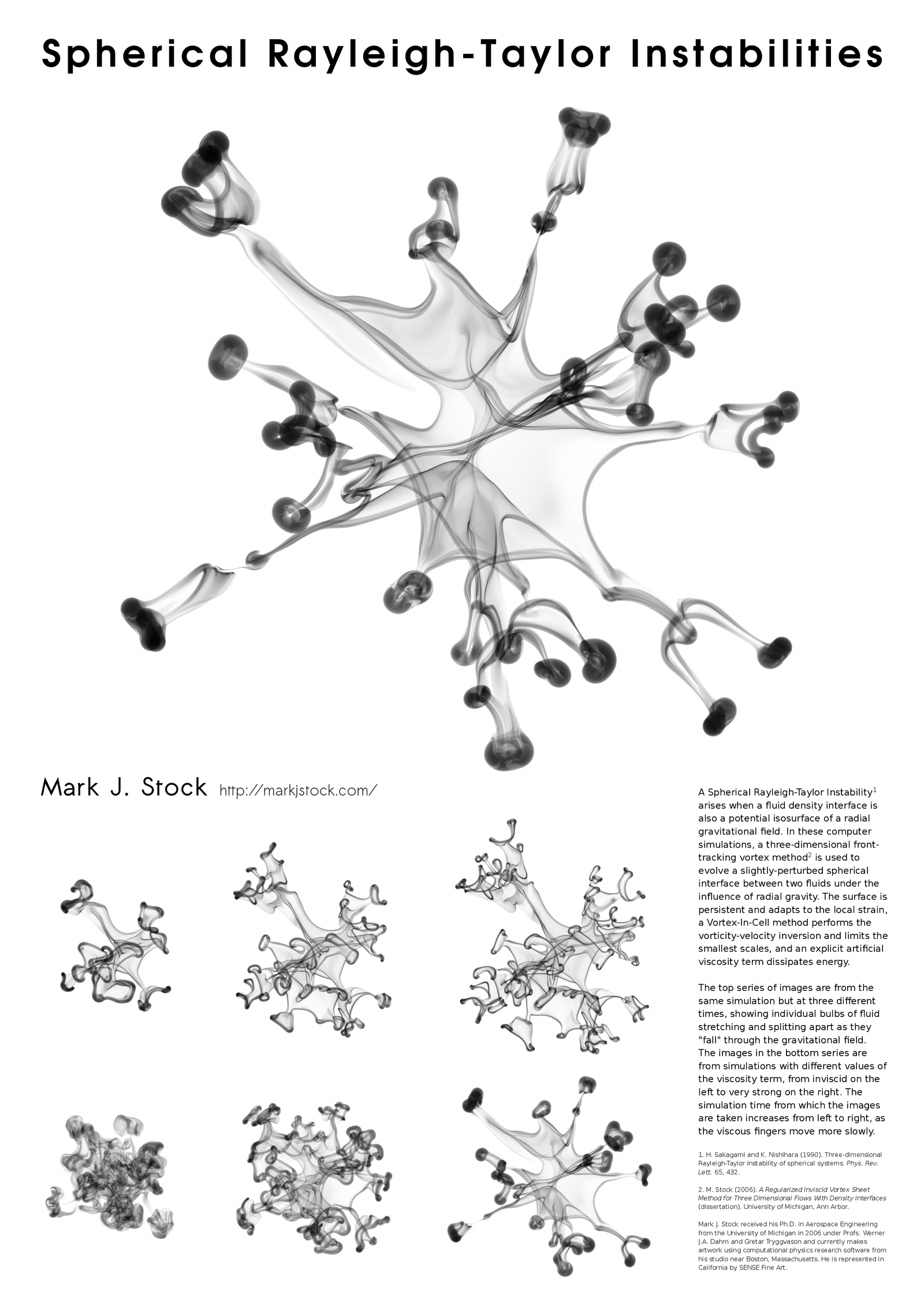
Inspired by this amazing computer simulation assets.gfm.aps.org/55f6119f69702d060dc40300/poster/fullsi...
Taken for The Sunday Challenge. This is so late. So sorry.... Looking into my Magic Ball I see this as my last entry into The Sunday Challenge. I have enjoyed this group immensely but have ultimately decided to step down and allow a space for someone else. I wish you all the best and thank-you for all the great comments and your friendship.
This sperical drop of water just above the water. I was fortunate to get the drop in clear focus - good enough to see the air bubbles within it !! :)
A quick 360° x 360° of the setting sun at my blessed home in Floiida before I headed to NY. Swipe up/down/around or move your phone if it supports spherical panoramas as the FaceBook app does on iPhone, etc.
© 2017 IMRAN™
After the party at work decorations that were just sitting there and fit the Crazy Tuesday Theme this week.
The European bee-eater (Merops apiaster) is a near passerine bird in the bee-eater family Meropidae. The genus name Merops is Ancient Greek for "bee-eater", and apiaster is Latin, also meaning "bee-eater", from apis, "bee". It breeds in southern Europe and in parts of north Africa and western Asia. It is strongly migratory, wintering in tropical Africa. This species occurs as a spring overshoot north of its range, with occasional breeding in northwest Europe.
This species, like other bee-eaters, is a richly coloured, slender bird. It has brown and yellow upper parts, whilst the wings are green and the beak is black. It can reach a length of 27–29 cm (10.6–11.4 in), including the two elongated central tail feathers. Sexes are alike. Female tends to have greener rather than gold feathers on shoulders. Non-breeding plumage is much duller and with a blue-green back and no elongated central tail feathers. Juvenile resembles a non-breeding adult, but with less variation in the feather colours. Adults begin to moult in June or July and complete the process by August or September. There is a further moult into breeding plumage in winter in Africa.
This bird breeds in open country in warmer climates. As the name suggests, bee-eaters predominantly eat insects, especially bees, wasps, and hornets. They catch insects in flight, in sorties from an open perch. Before eating a bee, the European bee-eater removes the sting by repeatedly hitting the insect on a hard surface. It can eat around 250 bees a day.[citation needed]
The most important prey item in their diet is Hymenoptera, mostly Apis mellifera. A study in Spain found that these comprise 69.4% to 82% of the European bee-eaters' diet. Their impact on bee populations, however, is small. They eat less than 1% of the worker bees in areas where they live.
A study found that European bee-eaters "convert food to body weight more efficiently if they are fed a mixture of bees and dragonflies than if they eat only bees or only dragonflies.
These bee-eaters are gregarious—nesting colonially in sandy banks, preferably near river shores, usually at the beginning of May. They make a relatively long tunnel, in which they lay five to eight spherical white eggs around the beginning of June. Both male and female care for the eggs, which they brood for about three weeks. They also feed and roost communally.
During courtship, the male feeds large items to the female while eating the small ones himself. Most males are monogamous, but occasional bigamy has been encountered. Their typical call is a distinctive, mellow, liquid and burry prreee or prruup.
For more information, please visit en.wikipedia.org/wiki/European_bee-eater