View allAll Photos Tagged Sequentially
These tails have no internal lenses (removed), with all sequential LEDs exposed, which produces a brighter signal. All chrome has been painted Satin Black.
Unfortunately I missed the days when these were all in the DM&IR's photogenic deep maroon with gold trim, and regularly hauled the taconite trains over the road. I was lucky to glimpse the last unrepainted one, 215, working this yard last year.
2013 LED tails with Plasma LED reverse bulbs, Sequential Amber LED signals, and Black painted bezels with inner red lens in place.
This Honda S2000 is the one of many custom builds with a blend of components from our favorite manufacturers, including exLED, Diode Dynamics, Morimoto, and introducing: The Lighting Firm. The center piece of this job is the amazing controller from TLF, which can be found here on our website: www.flyryde.com/collections/control-modules/products/sequ...
The module hooks up to the DRL White 5000K PowerLEDs made by exLED Korea: www.flyryde.com/collections/led-strips/products/exled-153...
When the Turn Signals are activated, the white LEDs shut off, and the Sequence for the Amber Power LEDs begins. This customer also opted for retaining the use of the original turn signal location with upgrade Power LED 7440 bulbs, for added output. The side markers also got a pair of Amber LED bulbs, as did the tail lights and License Plate lights.
To give a really unique look to the tails, and provide something special to match the moving signals in the headlights, a pair of "Brakes as Signals" modules from Diode Dynamics were installed, which make the OEM LED brake lights flash instead of an incandescent Amber Bulb. The stock bulb was replaced with the Red Power LED 7440 set from exLED, and this combination provides some really cool action depending on driver input. If the turn signals are activated by themselves, both the inner and outer circle will flash at the same time. If the brakes are applied, the inner and outer circles will alternate back and forth.
These tails have no internal lenses (removed), with all sequential LEDs exposed, which produces a brighter signal. All chrome has been painted Satin Black.
These lights have 16 Amber LEDs individually mounted in front of the the first 16 Red LEDs, which light up sequentially with the signals. The Red LEDs have a switch to enable "Audi Mode" to show just the lower line.
simon bingham executes a 360 ollie over a sofa - work in progress WIP photo sequential composite skateboard sk8
if you read the embedded notes, they flow with the skater, right to left in order
This Honda S2000 is the one of many custom builds with a blend of components from our favorite manufacturers, including exLED, Diode Dynamics, Morimoto, and introducing: The Lighting Firm. The center piece of this job is the amazing controller from TLF, which can be found here on our website: www.flyryde.com/collections/control-modules/products/sequ...
The module hooks up to the DRL White 5000K PowerLEDs made by exLED Korea: www.flyryde.com/collections/led-strips/products/exled-153...
When the Turn Signals are activated, the white LEDs shut off, and the Sequence for the Amber Power LEDs begins. This customer also opted for retaining the use of the original turn signal location with upgrade Power LED 7440 bulbs, for added output. The side markers also got a pair of Amber LED bulbs, as did the tail lights and License Plate lights.
To give a really unique look to the tails, and provide something special to match the moving signals in the headlights, a pair of "Brakes as Signals" modules from Diode Dynamics were installed, which make the OEM LED brake lights flash instead of an incandescent Amber Bulb. The stock bulb was replaced with the Red Power LED 7440 set from exLED, and this combination provides some really cool action depending on driver input. If the turn signals are activated by themselves, both the inner and outer circle will flash at the same time. If the brakes are applied, the inner and outer circles will alternate back and forth.
These tails have no internal lenses (removed), with all sequential LEDs exposed, which produces a brighter signal. All chrome has been painted Satin Black.
Neighborhood Mail Delivery Box for the USPS or U.S. Mail or U.S. Postal Service. I had driven around quite a bit looking for a 44 oz. Pepsi on sale sign which I could have used. They are everywhere when you don't want one. I gave up and decided to go to my storage unit, and voila, right down the street was this number.
These tails were cut open, taken apart, and painted black. Then the LED signal circuit boards were completely stripped down, modified, and wired back up with a 13 channel Sequential micro controller to fire one LED at a time, stacking style. The reverse lights have been upgraded to Plasma White LED bulbs.
This set is 100% Street legal, with all needed reflectors, and no tint covering the LEDs, which means full power output. Painted internals are the answer if you're concerned with getting tickets for having dark tails!
www.messersmith.name/wordpress/2009/11/21/sequential-sunr...
I have a friend here who is a contractor for building and maintaining network systems. He's a very busy guy and is often out of town. I got my boss's (Eunie) permission to hire Mark to help me build a whole new network according to his specifications so that, when I need a holiday, I can rest easy knowing that Mark can come in to fix anything that goes wobbly. It's hard work and leaves me little time for anything else. However, yesterday morning I got one of the best sunrise sequences that I've ever seen, so I'm going to toss the images up here with little comment.
I don't have to yammer on about this one. The images speak for themselves. I'll just say that the exposures changed radically as the light increased, but I've normalised them to the same brightness. I've also modified the colours in each image to suit my aesthetic taste - gaudy. Each image is made of of two to four exposures merged together in Photoshop.
So, I'll loose the comments and show you what a beautiful half-hour I enjoyed.
This is first light:
It was quite dark still. I couldn't see the controls on the camera. It was on a tripod and this was a fifteen second exposure.
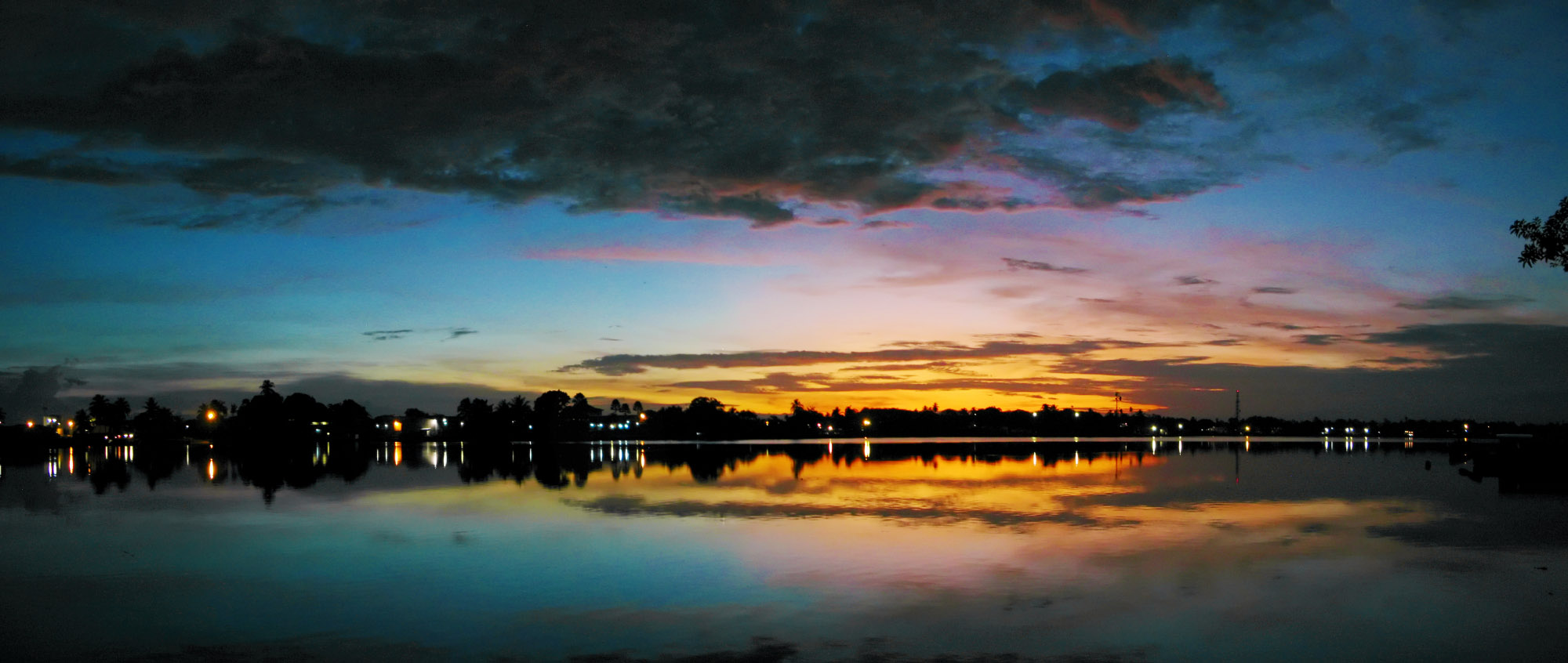
Now the sky brightens a little and we get a few rays from the shadows of huge towering clouds over the horizon:
This was only a two frame shot. The angle it covers is not as wide.
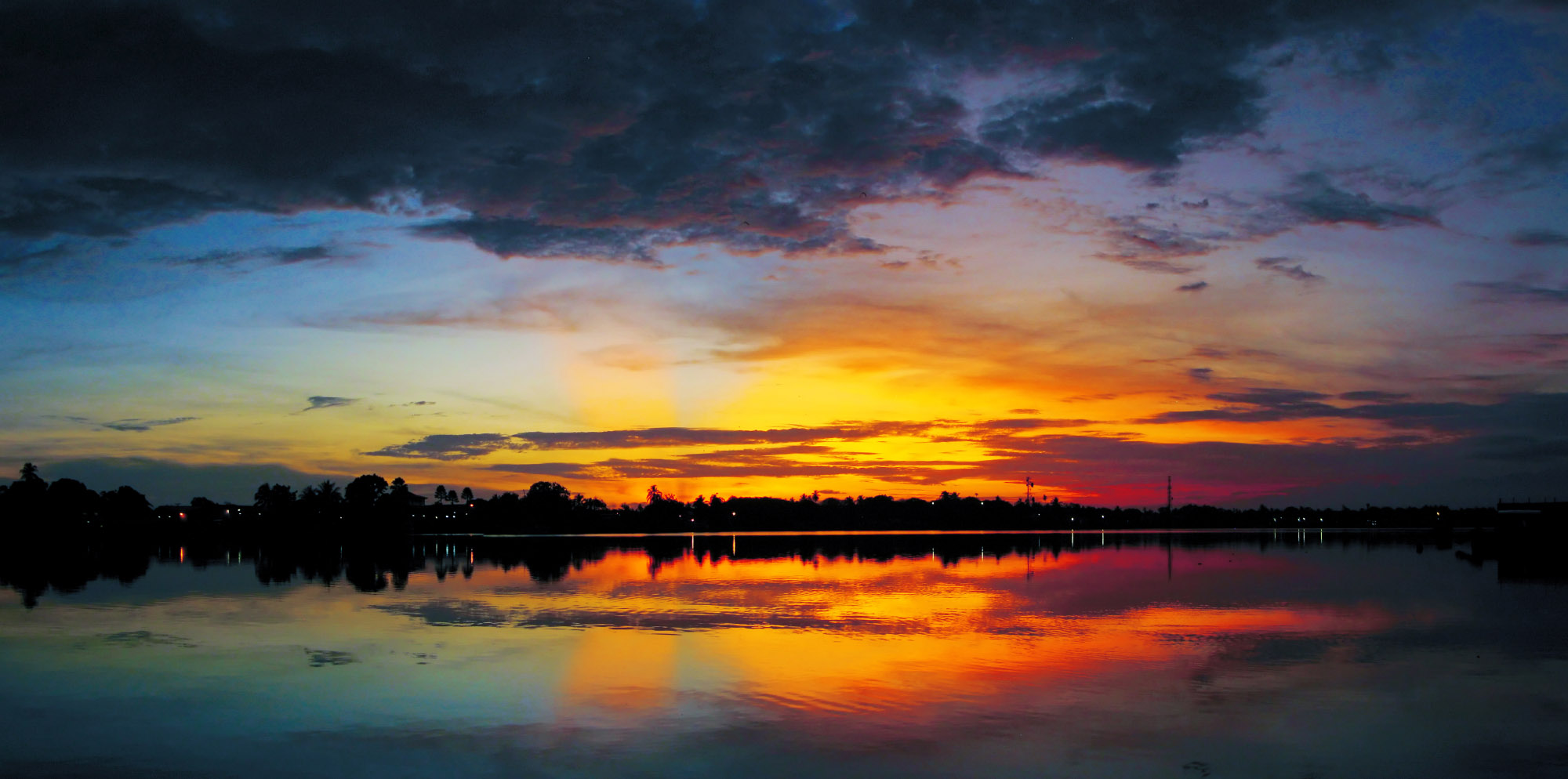
In this four frame shot we have a wider angle. Some of the lower clouds are illuminating as the sun rises toward the visual horizon:
I was getting a lot of purple impressions at this time, so I enhanced the image in that way to capture the moment as I felt it.
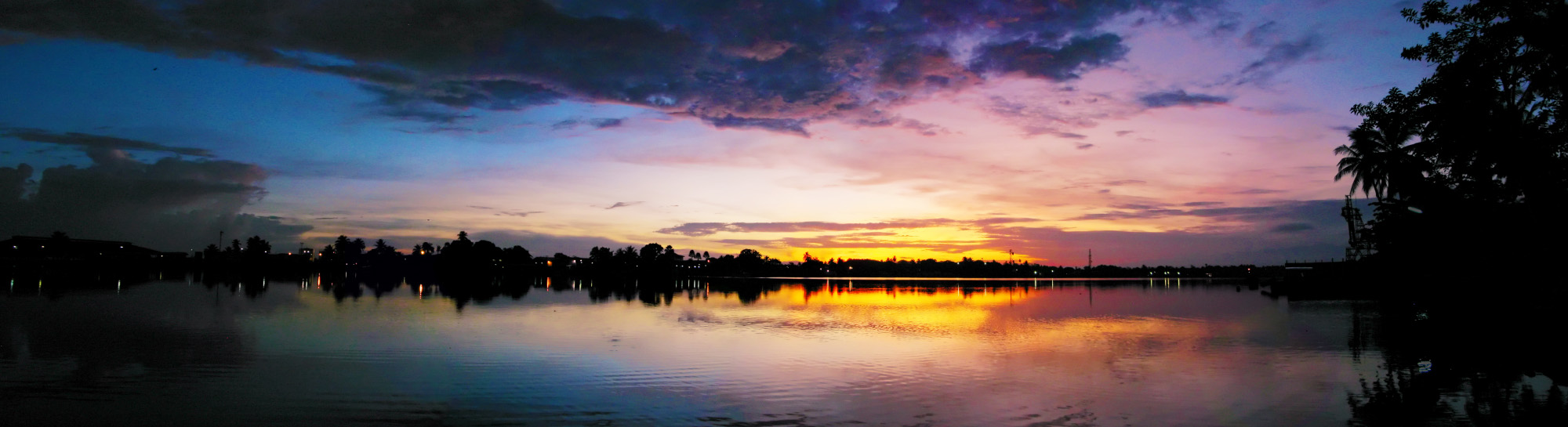
The sun is now nearing the horizon and we're picking up some more shadows of clouds nearer to us, but still below the horizon. That's why the rays (banding of the light) change as the sun rises. Different sets of clouds below the horizon cast shadows that we can see: It was getting very yummy about this time. I kept thinking to myself, "These are going to be great!" What a wonderful way to start off the day.
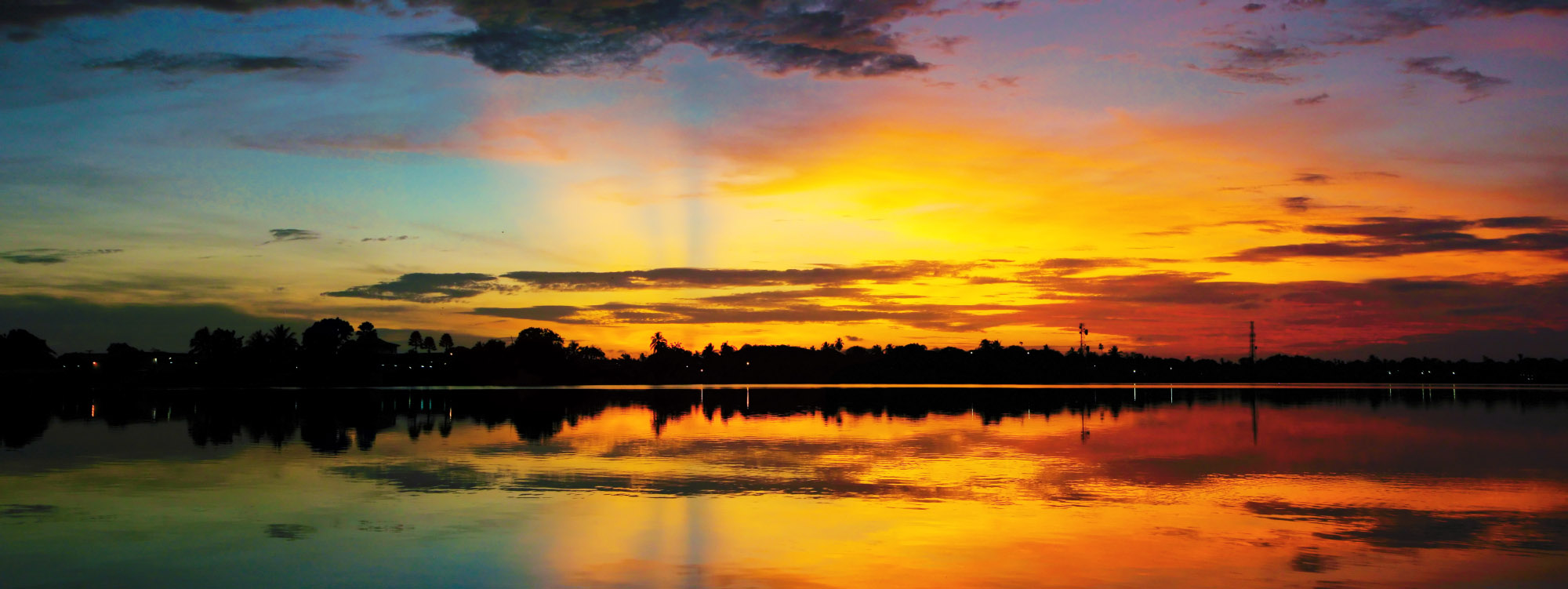
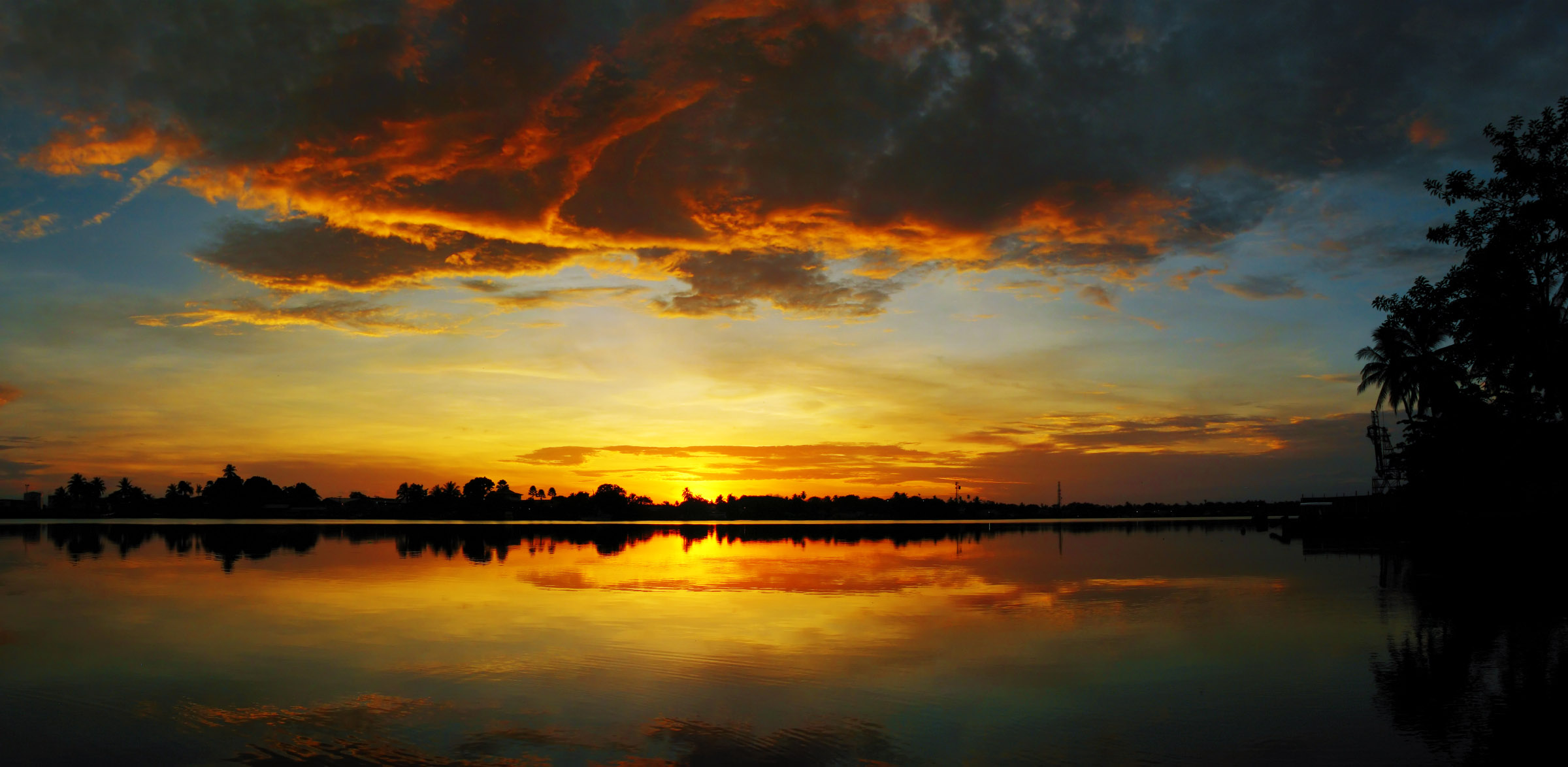
The sun disk has not yet risen above the horizon at my elevation (my camera was about two metres above sea level), but the clouds over Madang are already 'seeing' the rising sun. So, they catch fire!
The shot above and the next one are definitely going on calendars. I'll make some money for them. You're welcome to use any of these as desktop backgrounds or screen saver images.
Thought the shot above had more colour, this one, just as the sun's disk is rising above the horizon, is my favourite:
Why? Well, it's because I caught three birds. Click to enlarge. I've given you an extra large image, more pixels than I usually upload.
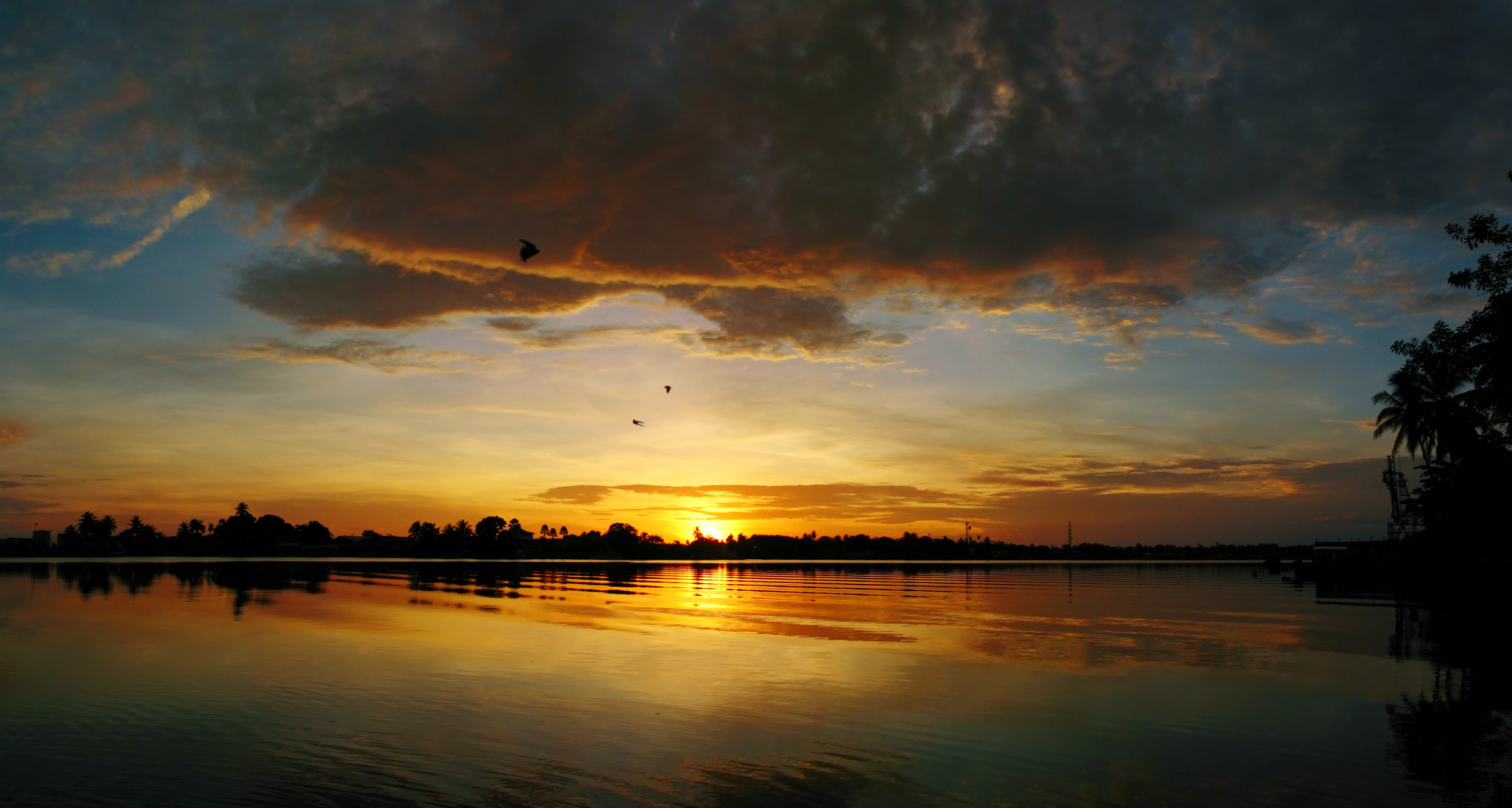
When you see the image on your screen, especially on a black background, it gets a lot of depth from those three birds. If I stare at it for a minute or so, it snaps into 3D. It's a little trick that I learned. You might want to try it. Think about the birds being closer and just stare at it. I'd be interested to know if anybody else notices this.
This also works for stars at night if you have a very clear, dark sky. If you lie on your back and think about the brightest stars being closest and the dimmer stars being far away (which is, of course, not so) you may get lucky enough to see everything suddenly snap into 3D and you'll be staring with wonder into the depths of the universe.
I still managed to blab on a bit, didn't I?
2013 LED tails with Plasma LED reverse bulbs, Sequential Amber LED signals, and Black painted bezels with inner red lens in place.
I love getting notes in sequential order.
Sadly I only noticed after I arrived home after a hard day of spending loot.
These tails have no internal lenses (removed), with all sequential LEDs exposed, which produces a brighter signal. All chrome has been painted Satin Black.
These lights have 16 Amber LEDs individually mounted in front of the the first 16 Red LEDs, which light up sequentially with the signals. The Red LEDs have a switch to enable "Audi Mode" to show just the lower line.
16 LEDs per Tail light were added in to create the sequential signals, with lenses removed for a full shot of light from each LED. The OEM paint has tons of color from the pearl in the sunlight to perfectly match the body color.
These lights have 16 Amber LEDs individually mounted in front of the the first 16 Red LEDs, which light up sequentially with the signals. The Red LEDs have a switch to enable "Audi Mode" to show just the lower line.
This poster is an overview of my PhD research into Sequential Art (including newspaper strips, comics and graphic novels) and Architecture. I am investigating how the depiction of (human and other) interaction with architecture in comics can help readers understand the uses and forms of architecture, and how comic creators might also learn from architects in rendering buildings and other architectural forms on the page. The art shown in the poster is a scan from an 1878 magazine about an urban drunk called Ally Sloper, and the use of a building cross-section shows this form of drawing’s potential as a narrative device in comics.
This Honda S2000 is the one of many custom builds with a blend of components from our favorite manufacturers, including exLED, Diode Dynamics, Morimoto, and introducing: The Lighting Firm. The center piece of this job is the amazing controller from TLF, which can be found here on our website: www.flyryde.com/collections/control-modules/products/sequ...
The module hooks up to the DRL White 5000K PowerLEDs made by exLED Korea: www.flyryde.com/collections/led-strips/products/exled-153...
When the Turn Signals are activated, the white LEDs shut off, and the Sequence for the Amber Power LEDs begins. This customer also opted for retaining the use of the original turn signal location with upgrade Power LED 7440 bulbs, for added output. The side markers also got a pair of Amber LED bulbs, as did the tail lights and License Plate lights.
To give a really unique look to the tails, and provide something special to match the moving signals in the headlights, a pair of "Brakes as Signals" modules from Diode Dynamics were installed, which make the OEM LED brake lights flash instead of an incandescent Amber Bulb. The stock bulb was replaced with the Red Power LED 7440 set from exLED, and this combination provides some really cool action depending on driver input. If the turn signals are activated by themselves, both the inner and outer circle will flash at the same time. If the brakes are applied, the inner and outer circles will alternate back and forth.