View allAll Photos Tagged Rodd
Canada Day at Fort Rodd Hill
A number of historical periods are represented beginning with the Viking Age and progressing through time to the 14th century. Medieval History Encampment is hosted by Pacific Association for Recreating the Middle Ages (PARMA).
Reik Félag participated in this (http://www.reikfelag.ca)
Fort Rodd Hill - a National Historic Site - is a coast artillery fort built in the late 1890s to defend Victoria and the Esquimalt Naval Base. The Fort includes three gun batteries, underground magazines, command posts, guardhouses, barracks and searchlight emplacements. There are numerous interpretive signs and audio-visual stations, as well as period furnished rooms and friendly, knowledgeable staff. Visitors can explore gun batteries and underground magazines built a century ago, as well as searchlight emplacements, command posts...and much more.
Fisgard Lighthouse Historical Site
Victoria, Vancouver Island, BC
Built November 16, 1860 Now Automated 48° 26' N 123° 27' W
- a National Historic Site - The first lighthouse on Canada's west coast is still in operation! There hasn't been a keeper here since the light was automated in 1929, but every year many thousands of visitors step inside a real l9th century lighthouse, and capture some of the feeling of ships wrecked and lives saved.
A day touring our local regional area during Covid. Easy Social Distancing. Relaxing just below the Fisgard Lighthouse looking out to the water.
Rodd Kivett. Lakeland Flying Tigers v. Jupiter Hammerheads. Henley Field. Lakeland, Fla. April 12, 2016. Photo by Tom Hagerty.
Sábado 12 de noviembre de 2017.
Como parte de las actividades de la Semana de las Juventudes del 2017, este sábado 12 de noviembre se desarrolló un segundo concierto masivo en la plancha del Zócalo capitalino. Las bandas que se presentaron en esta ocasión fueron: Marcelo Viejo, Charlie Rodd, Ely Guerra, Dorian, Chetes, La Gusana Ciega, División Minúscula, El Tri y Fatboy Slim.
Fotografía: Carlos Luna / Secretaría de Cultura CDMX
A saltwater lagoon located at the base of the Royal Roads property, next to the Fort Rodd Hill and Fisgard Lighthouse National Historic Sites and a view across Esquimalt Harbour at Dockyard. Victoria, BC
Beskrivning: Tillskrift av Herman Rodde, den 22 april 1779
Anmärkning: Sallander har angivit denna som osäker datumangivelse, men sannolikt gjort i april 1778, vilket inte stämmer
Källa: Stifts- och landsbiblioteket i Skara: MS Biografi Stambok 4, s. 92
Fort Rodd Hill - a National Historic Site - is a coast artillery fort built in the late 1890s to defend Victoria and the Esquimalt Naval Base. The Fort includes three gun batteries, underground magazines, command posts, guardhouses, barracks and searchlight emplacements. There are numerous interpretive signs and audio-visual stations, as well as period furnished rooms and friendly, knowledgeable staff. Visitors can explore gun batteries and underground magazines built a century ago, as well as searchlight emplacements, command posts...and much more.
Fisgard Lighthouse Historical Site
Victoria, Vancouver Island, BC
Built November 16, 1860 Now Automated 48° 26' N 123° 27' W
- a National Historic Site - The first lighthouse on Canada's west coast is still in operation! There hasn't been a keeper here since the light was automated in 1929, but every year many thousands of visitors step inside a real l9th century lighthouse, and capture some of the feeling of ships wrecked and lives saved.
Located just outside of Victoria, British Columbia, this picturesque lighthouse highlights a fantastic historical and natural area. At a $3.90 entry free, it is one of the best bargains in Canada. This is 4 minute exposure taken from the lower battery of Fort Rodd.
2015 Family BC Trip
Exploring Fort Rodd Hill and Fisgard Lighthouse in Victoria.
Just outside the main wall. I think breaking through the bars would be easier than avoiding the rifles in the gun slits...
Canada Day at Fort Rodd Hill
A number of historical periods are represented beginning with the Viking Age and progressing through time to the 14th century. Medieval History Encampment is hosted by Pacific Association for Recreating the Middle Ages (PARMA).
Reik Félag participated in this (http://www.reikfelag.ca)
For Tony
Mi padre me contó que esta belleza era la fucsia "original" y que todas las demás fucsias habían salido de ésta. Investigando un poco, encontré que hay algo de cierto en esta afirmación, al menos en cuanto a Europa, ya que acá en la Isla tenemos nuestras propias fuccias nativas (no estoy segura si endémicas), la Fucsia triphylla. Esta la historia que encontré:
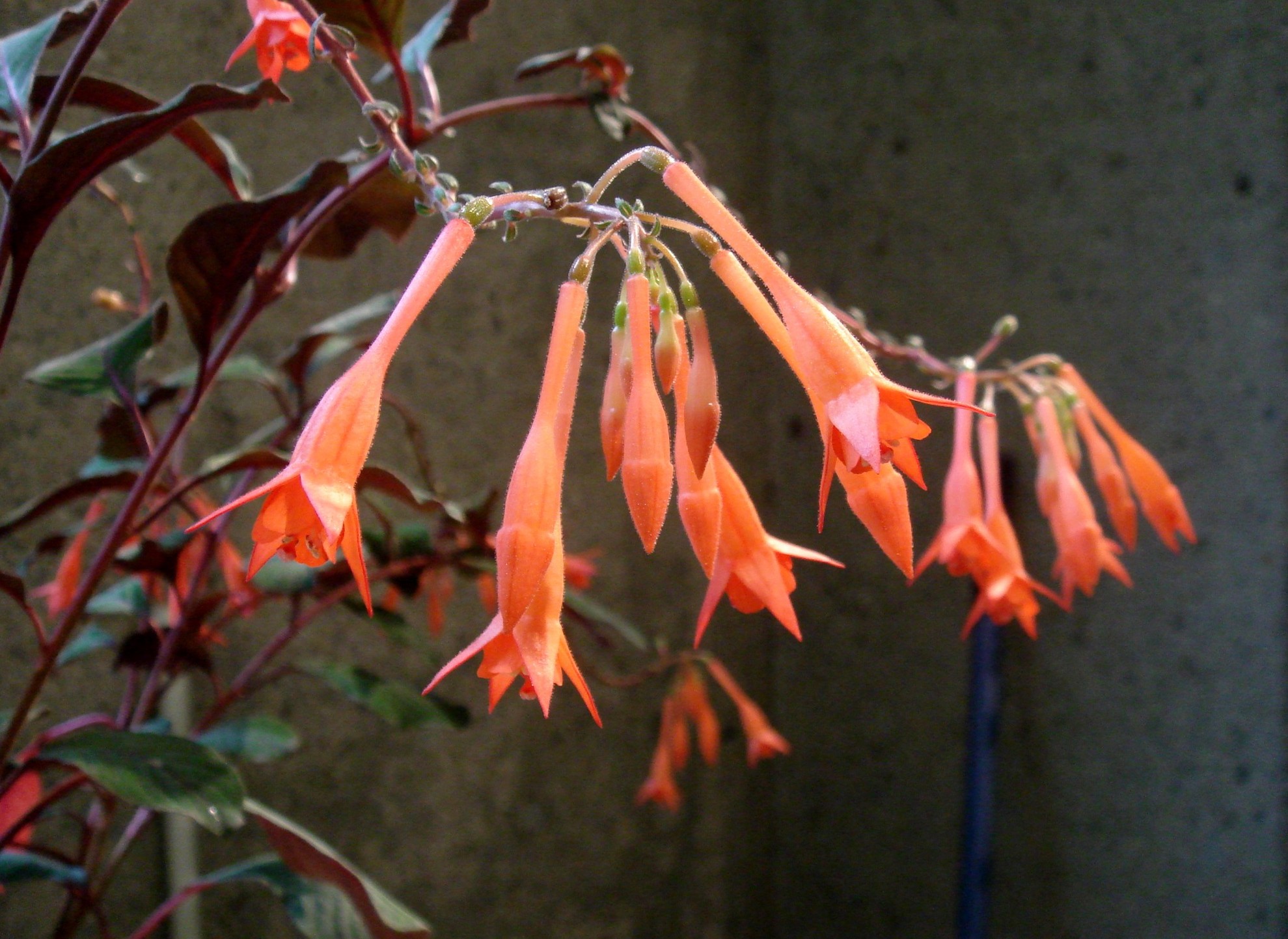
Hay una referencia a una fucsia con el nombre de "Thiles" en el "Journal des Observaciones Botaniques" en 1725. Thiles parece ser la versión francesa de la Thilco español, o Tilco. Sin embargo, Thilco, o más propiamente Chilco, se deriva del nombre con el que los indígenas mapuches del sur de Chile se refieren a su nativa Fuchsia magellanica. En la lengua mapuche, Chilco significa "lo que crece cerca del agua", porque crece en abundancia en las áreas húmedas, pero con buen drenaje, a lo largo de arroyos y lagos. [Wikipedia en inglés]
- - -
My father told me that this beauty was the "original" fuchsia and that all other fuchsias came from this one. After a little research, I found that there is some truth in this assertion, at least in Europe, since here on the island we have our own native fuchsias (not sure if endemic), the Fucsia triphylla. This was the story I found:
There is a reference to a fuchsia under the name of "Thiles" in the Journal des Observations Botaniques in 1725. Thiles seems to be the French version of the Spanish, Thilco or Tilco. However, Thilco, or more properly Chilco, is derived from the name by which the indigenous Mapuche people of Southern Chile referred to their native Fuchsia magellanica. In the Mapuche language, Chilco means "that which grows near the water" and this is a reference to its being found growing abundantly in moist but well-drained areas along streams and lakes. In Chile today, F. magellanica is still called Chilco. [English Wikipedia]
2015 Family BC Trip
Exploring Fort Rodd Hill and Fisgard Lighthouse in Victoria.
Fisgard Lighthouse seen from the gun emplacement at the Belmont Battery.
Fort Rodd Hill - a National Historic Site - is a coast artillery fort built in the late 1890s to defend Victoria and the Esquimalt Naval Base. The Fort includes three gun batteries, underground magazines, command posts, guardhouses, barracks and searchlight emplacements. There are numerous interpretive signs and audio-visual stations, as well as period furnished rooms and friendly, knowledgeable staff. Visitors can explore gun batteries and underground magazines built a century ago, as well as searchlight emplacements, command posts...and much more.
Fisgard Lighthouse Historical Site
Victoria, Vancouver Island, BC
Built November 16, 1860 Now Automated 48° 26' N 123° 27' W
- a National Historic Site - The first lighthouse on Canada's west coast is still in operation! There hasn't been a keeper here since the light was automated in 1929, but every year many thousands of visitors step inside a real l9th century lighthouse, and capture some of the feeling of ships wrecked and lives saved.
Photo taken at Fort Rodd Hill National Historic Site in Esquimalt, British Columbia, Canada. This fort was built to protect the Canadian coastline in the later 1890s. It was turned over to Park Service Canada in 1958.
Fort Rodd Hill - a National Historic Site - is a coast artillery fort built in the late 1890s to defend Victoria and the Esquimalt Naval Base. The Fort includes three gun batteries, underground magazines, command posts, guardhouses, barracks and searchlight emplacements. There are numerous interpretive signs and audio-visual stations, as well as period furnished rooms and friendly, knowledgeable staff. Visitors can explore gun batteries and underground magazines built a century ago, as well as searchlight emplacements, command posts...and much more.
Canada Day at Fort Rodd Hill
A number of historical periods are represented beginning with the Viking Age and progressing through time to the 14th century. Medieval History Encampment is hosted by Pacific Association for Recreating the Middle Ages (PARMA).
Reik Félag participated in this (http://www.reikfelag.ca)