View allAll Photos Tagged Modigliani
Le Cimetière du Père Lachaise, Paris, France
On the face of it, Père Lachaise is not as interesting a cemetery as Montparnasse, but I had a number of reasons for coming here, not least because my Paris friends tell me that it is the most beautiful cemetery in the city, and I think they are right. It is true that you cannot be on your own wandering around here like you can at Montparnasse, but it is four times as big and its sloping site gives rise to winding little impasses that can be yours alone for the time you are in them.
If you are planning a visit yourself, it is worth noting that the best thing to do is to take the metro to Gambetta rather than to Père Lachaise. This brings you in at the top of the cemetery rather than the bottom. This is the quieter part of the cemetery, and very quickly I picked off Maria Callas, Stephane Grappelli and Gertrude Stein without being bothered too much by other visitors.
At this top end of the cemetery the visitor-magnet is the grave of Oscar Wilde. This is a fabulous sculpture by Jacob Epstein. The Irish government, which owns the grave and is responsible for maintaining it, has recently put a Perspex screen around it to stop visitors kissing it with lipstick kisses. Quite how anyone could think Wilde would want to be kissed by a girl is beyond me, though I suppose that all the lipstick kissers might not have been girls. Wilde's grave is easily found, being on a main avenue, but not all such significant figures are as accessible. I eventually found the tomb of Sarah Bernhardt after much searching, some distance from the nearest avenue. It did not appear to have been visited much at all in recent months.
In one quiet corner of the cemetery is a wall with a memorial to the Paris Commune. The communards had taken advantage of the siege of Paris during the Franco-Prussian War to declare a utopian republic, something along the lines of the one of seventy years earlier, but hopefully without the tens of thousands of opponents being guillotined this time. Incidentally, the French love to discuss and argue about politics so much that there is no chance of the country ever opting for a totalitarian regime. When the revolutionaries of the 1780s and 1790s started executing those who mildly disagreed with them, it was the start of a slippery slope at the bottom of which no one would have been left alive. Anyway, the communards hoped to avoid that. When the siege was over and the mess had been cleared up, they were brought to this wall in their hundreds and shot, their bodies dumped into conveniently adjacent mass graves.
This corner of the cemetery has become a pilgrimage site for Communists, and many of the graves around are for former leaders of the French Communist Party, in its day the largest and most powerful in Western Europe. In the 1980s, when I first started coming to Paris, they ran many of the towns and cities, especially in the industrial north.
Near here are some vast and terrifying memorials to the victims of the German occupation of France and Nazi concentration and death camps. Each camp has its own memorial, usually surmounted by an anguished sculpture, and with an inscription with frighteningly large numbers in it. There is a silence in this part of the cemetery. It is interesting to me that memorials in this part of France refer to 'the Nazi occupation and the Vichy government collaborators', while in the southern half of the country, which was under Vichy rule, the memorials usually talk about 'the German barbarity'.
I sat for a while, and then went off looking for more heroes. Marcel Proust and Frederick Chopin were easily found, Francis Poulenc less so. Wandering around I chanced by accident on the grave of the artist Théodore Géricault, which carries bronze relief versions of his Raft of the Medusa, starting point of the Musee d'Orsay, as well as other paintings. To be honest, the most interesting memorials are those to ordinary upper middle class Parisians who were raised to grandeur through art in death in a way that they cannot have known in life.
One of the saddest corners, and a rather sordid one, is to the American pop singer Jim Morrison, who died in Paris at the age of 27, burnt out and 20 stone after gorging himself on whisky, burgers and heroin. Well, so did Elvis, you might retort, but at least Elvis had some good tunes. The survival of Morrison's legend seems to rest entirely on the romance of his death and burial. Surely no one can be attracted by his music, those interminable organ solos and witless lyrics? His simple memorial (a bust was stolen in the 1980s) is cordoned off by barriers, and is the only one where a cemetery worker is permanently in attendance. I looked around at a crowd of about thirty people, all of whom were younger than me, and none of whom could have been alive when the selfish charlatan drank and drugged himself to death.
Shaking my head in incomprehension, (I didn't really, but I bet some people do) I finished off my visit by finding Colette, and bumping into Rossini on the way. Then I headed back into central Paris.
You can read my account of my travels at pariswander.blogspot.co.uk.
Amedeo Modigliani - Portrait of the painter Manuel Humbert 1916 at National Gallery of Victoria - Melbourne VIC Australia
Cartel anunciando una exposición de este pintor en el Museo Thyssen Bornesmiza. Pas mal... La información que ofrece el propio museo sobre Modigliani aquí: www.mcu.es/principal/docs/novedades/2008/Modigliani_Dossi...
Cagnes-sur-Mer French Riviera
is a common presenting the form of a well-wooded and park-covered urban settlement in the Alpes-Maritimes department in the Provence-Alpes-Côte d'Azur Region in southeastern France. Economically it forms a suburb to the city of Nice.
Geography
It is the Largest suburb of the city of Nice and lies to the west-southwest of it, about 15 km (9.3 mi) from the center. It is a town with no high rise buildings with PARTICULARLY Many woods and parks, as to MOST icts of urban homes, in the Alpes-Maritimes department in the Provence-Alpes-Côte d'Azur
History
It was the retreat and final address of the painter Pierre-Auguste Renoir, Who Moved there in 1907 in an Attempt to Improve His arthritis, and Remained up to His death in 1919. In the late 1920s, Cagnes-sur-Mer est devenu a residence for Many renowned American literary and art figures, Such as Kay Boyle, George Antheil and Harry and Caresse Crosby. Author Georges Simenon (1903-1989), creator of the fictional detective Commissioner Jules Maigret Lived at 98, mounted of the Village in the 1950s with His third wife and Their three children; initial his "S" may still be seen in the wrought iron on the stairs.
Belarusian-French artist Chaim Soutine created Powerful, fanciful landscapes of southern France. A friend of Amedeo Modigliani, Soutine left colorful landscapes from Cagnes from 1924 on. Fauvist painter Francisco Iturrino aussi resided in the town Where he deceased.
Cagnes-sur-Mer French Riviera
is a common presenting the form of a well-wooded and park-covered urban settlement in the Alpes-Maritimes department in the Provence-Alpes-Côte d'Azur Region in southeastern France. Economically it forms a suburb to the city of Nice.
Geography
It is the Largest suburb of the city of Nice and lies to the west-southwest of it, about 15 km (9.3 mi) from the center. It is a town with no high rise buildings with PARTICULARLY Many woods and parks, as to MOST icts of urban homes, in the Alpes-Maritimes department in the Provence-Alpes-Côte d'Azur
History
It was the retreat and final address of the painter Pierre-Auguste Renoir, Who Moved there in 1907 in an Attempt to Improve His arthritis, and Remained up to His death in 1919. In the late 1920s, Cagnes-sur-Mer est devenu a residence for Many renowned American literary and art figures, Such as Kay Boyle, George Antheil and Harry and Caresse Crosby. Author Georges Simenon (1903-1989), creator of the fictional detective Commissioner Jules Maigret Lived at 98, mounted of the Village in the 1950s with His third wife and Their three children; initial his "S" may still be seen in the wrought iron on the stairs.
Belarusian-French artist Chaim Soutine created Powerful, fanciful landscapes of southern France. A friend of Amedeo Modigliani, Soutine left colorful landscapes from Cagnes from 1924 on. Fauvist painter Francisco Iturrino aussi resided in the town Where he deceased.
Watercolor study on paper, based on Modigliani's Lunia Czechowska.
See the original art here:
snaakks.tumblr.com/post/2921705681/amedeo-modigliani-port...
Cagnes-sur-Mer French Riviera
is a common presenting the form of a well-wooded and park-covered urban settlement in the Alpes-Maritimes department in the Provence-Alpes-Côte d'Azur Region in southeastern France. Economically it forms a suburb to the city of Nice.
Geography
It is the Largest suburb of the city of Nice and lies to the west-southwest of it, about 15 km (9.3 mi) from the center. It is a town with no high rise buildings with PARTICULARLY Many woods and parks, as to MOST icts of urban homes, in the Alpes-Maritimes department in the Provence-Alpes-Côte d'Azur
History
It was the retreat and final address of the painter Pierre-Auguste Renoir, Who Moved there in 1907 in an Attempt to Improve His arthritis, and Remained up to His death in 1919. In the late 1920s, Cagnes-sur-Mer est devenu a residence for Many renowned American literary and art figures, Such as Kay Boyle, George Antheil and Harry and Caresse Crosby. Author Georges Simenon (1903-1989), creator of the fictional detective Commissioner Jules Maigret Lived at 98, mounted of the Village in the 1950s with His third wife and Their three children; initial his "S" may still be seen in the wrought iron on the stairs.
Belarusian-French artist Chaim Soutine created Powerful, fanciful landscapes of southern France. A friend of Amedeo Modigliani, Soutine left colorful landscapes from Cagnes from 1924 on. Fauvist painter Francisco Iturrino aussi resided in the town Where he deceased.
Amedeo MODIGLIANI (1884 - 1920)
Jeune fille brune, assise
Brunette girl, seated
Muchacha morena, sentada
[1918]
Huile sur toile
Oil on canvas
Oleo sobre tela
Donation Picasso 1973
Cagnes-sur-Mer French Riviera
is a common presenting the form of a well-wooded and park-covered urban settlement in the Alpes-Maritimes department in the Provence-Alpes-Côte d'Azur Region in southeastern France. Economically it forms a suburb to the city of Nice.
Geography
It is the Largest suburb of the city of Nice and lies to the west-southwest of it, about 15 km (9.3 mi) from the center. It is a town with no high rise buildings with PARTICULARLY Many woods and parks, as to MOST icts of urban homes, in the Alpes-Maritimes department in the Provence-Alpes-Côte d'Azur
History
It was the retreat and final address of the painter Pierre-Auguste Renoir, Who Moved there in 1907 in an Attempt to Improve His arthritis, and Remained up to His death in 1919. In the late 1920s, Cagnes-sur-Mer est devenu a residence for Many renowned American literary and art figures, Such as Kay Boyle, George Antheil and Harry and Caresse Crosby. Author Georges Simenon (1903-1989), creator of the fictional detective Commissioner Jules Maigret Lived at 98, mounted of the Village in the 1950s with His third wife and Their three children; initial his "S" may still be seen in the wrought iron on the stairs.
Belarusian-French artist Chaim Soutine created Powerful, fanciful landscapes of southern France. A friend of Amedeo Modigliani, Soutine left colorful landscapes from Cagnes from 1924 on. Fauvist painter Francisco Iturrino aussi resided in the town Where he deceased.
Cagnes-sur-Mer French Riviera
is a common presenting the form of a well-wooded and park-covered urban settlement in the Alpes-Maritimes department in the Provence-Alpes-Côte d'Azur Region in southeastern France. Economically it forms a suburb to the city of Nice.
Geography
It is the Largest suburb of the city of Nice and lies to the west-southwest of it, about 15 km (9.3 mi) from the center. It is a town with no high rise buildings with PARTICULARLY Many woods and parks, as to MOST icts of urban homes, in the Alpes-Maritimes department in the Provence-Alpes-Côte d'Azur
History
It was the retreat and final address of the painter Pierre-Auguste Renoir, Who Moved there in 1907 in an Attempt to Improve His arthritis, and Remained up to His death in 1919. In the late 1920s, Cagnes-sur-Mer est devenu a residence for Many renowned American literary and art figures, Such as Kay Boyle, George Antheil and Harry and Caresse Crosby. Author Georges Simenon (1903-1989), creator of the fictional detective Commissioner Jules Maigret Lived at 98, mounted of the Village in the 1950s with His third wife and Their three children; initial his "S" may still be seen in the wrought iron on the stairs.
Belarusian-French artist Chaim Soutine created Powerful, fanciful landscapes of southern France. A friend of Amedeo Modigliani, Soutine left colorful landscapes from Cagnes from 1924 on. Fauvist painter Francisco Iturrino aussi resided in the town Where he deceased.
Amedeo Clemente Modigliani( 12 July 1884 – 24 January 1920) was an Italian Jewish painter and sculptor who worked mainly in France. He is known for portraits and nudes in a modern style characterized by elongation of faces, necks, and figures that were not received well during his lifetime but later found acceptance. Modigliani spent his youth in Italy, where he studied the art of antiquity and the Renaissance. In 1906 he moved to Paris, where he came into contact with such artists as Pablo Picasso and Constantin Brâncuși. By 1912 Modigliani was exhibiting highly stylized sculptures with Cubists of the Section d'Or group at the Salon d'Automne.
Modigliani's oeuvre includes paintings and drawings. From 1909 to 1914 he devoted himself mainly to sculpture. His main subject was portraits and full figures, both in the images and in the sculptures. Modigliani had little success while alive, but after his death achieved great popularity. He died of tubercular meningitis, at the age of 35, in Paris.
In November 2010, a painting of a nude by Amedeo Modigliani, part of a series of nudes he created around 1917, sold for more than $68.9m (£42.7m) at an auction in New York—a record for the artist's work. Bidding for La Belle Romaine pushed its price well past its $40m (£24.8m) estimate. Modigliani's previous auction record was 43.2m euros (£35.8m), set earlier in 2010 in Paris. Another painting by the artist—Jeanne Hébuterne (au chapeau), one of the first portraits he painted of his lover—sold for $19.1m (£11.8m), much higher than its pre-sale estimate of $9–12m (£5.6–7.4m).
On November 9, 2015 the 1917 painting Nu couché, sold at Christie's in New York for US$170.4 million. On May 14, 2018 the 1917 painting Nu couché (sur le côté gauche) sold at Sotheby's in New York for $157.2 million. This was the highest auction price in Sotheby's history.
Amadeo Modigliani (1884-1920)
Le Jeune apprenti (1918-1919)
Musée de l'Orangerie, Paris
Modigliani was born into a Sephardic Jewish family in Livorno, Italy. Arriving in Paris in 1906, his demeanour and reputation had changed dramatically. He transformed himself from a dapper academician artist into a sort of prince of vagabonds. His use of drink and drugs intensified from about 1914 onward. Modigliani's behavior stood out even in his Bohemian surroundings; he carried on frequent affairs, drank heavily, and used absinthe and hashish. While drunk, he would sometimes strip himself naked at social gatherings. He became the epitome of the tragic artist. After years of remission and recurrence, the symptoms of his tuberculosis worsened, signaling that the disease had reached an advanced stage. He died at age 35 in Paris of tubercular meningitis. The day after his death, his common law wife, Jeanne Hébuterne, threw herself out of the fifth-floor apartment window, killing herself and her unborn child.
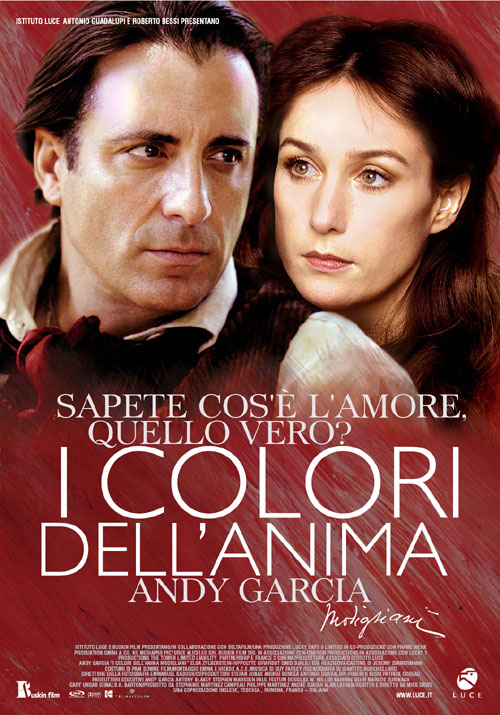
... the man, the movie and the legacy. This is one of the most interesting movies I've watched in a long time. As I started watching, I first thought the storyline was not possible, but the movie led me to do more research and I found the only flaw was in one scene where Diego Rivera appears in Paris with his wife, Frida Kahlo. Frida never traveled to Paris with Diego. This movie is a good representation for the feel of the man, his short life and his environment at the time of the great art revolution in Europe. I've been motivated to do more research and if you are also motivate, here are links to shorten your search. I'm interested in the cast selection. In the case of Jeanne and Amadeo the casting is really outstanding. Talk about living in interesting times, this generation did. If you are interested in the historical progression of art, you'll truly enjoy this film. I watched Modigliani on Netflix, but I'm sure you find it at Amazon and probably a dozen other places.
Links with information about Amedeo Modigliani ... (this biography is a "must" read ...
amedeo-modigliani.paintings.name/
Here's Wikipedia with a more complete source of information ...
---------- street photography -------------
www.youtube.com/watch?v=nS-utCPcJAw
www.uniurb.it/Filosofia/bibliografie/Modigliani/nudo disteso.jpg
brownfoundations.files.wordpress.com/2009/09/modigliani_j...

re-pubblica.blog.kataweb.it/files/2008/04/modigliani-glit...