View allAll Photos Tagged Fail
Bowled. Well and truly. Once again the Super Hero is thwarted by the evil empire.
That is all.
Rhyl, 22 April 2017
Go large, you'll see the horror in all it's Technicolor gory...
"The President is now a king above the law."
1 July 2024.
***************
▶ "Looking beyond the fate of this particular prosecution,
the long-term consequences of today’s decision are stark.
The Court effectively creates a law-free zone around the
President, upsetting the status quo that has existed since
the Founding. This new official-acts immunity now 'lies
about like a loaded weapon' for any President that wishes
to place his own interests, his own political survival, or his
own financial gain, above the interests of the Nation.
The President of the United States is the most powerful person in the country, and possibly the world. When he uses his official powers in any way, under the majority’s reasoning, he now will be insulated from criminal prosecution. Orders the Navy’s Seal Team 6 to assassinate a political rival? Immune. Organizes a military coup to hold onto power? Immune. Takes a bribe in exchange for a pardon? Immune. Immune, immune, immune.
Let the President violate the law, let him exploit the trappings of his office for personal gain, let him use his official power for evil ends. Because if he knew that he may one day face liability for breaking the law, he might not be as bold and fearless as we would like him to be. That is the majority’s message today.
Even if these nightmare scenarios never play out, and I pray they never do, the damage has been done. The relationship between the President and the people he serves has shifted irrevocably. In every use of official power, the President is now a king above the law.
The majority’s single-minded fixation on the President’s need for boldness and dispatch ignores the countervailing need for accountability and restraint. The Framers were not so single-minded. In the Federalist Papers, after 'endeavor[ing] to show” that the Executive designed by the Constitution combines . . . all the requisites to energy,' Alexander Hamilton asked a separate, equally important question: 'Does it also combine the requisites to safety, in a republican sense, a due dependence on the people, a due responsibility?' The answer then was yes, based in part upon the President’s vulnerability to 'prosecution in the common course of law.' The answer after today is no.
Never in the history of our Republic has a President had reason to believe that he would be immune from criminal prosecution if he used the trappings of his office to violate the criminal law. Moving forward, however, all former Presidents will be cloaked in such immunity. If the occupant of that office misuses official power for personal gain, the criminal law that the rest of us must abide will not provide a backstop.
With fear for our democracy, I dissent."
— Justice Sonia Sotomayor
***************
▶ Document via United States Supreme Court.
▶ Uploaded by: YFGF.
▶ For a larger image, type 'L' (without the quotation marks).
— Follow on Facebook: YoursForGoodFermentables.
— Follow on Instagram: @tcizauskas.
— Follow on Threads: @tcizauskas.
Trying out outfits for herald shoot on zines...
sweater: knitted by nanna when she was my age
tshirt: purr
skirt: bodyline
boots: doc martens
ps. not trying to look lolita, trying to look like me.
www.messersmith.name/wordpress/2010/06/10/scorpionfish-fail/
We had a lovely dinner at our house last night with thirteen of us there consuming Eunie's delicious Midwestern American farm meal. A special guest was there, but I'm not going to keep blasting her name out over the web, because I think that it's time for her to have a chance to enjoy a bit of privacy. It was a typical Madang dinner party. There was a pile of "happy shoes" at the door, good food, good friends, and good Australian wine. Everybody came to our house by boat, so even the departing was fun. Everybody walks out to the dock, gets into their boats and we all wave bye-bye as if we'll always see each other tomorrow. And, we usually do.
When I saw the sunrise this morning, the word industrial popped into my mind:
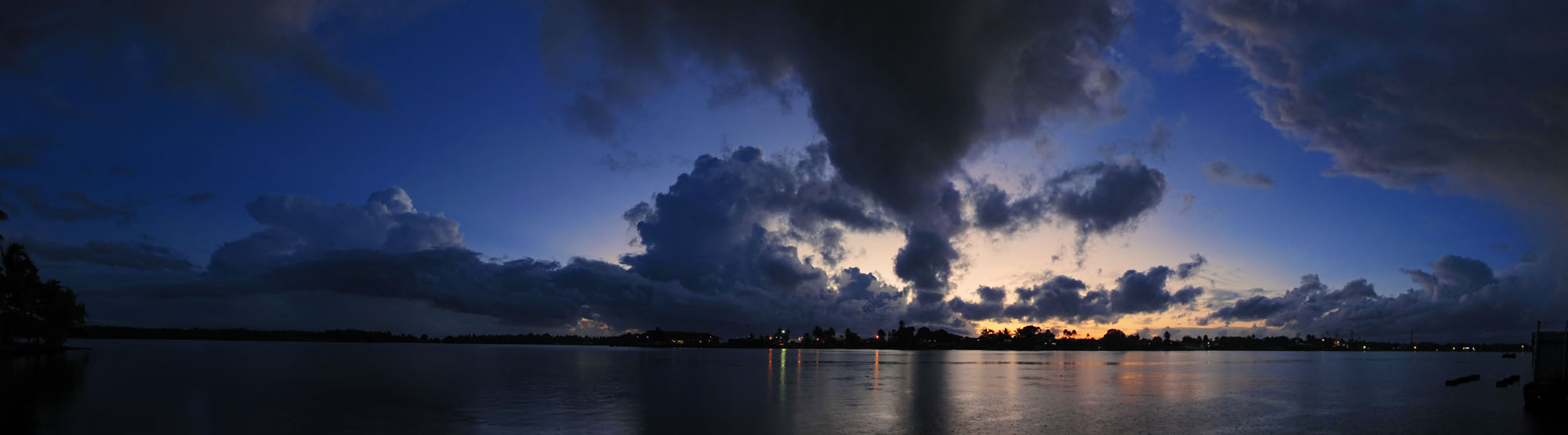
It seems that I am a compulsive titler - is that a word, someone who titles things? I don't know. If it isn't, it should be. Every image has to have a title floating around in my head.
Oh, I can see that I'm boring you. Let's get to the miserable failure that is the subject of today's post. This could have been a perfectly good image of a Scorpionfish:
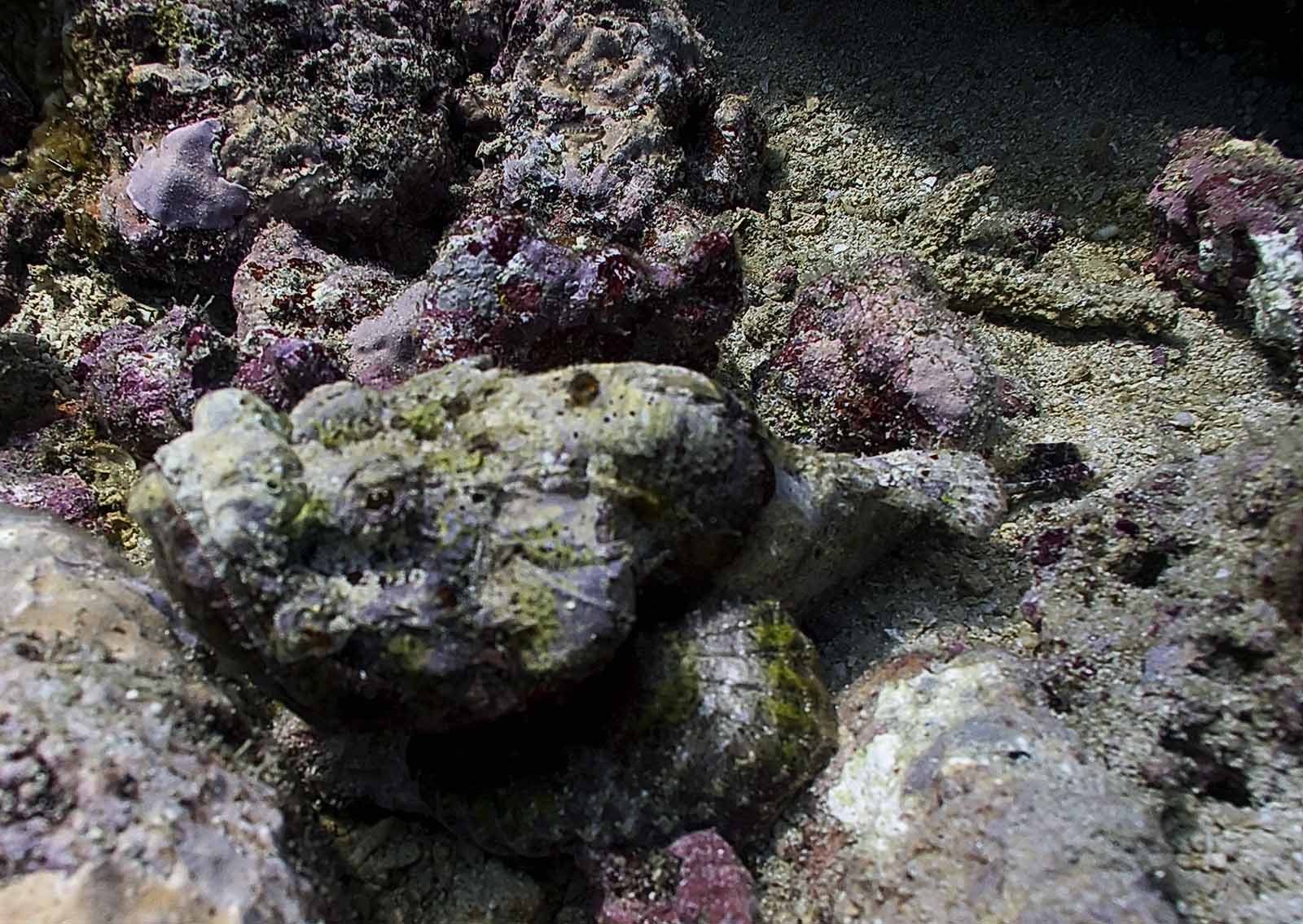
We had just gotten into the water at Planet Rock and I was fussing around making certain that our anchor was not doing any damage and watching divers and counting noses when Richard Jones pointed out this Scorpionfish. It was such a peculiar shape and so well camouflaged that I really wanted to get a good image of it. Sadly, I had time only for a quick snap. Unfortunately,as so often happens, the camera did not focus where I wanted it to. The focus on the rear half of the fish is tolerable, but the head is blurry. Still, it is so odd that it's worth a look.
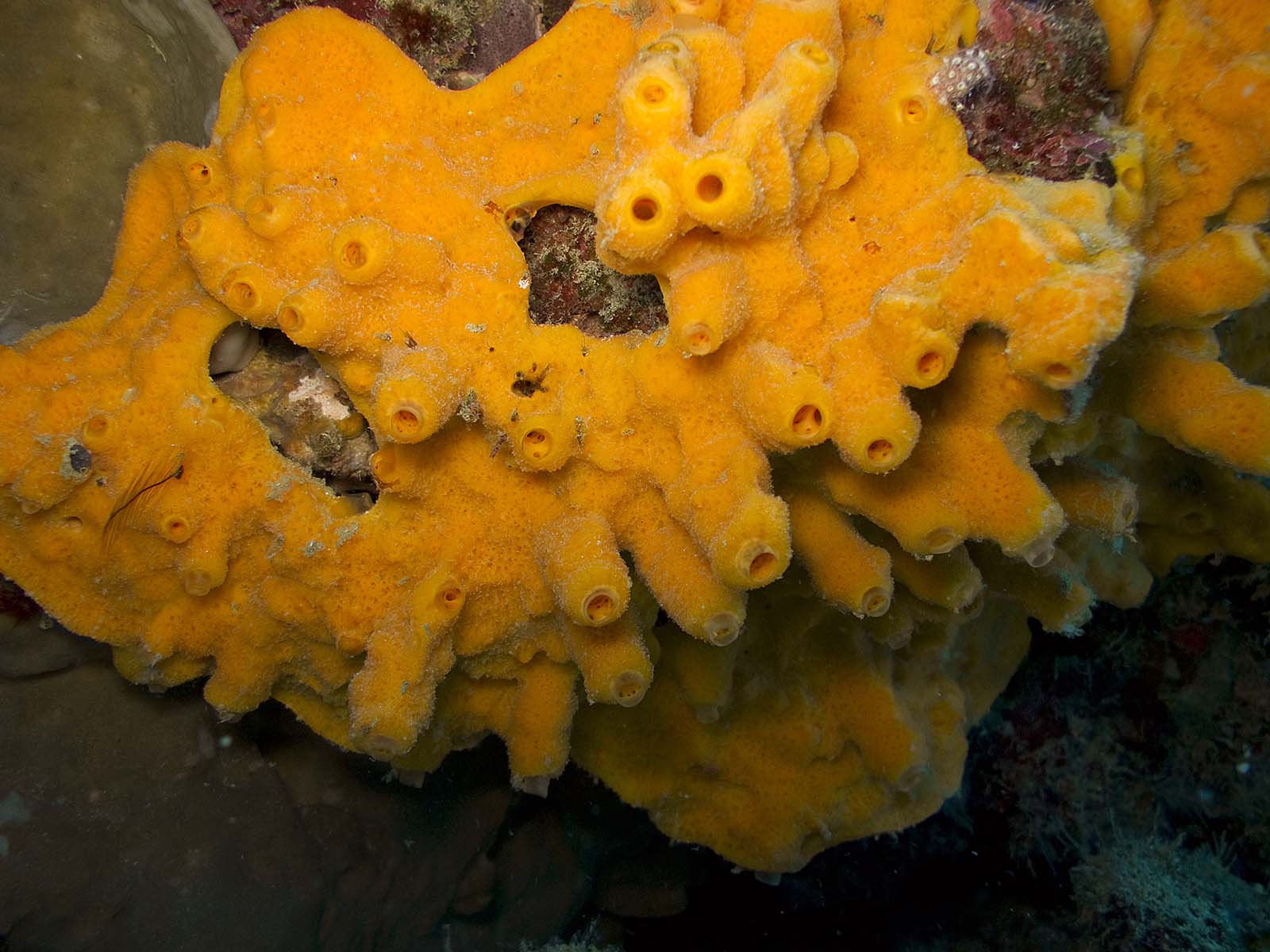
I have a lot of trouble figuring out what is a sponge and what is a sea squirt. I was all set to identify this as some kind of sea squirt. Fortunately, I sent the image to my Facebook friend Ana Karinna Carbonini of the Laboratorio de Biología Marina at the Universidad Simón Bolívar. She said that she thinks it is a Sponge, possibly a species of Leuconoide or Asconoide:
You can take a sip of coffee now while you absorb that. Have a quick glance over your shoulder to see if the boss is lurking about.
At the request of a friend, here are a couple of Anemonefish shots from our dives on Saturday. This is a Red and Black Anemonefish (Amphiprion melanopus) peeking out from the safety of its host anemone:
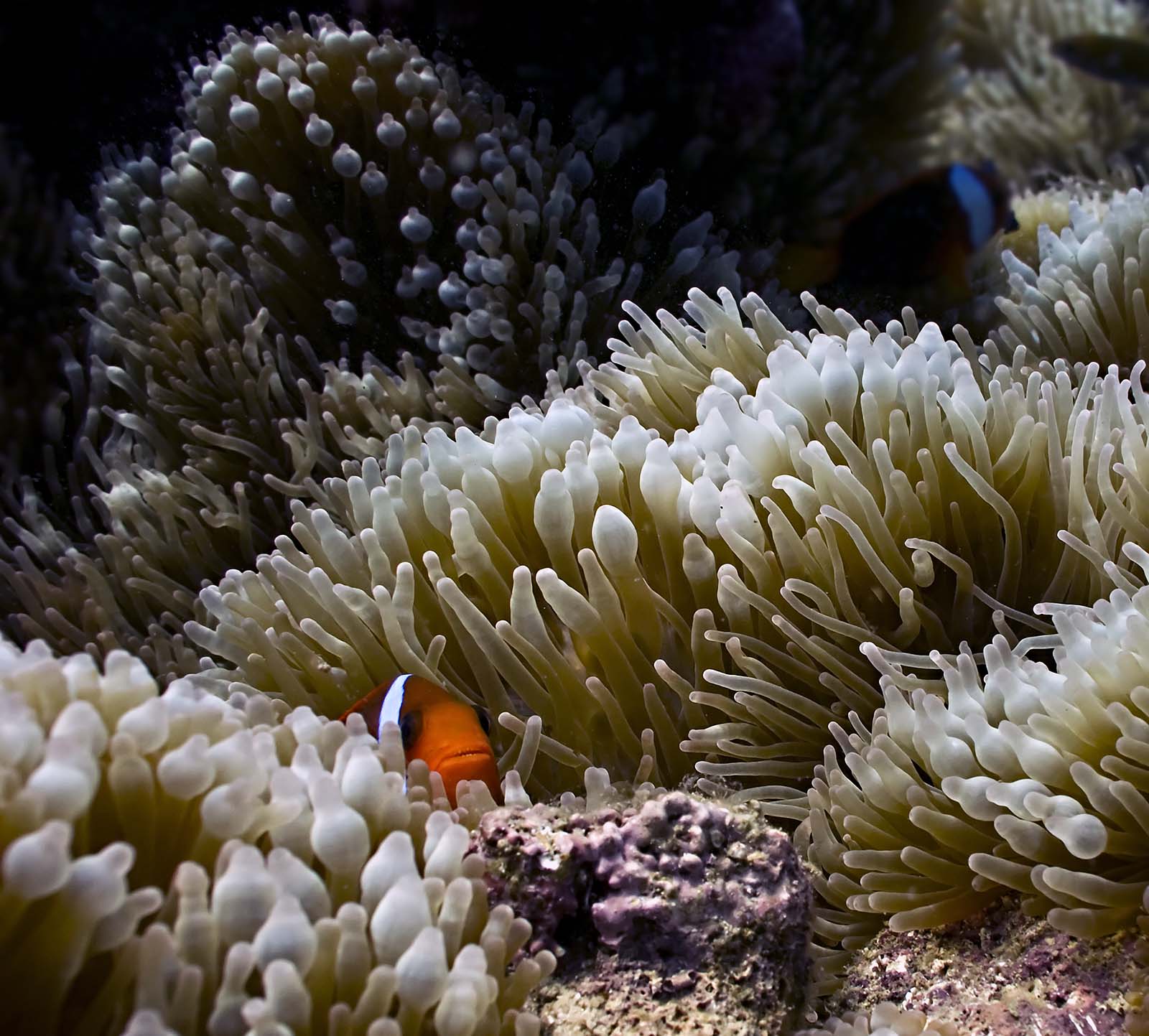
I particularly like this shot, because it shows a very typical behavior. Anemonefish will often alternate between dashing about frantically around the anemone, coming up close to you to investigate or even take a nip of your finger and then plunging down within the tentacles to peer out and observe the result of the attack. I get more fun from watching anemonefish than anything else under the water, with the possible exception of some of my dive buddies.
For the Disney fans, here are some genuine Nemo wannabes. The Clown Anemonefish (Amphiprion percula) never fails to live up to its name:
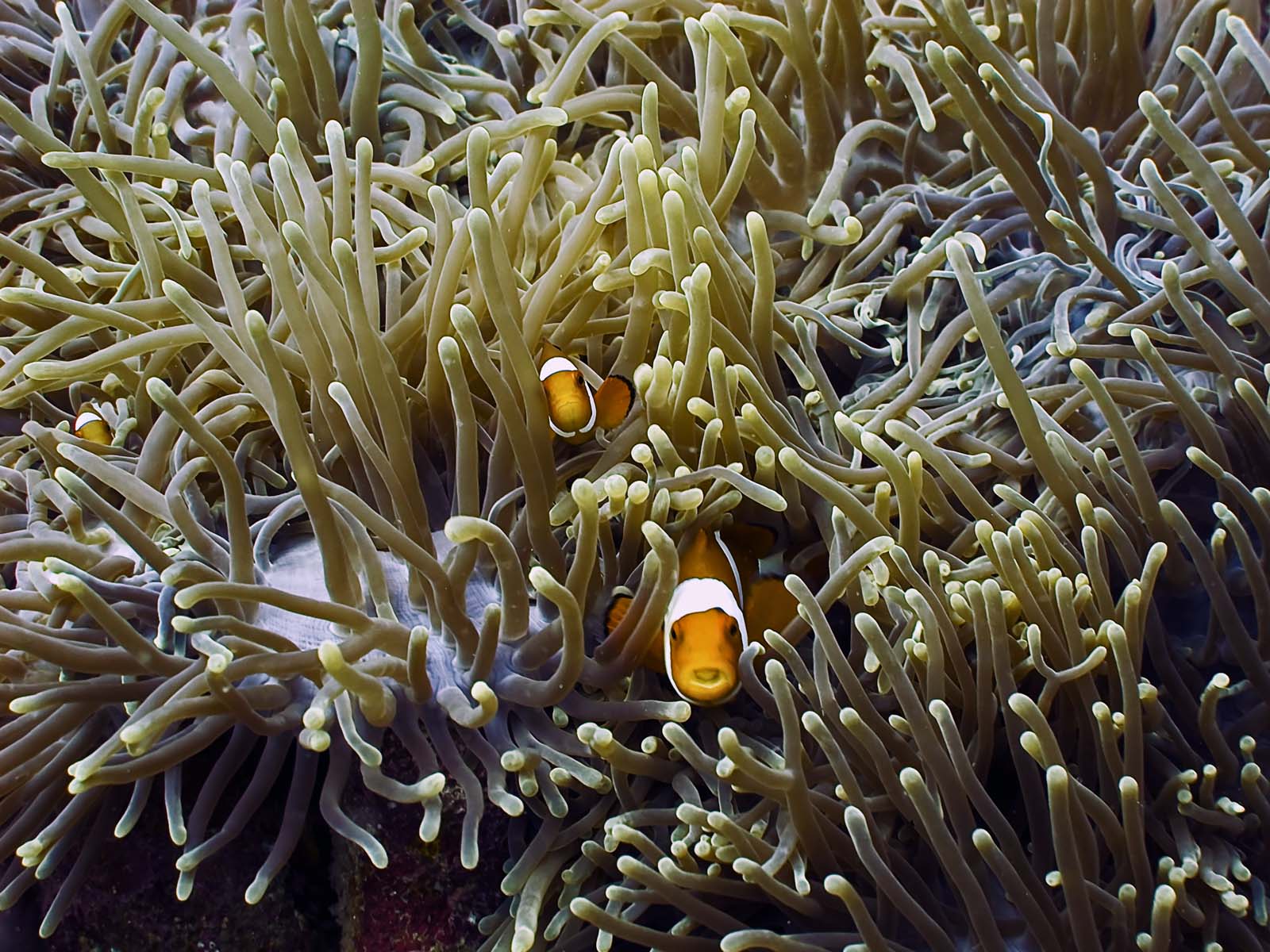
One seems to be shouting at me. By the way, I would call this a failed shot also. Careful examination will reveal that it was a snap shot and I did not take the time to check the focus carefully. Of course, if I had, I would have missed the shout.
Finally, I'll show you this artsy shot of the beautiful clear view of the reef near Alexishafen late on Sunday afternoon:
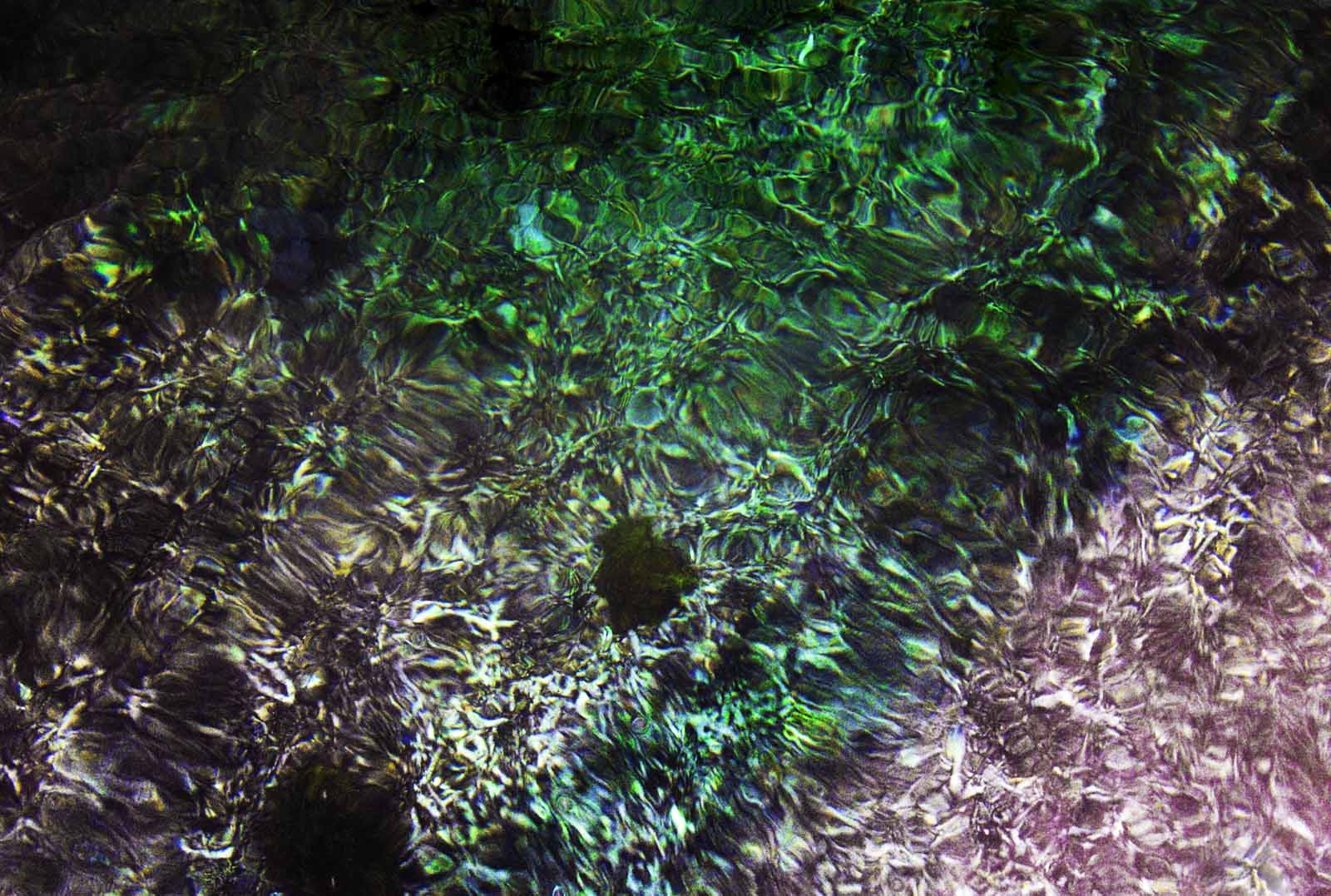
We were all peering over the side of Felmara as we stopped for a swim. The water was crystal clear and the pinkish sunset was alternating with the deep green of the two metres of water under the boat. A little bit of magic.
A little bit of magic is all it takes.
Well, see for yourself ^^. There's just no way for me to click on the login link without that flipping Microsoft ad jumping in my way. FAIL!
I keep hearing the phrase "epic fail" and it struck me as a pretty good one for the Moodlings to hold :)
We spotted this red tailed hawk on a tree and it then launched into a full speed attack into a bush in front of us. Here is the hawk taking a brief pause after the failed attack before it took off
This week’s guest is Rick Wartzman. Rick is the director of the Drucker Institute at Claremont Graduate University. Before taking this post, he worked for two decades as a newspaper reporter, editor and business columnist. He began his career in 1987 at The Wall Street Journal, where he served in a variety of positions, including White House correspondent, Houston bureau chief, and founding editor of the paper’s weekly California section.
He joined the Los Angeles Times in 2002 as business editor, and in that role helped shape “The Wal-Mart Effect,” a three-part series that won the 2004 Pulitzer Prize for National Reporting. He then became editor of the newspaper’s Sunday magazine, West, which under his leadership was named by the Missouri School of Journalism as the best regularly scheduled feature supplement in America. He is the co-author, with Mark Arax, of the best-seller The King of California: J.G. Boswell and the Making of a Secret American Empire, which was selected as one of the ten best books of 2003 by the San Francisco Chronicle and one of the ten best nonfiction books of the year by the Los Angeles Times. It also won, among other honors, a California Book Award and the William Saroyan International Prize for Writing. His most recent book, Obscene in the Extreme: The Burning and Banning of John Steinbeck’s The Grapes of Wrath, was published by PublicAffairs in September 2008.
You can read some of Rick’s recent columns for Business Week here.
For additional reference we’ve included links to some of the people, places and things discussed in this episode:
Jackson, Michigan
Obscene in the Extreme by Rick Wartzman
Dust Bowl
Detroit Unemployment Rate
Detroit Electricians Rewire Flooded Iowa City
Harley Shaiken
Bruce Springsteen - Ghost of Tom Joad
Rage Against the Machine - Ghost of Tom Joad
So What’s a Toxic Asset?
Credit Default Swaps
Mortgage Backed Securities
AIG Bonus Outrage
Peter Drucker
Drucker Institute
Claremont Graduate University
Drucker Archives
Rick Wartzman Named Director of the Drucker Institute
Los Angeles Times To Launch West Magazine
The New America Foundation
AIG and Drucker’s Glimpse At A Very Dark Place
What Would Peter Drucker Say?
Put A Cap on High CEO Pay
Invisible Hand
Free Market
Letting US Automakers Fail
The Dillema For US Car Workers
Employee Free Choice Act
Great Depression
New Deal
The First 100 Days
FDR Court Packing Fiasco
Is Obama Doing Too Much?
Six Rules for Presidents
What Obama Shouldn’t Do
The Effective Executive by Peter F. Drucker
Multitasking Is Counterproductive
Obama on 60 Minutes
London Business School
Above All Do No Harm
Managing Organizations
Organized Abandonment
Los Angeles Times
Spanish Language Newspapers Still Growing in US
Rocky Mountain News To Close
Seattle Post-Intelligencer Prints Final Edition
Out With The Dead Wood For Newspapers
San Diego Paper Lands Fire Sale Buyer
Google Dubbed Internet Parasite
Pasadena Paper May Outsource “Local” Coverage
Steering Clear of A Downward Jobs Spiral
Big Sunday
Randye Hoder
Gordon Gekko
Greed Is Good
Merle Haggard
Johnny Cash
Steve Earle
Elvis Costello
The King of California by Mark Arax and Rick Wartzman
Rick Wartzman on The Patt Morrison Show (requires Real Audio)
Rick Wartzman on Airtalk with Larry Mantle
Riverbig by Aris Janigian
David Levinson - Big Sunday
Drucker Apps
Drucker Institute on Twitter
deleted my Ipernity account. They limited the number of pics I could display, plus I found it cumbersome. As much as I dislike what Yahoo has done to Flickr, it covers my basic needs for archiving, tagging, and related global searches.
67019 is seen passing Spittal with a failed 225 set. This is 5E06 from Glasgow Central to Bounds Green and has 91126 at the rear. 10/6/14
my first attempt at painting the tokodoki nailset....failed. already painting another one. :D
Follow me on Tumblr supanails.tumblr.com/
From www.websiteoutlook.com/www.flickr.com "flickr.com Overview
flickr.com has 84 traffic rank in world by alexa. flickr.com is getting 13095238 pageviews per day and making USD 39288.71 daily. flickr.com has 241852376 backlinks according to yahoo and listed in Dmoz directory. flickr.com is hosted in United States at Inktomi Corporation data center. flickr.com is most populer in UNITED STATES. Estimeted worth of flickr.com is USD 28.68 Million according to websiteoutlook"