View allAll Photos Tagged Executed
.
.
Thir~. the decision to execute him in complete secrecy w3s an act of poht1cal expediency by the discredited UPA -II government. The execution reeks of competitive jingoism 1n view of the ris1ng Modi wave. Fourth is the fact thatAfzal Guru was denied a chance to file a review petition ! This is clearly unlawful and further confirms the fact that the UPA was merely trying to appear 'strong' by hanging Guru even at the cost of lawtul procedure. Fifth, his family was not even intormed that his review petition had been rejected. The 21'' Jan judgment clearly mentions that a person who is to be executed should be allowed to meet his family. .
Political double standards too abound. Today, many parties -including the Akali Dal (close ally of BJP) and AAP -call rightly for commutation of the death ~antenceof Devinder Singh Bhullar, convicted in a blast case, quoting the Supreme Court guidelines. The same parties, however, hail the execution of Afzal Guru! The people demanding revocation of Bhullar's {or Rajoana's) death sentence are NOT subjected to hate speech, curfews. and violence, unhke Kashmiris who mourn the death ofAfzal. We must keep reminding ourselves that in this country, death penalty has not been awarded to the perpetrators of the 1984 Sikh riots. to the murderers and rapists of the 2002 Gujarat genocide, to the accused in the Bathani Tola massacre. to the killers in Khairlanji or to the killers of Graham Staines. In many ofthese cases. the perpetrators roam free, protected from any punishment .
Some of the unanswered questions: .
The judicial proceedings recorded two occasions on which Mohammad Afzal spoke before the law: his 'confessional' statement before the police and his statement under 'Section 313 of the CrPC'. The Supreme court verdict itself admits Afzal's much publicized 'confession' which was extracted in police custody was 'UNRELIABLE'. But after the Supreme Court rejected the prosecution's theory based on Afzal's 'confession' , the latter's CrPC 313 statement was the only basis left on which his role in events that led to the attack could be probed. The Court has found his only role in it was to help a man suspected to be involve<:i '" the Parliament attack, to find a house in Delhi and to buy a car. Afzal never denied or falsjfied this role, rather admitted it. In his statement he, in fact, named an STF officer Davinder Singh who ordered him to perform those acts. Yet. Davinder Singh was mentioned neither in the FIR nor chargesheet. nor was he made a witness in the case. He did not figure anywhere 1n the trials. despite the presence of his phone numbers in Afzal's phone records. How come the Supreme Court chose to believe one part of Afzal's statement under Section 313, while conveniently ignored the rest? Why wasn't the link with the STF probed? .
After the Parliament attack, a former Police Commissioner of Thane .
S.M. Shangari. claimed in a press conference that one of the killed .
terrorist (Abu Hamza) had been c.rrested in Maharashtra in December I 2000 along with three others (one year before the Parliament house .
~ .
attack) and had subsequently been handed over to the J&K Police. .
~ .
Therefore at the time of the Parliament house attack. Abu Hamza was supposedly in the custody of the J&K police. However, K Rajendra,then inspector general of the J&K Police. dismissed Shangari's enquiries calling ~ a case of mistaken identity and arguing that Hamza is a common Muslim name. Perhaps so. But then what .. 4 happened to those four militants including Abu Hamza in J&K I STF custody? The Thane court issued repeated summons to the J&K Police to produce them in Thane. They were never sent nor any .
.
explanation provided! WHY? (See Mihir Srivastava. The Question of Reasonable Doubt.The Open Magazine 1412113) .
The so-called 'masterminds' behind the attack (Masood Azhar, Ghazi Baba and Tariq Ahmad) were never arrested and.
.
produced in any court, to verify the prosecution's story. Of these, Ghazi Saba was claimed to be shot dead by security forces in 2004. Then, where is Tariq? Why can't the STF produce him? After Kasab's arrest, we StN~ a flurry of diplomatic exchange, with India providing proof of Pakistan's involvement. demanding extraditions and so on WHY didn't we see a s1milar diplomatic exchange demanding that these three be produced in Indian courts? .
Akbar, Anubhuti .
President.JNUSU Vice-President. JNUSU .
finally file the FIR where, we have been told that the culprit has been book under Sections 376(21), 342. 324,363:-366,509 of IPC. JNUSU along w1th numerous people from the city held a Candle light March from W Police Station to the neighbouring · area. Today JNUSU joined in solidanty w1th the students from the North-East. who org~nised a silent S:t-ln at Patiala House to demand that the process of justice in the case is not subverted through crafty cover-up by any nexus of the investigation agencies and local power groups. .
Just last week, Delhi saw the brutal broad daylight murder of 19-year-old Nido Tania. from Arunachal Pradesh. in Lajpat Nagar market. A massive and sustained protest broke out in the city. But shockingly, even as the city-wide protest against this racist lynch-mob murder of Nido was at its peak, two Manipuri women were beaten up near Kotla. And nQ.W. we are witnessing this horrific barbarism against a minor North-East girl in JNU's neighbourhood. JNUSU calls for vigilance and solidarity against this growing trend of racial and sexual violence against the people of North East in the national capital. .
As the popular protest snowballed against in Nido's murder, various ruling parties d1d make the mandatory 'condemnation' noises. But it is indeed revealing that while they continue to indulge in competitive blame game to reap political harvests, none ofthem have chosen to recognise the deep-seated racial and anti-women prejudices that dominate notjust the social psyche but more dangerously the security agencies, police, 1 State policy and politics, which they directly command and ~ define. They refused to be accountable for the highlyIcondemnable police inaction. 'inefficiency' and orchestrated 'cover-up' that local police rouUnely display in dealing with such .
cases of racist and sexual violence. So we have to be extra .
vigilant that the vested power groups do NOT manage to .
subvert justice. We have to take to the streets with renewed .
.
vigour against thts growing trend of rac1st and sexual V!plence in the city. We must resolve to stop this shame NOW! .
And finally, the big question that the Indian State must answer: Afzal being a surrendered militant was under constant State surveillance. Could a man constantly watched by our security forces. and who, even according to the Court. did not belong to any terrorist organisation at the time of Parliament attack. manage to execute a terrorist attack of such magnitude? If a person under the watchful eye of the STF could be part of a conspiracy to wage war against the state, how can anything less than a public inquiry do? For this is not about the guilt or innocence of one man. but about how a system works and what it means. to democracy. sovereignty and the security of the state. Whose pawn was he really? .
It is true that the attack on Parliament was most highly condemnable and an assault on what is known as the highest seat of our democracy. Precisely because of th1s . it was imperative that the police and investigation agencies should have carried out an honest investigation to book the perpetrators. Instead, what did we get?The Supreme Court, while admitting that there is no direct evidence of Afzal's guilt, has held that he must die to satisfy the 'collective conscience' of the Indian nation. It was almost as if there was a need to at least ensure one death sentence so that the faith of the public in the efficacy of the prosecution and the judiciary and the Legislature would not be shaken. A range of Indian citizens-teachers, writers, lawyers, Gandhian and Left activists, ordinary people-have raised their voice to declare that they are NOT part of this contnved 'collective conscience'. Truly, the conscience of democratic and peace-loving citizens can be satisfied only if there is a guarantee that there is no witch-hunting or scape-goating, and those really guilty for terror and genocide are identified and punished. .
Sandeep Saurav Sarfaraz, Gen.Secy., JNUSU Jt. Secy.. JNUSU .
.
.
albeit a tad pricey.
Grilled Pork Chop with Roast Potato & Pea Dumplings, Oxford Sauce ($23).
Grilled to medium-rare, the thick brined beast (I was correct in this assumption) was tender, juicy and nicely seasoned (through and through). The excellent sear marks only helped heighten the enjoyment of the protein even if the slightly gummy potato-pea dumplings (bordering mushy pan fried gnocchi like lumps) took away from it. However the plate was redeemed by the unctuous and tangy Oxford sauce and the refreshing spears of pan fried asparagus that helped liven up the otherwise dense course.
Today (Friday 10 November), Operation Vulcan executed warrants at premises on Bury New Road, shutting down and seizing half a million of pounds worth of counterfeit items.
Police warnings seem to have fallen on deaf ears for some counterfeit operations in the area. Attempts to re-open and profit from the Christmas sales however continue to be detected and swiftly shut down.
Thanks to intelligence from the Cheetham Hill Neighbourhood Team (who remain in the area with the Vulcan team and conduct daily patrols in the community), Operation Vulcan were able to execute these warrants just days after witnessing customers walking down Bury New Road with bags of fake goods.
Detective Sergeant Matt Donnelly, one of Operation Vulcan’s specialist officers, said: “These results today demonstrate just how important it is that Operation Vulcan remain in the area. The criminals operating here are so brazen, the minute they think they spot an opening, they’re back up and running as though it’s business as usual. We’re here to show them that this isn’t the case, and we will not stop until these illegitimate shops are eradicated and those responsible are locked up.
“I hope this is a warning that no matter how many times you try to reopen, we will continue to seize your belongings and profits, making sure none of this money can make its way back into the criminal market.
Councillor Luthfur Rahman, Deputy Leader of Manchester City Council said: "Over the past 12 months we have achieved a great deal through Operation Vulcan. Through our partnership with GMP gangs have been run out of Cheetham Hill and people have been allowed to feel safe in their own neighbourhoods.
"But the work will go on. We know these gangs are tenacious and that criminals will always find ways to circumvent the law. The Council's Trading Standards will remain vigilant throughout the Christmas period to make sure that dangerous or harmful goods do not make their way in the hands of the public."
Crew executing a burn to warm up the envelope to get it ready for deployment at the Albuquerque International Balloon Fiesta
Over the last decade we have developed exclusive expertise in developing and executing interiors in terms of furnishing, modular kitchen, False ceilings, Flooring, Carpentry, electrical, plumbing, air conditioning, painting and most other work related to development of Interiors. In the process we have also developed a sustained understanding of the aesthetical and functional demands of the market in terms of distinctive architecture, interiors and décor.
Our range of interiors and furniture are specially designed to suit the space best and reflect your personal style. Ask us, what would be most appropriate for your needs and budget. We have several Interior Design packages - one of which could be a perfect match for your dream Home." />
Interior, Design & Furniture - Home Decor
terribly executed homage to herriman for this evening's hobo digest. should be up around 6.
also check out my friend Kyle's illustration immediately preceding.
Officers from South Manchester Challenger executed multiple warrants at addresses across Manchester on Thursday 23 January 2025.
Officers were supported by partner agencies – Tactical Aid Unit, Regional Crime Unit, other Challenger Teams as part of the investigation into class A and B drugs supply across Greater Manchester.
A large quantity of drugs was discovered at several properties, as well as a loaded and viable firearm. All these items have been seized.
The investigation - which was also aided by intelligence passed to us by the community, alongside a meticulous investigation and proactive policing - has resulted in the arrests of five people.
Four men and one woman between the ages of 22 and 37 were all arrested on suspicion of being concerned in the supply of class A and B drugs. They have all been remanded into custody.
Officers have also seized a large quantity of drugs and other items related to the supply of illegal drugs.
Detective Constable Helen Rutter, of our South Manchester Challenger Team, said: “Today’s warrants and arrests are part of an on-going investigation in relation to distribution and supply of class A and B drugs in and around the South Manchester area.
“Protecting our communities from such criminality means taking a stand against the supply of illegal drugs and firearms. I urge the public to continue keeping this open line of communication with police about criminal activities or expressing their concerns through contacting us directly via LiveChat, speaking to your local neighbourhood officer or anonymously through Crimestoppers.
“Every bit of information, no matter how small, contributes to our investigations across Greater Manchester and could support us in tackling vehicle crime at its root.
"If you have any concerns about crime come and speak to officers or alternatively report through 101 or via LiveChat on gmp.police.uk. Always call 999 in an emergency."
A man in his 20s received an early morning wakeup call today (Monday 24 February), as officers from our County Lines Team executed a warrant at an address in Bolton.
He was arrested on suspicion of being concerned with the supply of a Class A substance and cuckooing.
Officers carried out a search of the address and seized a mobile phone believed to be used as a drugs line.
Cuckooing is the term used when criminals take over the home of a vulnerable person is taken in order to use it to deal, store or take drugs, and other criminal activity. The practice is associated with county lines drug trafficking.
Often criminals and organised crime gangs (OCGs) target people who are lonely, isolated, or have addiction issues. It's common for OCGs to use a property for a short amount of time, moving address frequently to reduce the chance of being caught.
There are several signs to look out for that may indicate someone is a victim of cuckooing:
frequent visitors at unsociable hours
changes in your neighbour’s daily routine
unusual smells coming from a property
suspicious or unfamiliar vehicles outside an address
your neighbour may look dishevelled or seem anxious
This illegal exploitative practice will be discussed in Parliament this week as one of two new offences from the government’s flagship Crime and Policing Bill, making cuckooing illegal under the introduction of a new law.
Our County Lines Team investigate suspected drugs lines operating across Greater Manchester using overt and covert methods, including surveillance and other investigative work. If you suspect there is a drugs line operating in your area or that someone is being cuckooed, our officers take this seriously and will act on intelligence.
Since September 2022, our County Lines Team have made approximately 366 arrests with 304 charges, seized around 108kg of class A and class B drugs, and closed around 397 Type 1 county drugs lines.
Police Constable Andrew Shaw, from GMP’s County Lines Team, said: “We've closed down a suspected drugs line in Bolton this morning, which we believe may have been exploiting vulnerable people and taking over their own home.
“Our dedicated county lines team has closed down 160 drugs lines in the last year and continues to pursue suspects and protect victims.
“Drugs blight communities; from addiction to the exploitation of vulnerable people, illicit substances cause damage across Greater Manchester.
“We are unrelenting in our pursuit of organised criminals, and we will continue to act swiftly on intelligence we receive and proactively pursue offenders.
“If you have any concerns about drug supply or county lines operating in your area or feel like you have witnessed something suspicious, please do get in touch with us. You can report information to the police on 101, via gmp.police.uk, or by calling the independent charity Crimestoppers, anonymously, on 0800 555 111.”
Exécutées au milieu du 17e siècle à partir des cartons peints par Philippe de Champaigne et Jacques Stella, les tapisseries de Notre-Dame de Strasbourg évoquent en quatorze tableaux les principales séquences de la Vie de la Vierge.
Exposées dans la nef de la cathédrale, durant le temps de l’Avent seulement, elles constituent l’un des ensemble les plus prestigieux de l’art de la tapisserie à l’époque classique.
Arbour Hill Prison is a prison and military cemetery located in the Arbour Hill area near Heuston Station.
The military cemetery is the burial place of 14 of the executed leaders of the 1916 Easter Rising. Among those buried there are Patrick Pearse, James Connolly and Major John MacBride. The leaders were executed in Kilmainham Gaol and their bodies were transported to Arbour Hill for burial.
The graves are located under a low mound on a terrace of Wicklow granite in what was once the old prison yard. The grave site is surrounded by a limestone wall on which the names are inscribed in Irish and English. On the prison wall opposite the grave site is a plaque with the names of other people who were killed in 1916.
The prison was designed by Sir Joshua Jebb and Frederick Clarendon and opened on its present site in 1848, to house military prisoners.
The adjoining Church of the Sacred Heart, which is the prison chapel for Arbour Hill prison, is maintained by the Department of Defence. At the rear of the church lies the old cemetery, where lie the remains of British military personnel who died in the Dublin area in the 19th and early 20th century.
The church has an unusual entrance porch with stairs leading to twin galleries for visitors in the nave and transept.
A doorway beside the 1916 memorial gives access to the Irish United Nations Veterans' Association house and memorial garden.
Cadets execute a facing movement prior to a parade in honor of the graduation and commissioning of new officers into the Iraqi Army at Camp Ur, Iraq, Jan. 10. The Graduation of 176 2nd Lieutenants marked the last time this course will be offered at Camp Ur.
These Storm troopers were trying to execute the Star Trek fans unless they renounced and admitted love For Star Wars, We lost many good trekkies that day -sniffle-
I was to be execute by theese troopers, but lucky enough, I managed to escape! and I'm not a trekkie fan! xD
Haley Echelmeier executes a deadlift during the Iron Addiction Powerlifting Meet at Joint Base Myer-Henderson Hall's Fort Myer Fitness Center Saturday.
The place where ...
Hjemmefrontmuseet - Norway's Resistance Museum
Akershus Festning - Akershus Fortress,
( Akershus slott og festning - Akershus Castle).
Norway's Resistance Museum
Norway's Resistance Museum is housed in an old protected building in Akershus Castle Oslo, adjoining the memorial at the spot where Norwegian patriots were executed by the Germans during the second world war.
Norway's Resistance Museum was established in 1966 as an independent foundation for the purpose of «Contributing to the presentation of a true and authentic picture of the occupation by means of objects, pictures, printed matter, etc., collected preserved and exhibited with a view to giving the young people of today and coming generations a true to life impression of the evil represented by occupation and foreign rule, in this way helping to strengthen the sense of unity and defence of our national liberties».
The Museum was opened to the public in May 1970 by HRH Crown Prince Harald celebrating the 25th anniversary of liberation. The initiative to the Museum and in fact the creators of the institution were a group of persons who had been actively engaged in the resistance. Overall architectural planning was entrusted to Otto Torgersen who with key personnel from various branches of the underground forces produced a chronological gallery through the period from the prelude in the 1930's onwards to liberation in 1945.
15c Buckland Pall is made from portions of 3 velvet vestments with embroidery executed in gold and silver thread with added coloured silks and spangles. flic.kr/p/2azFG4f
The centre part is made from a blue velvet cope worked with conventional flowers.
Part of the lower border is made from a vestment of red velvet embroidered with a representation of the crucifixion, the figures of BVM and St John, originally standing on either side, have been re- applied beneath the cross.
The upper border is made from the same vestment, and has figures of a bishop with mitre and pastoral staff; St Paul (?) with a book; St Peter with keys and book & St Michael slaying the dragon with a sword. The figures are separated by conventional flowers and in the middle is a rebus formed by the letters W.H.Y. and a perspective view of a church with pinnacles of a monstrance between. The rebus is believed to refer to the name of Wiliam Whychurch, abbot of Hailes from 1464-1479 and the monstrance may be a reference to the relic of the Holy Blood of Hailes once venerated by pilgrims there.
All 3 vestments are of English work and appear to have been made in the second half of the 15c . It is believed to have come from Hailes Abbey after its 1532 Dissolution of the monasteries when such church vestments which were not destroyed were put to all sorts of common use. In its time it has served as an altar frontal and as a pall to cover coffins at funerals.- Church of St Michael , Buckland Gloucestershire
U.S. Marines assigned to the 273rd Marine Wing Support Squadron, Air Operations Company, Fuels Platoon at Marine Corps Air Station Beaufort, S.C., execute a forward air refueling point operation with the South Carolina National Guard at McEntire Joint National Guard Base, S.C. on May 14. Elements of the South Carolina Air and Army National Guard and the U.S. Marines conduct joint operations which are crucial to the ongoing success of operational readiness and deployments around the world. (U.S. Air National Guard photo by Airman 1st Class Ashleigh S. Pavelek/Released)
"And Enoch, in the seventh [generation] from Adam, prophesied about them: Look! The Lord comes with thousands of His holy ones to execute judgment on all, and to convict them of all their ungodly deeds that they have done in an ungodly way, and of all the harsh things ungodly sinners have said against Him." Jude 14-15 HCSB
Photo: Eugene Barzakovsky. Theodosia, Ukraine.
Design: Logan Weiler III
Cindy executes a daring move with 5 balls at the Boulder Circus Center.
NOTE: Look "wall-eyed" at the top pair or "cross-eyed" at the bottom pair to get a 3D image from the fused pictures. Another illustration.
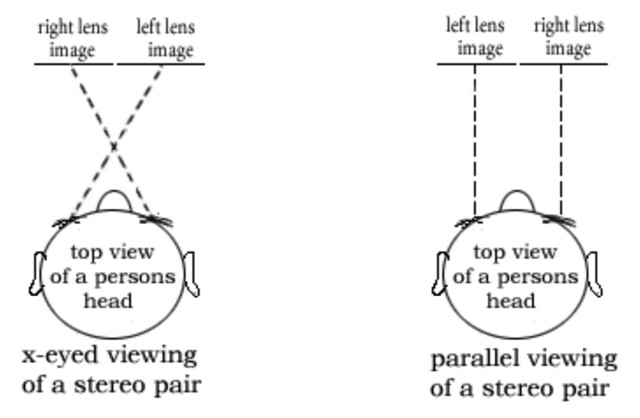
Here's a helpful tip for viewing stereo pairs.
If you'd like to browse a bit, please enjoy a somewhat random sampling of my photos.
This cruciform building, executed in the Roman Corinthian order, is monumental in scale, measuring 259 feet on its east-west axis and 152 feet on its north-south axis.
Construction [at the Charleston location] began in 1853. Hampered by unforseen engineering problems of the site, the building was unfinished at the outbreak of the Civil War. Construction was suspended until 1870, when architect A.B. Mullet arranged for further Congressional appropriations to complete the war damaged building. To reduce costs and hasten completion, Mullet's plan modified the east and west porticoes and omitted a dome and side porticoes of the original design.
Finally complete in 1879, this building has been used ever since as a United States Custom House. A new federal building that opened in the early 1960s threatened its continued use, but due to the united support of local preservationists, legislators, and U.S. Customs Officials, the building still functions today as it was originally intended.
[quoted from the National Park Service website]
Wir haben Ihren Auftrag ausgefuehrt.
We have executed your order.
Nous avons effectue votre commande.
Ihre Bestellung wurde durch unseren Fahrer geliefert.
Eine Fotographie der Blumen ist diesem Mail angehaengt oder folgt in einem separaten E-Mail gemaess den Bedingungen www.maarsen.ch/4
Your order has been delivered by our driver.
Attached you will find a photo of your bouquet or it will follow in an other e-mail. Conditions see www.maarsen.ch/4
Notre chauffeur a fait la livraison.
Veuillez trouver la photo de votre bouquet ci-dessous ou dans un prochain message electronique. Conditions voir www.maarsen.ch/4
Danke fuer Ihren Einkauf! Thank you for shopping at Maarsen's! Merci de votre confiance.
Blumen Maarsen AG
---
---
Blumen fuer die Hochzeit: www.maarsen.ch/hochzeit
Dekoration von Anlaessen www.maarsen.ch/deco
PS: Sie koennen Ihre E-Mail-Adresse eintragen, um sporadisch das Foto
eines neuen Angebotes zu erhalten -> www.maarsen.ch/regd.htm
Blumen Maarsen AG
Moserstrasse 9
3014 Bern, Switzerland
info@maarsen.ch
Telefon 0800 30 30 33
Phone +41 31 332 62 00
Fax +41 31 332 76 92
--
Ich verwende die kostenlose Version von SPAMfighter für private Anwender,
die bei mir bis jetzt 431 Spammails entfernt hat.
Bezahlende Anwender haben diesen Hinweis nicht in ihren E-Mails.
Laden Sie SPAMfighter kostenlos herunter: www.spamfighter.com/lde
Nurse Edith Cavell was executed by German forces during WWI as she had aided British POWs to escape.
There was great diplomatic efforts to have her death sentence commuted or delayed, but to no avail.
She was shot by eight soldiers, and in time, her body was repatriated, the wagon her body was carried from Dover is the same used for the body of the Unknown Soldier.
The luggage wagon usually rests at Bodiham on the Kent and East Sussex Railway, but for November it has been brought back to the former Dover Marine station.
I got tickets, so after lunch we would visit, not just to see the wagon and pay our respects, but the station is now a cruise terminal, and is rarely open to the public, and it had been a decade or so since my last visit.
I slept late, late enough so that Jools driving off to yoga woke me up at ten past six. Outside rain was bouncing down, and there was the bins to do.
I got up and put them out, dodging the raindrops, and back inside to make a coffee.
With rain expected all day, other than doing to the station after lunch, not much else planned, whilst Jools had her craft and gossip morning at the village library.
Jools came back from yoga as I was finishing my coffee, so I made breakfast giving her an hour before she had to leave again.
I listened to podcasts and watched videos for the morning, not much else to do, really.
Sadly, we had what we thought was the plumber coming to fix the overflow, but instead Craig came to touch up some paint in the toilet.
So Jools stayed home and I drove down to the Western Docks, over the flyover, past the former Lord Warden Hotel, then round to where lines from London entered Dover Marine, forming a large flat crossing in a tangle of lines.
You can still see how the lines used to curve west to join the main line to Folkestone, but is now concreted over, as are the tracks between the platforms, so to create a large flat parking area for cruisers.
I showed my ticket, and walked up through the central arch along what was the path of platforms 2 and three, past the former station buildings and under the footbridge.
At the far end there was the wagon, so I walked up, showed my ticket again, had my name ticked off, and went to look inside.
Inside there is a coffin, a replica of the one that brought the body of the unknown soldier back from France, and on the walls there were information boards on the only three bodies to be brought back from the war.
I exited it, took shots all around it, then walked to the war memorial, which is a splendid thing, and should be more accessible.
And I was done.
I thanked the volunteers and walked out, getting shots of the walkway linking the former hotel with the station and the Admiralty pier before taking shelter from the rain in the car and driving home.
I had been gone all of 40 minutes.
Once back I began to cook dinner/lunch: chicken pie, roast potatoes, steamed leeks, sprouts and spring greens, gravy and shop bought Yorkshire puddings.
It was all done by four, by which time Craig had done two coats of paint and had left.
I poured a beer and a cider, then dished up, the potatoes lovely and crunchy, without being burnt.
I won the music quiz at six, which was nice, then after washing up I settled down to watch Northern Ireland play in Slovakia.
A poor game, ended 1-0 to the home side, but Northern Ireland go to the play-offs anyway.
----------------------------------------------------------------------------------------
Edith Louisa Cavell (/ˈkævəl/ KAV-əl; 4 December 1865 – 12 October 1915) was a British nurse. She is celebrated for treating wounded soldiers from both sides without discrimination during the First World War and for helping some 200 Allied soldiers escape from German-occupied Belgium. Cavell was arrested, court-martialled under German military law and sentenced to death by firing squad. Despite international pressure for mercy, the German government refused to commute her sentence, and she was shot. The execution received worldwide condemnation and extensive press coverage.
The night before her execution, she said, "Patriotism is not enough. I must have no hatred or bitterness towards anyone". These words were inscribed on the Edith Cavell Memorial[1] opposite the entrance to the National Portrait Gallery near Trafalgar Square. Her strong Anglican beliefs propelled her to help all those who needed it, including both German and Allied soldiers. She was quoted as saying, "I can't stop while there are lives to be saved."[2] The Church of England commemorates her in its Calendar of Saints on 12 October.
Cavell, who was 49 at the time of her execution, was already notable as a pioneer of modern nursing in Belgium.
In November 1914, after the German occupation of Brussels, Cavell began sheltering British soldiers and funnelling them out of occupied Belgium to the neutral Netherlands. Wounded British and French soldiers as well as Belgian and French civilians of military age were hidden from the Germans and provided with false papers by Prince Réginald de Croÿ at his château of Bellignies near Mons. From there, they were conducted by various guides to the houses of Cavell, Louis Séverin, and others in Brussels, where their hosts would furnish them with money to reach the Dutch frontier, and provide them with guides obtained through Philippe Baucq.[18] This placed Cavell in violation of German military law.[4][19] German authorities became increasingly suspicious of the nurse's actions, which were further fuelled by her outspokenness.
The night before her execution, Cavell told the Reverend H. Stirling Gahan, the Anglican chaplain of Christ Church Brussels, who had been allowed to see her and to give her Holy Communion, "I am thankful to have had these ten weeks of quiet to get ready. Now I have had them and have been kindly treated here. I expected my sentence and I believe it was just. Standing as I do in view of God and Eternity, I realise that patriotism is not enough, I must have no hatred or bitterness towards anyone."[30][31] These words are inscribed on her statues in London and in Melbourne, Australia.[32][33] Cavell's final words to the German Lutheran prison chaplain, Paul Le Seur, were recorded as, "Ask Father Gahan to tell my loved ones later on that my soul, as I believe, is safe, and that I am glad to die for my country.
Officers forced entry into an abattoir on Higher Bury Street in Stockport on Thursday 30th January 2025, while a second warrant was executed simultaneously at a residential property on Merlin Road in Blackburn, Lancashire.
A man and a woman – both in their thirties – were arrested on suspicion of human trafficking and an offence of slavery, servitude and forced or compulsory labour, contrary to S1 and s2 of The Modern Slavery Act.
A man also in his thirties was arrested at the abattoir after he tried to evaded police, fleeing from the site and hiding on a nearby roof. We discovered he was an Albanian national living and working illegally in the UK. He is now being processed by Immigration Enforcement.
This operation took place after we received disclosure alleging a man who previously worked at the abattoir was a victim of modern day slavery. The claims are that he was forced to live in the abattoir and work around the clock to pay off extortionate debts that were said to be associated with a sponsorship visa and travel expenses.
Detectives acted quickly, following lines of enquiry, gathering potential evidence, and coordinating a joint response with national agencies: the Gangmasters and Labour Abuse Authority (GLAA) and Home Office Border Security and Asylum. This included the Salvation Army and Crime and Justice charity.
The team involved in the late-night raid interviewed 30 employees onsite with a keen eye for spotting signs of exploitation. We also seized mobile phones, computer equipment and documentation as our investigations continue.
Detective Sergeant Lee Attenborough from GMP’s Stockport Challenger Team said: “We hope this robust and coordinated action taken in response a concerning report instils confidence in our approach to tackling modern slavery head on.
“Officers spoke with every employee working within the abattoir last night, they were receptive to our presence, and we engaged in good discussions around their working conditions, payment, and terms of employment.
“It’s so important we do this diligence and thankfully there were no further claims of exploitation. We have communicated the support that is available and how to access it should anyone choose to come forward.
“This activity forms one of several active modern slavery investigations within the force. In 2024 we supported more victims of modern slavery and held more offenders accountable for the misery they caused as 80 charges were laid – 40% more than the previous year – and 19 convicted were secured, up from seven, with several cases continuing to progress through the criminal justice system.
“Modern slavery is happening across Greater Manchester, and we encourage anyone who is a victim of this crime, or suspect someone they know could be, to report it. You will always be taken seriously, and protection and support is available.
“You can report modern slavery to us using our online crime reporting service."
Debi Lloyd, Head of UK Counter Trafficking Operations at Justice and Care, said: “Our Victim Navigators were deployed alongside police and other agencies on Thursday and it was fantastic to see a collaborative and multidisciplinary approach to tackling alleged modern slavery.
‘Navigators are embedded in police forces across the UK and help survivors to rebuild their lives and secure justice against exploiters. We are supporting the survivor in this case and commend their bravery in coming forward.
‘If you are experiencing exploitation, please know you are not alone, and support is available.
‘Every person out there can play a part in fighting modern slavery by learning to spot the signs and reporting any concerns to police or the Modern Slavery Helpline on 0800 0121 700.”
Gangmasters & Labour Abuse Authority (GLAA) Investigations Manager Michael Heyes said: “The GLAA works to stop the exploitation of workers in the UK and ensure that they are treated fairly. We have powers to investigate modern slavery offences and work with law enforcement and other partners to achieve this end.
“The GLAA has been involved in at least seven modern slavery and human trafficking investigations in Greater Manchester between April 2024 and January 2025.
“The GLAA is an intelligence-led organisation. Anyone with information or concerns about workers being exploited for their labour should email contact@gla.gov.uk or use the online reporting form which can be found at www.gla.gov.uk.”
Director of Anti Trafficking and Modern Slavery for The Salvation Army, Major Kathy Betteridge said: "The Salvation Army was on site today with Greater Manchester Police to make available specialist support for any potential victims of modern slavery identified. It is vital that victims’ needs are assessed, and they receive immediate access to protective care and specialised support, available through a Government contract operated by The Salvation Army.
“We work with survivors as they begin the long journey to rebuild their lives and their trust in humanity. Support provided by The Salvation Army can include intensive 24/7 support for people with high-level needs as well as safe accommodation, counselling and help with returning home, finances and finding employment.
"If you suspect that you, or someone you have come into contact with may be a victim of modern slavery and in need of help, please call The Salvation Army’s 24-hour confidential referral helpline on 0800 808 3733."
Minister for Border Security and Asylum, Dame Angela Eagle MP, said: “Modern slavery is an abhorrent crime that dehumanises people for profit. We are committed to tackling it in all its forms and giving survivors the support and certainty they need to rebuild their lives.
“We know that many people are sold lies about their ability to live and work in the UK and are often subjected to squalid conditions and illegal working hours for little to no pay.
“That’s why, as well as playing a critical safeguarding role, our immigration officers are also ramping up enforcement activity across the country to clamp down on illegal working and the exploitation of illegal workers to put a stop to the abuse of our immigration system and ensure those involved face the full consequences.”
Deputy Mayor of Greater Manchester, Kate Green, said: "Modern slavery is an appalling crime that has no place in our communities. Exploiting vulnerable people for profit is utterly unacceptable, and I fully support the efforts of our teams in bringing those responsible to justice.
"I’d like to welcome the way different agencies are working in partnership to tackle this disgusting crime. Through Programme Challenger, our partnership with GMP and a broad range of partners from across the public, private and voluntary sectors to tackle serious and organised crime, we are making a real difference, ensuring victims are protected and offenders face the consequences of their actions.
"We all have a part to play in spotting the signs of modern slavery. If something doesn't feel right, take action and report it. And I ask businesses specifically, please consider your supply chains and whether there may be a risk that modern slavery is happening where you access goods and services.
"Greater Manchester will not tolerate such exploitation, and we remain committed to rooting it out wherever it occurs."
You should call 101, the national non-emergency number, to report crime and other concerns that do not require an emergency response.
Always call 999 in an emergency, such as when a crime is in progress, violence is being used or threatened or where there is danger to life.
You can also call anonymously with information about crime to Crimestoppers on 0800 555 111. Crimestoppers is an independent charity who will not want your name, just your information. Your call will not be traced or recorded and you do not have to go to court or give a statement.
You can access many of our services online at www.gmp.police.uk
This project was being executed during the Transformers 3 movie period .It took me quite awhile to finish .I still remember when first saw FR leaderclass ironhide which inspired me with 2 large cannon attached on its arms ,it was amazing I couldn't resist to make one ,so I quickly went to my nearest toysrus store and bought 1 .I guess this was a completed kitbash too as I have dismantle part by part and figure out the way to make it more majestic .It took me almost 1 month to kitbash it and come with its 2 freaking big cannon which I think its worth the wait .YES it can be TRANSFORMED TO ITS TRAIN MODE.
Here are the spec :
Build in with head light white glowing eyes blue LEDs
Independent interchangable LEDs on its cannon up to 3 colours ,RED,BLUE,GREEN
Head modify with 360 turn.
Both hands modify with live adjustable fingers and attachable wraist with very strong durable earth magnet.
Comes with 2 freaking big cannons with interchangable LEDs light build in ,attachable and deattchable to its arms .
Painted with durable lacquer paint added a few protective layer of gloss for its durability.
Over 20 points of articulated areas very posable.
Officers forced entry into an abattoir on Higher Bury Street in Stockport on Thursday 30th January 2025, while a second warrant was executed simultaneously at a residential property on Merlin Road in Blackburn, Lancashire.
A man and a woman – both in their thirties – were arrested on suspicion of human trafficking and an offence of slavery, servitude and forced or compulsory labour, contrary to S1 and s2 of The Modern Slavery Act.
A man also in his thirties was arrested at the abattoir after he tried to evaded police, fleeing from the site and hiding on a nearby roof. We discovered he was an Albanian national living and working illegally in the UK. He is now being processed by Immigration Enforcement.
This operation took place after we received disclosure alleging a man who previously worked at the abattoir was a victim of modern day slavery. The claims are that he was forced to live in the abattoir and work around the clock to pay off extortionate debts that were said to be associated with a sponsorship visa and travel expenses.
Detectives acted quickly, following lines of enquiry, gathering potential evidence, and coordinating a joint response with national agencies: the Gangmasters and Labour Abuse Authority (GLAA) and Home Office Border Security and Asylum. This included the Salvation Army and Crime and Justice charity.
The team involved in the late-night raid interviewed 30 employees onsite with a keen eye for spotting signs of exploitation. We also seized mobile phones, computer equipment and documentation as our investigations continue.
Detective Sergeant Lee Attenborough from GMP’s Stockport Challenger Team said: “We hope this robust and coordinated action taken in response a concerning report instils confidence in our approach to tackling modern slavery head on.
“Officers spoke with every employee working within the abattoir last night, they were receptive to our presence, and we engaged in good discussions around their working conditions, payment, and terms of employment.
“It’s so important we do this diligence and thankfully there were no further claims of exploitation. We have communicated the support that is available and how to access it should anyone choose to come forward.
“This activity forms one of several active modern slavery investigations within the force. In 2024 we supported more victims of modern slavery and held more offenders accountable for the misery they caused as 80 charges were laid – 40% more than the previous year – and 19 convicted were secured, up from seven, with several cases continuing to progress through the criminal justice system.
“Modern slavery is happening across Greater Manchester, and we encourage anyone who is a victim of this crime, or suspect someone they know could be, to report it. You will always be taken seriously, and protection and support is available.
“You can report modern slavery to us using our online crime reporting service."
Debi Lloyd, Head of UK Counter Trafficking Operations at Justice and Care, said: “Our Victim Navigators were deployed alongside police and other agencies on Thursday and it was fantastic to see a collaborative and multidisciplinary approach to tackling alleged modern slavery.
‘Navigators are embedded in police forces across the UK and help survivors to rebuild their lives and secure justice against exploiters. We are supporting the survivor in this case and commend their bravery in coming forward.
‘If you are experiencing exploitation, please know you are not alone, and support is available.
‘Every person out there can play a part in fighting modern slavery by learning to spot the signs and reporting any concerns to police or the Modern Slavery Helpline on 0800 0121 700.”
Gangmasters & Labour Abuse Authority (GLAA) Investigations Manager Michael Heyes said: “The GLAA works to stop the exploitation of workers in the UK and ensure that they are treated fairly. We have powers to investigate modern slavery offences and work with law enforcement and other partners to achieve this end.
“The GLAA has been involved in at least seven modern slavery and human trafficking investigations in Greater Manchester between April 2024 and January 2025.
“The GLAA is an intelligence-led organisation. Anyone with information or concerns about workers being exploited for their labour should email contact@gla.gov.uk or use the online reporting form which can be found at www.gla.gov.uk.”
Director of Anti Trafficking and Modern Slavery for The Salvation Army, Major Kathy Betteridge said: "The Salvation Army was on site today with Greater Manchester Police to make available specialist support for any potential victims of modern slavery identified. It is vital that victims’ needs are assessed, and they receive immediate access to protective care and specialised support, available through a Government contract operated by The Salvation Army.
“We work with survivors as they begin the long journey to rebuild their lives and their trust in humanity. Support provided by The Salvation Army can include intensive 24/7 support for people with high-level needs as well as safe accommodation, counselling and help with returning home, finances and finding employment.
"If you suspect that you, or someone you have come into contact with may be a victim of modern slavery and in need of help, please call The Salvation Army’s 24-hour confidential referral helpline on 0800 808 3733."
Minister for Border Security and Asylum, Dame Angela Eagle MP, said: “Modern slavery is an abhorrent crime that dehumanises people for profit. We are committed to tackling it in all its forms and giving survivors the support and certainty they need to rebuild their lives.
“We know that many people are sold lies about their ability to live and work in the UK and are often subjected to squalid conditions and illegal working hours for little to no pay.
“That’s why, as well as playing a critical safeguarding role, our immigration officers are also ramping up enforcement activity across the country to clamp down on illegal working and the exploitation of illegal workers to put a stop to the abuse of our immigration system and ensure those involved face the full consequences.”
Deputy Mayor of Greater Manchester, Kate Green, said: "Modern slavery is an appalling crime that has no place in our communities. Exploiting vulnerable people for profit is utterly unacceptable, and I fully support the efforts of our teams in bringing those responsible to justice.
"I’d like to welcome the way different agencies are working in partnership to tackle this disgusting crime. Through Programme Challenger, our partnership with GMP and a broad range of partners from across the public, private and voluntary sectors to tackle serious and organised crime, we are making a real difference, ensuring victims are protected and offenders face the consequences of their actions.
"We all have a part to play in spotting the signs of modern slavery. If something doesn't feel right, take action and report it. And I ask businesses specifically, please consider your supply chains and whether there may be a risk that modern slavery is happening where you access goods and services.
"Greater Manchester will not tolerate such exploitation, and we remain committed to rooting it out wherever it occurs."
You should call 101, the national non-emergency number, to report crime and other concerns that do not require an emergency response.
Always call 999 in an emergency, such as when a crime is in progress, violence is being used or threatened or where there is danger to life.
You can also call anonymously with information about crime to Crimestoppers on 0800 555 111. Crimestoppers is an independent charity who will not want your name, just your information. Your call will not be traced or recorded and you do not have to go to court or give a statement.
You can access many of our services online at www.gmp.police.uk
Amera cruise ship executing a port swing departing the CLT, Liverpool to head outbound for sea
Building cost: USD 160 million
IMO: 8700280
Vessel Type - Detailed: Passenger Ship
MMSI: 311000840
Call Sign: C6EA7
Flag: Bahamas
Gross Tonnage: 39051
Summer DWT: 6150 t
Length Overall x Breadth Extreme: 204 x 32.32 m
Year Built: 24 Nov 1988
9 Passenger Decks
Registered owner: Phoenix Reisen
Ship manager/Commercial manager & ISM: Phoenix Reisen GmbH
Shipyard: Wärtsilä Marine Perno Shipyard, Turku, Finland
Yard number: 1296
Keel laying date: 20 Jan 1988
Main Engine: x4 Wärtsilä-Sulzer 8ZAL40S 4 stroke 8 cyls @ 530RPM
Engine Power kW: 21120kW
Twin screw - controllable pitch + stern thruster
x2 bow thrusters @ 1000kW each
x1 stern thruster @ 1000 kW
Speed: 22 knots max and 18 knots service speed
Capacity: 835 passengers and 440 crew
Last Refurbishment: 2019
Amera cruise ship executing a port swing departing the CLT, Liverpool to head outbound for sea
Building cost: USD 160 million
IMO: 8700280
Vessel Type - Detailed: Passenger Ship
MMSI: 311000840
Call Sign: C6EA7
Flag: Bahamas
Gross Tonnage: 39051
Summer DWT: 6150 t
Length Overall x Breadth Extreme: 204 x 32.32 m
Year Built: 24 Nov 1988
9 Passenger Decks
Registered owner: Phoenix Reisen
Ship manager/Commercial manager & ISM: Phoenix Reisen GmbH
Shipyard: Wärtsilä Marine Perno Shipyard, Turku, Finland
Yard number: 1296
Keel laying date: 20 Jan 1988
Main Engine: x4 Wärtsilä-Sulzer 8ZAL40S 4 stroke 8 cyls @ 530RPM
Engine Power kW: 21120kW
Twin screw - controllable pitch + stern thruster
x2 bow thrusters @ 1000kW each
x1 stern thruster @ 1000 kW
Speed: 22 knots max and 18 knots service speed
Capacity: 835 passengers and 440 crew
Last Refurbishment: 2019
Officers forced entry into an abattoir on Higher Bury Street in Stockport on Thursday 30th January 2025, while a second warrant was executed simultaneously at a residential property on Merlin Road in Blackburn, Lancashire.
A man and a woman – both in their thirties – were arrested on suspicion of human trafficking and an offence of slavery, servitude and forced or compulsory labour, contrary to S1 and s2 of The Modern Slavery Act.
A man also in his thirties was arrested at the abattoir after he tried to evaded police, fleeing from the site and hiding on a nearby roof. We discovered he was an Albanian national living and working illegally in the UK. He is now being processed by Immigration Enforcement.
This operation took place after we received disclosure alleging a man who previously worked at the abattoir was a victim of modern day slavery. The claims are that he was forced to live in the abattoir and work around the clock to pay off extortionate debts that were said to be associated with a sponsorship visa and travel expenses.
Detectives acted quickly, following lines of enquiry, gathering potential evidence, and coordinating a joint response with national agencies: the Gangmasters and Labour Abuse Authority (GLAA) and Home Office Border Security and Asylum. This included the Salvation Army and Crime and Justice charity.
The team involved in the late-night raid interviewed 30 employees onsite with a keen eye for spotting signs of exploitation. We also seized mobile phones, computer equipment and documentation as our investigations continue.
Detective Sergeant Lee Attenborough from GMP’s Stockport Challenger Team said: “We hope this robust and coordinated action taken in response a concerning report instils confidence in our approach to tackling modern slavery head on.
“Officers spoke with every employee working within the abattoir last night, they were receptive to our presence, and we engaged in good discussions around their working conditions, payment, and terms of employment.
“It’s so important we do this diligence and thankfully there were no further claims of exploitation. We have communicated the support that is available and how to access it should anyone choose to come forward.
“This activity forms one of several active modern slavery investigations within the force. In 2024 we supported more victims of modern slavery and held more offenders accountable for the misery they caused as 80 charges were laid – 40% more than the previous year – and 19 convicted were secured, up from seven, with several cases continuing to progress through the criminal justice system.
“Modern slavery is happening across Greater Manchester, and we encourage anyone who is a victim of this crime, or suspect someone they know could be, to report it. You will always be taken seriously, and protection and support is available.
“You can report modern slavery to us using our online crime reporting service."
Debi Lloyd, Head of UK Counter Trafficking Operations at Justice and Care, said: “Our Victim Navigators were deployed alongside police and other agencies on Thursday and it was fantastic to see a collaborative and multidisciplinary approach to tackling alleged modern slavery.
‘Navigators are embedded in police forces across the UK and help survivors to rebuild their lives and secure justice against exploiters. We are supporting the survivor in this case and commend their bravery in coming forward.
‘If you are experiencing exploitation, please know you are not alone, and support is available.
‘Every person out there can play a part in fighting modern slavery by learning to spot the signs and reporting any concerns to police or the Modern Slavery Helpline on 0800 0121 700.”
Gangmasters & Labour Abuse Authority (GLAA) Investigations Manager Michael Heyes said: “The GLAA works to stop the exploitation of workers in the UK and ensure that they are treated fairly. We have powers to investigate modern slavery offences and work with law enforcement and other partners to achieve this end.
“The GLAA has been involved in at least seven modern slavery and human trafficking investigations in Greater Manchester between April 2024 and January 2025.
“The GLAA is an intelligence-led organisation. Anyone with information or concerns about workers being exploited for their labour should email contact@gla.gov.uk or use the online reporting form which can be found at www.gla.gov.uk.”
Director of Anti Trafficking and Modern Slavery for The Salvation Army, Major Kathy Betteridge said: "The Salvation Army was on site today with Greater Manchester Police to make available specialist support for any potential victims of modern slavery identified. It is vital that victims’ needs are assessed, and they receive immediate access to protective care and specialised support, available through a Government contract operated by The Salvation Army.
“We work with survivors as they begin the long journey to rebuild their lives and their trust in humanity. Support provided by The Salvation Army can include intensive 24/7 support for people with high-level needs as well as safe accommodation, counselling and help with returning home, finances and finding employment.
"If you suspect that you, or someone you have come into contact with may be a victim of modern slavery and in need of help, please call The Salvation Army’s 24-hour confidential referral helpline on 0800 808 3733."
Minister for Border Security and Asylum, Dame Angela Eagle MP, said: “Modern slavery is an abhorrent crime that dehumanises people for profit. We are committed to tackling it in all its forms and giving survivors the support and certainty they need to rebuild their lives.
“We know that many people are sold lies about their ability to live and work in the UK and are often subjected to squalid conditions and illegal working hours for little to no pay.
“That’s why, as well as playing a critical safeguarding role, our immigration officers are also ramping up enforcement activity across the country to clamp down on illegal working and the exploitation of illegal workers to put a stop to the abuse of our immigration system and ensure those involved face the full consequences.”
Deputy Mayor of Greater Manchester, Kate Green, said: "Modern slavery is an appalling crime that has no place in our communities. Exploiting vulnerable people for profit is utterly unacceptable, and I fully support the efforts of our teams in bringing those responsible to justice.
"I’d like to welcome the way different agencies are working in partnership to tackle this disgusting crime. Through Programme Challenger, our partnership with GMP and a broad range of partners from across the public, private and voluntary sectors to tackle serious and organised crime, we are making a real difference, ensuring victims are protected and offenders face the consequences of their actions.
"We all have a part to play in spotting the signs of modern slavery. If something doesn't feel right, take action and report it. And I ask businesses specifically, please consider your supply chains and whether there may be a risk that modern slavery is happening where you access goods and services.
"Greater Manchester will not tolerate such exploitation, and we remain committed to rooting it out wherever it occurs."
You should call 101, the national non-emergency number, to report crime and other concerns that do not require an emergency response.
Always call 999 in an emergency, such as when a crime is in progress, violence is being used or threatened or where there is danger to life.
You can also call anonymously with information about crime to Crimestoppers on 0800 555 111. Crimestoppers is an independent charity who will not want your name, just your information. Your call will not be traced or recorded and you do not have to go to court or give a statement.
You can access many of our services online at www.gmp.police.uk
This cross marks the place where James Connolly was executed for his role in the 1916 uprising. Our guide shared basically this summary that I found on wikipedia.
Connolly was not actually held in gaol, but in a room (now called the "Connolly Room") at the State Apartments in Dublin Castle, which had been converted to a first-aid station for troops recovering from the war.
Connolly was sentenced to death by firing squad for his part in the rising. On 12 May 1916 he was taken by military ambulance to Royal Hospital Kilmainham, across the road from Kilmainham Gaol, and from there taken to the gaol, where he was to be executed. Visited by his wife, and asking about public opinion, he commented, "They will all forget that I am an Irishman."
Connolly had been so badly injured from the fighting (a doctor had already said he had no more than a day or two to live, but the execution order was still given) that he was unable to stand before the firing squad; he was carried to a prison courtyard on a stretcher. His absolution and last rites were administered by a Capuchin, Father Aloysius. Asked to pray for the soldiers about to shoot him, he said: "I will say a prayer for all men who do their duty according to their lights.[citation needed]" Instead of being marched to the same spot where the others had been executed, at the far end of the execution yard, he was tied to a chair and then shot.
His body (along with those of the other rebels) was put in a mass grave without a coffin. The executions of the rebels deeply angered the majority of the Irish population, most of whom had shown no support during the rebellion. It was Connolly's execution, however, that caused the most controversy. Historians have pointed to the manner of execution of Connolly and similar rebels, along with their actions, as being factors that caused public awareness of their desires and goals and gathered support for the movements that they had died fighting for.
The executions were not well received, even throughout Britain, and drew unwanted attention from the United States, which the British Government was seeking to bring into the war in Europe. Herbert Asquith, the Prime Minister, ordered that no more executions were to take place; an exception being that of Roger Casement as he had not yet been tried.
On Tuesday 15 October 2024, police executed five warrants at addresses in Rochdale and Manchester to tackle the cruel and unlawful sale of puppies,
following an extensive investigation by the RSPCA, supported by Greater Manchester Police, into the illegitimate and organised sale of puppies.
This investigation has uncovered an illicit underground trade that promotes animal cruelty and neglect, with sellers and criminal gangs making vast sums of money at the expense of innocent puppies and members of the public.
Some puppies were sick and died shortly after being sold to unsuspecting members of the public who believed they were buying much-loved family pets but may have been imported from overseas.
Today’s positive action comes as a result of several reports from members of the public who have been subject to extreme distress as a result of this illicit operation. Work remains ongoing and we are following several lines of enquiry to disrupt and prevent this type of criminality.
Sergeant Brendan Walsh, from our Rochdale district, said: “This is organised crime, and those involved have been making eye watering profits from this harmful and illicit trade.
“This has been a tremendous joint effort between Greater Manchester Police and the RSPCA's Special Operations Unit.
"The properties were searched, and police have rescued 14 puppies and seized an XL bully. Police also seized several mobile phones, important documents and bank statements, all consistent with an organised criminal operation involving the fraudulent and unlawful sale and breeding of puppies.
“We’ve had members of the public who have paid substantial amounts for these puppies, paid large veterinary fees, and have been left traumatised by their experiences. I hope today’s activity will highlight our commitment to tackling this type of crime, and I would urge anyone who feels they have been affected by this, please contact us so that we can act."
An RSPCA spokesperson said: "We'd urge anyone who wants to get a dog to consider adopting from a rescue charity, like the RSPCA. There are thousands of dogs across the country waiting to find their forever families.
"Anyone who is looking to buy a puppy should be cautious when choosing a breeder and use The Puppy Contract to help them find a happy, healthy dog. Anyone who is concerned about a seller should walk away and report their concerns to the police, Trading Standards or RSPCA."
Anyone with concerns over illegal puppy sales should contact Greater Manchester Police using the online reporting method or calling 101. Concerns can also be reported to the RSPCA.
.
Third, the decision to execute him in complete secrecy was an act of political expediency by the discredited UPA -II govarnment The execution reeks of competitive jingoism in view of the rising Modi wave. Fourth is the fact that Afzal Guru was denied a chance to file a review petition! This is clearly unlawful and further confirms the fact that the UPA was merely trying to appear 'strong' by hanging GLIP.I even at the cost of lawful procedure. Fifth, his family was not even informed that his review petition had been rejected. The 21 " Jan judgment clearly .
mentions that a person who is to be executed should be allowed to meet his family. .
Political double standards too abound. Today, many parties -including the Akali Dal (close ally of BJP) and AAP -call rightly for commutation of the death sentence of Devinder Singh Bhullar, convicted in a blast case, quoting the Supreme Court guidelines. The same parties, however, hail the execution of Afzal Guru! The people demanding r~vocation of Bhullar's (or Rajoana's) death sentence are NOT subjected to hate speech. curfews, and violence, unlike Kashmiris who mourn the death of Afzal. We must keep reminding ourselves that in this country. death penalty has not been awarded to the perpetrators of the 1984 Sikh riots, to the murderers and rapists of the 2002 Gujarat genocide, to the accused in the Bathani Tola massacre, to the killers in Khairlanji or to the killers of Graham Staines. In many of these cases, the perpetrators roam free, protected from any punishment. · .
Some of the unanswered questions: .
The judicial proceedings recorded two occasions on which Mohammad Afzal spoke before the law: his 'confessional' statement before the police and his statement under 'Section 313 of the CrPC'. The Supreme .
·court verdict itself admits Afzal's much publicized 'confession ' which was extracted in police custody was 'UNRELIABLE'. But after the Supreme Court rejected the prosecution's theory based on Afzal's 'confession', the latter's CrPC 313 statement was the only basis left on which his role in events that led to the attack could be probed . The Court has found his only role in it was to help a man suspected to be involved in the f'>arliamant attack, to find"' house in nelhi and lo buy a car. Afzal never denied or falsified this role, rather admitted it. In his statement he, in fact, n!lrned an STF office Qi' ·.·:l"'de · Singh who ordered him to perfMm those acts. Yet, DavindEJ[ .Singh was mentioned neither in the FIR nor chargesheet. nor was he made a witness in the case. He did not figure anywhere in the tnals, ~~spite the presence of his phone numbers in Afzal's phone records. H.~w come the Supreme Court chose to believe one part of Afzal's statement under Section 313, while conveniently ign.!>red the rest? Why W<!sn't the link with the STF probed? .
Afte,· the Parliament attack, a former Police Commissioner of Thane .
S.M. Shangari, claimed in a press conference that one of the killed terronst (Abu Hamza) had been arrested in Maharashtra in December 2000 along with three others (one year before the Parliament house attack) and had subsequently been handed over to the J&K Police. Therefore at the time of the Parliament house attack. Abu Hamza was supposedly in the custody of the J&K police. .
However, K Rajendra, then inspector general of the J&K Police, dismissed Shangari't; enquiries calling it a case of mistaken identity and arguing that Hamza is a common Muslim name. Perhaps so. But then what happened to those four militants including Abu Hamza in J&K STF custody? The Thane court issued repeated summons to the J&K Police to produce them in Thane. They were never sent nor any explanation provided! WHY? (See Mihir Srivastava, The Question of Reasonable Doubt, The Open Magazine 1412/13) .
The so-called 'masterminds' behind the attack (Masood Azhar, Ghazi Baba and Tariq Ahmad) were never arrested and produced in any court, to verify the prosecution's story: Of these, Ghazi Baba was claimed to be shot dead by security forces in 2004. Then, where is Tariq? Why can't the STF produce him? After Kasab's arrest, we saw a flurry of diplomatic exchange, with India providing proof of Pakistan's involvement, demanding extraditions and so on. WHY didn't we see a similar diplomatic exchange demanding that these three be produced in Indian courts? .
finally file the FIR where, we have been told that the culprit has been book under Sections 376(2i}, 342, 324,363,366,509 of /PC . JNUSU along with numerous people from the city held aIC8ndle light March from W Police Station to the neighbouring area. Today JNUSU joined in solidarity with the students from .
tne North-East, who organised a silent Sit-In at Patiala House to demand that the process of justice in the case is not subverted through crafty cover-up by any nexus of the investigation agencies and local power groups. .
Just last week, Delhi saw the brutal broad daylight murder of .
19-year-old Nido Tania, from Arunachal Pradesh, in Lajpat .
Nagar market. A massive and sustained protest broke out in .
the city. But shockingly, even as the city-wide protest against .
this racist lynch-mob murder of Nido was at its peak, two .
Manipuri women were beaten up near Kotla. And now, we are .
witnessing this horrific barbarism against a minor North-East .
girl in JNU's neighbourhood. JNUSU calls for vigilance and .
solidarity against this growing trend of racial and sexual .
violence against the people of North East in the national .
capital. .
.
As the popular protest snowballed against in Nido's murder,.,.,:--various ruling parties did make the mandatory 'condemnation' noises. But it is indeed revealing that while they continue to .
I .
;.,dulge in competitive blame game to reap political harvests, none ofthem have chosen to recognise the deep-seated racial and anti-women prejudices that dominate not just the social psyche but more dangerously the security agencies, police, State policy and politics, which they directly command and define. They refused to be accountable for the highly condemnable police inaction, 'inefficiency' and orchestrated 'cover-up' that local police routinely display in dealing with such .
cases of racist and sexual violence. So we have to be extra .
vigilant that the vested power ':jroups do NOT manage to .
·: ubv<'rt justic~;. 1Ne ha'\Te to take to the streets with renewed .
vigour against this growing trend of racist and sexual violence .
.
in the city. We must resolve,to stop this shame NOW! .
i:..nd finally, the big question that the Indian State must answer: .
Afzal being a surrendered militant was under constant State surveillance. .
Could a man constantly watched by our security forces, and who, .
.
even according to the Court, did not belong to any terrorist organisation .
at the time of Parliament attack, manage to execute a terrorist attack of .
such magnitude? If a person under the watchful eye of the STF .
.
could be part of a conspiracy to wage war against the state, how can anything less than a public inquiry do? For th is is not about the guilt or innocence of one man, but about how a system works and what it means, to democracy, sovereignty and the security of the state. Whose pawn was he really? .
It is true that the attack on Parliament was most highly condemnable .
and an assault on what is known as the highest seat of our democracy. .
Precisely because of this , it was imperative that the police and .
investigation agencies should have carried out an honest investigation .
to book the perpetrators. Instead, what did we get?The Supreme .
Court, while admitting that there is no direct evidence of Afzal's .
guilt, has held that he must die to satisfy the ' collective .
conscience' of the Indian nation. It was almost as if there was a .
need to at least ensure one death sentence so that the faith of the .
public in the efficacy of the prosecution and the judiciary and the .
Legislature would not be shaken. A range of Indian citizens-teachers, .
writers, lawyers, Gandhian and Left activists. ordinary people -have .
raised their voice to declare that they are NOT par1 of this contrived .
'collective conscience'. Truly, the conscience of democratic and .
peace-loving citizens can be satisfied only if there is a .
guarantee that there is no witch-hunting or scape-goating, .
and those really guilty for terror and genocide are identified .
and punished. .
.
Akbar, .
Anubhuti Sandeep Saurav Sarfaraz, .
President, JNUSU Vice-President,JNUSU Gen. Secy.,JNUSU Jt.Secy.,JNUSU .
.
Visual projects executed by Vicenza High School students are on display near VHS teacher Lisa Balboni’s Honors 10 World History class.
This year’s Honors 10 World History class project was called The Swerve.
About 30 students working in pairs used different creative ideas to show how historical events tie into one other. The project started with Dark Ages and ended with the French Revolution, analyzing political, economic and social change from the 16th to the 18th century.
Photo by Laura Kreider, USAG Vicenza/PAO
Learn more on www.usag.vicenza.army.mil or www.facebook.com/USAGVicenza.
Agreement executed at Culver City, California, february 12th 1927, by and between Samuel Goldwin Inc. of California corporation, hereinafter referred to as the Producer and Marcel de Sano, of Los Angeles, California, hereinafter referred to as the Director
Sourse: Portrait of the director Marcel de Sano by Thomas Staedeli
82nd CAB executes a simulated Chemical, Biological, Radiological and Nuclear training event during a Leadership Professional Development course on Simmons Army Airfield, Fort Bragg, N.C., March 2.
The objective of this training exercise is to ensure leaders of all facets have a baseline understanding of potential CBRN threats and how to maneuver their forces in the event of a chemical attack against personnel and aircraft.
Officers forced entry into an abattoir on Higher Bury Street in Stockport on Thursday 30th January 2025, while a second warrant was executed simultaneously at a residential property on Merlin Road in Blackburn, Lancashire.
A man and a woman – both in their thirties – were arrested on suspicion of human trafficking and an offence of slavery, servitude and forced or compulsory labour, contrary to S1 and s2 of The Modern Slavery Act.
A man also in his thirties was arrested at the abattoir after he tried to evaded police, fleeing from the site and hiding on a nearby roof. We discovered he was an Albanian national living and working illegally in the UK. He is now being processed by Immigration Enforcement.
This operation took place after we received disclosure alleging a man who previously worked at the abattoir was a victim of modern day slavery. The claims are that he was forced to live in the abattoir and work around the clock to pay off extortionate debts that were said to be associated with a sponsorship visa and travel expenses.
Detectives acted quickly, following lines of enquiry, gathering potential evidence, and coordinating a joint response with national agencies: the Gangmasters and Labour Abuse Authority (GLAA) and Home Office Border Security and Asylum. This included the Salvation Army and Crime and Justice charity.
The team involved in the late-night raid interviewed 30 employees onsite with a keen eye for spotting signs of exploitation. We also seized mobile phones, computer equipment and documentation as our investigations continue.
Detective Sergeant Lee Attenborough from GMP’s Stockport Challenger Team said: “We hope this robust and coordinated action taken in response a concerning report instils confidence in our approach to tackling modern slavery head on.
“Officers spoke with every employee working within the abattoir last night, they were receptive to our presence, and we engaged in good discussions around their working conditions, payment, and terms of employment.
“It’s so important we do this diligence and thankfully there were no further claims of exploitation. We have communicated the support that is available and how to access it should anyone choose to come forward.
“This activity forms one of several active modern slavery investigations within the force. In 2024 we supported more victims of modern slavery and held more offenders accountable for the misery they caused as 80 charges were laid – 40% more than the previous year – and 19 convicted were secured, up from seven, with several cases continuing to progress through the criminal justice system.
“Modern slavery is happening across Greater Manchester, and we encourage anyone who is a victim of this crime, or suspect someone they know could be, to report it. You will always be taken seriously, and protection and support is available.
“You can report modern slavery to us using our online crime reporting service."
Debi Lloyd, Head of UK Counter Trafficking Operations at Justice and Care, said: “Our Victim Navigators were deployed alongside police and other agencies on Thursday and it was fantastic to see a collaborative and multidisciplinary approach to tackling alleged modern slavery.
‘Navigators are embedded in police forces across the UK and help survivors to rebuild their lives and secure justice against exploiters. We are supporting the survivor in this case and commend their bravery in coming forward.
‘If you are experiencing exploitation, please know you are not alone, and support is available.
‘Every person out there can play a part in fighting modern slavery by learning to spot the signs and reporting any concerns to police or the Modern Slavery Helpline on 0800 0121 700.”
Gangmasters & Labour Abuse Authority (GLAA) Investigations Manager Michael Heyes said: “The GLAA works to stop the exploitation of workers in the UK and ensure that they are treated fairly. We have powers to investigate modern slavery offences and work with law enforcement and other partners to achieve this end.
“The GLAA has been involved in at least seven modern slavery and human trafficking investigations in Greater Manchester between April 2024 and January 2025.
“The GLAA is an intelligence-led organisation. Anyone with information or concerns about workers being exploited for their labour should email contact@gla.gov.uk or use the online reporting form which can be found at www.gla.gov.uk.”
Director of Anti Trafficking and Modern Slavery for The Salvation Army, Major Kathy Betteridge said: "The Salvation Army was on site today with Greater Manchester Police to make available specialist support for any potential victims of modern slavery identified. It is vital that victims’ needs are assessed, and they receive immediate access to protective care and specialised support, available through a Government contract operated by The Salvation Army.
“We work with survivors as they begin the long journey to rebuild their lives and their trust in humanity. Support provided by The Salvation Army can include intensive 24/7 support for people with high-level needs as well as safe accommodation, counselling and help with returning home, finances and finding employment.
"If you suspect that you, or someone you have come into contact with may be a victim of modern slavery and in need of help, please call The Salvation Army’s 24-hour confidential referral helpline on 0800 808 3733."
Minister for Border Security and Asylum, Dame Angela Eagle MP, said: “Modern slavery is an abhorrent crime that dehumanises people for profit. We are committed to tackling it in all its forms and giving survivors the support and certainty they need to rebuild their lives.
“We know that many people are sold lies about their ability to live and work in the UK and are often subjected to squalid conditions and illegal working hours for little to no pay.
“That’s why, as well as playing a critical safeguarding role, our immigration officers are also ramping up enforcement activity across the country to clamp down on illegal working and the exploitation of illegal workers to put a stop to the abuse of our immigration system and ensure those involved face the full consequences.”
Deputy Mayor of Greater Manchester, Kate Green, said: "Modern slavery is an appalling crime that has no place in our communities. Exploiting vulnerable people for profit is utterly unacceptable, and I fully support the efforts of our teams in bringing those responsible to justice.
"I’d like to welcome the way different agencies are working in partnership to tackle this disgusting crime. Through Programme Challenger, our partnership with GMP and a broad range of partners from across the public, private and voluntary sectors to tackle serious and organised crime, we are making a real difference, ensuring victims are protected and offenders face the consequences of their actions.
"We all have a part to play in spotting the signs of modern slavery. If something doesn't feel right, take action and report it. And I ask businesses specifically, please consider your supply chains and whether there may be a risk that modern slavery is happening where you access goods and services.
"Greater Manchester will not tolerate such exploitation, and we remain committed to rooting it out wherever it occurs."
You should call 101, the national non-emergency number, to report crime and other concerns that do not require an emergency response.
Always call 999 in an emergency, such as when a crime is in progress, violence is being used or threatened or where there is danger to life.
You can also call anonymously with information about crime to Crimestoppers on 0800 555 111. Crimestoppers is an independent charity who will not want your name, just your information. Your call will not be traced or recorded and you do not have to go to court or give a statement.
You can access many of our services online at www.gmp.police.uk
This morning (Thursday 12 September) police in Bury executed four simultaneous warrants in Moorside in Bury, as police continue to pursue those involved in drugs supply in our communities.
Two men, aged 25 and 26, were arrested on suspicion of being concerned in the supply of class A. They remain in police custody for questioning.
Police also seized significant quantities of cash believed to be proceeds of crime.
Inspector Kevin Wright from our Bury district said: “Today’s warrants are a culmination of a complex investigation targeting those we suspect are involved in organised crime and drug related activity across Greater Manchester.
“The supply of drugs is destructive to our communities, and we are determined to bring anyone involved to justice.
“We remain steadfast in our commitment to tackling organised crime and working with our partners to ensure our most vulnerable are protected from opportunistic criminals.”
If you have any information about drug related activity in your area, contact police on 101, or call Crimestoppers anonymously on 0800 555 111.
Information blackout spreading aids-2 in Ghana - Babangida - Coup plotters executed in Nigeria
Talking Drums - March 10, 1986 issue
Portrait of Masai Ujiri, President, Toronto Raptors while addressing during Africa Investment Forum 2018 - The Business of Sports - Executing for Success in November 2018, at Sandton Convention Centre, Johannesburg, South Africa.
Otto C. Wolf executed this 150-horse stable for Bergner and Engel in 1894.
Bergner and Engel have commenced the bldg. of a new stable for 200 horses which will occupy a space of 110 X 153 feet in the SE c. of 31st & Jefferson. The structure is to be built of brick, with granite trimmings, two stories in height, and is to be entirely of iron interior construction.
The plans, prepared by Otto C. Wolf, show a decided advance in the usual methods of stable construction and arrangement, and contain separate apartments for harness shop, blanket drying rooms, light repair shop, print shop, and many other modern innovations, as well as a new arrangement of stalls, methods of feeding, and other labor saving devices.(The Western Brewer May 1893)
Here's a link to stories I did on Brewerytown:
pabreweryhistorians.tripod.com/nabastory.html
pabreweryhistorians.tripod.com/MABN0601BrewerytownGrandaddy.html
(Image U.S.B.A. Souvenir 1896)