View allAll Photos Tagged Aspects
Snowflake’s older-looking sentinel, with faded Federal Grain signage on it, was built in 1958 but used wood reclaimed from an elevator in nearby Fallison in its construction, giving it a rich patina that attracts photographers, painters and romantics who yearn for the golden age of Prairie agriculture.
Sadly, it's days are numbered and it's only a matter of time before it eventually disappears from the prairie landscape, either by the elements and Mother Nature or it's owner.
Here are two interesting reads about the history of Snowflake, MB...
Woohoo, SHIPtember: check!
It's been a while, but it was exciting to be back at it demanding 100+ studs of myself. This time in just 11 hours!! But I had a little help... a lot of help actually! This alien ship is a collab between Geneva
and I! She did the brown and I did the black.
It came together with lots of changes along the way, but in the end, to my surprise, it was pretty close to what I expected! Here's a video with a swwoooosh.
I can't go without mentioning the huge inspiration Mihu was, with his Alien Assimilator builds and theme. I did my best to fit the theme while still bringing some fresh aspects to the concept!
Aren't you glad it's not hovering above your city? :) Hope you like it, to God be the glory!
Cold day at Dead Horse Point. Colorado River, San Juan County, Utah.
The legend of Dead Horse Point originates around the turn of the 19th century when cowboys would round up the wild mustangs that roamed the mesa. It is said, a herd was driven down the neck of the peninsula, its sheer cliffs forming a natural corral, and the 30-foot-wide entrance was fenced off with branches and brush. For reasons unknown, the herd was left or forgotten. After a period of time with no food or water, they succumbed to the harsh desert elements, with the Colorado River in view 2,000 feet below. It is rumored those horses can be seen and heard still roaming the area.
F100 Ultrafine Extreme 400 @800 HC-110 7:30@68 Nikon AF Nikkor 28-105mm 1:3.5-4.5D Yellow Filter 04/18/2020
I love Autumn colors - it give the landscape another texture aspect and adding tones to a pathway - Yorkshire Sculpture Park
Symmetry at Saint-Vio - Bay of Audierne - Brittany - France
Plutôt que de jeter ces deux Instax Wide partiellement développés, je les ai assemblés en utilisant leur aspect symétrique !
Rather than throwing these two partially developed Instax Wide, I assembled them using their symmetrical appearance!
Reflexiones cristianas | La senda para discernir al verdadero Cristo de los falsos
Durante mi tiempo libre, leí una historia sobre Salomón en internet. El rey de un país vecino dio a este como un regalo dos cestas de flores únicas y raras. Las flores de una de las cestas eran reales y las de la otra eran falsas. Sin embargo, todas ellas eran extremadamente parecidas. Casi no había manera de distinguir las flores reales de las falsas solamente mirando su aspecto. El funcionario público del país vecino que entregó las cestas de flores había oído de la sabiduría de Salomón. Por tanto, pidió a este que distinguiera entre las flores reales y las falsas. Salomón envió a algunas personas para que llevaran las dos cestas de flores a su jardín. Nadie entendía cuáles eran sus intenciones. Salomón pidió a todos que se reunieran en el jardín y allí entendieron por qué había llevado las dos cestas al mismo. Las flores reales habían atraído muchas abejas mientras que las falsas no tenían ninguna.
……
Fuente: www.kingdomsalvation.org/es/testimonies/enlightenment-fro...
Recomendación : La segunda venida de Cristo
Ich weiss nicht, was mehr für den Titel steht: Das Bild oder wie (und mit was) es entstand: Auf dem ersten Spaziergang mit einer neuen Kamera. Nun ist das Wetter im Dezember nicht prädestiniert, schöne Farben und knallige Kontraste zu präsentieren, aber das muss es auch nicht. Die Kamera kaufte ich aus einer Laune heraus, aber nicht ganz losgelöst: Es ist meine zweite Leica, meine erste - eine 3g von 1956 - bekam ich mit 14, es ist ein wenig zurück zu den Wurzeln. Das vergangene Jahr war generell von der Konfrontation mit den eigenen Wurzeln geprägt. Angefangen hatte die Reise mit dem Auswerten des Nachlasses meines Vaters und der Kontaktaufnahme mit der Ernst-Leitz-Stiftung. So eröffnete sich mir ein unbekannter Aspekt meiner Herkunft. Bisher war diese Verwandtschaft immer nur eine Kuriosität, nun sind es Gesichter und Charaktäre, all die Großcousinen und -Cousins, die wir alle denselben Urgroßvater haben. //
I don’t know what stands more for the title: the image or how (and with what) it came about: on a first walk with a new camera. December weather is not known for beautiful colors and bold contrasts, but it doesn’t have to be. This camera I bought on a whim, but not completely detached: it’s my second Leica; my first — a 3g from 1956 — I got when I was 14, so its a bit back to the roots. The past year has generally been shaped by confronting one’s own roots. The journey began with sorting through my father’s estate and contacting the Ernst Leitz Foundation. Thus an unknown aspect of my heritage opened up to me. Until now this kinship had only been a curiosity; now they became faces and characters, all sharing the same great-grandfather.
El insecto de aspecto curioso que os presento es conocido como Aceitera real o Carraleja, su nombre científico es Berberomeloe insignis (Charpentier, 1818). El nombre de aceitera le viene dado por su método de defensa que consiste en expulsar unas gotas de un líquido aceitoso de sabor desagradable cuando se le molesta. Son coleópteros de la familia Meloidae.
Es muy similar en aspecto al otro miembro de su género, Berberomeloe majalis (antiguamente era considerada una simple “variedad” de esta) de la que se diferencia fácilmente por su mayor tamaño, la ausencia de líneas rojas en el abdomen y la presencia de unas manchas rojas en las sienes. A nivel más detallado podemos diferenciarlos por la forma del pronoto y de las antenas.
El hecho de que fuese cuestionado su valor taxonómico se debió a la escasez de material para su estudio. No fue hasta 1.998 cuando se realizó una revisión del género y volvió a revalidarse como especie válida.
Se trata del coleóptero de mayor tamaño de Europa, puede alcanzar 8 centímetros superando a Cerambyx cerdo o Lucanus cervus que rara vez superan los 6 cm.
Esta especie es un endemismo del sureste ibérico semiárido, solo podemos encontrarla en las provincias de Almería, Murcia y Granada, siendo sus territorios muy escasos y muy amenazados por la presión urbanística y los cambios en los usos del suelo (urbanizaciones, campos de golf, etc.) y en los sistemas agrícolas (invernaderos), cada vez más intensivos y por lo general, menos respetuosos con el medio ambiente.
Sigue siendo una especie poco estudiada y si bien, sabemos que sus larvas parasitan diferentes abejas solitarias, aunque no sabemos con exactitud cuales son estas especies. En estado adulto se alimentan de hojas y flores de plantas bajas, ha sido citada alimentándose de flores de Convolvulus sp., y como vemos en la foto, también consumen las flores de Gladiolus sp.
Berberomeloe insignis está catalogada como especie VULNERABLE B1 ab (ii,iii,iv) por la UICN. Vive en terrenos muy secos con formaciones de tomillar y monte bajo sin cobertura arbórea o ésta muy escasa.
Actualmente no existen medidas de conservación de esta especie. Es necesario realizar estudios poblacionales para establecer áreas de reserva conectadas entre si por corredores biológicos en los que no se empleen productos fitosanitarios. Sería interesante además, el conocer las las especies a las cuales parasita para evaluar la salud del ecosistema en el que viven.
Excerpt from www.ward26.ca: On May 5, Council approved the Street Art Initiative to place a mural on the underpass located on Eglinton Avenue just east of Leslie Street.
This highly visible, graffiti-plagued underpass near the Lexus on the Park and the Ontario Science Centre merges together the entranceway to the communities of Flemingdon Park, Leaside and Wynford. It will be brought to life with a work of public art covering both sides of the underpass. The mural’s theme is modern transportation and technology within a Canadian natural landscape.
An exciting aspect of this mural is that it will support three artistically under-served neighbourhoods and engage youth who will assist with the mural’s planning, design and execution.
Excerpt from www.muralroutes.ca: The TERRA STRAT’AA is the second landmark mural painted by MEDIAH for the City of Toronto. The project was painted and installed on the railway underpass on Eglinton Ave in an area filled with wildlife, lush vegetation and parks. The project concept entitled ‘Naturo-Dynamism’ entails the symbiosis between nature and technology and their coexistence within the same space. This was inspired by the Eglinton Crosstown lightrail system which is being built just 500 metres away from the site.
TERRA STRAT’AA – ‘NEOSTRAT’AA’
South Side
80ft X 17.5ft
The South side of the underpass entitled ‘NEOSTRAT’AA’ is inspired by the flight and migration patterns of Canada geese in their natural habitat of the surrounding area. The complex artwork is the result of the dynamics of Geese in flight while mimicing the mechanical movement of their urban surroundings.
TERRA STRAT’AA – ‘PROSTRATA’
North Side
80ft X 17.5ft
The North sde of the underpass entitled ‘PROSTRAT’AA’ is inspired by avionics and aircraft while hovering and connecting to the natural landscape below. The mechanical compoenents of the piece are driven by the presence of Canada geese in marshlands similar to the ones located only a few metres behind the site. While the South side is heavily inspired by the flight patterns of Canada geese which dominate the area, the North side shows the technological ideal of aircraft built and controlled by birds.
Many thanks for your visits, faves and comments. Cheers.
This part of the paperbark wetland/forest/swamp is in the Bongaree wetlands on Bribie Island.
Melaleuca quinquenervia, commonly known as broad-leaved paperbark, the paper bark tea tree or niaouli, is a small- to medium-sized tree of the allspice family, Myrtaceae. The plant is native to New Caledonia, Papua New Guinea and coastal eastern Australia, from Botany Bay in New South Wales northwards, into Queensland and the Northern Territory. It has become naturalised in the Everglades in Florida, where it is considered a serious weed by the USDA. The broad-leaved paperbark grows as a spreading tree up to 20 m high, with the trunk covered by a white, beige and grey thick papery bark. The grey-green leaves are ovate and the cream or white bottlebrush-like flowers appear from late spring to autumn. (Source: Wikipedia)
© Chris Burns 2019
__________________________________________
All rights reserved.
This image may not be copied, reproduced, distributed, republished, downloaded, displayed, posted or transmitted in any form or by any means, including electronic, mechanical, photocopying and recording without my written consent.
Tímpano del plateresco arequipeño. Portada en sillar profusamente labrado de la Casona de los señores Tristán del Pozo Hoy convertida en museo particular.
Al gótico español se le agregaron figuras propias de la zona en gran parte fitomorfas, lo que lo hace mestizo.
La portada de la Casa Tristán del Pozo guarda en su conjunto arquitectónico un aspecto arequipeño propio del siglo XVIII.
Registré este contrapicado en abril de 2017
Recomiendo el modo mayor
The Corniche (Egyptian Arabic: الكرنيش, El Kornesh) is a waterfront promenade corniche in Alexandria, Egypt, running along the Eastern Harbour. It is one of the major corridors for traffic in Alexandria.
The Corniche is formally designated "26 of July Road" west of Mansheya and "El Geish Road" east of it; however, these names are rarely used.
Italian-Egyptian architect Pietro Avoscani designed it in 1870.
The western end starts by the Citadel of Qaitbay (built in place of the Lighthouse of Alexandria). It runs for over ten miles and ends at Montaza.
(Wikipedia)
I just want to say, Avec Toi has to be one of the best latex//BDSM style creators I’ve ever seen. The sheer quality in their designs, their textures.. The way light shimmers and bounces off of their clothing items. The attention to detail to every aspect of their meshes and textures.. Amazes me beyond belief. If you haven’t already, please check out Avec Toi’s amazing store to fill your every latex desire!
Taxi: maps.secondlife.com/secondlife/Avec%20Toi/12/128/1302
Credits;
‧͙⁺˚*・༓☾Genetics;☽༓・*˚⁺‧͙
Head: Lelutka- Avalon
Body: Ebody- Reborn
Body Skin: Juicy Rolls skin (FROST)- Itgirls x Velour
Head skin: SSD- Angel Skin
Hair: Is a personal mash up of about 7 different hair pieces.
Shape: Personal Shape.
‧͙⁺˚*・༓☾Apparel;☽༓・*˚⁺‧͙
Collared Top: Vesper Top & Corset- Avec Toi
Pants: Artemis Leggings- Avec Toi
‧͙⁺˚*・༓☾Cosmetics;☽༓・*˚⁺‧͙
Eye Makeup- No One’s Baby- Grey
Contour: Contour 50% EVOX-Dottys Secret
Eyebrows: The Gothic Brows- Nar Mattaru
Lashes: Flutter Lashes- Void& Minttea
Bat Tattoo(Face)- Batty Bat Face Tatt-Sköll
‧͙⁺˚*・༓☾Scene;☽༓・*˚⁺‧
Pose: Magdalane- STUN
Skybox- Sombre Skybox(personal home)- VARONIS
Taken with Black Dragon.
If you’re interest in anything else shown here, please comment below and I’ll happily answer.
British documentary photographer Martin Parr currently exhibits at Kunstfoyer, in the Bavarian city of Munich. Parr's colourful and mostly funny photos take an intimate, satirical and anthropological look at aspects of modern life, in particular documenting the social classes of England, and more broadly the wealth of the Western world. The exhibition 'Souvenir - A Photographic Journey' will be shown until 28 January 2018.
Photo taken by Manfred Kaffine and kindly provided by him for inclusion on this page.
München-Riem
1972-09-12 (12 September 1972)
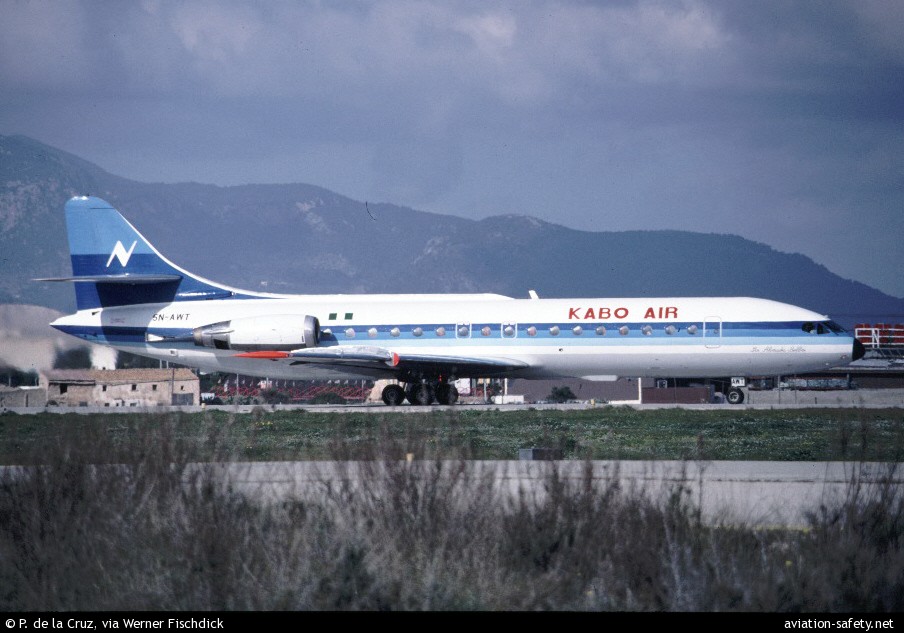
TU-TCO "Ouagadugu"
Sud SE-210 Caravelle 11R
215
Air Afrique
"Ouagadugu" visited Munich during the Olympic Games in 1972, unfortunately not in sunny weather conditions. It is seen here taxiing to runway 25 for take-off.
Information from rz.jets.net:
1967-09-18 Delivered to Air Afrique
1984 sold to Kabo Air as 5N-AWT
1987-07 Delivered to Aerosucre S.A. as HK-3325X
1989-04-26 w/o at Barranquilla (BAQ) after cargo aboard slid after takeoff, airplane stalled and crashed into a house
TU-TCO with Air Afrique ca. late 1960s (earlier colours):
www.airafrique.eu/avions/tutco1.jpg

TU-TCO with Air Afrique at DKR/GOOY in February 1975 (later colours):
www.airport-data.com/images/aircraft/001/619/001619115.jpg

This airframe as 5N-AWT with Kabo Air at PMI in January 1986:
cdn.aviation-safety.net/photos/aircraft/19890426-0-P-1.jpg
This airframe as HK-3325X with Aerosucre Colombia at BOG in January 1988:
www.airhistory.net/photo/211422/HK-3325X
Scan from Kodak medium format (6 x 6 cm) slide, cropped to 3:2 aspect ratio.
Aspects of Sydney Opera House.
Some iphonography taken at 6am to avoid tourists and to catch early morning light. Got lucky with the light quality on here too.
There has been some work going on around Seaburn Sunderland along the beach area's I like.
Its a shame about the many Dog walkers who take there dogs there and allow them to crap all over the place or worse pick it up in a poo bag only to toss it along route some where else's.
Well done sunderland.gov.co.uk
El carancho, caricari, caracara moñudo, carcaña, guarro, moñudo, traro o caracara carancho, es una especie de ave falconiforme de la familia Falconidae. Habita el centro y sur de América del Sur.
Es un ave rapaz que mide entre 55 y 60 cm de largo. Presenta la parte superior de la cabeza negruzca, el resto de la misma y el cuello blanco grisáceo, y el dorso y pecho con líneas anchas pardas y blanco grisáceo. En vuelo se le observa una mancha alar clara y la cola blanquecina que termina con una banda negra. La piel de la cara es desnuda, rasgo típico de las aves carroñeras.
Prefiere alimentarse de carroña y con frecuencia se le puede observar comiendo animales que han sido atropellados en la carretera. También es un cazador oportunista que ataca animales jóvenes o heridos, utilizando como método inicial agredir en ojos, labios, y zona anal; de manera que la presa resulte progresivamente indefensa hasta que, finalmente, muere y es consumida. Su desplazamiento es más terrestre y son más caminadores que otras aves rapaces.
En su vuelo alterna aleteos; también suele planear en círculos. Emite un sonido áspero y fuerte.
Esta especie construye su nido en árboles o matorrales utilizando ramas, pasto y pelos. El aspecto del nido suele ser muy desordenado, es por ello que existe un dicho en el Río de la Plata que dice "desordenado como nido de carancho".
Avalokiteshvara sous son aspect Simhanada « au rugissement du lion »
Chine,
fin 18e-début 19e siècle
Détrempe sur toile
H. 179 cm ; L. 85,5 cm
don Joseph Hackin (1938),
Paris, Musée national des arts asiatiques – Guimet,
Oeuvre présentée dans l'exposition : "Médecines d’Asie, l’art de l’équilibre". Musée national des arts asiatiques - Guimet, Paris
Conçue comme une expérience originale, un voyage introspectif entre corps et surnaturel, Médecines d’Asie est la première exposition majeure consacrée en France aux trois grandes traditions médicales asiatiques : indienne, chinoise et tibétaine. À travers un parcours scénographique par-delà les frontières et le temps, l’exposition transporte le visiteur dans un univers où se rencontrent pratiques médicales millénaires et œuvres d’art exceptionnelles, évoquant la méditation et le chamanisme, l’équilibre des énergies et la pharmacopée, le massage et l’acupuncture, l’astrologie et l’exorcisme...
ScotRail HST I7C Class 43s 43139 & 43132 approach Greenloaning with 1H17, the 13:30 Edinburgh – Inverness service on 18th April 2023.
I introduce some photos I took when I picked up my wife in Shiogama town, a local port town.
I walked around the street till my wife finished her job.
She attended the rehearsal for the hula school presentation.
港町の塩釜に家内を拾いに行ったときに撮影した写真を紹介します。
家内が用事を済ませるまで通りを歩きました。
家内は、フラの学校の発表会のリハーサルに参加したのです。
LMS 4-6-0 Stanier 5MT 45052 approaches Chester General and passes Chester No4 signalbox at 16.40 on 19-3-66 with 6 coaches so either a local from the North Wales Coast or from Shrewsbury.
If anyone has a working timetable it might be possible to work out the precise working.
Notice the pristine DMU on shed in the background
Tom Derrington Collection photographer unknown.
I only have some poor B&W photos from the steam era!
Miyatoko Dam 宮床ダム
I visited some Dams in February.
I introduce some aspects of the dams , dam lakes and the surrounging sceneries.
2月にいくつかのダムに行きました。
ダム、ダム湖、そしてその周辺の景色を紹介します。
Location : www.ipc.tohoku-gakuin.ac.jp/nken/labo2016/location_pc.htm...
Many thanks for your visits, faves and comments. Cheers.
...from a visit to Bribie Island.
Erosion of the paperbark forest at Red Beach, Bribie Island, Queensland, Australia. Red beach is a GREAT place to take a walk (when the tide is out) and take photographs. There have been great changes since I last visited, particularly after the heavy rain and big tides during the recent cyclone (hurricane). Very interesting beach landscape and forest to the foreshore, as well as birdlife.
Melaleuca quinquenervia, commonly known as broad-leaved paperbark, the paper bark tea tree or niaouli, is a small- to medium-sized tree of the allspice family, Myrtaceae. The plant is native to New Caledonia, Papua New Guinea and coastal eastern Australia, from Botany Bay in New South Wales northwards, into Queensland and the Northern Territory. It has become naturalised in the Everglades in Florida, where it is considered a serious weed by the USDA. The broad-leaved paperbark grows as a spreading tree up to 20 m high, with the trunk covered by a white, beige and grey thick papery bark. The grey-green leaves are ovate and the cream or white bottlebrush-like flowers appear from late spring to autumn. (Source: Wikipedia)
© Chris Burns 2016
__________________________________________
All rights reserved.
This image may not be copied, reproduced, distributed, republished, downloaded, displayed, posted or transmitted in any form or by any means, including electronic, mechanical, photocopying and recording without my written consent.
Shichikasyuku dam lake 七ヶ宿ダム湖
I visited some Dams in February.
I introduce some aspects of the dams , dam lakes and the surrounging sceneries.
2月にいくつかのダムに行きました。
ダム、ダム湖、そしてその周辺の景色を紹介します。
Location : www.ipc.tohoku-gakuin.ac.jp/nken/labo2016/location_pc.htm...
Hip Hop is an acquired taste. It's loud, it's abrasive and plenty times vulgar. Growing up in NYC surrounded by the ethnic working-class there was always new lingo to learn. When you're a 90's kid okay, you learn to deal with what the Fresh Prince of Bel-Air teaches you: phat, dope, wack... check, check and check! Fast forward to my late twenties and I'm a front end supervisor for that well known Arts & Crafts big-box store and most of my team are fluent in ebonics while I'm utterly left behind. They are dropping new words like 'lit' and 'fire' and 'ratchet' which for a long time I thought was wretched. So I would, in good faith, say things like "Oh, that is wretched!" -- One time I was in a convenience store with some friends and this short Latino with gold teeth, face tattoos and a heavy swag was bantering with his co-workers. He glanced at us once and sighed then saying, "Aight I'mma go make downstairs Gucci." And dear me, I didn't think to ask any of my friends what he meant but I dwelled on it for the rest of the day before the meaning finally dawned on me! GUCCI; like the opulent luxury brand. Downstairs was a mess and he was going to make it fancy and clean like the Gucci brand.
So back to Hip Hop. I started easy. I really liked Macklemore and Black Eyed Peas and eventually, Justin Bieber joined the genre. More Pop than Hip Hop but hey whatever, I got my foot through the door. Not bad for someone who once nervously handed a cashier my soon-to-be copy of Backstreet Boys Millenium; she easily sensed my fear as she smacked her lips then saying, "Not you too" as she rang me up. Yes, me too. I was a teen and a sucker for Pop music. I would have worn a ski mask to buy this album if I could, lady. My music taste is broad as I love everything! Mostly. Or at least I try to. My playlist goes from Post Malone to Bach. Music is very personal. I've met Rock & Rollers who would lynch you if you mentioned Nickelback. It's just the way the world works. Music is a part of our identities and sometimes one of the most relatable aspects of our humanity. And if we share that on a common level, it opens up an instantaneous connection paving the path to a meaningful relationship. That is until you fight over whether or not pineapples deserve to be on pizza's (They don't. Fight me.) It's 2020 and I find myself craving Hip Hop. It reminds me of NYC where part of me will forever be no matter where in the world I am. This year the word is WAP. If you don't know what it means by now, don't worry, someone will let you know but it won't be me!
Find the WAP Hot Girl Fountain at this month's Kinky Event starting July 28th, 7 PM SLT. Or window browse early. You do you.
Fountain Preview GIF: gyazo.com/f8286fd024378ae80e03d3edc1da5e98
The Fountain is sold without flora. If you would like the Lillies used here are the credits:
LOTUS by Tia Biscuit L$80 ([Tia] Madison - Pond Lillies)
• Inworld: maps.secondlife.com/secondlife/Tia/113/78/1501
• Marketplace: NOT AVAILABLE
LILYPADS by Cube Republic L$399 (Frogbit Aquatic Pond Plant)
• Inworld: maps.secondlife.com/secondlife/Gloria/227/227/3512
• Marketplace: marketplace.secondlife.com/p/Frogbit-Aquatic-Pond-Plant-MESH-MATERIALS/6815506
[ Landmarks and Marketplace Listings are accurate as of August 2020 ]