View allAll Photos Tagged Absorption
AirDrain Agronomic Natural Grass Drainage at the Chesapeake Energy Roof Top Sports Field
74,000 sqft. Natural Grass Field
Benefits of AirDrain in a green roofing system include:
AirDrain creates and helps maintain a constant Gmax for artificial turf (See below)
Thickness and resin consistency of AirDrain provides uniform shock absorbency
Shock absorption reduces the strain on joints and ligaments
AirDrain is only limited by the drainage capacity of the profile above it
Installation time measured in days instead of weeks
AirDrain can be reused when the artificial turf must be replaced
Water harvesting reclamation and reuse
Helps qualify for LEED and other green building credits
A smaller carbon and development footprint with reduced site disturbance
100% vertical drainage under the entire field surface
Minimizes water related injuries / Less infill migration due to superior drainage
AirDrain is a 100% recycled product
Less infill migration due to superior drainage
GMAX Information Existing Conditions for Testing
Turf - 2 1/2” Slit Film, in filled with 50% Green Rubber Infill and 50% Silica Sand.
The drainage/shock pad and turf underlying substrate consists of a concrete deck/rooftop, coated with a waterproof membrane and 10 ounce 100% recycled polyester geo-textile filter fabric.
The Standard Test Method for Shock-Absorbing Properties of Playing Surface Systems and Materials (ASTM F1936-98 American Football Field) testing locations and procedure were preformed. The tests were performed using a Triax 2000 A-1 Missile, tripod mounted Gmax registration unit(www.triax2000.com). This report presents background information on the test procedures, existing conditions, test results and observations in football, baseball, softball, soccer, lacrosse, and field hockey artificial sports fields.
The environmental impact of a green roof is undenyable, and adds significantly to the LEED Point system designed by the USGC in all five major areas: sustainable site development, water savings, energy efficiency, materials selection, and indoor environmental quality. Green roofing replaces the green space displaced by a building, prevents excess storm water drainage, reduces the temperature of a building and the urban heat island effect, protects and extends the useful life of a roof, and reduce energy demands.
What's more, a green roof incorporating AirDrain means your design includes renewable, recycled, and locally obtained materials. We know you have a choice in designing a green roof, and we hope you consider the many benefits of AirDrain.
A typical AirDrain green roof
Line graph showing the relative amounts of light absorption at different light wavelengths by the photosynthetic pigment family known as the Phototropins. Feel Free to use the photo but please don't forget to give credit to www.ledgrowlightshq.co.uk.Thanks!
Nike Air Force 1 High GS, Wheat, Size 4.5Y, Flax, Green, Gum, 807617-200, UPC 00888410372173, 2015, Women’s size 6, Big Kids High Top shoe, Nubuck leather upper, Gum Out Sole, Perforated detailing on the toe box, Perforations for breathability, gum midsole, dark green Nike branding on the tongue, heel, and outsole, Nike Swoosh on the sides, Ankle strap for security, Polyester tongue, Nike Air branding, Midsole Air-sole for impact absorption, Nike Air branding on the heel, Rubber outsole for increased traction, originally released in 1982, named after the aircraft that carries the President of the United States, redd3413
.follow me on Fb if you would like to catch up on some awesome photog articles and random news. Cheers kids
Get to know these badasses if you haven't already!
1. Aint Even Done With the Night, 2. Galaxy's Absorption, 3. I miss missing you, 4. Untitled, 5. IMGP1792ds, 6. 'Cause Baby You're A Firework, Come On Show 'Em What You're Worth, 7. americanindian2web, 8. Yorkshire Water Works, 9. Death can take me if I can't be free
Oil pastel (also called wax oil crayon) is a painting and drawing medium with characteristics similar to pastels and wax crayons. Unlike "soft" or "Japanese" pastel sticks, which are made with a gum or methyl cellulose binder, oil pastels consist of pigment mixed with a non-drying oil and wax binder. The surface of an oil pastel painting is therefore less powdery, but more difficult to protect with a fixative. Oil pastels provide a harder edge than "soft" or "French" pastels but are more difficult to blend.
At the end of World War I, Kanae Yamamoto proposed an overhaul of the Japanese education system. He thought that it had been geared too much towards uncritical absorption of information by imitation and wanted to promote a less restraining system, a vision he expounded in his book Theory of self-expression which described the Jiyu-ga method, "learning without a teacher". Teachers Rinzo Satake and his brother-in-law Shuku Sasaki read Yamamoto's work and became fanatical supporters. They became keen to implement his ideas by replacing the many hours Japanese children had to spend drawing ideograms with black Indian ink with free drawing hours, filled with as much color as possible. For this, they decided to produce an improved wax crayon and in 1921 founded the Sakura Cray-Pas Company and began production. The new product wasn't completely satisfactory, pigment concentration was low and blending or impasto was impossible, so in 1924 they decided to develop a high viscosity crayon: the oil pastel. This used a mixture of mashed paraffin, stearic acid and coconut oil as a binder. Designed as a relatively cheap, easily applied, colorful medium, oil pastels granted younger artists and students a greater freedom of expression than the expensive chalk-like pastels normally associated with the fine arts. Until the addition of a stabiliser in 1927, oil pastels came in two types: winter pastels with additional oil to prevent hardening and summer pastels with little oil to avoid melting. State schools simply couldn't afford the medium and, suspicious of the very idea of "self-expression" in general, favoured the coloured pencil, a cheaper German invention then widely promoted in Europe as a means to instill work discipline in young children.
Oil pastels were an immediate commercial success and other manufacturers were quick to take up the idea, such as Dutch company Talens, who began to produce Panda Pastels in 1930. However, none of these were comparable to the professional quality oil pastels produced today. These early products were intended to introduce western art education to Japanese children, and not as a fine arts medium, although Sakura managed to persuade some avant-garde artists to acquaint themselves with the technique, among them Pablo Picasso. In 1947 Picasso, who for many years had been unable to procure oil pastels because of the war conditions, convinced Henri Sennelier, a French manufacturer who specialized in high quality art products, to develop a fine arts version. In 1949 Sennelier produced the first oil pastels intended for professionals and experienced artists. These were superior in wax viscosity, texture and pigment quality and capable of producing more consistent and attractive work. The Japanese Holbein brand of oil pastel appeared in the mid-1980s with both student and professional grades; the latter with a range of 225 colours. Another brand, Caran d'Ache, introduced Neocolor wax crayons onto the market in 1965, using a patented polyethylene wax with superior lubrication; in the nineties these were developed into an oil pastel, Neopastel.
Oil pastels can be used directly in dry form; when done lightly, the resulting effects are similar to oil paints. Heavy build-ups can create an almost impasto effect. Once applied to a surface, the oil pastel pigment can be manipulated with a brush moistened in white spirit, turpentine, linseed oil, or another type of vegetable oil or solvent. Alternatively, the drawing surface can be oiled before drawing or the pastel itself can be dipped in oil. Some of these solvents pose serious health concerns[citation needed].
Oil pastels are considered a fast medium because they are easy to paint with and convenient to carry; for this reason they are often used for sketching, but can also be used for sustained works. Because oil pastels never dry out completely, they need to be protected somehow, often by applying a special fixative to the painting or placing the painting in a sleeve and then inside a frame. There are some known durability problems: firstly, as the oil doesn't dry it keeps permeating the paper. This process degrades both the paper and the colour layer as it reduces the flexibility of the latter. A second problem is that the stearic acid makes the paper brittle. Lastly both the stearic acid and the wax will be prone to efflorescence or "wax bloom", the building-up of fatty acids and wax on the surface into an opaque white layer. This is easily made transparent again by gentle polishing with a woolen cloth; but the three effects together result in a colour layer consisting mainly of brittle stearic acid on top of brittle paper, a combination that will crumble easily. A long term concern is simple evaporation: palmitic acid is often present and half of it will have evaporated within forty years; within 140 years half of the stearic acid will have disappeared. Impregnation of the entire art work by beeswax has been evaluated as a conservation measure.
The surface chosen for oil pastels can have a very dramatic effect on the final painting. Paper is a common surface but this medium can be used on other surfaces including wood, metal, hardboard (often known as "masonite"), MDF, canvas and glass. Many companies make papers specifically for pastels that are suitable for use with oil pastels.
Building up layers of color with the oil pastel, called layering, is a very common technique. Other techniques include underpainting and scraping down or sgraffito. Turpentine, or similar liquids such as mineral spirits, are often used as a blending tool to create a wash effect similar to some watercolor paintings. Commercially available oil sketching papers are preferred for such technique.
There are a number of types of oil pastels, each of which can be classified as either scholastic, student or professional grade.
Scholastic grade, for example the Loew Cornell brand, is the lowest grade: generally the oil pastels are harder and less vibrant than higher grades. It is generally meant for children or people starting out with oil pastels, and is fairly cheap compared to other grades, often about US$5 for a large box. The middle grade, student grade, is meant for art students and can be much more expensive but softer and more vibrant than scholastic grade. They are usually more expensive and cost around $1 to $2 each. An example of a student grade oil pastel is Van Gogh, manufactured by Talens. Professional grade is the highest grade of oil pastel and can be very expensive, often costing $3 to $5 per oil pastel, but are also the softest and most vibrant. Professional quality brands of oil pastel include Sennelier, Holbein, Garich, and Sakura Specialist..
Sonata Vario acoustic absorbers installed within the hall at Cumwhinton Primary School to reduce noise and reverberation
Sonata Aurio and Vario acoustic absorbers installed within the newly built Thornham village hall to reduce reverberation and echo during use
Sonata Vario acoustic absorbers installed within the music room at Belper School in Derbyshire
Details on Sonata Vario can be viewed here: www.soundreduction.co.uk/Products/Sound-Absorption-Soluti...
The Aerosol Observing System (AOS) measures aerosol absorption and scattering coefficients as a function of the particle size and radiation wavelength.
The Two-Column Aerosol Project (TCAP) was conducted from June 2012 through June 2013, and included the deployment of both the first ARM Mobile Facility (AMF1) and ARM Aerial Facility (AAF) to Cape Cod and Hyannis, Massachusetts, respectively. The primary goal of TCAP was to investigate cloud-aerosol interactions.
Terms of Use: Our images are freely and publicly available for use with the credit line, “Image courtesy of the U.S. Department of Energy Atmospheric Radiation Measurement (ARM) user facility.”
Sonata Aurio and Vario Class A acoustic absorbers installed within Buckshaw Village Hall to reduce noise and reverberation
Timberland 6 Inch Premium Waterproof Boots, Menâs Size 12, Wide, Wheat, Nubuck, TB010061, 100613640, Premium leather uppers, waterproof construction, Leather lining for comfort and durability, Rustproof hardware, anti-fatigue technology, 400 grams of PrimaLoft® insulation, Padded collar for a comfortable fit around the ankle, Anti-fatigue midsole and removable footbed for all-day comfort, lightweight cushioning and shock absorption, Rubber lug outsole is made with 10% plant-based materials, reddealsonline, redd3413,
For this gentle and relaxing photowalk in my district, Lyon, France, I brought along my French TLR SEMFLEX Standard 3.5 camera (see below for details) loaded with a never-tried yet film Svema FOTO 100 made in Ukraine. The backing paper is black with white numbering and signaling symbols are easy to read across the small red window of my SEMFLEX.
For all the frames, my SEMFLEX was equipped with the original SEMFLEX squared shade hood a SEMFLEX yellow filter x2. The film was exposed for 50 ISO to compensate the light absorption of the yellow filter. Metering was done using a Minolta Autometer III equipped with a 10° finder for selective measures privileging the shadow areas or an opale dome for incident light integration.
View n° 1: 1/100s f/8 focusing @ infinite, SEMFLEX Yellow filter x2
Panorama sur les Monts du Lyonnais (Cols de Malval et de la Luère)
Parc de la Cerisaie - Villa Gillet ***, May 10, 2025
69004 Lyon
France
___________
*** ** PARC DE LA CERISAIE, WHOSE NAME COMES FROM THE PRESENCE, OLD, OF A CHERRY ORCHARD ALREADY BELONGS TO THE CITY OF LYON: SINCE 1976.
Previously owned by the Gillet family, precursors of silk dyeing at the beginning of the 20th century, the park and the Villa built in 1911 by the architect Joseph Folléa communicated at the time directly with their factory installed on the banks of the Saône. In the 60s, their vast industrial empire merged with the Rhône-Poulenc group of which Renaud Gillet was president from 1973 to 1979.
Very quickly, the City of Lyon chose to open this park to the people of Lyon and to direct its vocation towards the Arts. Thus, during the 2nd and 3rd sculpture symposiums of 1980 and 1982 the park hosted many works. Some of them are still there.
The villa, renovated in 1986, also became a place dedicated to the Arts. Initially, it was the headquarters of the Fonds Régional d'Art Contemporain (FRAC), the organization supporting creation, before it was transferred to the Institut d'Art Contemporain de Villeurbanne.
Today, the villa houses three cultural institutions: La Villa Gillet, which defines itself as a Contemporary Research Unit and is interested in all forms of culture (literature, human, political and social sciences, history, or contemporary arts), the Agence Rhône-Alpes pour le Livre et la Documentation (ARALD) whose objective is to promote the culture of writing and activities related to books, and the Groupe Musiques Vivantes de Lyon which works for the creation and diffusion of acoustic music.
_______________
After the view #12 exposed, the film was fully rolled to the taking spool and was developed in a Paterson tank with a spiral adapted to the 120-format film. 500 mL of Adox Adonal (Agfa Rodinal) developer were prepared at the dilution 1+25 and the film processed for 7 min at 20°C. The first view was shifted by about two frames leading to only 10 views on the film. This is clearly due to a quality problem. The backing paper was improperly positioned during the spooling of the film.
Digitizing of the remaining 10 frames, was made using a Sony A7 camera (ILCE-7, 24MP) held on a Minolta vertical macro stative device and adapted to a Minolta MD Macro lens 1:3.5 f=50mm. The light source was a LED panel (approx. 4x5') CineStill Cine-lite fitted with film holder "Lobster" to maintain flat the 70mm films.
The RAW files obtained were inverted within LR and edited to the final jpeg pictures without intermediate file. They are presented either as printed files with frame or the full size JPEG together with some documentary smartphone pictures..
About the camera and lenses :
My French Semflex TLR year 1959-1960 is equipped with triplet 1/3.5 f=75mm SOM Berthiot lenses as descripted bellow.
The SEM company ("Société des Etablissements Modernes de Mécanique") was founded in France by Paul Royet in 1946, in the small city of Aurec near Saint-Etienne (Loire). The SEM camera's was known essentially for the TLR Semflex that were a great commercial success in France until the 70's. The camera's are constructed around an injected aluminum alloy chassis, very resistant and rigid permitting precise optical alignments. The focusing mechanism is made of a cam system like the Rolleiflex giving an accurate and smooth focusing. SEM constructed their own shutters called Orec with 5 leaves capable of the 1/400s to 1s with B.
Semflex received in majority French optics Berthiot with 3 or 4 lenses (Tessar type). Some camera's were also mounted with Angénieux lenses.
Semflex were trusted TLR camera's used by amateurs and for professional purposes. From 1949 to 1976, 171.000 Semflex were produced in many different types and versions.
My Semflex in a middle grade version Standard 3.5 type-10 (1959-1960). It was the last version mounted with the 3-lens SOM Berthiot 1:3.5 f=75mm. I got the camera with set of accessories and several documents including the user manual of the Semflex Standard 4.5 versions. The accessories include a leather SEM ever-ready bag, a Semflex push-on shade hood, a Semflex push-on yellow filter x2 in its original box, and close-focusing lenses. The 1D one is constructed with a prism for the finder lens that compensates the parallax in the zone 1m to 0.5m.
The decorative ring around each lenses can also receive push-on accessories in 36mm diameter as the FOCA or Leitz 36mm filter series. I adapted two protective lens caps from Kodak film canister snapped covers.
Sonata Vario acoustic absorption panels installed beneath the ceiling to reduce reverberation and noise
Sonata Vario acoustic absorbers suspended from the ceiling within Bolton Villas United Reformed Church, Bradford. The introduction of the absorbers dramatically reduced the reverberation within the church
www.soundreduction.co.uk/Products/Sound-Absorption-Soluti...
Sonata Vario acoustic absorbers installed within the hall at the Peter Street Centre, St Helens
Details on our range of acoustic absorbers can be found here: www.soundreduction.co.uk/Products/Sound-Absorption-Soluti...
The visible and NIR transmission spectrum of a path of approximately 3cm through a blue-green fluorite crystal from China. This shows a possible detection of a very small amount of water in the crystal: an equivalent depth of <3µm of liquid - by comparison with the standard water transmission spectrum (Segelstein - broad blue band).
AirDrain Agronomic Natural Grass Drainage at the Chesapeake Energy Roof Top Sports Field
74,000 sqft. Natural Grass Field
Benefits of AirDrain in a green roofing system include:
AirDrain creates and helps maintain a constant Gmax for artificial turf (See below)
Thickness and resin consistency of AirDrain provides uniform shock absorbency
Shock absorption reduces the strain on joints and ligaments
AirDrain is only limited by the drainage capacity of the profile above it
Installation time measured in days instead of weeks
AirDrain can be reused when the artificial turf must be replaced
Water harvesting reclamation and reuse
Helps qualify for LEED and other green building credits
A smaller carbon and development footprint with reduced site disturbance
100% vertical drainage under the entire field surface
Minimizes water related injuries / Less infill migration due to superior drainage
AirDrain is a 100% recycled product
Less infill migration due to superior drainage
GMAX Information Existing Conditions for Testing
Turf - 2 1/2” Slit Film, in filled with 50% Green Rubber Infill and 50% Silica Sand.
The drainage/shock pad and turf underlying substrate consists of a concrete deck/rooftop, coated with a waterproof membrane and 10 ounce 100% recycled polyester geo-textile filter fabric.
The Standard Test Method for Shock-Absorbing Properties of Playing Surface Systems and Materials (ASTM F1936-98 American Football Field) testing locations and procedure were preformed. The tests were performed using a Triax 2000 A-1 Missile, tripod mounted Gmax registration unit(www.triax2000.com). This report presents background information on the test procedures, existing conditions, test results and observations in football, baseball, softball, soccer, lacrosse, and field hockey artificial sports fields.
The environmental impact of a green roof is undenyable, and adds significantly to the LEED Point system designed by the USGC in all five major areas: sustainable site development, water savings, energy efficiency, materials selection, and indoor environmental quality. Green roofing replaces the green space displaced by a building, prevents excess storm water drainage, reduces the temperature of a building and the urban heat island effect, protects and extends the useful life of a roof, and reduce energy demands.
What's more, a green roof incorporating AirDrain means your design includes renewable, recycled, and locally obtained materials. We know you have a choice in designing a green roof, and we hope you consider the many benefits of AirDrain.
A typical AirDrain green roof
A Fomapan Action 400 black-and-white film to test the effect a the special Foca filter "Dyma" produced in France in the 50's.
The filter is called "Dyma" due to the presence of neodymium in the glass giving an unusual absorption by bands in the visible spectrum. In particulier blue and yellow color ans more absorbed than the rest of the spectrum. The filter existed in two different versions with the coefficient x2.5 or 3.5. Here the 42mm push-on Foca Dyma filter used is a x 3.5.
As a consequence, I exposed the Foma 400 for 80 ISO using a Minolta Autometer III with a 10° finder for selective measurements privileging the shadow areas. I used my FOCA camera PF2B year 1956 and its normal Oplar lens1:2.8 f=5cm equipped for all the views with the Dyma filter and a Genaco metal shade hood.
Typical settings during the session : 1/100s f/8 to f/11.
Place Chardonnet, May 29, 2023
69001 Lyon
France
After exposure, the film was processed using Adox Adonal (Agfa Rodinal) developer at dilution 1+25, 20°C for 6 min.
The film was then digitalized using a Sony A7 body adapted to a Minolta Auto Bellows III and a Minolta Slide Duplicator using a lens Minolta Bellow Macro Rokkor 50mm f/3.5 at a reproduction ratio of 1:1. The reproduced RAW files obtained were processed in LR prior the the final JPEG editions.
All views of the film are presented in the dedicated album either in the printed framed versions and unframed full-size jpeg.
About the camera and the lens:
The Foca type PF2B (PF for "Petit Format") was constructed in France by the company "Optique & Precision de Levallois" (OPL) starting from 1947. It was manufactured in the Chateaudun OPL factory, route de Jallans, France, in 1956 among a late series of the PF2B. The factory, constructed in 1938, is still at the same place under the name of SAFRAN now producing precision devices for aerospace appliances.
The camera is equipped with the collapsible OPLAR lens (a Tessar formula) 1:2.8 f=5cm. The focal shutter of the PF2B has timing of 1/1000, 1/500, 1/200, 1/100, 1/50 and 1/25s plus the B pose. A slow exposure device below 1/25s could be installed by the aftermarket service and was installed basically for the FOCA PF3 and Foca Universel.
Nike Air Force 1 High Dream Team, Size 5.5Y, White, Black, 653998-102, UPC 00885176668243, 2016, Women’s size 7, Kids High Top Basketball sneaker, "Dream Team" mini-collection, USA 1992 basketball Team, perforated white leather upper, rubber outsole, White midsole, Nike branding on the tongue, Nike Swoosh Branding on the sides, basketball logo at the heel counter, Ankle strap, Polyester tongue, Nike Air branding, Midsole Air-sole for impact absorption, basketball and five stars at the heel, 1992 scripted along the insole,
www.fature.net/release.php?id=21
The Faturenet collective have been working hard over the past few months. But not by having 2 Minute Masturbations. By creating 2 Minute Masterpieces...
These 27 tracks all lasting exactly 2 minutes in length will take you on a journey to some very special places.Some charming and characteristic, others for dirty minded music lovers.
Compiled by Fature, artwork by Almost Synthesis
01.Ambient Anonymous - Nociceptors
02.Sevish - Trapped in a Cycle
03.Fature - Maize for Men Wine for Women
04.Leithal - MW
05.Plutonium Telecom - Perfection Boredom
06.Zarathustra - Verbiage
07.Babungus - Knuckle Chunder
08.Almost Synthesis - Throw Some Dirt On It
09.Ambient Anonymous - Unexpected Item In Bagging Area
10.Eric Braham - Entropy and Lust
11.FLK - Twist
12.Benjaz - Flash Front
13.Drew Costigan - Razor
14.Waverine - Skateboard Race
15.ProVote - Two Minute Intro
16.PsychicEyeClix - Grill n Bass
17.ACL - Musoholic
18.FLK - Cloudchaser
19.Plutonium Telecom - Diamonds Delay BigFade
20.Ambient Anonymous - Archangel
21.Waverine - Morning
22.Leithal - Five
23.Plutonium Telecom - MeLeftNothing
24.FLK - Loko
25.Ambient Anonymous - Hive Mind
26.Leithal - 404 120
27.Delcraft - Feel the Meditation Shawshank
Released: 27th Feb 2011
Sonata Vario acoustic absorbers installed within the canteen at Telford Lawn Tennis Club in Wimbledon
Details on our range of acoustic absorbers can be found here: www.soundreduction.co.uk/Products/Sound-Absorption-Soluti...
Sonata Vario and Sonata Aurio acoustic absorbers installed within the dining room at St. Mary's School in Chesterfield.
Details on our range of acoustic absorbers can be found here: www.soundreduction.co.uk/Products/Sound-Absorption-Soluti...
Nike Air Force 1 High Dream Team, Size 5.5Y, White, Black, 653998-102, UPC 00885176668243, 2016, Women’s size 7, Kids High Top Basketball sneaker, "Dream Team" mini-collection, USA 1992 basketball Team, perforated white leather upper, rubber outsole, White midsole, Nike branding on the tongue, Nike Swoosh Branding on the sides, basketball logo at the heel counter, Ankle strap, Polyester tongue, Nike Air branding, Midsole Air-sole for impact absorption, basketball and five stars at the heel, 1992 scripted along the insole,
Sonata Vario and Sonata Memo acoustic absorbers installed within the dining room at Tong Moor Primary School in Bolton
Details on our range of acoustic absorbers can be found here: www.soundreduction.co.uk/Products/Sound-Absorption-Soluti...
SRS Sonata Aurio Class A acoustic absorption installed within two classrooms at Delamere Primary Academy to reduce reverberation
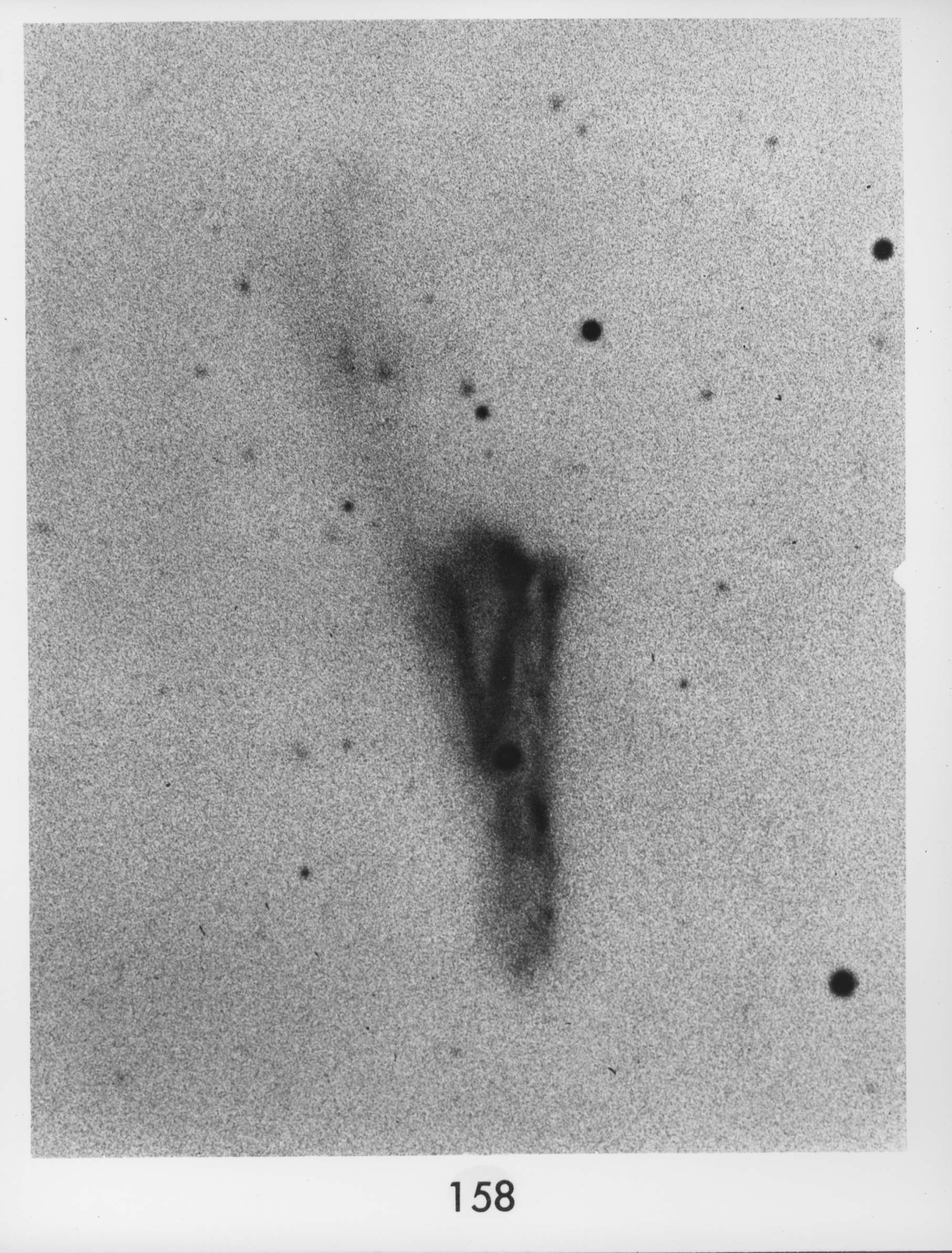
NGC 523 (NGC 537 = PGC 5268 = Arp 158)
Discovered (Sep 13, 1784) by William Herschel (and later listed as NGC 537)
Discovered (Aug 23, 1862) by Heinrich d'Arrest (and later listed as NGC 523)
A magnitude 12.7 spiral galaxy (type Sbc) in Andromeda (RA 01 25 20.7, Dec +34 01 31)
Apparent size 2.5 by 0.7 arcmin. Used by the Arp Atlas as an example of a disturbed galaxy with interior absorption.
"Excerpt courtesy of Courtney Seligman"
cseligman.com/text/atlas/ngc5.htm#523
Image... Cherryvalley Observatory (I83). Telescope: 0.2-m SCT & SBIG STL-1301E CCD Camera @f7.6. Image Scale 2.17 arcsec/pixel, Field of View 46 x 37 arcmins. Combined Stack of seven images of 300 seconds each unfiltered and unbinned. CCD operating temperature: -30 degrees. Image acquisition and processing: CCD Soft v5, TheSky6 Professional and Mira Pro v7. September 21st 2014.
Dr. Halton Arp originally compiled the Atlas of peculiar galaxies with photographs he made mainly using the Palomar 200-inch telescope and the 48-inch Schmidt telescope between the years 1961 to 1966. Original image can be found here: ned.ipac.caltech.edu/level5/Arp/Figures/big_arp158.jpeg
Sonata Vario acoustic absorbers installed within the hall at All Saints School in Stockport to reduce reverberation
Nike Air Force 1 Mid 07, Obsidian, Denim, Sail, Gum, Light Brown, 315123-408, Men’s, Size 10.5, Off White, leather and textile upper, padded ankle collar, provides a comfortable fit, VELCRO closure across the ankle adds stability and support, Full-length Phylon midsole with heel Air-Sole unit provides added shock absorption, Rubber outsole supplies durable traction, Basketball, Classic/Retro, Mid-Top, Bruce Kilgore, Release Year 2015, AF1, Uptowns, Basketball, Classic/Retro, Mid-Top
- MERINO sheepskin lining offers all of the advantages of wool over synthetic fibers, providing efficient shock absorption and superior thermal comfort. Sheepskin contains lanolin, a natural substance, which soothes the horse's sensitive or inflamed skin. When sheepskin is set directly against the animal's body, it stimulates blood circulation and promotes a therapeutic effect.
- "Open-channel" design alleviates excessive pressure from the horse's spine and promotes increased air circulation.
- Two large pockets are designed specifically to ensure proper fit of the saddle and comfort for the horse by accommodating both specialized and custom-made shims.
- High Resiliency open-cell foam shims (included in the package) allow for the overall weight to be redistributed over a larger area, thus minimizing pressure points.
- Breathable 3-Dimensional Spacer fabric reduces heat build-up and provides excellent moisture vapor transfer.
- The Non-Slip mesh upper assures perfect grip and steadily secures the ComfortLUX Half-Pad under the saddle.
A Fomapan Action 400 black-and-white film to test the effect a the special Foca filter "Dyma" produced in France in the 50's.
The filter is called "Dyma" due to the presence of neodymium in the glass giving an unusual absorption by bands in the visible spectrum. In particulier blue and yellow color ans more absorbed than the rest of the spectrum. The filter existed in two different versions with the coefficient x2.5 or 3.5. Here the 42mm push-on Foca Dyma filter used is a x 3.5.
As a consequence, I exposed the Foma 400 for 80 ISO using a Minolta Autometer III with a 10° finder for selective measurements privileging the shadow areas. I used my FOCA camera PF2B year 1956 and its normal Oplar lens1:2.8 f=5cm equipped for all the views with the Dyma filter and a Genaco metal shade hood.
Typical settings during the session : 1/100s f/8 to f/11.
Rue des Fantasques, May 29, 2023
69001 Lyon
France
After exposure, the film was processed using Adox Adonal (Agfa Rodinal) developer at dilution 1+25, 20°C for 6 min.
The film was then digitalized using a Sony A7 body adapted to a Minolta Auto Bellows III and a Minolta Slide Duplicator using a lens Minolta Bellow Macro Rokkor 50mm f/3.5 at a reproduction ratio of 1:1. The reproduced RAW files obtained were processed in LR prior the the final JPEG editions.
All views of the film are presented in the dedicated album either in the printed framed versions and unframed full-size jpeg.
About the camera and the lens:
The Foca type PF2B (PF for "Petit Format") was constructed in France by the company "Optique & Precision de Levallois" (OPL) starting from 1947. It was manufactured in the Chateaudun OPL factory, route de Jallans, France, in 1956 among a late series of the PF2B. The factory, constructed in 1938, is still at the same place under the name of SAFRAN now producing precision devices for aerospace appliances.
The camera is equipped with the collapsible OPLAR lens (a Tessar formula) 1:2.8 f=5cm. The focal shutter of the PF2B has timing of 1/1000, 1/500, 1/200, 1/100, 1/50 and 1/25s plus the B pose. A slow exposure device below 1/25s could be installed by the aftermarket service and was installed basically for the FOCA PF3 and Foca Universel.
Sonata Vario acoustic absorbers installed within Arbuckles Restaurant in Norfolk.
Full case study here: www.soundreduction.co.uk/Blog/Article/Customers-Enjoy-Imp...
The green line spectrum shows the reflectance of the green material. The double absorption feature at 430-440nm is seen in jadeite and attributed to ferric iron (Fe3+). I have also seen this feature in yellow topaz which, like jadeite, can contain chromium in the form of Cr3+. The comparison transmission spectra are of olivine (peridot; thin pink line) and chromium-containing jadeite (thin blue line).
Stones with type of nodular morphology have been dubbed 'Nebula Stone' and sold as a lapidary product under this trade name. There is an interesting description and some reported identification efforts at: www.rockhounds.com/rockgem/articles/nebula.shtml
I thank Cran Cowan and Radostin Pavlov for helping with this puzzle.
A photograph of two patches of oak forest in Scotland taken on a day with a light overcast. Both the foreground and the middle distance (1km) bands of trees have similar illumination and an essentially identical distribution of actual colour. The more distant trees, however, have a markedly different (bluer) apparent colour. We are familiar with this effect which is called 'aerial perspective' and caused by the addition of a haze of Rayleigh (and aerosol) scattered blue light from the intervening air.
I am struck by how strong this effect is over just 1km of clear air and wonder whether there is an additional telluric absorption happening here which has a more direct affect on the colour: perhaps due to the H2O 'rain band' at 590nm and the O2.O2 dimer band at 575nm? This could be checked with a spectroscopic observation of a white surface at 1km under similar conditions.