View allAll Photos Tagged third
The rule of thirds is a "rule of thumb" or guideline which applies to the process of composing visual images such as paintings, photographs and designs. The guideline proposes that an image should be imagined as divided into nine equal parts by two equally-spaced horizontal lines and two equally-spaced vertical lines, and that important compositional elements should be placed along these lines or their intersections. Proponents of the technique claim that aligning a subject with these points creates more tension, energy and interest in the composition than simply centering the subject would.
(en.wikipedia.org/wiki/Rule_of_thirds)
Institut Valencià d'Art Modern.
No. 3188 with the other two LCDR built coaches forming the launch train behind. Beyond are both LBSCR first class coaches No.s 661 and 7598 with SECR birdcage in the distance.
The first of the replacement quarter panels has been trial fitted to the south east corner of the coach. each of these boards is formed from two narrower deal planks.
I was wanting to make a cool droste effect image that centered around an opened third eye in the middle of my forehead, but it didn't work out great, so I ended up trying a few different things, none of which matched the vision.
This young woman poses in Henry Moore's Large Two Forms, outside of the Art Gallery of Ontario, Toronto, Ontario, Canada.
Large Two Forms. 1969.
Henry Moore.
Outside of the Art Gallery of Ontario, Toronto, Ontario, Canada.
View "Third Form" on black or on white.
Copyright © 2011, Jeff Stewart.
All rights reserved.
Three zebra doves (Geopelia striata) cluster together on a rock wall absorbing the last bit of warmth from the setting sun.
This trek offers an outstanding combination of amazing mountain and valley scenery in a remote area, the visit will really get an in-site into the Authentic Quechua Communities and see thatched stone houses surrounded by herds of llamas and alpacas, and even guinea pigs running loose inside the houses. This hike starts in the Lares Valley and village of the same name, where you can enjoy a night dip in its relaxing hot springs, to then follow to the Andean communities of Huacahuasi, Patacancha and Willoq, reaching the village of Aguas Calientes on the third night, after a 2-hour train-ride from Ollantaytambo. Finally, the fourth day is devoted to visiting the impressive Inca citadel of Machupicchu
Package Name:Lares Trek
Duration: 4 Days / 3 Nights
Type of Trek : Alternative Trek to Machu Picchu
Group Size : To suit group requirements - (no more than 12 Persons)
Difficulty degree of this hike: Moderate / Challenge
Departures Day:
Daily Departures - Small Groups
All private service departure dates are adapted to your request.
A minimum of 2 persons is needed for this trek
Activities: Adventure / Trekking / Biking / Ecological/
High Season: April - November
Route: Closed in February
Lares Trek Itinerary:
Day 1: Cusco - Lares (Hot Spring)
Day 2: Lares (Hot Spring) - Ipsaycocha)
Day 3: Ipsaycocha - Patacancha - Ollantaytambo - Aguas Calientes
Day 4: Aguas Calienties - Machu Picchu - Cusco
Day 1: Cusco - Lares (Hot Spring)
We leave Cusco at 6:00am in a private transport and drive for an approximated 4h through part of the Sacred Valley to then head towards Lares (3100m/10168ft), a little rural village located in the beautiful valley of the same name, hosting some well-known hot springs. Upon arrival, we leave our equipment and continue towards Choquecancha, an impressive archaeological site with amazing views of the neighboring valleys. After our visit, we hike back to Lares, where we can enjoy an evening dip in its hot springs before or after our dinner is served. Our camp will be set next to the thermal baths and access is free the whole night.
Day 2: Lares (Hot Spring) - Ipsaycocha)
After an early wake up and breakfast, we meet our horsemen and horses and leave our campsite at around 9.00am to walk along an ascending path that will lead us to Huacahuasi, (3600m/11808ft). This remote Andean community is located in an impressive valley, where the typical lifestyle and house constructions of the Quechua communities living at high altitude can be appreciated. We stop to visit a typical house and family, before we enjoy our lunch. In the early afternoon, we continue our hike ascending toward the mountain pass of Ipsay (4450m/14596ft/3h), walking across little communities and Andean flats (pampas) with the presence of llamas and alpacas. The pass offers impressive views of Mount Veronica and the surrounding snow-capped peaks. Just half an hour from this point is Ipsayqocha, a beautiful lagoon next to which we set our camp and spend the night, amidst awesome scenery.
Day 3: Ipsaycocha - Patacancha - Ollantaytambo - Aguas Calientes
After two full days of hiking today is much easier. After an early breakfast we walk downhill through a wide-open valley for about 2½ hours until we arrive at the village of Patacancha. We will have a chance to view some textiles made by the people of this community - the high quality weavings are famous for their intricate designs reflecting aspects of their everyday lives and culture. After we also get the chance to walk slowly down the valley to Willoq, another Quechua village where the locals still wear their traditional dress and are proud to maintain their cultural identity. From Patacancha we will take our transport further down the valley to Inca town of Ollantaytambo where we will rest and have lunch, then catch our afternoon train to AguasCalientes. This is an amazing journey that starts in the Quechua highlands and slowly descends to lush tropical vegetation as we near AguasCalientes. Total journey time about 1½ hours. Tonight we stay in the small quaint town of Machu Picchu.
Day 4: Aguas Calienties - Machu Picchu - Cusco
5 am breakfast then at 5.30am we get the bus to Machu Picchu. We need to depart early so those who wish to climb Huayna Picchu will need to sign up before the 2 hour guided tour. During your visit to these ancient ruins you will see clouds fly past and Machu Picchu will disappear with in them, so make sure you take pictures whilst the ruins are visible. After the tour you will have free time to explore the mountain of Huayna Picchu overlooking all of Machu Picchu - by far the best view! Huayna Picchu will take approximately 2 hours return trip. It is now your choice to enjoy lunch just outside the ruins or take the bus back to AguasCalientes to explore this small and quaint village. The train back to Cusco departs late afternoon so your estimated time of arrival is approximately 9pm.village. The train back to Cusco departs late afternoon so your estimated time of arrival is approximately 9pm.
What is Included:
English speaking guide
Pre-departure information meeting,
Machu Picchu entrance fees.
First aid kit, portable oxygen Tank,
3 night accommodation in tourist hostel,
Transfers,
Bus ticket Aguas Calientes Machu Picchu - Aguas Calientes,
Expedition train ticket Aguas Calientes - Ollantayatmbo,
Transfer from Ollantaytambo - Cusco Hotel
What is NOT Included:
International air fares to Peru,
Domestic flights, airport taxes,
Meals other than those specified in your itinerary,
Personal insurance.
Recomended Things To Take
Sleeping bag (you can rent at Cusco Expeditions office).
Bottle of mineral water.
Rain gear and/or plastic poncho (can be purchase in Cusco).
Hiking boots.
Warm jacket or fleece, t-shirts, shorts, long pants, sun hat and wool hat.
Flashlight.
Sun block.
Insect repellent.
Toilet paper and garbage bag.
Small towel and bathing suit (hot springs optional).
Camera, extra film and extra batteries.
Snacks, chocolates, energy bars.
Emergency money.
Walking stick (optional).
CALL US We are ready to take your call.
Call us: Telephone: (+51) (84) 632307, Telefax: (+51) (84) 632307
Cell Phone: (+51) (84) 974727031 / 958191179 / 984567085 (24 hours available)
Address: Triunfo Street 392 - Centro Artesanal Arte Inka 2nd Floor 212 - Main Square of Cusco
Business Hours: Monday to Sunday: (From 9:00am to 13:00PM) - ( From 15:00PM - 8:00PM)
E-mail: contact@cuscoexpeditions.com, info@cuscoexpeditions.com
MSN: cuscoexpeditions@hotmail.com
Website: www.cuscoexpeditions.com/
Copyright © 2010 - 2020 Cusco Expeditions E.I.R.L. - Peruvian Tour Operator - Travel Agency
Third World was an independent Washington, D.C. area periodical tabloid dedicated to black liberation that began publishing in September 1969 and continued through the early 1970s.
The paper concentrated on news of black liberation, pan-Africanism and providing news stories and interviews related to black political thought. It also published poems, photographs and other artwork and reviewed performances of black artists.
The paper was financed through both sales (25 cents per copy) and advertisements, although donations played a major role.
Distributions was through both street sellers who were usually children who kept a portion of the sales money, subscriptions and through retail outlets. The paper’s goal was 24 issues per year, but it does not seem like that frequency was met..
For a PDF of this 16 page issue, see
Vol. 2. No. 1--Oct. 1970 washingtonspark.files.wordpress.com/2019/08/mds00824-2.pdf
For other issues and other DC area alternative publications, see flic.kr/s/aHsmGkArk4
Donated by Robert "Bob" Simpson
Acrylic and Ink on handmade paper, 2010. 100 x 70cm.
In Asia, a westerner is confronted with new ways of seeing gender. And of the disguises we put on with every set of clothes we wear.
Thailand's kathoeys (or "Third Sex") are famous for their convincing mimicry of beautiful women, and their flamboyant cabarets. While tolerated within Thai society, acceptance is elusive, and living as a kathoey remains challenging for most.
On the stockings reads, in Thai script, "Man" "Women" and "Kathoey"
<a href="http://EBriel.com" rel="nofollow">EBriel.com</a>
Detail from the back of the coffin of Ameneminet (Imeneminet).
The djed pillar is shown on the back and inside of the coffin.
Third Intermediate Period.
E5534
Louvre Museum
Jon Pertwee played the Third Doctor in the BBC sci-fi series, Doctor Who, from 1970-1974. I have no clue as to the date of this photo, nor who the alien gentlepersons on the left are - If you're a Whovian, please let me know!
Pertwee's version of the Doctor introduced a more eccentric character to the series - and, oddly, his archaic yellow car and his job working for the government. Oh, and the show was finally in colour!
The original photo: static.wikia.nocookie.net/biggerontheinside/images/b/bd/T...
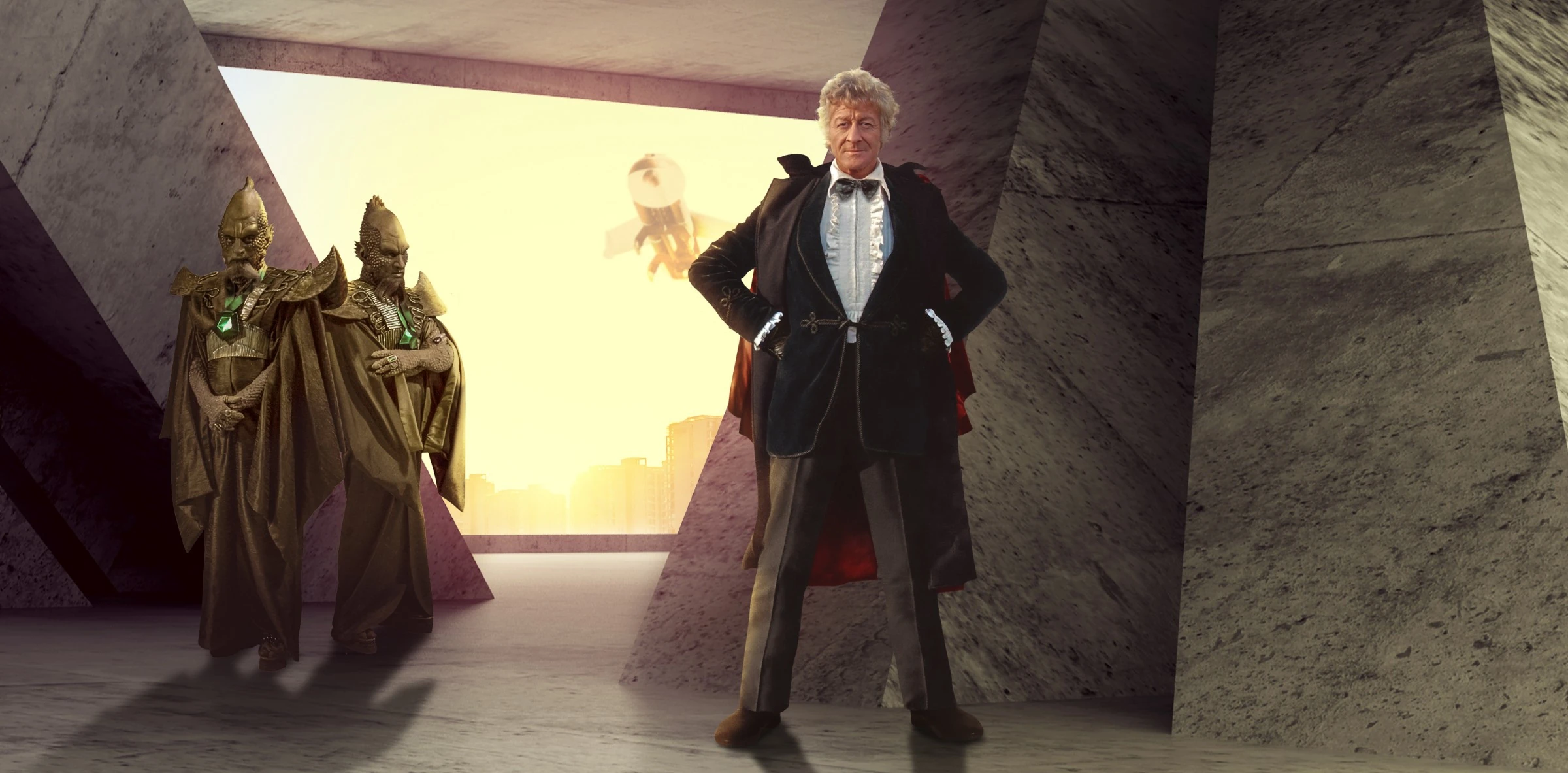
And his intro: youtu.be/VeXVrBaLMWs?si=NzXVjLqzzF1uA51w
Museum of the City of New York reprint postcard
"Third Avenue El train near 10 street"
I believe this is looking North with St Ann's steeple visible on 12th street
I would also recommend the book "By the EL" www.amazon.com/El-Third-Avenue-Its-Mid-Century/dp/0977722...
Tony McDonough/OXFAMAUS, team 104 leaving Checkpoint 7 Stathams Quarry, Oxfam Trailwalker Perth 2015
Detail of one of the third pair of nave windows, more colourful than the rest and designed by Geoffrey Clarke. The multicoloured windows symbolise the soul's struggles in mid-life..
Coventry's Cathedral is a unique synthesis of old a new, born of wartime suffering and forged in the spirit of postwar optimism, famous for it's history and for being the most radically modern of Anglican cathedrals. Two cathedral's stand side by side, the ruins of the medieval building, destroyed by incendiary bombs in 1940 and the bold new building designed by Basil Spence and opened in 1962.
It is a common misconception that Coventry lost it's first cathedral in the wartime blitz, but the bombs actually destroyed it's second; the original medieval cathedral was the monastic St Mary's, a large cruciform building believed to have been similar in appearance to Lichfield Cathedral (whose diocese it shared). Tragically it became the only English cathedral to be destroyed during the Reformation, after which it was quickly quarried away, leaving only scant fragments, but enough evidence survives to indicate it's rich decoration (some pieces were displayed nearby in the Priory Visitors Centre, sadly since closed). Foundations of it's apse were found during the building of the new cathedral in the 1950s, thus technically three cathedrals share the same site.
The mainly 15th century St Michael's parish church became the seat of the new diocese of Coventry in 1918, and being one of the largest parish churches in the country it was upgraded to cathedral status without structural changes (unlike most 'parish church' cathedrals created in the early 20th century). It lasted in this role a mere 22 years before being burned to the ground in the 1940 Coventry Blitz, leaving only the outer walls and the magnificent tapering tower and spire (the extensive arcades and clerestoreys collapsed completely in the fire, precipitated by the roof reinforcement girders, installed in the Victorian restoration, that buckled in the intense heat).
The determination to rebuild the cathedral in some form was born on the day of the bombing, however it wasn't until the mid 1950s that a competition was held and Sir Basil Spence's design was chosen. Spence had been so moved by experiencing the ruined church he resolved to retain it entirely to serve as a forecourt to the new church. He envisaged the two being linked by a glass screen wall so that the old church would be visible from within the new.
Built between 1957-62 at a right-angle to the ruins, the new cathedral attracted controversy for it's modern form, and yet some modernists argued that it didn't go far enough, after all there are echoes of the Gothic style in the great stone-mullioned windows of the nave and the net vaulting (actually a free-standing canopy) within. What is exceptional is the way art has been used as such an integral part of the building, a watershed moment, revolutionising the concept of religious art in Britain.
Spence employed some of the biggest names in contemporary art to contribute their vision to his; the exterior is adorned with Jacob Epstein's triumphant bronze figures of Archangel Michael (patron of the cathedral) vanquishing the Devil. At the entrance is the remarkable glass wall, engraved by John Hutton with strikingly stylised figures of saints and angels, and allowing the interior of the new to communicate with the ruin. Inside, the great tapestry of Christ in majesty surrounded by the evangelistic creatures, draws the eye beyond the high altar; it was designed by Graham Sutherland and was the largest tapestry ever made.
However one of the greatest features of Coventry is it's wealth of modern stained glass, something Spence resolved to include having witnessed the bleakness of Chartres Cathedral in wartime, all it's stained glass having been removed. The first window encountered on entering is the enormous 'chess-board' baptistry window filled with stunning abstract glass by John Piper & Patrick Reyntiens, a symphony of glowing colour. The staggered nave walls are illuminated by ten narrow floor to ceiling windows filled with semi-abstract symbolic designs arranged in pairs of dominant colours (green, red, multi-coloured, purple/blue and gold) representing the souls journey to maturity, and revealed gradually as one approaches the altar. This amazing project was the work of three designers lead by master glass artist Lawrence Lee of the Royal College of Art along with Keith New and Geoffrey Clarke (each artist designed three of the windows individually and all collaborated on the last).
The cathedral still dazzles the visitor with the boldness of it's vision, but alas, half a century on, it was not a vision to be repeated and few of the churches and cathedrals built since can claim to have embraced the synthesis of art and architecture in the way Basil Spence did at Coventry.
The cathedral is generally open to visitors most days. For more see below:-
Fantastic! This is the best Shockwave in my collection and I'm surprised it took me so long to own one. For more on third party toys please see: www.kickstarter.com/projects/102137316/transforming-expec...