View allAll Photos Tagged proportion
Thanks to all who comment or favorite; it is always appreciated!
This photo was taken in Charleston, SC, and shows a window beautifully framed by lush ivy. Charleston is known for its well-preserved historic architecture, which reflects its rich history and cultural heritage. The buildings in Charleston often exhibit elements of Georgian, Federal, and Greek Revival styles, with a strong emphasis on symmetry, proportion, and decorative details.
The ivy-clad window in the photo brings to mind the city's antebellum homes, which frequently feature large windows with shutters, brick facades, and abundant greenery. The ivy adds charm and is a natural cooling system during Charleston's hot summers.
Charleston's architectural legacy dates back to the colonial era, with many buildings surviving the Civil War and hurricanes. The city's commitment to preservation has maintained its historic charm, making it a popular destination for history enthusiasts and architecture lovers.
Thank you for viewing! If you like this photo, remember to favorite it and follow for more! Have you visited Charleston and its historic sites? Share your experiences in the comments below!
Source: en.wikipedia.org/wiki/Arizona
Arizona is a state in the Southwestern region of the United States, sharing the Four Corners region of the western United States with Colorado, New Mexico, and Utah. Its other neighboring states are Nevada to the northwest and California to the west. It also shares an international border with the Mexican states of Sonora and Baja California to the south and southwest. It is the 6th-largest and the 14th-most-populous of the 50 states. Its capital and largest city is Phoenix, which is the most populous state capital in the United States.
Arizona is the 48th state and last of the contiguous states to be admitted to the Union, achieving statehood on February 14, 1912. Historically part of the territory of Alta California and Nuevo México in New Spain, it became part of independent Mexico in 1821. After being defeated in the Mexican–American War, Mexico ceded much of this territory to the United States in 1848, where the area became part of the territory of New Mexico. The southernmost portion of the state was acquired in 1853 through the Gadsden Purchase.
Southern Arizona is known for its desert climate, with extremely hot summers and mild winters. Northern Arizona features forests of pine, Douglas fir, and spruce trees; the Colorado Plateau; mountain ranges (such as the San Francisco Mountains); as well as large, deep canyons, with much more moderate summer temperatures and significant winter snowfalls. There are ski resorts in the areas of Flagstaff, Sunrise, and Tucson. In addition to the internationally known Grand Canyon National Park, which is one of the world's seven natural wonders, there are several national forests, national parks, and national monuments.
Arizona is home to a diverse population. About one-quarter of the state is made up of Indian reservations that serve as the home of 27 federally recognized Native American tribes, including the Navajo Nation, the largest in the state and the country, with more than 300,000 citizens. Since the 1980s, the proportion of Hispanics has grown significantly owing to migration from Mexico and Central America. A substantial portion of the population are followers of the Roman Catholic Church and the Church of Jesus Christ of Latter-day Saints. Arizona's population and economy have grown dramatically since the 1950s because of inward migration, and the state is now a major hub of the Sun Belt. Cities such as Phoenix and Tucson have developed large, sprawling suburban areas. Many large companies, such as PetSmart and Circle K, have headquarters in the state, and Arizona is home to major universities, including the University of Arizona, Arizona State University, and Northern Arizona University. The state is known for a history of conservative politicians such as Barry Goldwater and John McCain, though it has become a swing state in recent years.
Source:https://en.wikipedia.org/wiki/Grand_Canyon
The Grand Canyon is a steep-sided canyon carved by the Colorado River in Arizona, United States. The Grand Canyon is 277 miles (446 km) long, up to 18 miles (29 km) wide and attains a depth of over a mile (6,093 feet or 1,857 meters).
The canyon and adjacent rim are contained within Grand Canyon National Park, the Kaibab National Forest, Grand Canyon–Parashant National Monument, the Hualapai Indian Reservation, the Havasupai Indian Reservation and the Navajo Nation. The surrounding area is contained within the Baaj Nwaavjo I'tah Kukveni – Ancestral Footprints of the Grand Canyon National Monument. President Theodore Roosevelt was a major proponent of the preservation of the Grand Canyon area and visited it on numerous occasions to hunt and enjoy the scenery.
Nearly two billion years of Earth's geological history have been exposed as the Colorado River and its tributaries cut their channels through layer after layer of rock while the Colorado Plateau was uplifted. While some aspects about the history of incision of the canyon are debated by geologists, several recent studies support the hypothesis that the Colorado River established its course through the area about 5 to 6 million years ago. Since that time, the Colorado River has driven the down-cutting of the tributaries and retreat of the cliffs, simultaneously deepening and widening the canyon.
For thousands of years, the area has been continuously inhabited by Native Americans, who built settlements within the canyon and its many caves. The Pueblo people considered the Grand Canyon a holy site, and made pilgrimages to it. The first European known to have viewed the Grand Canyon was García López de Cárdenas from Spain, who arrived in 1540.
Source: en.wikipedia.org/wiki/Grand_Canyon_National_Park
Grand Canyon National Park is a national park of the United States located in northwestern Arizona, the 15th site to have been named as a national park. The park's central feature is the Grand Canyon, a gorge of the Colorado River, which is often considered one of the Wonders of the World. The park, which covers 1,217,262 acres (1,901.972 sq mi; 4,926.08 km2) of unincorporated area in Coconino and Mohave counties, received more than 4.7 million recreational visitors in 2023. The Grand Canyon was designated a World Heritage Site by UNESCO in 1979. The park celebrated its 100th anniversary on February 26, 2019.
Source: www.nps.gov/grca/index.htm
Entirely within the state of Arizona, the park encompasses 278 miles (447 km) of the Colorado River and adjacent uplands. Located on the ancestral homelands of 11 present day Tribal Communities, Grand Canyon is one of the most spectacular examples of erosion anywhere in the world—a mile deep canyon unmatched in the incomparable vistas it offers visitors from both north and south rims.
Additional Foreign Language Tags:
(United States) "الولايات المتحدة" "Vereinigte Staaten" "アメリカ" "米国" "美国" "미국" "Estados Unidos" "États-Unis" "ארצות הברית" "संयुक्त राज्य" "США"
(Arizona) "أريزونا" "亚利桑那州" "אריזונה" "एरिजोना" "アリゾナ州" "애리조나" "Аризона"
(Grand Canyon) "جراند كانيون" "大峡谷" "גרנד קניון" "ग्रांड कैन्यन" "グランドキャニオン" "그랜드 캐니언" "Гранд-Каньон" "Gran Cañón"
Starry Night Astrophotography! Nikon D810 Fine Art Night Milkyway Photography! Astro Landscape Seascape!
The milkyway as seen though a Malibu sea cave!
From the golden spiral in the whirlpool galaxy and our very own milkway galaxy, to the golden mean of an athletic models' proportions, to the divine proportions found in a beautiful models' face, to the optimum curves and compositions of my fine art photography, I have found the Fibonacci sequence and golden number Phi to be omni-present. And so it makes sense that I found the golden spiral to naturally emerge in my physics theory--Dynamic Dimensions Theory--which postulates that the fourth dimension is expanding at the rate of c relative to the three spatial dimensions, giving rise to relativity, the quantum, and time and all its arrows and asymmetries. Yes! I have a pPh.D. in physics! Photons of ligth are but matter which surfs the fourth expanding dimension en route to creating a beautiful photograph.
And yes I am working on a book combining my philosophies on Phi, fine art photography, physics, the golden mean and number, the divine proportion, and the natgural emergence of the Fibonacci numbers in life and beauty. The book, filled with my photography aongside classic poetry, epic physics, and philosophy, will be called The Golden Hero's Odyssey. :)
Starry Night Astrophotography! Nikon D810 Fine Art Night Milkyway Photography! Astro Landscape Astroscape Seascape!
Photo taken by Stefan Röhrich.
München-Riem
1979-02-27 (27 February 1979)
PH-TVI
Boeing 737-222
19940 / 171
British Airways, on lease from Transavia Holland
PH-TVI taxiing in to the ramp after landing on runway 07.
Information from airliners.net - thanks to Ian Gains:
Built in May 1969 for United Airlines, this Boeing 737-222 seemed to spend a large proportion of her life on lease to various operators. Transavia Holland obtained her in 1975; she was leased to British Airways in November 1977, and then to Air Florida in 1980. She headed to America West in 1983, and also served with Challenge, TACA and COPA.
Wfu in December 2005 and scrapped.
Registration details for this airframe:
www.planelogger.com/Aircraft/Registration/PH-TVI/502970
PH-TVI with Transavia Holland ca. 1975 (initial colours):
www.flickr.com/photos/154191970@N03/36500416211
PH-TVI with British Airways on lease from Transavia at LHR ca. 1978:
www.flickr.com/photos/154191970@N03/48504610857
PH-TVI with Transavia Holland at ORY ca. 1980 (later colours):
www.flickr.com/photos/154191970@N03/48504442056
PH-TVI with Transavia Holland at Riem ca. 1983 (white fuselage):
www.flickr.com/photos/firstgen737/14890304666
This airframe as N135AW with America West Airlines at SJC in June 1985:
imgproc.airliners.net/photos/airliners/7/2/4/0447427.jpg

N135AW with Challenge at MIA ca. 1986 (basic America West colours):
www.flickr.com/photos/aero_icarus/9950051553
This airframe as N135TA with TACA at MIA in March 1992:
www.flickr.com/photos/aero_icarus/9950051553
N135TA with Sky King ca. 2000:
www.flickr.com/photos/runway27r/791754165
Scan from Kodachrome K25 slide.
Sony A7R2 Bishop California Fine Art Autumn Landscapes! Dr. Elliot McGucken Fine Art Photography!
Been busy traveling and shooting landscapes and working on my books The Golden Hero's Odyssey about the golden rectangle and divine proportion I use in a lot of my compositions! Also working on my physics book on Dynamic Dimensions Theory! The equation dx4/dt=ic is on a lot of the 45surf swimsuit and shirts and all! :)
Follow me & 45surf!!
www.facebook.com/45surfAchillesOdysseyMythology/
www.facebook.com/elliot.mcgucken
My fine art landscape lenses for the A7RII are the Sony 16-35mm Vario-Tessar T FE F4 ZA OSS E-Mount Lens and the Sony FE 24-240mm f/3.5-6.3 OSS Lens ! Love the Carl Zeiss and super sharp Sony Glass!
Pietá, de Michelangelo. Pietà (Michelangelo)
Following, a text, in english, from Wikipedia, the free encyclopedia:
The Pietà (1499) is a masterpiece of Renaissance sculpture by Michelangelo in St. Peter's Basilica in Vatican City. It is the first of a number of works of the same theme by the artist. The statue was commissioned for the French cardinal Jean de Billheres, who was a representative in Rome. The statue was made for the cardinal's funeral monument, but was moved to its current location, the first chapel on the right as one enters the basilica, in the 18th century.
This famous work of art depicts the body of Jesus on the lap of his mother Mary after the Crucifixion. The theme is of Northern origin, popular by that time in France but not yet in Italy. Michelangelo's interpretation of the Pietà is unique to the precedents. It is an important work as it balances the Renaissance ideals of classical beauty with naturalism. The statue is one of the most highly finished works by Michelangelo.
The structure is pyramidal, and the vertex coincides with Mary's head. The statue widens progressively down the drapery of the Virgin's dress, to the base, the rock of Golgotha. The figures are quite out of proportion, owing to the difficulty of depicting a fully-grown man cradled full-length in a woman's lap. Much of the Virgin's body is concealed by her monumental drapery, and the relationship of the figures appears quite natural.
The marks of the Crucifixion are limited to very small nail marks and an indication of the wound in Jesus' side.
The Madonna is represented as being very young, and about this peculiarity there are different interpretations. One is that her youth symbolizes her incorruptible purity, as Michelangelo himself said to his biographer and fellow sculptor Ascanio Condivi:
Do you not know that chaste women stay fresh much more than those who are not chaste? How much more in the case of the Virgin, who had never experienced the least lascivious desire that might change her body?
Another explanation suggests that Michelangelo's treatment of the subject was influenced by his passion for Dante's Divina Commedia: so well-acquainted was he with the work that when he went to Bologna he paid for hospitality by reciting verses from it. In Paradiso (cantica 33 of the poem) Saint Bernard, in a prayer for the Virgin Mary, says "Vergine madre, figlia del tuo figlio" (Virgin mother, daughter of your son). This is said because, being that Christ is one of the three figures of Trinity, Mary would be his daughter, but it is also she who bore him.
A third interpretation is that suggested by Condivi shortly after the passage quoted above: simply that "such freshness and flower of youth, besides being maintained in by natural means, were assisted by act of God".
Yet another exposition posits that the viewer is actually looking at an image of Mary holding the baby Jesus. Mary's youthful appearance and apparently serene facial expression, coupled with the position of the arms could suggest that she is seeing her child, while the viewer is seeing an image of the future.
Interpreting the sculpture in terms of its name, one might trace the origin: "The duty children owed their parents, termed pietas, was associated by Romans with the duty humans owed their gods" (James S. Jeffers, The Greco-Roman World of the New Testament Era: Exploring the Background of Early Christianity, Downers Grove, Ill. InterVarsity Press, 1999).
While there was a precedent for painted depictions of the Virgin grieving over the dead Christ in Florentine art, the subject appears to have been novel to Italian sculpture. There was, however, a tradition of sculptured pietàs in Northern art, particularly in Germany, Poland and the Cardinal's native France. In addition, the church of San Domenico in Bologna had a German sculpted pietà. This has led some to believe that the donor had these statues in mind when the work was commissioned.
The process took less than two years. Michelangelo's interpretation of the Pieta was far different than those previously created by other artists—he decided to create a youthful, serene and celestial Virgin Mary instead of a broken-hearted and somewhat older woman.
The Pietà's first home was the Chapel of Santa Petronilla, a Roman mausoleum near the south transept of St. Peter's, which the Cardinal chose as his funerary chapel. The chapel was later demolished by Bramante during his rebuilding of the basilica. According to Giorgio Vasari, shortly after the installation of his Pietà Michelangelo overheard someone remark that it was the work of another sculptor, Cristoforo Solari. Michelangelo then carved MICHAELA[N]GELUS BONAROTUS FLORENTIN[US] FACIEBA[T] (Michelangelo Buonarroti, Florentine, made it) on the sash running across Mary's breast. It was the only work he ever signed. He later regretted his outburst of pride and swore never to sign another work of his hands.[1]
In subsequent years the Pietà sustained much damage. Four fingers on the Virgin's left hand, broken during a move, were restored in 1736 by Giuseppe Lirioni and scholars are divided as to whether the restorer took liberties to make the gesture more 'rhetorical'. The most substantial damage occurred on May 21, 1972 (Pentecost Sunday) when a mentally disturbed geologist named Laszlo Toth walked into the chapel and attacked the Virgin with a geologist's hammer while shouting "I am Jesus Christ."
After the attack, the work was painstakingly restored and returned to its place in St. Peter's, just to the right of the entrance, between the Holy door and the altar of Saint Sebastian, and is now protected by a bullet-proof acrylic glass panel.
The sculpture was shipped to New York in 1964 in order to become the main draw for the Vatican pavilion at the 1964 New York World's Fair, where it was viewed by millions.
A seguir, Texto, em português, da Wikipédia a Enciclopédia livre:
A Pietá (em português Piedade) de Michelangelo é talvez a Pietá mais conhecida e uma das mais famosas esculturas feitas pelo artista. Representa Jesus morto nos braços da Virgem Maria. A fita que atravessa o peito da Virgem Maria traz a assinatura do autor, única que se conhece: MICHAEL ANGELUS. BONAROTUS. FLORENT. FACIEBA(T), ou seja, «Miguel Angelo Buonarotus de Florença fez.»
Fica na basílica de São Pedro, na primeira capela da alameda do lado direito. Desde que a estátua foi atacada em 1972, está protegida por um vidro a prova de bala. Tem 174 centímetros por 69 centímetros e é feita em mármore.
Em 26 de Agosto de 1498 o cardeal francês Jean Bilhères de Lagraulas encomendou a Miguel Ângelo uma imagem da Virgem para a Capela dos Reis de França, para a antiga basílica de São Pedro.
Juntando capacidades criadoras geniais a uma técnica perfeita, o artista toscano criou então a sua mais acabada e famosa escultura: a Pietá. O tema vem da Europa do Norte, a dor de Maria sobre o corpo morto do filho, mas Michelangelo abandonou o realismo cruel típico do gênero em favor de uma visão idealizada.
Iniciara-se como artista ainda durante o Quattrocento, em Florença, onde trabalhou para os Médicis, mas a Pietá foi a sua primeira grande obra escultórica. Trata-se de um trabalho de admirável perfeição, organizado segundo um esquema em forma de pirâmide, um formato muito utilizado pelos pintores e escultores renascentistas.
Nesta obra delicada o artista encontrou a solução ideal para um problema que preocupara os escultores do Primeiro Renascimento: a colocação do Corpo de Jesus Cristo morto no regaço de Maria. Para isso alterou deliberadamente as proporções: o Cristo é menor que a Virgem, que é para dar a impressão de não esmagar a Mãe e mostrar que é seu Filho, para não “sair” do esquema triangular. A Virgem Maria foi representada muito jovem e com uma nobre resignação: a expressão dolorosa do rosto é idealizada, contrastando com a angústia que tradicionalmente os artistas lhe imprimiam. Torna-se assim evidente a influência do “pathos” dos clássicos gregos. E o autor imaginou a juventude de Maria, objeções que erguem contra ele seus críticos, como sua expressão de sua pureza incorruptível.
O requinte e esmero da modelação e o tratamento da superfície do mármore, polido como um marfim, deram-lhe a reputação de uma das mais belas esculturas de todos os tempos. Importante como o autor conseguiu harmonizar a figura horizontal do Cristo, estendido sobre os joelhos da mãe, como que inserido entre suas amplas vestes, com a figura « vertical» de Maria.
Michelangelo tinha 23 anos. Em função da pouca idade, muitos não acreditaram que fosse o autor. Assim, por isso teria inscrito o nome na faixa que atravessa o peito de Maria.
On the floor - "Alternating from one to a hundred and vice-versa" (1993-94) - Alighiero Boetti (1940-1994)
The proportion calculated by Alighiero Boetti is: a kilim is to a carpet what a drawing is to a picture. To make a kilim like Alighiero's takes three months and and four people, both adults and children; it is not a question of age, but of skill. It is a community, the economy of a neighborhood, of a village.
About two years ago something very different happened in France, in the classrooms of about thirty schools of fine arts and twenty private homes. In another civilization, in another state of consciousness, the fifty kilims were designed as they are today, each one different from the next.
Over the course of this journey, the city of Rome has played a pivotal role as it often has in history. In three days, the drawings that arrived from France in fifty red portfolios were photocopied, reduced in size, cut out, glued on to backings and finally turned into models measuring one meter ten by one meter ten, and ready to be shipped to Pakistan.
One of the keys to shooting Epic Landscape Photgraphy is exalting the photograph's soul via golden ratio compositions, thusly wedding the art to the divine proportion by which life itself was designed and exalted.
Dr. Elliot McGucken's Golden Number Ratio Fine Art Landscape & Nature Photography Composition Studies!
instagram.com/goldennumberratio
www.facebook.com/goldennumberratio/
Greetings flickr friends! I am working on several books on "epic photography," and I recently finished a related one titled: The Golden Number Ratio Principle: Why the Fibonacci Numbers Exalt Beauty and How to Create PHI Compositions in Art, Design, & Photography: An Artistic and Scientific Introduction to the Golden Mean . Message me on facebook for a free review copy!
www.facebook.com/goldennumberratio/
The Golden Ratio also informs the design of the golden revolver on all the swimsuits and lingerie, as well as the 45surf logo!
The Golden Number Ratio Principle: Dr. E’s Golden Ratio Principle: The golden ratio exalts beauty because the number is a characteristic of the mathematically and physically most efficient manners of growth and distribution, on both evolutionary and purely physical levels. The golden ratio ensures that the proportions and structure of that which came before provide the proportions and structure of that which comes after. Robust, ordered growth is naturally associated with health and beauty, and thus we evolved to perceive the golden ratio harmonies as inherently beautiful, as we saw and felt their presence in all vital growth and life—in the salient features and proportions of humans and nature alike, from the distribution of our facial features and bones to the arrangements of petals, leaves, and sunflowers seeds. As ratios between Fibonacci Numbers offer the closest whole-number approximations to the golden ratio, and as seeds, cells, leaves, bones, and other physical entities appear in whole numbers, the Fibonacci Numbers oft appear in nature’s elements as “growth’s numbers.” From the dawn of time, humanity sought to salute their gods in art and temples exalting the same proportion by which all their vital sustenance and they themselves had been created—the golden ratio.
Ansel Adams is not only my favorite photographer, but he is one of the greatest photographers and artists of all time. And just like great artists including Michelangelo, Monet, Degas, Renoir, Leonardo da Vinci, Vermeer, Rembrandt, Botticelli, and Picasso, Ansel used the golden ratio and divine proportions in his epic art.
Not so long ago I discovered golden regions in many of his famous public domain his 8x10 aspect ratio photographs. I call these golden harmony regions "regions of golden action" or "ROGA"S, as seen here:
www.facebook.com/media/set/?set=a.1812448512351066.107374...
And too, I created some videos highlighting Ansel's use of the golden harmonies. Enjoy!
www.youtube.com/watch?v=AGnxOAhK3os
www.youtube.com/watch?v=WFlzAaBgsDI
www.youtube.com/watch?v=D3eJ86Ej1TY
More golden ratio and epic photography composition books soon! Best wishes for the Holiday Season! Dr. Elliot McGucken :)
One of the keys to shooting Epic Landscape Photography is exalting the photograph's soul via golden ratio compositions, thusly wedding the photographic art to the divine proportion by which life itself was designed and exalted.
Dr. Elliot McGucken's Golden Number Ratio Fine Art Landscape & Nature Photography Composition Studies!
instagram.com/goldennumberratio
www.facebook.com/goldennumberratio/
Greetings flickr friends! I am working on several books on "epic photography," and I recently finished a related one titled: The Golden Number Ratio Principle: Why the Fibonacci Numbers Exalt Beauty and How to Create PHI Compositions in Art, Design, & Photography: An Artistic and Scientific Introduction to the Golden Mean . Message me on facebook for a free review copy!
www.facebook.com/goldennumberratio/
The Golden Ratio also informs the design of the golden revolver on all the swimsuits and lingerie, as well as the 45surf logo!
The Golden Number Ratio Principle: Dr. E’s Golden Ratio Principle: The golden ratio exalts beauty because the number is a characteristic of the mathematically and physically most efficient manners of growth and distribution, on both evolutionary and purely physical levels. The golden ratio ensures that the proportions and structure of that which came before provide the proportions and structure of that which comes after. Robust, ordered growth is naturally associated with health and beauty, and thus we evolved to perceive the golden ratio harmonies as inherently beautiful, as we saw and felt their presence in all vital growth and life—in the salient features and proportions of humans and nature alike, from the distribution of our facial features and bones to the arrangements of petals, leaves, and sunflowers seeds. As ratios between Fibonacci Numbers offer the closest whole-number approximations to the golden ratio, and as seeds, cells, leaves, bones, and other physical entities appear in whole numbers, the Fibonacci Numbers oft appear in nature’s elements as “growth’s numbers.” From the dawn of time, humanity sought to salute their gods in art and temples exalting the same proportion by which all their vital sustenance and they themselves had been created—the golden ratio.
Ansel Adams is not only my favorite photographer, but he is one of the greatest photographers and artists of all time. And just like great artists including Michelangelo, Monet, Degas, Renoir, Leonardo da Vinci, Vermeer, Rembrandt, Botticelli, and Picasso, Ansel used the golden ratio and divine proportions in his epic art.
Not so long ago I discovered golden regions in many of his famous public domain his 8x10 aspect ratio photographs. I call these golden harmony regions "regions of golden action" or "ROGA"S, as seen here:
www.facebook.com/media/set/?set=a.1812448512351066.107374...
And too, I created some videos highlighting Ansel's use of the golden harmonies. Enjoy!
www.youtube.com/watch?v=AGnxOAhK3os
www.youtube.com/watch?v=WFlzAaBgsDI
www.youtube.com/watch?v=D3eJ86Ej1TY
More golden ratio and epic photography composition books soon! Best wishes for the Holiday Season! Dr. Elliot McGucken :)
Follow me for more on instagram! instagram.com/45surf ! :)
Nikon D810 with the Nikon MB-D12 Multi Battery Power Pack / Grip for D800 and D810 Digital Cameras allows one to shoot at a high to catch the action FPS! Ballerina Dance Goddess Photos! Pretty, Tall Ballet Swimsuit Bikini Model Ballerina Goddess! Captured with the 50mm F1.4 Art Lens and the Nikon 70-200mm f/2.8G ED VR II AF-S Nikkor Zoom Lens! Ballerina dancer dancing ballet in pointe shoes! Jete! Arabesque!
www.facebook.com/45surfAchillesOdysseyMythology
Ballerina dancing ballet! Pretty ballerina girl with dark brown hair and black eyes!
A pretty goddess straight out of Homer's Iliad & Odyssey!
New Instagram! instagram.com/45surf
New facebook: www.facebook.com/45surfAchillesOdysseyMythology
Pretty, Tall Bikini Swimsuit Model Goddess!
New blog!
Ask me any questions! :)
She was a beauty--a gold 45 goddess for sure! A Gold 45 Goddess exalts the archetypal form of Athena--the Greek Goddess of wisdom, warfare, strategy, heroic endeavour, handicrafts and reason. A Gold 45 Goddess guards the beauty of dx4/dt=ic and embodies 45SURF's motto "Virtus, Honoris, et Actio Pro Veritas, Amor, et Bellus, (Strength, Honor, and Action for Truth, Love, and Beauty," and she stands ready to inspire and guide you along your epic, heroic odyssey into art and mythology. It is Athena who descends to call Telemachus to Adventure in the first book of Homer's Odyssey--to man up, find news of his true father Odysseus, and rid his home of the false suitors, and too, it is Athena who descends in the first book of Homer's Iliad, to calm the Rage of Achilles who is about to draw his sword so as to slay his commander who just seized Achilles' prize, thusly robbing Achilles of his Honor--the higher prize Achilles fought for. And now Athena descends once again, assuming the form of a Gold 45 Goddess, to inspire you along your epic journey of heroic endeavour.
ALL THE BEST on your Epic Hero's Odyssey from Johnny Ranger McCoy!
Been busy traveling and shooting landscapes and working on my books The Golden Hero's Odyssey about the golden rectangle and divine proportion I use in a lot of my compositions! Also working on my physics book on Dynamic Dimensions Theory! The equation d4/dt=ic is on a lot of the 45surf swimsuit and shirts and all! :)
Follow me & 45surf!!
www.facebook.com/45surfAchillesOdysseyMythology/
If you look at this pair of common frogs you'll see the male has a large proportion of black on his dorsal surface, something that helps him blend in with the dark sludge in the pond where most males spend the winter. Female frogs are (unusually in nature) often brighter in colour than their mates, I think because they tend to spend the year on land, except for a few days when in the pond for breeding. The terrestrial habitat tends to be more varied, with all kinds of yellow, orange and even red leaves in their habitat. Just a hypothesis, but why else are the females generally more brightly and more variably coloured than the grey (or in this case, brown, grey and black) colour?
Zion National Park Fine Art Landscapes: Dr. Elliot McGucken Fine Art Landscape and Nature Photography!
Hiking the Zion Narrows and the Zion Subway! Shooting Paradise Cove and Archangel Falls! The Zion National Park autumn is most beautiful!
instagram.com/goldennumberratio
Greetings flickr fans! Many more uploads soon! I have been busy writing, traveling, and shooting! I finished my books on the Tao of Epic Landscape Photography and the Golden Number Ratio Principle! I oft incorporate the golden ratio in my landscape compositions, and you'll also see it in the design and proportion of the 45surf clothes and surfboard and gun logos (More golden ratio information at my facebook page facebook.com/goldennumberratio). Message me on facebook for free review copies of my books here: facebook.com/mcgucken ! :)
I'm working on a book on photographing epic goddesses too! What should I title it? :)
facebook.com/goldennumberratio
Full titles: The Tao of Epic Landscape Photography: Exalt Fine Art with the Yin-Yang Wisdom of Lao Tzu's Tao Te Ching.
And: The Golden Number Ratio Principle: Why the Fibonacci Numbers Exalt Beauty and How to Create PHI Compositions in Art, Design, & Photography: An Artistic and Scientific Introduction to the Golden Mean !
I hope you enjoy reading them as much as I enjoyed writing them! :)
Enjoy the epic landscape and goddess and photography and note the golden ratio overlays in some of the photos, as well as the golden ratio in the Birth of Venus painting by Botticelli!
I've been on the road shooting landscapes in Zion, Yosemite, the Eastern Sierras, Big Sur, and more!
Many of you have seen my physics formula dx4/dt=ic for Light Time Dimesnion Theory on a lot of the 45surf clothing and in the fine art landscape logos. I finally finished the first book of many on the foundations of photography's best friend--light:
Light Time Dimension Theory: The Foundational Physics Unifying Einstein's Relativity and Quantum Mechanics.
All the best on your epic hero's odyssey!
Follow me! instagram.com/mcgucken
Was so fortunate to be able to photograph the epic Zion glow this year in the Narows aod Zion National Park!
taken in huangshan.
(yes, to pre-empt the rule of thirds purists, i just prefer this proportion, how the dark rocks and the fog split the picture)
The old Town hall was built as the final element at Place of honor opposite the present castle in the years 1748-1750 according to plans by Friedrich Joachim Stengel. It is a well-proportioned, three-storey building with slated clock turret on the mansard roof. In the segment gable the year of construction MDCCL (1750, only if you are as lazy as me!) and the Saarbrücken coat of arms is depicted.
When in 1909 the city Saarbrücken by merging of the individual cities was formed, the Government moved into the towards until the end of the 19th century newly built larger town hall in St. Johann. Like many other buildings in Saarbrücken, also the old Town Hall was destroyed in World War II, but was rebuilt in the following years, probably according to the plans designed by Stengel.
Today the Old Town Hall is home to the Volkshochschule (adult evening classes) Saarbrücken.
Das alte Rathaus wurde als abschließendes Element am Ehrenplatz gegenüber dem heutigen Schloss in den Jahren von 1748 bis 1750 nach Plänen von Friedrich Joachim Stengel errichtet. Es ist ein gut proportionierter, dreigeschossiger Bau mit einem schiefernen Uhrtürmchen auf dem Mansarddach. Im Segmentgiebel ist das Baujahr MDCCL und das Saarbrücker Wappen abgebildet.
Als sich 1909 die Großstadt Saarbrücken durch Zusammenlegung der einzelnen Städte formierte, zog die Verwaltung in das zum Ende des 19. Jahrhundert hin neu gebaute größere Rathaus in St. Johann. Wie viele andere Gebäude in Saarbrücken wurde auch das alte Rathaus im Zweiten Weltkrieg zerstört, aber in den darauffolgenden Jahren wohl nach den von Stengel konzipierten Plänen wieder aufgebaut.
Heute ist das alte Rathaus Sitz der Volkshochschule Saarbrücken.
www.regionalgeschichte.net/saarland/staedte-doerfer/orte-...
The Texas Longhorn is a breed of cattle known for its characteristic horns, which can extend to 7 ft (2.1 m)[1] tip to tip for steers and exceptional cows, and 36 to 80 in (0.91 to 2.03 m) tip to tip for bulls. Similar cattle were imported by Spanish colonists into other parts of North America, including California and Florida. Horns can have a slight upward turn at their tips or even triple twist. Texas Longhorns are known for their diverse coloring. A longhorn can be any color or mix of colors but dark red and white color mixes are the most dominant. Texas Longhorns with elite genetics can often fetch $40,000 or more at auction with the record of $170,000 in recent history for a cow.[2] Due to their innate gentle disposition and intelligence, Texas Longhorns are increasingly being trained as riding steers.
Genetic analyses show the Longhorn originated from an Iberian hybrid of two ancient cattle lineages: "taurine" descending from the domestication of the wild aurochs in the Middle East, and "indicine", descending from the domestication of the aurochs in India, 85% and 15% respectively by proportion.[4] The Texas Longhorns are direct descendants of the first cattle in the New World. The ancestral cattle were first brought over by Christopher Columbus in 1493 to the Caribbean island of Hispaniola. Between 1493 and 1512, Spanish colonists brought additional cattle in subsequent expeditions.[5] The cattle consisted of three different breeds; Barrenda, Retinto and Grande Pieto.[6] Over the next two centuries the Spanish moved the cattle north, arriving in the area that would become Texas near the end of the 17th century. The cattle escaped or were turned loose on the open range, where they remained mostly feral for the next two centuries. Over several generations, descendants of these cattle evolved the high feed- and drought-stress tolerance and other "hardy" characteristics that Longhorns have become known for.[7][8]
Early US settlers in Texas obtained feral Mexican cattle from the borderland between the Nueces River and the Rio Grande and mixed them with their own eastern cattle. The result was a tough, rangy animal with long legs and long horns extending up to seven feet. Although this interbreeding was of little consequence to the makeup of a Longhorn, it did alter color. The varieties of color ranged from bluish-grey, and various yellowish hues, to browns, black, ruddy and white, both cleanly bright and dirty-speckled.[9] Portuguese cattle breeds, such as Alentejana and Mertolenga, are the closest relatives of Texas Longhorns.[10][11]
As Texas became more heavily settled following annexation by the US, the frontier gave way to established farms and ranch lands. The leaner longhorn beef was not as attractive in an era where tallow was highly prized, and the longhorn's ability to survive on the poor vegetation of the open range was no longer as much of an issue. Other breeds demonstrated traits more highly valued by the modern rancher, such as the ability to gain weight quickly. The Texas Longhorn stock slowly dwindled, until in 1927 the breed was saved from near extinction by enthusiasts from the United States Forest Service, who collected a small herd of stock to breed on the Wichita Mountains Wildlife Refuge in Lawton, Oklahoma.[12] A few years later, J. Frank Dobie and others gathered small herds to keep in Texas state parks. They were cared for largely as curiosities, but the stock's longevity, resistance to disease and ability to thrive on marginal pastures quickly revived the breed as beef stock. Today, the breed is used as a beef stock, though many Texas ranchers keep herds due to their link to Texas history.
From Wikipedia
One of the keys to shooting Epic Landscape Photography is exalting the photograph's soul via golden ratio compositions, thusly wedding the photographic art to the divine proportion by which life itself was designed and exalted.
Dr. Elliot McGucken's Golden Number Ratio Fine Art Landscape & Nature Photography Composition Studies!
instagram.com/goldennumberratio
www.facebook.com/goldennumberratio/
Greetings flickr friends! I am working on several books on "epic photography," and I recently finished a related one titled: The Golden Number Ratio Principle: Why the Fibonacci Numbers Exalt Beauty and How to Create PHI Compositions in Art, Design, & Photography: An Artistic and Scientific Introduction to the Golden Mean . Message me on facebook for a free review copy!
www.facebook.com/goldennumberratio/
The Golden Ratio also informs the design of the golden revolver on all the swimsuits and lingerie, as well as the 45surf logo!
The Golden Number Ratio Principle: Dr. E’s Golden Ratio Principle: The golden ratio exalts beauty because the number is a characteristic of the mathematically and physically most efficient manners of growth and distribution, on both evolutionary and purely physical levels. The golden ratio ensures that the proportions and structure of that which came before provide the proportions and structure of that which comes after. Robust, ordered growth is naturally associated with health and beauty, and thus we evolved to perceive the golden ratio harmonies as inherently beautiful, as we saw and felt their presence in all vital growth and life—in the salient features and proportions of humans and nature alike, from the distribution of our facial features and bones to the arrangements of petals, leaves, and sunflowers seeds. As ratios between Fibonacci Numbers offer the closest whole-number approximations to the golden ratio, and as seeds, cells, leaves, bones, and other physical entities appear in whole numbers, the Fibonacci Numbers oft appear in nature’s elements as “growth’s numbers.” From the dawn of time, humanity sought to salute their gods in art and temples exalting the same proportion by which all their vital sustenance and they themselves had been created—the golden ratio.
Ansel Adams is not only my favorite photographer, but he is one of the greatest photographers and artists of all time. And just like great artists including Michelangelo, Monet, Degas, Renoir, Leonardo da Vinci, Vermeer, Rembrandt, Botticelli, and Picasso, Ansel used the golden ratio and divine proportions in his epic art.
Not so long ago I discovered golden regions in many of his famous public domain his 8x10 aspect ratio photographs. I call these golden harmony regions "regions of golden action" or "ROGA"S, as seen here:
www.facebook.com/media/set/?set=a.1812448512351066.107374...
And too, I created some videos highlighting Ansel's use of the golden harmonies. Enjoy!
www.youtube.com/watch?v=AGnxOAhK3os
www.youtube.com/watch?v=WFlzAaBgsDI
www.youtube.com/watch?v=D3eJ86Ej1TY
More golden ratio and epic photography composition books soon! Best wishes for the Holiday Season! Dr. Elliot McGucken :)
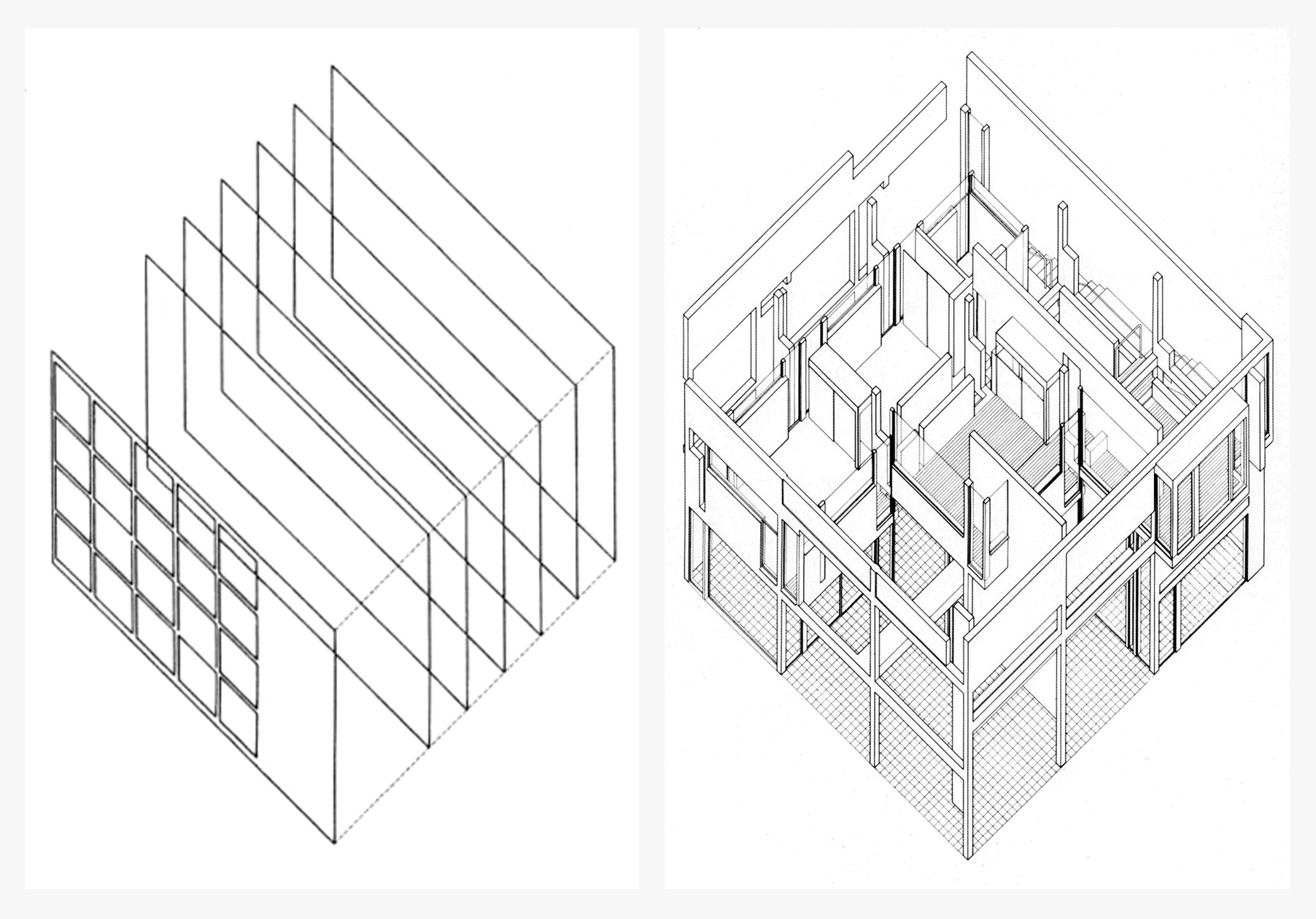
Giuseppe Terragni's infamous Casa Del Fascio (today casa del populi) built in 1935 as a symbol for the superiority of the rising fascist party shows mainly Terragnis superiority in comosing space with complexity and coherence. The balance of rules and exceptions and the impressive control of light fascinated architects and theorists (such as Peter Eisenman who analysed the building properly) for decades.
architecturality.files.wordpress.com/2010/10/terragni_eis...
Sony A7R2 Bishop California Fine Art Autumn Landscapes! Dr. Elliot McGucken Fine Art Photography!
Been busy traveling and shooting landscapes and working on my books The Golden Hero's Odyssey about the golden rectangle and divine proportion I use in a lot of my compositions! Also working on my physics book on Dynamic Dimensions Theory! The equation dx4/dt=ic is on a lot of the 45surf swimsuit and shirts and all! :)
Follow me & 45surf!!
www.facebook.com/45surfAchillesOdysseyMythology/
www.facebook.com/elliot.mcgucken
My fine art landscape lenses for the A7RII are the Sony 16-35mm Vario-Tessar T FE F4 ZA OSS E-Mount Lens and the Sony FE 24-240mm f/3.5-6.3 OSS Lens ! Love the Carl Zeiss and super sharp Sony Glass!
Schaut euch das Fahrrad an, dann ahnt ihr wie groß der Baum und die Blüte ist.
Look at the bike, then you'll guess how big the tree and the blossom are
kein Kommentar möglich- comment disabled
Das Nationaldenkmal am Prager Vitkov-Hügel (auch als Žižka-Denkmal bezeichnet) ist ein patriotisches Monument zu Ehren des Hussitenführers Jan Žižka im Prager Stadtteil Žižkov.
Das Nationaldenkmal auf dem Veitsberg (Vítkov) besteht aus einem 9 m hohen und 16,5 Tonnen schweren Reiterstandbild Jan Žižkas sowie aus einer dahinter anschließenden mehrstöckigen Ehrenhalle.
Das Žižka-Reiterstandbild gilt als eine der größten Bronzestatuen der Welt. Die Größe lässt sich gut erahnen, wenn man auf den Herrn zu Füßen des Monuments blickt.
____________________________________________________
The National Monument on Vitkov (also called the Žižka Monument) is a patriotic monument in honour of the Hussite leader Jan Žižka in the Prague district of Žižkov.
The national monument consists of a 9-metre-high and 16.5-ton statue of Jan Žižka on horseback.
The Žižka equestrian statue is one of the largest bronze statues in the world.
Zion National Park Fine Art Landscapes: Dr. Elliot McGucken Fine Art Landscape and Nature Photography!
Hiking the Zion Narrows and the Zion Subway! Shooting Paradise Cove and Archangel Falls! The Zion National Park autumn is most beautiful!
instagram.com/goldennumberratio
Greetings flickr fans! Many more uploads soon! I have been busy writing, traveling, and shooting! I finished my books on the Tao of Epic Landscape Photography and the Golden Number Ratio Principle! I oft incorporate the golden ratio in my landscape compositions, and you'll also see it in the design and proportion of the 45surf clothes and surfboard and gun logos (More golden ratio information at my facebook page facebook.com/goldennumberratio). Message me on facebook for free review copies of my books here: facebook.com/mcgucken ! :)
I'm working on a book on photographing epic goddesses too! What should I title it? :)
facebook.com/goldennumberratio
Full titles: The Tao of Epic Landscape Photography: Exalt Fine Art with the Yin-Yang Wisdom of Lao Tzu's Tao Te Ching.
And: The Golden Number Ratio Principle: Why the Fibonacci Numbers Exalt Beauty and How to Create PHI Compositions in Art, Design, & Photography: An Artistic and Scientific Introduction to the Golden Mean !
I hope you enjoy reading them as much as I enjoyed writing them! :)
Enjoy the epic landscape and goddess and photography and note the golden ratio overlays in some of the photos, as well as the golden ratio in the Birth of Venus painting by Botticelli!
I've been on the road shooting landscapes in Zion, Yosemite, the Eastern Sierras, Big Sur, and more!
Many of you have seen my physics formula dx4/dt=ic for Light Time Dimesnion Theory on a lot of the 45surf clothing and in the fine art landscape logos. I finally finished the first book of many on the foundations of photography's best friend--light:
Light Time Dimension Theory: The Foundational Physics Unifying Einstein's Relativity and Quantum Mechanics.
All the best on your epic hero's odyssey!
Follow me! instagram.com/mcgucken
Was so fortunate to be able to photograph the epic Zion glow this year in the Narows aod Zion National Park!
++++ FROM WIKIPEDIA ++++
Hpa-An (Burmese: ဘားအံမြို့; MLCTS: bha: am mrui. [pʰə ʔàɴ mjo̰]; S'gaw Karen: ဖးအါ, also spelled Pa-An) is the capital of Kayin State (also known as Karen State), Myanmar (Burma). The population of Hpa-An as of the 2014 census is 421,575. Most of the people in Hpa-An are of the Karen ethnic group.
Climate
Hpa-An has a tropical monsoon climate (Köppen climate classification Am). Temperatures are very warm throughout the year, although maximum temperatures are somewhat depressed in the monsoon season due to heavy cloud and rain. There is a winter dry season (November–April) and a summer wet season (May–October). Torrential rain falls from June to August, with over 1,100 millimetres (43 in) falling in August alone.
+++++
Myanmar (Burmese pronunciation: [mjəmà]),[nb 1][8] officially the Republic of the Union of Myanmar and also known as Burma, is a sovereign state in Southeast Asia. Myanmar is bordered by India and Bangladesh to its west, Thailand and Laos to its east and China to its north and northeast. To its south, about one third of Myanmar's total perimeter of 5,876 km (3,651 mi) forms an uninterrupted coastline of 1,930 km (1,200 mi) along the Bay of Bengal and the Andaman Sea. The country's 2014 census counted the population to be 51 million people.[9] As of 2017, the population is about 54 million.[10] Myanmar is 676,578 square kilometers (261,228 square miles) in size. Its capital city is Naypyidaw, and its largest city and former capital is Yangon (Rangoon).[1] Myanmar has been a member of the Association of Southeast Asian Nations (ASEAN) since 1997.
Early civilisations in Myanmar included the Tibeto-Burman-speaking Pyu city-states in Upper Burma and the Mon kingdoms in Lower Burma.[11] In the 9th century, the Bamar people entered the upper Irrawaddy valley and, following the establishment of the Pagan Kingdom in the 1050s, the Burmese language, culture and Theravada Buddhism slowly became dominant in the country. The Pagan Kingdom fell due to the Mongol invasions and several warring states emerged. In the 16th century, reunified by the Taungoo Dynasty, the country was for a brief period the largest empire in the history of Mainland Southeast Asia.[12] The early 19th century Konbaung Dynasty ruled over an area that included modern Myanmar and briefly controlled Manipur and Assam as well. The British took over the administration of Myanmar after three Anglo-Burmese Wars in the 19th century and the country became a British colony. Myanmar was granted independence in 1948, as a democratic nation. Following a coup d'état in 1962, it became a military dictatorship.
For most of its independent years, the country has been engrossed in rampant ethnic strife and its myriad ethnic groups have been involved in one of the world's longest-running ongoing civil wars. During this time, the United Nations and several other organisations have reported consistent and systematic human rights violations in the country.[13] In 2011, the military junta was officially dissolved following a 2010 general election, and a nominally civilian government was installed. This, along with the release of Aung San Suu Kyi and political prisoners, has improved the country's human rights record and foreign relations, and has led to the easing of trade and other economic sanctions.[14] There is, however, continuing criticism of the government's treatment of ethnic minorities, its response to the ethnic insurgency, and religious clashes.[15] In the landmark 2015 election, Aung San Suu Kyi's party won a majority in both houses. However, the Burmese military remains a powerful force in politics.
Myanmar is a country rich in jade and gems, oil, natural gas and other mineral resources. In 2013, its GDP (nominal) stood at US$56.7 billion and its GDP (PPP) at US$221.5 billion.[6] The income gap in Myanmar is among the widest in the world, as a large proportion of the economy is controlled by supporters of the former military government.[16] As of 2016, Myanmar ranks 145 out of 188 countries in human development, according to the Human Development Index.[7]
Etymology
Main article: Names of Myanmar
In 1989, the military government officially changed the English translations of many names dating back to Burma's colonial period or earlier, including that of the country itself: "Burma" became "Myanmar". The renaming remains a contested issue.[17] Many political and ethnic opposition groups and countries continue to use "Burma" because they do not recognise the legitimacy of the ruling military government or its authority to rename the country.[18]
In April 2016, soon after taking office, Aung San Suu Kyi clarified that foreigners are free to use either name, "because there is nothing in the constitution of our country that says that you must use any term in particular".[19]
The country's official full name is the "Republic of the Union of Myanmar" (ပြည်ထောင်စုသမ္မတ မြန်မာနိုင်ငံတော်, Pyidaunzu Thanmăda Myăma Nainngandaw, pronounced [pjìdàʊɴzṵ θàɴməda̰ mjəmà nàɪɴŋàɴdɔ̀]). Countries that do not officially recognise that name use the long form "Union of Burma" instead.[20]
In English, the country is popularly known as either "Burma" or "Myanmar" /ˈmjɑːnˌmɑːr/ (About this sound listen).[8] Both these names are derived from the name of the majority Burmese Bamar ethnic group. Myanmar is considered to be the literary form of the name of the group, while Burma is derived from "Bamar", the colloquial form of the group's name.[17] Depending on the register used, the pronunciation would be Bama (pronounced [bəmà]) or Myamah (pronounced [mjəmà]).[17] The name Burma has been in use in English since the 18th century.
Burma continues to be used in English by the governments of many countries, such as Canada and the United Kingdom.[21][22] Official United States policy retains Burma as the country's name, although the State Department's website lists the country as "Burma (Myanmar)" and Barack Obama has referred to the country by both names.[23] The Czech Republic officially uses Myanmar, although its Ministry of Foreign Affairs mentions both Myanmar and Burma on its website.[24] The United Nations uses Myanmar, as do the Association of Southeast Asian Nations, Australia,[25] Russia, Germany,[26] China, India, Bangladesh, Norway,[27] Japan[21] and Switzerland.[28]
Most English-speaking international news media refer to the country by the name Myanmar, including the BBC,[29] CNN,[30] Al Jazeera,[31] Reuters,[32] RT (Russia Today) and the Australian Broadcasting Corporation (ABC)/Radio Australia.[33]
Myanmar is known with a name deriving from Burma as opposed to Myanmar in Spanish, Italian, Romanian, and Greek – Birmania being the local version of Burma in the Spanish language, for example. Myanmar used to be known as "Birmânia" in Portuguese, and as "Birmanie" in French.[34] As in the past, French-language media today consistently use Birmanie.,[35][36]
History
Main article: History of Myanmar
Prehistory
Main articles: Prehistory of Myanmar and Migration period of ancient Burma
Pyu city-states c. 8th century; Pagan is shown for comparison only and is not contemporary.
Archaeological evidence shows that Homo erectus lived in the region now known as Myanmar as early as 750,000 years ago, with no more erectus finds after 75,000 years ago.[37] The first evidence of Homo sapiens is dated to about 11,000 BC, in a Stone Age culture called the Anyathian with discoveries of stone tools in central Myanmar. Evidence of neolithic age domestication of plants and animals and the use of polished stone tools dating to sometime between 10,000 and 6,000 BC has been discovered in the form of cave paintings in Padah-Lin Caves.[38]
The Bronze Age arrived circa 1500 BC when people in the region were turning copper into bronze, growing rice and domesticating poultry and pigs; they were among the first people in the world to do so.[39] Human remains and artefacts from this era were discovered in Monywa District in the Sagaing Division.[40] The Iron Age began around 500 BC with the emergence of iron-working settlements in an area south of present-day Mandalay.[41] Evidence also shows the presence of rice-growing settlements of large villages and small towns that traded with their surroundings as far as China between 500 BC and 200 AD.[42] Iron Age Burmese cultures also had influences from outside sources such as India and Thailand, as seen in their funerary practices concerning child burials. This indicates some form of communication between groups in Myanmar and other places, possibly through trade.[43]
Early city-states
Main articles: Pyu city-states and Mon kingdoms
Around the second century BC the first-known city-states emerged in central Myanmar. The city-states were founded as part of the southward migration by the Tibeto-Burman-speaking Pyu city-states, the earliest inhabitants of Myanmar of whom records are extant, from present-day Yunnan.[44] The Pyu culture was heavily influenced by trade with India, importing Buddhism as well as other cultural, architectural and political concepts, which would have an enduring influence on later Burmese culture and political organisation.[45]
By the 9th century, several city-states had sprouted across the land: the Pyu in the central dry zone, Mon along the southern coastline and Arakanese along the western littoral. The balance was upset when the Pyu came under repeated attacks from Nanzhao between the 750s and the 830s. In the mid-to-late 9th century the Bamar people founded a small settlement at Bagan. It was one of several competing city-states until the late 10th century when it grew in authority and grandeur.[46]
Imperial Burma
Main articles: Pagan Kingdom, Taungoo Dynasty, and Konbaung Dynasty
See also: Ava Kingdom, Hanthawaddy Kingdom, Kingdom of Mrauk U, and Shan States
Pagodas and kyaungs in present-day Bagan, the capital of the Pagan Kingdom.
Pagan gradually grew to absorb its surrounding states until the 1050s–1060s when Anawrahta founded the Pagan Kingdom, the first ever unification of the Irrawaddy valley and its periphery. In the 12th and 13th centuries, the Pagan Empire and the Khmer Empire were two main powers in mainland Southeast Asia.[47] The Burmese language and culture gradually became dominant in the upper Irrawaddy valley, eclipsing the Pyu, Mon and Pali norms by the late 12th century.[48]
Theravada Buddhism slowly began to spread to the village level, although Tantric, Mahayana, Hinduism, and folk religion remained heavily entrenched. Pagan's rulers and wealthy built over 10,000 Buddhist temples in the Pagan capital zone alone. Repeated Mongol invasions (1277–1301) toppled the four-century-old kingdom in 1287.[48]
Temples at Mrauk U.
Pagan's collapse was followed by 250 years of political fragmentation that lasted well into the 16th century. Like the Burmans four centuries earlier, Shan migrants who arrived with the Mongol invasions stayed behind. Several competing Shan States came to dominate the entire northwestern to eastern arc surrounding the Irrawaddy valley. The valley too was beset with petty states until the late 14th century when two sizeable powers, Ava Kingdom and Hanthawaddy Kingdom, emerged. In the west, a politically fragmented Arakan was under competing influences of its stronger neighbours until the Kingdom of Mrauk U unified the Arakan coastline for the first time in 1437.
Early on, Ava fought wars of unification (1385–1424) but could never quite reassemble the lost empire. Having held off Ava, Hanthawaddy entered its golden age, and Arakan went on to become a power in its own right for the next 350 years. In contrast, constant warfare left Ava greatly weakened, and it slowly disintegrated from 1481 onward. In 1527, the Confederation of Shan States conquered Ava itself, and ruled Upper Myanmar until 1555.
Like the Pagan Empire, Ava, Hanthawaddy and the Shan states were all multi-ethnic polities. Despite the wars, cultural synchronisation continued. This period is considered a golden age for Burmese culture. Burmese literature "grew more confident, popular, and stylistically diverse", and the second generation of Burmese law codes as well as the earliest pan-Burma chronicles emerged.[49] Hanthawaddy monarchs introduced religious reforms that later spread to the rest of the country.[50] Many splendid temples of Mrauk U were built during this period.
Taungoo and colonialism
Bayinnaung's Empire in 1580.
Political unification returned in the mid-16th century, due to the efforts of Taungoo, a former vassal state of Ava. Taungoo's young, ambitious king Tabinshwehti defeated the more powerful Hanthawaddy in the Toungoo–Hanthawaddy War (1534–41). His successor Bayinnaung went on to conquer a vast swath of mainland Southeast Asia including the Shan states, Lan Na, Manipur, Mong Mao, the Ayutthaya Kingdom, Lan Xang and southern Arakan. However, the largest empire in the history of Southeast Asia unravelled soon after Bayinnaung's death in 1581, completely collapsing by 1599. Ayutthaya seized Tenasserim and Lan Na, and Portuguese mercenaries established Portuguese rule at Thanlyin (Syriam).
The dynasty regrouped and defeated the Portuguese in 1613 and Siam in 1614. It restored a smaller, more manageable kingdom, encompassing Lower Myanmar, Upper Myanmar, Shan states, Lan Na and upper Tenasserim. The Restored Toungoo kings created a legal and political framework whose basic features would continue well into the 19th century. The crown completely replaced the hereditary chieftainships with appointed governorships in the entire Irrawaddy valley, and greatly reduced the hereditary rights of Shan chiefs. Its trade and secular administrative reforms built a prosperous economy for more than 80 years. From the 1720s onward, the kingdom was beset with repeated Meithei raids into Upper Myanmar and a nagging rebellion in Lan Na. In 1740, the Mon of Lower Myanmar founded the Restored Hanthawaddy Kingdom. Hanthawaddy forces sacked Ava in 1752, ending the 266-year-old Toungoo Dynasty.
A British 1825 lithograph of Shwedagon Pagoda shows British occupation during the First Anglo-Burmese War.
After the fall of Ava, the Konbaung–Hanthawaddy War involved one resistance group under Alaungpaya defeating the Restored Hanthawaddy, and by 1759, he had reunited all of Myanmar and Manipur, and driven out the French and the British, who had provided arms to Hanthawaddy. By 1770, Alaungpaya's heirs had subdued much of Laos (1765) and fought and won the Burmese–Siamese War (1765–67) against Ayutthaya and the Sino-Burmese War (1765–69) against Qing China (1765–1769).[51]
With Burma preoccupied by the Chinese threat, Ayutthaya recovered its territories by 1770, and went on to capture Lan Na by 1776. Burma and Siam went to war until 1855, but all resulted in a stalemate, exchanging Tenasserim (to Burma) and Lan Na (to Ayutthaya). Faced with a powerful China and a resurgent Ayutthaya in the east, King Bodawpaya turned west, acquiring Arakan (1785), Manipur (1814) and Assam (1817). It was the second-largest empire in Burmese history but also one with a long ill-defined border with British India.[52]
The breadth of this empire was short lived. Burma lost Arakan, Manipur, Assam and Tenasserim to the British in the First Anglo-Burmese War (1824–1826). In 1852, the British easily seized Lower Burma in the Second Anglo-Burmese War. King Mindon Min tried to modernise the kingdom, and in 1875 narrowly avoided annexation by ceding the Karenni States. The British, alarmed by the consolidation of French Indochina, annexed the remainder of the country in the Third Anglo-Burmese War in 1885.
Konbaung kings extended Restored Toungoo's administrative reforms, and achieved unprecedented levels of internal control and external expansion. For the first time in history, the Burmese language and culture came to predominate the entire Irrawaddy valley. The evolution and growth of Burmese literature and theatre continued, aided by an extremely high adult male literacy rate for the era (half of all males and 5% of females).[53] Nonetheless, the extent and pace of reforms were uneven and ultimately proved insufficient to stem the advance of British colonialism.
British Burma (1824–1948)
Main articles: British rule in Burma and Burma Campaign
Burma in British India
The landing of British forces in Mandalay after the last of the Anglo-Burmese Wars, which resulted in the abdication of the last Burmese monarch, King Thibaw Min.
British troops firing a mortar on the Mawchi road, July 1944.
The eighteenth century saw Burmese rulers, whose country had not previously been of particular interest to European traders, seek to maintain their traditional influence in the western areas of Assam, Manipur and Arakan. Pressing them, however, was the British East India Company, which was expanding its interests eastwards over the same territory. Over the next sixty years, diplomacy, raids, treaties and compromises continued until, after three Anglo-Burmese Wars (1824–1885), Britain proclaimed control over most of Burma.[54] British rule brought social, economic, cultural and administrative changes.
With the fall of Mandalay, all of Burma came under British rule, being annexed on 1 January 1886. Throughout the colonial era, many Indians arrived as soldiers, civil servants, construction workers and traders and, along with the Anglo-Burmese community, dominated commercial and civil life in Burma. Rangoon became the capital of British Burma and an important port between Calcutta and Singapore.
Burmese resentment was strong and was vented in violent riots that paralysed Yangon (Rangoon) on occasion all the way until the 1930s.[55] Some of the discontent was caused by a disrespect for Burmese culture and traditions such as the British refusal to remove shoes when they entered pagodas. Buddhist monks became the vanguards of the independence movement. U Wisara, an activist monk, died in prison after a 166-day hunger strike to protest against a rule that forbade him to wear his Buddhist robes while imprisoned.[56]
Separation of British Burma from British India
On 1 April 1937, Burma became a separately administered colony of Great Britain and Ba Maw the first Prime Minister and Premier of Burma. Ba Maw was an outspoken advocate for Burmese self-rule and he opposed the participation of Great Britain, and by extension Burma, in World War II. He resigned from the Legislative Assembly and was arrested for sedition. In 1940, before Japan formally entered the Second World War, Aung San formed the Burma Independence Army in Japan.
A major battleground, Burma was devastated during World War II. By March 1942, within months after they entered the war, Japanese troops had advanced on Rangoon and the British administration had collapsed. A Burmese Executive Administration headed by Ba Maw was established by the Japanese in August 1942. Wingate's British Chindits were formed into long-range penetration groups trained to operate deep behind Japanese lines.[57] A similar American unit, Merrill's Marauders, followed the Chindits into the Burmese jungle in 1943.[58] Beginning in late 1944, allied troops launched a series of offensives that led to the end of Japanese rule in July 1945. The battles were intense with much of Burma laid waste by the fighting. Overall, the Japanese lost some 150,000 men in Burma. Only 1,700 prisoners were taken.[59]
Although many Burmese fought initially for the Japanese as part of the Burma Independence Army, many Burmese, mostly from the ethnic minorities, served in the British Burma Army.[60] The Burma National Army and the Arakan National Army fought with the Japanese from 1942 to 1944 but switched allegiance to the Allied side in 1945. Under Japanese occupation, 170,000 to 250,000 civilians died.[61]
Following World War II, Aung San negotiated the Panglong Agreement with ethnic leaders that guaranteed the independence of Myanmar as a unified state. Aung Zan Wai, Pe Khin, Bo Hmu Aung, Sir Maung Gyi, Dr. Sein Mya Maung, Myoma U Than Kywe were among the negotiators of the historical Panglong Conference negotiated with Bamar leader General Aung San and other ethnic leaders in 1947. In 1947, Aung San became Deputy Chairman of the Executive Council of Myanmar, a transitional government. But in July 1947, political rivals[62] assassinated Aung San and several cabinet members.[63]
Independence (1948–1962)
Main article: Post-independence Burma, 1948–62
British governor Hubert Elvin Rance and Sao Shwe Thaik at the flag raising ceremony on 4 January 1948 (Independence Day of Burma).
On 4 January 1948, the nation became an independent republic, named the Union of Burma, with Sao Shwe Thaik as its first President and U Nu as its first Prime Minister. Unlike most other former British colonies and overseas territories, Burma did not become a member of the Commonwealth. A bicameral parliament was formed, consisting of a Chamber of Deputies and a Chamber of Nationalities,[64] and multi-party elections were held in 1951–1952, 1956 and 1960.
The geographical area Burma encompasses today can be traced to the Panglong Agreement, which combined Burma Proper, which consisted of Lower Burma and Upper Burma, and the Frontier Areas, which had been administered separately by the British.[65]
In 1961, U Thant, then the Union of Burma's Permanent Representative to the United Nations and former Secretary to the Prime Minister, was elected Secretary-General of the United Nations, a position he held for ten years.[66] Among the Burmese to work at the UN when he was Secretary-General was a young Aung San Suu Kyi (daughter of Aung San), who went on to become winner of the 1991 Nobel Peace Prize.
When the non-Burman ethnic groups pushed for autonomy or federalism, alongside having a weak civilian government at the centre, the military leadership staged a coup d’état in 1962. Though incorporated in the 1947 Constitution, successive military governments construed the use of the term ‘federalism’ as being anti-national, anti-unity and pro-disintegration.[67]
Military rule (1962–2011)
On 2 March 1962, the military led by General Ne Win took control of Burma through a coup d'état, and the government has been under direct or indirect control by the military since then. Between 1962 and 1974, Myanmar was ruled by a revolutionary council headed by the general. Almost all aspects of society (business, media, production) were nationalised or brought under government control under the Burmese Way to Socialism,[68] which combined Soviet-style nationalisation and central planning.
A new constitution of the Socialist Republic of the Union of Burma was adopted in 1974. Until 1988, the country was ruled as a one-party system, with the General and other military officers resigning and ruling through the Burma Socialist Programme Party (BSPP).[69] During this period, Myanmar became one of the world's most impoverished countries.[70]
Protesters gathering in central Rangoon, 1988.
There were sporadic protests against military rule during the Ne Win years and these were almost always violently suppressed. On 7 July 1962, the government broke up demonstrations at Rangoon University, killing 15 students.[68] In 1974, the military violently suppressed anti-government protests at the funeral of U Thant. Student protests in 1975, 1976, and 1977 were quickly suppressed by overwhelming force.[69]
In 1988, unrest over economic mismanagement and political oppression by the government led to widespread pro-democracy demonstrations throughout the country known as the 8888 Uprising. Security forces killed thousands of demonstrators, and General Saw Maung staged a coup d'état and formed the State Law and Order Restoration Council (SLORC). In 1989, SLORC declared martial law after widespread protests. The military government finalised plans for People's Assembly elections on 31 May 1989.[71] SLORC changed the country's official English name from the "Socialist Republic of the Union of Burma" to the "Union of Myanmar" in 1989.
In May 1990, the government held free elections for the first time in almost 30 years and the National League for Democracy (NLD), the party of Aung San Suu Kyi, won 392 out of a total 492 seats (i.e., 80% of the seats). However, the military junta refused to cede power[72] and continued to rule the nation as SLORC until 1997, and then as the State Peace and Development Council (SPDC) until its dissolution in March 2011.
Protesters in Yangon during the 2007 Saffron Revolution with a banner that reads non-violence: national movement in Burmese. In the background is Shwedagon Pagoda.
On 23 June 1997, Myanmar was admitted into the Association of Southeast Asian Nations (ASEAN). On 27 March 2006, the military junta, which had moved the national capital from Yangon to a site near Pyinmana in November 2005, officially named the new capital Naypyidaw, meaning "city of the kings".[73]
Cyclone Nargis in southern Myanmar, May 2008.
In August 2007, an increase in the price of diesel and petrol led to the Saffron Revolution led by Buddhist monks that were dealt with harshly by the government.[74] The government cracked down on them on 26 September 2007. The crackdown was harsh, with reports of barricades at the Shwedagon Pagoda and monks killed. There were also rumours of disagreement within the Burmese armed forces, but none was confirmed. The military crackdown against unarmed protesters was widely condemned as part of the international reactions to the Saffron Revolution and led to an increase in economic sanctions against the Burmese Government.
In May 2008, Cyclone Nargis caused extensive damage in the densely populated, rice-farming delta of the Irrawaddy Division.[75] It was the worst natural disaster in Burmese history with reports of an estimated 200,000 people dead or missing, damage totalled to 10 billion US dollars, and as many as 1 million left homeless.[76] In the critical days following this disaster, Myanmar's isolationist government was accused of hindering United Nations recovery efforts.[77] Humanitarian aid was requested but concerns about foreign military or intelligence presence in the country delayed the entry of United States military planes delivering medicine, food, and other supplies.[78]
In early August 2009, a conflict known as the Kokang incident broke out in Shan State in northern Myanmar. For several weeks, junta troops fought against ethnic minorities including the Han Chinese,[79] Wa, and Kachin.[80][81] During 8–12 August, the first days of the conflict, as many as 10,000 Burmese civilians fled to Yunnan province in neighbouring China.[80][81][82]
Civil wars
Main articles: Internal conflict in Myanmar, Kachin Conflict, Karen conflict, and 2015 Kokang offensive
Civil wars have been a constant feature of Myanmar's socio-political landscape since the attainment of independence in 1948. These wars are predominantly struggles for ethnic and sub-national autonomy, with the areas surrounding the ethnically Bamar central districts of the country serving as the primary geographical setting of conflict. Foreign journalists and visitors require a special travel permit to visit the areas in which Myanmar's civil wars continue.[83]
In October 2012, the ongoing conflicts in Myanmar included the Kachin conflict,[84] between the Pro-Christian Kachin Independence Army and the government;[85] a civil war between the Rohingya Muslims, and the government and non-government groups in Rakhine State;[86] and a conflict between the Shan,[87] Lahu, and Karen[88][89] minority groups, and the government in the eastern half of the country. In addition, al-Qaeda signalled an intention to become involved in Myanmar. In a video released on 3 September 2014, mainly addressed to India, the militant group's leader Ayman al-Zawahiri said al-Qaeda had not forgotten the Muslims of Myanmar and that the group was doing "what they can to rescue you".[90] In response, the military raised its level of alertness, while the Burmese Muslim Association issued a statement saying Muslims would not tolerate any threat to their motherland.[91]
Armed conflict between ethnic Chinese rebels and the Myanmar Armed Forces have resulted in the Kokang offensive in February 2015. The conflict had forced 40,000 to 50,000 civilians to flee their homes and seek shelter on the Chinese side of the border.[92] During the incident, the government of China was accused of giving military assistance to the ethnic Chinese rebels. Burmese officials have been historically "manipulated" and pressured by the Chinese government throughout Burmese modern history to create closer and binding ties with China, creating a Chinese satellite state in Southeast Asia.[93] However, uncertainties exist as clashes between Burmese troops and local insurgent groups continue.
Democratic reforms
Main article: 2011–12 Burmese political reforms
The goal of the Burmese constitutional referendum of 2008, held on 10 May 2008, is the creation of a "discipline-flourishing democracy". As part of the referendum process, the name of the country was changed from the "Union of Myanmar" to the "Republic of the Union of Myanmar", and general elections were held under the new constitution in 2010. Observer accounts of the 2010 election describe the event as mostly peaceful; however, allegations of polling station irregularities were raised, and the United Nations (UN) and a number of Western countries condemned the elections as fraudulent.[94]
U.S. President Barack Obama and Secretary of State Hillary Clinton with Aung San Suu Kyi and her staff at her home in Yangon, 2012
The military-backed Union Solidarity and Development Party declared victory in the 2010 elections, stating that it had been favoured by 80 percent of the votes; however, the claim was disputed by numerous pro-democracy opposition groups who asserted that the military regime had engaged in rampant fraud.[95][96] One report documented 77 percent as the official turnout rate of the election.[95] The military junta was dissolved on 30 March 2011.
Opinions differ whether the transition to liberal democracy is underway. According to some reports, the military's presence continues as the label "disciplined democracy" suggests. This label asserts that the Burmese military is allowing certain civil liberties while clandestinely institutionalising itself further into Burmese politics. Such an assertion assumes that reforms only occurred when the military was able to safeguard its own interests through the transition—here, "transition" does not refer to a transition to a liberal democracy, but transition to a quasi-military rule.[97]
Since the 2010 election, the government has embarked on a series of reforms to direct the country towards liberal democracy, a mixed economy, and reconciliation, although doubts persist about the motives that underpin such reforms. The series of reforms includes the release of pro-democracy leader Aung San Suu Kyi from house arrest, the establishment of the National Human Rights Commission, the granting of general amnesties for more than 200 political prisoners, new labour laws that permit labour unions and strikes, a relaxation of press censorship, and the regulation of currency practices.[98]
The impact of the post-election reforms has been observed in numerous areas, including ASEAN's approval of Myanmar's bid for the position of ASEAN chair in 2014;[99] the visit by United States Secretary of State Hillary Clinton in December 2011 for the encouragement of further progress, which was the first visit by a Secretary of State in more than fifty years,[100] during which Clinton met with the Burmese president and former military commander Thein Sein, as well as opposition leader Aung San Suu Kyi;[101] and the participation of Aung San Suu Kyi's National League for Democracy (NLD) party in the 2012 by-elections, facilitated by the government's abolition of the laws that previously barred the NLD.[102] As of July 2013, about 100[103][104] political prisoners remain imprisoned, while conflict between the Burmese Army and local insurgent groups continues.
Map of Myanmar and its divisions, including Shan State, Kachin State, Rakhine State and Karen State.
In 1 April 2012 by-elections, the NLD won 43 of the 45 available seats; previously an illegal organisation, the NLD had not won a single seat under new constitution. The 2012 by-elections were also the first time that international representatives were allowed to monitor the voting process in Myanmar.[105]
2015 general elections
Main article: Myanmar general election, 2015
General elections were held on 8 November 2015. These were the first openly contested elections held in Myanmar since 1990. The results gave the National League for Democracy an absolute majority of seats in both chambers of the national parliament, enough to ensure that its candidate would become president, while NLD leader Aung San Suu Kyi is constitutionally barred from the presidency.[106]
The new parliament convened on 1 February 2016[107] and, on 15 March 2016, Htin Kyaw was elected as the first non-military president since the military coup of 1962.[108] On 6 April 2016, Aung San Suu Kyi assumed the newly created role of State Counsellor, a role akin to a Prime Minister.
Geography
Main article: Geography of Myanmar
A map of Myanmar
Myanmar map of Köppen climate classification.
Myanmar has a total area of 678,500 square kilometres (262,000 sq mi). It lies between latitudes 9° and 29°N, and longitudes 92° and 102°E. As of February 2011, Myanmar consisted of 14 states and regions, 67 districts, 330 townships, 64 sub-townships, 377 towns, 2,914 Wards, 14,220 village tracts and 68,290 villages.
Myanmar is bordered in the northwest by the Chittagong Division of Bangladesh and the Mizoram, Manipur, Nagaland and Arunachal Pradesh states of India. Its north and northeast border is with the Tibet Autonomous Region and Yunnan province for a Sino-Myanmar border total of 2,185 km (1,358 mi). It is bounded by Laos and Thailand to the southeast. Myanmar has 1,930 km (1,200 mi) of contiguous coastline along the Bay of Bengal and Andaman Sea to the southwest and the south, which forms one quarter of its total perimeter.[20]
In the north, the Hengduan Mountains form the border with China. Hkakabo Razi, located in Kachin State, at an elevation of 5,881 metres (19,295 ft), is the highest point in Myanmar.[109] Many mountain ranges, such as the Rakhine Yoma, the Bago Yoma, the Shan Hills and the Tenasserim Hills exist within Myanmar, all of which run north-to-south from the Himalayas.[110]
The mountain chains divide Myanmar's three river systems, which are the Irrawaddy, Salween (Thanlwin), and the Sittaung rivers.[111] The Irrawaddy River, Myanmar's longest river, nearly 2,170 kilometres (1,348 mi) long, flows into the Gulf of Martaban. Fertile plains exist in the valleys between the mountain chains.[110] The majority of Myanmar's population lives in the Irrawaddy valley, which is situated between the Rakhine Yoma and the Shan Plateau.
Administrative divisions
Main article: Administrative divisions of Myanmar
A clickable map of Burma/Myanmar exhibiting its first-level administrative divisions.
About this image
Myanmar is divided into seven states (ပြည်နယ်) and seven regions (တိုင်းဒေသကြီး), formerly called divisions.[112] Regions are predominantly Bamar (that is, mainly inhabited by the dominant ethnic group). States, in essence, are regions that are home to particular ethnic minorities. The administrative divisions are further subdivided into districts, which are further subdivided into townships, wards, and villages.
Climate
Main article: Climate of Myanmar
The limestone landscape of Mon State.
Much of the country lies between the Tropic of Cancer and the Equator. It lies in the monsoon region of Asia, with its coastal regions receiving over 5,000 mm (196.9 in) of rain annually. Annual rainfall in the delta region is approximately 2,500 mm (98.4 in), while average annual rainfall in the Dry Zone in central Myanmar is less than 1,000 mm (39.4 in). The Northern regions of Myanmar are the coolest, with average temperatures of 21 °C (70 °F). Coastal and delta regions have an average maximum temperature of 32 °C (89.6 °F).[111]
Environment
Further information: Deforestation in Myanmar
Myanmar continues to perform badly in the global Environmental Performance Index (EPI) with an overall ranking of 153 out of 180 countries in 2016; among the worst in the South Asian region, only ahead of Bangladesh and Afghanistan. The EPI was established in 2001 by the World Economic Forum as a global gauge to measure how well individual countries perform in implementing the United Nations' Sustainable Development Goals. The environmental areas where Myanmar performs worst (ie. highest ranking) are air quality (174), health impacts of environmental issues (143) and biodiversity and habitat (142). Myanmar performs best (ie. lowest ranking) in environmental impacts of fisheries (21), but with declining fish stocks. Despite several issues, Myanmar also ranks 64 and scores very good (ie. a high percentage of 93.73%) in environmental effects of the agricultural industry because of an excellent management of the nitrogen cycle.[114][115]
Wildlife
Myanmar's slow economic growth has contributed to the preservation of much of its environment and ecosystems. Forests, including dense tropical growth and valuable teak in lower Myanmar, cover over 49% of the country, including areas of acacia, bamboo, ironwood and Magnolia champaca. Coconut and betel palm and rubber have been introduced. In the highlands of the north, oak, pine and various rhododendrons cover much of the land.[116]
Heavy logging since the new 1995 forestry law went into effect has seriously reduced forest acreage and wildlife habitat.[117] The lands along the coast support all varieties of tropical fruits and once had large areas of mangroves although much of the protective mangroves have disappeared. In much of central Myanmar (the Dry Zone), vegetation is sparse and stunted.
Typical jungle animals, particularly tigers, occur sparsely in Myanmar. In upper Myanmar, there are rhinoceros, wild water buffalo, clouded leopard, wild boars, deer, antelope, and elephants, which are also tamed or bred in captivity for use as work animals, particularly in the lumber industry. Smaller mammals are also numerous, ranging from gibbons and monkeys to flying foxes. The abundance of birds is notable with over 800 species, including parrots, myna, peafowl, red junglefowl, weaverbirds, crows, herons, and barn owl. Among reptile species there are crocodiles, geckos, cobras, Burmese pythons, and turtles. Hundreds of species of freshwater fish are wide-ranging, plentiful and are very important food sources.[118] For a list of protected areas, see List of protected areas of Myanmar.
Government and politics
Main article: Politics of Myanmar
Assembly of the Union (Pyidaungsu Hluttaw)
The constitution of Myanmar, its third since independence, was drafted by its military rulers and published in September 2008. The country is governed as a parliamentary system with a bicameral legislature (with an executive President accountable to the legislature), with 25% of the legislators appointed by the military and the rest elected in general elections.
Kingdom Animalia (Animals)
Phylum Arthropoda (Arthropods)
Class Insecta (Insects)
Order Diptera (Flies)
No Taxon (Acalyptratae)
Superfamily Tephritoidea
Family Ulidiidae (Picture-winged Flies)
More information
en.wikipedia.org/wiki/Picture-winged_fly
Beautiful Golden Ratio Swimsuit Bikini Model Goddess! Helen of Troy! Pretty Athletic Woman!
The golden gun is designed with proportions of the golden ratio! Learn more here:
facebook.com/goldennumberratio
instagram.com/goldennumberratio
Would you like to see the whole set? Comment below and let me know!
Follow me!
I am working on several books on "epic photography," and I recently finished a related one titled: The Golden Number Ratio Principle: Why the Fibonacci Numbers Exalt Beauty and How to Create PHI Compositions in Art, Design, & Photography: An Artistic and Scientific Introduction to the Golden Mean . Message me on facebook for a free review copy!
www.facebook.com/goldennumberratio/
The Golden Ratio also informs the design of the golden revolver on all the swimsuits and lingerie, as well as the 45surf logo!
The Golden Number Ratio Principle: Dr. E’s Golden Ratio Principle: The golden ratio exalts beauty because the number is a characteristic of the mathematically and physically most efficient manners of growth and distribution, on both evolutionary and purely physical levels. The golden ratio ensures that the proportions and structure of that which came before provide the proportions and structure of that which comes after. Robust, ordered growth is naturally associated with health and beauty, and thus we evolved to perceive the golden ratio harmonies as inherently beautiful, as we saw and felt their presence in all vital growth and life—in the salient features and proportions of humans and nature alike, from the distribution of our facial features and bones to the arrangements of petals, leaves, and sunflowers seeds. As ratios between Fibonacci Numbers offer the closest whole-number approximations to the golden ratio, and as seeds, cells, leaves, bones, and other physical entities appear in whole numbers, the Fibonacci Numbers oft appear in nature’s elements as “growth’s numbers.” From the dawn of time, humanity sought to salute their gods in art and temples exalting the same proportion by which all their vital sustenance and they themselves had been created—the golden ratio.
Exalt in the glorious golden ratio! facebook.com/goldennumberratio
Follow me for more on instagram! instagram.com/45surf ! :)
Nikon D810 with the Nikon MB-D12 Multi Battery Power Pack / Grip for D800 and D810 Digital Cameras allows one to shoot at a high to catch the action FPS! Ballerina Dance Goddess Photos! Pretty, Tall Ballet Swimsuit Bikini Model Ballerina Goddess! Captured with the 50mm F1.4 Art Lens and the Nikon 70-200mm f/2.8G ED VR II AF-S Nikkor Zoom Lens! Ballerina dancer dancing ballet in pointe shoes! Jete! Arabesque!
www.facebook.com/45surfAchillesOdysseyMythology
Ballerina dancing ballet! Pretty ballerina girl with dark brown hair and black eyes!
A pretty goddess straight out of Homer's Iliad & Odyssey!
New Instagram! instagram.com/45surf
New facebook: www.facebook.com/45surfAchillesOdysseyMythology
Pretty, Tall Bikini Swimsuit Model Goddess!
New blog!
Ask me any questions! :)
She was a beauty--a gold 45 goddess for sure! A Gold 45 Goddess exalts the archetypal form of Athena--the Greek Goddess of wisdom, warfare, strategy, heroic endeavour, handicrafts and reason. A Gold 45 Goddess guards the beauty of dx4/dt=ic and embodies 45SURF's motto "Virtus, Honoris, et Actio Pro Veritas, Amor, et Bellus, (Strength, Honor, and Action for Truth, Love, and Beauty," and she stands ready to inspire and guide you along your epic, heroic odyssey into art and mythology. It is Athena who descends to call Telemachus to Adventure in the first book of Homer's Odyssey--to man up, find news of his true father Odysseus, and rid his home of the false suitors, and too, it is Athena who descends in the first book of Homer's Iliad, to calm the Rage of Achilles who is about to draw his sword so as to slay his commander who just seized Achilles' prize, thusly robbing Achilles of his Honor--the higher prize Achilles fought for. And now Athena descends once again, assuming the form of a Gold 45 Goddess, to inspire you along your epic journey of heroic endeavour.
ALL THE BEST on your Epic Hero's Odyssey from Johnny Ranger McCoy!
Been busy traveling and shooting landscapes and working on my books The Golden Hero's Odyssey about the golden rectangle and divine proportion I use in a lot of my compositions! Also working on my physics book on Dynamic Dimensions Theory! The equation d4/dt=ic is on a lot of the 45surf swimsuit and shirts and all! :)
Follow me & 45surf!!
www.facebook.com/45surfAchillesOdysseyMythology/
Connect with me: JasonGambone.com * Instagram * Facebook * Twitter * Purchase Prints
Empty Sky Memorial at Liberty State Park, facing lower Manhattan.
Empty Sky is the official New Jersey September 11 memorial to the state's victims of the September 11 attacks on the United States. The length of each wall is exactly equal to one side of the former World Trade Center Towers as the height of the wall reflects proportion of the former buildings if they were lying on their side.
The upper photo is an example of proportion; a bigger proportion of the sky in a sunset and the rest are the trees, really concentrating on the beautiful flame-like sunset.
The fruit (pie) tart have various colors and kind of fruits which made it so appealing(colorful) and delicious.
The family/ group of friends of flamingos is an example of unity.
Sony A7RII Fine Art Autumn Landscapes Fall Colors Autumn Foilage! Dr. Elliot McGucken Fine Art Photography!
Been busy traveling and shooting landscapes and working on my books The Golden Hero's Odyssey about the golden rectangle and divine proportion I use in a lot of my compositions! Also working on my physics book on Dynamic Dimensions Theory! The equation dx4/dt=ic is on a lot of the 45surf swimsuit and shirts and all! :)
Follow me & 45surf!!
www.facebook.com/45surfAchillesOdysseyMythology/
www.facebook.com/elliot.mcgucken
My fine art landscape lenses for the A7RII are the Sony 16-35mm Vario-Tessar T FE F4 ZA OSS E-Mount Lens and the Sony FE 24-240mm f/3.5-6.3 OSS Lens ! Love the Carl Zeiss and super sharp Sony Glass!
St. Louis, Missouri. Photo by John Lishamer Photography (www.johnlishamer.com) All Rights Reserved. Nikon F3. Nikkor 35mm f1.4 ais. Fuji Neopan 400 @1600 (expired). Xtol.