View allAll Photos Tagged perhaps
Unknown insect, perhaps a bush cricket? ID welcomed!
UPDATE: Thank to Chris and Jo GB, I'm now thinking this is some type of meadow katydid (genus Conocephalus)...
Tamron SP Di 90mm F/2.8 (272E).
IMPORTANT:
If you would like to use this photo in a way that is appropriate under its Creative Commons license, you are welcome to do so, but please make sure to credit me by my real name and Flickr handle, and please also include a link to the Flickr page of the photo, as well as a link to the relevant Creative Commons license text. I have put examples of proper attribution on my profile page. Optionally, you may also send me a little note about your use... :)
For any other type of use, please contact me to properly license this image.
Thank you!
(IMGP9393_CrEtc)
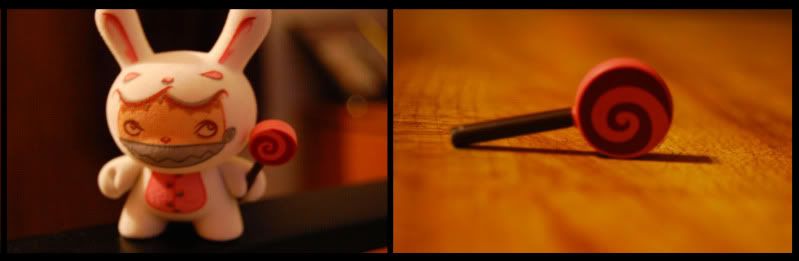
**i took your advice rasenkantenstein and I did a little editing
first attempt at a diptych.
I'm open to constructive criticism so rant away (: lol
Title page and inscriptions from Poetical Works of George Herbert with Memoir by J.Nichol 1870.
Inscribed E. Calder, Maldon 1878 and 'From Polly for Jillie etc'.
Owned by Elizabeth Calder of ‘Calder House’ in Maldon, Victoria. One of the six children of Thomas Calder and Mary Johnson. Thomas emigrated to Australia from England in about 1852. Elizabeth was born 1836.
Elegant Calder House is one of Maldon's finest and notable rendered Georgian-Victorian Homes .
The National Trust regards Maldon as perhaps the most remarkable gold-mining town surviving and worthy of preservation because of its excellent 19th century buildings in good order, and its winding streets with plantings of European trees.
Collected poetry of Herbert edited by Charles C. Clarke.
Published by R & A Suttaby, London. Well preserved binding in full brown leather with blind and gilt impressions. 312 pages 17cm x 12cm.
NB: Calder House was up for sale 2014 : www.bendigoadvertiser.com.au/story/2658498/grand-maldon-l...
The 'calderhouse' article above refers to a book by James Hervey called Meditations and Contemplations (1789) and summises a link to Elizabeth Harvey (Hervey?) who married Thomas Calder jnr.
See that book here: www.flickr.com/photos/angeljim46/6880329243/
Alviso Flat lies just a hundred yards north of the Alviso Marina County Park. Situated just west of the 1880 South Coast Pacific railroad grade, the flat is a widening of the ditch flanking the rail track. I have no idea why the ditch widens here but it makes an interesting and photographic landscape feature. The area fills with a few inches of water during our winter rainy season and tends to dry out in the summer. This has been an exceptionally dry winter so I was a bit surprised to find water in the flat during this January visit. Perhaps it is due to the adjacent salt ponds, which were relatively full, or a connection to the New Chicago Marsh on the other side of the track. This marsh is running with much higher water levels since the Salt Pond A16 construction project.
As you walk along the levee past Alviso Flat you can see the vague remnants of a few marsh channels. These are much more evident from the air as is the color du jour of the flat’s shallow water (in this case light brown).
Fellow KAPper Dave Wheeler, who was visiting from Maryland, accompanied me on this outing. You can see Dave’s white Rokakku kite in several of the images.
I am taking these documentary photographs under a Special Use Permit from the California Department of Fish & Wildlife. Kite flying is prohibited over the Eden Landing Ecological Reserve without a Special Use Permit, as is access to this part of the Don Edwards National Wildlife Refuge.
taken in parral chile 15 sec exposure...it was raining so everything was wet and reflecting the surrounding lights// see large
Each route out of Mo Chit has a separate ticket office with a staff-member to sell tickets. There are perhaps a hunded such offices.
They are quiet here on a Sunday afternoon. At other times, particularly before holidays, the area is packed.
Perhaps one of the most colorful Osmia, Osmia versicolor, collected by Jelle Devalez on the Aegean Islands of Greece. Yet another snail shell nester. What would these species do if there were no snail shells and no snails to make them? Photography by Maggie Yuan.
~~~~~~~~~~{{{{{{0}}}}}}~~~~~~~~~~
All photographs are public domain, feel free to download and use as you wish.
Photography Information: Canon Mark II 5D, Zerene Stacker, Stackshot Sled, 65mm Canon MP-E 1-5X macro lens, Twin Macro Flash in Styrofoam Cooler, F5.0, ISO 100, Shutter Speed 200
Beauty is truth, truth beauty - that is all
Ye know on earth and all ye need to know
" Ode on a Grecian Urn"
John Keats
You can also follow us on Instagram account USGSBIML Want some Useful Links to the Techniques We Use? Well now here you go Citizen:
Art Photo Book: Bees: An Up-Close Look at Pollinators Around the World
www.qbookshop.com/products/216627/9780760347386/Bees.html...
Basic USGSBIML set up:
www.youtube.com/watch?v=S-_yvIsucOY
USGSBIML Photoshopping Technique: Note that we now have added using the burn tool at 50% opacity set to shadows to clean up the halos that bleed into the black background from "hot" color sections of the picture.
www.youtube.com/watch?v=Bdmx_8zqvN4
PDF of Basic USGSBIML Photography Set Up:
ftp://ftpext.usgs.gov/pub/er/md/laurel/Droege/How%20to%20Take%20MacroPhotographs%20of%20Insects%20BIML%20Lab2.pdf
Google Hangout Demonstration of Techniques:
plus.google.com/events/c5569losvskrv2nu606ltof8odo
or
www.youtube.com/watch?v=4c15neFttoU
Excellent Technical Form on Stacking:
Contact information:
Sam Droege
sdroege@usgs.gov
301 497 5840
Perhaps one of British Leyland's more obscure legacies was the Vanden Plas edition of many of their family car models. Vanden Plas was a name traditionally associated with high-end luxury models of what were otherwise mundane cars, a tradition that had gone back to the late 1950's. Previously, the legendary coachbuilder would fit the car with all the lovely wood and leather you'd expect to find in a Rolls Royce and then deck out the nose with a gigantic chrome conk. This did work well for many cars, including the Vanden Plas versions of the Austin 1100, but not so well for Vanden Plas versions of the Allegro!
As car design changed to remove large grilles, placing a chome nose on many of these machines was no longer deemed practical, and thus the Vanden Plas brand instead extended to just fitting regular family cars with luxury interiors. But only in Britain would we fit a small shopping car such as the Metro with a luxury interior!
This reminds me of a statue Aristotle but I can't find a reference for it.
Recently a sculpture of Aristotle that greeted in a similar pose was vandalized outside the ancient Greek city of Assos in Turkey.
Perhaps my warmest thing to wear, a hand made Icelandic wool sweater I picked up when I was there in 2008.
Perhaps you'll have better luck playing the hot Craps tables in the casino rather than searching for hidden treasures along Treasure Island Cove.
Perhaps more than any other Yordle, Lulu marches to the beat of her own drum. During her youth in Bandle City, she spent most of her time wandering alone in the forest or lost in a daydream.
CN | Bánh Bao
© All right reserved
All be loved at phitrieu.com/banh-bao/bb003-bittersweet-lulu.html
Follow me at
phitrieu.com
IG + FB | @phitrieu.pro5
Twitter | @phitrieupro5
Flickr | flickr.com/phitrieu
500px | 500px.com/phitrieu
In sun-dappled, wind-swept Bristol, a brand new furry convention debuted and I had the privilege of attending as its first Guest of Honor. Not something I take lightly, so perhaps Guest of Labour would have been a more appropriate title.
Just Fur the Weekend, which I insisted on calling JeftyDubs and has become simply Jefty, was something special. Intimate and exciting, wild and relaxed, the energy was infectious and addictive.
I made so many new friends, people from all walks of life who all inspire me to be better than I am. The hotel staff got into the spirit of things more than I’ve seen at any other con, and a few of them may become One Of Us before too soon.
I hope you enjoy the photos as much as I enjoyed making them!
A highlight reel can be found here: www.youtube.com/watch?v=8IBgQ4jgxvs
For more Jefty ’16 photos, check out the galleries here: www.flickr.com/photos/alexfvance/collections/721576659599...
As always, share and enjoy.
- Alex "Khaki Vance"
If you want to say hi, you can find me on Twitter @khakidoggy, or drop me an email at khakidoggy@me.com
[ If you appear in any of the photos you're free to use them; if you know anyone in a photo, please do share it with them! ]
For even more con photography: www.flickr.com/photos/alexfvance/albums/
Perhaps an odd little tribute to my dad who passed away aged 88 just two days ago, but he was a Londoner and he and mum would drag us kids up to Euston from Watford on the slow train to then catch a 73 bus to Stoke Newington where he came from, to visit family. And then back again. Just one little memory.
Perhaps the crème de la crème of Knox County's Greek Revival residences. The exterior—with its operable shutters, abundant frieze windows, trabeated doorway, basement garage (?), and faithful Doric entablature—is, so far as I can discern, unaltered, and marred only by the crudely handled capitals.
The ever-useful Ohio Historic Places Dictionary recounts its history:
[Mount Liberty Tavern] was the second tavern to be constructed in the area. Francis Wilkins built the first in 1827, and operated it for several years. Mount Liberty [Tavern] was built around 1832, and first opened its doors for customers in 1833. Samuel Thatcher, Sr., who was a prolific builder, built the tavern. In 1838 Thatcher rented the tavern to a Mr. Baggs, and opened a new hotel on the eastern edge of the village. After Baggs' occupancy, the tavern became a residence, and has so remained.
Johnburg.
The Hundred of Oladdie was proclaimed in 1876 and wheat growers started to move into this semi desert area soon after. Three years later in 1879 the town of Johnburg was surveyed with 144 town blocks. What optimism! Few blocks were ever sold and even fewer were ever built upon but nevertheless a small town did develop. Another further 30 kilometres northwards another town developed named Belton so perhaps the Johnburg farmers were less marginal than some. But this was a long way beyond Goyder’s Line. According to Goyder, and the government ignored him on this, these areas were not suitable for farming only pastoralism. Higher than average rainfalls in the late 1870s would not continue and Goyder was correct. Drought returned in the early 1880s yet the town developed and farmers attempted to grow crops here for another 20 to 30 years in association with some sheep grazing as well. Today Johnburg is very much a ghost town with only a handful of permanent residents and a couple of occasional weekend residents.
Johnburg was a government town and it was named after Captain John Jervois the son of the South Australian Governor. Even before the first town blocks were sold in 1879 a general store had opened at this junction of five roads. The Wesleyan Methodists moved into the town early and services were held from 1882, probably in the hotel. Their first church was built in 1889. Also in that year the impressive stone Johnburg Hotel was built ready to cash in on the travellers going further out to Belton and Brendleby settlements. The nearest town to Johnburg was Carrieton across the Oladdie Ranges. A Post Office and blacksmith opened in the town to complement the general store. A saddler also opened for business. The settlers needed a school for their children and a weatherboard temporary school was erected in 1891 with a teacher. Just a few years later enrolment was high enough to warrant a fine Gothic style stone school with attached residence for the headmaster. It opened in 1897 with the highest enrolment recorded in 1899 when 85 children attended this school. Amazingly it remained open as a school until 1967. Today it is a quite well maintained private residence with a lush green lawn. The public hall, a galvanised iron structure is still standing at the crossroads in the town but looks little used, if at all. Until recent decades it was used for all state and federal elections as a polling place. Almost next to it is the former stone Methodist Church. The first Methodist church was demolished mainly by white ants and then it replaced by this stone building in 1924. A local farmer Carl Hombsch donated the land and so fittingly his name is on the foundation stone and he along with four other local men became the trustees of the land and church. With the formation of the Uniting Church in Australia in 1977 this church closed and was sold as a private weekender residence. The Methodist Church in Johnburg also had a manse and that stands behind the old store and post office. It was sold in 1924 to the storekeeper to raise funds for the stone church. In that same year the storekeeper Robert Gibb built a new stone store in front of the old Methodist manse. The Gibb family were farmers around Johnburg for around 100 years and one branch or other of the Gibb family ran the Post Office, telephone office and general store from 1900 until it closed in 1966. A sign outside the former store says population of Johnburg two. It is probably more like seven. It is not clear when the hotel closed but it was certainly closed by 1948. Only the ghosts remain in this sadly crumbling and vandalised ruin today.