View allAll Photos Tagged optimistic
Coco dress, Spring/Summer 2004
Yvie Hutton
Silk
Jonathan Saunders was in the vanguard of young London's optimistic surge of print, colour and partywear that danced fashion out of its post-9/11 gloom. His first NEWGEN show in 2004 was kaleidoscopic, inspired by the art of Victor Vasarely, the geometrics of MC Escher and the energy of late 1990s rave culture in his hometown of Glasgow. Saunders learned print at Central Saint Martins, graduating in 2002. He secretly screen-printed this hit debut while teaching at Brixton Printworks, turning their print-room into his studio at night.*
From the exhibition
REBEL: 30 Years of London Fashion
(September 2023 – February 2024)
Sponsored by Alexander McQueen.
This landmark exhibition is one of the most wide-ranging surveys of contemporary fashion culture ever staged in the UK, offering an unprecedented look at how careers in fashion are forged, and the multitude of opportunities London’s fashion scene offers young creatives.
The exhibition is a landmark collaboration with the British Fashion Council (BFC) and celebrates the 30th anniversary of the BFC’s NEWGEN programme, an initiative that supports the best emerging fashion design talent and aims to build global, high-end brands of the future.
Guest-curated by BFC Ambassador for Emerging Talent Sarah Mower MBE and co-curated by Design Museum Senior Curator Rebecca Lewin, this exhibition tells the story of hundreds of fearless young designers who have transformed the fashion landscape, and brings together exuberant, rebellious and radical garments.
The show features nearly 100 innovative fashion looks from ground-breaking debut and early collections, many of which have entered pop-culture history — and launched global design careers.
Highlights include the swan dress controversially worn by Björk at the 2001 Oscars, Harry Styles’ Steven Stokey Daley outfit from his video for ‘Golden’, and Sam Smith's inflatable latex suit by HARRI from this year’s BRIT Awards. Collections and work by JW Anderson, Wales Bonner, Erdem, Molly Goddard, Christopher Kane, Simone Rocha, Russell Sage, and many more.
These items are shown alongside films, drawings, memorabilia and never-before-seen archive material from some of the most well-known contemporary UK-based designers.
[*Design Museum]
Taken in the Design Museum
Copyright - All Rights Reserved - Black Diamond Images
Naurvoo is a substantially modified (Easy 11.6) (38 feet) Catamaran. The design, by Queenslander Peter Snell, was known as an "Easy Catamaran" though it proved anything but that, taking boatbuilder Phil Wright over 12 years of actually building time to complete but actually, over 31 years before it was finally launched on the 19th May 2025.
Phil Wright is the great grandsons of John Wright, founder of Tuncurry, NSW and of Wright Shipyards, a business that began in 1875 with several generations of the family managing the business until its closure in 1958.
Despite this family boat-building connection Phil Wright had no previous experience with building boats.
For some, as yet unexplained reason, in the early 1990’s Phil decided he was going to build a catamaran and go off sailing the oceans of the world. While this is a dream he never came to realise he did in fact ultimately achieve at least the construction of an impressive boat.
The story began in 1994 when he optimistically sought out plans for a suitable catamaran that he could by a process of trial and error teach himself how to build. After selecting Peter Snell's 11.6m Easy Catamaran he began construction of the rudders, frames and keels in his double car garage at Green Point, near Forster, NSW but this space soon proved much too restrictive to allow the project to proceed.
The decision to sell and buy a property with a house and large shed to house the boat was finally taken and in the early 2000's he sold his home in Green Point and moved to Timbertops, an acreage subdivision just north of Darawank, about 10kms north of Tuncurry.
By June of 2010 the boat, which can sleep up to 7 people, was well advanced, though some 16 years after its construction had begun. Construction was at times slow, always dependent on available funds, family circumstances and on the motivation to struggle through difficult construction challenges, often necessitating researching new technologies and materials all the while having to learn new skills.
Phil was also fortunate that he had several friends who were willing to assist him whenever he needed help. While there were many others, two bear particular mention, Laurie Kilham and Robert Smith.
Some jobs such as completing the electrical wiring required specialised skills and, in such cases, experts were hired.
Most of the work however was carried out on a trial-and-error basis and sometimes this resulted in errors resulting in the need to rebuild some sections of the boat due to incorrect calculations, building construction methods or faulty selection of building materials or components.
As his knowledge of construction methods, materials and skill level grew progress was made, though lack of motivation and money sometimes meant that the boat sat idle, sometimes for several years before work would continue.
However, by February of 2014, some 20 years after construction had begun, the boat was finally ready to be raised to allow rollers to be placed under its keels in readiness to allow it to be winched outside the shed onto two concrete pads.
The operation to remove it outside the shed took place on Friday 15th March 2014.
On the 20th of February 2016, 22 years after construction began, the boat was moved by crane and lowloader about 250m to two newly laid concrete pads at the front of his Timbertops property.
The plan was then to fit it out with rigging, mast and sails and launch it into the Wallamba River as soon as funding became available.
This was going to be a costly exercise at the time involving potentially over $30,000 to complete. With Phil's retirement from paid work at around that time the necessary motivations and finances to complete the sail rigging and move the boat to the water became more and more challenging. This resulted in the boat, though for all intents and purposes finished, remaining on its blocks for another 9 years with almost no further work done on it during that period.
Finally, in April of 2025, now 31 years after construction had begun, an offer was made to buy the boat as it was, structurally finished, but for the sail rigging.
After some consideration Phil accepted the offer and finally made the decision to sell the boat to an enthusiastic buyer intent on finally getting it completed and in the water as soon as was possible.
The new owners were soon on-site cleaning up the boat and after a bit of hard yakka the boat scrubbed up looking a million dollars.
On the 19th May 2025 the boat was finally lifted by crane onto a lowloader and moved to the Wallamba River, north of Tuncurry where in untimely torrential rain the 5 tonne boat was lowered by crane into a rapidly rising Wallamba River.
(On May 21st 2025 Taree, on the Manning River just 30 kms north, suffered its most devastaing flood in recorded memory with the river rising to 6.44 m.)
It was a joy to behold for those who had watched this boats construction over such long a period to see it finally hit the water.
Phil had always had concerns that the boat would be too heavy however once floating of its own accord it became clear it was sitting perfectly in the water, a great source of relief for all involved.
With the rain tumbling down it wasn't long before the new owners were able to get the twin outboards on the boat fired up and immediately move it downstream to Tuncurry then across Wallis Lake to Coomba Bay, on the southern end of Wallis Lake.
Flickr Album - Moving - Launching Naurvoo
The whole operation was carried out just a day before the Wallamba River broke its banks and flooded.
With the boat now at Coomba Bay the owners, Lee and Debbie Roper plan to crane the boat out of the water onto dry land where the vessel will be fully rigged and some structural changes made.
Once the necessary work is completed the boat will be renamed "Affinity 3 of Naurvoo" and then sailed down the coast to Brisbane Water on the lower Central Coast where it will be permanently based in Hardys Bay.
Tim Cook remains optimistic about Apple’s future despite earnings downgrade readnews.xyz/tim-cook-remains-optimistic-about-apples-fut...
Optimistic people see the good in life, for example:
Hey, I might be throwing up blood, but it could be worse. I could be throwing up blood and getting stabbed with a prison shank.
Free Download Music: goo.gl/PghQ5D Uplifting and optimistic instrumental background music for videos, presentations, advertising, films, podcasts, for commercial projects etc.
If you need a license for your project, you can purchase it here: bit.ly/1VIFluc
This lady has been an epiphany. Exciting, crazy, fun and all. Fairly optimistic (occasional pessimist), affectionate, self-disciplined, high standards for self, self-reliant, reliable, humble etc..
This photo was taken inside of the Church of San Giorgio Maggiore near Venezia, Italy. The church was hosting an art exhibit of modern art. The purpose was to be able to expose individuals who would come to the church to a different form of art than they would typically seek out as well as to make individuals who prefer modern art to see the art of an old Italian church! Here, only the modern art sculpture is featured. I thought the corners of these colorful layers came together and made arrow that point towards the viewer at the base of the photo but up towards the top of the photo. Optimistic, I think!
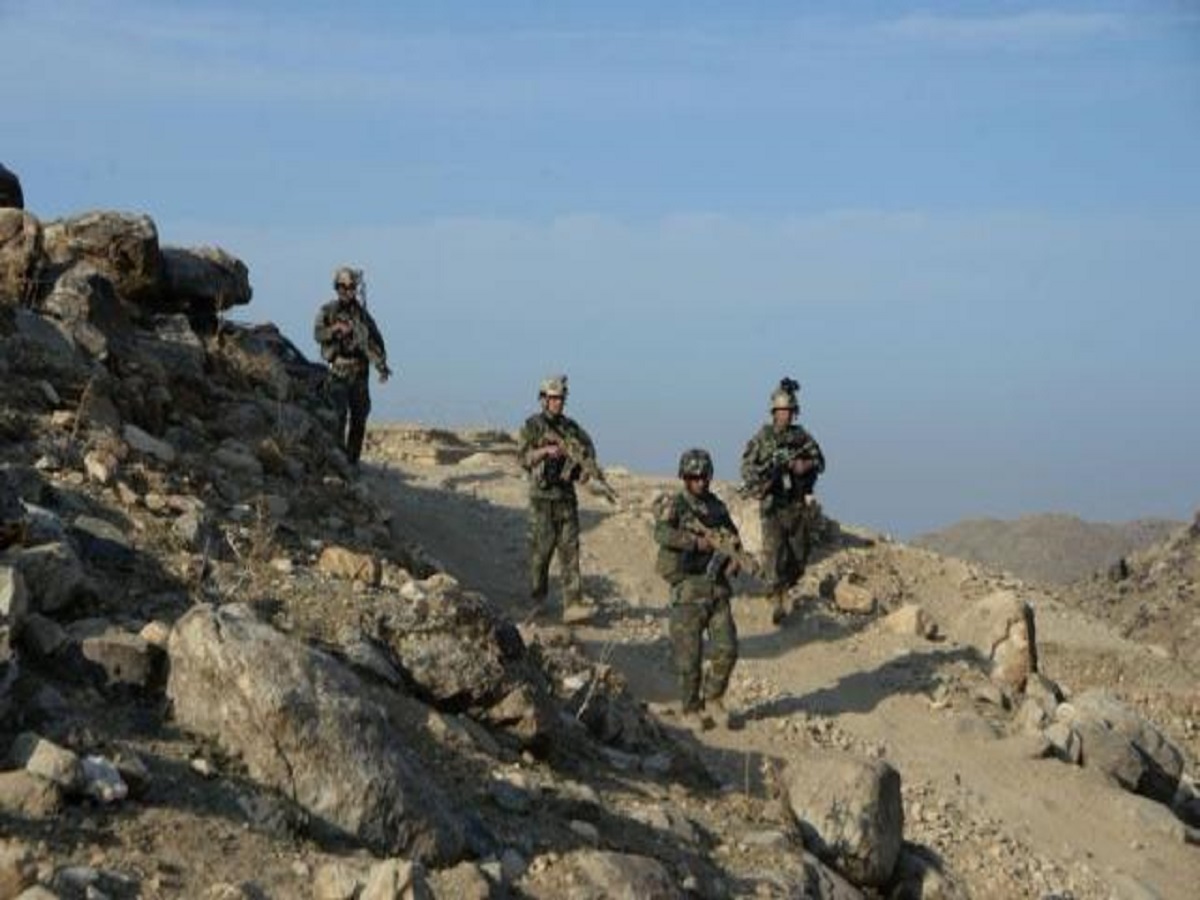
Mattis tempers optimistic outlook on Afghanistan after twin bombings
www.biphoo.com/bipnews/world-news/mattis-tempers-optimist...
www.biphoo.com/bipnews/wp-content/uploads/2018/05/mattis-...
#LatestWorldAndUSNews, #LatestWorldNewsHeadlines, #MattisTempersOptimisticOutlookOnAfghanistanAfterTwinBombings, #UsaLatestNews, #USATodayNews, #WorldNewsUSA
Mattis tempers optimistic outlook on Afghanistan after twin bombings
Defense Secretary James Mattis on Tuesday sought to temper media reports that the Pentagon has taken a more optimistic outlook on Afghanistan, a day after a pair of suicide bombings in Kabul killed at least 35 people, including...
Photo by Mike Watt.
You can download your photo by right clicking on it and choosing the size you wish to download. Choose original to download the highest resolution version. A new page will load with the photo and then you can click the link that says Download the Original size of this photo.
Follower of Luca Cambiaso
Pen and brown ink, brown wash
A collector's optimistic appraisal in the lower right describes this sheet as the work of Cambiaso, but it is more likely to be by one of his many pupils. It shows the spread among Genoese artists of Cambiaso's practice of making rapid, inventive drawings in pen, a preparatory method that was introduced to Genoa by Raphael's pupil Perino del Vaga. This flowing kinetic style remained one of the enduring characteristics of Genoese prints and drawings over the coming centuries.*
From the exhibition
Superb line: prints and drawings from Genoa 1500–1800
(October 2023 – April 2024)
Showcasing prints and drawings from Genoa's golden age, this display shone a light on an artistic powerhouse that rivalled Venice, Florence and Rome.
From the 16th to the 18th centuries, the port city of Genoa was one of Italy's major artistic centres. Nicknamed 'La Superba' ('the proud one') by the Medieval poet Petrarch, it was among the wealthiest cities on the Italian peninsula, with strong trade links across Europe and beyond.
These links and the riches they brought made Genoa a desirable destination for painters and sculptors wanting to study or find lucrative work. Superb line opens with works by the first major arrival, Raphael's pupil Perino del Vaga, who transformed the artistic scene when he came in 1528, introducing a new, modern manner seen in drawings like the Venus and Aeneas, which typifies his distinctive blend of graphic confidence and courtly stylishness.
Other prominent artists soon followed Perino's lead and, over the next 150 years, the city continued to attract even bigger names like Rubens and van Dyck. This constant injection of new blood kept Genoa at the cutting edge of artistic trends, creating a nurturing environment for homegrown talents to develop in their own right. In the following centuries the city produced a steady stream of internationally renowned painters, among them Luca Cambiaso, Bernardo Strozzi and Giovanni Benedetto Castiglione, who were especially feted for their innovative, often experimental graphic works, wowing collectors with dazzling displays of line. Featuring highlights from the British Museum's longstanding holdings of Genoese prints and drawings, this display celebrated the virtuosity and originality of the city's artists.
[*British Museum]
Taken in British Museum