View allAll Photos Tagged modest
Virtue Inworld maps.secondlife.com/secondlife/Shekinah%20Glory/194/202/23
Maitreya, Freya, Venus, Tonic fine and curvy, Slink Physique and Hourglass, Ocacin s, m, lg
With only a modest 1100 kilometers on the clock of this trolleybus, I was allowed to drive this brand new articulated Hess all through the city, as well as the suburbs. Here passing another Hess near the railway station.
An impossible man's dream? No. With a bit of luck (and thanks to my driver's licenses) Arnhem is never "A bridge too far"... ;-)
Arnhem (NL), Nieuwe plein/Willemsplein - November 10, 2009
© 2009 Amsterdam RAIL | All Rights Reserved
NOOSA/QLD (12th March, 2012): DAY two of the 21st annual Noosa Festival Of Surfing sponsored by Global Surf Industries dawned clear and bright and, despite the Gold Coast and Brisbane suffering more heavy rains, barely a sprinkle touched the shores of Laguna Bay.
As with the opening day, the waves were modest, but a predicted build throughout the week held hopes of event organizers and contestants high throughout the day.
The day’s proceedings were divided between four events; the Sunshine Coast Airport Amateur Men’s SUP, the eagerly anticipated inaugural Laguna Bay Longboards Logger Pro, The Men’s Open Amateur sponsored by Classic Malibu and the Old Guys Rule Men’s 60+ age division.
The standup paddleboarders began the proceedings with aplomb, the added volume of their boards aptly suited to the softer conditions. Local surfer and Australian longboard champion, Jackson Close, showed his diversity, out-performing his adversaries in both his round one and round two heats held across the day. Having paddled his way to victory in yesterday’s five-kilometre Sunshine Coast Airport SUP race, Lincoln Dews took a more agile approach in the waves, easily throwing his board through some very impressive manoeuvres, but just forfeiting the heat win.
Across the globe, trends in longboarding have been veering significantly towards a more traditional approach, both in surfing and in equipment. For the first year, the Noosa Festival of Surfing truly embraced the resurgence with the addition of a logger event this year.
The noserider division has always been a favourite at the festival, and the Logger Pro, sponsored by local surfboard manufacturers, Laguna Bay Longboards, proved equally as popular and well justified its inclusion in the proceedings.
Some outstanding surfing by the likes of Nic Jones (Maroochydore, QLD), Geoff Fanning (Noosa Heads, QLD) and another local, Alex Bullpit, impressed the spectators, but the first round was dominated by the Japanese contingent.
Satshumi Suzuki and Yuta Sezuta were just two of the team of the Rising Sun delicately dancing up and down their traditional-style boards, noseriding through impossible sections and riding through to the beach for excellent scores and a very strong finishing result.
Local shaper and superb exponent of the old school, both in the water and in the shaping bay, Thomas Bexon, surfed phenomenally on one of his own exquisite creations, making hanging ten, reverse walks to the tail and tight pivoting turns look deceptively easy and graceful despite his adequate frame.
The Classic Malibu Men’s Open kicked off under crystal-clear skies, the sun warming the beaches and encouraging spectators to flock to the shoreline. Usually a high-performance event, featuring lightweight, highly refined surfboards, the Men’s Open this year saw a scattering of boards, from the more conventional three-finned boards seen in this division to the heavy single-fins that several of the competitors had also used in the Logger.
As the tide diminished, so too did the waves, although not enough to alter venue arrangements, and those Opens competitors opting for the traditional equipment could definitely be seen to have the edge. Nic Jones again outshone, using his single-fin despite his usual penchant and forte on performance equipment.
Rounds two and three of the Sunshine Coast Airport Amateur Men’s SUP offered very little in swell, but Jackson Close again proved his renown, using his paddle not only to gain speed through his rides but also to pivot and lever his way through some extraordinary turns.
Wrapping up aquatic activities were the sexagenarians, proving that they are still as young inside as any of the festival’s competitors and still oozing talents in the waves, even putting many of their more youthful peers to shame.
But, as with all coming days throughout the festival, activities weren’t sparse after the beautiful hinterland sunset.
Presentations ensued at the beach bar before Peter Howe and Tim Gaze once again took to the stage, providing the soundtrack for the Summer&Salt fashion show, the brand’s unique line of surf and swimwear being modeled on the sand at First Point.
Continuing proceedings, a gamut of cinematic delights entertained the crowd, Jack McCoy personally presenting a preview to his latest creation, “A Deeper Shade Of Blue”, McCoy showing with his exceptional footage exactly why he has developed such high renown in the industry.
Local band and festival regulars, the Band Of Frequencies performed a live soundtrack to some unique George Greenough footage and, wrapping up the night, “Sons Of Beaches ‘72” premiered, a movie looking at the Australian team’s groundbreaking part in the 1972 World Championships in San Diego. As a highlight to the film, Wayne ‘Rabbit’ Bartholomew, a member of that original team and a legendary surfer, was joined by Hawaiian, Larry Bertlemann in presenting the timeless and historical documentation of that phenomenal event of 40 years ago.
The action will restart tomorrow at 7:00 sharp
Darian and Nick, old acquaintances through Dennis and Jonathan.
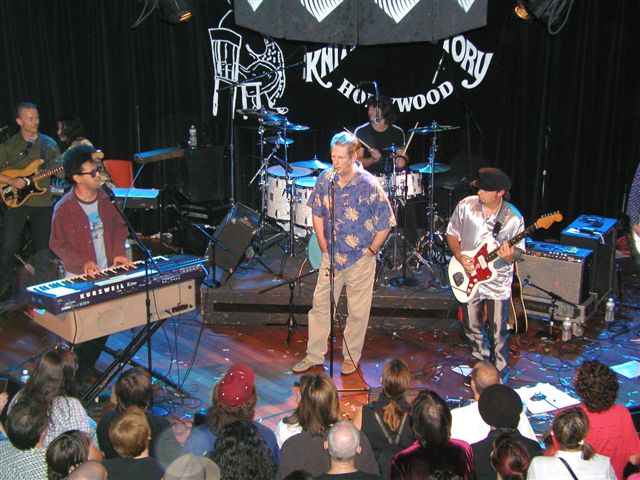
Brian Wilson stands in with The Wondermints at The Knitting Factory in Hollywood -- luckmedia.com/wordpress/wp-content/uploads/Wondermints4.jpg
A late September 2018 visit to Packwood House, another National Trust property. Been meaning to visit this one myself for a while now!
A nice cool Sunday afternoon to visit Packwood.
Packwood House is a timber-framed Tudor manor house near Lapworth, Warwickshire. Owned by the National Trust since 1941, the house is a Grade I listed building. It has a wealth of tapestries and fine furniture, and is known for the garden of yews.
The house began as a modest timber-framed farmhouse constructed for John Fetherston between 1556 and 1560. The last member of the Fetherston family died in 1876. In 1904 the house was purchased by Birmingham industrialist Alfred Ash. It was inherited by Graham Baron Ash (Baron in this case being a name not a title) in 1925, who spent the following two decades creating a house of Tudor character. He purchased an extensive collection of 16th- and 17th-century furniture, some obtained from nearby Baddesley Clinton. The great barn of the farm was converted into a Tudor-style hall with sprung floor for dancing, and was connected to the main house by the addition of a Long Gallery in 1931.
In 1941, Ash donated the house and gardens to the National Trust in memory of his parents but continued to live in the house until 1947 when he moved to Wingfield Castle.
Grade I listed building.
Packwood House and Outbuildings to North East
Listing Text
LAPWORTH PACKWOOD LANE
SP17SE (West side)
Packwood
1/43 Packwood House and outbuildings
11/04/67 to NE
(Formerly listed as Packwood
House)
GV
Includes that part formerly separately listed as Outbuildings to north-east.
House and outbuildings. Late C16 house; mid C17 outbuilding range; early C20
alterations and additions, including Long Gallery and Great Hall (c.1931) for
Graham Baron Ash. House: render, probably on brick, to ground floor; render,
probably on timber framing to first floor; old plain-tile complex cross-gabled
roof; various brick stacks. 2 storeys and attic; 4-bay range. 2 storeys and
attic porch to left of centre with Tudor-arched outer doorway with hoodmould.
Plank door. C20 five-light wood mullion and transom window to ground floor left.
C20 seven-light wood mullion and transom window to ground floor right. C20
5-light wood mullion and transom hall window with 4 rows of lights to right of
centre. C20 four-light wood mullion and transom window to left. C20 five-light
wood mullion and transom window to right. C20 three-light wood mullion and
transom window to first floor of porch. C20 three-light mullion windows to attic
cross-gables. South front: 2 storeys and attic; 3-window range. 4-centre arched
doorway to centre with plank studded door. C20 five-light wood mullion and
transom windows to ground floor left and right. C20 three-light wood mullion and
transom window to first floor centre. C20 four-light wood mullion and transom
windows to first floorleft and right. C20 three-light wood mullion windows to
attic cross-gables. West front: 2-storey, 3-window range. 2-storey porch to
centre, having stone Tudor-arch outer doorway with hoodmould. Plank panelled and
studded door. C20 three-light wood mullion and transom windows to ground and
first floor left. C20 four-light wood mullion and transom windows to ground and
first floor right. C20 three-light wood mullion and transom window to first
floor of porch. Great Hall wing: red brick; old plain-tile roof; various brick
stacks. 2-storey, 5-bay hall range with single-storey, 3-bay link range. Regular
fenestration of early C20 stone mullion windows and stone mullion and transom
windows. Outbuilding range: red brick, with areas of red brick with flared
headers in Flemish bond, and with some diaper work, old plain-tile roof; various
brick stacks. South front: 2-storey, 3-window range to left; single storey and
attic. 4-bay range to right with gable end of cross-wing to right. 4-centre
arched doorway with plank door to centre of 2-storey range. having brick pediment
gable above. 4-light wood mullion and transom window to Tudor-arched opening to
left. 3-light casement to right. 2-light wood casement to Tudor-arched opening to
first floor left. Plank doors to right, and to right of centre of single storey
and attic range. Blocked door to left. 3-light casement to left of centre. Brick
pilaster strips divide bays. Oval brick recesses above doors to left, and to
right of centre. Cut brick cornice to eaves. Pediment-topped doors to left,
and to right of centre. Cutbrick cornice to eaves. Pediment-topped painted brick
sundial panel to left. End of cross-wing to right has irregular fenestration,
and clock face dated 1817. East front of cross-wing: red brick with flared
headers in Flemish bond; old plain tile roof; brick ridge stack to right of
centre. Single storey and attic; 9-bay range. Double plank doors to segmental
brick arched carriageway to left of centre. Bays divided by brick pilaster
strips. Transom windows to second and seventh bays having oval brick recesses
above. 2-light stone mullion windows to first and third bays. 4 gabled dormer.
Brick gable above carriageway having painted sundial and 2-light wood casement
above. Louvred bell turrets to ridge at left of centre and left, that to left
having windvane. Interior: early C20 staircase from ground to first floors. Much
of the panelling in the house was brought in by Graham Baron Ash. The Great Hall
has a 5-bay upper-cruck roof. The stone fireplace and plaster overmantel in the
Great Hall were brought in from a wine shop in Stratford-upon-Avon. Stained glass
medallions to many windows are C17 Flemish and came from Culham House in
Oxfordshire. The house contains a good collection of furniture, including
various pieces from Baddesley Clinton (q.v.).
(Buildings of England: Warwickshire: 1966. pp370-3701; Packwood House: National
Trust guide book, 1987)
[ 18]
Listing NGR: SP1735272239
This text is from the original listing, and may not necessarily reflect the current setting of the building.
Also known as Mr Ash's House.
Three bedrooms up here.
Queen Margaret's Bedroom
Much of the panelling, fireplaces, furniture and tapestries were bought by Baron Ash from houses facing destruction, and brought together at Packwood to preserve them from decay.
California Community College Wrestling Tournament. The 2022 Modesto Invitational hosted by Modesto Junior College on October 8th. Photos by John Sachs for Tech-Fall.com
Daydream
Sidney Myer Music Bowl
Melbourne Australia.
Lineup: Majak Door, Cloud Nothings, Beach Fossils, Tropical Fuck Storm, Modest Mouse
Promotor: Destroy All Lines
Abbatiale de Pomposa ; commune de Codigoro, province de Ferrare, région d'Emilie-Romagne, Italie
Pomposa s'élève le long du chemin de Rome gui joint Ravenne à Venise, sur la section entre Comacchio et Mesola. ... L'ensemble des édifices abbatiaux se présente à l'état isolé, solitaire, et l'on y repère bien les différentes composantes, placées dans un juste rapports. L'église est liturgiquement orientée Est-Ouest; contre la façade Nord, se dresse l'audacieux clocher, repérable de loin à travers la campagne. L'église et le monastère forment un U autour du cloître, dont demeurent seuls le soubassement (refait) et quatre piliers d'angle isolés. Le côté ouvert est celui de la façade de l'église ; parallèle à celle-ci - mais en arrière dans la partie médiane de l'U - se trouve la façade de la salle capitulaire. ... [La structure de l'église] est simple, selon un schéma cher à l'architecture ravennate : plan basilical à trois nefs, sans transept, avec une couverture en charpente apparente. ... Dans la deuxième moitié du siècle fut construit le haut campanile dont la date de fondation - 1063 - nous est indiquée par une inscription avec le nom du constructeur, maître Deusdedit. L'église avait donc déjà trouvé avant 1100 sa composition architecturale définitive, celle qu'elle garde encore aujourd'hui. Les modifications de structure au cours des siècles qui suivirent furent assez modestes. ... [V]oyons l'église. Façade et campanile offrent de Pomposa l'image la plus représentative, la première que perçoit le visiteur de l'allée bordée d'arbres qui y mène, la dernière qu'il emporte en s'en allant. La façade est constituée essentiellement par la face antérieure de l'atrium, surface rectangulaire très longue par rapport à sa hauteur, percée au centre d'une triple arcade. Sur ce rectangle prend appui le versant du toit qui couvre l'atrium, et au-dessus émerge le mur fermant la nef médiane, ample maçonnerie visible et dépourvue de prétentions décoratives: à deux rampants percée de deux fenêtre simples et scandée de deux contreforts. L'activité décorative qui fait défaut sur ce mur de fond a été entièrement reportée sur l'atrium, et l'architecte y a réalisé avec des moyens relativement pauvres une œuvre aux grands effets de couleur, quelque chose de véritablement unique dans le panorama du roman de la vallée du Pô. En réalité la façade de Pomposa se situe dans le domaine roman au seul point de vue de la chronologie, de sa date de naissance officielle, mais elle découle d'une tendance orientalisante que l'on dirait volontiers byzantine. ... La longue façade rectangulaire est divisible en trois sections à peu près égales, les deux sections latérales pleines et celle du milieu percée de trois arcades. Le désir d'alléger les deux sections latérales se traduit par la présence de deux oculi ou fenêtres rondes, une de chaque côté, mais leur fermeture par des claustra de marbre aux ajourements très fins les fait ressembler beaucoup plus à des sculptures encastrées qu'à des ouvertures. C'est seulement en y regardant à deux fois qu'on se rend compte qu'ils s'agit de claustra et non de bas-reliefs. Dans l'économie du long rectangle, les pleins prévalent donc sur les vides, et sur cette palette maître Mazulo a toute la place pour déployer son ouvrage réalisé avec un œil de peintre plutôt que de maçon. Ou peut-être un œil d'orfèvre : l'un de ces orfèvres médiévaux qui jouent savamment des oppositions de couleur entre l'or, l'argent, les émaux, et les pierres précieuses. La palette dont dispose Mazulo est essentiellement celle de la brique, de trois tons différents. On sait que la brique n'est pas toujours de même teinte. Il suffit de peu pour en charger la couleur : une proportion différente de fer dans l'argile, une autre température de cuisson ou une durée plus ou moins longue. Au cas où les différences de teinte ne sont pas fortuites mais voulues, la brique offre des possibilités insoupçonnées de jeu de couleurs. Mazulo avait à sa disposition des briques brunes, rouges et ocres et il en a fait le meilleur usage. Un autre jeu de couleur provient des frises en terre cuite. A première vue les frises de Pomposa semblent sculptées dans une pierre tendre, mais il s'agit en fait de terre cuite. Ce n'est pas la terre cuite lombarde typique d'un beau rouge vif, mais une terre cuite pâle au ton délicat que l'on prend facilement pour de la pierre. Dans les oculi à claustra - les pièces les plus élaborées et les plus élégantes qui se détachent sur la façade - les deux matériaux, marbre et terre cuite, sont mariés de façon exemplaire. Les diverses claustra en marbre présentent un dessin quasi identique : deux griffons rampants affrontés, de part et d'autre d'un arbre, thème spécifiquement oriental, peut-être emprunté à des tissus persans. La claustra est entourée d'un anneau en brique aux rinceaux habités d'oiseaux, de fleurs et de feuilles. Le rapprochement est harmonieux et l'on ne s'aperçoit pour ainsi dire pas du passage d'un matériau à l'autre, marqué seulement par une légère différence de couleur. Une seconde bordure est faite d'un anneau de briques en position radiale, alternativement rouge et ocre, et une dernière d'un cercle de briques minces. Dans les trois arcades de la section centrale nous retrouvons la même combinaison des deux bordures ; l'archivolte - en retrait par rapport au nu de la façade - est revêtue en effet d'une frise en terre cuite à rinceaux, semblable à la bordure des claustra, et une frise similaire orne l'intrados. Sur la façade, l'arc est entouré d'une seconde bordure, faite de briques rouges et ocres en position radiale. Les arcs retombent sur des colonnes octogonales en brique, aux chapiteaux tout simples, et latéralement sur des demi-colonnes de même type adossées au mur. Deux longs bandeaux de terre cuite traversent horizontalement la façade, la divisant, discrètement certes, en trois registres. L'une se déroule tangentiellement aux oculi, un peu au-dessus de l'imposte des arcs, et s'interrompt lorsqu'elle rencontre ces arcs ; l'autre se déploie sans interruption au-dessus. Le motif ornemental est celui, déjà rencontré, des rinceaux, mais à l'intérieur des volutes nous trouvons une plus grande variété de figures : lions, griffons, paons, oiseaux en plein vol, fleurs aux pétales déployés, et autres. Au registre inférieur, entre les oculi et les arcs, sont encastrées deux inscriptions lapidaires. A droite, c'est celle déjà mentionnée où Mazulo lègue son nom à la postérité et demande de prier le Seigneur pour lui; à gauche, au-dessous d'une pièce romaine récupérée (buste de jeune guerrier dans une niche), se trouve la plaque commémorative des travaux exécutés en 1152 sous le gouvernement de l'abbé Jean de Vidor, provenant d'un autre emplacement. Le registre médian est le plus riche en décor, le plus « peuplé » ; on y trouve en effet quelques motifs bien en place, appartenant au projet décoratif d'ensemble, juxtaposés à d'autres qui ont tout l'air d'avoir été insérés là ultérieurement. Ces derniers (nous en parlons dès maintenant car ce sont eux qu'on voit en premier) consistent en six hauts-reliefs de pierre, disposés symétriquement, trois de chaque côté : un lion, un aigle aux ailes déployées, un paon. Ce sont des sculptures plutôt grossières, mais leur présence sur la façade ne choque pas. Quant aux motifs d'origine, ce sont les huit patères avec le blason de Pomposa : l'étoile â huit branches, avec une assiette creuse en céramique au centre et une auréole de triangles rouges sur fond clair, renfermés dans un cercle. Le motif est exécuté à nouveau avec des tesselles en brique de différentes couleurs. Les assiettes originelles ont disparu; celles d'à présent sont modernes. Toujours au registre médian, nous trouvons au sommet des arcades latérales deux plaques en terre cuite pleines de mouvement avec des animaux fantastiques; au-dessus de l'arcade centrale, c'est une croix en marbre. Enfin dans les écoinçons des arcs, deux grandes croix en terre cuite dont la surface est entièrement décorée du motif de rinceaux habituel. La façade est couronnée par une bande sous l'égout du toit à trois motifs superposés : d'abord une bande de losanges rouges en brique sur fond clair, puis une dernière frise de rinceaux en brique, enfin une corniche en dents d'engrenage. ... Le campanile a une hauteur de presque 50 m (48 m 50 exactement) et constitue un point de repère traditionnel dans le paysage de Comacchio. Il s'élève détaché de la façade, tout en étant raccordé au côté de l'église par un passage en maçonnerie. Son acte de naissance (1063) consiste en une inscription lapidaire qui se lit au bas de la face occidentale, c'est-à-dire celle correspondant à la façade : anno domini mlxiii... hec turris fundata est... nous ne savons pas si par fundata il faut entendre littéralement le commencement des travaux ou bien leur conclusion, et nous ignorons donc en combien de temps fut exécutée cette admirable construction. ... Si la façade de Mazulo est une œuvre à part qui entre mal dans les catégories romanes (ou n'y entre pas du tout !), le campanile de Deusdedit se présente par contre à première vue comme un exemple superbe d'architecture romane lombarde. La maçonnerie du campanile reprend les jeux de couleur animés de la façade et en utilise largement les idées dans la décoration : frise de rinceaux en terre cuite, assiettes en céramique, patères entourées des branches d'une étoile, jeu de couleur au moyen de brique de diverses teintes. Mais au contraire de la façade où le décor est au premier plan, le campanile est essentiellement une œuvre d'architecture où le décor joue un rôle secondaire. La tour, posée sur un vigoureux soubassement de pierre, est de section carrée et est divisée en neuf étages par des corniches soulignées d'arceaux. Les faces sont encadrées par des pilastres d'angle bien dessinés; entre ceux-ci, s'inscrivent des lésènes plus fines alternant avec des demi-colonnes, quatre par face, sur lesquelles retombent les arceaux groupés deux par deux. Les ouvertures suivent le principe de l'allégement progressif de bas en haut, par l'augmentation de leur nombre ou de leur amplitude : on part d'une étroite archère au rez-de-chaussée et l'on arrive à la légère fenêtre quadruple de l'étage campanaire. Au-dessus de celui-ci pointe un haut pinacle conique strié avec quatre petits piliers à sa base. Sur cette structure aux puissants effets d'ombre et de lumière (auxquels la saillie des arcs et des lésènes contribue presque autant que le jeu des ouvertures), l'effet de couleur du décor se trouve atténué ; et il est difficile d'en suivre les richesses à mesure que le regard monte vers le sommet. Cependant ces richesses sont nombreuses; voyons-en quelqu'une, à titre d'exemple. Dans la corniche qui couronne le second étage, nous trouvons au-dessus des arceaux un bandeau en dents d'engrenage, puis un second où les briques sont disposées en damier, et un troisième fait de briques en zigzag. Dans ce triple bandeau sont insérées deux belles patères semblables à celles de la façade avec une étoile aux rayons rouge et ocre et une assiette en céramique au centre. Dans la corniche du troisième étage nous trouvons par contre les assiettes encastrées dans les écoinçons des arcs, alternant avec des losanges en brique rouge, et au-dessus une frise de rinceaux en terre cuite. Dans toutes les autres corniches on retrouve un décor aussi vivant, toujours à la recherche de motifs différents. ... Les flancs et l'abside [de l'église] sont par contre complètement dépourvus de décor et apparaissent comme purement géométriques, dans leur brique austère. L'abside médiane est polygonale à l'extérieur - schéma typiquement ravennate -tout en étant de section circulaire à l'intérieur; l'absidiole, elle, est semi-cylindrique. Les ouvertures sont de simples fenêtres non ébrasées. Les flancs sont scandés de contreforts, irrégulièrement espacés : cinq sur le flanc méridional, deux au flanc Nord. Ce dernier présente sur le mur haut de là nef centrale une série d'arcs aveugles correspondant aux travées de l'intérieur, et il est intéressant de constater que ces arcs font défaut sur les deux dernières travées voisines de la façade, ajoutées ultérieurement.
(extrait de : Emilie romane ; Sergio Stocchi, Ed. Zodiaque, Coll. La nuit des Temps, 1984, pp. 379-393)
Coordonnées GPS : N44°49'56" ; E12°10'31"
Maternity Swimwear - Bathing Suit Top
This turquoise top was made to stretch with your baby bump. Extra long where you need it, doesn't ride up, and extra material to fit you no matter what month you are.
Maternity Bathing Suit Top offers great support with:
- Light weight and quick drying material
- SPF 50+ material to protect you and your baby bump from the sun
- Includes a removable quick drying "no see thru" padded swim bra. You can choose separate sizes for the top and swim bra by adding a comment during checkout.
Sherborne School, UK, Book of Remembrance for former pupils who died in the Second World War, 1939-1945.
If you have any additional information about this individual, or if you use one of our images, we would love to hear from you. Please leave a comment below or contact us via the Sherborne School Archives website: oldshirburnian.org.uk/school-archives/contact-the-school-...
Credit: Sherborne School Archives, Abbey Road, Sherborne, Dorset, UK, DT9 3AP.
Details: Anthony Oliver Barker (1921-1944), born at Kobe, Japan on 16 May 1921.
Son of Dr Frederic Barker (1888-1972), GP, and Jessie Kiku Barker (née Waller) (1891-1978) of Penrhyn, Richmond Road, Sherborne, Dorset, formerly of Stretton Court, Parkstone, Dorset.
Siblings:
John Frederic Waller Barker MBE (1918-1996), attended Sherborne School (Lyon House) 1932-1936, Head of House. Selwyn College, Cambridge, WW2, Major, Dorset Regiment, seconded to Provost Staff. Lincoln Theological College, ordained 1951. Chaplain to University College Hospital 1956-1983.
Attended Old Ride Prep School, Bournemouth.
Attended Sherborne School (Lyon House) May 1935-July 1939; 6th form (Army class).
WW2, Captain, 2 Field Regiment, Royal Artillery. Saw service in the Mediterranean area and personally received the surrender of some six hundred German soldiers. Fought in Italy.
Died a POW in hospital in Rome of wounds on 6 February 1944.
Commemorated at:
Rome War Cemetery, Italy, I, A, 10. Inscription on headstone: ‘CHRISTI CRUX SIT MEA LUX’ www.cwgc.org/find-war-dead/casualty/2215917/BARKER,%20ANT...
Sherborne School: War Memorial Staircase; Book of Remembrance; Lyon House roll of honour.
Obituary in 'The Shirburnian', December 1944: 'Anthony Oliver Barker, to whose death a short reference was made in our last issue, was in the Army VIth before the war and in his House Cricket and Hockey teams. He saw a good deal of service in the Mediterranean area and personally received the surrender of some six hundred men of a crack German Corps. He went through all the early fighting in Italy and was reported missing. After some months it was known that he had died in hospital in Rome in German hands. An English resident was allowed to arrange for the burial of our Officers there and he was laid to rest in the Verano Cemetery in Rome where so many English folk have been buried, a beautiful and well tended spot, which many know.'
His housemaster, A.H. Trelawny-Ross, wrote in the Lyon House letter (July 1944): 'Lt. Anthony Oliver Barker, Royal Artillery (1935-39), died of wounds in February last while in enemy hands in Italy. He is buried in the Verano Cemetery in Rome. No news had been received for months, when at last the British Legation to the Vatican reported that he had died of wounds in hospital in German hands. It was he, not his brother John as wrongly reported in the last House Letter, who received the surrender of some 600 Germans of a crack Corps last year. If ever there was a modest and keen and loyal Shirburnian it was surely he. He was in the House Cricket and Hockey team and in the Army VIth. It is impossible to write all one feels when these Old Boys pass on, nor is it even desirable that one should, but I can say this, that Tony Barker was as great a gentleman as we have ever had here and he is one of a splendid company who have given their lives. We, who knew him and them, can never forget.'
A late September 2018 visit to Packwood House, another National Trust property. Been meaning to visit this one myself for a while now!
A nice cool Sunday afternoon to visit Packwood.
Packwood House is a timber-framed Tudor manor house near Lapworth, Warwickshire. Owned by the National Trust since 1941, the house is a Grade I listed building. It has a wealth of tapestries and fine furniture, and is known for the garden of yews.
The house began as a modest timber-framed farmhouse constructed for John Fetherston between 1556 and 1560. The last member of the Fetherston family died in 1876. In 1904 the house was purchased by Birmingham industrialist Alfred Ash. It was inherited by Graham Baron Ash (Baron in this case being a name not a title) in 1925, who spent the following two decades creating a house of Tudor character. He purchased an extensive collection of 16th- and 17th-century furniture, some obtained from nearby Baddesley Clinton. The great barn of the farm was converted into a Tudor-style hall with sprung floor for dancing, and was connected to the main house by the addition of a Long Gallery in 1931.
In 1941, Ash donated the house and gardens to the National Trust in memory of his parents but continued to live in the house until 1947 when he moved to Wingfield Castle.
Grade I listed building.
Packwood House and Outbuildings to North East
Listing Text
LAPWORTH PACKWOOD LANE
SP17SE (West side)
Packwood
1/43 Packwood House and outbuildings
11/04/67 to NE
(Formerly listed as Packwood
House)
GV
Includes that part formerly separately listed as Outbuildings to north-east.
House and outbuildings. Late C16 house; mid C17 outbuilding range; early C20
alterations and additions, including Long Gallery and Great Hall (c.1931) for
Graham Baron Ash. House: render, probably on brick, to ground floor; render,
probably on timber framing to first floor; old plain-tile complex cross-gabled
roof; various brick stacks. 2 storeys and attic; 4-bay range. 2 storeys and
attic porch to left of centre with Tudor-arched outer doorway with hoodmould.
Plank door. C20 five-light wood mullion and transom window to ground floor left.
C20 seven-light wood mullion and transom window to ground floor right. C20
5-light wood mullion and transom hall window with 4 rows of lights to right of
centre. C20 four-light wood mullion and transom window to left. C20 five-light
wood mullion and transom window to right. C20 three-light wood mullion and
transom window to first floor of porch. C20 three-light mullion windows to attic
cross-gables. South front: 2 storeys and attic; 3-window range. 4-centre arched
doorway to centre with plank studded door. C20 five-light wood mullion and
transom windows to ground floor left and right. C20 three-light wood mullion and
transom window to first floor centre. C20 four-light wood mullion and transom
windows to first floorleft and right. C20 three-light wood mullion windows to
attic cross-gables. West front: 2-storey, 3-window range. 2-storey porch to
centre, having stone Tudor-arch outer doorway with hoodmould. Plank panelled and
studded door. C20 three-light wood mullion and transom windows to ground and
first floor left. C20 four-light wood mullion and transom windows to ground and
first floor right. C20 three-light wood mullion and transom window to first
floor of porch. Great Hall wing: red brick; old plain-tile roof; various brick
stacks. 2-storey, 5-bay hall range with single-storey, 3-bay link range. Regular
fenestration of early C20 stone mullion windows and stone mullion and transom
windows. Outbuilding range: red brick, with areas of red brick with flared
headers in Flemish bond, and with some diaper work, old plain-tile roof; various
brick stacks. South front: 2-storey, 3-window range to left; single storey and
attic. 4-bay range to right with gable end of cross-wing to right. 4-centre
arched doorway with plank door to centre of 2-storey range. having brick pediment
gable above. 4-light wood mullion and transom window to Tudor-arched opening to
left. 3-light casement to right. 2-light wood casement to Tudor-arched opening to
first floor left. Plank doors to right, and to right of centre of single storey
and attic range. Blocked door to left. 3-light casement to left of centre. Brick
pilaster strips divide bays. Oval brick recesses above doors to left, and to
right of centre. Cut brick cornice to eaves. Pediment-topped doors to left,
and to right of centre. Cutbrick cornice to eaves. Pediment-topped painted brick
sundial panel to left. End of cross-wing to right has irregular fenestration,
and clock face dated 1817. East front of cross-wing: red brick with flared
headers in Flemish bond; old plain tile roof; brick ridge stack to right of
centre. Single storey and attic; 9-bay range. Double plank doors to segmental
brick arched carriageway to left of centre. Bays divided by brick pilaster
strips. Transom windows to second and seventh bays having oval brick recesses
above. 2-light stone mullion windows to first and third bays. 4 gabled dormer.
Brick gable above carriageway having painted sundial and 2-light wood casement
above. Louvred bell turrets to ridge at left of centre and left, that to left
having windvane. Interior: early C20 staircase from ground to first floors. Much
of the panelling in the house was brought in by Graham Baron Ash. The Great Hall
has a 5-bay upper-cruck roof. The stone fireplace and plaster overmantel in the
Great Hall were brought in from a wine shop in Stratford-upon-Avon. Stained glass
medallions to many windows are C17 Flemish and came from Culham House in
Oxfordshire. The house contains a good collection of furniture, including
various pieces from Baddesley Clinton (q.v.).
(Buildings of England: Warwickshire: 1966. pp370-3701; Packwood House: National
Trust guide book, 1987)
[ 18]
Listing NGR: SP1735272239
This text is from the original listing, and may not necessarily reflect the current setting of the building.
The Ash's converted what was a barn on this side into rooms as part of the house in the 1920s and 1930s.
Modest Mouse - Blue Cadet-3, Do You Connect? 7". K Records (1994). IPU58
A:
Blue Cadet-3, Do You Connect?
Dukes Up
Woodgrain
B:
It Always Rains on a Picnic
5. 5,4,3,2,1... Lisp Off
Notes: Only 300 copies pressed.
Philippines. Within Camotes Islands is Mangodlong Paradise Beach Resort – a modest 28-room resort that offers both relaxation and recreation at a balance. The Paradise features Asian and modern themed rooms, the islands’ first and only infinity pool, a calming bamboo restaurant, a breathtaking view of the sunset at the bar, and recreational activities for the active youngsters. This intimate resort is perfect for those looking for an escape from all the hustle and bustle of the city.
The Camotes Islands are a group of islands that form part of the province of Cebu, in the Philippines. The island group is located east of Cebu Island, southwest of Leyte Island, and north of Bohol Island.
The Camotes is composed of the following four islands and their municipalities: Poro: the municipalities of Poro and Tudela, Pacijan: the sole municipality is San Francisco, Ponson: the sole municipality is Pilar, Tulang: is part of the barangay Esperanza, which is part of San Francisco.
source: mangodlongparadise.com
Chaturbhuj temple (Devanagri: चतुर्भुज मंदिर) is dedicated to Lord Vishnu. The name Chaturbhuj (Devanagri: चतुर्भुज) is a derived from Sanskrit words चतु: = four and भुजा = arms, which literally means One who has four arms; and refers to Lord Vishnu.
The temple is Date-able to CIRCA 1100 A.D. This temple is also known as Jatakari (Devanagri:जटकारी) Temple on the name of the village Jatakari (Devanagri:जटकारी), where it is located.
This temple is located near a village Jatakara at Khajuraho. This temple is also known as Jatakari Temple on the name of the village.
It is grouped under southern group of temples, due to is location in southern area of Khajuraho.
This is the only temple in Khajuraho which lacks erotic sculptures.
The temple consists of a sanctum without ambulatory, vestibule, mandapa and an entrance porch. The temple stands on a Modest (chabutara).
Around the wall, there are three bands of sculptures.
The main idol in the temple is of four-armed Lord Vishnu. It is 2.7 meters in height.
______________________________________________
The Khajuraho Group of Monuments in Khajuraho, a town in the Indian state of Madhya Pradesh, located in Chhatarpur District, about 620 kilometres southeast of New Delhi, is one of the most popular tourist destinations in India. Khajuraho has the largest group of medieval Hindu and Jain temples, famous for their erotic sculptures.
Between 950 and 1150, the Chandela monarchs built these temples when the Tantric tradition may have been accepted. In the days before the Mughal conquests, when boys lived in hermitages, following brahmacharya until they became men, they could learn about the world and prepare themselves to become householders through examining these sculptures and the worldly desires they depicted.
The name Khajuraho, ancient "Kharjuravāhaka", is derived from the Sanskrit words kharjura = date palm and vāhaka = "one who carries". Locals living in the Khajuraho village always knew about and kept up the temples as best as they could. They were pointed out to the English in the late 19th century when the jungles had taken a toll on the monuments. In the 19th century, British engineer T.S. Burt arrived in the area, followed by General Alexander Cunningham. Cunningham put Khajuraho on the world map when he explored the site on behalf of the Archaeological Survey of India and described what he found in glowing terms. The Khajuraho Group of Monuments has been listed as a UNESCO World Heritage Site, and is considered to be one of the "seven wonders" of India.
HISTORY
In the 27th Century of Kali Yuga the Mlechcha invaders started attacking Northern India, some Bargujar moved eastward to central India; they ruled over the Northeastern region of Rajasthan, called Dhundhar, and were referred to as Dhundhel or Dhundhela in ancient times, for the region they governed. Later on they called themselves Chandelas; those who were in the ruling class having gotra Kashyap were definitely all Bargujars; they were vassals of Gurjara – Pratihara empire of North India, which lasted from 500 CE to 1300 CE and at its peak the major monuments were built. The Bargujars also built the Kalinjar fort and Neelkanth Mahadev temple, similar to one at Sariska National Park, and Baroli, being Shiva
The city was the cultural capital of Chandel Rajputs, a Hindu dynasty that ruled this part of India from the 10 to 12th centuries. The political capital of the Chandelas was Kalinjar. The Khajuraho temples were built over a span of 200 years, from 950 to 1150. The Chandela capital was moved to Mahoba after this time, but Khajuraho continued to flourish for some time. Khajuraho has no forts because the Chandel Kings never lived in their cultural capital.
The whole area was enclosed by a wall with eight originates, each flanked by two golden palm trees. There were originally over 85 Hindu temples, of which only 25 now stand in a reasonable state of preservation, scattered over an area of about 20 square kilometres. The erotic sculptures were crafted by Chandella artisans. The temples, maintained by the locals, were pointed out to the English in the late 19th century when the jungles had taken a toll on the monuments. Today, the temples serve as fine examples of Indian architectural styles that have gained popularity due to their explicit depiction of sexual life during medieval times.You can see the erotic sculptures on Kandariya Mahadev Temple.
ARCHITECTURE
The temples are grouped into three geographical divisions: western, eastern and southern.
The Khajuraho temples are made of sandstone. The builders didn't use mortar: the stones were put together with mortise and tenon joints and they were held in place by gravity. This form of construction requires very precise joints. The columns and architraves were built with megaliths that weighed up to 20 tons.
The Saraswati temple on the campus of the Birla Institute of Technology and Science in Pilani, India, is modeled after the Khajuraho temples.
STATUES AND CARVINGS
The Khajuraho temples contain sexual or erotic art outside the temple or near the deities. Some of the temples that have two layers of walls have small erotic carvings on the outside of the inner wall. It has been suggested that these suggest tantric sexual practices. Some 10% of the carvings contain sexual themes and those reportedly do not depict deities but rather sexual activities between people. The rest depict the everyday life. For example, those depictions show women putting on makeup, musicians, potters, farmers, and other folk. The mundane scenes are all at some distance from the temple deities. A common misconception is that, since the old structures with carvings in Khajuraho are temples, the carvings depict sex between deities.
Another perspective of these carvings is presented by James McConnachie. In his history of the Kamasutra, McConnachie describes the zesty 10% of the Khajuraho sculptures as "the apogee of erotic art":
"Twisting, broad-hipped and high breasted nymphs display their generously contoured and bejewelled bodies on exquisitely worked exterior wall panels. These fleshy apsaras run riot across the surface of the stone, putting on make-up, washing their hair, playing games, dancing, and endlessly knotting and unknotting their girdles....Beside the heavenly nymphs are serried ranks of griffins, guardian deities and, most notoriously, extravagantly interlocked maithunas, or lovemaking couples."
While the sexual nature of these carvings have caused the site to be referred to as the Kamasutra temple, they do not illustrate the meticulously described positions. Neither do they express the philosophy of Vatsyayana's famous sutra. As "a strange union of Tantrism and fertility motifs, with a heavy dose of magic" they belief a document which focuses on pleasure rather than procreation. That is, fertility is moot.
The strategically placed sculptures are "symbolical-magical diagrams, or yantras" designed to appease malevolent spirits. This alamkara (ornamentation) expresses sophisticated artistic transcendence over the natural; sexual images imply a virile, thus powerful, ruler.
Between 950 and 1150, the Chandela monarchs built these temples when the Tantric tradition may have been accepted. In the days before the Mughal conquests, when boys lived in hermitages, following brahmacharya until they became men, they could learn about the world and prepare themselves to become householders through examining these sculptures and the worldly desires they depicted.
While recording the television show Lost Worlds (History Channel) at Khajuraho, Alex Evans, a contemporary stonemason and sculptor gave his expert opinion and forensically examined the tool marks and construction techniques involved in creating the stunning stonework at the sites. He also recreated a stone sculpture under 4 feet that took about 60 days to carve in an attempt to develop a rough idea how much work must have been involved. Roger Hopkins and Mark Lehner also conducted experiments to quarry limestone which took 12 quarrymen 22 days to quarry about 400 tons of stone. These temples would have required hundreds of highly trained sculptors.
___________________________________________________________________
Der Tempelbezirk von Khajuraho umfasst eine Gruppe von etwa 20 Tempeln im Zentrum und in der näheren Umgebung der Stadt Khajuraho im indischen Bundesstaat Madhya Pradesh. Sie zählen zum UNESCO-Welterbe.
GESCHICHTE
Nahezu alle Tempel Khajurahos wurde von den Herrschern der Chandella-Dynastie zwischen 950 und 1120 erbaut. Die Chandellas waren ein zwischen dem 10. und 16. Jahrhundert regierender Rajputen-Klan, welcher sich um 950 in Gwalior festsetzte. Im 10. und 11. Jahrhundert waren die Chandellas die führende Macht in Nordindien, wenngleich sie formell noch bis 1018 Vasallen der Pratihara waren.
Nach dem Niedergang der Dynastie im 12. Jahrhundert wurden die Tempel kaum noch oder gar nicht mehr benutzt und blieben dem Wuchs des Dschungels überlassen. Der politisch, militärisch und wirtschaftlich bedeutungslos gewordene Ort lag abseits aller Wege und blieb somit auch in der Zeit des islamischen Vordringens in Nordindien von Zerstörungen verschont. Im 18. und 19. Jahrhundert zählte die einstmals bedeutsame Stadt nur noch etwa 300 Einwohner. Im 19. Jahrhundert wurden die Tempel von den Briten 'wiederentdeckt'. Zu Beginn des 20. Jahrhunderts begannen systematische Sicherungs- und Restaurierungsarbeiten, die schließlich zur Wiederherstellung dieses einzigartigen Architektur-Ensembles führten.
TEMPEL
Ursprünglich gab es in Khajuraho etwa 80 Tempelbauten verstreut auf einer Gesamtfläche von ca. 21 Quadratkilometer, heutzutage sind davon nur noch etwa 20 erhalten, von denen die meisten in zwei Gruppen stehen. Die Mehrzahl der Tempel ist den hinduistischen Hauptgöttern geweiht, einige den Jaina-Tirthankaras. Buddhistische Bauten gab es wohl nicht, jedenfalls wurden keine buddhistischen Skulpturen entdeckt.
Alle Tempel stehen auf 1,50 bis 3 Meter hohen Plattformen (jagatis), die das Bauwerk vor Witterungseinflüssen (Monsunregen) und freilaufenden Tieren schützten. Hinzu kommt eine Sockelzone, die bei den späteren Tempeln (ab ca. 950) mehrfach gestuft ist und durchaus nochmals 3 Meter hoch sein kann. Plattform und Sockel tragen natürlich auch zu einer 'Erhöhung' des aufstehenden Bauwerks im übertragenen Sinn bei.
Die Mehrzahl der Tempeleingänge sind nach Osten, also in Richtung der aufgehenden Sonne ausgerichtet, d. h. die Cella (garbhagriha) liegt im Westen. Bei zwei Tempeln ist es umgekehrt: sie orientieren sich nach Westen, d. h. in Richtung der untergehenden Sonne (Lalguan-Mahadeva-Tempel und Chaturbuja-Tempel). Beide Ausrichtungen sind bei indischen Tempeln seit Jahrhunderten möglich und üblich. Die vorderen zwei Begleitschreine des Lakshmana-Tempels liegen einander gegenüber und sind nach Süden bzw. Norden ausgerichtet.
WESTGRUPPE (Hindu-Tempel)
- Matangeshvara-Tempel (ca. 950)
- Varaha-Tempel (ca. 950)
- Lakshmana-Tempel (ca. 950)
- Devi-Tempel
- Vishvanatha-Tempel (ca. 1000)
- Nandi-Schrein
- Parvati-Schrein
- Jagadambi-Tempel
- Chitragupta-Tempel
- Kandariya-Mahadeva-Tempel (1. Hälfte 11. Jh.)
OSTGRUPPE (Jain-Tempel)
- Parsvanatha-Tempel (ca. 960)
- Adinatha-Tempel (ca. 1050)
- Shantinatha-Tempel
- Ghantai-Tempel (ca. 990)
EINZELTEMPEL (Hindu-Tempel)
- Chausath-Yogini-Tempel (ca. 875)
- Lalguan-Mahadeva-Tempel (ca. 920)
- Brahma-Tempel (ca. 930)
- Khakra-Math-Tempel (ca. 980)
- Vamana-Tempel (ca. 1050)
- Javari-Tempel (ca. 1100)
- Chaturbuja-Tempel (ca. 1120)
- Duladeo-Tempel (ca. 1120)
ARCHITEKTUR
Die Tempel von Khajuraho bieten die Möglichkeit, auf engstem Raum die Entwicklung der indischen Baukunst in einer Zeitspanne von etwa 200 Jahren zu verfolgen − von kleinen (wenig gegliederten, einräumigen und geschlossenen) Tempeln hin zu großen (stark gegliederten, mehrräumigen und offenen) Bauten. Auch die Höhe der Bauten erfährt während dieser Zeit eine enorme Steigerung. Gemeinsam ist nahezu allen Bauten (Ausnahme: Chausath-Yogini-Tempel), dass sie über Dachaufbauten (Shikhara-Türme oder Pyramidendächer) verfügen, die von gerippten amalaka-Steinen und kalasha-Krügen bekrönt werden.
FRÜHZEIT
Abgesehen vom Chausath-Yogini-Tempel, dem ältesten und vollkommen anderen baulichen Traditionen verpflichteten Tempelbau in Khajuraho, bestehen die frühen Tempel nur aus einer − von einem gestuften Pyramidendach bedeckten − Cella (garbhagriha), der im Fall des Brahma-Tempels noch ein Portalvorbau (antarala), im Fall des Varaha-Tempels und des Matangesvara-Tempels jeweils ein kleiner offener Vorraum (mandapa) vorgesetzt ist. Die Außenwände sind nur geringfügig gegliedert und überwiegend steinsichtig.
BLÜHTZEIT
Die Blütezeit der Tempelarchitektur in Khajuraho beginnt mit dem Lakshmana-Tempel (ca. 930−950), der wahrscheinlich vom Maladevi-Tempel in Gyaraspur und von früheren Tempelbauten in Rajasthan beeinflusst ist, die ihrerseits wiederum allesamt auf die beim Bau des Kalika-Mata-Tempels in Chittorgarh (ca. 700) erstmals entwickelten baulichen Innovationen zurückgeführt werden können. Diese sind im Wesentlichen: mehrere hintereinander liegende, aber harmonisch miteinander verbundenen Bauteile (mandapas, antarala und garbhagriha); gleiche Grundfläche von großer Vorhalle (mahamandapa) und Sanktumsbereich; Cella als eigenständiger Baukörper im Innern; Pfeiler − und nicht mehr Wände − als tragende Stützelemente für die Dachaufbauten − dadurch wurde es möglich, die Räume nach außen hin durch balkonähnliche Vorbauten zu öffnen; mehrfache Abstufung und Gliederung der verbliebenen Wandteile außen wie innen − dadurch treten sie gar nicht mehr als 'Wand' in Erscheinung; Fortsetzung der Außenwandgliederung im Dachaufbau.
Beim Lakshmana-Tempel ist die Cella als eigener, innenliegender Baukörper gestaltet und von einem Umgang (pradakshinapatha) umgeben. Der gesamte Sanktumsbereich sowie seine vier Nebenschreine werden − erstmals in Khajuraho − von steil und hoch aufragenden Shikhara-Türmen überhöht; die weniger wichtigen Vorhallen werden auch weiterhin von den insgesamt flacheren, pyramidenförmigen Dächern bedeckt, so dass eine architektonische Steigerung der Tempel − einem Gebirge durchaus vergleichbar − hin zur Cella erreicht wird.
Die wichtigsten Nachfolgebauten des Lakshmana-Tempels sind der Vishvanatha-Tempel (ca. 1000) und der Kandariya-Mahadeva-Tempel (ca. 1050), bei denen wegen der vielfältigen architektonischen Gliederungen und des dichten Skulpturenprogramms eine Stein- bzw. Wandsichtigkeit nicht mehr wahrzunehmen ist.
SKULPTUREN
Auch im Hinblick auf die Entwicklung der indischen Skulptur bieten die Tempel von Khajuraho einen Überblick über ca. 200 Jahre indischer Kunstgeschichte − von den in Architekturelemente eingebundenen und eher unbewegt und statisch erscheinenden Reliefdarstellungen der Frühzeit bis hin zu den beinahe freiplastisch gearbeiteten und durch ihre Posenvielfalt nahezu lebendig wirkenden Figuren.
FRÜHZEITLICHE SKULPTUREN
Die nur wenig gegliederten Außenwände der frühen Tempel von Khajuraho zeigen kaum figürlichen oder ornamentalen Schmuck. Dieser ist, noch stark reliefgebunden, auf die Portale (Lalguan-Mahadeva-Tempel, Brahma-Tempel) sowie auf einige Fensternischen (Matangeshvara-Tempel) beschränkt. Erotische Skulpturen sind in den frühen Tempeln noch nicht zu finden.
SKULPTUREN DER BLÜHTEZEIT
Auch hier ist es der Lakshmana-Tempel, der für Khajuraho neue Zeichen setzt: Während die Außenwände der Vorhallen nur wenig figürliche Reliefs zeigen, sind die Wände des Sanktums überreich mit Skulpturen geschmückt. Darunter finden sich Götterfiguren (devas oder devis), „schöne Mädchen“ (surasundaris) und Liebespaare (mithunas); auch die ersten erotischen Skulpturen sind in den unteren (erdnahen) Feldern der Mittelregister sowie im Figurenfries der Plattform zu sehen. Die mittleren Felder zeigen dagegen zärtliche Liebespaare mit kleineren Begleitfiguren, die oberen Götterfiguren. Eine Hierarchie der Figurenanordnung ist also deutlich wahrnehmbar. Bei den unmittelbaren Nachfolgebauten (Vishvanatha-Tempel, Jagadambi-Tempel und Kandariya-Mahadeva-Tempel) nimmt die Anzahl der Figuren und somit auch der erotischen Darstellungen zu.
Bei den Jain-Tempeln und den späteren Hindu-Tempeln sind kaum noch erotisch-sexuelle Darstellungen zu finden; hier überwiegt die Anzahl der Götterfiguren manchmal sogar die der „schönen Mädchen“.
ARCHÄOLOGISCHES MUSEUM
Zu den Sehenswürdigkeiten im Bereich des Tempelbezirks von Khajuraho gehört auch das im Ortskern gelegene Archäologische Museum (auch Rani Durgavati-Museum genannt). Es beherbergt einige sehr schöne Skulpturen, die im Rahmen der Ausgrabungs- und Restaurierungsarbeiten gefunden und hierher verbracht wurden, weil sie keinem der erhaltenen Tempelbauten direkt zuzuordnen waren.
WIKIPEDIA
California Community College Wrestling Tournament. The 2022 Modesto Invitational hosted by Modesto Junior College on October 8th. Photos by John Sachs for Tech-Fall.com
California Community College Wrestling Tournament. The 2022 Modesto Invitational hosted by Modesto Junior College on October 8th. Photos by John Sachs for Tech-Fall.com
California Community College Wrestling Tournament. The 2022 Modesto Invitational hosted by Modesto Junior College on October 8th. Photos by John Sachs for Tech-Fall.com
No snow in Betlehem, in December, but there was snow in my youth at Chrismas time, so for me it is linked with it, I could have not imaged it othervise.
Mother used to send me away with a sled and when I came home, later afternoon at 24, the tree was there decorated and with the gifts under it. We had a Christmas diner (not lunch the next day) and then finally I could open my gifts.
Before the war, all my cousins were there too, they came to our house, they did not have a tree in theirs. At the war time, at least a branch of fir was there as were the modest gifts that my mother could find, at that time I knew already for sure that it was she who gave them, found them.
And of course, when I was ten and half, my first diary: there are four Christmas's and gifts and happenings described in that one.
Yesterday I spend together with a great book the caracters of a very well written Romance, I was not alone, they were with me and the time went so fast as I was following them, discovernig more about them as they were about each other. A compeling man and a strong interesting girl, they really did understand each other, really wanted to know and respected what they discoverd.
Happy Christmas
Joyeux Noël
Kellemes Karàcsonyt kivànok
Craciun fericit
Frölihe Weighnacht (?)