View allAll Photos Tagged level5
A superb display of aurora borealis seen on March 14, 2016 when it reached Level 5 storm levels. This was later in the night before the major substorm, looking north with illumination from the 6-day-old Moon.
This was seen and shot from the Churchill Northern Studies Center, Churchill, Manitoba, with this image being one frame from some 2000 I shot this night as part of rapid-cadence time-lapse sequences. Frames were shot at f/1.4 with the Sigma 20mm lens and Nikon D750 using 1 to 2 second exposures.
Hamilton's newest cafe "Milk & Honey" is a bit different from other cafes. All profits go to overseas aid projects, and food and drinks are charged by koha, so you pay as little or as much as you like.
Great photo of The Gymnastics Company's 2011 team. They look great sporting their Motionwear gymnastics warm ups!
Victory Gardens: During World Wars I and II, Victory Gardens were a vital source of food production as well as a remarkable illustration of American patriotism. Today the Victory Garden concept is making a comeback as Americans again embrace the idea of gardening and home-grown food as a way to maintain a healthy diet and environment. The National Agricultural Library contains a wealth of information on Victory Gardens as well as on gardening and healthy eating in general.
www.nal.usda.gov/speccoll/collect/history/
www.nal.usda.gov/speccoll/posterimagegallery.shtml
riley.nal.usda.gov/nal_display/index.php?info_center=8&am...
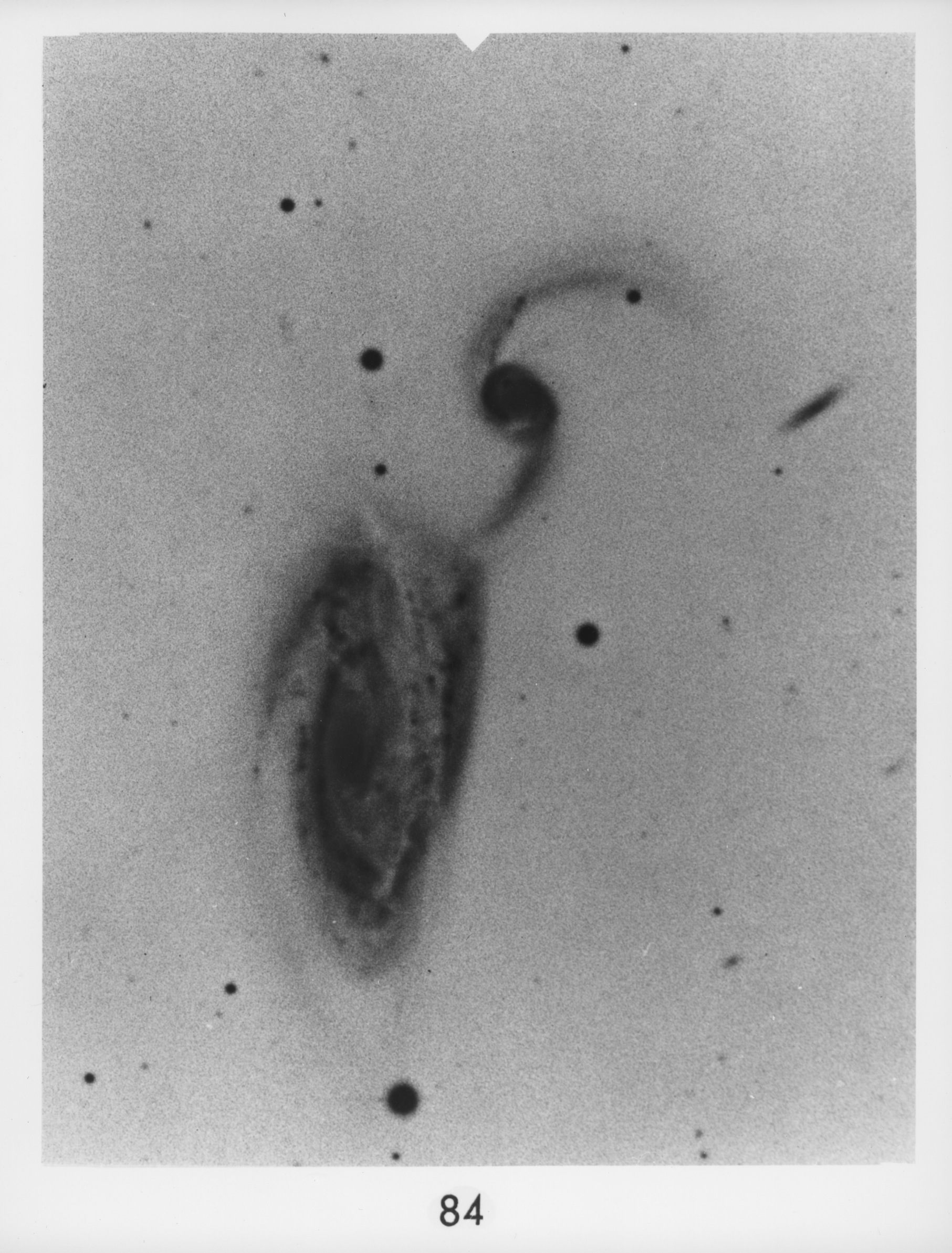
NGC 5394 (= PGC 49739, and with NGC 5395 = Arp 84)
Discovered (May 16, 1787) by William Herschel
A 13th-magnitude spiral galaxy (type SB(s)b pec) in Canes Venatici (RA 13 58 33.7, Dec +37 27 13) NGC 5394 and 5395 are an interacting pair of spiral galaxies, also known as Arp 84. As discussed at the entry for NGC 5395, their recessional velocities imply a distance of about 160 million light years. Given that and its apparent size of 1.9 by 1.3 arcmin, NGC 5394 is about 90 thousand light years across.
"Excerpt courtesy of Courtney Seligman"
cseligman.com/text/atlas/ngc53a.htm#5394
Image... Cherryvalley Observatory (I83). Telescope: 0.2-m SCT & SBIG STL-1301E CCD Camera @f7.6. Image Scale 2.17 arcsec/pixel, Field of View 46 x 37 arcmins.
Flat field and dark subtract calibration frames. Combined Stack of three images of 120 seconds each unfiltered and unbinned. CCD operating temperature: -35 degrees. Image acquisition and processing: CCD Soft v5, TheSky6 Professional and Mira Pro v7. February 18th 2016.
Dr. Halton Arp originally compiled the Atlas of peculiar galaxies with photographs he made mainly using the Palomar 200-inch telescope and the 48-inch Schmidt telescope between the years 1961 to 1966. Original image can be found here: ned.ipac.caltech.edu/level5/Arp/Figures/big_arp84.jpeg
Jibanyan from poses for a picture of a girl dressed in a Komasan costume. Both characters appear in the game Yokai Watch.
Subject and Model
The sitter is Berthe Roblès (1862–1942), a distant cousin of Camille Pissarro who became Signac’s wife on 7 November 1892. This portrait is the last of a series of intimate studies of his close family and friends, and it remains one of the rare finished figurative works in his Neo-Impressionist oeuvre.
Composition and Technique
Signac presents Berthe in profile under her parasol, applying countless pure pigment dots of complementary hues—greens set against oranges, reds against purples. The canvas deliberately avoids illusionistic depth, emphasizing a two-dimensional decorative surface. Arabesques in the sleeves, the parasol’s ribs, and details such as a stylized flower or tassel reinforce its hieratic, emblematic quality.
Provenance
The painting was held in the collection of Dr. Charles Cachin until 1989, when it was given to the French state under usufruct. It entered the Musée d’Orsay that same year as part of the national collection.
Significance
“Woman with a Parasol” showcases Signac’s mastery of pointillist theory and his shift from capturing fleeting light effects toward composing harmonious chromatic planes. By blending the Impressionist subject of outdoor leisure with a rigorously flat, decorative approach, Signac charts a distinctive path within Neo-Impressionism.
NGC 4088 (= Arp 18 = PGC 38302)
Discovered (Mar 9, 1788) by William Herschel
A 10th-magnitude spiral galaxy (type SAB(rs)bc) in Ursa Major (RA 12 05 34.6, Dec +50 32 26)
NGC 4088's recessional velocity of 755 km/sec is too small for a reliable distance estimate, as peculiar (non-Hubble-expansion) velocities could represent a substantial part of the value. And in fact, the corresponding distance is considerably less than redshift-independent distance estimates of 45 to 60 million light years. Presuming the actual distance is a little over 50 million light years; the galaxy's apparent size of 5.8 by 2.2 arcmin suggests that it is about 90 thousand light years across.
"Excerpt courtesy of Courtney Seligman" cseligman.com/text/atlas/ngc40a.htm#4088
Image... Cherryvalley Observatory (I83). Telescope: 0.2-m SCT & SBIG STL-1301E CCD Camera @f7.5. Image Scale 2.19 arcsec/pixel, Field of View 46 x 37 arcmins.
Flat field and dark subtract calibration frames. Combined Stack of three images of 120 seconds each unfiltered and unbinned. CCD operating temperature: -35 degrees. Image acquisition and processing: CCD Soft v5, TheSky6 Professional and Mira Pro v7. February 18th 2016.
Dr. Halton Arp originally compiled the Atlas of peculiar galaxies with photographs he made mainly using the Palomar 200-inch telescope and the 48-inch Schmidt telescope between the years 1961 to 1966. Original image can be found here: ned.ipac.caltech.edu/level5/Arp/Figures/big_arp18.jpeg

Healthy Eating: Promotion of good nutrition and healthy eating habits is a longstanding part of USDA’s mission. These 1920s posters from the National Agricultural Library’s Charles E. North Collection highlight the connection between good eating habits and overall health. The National Agricultural Library collections include many such promotional and educational materials from different eras as well as an abundance of current nutrition resources.
riley.nal.usda.gov/nal_display/index.php?info_center=8&am...
Healthy Eating: Promotion of good nutrition and healthy eating habits is a longstanding part of USDA’s mission. These 1920s posters from the National Agricultural Library’s Charles E. North Collection highlight the connection between good eating habits and overall health. The National Agricultural Library collections include many such promotional and educational materials from different eras as well as an abundance of current nutrition resources.
riley.nal.usda.gov/nal_display/index.php?info_center=8&am...
L5 kipple*
*kipple is defined as stuff that isn't exactly trash, so it can't be thrown away, but isn't exactly useful either, and just tends to pile up and breed and clutter up your space.
Looking down at the Titan II thrust mount ring from an access portal on level 5. The ring, holding on to the missile with four explosive bolts, is the Titan II's only means of physical support in the launch duct. These bolts are set to "disengage" automatically as part of the launch sequence.
The thrust mount is attached to the launch duct by four massive springs. The Titan II missile, as every mission-critical component in the launch complex, is stabilized against severe ground movement that could be caused by an earthquake or a nearby nuclear detonation.
The Titan Missile Museum is located in a decommissioned Titan II missile complex just south of Tucson, Arizona. At over 100 feet tall, the Titan II was the largest ICBM ever deployed by the United States. We got the opportunity to take a comprehensive tour of the facility covering all eight levels of the underground silo.
Ava got a 9.725 and won 1st place at the Level 5 State meet. Afterward she found out that she would have gotten a 9.925 if she had held her handstand on the dismount longer (like she was supposed to and is perfectly able to do). She told me that she hurried because she had heard the bell and was worried about going over time. Her coach later told me, "I watched her do the best beam routine I've ever seen her do, and then she did a cartwheel off the beam."
@ Level 5 in Wilmington, NC
The old Masonic Building located at 21 North Front Street was created when in 1897, several Masonic groups banded together and decided to build a new Masonic Temple. With plans made, construction began in 1898 with the cornerstone of the building being laid on May 13, 1899.
The fifth floor of the building was converted to the present theatre around 1914. It was occupied by the Scottish Rite Bodies from 1909-1981. The robing room for the Masons is now the dressing room for the actors. The second, third and forth floors were used by the Masonic and Allied Masonic Bodies from the time the building was opened until 1981.
I bought this game earlier this year assuming it would never be released in English/in North America. Boy, was I wrong! Given its impending NA release (next month), I've decided to sell this Japanese copy on the cheap. Interested? Check out this eBay listing: www.ebay.com/itm/201172013259?ssPageName=STRK:MESELX:IT&a...
Victory Gardens: During World Wars I and II, Victory Gardens were a vital source of food production as well as a remarkable illustration of American patriotism. Today the Victory Garden concept is making a comeback as Americans again embrace the idea of gardening and home-grown food as a way to maintain a healthy diet and environment. The National Agricultural Library contains a wealth of information on Victory Gardens as well as on gardening and healthy eating in general.
www.nal.usda.gov/speccoll/collect/history/
www.nal.usda.gov/speccoll/posterimagegallery.shtml
riley.nal.usda.gov/nal_display/index.php?info_center=8&am...
NGC 5544 (PGC 51018, and with NGC 5545 = Arp 199)
Discovered (May 1, 1785) by William Herschel
Also observed (Apr 19, 1827) by John Herschel
A magnitude 13.0 lenticular galaxy (type (R)SB0(rs)a?) in Boötes (RA 14 17 02.5, Dec +36 34 18)
Historical Identification: Per Dreyer, NGC 5544 (= GC 3833, JH 1771, WH II 419, 1860 RA 14 11 09, NPD 52 46.7) is "faint, pretty small, elongated 80°, and a double nebula (with NGC 5545) or binuclear". The position precesses to RA 14 17 01.7, Dec +36 34 19, well within the western outline of the western member of the double galaxy corresponding to the description, and save for its companion there is nothing else nearby, so the identification is certain.
Discovery Notes: Per Steinecke, John Herschel observed this object three times (in sweeps 69, 71 and 72, on Apr 19, 23 and 27, 1827). In the first two sweeps he described it as elongated, but in the third sweep he realized it was double. So Apr 19, 1827 is the correct date for his observing the brighter of the two galaxies involved (NGC 5544), while Apr 27, 1827 is the correct date for his discovering the fainter one (NGC 5545).
Physical Information: NGC 5544 has a recessional velocity of 3040 km/sec, but NGC 5545, which lies in front of it and is almost certainly interacting with it, has a recessional velocity of 3080 km/sec, indicating that their peculiar velocities (the difference in their recessional velocities due to an actual motion relative to each other) must be larger than the difference in their velocities due to the expansion of the Universe. Under the circumstances, the best measure of their distance is probably a Hubble distance based on the average of their individual radial velocities, which is 3060 km/sec. Based on that, the distance of the pair should be about 140 to 145 million light years, in good agreement with redshift-independent distance estimates of 125 to 150 million light years. Given that and its apparent size of about 1.2 by 1.2 arcmin, NGC 5544 is about 50 thousand light years across. NGC 5544 and 5545 are used by the Arp Atlas as an example of galaxies with material ejected from the nucleus, but although the pair are almost certainly companions, they do not represent such an object.
"Excerpt courtesy of Courtney Seligman"
cseligman.com/text/atlas/ngc55.htm#5544
Image... Cherryvalley Observatory (I83). Telescope: 0.2-m SCT & SBIG STL-1301E CCD Camera @f7.6. Image Scale 2.17 arcsec/pixel, Field of View 46 x 37 arcmins.
Flat field and dark subtract calibration frames. Combined Stack of three images of 120 seconds each unfiltered and unbinned. CCD operating temperature: -35 degrees. Image acquisition and processing: CCD Soft v5, TheSky6 Professional and Mira Pro v7. February 18th 2016.
Dr. Halton Arp originally compiled the Atlas of peculiar galaxies with photographs he made mainly using the Palomar 200-inch telescope and the 48-inch Schmidt telescope between the years 1961 to 1966. Original image can be found here:

Promotion of good nutrition and healthy eating habits is a longstanding part of USDA’s mission. These 1920s posters from the National Agricultural Library’s Charles E. North Collection highlight the connection between good eating habits and overall health. The National Agricultural Library collections include many such promotional and educational materials from different eras as well as an abundance of current nutrition resources.
riley.nal.usda.gov/nal_display/index.php?info_center=8&am...
Healthy Eating: Promotion of good nutrition and healthy eating habits is a longstanding part of USDA’s mission. These 1920s posters from the National Agricultural Library’s Charles E. North Collection highlight the connection between good eating habits and overall health. The National Agricultural Library collections include many such promotional and educational materials from different eras as well as an abundance of current nutrition resources.
riley.nal.usda.gov/nal_display/index.php?info_center=8&am...
Painted in 1878, this work captures the snow-covered rooftops of Montmartre from a high vantage point, likely a balcony. Caillebotte’s muted palette of greys and soft pinks evokes the hush of a Parisian winter morning. Though it didn’t attract much attention at the 1879 Impressionist Exhibition, it’s now considered a landmark in urban landscape painting.
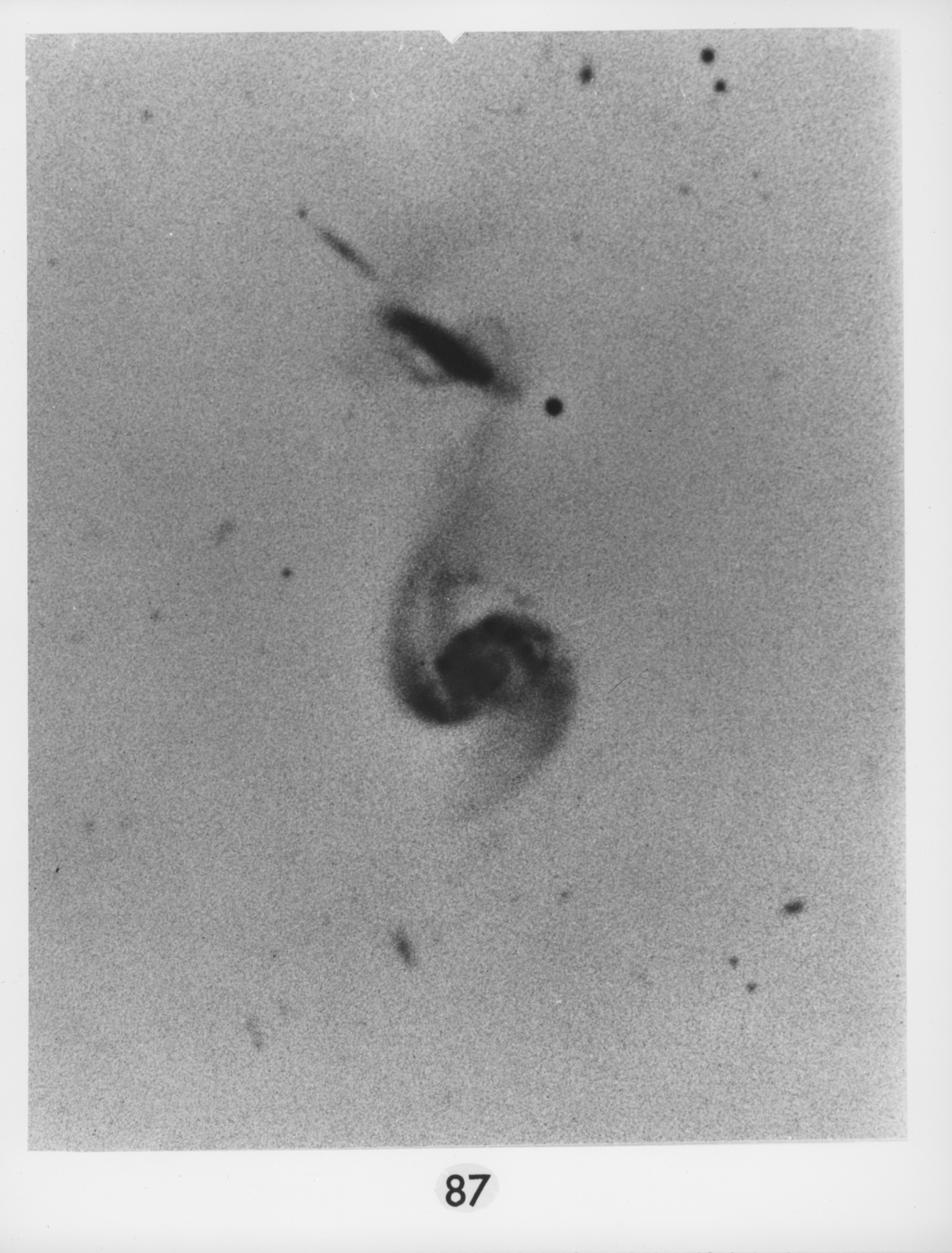
NGC 3808 (PGC 36227, and with PGC 36228 = Arp 87)
Discovered (Apr 10, 1785) by William Herschel
A 14th-magnitude spiral galaxy (type SAB(rs)c? pec) in Leo (RA 11 40 44.0, Dec +22 25 47)
Based on the nearly identical recessional velocities of NGC 3808 (= 7075 km/sec) and its companion, PGC 36228 (= 7055 km/sec), the pair of galaxies is about 330 million light years away. Given that and its apparent size of 1.6 by 0.9 arcmin, NGC 3808 is about 150 thousand light years across.
"Excerpt courtesy of Courtney Seligman"
cseligman.com/text/atlas/ngc38.htm#3808
Image... Cherryvalley Observatory (I83). Telescope: 0.2-m SCT & SBIG STL-1301E CCD Camera @f7.6. Image Scale 2.17 arcsec/pixel, Field of View 46 x 37 arcmins.
Flat field and dark subtract calibration frames. Combined Stack of three images of 120 seconds each unfiltered and unbinned. CCD operating temperature: -35 degrees. Image acquisition and processing: CCD Soft v5, TheSky6 Professional and Mira Pro v7. February 18th 2016.
Dr. Halton Arp originally compiled the Atlas of peculiar galaxies with photographs he made mainly using the Palomar 200-inch telescope and the 48-inch Schmidt telescope between the years 1961 to 1966. Original image can be found here:
Where Dazzeland used to be.
Area for 'Shoot Out The Stars' amusement game.
Source: www.awesomeadelaide.com/urban-exploring-urbex/urban-explo...
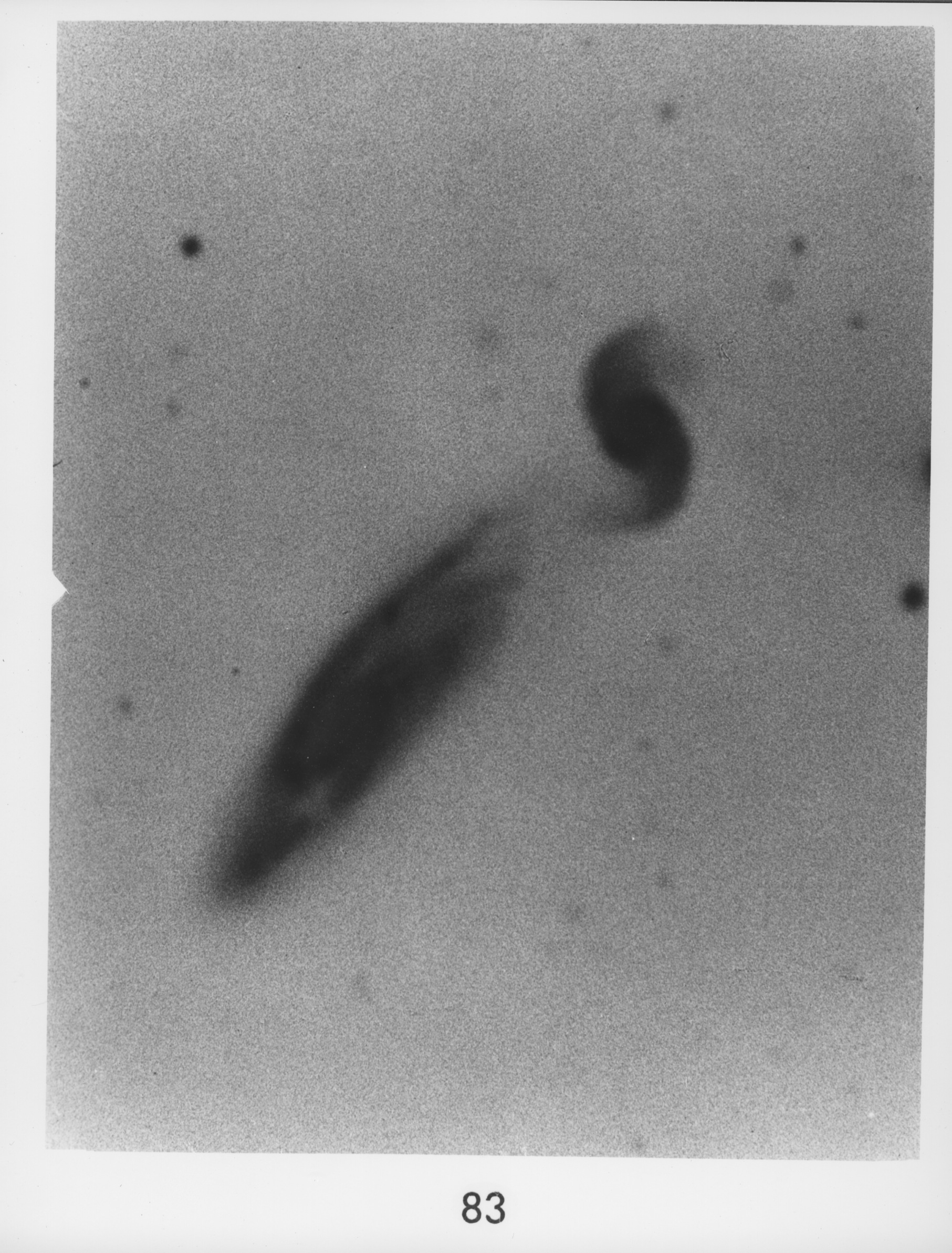
NGC 3800 (= PGC 36197, and with NGC 3799 = Arp 83)
Discovered (Apr 8, 1784) by William Herschel
A 13th-magnitude spiral galaxy (type SAB(rs)b? pec) in Leo (RA 11 40 13.3, Dec +15 20 32)
Based on a recessional velocity of 3310 km/sec, NGC 3800 is about 155 million light years away. Given that and its apparent size of 1.85 by 0.7 arcmin, it is about 85 thousand light years across. With NGC 3799it is thought to be part of an interacting pair, also known as Arp 83. (Note: A conflicting radial velocity measurement of 5850 km/sec would put NGC 3800 at a distance of 270 million light years, in which case the "pair" would actually be an optical double, and only appear to be gravitationally interacting; but if anything, NGC 3800 appears to be in front of NGC 3799, so the larger velocity and corresponding distance are probably incorrect.)
"Excerpt courtesy of Courtney Seligman"
cseligman.com/text/atlas/ngc38.htm#3800
Image... Cherryvalley Observatory (I83). Telescope: 0.2-m SCT & SBIG STL-1301E CCD Camera @f7.6. Image Scale 2.17 arcsec/pixel, Field of View 46 x 37 arcmins.
Flat field and dark subtract calibration frames. Combined Stack of three images of 120 seconds each unfiltered and unbinned. CCD operating temperature: -35 degrees. Image acquisition and processing: CCD Soft v5, TheSky6 Professional and Mira Pro v7. February 18th 2016.
Dr. Halton Arp originally compiled the Atlas of peculiar galaxies with photographs he made mainly using the Palomar 200-inch telescope and the 48-inch Schmidt telescope between the years 1961 to 1966. Original image can be found here: ned.ipac.caltech.edu/level5/Arp/Figures/big_arp83.jpeg
Victory Gardens: During World Wars I and II, Victory Gardens were a vital source of food production as well as a remarkable illustration of American patriotism. Today the Victory Garden concept is making a comeback as Americans again embrace the idea of gardening and home-grown food as a way to maintain a healthy diet and environment. The National Agricultural Library contains a wealth of information on Victory Gardens as well as on gardening and healthy eating in general.
www.nal.usda.gov/speccoll/collect/history/
www.nal.usda.gov/speccoll/posterimagegallery.shtml
riley.nal.usda.gov/nal_display/index.php?info_center=8&am...