View allAll Photos Tagged indication
The volume of condensed steam swirling around British Railways Standard 2 2-6-0 78018 is a good indication of how cold and damp it was!
An indication of the diminutive size of the Voigtländer VITO B. A 35mm rangefinder camera first introduced in 1954. It has a wonderful feel in the hand.
This beautiful camera was very kindly gifted to me by jesse1dog.
Southern Railway era cantilevers guard over the control point in Tallapoosa, Georgia at 06:30 along Norfolk Southern's East End District on the morning of July 31, 2019, the "Clear" indication awaits the arrival of NS 220.
This “selfie” of the James Webb Space Telescope primary mirror was created using a specialised pupil imaging lens inside of the NIRCam instrument that was designed to take images of the primary mirror segments instead of images of space. This configuration is not used during scientific operations and is used strictly for engineering and alignment purposes. In this case, the bright segment was pointed at a bright star, while the others aren’t currently in the same alignment. This image gave an early indication of the primary mirror alignment to the instrument.
Credits: NASA
Disclaimer:
The following Pingo images were taken in 2018.
Before my trip I was researching the Pingos and found no indication on the internet in regards to visitation rules. There also were no signs up anywhere locally or at the viewing platform once I visited.
I now see there are rules prohibiting the climbing of the Pingos from the base up, signed this March 2021 by the Parks Superintendent.
I have mixed feelings about that. On one hand I see excessive visitations by too many people [since it is marketed to mass tourism] may cause some wear or establish a trail. I was very conscience about not leaving any footprints or cause any damage and on one of the Pingos I found a large piece of plastic, the wind had likely carried up here, which I took back out.
Since it became a Canadian Landmark under Parks management, a viewing platform has been built in a location that gives a very panoramic view of the larger Pingos with no human structures visible. I’m not a friend of board walks and platforms in natural landscapes. They are in many ways eyesores to me as a photographer and aesthetically a small trail has much less impact. But in this location I found both rather well designed. To get to the boardwalk, one needs to organize a boat ride or have a watercraft to get to the Parks dock, which at that time was damaged and difficult to land on.
On the other hand I think it was [could be] an incredible experience to use these Pingos as lookout, just like generations of Inuk have done. The thing missing in these coastal regions are high points. So I can see why these Pingos had an importance for hunters to scan the ocean for game, ships, ice-conditions etc.
The lack of any high-points in Tuktoyaktuk itself, along the coast or the highway leaves something to be desired. Short of flight-seeing the coast from Inuvik, one does not get a picture of the beautiful Arctic coast.
The top of the Pingos are mostly sand with peat at some places and the sides covered by dense tundra shrubs, berry bushes, Labrador tea and some grasses on the top. I noticed some faint footprints in the sand on top, which obviously disappear with the wind/rain and annual thawing/freezing cycles these hills are constantly exposed to. The science behind these ice-cored hills is described in detail in a study paper by J. Ross Mackay:
Pingos of the Tuktoyaktuk Peninsula Area
t.ly/Xs9U
and this video by Stephen Wolfe:
Pingo Distribution, Tuktoyaktuk Peninsula Region, Western Canadian Arctic
So these photos are very special to me, as I or others may not be able to document/experience these magnificent ‘ice-hills’ again without breaking the law. Drone flying is also banned within the Landmark.
2018 Road Trip to Tuktoyaktuk, NWT via Dempster Highway and the Inuvik-Tuktoyaktuk Highway or ITH (Tuk Highway).
A CN grain train bound for Québec City is coasting into Saint-Hyacinthe with 98 cars on a restrictive signal indication as it follows a VIA train heading east. Consist : CN 8844, CN 2178, CN 8954.
a dandelion growing in a tree
probably an indication of how much rain we have had past 10 months!
willow tree
New Haven Railroad DER-1c class ALCO DL-109 diesel electic locomotive # 0709 leads a 3 car suburban passenger train in Providence, Rhode Island, early 1950's. This location may not be Providence but indications are that it is. It appears that there is a heavyweight combine baggage-coach and two general coaches on this train. The season appears to be winter. Check out those interesting power poles with the special wire insulator mountings.
This photo came from the Internet and the photographers name was not provided.
Copyright Disclaimer under Section 107 of the Copyright Act of 1976, allowance is made for “fair use” for the purposes such as criticism, comment, news reporting, teaching, scholarship, and research. Fair use is a use permitted by copyright statute that might otherwise be infringing. Non-profit, educational or personal use tips the balance in favor of fair use.
Phillip Mould:
This image, and those generated around it, represent one of the most successful sovereign statements of English history. It was painted under the aegis of the Queen’s own official Serjeant painter, George Gower, in the late 1580s, the decade in which she finally defeated the Spanish threat, and assured her place as one of England’s most successful and popular monarchs. The portrait was owned by Edward Drewe MP, one of Elizabeth’s ablest lawyers, and has remained in his family ever since. A family legend suggests that the portrait was the gift of Elizabeth herself. It is in part through such portraits that the mystique and power of Elizabeth I was conveyed in her day. As such it is not merely a portrait of a monarch, but a symbolic statement of national supremacy.
George Gower was Elizabeth’s Serjeant Painter from 1581 until his death in 1596. He was also a ‘gentleman’, being the grandson of Sir John Gower of Stettenham, Yorkshire. This was not only unusual for the time (hitherto, artists were effectively ranked as servants), but reveals the increasing status – and importance – of portraiture in sixteenth century England. There is little documentary evidence on Gower’s career, but there is no doubt that he was one of the leading English artists of his generation. His documented portraits, such as those of Sir Thomas and Lady Kytson (1573 Tate Gallery, London) show that he commanded the patronage of the important and wealthy from an early age, while his self-portrait (1579, the first known example by an English artist on such a scale) gives a clear indication of the bold characterization with which he depicted his subjects.
Gower’s technique and style is distinct, and perfectly suited to the display of power, and conspicuous monarchical grandeur seen here. His use of strong light on the head enables his subject’s face to stand out from the rest of the painting, and was perfectly suited to Elizabeth’s personal wish to avoid any shadows across her face. His reluctance to rely too heavily on drawing is made up by strong flesh tones and subtle shadows, so that the face is rendered with precision and power, aided by bold features such as the well-delineated eyes. The unmistakably warm and dry palette has the happy effect of seeming to depict the Queen in the heavy make-up on which she increasingly came to rely. In this example, the overall effect is one of power rather than beauty – but such is Gower’s skill that our focus is held unmistakably by Elizabeth’s face and strong gaze, despite the rich and bright details of her luxurious costume.
There are elsewhere in the portrait signs of a master’s touch. The subtle but noticeable pink tones in the ruff under Elizabeth’s chin skillfully illustrates the reflection of her face in the white lace, giving the ruff a three-dimensional effect so often lacking in sixteenth century portraiture. The deft modeling (with even the hint of veins) in the long and elegant hands of which Elizabeth was so proud is superb, while the folds and lace on the golden silk of her sleeves is redolent of Holbein’s supreme skill in depicting the rich quality of Royal costumes.
As with all portraits of the Queen, there comes the question of the level of her personal involvement. Of course, she did not sit for the many contemporary portraits of her that survive. Instead, artists would have followed patterns of her face, and then either have imagined her costume, or in some cases have painted the actual garment itself. The patterns would have been widely-circulated, and the Queen’s likeness then either traced onto a panel or drawn freehand. Surviving examples of patterns are rare, but those of Bishop John Fisher and Sir Henry Sidney can be found in the National Portrait Gallery, as can one previously believed to show Elizabeth herself.
Which ‘pattern’, therefore, is the Drewe portrait based on? Sir Roy Strong’s catalogue of 1963, Portraits of Queen Elizabeth I, and subsequent Gloriana, The Portraits of Elizabeth I were vital works in dating and attributing the many (invariably unsigned) portraits. According to Strong’s categorization, the Drewe portrait is based on the ‘Darnley’ face pattern, after a painting dated c. 1575 once owned by the Earls of Darnley, and now in the National Portrait Gallery attributed to Federico Zuccaro, an Italian landscape and religious painter to whom the Queen sat for a drawing in May 1575.[1] The Darnley pattern, Strong points out, does not change until the ‘Armada pattern’ is developed, apparently by Gower, c.1588.
And yet, such categorization carries with it the disappointing notion that all portraits of the Queen between c.1575 and 1588 are derivatives, completed at a distance from Elizabeth herself. This clearly cannot be the case with the Drewe portrait. Though Elizabeth is shown in a similar (if reversed) profile, she is unquestionably a different woman to that in the Darnley portrait: noticeably hierarchical, sepulchral in characterization, perhaps reflecting the progression of her historical achievements. It seems implausible that Gower, the Queen’s Serjeant Painter, would have been content to follow a pattern. Rather, he may instead have felt constrained by the dictates of Royal iconography to follow an approved pose – just as Henry VIII was invariably portrayed full-face.
It is to the Queen herself that we should seek an explanation for the repetitive nature of her portraits. From the note of her conversation with Nicholas Hilliard in c.1572 it seems she resolved that her portraits should have no “shadowe at all”[2]. After all, Royal portraits were primarily symbols of power combined with obsequious flattery, not simple likenesses. Considerations of deference (and by the 1580s her fading beauty) further forbade any attempt at realism. And artist’s had to operate within an accepted Royal iconography that began in the fifteenth century. It is certain, however, that Gower’s official position, and the fact that he was a gentleman by birth, would have guaranteed him access to the Queen. The Drewe portrait, with its delicately observed facial contours and expressive, piercing eyes, is a world away from the pallid and formulaic pattern portraits of Elizabeth, reflecting an authority derived from one who had access to the royal presence.
The provenance of this portrait is of interest, and helps confirm the attribution to George Gower. It has traditionally hung in the Grange, the Devon seat of the Drewe family, since its construction by Edward Drewe in the 1590s. Drewe was one of the ablest lawyers of the 16th Century. After a spell at Oxford (while apparently a teenager) he began to practice law at the Inner Temple in 1560. He was called to the Bar in 1574. From then he rose rapidly through the legal ranks; a Justice of the Peace in 1579, and a Member of Parliament (for Lyme Regis) in 1584. He must then have been well-known to the Queen and Privy Council, for in 1588 he was amongst those sharp legal minds, along with Francis Bacon, called to draft Government legislation. The letter makes flattering reading;
“Her Majestie… hath made especiall choice of you, upon knowledge of your sinceritie and sufficiencie in that behalfe, to proceede to the consideracion what statutes in your opinion were requisite to be either established or perfected for the better…
We bid you very hertely farewll.”[3]
In 1589 he was appointed a Serjeant-at-law, and became more familiar to the key members of Elizabeth’s Government. Perhaps his most powerful ally was Francis Russell, the second Earl of Bedford. He corresponded regularly with William Cecil, Lord Burghley. And in 1593 he is recorded as making a speech before the Queen when introducing the Lord Mayor of London to Court. Drewe’s correspondence with the Privy Council typically revolved around interrogations of suspects such as Jesuit spies, often in the Tower of London, and he became an important part of the security apparatus first set-up by Francis Walsingham. One case involved the hapless Yorke and Williams, who, “when confronted together, Yorke swore that they took the sacrament to kill the Queen, and that Williams had wished his sword in her belly.”[4] By 1593 Drewe held the prestigious parliamentary seat of the City of London, and in 1596 he was made a Queen’s Serjeant, and a judge on the Northern circuit. He died suddenly, of ‘gaol fever’, in 1598.
Drewe’s central role in the legal apparatus of the Government helps confirm an attribution to George Gower as the artist of this portrait. Gower had been appointed, in 1581, as the Queen’s Serjeant Painter. In 1584 an attempt was made to make Gower solely responsible for portraits of the Queen, a move that reinforced the government’s wish to maintain control of the Queen’s image. Some twenty years earlier, the Privy Council, at the Queen’s behest, had also attempted a similar measure in reaction to the increasing number of debased images of Elizabeth in circulation. And in 1596, the Privy Council ordered that public officers should aid Gower in seeking out and destroying those unofficial images which caused the Queen “great offence”[5].
The Council’s failure, and that of Gower in the 1580s, is belied by the profusion of awkward and unsatisfactory images of the Queen which survive to this day. Nevertheless, a man of Drewe’s public position would have been the most unlikely person to either commission or own in the 1580s and 90s a portrait of the Queen that did not come from the Serjeant Painter’s ‘official’ workshop. Furthermore, in 1593 Drewe made a speech in Parliament against foreign workers in London, advocating support for “our countrymen” over charity to “strangers”, which sentiments would appear to rule out his patronage of any Flemish or Italian artist.[6] Finally, it may also be worth noting the connection between Drewe and the Bedford family, who commissioned the Armada portrait from Gower in 1588.
The Queen’s jewelry is worth noting here, and may assist in the precise dating of this portrait. Here, the jewelry worn by the Queen (aside from that embroidered into her costume) is surprisingly simple – only a double row of pearls. This is identical to the jewelry worn in the Darnley portrait dated c.1575, as is the chain of pearls and jewels around her waist. And such a combination can again be found in other portraits by Gower of the 1580s, Cornelius Ketel’s ‘Sieve’ portrait c.1580-3, and Marcus Gheerearts the Elder’s c.1585 full length. Furthermore, the lack of certain jewelry again suggests a date in the 1580s, for when Leicester died in 1588 he bequeathed to his 2most dear and gracious Sovereign whose creature under God I have been”[7] an extraordinarily large and elaborate jewel of emeralds, with a rope of 600 pearls. Elizabeth, who locked herself in her room on hearing Leicester’s demise, is shown wearing his gift in the Armada portraits of post c.1588, and other later variants – but not here.
Notes;
[1] Zuccaro had traveled to England apparently at the behest of Lord Leicester. Though some have assumed his purpose was to paint the Queen, it is possible that he had been summoned by Leicester to decorate the interior of Kenilworth Castle (now ruined), before the Queen was due to stay there in July 1575. The exquisite chalk and pencil drawing of the Queen by Zuccaro survives (British Museum), along with a pendant of Leicester. However, there seems little connection between the drawing, either in likeness or style, to the ‘Darnley’ portrait in the NPG.
[2] Strong, loc.cit., p16
[3] Letter from Privy Council to Drewe 27th December 1588, in Acts of the Privy Council of England 1588. Official Publications 1897 Vol XVI
[4] Calendar of State Papers (Domestic) Elizabeth I, 1591-94, August 28th 1594
[5] Strong, loc.cit., p14
[6] Oxford Dictionary of National Biography, citing House of Commons Journal
[7] In Public and Private, Elizabeth I and her world, Susan Watkins, London 1998
No indication of sense of movement due to being totally within black shale unit. No kinematic indicators.
We travelled some 1100 kilometres to Outback Queensland and never saw one emu, always an indication of getting well into the west. The devastating drought in much of Australia is impacting wildlife in a major way and there is even less roadkill. It wasn’t until we crossed into the state of New South Wales that despite being even drier than Queensland did we come across emu’s (Pronounced eam-you, there is no ooh about it!) and we saw several large flocks just wandering along dusty paddocks beside the highway. They didn’t even take fright and run away as they often do.
The dead grass in the foreground is just that along the roadside, all that’s left. The paddocks are mostly dust, the trees dying.
Here’s a note from Wikipedia, the full link is below.
“The emu (Dromaius novaehollandiae) is the second-largest living bird by height, after its ratite relative, the ostrich. It is endemic to Australia where it is the largest native bird and the only extant member of the genus Dromaius. The emu's range covers most of mainland Australia, but the Tasmanian, Kangaroo Island and King Island subspecies became extinct after the European settlement of Australia in 1788. The bird is sufficiently common for it to be rated as a least-concern species by the International Union for Conservation of Nature.”
Here is the link with full details
That’s all for now. Just a little teaser. The government is rolling out our broadband network to the furtherest reaches and customers are having difficulty. So Flickr and email etc. is suffering. Bye for now. Be back soon!
While I could provide no indication of scale, these stalagmites are huge and reach from cave floor to ceiling in the Big Room of Carlsbad Caverns National Park.
It took hundreds of thousands of years for the calcite-laden water to deposit its load and create these amazing speleothems (cave formations).
And the green coloration on these formations is algae. According to Park Staff:
"While caves are naturally dark, the introduction of artificial lighting for visitor safety and tours allows algae to thrive, often resulting in green, unnatural-looking patches on rock formations."
Btw, using the artificial lights for photographing these or other cave formations look better than using a flash. If you do use a flash, bounce the light off the ceiling rather than directly toward your subject (personal experience here). The caveat is that there will, of course, be grain to remove from the image.
Copyright Rebecca L. Latson, all rights reserved.
In 1597, botanist John Gerard noted that the smell of meadowsweet "delighteth the senses." In 1652, English physician Nicholas Culpeper wrote about the plant's therapeutic effects on the stomach. In 1682, meadowsweet was mentioned in a Dutch herbal. Queen Elizabeth I adorned her apartments with meadowsweet. The flowers were used to flavor alcoholic beverages in England and Scandinavian countries. In the Middle Ages, meadowsweet was known as "meadwort" because it was used to flavor mead, an alcoholic drink made by fermenting honey and fruit juices. In 1838, salicylic acid, first synthesized in the 1890s to make aspirin, was isolated from the plant. The word "aspirin" is derived from "spirin," based on meadowsweet's scientific name, "Spiraea." The plant was used in folk medicine for cancer, tumors, rheumatism, and as a diuretic. Today, it is used as a digestive remedy, as supportive therapy for colds, for analgesia, and for other indications.
If the last few days is any indication of the variety of birds that will visit here during the Winter months...I can't wait!!!
Please do not use this image on websites, blogs or any other media without my explicit permission. © All rights reserved
View this image Large On Black here, click on the image and then on the "X" for larger views: www.fluidr.com/photos/mama_z
At approximately 0749 on September 15, 2020, UP Train MCXNP 14 ran a stop indication and derailed on a crossover switch at State Line Jct. on the KCT High Line while crossing over from 75 to 74 Track. The switches were out of correspondence, being thrown while the stop signal violation took place. At over 20 MPH, both engines and the head 5 cars derailed, listing but upright.
The derailment thankfully stayed on the ballasted deck bridge without falling to the ground below, but presented a unique challenge with where the equipment came to rest, necessitating the use of several contractors to remove the locomotives and railcars.
Wilkerson Crane Rental, Inc., and Cranemasters did most of the lifting, while Mainline Services LLC., under the direction of BNSF engineering forces, as they have the MOW contract on the KCT; replaced the track. Watco/KCTL dropped new ballast with a BNSF rock train to replace what was removed from the bridge deck during cleanup.
A myriad of other contractors also assisted in moving the needed materials and equipment into the site. The line returned to service at 0450 on the 17th without the crossover, which will be restored at a later date. It was nothing short of a fascinating procedure to watch as the equipment was recovered.
Whistling freely for the flurry of activity around the track, BNSF Train M KCKKCK1 12A makes its way through Santa Fe Jct. from the KCT North-South Corridor onto the BNSF Emporia Sub. and Running Track 5. Above Cranemasters prepares to rerail the 4th and 5th cars of the train.
Locomotives: BNSF 8417, BNSF 7706
Rolling Stock: TTGX 159402, TTGX 980421
9-16-20
Kansas City, MO
It must have thought my finger was a better option than the stem it was on :P
Also gives a bit of an indication on the size of these little bees for those who don't know :)
Focus stacked using Zerene.
While we were up on the BN embankment the westbound Conrail runthrough pig train came along. I don't know about this day, but later on this would be the 288 train. In the distance you can see a yellow indication on the intermediate signal for the south track. That was a good indication that nothing was close on the south track. It seemed like it would stay yellow until the dispatcher started lining signals for an eastbound, then it would drop dark until the eastbound was in the block. Anyway, Conrail GP40's 3356, 3272 and 3221 are in charge.
Another sight that JJL and I caught turned out to be my only encounter - at least photographed - with the "Incan" ferry that traveled between Superior and Thunder Bay, Ontario. My understanding is that it mainly functioned to effect interchange with CPR; CNR had their own all-rail interchange via the DW&P. When I worked WC's trains 3/4 between Stevens Point and Superior, the presence of green CP newsprint boxcars, in our consist on Train 4, was an indication that the Incan ferry had paid a visit. It was not a daily occurence, so I'm sure we both felt pretty lucky to find BN's SD9 6127 performing the interchange with the ferry, seen in the background in St.Louis Bay.
At approximately 0749 on September 15, 2020, UP Train MCXNP 14 ran a stop indication and derailed on a crossover switch at State Line Jct. on the KCT High Line while crossing over from 75 to 74 Track. The switches were out of correspondence, being thrown while the stop signal violation took place. At over 20 MPH, both engines and the head 5 cars derailed, listing but upright.
The derailment thankfully stayed on the ballasted deck bridge without falling to the ground below, but presented a unique challenge with where the equipment came to rest, necessitating the use of several contractors to remove the locomotives and railcars.
Wilkerson Crane Rental, Inc., and Cranemasters did most of the lifting, while Mainline Services LLC., under the direction of BNSF engineering forces, as they have the MOW contract on the KCT; replaced the track. Watco/KCTL dropped new ballast with a BNSF rock train to replace what was removed from the bridge deck during cleanup.
A myriad of other contractors also assisted in moving the needed materials and equipment into the site. The line returned to service at 0450 on the 17th without the crossover, which will be restored at a later date. It was nothing short of a fascinating procedure to watch as the equipment was recovered.
A Banana leads KCT Train 309 as it passes through Santa Fe Jct. with a transfer from Mill Street Yard to KCS Knoche Yard.
Locomotives: UP 6539, UP 9104, WAMX 3855, WAMX 3826
Rolling Stock: TTGX 697357, ETTX 702028, CTTX 690172
9-15-20
Kansas City, MO
To view more images, of Blickling Hall click "here"
I would be most grateful if you would refrain from inserting images, and/or group invites; thank you!
Blickling Hall is a stately home which is part of the Blickling estate. It is located in the village of Blickling north of Aylsham in Norfolk, England and has been in the care of the National Trust since 1940. In the 15th century, Blickling was in the possession of Sir John Fastolf of Caister in Norfolk (1380–1459), who made a fortune in the Hundred Years' War, and whose coat of arms is still on display there. Later, the property was in the possession of the Boleyn family, and home to Thomas Boleyn, later Earl of Wiltshire, and his wife Elizabeth between 1499 and 1505. Although the exact birth dates of their children are unknown, historians including Eric Ives are confident that all three surviving children were likely born at Blickling - Mary in about 1500, Anne in about 1501, and George in about 1504. A statue and portrait of Anne may be found at Blickling Estate which carry the inscription, "Anna Bolena hic nata 1507" (Anne Boleyn born here 1507), based on earlier scholarship which assigned Anne a (now thought highly improbable) year of birth of 1507. The house of Blickling seen today was built on the ruins of the old Boleyn property in the reign of James I, by Sir Henry Hobart, Lord Chief Justice of the Common Pleas and 1st Baronet, who bought Blickling from Robert Clere in 1616. The architect of Hatfield House, Robert Lyminge, is credited with the design of the current structure. The Lord Chief Justice married Dorothy, the daughter of Sir Robert Bell of Beaupre Hall, Outwell/ Upwell, Norfolk, Speaker of the House of Commons 1572–1576. A grand display of heraldic material is present throughout the estate. During World War II the house was requisitioned and served as the Officers' Mess of nearby RAF Oulton. It was at this time that the house and its estate passed to The National Trust, under the terms of the Country Houses Scheme. RAF servicemen and women were billeted within the grounds in Nissen Huts, whilst RAF Officers were housed within Blickling itself. The National Trust has created the RAF Oulton Museum on site in tribute to the RAF pilots and ground crew who served in the Second World War, and this may be visited for no additional entrance fee. At the end of the war, the house was de-requisitioned. The National Trust again let it to tenants until 1960, when the Trust began the work to restore the house to a style reflecting its history. The house and grounds were opened to the public in 1962 and remain open under the name of "Blickling Estate". The library at Blickling Estate contains one of the most historically significant collections of manuscripts and books in England. The most important manuscript associated with the house is the Blickling Homilies, which is one of the earliest extant examples of English vernacular homiletic writings. The Blickling homilies were first edited and translated in the 19th century by Richard Morris (Early English Text Society os 58, 63 & 73) and there is a more recent edition and translation by Richard J. Kelly (Continuum, 2003). It is said that every year, on the anniversary of her execution, Anne Boleyn's headless ghost arrives at Blickling in a carriage driven by an equally headless coachman. But she hasn't lost her head completely in the afterlife—she carries it along with her during her hauntings. The exterior of the house was used as 'Maryiot Cells' at 'Maiden Worthy' in Buckinghamshire in the hit 1945 film The Wicked Lady. It was voted the most haunted house in Britain in a National Trust survey in October 2007. A house and garden existed at Blickling before the estate was purchased by the Boleyn family in the 1450s, but no records survive to give an indication of their appearance. After Sir Henry Hobart acquired the estate in 1616, he remodelled the gardens to include ponds, wilderness and a parterre. A garden mount– an artificial hill in Blickling's flat landscape, was made to provide views of the new garden. With the accession of Sir John Hobart (later the 1st Earl of Buckingham) in 1698 the garden was expanded to add a new wilderness and the temple was constructed. In the latter half of the 18th century John Hobart, 2nd Earl of Buckingham, embarked on works that would radically change the appearance of the gardens. All traces of formality were removed, and naturally arranged clumps of trees were planted to create a landscape garden. By the 1780s an orangery had been built to overwinter tender citrus trees. Following the 2nd Earl's death in 1793, his youngest daughter Caroline, Lady Suffield, employed landscape gardener Humphry Repton and his son John Adey Repton to advise on garden matters. John Adey Repton would go on to provide designs for many garden features. The estate was inherited by nine-year-old William Schomberg Robert Kerr, 8th Marquess of Lothian in 1840. He later re-introduced the formality and colour schemes of the parterre. After his death at the age of 38, responsibility for the gardens rested with Lady Lothian and her head gardener Mr Lyon. Philip Henry Kerr, 11th Marquis of Lothian, inherited the estate in 1930. After disparaging comments in a publication of Country Life, Lothian engaged socialite gardener Norah Lindsay to remodel the gardens. In the parterre she replaced the jumble of minuscule flower beds with four large square beds planted with a mixture of herbaceous plants in graduated and harmonious colours. Other improvements included removal of a line of conifers in the Temple walk, which were replaced with plantings of azaleas.
From Wikipedia, the free encyclopedia
I know it is kind of hard to see, but, the hair on her neck is up.
A sure indication that she is not happy.
I took this as I headed back to the car.
PS - Notice that she is wet. There was a light rain coming down.
Camera Settings: f/6.3 - 1/125 - 400mm - ISO 640
Please view large.
Taken in the north on a nice walk down a stream, I liked this photo as it really gives a good indication of how the hike was. Mellow and peaceful.
.……………………………….
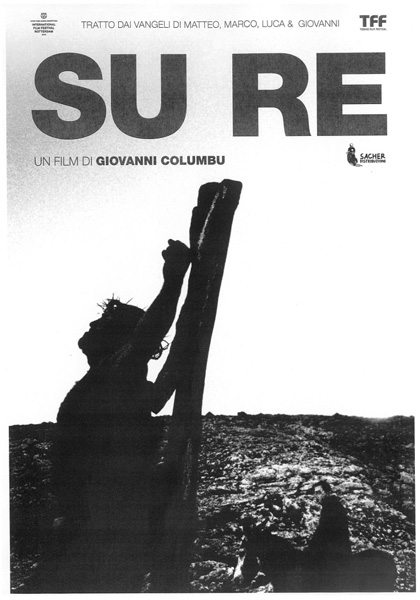
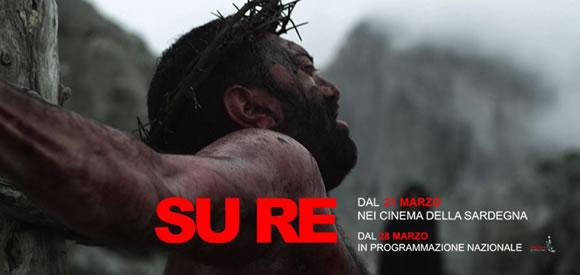
“The Cross is not a Roman pole, but the wood on which God wrote his gospel”.
“La Croce non è un palo dei romani, ma il legno su cui Dio ha scritto il suo vangelo.
(Alda Merini)
-----------------------------------------------------------------
click to activate the icon of slideshow: the small triangle inscribed in the small rectangle, at the top right, in the photostream;
or…. Press the “L” button to zoom in the image;
clicca sulla piccola icona per attivare lo slideshow: sulla facciata principale del photostream, in alto a destra c'è un piccolo rettangolo (rappresenta il monitor) con dentro un piccolo triangolo nero;
oppure…. premi il tasto “L” per ingrandire l'immagine;
www.worldphoto.org/sony-world-photography-awards/winners-...
www.fotografidigitali.it/gallery/2726/opere-italiane-segn...
…………………………………………………………………
Good Friday is an anniversary which in Sicily acquires a cathartic meaning for those who are searching, not only photographically, for popular traditions (we find them widespread throughout Sicily), which are nothing other than a social, cultural event, which merge into a single past and present; from the web "popular traditions are a historical memory linked to customs and rituals that have given shape to the values and beliefs of that culture". Easter in Sicily can be a source of research, it can appear not without contradictions, citing the thoughts of that great Sicilian thinker Leonardo Sciascia, for him Sicily cannot be called Christian referring to the Sicilian festivals, at most it is only in appearance, in those properly pagan explosions tolerated by the Church; Sciascia addresses the topic as an introductory essay in the book "Religious celebrations in Sicily", illustrated with photographs of a young and still unknown Ferdinando Scianna, a book that did not fail to raise some controversy due to the Sicilian thinker's introductory note, thus being in open controversy with the sacredness of that popular Sicilian devotion (the book was criticized by the Holy See newspaper, the Osservatore Romano), Sciascia writes: “what is a religious festival in Sicily? It would be easy to answer that it is anything but a religious holiday. It is, first of all, an existential explosion; the explosion of the collective id, where the collectivity exists only at the level of the id. Since it is only during the celebration that the Sicilian emerges from his condition of a single man, which is the condition of his vigilant and painful superego, to find himself part of a class, of a class, of a city". Another Sicilian thinker, writer and poet, Gesualdo Bufalino, provides interesting indications on the meaning that Sicilians give to these traditional popular events, he says "during Easter every Sicilian feels not only a spectator, but an actor, first sorrowful and then exultant , for a Mystery that is its very existence. The time of the event is that of Spring, the season of metamorphosis, just as the very nature of the rite is metamorphic in which, as in a story from the Puppet Opera, the battle of Good against Evil is fought. Deception, Pain and Triumph, Passion, Death and Resurrection of Christ are present."
In short, Easter in Sicily is a deeply felt anniversary throughout the island since ancient times, it has always had as its fulcrum the emotional participation of the people, with representations and processions which have become rites and traditions which unequivocally characterize numerous Sicilian centres, which they recall the most salient moments narrated in the Gospels and which recall the Passion, Death and Resurrection of Jesus Christ, with processions formed by the various brotherhoods (sometimes with theatrical re-enactments) which have within them contents and symbols often coming from the Spanish domination, which took place in Sicily between the 16th and 17th centuries. This year, on the occasion of Good Friday I went to the pretty town of Licodia Eubea (in the province of Catania), I'll start by saying that in this procession a unique character comes to life in statue form that cannot be found anywhere else place in Sicily, it is called "Ciurciddu" (translated "Circello"), he pulls Christ with a rope tied around his neck while he carries the Cross, this bad character has a profound symbolic-allegorical meaning, he represents "the Evil that exists in the world, the refusal towards the Truth announced by Christ", causing him suffering by pulling him with the rope tied around his neck. The boys and men "carriers of the floats" gather together, preparing for the moment when, once the procession has begun, the "'a Giunta" will take place around 10:00 a.m., or rather the very painful "encounter" between Christ ( who carries the Cross, linked to Ciurciddu) and His Mother of Sorrows (with her heart pierced by a sword, an iconic image of Spanish origin), during the meeting "the bow or greeting takes place" between the two floats, it is the Greeting that Mother and Son do in one of the most characteristic moments of this procession. While the two vares are brought to an ancient church, another event takes place which strongly characterizes this tradition, the "auction of the Cross" takes place, the ability to carry the Cross, weighing 70 kg, on one's shoulder, up to Churc of Calvary (a long uphill journey to reach the upper part of the town), is put up for auction, the highest bidder wins this possibility, after which an extraordinary event occurs: the devotee who wins the auction is embraced by numerous villagers, with great transport and affection, this is because those who participate in the auction certainly do so out of devotion but also possibly because they have had someone in their family with more or less serious health problems, and this is why people hug them and encourage them by showing their closeness . In the afternoon the procession resumes, now the Christ is dead, he is in the vara with the Urn, and is called "'u Signuri' a cascia" (by which term means "the Lord in the coffin"), the two vare (the dead Christ and His Mother of Sorrows) are carried in procession up to the Church of Calvary, where the heavy and ancient Cross carried on the shoulder by the devotee was hoisted; here, even if Christ is dead, the Crucifixion takes place , the mystical moment is accompanied by ancient songs-lamentations by the singers of the SS association. Crucifix; subsequently Christ is placed from the Cross in the urn, and descends back into the center of the town, where in the church of the Capuchin Fathers the devout people "make peace with the Lord", an act of reconciliation and request for forgiveness before the figure of Christ Died. Subsequently, late in the evening, Christ and his Mother are led into the Mother Church.
……………………………………………..
Il Venerdì Santo è una ricorrenza che in Sicilia acquista un significato catartico per chi è alla ricerca, non solo fotografica, delle tradizioni popolari (le troviamo diffuse in tutta la Sicilia), che altro non sono che un evento sociale, culturale, che fondono in un tutt’uno passato e presente; dal web “le tradizioni popolari sono una memoria storica legata ad usanze e ritualità che hanno dato forma ai valori e alle credenze di quella cultura”. La Pasqua in Sicilia può essere fonte di ricerca, essa può apparire non priva di contraddizioni, citando il pensiero di quel grande pensatore Siciliano che fu Leonardo Sciascia, per lui la Sicilia non può dirsi cristiana riferendosi alle feste Siciliane, al massimo lo è solo in apparenza, in quelle esplosioni propriamente pagane, tollerate dalla Chiesa; Sciascia affronta l’argomento come saggio introduttivo nel libro “Feste religiose in Sicilia”, illustrato con fotografie di un giovane ed ancora sconosciuto Ferdinando Scianna, libro che non mancò di sollevare qualche polemica per la nota introduttiva del pensatore Siciliano, essendo così in aperta polemica con la sacralità di quella devozione popolare Siciliana (il libro fu oggetto di una stroncatura da parte del quotidiano della Santa Sede, l’Osservatore Romano), Sciascia scrive: “che cos’ è una festa religiosa in Sicilia? Sarebbe facile rispondere che è tutto, tranne che una festa religiosa. E’, innanzi tutto, un’esplosione esistenziale; l’esplosione dell’es collettivo, dove la collettività esiste soltanto a livello dell’es. Poiché è soltanto nella festa che il siciliano esce dalla sua condizione di uomo solo, che è poi la condizione del suo vigile e doloroso super io, per ritrovarsi parte di un ceto, di una classe, di una città ”. Altro pensatore, scrittore e poeta Siciliano, Gesualdo Bufalino, fornisce indicazioni interessanti sul senso che i Siciliani danno a questi eventi popolari tradizionali, egli dice “durante la Pasqua ogni siciliano si sente non solo uno spettatore, ma un attore, prima dolente e poi esultante, per un Mistero che è la sua stessa esistenza. Il tempo dell’evento è quello della Primavera, la stagione della metamorfosi, così come metamorfica è la natura stessa del rito nel quale, come in un racconto dell’Opera dei Pupi, si combatte la lotta del Bene contro il Male. Sono presenti l’Inganno, il Dolore e il Trionfo, la Passione, la Morte e la Resurrezione di Cristo”.
In breve, la Pasqua in Sicilia è una ricorrenza profondamente sentita in tutta l’isola fin dall’antichità, essa ha sempre avuto come fulcro la commossa partecipazione del popolo, con rappresentazioni e processioni divenuti riti e tradizioni che caratterizzano inequivocabilmente numerosissimi centri Siciliani, che rievocano i momenti più salienti narrati nei Vangeli e che ricordano la Passione, la Morte e la Resurrezione di Gesù Cristo, con cortei formati dalle varie confraternite (a volte con rievocazioni teatrali) che hanno in se contenuti e simbologie spesso provenienti dalla dominazione Spagnola, avvenuta in Sicilia tra il XVI ed il XVII secolo.
Quest’anno, in occasione del Venerdì Santo mi sono recato nel grazioso paese di Licodia Eubea (in provincia di Catania), inizio col dire che in questa processione prende vita, in forma statuaria, un personaggio unico che non si trova in nessun’altro luogo della Sicilia, si chiama “Ciurciddu” (tradotto “Circello”), egli tira con una corda legata al collo il Cristo mentre porta la Croce, questo tristo personaggio ha un profondo significato simbolico-allegorico, egli rappresenta “il Male che c’è nel mondo, il rifuto verso la Verità annunciata dal Cristo”, creandogli sofferenza tirandolo con la corda legata al collo. I ragazzi e gli uomini “portatori delle vare” si riuniscono tra loro, preparandosi al momento in cui, iniziata la processione, si realizzerà attorno alle ore 10:00 “ ‘a Giunta”, ovvero “l’incontro” dolorosissimo tra il Cristo (che porta la Croce, legato a Ciurciddu) e Sua Madre l’Addolorata (col cuore trafitto da una spada, immagine iconica di origine spagnola), durante l’incontro “avviene l’inchino o saluto” tra le due vare, è il Saluto che Madre e Figlio si fanno in uno dei momenti più caratteristici di questa processione. Mentre le due vare vengono portate in una antica chiesa, avviene un altro evento che caratterizza fortemente questa tradizione, ha luogo “l’asta della Croce”, il poter portare in spalla la Croce, del peso di 70 kg, fino alla Chiesa del Calvario (un lungo percorso in salita a raggiungere la parte alta del paese), viene messo all’asta, il maggiore offerente si aggiudica questa possibilità, dopodiché avviene un fatto straordinario: il devoto che si è aggiudicato l’asta viene abbracciato da numerosissimi paesani, con grande trasporto ed affetto, questo perché chi partecipa all’asta lo fa certamente per devozione ma anche possibilmente perché in famiglia ha avuto qualcuno con problemi più o meno gravi di salute, ed è per questo che le persone lo abbracciano e lo incoraggiano mostrandogli la loro vicinanza. Nel pomeriggio riprende la processione, adesso il Cristo è morto, si trova nella vara con l’Urna, ed è chiamato “ ‘ u Signuri ‘ a cascia” (col quale termine si intende “il Signore nella cassa da morto”), le due vare (il Cristo morto e Sua Madre l’Addolorata) vengono portate in processione fin sopra la Chiesa del Calvario, dove la pesante ed antica Croce portata in spalla dal devoto è stata issata, qui, anche se il Cristo è morto, avviene la Crocifissione, il mistico momento è accompagnato da antichi canti-lamentazioni ad opera dei cantori dell’associazione SS. Crocifisso; successivamente il Cristo viene deposto dalla Croce nell’urna, e ridiscende nel centro del paese, ove nella chiesa dei Padri Cappuccini il popolo dei devoti “ fa ‘ a Paci co’ Signuri”, atto di riconciliazione e richiesta di perdono innanzi la figura del Cristo Morto. Successivamente, in tarda serata, il Cristo e Sua Madre vengono condotti nella Chiesa Madre.
……………………………………….
Venerdì Santo Mattina Licodia Eubea 2024
Venerdì Santo Pomeriggio Licodia Eubea 2024
A giunta-Venerdì Santo 28/03/2024 a Licodia Eubea...
"La crocifissione"-Venerdì Santo 2024 a Licodia Eubea
I riti della Settimana Santa 2024 a Licodia Eubea
Asta della Croce-Venerdì Santo 28/03/2024 a Licodia Eubea
Venerdì Santo 2024 a Licodia Eubea..."A naccata sulle note della Sollevazione di Cristo"
Canti devozionali della settimana santa a Licodia Eubea
Curunedda di Maria Addulurata - Li sette spati
I Canti devozionali della Settimana Santa a Licodia Eubea
.........................................................
Backstage del Film "Su Re" di Giovanni Columbu
Su Re (2012) • Tornate a splendere!
Incontro con Giovanni Columbu, regista di SU RE (Italia 2013)
++++++++++++++++++++++++++++++++++++++
CPKC RTC is back at the helm after the Canadian railway strike and has lined the first of many eastbounds on the Thompson sub at Spence's Bridge East.
We were motorbiking on the Costa Vincentina when I have noticed indications to the "sand dunas" so we decided to follow the narrow road and see where it takes and it brought us here. One of the most beautiful beaches I have ever seen. It is huge and there is water on the both sides of it. The sand is soft and yellow-pink.
Yellow Creek Ohio... off the highway, down an access road, and behind the old relay box resides Control Point BRANCH 1. Branch 1 is a the south leg of the wye that is formed between the east-west Cleveland line banking west out of the Ohio River Valley, the north-south River Line meeting the Cleveland line, and a connector to form the third leg of the wye. Said connector is what the classic US&S PL-4 is protecting. Branch 1 once upon a time had a dwarf on this leg and the track just to the left where the train is. However in recent times the River Line PL-4 was stolen and a safetran dwarf took it's place. Branch 1 is now unique in its pole mounted safetran, safetran dwarf, and PL-4 set up. With recent signal upgrades taking place on the neighboring Cleveland line, the future for Branch 1 and potentially the Rockville diamond further south of here may be bleak. Only time will tell...
Located about 15 miles northwest of Charleston SC the huge tree's give an indication of the age the Middleton Plantation grounds. Some tree's are estimated to be more than 500 years old.
Comments and constructive feedback are always appreciated!
Recorded at Auburn-Cord-Duesenberg Automobile Museum
1927 Duesenberg Model A Roadster
From all indications this car has made the rounds. JCarnutz flic.kr/p/2g6sXce reports viewing and recoding this car at the Gillmore Museum in Hickory Corners, MI. According to the Gillmore display placard, at some point it is reported that this car was donated to the Indianapolis Motor Speedway Museum. If correct, it appears this same classic is now on display at the Auburn-Cord-Duesenberg Automobile Museum in Auburn, Indiana. Although the Duesenberg Model X Boattail (1927) steals the show at the ACD museum, this fine vintage specimen holds its own as a superb restoration.
Hope ya’all enjoy…………….
Charity Hospital in New Orleans … at a million square feet, one of the largest hospital buildings in the nation. It has been idle 20 years since Hurricane Katrina despite numerous plans to reuse it. There’s actually some indication it might be reclaimed from the dead, but I wonder how you get the mold and rot out of such a huge building and bring it up to modern standards at a bearable cost.
The choice was to snowshoe on Hurricane Ridge or just walk on the ODT from Hollywood Beach to Morse Creek. It felt so good to get outside and move.The green moss covered trail is an indication of how much moisture we've had this fall and early winter.This section of the trail never disappoints....we saw blue herons in trees, which I had not seen before, and several eagles. Didn't bring my camera because I didn't want it to grow moss.
A very brief stop on the barbed wire fence. It gives an indication of just how small these Turquoise Parrots are.
(Clare)
Sadly there are only two street view images of this site which gives no indication as to when this site closed down and was vacated.
The earliest image (2009) shows the site in its finery, a lovely, tidy, well presented site with a nice row of Gilbarco Highline pumps, although a sign at the forecourt entrance indicates that the garage was only selling diesel, so I think no more than two pumps were in use.
Another pump appears to be situated at the edge of the forecourt, concealed within the bushes and seems to have remained unused for a considerable amount of time
The totem pole is dominated by the name of the owner with the One Green Route logo secondary to this, also the totem displays Bio Plus, which appears to be bio fuels.
The latest street view image is from August 2024, which was four months before I got my photographs of the site, this again doesn't give any indication of when the site closed but looking at the state of the place It's clearly been some time.
There is plenty of evidence showing that this had been a Burmah site, possibly the last brand before the change to One Green Route.
The pump at the edge of the forecourt, now the only one left on the site which now bears the previous brand.
This is one of several filling stations in the A68 that have closed down.
2009 Google street view
www.google.com/maps/place/A.+G.+East/@54.6786438,-1.78139...
Disclaimer:
The following Pingo images were taken in 2018.
Before my trip I was researching the Pingos and found no indication on the internet in regards to visitation rules. There also were no signs up anywhere locally or at the viewing platform once I visited.
I now see there are rules prohibiting the climbing of the Pingos from the base up, signed this March 2021 by the Parks Superintendent.
I have mixed feelings about that. On one hand I see excessive visitations by too many people [since it is marketed to mass tourism] may cause some wear or establish a trail. I was very conscience about not leaving any footprints or cause any damage and on one of the Pingos I found a large piece of plastic, the wind had likely carried up here, which I took back out.
Since it became a Canadian Landmark under Parks management, a viewing platform has been built in a location that gives a very panoramic view of the larger Pingos with no human structures visible. I’m not a friend of board walks and platforms in natural landscapes. They are in many ways eyesores to me as a photographer and aesthetically a small trail has much less impact. But in this location I found both rather well designed. To get to the boardwalk, one needs to organize a boat ride or have a watercraft to get to the Parks dock, which at that time was damaged and difficult to land on.
On the other hand I think it was [could be] an incredible experience to use these Pingos as lookout, just like generations of Inuk have done. The thing missing in these coastal regions are high points. So I can see why these Pingos had an importance for hunters to scan the ocean for game, ships, ice-conditions etc.
The lack of any high-points in Tuktoyaktuk itself, along the coast or the highway leaves something to be desired. Short of flight-seeing the coast from Inuvik, one does not get a picture of the beautiful Arctic coast.
The top of the Pingos are mostly sand with peat at some places and the sides covered by dense tundra shrubs, berry bushes, Labrador tea and some grasses on the top. I noticed some faint footprints in the sand on top, which obviously disappear with the wind/rain and annual thawing/freezing cycles these hills are constantly exposed to. The science behind these ice-cored hills is described in detail in a study paper by J. Ross Mackay:
Pingos of the Tuktoyaktuk Peninsula Area
t.ly/Xs9U
and this video by Stephen Wolfe:
Pingo Distribution, Tuktoyaktuk Peninsula Region, Western Canadian Arctic
So these photos are very special to me, as I or others may not be able to document/experience these magnificent ‘ice-hills’ again without breaking the law. Drone flying is also banned within the Landmark.
2018 Road Trip to Tuktoyaktuk, NWT via Dempster Highway and the Inuvik-Tuktoyaktuk Highway or ITH (Tuk Highway).
Disclaimer:
The following Pingo images were taken in 2018.
Before my trip I was researching the Pingos and found no indication on the internet in regards to visitation rules. There also were no signs up anywhere locally or at the viewing platform once I visited.
I now see there are rules prohibiting the climbing of the Pingos from the base up, signed this March 2021 by the Parks Superintendent.
I have mixed feelings about that. On one hand I see excessive visitations by too many people [since it is marketed to mass tourism] may cause some wear or establish a trail. I was very conscience about not leaving any footprints or cause any damage and on one of the Pingos I found a large piece of plastic, the wind had likely carried up here, which I took back out.
Since it became a Canadian Landmark under Parks management, a viewing platform has been built in a location that gives a very panoramic view of the larger Pingos with no human structures visible. I’m not a friend of board walks and platforms in natural landscapes. They are in many ways eyesores to me as a photographer and aesthetically a small trail has much less impact. But in this location I found both rather well designed. To get to the boardwalk, one needs to organize a boat ride or have a watercraft to get to the Parks dock, which at that time was damaged and difficult to land on.
On the other hand I think it was [could be] an incredible experience to use these Pingos as lookout, just like generations of Inuk have done. The thing missing in these coastal regions are high points. So I can see why these Pingos had an importance for hunters to scan the ocean for game, ships, ice-conditions etc.
The lack of any high-points in Tuktoyaktuk itself, along the coast or the highway leaves something to be desired. Short of flight-seeing the coast from Inuvik, one does not get a picture of the beautiful Arctic coast.
The top of the Pingos are mostly sand with peat at some places and the sides covered by dense tundra shrubs, berry bushes, Labrador tea and some grasses on the top. I noticed some faint footprints in the sand on top, which obviously disappear with the wind/rain and annual thawing/freezing cycles these hills are constantly exposed to. The science behind these ice-cored hills is described in detail in a study paper by J. Ross Mackay:
Pingos of the Tuktoyaktuk Peninsula Area
t.ly/Xs9U
and this video by Stephen Wolfe:
Pingo Distribution, Tuktoyaktuk Peninsula Region, Western Canadian Arctic
So these photos are very special to me, as I or others may not be able to document/experience these magnificent ‘ice-hills’ again without breaking the law. Drone flying is also banned within the Landmark.
2018 Road Trip to Tuktoyaktuk, NWT via Dempster Highway and the Inuvik-Tuktoyaktuk Highway or ITH (Tuk Highway).
In traditional (film) photography ISO (or ASA) was the indication of how sensitive a film was to light. It was measured in numbers (you’ve probably seen them on films – 100, 200, 400, 800 etc). The lower the number the lower the sensitivity of the film and the finer the grain in the shots you’re taking.
In Digital Photography ISO measures the sensitivity of the image sensor. The same principles apply as in film photography – the lower the number the less sensitive your camera is to light and the finer the grain.
Higher ISO settings are generally used in darker situations to get faster shutter speeds. For example an indoor sports event when you want to freeze the action in lower light. However the higher the ISO you choose the noisier shots you will get.
I remember the days when Ilford HP5 with an ISO of 400 was thought to be "as good as it got"; so I still find ISO 25,600 for this shot amazing.
(even the graininess reminds me of HP5)
And you can still get it!