View allAll Photos Tagged foreshadowing
24 Hrs du Mans 1962
n° 46
Team : Automobiles René Bonnet (F)
Result : 17th
142,56 km/h - 3.421,55 km
Engine : Renault L4 996 cc
Bernard Consten (F)
José Rosinski (F)
After Charles Deutsch and René Bonnet went their separate ways, Bonnet's Renault-engined racer foreshadowed the early Matras.
996 cc
4 Cylinder
90 ch
Vmax : 210 km/h
Collection Automobile Club de l'Ouest
Musée Automobile de la Sarthe
Musée des 24 Heures
Le Mans
France
July 2015
The Fiat Coupé (type 175, officially titled the Coupé Fiat) was a coupé produced by the Italian manufacturer Fiat between 1993 and 2000. The car was introduced at Brussels Motor Show in 1993.
It is most remembered for its distinctive, angular design, with unique scalloped side panels. The body was designed by Chris Bangle from Centro Stile Fiat, while the interior was designed by Pininfarina. The exterior design would foreshadow much of late 1990s and early 2000s car design, acting as a precedent to both Bangle's somewhat notorious work at BMW, as well as futuristic angular designs by other marques, such as Ford and Renault.
History:
The Fiat Coupe made media headlines in auto magazines during 1992 after several spy shots were taken revealing the car on test. On its launch in 1993, the Coupé was available with a four-cylinder, 2.0 L 16V engine, in both turbo (190 PS) and normally aspirated (139 PS) versions. Both engines were later versions of Fiat's twin-cam design and inherited from the Lancia Delta Integrale, winner of the World Rally Championship a record six times. 1996 brought in a 1.8 L 16V engine (not available in the UK, 131 PS), along with a 2.0-litre 5-cylinder 20V (147 PS), and a 5-cylinder 2.0-litre 20V turbo (220 PS).
Fiat Coupé 20v Turbo Model
The turbocharged 16 and 20 valve versions were equipped with a very efficient Viscodrive limited-slip differential to counter the understeer that plagues most powerful front wheel drive cars. Additionally, the coupe featured independent suspension all round: at the front MacPherson struts and lower wishbones anchored to an auxiliary crossbeam, offset coil springs and anti-roll bar; at the rear, trailing arms mounted on an auxiliary subframe, coil springs and an anti-roll bar.
1998 saw the release of the Limited Edition which featured red Brembo brake calipers at the front and standard red calipers at the back, a body kit, push-button start, six-speed gearbox, strut brace to make the chassis more rigid and Recaro seats with red leather inserts which offered better support than the standard 20VT seats. The LE was produced in Black (flat), Red (flat), Vinci Grey (metallic), Crono Grey (flat) and Steel Grey (metallic). The bodywork of the LE also benefited from titanium coloured insert around the light bezels and the wing mirrors. Each Limited Edition ('LE') Coupé was manufactured with a badge located by the rear-view mirror which contained that car's unique number (it is rumored that Michael Schumacher was the original owner of LE No. 0001, however when the question was raised to him personally he confirmed he had owned one, but a red one, while LE No. 0001 is a Crono Grey one). Originally a spokesman from Fiat stated only approximately 300 Limited Editions would be built. The final amount was much higher, with numbers as high as 1400 touted by some. This angered many of the owners of the original 300 cars and almost certainly impacted residual values. The original number however was quoted by a Fiat UK spokesman, so probably that number only applied to the UK market. The numbered plaque on every Coupe features enough space for 4 numbers.
In 1998 the 2.0-litre 5-cylinder 20V got a Variable Inlet System which brought the power to 154 PS (113 kW). The 2.0-litre 5-cylinder 20V Turbo received a 6-speed gearbox and a large, satin gloss push starter button. In addition, the sills of the Turbo version were colour matched with the body paintwork. Fiat also released the 2.0 L 5 cylinder Turbo 'Plus'. This model came with an option kit that made it virtually identical to the LE, except for minor interior design changes and without the unique identification badge of the LE.
In 2000 Fiat released another special version of the Fiat Coupé. Featuring the 1.8-litre engine, it was only available throughout mainland Europe and marketed as an elegant and affordable edition. Fiat also made changes throughout the rest of the range: new seats, side skirts and wheels for the 2.0-litre 20V model, 'Plus' edition wheels on turbo models and Fiat manufactured seats on the 'Plus' that were virtually identical to the original Plus Recaro seats with the addition of extra airbags. The 2.0-litre 20V Turbo model is capable of accelerating from 0–100 km/h (0 to 62 mph) in 6.5 seconds, with a top speed of 240 km/h (149 mph) or 250 km/h (155 mph) with later 6-speed gearbox. When production finally stopped in September 2000, a total number of 72,762 units had been produced.
[Text from Wikipedia]
en.wikipedia.org/wiki/Fiat_Coup%C3%A9
This miniland-scale Lego FIAT Coupe (Type 175 - 1993 - Bangle) has been created for Flickr LUGNuts' 92nd Build Challenge, - "Stuck in the 90's", - all about vehicles from the decade of the 1990s.
“We Saw the Future”
“We Saw the Future” is a conceptual series of paintings by, Brazilian artist Danilo Omwisye (Zéh Palito). The series portrays a world wherein man and animal merge as one. Defining Palito’s archetypal foreshadowing’s of this obscure destiny, each painting illuminates a specific step of the journey. Using his signature color palette of bright reds, royal blues, lime greens, and electric yellows within the contrasting organic shapes against geometric, Zéh Palito takes his audience into this self-conceived dimension. He enhances the cardinal concept of nature’s connectivity by splashing evocative imagery about the canvas: grenades ejecting rainbows, hands possessing hearts, elephants and deers exploring uncharted territory. “We Saw the Future” reinvents the inherent evolution, alludes to the riddance of all things bad, and leaps towards the equality of man and his fellow animal. Yet again, Zéh Palito gives his audience reason to take a second look at the world around them. For, it is man who determines what lay ahead. Perhaps the future is not such a mystery after all.
(Paley Martin- Art Nouveau MAG)
*********************************************************************************************************
Thursday, June 6, 2013
7:00pm until 11:30pm
Boddinstrasse 60, Berlin, Germany
Facebook Event:
www.facebook.com/events/483261171709912/
In part with First Thursday Berlin - Art Walk:
The 15-page pressbook for the second Superman serial, "Atom Man vs. Superman."
From 1950, this sequel to Columbia's 1948 SUPERMAN is actually a lot of fun and has more spectacular challenges for our Man of Steel than most serial heroes had to deal with -- earthquakes, floods, runaway atomic missiles, collapsing bridges, death rays, as well as the usual assortment of gunmen and cliff plunging cars. Superman actually gets quite a workout here, catching a mortar shell and hurling it back, casually yanking the engine block out of a car, stopping a train head-on (although the blunt way he does it would have caused a derailment and likely killed most of the people on board), crashing through mountain walls. In a foreshadowing of the comics' Phantom Zone, he is trapped in the 'empty doom', where he's an invisible wraith helpless to return by himself. The Man of Steel has to do some creative thinking to get out of that one.
What most fans remember unhappily about this serial are the dismal flying scenes. Instead of a life sized dummy on wires or even some Peter Pan type wire work with a live stuntman, this clffhanger sadly has Superman replaced by an animated cartoon whenever he takes off. It's not even a particularly convincing cartoon, with little shading or attempt to make it look three dimensional. *sigh* Well, you just have to overlook this, and if you do, the rest of the serial is very entertaining. (Watching this, though, I had the thought that this would have been the perfect way to shoot a Human Torch cliffhanger.)
Kirk Alyn as our hero gives an energetic, enthusiastic performance. He plays Clark Kent differently enough from Superman that it's almost convincing the secret identity could fool people. As Superman, Alyn is agile and brisk (the actor's dancing background shows here). Although he can be grim and intense, most of the time, Alyn's Superman is confident and cocky, grinning as bullets bounce off his chest. (In my favorite moment, he casually deflects a bullet with his palm, so that it ricochets to knock a chandelier down on a gunman.)
Lyle Talbot as Luthor is a perfect, solid villain with real conviction. (Gene Hackman would have benefitted from a screening of this serial before appearing in the 1978 movie.) Luthor sometimes wears a clunky, glittering helmet as 'Atom Man' in a half-hearted effort to hide his identity. And it's a bit odd but also pleasant to see a very young Noel Neill as Lois Lane. Unforunately, she's more helpless than usual and Tommy Bond as a singularly thuglike Jimmy Olsen is not much help.
If you've been discouraged from renting or buying this serial because of what you've heard of the cartoon flying sequences, I would recommend giving it a try anyway. Like the cheesy gorilla suits and rear screen projection of stock footage, these are part of the era that require you just have to crank your suspension of disbelief up a notch and enjoy the ride.
Dir: Spencer G. Bennett and Derwin Abrahams - 15 Chapters
Art Deco Pinnaroo Institute building.
The township of Pinnaroo is just a few kms outside of Goyder’s line for agriculture rather than pastoralism. Its reasonable rainfall, suitable soils and gently undulating terrain gave great promise for farming. The local pastoralist William Hensley had failed in his attempts to make a profit from sheep here. The railway act of 1903 meant Pinnaroo would have cheap, reliable transport for the farmers to obtain superphosphate and send their wheat or hay (and Mallee roots) back to Adelaide. It was also the first railway line constructed in the Murray Mallee. No wonder the local historical society named their history of Pinnaroo “Miracle of the Mallee” in 1983 and the town had a hotel named “The Land of Promise.” Even the name Pinnaroo in an Aboriginal language means “big man” and perhaps foreshadowed a lustrous future. Although almost on the SA-Vic border Pinnaroo had a good agricultural hinterland and it drew economic benefit from across the border, especially with a rail line to Ouyen and on to Melbourne. The early good harvests were like those of the Lameroo district. Eudunda Farmers opened a depot and later a store in the town by 1909. An Agricultural Society was formed in 1910 at the Land of Promise Hotel. Annual Shows were held and special trains ran from Ouyen in Victoria to bring people to the highly successful Pinnaroo Show. The Pinnaroo Local Council was formed in 1908 (remember the train reached Pinnaroo in 1906.) Pinnaroo sprang up almost overnight but it was a town of substance with heavy stone buildings, erected at great cost as the stone had to be railed from Adelaide or elsewhere. The first farmer was William Harvey who leased the old Pinnaroo homestead and cleared land for a farm a few years before the railway came to the town. The railway might have been the lifeblood of the district but it was the blood sweat and tears of the farmers clearing the land that made it productive. Consequently the township of Pinnaroo thrived and soon had almost 1,200 residents by 1920. Growth slowed down during the Depression of 1929 and never recovered until after World War Two.
The more recent resurgence, or at least holding situation, has developed since the declaration of a water irrigation zone around Pinnaroo in the early 1980s. SA is now the largest producer of potatoes in Australia with about 35% of the total Australian output. The Pinnaroo potato region includes Parilla and Peebinga. In the immediate area around Pinnaroo the potato producers include Golden Sunrise Potatoes, the Frank Mitilo Group and Potato Masters. In recognition of the importance of potato growing Pinnaroo still has its annual Show in September but also a Spudfest in February. Although the town is not now growing, as a tourist we can now see some of the fine buildings constructed during the boom periods. Alas some buildings, such as the former Anglican Church are now deteriorating. The town museum beside the former railway station in the rail yards also has an excellent section called the Letterpress Printing Museum. It is partly located in Pinnaroo because since 1911 Pinnaroo has had a local newspaper, the Pinnaroo Border Times which is still published weekly on Wednesdays.
Some of the structures or places of note in Pinnaroo, primarily in Railway Tce South- the Main Street:
•Pinnaroo is a rare town as it actually has a street called Lovers Lane- on the eastern outskirts of the town!
•the Golden Grain Hotel built in 1906 when it was called the Land of Promise Hotel. It has wonderful curved stone gables, arched doorways, louvre vents in the gable ends complete with decorative shades, etc. The original structure was a small single story hotel. This current structure was built in 1914 when the named was changed to the Commercial Hotel. In the 1930s it became the Golden Grain Hotel.
•the sandstone Post Office, 5304, with a hipped gable roof line, brick quoins and a pleasing appearance. It opened in 1912 with a triangular stone pediment above a front veranda which has now been replaced by the half hipped gable roof.
•The Pinnaroo Police station, built to look like a double fronted stone villa residence with fine brick quoins. It opened in 1909 but was demolished to make way for a new station in 1974.
•The Pinnaroo Institute. The first institute was completed in 1908. The current wonderful Art Deco Institute replaced the first one in 1925. This is one of the finest examples of Art Deco in SA.
•The Pinnaroo Hotel with its wonderful iron lace work around the upper veranda; its cut off corner façade, and its interesting roof line. The original stone appearing cement bricks have all been painted yellow. This two story structure opened in 1911 replacing the former simple Pinnaroo hotel which opened in 1910.
•Victoria Buildings, in 1927 after the original shops burnt down. Art deco in style, simple but indicative of wealth in the district at the time of construction. Pretty plaster rosettes across the roof pediment. Unsympathetic modern veranda.
•Next to Victoria buildings is the IGA Supermarket, still owned by Eudunda Farmers. This was the site of their original store in 1909 which has been rebuilt and modernised.
•The first National Bank in Pinnaroo opened here in 1910. This structure was built during World War Two.
•Parr’s Buildings 1927. Another great example of a grand Art Deco shop complex with a stucco façade now in need of restoration.
•the fine War Memorial , Memorial Gates and Clock Tower. The obelisk War Memorial was opened in 1951, the bandstand opened in 1922. The Memorial Gates with a clock were erected in 1934.
Significant buildings elsewhere in Pinnaroo:
•the former All Saints Anglican Church, now privately owned is in Bundey Tce. Like the Methodists the Anglicans erected a tin shed for a church early in 1908. The foundation stone of the former stone church was laid in 1923 and the church about a year later. It was erected with the help of the Bishop’s home Mission Society. The church closed in the mid 1980s. It is pictured to the left in its ruinous state.
•the Catholic Church which still operates is in Devon Tce. Our Lady of Good Counsel Church opened in 1913. It has mini towers on each corner of the façade and five narrow gothic windows above the entrance porch. An adjacent Josephite convent and Catholic School opened in 1924.The school is now closed. The town cemetery is just along Devon Tce west of the Catholic Church.
•the former Methodist Church, now the Uniting Church, is in Railway Tce North. It was the first church and public building in Pinnaroo being erected in 1906. It was a simple tin shed, nothing more than that. It served as the first school room. In 1912 the fine stone Gothic style Methodist Church opened in Pinnaroo. It had buttresses on the corners, double arched windows on the façade and a steep roof. It had brick quoins. Adjacent is the modern style Sunday School Hall built in 1961 which also looks like a church!
•the UELCA Lutheran Church is in Hensley Street. A simple tin but Gothic style shed opened as the Lutheran Church in 1909. Many of the original settlers of Pinnaroo were of German descent. A fine stone church opened in 1910. It was superseded with a new stone Lutheran church in 1957 after the amalgamation of the two Lutheran congregations in Pinnaroo.
•Pinnaroo raised money and then received some government assistance to open a hospital at Pinnaroo; opened in 1922- the Pinnaroo Soldiers Memorial Hospital. New wings were built in 1974. It is located at the corner of Bundey and Gordon Terraces in the parklands reserve. The hospital mainly has aged care beds.
•The Pinnaroo state school opened with a fine stone building ready for the start of the school year in February 1911. Adjacent was a headmaster’s residence. The school had 108 pupils by February 1912. From 1923 it was a Higher Primary School with some secondary classes. In 1948 it became an Area School. In 1990 it reverted to being a primary school. The current enrolment is about 60 pupils. The school is in Bundey
Tce opposite the former Anglican Church.
Prospect Heights, Brooklyn, New York City, New York, United States
Eastern Parkway, one of Brooklyn's finest assets, established a new concept in urban thoroughfare. Begun in 1870 and completed in 1874, it was the first of Frederick Law Olmsted's parkways to see completion. As early as 1866 Olmsted had conceived of a new kind of roadway incorporating central malls with trees, pleasure drives, walkways, and service roads in order to draw the character of Prospect Park with its attendant benefits through Brooklyn. Ocean Parkway was planned to extend from the southern entrance of the park to the sea.
Eastern Parkway was to lead from a northern entrance "through the rich country lying back of Brooklyn, until it can be turned, without striking through any densely occupied ground, so as to approach the East River..." 2 where, it was hoped, it would cross a bridge to be linked with Central Park and eventually the Hudson's scenic Palisades. By this route from the ocean to the Palisades, Olmsted envisioned a half-day's carriage ride offering a refreshing passage through the hearts of the burgeoning cities of Brooklyn and New York. Nothing as grand as this scheme had ever before been attempted and indeed, the entire project was never carried out, but the parkway concept and its encouragement to suburban development within the bounds of the city became a recurring theme in Olmsted's attempts to fulfill the open-space needs of many American cities.
From his established vantage point as one of the country's most prominent social critics and landscape architects, Frederick Law Olmsted (1822-1903) was especially sensitive to the needs of the fast-growing cities. His travels through the South during the 1850? made clear to him the cultural and social shortcomings of a purely rural existence, and yet the relentless commercially-oriented grid of the Northern city plan proved to be incompatible with residential needs. Picturesquely planned and systematically placed parks were proposed by Olmsted as the cure for both the individual and cumulative health problems of city residents. Parks as a solution to help eliminate the overcrowding in the 19th-century city were not a new idea. In 1848 A.J. Downing, America's most popular architectural writer, publicized the extraordinary public parks of France and Germany where "all classes assemble under the shade of the same trees...".
In the 1850s Napoleon III with the assistance of his great minister Baron Haussmann sought to improve the failing physical and moral health of the citizens of Paris by opening up broad avenues and laying out romantically-inspired public parks. Frederick Law Olmsted followed this line of thinking and throughout his career as landscape architect he planned open space in various physical forms to meet the individual requirements of each locality.
Although Olmsted and his partner, Calvert Vaux, intended that their first open space, Central Park, should be a self-contained rural haven set apart from the surrounding architecture, they did, however, address themselves to the problem of joining the park with the surrounding streets.
Rather than ignoring the street, they proposed a mall of trees to be planted between the adjacent sidewalk and roadway. This natural border served the dual purpose of blocking off the city scape from the park views and serving as "a handsome effect" leading to the Fifth and Eighth Avenue entrances. This initial effort foreshadowed the direction which their later work was to take.
The approaches which were planned for Brooklyn's Prospect Park reflect European park and roadway developments which Olmsted had observed during his journey abroad in 1859. Boulevards designed exclusively for pedestrians date back to the 17th century in France. However, it was not until the 19th century that it became popular to join these recreational roadways to public parks. Olmsted spent two weeks in Paris and made eight trips to the newly developed Bois de Boulogne. In 1853 Napoleon III and his minister Haussmaim began the transformation of this state forest into a romantically conceived public park along the lines of London's Hyde Park. Access to the park from the city was provided by a great boulevard of unprecedented width which was planned as an extension of the park and featured a central pleasure drive flanked by picturesquely landscaped lawns bordered by residential streets.
In order to insure the maximum width of park along the Avenue de l'Imperatrice, as the boulevard was named, an imperial decree forbade the construction of residences within 33 feet of the bordering roadways. Olmsted stated that he was also influenced by the layout of Berlin's famed Unter der Linden where a system of separate roadways through a broad tree-lined mall accommodated both commercial and pleasure traffic. 6 Olmsted's advance upon the French and German prototypes was also intended as an extension of the park itself and to convey this primary role, he termed it "parkway."
There can be little doubt that Olmsted invented the term "parkway." The designer's painstaking history of street types which appears in the 1868 Annual Report of the Commissioners of Prospect Park shews that he had thought through the subject most thoroughly and had done so to add a new category. Olmsted's very wording suggests the act of invention: "The 'Parkway' plan which we now propose advances still another step,..." ? This step featured tree-lined malls with a central carriage drive and flanking walks set apart from residential service roads and sidewalks. Six rows of trees on grassy strips divided the routes and created an endless allee of refreshment. Perhaps influenced by the French example, Olmsted reserved a 30-foot area from the sidewalk to each building front where only porches, fences, fountains and statuary could intrude on the lawn. 8
On May 6, 1868, the New York State Legislature passed an act to widen Sackett Street from Washington Avenue to the city line (now Ralph Avenue), thus initiating the development of the Eastern Parkway. Construction on the parkway began in August of 1870 when grading contracts were awarded to seven contractors. The task of grading the parkway proved laborious as the roadbed runs roughly along a high ridge, known as the terminal moraine, left by the Ice Age. James S.T. Stranahan, President of the Park Commissioners, hinted at the difficulty of the job in 1871, describing Sackett Street as "that nigged and most forbidding of all our streets." 9 Grading operations created a wealth of top soil which was utilized in the landscaping of the boulevards, which were planned to run parallel to the parkway. Stone from the excavation was piled up systematically along the new route, and gangs of workmen were put to work breaking up stone for gravel, paving stone, and Belgian block.
By August 10, 1871, the grading along the two-and-one-half-mile stretch of parkway from Washington Avenue to the city line was completed and paving begun.
In his discussion of pavements for Central Park, Olmsted spoke of a road of "binding gravel" which if laid on a firm, well-drained foundation, was preferable for pleasure-driving. 10 The import of the Brooklyn Park Commissioners for the Years 1874-1879 published a description of "Parkways, Avenues, Streets and Roads, graded, paved and otherwise improved by the Brooklyn Park Commissioners" from 1866 to 1879. Ocean Parkway was classified specifically as a "gravel roadway," while Eastern Parkway was composed of "Macadam stone, Belgian block and cobble." ^ Macadam pavement was invented in England by John Loudon McAdam and consisted of a surface of snail stones supported by a convex well-drained earth roadbed and rolled to a hard smooth finish. There can be little doubt that the central carriage way on the Eastern Parkway exhibited a macadam surface.
In 1869 a steam road-roller had been imported from England by the Prospect Park management, and it would seem likely that it was also employed to compact the surface of the Eastern Parkway carriage drive. Belgian block fashioned from the excavated stone was used to pave the parkway's side streets and the two new boulevards. Service lanes were cobbled and the sidewalks curbed and flagged. Most of the credit for the paving of the parkway goes to Brooklyn contractor Thomas McCann who, in addition to carrying out the job, was also forced to take on the financial burden while the city debated how it would finance the project.
In his attempts to define the many forms which a park might take, Olmsted described a parkway as "a shaded green ribbon" which might "be absolutely formal or strikingly picturesque, according to circumstances." Parkways "will generally be formal when they occupy confined urban spaces bounded by dominating buildings." Conforming to the established linear route of Sackett Street, Eastern Parkway was most easily handled in a formal manner. Olmsted selected elm trees to provide a picturesque canopy above the carriage road, while a variety of trees, predominantly maples, were planted along the bordering service streets. The Brooklyn nursery of John Condor was contracted to plant the elms and maples along the parkway in 1873. It is also highly likely that plant materials were supplied by the well-stocked nursery in Prospect Park.
Olmsted had envisioned the park and parkway as encouragements to prestigious residential building within the bounds of the city. As further insurance towards this trend, Olmsted also planned an extended neighborhood encompassing broad tree-lined boulevards (Douglas Street and President Street) on either side of the Eastern Parkway. Here as on the parkway itself development would be restricted to only "first class" residences, and again the buildings were required to be set back, in this case 20 feet, from the sidewalks. Traffic on these streets as on the parkway would be reduced by transforming the 70-foot city street which ran between the two rows of house lots—one facing the parkway, the other the boulevard—into a 35-foot service road where construction would be limited to stables, carriage houses and greenhouses.
By relegating service traffic to these lanes, Olmsted reasoned he could safely reduce the paved street area on the boulevards from 70 feet to 40 feet and transform the additional ground into broad 50-foot tree-lined malls. The 1868 act creating Eastern Parkway authorized the creation of the two flanking boulevards by calling for the enlargement of Douglas (now St. John's) and President Streets and the reduction of Degraw (now Lincoln) and Union Streets for service roads from New York Avenue to the city line. Official topographical maps of the city streets reveal that President and Douglas Streets were, indeed, widened from New York Avenue to the 1868 city line, now Ralph Avenue. Hie front yard restriction did go into effect along the parkway and boulevards in 1868, but was repealed along most routes in 1903. In addition, the maps reveal that the service streets were created under the act but were widened in many places in 1907.
By proposing such an organized plan of development, the cost of which was eventually shared by the landowners and the city, the Brooklyn Park Commissioners had hoped to elevate the value of the land and to initiate "first class" residential construction in the neighborhood of the parkway. Stranahan noted that other efforts to control the quality of development had been attempted at the Pierrepont Estate in Brooklyn Heights and at the original location of Columbia College. The development along the parkway, however,came very slowly. This delay was, no doubt, prompted by the ambiguity of title on the park's "East Side Lands" which were located at the head of the parkway. After a lengthy legal struggle, it was decided that the land which had been acquired originally for park purposes could not be sold for profit by the park ocramission.
For forty years a pall hung over the proposed improvement of these properties until in 1910 a New York guarantee company agreed to vouch for the titles.
When building finally took place, the restrictions which had been imposed in 1868 were only loosely applied. The rapid growth of the city and the frustration of the lengthy stalemate had created a desperate desire to see the area quickly developed.
Although "first class" single-family homes were built in a few areas, most notably along President Street, and although the regulations regarding front yards and street widths were to some extent followed, a rigid control of the area's construction had proved to be impossible.
Today Eastern Parkway is divided into three roadways by two broad, tree-lined malls which offer their services to pedestrians. In this manner, the busy central thoroughfare is handsomely and efficiently separated from the slower-paced local streets. Concrete and wooden-slat park benches have been placed along the wall walkways, now shaded by a variety of trees and paved with octagonal asphalt tiles.
Of the one thousand trees along the route fran the Grand Army Plaza to Ralph Avenue, roughly one half are elms. Approximately twenty-five elms from the original planting can be identified by their substantial girth. The retaining trees are composed of numbers of Norway maples, silver maples, red oaks and pin oaks.
Although the parkway's most prominent contemporary role is that of a major artery within the city's transportation system, the character of the original road has been maintained by the generous path it cuts through the early 20th-century neighborhoods it helped to stimulate.
An assortment of architectural forms including one-and-two-family rowhouses, semi-detached residences, and freestanding mansions remain as reflections of the needs of the middle and upper-middle class professionals who first populated this area.
The formal elegance of the parkway attracted such prestigious cultural institutions as the Brooklyn Museum, the Brooklyn Botanical Garden and the Brooklyn Public Library. These establishments continue to support the area.
Numerous religious institutions also chose building sites along the parkway.
Among the noteworthy houses of worship stands the world center of the Lubavitcher Hasidim, an orthodox sect of Juidaism with roots in the village of Lubavitch, Russia. In 1909 Henry Hudson's and Robert Fulton's memorable discoveries of the Hudson River and steamboat, respectively, were marked by grand parades and celebrations which were held in Manhattan and later re-staged along Eastern Parkway.
The 300th anniversary of the founding of long island produced another procession on the parkway in 1936. More recently, the tradition has been carried on by the annual West Indian-American Day Carnival Parade which culminates several days of unprecedented festivity and which boasts one of the largest audiences of any parade in the country.
- From the 1978 NYCLPC Landmark Designation Report
I just love the flower market in the grocery store!
Made into Explore 1-24-10, #498. Back again 6-20-'11 #432.
Alright so im trying it again. This day last year I tried the 365 photo challenge and i failed miserably. This is my attempt number two!
Nothing fancy for the first day. Im not feeling creative or motivated. Just thought I would show me as i am today with the gifts i received from the people I love.
Zero editing. not even a crop or a levels change. Im not feeling inspired enough to do it. I hope this isn't foreshadowing!
Joyeux Noël à toutes et à tous ! — A very Merry Christmas to all !
This series will be the last of my uploads for the trip I took to southern Burgundy in September 2023.
Listed as a Historic landmark in 1900, the Romanesque church in the out-of-the-way village of Gourdon is one of the secret wonders of Burgundy. Not particularly outstanding from the outside, its large silhouette nevertheless foreshadows an impressive interior, and indeed it is, with its combination of a whooping three-level, Cluny-inspired elevation, its three naves and its generalized system of groin vaulting. Its collection of sculpted capitals is also famous, as are the alfresco paintings that were discovered in the 1940s as the plastering that was applied to hide them in the 19th century began to peel away. More such discoveries were made in the 1970s and restoration lasted until the early 1990s.
Located on a hilltop in the département of Saône-et-Loire, Gourdon has been inhabited since time immemorial. Valuable traces of Roman presence were found in 1845 and promptly shipped to a museum in Paris (the Cabinet des Médailles) where the are still being exhibited to this day. A monastery was founded here very early on, as there is a written trace of a dependency of the Le Puy cathedral chapter in 534, but claims that it was “a Benedictine priory” seem to me a bit overambitious, in spite of my sympathies for that order: let’s not forget that Saint Benedict died only in 547 in Monte Cassino, and I doubt that his Rule was so well-known in Gaul in his own lifetime that it could have been adopted by a small religious establishment in Burgundy... The monastery did certainly exist, though, as Saint Gregory of Tours visited it in 570 and there met with Didier (or Desideratus). About this last figure, History hesitates between the quality of abbot (that would indeed rather be prior if Gourdon were a priory back then) and that of hermit. In any case, by 1104, when the completed parish church is mentioned (there remains no trace of the in-between period), there is no further mention of that monastery, which must have disappeared in the meantime; it was probably little more than a hermitage, as by Year 1000 the rule had been largely propagated by Saint Benedict of Aniane († 821) and Benedictine houses were flourishing all over the Western world. An already existing priory would most likely never have been so abandoned and shut down. No physical traces of that establishment were ever found by archæologists.
Since around 1100, the church has been left almost intact, except for the bell tower which collapsed in 1881 and was rebuilt in 1889, exactly as it was before.
The light and shadow in which the stones softly sing their centuries-old song...
Starring Richard Egan, Constance Dowling, Herbert Marshall, John Wengraf, Philip Van Zandt, and William Schallert. Directed by Herbert L. Strock.
When two scientists at a top-secret government installation devoted to space research are killed -- in their own test chamber, seemingly by an experiment gone awry -- Dr. David Sheppard (Richard Egan) is sent out from Washington to investigate. Sheppard mixes easily enough with the somewhat eccentric team of scientists, though he always seems in danger of being distracted by the presence of Joanne Merritt (Constance Dowling), who serves as the aide to the project director Dr. Van Ness (Herbert Marshall) but is, in reality, another security agent. Sheppard is as puzzled as anyone else by the seemingly inexplicable series of events overtaking the installation -- properly operating equipment suddenly undergoing lethal malfunctions, and the radar tracking aircraft that aren't there -- until he puts it together with the operations of NOVAC (Nuclear Operated Variable Automatic Computer), the central brain of the complex. But the mystery deepens when he discovers that NOVAC was shut down during one of the "accidents" -- and even the computer's operators can't account fully for the whereabouts of GOG and MAGOG, the two robots under the computer's control.
"...and then without warning, the machine became a frankenstein of steel," says the sensationalist poster text. This is the third story in Ivan Tors' OSI trilogy. His first "Office of Scientific Investigation" story was Magnetic Monster in early 1953. The second was Riders to the Stars in early '54. With Gog the loose trilogy is complete. Unlike the Star Wars trilogy in which the stories build upon each other, each of the three OSI stories are separate tales which have nothing to do with each other. The common thread is the idea of there being a sort of Science FBI agency whose job it is, is to check out the scientifically strange. In that regard, Tors' OSI is a bit like a foreshadowing of the X-Files TV series, but without any of the New Age paranormal focus.
In keeping with the previous two stories, Gog is more of a detective murder mystery movie. Tors was a huge fan of "hard" science, not fanciful fiction fluff, so Gog, like the other two movies, is chock full of reveling in sciencey stuff in an almost geeky way. This reverence for real science keeps things from getting out on shaky limb, as many sci-fi films to. The events are much more plausible, less fantastic.
Synopsis
At a secret underground research facility, far out in the desert, scientists working on preparations for a manned space mission, are getting murdered mysteriously. Two agents from the OSI are dispatched to solve the mystery and keep the super secret space station program on track. The scientists are killed in various ways, mostly through equipment malfunctions. The facility director and the agents suspect sabotage. Small transmitter/receiver boxes are found within equipment in different parts of the facility. They suggest that someone on the outside is transmitting in the "malfunctions" in order to kill off the program's scientists. Occasional alarms indicate some flying high intruder, but nothing is clearly found. One of the base's two robots, named Gog, kills another technician while it's mate, Magog, tries to set up an overload within the base's atomic pile. The OSI agents stop Magog with a flame thrower. Meanwhile, interceptor jets scramble and find the highflying spy jet and destroy it with missiles. Once the trouble is past, the Director announces that they will be launching their prototype space station the next day, despite the sabotage attempts to stop it. The End.
The time spent reveling in techno-geekery has a certain Popular Science charm to it. There's an evident gee-whiz air about space and defense sciences which is fun to see. People were fascinated with things rockety and atomic. For various fun bits, see the Notes section.
Gog oozes Cold War from every frame. First is the base's underground location to make them safe from A-bombs. Next is the mysterious killer trying to stop the space station program. The high-flying mystery plane is "not one of ours." (that leaves: Them, and we all knew who they were.) The space station is to be powered by a solar mirror. Even that benign mirror has sinister possibilities. While demonstrating the mirror, the scientists use it to burn a model of a city. "This could happen...if we're not the first to reach space," says the Director. Space is the next "high ground" to be contested. At the end of the movie, when discussing the launch (despite the sabotage attempt) of the prototype space station, the Director says, "Through it's eye, we'll be able to see everything that goes on upon this tired old earth." The Defense Secretary says, "Nothing will take us by surprise again." An obvious reference to Pearl Harbor.
B-films often re-used props and sets from prior films in order to save on their budgets. Gog, even though shot in Eastman Color, was no exception. Two old prop friends show up in Gog. One is our venerable old friend, the space suits from Destination Moon ('50). Look for the centrifuge scene. The research assistants are dressed in them, and as an added bonus, they wear the all-acrylic fish bowl helmets used in Abbot and Costello Go to Mars ('53). Our second old friend is scene in the radar / security room, (the one with the annoying tuning fork device). Check out the monitor wall. It's been gussied up a bit, but it is the spaceship control panel wall from Catwomen of the Moon and Project Moon Base -- complete with the empty 16mm film reels on the right side. It's fun to see old friends.
B-films often include stock footage of military units, tanks, jets, battleships, etc. to fill things out. Gog is no different, and even commits the common continuity error of showing one type of plane taking off, but a different kind in the air.
What amounts to a small treat amid the usual stock footage of jets, some shots of a rather obscure bit of USAF hardware -- the F-94C Starfire with its straight wings and huge wing tanks. In 1954, the Starfire was one of America's coolest combat jets, yet we hear little about it. The swept-wing F-86 Sabers (which we see taxiing and taking off) were the agile fighter which gained fame over Korea. They're common stock footage stars. The F-94, with its onboard radar (in the nose cone) was deemed too advanced to risk falling into enemy hands. So, it didn't see much action , and therefore little fame. The heavier, yet powerful F-94C (one of the first US jets to have an afterburner) was 1954 America's hottest Interceptor -- designed to stop high flying Soviet bombers. It's blatant cameo appearance in Gog, intercepting the high-flying mystery plane, was a fun little bit of patriotic showing off.
The very name of the movie, Gog, is charged with meaning to American audiences of the mid 50s, though virtually lost on viewers of the 21st century. The names of the two robots, Gog and Magog, come from the Bible. More specifically, from the prophecies of Ezekiel (Chapter 38) and the Book of Revelation (chapter 20). While just who they are (nations? kings?) has been debated for centuries, their role as tools of Satan in the battle of Armageddon is clear. Mainstream American patriotic Christendom had settled on the idea that the Soviet Union was the prophesied "nations from the north" who would join Satan to oppose God. This gives the title of the movie a special Cold War significance. It also puts an interesting spin on the Dr. Zeitman character for having named the two robots in the first place. Since they were tools of the mega-computer NOVAC, what was he saying about NOVAC?
It is interesting that the base's radar could not detect the mystery plane (which was beaming in the 'kill' instructions to NOVAC) because it was made of "fiberglass" which rendered it invisible to radar. Now, fiberglass itself isn't sturdy enough for high-speed jets, and it would take until the 1990s before composite materials advanced to make the dream of a stealth aircraft a reality. Nonetheless, the dream (or nightmare) of stealth aircraft was on-screen in 1954 in Gog.
The super computer, NOVAC, controlled everything on the base. Even though the machines were not really killing scientists on their own, but following human orders from the mystery plane, there was the on-screen depiction of machines having a murderous mind of their own. (all pre-Steven King) In the techno starry-eyed 50s, it was fairly uncommon for the technology itself to be turning on its masters. This idea would gain traction later in the 50s, and especially in the 60s, but in '54, it was unusual.
A cautionary subtext to Gog is the danger of trusting in a supercomputer to manage defenses and a whole base. NOVAC doesn't go bad on its own, as the computer will in The Invisible Boy, Hal in 2001 or Colossus in The Forbin Project. In this movie, it was the nefarious "others" who hacked into NOVAC to make it do the killing, but this just demonstrates the danger. People were getting a little nervous about letting machines take over too much responsibility. We were starting to distrust our creations.
Until Gog, robots were fairly humanoid.
They had two legs, two arms, a torso and a head. Audiences had seen the mechanical Maria in Metropolis ('27), the fedora-wearing metal men in Gene Autrey's Phantom Empire serial ('35). The water-heater-like Republic robot appeared in several rocketman serials. There was the gleaming giant Gort in The Day the Earth Stood Still ('51) and the cute left over fedora-dudes in Captain Video ('51). The metal giant in Devil Girl from Mars ('54) was also humaniod, in a chunky way. Gog and Magog were a departure from the stereotype. They were noticeably in-human, which was part of the mood.
Bottom line? Gog seems a bit bland, as far as sci-fi tends to go, but it has a lot in it for fans of 50s sci-fi.
German postcard by Kunst und Bild, Berlin, no. V 370. Photo: Warner Bros. Publicity still for East of Eden (Elia Kazan, 1955).
American actor James Dean (1931-1955) was the quintessential 1950s teenager, brooding and romantic. An air of androgyny attributed to his iconic appeal to both men and women. The three roles that defined his stardom are as troubled teenager Jim Stark in Rebel Without a Cause (1955), loner Cal Trask in East of Eden (1955) and surly ranch hand Jett Rink in Giant (1956). After his death in a car crash, the only 24-yers-old Dean became the first actor to receive a posthumous Academy Award nomination for Best Actor.
James Byron Dean was born in 1931, in Marion, Indiana, the only child of Winton Dean and Mildred Marie Wilson. Six years after his father had left farming to become a dental technician, Dean and his family moved to Santa Monica, California. In 1938, his mother was suddenly struck with acute stomach pain and quickly began to lose weight. She died of uterine cancer when Dean was nine years old. Unable to care for his son, Dean's father sent him to live with his aunt and uncle, Ortense and Marcus Winslow, on their farm in Fairmount, Indiana, where he was raised in their Quaker household. Dean's overall performance in school was exceptional and he was a popular student. He played on the baseball and varsity basketball teams, studied drama, and competed in public speaking through the Indiana High School Forensic Association. After graduating from Fairmount High School in May 1949, he moved back to California with his dog, Max, to live with his father and stepmother. He enrolled in Santa Monica College (SMC) and majored in pre-law. He transferred to UCLA for one semester and changed his major to drama, which resulted in estrangement from his father. While at UCLA, Dean was picked from a group of 350 actors to portray Malcolm in Macbeth. At that time, he also began acting in James Whitmore's workshop. In January 1951, he dropped out of UCLA to pursue a full-time career as an actor. Dean's first television appearance was in a Pepsi Cola commercial His first speaking part was as John the Beloved Disciple, in Hill Number One (1951), an Easter television special dramatizing the Resurrection of Jesus. Dean subsequently obtained three walk-on roles in films: as a soldier in Samuel Fuller’s moody study of a platoon in the Korean War, Fixed Bayonets! (Samuel Fuller, 1951), a boxing cornerman in the Dean Martin and Jerry Lewis comedy Sailor Beware (Hal Walker, 1952), and a youth in the comedy Has Anybody Seen My Gal? (Douglas Sirk, 1952) with Rock Hudson. While struggling to get jobs in Hollywood, Dean also worked as a parking lot attendant at CBS Studios, during which time he met Rogers Brackett, a radio director for an advertising agency, who offered him professional help and guidance in his chosen career, as well as a place to stay. In July 1951, Dean appeared on Alias Jane Doe, which was produced by Brackett. In October 1951, Dean moved to New York City. There, he worked as a stunt tester for the game show Beat the Clock, but was subsequently fired for allegedly performing the tasks too quickly. He also appeared in episodes of several CBS television series The Web, Studio One, and Lux Video Theatre, before gaining admission to the Actors Studio to study method acting under Lee Strasberg. There, he was classmates and close friends with Carroll Baker, alongside whom he would eventually star in Giant (George Stevens, 1956). Dean's career picked up and he performed in further episodes of several early 1950s television. One early role, for the CBS series Omnibus in the episode Glory in the Flower (1953), saw Dean portraying the type of disaffected youth he would later portray in Rebel Without a Cause. Positive reviews for Dean's 1954 theatrical role as Bachir, the blackmailing Arab house boy, in an adaptation of André Gide's book The Immoralist, led to calls from Hollywood.
In 1954, James Dean was cast in the emotionally complex role of 'Cal Trask' in East of Eden (Elia Kazan, 1955), an adaptation of John Steinbeck's 1952 novel East of Eden. The lengthy novel deals with the story of the Trask and Hamilton families over the course of three generations, focusing especially on the lives of the latter two generations in Salinas Valley, California, from the mid-19th century through the 1910s. In contrast to the book, the film script focused on the last portion of the story, predominantly with the character of Cal. Though he initially seems more aloof and emotionally troubled than his twin brother Aron (Richard Davalos), Cal is soon seen to be more worldly, business savvy, and even sagacious than their pious and constantly disapproving father (Raymond Massey) who seeks to invent a vegetable refrigeration process. Cal is bothered by the mystery of their supposedly dead mother, and discovers she is still alive and a brothel-keeping 'madam'; the part was played by actress Jo Van Fleet. Much of Dean's performance in the film was unscripted, including his dance in the bean field and his fetal-like posturing while riding on top of a train boxcar (after searching out his mother in nearby Monterey). The most famous improvisation of the film occurs when Cal's father rejects his gift of $5,000, money Cal earned by speculating in beans before the US became involved in World War I. Instead of running away from his father as the script called for, Dean instinctively turned to Massey and in a gesture of extreme emotion, lunged forward and grabbed him in a full embrace, crying. Kazan kept this and Massey's shocked reaction in the film. Wikipedia: “Dean's performance in the film foreshadowed his role as Jim Stark in Rebel Without A Cause. Both characters are angst-ridden protagonists and misunderstood outcasts, desperately craving approval from their fathers.” In recognition of his performance in East of Eden, Dean was nominated posthumously for the 1956 Academy Awards as Best Actor in a Leading Role of 1955, the first official posthumous acting nomination in Academy Awards history. East of Eden was the only film starring Dean that he would see released in his lifetime.
James Dean quickly followed up his role in Eden with a starring role as the brooding red-jacketed teenager Jim Stark in Rebel Without a Cause (Nicholas Ray, 1955) with Sal Mineo and Natalie Wood. The film depicts the dilemma of a typical teenager of the time, who feels that no one, not even his peers, can understand him. The film scrupulously follows the classic theatrical disciplines, telling all within a 24-hour period. Jim Stark was Dean’s true starring role, and Rebel Without a Cause proved to be hugely popular among teenagers. The landmark juvenile-delinquent drama fixed James Dean’s image forever in American culture. In his next film, Giant (George Stevens, 1956), Dean played a supporting role to Elizabeth Taylor and Rock Hudson. This was due to his desire to avoid being typecast as a rebellious teenager like Cal Trask or Jim Stark. In the film, he plays Jett Rink, a Texan ranch hand who strikes oil and becomes wealthy. His role was notable in that, in order to portray an older version of his character in the film's later scenes, Dean dyed his hair gray and shaved some of it off to give himself a receding hairline. Giant would prove to be Dean's last film. At the end of the film, Dean was supposed to make a drunken speech at a banquet; this is nicknamed the 'Last Supper' because it was the last scene before his sudden death. Due to his desire to make the scene more realistic by actually being inebriated for the take, Dean mumbled so much that director George Stevens decided the scene had to be overdubbed by Nick Adams, who had a small role in the film, because Dean had died before the film was edited. Dean received his second posthumous Best Actor Academy Award nomination for his role in Giant at the 29th Academy Awards in 1957 for films released in 1956.
Today, James Dean is often considered an icon because of his perceived experimental take on life, which included his ambivalent sexuality. Most of his so-called affairs with various starlets were made up by the Warner Brothers public relations. Dean's best-remembered relationship was with young Italian actress Pier Angeli, whom he met while Angeli was shooting The Silver Chalice (1955) on an adjoining Warner lot, and with whom he exchanged items of jewelry as love tokens. Angeli's mother disapproved of Dean. After finishing his role for East of Eden, he took a brief trip to New York in October 1954. While he was away, Angeli unexpectedly announced her engagement to Italian-American singer Vic Damone. The press was shocked and Dean expressed his irritation. Angeli married Damone the following month. Dean also dated Swiss actress Ursula Andress. She was seen with Dean in his sports cars, and was with him on the day he bought the car that he died in. The Gay Times Readers' Awards cited him as the greatest male gay icon of all time. Dean’s ambiguous relationship with Sal Mineo in the angst-ridden Rebel Without A Cause has led many to speculate and view this golden age film as years ahead of its time. When questioned about his sexual orientation, Dean is reported to have said, "No, I am not a homosexual. But I'm also not going to go through life with one hand tied behind my back." Dean, with time on his side during down times of filming, often frequented gay bars in mornings, afternoons and evenings in both Hollywood, Studio City and North Hollywood. He and screenwriter and theatre student from UCLA, William Bast lived together as roommates for a number of years. Bast later became Dean's first biographer and told he and Dean ‘experimented’ sexually. Journalist Joe Hyams suggests that any gay activity Dean might have been involved in appears to have been strictly "for trade", as a means of advancing his career. However, the ‘trade only’ notion is contradicted by Bast and other Dean biographers. Biographer Val Holley: “There's been quite an evolution in the thinking since Dean's death in 1955, moving from ‘James Dean was straight’ to ‘Dean had sex with men but only to advance his career’ to ‘Dean had sex with women but only to advance his career.’ In 2016, a new gossipy biography was published, James Dean: Tomorrow Never Comes, by Darwin Porter and Danforth Prince. The authors claim Dean was in love with Marlon Brando and the two would had a long affair with S&M overtones. We may never know for certain if Dean identified as gay, straight, bisexual, but, regardless, what he’s come to represent still resonates with many LGBT audiences.
In 1954, James Dean had become interested in developing an auto racing career. He purchased various vehicles after filming for East of Eden had concluded, including a Triumph Tiger T110 and a Porsche 356. Just before filming began on Rebel Without a Cause, he competed in his first professional event at the Palm Springs Road Races, which was held in Palm Springs, California on March 26–27, 1955. Dean achieved first place in the novice class, and second place at the main event. His racing continued in Bakersfield a month later, where he finished first in his class and third overall. Dean hoped to compete in the Indianapolis 500, but his busy schedule made it impossible. Dean's final race occurred in Santa Barbara on Memorial Day, 30 May 1955. He was unable to finish the competition due to a blown piston. His brief career was put on hold when Warner Brothers barred him from all racing during the production of Giant. Dean had finished shooting his scenes and the movie was in post-production when he decided to race again. Dean was scheduled to compete at a racing event in Salinas, California on 30 September 1955. Accompanying the actor to the occasion was stunt coordinator Bill Hickman, Collier's photographer Sanford Roth, and Rolf Wütherich, the German mechanic from the Porsche factory who maintained Dean's Porsche 550 Spyder "Little Bastard" car. Wütherich, who had encouraged Dean to drive the car from Los Angeles to Salinas to break it in, accompanied Dean in the Porsche. At 3:30 p.m. Dean was ticketed for speeding, as was Hickman who was following behind in another car. As the group traveled to the event via U.S. Route 466, (currently SR 46) at approximately 5:15 p.m. a 1950 Ford Tudor was passing through an intersection while turning, ahead of the Porsche. Dean, unable to stop in time, slammed into the driver's side of the Ford resulting in Dean's car bouncing across the pavement onto the side of the highway. Dean's passenger, Wütherich, was thrown from the Porsche, while Dean was trapped in the car and sustained numerous fatal injuries, including a broken neck. The driver of the Ford, Donald Turnupseed, exited his damaged vehicle with minor injuries. Dean was pronounced dead on arrival shortly after he arrived by ambulance at the Paso Robles War Memorial Hospital at 6:20 p.m. The Failure Analysis Associates later reconstructed and recreated all details of the accident and have concluded that James Dean was travelling 55 to 56 mph when the fateful accident occurred, thereby proving he had not been speeding, as rumor had it. Ed Stephan at IMDb: “At age 24, James Dean was killed almost immediately from the impact from a broken neck. His very brief career, violent death and highly publicized funeral transformed him into a cult object of apparently timeless fascination.”
Sources: Hal Erickson (AllMovie), Ed Stephan (IMDb), Daniel Bates (Daily Mail), Towleroad, Wikipedia, and IMDb.
Bit shady here - foreshadowing over the coming events, as I came to discover that the 224 and other routes had transferred to RATP group.
It's a nice position though - I'd recommend it. This is just before you turn left into the station area.
Starring Richard Egan, Constance Dowling, Herbert Marshall, John Wengraf, Philip Van Zandt, and William Schallert. Directed by Herbert L. Strock.
When two scientists at a top-secret government installation devoted to space research are killed -- in their own test chamber, seemingly by an experiment gone awry -- Dr. David Sheppard (Richard Egan) is sent out from Washington to investigate. Sheppard mixes easily enough with the somewhat eccentric team of scientists, though he always seems in danger of being distracted by the presence of Joanne Merritt (Constance Dowling), who serves as the aide to the project director Dr. Van Ness (Herbert Marshall) but is, in reality, another security agent. Sheppard is as puzzled as anyone else by the seemingly inexplicable series of events overtaking the installation -- properly operating equipment suddenly undergoing lethal malfunctions, and the radar tracking aircraft that aren't there -- until he puts it together with the operations of NOVAC (Nuclear Operated Variable Automatic Computer), the central brain of the complex. But the mystery deepens when he discovers that NOVAC was shut down during one of the "accidents" -- and even the computer's operators can't account fully for the whereabouts of GOG and MAGOG, the two robots under the computer's control.
"...and then without warning, the machine became a frankenstein of steel," says the sensationalist poster text. This is the third story in Ivan Tors' OSI trilogy. His first "Office of Scientific Investigation" story was Magnetic Monster in early 1953. The second was Riders to the Stars in early '54. With Gog the loose trilogy is complete. Unlike the Star Wars trilogy in which the stories build upon each other, each of the three OSI stories are separate tales which have nothing to do with each other. The common thread is the idea of there being a sort of Science FBI agency whose job it is, is to check out the scientifically strange. In that regard, Tors' OSI is a bit like a foreshadowing of the X-Files TV series, but without any of the New Age paranormal focus.
In keeping with the previous two stories, Gog is more of a detective murder mystery movie. Tors was a huge fan of "hard" science, not fanciful fiction fluff, so Gog, like the other two movies, is chock full of reveling in sciencey stuff in an almost geeky way. This reverence for real science keeps things from getting out on shaky limb, as many sci-fi films to. The events are much more plausible, less fantastic.
Synopsis
At a secret underground research facility, far out in the desert, scientists working on preparations for a manned space mission, are getting murdered mysteriously. Two agents from the OSI are dispatched to solve the mystery and keep the super secret space station program on track. The scientists are killed in various ways, mostly through equipment malfunctions. The facility director and the agents suspect sabotage. Small transmitter/receiver boxes are found within equipment in different parts of the facility. They suggest that someone on the outside is transmitting in the "malfunctions" in order to kill off the program's scientists. Occasional alarms indicate some flying high intruder, but nothing is clearly found. One of the base's two robots, named Gog, kills another technician while it's mate, Magog, tries to set up an overload within the base's atomic pile. The OSI agents stop Magog with a flame thrower. Meanwhile, interceptor jets scramble and find the highflying spy jet and destroy it with missiles. Once the trouble is past, the Director announces that they will be launching their prototype space station the next day, despite the sabotage attempts to stop it. The End.
The time spent reveling in techno-geekery has a certain Popular Science charm to it. There's an evident gee-whiz air about space and defense sciences which is fun to see. People were fascinated with things rockety and atomic. For various fun bits, see the Notes section.
Gog oozes Cold War from every frame. First is the base's underground location to make them safe from A-bombs. Next is the mysterious killer trying to stop the space station program. The high-flying mystery plane is "not one of ours." (that leaves: Them, and we all knew who they were.) The space station is to be powered by a solar mirror. Even that benign mirror has sinister possibilities. While demonstrating the mirror, the scientists use it to burn a model of a city. "This could happen...if we're not the first to reach space," says the Director. Space is the next "high ground" to be contested. At the end of the movie, when discussing the launch (despite the sabotage attempt) of the prototype space station, the Director says, "Through it's eye, we'll be able to see everything that goes on upon this tired old earth." The Defense Secretary says, "Nothing will take us by surprise again." An obvious reference to Pearl Harbor.
B-films often re-used props and sets from prior films in order to save on their budgets. Gog, even though shot in Eastman Color, was no exception. Two old prop friends show up in Gog. One is our venerable old friend, the space suits from Destination Moon ('50). Look for the centrifuge scene. The research assistants are dressed in them, and as an added bonus, they wear the all-acrylic fish bowl helmets used in Abbot and Costello Go to Mars ('53). Our second old friend is scene in the radar / security room, (the one with the annoying tuning fork device). Check out the monitor wall. It's been gussied up a bit, but it is the spaceship control panel wall from Catwomen of the Moon and Project Moon Base -- complete with the empty 16mm film reels on the right side. It's fun to see old friends.
B-films often include stock footage of military units, tanks, jets, battleships, etc. to fill things out. Gog is no different, and even commits the common continuity error of showing one type of plane taking off, but a different kind in the air.
What amounts to a small treat amid the usual stock footage of jets, some shots of a rather obscure bit of USAF hardware -- the F-94C Starfire with its straight wings and huge wing tanks. In 1954, the Starfire was one of America's coolest combat jets, yet we hear little about it. The swept-wing F-86 Sabers (which we see taxiing and taking off) were the agile fighter which gained fame over Korea. They're common stock footage stars. The F-94, with its onboard radar (in the nose cone) was deemed too advanced to risk falling into enemy hands. So, it didn't see much action , and therefore little fame. The heavier, yet powerful F-94C (one of the first US jets to have an afterburner) was 1954 America's hottest Interceptor -- designed to stop high flying Soviet bombers. It's blatant cameo appearance in Gog, intercepting the high-flying mystery plane, was a fun little bit of patriotic showing off.
The very name of the movie, Gog, is charged with meaning to American audiences of the mid 50s, though virtually lost on viewers of the 21st century. The names of the two robots, Gog and Magog, come from the Bible. More specifically, from the prophecies of Ezekiel (Chapter 38) and the Book of Revelation (chapter 20). While just who they are (nations? kings?) has been debated for centuries, their role as tools of Satan in the battle of Armageddon is clear. Mainstream American patriotic Christendom had settled on the idea that the Soviet Union was the prophesied "nations from the north" who would join Satan to oppose God. This gives the title of the movie a special Cold War significance. It also puts an interesting spin on the Dr. Zeitman character for having named the two robots in the first place. Since they were tools of the mega-computer NOVAC, what was he saying about NOVAC?
It is interesting that the base's radar could not detect the mystery plane (which was beaming in the 'kill' instructions to NOVAC) because it was made of "fiberglass" which rendered it invisible to radar. Now, fiberglass itself isn't sturdy enough for high-speed jets, and it would take until the 1990s before composite materials advanced to make the dream of a stealth aircraft a reality. Nonetheless, the dream (or nightmare) of stealth aircraft was on-screen in 1954 in Gog.
The super computer, NOVAC, controlled everything on the base. Even though the machines were not really killing scientists on their own, but following human orders from the mystery plane, there was the on-screen depiction of machines having a murderous mind of their own. (all pre-Steven King) In the techno starry-eyed 50s, it was fairly uncommon for the technology itself to be turning on its masters. This idea would gain traction later in the 50s, and especially in the 60s, but in '54, it was unusual.
A cautionary subtext to Gog is the danger of trusting in a supercomputer to manage defenses and a whole base. NOVAC doesn't go bad on its own, as the computer will in The Invisible Boy, Hal in 2001 or Colossus in The Forbin Project. In this movie, it was the nefarious "others" who hacked into NOVAC to make it do the killing, but this just demonstrates the danger. People were getting a little nervous about letting machines take over too much responsibility. We were starting to distrust our creations.
Until Gog, robots were fairly humanoid.
They had two legs, two arms, a torso and a head. Audiences had seen the mechanical Maria in Metropolis ('27), the fedora-wearing metal men in Gene Autrey's Phantom Empire serial ('35). The water-heater-like Republic robot appeared in several rocketman serials. There was the gleaming giant Gort in The Day the Earth Stood Still ('51) and the cute left over fedora-dudes in Captain Video ('51). The metal giant in Devil Girl from Mars ('54) was also humaniod, in a chunky way. Gog and Magog were a departure from the stereotype. They were noticeably in-human, which was part of the mood.
Bottom line? Gog seems a bit bland, as far as sci-fi tends to go, but it has a lot in it for fans of 50s sci-fi.
E.g. p. 104: "How's you and me? (N.Y. State Prisons): A standard greeting, foreshadowing a favor or a loan: "How's you and me, Joe? Can I put the bite on (borrow from) you some Duke's (tobacco) till the buy (delivery of store purchases)
Lindi Ortega
OCA Spazio Ansaldo (MI)
19 Marzo 2013
© Mairo Cinquetti
© All rights reserved. Do not use my photos without my written permission. If you would like to buy or use this photo PLEASE message me or email me at mairo.cinquetti@gmail.com
Immagine protetta da copyright © Mairo Cinquetti.
Tutti i diritti sono riservati.
L'immagine non può essere usata in nessun caso senza autorizzazione scritta dell'autore.
Per contatti: mairo.cinquetti@gmail.com
Nashville beckoned, and Lindi Ortega answered the call.
Armed with an inimitable, irresistible singing voice The Independent hails as “a truly magnificent instrument,” and a heart bursting with creative ambition, the Canadian songstress whom American Songwriter calls “the love child of Johnny Cash and Nancy Sinatra” decided to relocate to Music City from her
native Toronto to birth her brand new musical offspring, Cigarettes & Truckstops.
A logical follow-up to her 2011 critically acclaimed alt-country masterpiece Little Red Boots, the 10-song Cigarettes & Truckstops further flaunts Ortega’s distinctive vision; one that embraces the oft-neglected, politically incorrect realism of traditional country and frames it in a charmingly, and sometimes darkly humourous contemporary context.
Bookended by a couple of romantic road ballads in the title track and the reflective “Every Mile Of The Ride,” Cigarettes & Truckstops further evolves the promise foreshadowed by the JUNO-Award nominated-and-Polaris-Music-Prize-long-listed Little Red Boots.
The writing is stellar, her musical discipline undoubtedly galvanized by a fearless 2010-2012 tour schedule that saw Lindi open for a variety of acts, from punk vets Social Distortion; pop icon Burton Cummings; country fave Dierks Bentley; folk outfit Noah & The Whale and Academy Award winner Kevin Costner with attention-grabbing finesse, making serious inroads with North American and European audiences, and prompting Exclaim! to declare Ortega an “electrifying” performer.
Whether it’s the plucky shuffle of the hilarious “The Day You Die;” the angry harrumph of “Don’t Wanna Hear It;” the high lonesome feel of “Heaven Has No Vacancy” or the haunting twang of guilt that is “Murder of Crows,” Ortega continues to deliver a refreshing twist that walks vintage and contemporary lines in imaginative and inventive manners.
But in order to realize this next step of her artistic fruition, the two-time JUNO Award nominee (Canada’s equivalent to the Grammy Awards) had to pull up her Canadian stakes and come to the well.
“I was really inspired by being here in Nashville,” explains Ortega, the daughter of a Northern Irish mother and Mexican father who has been performing since she picked up a guitar at age 16.
“I wanted the authenticity of my influences to shine through on this record. I knew I liked country and I think moving here, I wanted to delve into those influences more genuinely.
“To be able to read a Hank Williams biography and then go to where his house was, or the places that they talk about, and absorb that was invaluable.”
As Ortega is the first to admit, she’s anything but a “straight-up country artist,” so other elements played into the equation.
“I found that I was really inspired by going to New Orleans, after I shot that music video for (Little Red Boots’) “Black Fly” – and the Deep South.
“After Little Red Boots I read the Hank Williams biography and I learned that he was very highly influenced by a man named “Tee-Tot.” (Rufus Payne). Tee-Tot was a blues guy, and I discovered that a lot of early country drew influence from early blues. So I really started getting into listening to blues.”
She recruited a sympathetic visionary to produce the album in fellow Canadian Colin Linden, (O Brother Where Art Thou, Blackie & The Rodeo Kings, Bruce Cockburn, The Band), who also happens to reside in Nashville.
“When it was time to start working with producers, Colin’s name was thrown in the hat,” recalls Ortega. “I looked him up on YouTube,and the first thing I saw him perform was this crazy awesome Dobro solo.
“I realized that I loved that instrument, and I needed to have it all over my record,” she laughs.
“There was something about the sound of it that resonated so much with me. Colin was very influenced by the blues and had a lot of knowledge about its background and history, and I thought it would be cool to bring that into the record.”
The blues touch is a subtle one, a seasoning of sorts on this album of longing and vulnerability; travel and romance; of anger and passion; of fact and fiction.
A big breakthrough was Ortega’s topical candour.
“I was sort of delving into the darker corners of my mind with some things, which was interesting for me, and not being afraid to put some other things out there,” she reveals. “The song from my first record, “All My Friends,” alludes to certain things in a metaphorical way, where on this album, I’m a little more straight up about it. I’m not trying to hide.
“I guess that I’m just willing to take that risk. I’m just being honest and talking about my experiences, and by doing that, I’m not advocating anything and I’m not telling anybody they need to do anything: I’m just writing about my life and the experiences that I go through.”
But it’s not all autobiographical: “Murder of Crows,’ co-authored by Matt Nolan and one of three co-writes on Cigarettes & Truckstops, is pure Man In Black-inspired fiction.
“I was actually thinking of Johnny Cash’s Murder album when I wrote that,” Ortega chuckles. “I just wanted to delve into fictitious territory, and not write from experience – sort of make up stories.
“In a lot of old Cash songs, there’s a lot that didn’t come from his experience: he made them up. It’s cool to be able to make up crazy stories like that.”
One of the album’s real kickers is the Bruce Wallace co-write “The Day You Die,” a humorous look at love’s clichés, a future classic that begins with the opening stanza,
“You said you’d love me ‘til the cows comes home/Well I’m hoping that they all go blind.”
“That’s why I love writing with Bruce, because we never set out to write,” Ortega admits. “We just get together as friends and pick up guitars and it just happens naturally. He’s a quirky guy, because he totally gets where I’m coming from in that respect.
“We pick up the guitar and make up joke songs. We thought it would be cool if all these cliché things that people say to people, things like ‘Love you ‘til this, love you ‘til that’,” were taken literally, what would they have to do to keep the love going?”
There are more gems on Cigarettes & Truckstops that are ripe for personal discovery, a riveting tour-de-force of an album that will open up more ears and hearts to the scintillating sounds of Lindi Ortega and an appreciation of the unique perspective she brings to her craft.
Two trademarks impel her artistry: sincerity and honesty.
“I’m not going to deny it because I can’t,” Ortega admits. “It just comes out. I owe it to the song and to myself to expel that expression, put it into music and be very honest and forthright about the good, the bad and the ugly of Lindi Ortega.”
These clouds were hovering over the north-east end of Calgary late this afternoon. It foreshadowed a thunder shower later in the evening.
Shot in Calgary, Canada
The masses are assembling in anticipation of the action.
See the peak in the center and the hint of chairlift to the left? That is what we call in the photography world "foreshadowing" ...
Mahabharata 16.4: After His brother Balarâma had departed from the (human) world, Vâsudeva of celestial vision, who was fully acquainted with the end of all things, wandered for some time in that lonely forest thoughtfully. Endued with great energy He then sat down on the bare earth, He had thought before this of everything that had been foreshadowed by the words uttered by Gandhari in former days.
Having restrained all his senses, speech, and mind, Krishna laid himself down in Yoga. A fierce hunter of the name of Old-Age (Jarâ) then came there, desirous of deer. The hunter, mistaking Keshava for a deer, pierced Him at the heel with a shaft and quickly came to that spot for capturing his prey. Coming up, Old-Age beheld a man dressed in yellow robes, rapt in Yoga, and endued with many arms. Regarding himself an offender, and filled with fear, he touched the feet of Keshava. The high-souled One comforted him and then ascended upwards, filling the entire sky with splendour.
Then, the illustrious Nârâyana of fierce energy, the Creator and Destroyer of all, — that preceptor of Yoga — filling Heaven with His splendour, reached His own inconceivable region.
Irma Boom, designer.
Otto Treumann: Graphic Design in the Netherlands, 2000.
The cover design of Treumann foreshadows the experience of the interior: the design of the book starts from an encyclopedic taxonomy and gradually increases the scale of interaction until one-to-one life-size snippets of actual posters are reproduced.
Created for Ayliffe's "BUILD A LEGO MOVIE!" contest on RRU, celebrating the impending retirement of the LEGO Message Boards. This in no way foreshadows a future project.
www.rockraidersunited.com/topic/7654-contest-build-a-lego...
Lindi Ortega
OCA Spazio Ansaldo (MI)
19 Marzo 2013
© Mairo Cinquetti
© All rights reserved. Do not use my photos without my written permission. If you would like to buy or use this photo PLEASE message me or email me at mairo.cinquetti@gmail.com
Immagine protetta da copyright © Mairo Cinquetti.
Tutti i diritti sono riservati.
L'immagine non può essere usata in nessun caso senza autorizzazione scritta dell'autore.
Per contatti: mairo.cinquetti@gmail.com
Nashville beckoned, and Lindi Ortega answered the call.
Armed with an inimitable, irresistible singing voice The Independent hails as “a truly magnificent instrument,” and a heart bursting with creative ambition, the Canadian songstress whom American Songwriter calls “the love child of Johnny Cash and Nancy Sinatra” decided to relocate to Music City from her
native Toronto to birth her brand new musical offspring, Cigarettes & Truckstops.
A logical follow-up to her 2011 critically acclaimed alt-country masterpiece Little Red Boots, the 10-song Cigarettes & Truckstops further flaunts Ortega’s distinctive vision; one that embraces the oft-neglected, politically incorrect realism of traditional country and frames it in a charmingly, and sometimes darkly humourous contemporary context.
Bookended by a couple of romantic road ballads in the title track and the reflective “Every Mile Of The Ride,” Cigarettes & Truckstops further evolves the promise foreshadowed by the JUNO-Award nominated-and-Polaris-Music-Prize-long-listed Little Red Boots.
The writing is stellar, her musical discipline undoubtedly galvanized by a fearless 2010-2012 tour schedule that saw Lindi open for a variety of acts, from punk vets Social Distortion; pop icon Burton Cummings; country fave Dierks Bentley; folk outfit Noah & The Whale and Academy Award winner Kevin Costner with attention-grabbing finesse, making serious inroads with North American and European audiences, and prompting Exclaim! to declare Ortega an “electrifying” performer.
Whether it’s the plucky shuffle of the hilarious “The Day You Die;” the angry harrumph of “Don’t Wanna Hear It;” the high lonesome feel of “Heaven Has No Vacancy” or the haunting twang of guilt that is “Murder of Crows,” Ortega continues to deliver a refreshing twist that walks vintage and contemporary lines in imaginative and inventive manners.
But in order to realize this next step of her artistic fruition, the two-time JUNO Award nominee (Canada’s equivalent to the Grammy Awards) had to pull up her Canadian stakes and come to the well.
“I was really inspired by being here in Nashville,” explains Ortega, the daughter of a Northern Irish mother and Mexican father who has been performing since she picked up a guitar at age 16.
“I wanted the authenticity of my influences to shine through on this record. I knew I liked country and I think moving here, I wanted to delve into those influences more genuinely.
“To be able to read a Hank Williams biography and then go to where his house was, or the places that they talk about, and absorb that was invaluable.”
As Ortega is the first to admit, she’s anything but a “straight-up country artist,” so other elements played into the equation.
“I found that I was really inspired by going to New Orleans, after I shot that music video for (Little Red Boots’) “Black Fly” – and the Deep South.
“After Little Red Boots I read the Hank Williams biography and I learned that he was very highly influenced by a man named “Tee-Tot.” (Rufus Payne). Tee-Tot was a blues guy, and I discovered that a lot of early country drew influence from early blues. So I really started getting into listening to blues.”
She recruited a sympathetic visionary to produce the album in fellow Canadian Colin Linden, (O Brother Where Art Thou, Blackie & The Rodeo Kings, Bruce Cockburn, The Band), who also happens to reside in Nashville.
“When it was time to start working with producers, Colin’s name was thrown in the hat,” recalls Ortega. “I looked him up on YouTube,and the first thing I saw him perform was this crazy awesome Dobro solo.
“I realized that I loved that instrument, and I needed to have it all over my record,” she laughs.
“There was something about the sound of it that resonated so much with me. Colin was very influenced by the blues and had a lot of knowledge about its background and history, and I thought it would be cool to bring that into the record.”
The blues touch is a subtle one, a seasoning of sorts on this album of longing and vulnerability; travel and romance; of anger and passion; of fact and fiction.
A big breakthrough was Ortega’s topical candour.
“I was sort of delving into the darker corners of my mind with some things, which was interesting for me, and not being afraid to put some other things out there,” she reveals. “The song from my first record, “All My Friends,” alludes to certain things in a metaphorical way, where on this album, I’m a little more straight up about it. I’m not trying to hide.
“I guess that I’m just willing to take that risk. I’m just being honest and talking about my experiences, and by doing that, I’m not advocating anything and I’m not telling anybody they need to do anything: I’m just writing about my life and the experiences that I go through.”
But it’s not all autobiographical: “Murder of Crows,’ co-authored by Matt Nolan and one of three co-writes on Cigarettes & Truckstops, is pure Man In Black-inspired fiction.
“I was actually thinking of Johnny Cash’s Murder album when I wrote that,” Ortega chuckles. “I just wanted to delve into fictitious territory, and not write from experience – sort of make up stories.
“In a lot of old Cash songs, there’s a lot that didn’t come from his experience: he made them up. It’s cool to be able to make up crazy stories like that.”
One of the album’s real kickers is the Bruce Wallace co-write “The Day You Die,” a humorous look at love’s clichés, a future classic that begins with the opening stanza,
“You said you’d love me ‘til the cows comes home/Well I’m hoping that they all go blind.”
“That’s why I love writing with Bruce, because we never set out to write,” Ortega admits. “We just get together as friends and pick up guitars and it just happens naturally. He’s a quirky guy, because he totally gets where I’m coming from in that respect.
“We pick up the guitar and make up joke songs. We thought it would be cool if all these cliché things that people say to people, things like ‘Love you ‘til this, love you ‘til that’,” were taken literally, what would they have to do to keep the love going?”
There are more gems on Cigarettes & Truckstops that are ripe for personal discovery, a riveting tour-de-force of an album that will open up more ears and hearts to the scintillating sounds of Lindi Ortega and an appreciation of the unique perspective she brings to her craft.
Two trademarks impel her artistry: sincerity and honesty.
“I’m not going to deny it because I can’t,” Ortega admits. “It just comes out. I owe it to the song and to myself to expel that expression, put it into music and be very honest and forthright about the good, the bad and the ugly of Lindi Ortega.”
Lindi Ortega
OCA Spazio Ansaldo (MI)
19 Marzo 2013
© Mairo Cinquetti
© All rights reserved. Do not use my photos without my written permission. If you would like to buy or use this photo PLEASE message me or email me at mairo.cinquetti@gmail.com
Immagine protetta da copyright © Mairo Cinquetti.
Tutti i diritti sono riservati.
L'immagine non può essere usata in nessun caso senza autorizzazione scritta dell'autore.
Per contatti: mairo.cinquetti@gmail.com
Nashville beckoned, and Lindi Ortega answered the call.
Armed with an inimitable, irresistible singing voice The Independent hails as “a truly magnificent instrument,” and a heart bursting with creative ambition, the Canadian songstress whom American Songwriter calls “the love child of Johnny Cash and Nancy Sinatra” decided to relocate to Music City from her
native Toronto to birth her brand new musical offspring, Cigarettes & Truckstops.
A logical follow-up to her 2011 critically acclaimed alt-country masterpiece Little Red Boots, the 10-song Cigarettes & Truckstops further flaunts Ortega’s distinctive vision; one that embraces the oft-neglected, politically incorrect realism of traditional country and frames it in a charmingly, and sometimes darkly humourous contemporary context.
Bookended by a couple of romantic road ballads in the title track and the reflective “Every Mile Of The Ride,” Cigarettes & Truckstops further evolves the promise foreshadowed by the JUNO-Award nominated-and-Polaris-Music-Prize-long-listed Little Red Boots.
The writing is stellar, her musical discipline undoubtedly galvanized by a fearless 2010-2012 tour schedule that saw Lindi open for a variety of acts, from punk vets Social Distortion; pop icon Burton Cummings; country fave Dierks Bentley; folk outfit Noah & The Whale and Academy Award winner Kevin Costner with attention-grabbing finesse, making serious inroads with North American and European audiences, and prompting Exclaim! to declare Ortega an “electrifying” performer.
Whether it’s the plucky shuffle of the hilarious “The Day You Die;” the angry harrumph of “Don’t Wanna Hear It;” the high lonesome feel of “Heaven Has No Vacancy” or the haunting twang of guilt that is “Murder of Crows,” Ortega continues to deliver a refreshing twist that walks vintage and contemporary lines in imaginative and inventive manners.
But in order to realize this next step of her artistic fruition, the two-time JUNO Award nominee (Canada’s equivalent to the Grammy Awards) had to pull up her Canadian stakes and come to the well.
“I was really inspired by being here in Nashville,” explains Ortega, the daughter of a Northern Irish mother and Mexican father who has been performing since she picked up a guitar at age 16.
“I wanted the authenticity of my influences to shine through on this record. I knew I liked country and I think moving here, I wanted to delve into those influences more genuinely.
“To be able to read a Hank Williams biography and then go to where his house was, or the places that they talk about, and absorb that was invaluable.”
As Ortega is the first to admit, she’s anything but a “straight-up country artist,” so other elements played into the equation.
“I found that I was really inspired by going to New Orleans, after I shot that music video for (Little Red Boots’) “Black Fly” – and the Deep South.
“After Little Red Boots I read the Hank Williams biography and I learned that he was very highly influenced by a man named “Tee-Tot.” (Rufus Payne). Tee-Tot was a blues guy, and I discovered that a lot of early country drew influence from early blues. So I really started getting into listening to blues.”
She recruited a sympathetic visionary to produce the album in fellow Canadian Colin Linden, (O Brother Where Art Thou, Blackie & The Rodeo Kings, Bruce Cockburn, The Band), who also happens to reside in Nashville.
“When it was time to start working with producers, Colin’s name was thrown in the hat,” recalls Ortega. “I looked him up on YouTube,and the first thing I saw him perform was this crazy awesome Dobro solo.
“I realized that I loved that instrument, and I needed to have it all over my record,” she laughs.
“There was something about the sound of it that resonated so much with me. Colin was very influenced by the blues and had a lot of knowledge about its background and history, and I thought it would be cool to bring that into the record.”
The blues touch is a subtle one, a seasoning of sorts on this album of longing and vulnerability; travel and romance; of anger and passion; of fact and fiction.
A big breakthrough was Ortega’s topical candour.
“I was sort of delving into the darker corners of my mind with some things, which was interesting for me, and not being afraid to put some other things out there,” she reveals. “The song from my first record, “All My Friends,” alludes to certain things in a metaphorical way, where on this album, I’m a little more straight up about it. I’m not trying to hide.
“I guess that I’m just willing to take that risk. I’m just being honest and talking about my experiences, and by doing that, I’m not advocating anything and I’m not telling anybody they need to do anything: I’m just writing about my life and the experiences that I go through.”
But it’s not all autobiographical: “Murder of Crows,’ co-authored by Matt Nolan and one of three co-writes on Cigarettes & Truckstops, is pure Man In Black-inspired fiction.
“I was actually thinking of Johnny Cash’s Murder album when I wrote that,” Ortega chuckles. “I just wanted to delve into fictitious territory, and not write from experience – sort of make up stories.
“In a lot of old Cash songs, there’s a lot that didn’t come from his experience: he made them up. It’s cool to be able to make up crazy stories like that.”
One of the album’s real kickers is the Bruce Wallace co-write “The Day You Die,” a humorous look at love’s clichés, a future classic that begins with the opening stanza,
“You said you’d love me ‘til the cows comes home/Well I’m hoping that they all go blind.”
“That’s why I love writing with Bruce, because we never set out to write,” Ortega admits. “We just get together as friends and pick up guitars and it just happens naturally. He’s a quirky guy, because he totally gets where I’m coming from in that respect.
“We pick up the guitar and make up joke songs. We thought it would be cool if all these cliché things that people say to people, things like ‘Love you ‘til this, love you ‘til that’,” were taken literally, what would they have to do to keep the love going?”
There are more gems on Cigarettes & Truckstops that are ripe for personal discovery, a riveting tour-de-force of an album that will open up more ears and hearts to the scintillating sounds of Lindi Ortega and an appreciation of the unique perspective she brings to her craft.
Two trademarks impel her artistry: sincerity and honesty.
“I’m not going to deny it because I can’t,” Ortega admits. “It just comes out. I owe it to the song and to myself to expel that expression, put it into music and be very honest and forthright about the good, the bad and the ugly of Lindi Ortega.”
Part-Dieu | Rue Duguesclin/Cours Lafayette
Housing units.
Arch. Marcel Gut, Jean Sillan and Jean Zumbrunnen
1962-65
These two buildings are the only constructed elements of the huge urban project (Moncey-Nord) planned in 1957 which was a kind of foreshadowing of the Part-Dieu district.
Les Halles de Lyon-Paul Bocuse, Lyon's covered market.
Arch. Jacques Perrin-Fayolle, Jean Sillan and Jean Zumbrunnen
1970.
They have been renovated in 2005-06 and a new entrance was added.
So think back to this picture, especially the part of the description where I said, "Missing the 273 was a bummer but it was quickly made up for later this evening," then I uploaded the picture of the G35. Well seeing the G35 was nice but this was what I was talking about. After being given an outside tour and history lesson of the train by the crew and police guarding it (so fucking awesome, this train has some real history behind it) we were able to take pictures. If it wasn't for Frank looking down the Armitage Branch of the IHB we would have never shot it. The late upload is because we promised the crew we'd take a month or so before we would upload our pictures.
~Melrose Park, IL
9/29/12
I fear there is as much mutual understanding between indigenous and non-indigenous people's as there is a general understanding of the message on this young woman's t-shirt. I admit I don't know what it says. I only know that what is going on in North Dakota is a foreshadowing of something much more serious if we don't start building a consensus.
Shot on an OM-1 using Tri-x 400. Developed in Blazinal for 13 minutes at 68 degrees Fahrenheit.
But this lion of the sea
Salt-maned, scaly, wondrous of tail,
Touched with power, insistent
On this brief promontory...
Puzzles.
Nothing, nothing in my days
Foreshadowed this
Half-beast, half-fish,
This powerful creature of land and sea.
Here is the front of WSV323 (formerly LVS421V), a very old and very ill sounding Leyland Leopard PSU5C/4R chassis with a newer 90s Plaxton Paramount 3200 MkIII body. This bus started out as a Duple body but was replaced in 1992 due to a collision with a lorry. This bus is the oldest in the South West Coaches fleet dating from 1980 - 33 years old! and I doubt it'll survive a lot longer- it was sounding awful when I was riding in it home today! Tuesday 15th January 2013. New to Ebdon, Sidcup. Seen here on school service 4109 to Mere, in Mere (Bramley Hill). This is my school sixth form bus and we get a good variety of old buses, some good and some not! I don't think suspension was invented when this bus was built!!!
It's interesting how the "South West Coaches" sticker above the front windscreen has been removed- possibly foreshadowing a future removal/ scrapping?
Here is what it looked like originally: www.flickr.com/photos/dave58282/6218067467/
Millard Sheets was a member of the church, and he led a team of artists and architects who designed this new building in 1955. Sheets integrated mosaics, woodwork, stained glass and ceramic elements into the whole, foreshadowing the use of many of these materials in his commercial commissions.
DSCF5871
either this is foreshadowing made-to-order t-shirts, or this is just the shirt off an admin's back....either way, i'm definitely not wearing this through airport security
April 30, 2022 - Pontsteiger Residential Building by the architecture firm: Arons en Gelauff architecten. Building completion 2019.
"Pontsteiger (‘ferrypier’) is a large-scale residential project in Amsterdam. The building is located at the end of a 200 metre dam that projects into the water of the river IJ. The ‘Big Friendly Giant’ foreshadows Amsterdam’s growth of high-rise buildings around river IJ. The design creates not just an iconic object but a public space within itself.
The building consists of a six floor low-rise block that wraps around a plaza on the waterfront. Two slender 60 metre high towers at the open end of this block frame the river view. The towers carry a bridge spanning 48 metres rising to a height of 90 metres. The building is elevated 7 metres and set upon a base of four pavilions. The pavilions accommodate lobbies, restaurants, bars and cafes. A marina is located at the westside. The public space on ground level provides access to the water and creates views across the river in every direction. Despite its scale, the building’s elevated volume creates an astonishing light-footed presence on site and a constantly changing appearance from every part of the city.
The unusual form was designed with apartment dwellers' preferences in mind: residential demand is highest either at the top of high-rises (penthouse views) or at the base to connect to the liveliness at cityl evel. In Pontsteiger the part in between is simply minimized. The volume is adjusted to its context; low where it touches upon the city’s low-rise new town ‘Houthavens’ (Timber docks) and high where it meets the large expanse of the river.
Seven totally different residential programmes were designed in the 13 years of its making. The original concept proved to be capable of adapting to extreme market forces throughout the project (Great Financial Crisis and the resulting Dutch Residential Crisis) while remaining the same in proportion and appearance. Its 22 meter thickness allowed for a variety of circulation types that made a highly adaptable mix of floorplan typologies possible. In the final project the sizes of apartments range between 65 m2 and 410 m2. Pontsteiger contains 366 apartments, 2000 m² of commercial space, and a parking garage with 338 places.
The main structure is concrete. The bridge’s structure consists of four 78 ton steel trusses with four diagonal braces each. Extra insulation, low-energy elevators, LED-lighting and hot-fill washing machines bring the energy demand for heating and electricity to half of what Dutch building law demands. The roof is covered with 2600 m2 of PV and 1800 m2 greenery.
In the facades of Pontsteiger a playful grid of marble-white concrete is set with artisan glazed bricks. The chameleonic tones of green and bronze create a façade that changes with the light and time of day, just like the surface of the water surrounding the building. All exterior ceilings are clad in timber, lending the building a warm atmosphere while referring to the locations history of timber docks. The glazed pavilions around the plaza have sensuous curves and are constructed with sturdy timber window frames." Previous description from the following website: www.archdaily.com/956406/pontsteiger-residential-building...
Pinnaroo.
The township of Pinnaroo is just a few kms outside of Goyder’s line for agriculture rather than pastoralism. Its reasonable rainfall, suitable soils and gently undulating terrain gave great promise for farming. The local pastoralist William Hensley had failed in his attempts to make a profit from sheep here. The railway act of 1903 meant Pinnaroo would have cheap, reliable transport for the farmers to obtain superphosphate and send their wheat or hay (and Mallee roots) back to Adelaide. It was also the first railway line constructed in the Murray Mallee. No wonder the local historical society named their history of Pinnaroo “Miracle of the Mallee” in 1983 and the town had a hotel named “The Land of Promise.” Even the name Pinnaroo in an Aboriginal language means “big man” and perhaps foreshadowed a lustrous future. Although almost on the SA-Vic border Pinnaroo had a good agricultural hinterland and it drew economic benefit from across the border, especially with a rail line to Ouyen and on to Melbourne. The early good harvests were like those of the Lameroo district. Eudunda Farmers opened a depot and later a store in the town by 1909. An Agricultural Society was formed in 1910 at the Land of Promise Hotel. Annual Shows were held and special trains ran from Ouyen in Victoria to bring people to the highly successful Pinnaroo Show. The Pinnaroo Local Council was formed in 1908 (remember the train reached Pinnaroo in 1906.) Pinnaroo sprang up almost overnight but it was a town of substance with heavy stone buildings, erected at great cost as the stone had to be railed from Adelaide or elsewhere. The first farmer was William Harvey who leased the old Pinnaroo homestead and cleared land for a farm a few years before the railway came to the town. The railway might have been the lifeblood of the district but it was the blood sweat and tears of the farmers clearing the land that made it productive. Consequently the township of Pinnaroo thrived and soon had almost 1,200 residents by 1920. Growth slowed down during the Depression of 1929 and never recovered until after World War Two.
Some of the structures in Railway Tce South- the Main Street of Pinnaroo:
•the Golden Grain Hotel built in 1906 when it was called the Land of Promise Hotel. It has wonderful curved stone gables, arched doorways, louvre vents in the gable ends complete with decorative shades, etc. The original structure was a small single story hotel. This current structure was built in 1914 when the named was changed to the Commercial Hotel. In the 1930s it became the Golden Grain Hotel.
•the sandstone Post Office, 5304, with a hipped gable roof line, brick quoins and a pleasing appearance. It opened in 1912 with a triangular stone pediment above a front veranda which has now been replaced by the half hipped gable roof.
•The Pinnaroo Police station, built to look like a double fronted stone villa residence with fine brick quoins. It opened in 1909 but was demolished to make way for a new station in 1974.
•The Pinnaroo Institute. The first institute was completed in 1908. The current wonderful Art Deco Institute replaced the first one in 1925. This is one of the finest examples of Art Deco in SA.
•The Pinnaroo Hotel with its wonderful iron lace work around the upper veranda; its cut off corner façade, and its interesting roof line. The original stone appearing cement bricks have all been painted yellow. This two story structure opened in 1911 replacing the former simple Pinnaroo hotel which opened in 1910.
•Victoria Buildings, in 1927 after the original shops burnt down. Art deco in style, simple but indicative of wealth in the district at the time of construction. Pretty plaster rosettes across the roof pediment. Unsympathetic modern veranda.
•Next to Victoria buildings is the IGA Supermarket, still owned by Eudunda Farmers. This was the site of their original store in 1909 which has been rebuilt and modernised.
•Parr’s Buildings 1927. Another great example of a grand Art Deco shop complex with a stucco façade now in need of restoration.
•the fine War Memorial , Memorial Gates and Clock Tower. The obelisk War Memorial was opened in 1951, the bandstand opened in 1922. The Memorial Gates with a clock were erected in 1934.
In addition to other minor effects, cyberbullying can cause an extreme increase in violence. According to endofbullying.com, "In 12 of 15 school shooting cases in the 1990s, the shooters had a history of being bullied." As bullying becomes easier with online access, it seems logical that school violence will increase. Is this what we want children to face everyday?
Info source: endofbullying.com/cyberbullying-effects/
Photo source: jamaicaplaingazette.com/wp-content/uploads/2012/12/shooti...
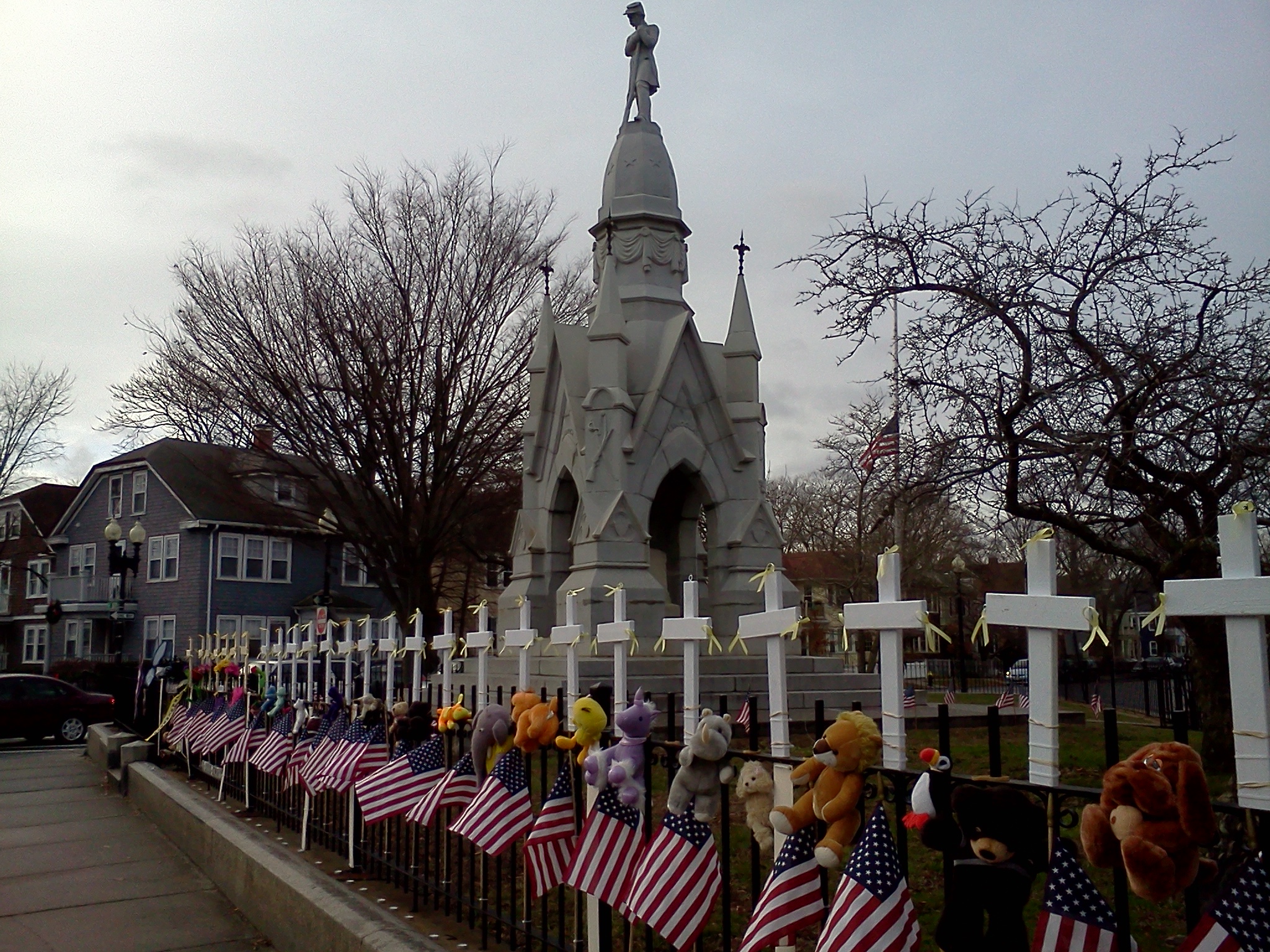
Elk, post rut, juveniles enjoy a brief romantic interlude – foreshadowing of next year? Jasper Nov 30 2015
Part-Dieu | Rue Duguesclin/Cours Lafayette
Housing units.
Arch. Marcel Gut, Jean Sillan and Jean Zumbrunnen
1962-65
These two buildings are the only constructed elements of the huge urban project (Moncey-Nord) planned in 1957 which was a kind of foreshadowing of the Part-Dieu district.
In the background, Tour Incity, highest office tower in Lyon.
Arch. AIA Atelier de la Rize and Valode & Pistre (Denis Valode)
2012-15.
Hieronymus Bosch (eigentlich Jheronimus van Aken (’s-Hertogenbosch um 1450 - 1516
Anbetung der hl. drei Könige oder Epiphanie-Triptychon - Adoration of the Magi aka Epiphany Triptych (ca. 1494)
Museo del Prado, Madrid
The central panel depicts The Adoration of the Magi. The city of Bethlehem, with some fantastic buildings, is visible in the background. In the foreground, the Kings offer their gifts. One, on the floor, has a carving of the Sacrifice of Isaac, a foreshadowing of the Passion of Christ. Casper´s clothing bears a view of Salomon´s visit to the Queen of Sheba, an antecedent to the Magi´s own visit to the Christ Child. With these images, the artist establishes two different levels on which to read the painting, linking Old and New Testament passages. It is more difficult to identify the nearly naked, chained figure looking out the door. He has been successively considered Adam, the Anti-Christ or Herod, yet none of these attributions is convincing.
The side panels portray the donors with their patron saints. Although the same landscape appears across the three panels, it is optically separated by the frames. On the left, the male donor kneels under the protection of Saint Peter with Saint Joseph in the background, heating the Christ Child´s diapers at some distance from the Magi. On the right, the female donor is accompanied by Saint Inez. When closed, this triptych represents Saint Gregory´s Mass, painted in grisaille with two praying figures. The altar depicts Calvary with scenes from the Passion. The center shows Christ appearing to the Pope, who is saying Mass.
This work is from Bosch´s last period. It is well preserved and is one of his finest pieces. It was originally in a chapel of `s-Hertogenbosch Cathedral and was later acquired by Felipe II, who sent it to El Escorial in 1574. From there, it entered the Prado Museum in 1839.
Source: Museo del Prado
"Venus Hottentot Montage" Digital Montage 11"x14" 1997
I found Elizabeth Alexander’s poem “The Venus Hottentot” interesting because, as we began studying the idea of what an object is and how it can be displayed, “The Venus Hottentot” explores the concept of a person being treated as an object. It portrays the young woman both as a curio who is destined to become a collector’s specimen and as a woman whose hopes have been unfulfilled. In my montage, I use images that show the young woman as an object and as a person. The chains symbolize her confinement, while the close-ups of her face are there to show her humanity. The African statues represent the woman’s naked body, which was put on display. I also included a small clipping of a medical illustration to foreshadow her ultimate fate. The text included in the picture is taken from the poem as well as from dictionaries. I felt it was necessary to use definitions of both “Venus” and “Hottentot” so viewers can examine more closely the meaning of the poem. I am also trying to illustrate the idea that the African woman is more than just something that should be defined and displayed, that she is a person. This is why the eyes stare out of the picture longingly. I think that this montage conveys my interpretation of the poem.
Copyright © Elizabeth Alexander, from The Venus Hottentot, Graywolf Press, 2004
The Venus Hottentot
(1825)
1. Cuvier
Science, science, science!
Everything is beautiful
blown up beneath my glass.
Colors dazzle insect wings.
A drop of water swirls
like marble. Ordinary
crumbs become stalactites
set in perfect angles
of geometry I’d thought
impossible. Few will
ever see what I see
through this microscope..
Cranial measurements
crowd my notebook pages,
and I am moving close,
close to how these numbers
signify aspects of
national character.
Her genitalia
will float inside a labeled
pickling jar in the Musee
de l’Homme on a shelf
above Broca’s brain:
“The Venus Hottentot.”
Elegant facts await me.
Small things in this world are mine.
2.
There is unexpected sun today
in London, and the clouds that
most days sift into this cage
where I am working have dispersed.
I am a black cutout against
a captive blue sky, pivoting
nude so the paying audience
can view my naked buttocks.
I am called “Venus Hottentot.”
I left Capetown with a promise
of revenue: half the profits
and my passage home: a boon!
Master’s brother proposed the trip;
the magistrate granted me leave.
I would return to my family
a duchess, with watered-silk
dresses and money to grow food,
rouge and powder in glass pots,
silver scissors, a lorgnette,
voile and tulle instead of flax,
cerulean blue instead
of indigo. My bother would
devour sugar-studded nonpareils,
pale taffy, damask plums.
That was years ago. London’s
circuses are florid and filthy,
swarming with cabbage-smelling
citizens who stare and query,
“Is it muscle? Bone? Or fat?”
My neighbor to the left is
The Sapient Pig, “The Only
Scholar of His Race.” He plays
at cards, tells time and fortunes
by scraping his hooves. Behind
me is Prince Kar-mi, who arches
like a rubber tree and stares back
at the crowd from under the crook
of his knee. A professional
animal trainer shouts my cues.
There are singing mice here.
“The Ball of Duchess DuBarry”:
In the engraving I lurch
towards the belles dames, mad-eyed, and
they swoon. Men in capes and pince-nez
shield them. Tassels dance at my hips.
In this newspaper lithograph
my buttocks are shown swollen
and luminous as a planet.
Monsieur Cuvier investigates
between my legs, poking, prodding,
sure of his hypothesis.
I half expect him to pull silk
scarves from inside me, paper poppies,
then a rabbit! He complains
at my scent and does not think
I comprehend, but I speak
English. I speak Dutch. I speak
a little French as well, and
languages Monsieur Cuvier
will never know have names.
Now I am bitter and now
I am sick. I eat brown bread,
drink rancid brother. I miss good sun,
miss Mother’s sadza. My stomach
is frequently queasy from mutton
chops, pale potatoes, blood sausage.
I was certain that this would be
better than farm life. I am
the family entrepreneur!
But there are hours in every day
to conjure my imaginary
daughters, in banana skirts
and ostrich-feather fans.
Since my own genitals are public
I have made other parts private.
In my silence, I possess
mouth, larynx, brain, in a single
gesture. I rub my hair
with lanolin, and pose in profile
like a painted Nubian
archer, imagining gold leaf
woven through my hair, and diamonds.
Observe the wordless Odalisque.
I have not forgotten my Xhosa
clicks. My flexible tongue
and healthy mouth bewilder
this man with his rotting teeth.
If he were to let me rise up
from this table, I’d spirit
his knives and cut out his black heart,
seal it with science fluid inside
a bell jar, place it on a low
shelf in a white man’s museum
so the whole world could see
it was shriveled and hard,
geometric, deformed, unnatural.
I got this Yoda at Disney World during The Last Tour to Endor, held on Saturday, August 14th. A beautiful rendition of him from the Prequel Trilogy. The shades make it look like he's sitting in his meditation quarter, realizing the grave dangers that lie with the Chosen One and the general weakened state of the Jedi who's powers are weakened by the shroud of the dark side.
April 8, 2023
University of Vermont Track Team home meet. Early spring in Vermont. Cold.
University of Vermont Athletic Complex
Burlington, Vermont
USA
Photo by brucetopher
© Bruce Christopher 2023
All Rights Reserved
...always learning - critiques welcome.
Tools: Canon 7D & iPhone 11.
No use without permission.
Please email for usage info.
The NSU Ro 80 was a technologically advanced large sedan-type automobile produced by the German firm of NSU from 1967 until 1977. Most notable was the powertrain; a 113 bhp (86 kW), 995 cc twin-rotor Wankel engine driving the front wheels through a semi-automatic transmission employing an innovative vacuum system. It was voted Car of the Year for 1968 by European motoring writers.
Unfortunately for NSU, the car developed an early reputation for unreliability, from which it would never escape. The Wankel engine in particular suffered from heavy wear on the rotor tip seals, among many other problems, and some early cars required a completely rebuilt engine before 30,000 miles (50,000 km), with problems visible as early as 15,000 miles (24,000 kilometres). The fact that the rotary engine design was inherently thirsty (typically 15-18 mpg) and a poor understanding of the Wankel engine by dealers and mechanics did not help this situation. By the 1970 model year, most of these problems were resolved, but a necessarily generous warranty policy and damage to the car's reputation had undermined NSU's financial situation irreparably. NSU was acquired by Audi (of the Volkswagen group) in 1969. Second hand Ro80s were virtually worthless in the 1970s due to the well-publicised engine problems, and a common "cure" for an ailing rotary engine was to simply swap it for a Ford V4 "Essex" engine (as found in Mk1 Transits) purely as it was one of the few engines compact enough to fit in the Ro80's engine bay. Thus in an ironic twist, one of the smoothest engines in the world was replaced by one of the roughest. The NSU's unpopularity caused by the above problems means that surviving examples are very rare, and are now considered highly-prized classic cars with values to match, particularly as thanks to Mazda's perseverance with rotary design, the tip seal problem has been all but eradicated.
Other technological features of the Ro 80 aside from the powertrain were the four wheel ATE Dunlop disc brakes, which for some time were generally only featured on expensive sports or luxury saloon cars. The front brakes were mounted inboard, reducing the unsprung weight. The suspension was independent on all four wheels, with MacPherson struts at the front and semi-trailing arm suspension at the rear, both of which are space-saving designs commonly used today. Power assisted ZF rack and pinion steering was used, again foreshadowing more recent designs.
The car featured an automatic clutch which was commonly described as a three-speed semi-automatic gearbox: there was no clutch pedal but instead, on top of the gearknob, an electric switch that operated a vacuum system which disengaged the clutch. The gear lever itself then could be moved through a standard 'h pattern' gate.
Interior trim combined cloth covered seats with pvc headlining and a carpeted floor.
The styling, by Claus Luthe who was head of design at NSU and later BMW, was considered very modern at the time and still holds up well; the Ro 80 has been part of many gallery exhibits of modern industrial design. The large glass area foreshadowed 1970s designs such as Citroën's. The shape was also slippery, with a drag coefficient of 0.355 (very good for the era, although average for modern cars). This allowed for a top speed of 112 mph (179.2 km/h). Indeed, comparisons have been drawn between the design of the Ro80 and the superbly aerodynamic 1984 Audi 100 - the shape is very, very similar.
Series production started in October 1967: the last examples came off the production line in April 1977. There were 37,204 vehicles produced during the ten year production run.
(Wikipedia)
- - -
Der NSU Ro 80 war eine Limousine der gehobenen Klasse von NSU, später Audi NSU. Er erschien 1967 mit einer revolutionären aerodynamischen Karosserie, die ihrer Zeit weit voraus war. Ebenfalls ungewöhnlich war der Wankelmotor, der 115 PS leistete. Dieser Motor machte in der Frühzeit durch häufige Dichtleistendefekte auf sich aufmerksam, denen jedoch der Hersteller mit kulantem Motorenaustausch begegnete. Dennoch litt der Ruf des neuen Modells und des Wankelmotors darunter erheblich.
Die konsequente Umsetzung der Keilform im Entwurf von Claus Luthe war ein stilprägender Impuls für das Automobildesign der 1980er-Jahre. Insbesondere bei Audi sollte das Erscheinungsbild des Ro 80 maßgeblich für ganze Fahrzeuggenerationen werden. Das charakteristische hintere Dreiecksfenster ist bis heute typischer Bestandteil des Designs bei Audi.
Der Ro 80 wurde in nur 37.398 Exemplaren bis 1977 produziert und blieb, technisch gesehen, ohne Nachfolger. Das letzte produzierte Fahrzeug wurde 1977 dem Deutschen Museum übergeben. Weitere Fahrzeuge sind unter anderem in der Pinakothek der Moderne in München, im Depot des Deutschen Technikmuseums Berlin, im Deutschen Zweirad- und NSU-Museum und im Audi Forum in Neckarsulm, im museum mobile in Ingolstadt, im EFA-Museum für Deutsche Automobilgeschichte in Amerang sowie in der Autostadt in Wolfsburg ausgestellt. Das Schnittmodell des Ro 80, mit dem der Wagen auf der IAA vorgestellt wurde, wird im Museum Autovision als Teil der Dauerausstellung Wankelmotor gezeigt.
Der weltweit älteste noch erhaltene NSU Ro 80 gehört einem Architekten aus Frankfurt am Main, und trägt die Fahrgestell-Nr. 80 001 061, Fertigungsdatum Donnerstag, der 19. Oktober 1967, Farbe saguntoblau.
Das „Ro“ im Namen steht für Rotationskolben im Gegensatz zu „K“ wie beim VW K 70, das für Kolben bzw. Hubkolben stand.
Bei den ersten Serienmotoren kam es infolge eines Konstruktionsfehlers zu vermehrten Motorschäden. Hatten die Motoren in der Erprobung über 200 000 km gehalten, so verloren sie in Kundenhand oft schnell an Kompression. Schnell wurde eine falsche Materialpaarung als Ursache dafür erkannt. Eilig wurden Material sowie die Teilung der Dichtleisten geändert und somit war das Dichtleistenproblem vorerst gelöst. In Verbindung mit einem Ferrotic-Mittelteil und einer härteren Enesilschicht mit höherem Siliziumkarbidanteil ging man später auf die ursprüngliche Dichtleistenteilung zurück. Ab Anfang 1970 wurden die neuen Ferrotic-Dichtleisten in die Serie eingeführt.
Als ebenfalls problematisch erwies sich die Doppelzündung, zum einen von der Einstellung her und zum anderen wegen des hohen Abbrands der Zündkontakte, was dann durch zu viel Frühzündung zu Motorschäden führte. Dies wurde durch eine Einfachzündung in Verbindung mit einer Hochspannungskondensatorzündung (HKZ) auf Kosten des Spritverbrauchs behoben. Die kulante Austauschpraxis führte zeitweise dazu, dass über 35 % der angeblich defekten Motoren in Ordnung waren. Nachdem der Zündzeitpunkt sowie der Vergaser neu eingestellt wurden und der Motor einen Probelauf auf dem Prüfstand absolviert hatte, wurden diese Motoren wieder als Austauschmotoren ausgeliefert.
Ein nicht unerheblicher Anteil an Motorschäden ging auf das Konto des Drehmomentwandlers, den man gegen das Schieberuckeln (verursacht durch den Umfangseinlass) einbaute und der zum Teil für den Mehrverbrauch des Ro 80 mitverantwortlich war. Da der Wankelmotor erheblich höher drehte (wohl eher wegen erheblicher Überdrehzahl aufgrund fehlender Drehzahlbegrenzung), passierte es bei einer Reihe Drehmomentwandlern, dass sie sich radial ausdehnten. Dadurch zogen sie sich axial zusammen und nun kollidierte das Pumpen- mit dem Turbinenrad. Da der Wandler im Motorölkreislauf hing, gelangten dadurch Späne in den Motor, was dann umgehend zu Motorschäden führte. Auch erwies sich ein kleines Nadellager im Wandler als anfällig, dessen häufiger Ausfall ebenfalls zu Spänen im Motoröl führte und damit indirekt für einen defekten Motor sorgte. Dies wurde dann durch einen verstärkten Wandler behoben. Ab Herbst 1971 führte man dann in Verbindung mit der Bosch-Hochspannungskondensatorzündung und thermischer Abgasentgiftung einen akustischen Drehzahlwarner ein, der die elektrische Benzinpumpe bei Überdrehzahl abschaltete und dadurch eine Überdrehzahl des Motors wirksam vermied.
Anfänglich war alle 20 000 km ein Ölwechsel nötig, der später jedoch entfiel. So mancher Fahrer glaubte deshalb, man müsste kein Öl mehr nachfüllen, worauf einige Motoren ohne Öl liegen blieben. Dieser Art Motorschäden begegnete man mit einer geänderten zweiflutigen Ölpumpe. Der Einlass für den Wandlerkreislauf wurde höher angesetzt. Bevor nun der Motorölkreislauf kein Öl mehr bekam, saugte der Wandlerkreislauf Luft, woraufhin der Wandleröldruck absank und die Öldruckanzeige aufleuchtete. Ignorierte der Fahrer die Warnlampe, übertrug der Wandler keine Kraft mehr an das Getriebe und das Auto blieb stehen. Spätestens jetzt wusste der nachlässige Fahrer, dass er vergessen hatte, den Ölstand zu kontrollieren.
Ein weiteres Problem, das ebenfalls direkt zu Motorschäden führte, war eine Öldosierpumpe ohne Nullanschlag. Dies führte dazu, dass, wenn diese Pumpe falsch eingestellt wurde, im Leerlauf kein Öl für die Trochoidenschmierung geliefert wurde. Daraufhin wurde eine geänderte Öldosierpumpe eingesetzt, die nun nicht mehr auf Null gestellt werden konnte.
Problematisch war auch, dass man gleich mehrere bis dahin unerprobte Verfahren in Verbindung mit dem Wankelmotor einführte. So hieß es von dem Enesilverfahren scherzhaft, es funktioniere nur bei Südwind, was auf die Witterungsempfindlichkeit anspielte. Auch gab es anfänglich Probleme mit der Dosierung und Korngröße des eingebetteten Siliziumkarbids und der Dosierung des Saccharin (das als Einebner für Nickelschichten in der Galvanik angewendet wird). Zudem waren die Werkstätten zum Teil mit der Technik rund um den Motor überfordert. Teilweise aber entwickelten einige Kunden auch geradezu kriminelle Energien. Kurz vor dem Ablauf der Garantie provozierten sie absichtlich einen Motorschaden.
Als das Dichtleistenproblem gelöst schien, kam es wieder zu gehäuften Motorschäden. Nun war es aber kein Konstruktionsfehler, sondern ein Zulieferer, der sich nicht an die Fertigungsvorschriften hielt.
Bei den letzten Ausführungen der Motoren bestanden die Dichtleisten komplett aus Ferrotic, diese Aggregate erwiesen sich als äußerst robust. Zusätzlich kam der Lebensdauer die Einführung des bleifreien Benzins entgegen. Anders als ein Viertakthubkolbenmotor dessen Ventilsitze mit Blei geschmiert werden mussten konnte der Wankelmotor des Ro 80 problemlos mit bleifreiem Kraftstoff betrieben werden, da beim Wankelmotor für die Gaswechselsteuerung keine Ventile benötigt werden.
(Wikipedia)
Today, both "The Land That Time Forgot" and "The People That Time Forgot" are fan favorites and hold a special 'cult' status among film buffs. I just goes to show that sometimes great films
don't need huge budgets to succeed, just dinosaurs and sexy cave women.
The Land That Time Forgot (1975)
Additional Photos in Set.
www.flickr.com/photos/morbius19/sets/72157639657354056/
youtu.be/d0K97czqecQ?t=1s Trailer
Amicus Pictures
Directed By: Kevin Connor
Written By: Edgar Rice Burroughs, Jim Cawthorn, Michael Moorcock, Milton Subotsky
Cast:
Doug McClure as Bowen Tyler
John McEnery as Captain Von Schoenvorts
Susan Penhaligon as Lisa Clayton
Keith Barron as Bradley
Anthony Ainley as Dietz
Godfrey James as Borg
Bobby Parr as Ahm
Declan Mulholland as Olson
Colin Farrell as Whiteley
Ben Howard as Benson
Roy Holder as Plesser
Andrew McCulloch as Sinclair
Ron Pember as Jones
Grahame Mallard as Deusett
Andrew Lodge as Reuther
Runtime: 90 Minutes
Color: Color
Story
In the year 1916 during WW1, an Allied vessel carrying civilians, the SS Montrose, is torpedoed by a German submarine. The survivors manage to board the sub and successfully take control of it. After the two sides continuously plot to overthrow the other, the group become lost. With supplies and fuel dwindling, the two opposing factions decide to work together. They find a strange continent in the icy region of the Atlantic ocean, but strangely, the water surrounding it is warm. Christened Caprona by an early Italian navigator named Caproni, the ice encroached island has no place to land. Traversing a winding underwater cavern, the U-boat ascends into a river.
The group find themselves in a strange land filled with prehistoric creatures. With dangers lurking at every turn, the lost travelers haven't enough fuel for a return trip. The group journey North across the land of Caprona in search of fuel. The further north they go, the more highly advanced the creatures and inhabitants become. They later find crude oil deposits and build
machinery with which to refine the lubricant for use in the subs engines. Attempting to leave, the mysterious volcanic continent threatens to rip itself apart to keep the involuntarily exiled travelers from escaping The Land That Time Forgot.
The set design is amazing with the makers getting full use out of Shepperton Studios, the home of Amicus. Some years later, the famed Pinewood Studios would acquire Shepperton. The Director of Photography on LAND, Alan Hume, does an admirable job capturing the colorful landscapes and fauna of the lost world of Caprona. Hume also took the job of DP on the three other Connor directed monster movies. Hume would later perform photographic duties on several of the Bond pictures in addition to the comedic prehistoric opus, CAVEMAN (1981) starring Ringo Starr among a cast of other recognizable faces.
The first in a series of popular fantasy adventure movies from the team of producer John Dark and director Kevin Conner. A highly ambitious British film from Amicus Productions, the chief rival to Hammer Films. Hammer had done their own series of prehistoric epics beginning with ONE MILLION YEARS B.C. (1966). That film featured stop motion animation by famed animator Ray Harryhausen. The film was so successful a follow-up was ordered albeit somewhat hesitantly considering the length of time it took for the stop motion effects to be created.
Doug McClure leads the cast to Caprona in a role that suits his former cowboy persona on THE VIRGINIAN television program. McClure replaced Stuart Whitman who was originally cast. Apparently, Whitman never received his full compensation to not participate in the picture and McClure was a likewise unwanted commodity as well. At the time, he was going through a divorce and a spate of drinking which kept him in a volatile mood from time to time. However, according to Susan Penhaligon, McClure was always a gentleman with her. McClure is very good and any hint of rambunctious behavior behind the scenes isn't evident in his pulpy performance.
McClure would take the lead role for AT THE EARTH'S CORE (1976), in which he would be paired with a rather spunky Peter Cushing. In 1977's THE PEOPLE THAT TIME FORGOT, McClure took a 'Guest Star' credit and only appears during the finale although he's the main focus of the story when Patrick Wayne journey's to Caprona to rescue him. It's the only film in the series that is a direct link with one of the other pictures. The fourth film, WARLORDS OF ATLANTIS (1978), isn't a Burroughs tale and also isn't an Amicus picture. Columbia handled distribution in the US.
In the early 1970s’ Amicus Pictures (Owned by Milton Subotsky and Max J Rosenberg) decided to pump some life into the declining British fantasy film industry by bringing the works of Tarzan creator Edgar Rice Burroughs to the big screen. At about the same time the film company’s rival, Hammer, had abandoned its standard horror films for features starring half naked women in an attempt to put more bodies in the seats. Amicus felt that the time seemed right for a series of films based on Burroughs strait forward action tales to fill the cinematic void.
The first of the four Burrough’s stories to be produced by Amicus would be an adaptation of the short story “The Land That Time Forgot” which was first published in Blue Book Magazine in 1918. Milton Subotsky had first penned a screenplay for the film back in the early 1960s’ but his first draft was initially rejected by the late Burrough’s estate. It was under their prodding that the script was rewritten by Jim Cawthorn and Michael Moorcock. Their dialogue heavy, light on the action script however didn’t meet Subotsky’s approval, so it was reworked yet again.
"The Land that Time Forgot" began production at Pinewood Studios in April 1974 with a meager $750,000 budget that had been put up by American International Pictures in exchange for the American distribution rights. This extremely low budget forced the film-makers to settle for cost cutting measures in the effects department. Hand puppets were used for the films dinosaurs in many scenes where costly stop motion animation had intended to be used. The effect looks
primitive when compared to modern CGI effects, but for the time period in which it was created, these effects in "The Land That Time Forgot" fared well against most rival productions.
Script problems and hand held dino’s were not the only problems the production would face in its early stages. Originally Stuart Whitman was cast as the American engineer Bowen Tyler, but Samuel Arkoff of AIP protested. Their next choice, Doug McClure, finally agreed to take the role after initially passing on it. McClure was billed as the perfect leading man by director Kevin Connor. McClure had earned a reputation as a marketable lead on the TV Western “The Virginian.” On the set however, McClure earned another type of reputation after his tendency to hit the bottle caused him to miss a couple of days shooting and punch a hole in producer Johnny Dark’s office door. Despite this McClure was considered a nice guy by his costars. He even held the hand of a nervous Susan Penhaligon (cast as biologist Lisa Clayton) during the explosions of the films volcano erupting climax. John McEnry, who played the German U-boat Captain von Schoverts, was continually acting up on the set due to his belief that the production was beneath him as an actor. This lead to his voice being dubbed over by Anton Diffrin due to his demeanor and lackluster tone. Aside from this however none of the other off screen troubles manifested themselves in the finished product.
The films plot is a strait forward Burroughs adventure story.
John McEnery, who plays the somewhat honorable Captain Von Shoenvorts, the leader of the German forces, was dubbed by Anton Diffring. The first 15 or 20 minutes of the film are very well handled, having the American and British survivors take command of the Nazi sub only to have the Germans take the vessel back, only to lose it once more. During the final switch, the Allied survivors get some poetic justice on their German captors. When the sub is to rendezvous with a Nazi supply ship, Tyler quietly launches torpedoes destroying the enemy vessel in recompense for the prior destruction of the civilian ship.
Anthony Ainley as Dietz is the true antagonist of the picture. He appears to have much respect for his Captain, but at the beginning after the Germans have sunk the civilian vessel, Dietz asks if there is an order to surface to look for survivors. Capt. Von Shoenvorts declines, yet Dietz responds with, "Survivors may live to fight another day." The Captain then says, "They are in enough trouble already...besides, these were civilians." As the Captain walks away there is a look of unmitigated and deceitful envy on the face of Dietz.
He secretly harbors desires to command his own unit and this materializes during the finale when Dietz shoots his Captain and takes over the doomed submarine. Ainley played a much different character in THE BLOOD ON SATAN'S CLAW (1971) in which he played a priest who is seduced by a harbinger of the Devil.
Derek Meddings was in charge of special effects on the picture and his work here would foreshadow some great things to come. Meddings would tackle effects chores on a number of big movies including a slew of the James Bond movies and big budgeted fantasy pictures such as SUPERMAN 1 and 2, KRULL and the 1989 version of BATMAN.
Monster designer Roger Dicken was in charge of the ambitious dinosaur sequences seen in THE LAND THAT TIME FORGOT. He also created special effects for several Hammer films including WHEN DINOSAURS RULED THE EARTH (1970) in which Dicken worked alongside fellow luminaries, Jim Danforth and Dave Allen. Dicken was Danforth's assistant here but on LAND, Dicken was on his own.
Douglas Gamley composed the score which has that Amicus sound to it, but given the nature of the film, Gamley peppers the score with at least one rousing composition which is saved for the finale. The scene in question has Tyler and Lisa racing back to the refinery as the land explodes around them. The group has left without them, though. As the U-boat makes its way back across the now burning river, Tyler and Lisa watch as the sub is destroyed from the boiling water and overwhelming heat.
During the finale, Caprona (described as a gigantic volcanic crater) begins to seemingly erupt destroying life on the island. In the third film, also during the finale, Tyler tells his friend, McBride that the land is alive and will stop their escape. Tyler states that the volcano controls everything. This adds a mystical element to the narrative making Caprona a living character. Taking what is said by Tyler in the third film, the erupting of the volcano in LAND seems to be in retaliation against the stranded travelers attempting to escape the island. By destroying the sub and its inhabitants, Caprona's secret remains hidden away from the eyes of modern man. The film ends as it began, with Tyler tossing a canister with notes detailing Caprona and the creatures residing therein.
The survivors of a torpedoed allied cargo ship turn the tables on their German attackers and seize control of their U-boat. The ever scheming German crew manage to damage the ships compass and instead of steaming to a neutral port, the group finds itself off the coast of the legendary island of Caprona, where time has stood still since prehistoric times. Forced to venture ashore in search of food, supplies and fuel, the crew encounters a bevy of dinosaurs that intend on making sure no one escapes alive. As in all good adventure stories of this type, just about everything and everyone the group encounters is set on doing them mortal harm and danger lies behind every turn. The groups focus is a simple a straight forward one, keep from being eaten and figure out a way to get off the island before it consumed in a river of molten rock. Seems all good dinosaur flicks have to end in some kind of volcanic catastrophe, and this film is no exception, even though Moorcock had originally written it with a different ending.
James Cawthorn (1929-2008) Artist
Jim Cawthorn is best known to Burroughs fans for his early work on the British fanzine Burroughsiana, edited by Michael Moorcock from 1956-1958, and for Erbania, edited by Pete Ogden during the same period. He also illustrated for Tarzan Adventures, a series of Tarzan comics interspersed with other stories and articles, also edited by Michael Moorcock. The series was reprinted by Savoy in 1977.
American Burroughs fans were generally unfamiliar with the British Tarzan publications before the Internet came onto the scene, but they are certainly familiar with the film production of The Land That Time Forgot, for which Jim Cawthorn and Michael Moorcock wrote the screenplay.
This Amicus film starred Doug McClure, making his first appearance in a British film under the auspices of American International Pictures, Inc. Cawthorn is reported to have been dissatisfied with the changes made to their screenplay which was written and signed on October, 1973, and which was filmed a year later. Besides changing names, characters and situations, they blew up Caprona which did not sit well with most American fans.
Cawthorn had produced many unpublished comic strips, including The Land That Time Forgot, and was working on A Princess of Mars when he died on December 2, 2008. He and Moorcock edited Fantasy: The 100 Best Books, published in London by Xanadu in 1988.
Cawthorn had many admirers, including Tarzan artist Burne Hogarth who wrote that the young artist’s work had a quality "most compelling and fascinating... He has an authentic talent." Of the many Cawthorn illustrations available for viewing, we found an early (1958) original in the Burroughs Memorial Collection which he drew for one of Maurice B. Gardner’s Bantan books.
Incarnational Candle
When lived the world in heavy darkness,
Long waiting the Messiah in perpetuity,
Hopes faint, the wait beyond credulity,
Burst on Bethlehem a great Brightness.
When we, in shadow of our home,
See shadows cast by light, one alone,
Look to that One, single bright beam,
The greatest wonder ever to be seen.
-- John Walford, for John & Betty Gouch,
With affection, February 9th, 2012.
Photo: “Incarnational Candle,” 2011
© Walford Photography & Graphic Arts
Not all, but most of my girly shoes. I have a strong predisposition toward peep toe'd styles--which means maybe I'll have to go shoe shopping for winter?
Another view of former Pinnaroo Anglican Church.
The township of Pinnaroo is just a few kms outside of Goyder’s line for agriculture rather than pastoralism. Its reasonable rainfall, suitable soils and gently undulating terrain gave great promise for farming. The local pastoralist William Hensley had failed in his attempts to make a profit from sheep here. The railway act of 1903 meant Pinnaroo would have cheap, reliable transport for the farmers to obtain superphosphate and send their wheat or hay (and Mallee roots) back to Adelaide. It was also the first railway line constructed in the Murray Mallee. No wonder the local historical society named their history of Pinnaroo “Miracle of the Mallee” in 1983 and the town had a hotel named “The Land of Promise.” Even the name Pinnaroo in an Aboriginal language means “big man” and perhaps foreshadowed a lustrous future. Although almost on the SA-Vic border Pinnaroo had a good agricultural hinterland and it drew economic benefit from across the border, especially with a rail line to Ouyen and on to Melbourne. The early good harvests were like those of the Lameroo district. Eudunda Farmers opened a depot and later a store in the town by 1909. An Agricultural Society was formed in 1910 at the Land of Promise Hotel. Annual Shows were held and special trains ran from Ouyen in Victoria to bring people to the highly successful Pinnaroo Show. The Pinnaroo Local Council was formed in 1908 (remember the train reached Pinnaroo in 1906.) Pinnaroo sprang up almost overnight but it was a town of substance with heavy stone buildings, erected at great cost as the stone had to be railed from Adelaide or elsewhere. The first farmer was William Harvey who leased the old Pinnaroo homestead and cleared land for a farm a few years before the railway came to the town. The railway might have been the lifeblood of the district but it was the blood sweat and tears of the farmers clearing the land that made it productive. Consequently the township of Pinnaroo thrived and soon had almost 1,200 residents by 1920. Growth slowed down during the Depression of 1929 and never recovered until after World War Two.
The more recent resurgence, or at least holding situation, has developed since the declaration of a water irrigation zone around Pinnaroo in the early 1980s. SA is now the largest producer of potatoes in Australia with about 35% of the total Australian output. The Pinnaroo potato region includes Parilla and Peebinga. In the immediate area around Pinnaroo the potato producers include Golden Sunrise Potatoes, the Frank Mitilo Group and Potato Masters. In recognition of the importance of potato growing Pinnaroo still has its annual Show in September but also a Spudfest in February. Although the town is not now growing, as a tourist we can now see some of the fine buildings constructed during the boom periods. Alas some buildings, such as the former Anglican Church are now deteriorating. The town museum beside the former railway station in the rail yards also has an excellent section called the Letterpress Printing Museum. It is partly located in Pinnaroo because since 1911 Pinnaroo has had a local newspaper, the Pinnaroo Border Times which is still published weekly on Wednesdays.
Some of the structures or places of note in Pinnaroo, primarily in Railway Tce South- the Main Street:
•Pinnaroo is a rare town as it actually has a street called Lovers Lane- on the eastern outskirts of the town!
•the Golden Grain Hotel built in 1906 when it was called the Land of Promise Hotel. It has wonderful curved stone gables, arched doorways, louvre vents in the gable ends complete with decorative shades, etc. The original structure was a small single story hotel. This current structure was built in 1914 when the named was changed to the Commercial Hotel. In the 1930s it became the Golden Grain Hotel.
•the sandstone Post Office, 5304, with a hipped gable roof line, brick quoins and a pleasing appearance. It opened in 1912 with a triangular stone pediment above a front veranda which has now been replaced by the half hipped gable roof.
•The Pinnaroo Police station, built to look like a double fronted stone villa residence with fine brick quoins. It opened in 1909 but was demolished to make way for a new station in 1974.
•The Pinnaroo Institute. The first institute was completed in 1908. The current wonderful Art Deco Institute replaced the first one in 1925. This is one of the finest examples of Art Deco in SA.
•The Pinnaroo Hotel with its wonderful iron lace work around the upper veranda; its cut off corner façade, and its interesting roof line. The original stone appearing cement bricks have all been painted yellow. This two story structure opened in 1911 replacing the former simple Pinnaroo hotel which opened in 1910.
•Victoria Buildings, in 1927 after the original shops burnt down. Art deco in style, simple but indicative of wealth in the district at the time of construction. Pretty plaster rosettes across the roof pediment. Unsympathetic modern veranda.
•Next to Victoria buildings is the IGA Supermarket, still owned by Eudunda Farmers. This was the site of their original store in 1909 which has been rebuilt and modernised.
•The first National Bank in Pinnaroo opened here in 1910. This structure was built during World War Two.
•Parr’s Buildings 1927. Another great example of a grand Art Deco shop complex with a stucco façade now in need of restoration.
•the fine War Memorial , Memorial Gates and Clock Tower. The obelisk War Memorial was opened in 1951, the bandstand opened in 1922. The Memorial Gates with a clock were erected in 1934.
Significant buildings elsewhere in Pinnaroo:
•the former All Saints Anglican Church, now privately owned is in Bundey Tce. Like the Methodists the Anglicans erected a tin shed for a church early in 1908. The foundation stone of the former stone church was laid in 1923 and the church about a year later. It was erected with the help of the Bishop’s home Mission Society. The church closed in the mid 1980s. It is pictured to the left in its ruinous state.
•the Catholic Church which still operates is in Devon Tce. Our Lady of Good Counsel Church opened in 1913. It has mini towers on each corner of the façade and five narrow gothic windows above the entrance porch. An adjacent Josephite convent and Catholic School opened in 1924.The school is now closed. The town cemetery is just along Devon Tce west of the Catholic Church.
•the former Methodist Church, now the Uniting Church, is in Railway Tce North. It was the first church and public building in Pinnaroo being erected in 1906. It was a simple tin shed, nothing more than that. It served as the first school room. In 1912 the fine stone Gothic style Methodist Church opened in Pinnaroo. It had buttresses on the corners, double arched windows on the façade and a steep roof. It had brick quoins. Adjacent is the modern style Sunday School Hall built in 1961 which also looks like a church!
•the UELCA Lutheran Church is in Hensley Street. A simple tin but Gothic style shed opened as the Lutheran Church in 1909. Many of the original settlers of Pinnaroo were of German descent. A fine stone church opened in 1910. It was superseded with a new stone Lutheran church in 1957 after the amalgamation of the two Lutheran congregations in Pinnaroo.
•Pinnaroo raised money and then received some government assistance to open a hospital at Pinnaroo; opened in 1922- the Pinnaroo Soldiers Memorial Hospital. New wings were built in 1974. It is located at the corner of Bundey and Gordon Terraces in the parklands reserve. The hospital mainly has aged care beds.
•The Pinnaroo state school opened with a fine stone building ready for the start of the school year in February 1911. Adjacent was a headmaster’s residence. The school had 108 pupils by February 1912. From 1923 it was a Higher Primary School with some secondary classes. In 1948 it became an Area School. In 1990 it reverted to being a primary school. The current enrolment is about 60 pupils. The school is in Bundey
Tce opposite the former Anglican Church.