View allAll Photos Tagged effective
axtschmiede.com/boost-your-confidence/
habits of mind
habits of successful people
habits of my heart lyrics
habits synonym
habits definition
habits of highly effective people
habits book
habits app
habits at work
habits and contradictions
habits and routines
habits and vitals
habits app android
habits are hard to break
habits and rituals
habits academy review
habits a repeat performance
habits a sentence
habits a definition
habits a tiger
dr a's habits of health
a good habits
type a habits
a student habits
a person's habits
a bad habits
habits burger
habits by tove lo
habits bullet journal
habits by mgk
habits beer
habits by tove lo lyrics
habits bar
habits band
habits become
bad habits
bad habits lyrics
bad habits die hard
bad habits song
bad habits synonym
bad habits maxwell
bad habits makeup
bad habits to break
bad habits clothing
bad habits quotes
habits chords
habits charles duhigg
habits cover
habits comic
habits clean
habits calendar
habits chart
habits crossword
habits charlotte mason
c.habits
c suite media habits
c-sharp driving habits 2
habits c et a
c&a habits bébé
c&a habits grossesse
c discount habits
cdiscount habits femme
c&a habits bebe
porte habits cdiscount
habits die hard
habits def
habits day6 lyrics
habits definition psychology
habits dna testing
habits defined
habits duhigg
habits de lumiere 2018
habits don't lie
d'habits
habits somptueux
habits d'occasion
habits d'higiene infantil
habits d'été
habits d'occasion en ligne
habits d'allaitement
habits d'apparat
habits d'estudi
habits examples
habits essay
habits eat willpower for breakfast
habits everyone has
habits en anglais
habits every woman should have
habits expert james clear
habits effective
habits esl
habits everyone should have
habits e liquid
habits e chords
health e habits
e coli habits
health e habits schnecksville pa
email habits
filth-e habits
ebook habits
e lifestyle habits
tove lo habits
habits for success
habits for characters
habits for health
habits for happiness
habits for weight loss
habits for 2019
habits for habit tracker
habits for wellbeing
habits for the new year
habits for a healthy life
habits grill
habits generator
habits glass
habits guitar chords
habits gretchen rubin
habits good
habits gif
habits good and bad
habits game
habits genius
g eazy habits
becky g facts
g study habits
g baby bad habits
g baby bad habits lyrics
g baby bad habits download
g dragon bad habits
work habits g s n
bad habits g
work habits g
habits hippie sabotage
habits hours
habits high
habits him lyrics
habits haley reinhart
habits hippie sabotage remix lyrics
habits high lyrics
habits how they form and how to break them
habits head shop
habits hang ups and hurts
habits h&m
habits h.i.m lyrics
habits h aspiré
h pylori eating habits
habits h et m
h&m habits usagés
h&m habits grossesse
h&m habits bébé
h&m habits femme
habits ink
habits in french
habits images
habits in the bible
habits icon
habits in psychology
habits in asl
habits ios
habits i should have
habits i want to learn
habits i need to change
habits i gotta stay high
habits i eat my dinner
habits i want to break
habits i will change
habits i hate
habits i spanish
i+10 habits
habits jackson hole
habits journal
habits james clear
habits johnstown
habits johnstown pa ad
habits jackson wyoming
habits jackson hole instagram
habits jazz cover
habits johnstown pa
habits james clear pdf
j'habite
habits j diggs lyrics
habits j diggs
j hope habits
bad habits j roddy lyrics
j paul getty habits
j'y range mes habits
j lo eating habits
habits j angielski
habits karaoke
habits key
habits kid ocean
habits kit
habits kensett ar
habits lyrics mgk
habits list
habits lil durk
habits lyrics him
kikki k habits journal
kikki k habits workshop
kikki k habits journal review
slim k habits
k camp bad habits
habits k significa
k significa habits en español
habits kpop
mademoiselle k habits
l'habits
l lawliet habits
l eating habits
l'arpenteur habits
good habits l
healthy habits l
habits l'asticot
l'importance des habits
l'empereur aux habits neufs
habits mgk
habits meaning
habits menu
habits meme
habits music video
habits maria mena
habits make the man
habits mr kitty lyrics
habits movie
h&m habits
alpha m habits
h.i.m habits lyrics
h.i.m habits mp3 download
h.i.m habits download
bad habits m
habits near me
habits nun
habits neon trees
habits nest
habits nightcore
habits nikki giovanni
habits neuroscience
habits not diets
habits new york times
habits not goals
habits and preferences
health and habits
work habits n
habits of success
gawi o habits
list of habits
o healthy habits
7 habits of
changing habits o'meara
habits o que é
habits o que significa
habitse o que é
habits people have
habits plested
habits psychology
habits poem
habits plested lyrics
habits postmodern jukebox
habits pdf
habits psychology definition
habits piano chords
habits piano
p/pc 7 habits
habits petit loup
habits quiz
habits questionnaire
habits quotes goodreads
habits questions
habits quotes aristotle
habits quotes images
habits quora
habits quotes in hindi
habits quiz gretchen rubin
schoolboy q habits and contradictions
schoolboy q habits and contradictions zip
schoolboy q habits and contradictions zip vk
habits remix
habits remix lyrics
habits restaurant
habits rhyme
habits reddit
habits rituals and the evaluative brain
habits roblox id
habits rock cover
habits research
habits remix tove lo
what are habits
r zen habits
3 r habits
s-r habits
r good habits
r covey 7 habits
bad habits r
habits stay high
habits stay high lyrics
habits sports
habits stay high remix
habits scorecard
habits salt lake city
habits salon
habits store
habits stay high chords
s habits of mind
habits s&r
s good habits
s healthy habits
s covey 7 habits
s covey 7 habits pdf
work habits s
7 habits s
habits s.r.l
business habits s.l
habits tove lo lyrics
habits to start
habits thesaurus
habits to break
habits to lose weight
habits tove lo chords
habits to develop
habits to replace smoking
habits t mass remix
habits t mass remix mp3 download
habits t mass remix lyrics
habits t mass remix download
habits t shawn
7 habits t shirts
t rex habits
bad habits t shirt
delinquent habits t shirt
t rex eating habits
habits uke chords
habits usually take about a month to develop
habits utah
habits unplugged
habits ukulele cover
habits unscramble
habits ultimate guitar
habits unhealthy
habits usa
habits urban
delinquent habits u don't own me lyrics
super u habits
hyper u habits
habits u engleskom
habits vs goals
habits vape
habits video
habits vs addiction
habits vape shop
habits vs customs
habits and discipline
habits vs habits
habits or goals
habits v violet
habits or addictions
v sleeping habits
good habits v
george v habits
morphologie v habits
habits v violet เนื้อเพลง
habits worksheet
habits why we do what we do
habits wyoming
habits wizard
habits worth tracking
habits we do everyday
habits wiki
habits we all have
habits weight loss
bad habits w
w w dj habits
w w new habits
habits w angielskim
habits xie lyrics
habits xie
habits crossword clue
habits xs
habits xxl
habits xobor
xelf habits lyrics
zen habits
xiumin habits
generation x habits
monsta x habits
x effect habits
tedx habits of happiness
projet x habits
project x habits
x ambassadors habits
delinquent habits x braustation sursee
delinquent habits x braustation sursee – craftrebels lyrics
delinquent habits x braustation
habits youtube
habits you should have
habits you should do everyday
habits you have in relationship
habits you should track
habits you should start
habits you should break
habits young rising sons lyrics
habits you want to change
habits yellow book
generation y habits
healthy habits
pokemon y habits
hábitos y rutinas
costumbres y hábitos
manners and habits
habits zen
habits zenhabits
habits zumba
habits zara
zen habits book
zen habits 30 day challenge
zero habits
zen habits podcast
zen habits declutter
zen habits reddit
zen habits pdf
zen habits app
zen habits morning routine
zen habits archives
zen habits chili
zen habits sea change review
habits 06 nice
habits 06
07 habits
007 habits
habits 06 cannes
bhola 009 habits
habits bébé 0 mois
habits 101
habits 1 2 3
habits 101 brian johnson
habits 16
habits 1 hour
habits 1-3 are what type of victories
habits 12
habits 15
16 habits of mind
10 habits of a successful person
habits 1-7
habits #1 smoke shop
habits 1-3
habits 1 be proactive
habits 1 percent
1 minute habits
1 minute habits pdf
level 1 habits
habits 21 days
habits 2019
habits 2 health
habits 2 goals
habits 2018
habits 21 days research
habits 28 days
habits 20s
habits 21
habits 24
2 habits angie stone
2 habits lyrics
2 bad habits
2 bad habits lyrics
2 bad habits angie stone
2 good habits
2 healthy habits
bipolar 2 habits
habits 365
habits 30 days
habits 320kbps
habits 320kbps download
habits 3 weeks
habits 360
habits 365 hoodie
30 habits for happiness
36 habits that made me a millionaire
3 habits of a healthy heart
3 habits of a successful person
3 habits of successful students
3 habits of billionaires
3 habits of resilient families
3 habits to improve your brain
3 habits of highly effective leaders
3 habits of mind
habits 4 5 and 6
habits 4-6 are what type of victories
habits 4 and 5
habits 40
habits 4 letters
habits 4 weeks
habits 4 letter word
4 habits of mind
47 habits of highly successful employees
4 habits of execution
4 habits for a longer life
4 habits coding scheme
4 habits of couples that last
habits 50's
habits 52
5 habits of a woman who doesn't quit
5 habits of highly effective communicators
5 habits of a woman who doesn't quit pdf
5 habits of mind
5 habits of highly effective
5 habits of successful person
5 habits of dysfunctional teams
5 habits that lower your iq
5 habits for me
5 habits of sleep hygiene
5 habits of successful college students
5 habits dysfunctional team
5 habits of effective thinking
5 habits of health
5 habits of an extraordinary reliability engineer
habits 66 days
habits 6 and 7
habits 6 letters
habit 6 synergize
habits (6) crossword clue
6 habits of high performers
6 habits of highly effective teams
6 habits of merely effective negotiators
6 habits of highly effective teams pdf
6 habits of transformational leadership
6 habits of happiness
6 habits high performance
6 habits of highly effective bosses
6 habits of influential it leaders
habits 7 little words
7 habits of highly effective pdf
7 habits song
7 habits summary
7 habits workbook pdf free
7 habits worksheets free
7 habits of highly effective teens
7 habits of highly effective people pdf
7 habits of happy kids
7 habits of highly effective people summary
7 habits of highly effective
7 habits of highly effective people audiobook
7 habits for kids
7 habits of highly effective teens summary
7 habits of highly effective people review
habits 8d
habits 89
habits 89 app
habits 8 months
8 habits of mind
8 habits of love
8 habits leader in me
8 habits of successful students
8th habits
8 habits of highly effective people pdf
8 habits of the heart
8 habits for success
8 habits posters
8 habits of the most valuable employees
8 habits of highly successful marriages
8 habits of highly effective google managers
habits 9 letters
habits 90s
9 habits that lead to terrible decisions
9 habits of project leaders
9 habits of highly effective leaders
9 habits to stop now
9 habits of highly effective teachers
9 habits of the rich
9 habits of the mind
9 habits of extreme productivity
9 habits of world class startups
The Brisbane Courier
Wed 28 Nov 1888
Brisbane Tramway Company
[...] Since the printing of the report the company had sold to the Townsville Omnibus Company a considerable number of light horses which were unfit for the Brisbane traffic, and had formerly been used on the "feeders." They had also disposed of four waggons and three omnibus, the lot coming to nearly £700. This had relieved the company of a considerable number of animals and vehicles for which they had no present use, and they had agreed to take payment for this rolling-stock and these horses in shares in the Townsville company. He [the chairman] had looked into the matter very carefully when he visited Townsville, and he believed the little 'bus company there would be an extremely remunerative investment. The town was so laid out that there were no hills on the routes, and the wear and tear would be but small. At any rate, the board was convinced that they had done the right thing in getting rid of these 'busses on the terms agreed to, and had experienced considerable difficulty in getting rid of them.
He could not allow the opportunity to pass without mentioning the point that was casually mooted at the last annual meeting - namely, the possibility of substituting electricity for horses as their traction power. During the twelve months that had elapsed since that meeting there had been an immense development in the phase of electical science. There was now in Richmond City, Virginia, USA, an electrical street railway that had been running for a number of months with absolute success at a cost of less than half of what the same company had previously expended for the propulsion of their cars by horses or mules. The result of the success of this new system had been very marked in America, and one of the most important effects was that the West End Boston Company had absolutely determined to adopt the system.
Queensland State Archives Item ID 436348, Photographic material
The Brisbane tramway network served the city of Brisbane, Australia, between 1885 and 1969. It ran on standard gauge track. The electric system was originally energised to 500 volts, and subsequently increased to 600 volts. All tramcars built in Brisbane up to 1938 had an open design. This proved so popular, especially on hot summer nights, that the trams were used as fundraisers and often chartered right up until the last service by social groups.
Most trams operated with a two-person crew – a driver (or motorman) and a conductor, who moved about the tram collecting fares and issuing tickets. The exceptions to this arrangement were on the Gardens line (Lower Edward Street) where the short duration of the trip meant it was more effective for passengers to simply drop their fare into a fare box as they entered the tram; and the "one man cars" which operated in the early 1930s.
The peak year for patronage was in 1944–45 when almost 160 million passengers were carried. The system route length reached its maximum extent of 109 kilometres (68 mi) in 1952. The total track length was 199 kilometres (124 mi), owing to many routes ending in single, rather than double, track. Single track segments of the track were protected by signalling which operated off the trolley wire. By 1959 more than 140 kilometres (87 mi) of track were laid in concrete, a method of track construction pioneered in Brisbane.
The last track opened was in O'Keefe Street Woolloongabba, in May 1961. However, this track was not used in normal passenger service and was merely used to reduce dead running from Logan Road back to Ipswich Road Depot.
Of the Australian capital cities which closed their networks between the 1950s and 1970s (only Melbourne and Adelaide retained trams, although Adelaide only had one line in operation), Brisbane was the last capital city to close its tram network. Despite the decision to shut down the network, Brisbane's trams were held with great affection by locals, and one commentator described their removal "one of the most appalling urban planning mistakes in the city’s history". There have been ongoing proposals since the early 1990s to reinstate a functional tram network.
Brisbane expanded to become one of the most dispersed cities in the world by the 1870s. In the early years of Brisbane's settlement walking was the most convenient way to get around as most people choose to live close to their workplace. In 1875, the railway line to Ipswich opened up some areas in western and southern districts, however fares were expensive, as was owning a horse.
By 1885 an omnibus service reached almost every part of Brisbane. Omnibuses consisted of a strongly constructed wooden wagon with seating for males on the roof and a back-door entrance to the interior.
On 10 August 1885 the Metropolitan Tramway and Investment Company began official horse-drawn tramway services for the public. The 18 tramcars were built from highly polished cedar and mahogany in the United States by JG Brill Company and John Stephenson Company. Fares were expensive, with the typical patron belonging to the middle class. Some even used the services to go home for lunch. Depression struck in 1893 and combined with 1893 Brisbane floods the horse-drawn tramway services saw large drops in patronage.
The first electric tramway ran along Stanley Street, in South Brisbane on 16 June 1897. Horse-drawn carriages were still being used in 1899.
In 1900 local residents were agitating to have the Kelvin Grove tramway extended along Enoggera Road to the Newmarket Hotel in Newmarket. However, a new bridge over Enoggera Creek would be required.[5] Also there were concerns that the close proximity of the proposed tramway would take revenue away from the railway line. However these concerns were resolved and the tramway extension to the Newmarket Hotel was opened on Monday 27 July 1903.
Up until the end of World War I, Brisbane's trams were the primary method used for travelling within the city.
Between 1923 and 1934 tram services in Brisbane were greatly expanded. Brisbane's tramway system came under the control of the newly merged Brisbane City Council (BCC) in 1925.
After seven years of agitation, Brisbane's tram service was extended to Grange in July 1928. The opening ceremony was attended by the Lord Mayor of Brisbane, William Jolly, and two Members of the Queensland Legislative Assembly, James Stevingstone Kerr and Charles Taylor. The mayor had threatened not to attend any ceremony for the opening of the tram service because two rival groups were organising separate celebrations; he would only attend if there was a single ceremony.
Until 1934, the trams carried mail between the Brisbane General Post Office and suburban post office branches, and also acted as mobile postboxes
Through the 1940s and 1950s the tram system enjoyed strong political support within the council, which continued to expand the tram network and upgrade its fleet with some of the most advanced trams in Australia. Trolleybuses were introduced in 1951. The last tramway to open was in March 1961. Clem Jones became Lord Mayor of Brisbane the same year, and all new route construction was cancelled.
By 1948 Brisbane's trams failed to return a profit as they could not compete with the more efficient bus services. Urban development, often well away from public transport, the rise of suburban shopping centres and the relative decline in the cost of motorcars meant that as elsewhere, Brisbane's public street transport system increasingly had to compete with the private motor car and patronage slowly declined from a post war peak of 148 million passenger journeys in 1946, to approximately 64 million passenger journeys in 1968.
Political support for the tram system waned in the 1960s, particularly so after the Paddington tram depot fire on 28 September 1962. 67 trams were destroyed, which represented 20% of the entire fleet. Brisbane's Lord Mayor Alderman Clem Jones was pro-freeway and private car. The Kalinga, Toowong, Rainworth and Bulimba ferry routes closed in December 1962.
In common with many other cities, Brisbane converted its remaining tram lines between 1968 and 1969 to all bus operation. The last trolley buses ran on 13 March 1969 and the final trams ran on 13 April 1969. Photographs of this last tram ride, organised by Grahame Garner and other tramways workers are in the University of Queensland Fryer Library collection. The tramway closure was notable for the speed with which it was carried out. Over 300 replacement Leyland Panther buses were purchased, at the time the largest single bus purchase in the world. Most older, wooden trams were stripped of metal parts and then burnt at the City Council's yard at Cribb Street, Milton (adjacent to the tramway workshops). The bodies of later, all-metal cars were sold as sheds and playground equipment.
The Brisbane Tramway Museum Society was formed in 1968 to preserve some of Brisbane's trams. At present the museum has 24 Brisbane trams in its collection, with 6 operational; California type tram 47, Ten Bench tram 65, Baby Dreadnought tram 99, Dropcentre tram 341, Four Motor tram 429, and the last tram built and officially operated in Brisbane, Four Motor Phoenix tram 554. Tramway operations commenced at the museum at Ferny Grove in 1980.
There have been several proposals from both the Brisbane City Council and state government to return a tram or light rail system to Brisbane since the 1990s. The most prominent of these include the ambitious 1997 Brisbane Light Rail Transit proposal. The plans escalated to a Queensland government tender for four company consortia to purchase new trams, construct and operate the system in 1 the project was projected to cost A$235 million but was subsequently vetoed in favour of expanding the existing bus network.
These various proposed options included a line from Roma Street station to Queensland University of Technology’s CBD campus along George Street, CBD to West End and University of Queensland via Victoria Bridge and Melbourne Street and CBD to Fortitude Valley via Wickham Terrace.
In 2007, following several failed road and tunnel projects and based on the recommendations of the Brisbane City Council's 2006 CBD masterplan, Premier Peter Beattie announced $250 million of state government funding for an extensive light rail system to rival Melbourne's and significantly larger than those of Sydney or Adelaide. The plan, at the centre of the government's "Smart City" plan, was to link South Brisbane to New Farm and Bowen Hills with future extensions down the newly created South Eastern and Inner Northern Busways, bridges and pedestrian spines.[14] In the March 2008 Brisbane city elections, the Queensland Greens campaigned on a more comprehensive plan. However, by June 2008 progress had stalled, without an official project announcement, the Brisbane City Council once again distancing itself from the plan due to cost of the investment (estimated at $600 million for the New Farm link) and instead giving consideration of diverting the funds to enhancing the bus and CityCat ferry systems.
Types of trams
Unlike many other systems, Brisbane never adopted an alphabetical or numerical system for classifying its trams (cf Melbourne trams), preferring instead to use official descriptions, such as "standard centre aisle car", or "drop-centre saloon car”.
Horse trams
- single deck saloon
- single deck cross bench
- double deck - open top deck, lower saloon
Electric trams
Converted electric trams
Delivery of early combination cars was delayed and as a result the tramway company decided to convert many of the horse tram to electric operation, as a temporary expedient. Despite this, many of these converted cars remained in passenger service well into the 1930s.
California Combination car
The prototype Brisbane electric tram (No 1) was built at the Melbourne cable tram workshops from the body of a horse tram, and had 5 saloon windows instead of the usual 4 windows on the new-built Combination cars, with one fixed and one tip-over seat on each end platform.
Large Combination cars
These three trams were built in 1904 from three single deck horse trams, similar to the new-built California Combination trams but with 6 saloon windows as opposed to 4 on the new trams, and a single fixed cross-bench seat on each end platform instead of 2 tip-over seats each end. Withdrawn from service 1925 to 1930s.
Saloon cars
Each tram in this class was constructed by joining two single deck saloon horse trams together on a single motorised chassis. Their long, enclosed bodies gave rise to their nickname of "coffin cars". They were built in 1897, when delivery of new electric trams was delayed. 6 cars in this class. They were all withdrawn from service by 1930.
"Summer" cars
The 6 bench horse trams were motorised and later most were lengthened to accommodate 10 cross benches. One car was to remain in service until 1958 as an advertising car.
New-built electric trams
California Combination
Officially referred to as "Standard Combination" trams, but more popularly referred to as "matchboxes". They had a central 4 window saloon with 2 tip-over cross-bench seats on each end platform. There were 62 trams in this class, built between 1897 and 1904, with the last one withdrawn from passenger service in 1952. Two, (nos 14 and 15), were converted into "scrubber" cars (track maintenance cars). Several were used as advertising cars, with 47 and 53 being used as one man cars on the Gardens shuttle route.
Nine Bench Cars
These 4 trams were constructed in 1897 and 1898 by the Brisbane Tramways Company. They were cross bench cars with no centre aisle. Two of the benches (those attached to the end bulkheads) were fixed and the other seven benches were tip-over. They could carry 45 seated passengers, plus standees. Two were withdrawn from service in 1938, the other two were probably withdrawn in 1943.
Brills
These 20 cars were officially "bogie open tip-over cross-bench cars". They were a standard design tram built by JG Brill Company of Philadelphia, although two were built by the Brisbane Tramways Company, presumably under licence from the Brill Company. They each had 4 fixed back-to-back benches and 8 tip-over benches. The first 8 had clerestory roofs, the remainder had plain roofs. The first 8 were also fitted with couplings for trailers, but the trailers were eventually motorised (see "light twelve bench cars" below.) As these trams only had hand brakes, operating a coupled set was physically demanding on drivers. In later years these workhorses were very dilapidated and had diagonal cross bracing on each bulkhead to reduce body sway. One tram was involved in a bad accident in 1944 and was converted to centre aisle design (see Special Dreadnoughts). They were gradually withdrawn from service between 1937 and 1952.
Light Twelve Bench Cars
These eight cars were originally built as trailers between 1901 and 1903, but were motorised in 1912. They had 12 fixed back-to-back benches and could carry 66 passengers. They were all withdrawn from service between 1948 and 1951.
Standard Ten Bench Cars
There were 32 of these sturdy little single truck trams constructed in Brisbane. 28 were built by the Brisbane Tramways Company between 1907 and 1921 and a further 4 were built by the Brisbane Tramways Trust between 1923 and 1925. They had fixed, back-to-back bench seating carrying 50 seated passengers (plus standees). They were commonly called "toastracks" or "jumping jacks". In 1936 4 of these cars were converted to Baby Dreadnoughts (see below); another two were converted to this class in 1944. Apart from one car converted to an advertising car and another retained for historical purposes, they were all withdrawn from service between 1952 and 1955.
Dreadnoughts
Officially referred to as standard centre-aisle trams, 65 trams in this class built between 1908 and 1925. These trams could carry 90 passengers. The last 21, which were built for the Brisbane Tramways Trust between 1924 and 1925, had 12 windows, remainder built with 6 windows. Originally they were built with open end platforms, but these were enclosed in the 1930s. Some received "streamlining" with oval windows and skirting around their bogies. The attached picture illustrates the differences between various members of this class. The tram in the foreground is a 12 window Dreadnought (built by the Tramways Trust), still with seats on its end platforms and no streamlining. The tram ahead of it is an older, 6 window Dreadnought (built by the Tramways Company), but with its end seats removed and streamlining around its windows and skirting below the body of the tram.
"Special" Dreadnoughts
Each of these four cars was unique in their own way. Two were outwardly like the Dreadnoughts. Tram 100 was built in 1903 as the Tramway Company Manager's personal "Palace" car, fitted with carpets, plush seat covers and further interior decorations. Converted to regular passenger use in 1918 and was withdrawn from service in 1958. Tram 110 was built in 1906 as the prototype for the Dreadnoughts, but it had different trucks, which resulted in high steps. It was withdrawn from service in 1952. Tram 101 was built in 1899 originally with no solid roof, just a canvas awning suspended from a lightweight frame. It was withdrawn from service around 1935. Tram 104 was converted in 1943 from a Brill 12 bench car that had been badly damaged in an accident. In its converted form this tram had design features derived from the Four Motor, Dropcentre and Baby Dreadnought tram designs. It was withdrawn from service in 1958.
Stepless Car
Known as "big Lizzie", also sometimes referred to as a "New York type tram", tram 301 was intended to be the first of a fleet of inter-urban trams. It was built by JG Brill Company in 1912 and imported in 1914. It was unusual for a Brill stepless car in that it was partially made of timber, rather than the normal all-metal construction. It was the first fully enclosed tram in Brisbane. Heavy and troubled by poor road clearance, it usually only saw service on the West End – Ascot line and was withdrawn from service in 1935.
"One man" trams
Between 1929 and 1930, 9 Dreadnoughts were converted to "one-man" operation, as a cost-saving measure. These trams were operated with drivers only and without conductors. They were only used on the Rainworth and Red Hill routes. Passengers were required to enter the tram from the front entrance and pay the driver as they entered. For this reason these trams had a distinctive colour scheme which included red and white diamonds on their front aprons. In May 1934 one man operation was abandoned and these trams were repainted in normal colours.
Two combination trams were also converted to one man operation for use on the Gardens route. The first tram was converted in 1925, the second in 1930.
"Baby" Dreadnoughts
Sometimes called "small centre-aisle" or "single truck saloon" cars, the 6 trams in this class were built primarily for the hilly Spring Hill route. They were built in two batches: the first four in 1936 were converted from 10 bench trams, the last two were built in 1943 using the underframes from 10 bench trams, making the last two trams in this class the non-bogie cars built in Australia. These trams were fitted with special sanders allowing sand to be dropped not only in front, but also behind, their wheels, in case the trams slipped backwards on the steep section of the Spring Hill line. They were withdrawn from service in 1958–1959, one car was preserved.
Dropcentres
The most numerous of Brisbane's trams, there were 191 trams of this class built between 1925 and 1938. Officially called "bogie drop centre combination cars", (usually shortened to "dropcentre" or "droppie") these trams' distinctive drop centre compartment was open to the elements, with only canvas blinds to provide protection for passengers in cold or wet weather. Although designed to be operated using airbrakes, most cars in this class were instead built with rheostatic brakes and hand brakes. However, the last 17 cars (Nos 370–386) were built with airbrakes. Subsequently, many of the older cars in this class were retrofitted with airbrakes and had their rheostatic braking systems removed. Early cars were built with open ends (meaning the drivers were unprotected from the elements) but later cars were built with enclosed ends (or "vestibules"). The ends of all the earlier cars of this class were enclosed by 1934. These trams were last used in regular service in December 1968.
Four Motor (FM) trams
Officially referred to as "drop centre saloon cars", or "four motor cars", they were popularly referred to as "400s", "FM's" or "silver bullets". They were the first class of trams built in Brisbane with airbrakes. 155 were constructed by the Brisbane City Council between 1938 and 1964, with a maximum carrying capacity of 110 passengers. Trams 400–472 were built with wide centre doors, 407 was altered to narrow centre doors and renumbered 473 (and the tram to be numbered 473 entered service as 407), trams 474–554 built with narrow centre doors. Through the 28 years during which they were built, many innovations were introduced, such as fluorescent lighting, helical gears, resilient wheels, remote controlled controllers and streamlined construction techniques. Early versions had canvas blinds in the doorways, while later versions had sliding doors. The last 8 trams were built from components salvaged from the Paddington tram depot fire and were painted light blue with phoenix emblems below the motorman's windows, to symbolise that the trams had risen from the ashes of the fire.
Workshops, power houses and administration
Workshops and administration for the electric tram system were initially located in cramped quarters at Countess Street, at the western side of the Roma Street railway yards (now the site of the Roma Street Parkland), but in 1927 were relocated to Milton. Access to the workshops was from Boomerang Street in Milton, off Milton Road. Head Office was accessed from Coronation Drive (then known as River Road).
Power for the electric trams was originally drawn from a power station operated by the tramway company adjacent to its Countess Street depot and workshops. As the tramway company increased both the number of trams and the length of routes, the power supply rapidly became inadequate. Additional power generating units were installed at Light Street depot and a further powerhouse was built on Logan Road, Woolloongabba, adjacent to the Woolloongabba railway line. Inadequate power supply was to remain a problem while the tramways remained in private hands. With the takeover of the system in 1922 by the Brisbane Tramways Trust (and subsequently the City Council) considerable investment was made in many areas including power generation and distribution. A larger powerhouse was built in New Farm which commenced generation in 1928 and was sufficient for both the needs of the tram system and other consumers.
The original Countess Street powerhouse was demolished and material from it was used to construct the new Tramways headquarters.
+++ DISCLAIMER +++
Nothing you see here is real, even though the conversion or the presented background story might be based on historical facts. BEWARE!
Some background:
The Panther tank, officially Panzerkampfwagen V Panther (abbreviated PzKpfw V) with ordnance inventory designation Sd.Kfz. 171, was a German medium tank of World War II. It was used on the Eastern and Western Fronts from mid-1943 to the end of the war. The Panther was intended to counter the Soviet T-34 medium tank and to replace the Panzer III and Panzer IV. Nevertheless, it served alongside the Panzer IV and the heavier Tiger I until the end of the war. It is considered one of the best tanks of World War II for its excellent firepower, protection, and mobility although its reliability in early times were less impressive.
The Panther was a compromise. While having essentially the same Maybach V12 petrol (700 hp) engine as the Tiger I, it had better gun penetration, was lighter and faster, and could traverse rough terrain better than the Tiger I. The trade-off was weaker side armor, which made it vulnerable to flanking fire. The Panther proved to be effective in open country and long-range engagements.
The Panther was far cheaper to produce than the heavy Tiger I. Key elements of the Panther design, such as its armor, transmission, and final drive, were simplifications made to improve production rates and address raw material shortages. Despite this the overall design remain described by some as "overengineered". The Panther was rushed into combat at the Battle of Kursk in the summer of 1943 despite numerous unresolved technical problems, leading to high losses due to mechanical failure. Most design flaws were rectified by late 1943 and early 1944, though the bombing of production plants, increasing shortages of high-quality alloys for critical components, shortage of fuel and training space, and the declining quality of crews all impacted the tank's effectiveness.
Though officially classified as a medium tank, at 44.8 metric tons the Panther was closer to a heavy tank weight and the same category as the American M26 Pershing (41.7 tons), British Churchill (40.7 tons) and the Soviet IS-2 (46 tons) heavy tanks. The Panther's weight caused logistical problems, such as an inability to cross certain bridges, otherwise the tank had a very high power-to-weight ratio which made it highly mobile.
The Panther was only used marginally outside of Germany, mostly captured or recovered vehicles, some even after the war. Japan already received in 1943 a specimen for evaluation. During March–April 1945, Bulgaria received 15 Panthers of various makes (D, A, and G variants) from captured and overhauled Soviet stocks; they only saw limited (training) service use. In May 1946, Romania received 13 Panther tanks from the USSR, too.
After the war, France was able to recover enough operable vehicles and components to equip its army and offer vehicles for sale. The French Army's 503e Régiment de Chars de Combat was equipped with a force of 50 Panthers from 1944 to 1947, in the 501st and 503rd Tank Regiments. These remained in service until they were replaced by French-built ARL 44 heavy tanks.
In 1946, Sweden sent a delegation to France to examine surviving specimens of German military vehicles. During their visit, the delegates found a few surviving Panthers and had one shipped to Sweden for further testing and evaluation, which continued until 1961.
However, this was not the Panther’s end of service. The last appearance by WWII German tanks on the world’s battlefields came in 1967, when Syria’s panzer force faced off against modern Israeli armor. Quite improbably, Syria had assembled a surprisingly wide collection of ex-Wehrmacht vehicles from a half-dozen sources over a decade and a half timeframe. This fleet consisted primarily of late production Panzer V, StuGIII and Jagdpanzer IVs, plus some Hummel SPAAGs and a handful Panthers. The tanks were procured from France, Spain, and Czechoslovakia, partly revamped before delivery.
All of the Panthers Syria came from Czechoslovakia. Immediately after Germany’s collapse in May 1945, the Soviet army established a staging area for surrendered German tanks at a former Wehrmacht barracks at Milovice, about 24 miles north of Prague, Czechoslovakia. By January 1946, a total of roughly 200 operational Panzer IVs and Panthers of varying versions were at this facility. Joining them was a huge cache of spare parts found at a former German tank repair depot in Teplice, along with ammunition collected from all over Czechoslovakia and the southern extremity of the Soviet occupation zone in Germany. Throughout 1946, the Czechoslovak government’s clean-up of WWII battlefields recovered more than one hundred further tank wrecks, of which 80 were pieced back together to operational status and handed over to the Czechoslovakian Army,
In early 1948, the now-nationalized CKD Works began a limited upkeep of the tanks, many of which had not had depot-level overhauls since the war. A few were rebuilt with a Czechoslovak-designed steering system, but this effort was halted due to cost. These tanks remained operational in the Czechoslovak army until the end of 1954, when sufficient T-34s were available to phase them out.
A Syrian military delegation visited Prague from 8 April – 22 April 1955. An agreement was struck for the sale, amongst other items, of 45 Panzer IVs and 15 Panthers. Despite their obsolescence the Czechoslovaks were not about to just give the tanks away and demanded payment in a ‘hard’ western currency, namely British pounds. The cost was £4,500 each (£86,000 or $112,850 in 2016 money), far above what they were probably worth militarily, especially considering the limited amount of foreign currency reserves available to the Damascus government. The deal included refurbishment, a full ammunition loadout for each, and a limited number of spare parts. Nonetheless, the deal was closed, and the tanks’ delivery started in early November 1955.
The Syrians were by that time already having dire problems keeping their French-sourced panzers operational, and in 1958, a second contract was signed with CKD Works for 15 additional Panzer IVs and 10 more Panthers, these being in lesser condition or non-operational, for use as spare parts hulks. An additional 16 refurbished Maybach engines for both types were also included in this contract, as well as more ammunition.
The refurbished Panthers for Syria had their original 7.5 cm KwK 42 L70 replaced with the less powerful Rheinmetall 7.5 cm KwK 40 L48 gun – dictated by the fact that this gun was already installed in almost all other Syrian tanks of German origin and rounds for the KwK 42 L70 were not available anymore. and the Panther’s full ammo load was 87 rounds. The KwK 40 L48 fired a standard APCBC shell at 750 m/s and could penetrate 109 mm (4.3 in) hardened steel at 1.000 m range. This was enough to take out an M4 Sherman at this range from any angle under ideal circumstances. With an APCR shell the gun was even able to penetrate 130 mm (5.1 in) of hardened steel at the same distance.
Outwardly, the gun switch was only recognizable through the shorter barrel with a muzzle brake, the German WWII-era TZF.5f gunsight was retained by the Syrians. Additionally, there were two secondary machine guns, either MG-34s or MG-42s, one coaxial with the main gun and a flexible one in a ball mount in the tank’s front glacis plate.
A few incomplete Panther hulls without turret were also outfitted with surplus Panzer IV turrets that carried the same weapon, but the exact share of them among the Syrian tanks is unknown – most probably less than five, and they were among the batch delivered in the course of the second contract from 1958.
As they had been lumped all together in Czechoslovak army service, the Syrians received a mixed bag of Panzer IV and Panther versions, many of them “half-breeds” or “Frankensteins”. Many had the bow machine gun removed, either already upon delivery or as a later field modification, and in some cases the machine gun in the turret was omitted as well.
An obvious modification of the refurbished Czech export Panthers for Syria was the installation of new, lighter road wheels. These were in fact adapted T-54 wheels from Czechoslovakian license production that had just started in 1957 - instead of revamping the Panthers’ original solid steel wheels, especially their rubberized tread surfaces, it was easier to replace them altogether, what also made spare parts logistics easier. The new wheels had almost the same diameter as the original German road wheels from WWII, and they were simply adapted to the Panther’s attachment points of the torsion bar suspension’s swing arms. Together with the lighter main gun and some other simplifications, the Syrian Panthers’ empty weight was reduced by more than 3 tonnes.
The Czechoslovaks furthermore delivered an adapter kit to mount a Soviet-made AA DShK 12.7mm machine gun to the commander cupola. This AA mount had originally been developed after WWII for the T-34 tank, and these kits were fitted to all initial tanks of the 1955 order. Enough were delivered that some could be installed on a few of the Spanish- / French-sourced tanks, too.
It doesn’t appear that the Czechoslovaks updated the radio fit on any of the ex-German tanks, and it’s unclear if the Syrians installed modern Soviet radios. The WWII German Fu 5 radio required a dedicated operator (who also manned the bow machine gun); if a more modern system was installed not requiring a dedicated operator, this crew position could be eliminated altogether, what favored the deletion of the bow machine gun on many ex-German Syrian tanks. However, due to their more spacious hull and turret, many Panthers were apparently outfitted with a second radio set and used as command tanks – visible through a second whip antenna on the hull.
A frequent domestic Panther upgrade were side skirts to suppress dust clouds while moving and to prevent dust ingestion into the engines and clogged dust filters. There was no standardized solution, though, and solutions ranged from simple makeshift rubber skirts bolted to the tanks’ flanks to wholesale transplants from other vehicles, primarily Soviet tanks. Some Panthers also had external auxiliary fuel tanks added to their rear, in the form of two 200 l barrels on metal racks of Soviet origin. These barrels were not directly connected with the Panther’s fuel system, though, but a pump-and-hose kit was available to re-fuel the internal tanks from this on-board source in the field. When empty or in an emergency - the barrels were placed on top of the engine bay and leaking fuel quite hazardous - the barrels/tanks could be jettisoned by the crew from the inside.
Inclusive of the cannibalization hulks, Syria received a total of roughly 80 former German tanks from Czechoslovakia. However, at no time were all simultaneously operational and by 1960, usually only two or three dozen were combat-ready.
Before the Six Day War, the Syrian army was surprisingly unorganized, considering the amount of money being pumped into it. There was no unit larger than a brigade, and the whole Syrian army had a sort of “hub & spokes” system originating in Damascus, with every individual formation answering directly to the GHQ rather than a chain of command. The Panthers, Panzer IVs and StuG IIIs were in three independent tank battalions, grossly understrength, supporting the normal tank battalions of three infantry brigades (the 8th, 11th, and 19th) in the Golan Heights. The Jagdpanzer IVs were in a separate independent platoon attached to a tank battalion operating T-34s and SU-100s. How the Hummel SPGs were assigned is unknown.
The first active participation of ex-German tanks in Syrian service was the so-called “Water War”. This was not really a war but rather a series of skirmishes between Israel and Syria during the mid-1960s. With increasing frequency starting in 1964, Syria emplaced tanks on the western slope of the Golan Heights, almost directly on the border, to fire down on Israeli irrigation workers and farmers in the Galilee region. Surprisingly (considering the small number available) Syria chose the Panzer IV for this task. It had no feature making it better or worse than any other tank; most likely the Syrians felt they were the most expendable tanks in their inventory as Israeli counterfire was expected. The panzers were in defilade (dug in) and not easy to shoot back at; due to their altitude advantage.
In 1964, Syria announced plans to divert 35% of the Jordan River’s flow away from Israel, to deprive the country of drinking water. The Israelis responded that they would consider this an act of war and, true to their word, engaged the project’s workers with artillery and sniper fire. Things escalated quickly; in 1965, Israeli M4 Shermans on Israeli soil exchanged fire with the Syrian Panzer IVs above inconclusively. A United Nations peacekeeping team ordered both sides to disengage from the border for a set period of time to “cool off”, but the UN “Blue Berets” were detested and considered useless by both the Israelis and Syrians, and both sides used the lull to prepare their next move. When the cooling-off period ended, the Syrians moved Panzer IVs and now some Panthers, too, back into position. However, the IDF had now Centurion tanks waiting for them, with their fire arcs pre-planned out. The Cold War-era Centurion had heavy armor, a high-velocity 105mm gun, and modern British-made optics. It outclassed the WWII panzers in any imaginable way and almost immediately, two Syrian Panzer IVs and a Panther were destroyed. Others were abandoned by their crews and that was the end of the situation.
Syria’s participation in the Six Say War that soon followed in 1967 war was sloppy and ultimately disastrous. Israel initially intended the conflict to be limited to a preemptive strike against Egypt to forestall an imminent attack by that country, with the possibility of having to fight Syria and Jordan defensively if they responded to the operations against Egypt. The war against Egypt started on 5 June 1967. Because of the poor organization of the Syrian army, news passed down from Damascus on the fighting in the Sinai was scarce and usually outdated by the time it reached the brigade level. Many Syrian units (including the GHQ) were using civilian shortwave radios to monitor Radio Cairo which was spouting off outlandish claims of imaginary Egyptian victories, even as Israeli divisions were steamrolling towards the Suez Canal.
Syrian vehicles of German origin during the Six Day War were either painted overall in beige or in a dark olive drab green. Almost all had, instead of tactical number codes, the name of a Syrian soldier killed in a previous war painted on the turret in white. During the Six Day War, no national roundel was typically carried, even though the Syrian flag was sometimes painted to the turret flanks. However just as the conflict was starting, white circles were often painted onto the top sides of tanks as quick ID markings for aircraft, and some tanks had red recognition triangles added to the side areas: Syrian soldiers were notoriously trigger-happy, and the decreased camouflage effect was likely cancelled out by the reduced odds of being blasted by a comrade!
During the evening of 5 June, Syrian generals in Damascus urged the government to take advantage of the situation and mount an immediate invasion of Israel. Planning and preparation were literally limited to a few hours after midnight, and shortly after daybreak on 6 June, Syrian commanders woke up with orders to invade Israel. The three infantry brigades in the Golan, backed up by several independent battalions, were to spearhead the attack as the rest of the Syrian army mobilized.
There was no cohesion at all: Separate battalions began their advance whenever they happened to be ready to go, and brigades went forward, missing subunits that lagged behind. A platoon attempting a southern outflank maneuver tried to ford the Jordan River in the wrong spot and was washed away. According to a KGB report, at least one Syrian unit “exhibited cowardice” and ignored its orders altogether.
On 7 June, 24 hours into their attack, Syrian forces had only advanced 2 miles into Israel. On 8 June, the IDF pushed the Syrians back to the prewar border and that afternoon, Israeli units eliminated the last Egyptian forces in the Sinai and began a fast redeployment of units back into Israel. Now the Syrians were facing serious problems.
On 9 June, Israeli forces crossed into the Golan Heights. They came by the route the Syrians least expected, an arc hugging the Lebanese border. Now for the first time, Syria’s panzers (considered too slow and fragile for the attack) were encountered. The next day, 10 June 1967, was an absolute rout as the Syrians were being attacked from behind by IDF units arcing southwards from the initial advance, plus Israel’s second wave coming from the west. It was later estimated that Syria lost between 20-25% of its total military vehicle inventory in a 15-hour span on 10 June, including eight Panthers. A ceasefire was announced at midnight, ending Syria’s misadventure. Syria permanently lost the Golan Heights to Israel.
By best estimate, Syria had just five Panthers and twenty-five Panzer IVs fully operational on 6 June 1967, with maybe another ten or so tanks partially operational or at least functional enough to take into combat. Most – if not all – of the ex-French tanks were probably already out of service by 1967, conversely the entire ex-Spanish lot was in use, along with some of the ex-Czechoslovak vehicles. The conflict’s last kill was on 10 June 1967 when a Panzer IV was destroyed by an Israeli M50 Super Sherman (an M4 Sherman hull fitted with a new American engine, and a modified turret housing Israeli electronics and a high-velocity French-made 75mm gun firing HEAT rounds). Like the Centurion, the Super Sherman outclassed the Panzer IV, and the Panther only fared marginally better.
Between 1964-1973 the USSR rebuilt the entire Syrian military from the ground up, reorganizing it along Warsaw Pact lines and equipping it with gear strictly of Soviet origin. There was no place for ex-Wehrmacht tanks and in any case, Czechoslovakia had ended spares & ammo support for the Panzer IV and the Panthers, so the types had no future. The surviving tanks were scrapped in Syria, except for a single Panzer IV survivor sold to a collector in Jordan.
Specifications:
Crew: Five (commander, gunner, loader, driver, radio operator)
Weight: 50 tonnes (55.1 long tons; 45.5 short tons)
Length: 6.87 m (22 ft 6 in) hull only
7.52 m (24 ft 7¾ in) overall with gun facing forward
Width: 3.42 m (11 ft 3 in) hull only
3,70 m (12 ft 1¾ in) with retrofitted side skirts
Height: 2.99 m (9 ft 10 in)’
Ground clearance: 56 cm (22 in)
Suspension: Double torsion bar, interleaved road wheels
Fuel capacity: 720 liters (160 imp gal; 190 US gal),
some Syrian Panthers carried two additional external 200 l fuel drums
Armor:
15–80 mm (0.6 – 3.93 in)
Performance:
Maximum road speed: 56 km/h (35 mph)
Operational range: 250 km (160 mi) on roads; 450 km (280 mi)with auxiliary fuel tanks
100 km (62 mi) cross-country
Power/weight: 14 PS (10.1 kW)/tonne (12.7 hp/ton)
Engine & transmission:
Maybach HL230 V-12 gasoline engine with 700 PS (690 hp, 515 kW)
ZF AK 7-200 gearbox with 7 forward 1 reverse gear
Armament:
1× 7,5 cm KwK 40 (L/48) with 87 rounds
2× 7.92 mm MG 34 or 42, or similar machine guns;
one co-axial with the main gun, another in the front glacis plate
with a total of 5.100 rounds (not always mounted)
Provision for a 12.7 mm DShK or Breda anti-aircraft machine gun on the commander cupola
The kit and its assembly:
A rather exotic what-if model, even though it’s almost built OOB. Inspiration came when I stumbled upon the weird Syrian Panzer IVs that were operated against Israel during the Six Day War – vehicles you would not expect there, and after more than 20 years after WWII. But when I did some more research, I was surprised about the numbers and the variety of former German tanks that Syria had gathered from various European countries, and it made me wonder if the Panther could not have been among this shaggy fleet, too?
I had a surplus Dragon Panther Spähpanzer in The Stash™, to be correct a “PzBeobWg V Ausf. G”, an observation and artillery fire guidance conversion that actually existed in small numbers, and I decided to use it as basis for this odd project. The Dragon kit has some peculiarities, though: its hull is made from primed white metal and consists of an upper and lower half that are held together by small screws! An ambiguous design, because the parts do not fit as good as IP parts, so that the model has a slightly die-cast-ish aura. PSR is necessary at the seams, but due to the metal it’s not easy to do. Furthermore, you have to use superglue everywhere, just as on a resin kit. On the other side, surface details are finely molded and crisp, even though many bits have to be added manually. However, the molded metal pins that hold the wheels are very robust and relatively thin – a feature I exploited for a modified running gear (see below).
For the modified Panther in my mind I had to retrograde the turret back to a late standard turret with mantlet parts left over from a Hasegawa kit – they fitted perfectly! The PzBeobWg V only comes with a stubby gun barrel dummy. But I changed the armament, anyway, and implanted an aftermarket white metal and brass KwK 40 L48, the weapon carried by all Syrian Panzer IVs, the Jagdpanzer IVs as well as the StuG IIIs. This standardization would IMHO make sense, even if it meant a performance downgrade from the original, longer KwK 42 L70.
For a Syrian touch, inspired by installations on the Panzer IVs, I added a mount for a heavy DShK machine gun on the commander’s cupola, which is a resin aftermarket kit from Armory Models Group (a kit that consists of no less than five fiddly parts for just a tiny machine gun!).
To change and modernize the Panther’s look further, I gave it side skirts, leftover from a ModelCollect T-72 kit, which had to be modified only slightly to fit onto the molded side skirt consoles on the Panther’s metal hull. A further late addition were the fuel barrels from a Trumpeter T-54 kit that I stumbled upon when I looked for the skirts among my pile of tank donor parts. Even though they look like foreign matter on the Panther’s tail, their high position is plausible and similar to the original arrangement on many Soviet post-WWII tanks. The whip antennae on turret and hull were created with heated black sprue material.
As a modern feature and to change the Panther’s overall look even more, I replaced its original solid “dish” road wheels with T-54/55 “starfish” wheels, which were frequently retrofitted to T-34-85s during the Fifties. These very fine aftermarket resin parts (all real-world openings are actually open, and there’s only little flash!) came from OKB Grigorovich from Bulgaria. The selling point behind this idea is/was that the Panther and T-54/55 wheels have almost the same diameter: in real life it’s 860 vs. 830 mm, so that the difference in 1:72 is negligible. Beneficially, the aftermarket wheels came in two halves, and these were thin enough to replace the Panther’s interleaved wheels without major depth problems.
Adapting the parts to the totally different wheel arrangement was tricky, though, especially due to the Dragon kit’s one-piece white metal chassis that makes any mods difficult. My solution: I retained the inner solid wheels from the Panther (since they are hardly visible in the “3rd row”), plus four pairs of T-54/55 wheels for the outer, more rows of interleaved wheels. The “inner” T-54/55 wheel halves were turned around, received holes to fit onto the metal suspension pins and scratched hub covers. The “outside” halves were taken as is but received 2 mm spacer sleeves on their back sides (styrene tube) for proper depth and simply to improve their hold on the small and rounded metal pin tips. This stunt worked better than expected and looks really good, too!
Painting and markings:
Basically very simple, and I used pictures of real Syrian Panzer IVs as benchmark. I settled for the common green livery variant, and though simple and uniform, I tried to add some “excitement” to it and attempted to make old paint shine through. The hull’s lower surface areas were first primed with RAL 7008 (Khakigrau, a rather brownish tone), then the upper surfaces were sprayed with a lighter sand brown tone, both applied from rattle cans.
On top of that, a streaky mix of Revell 45 and 46 – a guesstimate for the typical Syrian greyish, rather pale olive drab tone - was thinly applied with a soft, flat brush, so that the brownish tones underneath would shine through occasionally. Once dry, the layered/weathered effect was further emphasized through careful vertical wet-sanding and rubbing on all surfaces with a soft cotton cloth.
The rubber side skirts were painted with an anthracite base and the dry-brushed with light grey and beige.
The model then received an overall washing with a highly thinned mix of grey and dark brown acrylic artist paint. The vinyl tracks (as well as the IP spare track links on the hull) were painted, too, with a mix of grey, red brown and iron, all acrylic paints, too, that do not interact chemically with the soft vinyl.
The decals/markings are minimal; the Arabian scribble on the turret (must be a name?), using the picture of a Syrian Panzer IV as benchmark, was painted in white by hand, as well as the white circle on the turret roof. The orange ID triangles are a nice contrast, even though I was not able to come up with real-life visual evidence for them. I just found a color picture of a burned T-34-85 wreck with them, suggesting that the color was a dull orange red and not florescent orange, as claimed in some sources. I also found illustrations of the triangles as part of 1:35 decal sets for contemporary Syrian T-34-85s from FC Model Trend and Star Models, where they appear light red. For the model, they were eventually cut out from decal sheet material (TL-Modellbau, in a shade called “Rotorange”, what appears to be a good compromise).
Dry-brushing with light grey and beige to further emphasize edges and details followed. Finally, the model was sealed with matt acrylic vanish overall, and some additional very light extra dry-brushing with silver was done to simulate flaked paint. Dirt and rust residues were added here and there with watercolors. After final assembly, the lower areas of the model were furthermore powdered with mineral pigments to simulate dust.
The idea of a modernized WWII Panther: a simple idea that turned into a major conversion. With the resin DShK machine gun and T-54/55 wheel set the costs of this project escalated a little, but in hindsight I find that the different look and the mix of vintage German and modern Soviet elements provide this Panther with that odd touch that sets it apart from a simple paint/marking variation? I really like the outcome, and I think that the effort was worthwhile - this fictional Panther shoehorns well into its intended historical framework. :-D
The Civil Resolution Tribunal (CRT) will be Canada's first-ever online tribunal, allowing British Columbians to resolve strata and small claims disputes online and out of court. The CRT will focus on encouraging a collaborative, problem-solving approach to dispute resolution and will ensure disputes are resolved in a speedy and cost effective manner.
Shannon Salter, Chair, Civil Resolution Tribunal, discusses the CRT at media technical briefing.
Learn more about the CRT: www.civilresolutionbc.ca
Effective pixels:
10.1 million
Image sensor:
1/1.7-in. type CCD; total pixels: approx. 10.39 million
Lens:
7.1x zoom NIKKOR; 6.0-42.6 mm (35 mm [135] format picture angle: 28-200 mm); f/2.8-5.6; Digital zoom: up to 4x (35 mm [135] format picture angle: Approx. 800 mm)
Focus range:
(from lens)
50 cm (1 ft 8 in.) to infinity (∞), Macro close-up mode: 2 cm (0.8 in.) to infinity (∞)
Monitor:
7.5 cm (3-in.), approx. 921k-dot, wide-viewing angle, vari-angle TFT LCD with anti-reflection coating
Storage media:
Internal memory (approx. 94 MB),
SDSDHC/SDXC memory card*1
Image size (pixels):
10M [3648 X 2736], 8M [3264 x 2448], 5M [2592 x1944], 3M [2048 x 1536], 2M [1600 x 1200], 1M [1280 x 960], PC [1024 x 768], VGA [640 x 480], 3:2 [3648 x 2432], 16:9 [3584 x 2016], 1:1 [2736 x 2736]
Vibration Reduction (VR):
Lens-shift VR
ISO sensitivity:
ISO 100, 200, 400, 800, 1600, 3200, Hi 1 (equivalent to 6400), Auto (auto gain ISO 100-800), High ISO sensitivity auto (ISO 100-1600), Fixed range auto (ISO 100-200, 100-400), Low noise night mode (ISO 400-12800)
Interface:
Hi-Speed USB
Power sources:
Rechargeable Li-ion Battery EN-EL14 (supplied), Battery Charger MH-24 (supplied), AC Adapter EH-5b with Power Connector EP-5A (optional)
Battery life:
Approx. 350 shots with EN-EL14 battery
Dimensions:
(W x H x D)
Approx. 116.3 x 76.9 x 48.0 mm (4.6 X 3.1 X 1.9 in.) excluding projections
Weight:
Approx. 395 g (14.0 oz) with battery and SD memory card
Supplied accessories:
Rechargeable Li-ion Battery EN-EL14, Battery Charger MH-24, USB Cable
December 5, 2009
I've got several projects I'd like to finish by the end of the year, but I needed a simple, fun project, so I cast on for another Simple Yet Effective Shawl in Noro Silk Garden Sock. I can't put it down!
Staff Sgt. Spenser Amos finds a new number location on a line equipment number block Aug. 8, 2013, at Joint Base Charleston, S.C. The infrastructure flight maintains all communications cabling including copper wiring, indoor cabling, outdoor cabling and all telephone switches. Amos is a cyber transport systems technician assigned to the 628th Communications Squadron. (U.S. Air Force photo by Senior Airman George Goslin)
Strasbourg (/ˈstræzbɜrɡ/, French pronunciation: [stʁaz.buʁ, stʁas.buʁ]; German: Straßburg, [ˈʃtʁaːsbʊɐ̯k]) is the capital and principal city of the Alsace region in north eastern France and is the official seat of the European Parliament. Located close to the border with Germany, it is the capital of the Bas-Rhin département. The city and the region of Alsace were historically Alemannic-speaking, hence the city's Germanic name.[5] In 2006, the city proper had 272,975 inhabitants and its urban community 467,375 inhabitants. With 759,868 inhabitants in 2010, Strasbourg's metropolitan area (only the part of the metropolitan area on French territory) is the ninth largest in France. The transnational Eurodistrict Strasbourg-Ortenau had a population of 884,988 inhabitants in 2008.[6]
Strasbourg is the seat of several European institutions, such as the Council of Europe (with its European Court of Human Rights, its European Directorate for the Quality of Medicines and its European Audiovisual Observatory) and the Eurocorps, as well as the European Parliament and the European Ombudsman of the European Union. The city is also the seat of the Central Commission for Navigation on the Rhine and the International Institute of Human Rights.[7]
Strasbourg's historic city centre, the Grande Île (Grand Island), was classified a World Heritage site by UNESCO in 1988, the first time such an honour was placed on an entire city centre. Strasbourg is immersed in the Franco-German culture and although violently disputed throughout history, has been a bridge of unity between France and Germany for centuries, especially through the University of Strasbourg, currently the second largest in France, and the coexistence of Catholic and Protestant culture. The largest Islamic place of worship in France, the Strasbourg Grand Mosque, was inaugurated by French Interior Minister Manuel Valls on 27 September 2012.[8]
Economically, Strasbourg is an important centre of manufacturing and engineering, as well as a hub of road, rail, and river transportation. The port of Strasbourg is the second largest on the Rhine after Duisburg, Germany.
Etymology and Names
The city's Gallicized name (Lower Alsatian: Strossburi, [ˈʃd̥rɔːsb̥uri]; German: Straßburg, [ˈʃtʁaːsbʊɐ̯k]) is of Germanic origin and means "Town (at the crossing) of roads". The modern Stras- is cognate to the German Straße and English street, all of which are derived from Latin strata ("paved road"), while -bourg is cognate to the German Burg and English borough, all of which are derived from Proto-Germanic *burgz ("hill fort, fortress").
Geography
Strasbourg seen from Spot Satellite
Strasbourg is situated on the eastern border of France with Germany. This border is formed by the River Rhine, which also forms the eastern border of the modern city, facing across the river to the German town Kehl. The historic core of Strasbourg however lies on the Grande Île in the River Ill, which here flows parallel to, and roughly 4 kilometres (2.5 mi) from, the Rhine. The natural courses of the two rivers eventually join some distance downstream of Strasbourg, although several artificial waterways now connect them within the city.
The city lies in the Upper Rhine Plain, at between 132 metres (433 ft) and 151 metres (495 ft) above sea level, with the upland areas of the Vosges Mountains some 20 km (12 mi) to the west and the Black Forest 25 km (16 mi) to the east. This section of the Rhine valley is a major axis of north-south travel, with river traffic on the Rhine itself, and major roads and railways paralleling it on both banks.
The city is some 400 kilometres (250 mi) east of Paris. The mouth of the Rhine lies approximately 450 kilometres (280 mi) to the north, or 650 kilometres (400 mi) as the river flows, whilst the head of navigation in Basel is some 100 kilometres (62 mi) to the south, or 150 kilometres (93 mi) by river.
Climate
In spite of its position far inland, Strasbourg's climate is classified as Oceanic (Köppen climate classification Cfb), with warm, relatively sunny summers and cold, overcast winters. Precipitation is elevated from mid-spring to the end of summer, but remains largely constant throughout the year, totaling 631.4 mm (24.9 in) annually. On average, snow falls 30 days per year.
The highest temperature ever recorded was 38.5 °C (101.3 °F) in August 2003, during the 2003 European heat wave. The lowest temperature ever recorded was −23.4 °C (−10.1 °F) in December 1938.
Strasbourg's location in the Rhine valley, sheltered from the dominant winds by the Vosges and Black Forest mountains, results in poor natural ventilation, making Strasbourg one of the most atmospherically polluted cities of France.[10][11] Nonetheless, the progressive disappearance of heavy industry on both banks of the Rhine, as well as effective measures of traffic regulation in and around the city have reduced air pollution.
Prehistory
The first traces of human occupation in the environs of Strasbourg go back many thousands of years.[16] Neolithic, bronze age and iron age artifacts have been uncovered by archeological excavations. It was permanently settled by proto-Celts around 1300 BC. Towards the end of the third century BC, it developed into a Celtic township with a market called "Argentorate". Drainage works converted the stilthouses to houses built on dry land.[17]
From Romans
The Romans under Nero Claudius Drusus established a military outpost belonging to the Germania Superior Roman province at Strasbourg's current location, and named it Argentoratum. (Hence the town is commonly called Argentina in medieval Latin.[18]) The name "Argentoratum" was first mentioned in 12 BC and the city celebrated its 2,000th birthday in 1988. "Argentorate" as the toponym of the Gaulish settlement preceded it before being Latinized, but it is not known by how long. The Roman camp was destroyed by fire and rebuilt six times between the first and the fifth centuries AD: in 70, 97, 235, 355, in the last quarter of the fourth century, and in the early years of the fifth century. It was under Trajan and after the fire of 97 that Argentoratum received its most extended and fortified shape. From the year 90 on, the Legio VIII Augusta was permanently stationed in the Roman camp of Argentoratum. It then included a cavalry section and covered an area of approximately 20 hectares. Other Roman legions temporarily stationed in Argentoratum were the Legio XIV Gemina and the Legio XXI Rapax, the latter during the reign of Nero.
The centre of Argentoratum proper was situated on the Grande Île (Cardo: current Rue du Dôme, Decumanus: current Rue des Hallebardes). The outline of the Roman "castrum" is visible in the street pattern in the Grande Ile. Many Roman artifacts have also been found along the current Route des Romains, the road that led to Argentoratum, in the suburb of Kœnigshoffen. This was where the largest burial places were situated, as well as the densest concentration of civilian dwelling places and commerces next to the camp. Among the most outstanding finds in Kœnigshoffen were (found in 1911–12) the fragments of a grand Mithraeum that had been shattered by early Christians in the fourth century. From the fourth century, Strasbourg was the seat of the Bishopric of Strasbourg (made an Archbishopric in 1988). Archaeological excavations below the current Église Saint-Étienne in 1948 and 1956 unearthed the apse of a church dating back to the late fourth or early fifth century, considered to be the oldest church in Alsace. It is supposed that this was the first seat of the Roman Catholic Diocese of Strasbourg.
The Alemanni fought the Battle of Argentoratum against Rome in 357. They were defeated by Julian, later Emperor of Rome, and their King Chonodomarius was taken prisoner. On 2 January 366, the Alemanni crossed the frozen Rhine in large numbers to invade the Roman Empire. Early in the fifth century, the Alemanni appear to have crossed the Rhine, conquered, and then settled what is today Alsace and a large part of Switzerland.
In the fifth century Strasbourg was occupied successively by Alemanni, Huns, and Franks. In the ninth century it was commonly known as Strazburg in the local language, as documented in 842 by the Oaths of Strasbourg. This trilingual text contains, alongside texts in Latin and Old High German (teudisca lingua), the oldest written variety of Gallo-Romance (lingua romana) clearly distinct from Latin, the ancestor of Old French. The town was also called Stratisburgum or Strateburgus in Latin, from which later came Strossburi in Alsatian and Straßburg in Standard German, and then Strasbourg in French. The Oaths of Strasbourg is considered as marking the birth of the two countries of France and Germany with the division of the Carolingian Empire.[19]
A major commercial centre, the town came under the control of the Holy Roman Empire in 923, through the homage paid by the Duke of Lorraine to German King Henry I. The early history of Strasbourg consists of a long conflict between its bishop and its citizens. The citizens emerged victorious after the Battle of Oberhausbergen in 1262, when King Philip of Swabia granted the city the status of an Imperial Free City.
Around 1200, Gottfried von Straßburg wrote the Middle High German courtly romance Tristan, which is regarded, alongside Wolfram von Eschenbach's Parzival and the Nibelungenlied, as one of great narrative masterpieces of the German Middle Ages.
A revolution in 1332 resulted in a broad-based city government with participation of the guilds, and Strasbourg declared itself a free republic. The deadly bubonic plague of 1348 was followed on 14 February 1349 by one of the first and worst pogroms in pre-modern history: over a thousand Jews were publicly burnt to death, with the remainder of the Jewish population being expelled from the city.[20] Until the end of the 18th century, Jews were forbidden to remain in town after 10 pm. The time to leave the city was signalled by a municipal herald blowing the Grüselhorn (see below, Museums, Musée historique);.[21] A special tax, the Pflastergeld (pavement money), was furthermore to be paid for any horse that a Jew would ride or bring into the city while allowed to.[22]
Construction on Strasbourg Cathedral began in the twelfth century, and it was completed in 1439 (though, of the towers, only the north tower was built), becoming the World's Tallest Building, surpassing the Great Pyramid of Giza. A few years later, Johannes Gutenberg created the first European moveable type printing press in Strasbourg.
In July 1518, an incident known as the Dancing Plague of 1518 struck residents of Strasbourg. Around 400 people were afflicted with dancing mania and danced constantly for weeks, most of them eventually dying from heart attack, stroke or exhaustion.
In the 1520s during the Protestant Reformation, the city, under the political guidance of Jacob Sturm von Sturmeck and the spiritual guidance of Martin Bucer embraced the religious teachings of Martin Luther. Their adherents established a Gymnasium, headed by Johannes Sturm, made into a University in the following century. The city first followed the Tetrapolitan Confession, and then the Augsburg Confession. Protestant iconoclasm caused much destruction to churches and cloisters, notwithstanding that Luther himself opposed such a practice. Strasbourg was a centre of humanist scholarship and early book-printing in the Holy Roman Empire, and its intellectual and political influence contributed much to the establishment of Protestantism as an accepted denomination in the southwest of Germany. (John Calvin spent several years as a political refugee in the city). The Strasbourg Councillor Sturm and guildmaster Matthias represented the city at the Imperial Diet of Speyer (1529), where their protest led to the schism of the Catholic Church and the evolution of Protestantism. Together with four other free cities, Strasbourg presented the confessio tetrapolitana as its Protestant book of faith at the Imperial Diet of Augsburg in 1530, where the slightly different Augsburg Confession was also handed over to Charles V, Holy Roman Emperor.
After the reform of the Imperial constitution in the early sixteenth century and the establishment of Imperial Circles, Strasbourg was part of the Upper Rhenish Circle, a corporation of Imperial estates in the southwest of Holy Roman Empire, mainly responsible for maintaining troops, supervising coining, and ensuring public security.
After the invention of the printing press by Johannes Gutenberg around 1440, the first printing offices outside the inventor's hometown Mainz were established around 1460 in Strasbourg by pioneers Johannes Mentelin and Heinrich Eggestein. Subsequently, the first modern newspaper was published in Strasbourg in 1605, when Johann Carolus received the permission by the City of Strasbourg to print and distribute a weekly journal written in German by reporters from several central European cities.
From Thirty Years' War to First World War
The Free City of Strasbourg remained neutral during the Thirty Years' War 1618-1648, and retained its status as a Free Imperial City. However, the city was later annexed by Louis XIV of France to extend the borders of his kingdom.
Louis' advisors believed that, as long as Strasbourg remained independent, it would endanger the King's newly annexed territories in Alsace, and, that to defend these large rural lands effectively, a garrison had to be placed in towns such as Strasbourg.[23] Indeed, the bridge over the Rhine at Strasbourg had been used repeatedly by Imperial (Holy Roman Empire) forces,[24] and three times during the Franco-Dutch War Strasbourg had served as a gateway for Imperial invasions into Alsace.[25] In September 1681 Louis' forces, though lacking a clear casus belli, surrounded the city with overwhelming force. After some negotiation, Louis marched into the city unopposed on 30 September 1681 and proclaimed its annexation.[26]
This annexation was one of the direct causes of the brief and bloody War of the Reunions whose outcome left the French in possession. The French annexation was recognized by the Treaty of Ryswick (1697). The official policy of religious intolerance which drove most Protestants from France after the revocation of the Edict of Nantes in 1685 was not applied in Strasbourg and in Alsace, because both had a special status as a province à l'instar de l'étranger effectif (a kind of foreign province of the king of France). Strasbourg Cathedral, however, was taken from the Lutherans to be returned to the Catholics as the French authorities tried to promote Catholicism wherever they could (some other historic churches remained in Protestant hands). Its language also remained overwhelmingly German: the German Lutheran university persisted until the French Revolution. Famous students included Goethe and Herder.
The Duke of Lorraine and Imperial troops crossing the Rhine at Strasbourg during the War of the Austrian Succession, 1744
During a dinner in Strasbourg organized by Mayor Frédéric de Dietrich on 25 April 1792, Claude Joseph Rouget de Lisle composed "La Marseillaise". The same year François Christophe Kellermann, a child of Strasbourg was appointed the head of the Mosel Army. He led his company to victory at the battle of Valmy and saved the young French republic. He was later appointed Duke of Valmy by Napoléon in 1808.
During this period Jean-Baptiste Kléber, also born in Strasbourg, led the French army to win several decisive victories. A statue of Kléber now stands in the centre of the city, at Place Kléber, and he is still one of the most famous French officers. He was later appointed Marshal of France by Napoléon.
Strasbourg's status as a free city was revoked by the French Revolution. Enragés, most notoriously Eulogius Schneider, ruled the city with an increasingly iron hand. During this time, many churches and monasteries were either destroyed or severely damaged. The cathedral lost hundreds of its statues (later replaced by copies in the 19th century) and in April 1794, there was talk of tearing its spire down, on the grounds that it was against the principle of equality. The tower was saved, however, when in May of the same year citizens of Strasbourg crowned it with a giant tin Phrygian cap. This artifact was later kept in the historical collections of the city until it was destroyed by the Germans in 1870 during the Franco-Prussian war.[27]
In 1805, 1806 and 1809, Napoléon Bonaparte and his first wife, Joséphine stayed in Strasbourg.[28] In 1810, his second wife Marie Louise, Duchess of Parma spent her first night on French soil in the palace. Another royal guest was King Charles X of France in 1828.[29] In 1836, Louis-Napoléon Bonaparte unsuccessfully tried to lead his first Bonapartist coup in Strasbourg.
During the Franco-Prussian War and the Siege of Strasbourg, the city was heavily bombarded by the Prussian army. The bombardment of the city was meant to break the morale of the people of Strasbourg.[30] On 24 and 26 August 1870, the Museum of Fine Arts was destroyed by fire, as was the Municipal Library housed in the Gothic former Dominican church, with its unique collection of medieval manuscripts (most famously the Hortus deliciarum), rare Renaissance books, archeological finds and historical artifacts. The gothic cathedral was damaged as well as the medieval church of Temple Neuf, the theatre, the city hall, the court of justice and many houses. At the end of the siege 10,000 inhabitants were left without shelter; over 600 died, including 261 civilians, and 3200 were injured, including 1,100 civilians.[31]
In 1871, after the end of the war, the city was annexed to the newly established German Empire as part of the Reichsland Elsass-Lothringen under the terms of the Treaty of Frankfurt. As part of Imperial Germany, Strasbourg was rebuilt and developed on a grand and representative scale, such as the Neue Stadt, or "new city" around the present Place de la République. Historian Rodolphe Reuss and Art historian Wilhelm von Bode were in charge of rebuilding the municipal archives, libraries and museums. The University, founded in 1567 and suppressed during the French Revolution as a stronghold of German sentiment,[citation needed] was reopened in 1872 under the name Kaiser-Wilhelms-Universität.
Strasbourg in the 1890s.
A belt of massive fortifications was established around the city, most of which still stands today, renamed after French generals and generally classified as Monuments historiques; most notably Fort Roon (now Fort Desaix) and Fort Podbielski (now Fort Ducrot) in Mundolsheim, Fort von Moltke (now Fort Rapp) in Reichstett, Fort Bismarck (now Fort Kléber) in Wolfisheim, Fort Kronprinz (now Fort Foch) in Niederhausbergen, Fort Kronprinz von Sachsen (now Fort Joffre) in Holtzheim and Fort Großherzog von Baden (now Fort Frère) in Oberhausbergen.[32]
Those forts subsequently served the French army (Fort Podbielski/Ducrot for instance was integrated into the Maginot Line[33]), and were used as POW-camps in 1918 and 1945.
Two garrison churches were also erected for the members of the Imperial German army, the Lutheran Église Saint-Paul and the Roman Catholic Église Saint-Maurice.
1918 to the present
A lost, then restored, symbol of modernity in Strasbourg : a room in the Aubette building designed by Theo van Doesburg, Hans Arp and Sophie Taeuber-Arp.
Following the defeat of the German empire in World War I and the abdication of the German Emperor, some revolutionary insurgents declared Alsace-Lorraine as an independent Republic, without preliminary referendum or vote. On 11 November 1918 (Armistice Day), communist insurgents proclaimed a "soviet government" in Strasbourg, following the example of Kurt Eisner in Munich as well as other German towns. French troops commanded by French general Henri Gouraud entered triumphantly in the city on 22 November. A major street of the city now bears the name of that date (Rue du 22 Novembre) which celebrates the entry of the French in the city.[34][35][36] Viewing the massive cheering crowd gathered under the balcony of Strasbourg's town hall, French President Raymond Poincaré stated that "the plebiscite is done".[37]
In 1919, following the Treaty of Versailles, the city was annexed by France in accordance with U.S. President Woodrow Wilson's "Fourteen Points" without a referendum. The date of the assignment was retroactively established on Armistice Day. It is doubtful whether a referendum in Strasbourg would have ended in France's favour since the political parties striving for an autonomous Alsace or a connection to France accounted only for a small proportion of votes in the last Reichstag as well as in the local elections.[38] The Alsatian autonomists who were pro French had won many votes in the more rural parts of the region and other towns since the annexation of the region by Germany in 1871. The movement started with the first election for the Reichstag; those elected were called "les députés protestataires", and until the fall of Bismarck in 1890, they were the only deputies elected by the Alsatians to the German parliament demanding the return of those territories to France.[39] At the last Reichstag election in Strasbourg and its periphery, the clear winners were the Social Democrats; the city was the administrative capital of the region, was inhabited by many Germans appointed by the central government in Berlin and its flourishing economy attracted many Germans. This could explain the difference between the rural vote and the one in Strasbourg. After the war, many Germans left Strasbourg and went back to Germany; some of them were denounced by the locals or expelled by the newly appointed authorities. The Saverne Affair was vivid in the memory among the Alsatians.
In 1920, Strasbourg became the seat of the Central Commission for Navigation on the Rhine, previously located in Mannheim, one of the oldest European institutions. It moved into the former Imperial Palace.
When the Maginot Line was built, the Sous-secteur fortifié de Strasbourg (fortified sub-sector of Strasbourg) was laid out on the city's territory as a part of the Secteur fortifié du Bas-Rhin, one of the sections of the Line. Blockhouses and casemates were built along the Grand Canal d'Alsace and the Rhine in the Robertsau forest and the port.[40]
Between the German invasion of Poland on 1 September 1939 and the Anglo-French declaration of War against the German Reich on 3 September 1939, the entire city (a total of 120,000 people) was evacuated, like other border towns as well. Until the arrival of the Wehrmacht troops mid-June 1940, the city was, for ten months, completely empty, with the exception of the garrisoned soldiers. The Jews of Strasbourg had been evacuated to Périgueux and Limoges, the University had been evacuated to Clermont-Ferrand.
After the ceasefire following the Fall of France in June 1940, Alsace was annexed to Germany and a rigorous policy of Germanisation was imposed upon it by the Gauleiter Robert Heinrich Wagner. When, in July 1940, the first evacuees were allowed to return, only residents of Alsatian origin were admitted. The last Jews were deported on 15 July 1940 and the main synagogue, a huge Romanesque revival building that had been a major architectural landmark with its 54-metre-high dome since its completion in 1897, was set ablaze, then razed.[41]
In September 1940 the first Alsatian resistance movement led by Marcel Weinum called La main noire (The black hand) was created. It was composed by a group of 25 young men aged from 14 to 18 years old who led several attacks against the German occupation. The actions culminated with the attack of the Gauleiter Robert Wagner, the highest commander of Alsace directly under the order of Hitler. In March 1942, Marcel Weinum was prosecuted by the Gestapo and sentenced to be beheaded at the age of 18 in April 1942 in Stuttgart, Germany. His last words will be: "If I have to die, I shall die but with a pure heart". From 1943 the city was bombarded by Allied aircraft. While the First World War had not notably damaged the city, Anglo-American bombing caused extensive destruction in raids of which at least one was allegedly carried out by mistake.[42] In August 1944, several buildings in the Old Town were damaged by bombs, particularly the Palais Rohan, the Old Customs House (Ancienne Douane) and the Cathedral.[43] On 23 November 1944, the city was officially liberated by the 2nd French Armoured Division under General Leclerc. He achieved the oath that he made with his soldiers, after the decisive Capture of Kufra. With the Oath of Kuffra, they swore to keep up the fight until the French flag flew over the Cathedral of Strasbourg.
Many people from Strasbourg were incorporated in the German Army against their will, and were sent to the eastern front, those young men and women were called Malgré-nous. Many tried to escape from the incorporation, join the French Resistance, or desert the Wehrmacht but many couldn't because they were running the risk of having their families sent to work or concentration camps by the Germans. Many of these men, especially those who did not answer the call immediately, were pressured to "volunteer" for service with the SS, often by direct threats on their families. This threat obliged the majority of them to remain in the German army. After the war, the few that survived were often accused of being traitors or collaborationists, because this tough situation was not known in the rest of France, and they had to face the incomprehension of many. In July 1944, 1500 malgré-nous were released from Soviet captivity and sent to Algiers, where they joined the Free French Forces. Nowadays history recognizes the suffering of those people, and museums, public discussions and memorials have been built to commemorate this terrible period of history of this part of Eastern France (Alsace and Moselle). Liberation of Strasbourg took place on 23 November 1944.
In 1947, a fire broke out in the Musée des Beaux-Arts and devastated a significant part of the collections. This fire was an indirect consequence of the bombing raids of 1944: because of the destruction inflicted on the Palais Rohan, humidity had infiltrated the building, and moisture had to be fought. This was done with welding torches, and a bad handling of these caused the fire.[44]
In the 1950s and 1960s the city was enlarged by new residential areas meant to solve both the problem of housing shortage due to war damage and that of the strong growth of population due to the baby boom and immigration from North Africa: Cité Rotterdam in the North-East, Quartier de l'Esplanade in the South-East, Hautepierre in the North-West. Between 1995 and 2010, a new district has been built in the same vein, the Quartier des Poteries, south of Hautepierre.
In 1958, a violent hailstorm destroyed most of the historical greenhouses of the Botanical Garden and many of the stained glass windows of St. Paul's Church.
In 1949, the city was chosen to be the seat of the Council of Europe with its European Court of Human Rights and European Pharmacopoeia. Since 1952, the European Parliament has met in Strasbourg, which was formally designated its official 'seat' at the Edinburgh meeting of the European Council of EU heads of state and government in December 1992. (This position was reconfirmed and given treaty status in the 1997 Treaty of Amsterdam). However, only the (four-day) plenary sessions of the Parliament are held in Strasbourg each month, with all other business being conducted in Brussels and Luxembourg. Those sessions take place in the Immeuble Louise Weiss, inaugurated in 1999, which houses the largest parliamentary assembly room in Europe and of any democratic institution in the world. Before that, the EP sessions had to take place in the main Council of Europe building, the Palace of Europe, whose unusual inner architecture had become a familiar sight to European TV audiences.[45] In 1992, Strasbourg became the seat of the Franco-German TV channel and movie-production society Arte.
In 2000, a terrorist plot to blow up the cathedral was prevented thanks to the cooperation between French and German police that led to the arrest in late 2000 of a Frankfurt-based group of terrorists.
On 6 July 2001, during an open-air concert in the Parc de Pourtalès, a single falling Platanus tree killed thirteen people and injured 97. On 27 March 2007, the city was found guilty of neglect over the accident and fined €150,000.[46]
In 2006, after a long and careful restoration, the inner decoration of the Aubette, made in the 1920s by Hans Arp, Theo van Doesburg, and Sophie Taeuber-Arp and destroyed in the 1930s, was made accessible to the public again. The work of the three artists had been called "the Sistine Chapel of abstract art".
Architecture
Strasbourg, Cathedral of Our Lady
The city is chiefly known for its sandstone Gothic Cathedral with its famous astronomical clock, and for its medieval cityscape of Rhineland black and white timber-framed buildings, particularly in the Petite France district or Gerberviertel ("tanners' district") alongside the Ill and in the streets and squares surrounding the cathedral, where the renowned Maison Kammerzell stands out.
Notable medieval streets include Rue Mercière, Rue des Dentelles, Rue du Bain aux Plantes, Rue des Juifs, Rue des Frères, Rue des Tonneliers, Rue du Maroquin, Rue des Charpentiers, Rue des Serruriers, Grand' Rue, Quai des Bateliers, Quai Saint-Nicolas and Quai Saint-Thomas. Notable medieval squares include Place de la Cathédrale, Place du Marché Gayot, Place Saint-Étienne, Place du Marché aux Cochons de Lait and Place Benjamin Zix.
Maison des tanneurs.
In addition to the cathedral, Strasbourg houses several other medieval churches that have survived the many wars and destructions that have plagued the city: the Romanesque Église Saint-Étienne, partly destroyed in 1944 by Allied bombing raids, the part Romanesque, part Gothic, very large Église Saint-Thomas with its Silbermann organ on which Wolfgang Amadeus Mozart and Albert Schweitzer played,[49] the Gothic Église protestante Saint-Pierre-le-Jeune with its crypt dating back to the seventh century and its cloister partly from the eleventh century, the Gothic Église Saint-Guillaume with its fine early-Renaissance stained glass and furniture, the Gothic Église Saint-Jean, the part Gothic, part Art Nouveau Église Sainte-Madeleine, etc. The Neo-Gothic church Saint-Pierre-le-Vieux Catholique (there is also an adjacent church Saint-Pierre-le-Vieux Protestant) serves as a shrine for several 15th-century wood worked and painted altars coming from other, now destroyed churches and installed there for public display. Among the numerous secular medieval buildings, the monumental Ancienne Douane (old custom-house) stands out.
The German Renaissance has bequeathed the city some noteworthy buildings (especially the current Chambre de Commerce et d'Industrie, former town hall, on Place Gutenberg), as did the French Baroque and Classicism with several hôtels particuliers (i.e. palaces), among which the Palais Rohan (1742, now housing three museums) is the most spectacular. Other buildings of its kind are the "Hôtel de Hanau" (1736, now the city hall), the Hôtel de Klinglin (1736, now residence of the préfet), the Hôtel des Deux-Ponts (1755, now residence of the military governor), the Hôtel d'Andlau-Klinglin (1725, now seat of the administration of the Port autonome de Strasbourg) etc. The largest baroque building of Strasbourg though is the 150 m (490 ft) long 1720s main building of the Hôpital civil. As for French Neo-classicism, it is the Opera House on Place Broglie that most prestigiously represents this style.
Strasbourg also offers high-class eclecticist buildings in its very extended German district, the Neustadt, being the main memory of Wilhelmian architecture since most of the major cities in Germany proper suffered intensive damage during World War II. Streets, boulevards and avenues are homogeneous, surprisingly high (up to seven stories) and broad examples of German urban lay-out and of this architectural style that summons and mixes up five centuries of European architecture as well as Neo-Egyptian, Neo-Greek and Neo-Babylonian styles. The former imperial palace Palais du Rhin, the most political and thus heavily criticized of all German Strasbourg buildings epitomizes the grand scale and stylistic sturdiness of this period. But the two most handsome and ornate buildings of these times are the École internationale des Pontonniers (the former Höhere Mädchenschule, girls college) with its towers, turrets and multiple round and square angles[50] and the École des Arts décoratifs with its lavishly ornate façade of painted bricks, woodwork and majolica.[51]
Notable streets of the German district include: Avenue de la Forêt Noire, Avenue des Vosges, Avenue d'Alsace, Avenue de la Marseillaise, Avenue de la Liberté, Boulevard de la Victoire, Rue Sellénick, Rue du Général de Castelnau, Rue du Maréchal Foch, and Rue du Maréchal Joffre. Notable squares of the German district include: Place de la République, Place de l'Université, Place Brant, and Place Arnold
As for modern and contemporary architecture, Strasbourg possesses some fine Art Nouveau buildings (such as the huge Palais des Fêtes and houses and villas like Villa Schutzenberger and Hôtel Brion), good examples of post-World War II functional architecture (the Cité Rotterdam, for which Le Corbusier did not succeed in the architectural contest) and, in the very extended Quartier Européen, some spectacular administrative buildings of sometimes utterly large size, among which the European Court of Human Rights building by Richard Rogers is arguably the finest. Other noticeable contemporary buildings are the new Music school Cité de la Musique et de la Danse, the Musée d'Art moderne et contemporain and the Hôtel du Département facing it, as well as, in the outskirts, the tramway-station Hoenheim-Nord designed by Zaha Hadid.
Place Kléber
The city has many bridges, including the medieval and four-towered Ponts Couverts that, despite their name, are no longer covered. Next to the Ponts Couverts is the Barrage Vauban, a part of Vauban's 17th-century fortifications, that does include a covered bridge. Other bridges are the ornate 19th-century Pont de la Fonderie (1893, stone) and Pont d'Auvergne (1892, iron), as well as architect Marc Mimram's futuristic Passerelle over the Rhine, opened in 2004.
The largest square at the centre of the city of Strasbourg is the Place Kléber. Located in the heart of the city's commercial area, it was named after general Jean-Baptiste Kléber, born in Strasbourg in 1753 and assassinated in 1800 in Cairo. In the square is a statue of Kléber, under which is a vault containing his remains. On the north side of the square is the Aubette (Orderly Room), built by Jacques François Blondel, architect of the king, in 1765–1772.
Parks
The Pavillon Joséphine (rear side) in the Parc de l'Orangerie
The Château de Pourtalès (front side) in the park of the same name
Strasbourg features a number of prominent parks, of which several are of cultural and historical interest: the Parc de l'Orangerie, laid out as a French garden by André le Nôtre and remodeled as an English garden on behalf of Joséphine de Beauharnais, now displaying noteworthy French gardens, a neo-classical castle and a small zoo; the Parc de la Citadelle, built around impressive remains of the 17th-century fortress erected close to the Rhine by Vauban;[52] the Parc de Pourtalès, laid out in English style around a baroque castle (heavily restored in the 19th century) that now houses a small three-star hotel,[53] and featuring an open-air museum of international contemporary sculpture.[54] The Jardin botanique de l'Université de Strasbourg (botanical garden) was created under the German administration next to the Observatory of Strasbourg, built in 1881, and still owns some greenhouses of those times. The Parc des Contades, although the oldest park of the city, was completely remodeled after World War II. The futuristic Parc des Poteries is an example of European park-conception in the late 1990s. The Jardin des deux Rives, spread over Strasbourg and Kehl on both sides of the Rhine opened in 2004 and is the most extended (60-hectare) park of the agglomeration. The most recent park is Parc du Heyritz (8,7 ha), opened in 2014 along a canal facing the hôpital civil.
Moss growing on a car can get really good spore dispersal. At the left-hand end of this badge, and on top of the O, there's an acrocarp without hairs on the leaf tips. I didn't find any capsules on it.
Una antigua leyenda cuenta que aquella mujer infértil que quiera concebir un hijo debe acudir a la playa de La Lanzada (Sanxenxo y O Grove, Galicia, España) por la noche durante la luna llena y recibir nueve olas contra su vientre, pudiendo quedarse embarazada a partir de entonces.
Una variación de la leyenda dice que el rito es efectivo únicamente durante la noche de San Juan.
----------------------------------------------
According to an ancient legend, infertile woman who wants to became pregnant should go to the beach of “La Lanzada” (Sanxenxo and O Grove, Galicia, Spain) at night during the full moon, and receive nine waves against his belly.
A variation of the legend says that ritual is effective only during the night of the summer solstice.
Wintrade Week Women in Trade and Industry Gala Awards & Dinner at Park Plaza Hotel Westminster Bridge London Red Ribbon Positive Runway Catwalk Fashion Show effective advocates in the fight against the spread of HIV/AIDS
Wintrade Week Women in Trade and Industry Gala Awards & Dinner at Park Plaza Hotel Westminster Bridge London Red Ribbon Positive Runway Catwalk Fashion Show effective advocates in the fight against the spread of HIV/AIDS www.positiverunway.org/index.php/global-ambassadors
Scaled Composites ARES - Model 151 - sn 90001 - N151SC
----------------------------
AGILE RESPONSIVE EFFECTIVE SUPPORTS (ARES)
The ARES, Scaled Model 151, was designed initially in response to a U.S. Army request for a Low Cost Battlefield Attack Aircraft (LCBAA). A design study was performed by Rutan Aircraft Factory in 1981 for such an aircraft. Its mission goals were low-altitude, close air support, with long endurance, and with adequate field performance to operate from roads.
Scaled followed up with the concept, and ultimately decided to build a demonstrator aircraft with internal funds. The ARES first flew on February 19, 1990. ARES has flown more than 250 hours, and demonstrated all of its design performance and handling qualities goals, including departure-free handling at full aft stick. During November of 1991, tests of the GAU-12/U gun system installed in ARES were performed, with outstanding results.
Movie buffs may also remember the ARES in its role as the secret ME-263 jet in the screen classic Iron Eagle III.
----------------------------
More info:
www.ares.info/turbofan-killer-bee-rutan-ares-mudfighter-f...
by David T. Hill : Updated March 9, 2020 Anno Domini
"Copper is great at killing superbugs – so why don’t hospitals use it?
Copper and its alloys exhibit impressive antibacterial, anti-fungal and antiviral properties. Copper has been exploited for health purposes since ancient times. Egyptian and Babylonian soldiers would sharpen their bronze swords (an alloy of copper and tin) after a battle, and place the filings in their wounds to reduce infection and speed healing.
The process involves the release of copper ions (electrically charged particles) when microbes, transferred by touching, sneezing or vomiting, land on the copper surface. The ions prevent cell respiration, punch holes in the bacterial cell membrane or disrupt the viral coat, and destroy the DNA and RNA inside.
This latter property is important as it means that no mutation can occur – preventing the microbe from developing resistance to copper. Copper alloys kill superbugs, including MRSA and those from the notorious ESKAPE group of pathogens – the leading cause of hospital-acquired infections."
theconversation.com/copper-is-great-at-killing-superbugs-...
It has been recorded that both Kids and Women (and probably African Americans) have more immunity to Coronavirus then adult Men and the probable reason is that these groups have higher Copper content in their systems. See quotes below.
Copper Tincture :
"Put some copper pennies into vinegar overnight. The vinegar may turn pale blue - that is the cuprous ion. Add a drop of that to your coffee, tea or food for copper. Good idea, but don't overdo it. Copper coating on pennies is fine since it is still copper. You can buy copper supplements but I'd rather do it this way."
lunaticoutpost.com/thread-167147-post-3115235.html?fbclid...
You can use this for ingestion and you could also make a bigger batch and use it for cleaning - dampen a rag and wipe down all surfaces - tables, counters, door handles, etc. You could even take a sponge bath with it. Mix it with vaseline and dab it in your nostrils and every time you breathe in you will be putting copper ions into your lungs but this should probably only be done if you have actually contracted the virus.
The Masks are virtually useless (because they don't make an air tight seal so its a waste of time shaving your beards boys) but if you soak one in this solution it will kill the virus (making masks reusable) and wear it damp every time you breathe in you will be breathing in Copper Ions which will kill the Virus in your lungs as well as making it into your Blood Stream. But you will need to monitor for Copper Toxicity (Headaches, acne, greenish complexion, etc., see url below).
You could pour this solution into a Humidifier and, in theory, Ionize an entire room and turn it into an impromptu clinic if you needed to but, again, this should be only if you have contracted the virus.
There is no proof that Colloidal Silver or Vitamin C kills viruses (see quotes below) and, in fact, the Aids Community tried both and neither one worked so they discarded that practice so you probably don't want to waste your time with Silver or Vitamins to stop a Weaponized Virus (Antiviral Research, Vol. 16, April 2020, Article : The spike glycoprotein of the new coronavirus 2019-nCoV contains a furin-like cleavage site absent in CoV of the same clade) which is probably Airborne like Influenza (New England Journal of Medicine, Feb. 19, 2020 SARS-CoV-2, Article : Viral Load in Upper Respiratory Specimens of Infected Patients). Copper Ions, however, have been proven to kill both the HIV Virus and Coronavirus (see quote below).
Some multivitamins have copper in them. You can make some impromptu 'silverware' so you ingest particulates of copper on a regular basis so it gets in your blood. You can make rings out of copper grounding wire and wear them on you hands and then everything you touch will have copper particles on them. You can even carry a penny in you mouth off and on but make sure you use an older penny cause the recent ones are only copper coated.
"You can buy colloidal copper in liquid form (gold too)."
lunaticoutpost.com/thread-167147-post-3115387.html?fbclid...
You can ask at any pharmacy like Walmart or any good Vitamin Store and they should be able to order liquid colloidal copper for you if they don't already carry it in stock and it should have the normal dosage suggestions on the bottle.
What is Colloidal Copper :
www.healthline.com/health/colloidal-copper
Colloidal Silver :
"Proponents of colloidal silver claim that it can have antiviral effects in your body. Some studies have suggested that different types of silver nanoparticles may help kill viral compounds. However, the amount of nanoparticles in a colloid solution can vary and a recent study found colloidal silver to be ineffective at killing viruses, even in test-tube conditions."
www.healthline.com/nutrition/colloidal-silver?fbclid=IwAR...
Vitamin C :
"Several years ago there was much interest in high-dose Vitamin C as an HIV treatment. By the end of 1987 this interest had greatly diminished, although some people continue to use the treatment today. One reason we have been skeptical of Vitamin C is that if the treatment had worked well, it seems unlikely that the community would have stopped using it."
www.aids.org/2010/10/vitamin-c-laboratory-tests-indicate-...
HIV :
"Incorporation of copper alloy surfaces in conjunction with effective cleaning regimens and good clinical practice could help to control transmission of respiratory coronaviruses, including MERS and SARS.
Copper alloys have demonstrated excellent antibacterial and antifungal activity against a range of pathogens in laboratory studies (14,–19). Copper ion release has been found to be essential to maintaining efficacy, but the mechanism of action is variable (20, 21). A reduction in microbial bioburden and acquisition of nosocomial infection has now been observed in clinical trials of incorporation of copper alloy surfaces in health care facilities (22,–25).
Rapid inactivation of human coronavirus occurs on brass and copper nickel surfaces at room temperature (21°C).Inactivation of coronavirus on copper and copper alloy surfaces results in fragmentation of the viral genome, ensuring that inactivation is irreversible.
Copper ions have been shown to directly inhibit proteases by reacting with surface cysteine and to inflict damage to the viral genome in HIV and herpes simplex virus (40, 41).
The mechanism of bacterial death on copper surfaces is complex, involving not only direct action of copper ion on multiple targets but also the generation of destructive oxygen radicals, resulting in “metabolic suicide” (20). This was not observed for norovirus destruction on copper, presumably because of the lack of respiratory machinery (26). However, it appears that superoxide and hydroxyl radical generation may be important in the inactivation of coronaviruses on copper alloys but that inactivation on 100% copper surfaces is primarily due to the direct effect of copper ions.
In this study, we observed rapid damage, including clumping, breakage, membrane damage, and loss of surface spikes, to the coronavirus particles following exposure to copper, and some particles appeared smaller and seemed to have lost rigidity, folding up on themselves. These changes were not observed with virus recovered from stainless steel surfaces.
There is now a large body of evidence from laboratory studies and small clinical trials to suggest that incorporation of copper surfaces could play a significant role in reducing infection transmission from contaminated surfaces."
www.ncbi.nlm.nih.gov/pmc/articles/PMC4659470/
Plasma Copper in Human Subjects
"Plasma copper was not correlated with age among control subjects or AD patients. Plasma and cerebrospinal fluid copper were not correlated in any group.
Plasma copper is increased in human female (1008 ± 51) compared to male (836 ± 41) control subjects (P = 0.01) when all age groups were combined. When the control subjects were divided by age group, trends to higher plasma copper in females were appreciated in the middle-aged and old control subjects, but not the young subjects."
www.ncbi.nlm.nih.gov/pmc/articles/PMC3199105/
"Copper levels in plasma and erythrocytes in healthy Japanese children and adults.
This study showed differences in plasma and erythrocyte copper concentrations in children and adults. All determinations were performed with a flameless atomic absorption spectrophotometer. The mean plasma copper level at 1 month of age was significantly lower than in adults. After 1 month of age the mean concentration in plasma increased to its peak value at 2 to 5 yr of age, then decreased gradually with age. At 7 months to 10 yr of age, the copper levels in plasma were significantly higher than in adults. The erythrocyte copper levels at 1 month to 1 yr of age were significantly higher than in adults. The copper content of erythrocytes was highest at 2 to 6 months of age and then decreased gradually. The copper concentration of erythrocytes may reflect more accurately liver and total body copper levels than does the plasma copper level. There is less possibility of copper contamination in erythrocytes than in hair. Therefore, the measurement of erythrocyte copper concentration may well be a helpful index of the total copper status."
www.ncbi.nlm.nih.gov/pubmed/7064868
Copper Toxicity Symptoms :
www.holistic-back-relief.com/images/x7-signs-of-Copper-to...
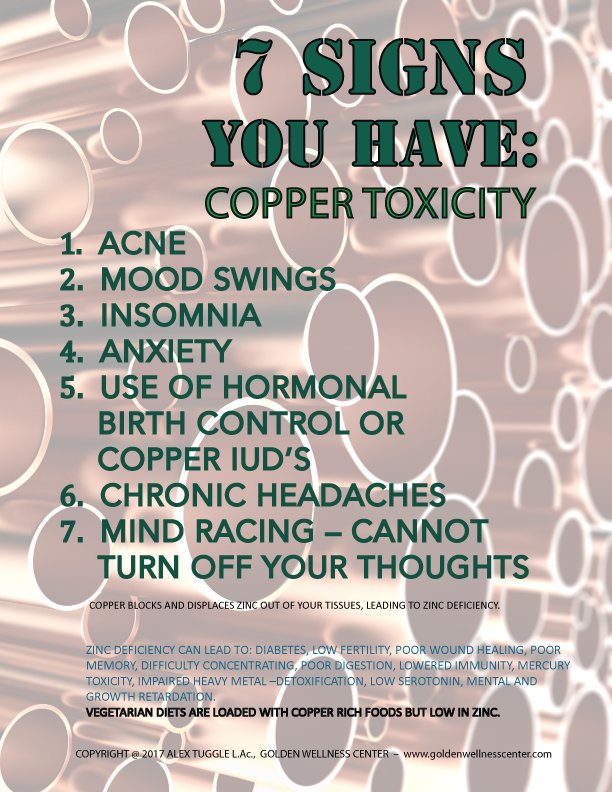
Original Post :
theoferrum.activeboard.com/t66302031/copper-ions-the-silv...
We've evolved from massage gun to zarifausa. It's our singular mission to provide effective and natural whole-body wellness solutions.
Strasbourg (/ˈstræzbɜrɡ/, French pronunciation: [stʁaz.buʁ, stʁas.buʁ]; German: Straßburg, [ˈʃtʁaːsbʊɐ̯k]) is the capital and principal city of the Alsace region in north eastern France and is the official seat of the European Parliament. Located close to the border with Germany, it is the capital of the Bas-Rhin département. The city and the region of Alsace were historically Alemannic-speaking, hence the city's Germanic name.[5] In 2006, the city proper had 272,975 inhabitants and its urban community 467,375 inhabitants. With 759,868 inhabitants in 2010, Strasbourg's metropolitan area (only the part of the metropolitan area on French territory) is the ninth largest in France. The transnational Eurodistrict Strasbourg-Ortenau had a population of 884,988 inhabitants in 2008.[6]
Strasbourg is the seat of several European institutions, such as the Council of Europe (with its European Court of Human Rights, its European Directorate for the Quality of Medicines and its European Audiovisual Observatory) and the Eurocorps, as well as the European Parliament and the European Ombudsman of the European Union. The city is also the seat of the Central Commission for Navigation on the Rhine and the International Institute of Human Rights.[7]
Strasbourg's historic city centre, the Grande Île (Grand Island), was classified a World Heritage site by UNESCO in 1988, the first time such an honour was placed on an entire city centre. Strasbourg is immersed in the Franco-German culture and although violently disputed throughout history, has been a bridge of unity between France and Germany for centuries, especially through the University of Strasbourg, currently the second largest in France, and the coexistence of Catholic and Protestant culture. The largest Islamic place of worship in France, the Strasbourg Grand Mosque, was inaugurated by French Interior Minister Manuel Valls on 27 September 2012.[8]
Economically, Strasbourg is an important centre of manufacturing and engineering, as well as a hub of road, rail, and river transportation. The port of Strasbourg is the second largest on the Rhine after Duisburg, Germany.
Etymology and Names
The city's Gallicized name (Lower Alsatian: Strossburi, [ˈʃd̥rɔːsb̥uri]; German: Straßburg, [ˈʃtʁaːsbʊɐ̯k]) is of Germanic origin and means "Town (at the crossing) of roads". The modern Stras- is cognate to the German Straße and English street, all of which are derived from Latin strata ("paved road"), while -bourg is cognate to the German Burg and English borough, all of which are derived from Proto-Germanic *burgz ("hill fort, fortress").
Geography
Strasbourg seen from Spot Satellite
Strasbourg is situated on the eastern border of France with Germany. This border is formed by the River Rhine, which also forms the eastern border of the modern city, facing across the river to the German town Kehl. The historic core of Strasbourg however lies on the Grande Île in the River Ill, which here flows parallel to, and roughly 4 kilometres (2.5 mi) from, the Rhine. The natural courses of the two rivers eventually join some distance downstream of Strasbourg, although several artificial waterways now connect them within the city.
The city lies in the Upper Rhine Plain, at between 132 metres (433 ft) and 151 metres (495 ft) above sea level, with the upland areas of the Vosges Mountains some 20 km (12 mi) to the west and the Black Forest 25 km (16 mi) to the east. This section of the Rhine valley is a major axis of north-south travel, with river traffic on the Rhine itself, and major roads and railways paralleling it on both banks.
The city is some 400 kilometres (250 mi) east of Paris. The mouth of the Rhine lies approximately 450 kilometres (280 mi) to the north, or 650 kilometres (400 mi) as the river flows, whilst the head of navigation in Basel is some 100 kilometres (62 mi) to the south, or 150 kilometres (93 mi) by river.
Climate
In spite of its position far inland, Strasbourg's climate is classified as Oceanic (Köppen climate classification Cfb), with warm, relatively sunny summers and cold, overcast winters. Precipitation is elevated from mid-spring to the end of summer, but remains largely constant throughout the year, totaling 631.4 mm (24.9 in) annually. On average, snow falls 30 days per year.
The highest temperature ever recorded was 38.5 °C (101.3 °F) in August 2003, during the 2003 European heat wave. The lowest temperature ever recorded was −23.4 °C (−10.1 °F) in December 1938.
Strasbourg's location in the Rhine valley, sheltered from the dominant winds by the Vosges and Black Forest mountains, results in poor natural ventilation, making Strasbourg one of the most atmospherically polluted cities of France.[10][11] Nonetheless, the progressive disappearance of heavy industry on both banks of the Rhine, as well as effective measures of traffic regulation in and around the city have reduced air pollution.
Prehistory
The first traces of human occupation in the environs of Strasbourg go back many thousands of years.[16] Neolithic, bronze age and iron age artifacts have been uncovered by archeological excavations. It was permanently settled by proto-Celts around 1300 BC. Towards the end of the third century BC, it developed into a Celtic township with a market called "Argentorate". Drainage works converted the stilthouses to houses built on dry land.[17]
From Romans
The Romans under Nero Claudius Drusus established a military outpost belonging to the Germania Superior Roman province at Strasbourg's current location, and named it Argentoratum. (Hence the town is commonly called Argentina in medieval Latin.[18]) The name "Argentoratum" was first mentioned in 12 BC and the city celebrated its 2,000th birthday in 1988. "Argentorate" as the toponym of the Gaulish settlement preceded it before being Latinized, but it is not known by how long. The Roman camp was destroyed by fire and rebuilt six times between the first and the fifth centuries AD: in 70, 97, 235, 355, in the last quarter of the fourth century, and in the early years of the fifth century. It was under Trajan and after the fire of 97 that Argentoratum received its most extended and fortified shape. From the year 90 on, the Legio VIII Augusta was permanently stationed in the Roman camp of Argentoratum. It then included a cavalry section and covered an area of approximately 20 hectares. Other Roman legions temporarily stationed in Argentoratum were the Legio XIV Gemina and the Legio XXI Rapax, the latter during the reign of Nero.
The centre of Argentoratum proper was situated on the Grande Île (Cardo: current Rue du Dôme, Decumanus: current Rue des Hallebardes). The outline of the Roman "castrum" is visible in the street pattern in the Grande Ile. Many Roman artifacts have also been found along the current Route des Romains, the road that led to Argentoratum, in the suburb of Kœnigshoffen. This was where the largest burial places were situated, as well as the densest concentration of civilian dwelling places and commerces next to the camp. Among the most outstanding finds in Kœnigshoffen were (found in 1911–12) the fragments of a grand Mithraeum that had been shattered by early Christians in the fourth century. From the fourth century, Strasbourg was the seat of the Bishopric of Strasbourg (made an Archbishopric in 1988). Archaeological excavations below the current Église Saint-Étienne in 1948 and 1956 unearthed the apse of a church dating back to the late fourth or early fifth century, considered to be the oldest church in Alsace. It is supposed that this was the first seat of the Roman Catholic Diocese of Strasbourg.
The Alemanni fought the Battle of Argentoratum against Rome in 357. They were defeated by Julian, later Emperor of Rome, and their King Chonodomarius was taken prisoner. On 2 January 366, the Alemanni crossed the frozen Rhine in large numbers to invade the Roman Empire. Early in the fifth century, the Alemanni appear to have crossed the Rhine, conquered, and then settled what is today Alsace and a large part of Switzerland.
In the fifth century Strasbourg was occupied successively by Alemanni, Huns, and Franks. In the ninth century it was commonly known as Strazburg in the local language, as documented in 842 by the Oaths of Strasbourg. This trilingual text contains, alongside texts in Latin and Old High German (teudisca lingua), the oldest written variety of Gallo-Romance (lingua romana) clearly distinct from Latin, the ancestor of Old French. The town was also called Stratisburgum or Strateburgus in Latin, from which later came Strossburi in Alsatian and Straßburg in Standard German, and then Strasbourg in French. The Oaths of Strasbourg is considered as marking the birth of the two countries of France and Germany with the division of the Carolingian Empire.[19]
A major commercial centre, the town came under the control of the Holy Roman Empire in 923, through the homage paid by the Duke of Lorraine to German King Henry I. The early history of Strasbourg consists of a long conflict between its bishop and its citizens. The citizens emerged victorious after the Battle of Oberhausbergen in 1262, when King Philip of Swabia granted the city the status of an Imperial Free City.
Around 1200, Gottfried von Straßburg wrote the Middle High German courtly romance Tristan, which is regarded, alongside Wolfram von Eschenbach's Parzival and the Nibelungenlied, as one of great narrative masterpieces of the German Middle Ages.
A revolution in 1332 resulted in a broad-based city government with participation of the guilds, and Strasbourg declared itself a free republic. The deadly bubonic plague of 1348 was followed on 14 February 1349 by one of the first and worst pogroms in pre-modern history: over a thousand Jews were publicly burnt to death, with the remainder of the Jewish population being expelled from the city.[20] Until the end of the 18th century, Jews were forbidden to remain in town after 10 pm. The time to leave the city was signalled by a municipal herald blowing the Grüselhorn (see below, Museums, Musée historique);.[21] A special tax, the Pflastergeld (pavement money), was furthermore to be paid for any horse that a Jew would ride or bring into the city while allowed to.[22]
Construction on Strasbourg Cathedral began in the twelfth century, and it was completed in 1439 (though, of the towers, only the north tower was built), becoming the World's Tallest Building, surpassing the Great Pyramid of Giza. A few years later, Johannes Gutenberg created the first European moveable type printing press in Strasbourg.
In July 1518, an incident known as the Dancing Plague of 1518 struck residents of Strasbourg. Around 400 people were afflicted with dancing mania and danced constantly for weeks, most of them eventually dying from heart attack, stroke or exhaustion.
In the 1520s during the Protestant Reformation, the city, under the political guidance of Jacob Sturm von Sturmeck and the spiritual guidance of Martin Bucer embraced the religious teachings of Martin Luther. Their adherents established a Gymnasium, headed by Johannes Sturm, made into a University in the following century. The city first followed the Tetrapolitan Confession, and then the Augsburg Confession. Protestant iconoclasm caused much destruction to churches and cloisters, notwithstanding that Luther himself opposed such a practice. Strasbourg was a centre of humanist scholarship and early book-printing in the Holy Roman Empire, and its intellectual and political influence contributed much to the establishment of Protestantism as an accepted denomination in the southwest of Germany. (John Calvin spent several years as a political refugee in the city). The Strasbourg Councillor Sturm and guildmaster Matthias represented the city at the Imperial Diet of Speyer (1529), where their protest led to the schism of the Catholic Church and the evolution of Protestantism. Together with four other free cities, Strasbourg presented the confessio tetrapolitana as its Protestant book of faith at the Imperial Diet of Augsburg in 1530, where the slightly different Augsburg Confession was also handed over to Charles V, Holy Roman Emperor.
After the reform of the Imperial constitution in the early sixteenth century and the establishment of Imperial Circles, Strasbourg was part of the Upper Rhenish Circle, a corporation of Imperial estates in the southwest of Holy Roman Empire, mainly responsible for maintaining troops, supervising coining, and ensuring public security.
After the invention of the printing press by Johannes Gutenberg around 1440, the first printing offices outside the inventor's hometown Mainz were established around 1460 in Strasbourg by pioneers Johannes Mentelin and Heinrich Eggestein. Subsequently, the first modern newspaper was published in Strasbourg in 1605, when Johann Carolus received the permission by the City of Strasbourg to print and distribute a weekly journal written in German by reporters from several central European cities.
From Thirty Years' War to First World War
The Free City of Strasbourg remained neutral during the Thirty Years' War 1618-1648, and retained its status as a Free Imperial City. However, the city was later annexed by Louis XIV of France to extend the borders of his kingdom.
Louis' advisors believed that, as long as Strasbourg remained independent, it would endanger the King's newly annexed territories in Alsace, and, that to defend these large rural lands effectively, a garrison had to be placed in towns such as Strasbourg.[23] Indeed, the bridge over the Rhine at Strasbourg had been used repeatedly by Imperial (Holy Roman Empire) forces,[24] and three times during the Franco-Dutch War Strasbourg had served as a gateway for Imperial invasions into Alsace.[25] In September 1681 Louis' forces, though lacking a clear casus belli, surrounded the city with overwhelming force. After some negotiation, Louis marched into the city unopposed on 30 September 1681 and proclaimed its annexation.[26]
This annexation was one of the direct causes of the brief and bloody War of the Reunions whose outcome left the French in possession. The French annexation was recognized by the Treaty of Ryswick (1697). The official policy of religious intolerance which drove most Protestants from France after the revocation of the Edict of Nantes in 1685 was not applied in Strasbourg and in Alsace, because both had a special status as a province à l'instar de l'étranger effectif (a kind of foreign province of the king of France). Strasbourg Cathedral, however, was taken from the Lutherans to be returned to the Catholics as the French authorities tried to promote Catholicism wherever they could (some other historic churches remained in Protestant hands). Its language also remained overwhelmingly German: the German Lutheran university persisted until the French Revolution. Famous students included Goethe and Herder.
The Duke of Lorraine and Imperial troops crossing the Rhine at Strasbourg during the War of the Austrian Succession, 1744
During a dinner in Strasbourg organized by Mayor Frédéric de Dietrich on 25 April 1792, Claude Joseph Rouget de Lisle composed "La Marseillaise". The same year François Christophe Kellermann, a child of Strasbourg was appointed the head of the Mosel Army. He led his company to victory at the battle of Valmy and saved the young French republic. He was later appointed Duke of Valmy by Napoléon in 1808.
During this period Jean-Baptiste Kléber, also born in Strasbourg, led the French army to win several decisive victories. A statue of Kléber now stands in the centre of the city, at Place Kléber, and he is still one of the most famous French officers. He was later appointed Marshal of France by Napoléon.
Strasbourg's status as a free city was revoked by the French Revolution. Enragés, most notoriously Eulogius Schneider, ruled the city with an increasingly iron hand. During this time, many churches and monasteries were either destroyed or severely damaged. The cathedral lost hundreds of its statues (later replaced by copies in the 19th century) and in April 1794, there was talk of tearing its spire down, on the grounds that it was against the principle of equality. The tower was saved, however, when in May of the same year citizens of Strasbourg crowned it with a giant tin Phrygian cap. This artifact was later kept in the historical collections of the city until it was destroyed by the Germans in 1870 during the Franco-Prussian war.[27]
In 1805, 1806 and 1809, Napoléon Bonaparte and his first wife, Joséphine stayed in Strasbourg.[28] In 1810, his second wife Marie Louise, Duchess of Parma spent her first night on French soil in the palace. Another royal guest was King Charles X of France in 1828.[29] In 1836, Louis-Napoléon Bonaparte unsuccessfully tried to lead his first Bonapartist coup in Strasbourg.
During the Franco-Prussian War and the Siege of Strasbourg, the city was heavily bombarded by the Prussian army. The bombardment of the city was meant to break the morale of the people of Strasbourg.[30] On 24 and 26 August 1870, the Museum of Fine Arts was destroyed by fire, as was the Municipal Library housed in the Gothic former Dominican church, with its unique collection of medieval manuscripts (most famously the Hortus deliciarum), rare Renaissance books, archeological finds and historical artifacts. The gothic cathedral was damaged as well as the medieval church of Temple Neuf, the theatre, the city hall, the court of justice and many houses. At the end of the siege 10,000 inhabitants were left without shelter; over 600 died, including 261 civilians, and 3200 were injured, including 1,100 civilians.[31]
In 1871, after the end of the war, the city was annexed to the newly established German Empire as part of the Reichsland Elsass-Lothringen under the terms of the Treaty of Frankfurt. As part of Imperial Germany, Strasbourg was rebuilt and developed on a grand and representative scale, such as the Neue Stadt, or "new city" around the present Place de la République. Historian Rodolphe Reuss and Art historian Wilhelm von Bode were in charge of rebuilding the municipal archives, libraries and museums. The University, founded in 1567 and suppressed during the French Revolution as a stronghold of German sentiment,[citation needed] was reopened in 1872 under the name Kaiser-Wilhelms-Universität.
Strasbourg in the 1890s.
A belt of massive fortifications was established around the city, most of which still stands today, renamed after French generals and generally classified as Monuments historiques; most notably Fort Roon (now Fort Desaix) and Fort Podbielski (now Fort Ducrot) in Mundolsheim, Fort von Moltke (now Fort Rapp) in Reichstett, Fort Bismarck (now Fort Kléber) in Wolfisheim, Fort Kronprinz (now Fort Foch) in Niederhausbergen, Fort Kronprinz von Sachsen (now Fort Joffre) in Holtzheim and Fort Großherzog von Baden (now Fort Frère) in Oberhausbergen.[32]
Those forts subsequently served the French army (Fort Podbielski/Ducrot for instance was integrated into the Maginot Line[33]), and were used as POW-camps in 1918 and 1945.
Two garrison churches were also erected for the members of the Imperial German army, the Lutheran Église Saint-Paul and the Roman Catholic Église Saint-Maurice.
1918 to the present
A lost, then restored, symbol of modernity in Strasbourg : a room in the Aubette building designed by Theo van Doesburg, Hans Arp and Sophie Taeuber-Arp.
Following the defeat of the German empire in World War I and the abdication of the German Emperor, some revolutionary insurgents declared Alsace-Lorraine as an independent Republic, without preliminary referendum or vote. On 11 November 1918 (Armistice Day), communist insurgents proclaimed a "soviet government" in Strasbourg, following the example of Kurt Eisner in Munich as well as other German towns. French troops commanded by French general Henri Gouraud entered triumphantly in the city on 22 November. A major street of the city now bears the name of that date (Rue du 22 Novembre) which celebrates the entry of the French in the city.[34][35][36] Viewing the massive cheering crowd gathered under the balcony of Strasbourg's town hall, French President Raymond Poincaré stated that "the plebiscite is done".[37]
In 1919, following the Treaty of Versailles, the city was annexed by France in accordance with U.S. President Woodrow Wilson's "Fourteen Points" without a referendum. The date of the assignment was retroactively established on Armistice Day. It is doubtful whether a referendum in Strasbourg would have ended in France's favour since the political parties striving for an autonomous Alsace or a connection to France accounted only for a small proportion of votes in the last Reichstag as well as in the local elections.[38] The Alsatian autonomists who were pro French had won many votes in the more rural parts of the region and other towns since the annexation of the region by Germany in 1871. The movement started with the first election for the Reichstag; those elected were called "les députés protestataires", and until the fall of Bismarck in 1890, they were the only deputies elected by the Alsatians to the German parliament demanding the return of those territories to France.[39] At the last Reichstag election in Strasbourg and its periphery, the clear winners were the Social Democrats; the city was the administrative capital of the region, was inhabited by many Germans appointed by the central government in Berlin and its flourishing economy attracted many Germans. This could explain the difference between the rural vote and the one in Strasbourg. After the war, many Germans left Strasbourg and went back to Germany; some of them were denounced by the locals or expelled by the newly appointed authorities. The Saverne Affair was vivid in the memory among the Alsatians.
In 1920, Strasbourg became the seat of the Central Commission for Navigation on the Rhine, previously located in Mannheim, one of the oldest European institutions. It moved into the former Imperial Palace.
When the Maginot Line was built, the Sous-secteur fortifié de Strasbourg (fortified sub-sector of Strasbourg) was laid out on the city's territory as a part of the Secteur fortifié du Bas-Rhin, one of the sections of the Line. Blockhouses and casemates were built along the Grand Canal d'Alsace and the Rhine in the Robertsau forest and the port.[40]
Between the German invasion of Poland on 1 September 1939 and the Anglo-French declaration of War against the German Reich on 3 September 1939, the entire city (a total of 120,000 people) was evacuated, like other border towns as well. Until the arrival of the Wehrmacht troops mid-June 1940, the city was, for ten months, completely empty, with the exception of the garrisoned soldiers. The Jews of Strasbourg had been evacuated to Périgueux and Limoges, the University had been evacuated to Clermont-Ferrand.
After the ceasefire following the Fall of France in June 1940, Alsace was annexed to Germany and a rigorous policy of Germanisation was imposed upon it by the Gauleiter Robert Heinrich Wagner. When, in July 1940, the first evacuees were allowed to return, only residents of Alsatian origin were admitted. The last Jews were deported on 15 July 1940 and the main synagogue, a huge Romanesque revival building that had been a major architectural landmark with its 54-metre-high dome since its completion in 1897, was set ablaze, then razed.[41]
In September 1940 the first Alsatian resistance movement led by Marcel Weinum called La main noire (The black hand) was created. It was composed by a group of 25 young men aged from 14 to 18 years old who led several attacks against the German occupation. The actions culminated with the attack of the Gauleiter Robert Wagner, the highest commander of Alsace directly under the order of Hitler. In March 1942, Marcel Weinum was prosecuted by the Gestapo and sentenced to be beheaded at the age of 18 in April 1942 in Stuttgart, Germany. His last words will be: "If I have to die, I shall die but with a pure heart". From 1943 the city was bombarded by Allied aircraft. While the First World War had not notably damaged the city, Anglo-American bombing caused extensive destruction in raids of which at least one was allegedly carried out by mistake.[42] In August 1944, several buildings in the Old Town were damaged by bombs, particularly the Palais Rohan, the Old Customs House (Ancienne Douane) and the Cathedral.[43] On 23 November 1944, the city was officially liberated by the 2nd French Armoured Division under General Leclerc. He achieved the oath that he made with his soldiers, after the decisive Capture of Kufra. With the Oath of Kuffra, they swore to keep up the fight until the French flag flew over the Cathedral of Strasbourg.
Many people from Strasbourg were incorporated in the German Army against their will, and were sent to the eastern front, those young men and women were called Malgré-nous. Many tried to escape from the incorporation, join the French Resistance, or desert the Wehrmacht but many couldn't because they were running the risk of having their families sent to work or concentration camps by the Germans. Many of these men, especially those who did not answer the call immediately, were pressured to "volunteer" for service with the SS, often by direct threats on their families. This threat obliged the majority of them to remain in the German army. After the war, the few that survived were often accused of being traitors or collaborationists, because this tough situation was not known in the rest of France, and they had to face the incomprehension of many. In July 1944, 1500 malgré-nous were released from Soviet captivity and sent to Algiers, where they joined the Free French Forces. Nowadays history recognizes the suffering of those people, and museums, public discussions and memorials have been built to commemorate this terrible period of history of this part of Eastern France (Alsace and Moselle). Liberation of Strasbourg took place on 23 November 1944.
In 1947, a fire broke out in the Musée des Beaux-Arts and devastated a significant part of the collections. This fire was an indirect consequence of the bombing raids of 1944: because of the destruction inflicted on the Palais Rohan, humidity had infiltrated the building, and moisture had to be fought. This was done with welding torches, and a bad handling of these caused the fire.[44]
In the 1950s and 1960s the city was enlarged by new residential areas meant to solve both the problem of housing shortage due to war damage and that of the strong growth of population due to the baby boom and immigration from North Africa: Cité Rotterdam in the North-East, Quartier de l'Esplanade in the South-East, Hautepierre in the North-West. Between 1995 and 2010, a new district has been built in the same vein, the Quartier des Poteries, south of Hautepierre.
In 1958, a violent hailstorm destroyed most of the historical greenhouses of the Botanical Garden and many of the stained glass windows of St. Paul's Church.
In 1949, the city was chosen to be the seat of the Council of Europe with its European Court of Human Rights and European Pharmacopoeia. Since 1952, the European Parliament has met in Strasbourg, which was formally designated its official 'seat' at the Edinburgh meeting of the European Council of EU heads of state and government in December 1992. (This position was reconfirmed and given treaty status in the 1997 Treaty of Amsterdam). However, only the (four-day) plenary sessions of the Parliament are held in Strasbourg each month, with all other business being conducted in Brussels and Luxembourg. Those sessions take place in the Immeuble Louise Weiss, inaugurated in 1999, which houses the largest parliamentary assembly room in Europe and of any democratic institution in the world. Before that, the EP sessions had to take place in the main Council of Europe building, the Palace of Europe, whose unusual inner architecture had become a familiar sight to European TV audiences.[45] In 1992, Strasbourg became the seat of the Franco-German TV channel and movie-production society Arte.
In 2000, a terrorist plot to blow up the cathedral was prevented thanks to the cooperation between French and German police that led to the arrest in late 2000 of a Frankfurt-based group of terrorists.
On 6 July 2001, during an open-air concert in the Parc de Pourtalès, a single falling Platanus tree killed thirteen people and injured 97. On 27 March 2007, the city was found guilty of neglect over the accident and fined €150,000.[46]
In 2006, after a long and careful restoration, the inner decoration of the Aubette, made in the 1920s by Hans Arp, Theo van Doesburg, and Sophie Taeuber-Arp and destroyed in the 1930s, was made accessible to the public again. The work of the three artists had been called "the Sistine Chapel of abstract art".
Architecture
Strasbourg, Cathedral of Our Lady
The city is chiefly known for its sandstone Gothic Cathedral with its famous astronomical clock, and for its medieval cityscape of Rhineland black and white timber-framed buildings, particularly in the Petite France district or Gerberviertel ("tanners' district") alongside the Ill and in the streets and squares surrounding the cathedral, where the renowned Maison Kammerzell stands out.
Notable medieval streets include Rue Mercière, Rue des Dentelles, Rue du Bain aux Plantes, Rue des Juifs, Rue des Frères, Rue des Tonneliers, Rue du Maroquin, Rue des Charpentiers, Rue des Serruriers, Grand' Rue, Quai des Bateliers, Quai Saint-Nicolas and Quai Saint-Thomas. Notable medieval squares include Place de la Cathédrale, Place du Marché Gayot, Place Saint-Étienne, Place du Marché aux Cochons de Lait and Place Benjamin Zix.
Maison des tanneurs.
In addition to the cathedral, Strasbourg houses several other medieval churches that have survived the many wars and destructions that have plagued the city: the Romanesque Église Saint-Étienne, partly destroyed in 1944 by Allied bombing raids, the part Romanesque, part Gothic, very large Église Saint-Thomas with its Silbermann organ on which Wolfgang Amadeus Mozart and Albert Schweitzer played,[49] the Gothic Église protestante Saint-Pierre-le-Jeune with its crypt dating back to the seventh century and its cloister partly from the eleventh century, the Gothic Église Saint-Guillaume with its fine early-Renaissance stained glass and furniture, the Gothic Église Saint-Jean, the part Gothic, part Art Nouveau Église Sainte-Madeleine, etc. The Neo-Gothic church Saint-Pierre-le-Vieux Catholique (there is also an adjacent church Saint-Pierre-le-Vieux Protestant) serves as a shrine for several 15th-century wood worked and painted altars coming from other, now destroyed churches and installed there for public display. Among the numerous secular medieval buildings, the monumental Ancienne Douane (old custom-house) stands out.
The German Renaissance has bequeathed the city some noteworthy buildings (especially the current Chambre de Commerce et d'Industrie, former town hall, on Place Gutenberg), as did the French Baroque and Classicism with several hôtels particuliers (i.e. palaces), among which the Palais Rohan (1742, now housing three museums) is the most spectacular. Other buildings of its kind are the "Hôtel de Hanau" (1736, now the city hall), the Hôtel de Klinglin (1736, now residence of the préfet), the Hôtel des Deux-Ponts (1755, now residence of the military governor), the Hôtel d'Andlau-Klinglin (1725, now seat of the administration of the Port autonome de Strasbourg) etc. The largest baroque building of Strasbourg though is the 150 m (490 ft) long 1720s main building of the Hôpital civil. As for French Neo-classicism, it is the Opera House on Place Broglie that most prestigiously represents this style.
Strasbourg also offers high-class eclecticist buildings in its very extended German district, the Neustadt, being the main memory of Wilhelmian architecture since most of the major cities in Germany proper suffered intensive damage during World War II. Streets, boulevards and avenues are homogeneous, surprisingly high (up to seven stories) and broad examples of German urban lay-out and of this architectural style that summons and mixes up five centuries of European architecture as well as Neo-Egyptian, Neo-Greek and Neo-Babylonian styles. The former imperial palace Palais du Rhin, the most political and thus heavily criticized of all German Strasbourg buildings epitomizes the grand scale and stylistic sturdiness of this period. But the two most handsome and ornate buildings of these times are the École internationale des Pontonniers (the former Höhere Mädchenschule, girls college) with its towers, turrets and multiple round and square angles[50] and the École des Arts décoratifs with its lavishly ornate façade of painted bricks, woodwork and majolica.[51]
Notable streets of the German district include: Avenue de la Forêt Noire, Avenue des Vosges, Avenue d'Alsace, Avenue de la Marseillaise, Avenue de la Liberté, Boulevard de la Victoire, Rue Sellénick, Rue du Général de Castelnau, Rue du Maréchal Foch, and Rue du Maréchal Joffre. Notable squares of the German district include: Place de la République, Place de l'Université, Place Brant, and Place Arnold
As for modern and contemporary architecture, Strasbourg possesses some fine Art Nouveau buildings (such as the huge Palais des Fêtes and houses and villas like Villa Schutzenberger and Hôtel Brion), good examples of post-World War II functional architecture (the Cité Rotterdam, for which Le Corbusier did not succeed in the architectural contest) and, in the very extended Quartier Européen, some spectacular administrative buildings of sometimes utterly large size, among which the European Court of Human Rights building by Richard Rogers is arguably the finest. Other noticeable contemporary buildings are the new Music school Cité de la Musique et de la Danse, the Musée d'Art moderne et contemporain and the Hôtel du Département facing it, as well as, in the outskirts, the tramway-station Hoenheim-Nord designed by Zaha Hadid.
Place Kléber
The city has many bridges, including the medieval and four-towered Ponts Couverts that, despite their name, are no longer covered. Next to the Ponts Couverts is the Barrage Vauban, a part of Vauban's 17th-century fortifications, that does include a covered bridge. Other bridges are the ornate 19th-century Pont de la Fonderie (1893, stone) and Pont d'Auvergne (1892, iron), as well as architect Marc Mimram's futuristic Passerelle over the Rhine, opened in 2004.
The largest square at the centre of the city of Strasbourg is the Place Kléber. Located in the heart of the city's commercial area, it was named after general Jean-Baptiste Kléber, born in Strasbourg in 1753 and assassinated in 1800 in Cairo. In the square is a statue of Kléber, under which is a vault containing his remains. On the north side of the square is the Aubette (Orderly Room), built by Jacques François Blondel, architect of the king, in 1765–1772.
Parks
The Pavillon Joséphine (rear side) in the Parc de l'Orangerie
The Château de Pourtalès (front side) in the park of the same name
Strasbourg features a number of prominent parks, of which several are of cultural and historical interest: the Parc de l'Orangerie, laid out as a French garden by André le Nôtre and remodeled as an English garden on behalf of Joséphine de Beauharnais, now displaying noteworthy French gardens, a neo-classical castle and a small zoo; the Parc de la Citadelle, built around impressive remains of the 17th-century fortress erected close to the Rhine by Vauban;[52] the Parc de Pourtalès, laid out in English style around a baroque castle (heavily restored in the 19th century) that now houses a small three-star hotel,[53] and featuring an open-air museum of international contemporary sculpture.[54] The Jardin botanique de l'Université de Strasbourg (botanical garden) was created under the German administration next to the Observatory of Strasbourg, built in 1881, and still owns some greenhouses of those times. The Parc des Contades, although the oldest park of the city, was completely remodeled after World War II. The futuristic Parc des Poteries is an example of European park-conception in the late 1990s. The Jardin des deux Rives, spread over Strasbourg and Kehl on both sides of the Rhine opened in 2004 and is the most extended (60-hectare) park of the agglomeration. The most recent park is Parc du Heyritz (8,7 ha), opened in 2014 along a canal facing the hôpital civil.
~
It's not a very effective technique, if you were to ask me.
Moose are pretty amazing creatures. They can be huge, gangly, and somewhat threatening when close by, especially during rutting season in autumn. Despite their size, they can turn into the woods and disappear after taking only a few steps. Yeah... they blend.
As we entered the area where we were going to camp for the night, we saw this bull at the side of the road. Two other people had already drawn him out of the woods by making various moose sounds and calls – again, not really recommended during rutting season unless you like surprises. But their efforts gave us the opportunity to shoot a number of frames of this beautiful beast, a rare treat because most bulls stay deep in the woods during the rut.
Today in Ireland and in the US new regulations relating to drones has been introduced [effective from the 21st of December 2015]. There are many similarities in the regulations but there is one major differences in that here in Ireland they have not mention the penalties for failure to register but in the US the cost of failure to register appears to be rather extreme … “civil penalties up to $27,500, or criminal penalties up to 3 years in prison and $250,000.” According to the minister the aim here in Ireland is to encourage drone users to be responsible citizens.
I have included the press releases from both administrations, have a read and see what you think.
Thursday, 17th December 2015: The Irish Aviation Authority (IAA) today announced a new drone regulation which includes the mandatory registration of all drones weighing 1kg or more from Monday, 21st December 2015.
The use of drones worldwide is expanding rapidly and there are estimated to be between 4,000 – 5,000 drones already in use in Ireland. Ireland has taken a proactive role in this fast emerging area and is currently one of only a handful of EU Member states that has legislation governing the use of drones.
The new legislation is intended to further enhance safety within Ireland and specifically addresses the safety challenges posed by drones.
From 21st December 2015, all drones weighing 1kg or more must be registered with the IAA via www.iaa.ie/drones. Drone registration is a simple two-step process. To register a drone, the registrant must be 16 years of age or older (Drones operated by those under 16 years of age must be registered by a parent or legal guardian). A nominal fee will apply from February 2016 but this has been initially waived by the IAA in order to encourage early registration.
Mr Ralph James, IAA Director of Safety Regulation, said
“Ireland is already recognised worldwide as a centre of excellence for civil aviation and the drone sector presents another major opportunity for Ireland. We’re closely working with industry to facilitate its successful development here. At the same time, safety is our top priority and we must ensure that drones are used in a safe way and that they do not interfere with all other forms of aviation.
Mr James explained that drone registration has been made a mandatory requirement as this will help the IAA to monitor the sector in the years ahead. The IAA encourages all drone operators to take part in training courses which are available through a number of approved drone training organisations.
“We would strongly encourage drone operators to register with us as quickly as possible, to complete a training course and to become aware of their responsibilities. People operating drones must do so in safe and responsible manner and in full compliance with the new regulations”, he said.
Welcoming the introduction of drone regulation, Minister for Transport, Tourism and Sport, Paschal Donohoe TD highlighted the importance of the new legislation and commended the IAA for the efficient manner to have the new registration system in place so quickly.
“The core safety message promoted today advocates the safe use of drones in civilian airspace. The development of drone technology brings opportunities as well as challenges for businesses and services in Ireland. I expect hundreds if not thousands of drones to be bought as presents this Christmas so getting the message to ensure that new owners and operators are aware of their responsibilities and the requirement to register all drones over 1 kg from 21st December 2015 is key. Tremendous potential exists for this sector and Ireland is at the forefront of its development. The speedy response by the IAA to this fast developing aviation area will make sure that drones are properly regulated and registered for use. As a result, Ireland is well placed to exploit the drone sector and to ensure industry growth in this area,” he said.
The new legislation prohibits users from operating their drones in an unsafe manner. This includes never operating a drone:
• if it will be a hazard to another aircraft in flight
• over an assembly of people
• farther than 300m from the operator
• within 120m of any person, vessel or structure not under the operator’s control
• closer than 5km from an aerodrome
• in a negligent or reckless manner so as to endanger life or property of others
• over 400ft (120m) above ground level
• over urban areas
• in civil of military controlled airspace
• in restricted areas (e.g. military installations, prisons, etc.)
• unless the operator has permission from the landowner for takeoff and landing.
For further information please visit www.iaa.ie/drones and see the IAA’s detailed Q&A sheet.
The Federal Aviation Administration has officially launched the drone registration program first reported in October. Drone operators are required to register their UAVs with the Unmanned Aircraft System registry starting December 21. Failure to register could result in criminal and civil penalties.
Under the new system, all aircraft must be registered with the FAA including those 'operated by modelers and hobbyists.' Once registered, drone operators must carry the registration certificate during operation. This new system only applies to drones weighing more than 0.55lbs/250g and less than 55lbs/25kg. The only exception to the registration requirement is indoor drone flights.
Required registration information includes a mailing address and physical address, email address, and full names; however, no information on the drone's make, model, or serial number is required from recreational users. Non-recreational users will need to provide drone information, including serial number, when that particular registration system goes live.
Failure to register could result in civil penalties up to $27,500, or criminal penalties up to 3 years in prison and $250,000. A $5 registration charge is applied, but will be refunded to those who register before January 20. The registration certificate is sent in an email to be printed at home.
Today in Ireland and in the US new regulations relating to drones has been introduced [effective from the 21st of December 2015]. There are many similarities in the regulations but there is one major differences in that here in Ireland they have not mention the penalties for failure to register but in the US the cost of failure to register appears to be rather extreme … “civil penalties up to $27,500, or criminal penalties up to 3 years in prison and $250,000.” According to the minister the aim here in Ireland is to encourage drone users to be responsible citizens.
I have included the press releases from both administrations, have a read and see what you think.
Thursday, 17th December 2015: The Irish Aviation Authority (IAA) today announced a new drone regulation which includes the mandatory registration of all drones weighing 1kg or more from Monday, 21st December 2015.
The use of drones worldwide is expanding rapidly and there are estimated to be between 4,000 – 5,000 drones already in use in Ireland. Ireland has taken a proactive role in this fast emerging area and is currently one of only a handful of EU Member states that has legislation governing the use of drones.
The new legislation is intended to further enhance safety within Ireland and specifically addresses the safety challenges posed by drones.
From 21st December 2015, all drones weighing 1kg or more must be registered with the IAA via www.iaa.ie/drones. Drone registration is a simple two-step process. To register a drone, the registrant must be 16 years of age or older (Drones operated by those under 16 years of age must be registered by a parent or legal guardian). A nominal fee will apply from February 2016 but this has been initially waived by the IAA in order to encourage early registration.
Mr Ralph James, IAA Director of Safety Regulation, said
“Ireland is already recognised worldwide as a centre of excellence for civil aviation and the drone sector presents another major opportunity for Ireland. We’re closely working with industry to facilitate its successful development here. At the same time, safety is our top priority and we must ensure that drones are used in a safe way and that they do not interfere with all other forms of aviation.
Mr James explained that drone registration has been made a mandatory requirement as this will help the IAA to monitor the sector in the years ahead. The IAA encourages all drone operators to take part in training courses which are available through a number of approved drone training organisations.
“We would strongly encourage drone operators to register with us as quickly as possible, to complete a training course and to become aware of their responsibilities. People operating drones must do so in safe and responsible manner and in full compliance with the new regulations”, he said.
Welcoming the introduction of drone regulation, Minister for Transport, Tourism and Sport, Paschal Donohoe TD highlighted the importance of the new legislation and commended the IAA for the efficient manner to have the new registration system in place so quickly.
“The core safety message promoted today advocates the safe use of drones in civilian airspace. The development of drone technology brings opportunities as well as challenges for businesses and services in Ireland. I expect hundreds if not thousands of drones to be bought as presents this Christmas so getting the message to ensure that new owners and operators are aware of their responsibilities and the requirement to register all drones over 1 kg from 21st December 2015 is key. Tremendous potential exists for this sector and Ireland is at the forefront of its development. The speedy response by the IAA to this fast developing aviation area will make sure that drones are properly regulated and registered for use. As a result, Ireland is well placed to exploit the drone sector and to ensure industry growth in this area,” he said.
The new legislation prohibits users from operating their drones in an unsafe manner. This includes never operating a drone:
• if it will be a hazard to another aircraft in flight
• over an assembly of people
• farther than 300m from the operator
• within 120m of any person, vessel or structure not under the operator’s control
• closer than 5km from an aerodrome
• in a negligent or reckless manner so as to endanger life or property of others
• over 400ft (120m) above ground level
• over urban areas
• in civil of military controlled airspace
• in restricted areas (e.g. military installations, prisons, etc.)
• unless the operator has permission from the landowner for takeoff and landing.
For further information please visit www.iaa.ie/drones and see the IAA’s detailed Q&A sheet.
The Federal Aviation Administration has officially launched the drone registration program first reported in October. Drone operators are required to register their UAVs with the Unmanned Aircraft System registry starting December 21. Failure to register could result in criminal and civil penalties.
Under the new system, all aircraft must be registered with the FAA including those 'operated by modelers and hobbyists.' Once registered, drone operators must carry the registration certificate during operation. This new system only applies to drones weighing more than 0.55lbs/250g and less than 55lbs/25kg. The only exception to the registration requirement is indoor drone flights.
Required registration information includes a mailing address and physical address, email address, and full names; however, no information on the drone's make, model, or serial number is required from recreational users. Non-recreational users will need to provide drone information, including serial number, when that particular registration system goes live.
Failure to register could result in civil penalties up to $27,500, or criminal penalties up to 3 years in prison and $250,000. A $5 registration charge is applied, but will be refunded to those who register before January 20. The registration certificate is sent in an email to be printed at home.
an effective marketplace AR app in the form of FYIAR. It is an immersive experience AR app that provides an efficient platform for brands to engage their customers and generate effective B2C leads. www.fyiar.com/
The trend to design bigger and more powerful tanks is universal but the results are not always impressive. The requirement for a 45 ton tank was issued in May 1941 and taken up by Dr Porsche on one hand and by Henschel & Co. on the other. Trials of prototypes in 1942 reveald that the Henschel design was the more practical and production began in July 1942. By this time specifications had changed and the tank would weigh in the region of 57 tonnes, and mount an 88mm KwK 36 gun behind a maximum 110mm of armour on the turret front.
It was a formidable combination. The gun was very effective and extremely accurate while the armour was proof against most contemporary anti-tank guns at anything but the closest range. Yet it was not all progress. the Tiger was so wide it had to be narrowed down to travel by rail and in bad conditions the overlapping wheels trapped mud and ice sufficient to bring the big tank to a halt. The engine had a nasty habit of catching fire while the gearbox, if subjected to great stress, was liable to break down. If this happened the repair crew had to lift the turret off to get at it.
For all that the Tiger was regarded as formidable. It saw action in Russia, Tunisia, Sicily, Italy and north west Europe (although production was limited to just 1,354 tanks) and it was feared by all Allied tank crews, which gave the Panzer forces a considerable pyschological advantage. Even so it would probably be fair to say that more Tigers were lost through mechanical failure than combat action.
Our exhibit was in service with 3 Platoon (Troop), 1 Kompanie, Schwere Panzer Abteilung 504, German Army
It was captured by 48 RTR, A Squadron, 4 Troop, at Djebel Djaffa, Tunisia, on 21st April 1943.
This tank was the first Tiger to be captured intact by British or U.S. forces when it was knocked out in the final month of the Tunisian campaign. It arrived in Tunisia some time between 22nd March and 16th April 1943 and was involved in an action with 48 RTR near Medjez-el-Bab on 21 April 1943. It knocked out two Churchills but a shot from another's six pounder stuck the gun mantlet, and although unable to penetrate the tank's thick armour, jammed the turret and wounded the commander. Damage is still visible on the mantlet, superstructure front plate and turret lifting boss. The crew abandoned the tank and it was recovered the next day and refurbished using parts from other vehicles. The Tiger was later displayed in Tunis and inspected there by King George VI and Winston Churchill. In October 1943 it was sent to the School of Tank Technology for evaluation and in November 1944 displayed on Horse Guards Parade.
Precise Name: Panzerkampfwagen Tiger Aus E
Other Names: Pz Kpw VI, SdKfz 181, VK 4501(H), SdKfz 182, Tiger Aus H1
DESCRIPTION
The Tiger has attained almost mythical status: it is the one German tank that nearly everyone recognises.
This is due in part to its’ psychological dominance of the battlefield – at one time every enemy tank was a ‘Tiger’ to its opponents – reinforced by the exploits of ‘tank aces’ like Michael Wittman and Otto Carius, heavily publicised by German propaganda.
There is no doubt that the Tiger I was a formidable weapon. This was because of its’ lethal 8.8cm gun, thick armour and excellent optical sights as well as the high standard of training of the Panzer crews. It is equally true that it had weaknesses: its’ great weight and relative lack of power restricted its’ tactical mobility, it was difficult to transport by rail, it was mechanically unreliable, it was prone to engine fires and it required frequent skilled maintenance.
The Germans started a limited heavy tank programme in 1937 but large-scale work didn’t begin until the spring of 1941. The object was to counter the perceived threat from new British tanks and anti-tank guns. The whole program was approached with greater urgency after German troops encountered the Soviet T34/76 and KV1 tanks in July 1941 during the invasion of the Soviet Union.
The development history of this first generation of German heavy tanks is complex. The first product of the heavy tank programme was the Panzerkampfwagen VI (Porsche) also known as the VK4501 (P). This was a radical design that used petrol-electric propulsion. The Porsche project experienced severe technical difficulties and it was decided in May 1941 that the Henschel Company would design a second heavy tank, the VK4501 (H) based on the components developed for an earlier, lighter, project, the VK3601.
It was agreed that both the Henschel and Porsche tanks would be armed with an 8.8cm gun derived from the 8.8cm Flak 18 anti-aircraft gun. The gun would be mounted in the turret originally developed by Krupp for the Porsche tank. It was also decided that the front armour would be at least 100mm thick while the sides would be 60mm thick.
Prototypes of both tanks were built and tested during the summer of 1942. Following these trials it was decided at the end of October 1942 that the Henschel prototype would be the new heavy tank.
Ninety Porsche Tigers were converted into Assault Guns called the Ferdinand. They were armed with the long 8.8cm PaK43/2.
One historian has described the development of the Henschel Tiger as ‘a rushed job’. The only major new component was the Maybach petrol engine, initially the HL210, replaced during production by the slightly larger HL230. The suspension, transmission, steering gear and hull developed from designs for earlier Henschel projects, the VK 3001 and VK3601. The turret was a modified version of the one developed for the Porsche Tiger. This reuse of existing designs could also be considered as pragmatic and sensible engineering.
One of the constraints on German heavy tank designs was a need to keep the weight down to less than 30 tons so that existing bridges could be used. Another was a restriction on the width of tanks to fit within the railway loading gauge, a prerequisite for strategic mobility. The weight limit made it very difficult to produce a balanced design that met the joint requirements to carry a big gun and have thick armour. The weight constraint was removed when it was realised that there were very few bridges in Eastern Europe that could bear even a 30 ton load. It was then decided that new medium and heavy tank designs should have a deep wading capability. The Tiger I eventually weighed 57 tons.
The Tiger hull was built from welded armour plate. The armour on the front of the superstructure and turret was 100mm thick, the sides 80mm thick. The turret was a horseshoe shape and mounted the 8.8cm KwK36 gun. The gun, 56 calibres long and with a muzzle velocity of 930 metres/second, could penetrate 13.2cms of armour inclined at 30 degrees at 1,000 metres. It was very accurate.
Every contemporary Allied tank was vulnerable to the Tiger I at 2,000 metres; in contrast most Allied tanks had to close to within a few hundred meters to stand any chance of damaging the Tiger. The only British tank gun that could penetrate the Tiger’s armour was the 17pdr, only available in small numbers until the last few months of the war, mounted on the Sherman Firefly and some M10 Tank destroyers.
The hull was carried on 8 large wheels on each side. The wheels were mounted on twin torsion bars, were interleaved and ran on very broad tracks. This running gear gave the Tiger good mobility in mud and snow. It also had several disadvantages: the interleaved wheels tended to clog with frozen mud and ice while changing a torsion bar or one of the inner wheels was lengthy and heavy job. When the Tiger was moved by rail the wide combat tracks had to be swapped for narrow transport tracks and the outermost wheels removed.
The Maybach petrol engine was mounted in the rear of the hull and drove the tracks via a Maybach Olvar gearbox and steering gear. Like all German war-time tanks the gearbox, steering gear and drive sprockets were located at the front of the Tiger. The engine and transmission were rather ‘delicate’ and required careful handling by the driver.
A total of 1,354 Tiger I tanks were built between July 1942 and May 1944. The design was continually modified in detail. The major visible changes included: a new cast commander’s cupola in place of the original dustbin shape in July 1943 and the use of steel tyred rubber cushioned road wheels from February 1944. The features needed for deep wading were no longer needed and were deleted to simplify production.
The Tank Museum’s Tiger is unique: it is the only one of the six surviving Tiger I tanks that is capable of running. It was the first Tiger to be captured relatively intact by either the British or the Americans. It was manufactured in February 1943: its’ chassis number is 250112. It was sent to Tunisia at some time between March 22nd and April 16th 1943 and was issued to the 3rd Platoon, 1st Kompanie, Schwere Panzer Abteilung 504 of the German Army. It was involved in an action with 4 Troop, A Squadron, 48th Royal Tank Regiment on 21 April 1943. The fighting was at Djebel Djaffa near Medjez el Bab.
The Tiger knocked out two British Churchill tanks but was then engaged by a third. The crew of this Churchill hit the gun mantlet of the Tiger with a 6pdr (57mm) shot and although this failed to penetrate it jammed the turret and wounded the Tiger’s commander. Damage from 6pdr hits is still visible on the front of the superstructure, the gun mantlet and the turret lifting boss. The German crew abandoned the Tiger without destroying it and it was captured by 48 RTR. It was subsequently recovered and refurbished using parts from other destroyed Tigers.
Prime Minister Churchill and His Majesty King George VI inspected the captured Tiger in Tunis. In October 1943 it was sent to the United Kingdom and displayed on Horse Guards Parade in London. It was then passed to the School of Tank Technology at Chertsey during November 1944 where a thorough technical evaluation was carried out. The Tiger was given to the Tank Museum after the war.
A painstaking restoration of the Tiger was started in the 1990s which was eventually completed with help from the National Heritage Lottery Fund. Great care was taken to recreate the original camouflage and markings. The Tiger ran under its’ own power for the first time in 2004.
The Tiger I was too valuable as a gun tank to be converted to other uses, although a number were completed as command tanks. Eighteen damaged hulls were rebuilt as Assault Rocket Mortar carriers, the Sturmmorser Tiger. The barrel of a rocket launching mortar is displayed in the Museum.
The Tiger I was issued first to the 502nd Heavy Tank Battalion of the German Army and made its combat debut on the Leningrad front in August 1942. It subsequently served with 9 other Army Heavy Tank Battalions; the 3rd Battalion of the Army’s Gross Deutschland Panzer Regiment, a number of ad hoc Army units and three SS Divisions.
The Tiger I fought on the Eastern front, in North Africa, Italy and Western Europe until the end of the war. It achieved a combat reputation that was totally disproportionate to the small number produced. Its heavy armour and powerful gun were well suited to the type of defensive fighting that the German Army was engaged in during the later years of the war.
Summary text by Mike Garth V1.0
VEHICLES Features
Full Tracked
Tracks/Wheels
Gun - KwK 36 L/56 88mm
Armament - Main Weapon Type
Snorkel
Additional Features
2 x 7.92mm MG34
Armament - Secondary Weapon Type
Maybach HL210P45 V12, water cooled
Engine
8 Forward, 4 Reverse
Transmission
Torsion Bar
Suspension
Vehicle Statistics
5
Number (Crew)
57tons
Weight (Overall)
38kph
Maximum (Speed - Road)
88mm
Calibre (Main Gun)
600bhp
Power (Engine Output)
125gall
Volume (Fuel)
140km
Radius (Range)
92rounds
Number (Projectile)
100mm
Maximum (Armour Thickness)
8.45m
Length (Overall)
3.70m
Width (Overall)
2.93m
Height (Overall)
RAF Typhoon
It’s been 20 years since the Eurofighter Typhoon’s first flight, and the 2014 Air Show display was performed by Flt Lt Noel Rees of 29(R) Squadron from RAF Coningsby.
Eurofighter Typhoon is the world’s most advanced swing-role combat aircraft providing simultaneously deployable Air-to-Air and Air-to-Surface capabilities.
It is in service with 6 customers across 20 operational units and has been ordered by a seventh. The aircraft has demonstrated, and continues to demonstrate, high reliability across the globe in all climates. It has been combat proven during operations in Libya.
Features of the aircraft Max speed - mach 2.0
Thrust - 90 kN from each of the two Eurojet EJ200 engines
Max altitude - Above 55,000 ft
Length - 15.96 m
Span - 10.95 m
Eurofighter Typhoon delivers an enviable level of flexibility and efficiency. Only Eurofighter Typhoon possesses both adequate weapon availability (up to 6 bombs whilst also carrying six missiles, a cannon and a targeting pod) and sufficient processing power to simultaneously support missile in-flight updates and bomb in-flight targeting. True swing-role capability.
Aircraft diagram
The aircraft is designed to be upgraded and extended to provide decades of effective use. Combining a proven, agile airframe built from stealth materials with the latest sensor, control and weapons systems delivers the optimum combat capability – both beyond visual range (BVR) and in close combat.
The weapons systems, navigation technologies and control infrastructure are all designed to be upgraded, to continue to enhance the overall performance of the aircraft.
The Airframe
Plane Aircraft
The aircraft is built with advanced composite materials to deliver a low radar profile and strong airframe. Only 15% of the aircraft’s surface is metal, delivering stealth operation and protection from radar-based systems. Pilots were included in design from the earliest stages to develop a deliberately unstable airframe that can still be flown effectively. This delivers both superior manoeuvrability at subsonic speeds and efficient supersonic capability to support the widest range of combat scenarios.
Eurofighter Typhoon specifications
Max speed Mach 2.0
Thrust 90kN from each of the two Eurojet EJ200 turbojets
Length 15.96M
Max altitude Above 55,000FT
Wingspan 10.95M
The Materials
Carbon Fibre Composites
Aluminium Lithium
Titanium
Glass Reinforced Plastic
Aluminium Casting
Aluminium Titanium
Strong, lightweight composite materials were key to the design of Eurofighter Typhoon to give it deliberate instability. Using them means the weight of the airframe is 30% less than for traditional materials, boosting the range and performance as well as reducing the radar signature.
General Materials Carbon Fibre Composites 70%
Metals 15%
Glass Reinforced Plastics (GRP) 12%
Other Materials 3%
Production
Ultrasound materials
Eurofighter Typhoon foreplane
The innovative production techniques developed for Eurofighter Typhoon have created a whole new industry for the most effective use of advanced composite materials. These provide greater tensile strength and more aerodynamic performance with less weight and more reliability than traditional materials.
The Eurojet EJ200 engine
Developing leading-edge engine technology has been a key part of the Eurofighter Typhoon project from the start. Four global companies have jointly developed the high performance EJ200 power plants that each provide 90kN of thrust from a small lightweight engine with high strength and high temperature capability.
The two-spool design with single-stage turbines drives the three-stage fan and five-stage HP compressor with annular combustion with vaporising burners. This allows Eurofighter Typhoon to cruise at supersonic speeds without the use of reheat for extended periods. The engines deliver 1,000 flying hours without needing unscheduled maintenance through the use of advanced integrated Health Monitoring for class-leading reliability, maintainability and Through Life Cost.
Did you know?
After a 1,400 hour flight simulation, the Eurojet engine produces the same operating performance as a brand new engine.
Sensor fusion is key to Eurofighter Typhoon's effective infrared sensor
Eurofighter Typhoon is at the forefront of sensor fusion technology and the sensor suite continues to be upgraded to deliver enhanced detection and decision-making. Combining the data from key sensors gives the pilot an autonomous ability to rapidly assess the overall tactical situation and respond efficiently to identified threats.
Infrared Search and Track (IRST)
The PIRATE infrared sensor provides passive Air-to-Air target detection and tracking performance in the IRST mode for covert tracking and Air-to-Surface operations in the Forward Looking Infrared (FLIR) mode.
Graphic Radar
The Captor-M mechanically scanned radar is a best-in-class radar, offering an extensive suite of modes to meet customers’ operational requirements, as well as providing a very competitive field of regard.
Captor-E is the future primary sensor on Eurofighter Typhoon and has a full suite of Air-to-Air and Air-to-Surface modes. The capacious front fuselage of the Eurofighter Typhoon allows the installation of Captor-E’s optimised array whose Field of Regard is some 50 per cent wider than traditional fixed plate systems.
This wide field of regard offers significant benefits in both Air-to-Air and Air-to-Surface engagements and given the large power and aperture available provides the pilot with much enhanced angular coverage compared to fixed plate systems.
Air-to-Air Features
Air-to-air features
•Search Modes - Range While Search (RWS), Velocity Search (VS) and multiple target Track While Scan (TWS)
•Lock-Follow Modes, which are tailored for long range tracking and short range tracking for use in visual identification or gun attacks
•Air Combat Acquisition Modes allowing a choice of boresight, vertical scan HUD field of view or slaved acquisition
Air-to-Surface Features
Air-to-surface features
•Search Modes - Ground Map, High Resolution Map, Ground Moving Target Identification and Sea Surface Search and Track While Scan
•Track Modes - Fixed Target Track and Moving Target Track
•Air-to-Surface Ranging
Throughout the design of the Eurofighter Typhoon, the needs of the single seat pilot have been paramount. This has meant high levels of attention to the control and information interfaces throughout the unique glass cockpit, from the head-up, head-down and head-out systems to all-round vision. High workload situations were analysed to establish information priorities and automate tasks.
The advanced cockpit design and layout is based on an extensive series of formal assessments in a rapid prototype facility, undertaken by operational pilots from air forces flying the Eurofighter Typhoon. Using and upgrading the advanced digital technology not only enhances operation and survivability, but also simplifies aircraft maintenance.
Other features such as Direct Voice Input (DVI) and Hands On Throttle And Stick (HOTAS) control functions have been implemented on the Eurofighter Typhoon to drastically reduce the pilot’s workload. Voice + Throttle And Stick (VTAS) enables single pilot operations even in the most demanding Air-to-Air, Air-to-Surface and swing-role missions.
Head up Display (HUD)
The Eurofighter Typhoon’s wide angle head up display (HUD) provides the pilot with stable, accurate, high integrity, low latency eyes-out guidance in a compact package. The fully digital HUD offers high performance that is compatible with night vision and laser protection goggles.
Head down display systems (MHDD)
Three full colour multi-function head down displays (MHDD) are used for the overall tactical situation, presenting the attack situation, attack formats, map displays and air traffic procedures, in addition to system status and checklists.
Helmet mounted symbology system (HMSS)
Eurofighter Typhoon utilises a unique Helmet Mounted Symbology System (HMSS), alongside six other pilot display surfaces. HMSS provides flight reference and weapon data aiming through the visor. It is fully compatible with night vision aids using light intensification and Forward Looking Infrared (FLIR) imagery. It offers pilots a significant competitive advantage.
The helmet is composed of an outer helmet, inner helmet, optics blast/display visor, oxygen mask, night vision enhancement camera and head position tracking system.
Navigation sensors
Hands on throttle and stick (HOTAS) controls
The latest sensor technology supports automated and inherently covert operation down to 100ft. Eurofighter Typhoon’s navigation aids include a global positioning system (GPS) for full digital interface with individual satellite tracking channels and improved anti-jam capabilities. The package also includes an inertial navigation system with GPS. In addition, the navigation system features integrated lateral cueing and vertical commands, ensuring safe manoeuvre with 3D situational awareness.
Flight Control
The flight control system (FCS) is a full authority and quadruplex digital system which allows carefree handling and manoeuvring in all situations. Its intuitive operation is designed to enable the pilot to concentrate on the tactical tasks and to fly the aircraft 'head-up' in combination with the HOTAS (Hand-on-Throttle-and-Stick) concept applied to cockpit design. Automated Emergency recovery features have also been embodied in the system design to ensure maximum safety of operation.
Multifunctional Information Distribution System (MIDS)
Eurofighter cockpit MIDS
The Multifunctional Information Distribution System (MIDS)
The MIDS high capacity digital information distribution system allows secure exchange of real-time data between a wide variety of users, including all the components of a tactical air force and, where appropriate, land and naval forces.
Defensive Aids Sub System (DASS)
The DASS suite comprises wingtip Electronic Support Measures and Electronic Counter Measures pods (ESM/ECM), missile warners, chaff and flare dispenser and an optional laser warner.
Upgrades in computing power will support continuous protection from future threats, to enhance Eurofighter Typhoon’s survivability and greatly increase overall mission effectiveness.
Eurofighter Weapons system
Supporting multiple weapon configurations
As well as Short Range Air-to-Air Missiles (SRAAM’s) and the 27mm Mauser Canon the Eurofighter Typhoon carries the latest beyond-visual-range (BVR) Air-to-Air missile technology. Soon the METEOR advanced long-range missile will provide the largest No Escape Zone of any Air-to-Air weapon, resulting in a long stand-off range and high probability of interception to ensure air superiority and pilot survivability. Guidance is provided by an active radar seeker with mid-course updates via data link.
The Laser Designator Pod (LDP) enables precise location of targets and guidance of Air-to-Surface weapons.
Eurofighter Typhoon has also been upgraded with Paveway IV to provide high levels of operational flexibility. The combat proven dual-mode guidance system, coupled with height of burst and penetrating capability, enable the decision of target engagement to be made right up to the point of release.
Eurofighter Typhoon will see the constant integration of new, smart weapons in accordance with the demands of current and future customers.
Storm Shadow, Taurus, Small Diametre Bombs, Brimstone, Anti-Shipping Missiles are just some of the upgrades planned.
Multiple Weapons
Eurofighter Typhoon can remain on task for long periods of time with large, flexible weapons loads including METEOR, AMRAAM, ASRAAM or IRIS-T
Multiple Weapons
Eurofighter Typhoon can carry a vast range of Air-to-Surface weapons, including the new Storm Shadow conventionally armed stand-off missile, the Brimstone anti-armour weapon and future Precision Guided Weapons
Life Support Systems
Fully equipped pilot
A fully equipped pilot before a flight , The Life Support System & Aircrew Equipment Assembly (AEA) is unique to Eurofighter Typhoon and includes full-cover anti-G trousers (FCAGT), a chest counter-pressure garment (CCPG) and a liquid conditioning garment, as well as nuclear, biological, and chemical (NBC) protection.
The helmet incorporates the latest Helmet Mounted Symbology System (HMSS) and optical protection. For pilot comfort and optimum performance capability, Eurofighter Typhoon uses computer controlled anti-G and breathing support technology.
Ejection Seat
The Mk 16A ejection seat on the Eurofighter Typhoon is 30% lighter than equivalent ejection seats. This is achieved by combining the twin ejection gun outer cylinder tubes as both the propulsion system and the seat’s primary structure. The narrow head box also contributes to Eurofighter Typhoon’s excellent rear vision.
The seat integrates an on-board oxygen generation system (OBOGS) and communication systems. The simplified combined harness allows unassisted strap-in, and the passive leg restraint system avoids the need for the pilot to wear restraining garters. A second generation electronic sequencer is also incorporated. Reliability and maintainability are key elements of the design, with full access to in-cockpit components.
Cockpit Access
Eurofighter pilot entering cockpit
A pilot entering the Eurofighter Typhoon cockpit Normal access to the cockpit is through either a telescopic integral ladder or an external version. The integral ladder is stowed in the port side of the fuselage below the cockpit.
Fuel system - Forward transfer tank
Throughout the aircraft flexible couplings connect the fuel pipework built into the three main fuselage sections and wings. These provide a simple method to connect the fuel tanks, which all have fuel-flow proportioners to maintain the centre of gravity alongside relief valves to maintain air and fuel pressures. The intelligent computer-controlled fuel system ensures long-range, flexibility and safety.
+++ DISCLAIMER +++
Nothing you see here is real, even though the conversion or the presented background story might be based historical facts. BEWARE!
Some background:
The T-34, a Soviet medium tank, had a profound and lasting effect on the field of tank design. At its introduction in 1940, the T-34 possessed an unprecedented combination of firepower, mobility, protection and ruggedness. Its 76.2 mm high-velocity tank gun provided a substantial increase in firepower over any of its contemporaries while its well-sloped armour was difficult to penetrate by most contemporary anti-tank weapons. Although its armour and armament were surpassed later in the war, it has often been credited as the most effective, efficient and influential tank design of the Second World War.
The T-34 was the mainstay of Soviet armoured forces throughout the Second World War. Its design allowed it to be continuously refined to meet the constantly evolving needs of the Eastern Front: as the war went on it became more capable, but also quicker and cheaper to produce. Soviet industry would eventually produce over 80,000 T-34s of all variants, allowing steadily greater numbers to be fielded as the war progressed despite the loss of tens of thousands in combat against the German Wehrmacht. Replacing many light and medium tanks in Red Army service, it was the most-produced tank of the war, as well as the second most produced tank of all time (after its successor, the T-54/55 series). T-34 variants were widely exported after World War II, and even as recently as 2010, the tank has seen limited front-line service with several developing countries
One of the unusual and rather unknown operators of the T-34 was Austria. 25 tanks (some sources claim 27 or even 37) of the late T-34/85 variant came as a gift from (well, they were actually left behind by) the Soviet Union in 1955 when the Red Army left the country, meaning that the Austrian Bundesheer was re-established. These vehicles became the young army's initial backbone, until more modern equipment (e. g. M41 and M47 tanks procured from the USA and AMX-13/75 tanks from France) replaced them in frontline service. Due to their ruggedness and simplicity, they were kept in service, though - primarily for training, and some vehicles were in the 1970s integrated into hidden bunkers, defending strategically vital "security space zones".
A revival of the Austrian T-34/85 fleet came in the late Sixties, though, when the Austrian Army recognized a lack in long range attack capabilities (at 1.000 m range and more) against hardened targets like enemy tanks, paired with high mobility and low costs, similar to the German Jagdpanzer profile from WWII. At that time, Austria operated roundabout 50 Charioteer tanks with 83.4 mm guns in this role, but these British vehicles were outdated and needed a timely replacement.
Another limiting factor were severe budget restrictions. The eventual solution came from the Austrian company Saurer: a relatively simple conversion of the indigenous Saurer APC, armed with a version of the French AMX-13's FL-12 oscillating turret, armed with a powerful 105mm cannon, which had just become available in an export version. However, in order to bridge the new tank hunter's development time and quickly fill the defense gap, the Austrian T-34/85s were checked whether it was possible to modernize them with the new turret, too.
The first conversion was carried out by Saurer in 1963 and proved to be successful. Since the light FL-12 turret had a smaller bearing diameter than the old T-34/85 turret, the integration into the hull went straightforward with the help of a simple adapter ring. What made the conversion even simpler was the fact that the FL-12, with its integrated cannon and an automated loading system, was a complete, self-sufficient unit.
The French turret was only lightly armoured, since the tank was not supposed to engage heavily-armed enemies at close range. The turret's front armour protected the crew from 20mm armour-piercing rounds over its frontal arc, while all-round protection was against small arms bullets only. The commander was seated on the left of the turret and the gunner on the right. The commander was provided with seven periscopes and a periscopic sight. The commander's infrared night sight had a magnification of x6. The gunner had two observation periscopes, a telescopic sight and a one-piece lifting and swiveling hatch cover. Due to the design of the oscillating turret, all sights were always linked to the main and secondary armament (a standard NATO machine gun). For engaging targets at night, an infrared periscopic sight was provided for the commander. In order to simplify and lighten the tank, the T-34’s bow machine gun in the hull was deleted and its opening faired over and the crew was reduced to three.
The 105 mm gun could penetrate 360 mm of armour, and the internal magazines of 2x 6 shots allowed a very high rate of fire (up to 12 shots per minute), even though a crew member had to leave the tank in order to fill the magazines up again from the outside. Once the gun had been fired the empty cartridge cases were ejected out of the rear of the turret through a trapdoor hinged on the left. Beyond the 12 rounds in the turret, a further 42 rounds were stored in the tank's hull, primarily in a stowage rack for 30 shots where the former second crew member in the front hull had been placed, and a further twelve rounds in magazines at the turret’s base.
The T-34/85’s engine and transmission were not changed, since an update was beyond the conversion budget limit, but lighter “skeleton” wheels from Czech T-34 post-war production were introduced, so that the modified tank weighed roundabout 30 tons, 2 less than the standard T-35/85.
After highly successful field tests with the prototype in the course of 1963 and 1964, a further conversion program for 16 tanks was approved and carried out until early 1965. The modified tanks received the official designation T-34/105Ö and allocated to two tank battalions. Most of the time these tanks were only used for training purposes, though, in preparation of the arrival of the "real" tank hunter, the SK-105 "Kürassier" (Cuirassier) with almost identical weapon systems. The SK-105’s first prototype was eventually ready in 1967 and delivery of pre-production vehicles commenced in 1971, but teething troubles and many detail problems delayed the type's quick and widespread introduction. Lighter and much more agile than the vintage T-34s, it became a big success and was produced in more than 700 specimen, almost 300 of them for the Austrian Army and the rest for export (Argentina, Bolivia, Botswana, Brazil, Morocco and Tunisia). In consequence, the small T-34/105Ö fleet was soon retired and by 1976, when the Kürassier was in service and other, heavy tanks had become available, none of the converted tanks was still active anymore. Nevertheless, a few Austrian T-34s that had become part of the hidden bunker installations soldiered secretly on, the last ones were dug out of their positions and scrapped in 2007(!).
Specifications:
Crew: Three (commander, gunner, driver)
Weight: 29.7 t combat load
Length: 8.21 m (26 ft 10 ½ in) with turret forward
6.10 m (19 ft 11 ¾ in) hull only
Width: 3.00 m (9 ft 10 in)
Height: 2,74 m (8 ft 11 ½ in)
Suspension: Christie
Ground clearance: 0.4 m (16 in)
Fuel capacity: eight internal tanks, total capacity of 545 l (145 U.S. gal; 118 imp gal),
plus up to four external fuel drums à 90 l each (24 U.S. gal; 19.5 imp gal)
Engine:
Model V-2-34M 38.8 l V12 Diesel engine with 520 hp (370 kW) at 1.800 rpm
Transmission:
5 forward and 1 reverse gears
Armor:
16 - 45 mm steel (plus composite armour in the turret)
Performance:
Speed:
- Maximum, road: 58 km/h (36 mph)
- Cross country: up to 40 km/h (28 mph)
Operational range: 250 km (155) on streets with internal fuel only,
up to 330 km (250 mi) with four additional fuel drums
Power/weight: 17.5 hp/t
Armament:
1× 105 mm CN 105-57 rifled gun with a total 54 rounds, 12 of them ready in the turret's magazines
1× 7.62mm (0.3") co-axial NATO machine gun with 2.000 rounds
2× 2 smoke grenade dischargers
The kit and its assembly:
This weird, fictional combo was originally spawned by an Israeli idea: some vintage M4 Sherman tanks had been outfitted with the AMX-13's swiveling turrets and armed with French CN-75-50 75mm a cannon, creating the so-called "Isherman". I kept this concept in the back of my mind for a long time, with the plan to build one some day.
Then I came a couple of weeks ago across a picture on FlickR that showed a T-34/85 with Austrian markings. At first I thought that it had been a fictional museum piece in fake markings, but upon some legwork I found out that Austria had actually operated the T-34!
So, why not combine both ideas into a new and fictional one...? The rest was straightforward kitbashing: the FL-12 turret with a 105 mm cannon came from a Heller AMX-13 (a shaggy thing with dubious fit, but it was cheap) and for the chassis I tried the relatively new Zvezda T-35/85. The latter is actually a very crisp snap-fit kit, just some light flash here and there. Detail and proportions are very good, though, as well as fit. I was only surprised by the construction of the tracks, because it is a different approach from both of the traditional vinyl tracks or IP track segments. Instead, you get complete, rather thin and delicate IP tracks, and Zvezda expects the builder to bend them around the wheels and stick them between the wheels' halves during the construction process. You actually have to mount the “inner” half of the wheels first, then the track is attached to a locator pin on one of the main wheels, bent into shape, and finally the wheels' “outer” halves are added. Sounds complicated, and it actually is, and it also makes painting the whole running gear quite difficult, but it works – even though the result is IMHO not better than the traditional solutions.
The AMX-13 turret’s integration was easier than expected. Building the turret was a little complicated, because all side walls are separate and there are no locator pins or other aides for orientation. Some PSR became necessary to fill some minor gaps, but nothing dramatic. Mounting the AMX-13 turret to the T-34 hull was made easy through a very convenient design detail of the Zvezda kit: the T-34 comes with a separate turret ring that could be used as an adapter for the Heller turret. Three ejection/sprue residues inside of the ring could be used as a foundation for the AMX-13 turret, and the turret’s lower half/ring was, after some sanding to reduce the gap between the turret and the hull, was also glued onto the adapter. Worked like a charm, and the resulting combo looks very natural!
In order to improve the turret’s look I added a cloth seal between the lower and the upper, oscillating turret section, simulated with paper tissue drenched in thinned white glue (OOB the turret cannot be moved vertically at all). A similar seal was added at the barrel’s base.
Other changes were only minimal: the machine gun port in the front hull was sanded away and faired over, and I omitted the spare track links attached to the front hull. For a modernized look I gave the tank an additional pair of front lights as well as stoplights at the rear, scratched from styrene bits.
Painting and markings:
Basically a very simple affair, because there is ONLY one possible livery and color that suits an Austrian Bundesheer vehicle or item from the Seventies: RAL 7013 (Braungrau). This is a very ugly tone, though, "greenish, fresh mud" describes it well: a dull, brownish olive drab, but definitively not a green (like the omnipresent NATO tone Gelboliv RAL 6014, which was used by the German Bundeswehr until the standardized NATO three-tone camouflage was introduced around 1984). I organized a rattle can of this special color, since the tank model would receive a simple, uniform livery.
Due to the kit's , err, unique running gear construction, painting became a little complicated. I had to paint the hull and the (still) separate wheel parts in advance, so that the pre-painted elements could be assembled around the tracks (see above). The tracks themselves were painted with a cloudy mix of iron metallic, black and leather brown (Revell 99, 8 and 84). The turret was painted separately.
After the kit’s major sections had been assembled they received a light wash with a mix of highly thinned black with some red brown added, and the washing was immediately dabbed off of the surfaces so that most of the pigments ended up in recesses and around details, while the rest received an blurry, light dirt filter.
Once dry, I applied the decals. The tiny Austrian roundels come from a generic TL Modellbau sheet (never expected to find any use for them!), the tactical code comes from another tank kit sheet. In order to add some more highlights I also added some small, white markings on the fenders.
Then I gave the model an overall dry-brushing treatment with olive drab, medium grey and finally some ochre, just emphasizing details and edges.
Since the uniform livery appeared a bit dull to me, I decided to add a few camouflage nets to the hull, which also hide some weak points of the Zvezda kit, e.g. the missing rails along the hull. The nets were created from gauze bandages: small pieces (~1”x1”) of the material were dipped into a mix of white glue and olive drab acrylic paint and then carefully placed on hull, turret and barrel. Once dry, they were also dry-brushed.
As final steps, the kit was sealed with matt acrylic varnish (rattle can again) and I dusted the lower areas with a greyish-brown pigment mix, simulating dust and some mud crusts.
What started as a weird idea turned into a very conclusive what-if project – in fact, the T-34 with the French FL-12/44 turret does not look bad at all, and the Austrian colors and markings make this piece of fiction IMHO very convincing. Adding the camouflage nets was also a good move. They hide some of the details (e.g. the omitted bow machine gun station), but they liven up the rather clean and bleak exterior of the tank. I am positively surprised how good the T-34/105Ö looks!
The setup I used to observe the transit of Venus. I used the telescope to project the sun's image on a suitable screen.
1.Uttanasana(Standing Forward Bend Pose)
Steps of Uttanasana: –
Take a standing position; keep your feet and shoulder distance apart and parallel to each other.
Press your feet down in to the ground and ground yourself powerfully.
Now breathe out and gently bend down from the hips (not the waist) and place your chest and stomach on your thighs.
If you are a beginner, you ought to bend your knees slightly to accomplish this.
If your knees are bent, make sure that they’re straight over your toes.
Slowly begin to straighten out your legs however check that your chest and abdomen never leave your thighs.
Now elevate your hips as you straighten through your hamstring muscles all whereas pressing your heels into the ground.
Once you’re feeling stable, cross your forearms, grab your elbows and hang your head down.
If you’re enough flexible, you’ll attempt to bring your palms to the ground or hold your heels from behind.
Begin by holding this pose for thirty seconds and step by step work your way to one minute at a time.
While holding this position, gently inhale and exhale.
While breathe in, try to lift and lengthen your torso with each exhalation, try to go deeper and deeper into the stretch.
There another way to increase the stretch is to roll on to the balls of your feet and lean slightly forward. This stretches the backs of your legs and permits you to carry the pose for extended.
Don’t shut your eyes throughout this Asana.
Try to hold this pose for 30 seconds.
Release this pose by placing your hands back on to your hips and with a deep breath in (inhale), extend your back and come up to the initial position.
Benefits of Uttanasana
It maintains the functions of liver, kidneys and spleen.
Beneficial in flexibility of the hips.
Gives Strengths to the knees and spine also.
It improves the process of blood circulation.
Helps to improves posture and alignment.
Useful for stretching the leg muscles like calves and hamstrings.
Improves the functions of endocrine and nervous system.
Helps in cellular growth.
Eases tension in the back, shoulder, and neck
Useful for toning and activating the muscles of the abdomen.
2.Trikonasan(Triangle Pose)
How to perform triangle pose
How to do triangle pose is important? Here, the step by step practicing techniques are being mentioned.
Stand erect. Now, keep distance between your legs about 3 to 4 feet
Extend your arms at the shoulder level.
Inhale and raises your right arm by the side of your head.
Now, bend your right arms with exhaling towards the left side by keeping your body weight equally on both the feet. You should ensure that the right arm become parallel to the ground.
Maintain the position as per your comfort with normal breathing and come to the original position by inhaling.
Do the same procedure with the left arm.
Perform three to five rounds of trikonasana.
Health benefits of Triangle pose Yoga (Trikonasana)
The different benefits of Extended triangle pose (Utthita Trikonasana) and Revolved Triangle pose (Parivrtta trikonasana) are given below:
This asana is good to burn fat. Therefore, it is recommended to person who is facing the conditions of weight and obesity.
It is good for your backache
This Yoga pose is recommended for growing children to increase their height.
Triangle pose helps to strengthen your legs, knees and ankles.
Good for your digestion
It may be used for stress management.
Triangle pose helps to expand your chest and shoulders.
It ensures mobility of hip joints and neck and give proper stretch to your spine.
It strengthens the muscles in the thighs, hips and back.
It provides stamina, balance, energy and develops focus.
3.Kapalbhati Pranayama
KAPALBHATI BENEFITS
Though kapalbhati pranayam has number of benefits but following are some of the key benefits:
It regulates the metabolism
Releases toxins from the body
Increase immunity power
Removes arteries blockages and control cholesterol level
It helps in curing Asthama, respiratory troubles, allergies and sinus problems
It is very effective in increasing the concentration level, specially in children
It increases the body calcium level and makes the bones stronger
Cleanses the lungs and help calm the mind for deeper state of meditation
Burn extra fat specially the belly fat and helps in weight loose
Those who are suffering from obesity, practice this pranayama regularly, and experience the magical transformations on your body
Cure constipation and acidity
Improve the blood circulation
It is very effective in getting rid of kidney stone
KAPALBHATI STEPS (how to do kapalbhati)
Kapalbhati pranayama should be practiced on empty stomach, at-least 5 hour after you had your meal. The best time for practicing it is early morning.
Sit on the padmasana OR sukhasana pose
Close your eyes
Keep the spinal straight
Keep the right palm on the right knee
Keep the left palm on the left nee
Your fingers should be in gyanmudra
Take a deep breath
And exhale with all your force, so your stomach will go deep inside
After exhalation inhale again but inhalation should not involve any additional effort
On forced exhalation, think like all the toxins and bad things going out of your body through your nose
4.Virabhadrasana – Warrior Pose –
Virabhadrasana type 2
In every Asana there is one important think “Sthira Sukham Asanam” Sthira means steady and Sukham means happy or convenience .It means when you attempting any pose you should be feel comfortable, steady and happy. The Virabhadrasana manages both the Sthira and Sukham of your body. In this Pose, holding the back arm lifted and the back foot grounded animates the mindfulness.
Steps of Virabhadrasana type II
First get into the standing position keep your body straight. By your legs keep a distance of 3-4 feet between each other.
Breathe in and lift up your both hands. (Keep your hands parallel to the floor or ground) and turn your head to the right side.
During breathing out gently turn your right feet at the angle of 90 degrees to the right side
Now gently bend your right knee little bit downward to the ground.
Ensure that your right thigh ought to be parallel to the floor or ground.
Remain in this Pose for 30 seconds and breathe deeply about 3 to 4 times.
After that breathe out and slowly down your hands and come to the standing position and breathe normally.
Rest for a while.
After this attempt the same steps with your left leg by turning your head to the left side.
Repeat this process for 3 to 6 times.
Benefits of Virabhadrasana-
This Pose stretches and strengthens your legs and ankles.
It helps to stretch the chest, lungs, shoulders and groins.
It helps to improves the digestive system and provoke the abdominal organs.
It helps to boost the stamina.
Relieves in any kind of backaches.
Good exercise for pregnant women. (Pregnant women who are in their second and third trimesters. But they must have consulted with a doctor and concern yoga expert before doing this pose).
It is beneficial in the problems of osteoporosis, flat feet, carpal tunnel syndrome, infertility and sciatica.
This pose spreads courage, peace, calmness and auspiciousness to the mind and body also. It is an extremely comfortable pose to do.
5.Salamba Sarvangasana – Shoulder Stand –
Steps of Shoulders stand Pose
Lie down on your back straight.
Breathe in and breathe out, lift your both legs in the upward direction.
Stop at that point when both legs make a 90-degree angle with the floor.
Make the Uttanpadasana Posture.
While exhaling lift your waist; push your legs back over the head.
Use your both hands for supporting waist.
Get your legs, back, and waist in one straight line.
Stretch your toes towards the sky, keep your eye on your toes.
Hold the position for some time, keep normal breathing.
Slowly get back to initial position.
Repeat this for three to four times.
Benefits of Sarvangasana yoga pose
Controls and cures the issues related to genital organs.
Beneficial in constipation.
Cures varicose veins and hemorrhoids.
Useful in problems related to Ears, nose, and throat.
Vivified the blood circulatory system, digestive system, and respiratory system.
Freshen the thyroid gland; coz during pose lots of blood flows towards the throat.
Cures for sexual disorders.
Control and helps to restore seminal fluid loss through night wetting or Masturbation.
Beneficial in Asthma, diabetes, liver disorders and intestinal disorders.
Controls shrinking of skins and wrinkles in the face.
axtschmiede.com/boost-your-confidence/
habits of mind
habits of successful people
habits of my heart lyrics
habits synonym
habits definition
habits of highly effective people
habits book
habits app
habits at work
habits and contradictions
habits and routines
habits and vitals
habits app android
habits are hard to break
habits and rituals
habits academy review
habits a repeat performance
habits a sentence
habits a definition
habits a tiger
dr a's habits of health
a good habits
type a habits
a student habits
a person's habits
a bad habits
habits burger
habits by tove lo
habits bullet journal
habits by mgk
habits beer
habits by tove lo lyrics
habits bar
habits band
habits become
bad habits
bad habits lyrics
bad habits die hard
bad habits song
bad habits synonym
bad habits maxwell
bad habits makeup
bad habits to break
bad habits clothing
bad habits quotes
habits chords
habits charles duhigg
habits cover
habits comic
habits clean
habits calendar
habits chart
habits crossword
habits charlotte mason
c.habits
c suite media habits
c-sharp driving habits 2
habits c et a
c&a habits bébé
c&a habits grossesse
c discount habits
cdiscount habits femme
c&a habits bebe
porte habits cdiscount
habits die hard
habits def
habits day6 lyrics
habits definition psychology
habits dna testing
habits defined
habits duhigg
habits de lumiere 2018
habits don't lie
d'habits
habits somptueux
habits d'occasion
habits d'higiene infantil
habits d'été
habits d'occasion en ligne
habits d'allaitement
habits d'apparat
habits d'estudi
habits examples
habits essay
habits eat willpower for breakfast
habits everyone has
habits en anglais
habits every woman should have
habits expert james clear
habits effective
habits esl
habits everyone should have
habits e liquid
habits e chords
health e habits
e coli habits
health e habits schnecksville pa
email habits
filth-e habits
ebook habits
e lifestyle habits
tove lo habits
habits for success
habits for characters
habits for health
habits for happiness
habits for weight loss
habits for 2019
habits for habit tracker
habits for wellbeing
habits for the new year
habits for a healthy life
habits grill
habits generator
habits glass
habits guitar chords
habits gretchen rubin
habits good
habits gif
habits good and bad
habits game
habits genius
g eazy habits
becky g facts
g study habits
g baby bad habits
g baby bad habits lyrics
g baby bad habits download
g dragon bad habits
work habits g s n
bad habits g
work habits g
habits hippie sabotage
habits hours
habits high
habits him lyrics
habits haley reinhart
habits hippie sabotage remix lyrics
habits high lyrics
habits how they form and how to break them
habits head shop
habits hang ups and hurts
habits h&m
habits h.i.m lyrics
habits h aspiré
h pylori eating habits
habits h et m
h&m habits usagés
h&m habits grossesse
h&m habits bébé
h&m habits femme
habits ink
habits in french
habits images
habits in the bible
habits icon
habits in psychology
habits in asl
habits ios
habits i should have
habits i want to learn
habits i need to change
habits i gotta stay high
habits i eat my dinner
habits i want to break
habits i will change
habits i hate
habits i spanish
i+10 habits
habits jackson hole
habits journal
habits james clear
habits johnstown
habits johnstown pa ad
habits jackson wyoming
habits jackson hole instagram
habits jazz cover
habits johnstown pa
habits james clear pdf
j'habite
habits j diggs lyrics
habits j diggs
j hope habits
bad habits j roddy lyrics
j paul getty habits
j'y range mes habits
j lo eating habits
habits j angielski
habits karaoke
habits key
habits kid ocean
habits kit
habits kensett ar
habits lyrics mgk
habits list
habits lil durk
habits lyrics him
kikki k habits journal
kikki k habits workshop
kikki k habits journal review
slim k habits
k camp bad habits
habits k significa
k significa habits en español
habits kpop
mademoiselle k habits
l'habits
l lawliet habits
l eating habits
l'arpenteur habits
good habits l
healthy habits l
habits l'asticot
l'importance des habits
l'empereur aux habits neufs
habits mgk
habits meaning
habits menu
habits meme
habits music video
habits maria mena
habits make the man
habits mr kitty lyrics
habits movie
h&m habits
alpha m habits
h.i.m habits lyrics
h.i.m habits mp3 download
h.i.m habits download
bad habits m
habits near me
habits nun
habits neon trees
habits nest
habits nightcore
habits nikki giovanni
habits neuroscience
habits not diets
habits new york times
habits not goals
habits and preferences
health and habits
work habits n
habits of success
gawi o habits
list of habits
o healthy habits
7 habits of
changing habits o'meara
habits o que é
habits o que significa
habitse o que é
habits people have
habits plested
habits psychology
habits poem
habits plested lyrics
habits postmodern jukebox
habits pdf
habits psychology definition
habits piano chords
habits piano
p/pc 7 habits
habits petit loup
habits quiz
habits questionnaire
habits quotes goodreads
habits questions
habits quotes aristotle
habits quotes images
habits quora
habits quotes in hindi
habits quiz gretchen rubin
schoolboy q habits and contradictions
schoolboy q habits and contradictions zip
schoolboy q habits and contradictions zip vk
habits remix
habits remix lyrics
habits restaurant
habits rhyme
habits reddit
habits rituals and the evaluative brain
habits roblox id
habits rock cover
habits research
habits remix tove lo
what are habits
r zen habits
3 r habits
s-r habits
r good habits
r covey 7 habits
bad habits r
habits stay high
habits stay high lyrics
habits sports
habits stay high remix
habits scorecard
habits salt lake city
habits salon
habits store
habits stay high chords
s habits of mind
habits s&r
s good habits
s healthy habits
s covey 7 habits
s covey 7 habits pdf
work habits s
7 habits s
habits s.r.l
business habits s.l
habits tove lo lyrics
habits to start
habits thesaurus
habits to break
habits to lose weight
habits tove lo chords
habits to develop
habits to replace smoking
habits t mass remix
habits t mass remix mp3 download
habits t mass remix lyrics
habits t mass remix download
habits t shawn
7 habits t shirts
t rex habits
bad habits t shirt
delinquent habits t shirt
t rex eating habits
habits uke chords
habits usually take about a month to develop
habits utah
habits unplugged
habits ukulele cover
habits unscramble
habits ultimate guitar
habits unhealthy
habits usa
habits urban
delinquent habits u don't own me lyrics
super u habits
hyper u habits
habits u engleskom
habits vs goals
habits vape
habits video
habits vs addiction
habits vape shop
habits vs customs
habits and discipline
habits vs habits
habits or goals
habits v violet
habits or addictions
v sleeping habits
good habits v
george v habits
morphologie v habits
habits v violet เนื้อเพลง
habits worksheet
habits why we do what we do
habits wyoming
habits wizard
habits worth tracking
habits we do everyday
habits wiki
habits we all have
habits weight loss
bad habits w
w w dj habits
w w new habits
habits w angielskim
habits xie lyrics
habits xie
habits crossword clue
habits xs
habits xxl
habits xobor
xelf habits lyrics
zen habits
xiumin habits
generation x habits
monsta x habits
x effect habits
tedx habits of happiness
projet x habits
project x habits
x ambassadors habits
delinquent habits x braustation sursee
delinquent habits x braustation sursee – craftrebels lyrics
delinquent habits x braustation
habits youtube
habits you should have
habits you should do everyday
habits you have in relationship
habits you should track
habits you should start
habits you should break
habits young rising sons lyrics
habits you want to change
habits yellow book
generation y habits
healthy habits
pokemon y habits
hábitos y rutinas
costumbres y hábitos
manners and habits
habits zen
habits zenhabits
habits zumba
habits zara
zen habits book
zen habits 30 day challenge
zero habits
zen habits podcast
zen habits declutter
zen habits reddit
zen habits pdf
zen habits app
zen habits morning routine
zen habits archives
zen habits chili
zen habits sea change review
habits 06 nice
habits 06
07 habits
007 habits
habits 06 cannes
bhola 009 habits
habits bébé 0 mois
habits 101
habits 1 2 3
habits 101 brian johnson
habits 16
habits 1 hour
habits 1-3 are what type of victories
habits 12
habits 15
16 habits of mind
10 habits of a successful person
habits 1-7
habits #1 smoke shop
habits 1-3
habits 1 be proactive
habits 1 percent
1 minute habits
1 minute habits pdf
level 1 habits
habits 21 days
habits 2019
habits 2 health
habits 2 goals
habits 2018
habits 21 days research
habits 28 days
habits 20s
habits 21
habits 24
2 habits angie stone
2 habits lyrics
2 bad habits
2 bad habits lyrics
2 bad habits angie stone
2 good habits
2 healthy habits
bipolar 2 habits
habits 365
habits 30 days
habits 320kbps
habits 320kbps download
habits 3 weeks
habits 360
habits 365 hoodie
30 habits for happiness
36 habits that made me a millionaire
3 habits of a healthy heart
3 habits of a successful person
3 habits of successful students
3 habits of billionaires
3 habits of resilient families
3 habits to improve your brain
3 habits of highly effective leaders
3 habits of mind
habits 4 5 and 6
habits 4-6 are what type of victories
habits 4 and 5
habits 40
habits 4 letters
habits 4 weeks
habits 4 letter word
4 habits of mind
47 habits of highly successful employees
4 habits of execution
4 habits for a longer life
4 habits coding scheme
4 habits of couples that last
habits 50's
habits 52
5 habits of a woman who doesn't quit
5 habits of highly effective communicators
5 habits of a woman who doesn't quit pdf
5 habits of mind
5 habits of highly effective
5 habits of successful person
5 habits of dysfunctional teams
5 habits that lower your iq
5 habits for me
5 habits of sleep hygiene
5 habits of successful college students
5 habits dysfunctional team
5 habits of effective thinking
5 habits of health
5 habits of an extraordinary reliability engineer
habits 66 days
habits 6 and 7
habits 6 letters
habit 6 synergize
habits (6) crossword clue
6 habits of high performers
6 habits of highly effective teams
6 habits of merely effective negotiators
6 habits of highly effective teams pdf
6 habits of transformational leadership
6 habits of happiness
6 habits high performance
6 habits of highly effective bosses
6 habits of influential it leaders
habits 7 little words
7 habits of highly effective pdf
7 habits song
7 habits summary
7 habits workbook pdf free
7 habits worksheets free
7 habits of highly effective teens
7 habits of highly effective people pdf
7 habits of happy kids
7 habits of highly effective people summary
7 habits of highly effective
7 habits of highly effective people audiobook
7 habits for kids
7 habits of highly effective teens summary
7 habits of highly effective people review
habits 8d
habits 89
habits 89 app
habits 8 months
8 habits of mind
8 habits of love
8 habits leader in me
8 habits of successful students
8th habits
8 habits of highly effective people pdf
8 habits of the heart
8 habits for success
8 habits posters
8 habits of the most valuable employees
8 habits of highly successful marriages
8 habits of highly effective google managers
habits 9 letters
habits 90s
9 habits that lead to terrible decisions
9 habits of project leaders
9 habits of highly effective leaders
9 habits to stop now
9 habits of highly effective teachers
9 habits of the rich
9 habits of the mind
9 habits of extreme productivity
9 habits of world class startups
Investing is a good option an individual can take to roll his money. In fact, there have been numerous or countless notable successful investments made by people who gamble their money hoping to fold it many times. But why do other investments fail? Could it be because they don't have the game plan to make it work? Or they just don't listen to opinions and advices given by experts and just do what they think is right but not totally sure if it works?
Read full article here: Effective Communication: A Factor for Successful Investments
axtschmiede.com/boost-your-confidence/
habits of mind
habits of successful people
habits of my heart lyrics
habits synonym
habits definition
habits of highly effective people
habits book
habits app
habits at work
habits and contradictions
habits and routines
habits and vitals
habits app android
habits are hard to break
habits and rituals
habits academy review
habits a repeat performance
habits a sentence
habits a definition
habits a tiger
dr a's habits of health
a good habits
type a habits
a student habits
a person's habits
a bad habits
habits burger
habits by tove lo
habits bullet journal
habits by mgk
habits beer
habits by tove lo lyrics
habits bar
habits band
habits become
bad habits
bad habits lyrics
bad habits die hard
bad habits song
bad habits synonym
bad habits maxwell
bad habits makeup
bad habits to break
bad habits clothing
bad habits quotes
habits chords
habits charles duhigg
habits cover
habits comic
habits clean
habits calendar
habits chart
habits crossword
habits charlotte mason
c.habits
c suite media habits
c-sharp driving habits 2
habits c et a
c&a habits bébé
c&a habits grossesse
c discount habits
cdiscount habits femme
c&a habits bebe
porte habits cdiscount
habits die hard
habits def
habits day6 lyrics
habits definition psychology
habits dna testing
habits defined
habits duhigg
habits de lumiere 2018
habits don't lie
d'habits
habits somptueux
habits d'occasion
habits d'higiene infantil
habits d'été
habits d'occasion en ligne
habits d'allaitement
habits d'apparat
habits d'estudi
habits examples
habits essay
habits eat willpower for breakfast
habits everyone has
habits en anglais
habits every woman should have
habits expert james clear
habits effective
habits esl
habits everyone should have
habits e liquid
habits e chords
health e habits
e coli habits
health e habits schnecksville pa
email habits
filth-e habits
ebook habits
e lifestyle habits
tove lo habits
habits for success
habits for characters
habits for health
habits for happiness
habits for weight loss
habits for 2019
habits for habit tracker
habits for wellbeing
habits for the new year
habits for a healthy life
habits grill
habits generator
habits glass
habits guitar chords
habits gretchen rubin
habits good
habits gif
habits good and bad
habits game
habits genius
g eazy habits
becky g facts
g study habits
g baby bad habits
g baby bad habits lyrics
g baby bad habits download
g dragon bad habits
work habits g s n
bad habits g
work habits g
habits hippie sabotage
habits hours
habits high
habits him lyrics
habits haley reinhart
habits hippie sabotage remix lyrics
habits high lyrics
habits how they form and how to break them
habits head shop
habits hang ups and hurts
habits h&m
habits h.i.m lyrics
habits h aspiré
h pylori eating habits
habits h et m
h&m habits usagés
h&m habits grossesse
h&m habits bébé
h&m habits femme
habits ink
habits in french
habits images
habits in the bible
habits icon
habits in psychology
habits in asl
habits ios
habits i should have
habits i want to learn
habits i need to change
habits i gotta stay high
habits i eat my dinner
habits i want to break
habits i will change
habits i hate
habits i spanish
i+10 habits
habits jackson hole
habits journal
habits james clear
habits johnstown
habits johnstown pa ad
habits jackson wyoming
habits jackson hole instagram
habits jazz cover
habits johnstown pa
habits james clear pdf
j'habite
habits j diggs lyrics
habits j diggs
j hope habits
bad habits j roddy lyrics
j paul getty habits
j'y range mes habits
j lo eating habits
habits j angielski
habits karaoke
habits key
habits kid ocean
habits kit
habits kensett ar
habits lyrics mgk
habits list
habits lil durk
habits lyrics him
kikki k habits journal
kikki k habits workshop
kikki k habits journal review
slim k habits
k camp bad habits
habits k significa
k significa habits en español
habits kpop
mademoiselle k habits
l'habits
l lawliet habits
l eating habits
l'arpenteur habits
good habits l
healthy habits l
habits l'asticot
l'importance des habits
l'empereur aux habits neufs
habits mgk
habits meaning
habits menu
habits meme
habits music video
habits maria mena
habits make the man
habits mr kitty lyrics
habits movie
h&m habits
alpha m habits
h.i.m habits lyrics
h.i.m habits mp3 download
h.i.m habits download
bad habits m
habits near me
habits nun
habits neon trees
habits nest
habits nightcore
habits nikki giovanni
habits neuroscience
habits not diets
habits new york times
habits not goals
habits and preferences
health and habits
work habits n
habits of success
gawi o habits
list of habits
o healthy habits
7 habits of
changing habits o'meara
habits o que é
habits o que significa
habitse o que é
habits people have
habits plested
habits psychology
habits poem
habits plested lyrics
habits postmodern jukebox
habits pdf
habits psychology definition
habits piano chords
habits piano
p/pc 7 habits
habits petit loup
habits quiz
habits questionnaire
habits quotes goodreads
habits questions
habits quotes aristotle
habits quotes images
habits quora
habits quotes in hindi
habits quiz gretchen rubin
schoolboy q habits and contradictions
schoolboy q habits and contradictions zip
schoolboy q habits and contradictions zip vk
habits remix
habits remix lyrics
habits restaurant
habits rhyme
habits reddit
habits rituals and the evaluative brain
habits roblox id
habits rock cover
habits research
habits remix tove lo
what are habits
r zen habits
3 r habits
s-r habits
r good habits
r covey 7 habits
bad habits r
habits stay high
habits stay high lyrics
habits sports
habits stay high remix
habits scorecard
habits salt lake city
habits salon
habits store
habits stay high chords
s habits of mind
habits s&r
s good habits
s healthy habits
s covey 7 habits
s covey 7 habits pdf
work habits s
7 habits s
habits s.r.l
business habits s.l
habits tove lo lyrics
habits to start
habits thesaurus
habits to break
habits to lose weight
habits tove lo chords
habits to develop
habits to replace smoking
habits t mass remix
habits t mass remix mp3 download
habits t mass remix lyrics
habits t mass remix download
habits t shawn
7 habits t shirts
t rex habits
bad habits t shirt
delinquent habits t shirt
t rex eating habits
habits uke chords
habits usually take about a month to develop
habits utah
habits unplugged
habits ukulele cover
habits unscramble
habits ultimate guitar
habits unhealthy
habits usa
habits urban
delinquent habits u don't own me lyrics
super u habits
hyper u habits
habits u engleskom
habits vs goals
habits vape
habits video
habits vs addiction
habits vape shop
habits vs customs
habits and discipline
habits vs habits
habits or goals
habits v violet
habits or addictions
v sleeping habits
good habits v
george v habits
morphologie v habits
habits v violet เนื้อเพลง
habits worksheet
habits why we do what we do
habits wyoming
habits wizard
habits worth tracking
habits we do everyday
habits wiki
habits we all have
habits weight loss
bad habits w
w w dj habits
w w new habits
habits w angielskim
habits xie lyrics
habits xie
habits crossword clue
habits xs
habits xxl
habits xobor
xelf habits lyrics
zen habits
xiumin habits
generation x habits
monsta x habits
x effect habits
tedx habits of happiness
projet x habits
project x habits
x ambassadors habits
delinquent habits x braustation sursee
delinquent habits x braustation sursee – craftrebels lyrics
delinquent habits x braustation
habits youtube
habits you should have
habits you should do everyday
habits you have in relationship
habits you should track
habits you should start
habits you should break
habits young rising sons lyrics
habits you want to change
habits yellow book
generation y habits
healthy habits
pokemon y habits
hábitos y rutinas
costumbres y hábitos
manners and habits
habits zen
habits zenhabits
habits zumba
habits zara
zen habits book
zen habits 30 day challenge
zero habits
zen habits podcast
zen habits declutter
zen habits reddit
zen habits pdf
zen habits app
zen habits morning routine
zen habits archives
zen habits chili
zen habits sea change review
habits 06 nice
habits 06
07 habits
007 habits
habits 06 cannes
bhola 009 habits
habits bébé 0 mois
habits 101
habits 1 2 3
habits 101 brian johnson
habits 16
habits 1 hour
habits 1-3 are what type of victories
habits 12
habits 15
16 habits of mind
10 habits of a successful person
habits 1-7
habits #1 smoke shop
habits 1-3
habits 1 be proactive
habits 1 percent
1 minute habits
1 minute habits pdf
level 1 habits
habits 21 days
habits 2019
habits 2 health
habits 2 goals
habits 2018
habits 21 days research
habits 28 days
habits 20s
habits 21
habits 24
2 habits angie stone
2 habits lyrics
2 bad habits
2 bad habits lyrics
2 bad habits angie stone
2 good habits
2 healthy habits
bipolar 2 habits
habits 365
habits 30 days
habits 320kbps
habits 320kbps download
habits 3 weeks
habits 360
habits 365 hoodie
30 habits for happiness
36 habits that made me a millionaire
3 habits of a healthy heart
3 habits of a successful person
3 habits of successful students
3 habits of billionaires
3 habits of resilient families
3 habits to improve your brain
3 habits of highly effective leaders
3 habits of mind
habits 4 5 and 6
habits 4-6 are what type of victories
habits 4 and 5
habits 40
habits 4 letters
habits 4 weeks
habits 4 letter word
4 habits of mind
47 habits of highly successful employees
4 habits of execution
4 habits for a longer life
4 habits coding scheme
4 habits of couples that last
habits 50's
habits 52
5 habits of a woman who doesn't quit
5 habits of highly effective communicators
5 habits of a woman who doesn't quit pdf
5 habits of mind
5 habits of highly effective
5 habits of successful person
5 habits of dysfunctional teams
5 habits that lower your iq
5 habits for me
5 habits of sleep hygiene
5 habits of successful college students
5 habits dysfunctional team
5 habits of effective thinking
5 habits of health
5 habits of an extraordinary reliability engineer
habits 66 days
habits 6 and 7
habits 6 letters
habit 6 synergize
habits (6) crossword clue
6 habits of high performers
6 habits of highly effective teams
6 habits of merely effective negotiators
6 habits of highly effective teams pdf
6 habits of transformational leadership
6 habits of happiness
6 habits high performance
6 habits of highly effective bosses
6 habits of influential it leaders
habits 7 little words
7 habits of highly effective pdf
7 habits song
7 habits summary
7 habits workbook pdf free
7 habits worksheets free
7 habits of highly effective teens
7 habits of highly effective people pdf
7 habits of happy kids
7 habits of highly effective people summary
7 habits of highly effective
7 habits of highly effective people audiobook
7 habits for kids
7 habits of highly effective teens summary
7 habits of highly effective people review
habits 8d
habits 89
habits 89 app
habits 8 months
8 habits of mind
8 habits of love
8 habits leader in me
8 habits of successful students
8th habits
8 habits of highly effective people pdf
8 habits of the heart
8 habits for success
8 habits posters
8 habits of the most valuable employees
8 habits of highly successful marriages
8 habits of highly effective google managers
habits 9 letters
habits 90s
9 habits that lead to terrible decisions
9 habits of project leaders
9 habits of highly effective leaders
9 habits to stop now
9 habits of highly effective teachers
9 habits of the rich
9 habits of the mind
9 habits of extreme productivity
9 habits of world class startups
Today in Ireland and in the US new regulations relating to drones has been introduced [effective from the 21st of December 2015]. There are many similarities in the regulations but there is one major differences in that here in Ireland they have not mention the penalties for failure to register but in the US the cost of failure to register appears to be rather extreme … “civil penalties up to $27,500, or criminal penalties up to 3 years in prison and $250,000.” According to the minister the aim here in Ireland is to encourage drone users to be responsible citizens.
I have included the press releases from both administrations, have a read and see what you think.
Thursday, 17th December 2015: The Irish Aviation Authority (IAA) today announced a new drone regulation which includes the mandatory registration of all drones weighing 1kg or more from Monday, 21st December 2015.
The use of drones worldwide is expanding rapidly and there are estimated to be between 4,000 – 5,000 drones already in use in Ireland. Ireland has taken a proactive role in this fast emerging area and is currently one of only a handful of EU Member states that has legislation governing the use of drones.
The new legislation is intended to further enhance safety within Ireland and specifically addresses the safety challenges posed by drones.
From 21st December 2015, all drones weighing 1kg or more must be registered with the IAA via www.iaa.ie/drones. Drone registration is a simple two-step process. To register a drone, the registrant must be 16 years of age or older (Drones operated by those under 16 years of age must be registered by a parent or legal guardian). A nominal fee will apply from February 2016 but this has been initially waived by the IAA in order to encourage early registration.
Mr Ralph James, IAA Director of Safety Regulation, said
“Ireland is already recognised worldwide as a centre of excellence for civil aviation and the drone sector presents another major opportunity for Ireland. We’re closely working with industry to facilitate its successful development here. At the same time, safety is our top priority and we must ensure that drones are used in a safe way and that they do not interfere with all other forms of aviation.
Mr James explained that drone registration has been made a mandatory requirement as this will help the IAA to monitor the sector in the years ahead. The IAA encourages all drone operators to take part in training courses which are available through a number of approved drone training organisations.
“We would strongly encourage drone operators to register with us as quickly as possible, to complete a training course and to become aware of their responsibilities. People operating drones must do so in safe and responsible manner and in full compliance with the new regulations”, he said.
Welcoming the introduction of drone regulation, Minister for Transport, Tourism and Sport, Paschal Donohoe TD highlighted the importance of the new legislation and commended the IAA for the efficient manner to have the new registration system in place so quickly.
“The core safety message promoted today advocates the safe use of drones in civilian airspace. The development of drone technology brings opportunities as well as challenges for businesses and services in Ireland. I expect hundreds if not thousands of drones to be bought as presents this Christmas so getting the message to ensure that new owners and operators are aware of their responsibilities and the requirement to register all drones over 1 kg from 21st December 2015 is key. Tremendous potential exists for this sector and Ireland is at the forefront of its development. The speedy response by the IAA to this fast developing aviation area will make sure that drones are properly regulated and registered for use. As a result, Ireland is well placed to exploit the drone sector and to ensure industry growth in this area,” he said.
The new legislation prohibits users from operating their drones in an unsafe manner. This includes never operating a drone:
• if it will be a hazard to another aircraft in flight
• over an assembly of people
• farther than 300m from the operator
• within 120m of any person, vessel or structure not under the operator’s control
• closer than 5km from an aerodrome
• in a negligent or reckless manner so as to endanger life or property of others
• over 400ft (120m) above ground level
• over urban areas
• in civil of military controlled airspace
• in restricted areas (e.g. military installations, prisons, etc.)
• unless the operator has permission from the landowner for takeoff and landing.
For further information please visit www.iaa.ie/drones and see the IAA’s detailed Q&A sheet.
The Federal Aviation Administration has officially launched the drone registration program first reported in October. Drone operators are required to register their UAVs with the Unmanned Aircraft System registry starting December 21. Failure to register could result in criminal and civil penalties.
Under the new system, all aircraft must be registered with the FAA including those 'operated by modelers and hobbyists.' Once registered, drone operators must carry the registration certificate during operation. This new system only applies to drones weighing more than 0.55lbs/250g and less than 55lbs/25kg. The only exception to the registration requirement is indoor drone flights.
Required registration information includes a mailing address and physical address, email address, and full names; however, no information on the drone's make, model, or serial number is required from recreational users. Non-recreational users will need to provide drone information, including serial number, when that particular registration system goes live.
Failure to register could result in civil penalties up to $27,500, or criminal penalties up to 3 years in prison and $250,000. A $5 registration charge is applied, but will be refunded to those who register before January 20. The registration certificate is sent in an email to be printed at home.
+++ DISCLAIMER +++
Nothing you see here is real, even though the conversion or the presented background story might be based on historical facts. BEWARE!
Some background:
The Supermarine Jetfire was a stopgap solution in order to introduce a jet-powered interceptor agains German V-1 missiles that threatened the London region from June 1944 on. At that time, the only aircraft with the low-altitude speed to be effective against it was the Hawker Tempest, but fewer than 30 Tempests were available. They were assigned to No. 150 Wing RAF, and early attempts to intercept and destroy V-1s often failed.
One alternative was the jet-powered Gloster Meteor, which still was development - and in order to get the new engine into service (also as a response to Gloster's engagement for E.1/44 with the single-engine "Ace" fighter) Supermarine responded with the idea to replace the nose-mounted piston engine with a single Whittle W.2 engine: The "Jetfire" was born.
The conversion was rather simple: the Jetfire was actually a Griffon-powered Spitfire XIV with as few changes to the original airframe in order to accept the W.2. The aircraft's forward fuselage was widened to accommodate the bulbous engine with a simple nose intake. The deeper forward part of the fuselage with its round diameter gave the aircraft a pronounced "pod-and-boom" configuration.
Internally, the front wing spar had to be bent into an inverted U-shape to clear the engine and its jet pipe.
The W.2 was mounted slightly angled downwards, and the jet pipe was bifurcated so that it ran along the fuselage flanks above the wings, with an exhaust just behind the wings’ trailing edges. To protect the fuselage, steel heatshield were added to the flanks. Furthermore, the former radiator fairings for the Griffon and the respective plumbing were removed and faired over, saving weight and internal space – and weight was reduced as much as possible to achieve a decent performance with the rather experimental centrifugal jet engine. The conventional Spitfire tailsitter landing gear remained unmodified, just additional covers for the main wheels were added for improved aerodynamics at high speed.
The first prototype was already finished in October 1944, and taxiing trials started immediately. The heatshields proved to be too short and the heat from the engine exhaust melted the duralumin skin of the rear fuselage. Additionally, the tailwheel received a longer strut for a cleaner airflow under the stabilizer on the ground – the original, shorter strut created an air cushion under the stabilizer that lifted the whole tail upwards when the throttle was opened, resulting in poor handling at low taxiing speeds.
Modifications to rectify the problems took until late December, and by this time a second prototype had been completed. After a few taxiing tests, it was transferred to the Royal Aircraft Establishment (RAE) for full-scale wind tunnel testing that lasted until February 1945.
On the 26th of that month, the RAF issued requirements that the aircraft should have a maximum speed of 770 km/h (480 mph) at sea level and a speed of 850 km/h (530 mph) at an altitude of 5,000 meters (16,400 ft). It should be able to climb to that altitude in 4 1/2 minutes or less and it should have a range of 500 kilometers (310 mi) at 90% of maximum speed.
The Jetfire failed to meet these targets, but it was still fast enough to intercept the V-1 and was quickly available. The average speed of V-1s was 550 km/h (340 mph) and their average altitude was 1,000 m (3,300 ft) to 1,200 m (3,900 ft). Fighter aircraft required excellent low altitude performance to intercept them and enough firepower to ensure that they were destroyed in the air rather than crashing to earth and detonating. Most aircraft were too slow to catch a V-1 unless they had a height advantage, allowing them to gain speed by diving on their target.
Originally a total of 200 Jetfire Mk.Is were ordered, and on the drawing board an improved variant with a bubble canopy, a slightly larger tail fin, stabilizers with a 10° dihedral in order to get them better out of the jet efflux’s path and an armament of four 20 mm cannon (the Mk.II) was already taking shape. But this initial and any follow-on orders were quickly cancelled or changed to the more advanced and promising twin-engined Gloster Meteor that finally became operational.
Consequently, the total production run of the Jetfire Mk.I just reached 26 aircraft: 18 were delivered to RAF 616 Squadron, the rest were used by the Tactical Flight at Farnborough that had been established in 1944 in order to prepare active squadrons for the radically new jet fighters. In late March 1945, the Jetfires became operational, upon which both tactical applications and limitations were extensively explored.
Despite many shortcomings (sluggish acceleration, poor climb and agility except for a very good roll rate), the still rather experimental and primitive Jetfire was able to fulfill its intended V-1 interception role, and two V-1 interceptions were achieved during the following weeks. In the front line units they were quickly replaced by more effective types like the Gloster Meteor, the Hawker Tempest or the Republic P-47 Thunderbolt. Anyway, the Jetfire was still helpful to path the RAF’s way for operational jet fighters and helped discover new high speed problems, including compressibility buffeting at higher speeds, causing increased drag, and it showed clearly the limits of traditional fighter aircraft designs.
General characteristics
Crew: 1
Length: 31 ft 8 in (9.66 m)
Wingspan: 36 ft 10 in (11.23 m)
Height: 10 ft 0 in (3.05 m)
Wing area: 242.1 sq ft (22.49 m2)
Airfoil: NACA 2213 (root), NACA 2209.4 (tip)
Empty weight: 8,434 lb (3,826 kg)
Gross weight: 12,211 lb (5,539 kg)
Powerplant:
1× Rolls-Royce B.37 Derwent turbojet, 2,000 lbf (8.9 kN) static thrust
Performance:
Maximum speed: 748 km/h (468 mph)
Range: 395 km (247 miles) with internal fuel only
Service ceiling: 12,750 m (41,820 ft)
Rate of climb: 12 m/s (2362 ft/min)
Thrust/weight: 0.45
Time to altitude: 5.0 min to 30,000 ft (9,145 m)
Armament:
2× 20 mm British Hispano MkV cannons (120 RPG) and
2× 12,7 mm (0.5") machine guns (250 RPG) in the outer wings
Provision for up to six "60lb" 3" rockets under the outer wings,
or two 500 lb (227 kg) bombs, or a pair of drop tanks
The kit and its assembly:
The first entry for the "Old Kit" group build at whatifmodelers.com in late 2016 - anything goes, the kit's mould just has to date back to 1985 and further. For this one I settled on the FROG Spitfire Mk. XIV, which, AFAIK, dates back to 1969, and an engine donor from a KP Yak-23, which is supposed to have hit the markets behind the Iron Curtain in 1981.
Originally, the background story pretty much sums up the idea behind this kitbash: How could the - already fast - Spitfire be further augmented with one of the new jet engines around 1944, when V1 attacks started against the British main land and the Meteor was still in development? A simple engine swap with as much airframe of the piston-engine ancestor would be the answer. Similar ideas had been undertaken in Germany, with re-engined versions of the Bf 109 and the Fw 190, and after WWII, when German jet technology had become available to the Soviet Union, the Yak-15/17/23 family followed a similar pattern.
The Yak-23 came as a natural donation aircraft for the Derwent nose. After careful measures and strategic cuts the Spitfire lost its Griffon engine (already earmarked for another kitbash...) and the Yak-23 its nose and exhaust pipe: the original plan had been to use a central, ventral exhaust pipe under the cockpit, even though this would create issues with the tail wheel (just as on the Yak-15 - it received in service an all-metal tail wheel! Imagine the sparks on the runway...).
Anyway, while dry-fitting the parts it turned out that pretty little of the Yak-23 exhaust section could be mounted with clean lines: I'd either have had to create a semi-recessed exhaust with lots of body work (and pretty implausible), or switch to a totally different solution.
That came with a bifurcated exhaust pipe, running along the wing roots and ending at the wings' trailing edge. While this sounds weird, too, the Hawker SeaHawk actually had such an arrangement - on a service aircraft!
As a side effect, the fairings for the jet pipes now offered a good basis for the necessary intersection between the round and bulky Derwent nose fairing and the narrow, oval Spitfire fuselage.
The new jet pipes were created with styrene tubes and lots of putty, and the result does not look bad at all. Actually, with the deleted radiators and the Griffon carburetor intake gone, the aircraft has a very sleek profile, even though the top view reveals the innate "pod and boom" layout of the nose-mounted centrifugal jet engine.
The latter received a new intake interior with some fine mesh and a central bullet fairing (the Yak-23's vertical splitter would not make any sense, since there'd be no nose wheel anymore). The landing gear was taken more or less OOB, I just added some struts and extra wheel covers. The tail wheel comes from an Airfix Hawker Hurricane and changed into a fully retractable arrangement. The cockpit was taken OOB, too, just a tank dummy was added behind the pilot's seat and the canopy sliced into three pieces for an optional open display.
The "E wing" armament was taken over from the Spitfire Mk. XIV, I just added the elegant drop/slipper tanks from the Yak-23 kit. This breaks up the clean lines of the "Jetfire", but I think that the thirsty Derwent might have needed some extra fuel for a decent approach range and some loiter time while intercepting incoming V-1s?
The V-1 from the FROG kit was built for the flight scenes, too. It’s a very simple model consisting only of four parts with rather mediocre fir, esp. the pulse engine halves, but a fairly good representation. Maybe the propeller for the fuse timer is missing, but that can be scratched easily.
Only personal additions are a grate in the air intake, and a hidden adapter for a display, for the pics. Maybe this flying bomb ends up later as ordnance under a German bomber build?
Painting and markings:
Very conservative, late war RAF Dark Green/Ocean Grey/Medium Sea Grey with typical ID markings and codes. 616 Squadron was chosen because it was one of the units that introduced the Meteor for V-1 interception.
Paints are basically enamels from the ModelMaster Authentic range. The Sky fuselage band was improvised with a decal from a vintage Matchbox Brewster Buffalo (matching the the Sky code letters from Xtradecal pretty well), while the codes and serial numbers themselves were created from single letter digits (the "/G" addition to the serial number signaled that the aircraft was to be guarded at any time while on the ground).
The cockpit interior was painted in very dark grey while the landing gear became aluminum. As a highlight, the air intake edge was painted with silver, more for a dramatic effect than for realism.
The yellow wing leading edge markings were created with generic decal sheet material. The only special markings on the aircraft are the white stripes on tail and wings, which I also used to underlay the serial code.
Only little panel-shading and weathering was done, some panel lines were manually created with a fine pencil since a lot of surface details on the fuselage were lost during the extensive PSR process around the wing/jet pipes area.
Finally, the kit was sealed with matt acrylic varnish.
The V-1 has painted with no special paradigm in mind, with RLM81 upper surfaces and RLM 76 undersides, with a very wavy waterline and some grey patches on the wings. The engine was painted with aluminum first and then a thin coat of red primer added.
The resulting aircraft of this kitbash looks better than expected, even though the change of the exhaust arrangement came unexpected – even though I think the Jetfire became more appealing through the side pipes, despite the overall tadpole proportions.
As a side note, the story is not over yet, because there’s an engine-less Yak-23 left over, and I wonder what it might look like with a piston engine grafted to the empty nose?
Today in Ireland and in the US new regulations relating to drones has been introduced [effective from the 21st of December 2015]. There are many similarities in the regulations but there is one major differences in that here in Ireland they have not mention the penalties for failure to register but in the US the cost of failure to register appears to be rather extreme … “civil penalties up to $27,500, or criminal penalties up to 3 years in prison and $250,000.” According to the minister the aim here in Ireland is to encourage drone users to be responsible citizens.
I have included the press releases from both administrations, have a read and see what you think.
Thursday, 17th December 2015: The Irish Aviation Authority (IAA) today announced a new drone regulation which includes the mandatory registration of all drones weighing 1kg or more from Monday, 21st December 2015.
The use of drones worldwide is expanding rapidly and there are estimated to be between 4,000 – 5,000 drones already in use in Ireland. Ireland has taken a proactive role in this fast emerging area and is currently one of only a handful of EU Member states that has legislation governing the use of drones.
The new legislation is intended to further enhance safety within Ireland and specifically addresses the safety challenges posed by drones.
From 21st December 2015, all drones weighing 1kg or more must be registered with the IAA via www.iaa.ie/drones. Drone registration is a simple two-step process. To register a drone, the registrant must be 16 years of age or older (Drones operated by those under 16 years of age must be registered by a parent or legal guardian). A nominal fee will apply from February 2016 but this has been initially waived by the IAA in order to encourage early registration.
Mr Ralph James, IAA Director of Safety Regulation, said
“Ireland is already recognised worldwide as a centre of excellence for civil aviation and the drone sector presents another major opportunity for Ireland. We’re closely working with industry to facilitate its successful development here. At the same time, safety is our top priority and we must ensure that drones are used in a safe way and that they do not interfere with all other forms of aviation.
Mr James explained that drone registration has been made a mandatory requirement as this will help the IAA to monitor the sector in the years ahead. The IAA encourages all drone operators to take part in training courses which are available through a number of approved drone training organisations.
“We would strongly encourage drone operators to register with us as quickly as possible, to complete a training course and to become aware of their responsibilities. People operating drones must do so in safe and responsible manner and in full compliance with the new regulations”, he said.
Welcoming the introduction of drone regulation, Minister for Transport, Tourism and Sport, Paschal Donohoe TD highlighted the importance of the new legislation and commended the IAA for the efficient manner to have the new registration system in place so quickly.
“The core safety message promoted today advocates the safe use of drones in civilian airspace. The development of drone technology brings opportunities as well as challenges for businesses and services in Ireland. I expect hundreds if not thousands of drones to be bought as presents this Christmas so getting the message to ensure that new owners and operators are aware of their responsibilities and the requirement to register all drones over 1 kg from 21st December 2015 is key. Tremendous potential exists for this sector and Ireland is at the forefront of its development. The speedy response by the IAA to this fast developing aviation area will make sure that drones are properly regulated and registered for use. As a result, Ireland is well placed to exploit the drone sector and to ensure industry growth in this area,” he said.
The new legislation prohibits users from operating their drones in an unsafe manner. This includes never operating a drone:
• if it will be a hazard to another aircraft in flight
• over an assembly of people
• farther than 300m from the operator
• within 120m of any person, vessel or structure not under the operator’s control
• closer than 5km from an aerodrome
• in a negligent or reckless manner so as to endanger life or property of others
• over 400ft (120m) above ground level
• over urban areas
• in civil of military controlled airspace
• in restricted areas (e.g. military installations, prisons, etc.)
• unless the operator has permission from the landowner for takeoff and landing.
For further information please visit www.iaa.ie/drones and see the IAA’s detailed Q&A sheet.
The Federal Aviation Administration has officially launched the drone registration program first reported in October. Drone operators are required to register their UAVs with the Unmanned Aircraft System registry starting December 21. Failure to register could result in criminal and civil penalties.
Under the new system, all aircraft must be registered with the FAA including those 'operated by modelers and hobbyists.' Once registered, drone operators must carry the registration certificate during operation. This new system only applies to drones weighing more than 0.55lbs/250g and less than 55lbs/25kg. The only exception to the registration requirement is indoor drone flights.
Required registration information includes a mailing address and physical address, email address, and full names; however, no information on the drone's make, model, or serial number is required from recreational users. Non-recreational users will need to provide drone information, including serial number, when that particular registration system goes live.
Failure to register could result in civil penalties up to $27,500, or criminal penalties up to 3 years in prison and $250,000. A $5 registration charge is applied, but will be refunded to those who register before January 20. The registration certificate is sent in an email to be printed at home.
On 3 December 2019, Her Excellency First Lady Jeannette Kagame along with African First Ladies & members of OAFLAD, the President of UNITAID - Marisol Touraine, the Country Director of Clinton Health Access Initiative - Ms Sidonie Uwimpuhwe, attended the "Effective Partnership for Cervical Cancer Prevention" event co-organised with the Ministry of Health and Imbuto Foundation.
Some background:
Simple, efficient and reliable, the Regult (リガード, Rigādo) was the standard mass production mecha of the Zentraedi forces. Produced by Esbeliben at the 4.432.369th Zentraedi Fully Automated Weaponry Development and Production Factory Satellite in staggering numbers to fill the need for an all-purpose mecha, this battle pod accommodated a single Zentraedi soldier in a compact cockpit and was capable of operating in space or on a planet's surface. The Regult saw much use during Space War I in repeated engagements against the forces of the SDF-1 Macross and the U.N. Spacy, but its lack of versatility against superior mecha often resulted in average effectiveness and heavy losses. The vehicle was regarded as expendable and was therefore cheap, simple, but also very effective when fielded in large numbers. Possessing minimal defensive features, the Regult was a simple weapon that performed best in large numbers and when supported by other mecha such as Gnerl Fighter Pods. Total production is said to have exceeded 300 million in total.
The cockpit could be accesses through a hatch on the back of the Regult’s body, which was, however, extremely cramped, with poor habitability and means of survival. The giant Zentraedi that operated it often found themselves crouching, with some complaining that "It would have been easier had they just walked on their own feet". Many parts of the craft relied on being operated on manually, which increased the fatigue of the pilot. On the other hand, the overall structure was extremely simple, with relatively few failures, making operational rate high.
In space, the Regult made use of two booster engines and numerous vernier thrusters to propel itself at very high speeds, capable of engaging and maintaining pace with the U.N. Spacy's VF-1 Valkyrie variable fighter. Within an atmosphere, the Regult was largely limited to ground combat but retained high speed and maneuverability. On land, the Regult was surprisingly fast and agile, too, capable of closing with the VF-1 variable fighter in GERWALK flight (though likely unable to maintain pace at full GERWALK velocity). The Regult was not confined to land operations, though, it was also capable of operating underwater for extended periods of time. Thanks to its boosters, the Regult was capable of high leaping that allowed the pod to cover long distances, surprise enemies and even engage low-flying aircraft.
Armed with a variety of direct-fire energy weapons and anti-personnel/anti-aircraft guns, the Regult offered considerable firepower and was capable of engaging both air and ground units. It was also able to deliver powerful kicks. The armor of the body shell wasn't very strong, though, and could easily be penetrated by a Valkyrie's 55 mm Gatling gun pod. Even bare fist attacks of a VF-1 could crack the Regult’s cockpit or immobilize it. The U.N. Spacy’s MBR-07 Destroid Spartan was, after initial battel experience with the Regult, specifically designed to engage the Zentraedi forces’ primary infantry weapon in close-combat.
The Regult was, despite general shortcomings, a highly successful design and it became the basis for a wide range of specialized versions, including advanced battle pods for commanders, heavy infantry weapon carriers and reconnaissance/command vehicles. The latter included the Regult Tactical Scout (リガード偵察型). manufactured by electronics specialist Ectromelia. The Tactical Scout variant was a deadly addition to the Zentraedi Regult mecha troops. Removing all weaponry, the Tactical Scout was equipped with many additional sensor clusters and long-range detection equipment. Always found operating among other Regult mecha or supporting Glaug command pods, the Scout was capable of early warning enemy detection as well as ECM/ECCM roles (Electronic Countermeasures/Electronic Counter-Countermeasures). In Space War I, the Tactical Scout was utilized to devastating effect, often providing radar jamming, communication relay and superior tactical positioning for the many Zentraedi mecha forces.
At the end of Space War I in January 2012, production of the Regult for potential Earth defensive combat continued when the seizure operation of the Factory Satellite was executed. After the war, Regults were used by both U.N. Spacy and Zentraedi insurgents. Many surviving units were incorporated into the New U.N. Forces and given new model numbers. The normal Regult became the “Zentraedi Battle Pod” ZBP-104 (often just called “Type 104”) and was, for example, used by Al-Shahal's New U.N. Army's Zentraedi garrison. The related ZBP-106 was a modernized version for Zentraedi commanders, with built-in boosters, additional Queadluun-Rhea arms and extra armaments. These primarily replaced the Glaug battle pod, of which only a handful had survived. By 2067, Regult pods of all variants were still in operation among mixed human/Zentraedi units.
General characteristics:
Accommodation: pilot only, in standard cockpit in main body
Overall Height: 18.2 meters
Overall Length: 7.6 meters
Overall Width: 12.6 meters
Max Weight: 39.8 metric tons
Powerplant & propulsion:
1x 1.3 GGV class Ectromelia thermonuclear reaction furnace,
driving 2x main booster Thrusters and 12x vernier thrusters
Performance:
unknown
Armament:
None
Special Equipment and Features:
Standard all-frequency radar antenna
Standard laser long-range sensor
Ectromelia infrared, visible light and ultraviolet frequency sensor cluster
ECM/ECCM suite
The kit and its assembly:
I had this kit stashed away for a couple of years, together with a bunch of other 1:100 Zentraedi pods of all kinds and the plan to build a full platoon one day – but this has naturally not happened so far and the kits were and are still waiting. The “Reconnaissance & Surveillance” group build at whatifmodellers.com in August 2021 was a good occasion and motivation to tackle the Tactical Scout model from the pile, though, as it perfectly fits the GB’s theme and also adds an exotic science fiction/anime twist to the submissions.
The kit is an original ARII boxing from 1983, AFAIK the only edition of this model. One might expect this kit to be a variation of the 1982 standard Regult (sometimes spelled “Reguld”) kit with extra parts, but that’s not the case – it is a new mold with different parts and technical solutions, and it offers optional parts for the standard Regult pod as well as the two missile carrier versions that were published at the same time, too. The Tactical Scout uses the same basis, but it comes with parts exclusive for this variant (hull and a sprue with the many antennae and sensors).
I remembered from a former ARII Regult build in the late Eighties that the legs were a wobbly affair. Careful sprue inspection revealed, however, that this second generation comes with some sensible detail changes, e. g. the feet, which originally consisted of separate toe and heel sections (and these were hollow from behind/below!). To my biggest surprise the knees – a notorious weak spot of the 1st generation Regult kit – were not only held by small and flimsy vinyl caps anymore: These were replaced with much bigger vinyl rings, fitted into sturdy single-piece enclosures made from a tough styrene which can even be tuned with small metal screws(!), which are included in the kit. Interesting!
But the joy is still limited: even though the mold is newer, fit is mediocre at best, PSR is necessary on every seam. However, the good news is that the kit does not fight with you. The whole thing was mostly built OOB, because at 1:100 there's little that makes sense to add to the surface, and the kit comes with anything you'd expect on a Regult Scout pod. I just added some lenses and small stuff behind the large "eye", which is (also to my surprise) a clear part. The stuff might only appear in schemes on the finished model, but that's better than leaving the area blank.
Otherwise, the model was built in sub-sections for easier painting and handling, to be assembled in a final step – made possible by the kit’s design which avoids the early mecha kit’s “onion layer” construction, except for the feet. This is the only area that requires some extra effort, and which is also a bit tricky to assemble.
However, while the knees appear to be a robust construction, the kit showed some material weakness: while handling the leg assembly, one leg suddenly came off under the knees - turned out that the locator that holds the knee joint above (which I expected to be the weak point) completely broke off of the lower leg! Weird damage. I tried to glue the leg into place, but this did not work, and so I inserted a replacement for the broken. This eventually worked.
Painting and markings:
Colorful, but pretty standard and with the attempt to be authentic. However, information concerning the Regults’ paint scheme is somewhat inconsistent. I decided to use a more complex interpretation of the standard blue/grey Regult scheme, with a lighter “face shield” and some other details that make the mecha look more interesting. I used the box art and some screenshots from the Macross TV series as reference; the Tactical Scout pod already appears in episode #2 for the first time, and there are some good views at it, even though the anime version is highly simplified.
Humbrol enamels were used, including 48 (Mediterranean Blue), 196 (RAL 7035, instead of pure white), 40 (Pale Grey) and 27 (Sea Grey). The many optics were created with clear acrylics over a silver base, and the large frontal “eye” is a piece of clear plastic with a coat of clear turquoise paint, too.
The model received a black ink washing to emphasize details, engraved panel lines and recesses, as well as some light post-shading through dry-brushing. Some surface details were created with decal stripes, e. g. on the upper legs, or with a black fineliner, and some color highlights were distributed all over the hull, e. g. the yellowish-beige tips of the wide antenna or the bright blue panels on the upper legs.
The decals were taken OOB, and thanks to a translation chart I was able to decipher some of the markings which I’d interpret as a serial number and a unit code – but who knows?
Finally, the kit received an overall coat of matt acrylic varnish and some weathering/dust traces around the feet with simple watercolors – more would IMHO look out of place, due to the mecha’s sheer size in real life and the fact that the Regult has to be considered a disposable item. Either it’s brand new and shiny, or busted, there’s probably little in between that justifies serious weathering which better suits the tank-like Destroids.
A “normal” build, even though the model and the topic are exotic enough. This 2nd generation Regult kit went together easier than expected, even though it has its weak points, too. However, material ageing turned out to be the biggest challenge (after all, the kit is almost 40 years old!), but all problems could be overcome and the resulting model looks decent – and it has this certain Eighties flavor! :D
This is another simple but hopefully effective adaptation of a Lockeys vehicle to represent a 'might have been' member of the Confidence fleet. I'm sure that no second-hand operator went out of its way to collect 'full-fronted' double-deckers, but there's a certain appeal to seeing the various styles together. Whereas Southdown and Ribble standardised on the Leyland PD3, the East Kent Road Car Company remained faithfully to the AEC Regent V. Each company progressed through two different body styles, with only East Kent abandoning the full-front layout in favour of the traditional half-cab. In each case, the original design was arguably the most attractive. This is East Kent's earlier, full-fronted Park Royal design. A number of these vehicles have been preserved.
STRICTLY COPYRIGHT: You may download a copy of any image for your personal use, but it would be an offence to remove the copyright information or post them elsewhere without the express permission of the copyright owner.
A Northern Hawk Owl (Surnia ulula) responds by cocking its head with an inquisitive look when a local birder played an iPhone app recording of a Northern Hawk Owl. This Owl of the boreal forests of the North prefers to hunt from treetops for its prey, primarily small rodents and voles. They have excellent hearing matched with keen eyesight, making them very effective predators. Taken in Sax-Zim Bog in northern Minnesota. (Best viewed large.)