View allAll Photos Tagged commodore
...with my RS-232 interface on user port (left) and uIEC SD card interface (right) from Retro Innovations - really cool device - all your D64 images on one solid state mass storage device. Together with JiffyDos takes your old C64 to the 21st century :-)
Creede, Colorado is a small community that, as of the 2010 US Census, had a population of 290. This a far cry from the 1890s, when the town's population peaked at over 10,000. Creede used to be a major mining center, and while some mining is still done in the area, it exists today as much as a tourist destination as anything else. The Commodore Mine was one of many mines just north of Creede, and the Commodore Ore House, seen here, has been maintained to this day, as a relic of a bygone era.
Hudson Commodore-Six, four door Sedan, Model 1947, Made in USA. Part of the Payana Vintage Car Museum Collection in Srirangapatna, Karnataka.
The Commodore Hotel was built in 1936 in the Streamline Moderne style. The style is evident by the rows of recessed windows with continuous eyebrows on both street facades.
The hotel has a covered porch that wraps around the corner. Also taking advantage of the corner are the stacked curving windows with eyebrows.
The hotel's nautical motifs are quite playful with graduated circular bosses that give the impression of rising bubbles. The nautical theme continues with portholes on the ground level.
An ancient, but functional, Commodore CBM 8032. The first computer I had ever used was one of these back in 1981. Learned Waterloo Basic (a structured Basic) on it. Picked this one up locally many years ago but it just sat around collecting dust and taking up space. Gave it away to a "collector" who's now trying to sell it for $2400, good luck with that, but at least maybe if someone thinks it has that kind of value, it won't end up in a land fill or recycled. Picture was taken the morning I gave it away. The keyboard wasn't fully working so I was trying to type something timely - Canada had just won it's first home gold medal in the men's moguls.
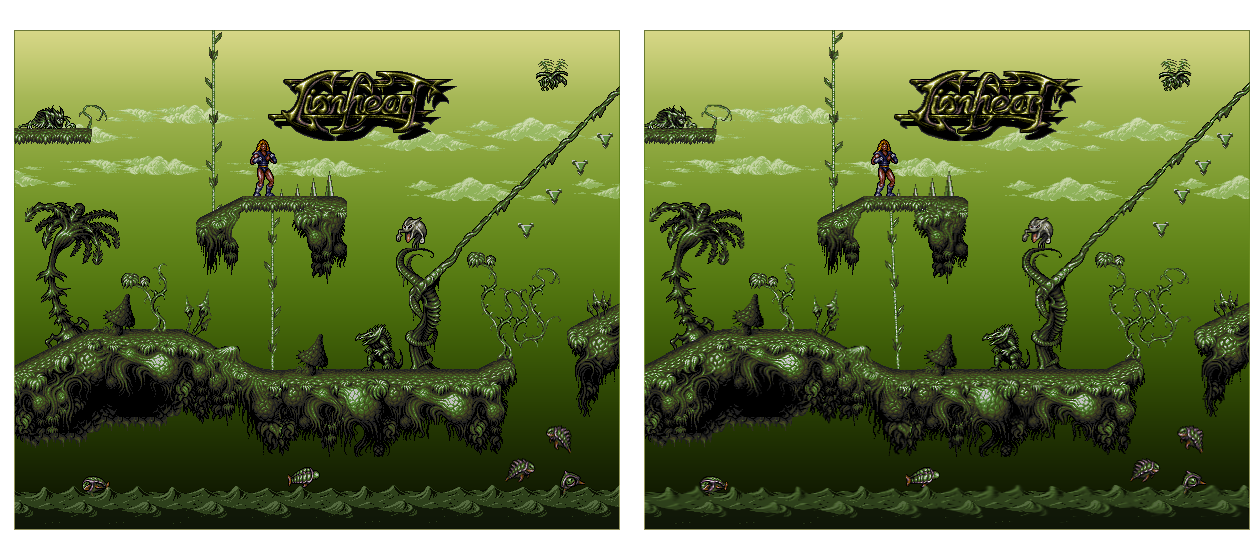
Commodore Amiga Game Classic: Lionheart by Thalion Software (1993),
Genre: Platform Arcade / Jump'n'Run / Fantasy
Learn how to free view stereoscopic 3D without glasses...
Retro Gaming 2D-3D Conversion with some kind of level design.
Father of Anthony Andrews (Aide-de-Camp to Major Nathaniel Brickford) and former captain of the Lightning before it met it's demise at the hand of the Loti. For his service he has received a promotion to Commodore and has been assigned to a new Royal Navy ship.
The artwork here, depicting Commodore Andrew Hull Foote, is found among the letters written during the American Civil War by my great-great grandfather, Andrew Jackson Adrain, to his loved ones at home.
My great-great grandfather:
www.flickr.com/photos/itinerant_wanderer/3151090337/in/al...
Professor Weintraub looking at a star book with a future Dore at a Commodore Classroom at the Pink Palace Museum.
H St. on the NW corner of Layfayette Square NW
Commodore Stephen Decatur, Jr. (January 5, 1779 – March 22, 1820) was an American naval officer notable for his heroism in actions at Tripoli, Libya in the Barbary Wars and in the War of 1812.
He was born in Sinepuxent, Maryland and attended the Abercrombie School in Philadelphia at Dr. Abercrombie's Academy with future naval heroes Richard Somers and Charles Stewart. He was appointed midshipman in the Navy on April 30, 1798, serving on USS United States. His father, Stephen Decatur, Sr., was also a Naval officer, having commanded several ships. Another Stephen Decatur (1815–76) claimed to be his nephew and was an incorporator of Decatur, Nebraska.
He married Miss Susan Wheeler, the daughter of the Mayor of Norfolk, Virginia, on March 8, 1806. In 1818, in Washington, D.C., he built a house designed by Benjamin Henry Latrobe. The house, now a museum, was located on President's Square (Lafayette Square).
Decatur is famed for his toast: "Our country! In her intercourse with foreign nations may she always be in the right; but our country, right or wrong."
In 1820, Commodore James Barron challenged Decatur to a duel, relating in part to comments Decatur had made over what he considered Barron's poor conduct in the "Chesapeake-Leopard Affair" of 1807. The two officers fought in Bladensburg, Maryland, on 22 March 1820. Decatur was mortally wounded and died shortly afterwards. He died childless. Though he left his widow $75,000 dollars (a considerable sum in 1820), she died penniless in 1860.
He is said to have fired upon the Jersey Devil in front of guests, who were amazed to see the creature remain unharmed.
"Decatur's Conflict with the Algerine at Tripoli. Reuben James Interposing His Head to Save the Life of His Commander." Copy of engraving by Alonzo Chappel, August, 1804Active during the undeclared war with France, he was promoted to the rank of Lieutenant in 1799. Given command of the brig Argus in 1803, he took it to the Mediterranean for service in the First Barbary War against Tripoli. Once in the combat zone, Lieutenant Decatur commanded the schooner Enterprise and, on 23 December 1803, captured the enemy ketch Mastico. That vessel, taken into the U.S. Navy under the name Intrepid, was used by Decatur on 16 February 1804 to execute a night raid into Tripoli harbor to destroy the former U.S. frigate Philadelphia, which had been captured after running aground at the end of October 1803. Admiral Lord Nelson is said to have called this "the most bold and daring act of the age."
This daring and extremely successful operation made Lieutenant Decatur an immediate national hero, a status that was enhanced by his courageous conduct during the 3 August 1804 bombardment of Tripoli. In that action, he led his men in hand-to-hand fighting while boarding and capturing an enemy gunboat. Decatur was subsequently promoted to the rank of Captain, and over the next eight years had command of several frigates.
On October 25, 1812, while commanding United States, he captured HMS Macedonian. In 1814 he flew a pennant as Commodore commanding USS President and three smaller vessels in the West Indies. The day after setting sail from New York, he encountered the British West Indies Squadron January 15, 1815, and was forced to surrender the frigate President after a fierce fight.
In May 1815, Commodore Decatur sailed his squadron to the Mediterranean Sea to conduct the Second Barbary War, which put an end to the international practice of paying tribute to pirate states. For this campaign he became known as "the Conqueror of the Barbary Pirates."
Between 1816 and 1820, Decatur served as a Navy Commissioner.
Five U.S. Navy ships have been named USS Decatur in his honor, along with numerous locations. Numerous schools also bear his name.
An engraved portrait of Decatur appears on U.S. paper money on series 1886 20.00 silver certificates.
Forty-six communities in the United States have been named after Stephen Decatur, including:
Decatur, Alabama
Decatur, Illinois
Decatur, Texas
Decatur, Georgia
Decatur Township, Indiana
Garry Rogers Motorsport's Holden Commodore at the V8 Supercar test day at Sydney Motorsport Park. 19-02-2013.
I played this computer game on a Commodore 64 a very young age, and just happened to find the manual while doing some research on the original game.
What you're seeing here is a battle with a ghost, casting a "killing" spell against a dragon followed by an overnight sequence and a short-lived dragon battle, and a vampire that turns out to be deadly.
When your character is killed, it's left up to chance by "the good wizard" - sometimes you make it with 50% health etc., and sometimes you don't.
The original version of this game was published by Epyx for the Commodore PET, Atari and Apple ][ - allegedly, a C64 version was not officially released. That said, it appears someone converted original BASIC version over to the Commodore 64 - and it must have been quite popular with the latter community.
Thanks are due to archeogaming for the detailed background on a game I enjoyed in my early years.
Appropriately enough, the original game was developed by Automated Simulations, Inc. / Epyx, out of Mountain View, CA (per the manual [PDF]) - which itself had layout, type setting and printing work done by companies in Fremont and Sunnyvale, making it a true Silicon Valley-based production. (See also, Atari 400/800 details.)
Bonus tidbit: This was apparently a first game for developer Robert Leyland, who later worked on games such as Star Control, SC2, Toe Jam & Earl, and others (more here.)
Although the makers of the Commodore took some chances with the front of the radio, the back of the cabinet is almost identical to the Sony TR-63.
Both radios have very thin back cabinets, look closely and you can see the outlines of the inside labels and components.
Decal by brickshelf user TheLlamaLord, printed and aplied by Vidgamer838. Thanks again Chase!
He will be featured in my Castillo de san Pedro diorama. What do you think of the name?