View allAll Photos Tagged builders
We are in the midst of building operations for the new baby so there are always workers banging and tearing down and compacting and roofing. Here was one of the very nice workers peering out of the nearly window at the rain while I was on the other side peering at the rain and him. At first I thought this shot was hopeless and then I began to like it more and more. Some fiddling and here it is. I would value your opinion.
I will be away until Sunday - going to the river.
Spot the real builders...Contractors construct a safety hoarding on a site in the centre of Cardiff,Wales,UK.
Salter Springs.
Like the rest of the Adelaide Plains leaseholds for huge sheep stations were granted here in the mid-1840s. William Salter of Angaston and Saltram wines took out the leasehold here in 1845. He also held the Baroota Station leasehold north of Port Pirie near Mt Remarkable. His homestead built at Salters Springs was called the Hermitage. A spring near the Wakefield River was located on his property hence the name. Salter later sold his Hermitage property to Flinders Ranges pastoralist Benjamin Ragless who in turn sold it to Andrew Tennant in 1881. At that time the Hermitage contained 13,000 acres mainly of pastoral hilly country. The Hermitage estate was subdivided by Andrew Tennant for farmers in 1923. East of Salter Springs in the ranges between it and Rhynie a leasehold run was taken out in 1851 by George Anstey and Thomas Giles. This area was resumed by the government and subdivided for farming in 1878. Thus Giles Corner was named after Thomas Giles.
A small village emerged here after some of the leasehold the lands were resumed by the government and sold to farmers in 1858 to 1861. The private town of Salter Springs was created by land owner Alexander Hay. One of the first settlers was Robert Smyth from Belfast who eventually built a grand home with bay windows (1879) and two Moreton Bay Figs in the garden for his son David. The builder came from Kapunda and included cast iron lacework from the Kapunda foundry. It still exists and is called Monte Flora. One of his sons Dr Michael Smyth attended this school and later became a Rhodes Scholar in 1960. The first Post Office was conducted from this property of Monte Flora across the road from the residence. Wesleyan services began around 1863 culminating in the erection of the Salter Springs Wesleyan Church in 1865 on land donated by James Kemp. The foundation stone of this stone structure was laid on 5 November 1864. A private school began operating in it from 1867 after Mr R Payne applied for a license to operate in the Wesleyan Church from the Education Board of Education. A school operated here for some years until the community requested a purpose built school. In 1879 the government accepted a quotation of £576 to build a new school room and teachers residence at Salters Springs. The Salter Springs School finally closed in 1956.
Salter Springs School produced two Rhodes Scholars. The first was Cecil Madigan born in 1889 and attended this school 1899 to 1900. He was born in Renmark but after his father died he was raised with his siblings by his mother who was a teacher so presumably his mother was the teacher here at Salter Springs. He got a scholarship to Prince Alfred College and attended the University of Adelaide graduating in science in 1910. He was a geologist but deferred his Rhodes Scholarship in 1911 to go to Antarctica as the meteorologists on Professor Mawson’s expedition. He attended Oxford University then served in World War One. He returned to Oxford after the War and specialised in geology and began a lectureship in geology with Professor Mawson in 1929. He published widely about his explorations and work. He became a Fellow of the Geological Society of London and of other local and international bodies. He made an historic crossing of the Simpson Desert in 1939 with Mr Simpson the President of the Royal Geographical Society of South Australia.
The other Rhodes Scholar was Michael Ewers Smyth who attend Salter Springs School from 1942 to 1948. He was born in 1936. The Smyth family as noted above were a pioneering family of Salter Springs. He attended Prince Alfred College for high schooling. He graduated in science from the University of Adelaide with top Honours in zoology and was the Rhodes Scholar of 1960. He attended Exeter College at Oxford obtaining his doctorate in zoology. He then lectured at the University of California before taking up an appointment in zoology at Adelaide University in 1965. He is credited with promoting studies of reptiles and amphibians, especially skinks. He published articles on skinks in the late 1960s in the Transactions of the Royal Society of South Australia etc. In fact he gathered zoological information from skinks found at Salter Springs. Sadly he published two articles in learned journals in 1974 in the year of his untimely death on 1 October 1974. He was buried at Centennial Park. His last residence was at St Peters. The University of Adelaide and his family established the Michael Ewers Smyth Memorial Prize in Zoology in 1974. This memorial prize is for the top Honours student in zoology.
ift.tt/1uGTkJi: A builder looks down and waits for supplies at a bulding site in Tallinn, Estonia. - ift.tt/2strRyo //
Original Caption: People on the loading platform at East Glacier Park Montana, watch the arrival of the Empire Builder (Train #7) from Chicago enroute to Seattle, Washington. This terminal is located at the edge of Glacier National Park. Amtrak, since it assumed major responsibility for U.S. intercity rail passenger service in 1971, has reversed a decline in ridership that began after World War II, June 1974
U.S. National Archives’ Local Identifier: 412-DA-13648
Photographer: O'Rear, Charles, 1941-
Subjects:
Chicago (Illinois)
Environmental Protection Agency
Project DOCUMERICA
Persistent URL: research.archives.gov/description/556100
Repository: Still Picture Records Section, Special Media Archives Services Division (NWCS-S), National Archives at College Park, 8601 Adelphi Road, College Park, MD, 20740-6001.
For information about ordering reproductions of photographs held by the Still Picture Unit, visit: www.archives.gov/research/order/still-pictures.html
Reproductions may be ordered via an independent vendor. NARA maintains a list of vendors at www.archives.gov/research/order/vendors-photos-maps-dc.html
Access Restrictions: Unrestricted
Use Restrictions: Unrestricted
Master Builder Academy : Kit 1-9
Solar Sailer - instagram.com/p/a_OKeQmWTf/
Inspired by Multihawk - www.flickr.com/photos/commanderhawk/9127084441/
The Earnslaw conducts cruises daily around Lake Wakitipu. The last ending at 10pm. She made her maiden voyage 18 October 1912.
Launched by New Zealand Rail in 1912, the TSS Earnslaw is the last surviving and grandest steamship to have ever graced Lake Wakatipu.
Named after Mount Earnslaw (the highest peak in the region), she is 168 feet in length, 24 feet across the beam and weighs 330 tons. Originally built by J McGregor & Co in Dunedin at a cost of £20,850, the TSS Earnslaw was dismantled and transported by rail to Kingston at the lake’s southern tip for reassembly and launching.
The TSS Earnslaw has since served the remote farming communities around Lake Wakatipu, including the original Walter Peak Station. Her working roles have included cargo ship, livestock carrier, passenger transporter and pleasure steamer.
The TSS Earnslaw Vintage Steamship is a much-loved part of Queenstown’s history.
Departing Greenock's Ocean Terminal.
Vessel Details: Container Ship
Vessel Name: MV FRANCOP
IMO: - 9277412
MMSI: - 305234000
Call Sign: V2DJ5
Classification Society: - Germanischer Lloyd
Length: 137.50m
Beam: 21.30m
Draught: 7.47m
Builder: Built in 2003 by JJ Sietas Schiffswerft Neuenfelde, Germany
Tonnage: 7519t
Amescorp are the leading home builders in Sydney specialised in granny flats. Their highly experienced architects help construct versatile and modern granny flats at the best rates. For more, visit amescorp.com.au/
Y322 spots a single lumber car at Builders FirstSource close to 4 o'clock in the morning. This job used to run on and off during the daytime.
Worcester is a Cathedral City and the county town of Worcestershire in the West Midlands of England.
The city is located some 17 miles (27 km) south-west of the southern suburbs of Birmingham, and 23 miles (37 km) north of Gloucester. The population is approximately 100,000. The River Severn flanks the western side of the city centre, which is overlooked by the 12th-century Worcester Cathedral.
The site of the final battle of the Civil War, Worcester was where Oliver Cromwell's New Model Army defeated King Charles I's Cavaliers, cementing the eleven-year Interregnum. Worcester was the home of Royal Worcester Porcelain, and for much of his life, the composer Sir Edward Elgar. It houses the Lea & Perrins factory where traditional Worcestershire Sauce is made. The University of Worcester is one of the UK's fastest-growing universities.
History
The trade route past Worcester which later formed part of the Roman Ryknild Street dates to Neolithic times. The position commanded a ford over the River Severn (the river was tidal past Worcester prior to public works projects in the 1840s) and was fortified by the Britons around 400 bc. It would have been on the northern border of the Dobunni and probably subject to the larger communities of the Malvern hillforts. The Roman settlement at the site passes unmentioned by Ptolemy's Geography, the Antonine Itinerary and the Register of Dignitaries but would have grown up on the road opened between Glevum (Gloucester) and Viroconium (Wroxeter) in the ad 40s and 50s. It may have been the "Vertis" mentioned in the 7th-century Ravenna Cosmography. Using charcoal from the Forest of Dean, the Romans operated pottery kilns and ironworks at the site and may have built a small fort.
In the 3rd century, Roman Worcester occupied a larger area than the subsequent medieval city, but silting of the Diglis Basin caused the abandonment of Sidbury. Industrial production ceased and the settlement contracted to a defended position along the lines of the old British fort at the river terrace's southern end. This settlement is generally identified with the Cair Guiragon listed among the 28 cities of Britain by the History of the Britons attributed to Nennius. This is not a British name but an adaption of its Old English name Weorgoran ceaster, "fort of the Weorgoran". The Weorgoran (the "people of the winding river") were precursors of Hwicce and probably West Saxons who entered the area some time after the 577 Battle of Dyrham. In 680, their fort at Worcester was chosen—in preference to both the much larger Gloucester and the royal court at Winchcombe—to be the seat of a new bishopric, suggesting there was already a well-established and powerful Christian community when the site fell into English hands. The oldest known church was St Helen's, which was certainly British; the Saxon cathedral was dedicated to St Peter.
The town was almost destroyed in 1041 after a rebellion against the punitive taxation of Harthacanute. During this time, the townsfolk relocated to (and at times were besieged at) the nearby Bevere Island, 2 miles upriver. The following century, the town (then better defended) was attacked several times (in 1139, 1150 and 1151) during "The Anarchy", i.e. civil war between King Stephen and Empress Matilda, daughter of Henry I. This is the background to the well-researched historical novel The Virgin in the Ice, part of Ellis Peters' "Cadfael" series, which begins with the words:
"It was early in November of 1139 that the tide of civil war, lately so sluggish and inactive, rose suddenly to wash over the city of Worcester, wash away half of its lifestock, property and women and send all those of its inhabitants who could get away in time scurrying for their lives northwards away from the marauders". (These are mentioned as having arrived from Gloucester, leaving a long lasting legacy of bitterness between the two cities.)
By late medieval times the population had grown to around 10,000 as the manufacture of cloth started to become a large local industry. The town was designated a county corporate, giving it autonomy from local government.
Worcester was the site of the Battle of Worcester (3 September 1651), when Charles II attempted to forcefully regain the crown, in the fields a little to the west and south of the city, near the village of Powick. However, Charles II was defeated and returned to his headquarters in what is now known as King Charles house in the Cornmarket, before fleeing in disguise to Boscobel House in Shropshire from where he eventually escaped to France. Worcester had supported the Parliamentary cause before the outbreak of war in 1642 but spent most of the war under Royalist occupation. After the war it cleverly used its location as the site of the final battles of the First Civil War (1646) and Third Civil War (1651) to try to mount an appeal for compensation from the new King Charles II. As part of this and not based upon any historical fact, it invented the epithet "Fidelis Civitas" (The Faithful City) and this motto has since been incorporated into the city's coat of arms.
In 1670, the River Severn broke its banks and the subsequent flood was the worst ever seen by Worcester. A brass plate can be found on a wall on the path to the cathedral by the path along the river showing how high this flood went and other flood heights of more recent times are also shown in stone bricks. The closest flood height to what is known as The Flood of 1670 was when the Severn flooded in the torrential rains of July 2007.
The Royal Worcester Porcelain Company factory was founded by Dr John Wall in 1751, although it no longer produces goods. A handful of decorators are still employed at the factory and the Museum is still open.
During the late 18th and early 19th centuries, Worcester was a major centre for glove making, employing nearly half the glovers in England at its peak (over 30,000 people). In 1815 the Worcester and Birmingham Canal opened, allowing Worcester goods to be transported to a larger conurbation.
The British Medical Association (BMA) was founded in the Board Room of the old Worcester Royal Infirmary building in Castle Street in 1832. While part of the Royal Infirmary has now been demolished to make way for the University of Worcester's new city campus, the original Georgian building has been preserved. One of the old wards opened as a medical museum, The Infirmary, in 2012.
In 1882 Worcester hosted the Worcestershire Exhibition, inspired by the Great Exhibition in London.There were sections for exhibits of fine arts (over 600 paintings), historical manuscripts and industrial items.The profit was £1,867.9s.6d. The number of visitors is recorded as 222,807. Some of the profit from the exhibition was used to build the Victoria Institute in Foregate Street, Worcester. This was opened on 1 October 1896 and now houses the city art gallery and museum. Further information about the exhibition can be found at the museum.
During World War II, the city was chosen to be the seat of an evacuated government in case of mass German invasion. The War Cabinet, along with Winston Churchill and some 16.000 state workers, would have moved to Hindlip Hall (now part of the complex forming the Headquarters of West Mercia Police), 3 miles (4.8 km) north of Worcester and Parliament would have temporarily seated in Stratford-upon-Avon. The former RAF station RAF Worcester was located east of Northwick.
In the 1950s and 1960s large areas of the medieval centre of Worcester were demolished and rebuilt as a result of decisions by town planners. This was condemned by many such as Nikolaus Pevsner who described it as a "totally incomprehensible... act of self-mutilation". There is still a significant area of medieval Worcester remaining, but it is a small fraction of what was present before the redevelopments.
The current city boundaries date from 1974, when the Local Government Act 1972 transferred the parishes of Warndon and St. Peter the Great County into the city.
Governance
The Conservatives had a majority on the council from 2003 to 2007, when they lost a by-election to Labour meaning the council had no overall control. The Conservatives remained with the most seats overall with 17 out of 35 seats after the 2008 election.
Worcester has one member of Parliament, Robin Walker of the Conservative Party, who represents the Worcester constituency as of the May 2010 general election.
The County of Worcestershire's local government arrangement is formed of a non-metropolitan county council (Worcestershire County Council) and six non-metropolitan district councils, with Worcester City Council being the district council for most of Worcester, with a small area of the St. Peters suburb actually falling within the neighbouring Wychavon District council. The Worcester City Council area includes two parish councils, these being Warndon Parish Council and St Peter the Great Parish Council.
Worcester Guildhall, the seat of local government, dates from 1721; it replaced an earlier hall on the same site. The Grade I listed Queen Anne style building is described by Pevsner as 'a splendid town hall, as splendid as any of C18 England'.
Economy
The city of Worcester, located on the River Severn and with transport links to Birmingham and other parts of the Midlands through the vast canal network, became an important centre for many light industries. The late-Victorian period saw the growth of ironfounders, like Heenan & Froude, Hardy & Padmore and McKenzie & Holland.
Glove industry
Gloves, Worcester City Art Gallery & Museum
One of the flourishing industries of Worcester was glove making. Worcester's Gloving industry peaked between 1790 and 1820 when about 30,000 were employed by 150 companies. At this time nearly half of the Glove manufacturers of Britain were located in Worcestershire.
In the 19th century the industry declined because import taxes on foreign competitors, mainly from France, were greatly reduced. By the middle of the 20th century, only a few Worcester gloving companies survived since gloves became less fashionable and free trade allowed in cheaper imports from the Far East.
Nevertheless, at least 3 large glove manufacturing companies still survived until the late 20th century: Dent Allcroft, Fownes and Milore. Queen Elizabeth II's coronation gloves were designed by Emil Rich and manufactured in the Worcester-based Milore factory.
Manufacturing
Lea & Perrins advertisement (1900)
The inter-war years saw the rapid growth of engineering, producing machine tools James Archdale, H.W. Ward, castings for the motor industry Worcester Windshields and Casements, mining machinery Mining Engineering Company (MECO) which later became part of Joy Mining Machinery and open-top cans Williamsons, though G H Williamson and Sons had become part of the Metal Box Co in 1930. Later the company became Carnaud Metal Box PLC.
Worcester Porcelain operated in Worcester until 2008, when the factory closed down due to the recession. However, the site of Worcester Porcelain still houses the Museum of Royal Worcester which is open daily to visitors.
One of Worcester's most famous products, Lea & Perrins Worcestershire sauce is made and bottled at the Midland Road factory in Worcester, which has been the home of Lea & Perrins since 16 October 1897. Mr Lea and Mr Perrins originally met in a chemist's shop on the site of the now Debenhams store in the Crowngate Shopping Centre.
The surprising foundry heritage of the city is represented by Morganite Crucible at Norton which produces graphitic shaped products and cements for use in the modern industry.
Worcester is the home of what is claimed to be the oldest newspaper in the world, Berrow's Worcester Journal, which traces its descent from a news-sheet that started publication in 1690. The city is also a major retail centre with several covered shopping centres that has most major chains represented as well as a host of independent shops and restaurants, particularly in Friar Street and New Street.
The city is home to the European manufacturing plant of Yamazaki Mazak Corporation, a global Japanese machine tool builder, which was established in 1980.
Retail trade
The Kays mail order business was founded in Worcester in the 1880s and operated from numerous premises in the city until 2007. It was then bought out by Reality, owner of the Grattan catalogue. Kays' former warehouse building was demolished in 2008.
Worcester’s main shopping centre is the High Street, home to the stores of a number of major retail chains. Part of the High Street was modernised in 2005 amid much controversy.[citation needed] Many of the issues focussed on the felling of old trees, the duration of the works (caused by the weather and an archaeological find) and the removal of flagstones outside the city’s 18th-century Guildhall. The other main thoroughfares are The Shambles and Broad Street, while The Cross (and its immediate surrounding area) is the city’s financial centre and location of the majority of Worcester’s main bank branches.
There are three main covered shopping centres in the city centre, these being CrownGate Shopping Centre, Cathedral Plaza and Reindeer Court. There is also an unenclosed shopping area located immediately east of the city centre called St. Martin's Quarter. There are three retail parks, the Elgar and Blackpole Retail Parks, which are located in the inner suburb of Blackpole and the Shrub Hill Retail Park neighbouring St. Martin's Quarter.
Landmarks
The most famous landmark in Worcester is its imposing Anglican Cathedral. The current building; known as Worcester Priory before the English Reformation, is officially named The Cathedral Church of Christ and the Blessed Virgin Mary. Construction begun in 1084 while its crypt dates from the 10th century. The chapter house is the only circular one in the country while the cathedral also has the distinction of having the tomb of King John.
The Hive, situated on the northern side of the River Severn at the former cattle market site, is Worcester's joint public and university library and archive centre, heralded as "the first of its kind in Europe". It is a prominent landmark feature on the Worcester skyline. With seven towers and a golden rooftop, The Hive has gained recognition winning two international awards for building design and sustainability.
There are three main parks in Worcester, Cripplegate Park, Gheluvelt Park and Fort Royal Park, the latter being on one of the battles sites of the English Civil War. In addition, there is a large open area known as Pitchcroft to the North of the city centre on the east bank of the River Severn, which, apart from those days when it is being used for horse racing, is a public space.
Gheluvelt Park was opened as a memorial to commemorate the Worcestershire Regiment's 2nd Battalion after their part in the Battle of Gheluvelt, during the First World War.
The statue of Sir Edward Elgar, commissioned from Kenneth Potts and unveiled in 1981, stands at the end of Worcester High Street facing the Cathedral, only yards from the original location of his father's music shop, which was demolished in the 1960s. Elgar's birthplace is a short way from Worcester, in the village of Broadheath.
There are also two large woodlands in the city, Perry Wood, at twelve hectares and Nunnery Wood, covering twenty-one hectares. Perry Wood is often said to be the place where Oliver Cromwell met and made a pact with the devil. Nunnery Wood is an integral part of the adjacent and popular Worcester Woods Country Park, itself next door to County Hall on the east side of the city.
Amtrak’s Empire Builder #8/28 led by GE P42DC #160 dressed in Amtrak's iconic “Pepsi Can” colors heads east just outside Browning, Montana as the front range of the Rockies towers high in the horizon.
The first train of what would end up being a great day. Here Amtrak slowly takes its train passed Chestnut Street just about to arrive into Saint Paul Union Depot.
LUGOLA Bronze Builder 2: I found a use for the reddish brown cone - should be ready in a few hours...
One derelict suspension mtn. bike, w/ just the least mods to take the rear arm from horizontal to vertical, and double up the front fork length/ no welds to original bike, nice and Tall AND Bouncy!!
A few words on the builder.. vimeo.com/34417435
***Attention! imitation in 2011!
www.youtube.com/watch?v=uxs0uPGBWus&feature=player_em...
Reversible in @ 10 min. set to music @ 5:00 here www.youtube.com/watch?v=GpRZOeDAcwo&feature=related
See this & taller in action: www.youtube.com/watch?v=SMnMdEMrXdc&feature=channel_page
However, the above is not tall, see below for tall, Down Under:
farm1.static.flickr.com/79/236846752_360fc20730.jpg?v=0
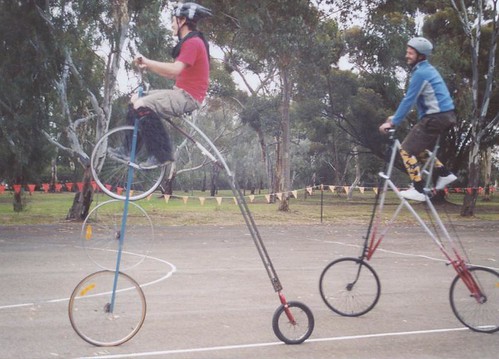
Photo by Refractionless. Then I made this:
farm1.static.flickr.com/198/494857358_798d38d439.jpg?v=0
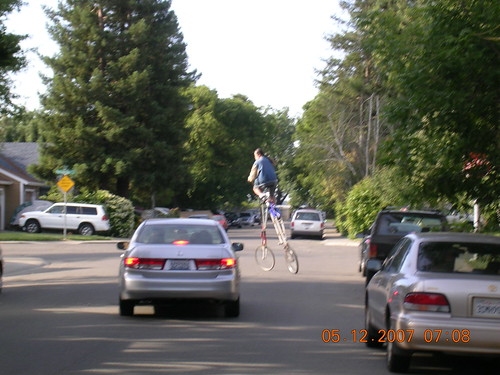
in action in 2010: www.youtube.com/watch?v=WuwXdOQYpso
and a comprehensive set of where it all started.. www.johnnypayphone.net/tallbikes/
Administrative records were kept by the state of the Village of the workmen who built the royal tombs in the Valley of the Kings. They include deliveries of their payment in grain and provisions of food. This limestone ostracon from the reign of King Ramesses II even records the occupants of houses with the heads of household and their family members.
Limestone
19th Dynasty
Deir el-Medinah
VM 3000 / VM 3001
Gustavianum, Uppsala University Museum
The Mediterranean Sea and the Nile Valley
Uppsala Sweden
Two builders watch as BR class 20 20102 and a sister engine pass them at Tuffley junction in Gloucester with a small permanent way train
Photo taken with my old Pentax ME Super 35mm film camera and scanned from my original 35mm colour slide
Are you interested in knowing about #build_quest Manly Builders Call us or email us your request now, we will #assist you with our best in class #professional #building and #remodeling services that are perfect match for your building #budget. Talk to our #builders to know more.
I'm in love with this! LEGO + steampunk = WIN!!! Full article with more photos here: thebrickblogger.com/2013/04/lego-master-builder-academy-l...