View allAll Photos Tagged algorithm
曲線補間。
青の点が、mouse move event により取得された点。
緑の点は青の点を元に内挿を行った点。point[4] をサンプリングし、それらの点を通る三次曲線を連立方程式により求め、point[1] -> point[2] を引く。 図では30点を内挿。
x座標の補間曲線関数x=f(t) とy座標の補間曲線関数 y=f(t) を独立で求めているので、一度の補間でcvSolve() が二回呼び出される。 この方法は、筆圧レベルの補間を導入する場合にも z=f(t) を追加するだけで容易に対応可能である。連立方程式の解はOpenCVが提供するcvSolve()を用いて算出されている。
ポインタを激しく動かしても Intel Celeron CPU 2.80GHz を最大で60%程度しか消費せず、実用的な速度を維持している。この値は補間を行わない場合と殆ど変わらない。これは、X11環境下では描画のコストの方が圧倒的に大きいためであると推測される。
The Algorithm (synthwave, France) en concert aux Docks de Lausanne, le 9 octobre 2019.
Photo: Stéphane Gallay, sous licence Creative Commons (CC-BY)
Colorized by Artificial Intelligence Algorithm Tool from originally scanned hi-res photo from the respective source.
Credit disclaimer: I do not own the original scanned image and believe that it is in the public domain. These images have been collected from Flickr search results. If you know the link to the original image, please kindly put it into comment section as I will update the description to give full credit to the respective owner.
Please follow, like and leave a comment.
My websites:
Visit my portfolio sites:
FOLLOW ME:
www.youtube.com/channel/UC8JtcV_EejccsUNXSK_ejcw Springs of Eden
Matching an EC library against another. ECJ is in Java, A::E in Perl. I have used state-of-the art java VM and several perl VMs, one of them (5.10) compiled using local tools, the other downloaded from repositories. Since the debate is usually how many orders of magnitude is Java faster than Perl, this is just to prove that, with a bit of tweaking, Perl can even be faster. All tests were run 30 times, and were trying to solve the onemax problem through 500 generations, population = 200 with chromosome size=128
JURY DISTINCTION FOR CATEGORY 4 Video loop
Copyright CC-BY-NC-ND: Lucien Hinderling
This video highlights the intricate movements of cancerous epithelial cells (cells that cover all body surfaces). It was captured using a fluorescence microscope, with the cells segmented and tracked automatically by computer algorithms. By overlaying tracking data onto the original microscope images, the video demonstrates how combining computational techniques and imaging can provide quantitative insights and uncover new patterns in high-throughput imaging. The cells featured in the video are human breast cells carrying a specific genetic mutation called PI3K that is commonly observed in cancers. Studying their collective behaviour helps us explore the mechanisms driving cancer progression, and in particular their resistance to chemotherapies.
The footage underscores that cancer cells are dynamic and exhibit complex behaviours. It highlights the importance of experimental research to uncover these processes and the value of combining laboratory findings with computational methods to better understand cancer. Co-authors: Agne Frismantiene and Olivier Pertz, University of Bern
Jury’s commentary │ The harmonious collective motion – reminiscent of natural phenomena at widely different scales, such as schools of fish or flocks of birds – contrast with the chaotic and destructive nature of cancer, lending a somewhat eerie beauty to an often deadly disease.
--
Cette vidéo révèle les mouvements complexes des cellules épithéliales (qui tapissent la surface des organes) cancéreuses. Elle a été réalisée au moyen d’un microscope à fluorescence et à l’aide d’algorithmes qui ont suivi les cellules. En superposant ces données aux images originales du microscope, la vidéo montre comment combiner des techniques informatiques et l’imagerie à haut débit peut fournir des informations quantitatives et faire ressortir de nouveaux motifs. Les cellules apparaissant dans la vidéo sont des cellules mammaires humaines porteuses de la mutation génétique PI3K, couramment observée dans les cancers. L’étude de leur comportement collectif nous permet d’explorer les mécanismes de progression du cancer, et en particulier leur résistance aux chimiothérapies.
La vidéo montre que les cellules cancéreuses sont dynamiques et présentent des comportements complexes. Elle souligne l’importance de la recherche expérimentale pour découvrir ces processus et l’intérêt de combiner les résultats obtenus en laboratoire avec des méthodes informatiques dans le but de mieux comprendre le cancer. Co-auteurs: Agne Frismantiene et Olivier Pertz, Université de Berne
Commentaire du jury │ Ces mouvements collectifs harmonieux – qui rappellent des phénomènes naturels à des échelles très différentes, tels que les bancs de poissons ou une nuée d’étourneaux – contrastent avec la nature chaotique et destructrice du cancer, conférant une beauté équivoque à une maladie souvent fatale.
--
Dieses Video veranschaulicht die komplexen Bewegungen von Epithelzellen – diese Zellen kleiden die Oberfläche von Organen aus – bei einer Krebserkrankung. Aufgenommen wurde es mit Fluoreszenzmikroskopie und Algorithmen, welche die Zellen automatisch verfolgen. Durch die Überlagerung der ursprünglichen Mikroskopaufnahmen mit diesen Tracking-Daten veranschaulicht das Video, wie die Kombination von IT-Techniken und Hochdurchsatz-Screening quantitative Informationen liefern und neue Muster erkennen kann. Bei den im Video gezeigten Zellen handelt es sich um menschliche Brustzellen mit der genetischen Mutation PI3K, die häufig bei Krebserkrankungen zu beobachten ist. Mit der Untersuchung des kollektiven Verhaltens der Zellen können wir die Mechanismen erforschen, die beim Fortschreiten von Krebs und insbesondere bei der Resistenz gegenüber Chemotherapien eine Rolle spielen.
Das Video zeigt, dass Krebszellen dynamisch sind und komplexe Verhaltensweisen aufweisen. Es unterstreicht die Bedeutung der experimentellen Forschung zur Klärung dieser Prozesse und den Nutzen einer Kombination von Laborergebnissen und Computermethoden für ein besseres Verständnis von Krebs. Co-Urheber:innen: Agne Frismantiene und Olivier Pertz, Universität Bern
Kommentar der Jury │ Diese harmonischen kollektiven Bewegungen – die an Naturphänomene in ganz anderen Massstäben wie Fisch- oder Starenschwärme erinnern – stehen im Kontrast zur chaotischen und zerstörerischen Natur des Krebses und verleihen einer oft tödlichen Krankheit eine seltsame Anmut.
The Algorithm (synthwave, France) en concert aux Docks de Lausanne, le 9 octobre 2019.
Photo: Stéphane Gallay, sous licence Creative Commons (CC-BY)
The Algorithm (synthwave, France) en concert aux Docks de Lausanne, le 9 octobre 2019.
Photo: Stéphane Gallay, sous licence Creative Commons (CC-BY)
Still playing around with my first work, Process_01. Either you take to it or not. I kind of like the forms it's making.
It was working well with listening to Minamo's 'When Unwelt Melts'
The Algorithm (synthwave, France) en concert aux Docks de Lausanne, le 9 octobre 2019.
Photo: Stéphane Gallay, sous licence Creative Commons (CC-BY)
Part of my book case. I failed to mention Motwani and Ragavan. Great books, essential reading for a Theory of Computation student.
À quoi rêvent les algorithmes - Nos vies à l'heure des big data
Dominique Cardon, Seuil, 2015
www.seuil.com/ouvrage/a-quoi-revent-les-algorithmes-domin...
Google, Facebook, Amazon, mais aussi les banques et les assureurs : la constitution d’énormes bases de données (les « big data») confère une place de plus en plus centrale aux algorithmes. L’ambition de ce livre est de montrer comment ces nouvelles techniques de calcul bouleversent notre société. À travers le classement de l’information, la personnalisation publicitaire, la recommandation de produits, le ciblage des comportements ou l’orientation des déplacements, les méga-calculateurs sont en train de s’immiscer, de plus en plus intimement, dans la vie des individus. Or, loin d’être de simples outils techniques, les algorithmes véhiculent un projet politique. Comprendre leur logique, les valeurs et le type de société qu’ils promeuvent, c’est donner aux internautes les moyens de reprendre du pouvoir dans la société des calculs.
Dominique Cardon est sociologue au Laboratoire des usages d’Orange Labs et professeur associé à l’université de Marne-la-Vallée (LATTS). Avec La Démocratie Internet (Seuil, 2010) et de nombreux articles, il s’est imposé comme l’un des meilleurs spécialistes du numérique et d’Internet.
The Algorithm (synthwave, France) en concert aux Docks de Lausanne, le 9 octobre 2019.
Photo: Stéphane Gallay, sous licence Creative Commons (CC-BY)
After Facebook's Algorithm Change Devastated Organic Reach, How Are Publishers Coping
www.biphoo.com/bipnews/technology/facebooks-algorithm-cha...
www.biphoo.com/bipnews/wp-content/uploads/2018/03/faceboo...
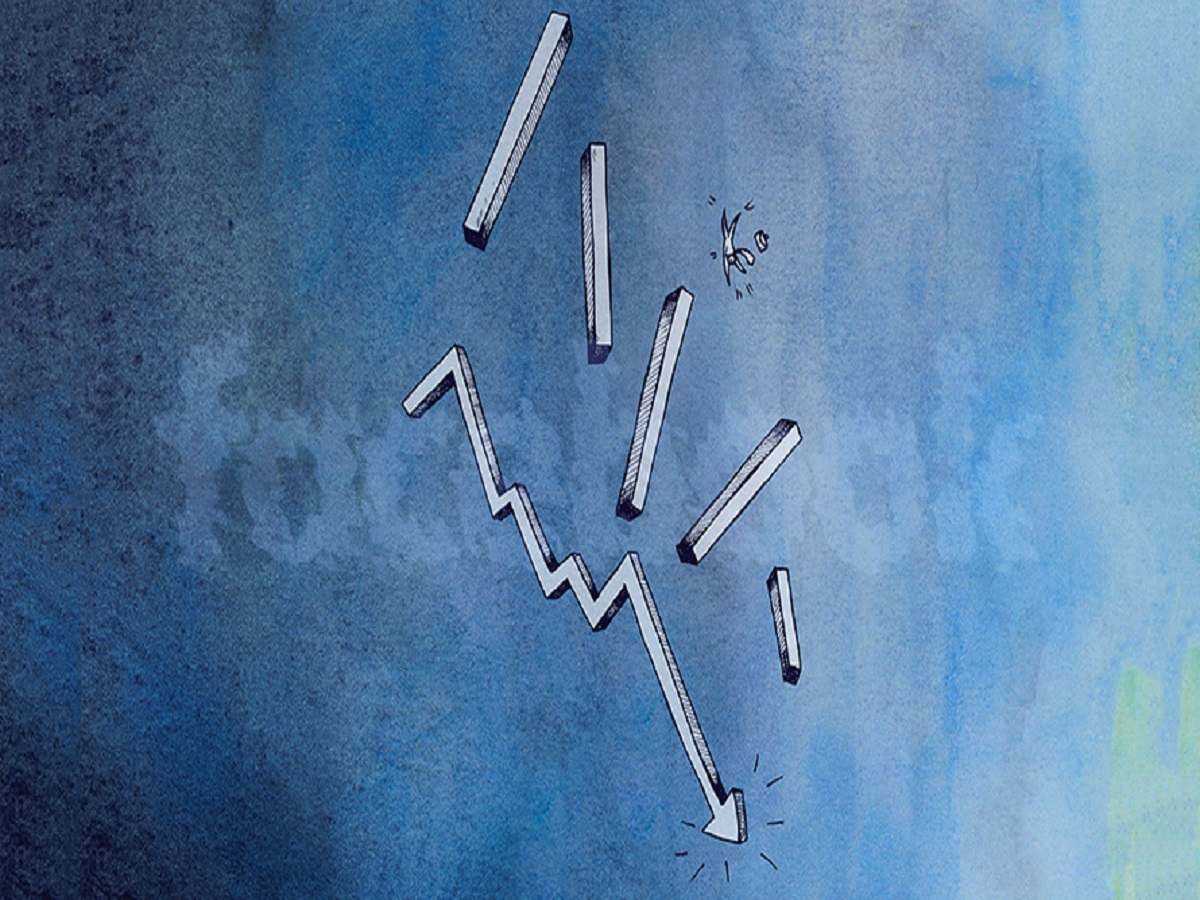
#AfterFacebook'SAlgorithmChangeDevastatedOrganicReachHowArePublishersCoping, #LatestTechnologyNews, #TechNewsWorld, #TechnologyNewsHeadlines, #TechnologyNewsToday, #TechnologyNewsUSA
After Facebook’s Algorithm Change Devastated Organic Reach, How Are Publishers Coping
When Facebook CEO Mark Zuckerberg announced in January that the site’s News Feed algorithm would further emphasize posts from friends and family, publishers that hadn’t diversified across many platforms fa...
The Algorithm (métal progressif / electro, France), festival Prog Frog, 31 mars 2017, KIFF, Aarau (Suisse).
Photo: Stéphane Gallay, sous licence Creative Commons (CC-BY)