View allAll Photos Tagged absorption
Sonata Vario and Sonata Memo acoustic absorbers installed within the dining room at Tong Moor Primary School in Bolton
Details on our range of acoustic absorbers can be found here: www.soundreduction.co.uk/Products/Sound-Absorption-Soluti...
SRS Sonata Aurio Class A acoustic absorption installed within two classrooms at Delamere Primary Academy to reduce reverberation
Sonata Vario acoustic absorbers installed within the canteen at Telford Lawn Tennis Club in Wimbledon
Details on our range of acoustic absorbers can be found here: www.soundreduction.co.uk/Products/Sound-Absorption-Soluti...
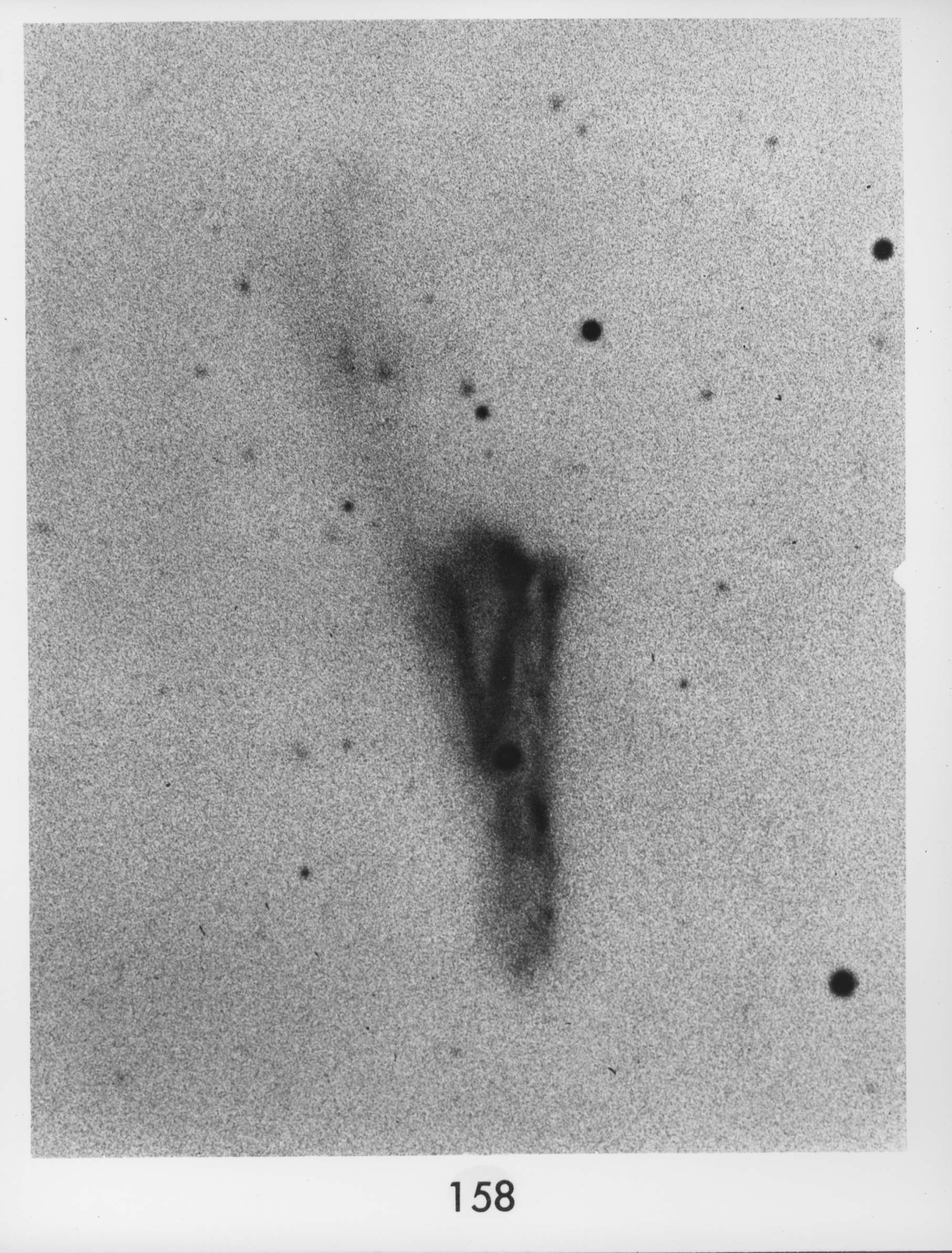
NGC 523 (NGC 537 = PGC 5268 = Arp 158)
Discovered (Sep 13, 1784) by William Herschel (and later listed as NGC 537)
Discovered (Aug 23, 1862) by Heinrich d'Arrest (and later listed as NGC 523)
A magnitude 12.7 spiral galaxy (type Sbc) in Andromeda (RA 01 25 20.7, Dec +34 01 31)
Apparent size 2.5 by 0.7 arcmin. Used by the Arp Atlas as an example of a disturbed galaxy with interior absorption.
"Excerpt courtesy of Courtney Seligman"
cseligman.com/text/atlas/ngc5.htm#523
Image... Cherryvalley Observatory (I83). Telescope: 0.2-m SCT & SBIG STL-1301E CCD Camera @f7.6. Image Scale 2.17 arcsec/pixel, Field of View 46 x 37 arcmins. Combined Stack of seven images of 300 seconds each unfiltered and unbinned. CCD operating temperature: -30 degrees. Image acquisition and processing: CCD Soft v5, TheSky6 Professional and Mira Pro v7. September 21st 2014.
Dr. Halton Arp originally compiled the Atlas of peculiar galaxies with photographs he made mainly using the Palomar 200-inch telescope and the 48-inch Schmidt telescope between the years 1961 to 1966. Original image can be found here: ned.ipac.caltech.edu/level5/Arp/Figures/big_arp158.jpeg
A Fomapan Action 400 black-and-white film to test the effect a the special Foca filter "Dyma" produced in France in the 50's.
The filter is called "Dyma" due to the presence of neodymium in the glass giving an unusual absorption by bands in the visible spectrum. In particulier blue and yellow color ans more absorbed than the rest of the spectrum. The filter existed in two different versions with the coefficient x2.5 or 3.5. Here the 42mm push-on Foca Dyma filter used is a x 3.5.
As a consequence, I exposed the Foma 400 for 80 ISO using a Minolta Autometer III with a 10° finder for selective measurements privileging the shadow areas. I used my FOCA camera PF2B year 1956 and its normal Oplar lens1:2.8 f=5cm equipped for all the views with the Dyma filter and a Genaco metal shade hood.
Typical settings during the session : 1/100s f/8 to f/11.
Rue des Fantasques, May 29, 2023
69001 Lyon
France
After exposure, the film was processed using Adox Adonal (Agfa Rodinal) developer at dilution 1+25, 20°C for 6 min.
The film was then digitalized using a Sony A7 body adapted to a Minolta Auto Bellows III and a Minolta Slide Duplicator using a lens Minolta Bellow Macro Rokkor 50mm f/3.5 at a reproduction ratio of 1:1. The reproduced RAW files obtained were processed in LR prior the the final JPEG editions.
All views of the film are presented in the dedicated album either in the printed framed versions and unframed full-size jpeg.
About the camera and the lens:
The Foca type PF2B (PF for "Petit Format") was constructed in France by the company "Optique & Precision de Levallois" (OPL) starting from 1947. It was manufactured in the Chateaudun OPL factory, route de Jallans, France, in 1956 among a late series of the PF2B. The factory, constructed in 1938, is still at the same place under the name of SAFRAN now producing precision devices for aerospace appliances.
The camera is equipped with the collapsible OPLAR lens (a Tessar formula) 1:2.8 f=5cm. The focal shutter of the PF2B has timing of 1/1000, 1/500, 1/200, 1/100, 1/50 and 1/25s plus the B pose. A slow exposure device below 1/25s could be installed by the aftermarket service and was installed basically for the FOCA PF3 and Foca Universel.
Sonata Vario acoustic absorbers installed within the hall at All Saints School in Stockport to reduce reverberation
- MERINO sheepskin lining offers all of the advantages of wool over synthetic fibers, providing efficient shock absorption and superior thermal comfort. Sheepskin contains lanolin, a natural substance, which soothes the horse's sensitive or inflamed skin. When sheepskin is set directly against the animal's body, it stimulates blood circulation and promotes a therapeutic effect.
- "Open-channel" design alleviates excessive pressure from the horse's spine and promotes increased air circulation.
- Two large pockets are designed specifically to ensure proper fit of the saddle and comfort for the horse by accommodating both specialized and custom-made shims.
- High Resiliency open-cell foam shims (included in the package) allow for the overall weight to be redistributed over a larger area, thus minimizing pressure points.
- Breathable 3-Dimensional Spacer fabric reduces heat build-up and provides excellent moisture vapor transfer.
- The Non-Slip mesh upper assures perfect grip and steadily secures the ComfortLUX Half-Pad under the saddle.
Sonata Vario acoustic absorbers installed within Arbuckles Restaurant in Norfolk.
Full case study here: www.soundreduction.co.uk/Blog/Article/Customers-Enjoy-Imp...
The green line spectrum shows the reflectance of the green material. The double absorption feature at 430-440nm is seen in jadeite and attributed to ferric iron (Fe3+). I have also seen this feature in yellow topaz which, like jadeite, can contain chromium in the form of Cr3+. The comparison transmission spectra are of olivine (peridot; thin pink line) and chromium-containing jadeite (thin blue line).
Stones with type of nodular morphology have been dubbed 'Nebula Stone' and sold as a lapidary product under this trade name. There is an interesting description and some reported identification efforts at: www.rockhounds.com/rockgem/articles/nebula.shtml
I thank Cran Cowan and Radostin Pavlov for helping with this puzzle.
www.fature.net/release.php?id=21
The Faturenet collective have been working hard over the past few months. But not by having 2 Minute Masturbations. By creating 2 Minute Masterpieces...
These 27 tracks all lasting exactly 2 minutes in length will take you on a journey to some very special places.Some charming and characteristic, others for dirty minded music lovers.
Compiled by Fature, artwork by Almost Synthesis
01.Ambient Anonymous - Nociceptors
02.Sevish - Trapped in a Cycle
03.Fature - Maize for Men Wine for Women
04.Leithal - MW
05.Plutonium Telecom - Perfection Boredom
06.Zarathustra - Verbiage
07.Babungus - Knuckle Chunder
08.Almost Synthesis - Throw Some Dirt On It
09.Ambient Anonymous - Unexpected Item In Bagging Area
10.Eric Braham - Entropy and Lust
11.FLK - Twist
12.Benjaz - Flash Front
13.Drew Costigan - Razor
14.Waverine - Skateboard Race
15.ProVote - Two Minute Intro
16.PsychicEyeClix - Grill n Bass
17.ACL - Musoholic
18.FLK - Cloudchaser
19.Plutonium Telecom - Diamonds Delay BigFade
20.Ambient Anonymous - Archangel
21.Waverine - Morning
22.Leithal - Five
23.Plutonium Telecom - MeLeftNothing
24.FLK - Loko
25.Ambient Anonymous - Hive Mind
26.Leithal - 404 120
27.Delcraft - Feel the Meditation Shawshank
Released: 27th Feb 2011
ComfortLUX - Non-slip DRESSAGE Half-Pad with POCKETS and SHEEPSKIN Trim...
- MERINO sheepskin lining offers all of the advantages of wool over synthetic fibers, providing efficient shock absorption and superior thermal comfort. Sheepskin contains lanolin, a natural substance, which soothes the horse's sensitive or inflamed skin. When sheepskin is set directly against the animal's body, it stimulates blood circulation and promotes a therapeutic effect.
- "Open-channel" design alleviates excessive pressure from the horse's spine and promotes increased air circulation.
- Two large pockets are designed specifically to ensure proper fit of the saddle and comfort for the horse by accommodating both specialized and custom-made shims.
- High Resiliency open-cell foam shims (included in the package) allow for the overall weight to be redistributed over a larger area, thus minimizing pressure points.
- Breathable 3-Dimensional Spacer fabric reduces heat build-up and provides excellent moisture vapor transfer.
- The Non-Slip mesh upper assures perfect grip and steadily secures the ComfortLUX Half-Pad under the saddle.
- Due to open-cell structure of the 3-D Spacer fabric, the ComfortLUX Half-Pad dries out fast, preventing sheepskin from rotting, bacterial growth and unpleasant odors.
Nike Air Force 1 Mid 07, Obsidian, Denim, Sail, Gum, Light Brown, 315123-408, Men’s, Size 10.5, Off White, leather and textile upper, padded ankle collar, provides a comfortable fit, VELCRO closure across the ankle adds stability and support, Full-length Phylon midsole with heel Air-Sole unit provides added shock absorption, Rubber outsole supplies durable traction, Basketball, Classic/Retro, Mid-Top, Bruce Kilgore, Release Year 2015, AF1, Uptowns, Basketball, Classic/Retro, Mid-Top
I received recently an unusual 35mm range-finder camera Graflex Graphic 35 made in the U.S.A. in 1955 (see below the details about Graflex company and the camera). After a complete inventory and blank mechanical/optical checking, I did a test film with a FOMAPAN 100. The light was metered using a Minolta Autometer III fitted with a 10° viewfinder for selective metering privileging this shadow areas.
The camera was equipped with an adapted French FOCA « Dyma » x3.5 36mm push-on filter plus the metal shade hood made for the FOCA Standard camera. To compensate the Dyma filter absorption the Autometer was set on 32 ISO instead of the nominal 100 ISO of the film. The Dyma FOCA filter is an original glass formula containing neodymium giving band-selective visible spectrum absorptions in the green and yellow so that proximate tonalities in these bands are better separated.
I did the all photos along the way to Lyon Saint-Jean, Lyon, France.
View Nr. 30: 1/50s f/6.3 focusing at infinite
Cathédrale Saint-Jean, Primatiale des Gaules, July 30,, 2026
Place Saint-Jean
69001 Lyon
France
After the last view #37 exposed, the film was rewound to the taking cartridge and revealed in a Posso tank with 350 mL of Adox Adonal developer (identical to the original Agfa Rodinal in its formula of 1891) prepared at the dilution 1+50. The film was processed for 9min at 20°C.
The frames were then digitized using a Sony A7 camera (ILCE-7, 24MP) adapted to a macro Minolta Auto Bellow III with Minolta Bellow MD Macro lens 1:3.5 f=50mm and the dedicated slide duplicator Minolta. The light source was a LED panel (approx. 4x5') CineStill Cine-lite.
The RAW files obtained were inverted within the latest version of Adobe Lightroom Classic (version 15.4.1, June 2026) and edited to the final jpeg pictures without intermediate file. They are presented either as print files with frame or the full size JPEG's together with some documentary smartphone color pictures.
———————————————
About the Graflex company and Graphic 35 camera:
Graflex (originally the Folmer & Schwing Manufacturing Company, founded in 1887 in New York) had long been renowned for its large- and medium-format press cameras (notably the Speed Graphic), which became the standard for photojournalism in the first half of the 20th century. After its acquisition by Kodak in 1905–1907, the works were moved to Rochester, New York. In 1926, following antitrust rulings, Graflex became independent again and continued production in Rochester until the early 1970s.
By the mid-1950s, large-format press cameras were losing ground to smaller, easier-to-use 35 mm cameras aimed at amateurs. Graflex responded by entering the 35 mm market. It had already marketed the Ciro 35 (derived from the earlier Cee-ay 35 of Candid Camera Corp., acquired via Ciro). In 1955 this design was thoroughly reworked into the Graphic 35.
Launch and Production
* Introduction: First shipments on 25 February 1955; press presentation on 8 March 1955 in New York.
* Manufacture: Body and final assembly in Rochester, N.Y. Lenses and shutters were imported from West Germany (Rodenstock or occasionally Enna “Graflar” 50 mm f/3.5 or f/2.8 lenses; Prontor-SVS leaf shutter, 1 s to 1/300 s + B, M/X sync, self-timer).
* Production period: Roughly August 1954 to July 1957 (sometimes listed as ending in 1958). Advertising continued into late 1960.
* Volume: Approximately 68,000 units (Graflex internal figures list 68,269 cameras distributed). Serial numbers began at 550,000 and later restarted at 1,100,000.
Introductory prices were about $77.50 (f/3.5) to $98–99.50 (f/2.8), making it one of the more affordable fully featured 35 mm rangefinders of its day.
Distinctive Features
* Push-button focusing on either side of the lens (“wing focusing”), invented by Graflex instrument maker Louis M. Traino, who received a $4,000 company award (roughly $35,000–40,000 in today’s money). A “Visi-Ready” distance scale was visible from above.
* Front-mounted, sideways-pull shutter-release lever.
* Spectramatic (later Universal Spectramatic) flash system, devised by engineering director Vernon Whitman: colour-coded bands that simplified aperture selection according to distance and guide number.
* Separate viewfinder and split-image rangefinder windows; film advance by knob (not coupled to shutter cocking, allowing intentional double exposures).
* Solid die-cast metal body with satin chrome finish and silver-grey leatherette covering (some later examples darker).
These features—especially the push-button focusing—were heavily promoted and helped the camera sell strongly in its first year.
After 1957–58 Graflex shifted to Japanese-made models (the Graphic/Century 35 series by Kowa, the Graphic Jet, etc.). The original Rochester-built Graphic 35 remains a characteristic mid-1950s American design: robust, unusually ergonomic in its controls, and still relatively affordable on the used market today.
It is one of the few non-Kodak 35 mm cameras actually made in Rochester and illustrates Graflex’s attempt to adapt to the postwar 35 mm amateur boom.
I did not find at now the optical formula of the lens. The lens takes 27mm screw-on filter and the external diameter is 32mm. With a little adaptation (rind made in a film canister cap...) one could fit the French FOCA filter push-on 36mm.
It seems that no lens cap was proposed for the Graphic 35. With a cap of Kodak 35mm canister, I made a plastic one to protect the front lens.
The range-finder is slightly off calibrated at infinite but it easy to correct the small shift to set the correct value on the distance scale that is only engraved in feet.
It is recommended by experts to take the best and Strong Absorption Baby Diapers when you're traveling along with your baby. Babycozy is a one-stop solution for purchasing such strong absorption baby diapers.
Sonata Aurio Acoustic absorbers installed to the walls and ceiling within Kensington Baptist Church Hall in Brecon, South Wales.
Full case study on our Blog here: www.soundreduction.co.uk/Blog/Article/SRS-Sonata-Aurio-Ac...
Stunning image from Carol M. Highsmith's monumental Library of Congress Collection. For 38 years Carol has travelled America capturing beautiful moments in time, preserving them for future generations. By donating these images to the Library of Congress she has generously made these images available to the public domain for everyone to enjoy.
We are delighted to bring you our favorites here.
You can view the entire archive at the Library of Congress.
You can download the images we have curated and edited : www.rawpixel.com/board/421689/carol-m-highsmiths-america
More information about Carol M. Highsmith: carolhighsmithamerica.com
These spectra are of the absorption lines seen in the region of blue transmission in ruby. The sample is a Verneuil synthetic boule 8cm long.
Observed with a USB4000 spectrometer through a Schott BG38 filter to minimise straylight. The three spectra are:
Violet line: no polarizer
Orange line: linear polarizer oriented to maximise the bright yellow/orange transmission
Maroon line: polarizer at right angles to above:, giving deepest purple transmission colour.
These lines are from transitions from the Cr3+ ground state 4A2 to the 2T2 term.
[29 Nov 2014, pm: Spectral plot replaced with a different arrangement/scaling.]
Sonata Vario acoustic absorbers installed within the hall at Collingwood School in Morpeth to reduce reverberation.
To view the full case study please see our soundproofing Blog here: www.soundreduction.co.uk/Blog/Article/Noise-Is-Off-The-Me...
Sonata Vario acoustic absorbers installed within the hall at Thropton School in Northumbria
Details on our range of acoustic absorbers can be found here: www.soundreduction.co.uk/Products/Sound-Absorption-Soluti...
AirDrain Agronomic Natural Grass Drainage at the Chesapeake Energy Roof Top Sports Field
74,000 sqft. Natural Grass Field
Benefits of AirDrain in a green roofing system include:
AirDrain creates and helps maintain a constant Gmax for artificial turf (See below)
Thickness and resin consistency of AirDrain provides uniform shock absorbency
Shock absorption reduces the strain on joints and ligaments
AirDrain is only limited by the drainage capacity of the profile above it
Installation time measured in days instead of weeks
AirDrain can be reused when the artificial turf must be replaced
Water harvesting reclamation and reuse
Helps qualify for LEED and other green building credits
A smaller carbon and development footprint with reduced site disturbance
100% vertical drainage under the entire field surface
Minimizes water related injuries / Less infill migration due to superior drainage
AirDrain is a 100% recycled product
Less infill migration due to superior drainage
GMAX Information Existing Conditions for Testing
Turf - 2 1/2” Slit Film, in filled with 50% Green Rubber Infill and 50% Silica Sand.
The drainage/shock pad and turf underlying substrate consists of a concrete deck/rooftop, coated with a waterproof membrane and 10 ounce 100% recycled polyester geo-textile filter fabric.
The Standard Test Method for Shock-Absorbing Properties of Playing Surface Systems and Materials (ASTM F1936-98 American Football Field) testing locations and procedure were preformed. The tests were performed using a Triax 2000 A-1 Missile, tripod mounted Gmax registration unit(www.triax2000.com). This report presents background information on the test procedures, existing conditions, test results and observations in football, baseball, softball, soccer, lacrosse, and field hockey artificial sports fields.
The environmental impact of a green roof is undenyable, and adds significantly to the LEED Point system designed by the USGC in all five major areas: sustainable site development, water savings, energy efficiency, materials selection, and indoor environmental quality. Green roofing replaces the green space displaced by a building, prevents excess storm water drainage, reduces the temperature of a building and the urban heat island effect, protects and extends the useful life of a roof, and reduce energy demands.
What's more, a green roof incorporating AirDrain means your design includes renewable, recycled, and locally obtained materials. We know you have a choice in designing a green roof, and we hope you consider the many benefits of AirDrain.
A typical AirDrain green roof
Sonata Aurio acoustic absorbers installed to the ceiling with the cafe at Horfield Baptist Church in Bristol
Details on our range of acoustic absorbers can be found here: www.soundreduction.co.uk/Products/Sound-Absorption-Soluti...
Peat thickness has been classified successfully in Finland by using gamma ray absorption method (Virtanen & Vironmäki 1985). The gamma ray absorption depends on the properties of the medium and the energy of the gamma nuclides. Normal corrections, background, stripping and height corrections are made to the airborne gamma ray data and the data are classified and presented as a map. Potassium was found to be the best component for this application. It was modelled, using experimental coefficients that gamma ray radiation would not penetrate through 0.6 meters thick layer of peat. The same could be confirmed by comparing gamma ray maps and observations made in the mire area. Although this application does not give accurate thickness of the peat layer, it can be utilised to classify mires to thin, less than 0.6 metres deep and to thick, more than 0.6 metres deep. It saves a lot of costs when many thin swamps can be rejected from further exploration. It was also found that some deep swamps, which cannot be seen on the topographic maps at all, could be localised by this method, Aerogeophysics in Finland 1972-2004.
Sonata Vario acoustic absorbers installed within the hall at Thropton School in Northumbria
Details on our range of acoustic absorbers can be found here: www.soundreduction.co.uk/Products/Sound-Absorption-Soluti...
Sonata Vario Absorbers used within the hall at St Nicholas School in Chippenham to reduce reverberation. To view the case study please click here: www.soundreduction.co.uk/Blog/Article/Sonata-Products-Ins...
All photos by Alex Docherty
I have often wondered how and why evergreen leaves evolve from their young, fresh light green colour to their mature, waxy dark green. To investigate this, I took two leaves from a common box tree, one a light green spring growth and one a mature, dark green leaf from the previous year.
In transmitted light under the microscope, the leaf veins appear lighter in both the young and the mature leaves but there is a large difference in the amount of transmitted light.
I used a fibre reflectance probe pressed tightly onto the upper surfaces of the leaves to measure the reflectance spectrum shown in the plots above. The leaves were placed on aluminium foil and so there is some contribution from doubly transmitted light, especially in the young leaf. These two spectra are plotted on the same reflectance scale. It can be seen that the main chlorophyll absorption band at 680nm is much stronger in the old, dark leaf, indicating a higher chlorophyll surface density.
In spite of the doubly transmitted signal from the young leaf, the reflectivity above the chlorophyll 'red edge' (~700nm) is higher on the old, dark leaf. This appears to be due to the highly reflective 'waxy' layer on the upper surface.
A Fomapan Action 400 black-and-white film to test the effect a the special Foca filter "Dyma" produced in France in the 50's.
The filter is called "Dyma" due to the presence of neodymium in the glass giving an unusual absorption by bands in the visible spectrum. In particulier blue and yellow color ans more absorbed than the rest of the spectrum. The filter existed in two different versions with the coefficient x2.5 or 3.5. Here the 42mm push-on Foca Dyma filter used is a x 3.5.
As a consequence, I exposed the Foma 400 for 80 ISO using a Minolta Autometer III with a 10° finder for selective measurements privileging the shadow areas. I used my FOCA camera PF2B year 1956 and its normal Oplar lens1:2.8 f=5cm equipped for all the views with the Dyma filter and a Genaco metal shade hood.
Typical settings during the session : 1/100s f/8 to f/11.
Place Chardonnet, May 29, 2023
69001 Lyon
France
After exposure, the film was processed using Adox Adonal (Agfa Rodinal) developer at dilution 1+25, 20°C for 6 min.
The film was then digitalized using a Sony A7 body adapted to a Minolta Auto Bellows III and a Minolta Slide Duplicator using a lens Minolta Bellow Macro Rokkor 50mm f/3.5 at a reproduction ratio of 1:1. The reproduced RAW files obtained were processed in LR prior the the final JPEG editions.
All views of the film are presented in the dedicated album either in the printed framed versions and unframed full-size jpeg.
About the camera and the lens:
The Foca type PF2B (PF for "Petit Format") was constructed in France by the company "Optique & Precision de Levallois" (OPL) starting from 1947. It was manufactured in the Chateaudun OPL factory, route de Jallans, France, in 1956 among a late series of the PF2B. The factory, constructed in 1938, is still at the same place under the name of SAFRAN now producing precision devices for aerospace appliances.
The camera is equipped with the collapsible OPLAR lens (a Tessar formula) 1:2.8 f=5cm. The focal shutter of the PF2B has timing of 1/1000, 1/500, 1/200, 1/100, 1/50 and 1/25s plus the B pose. A slow exposure device below 1/25s could be installed by the aftermarket service and was installed basically for the FOCA PF3 and Foca Universel.
Sonata Vario acoustic absorbers installed within the music room at Belper School in Derbyshire
Details on Sonata Vario can be viewed here: www.soundreduction.co.uk/Products/Sound-Absorption-Soluti...
The Phylite insole of the Nike Free can provide lightweight shock absorption, and improve drastically sensitivity, strong traction, excellent shock absorption and better elasticity, meanwhile they make feet have no any restriction to bend at random. The outsole with the waffle structure and groove grain designed to achieve lightweight elastic shock effect, and strengthen the sensitivity, make the shoes more sturdy and durable.
Sonata Aurio panels bonded to the 'dome' ceiling within Malvern St. James School Hall to reduce reverberation during use
Byland was founded as a Savgniac house in 1134, but was brought within the Cistercian family following the absorption of the Savigniac Congregation in 1147. By the late twelfth century Byland, Fountains and Rievaulx were described as 'the three shining lights of the North’ .
The community of Byland started as a colony of monks sent from Furness to Calder Cumberland, in 1134, but moved to several locations before finally settling at the present site, near the village of Coxwold. Most of the buildings were complete upon the monks’ arrival and the abbey church was one of the largest and most impressive in Cistercian Europe. Once settled the community prospered and was especially renowned for sheep-rearing and the export of wool.
Today, the abbey remains include one of the largest cloisters in England, which was glazed in the fifteenth century to keep out the cold. Excavation has recovered stunning thirteenth-century floor tiles in the church, as well as the only stone lecturn base in England. Byland’s altar is now at Ampleforth Abbey.
This shows the rippled vibronic absorption band (light blue and green spectra) seen is some yellow fluorites, resulting from a type II colour centre with the ozonide O3- (Bill, 1982: www.unige.ch/sciences/chifi/publis/refs_pdf/ref00761.pdf ). A band spacing of 800 - 900 cm-1 was found by Andrews (1975, scitation.aip.org/content/aip/journal/jcp/63/10/10.1063/1... ) for the O3- in Li and Na compounds.
The red fluorescence band is shown as an orange line with a polynomial fit in grey. The normalised fluorescence is shown in red. This shows a few narrow, weak REE lines but also a set of weak vibronic ripples with delta-k of approx. 550 cm-1.