View allAll Photos Tagged Thus
I am pretty sure I already used that title, but the alliteration works so well. The eastbound return of the ballast train with a pair of '60s yielded yet more shenanigans for the railfan observer. A Q was working Midway and blocking both mains, so a CP core train held short at St. Anthony to wait for a good run at the hill thereby occupying the plant here at Rollins Avenue. Thus, the ballast train got cozy on the Pioneer Extension. Eventually---eventually---things cleared up and the ballast train takes it easy towards St. Paul.
What was once an isolated, abandoned, and decrepit looking tower, Bunge now makes up a clean and colorful façade with new apartment complexes.
It snowed again a few days after our first snow day. You can imagine how cold it is here! We still have a lot of snow on the ground. And it's FREEEEEEEZING outside. Like you wouldn't believe!
The snow is starting to melt some but because it's so cold, the water freezes as it melts! LOL Thus this icicle on the edge of the roof of our house.
It was so pretty, I had to take a picture of it!
Hope you're staying warm! I know we are! I love all the snow and all... and love seeing ALL the mountains around us white with snow but it's a bummer because I haven't been able to do my workouts outside. And the roads are too icy to drive to the gym on base. LOL Boo...
. . . . . . .. . . . . . .. . . . . . .. . . . . . .. . . . . . .. . . . . . .. . . . . . .. . . . . . .. . . . . . .. . . . . . .
*Explored: thank you!*
marketplace.secondlife.com/p/Thus-MagicButterfly-Spring-F...
My new tree - can't get more romantic than this ! :)
Handsome, cute and noisy - their unmistakable calls remind me of old sci-fi cartoons - Bearded reedlings were initially classfied as Tits, but don't seem to be related to any other species and thus form now a monotypic family (Panuridae).
Bearded reedling or Bearded tit / Baardman (Panurus biarmicus).
© 2021 Marc Haegeman. All Rights Reserved
# Escapade Chez nos voisins Suisse .
# La Gorge de VIAMALA & Et au Milieu Coule Le Rhin Postérieur .
Située entre Thusis et Andeer, la gorge de Viamala a été façonnée au fil des ans par les glaces éternelles et les eaux du Rhin postérieur qui traversent ces massifs rocheux, Le Rhin Postérieur est ici dans la partie la plus étroite de son parcours . Les rochers, d’une hauteur pouvant atteindre 300 mètres, forment la gorge de Viamala (du romanche Via mala, qui signifie «mauvais chemin»). Malgré son étroitesse, les risques de chutes de pierres et la dangerosité de ses eaux, la gorge constituait pour les muletiers et les voyageurs la meilleure voie d’accès aux cols alpins du Splügen et du San Bernardino.
Depuis 1903, la gorge a été mise en valeur avec la construction d’un centre pour visiteurs et de marches d’escalier. Quelques années plus tard fut entreprise la construction périlleuse d’un tunnel, creusé à l’explosif dans la paroi rocheuse. Aujourd’hui encore, ce dernier conduit à la plateforme des visiteurs. ( à Savoir en Novembre c'est fermé )
# - Merci pour vos passages sur les vues, favoris et commentaires.
# - Thank you for your passages on views, favorites and comments.
.
The amazing Jaz_SL has honored me by inviting me to exhibit some of my images at her lovely gallery, along with Poppy !
It would be lovely and fun if you could come at the opening, or, any other time, for that matter.
Hugs to the lovely lady and friend, Jaz <3
.
Still viewer, still scene.
Restless water intervenes.
Thus the image moves.
Ripples distort reflections and refractions in a shallow pond, while petals float in the shade.
Bright day gives way
To starry night.
Happy Mono Monday!
Thus Quoth The Raven
Out for an early morning stroll to catch the sunrise before the sun burned all the clouds away.
the sky was a mix of yellow, orange, blue and crimson. the trees silhouetted against the rapidly rising sun made this scene extra special.
Within thirty minutes the clouds had all dissipated and a pale blue sky was all that was left of this glorious September sunrise.
As I was walking along the path a huge black bird flew directly over my head and landed on the fence of the baseball diamond. it was very lartge and black i think it was a raven. not sure though ass it was still quite dark.
Please do not copy my image or use it on websites, blogs or other media without my express permission.
© NICK MUNROE (MUNROE PHOTOGRAPHY)
You can contact me
by email @
karenick23@yahoo.ca
munroephotographic@gmail.com
munroedesignsphotography@gmail.com
or on Facebook @
www.facebook.com/MunroePhotography/
On Instagram
This Redish egret had found a small fish for a morning snack at the South Padre Island Birding Center. The weather thus far has been overcast more than sunny but the diffused light has made it easier to shoot.
According to local legend, Helfštýn is named after the robber Helfried of Linva, who founded it. The castle was probably built in the last quarter of the 13th century. Around 1320 Vok of Kravař, a member of a prominent Moravian noble family, became the owner of the castle. Helfštýn remained in the possession of the Kravař family for more than a hundred years and underwent far-reaching structural changes during this period. Construction work began on a larger scale in the first half of the 14th century, but the main reconstruction of the castle into a Gothic fortress did not take place until the end of the 14th and the beginning of the 15th century. The Kravařs mainly improved the fortifications of Helfštýn. They replaced the makeshift fortification of the old parkland with a thick stone wall with four bastions, built a prismatic tower over the entrance to the castle itself and secured it with a drawbridge, built a fortified forecourt on the south side and cut the ridge of the hill with a moat carved into the rock.
The era of the Pernštejn family
In 1474, William of Pernštejn took over the castle estate and proceeded to its further reconstruction. In the last quarter of the 15th century,
Helfštýn Castle was enlarged with a thoroughly fortified, extensive farm forecourt (completed in 1480) and another forecourt, which formed a new outpost defending the entire enlarged building. At the same time, the fortifications of the old Kravaře castle were improved with bastions and a new system of towers and gates. The castle's ground plan was definitively given an elongated shape, and in its external form the perfect fortification system significantly overlapped all the other architectural elements.
Renaissance reconstruction
At the turn of the 16th and 17th centuries, the inner core of the castle was rebuilt into a Renaissance residence. The old castle palace was demolished, along with part of its original Gothic fortifications, and a magnificent Renaissance palace was built on the vacant space, in sharp contrast to the extensive system of late Gothic fortifications that surrounded it.
The destruction of the castle
In 1656, quite extensive demolition work was carried out, which, although it did not damage the fortifications of Helfštýn too much, definitively deprived it of the character of a manor house. And thus began the long-term destruction of the castle. The destruction was accelerated in the second half of the 18th century by the Ditrichstein family with demolition works. These attempts culminated in 1817, when part of the inner castle was destroyed by artillery fire.
Present day
The present-day character of the castle is that of a fortress with six gates and a series of 18th-century buildings and ramparts. Since the 19th century, the castle has been presented as a tourist and heritage site. Nowadays it has become a natural cultural centre of the region, with various cultural events taking place here throughout the season
So, just kind of goofing around during a snowfall. 6-sec exposure (giving it that mustiness, the snow was really coming down at this point) with an ND8 filter and all the settings way up (down?): Exp Bias -5, f/22. But of course, that wasn't enough thus, the first 3 sec's were spent swiveling the camera back and forth on the tripod. Whole bunch of extra shit in post and viola! "Eess is what's we gots"
There is a separate album for my exterior visit of the Palazzo Ducale in 2014. --- --- --- www.flickr.com/photos/136891509@N07/albums/72157678020954... --- --- --- --- --- --- In 1485, the Great Council decided that a ceremonial staircase should be built within the courtyard. The design envisaged a straight axis with the rounded Foscari Arch, with alternate bands of Istrian stone and red Verona marble, linking the staircase to the Porta della Carta, and thus producing one single monumental approach from the Piazza into the heart of the building. Since 1567, the Giants’ Staircase is guarded by Sansovino's two colossal statues of Mars and Neptune, which represents Venice's power by land and by sea, and therefore the reason for its name. Members of the Senate gathered before government meetings in the Senator's Courtyard, to the right of the Giants’ Staircase.
© Jeff R. Clow
The island of Bonaire is considered by many as the finest snorkeling destination in the southern Caribbean. The island is relatively flat and thus has little runoff into the sea - but the biggest asset is the fact that they declared all their shoreline a national park in the early 1970's and thus preserved their water's natural clarity.
If you have a moment, I hope you'll view this at the larger size linked below:
One of my great hiking companions is having some shoulder problems, thus when he hikes, pain accompanies him frequently. Hiking is tough enough with out having to deal with injuries. The photograph above was from a hike we went on together in the Sol Duc forest. As I made my compositions of Canyon Creek Falls, Jason was downstream putting his sizable talents to work. He is always very diligent and thoughtful about making photographs. Watching others work helps me out.
I have found that when I am out with friends and family, that I have learned so much about the pace of photography. I used to be hurried. Not now and because of my attitude change, my own work has benefitted, or at least I think it has!
Kennebunkport, ME It's been a summer of rain and foggy days thus far on the Maine coast
ABC Challenge A is for Atmosphere
My Sarah Palin Altar.
All Hail Sarah Palin! Queen of the Tea Party Patriots.
Romair deserved a huge thanks for creating the halo. Thus begins my Sarah Palin Saturday.
My SmugMug URL:
Copyright Notice
(C) 2010 Lila & Joe Grossinger Photography
All Rights Reserved
Bloggers welcome - I like the publicity.
Because I do not wish to show the world as it is and instead prefer
to show it as I wish it to be, I handcraft each and every picture in photoshop.
This picture is S.O.O.P!
Straight Out Of Photoshop CS3 - Because I care.
If you have to use this picture to decorate your hovel, or to hide some holes in your walls then don't forget who created it.
Drop me a line. Give me credit. Link to my photostream
Better yet, send me a check.
There you will also find my thoughts on Explore and my Flickr philosophy.
I'm always very busy, but not too busy for my friends.
Thanks for the visit and the comments/faves!
Joe Grossinger
Don't miss my blog at:
Thanks for the visit and for your comments and faves. I do appreciate them a lot.
Pas de FAV sans commentaire.
No FAV without comment
Coucher de soleil sur Busséol.
Construit au XIIème siècle, en 1170, sur un dyke volcanique et sur les restes d'un castrum gallo-romain à 650m d'altitude, par Guillaume VIII d'Auvergne, le château de Busséol est l'une des rares forteresses romanes restées intactes qui domine la Limagne. Rare exemple d'architecture romane, il a conservé son caractère militaire, qui lui permit de résister au siège de Philippe Auguste en 1215, aux assauts des soldats du Prince Noir pendant la guerre de Cent Ans ainsi qu'à l'attaque du Duc de La Rochefoucauld chef des Ligueurs en 1595.
Ce Château-fort appartint successivement, dès l'origine, à des personnages illustres : les Comtes d'Auvergne, le Pape Alexandre III, Jean Stuart Prince d'Ecosse, Blanche de Clermont petite-fille de Saint-Louis... et releva du domaine royal par Catherine de Médicis, reine de France, Comtesse d'Auvergne qui y séjourna avec son fils Charles IX en 1566 lors de leur voyage en Auvergne. Il est ainsi considéré comme le plus historique de la Province. Epargné par Richelieu, il fut habité jusqu'à la Révolution.
Décoration intérieure évoquant le Moyen Âge. On peut également admirer un jardin suspendu dit "des Croisades" où poussent plantes, fleurs et arbustes cultivés au Moyen Âge.
Abandonnée durant la Révolution Française, cette solide forteresse, envahie par la végétation, fut sauvée en 1966, par ses propriétaires actuels. Meublée et habitée, elle est ainsi redevenue une demeure accueillante ouverte aux visiteurs. Ce château appartint à Jeanne, épouse de Jean le Bon, à Catherine de Médicis puis à la reine Margot. Du chemin de ronde on découvre un vaste panorama des Monts du Sancy au Livradois-Forez. Présentation d'une magnifique cheminée romane à foyer cylindrique, unique dans un château en France.
[source : centre-france : www.auvergne-centrefrance.com/geotouring/patrimoi/chateau...]
Bonne journée à tous.
Merci pour vos visites et commentaires
en ---------------
Sunset on Busséol.
Built in the Xii century, in 1170, on a dyke of volcanic and on the remains of a castrum gallo-roman at 650m of altitude, by William VIII of Auvergne, the castle of Busséol is one of the few fortresses of the romance remained intact, which dominates the Limagne. Rare example of romanesque architecture, it has retained its military character, which enabled him to withstand the siege of Philippe Auguste in 1215, the assaults of the soldiers of the Black Prince during the Hundred Years war and the attack of the Duke of La Rochefoucauld-chief of the Leaguers in 1595.
This Castle belonged successively, from the beginning, to famous people : the Counts of Auvergne, the Pope Alexander III, John Stuart, Prince of Scotland, White of Clermont, granddaughter of Saint-Louis... and raised the royal estate by Catherine de Medici, queen of France, Countess of Auvergne, who stayed there with her son Charles IX in 1566 during their trip in the Auvergne region. Thus, it is considered the most historic of the Province. Spared by Richelieu, it was inhabited until the French Revolution.
Interior decoration evoking the Middle Ages. We can also admire a hanging garden says
de ---------------
Sonnenuntergang auf Busséol.
Erbaut im Xii jahrhundert, im jahr 1170 auf einem dyke vulkanischen ursprungs und auf die überreste eines römischen castrum gallo-römischen 650m über dem meeresspiegel, von Wilhelm VIII. von Auvergne, das schloss Busséol ist eine der wenigen festungen, die romanischen, die noch intakt sind, dominiert der Limagne. Seltenes beispiel der romanischen architektur, er behielt seinen militärischen charakter, die erlaubte ihm, zu widerstehen, den sitz von Philippe-Auguste im jahre 1215, die angriffe der soldaten des Schwarzen Prinzen während des hundertjährigen krieges und der angriff des Herzogs von La Rochefoucauld, leiter der Ligisten im jahre 1595.
Diese Burg gehörte nacheinander, von anfang an illustre persönlichkeiten : die Grafen von Auvergne, von Papst Alexander iii., Johannes Stuart, Prinz von Schottland, Blanche von Clermont enkelin von Saint-Louis... und stand, der domaine royal, die von Katharina von Medici, königin von Frankreich, Gräfin von Auvergne, die sich hier mit ihrem sohn Karl ix. im jahre 1566 bei ihrer reise in die Auvergne. Es gilt als das wichtigste historische Provinz. Gespart durch Richelieu, er wohnte hier bis zur Revolution.
Inneneinrichtung erinnern an das mittelalter. Kann man auch bewundern einen hängenden garten sagt
es ---------------
Puesta de sol en Busséol.
Construido en el siglo Xii, en 1170, en un dique de origen volcánico y en los restos de un castro galo-romana, a 650 metros de altitud, por Guillermo VIII de Auvernia, el castillo de Busséol es una de las pocas fortalezas de el romance se mantuvo intacta, que domina la Limagne. Raro ejemplo de arquitectura románica, ha conservado su carácter militar, lo que le permitió resistir el asedio de Philippe Auguste, en 1215, los ataques de los soldados del Príncipe Negro durante la guerra de Cien Años y el ataque del Duque de La Rochefoucauld-jefe de los Jugadores en 1595.
Este Castillo perteneció sucesivamente, desde el principio, a gente famosa : los Condes de Auvernia, el Papa Alejandro III, John Stuart, el Príncipe de Escocia, Blanco de Clermont, nieta de Saint-Louis... y planteó la real hacienda por Catalina de Médicis, reina de Francia, Conde de Auvernia, que se quedó allí con su hijo Carlos IX en 1566 durante su viaje en la región de Auvernia. Por lo tanto, es considerado como el más histórico de la Provincia. Salvo por el cardenal Richelieu, fue habitada hasta la Revolución francesa.
La decoración Interior que evoca la Edad Media. También podemos admirar un jardín colgante dice
nl ---------------
Zonsondergang op Busséol.
Gebouwd in de Xii eeuw, in 1170, op een dijk van vulkanische en op de resten van een castrum gallo-romeinse op 650m hoogte, door Willem VIII van de Auvergne, het kasteel van Busséol is een van de weinige forten van de romantiek bleef intact, domineert de Limagne. Zeldzaam voorbeeld van de romaanse architectuur, heeft zij behield haar militair karakter, die hem in staat stelde om bestand te zijn tegen de belegering van Philippe Auguste in 1215, de aanvallen van de soldaten van de Zwarte Prins tijdens de honderdjarige oorlog en de aanval van de Hertog van La Rochefoucauld-chief van de Leaguers in 1595.
Dit Kasteel behoorde achtereenvolgens, vanaf het begin, naar het beroemde mensen : de Graven van Auvergne, de Paus Alexander III, John Stuart, Prins van Schotland, Wit van Clermont, kleindochter van Saint-Louis... en verhoogde het koninklijk domein door Catherine de Medici, koningin van Frankrijk, Gravin van Auvergne, die bleef er met haar zoon Karel IX in 1566 tijdens hun reis in de Auvergne. Dus, het wordt beschouwd als de meest historische van de Provincie. Gespaard door Richelieu, werd bewoond tot aan de franse Revolutie.
Het interieur doet denken aan de Middeleeuwen. We kunnen ook genieten van een hangende tuin zegt
it ---------------
Tramonto sul Busséol.
Costruito nel Xii secolo, nel 1170, su una diga di origine vulcanica e sui resti di un castrum gallo-romana, a 650 m di altitudine, da Guglielmo VIII di Auvergne, il castello di Busséol è una delle poche fortezze del romanticismo è rimasto intatto, che domina la Limagne. Raro esempio di architettura romanica, che ha mantenuto il suo carattere militare, che gli ha permesso di resistere all'assedio di Philippe Auguste nel 1215, gli assalti dei soldati del Principe Nero durante la guerra dei Cent'Anni e l'attacco del Duca di La Rochefoucauld-capo dei Leghisti nel 1595.
Questo Castello apparteneva successivamente, dall'inizio, di persone famose : i Conti d'Alvernia, il Papa Alessandro III, John Stuart, il Principe di Scozia, il Bianco di Clermont, nipote di Saint-Louis... e sollevato la reale tenuta da Caterina de ' Medici, regina di Francia, Contessa di Auvergne, che rimase lì con suo figlio Carlo IX nel 1566, durante il loro viaggio nella regione dell'Alvernia. Così, è considerato il più storico della Provincia. Risparmiato da Richelieu, fu abitata fino alla Rivoluzione francese.
Decorazione di interni, di evocare il Medioevo. Si può inoltre ammirare un giardino pensile dice
pt ---------------
Pôr do sol na Busséol.
Construído no século Xii, em 1170, em um dique de origem vulcânica e sobre os restos de um castrum gallo-roman 650m de altitude, por William VIII do Auvergne, o castelo de Busséol é uma das poucas fortalezas do romance permaneceu intacta, que domina o Limagne. Raro exemplo de arquitetura românica, ele manteve a sua militares personagem, o que lhe permitiu suportar o cerco de Philippe Auguste em 1215, os ataques dos soldados do Príncipe Negro durante a guerra dos Cem Anos e o ataque do Duque de La Rochefoucauld-chefe dos jogadores da liga, em 1595.
Este Castelo pertenceu, sucessivamente, desde o início, pessoas famosas : a Conta de Auvergne, o Papa Alexandre III, John Stuart, Príncipe da Escócia, Branca de Clermont, neta de Saint-Louis... e levantou o real estate, Catarina de Médici, rainha da França, Condessa de Auvergne, que ficou lá com o seu filho Carlos IX, em 1566, durante a sua viagem na região de Auvergne. Assim, é considerado o mais históricas da Província. Poupado por Richelieu, foi habitado até a Revolução francesa.
Decoração de interiores evocando a Idade Média. Nós também podemos admirar um jardim suspenso diz
Did you know that there are three references to Bitterns in the original King James Bible (first published 1611)? All of them are Old Testament and all refer to the aftermath of God destroying cities. Here's a quote about the destruction of Babylon from Isaiah 14:23: “I will also make it a possession of the bittern, and pools of water: and I will sweep it with the besom of destruction, saith the Lord of Hosts.” Zephaniah 2:14 and Isaiah 34:11 refer to God’s destruction of Niniveh and Edom respectively and refer to Bitterns inhabiting the ruins afterwards. The occurrence of Bitterns at Babylon, Niniveh and Edom would suggest that God’s most routine punishment was flood, but later versions such as the New English Bible (Old Testament published 1970) replaced Bitterns with Bustards, a desert dwelling group of birds, thus completely changing the manner of desecration of these three cities.
Back to the Bittern, this was taken at Far Ings a few weeks back.
“In the ebb and flow of life, an opportunity missed is often an opportunity missed forever!”
-Unknown
Since seeing the above quote on a coffee cup while out thrifting several weeks ago I have not been able to release the ebb and flow part from my thoughts. I am always amazed at where that “thing” that sticks in your heart, that inspires the deepest of thought can come from. Being a simple man, a coffee cup saying can become the “ear worm” that sticks!
This photo, taken at Ft. Pickens Florida back in 2022 was the last thing I edited before waking my beloved dog Sophie and heading to bed to sleep with my bride. Oddly, it was on my heart as I awoke this morning, riding on the back of the term ebb and flow like a jockey in the derby!
It was maybe a half an hour after sunrise as I walked the beaches of Ft. Pickens, totally prepared for the gifts that I knew would be granted. As I walked east on the beach in total solitude, I noticed flight after flight of pelicans, cormorants, seagulls and terns overhead as if on a mission and landing and swimming several hundred yards up the beach…there were hundreds of birds congregating in a very small area. Experience had taught me that a feeding frenzy was about to occur, so I sprinted down the beach to capture the event.
The sprint, that quickly morphed into a jog and then again into a fast walk got me there to see the entire evolution of the event and how the different species worked in unison for the sake of survival. The dolphin herded the small baitfish from the depts as they gorged themselves on the millions of fish. Once the fish were near the surface the divebombing began with the pelicans and cormorants hitting the water like a severe, softball size hail storm. The gulls and terns did their best to get into the action by taking the dead and injured fish from the surface. There was so much action in an area the size of a couple of tennis courts that focusing on a subject became impossible. I started swinging my lens around as if in a convulsion, perfectly reflecting what was going on between my ears!
This shot was taken as the frenzy was starting to die down. The shoal of fish who certainly numbered in the millions at the start were now splintered into several smaller schools with their numbers decimated. In this shot, the cormorants pinned a school between them and the beach with the school turning the small wave brown. The dolphin and pelican soon departed, much heavier that when they arrived. It was now time for the smaller consumers to feast, the species that could only take a few, or in the case of this juvenile Royal tern, one at a time.
The natural ebb and flow of our planet, the shifting of her plates, her natural cycles of ice ages and thaws and changing weather patterns allows events like this to take place. Sometime in the near future this area will experience a hurricane and the population of pelicans, cormorants, gulls and terns of the area will take a hit. The baitfish will thrive as the seabirds’ numbers rebound thus creating balance in nature, in the circle of life.
Adventure before dementia.
……………………………….
Poster:
Locandina:
i5.walmartimages.com/seo/Empire-of-the-Sun-DVD_6caf534a-e...

m.media-amazon.com/images/M/MV5BNjAzY2JhMzEtMjM0Mi00NzE4L...
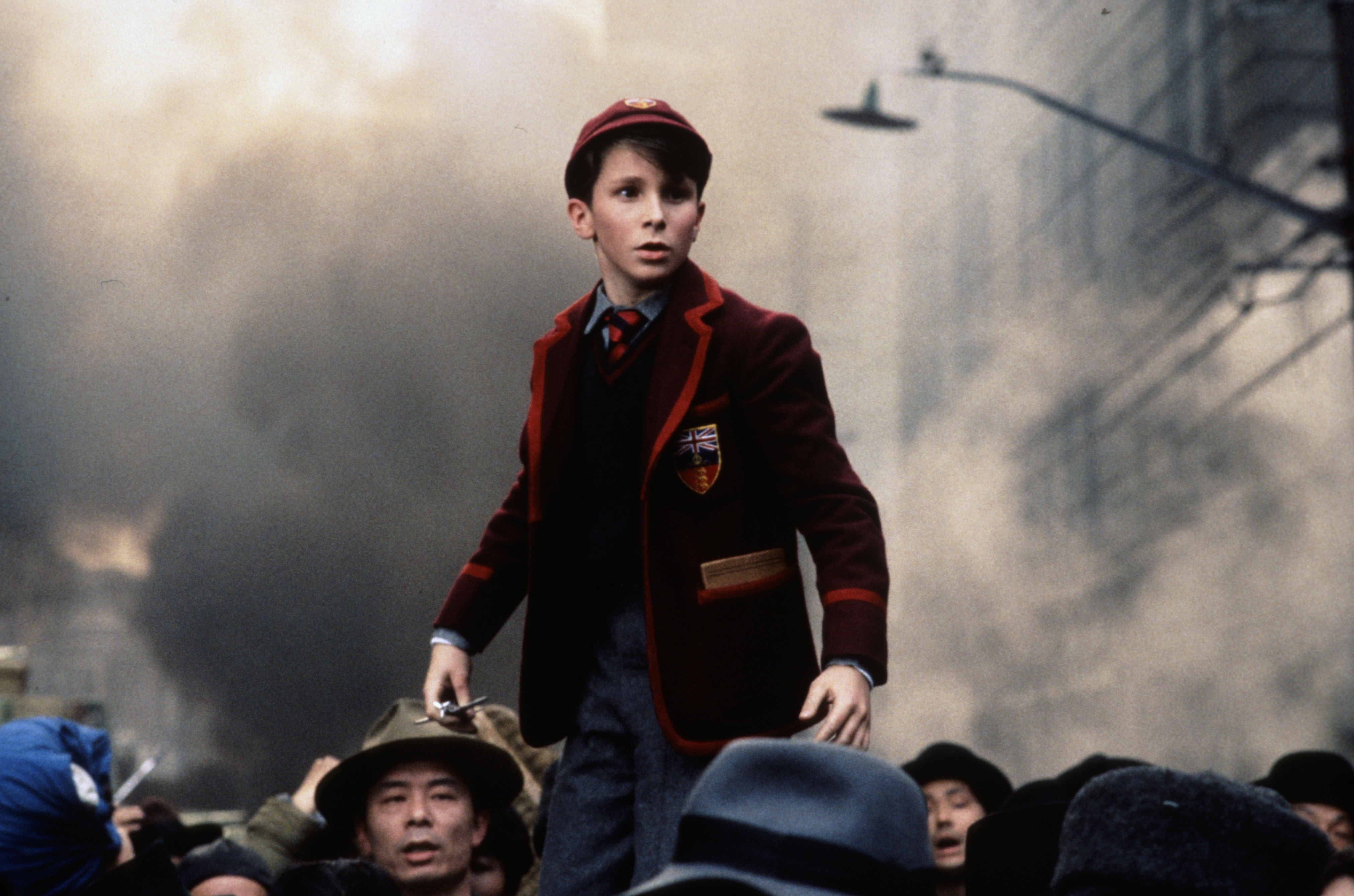
www.imdb.com/it/video/vi497352985/?playlistId=tt0092965&a...
.............................................................................
click to activate the small icon of slideshow: the small triangle inscribed in the small rectangle, at the top right, in the photostream (it means the monitor);
or…. Press the “L” button to zoom in the image;
clicca sulla piccola icona per attivare lo slideshow: sulla facciata principale del photostream, in alto a destra c'è un piccolo rettangolo (rappresenta il monitor) con dentro un piccolo triangolo nero;
oppure…. premi il tasto “L” per ingrandire l'immagine;
www.fotografidigitali.it/gallery/2726/opere-italiane-segn...
………………………………………………………………………
In this series of photographs, I returned to the beaches around Taormina, thus concluding a "photographic triad" dedicated to beach photography, encouraged by my life and residence near the sea since I was a boy; I post photographs that speak of serenity, joie de vivre, love in the broadest sense, featuring beachgoers of all ages, whose habits (often) are consolidated by living in sun-kissed latitudes. And yet, I ask myself, every day in the world we witness immense tragedies, caused not by natural disasters (often unpredictable), but by the sinister and nefarious will of man, and so I ask myself if it is right to post images that speak of a reality that almost seems to come "from another planet (sigh!)”, where coexistence, a sense of brotherhood, Love, coexist peacefully among people (in this case... often) in bathing suits :-) .... The next "photographic cycle" will be dedicated to several photographic series that "wait to see the light - again -", having as their theme the traditional religious popular festivals that characterize our island of Sicily.
In questa serie di fotografie, sono ritornato sulle spiagge nei dintorni di Taormina, concludo così una “triade fotografica” dedicata alla beach photography, favorito dal mio vivere ed abitare fin da ragazzino vicino al mare; metto fotografie che parlano di serenità, gioia di vivere, amore in senso lato, che hanno come protagonisti bagnanti di tutte le età, le cui abitudini (spesso) sono consolidate dal vivere a latitudini baciate dal sole. Eppure, mi domando, ogni giorno nel mondo assistiamo a tragedie immani, causate non da catastrofi naturali (spesso imprevedibili), ma provenienti dalla volontà bieca e nefasta dell’uomo, ed allora mi chiedo se sia giusto postare immagini che parlano di una realtà che sembra quasi provenire “da un altro pianeta (sigh!)”, dove la convivenza, il senso di fratellanza, l’Amore, coabitano serenamente tra le persone (in questo caso…spesso) in costume da bagno :-) …. Il prossimo “ciclo di fotografie” sarà dedicato a più serie fotografiche che “aspettano di vedere – nuovamente – la luce”, aventi come tema le feste popolari tradizionali religiose, che caratterizzano la nostra isola di Sicilia.
……………………………………………………
Minnesota Commercial's Hiawatha Job is spotted off 37th Street in South Minneapolis heading to switch the ADM mill off Hiawatha Avenue on one of the coldest days of the winter season thus far. Power for the train is #76, a B36-7 built SBD #5884 in 1985 and still in the livery of its former owner, the legendary TTI.
Thus ends the Seventeenth 365 Journey for me. I hope and pray everyone has had a truly life-filled 2025, and pray for bigger and better things for all who read this in the coming year.
Thanks for being along for the ride.... see you in 2026!
Theme: Power In Words
Year Seventeen Of My 365 Project
The Australasian Shoveller, one of many overwintering in Braeside (thus avoiding being shot at during "the season") doing what he does best.
(Spatula rhynchotis)
We extended The Roaches walk and visited Lud’s Church near Gradbach. An impressive natural rock cleft that was once a worshipping place for Lollards and inspired the poem 'Gawain and the Green Knight'. Here is information from the Peak District website www.peakdistrictinformation.com/visits/ludschurch.php
“Lud's Church is an immense natural cleft in the rock on the hillside above Gradbach, in a forest area known as the Black Forest. The feature has been formed by a landslip which has detached a large section of rock from the hillside, thus forming a cleft which is over 15 metres high in places and over 100 metres long, though usually only a couple of metres wide.
Over the ages this place has offered shelter to all sorts of renegades and there is a tradition that Robin Hood used it. However, it is fairly certain that the Lollards (followers of John Wycliffe, an early church reformer, who were condemned as heretics) used it as a place of worship in the early 15th century, giving the place its current name. The church also acted as the model for the 'Green Chapel' in the classic mediaeval poem 'Sir Gawain and the Green Knight', and the aura of mediaeval romance still seems to stick to it.”
(From my Personal Pictures Digital Archive, year 2015)
The sign says: "Hier waren Deutschland und Europa bis zum 10 november 1989 um 18 uhr geteilt"
In English: "Here Germany and Europe were divided until 10 November 1989 at 6 p.m."
The Glienicke Bridge (German: Glienicker Brücke) is a bridge across the Havel River in Germany, connecting the Wannsee district of Berlin with the Brandenburg capital Potsdam. It is named after nearby Glienicke Palace. The current bridge, the fourth on the site, was completed in 1907, although major reconstruction was necessary after it was damaged during World War II.
During the Cold War, as this portion of the Havel River formed the border between West Berlin and East Germany, the bridge was used several times for the exchange of captured spies and thus became known as the Bridge of Spies.
HISTORY: A first wooden bridge across the Havel River at this location was built about 1660, in order to reach the hunting grounds around Stolpe. By the early 1800s, a new, non-wooden bridge was needed to accommodate the massive increase in traffic on the chaussee between the Prussian capital Berlin and the Hohenzollern residence in Potsdam. The architect Karl Friedrich Schinkel designed a brick and wood bascule bridge, which was finished in 1834. By the early 20th century, Schinkel's bridge was no longer able to handle the increased volume in traffic, and operating the moveable sections of the bridge caused delays in steamer traffic on the Havel River.
In 1904, the Prussian government held a design competition to replace Schinkel's bridge with a modern, iron bridge. The Johann Caspar Harkort Company of Duisburg submitted the winning design, and the present-day bridge was inaugurated on 16 November 1907.
The German film studio UFA shot the film Unter den Brücken (Under the Bridges) at the Glienicke Bridge in 1944 and 1945. At the end of April 1945, an unexploded shell severely damaged the bridge. The reconstruction of the steel bridge was not completed until 1949, after the establishment of West Germany and East Germany. The East German government named it the “Bridge of Unity" as the border between East Germany and Western Allied-occupied West Berlin ran across the middle of the bridge.
COLD WAR: During the early years of the Cold War, the bridge was mainly used by the Allies as a link between their Berlin sections and the military liaison missions in Potsdam. German residents of the two cities more frequently used the S-Bahn suburban rail to travel between Berlin and Potsdam. On 27 May 1952, East German authorities closed the bridge to citizens of West Berlin and West Germany. The bridge was closed to East German citizens after the construction of the Berlin Wall in August 1961. Only allied military personnel and foreign diplomats were allowed to access the bridge at any time.
Of all the checkpoints between West Berlin and East Berlin, as well as those between West Berlin and East Germany, the Glienicke Bridge had the uniqueness of being the only such checkpoint of not only having a Soviet presence, but also of being under full Soviet control; all other checkpoints were under East German control, and had no Soviet presence.
By the 1970s, the bridge had outlived its projected lifespan and needed significant repairs. The cost of these repairs became a focus of a dispute between the government of West Berlin and the government of East Germany. In 1980 the West Berlin government repaired its half of the bridge, and in 1985 the West Berlin government paid for repairs to the East German half of the bridge in exchange for formally renaming the bridge "Glienicke Bridge" from "Bridge of Unity."
On the evening of 10 November 1989, one day after the opening of the Berlin Wall, the Glienicke Bridge was reopened for pedestrians. Border fortifications and barricades were dismantled as a part of German reunification in 1990.
BRIDGE OF SPIES: Because the Glienicke Bridge was a restricted border crossing between the Eastern Bloc (namely Potsdam in East Germany) and territory affiliated with the Western powers (namely the American sector of West Berlin), the Americans and Soviets used it for the exchange of captured spies during the Cold War. Reporters began calling it the "Bridge of Spies." When this name was later used as the title for various works, it was often taken to be a pun on "bridge of sighs" a name applied first to the bridge in Venice and then to others.
The first prisoner exchange took place on 10 February 1962. The Americans released Rudolf Abel, convicted for spying for the Soviet Union in 1957, in exchange for Gary Powers, the pilot of a U-2 spy plane shot down in 1960.
On 12 June 1985, there was a swap of 23 American agents held in Eastern Europe for Polish agent Marian Zacharski and another three Soviet agents arrested in the West. The exchange was the result of three years of negotiation.
The final exchange was also the most public. On 11 February 1986 the human rights campaigner (refusenik) and political prisoner Anatoly Shcharansky (now known as Natan Sharansky) and three Western agents were exchanged for Karl Koecher and four other Eastern agents
VISITANDO EL PUENTE DE GLIENICKE ("EL PUENTE DE LOS ESPÍAS") 2015
(De mi Archivo Digital de Fotos Personales, año 2015)
El cartel dice: "Hier waren Deutschland und Europa bis zum 10 november 1989 um 18 uhr geteilt"
En español: "Aquí Alemania y Europa estuvieron divididas hasta el 10 de noviembre de 1989 a las 18 horas."
El Puente Glienicke (en alemán: Glienicker Brücke) es un puente que cruza el río Havel en Alemania y conecta el distrito berlinés de Wannsee con Potsdam, la capital de Brandeburgo. Recibe su nombre del cercano Palacio de Glienicke. El puente actual, el cuarto en este lugar, se terminó de construir en 1907, aunque fue necesaria una importante reconstrucción tras sufrir daños durante la Segunda Guerra Mundial.
Durante la Guerra Fría, dado que este tramo del río Havel formaba la frontera entre Berlín Occidental y Alemania Oriental, el puente se utilizó varias veces para el intercambio de espías capturados, por lo que se le conoció como el Puente de los Espías.
HISTORIA: El primer puente de madera sobre el río Havel en este lugar se construyó alrededor de 1660 para acceder a los cotos de caza en los alrededores de Stolpe. A principios del siglo XIX, se necesitaba un nuevo puente, sin madera, para dar cabida al enorme aumento del tráfico en la Chaussee entre Berlín, la capital prusiana, y la residencia de los Hohenzollern en Potsdam. El arquitecto Karl Friedrich Schinkel diseñó un puente levadizo de ladrillo y madera, que se terminó en 1834. A principios del siglo XX, el puente de Schinkel ya no podía soportar el aumento del volumen de tráfico, y el funcionamiento de las secciones móviles del puente causaba retrasos en el tráfico de barcos de vapor en el río Havel.
En 1904, el gobierno prusiano convocó un concurso de diseño para sustituir el puente de Schinkel por un moderno puente de hierro. La empresa Johann Caspar Harkort de Duisburgo presentó el diseño ganador, y el puente actual se inauguró el 16 de noviembre de 1907.
El estudio cinematográfico alemán UFA rodó la película "Unter den Brücken" (Bajo los Puentes) en el puente Glienicke entre 1944 y 1945. A finales de abril de 1945, un proyectil sin explotar dañó gravemente el puente. La reconstrucción del puente de acero no se completó hasta 1949, tras la creación de Alemania Occidental y Alemania Oriental. El gobierno de Alemania Oriental lo denominó "Puente de la Unidad", ya que la frontera entre Alemania Oriental y Berlín Occidental, ocupado por los Aliados, discurría por su centro.
GUERRA FRÍA: Durante los primeros años de la Guerra Fría, el puente fue utilizado principalmente por los Aliados como enlace entre sus secciones berlinesas y las misiones de enlace militar en Potsdam. Los residentes alemanes de ambas ciudades utilizaban con mayor frecuencia el tren suburbano S-Bahn para viajar entre Berlín y Potsdam. El 27 de mayo de 1952, las autoridades de Alemania Oriental cerraron el puente a los ciudadanos de Berlín Occidental y Alemania Occidental. Tras la construcción del Muro de Berlín en agosto de 1961, el puente permaneció cerrado a los ciudadanos de Alemania Oriental. Solo el personal militar aliado y los diplomáticos extranjeros podían acceder al puente en cualquier momento.
De todos los puestos de control entre Berlín Occidental y Berlín Oriental, así como entre Berlín Occidental y Alemania Oriental, el puente de Glienicke tenía la singularidad de ser el único que no solo contaba con presencia soviética, sino que también estaba bajo pleno control soviético; todos los demás puestos de control estaban bajo control de Alemania Oriental y no tenían presencia soviética.
Para la década de 1970, el puente había superado su vida útil prevista y necesitaba reparaciones importantes. El coste de estas reparaciones se convirtió en el foco de una disputa entre el gobierno de Berlín Occidental y el gobierno de Alemania Oriental. En 1980, el gobierno de Berlín Occidental reparó su mitad del puente, y en 1985, el gobierno de Berlín Occidental pagó las reparaciones de la mitad del puente correspondiente a Alemania Oriental a cambio de renombrarlo oficialmente como "Puente de la Unidad", pasando de "Puente de Glienicke" a "Puente de la Unidad".
En la noche del 10 de noviembre de 1989, un día después de la caída del Muro de Berlín, el Puente de Glienicke fue reabierto al tránsito peatonal. Las fortificaciones y barricadas fronterizas fueron desmanteladas como parte de la reunificación alemana en 1990.
PUENTE DE LOS ESPÍAS: Dado que el Puente de Glienicke era un paso fronterizo restringido entre el Bloque del Este (Potsdam, en Alemania Oriental) y territorios afiliados a las potencias occidentales (el sector estadounidense de Berlín Occidental), estadounidenses y soviéticos lo utilizaron para el intercambio de espías capturados durante la Guerra Fría. Los periodistas comenzaron a llamarlo el "Puente de los Espías". Cuando este nombre se utilizó posteriormente como título de diversas obras, a menudo se interpretó como un juego de palabras con "Puente de los Suspiros", nombre que se aplicó primero al puente de Venecia y luego a otros.
El primer intercambio de prisioneros tuvo lugar el 10 de febrero de 1962. Los estadounidenses liberaron a Rudolf Abel, condenado por espiar para la Unión Soviética en 1957, a cambio de Gary Powers, piloto de un avión espía U-2 derribado en 1960.
El 12 de junio de 1985, se produjo un intercambio de 23 agentes estadounidenses detenidos en Europa del Este por el agente polaco Marian Zacharski y otros tres agentes soviéticos arrestados en Occidente. El intercambio fue el resultado de tres años de negociaciones.
El último intercambio también fue el más público. El 11 de febrero de 1986, el activista de derechos humanos (refusenik) y preso político Anatoly Shcharansky (ahora conocido como Natan Sharansky) y tres agentes occidentales fueron intercambiados por Karl Koecher y otros cuatro agentes orientales.
This was before I slammed my camera against a rock and jammed the cap into my polarizer, thus still had a choice to or not to use it. Even so, I liked the reflections and rotated the filter to accentuate those as opposed to eliminating them.
For thus saith the high and lofty One that inhabiteth eternity, whose name is Holy; I dwell in the high and holy place, with him also that is of a contrite and humble spirit, to revive the spirit of the humble, and to revive the heart of the contrite ones.
(Isaiah 57:15)
2020 is very likely to be the last winter for the Sandouling open cast coal pit in China and thus the use of steam traction at this facility will cease.
With reserves nearly depleted the future of the mine will be reviewed in April/May.
Here we see stalwart traction for the coal trains in the form of Class JS 2-8-2 locomotive No 8190. She was built in the mid 80s and is still going strong today.
The area is on the edge of the Gobi desert and is largely featureless and expansive. This man made hole facilitates the removal of the coal from the mine at Xikang to the washery at Xuanmechang. From there it is transferred for onward transportation by diesel locomotive being loaded in the Nanzhen freight yards.
Temperatures during my visit ranged from -7 to -23.
Unusually for the area there was some prolonged snowfall. The area is usually bone dry the last light covering of snow being in 2012.
And thus my journey ended...
Don't worry. Everything was under control. I rebooted the matrix and things bewent back to normal again.
Check out my latest blog post (see link below) for the original image.
Enjoy!
Blog • 500px • Google+ • @Christian_TTV • Getty • Buy prints
GOATHLAND WHINSTONE RIDGE Boundary stone
GV II One boundary stone of a pair. Dated 1813. Gritstone. Roughly-tooled, round-headed monolith, approximately 1.2 metre high. West face inscribed:
"GOATHLAND BOUNDARY DETERMINED AT YORK ASSIZES 1813"
Second boundary stone (q.v.) marks extent of the civil parish of SNEATON. On 15 March 1813 an action was brought by the Lord of the Manor of Sleights against the Lord of the Manor of Goathland to determine the boundary, and thus the extent of grazing rights, of the two parishes.
I haven't been to this popular location before so I didn't really know what to expect, it was a proper winters day, cold with strong winds thankfully nice and bright though. It seemed quite a long walk from the car park I would guess at 3 miles each way, but definitely well worth the effort. I plan to go back to this location when the heather is in colour.
The Millstone Grit forms the edge of the high peat moorland plateau on the eastern side of the valley above Ladybower Reservoir, the edges being the last remains of the gritstone which originally covered all of the Peak District, most of which was scraped off by glaciers in the last ice age.
The Edge itself is notable for its unusual gritstone tors and its views of the Derwent Valley and the Dark Peak landscape; these features along with its proximity to Sheffield have made it a popular venue for walkers. Its popularity has led to substantial path erosion and the most affected parts of the edge between The Salt Cellar and Lost Lad Hillend have been paved with natural stone slabs to reduce further damage as part of the Lottery Paths Project.
Derwent Edge has several examples of unusually shaped gritstone tors that have been formed by the actions of wind, rain, and frost over many centuries. These tors have been named over the years by local residents and have now been officially titled on Ordnance Survey maps. These include the Cakes of Bread, the Coach and Horses, and the Salt Cellar. The Coach and Horses (also known as the Wheel Stones and thus named on Ordnance Survey maps) resemble a coach and horses on the horizon when viewed from the A57 road to the south. Lost Lad Hillend is worth visiting as it has a stone-built topographic indicator to aid in identifying landmarks in the extensive view.
An imposing Victorian building that was once a charitable school to help ragged children is now a residential property. A poster on the walls says, “The Shaftsbury Society’s charitable union of The Mint and Gospel Lighthouse mission for the guidance of ragged children in matters of cleanliness, appearance and manners thus enabling them to take up a military career no matter how short.” An engraved stone on the building says, “To the glory of God this stone was laid by the right honourable Lord Mayor of London Sir William P Treloar November 13th, 1906.” (layersoflondon.com)
[PT] Os Alfas Pendulares da CP - Comboios de Portugal estão a ser equipados com iluminação led no foco central, proporcionando assim uma melhor visibilidade aos maquinistas em condições com pouca iluminação, além de outros benefícios que estas luzes apresentam face às convencionais.
[EN] The Alfas Pendulars of CP - Comboios de Portugal are being equipped with LED lighting in the central focus, thus providing better visibility for train drivers in low-light conditions, in addition to other benefits that these lights have compared to conventional lights.
[ES] Los Alfas Pendulares de CP - Comboios de Portugal están siendo equipados con iluminación LED en el foco central, proporcionando así una mejor visibilidad para los maquinistas en condiciones de poca luz, además de otros beneficios que estas luces tienen en comparación con las luces convencionales.
Thus little cove on Paddy Creek is a favorite foto stop. The sliders came to the rescue with cropping, lightening and brightening an otherwise dark and indistinguishable image.
“And thus the... valley became a garden again, and the inheritance, which had been lost by cruelty, was regained by love.”
― John Ruskin, The King of the Golden River
Visit Pususaari.
The weather saved the best for last as our final sunset of the trip set the sky ablaze for over 45 minutes. This was my first time to this area of badlands thus a href="https://www.flickr.com/photos/mrbarbosa2000/">David and Paul gave me a tour of the area and showed me some of the best hoodoo formations. With their recommendation, I stuck around the ‘Magic Mushrooms’ for most of sunset and ultimately came away with several compositions from the area. I truly felt I was on an alien planet with unique and spectacular hoodoos at every corner.
Image recorded at DeepSkyWest with a RCOS 14.5 and SBIG STX 16803.
Color data come from FSQ106EDXIII and QSI683.
L: 6x600s
RGB: (11, 11, 3)x300s
Copyright: R. Colombari / DeepSkyWest
_________________________
The Trifid Nebula (catalogued as Messier 20 or M20 and as NGC 6514) is an H II region located in Sagittarius. It was discovered by Charles Messier on June 5, 1764.[3] Its name means 'divided into three lobes'. The object is an unusual combination of an open cluster of stars; an emission nebula (the lower, red portion), a reflection nebula (the upper, blue portion) and a dark nebula (the apparent 'gaps' within the emission nebula that cause the trifurcated appearance; these are also designated Barnard 85). Viewed through a small telescope, the Trifid Nebula is a bright and peculiar object, and is thus a perennial favorite of amateur astronomers.[4]
The Trifid Nebula is a star-forming region in the Scutum spiral arm of the Milky Way.[5] The most massive star that has formed in this region is HD 164492A, an O7.5III star with a mass more than 20 times the mass of the Sun.[6] This star is surrounded by a cluster of approximately 3100 young stars.[7]
Source: Wikipedia
Memorial for over 10 000 soviet prisoners-in war executed in Sachsenhausen immediately after arriving at the camp between August 31 and October 2, 1941.
The photographs were taken by a Czech fellow-prisoner on behalf of the SS and were meant to be used for an exhibition to illustrate the Slavic subhuman. The prisoner managed to take the negatives with him when he was sent on the Death march in 1945 and thus preserved them from destruction.
St George Island Florida. 4/16/2014.
This post is the 20th warbler species I have posted since the end of March which for me is somewhat of a milestone. Those of you who are familiar with my photo stream know I have a special interest in warblers. My warbler images this year are thus far mostly taken in Georgia where we have over 20 breeding species in our state, and several images have been from Florida, with a few from Tennessee and a few from North Carolina. I have 2 or 3 more species to post from this Spring. The end of July marks for me to beginning of my fall migration efforts where I try for fall plumages including females and juveniles. I also hope to pick up some additional warbler species. I have had a lot of fun and adventure since the end of March working on this, and I sincerely appreciate all the comments and favs.
Photographing a city at night has its special charm. Apart from the fact that the weather plays a minor role, except when it rains, every city shows a completely different side. The sights are usually illuminated and thus stand out especially from the surroundings.
During a stroll through Zurich at night, the Grossmünster was illuminated and showed its most beautiful side. The place of worship is illuminated in a great way and shines over the whole city.
By the way, the Grossmünster is a famous Romanesque cathedral with double towers, in which the reformer Huldrych Zwingli preached in the 16th century.
Thanks for your criticism and as always, favs, likes and comments are gratefully appreciated!
A katydid nymph on a canna plant in our garden.
This particular fellow has lost one of his antennae and thus the unicorn moniker struck in my mind when I viewed this on the screen.
This was a handheld shot taken with a Nikon D70 coupled with a Sigma 105mm fixed macro lens. I personally think the image is better when viewed at the larger sizes....
Namtso is one of the three holy lakes in Tibet and significant for Tibetan Buddhists. Kora is a Tibetan word that means "circumambulation" or "revolution". Kora is both a type of pilgrimage and a type of meditative practice in the Tibetan Buddhism. Thus, Namtso Kora means pilgrimage walk around the Lake Namtso.
Namtso literally means heavenly lake in Tibetan language. Located around 240km northwest of Lhasa, capital of Tibet, it takes four hours’ driving from Lhasa. Extending 70 km from east to west and 30 km from south to north, the lake covers an area of 1,920 sq km and has an altitude of 4748 m above sea level. It is biggest lake in Tibet and the second biggest salt lake in China as well as one of the highest lakes in the world. The water in the lake is crystally clear and blue. The blue sky joins the surface of the lake in the distance, creating an integrated, scenic vista.
In every Tibetan year of sheep, thousands of Tibetan Buddhism believers will come here to worship this sacred lake. As a rule, they will walk clockwise along the Namtso Lake in order to receive the blessing of the gods.
There are several fine Tibet treks around the lake. The shortest one is roughly 4 kilometers and takes less than one hour. It starts from the accommodation area to a hermit’s cave hidden behind a large spinter of rock. The kora continues to a rocky promontory of cairns and prayer flags. At the promontory, pilgrims undertake a ritural washing in the lake. And then the trail continues past several caves and a prostration point where there are two rock towers looking like two hands. Pilgrims squeeze into the deep slices of the nearby cliff face as a means of sin detection or drink water dripping from cave roofs, even swallow holy dirt.
#7700 Pashupatinath lays at the Holy Bagmati river and thus a holy cremation place,so spirits can find they're way to heaven, smoke risesto heaven while a golden sunray lightns the temple , a man standing in the smoke looks down ; water flowing with the remains of unburned wood, a life is gone, a new life starts