Sponsored images from 
View allAll Photos Tagged System.
BFI Waste Systems of San Jose, CA.
(Fun fact, these where the samer trucks used in the movie ''Men At Work'' BFI Los Angeles had the same type of trucks working as well)
Early morning activity at a foggy Nancheng stabling point on the Jixi Coal Mine railway system. Most of the steam infrastructure has been swept away with the imminent arrival of electric traction. Heilongjiang Province in northern China. December 2008 © Photo - David Hill.
My first complete solar system collage! Details:
Sun & Prominence, May 19, 2012
Composite image taken with iPhone 4S through Coronado PST H-alpha solar telescope.
Mercury, May 24, 2014
My first telescopic photo of tiny Mercury. Stack of 26 frames taken with iPhone 4S attached to NexStar 8SE telescope.
Venus, July 2, 2015
Stack of 51 frames taken with iPhone 6 through 8" telescope. Processed in Registax, Nebulosity, Gimp & Flickr.
Mars, June 24, 2016
Stack of 1200 frames with iPhone through NexStar 8 SE telescope. Stacked & edited in PIPP, Autostakkert, Registax, Nebulosity & Gimp.
Jupiter & Double Moon Shadow Transit, March 22, 2016
Includes Great Red Spot and shadows of moons Io & Europa. Stack of 700+ frames taken with iPhone 6 through 8" telescope.
Uranus, Feb 26, 2017
Stack of 150 iPhone 6 video frames taken with the NightCapPro app through 8" telescope.
Neptune, Jan 2, 2017
Stack of 5 single images taken with iPhone 6 using the NightCapPro app through 8" telescope.
Additional details available on my blog here: canadianastronomy.wordpress.com/2017/03/13/the-solar-syst...
GP40-2's #4293 & 4385 bring C&O train DT-41 into Conrail's Niagara Falls, NY yard on Sept. 1, 1984.(BO1261)
Samco system time. More photos of my local fields here: www.flickr.com/photos/davidambridge/albums/72157630401261538
Model: Tori Marie.
Photography and Editing: Dirk Dreyer. Hi-Res pictures and prints available at galleries.dreyerpictures.com
What do Hi-C, COOL-AID, and CAPRI-SUN have in common? They like to bask in the sun...or solar flares! ☀️
Low-noise cameras – built at #NASAMarshall - took to the skies on board a sounding rocket for a never-before-seen view of a solar flare.
In this image, from left, Austin Bumbalough, Ken Kobayashi, Harlan Haight, Sabrina Savage, William Hogue, Jim Cecil, and Adam Kobelski, members of the Hi-C Flare team, gather after the payload was recovered and brought to Poker Flat Research Range in Alaska. Hi-C Flare, equipped with Hi-C 3, COOL-AID, CAPRI-SUN, and SSAXI, launched into a solar flare as part of the first-ever solar flare sounding rocket campaign.
Image credit: NASA
#nasa #NASAMarshall #soundingrocket #heliophysics #corona #HighResolutionCoronalImager #HiC #Hi-C #Sun #solarflare
“Frigid and mysterious, Pluto is the outermost planet of our solar system. Whirling through space at an average of 3,600,000,000 miles from the Sun, Pluto takes more than 248 years to complete its orbit. Because so little is known about the yellowish ninth planet, it has been appropriately named for the mythological god of the dark underworld. If man eventually reaches Pluto he conceivably could use it as an outpost to search for other planets and life beyond our solar system.”
To me, a brilliant depiction of the mysterious unknowns ‘out there’. From the wonderful romantic, nostalgic & inviting glow/aura/halo of Pluto…with the hint of an unknown surface/atmospheric feature at the terminator, to the scattered smaller bodies/dwarf planets beyond. The dense, ‘full-frame’ stellar, nebular & galactic vista beyond is so evocative & beckoning, isn’t it? Superb. Masterful artistic license employed by Mr. Wilson during his time with/work for World Book Encyclopedia. I often tout black and white, but this must’ve been eye-popping in color.
I’ll refrain from a “Pluto demotion” rant & instead go to my tried, true, tiresome & pointless refrain: brilliant artwork, pretty much all gone, like it (THEY) never happened (WERE HERE). Reality, I get it, it’s unrealistic to honor, remember & ‘eulogize’ the plethora of ‘space’ artists. Too bad there isn’t an online central repository. Sad & disappointing.
I know there are WAY WAY worse things to lament...like the precipitous descent & near/imminent demise of humankind...but other than that, or actually...in addition to that, you, me, we...will never see the color version of this. It probably doesn't even exist anymore, although there is a chance that Mr. Wilson's family may have it. They seemed to have really recognized and honored his legacy. What a novel concept.
I would’ve loved to have seen this in color.
Unexpected to the operators, it was decided to cease rail operations on the US Air Force's Shaw Base.
After 66 years, this would be the final train to run to the interchange. Black flags were placed on the locomotives, and the departure occurred around 1:30 p.m. Several from the Air Force joined in on the run, or took photographs at grade crossings. By 2:00 p.m., both 80Tonners had shoved the train to the CSX interchange, and returned to Shaw AFB in Sumter, SC.
Beginning to run-around, Cane Savannah, SC.
The Llwyngwril Systems Guppy was a high performance speeder bike. It was aimed at pilots who found the power of the Daley-Harleyson WD-40 "Whale" underwhelming and insufficient.
The bike was yet another huge Watt & Pritney turbojet engine, with a seat and some bodywork. Steering was achieved somehow, eventually, after a long while and probably with the aid of telekinesis. Inspiration for the bike's name came from the Super Guppy series of aeroplanes.
************************************
This model uses two more of the six black fans that I bought from Bricklink. Two more left to use, plus a blue one!
This former motor vehicle factory was built in 1917 by Wallis, Gilbert and Partners, in collaboration with Truscon, for Tilling-Stevens Ltd. It is an example of a factory designed using the Kahn Daylight System. The various sheds which adjoin the factory building to the south are not of special interest.
Reasons for Designation
The former Tilling-Stevens factory, 1917 by Wallis, Gilbert and Partners, in collaboration with Truscon, is designated at Grade II for the following principal reasons: * Historic interest: the building is the earliest surviving by the practice of Wallis, Gilbert and Partners, the foremost factory architects of the inter-war period; it is also one of few surviving examples of their early Daylight factories not to have undergone significant alteration; * Technical interest: the building is one of few surviving examples of a group of English factories built using the Kahn Daylight System, an adaptable, efficient and influential system of factory building, developed in America for the construction of automotive factories; * Architectural interest: the front elevation of this imposing building employs the compositional devices and decorative motifs which became synonymous with the work of Wallis, Gilbert and Partners; the powerful rationality of its other elevations expresses the modern approach to industrial architecture that its design, construction and layout embodies.
History
In 1916 Thomas Wallis (1872-1953) founded the architectural practice of Wallis, Gilbert and Partner (becoming Wallis, Gilbert and Partners the following year). In the early years of the practice it worked in close collaboration with Trussed Concrete Steel Limited (Truscon). Truscon's proprietary system of concrete reinforcement had been developed by the Kahn family, who had set up Truscon to exploit the system in America; an English branch of the company formed in 1907. In America the Kahn system had been applied to the creation of a particular model of factory design which was based on a regular grid of column, beam and slab, in which the concrete frame was fully exposed, and the external walls were glass-filled, it was called the 'Kahn Daylight System' of factory design. The best known and most influential American example is Henry Ford's Highland Park Ford Plant, Michigan, designed and built in 1908 by Albert Kahn. Truscon built several Daylight factories in Britian prior to the partnership with Wallis, Gilbert and Partners (including three in Scotland), but the only English one known to survive in anything like original condition is Enterprise House, Hayes, of 1912, listed Grade II.
Together, Wallis, Gilbert and Partners and Truscon designed and constructed of a number of Daylight factories in England, of which the Tilling-Stevens factory is the earliest surviving. Wallis Gilbert and Partners went on to great success as an architectural practice, designing many factories and commercial buildings in the interwar period. One of their best known works is the Grade II* listed former Hoover Factory (1932-35) in Ealing.
Tilling-Stevens Ltd was formed in 1915 after WA Stevens, inventor of the petrol-electric motor, met Richard Tilling of Thomas Tilling Ltd, London's oldest omnibus operator (established 1847). The men recognised the potential for petrol-electric transmission in motorised buses, and the companies went into partnership together, manufacturing their own vehicles. New premises were added to Stevens' Maidstone works (known as the Victoria Works) in 1912, and following the formation of Tilling-Stevens Limited the works were enlarged again with the construction of the Wallis Gilbert and Partners factory in 1917 to accommodate production for war requirements.
The original design for the factory was a five-storey hollow rectangle, with a central, glazed, single-storey space within the well, which would contain part of the assembly shop. It was designed to be built in stages, with the south and west sides of the rectangle shown on the plans as 'future extension' (J Skinner 1997, 50). It is thought likely that the decision only to build the north and east sides of the rectangle was taken at an early stage, as the attic storey is centred over the existing front elevation. The factory was designed so as to accommodate all the various manufacturing processes in a downward flow through the building, each level being linked by electric lifts. Power was supplied to work stations by shafted over-head motors suspended from the beams.
In the early 1950s Tilling-Stevens was taken over by the Rootes Group, which was itself taken over in the mid-1960s by Chrysler (UK) Ltd; the Tilling-Stevens factory closed in 1975.
Details
The factory is constructed of a regular reinforced concrete grid, expressed throughout the exterior of the building; the front elevation, also of concrete, is dressed to present a classically-styled composition to the street.
MATERIALS: the building is composed of a grid of exposed horizontal and vertical reinforced concrete members, which divide the building into 20' by 20' bays; on the outer faces of the building the bays are in-filled with panels of red brick and glazing. The original windows were multi-light steel casements however these have almost universally been replaced with uPVC casements.
PLAN: the building is five storeys high with a small attic storey. The factory floor is L-shaped in plan; the core is 3 bays wide by 16 bays deep, with a perpendicular wing to the rear, 3 bays wide by 3 deep, extending southwards. Another 3 bay by 3 bay wing projects to the north, which contains the main goods lift and stair; this was where the services and amenities for the building were housed. The front of the building is an additional two bays wide to the north, providing a vehicular access at street level. A roadway runs from this entrance, through the centre of the northerly service wing (where there is a weigh bridge), and down the side and rear of the building. To the rear there is a projecting stair and lift tower, and to the south there is a second projecting lift tower; this is later in date, but appears to use the same construction system. There is a third internal fire escape stair on the south side of the building which exits onto St Peter's Street at the front.
EXTERIOR: with the exception of the front, all elevations of the building are without architectural embellishment and form a regular pattern of concrete grid, brick, and glass. The concrete grid is also expressed on the front elevation, however here the concrete is also used decoratively to shape the elevation into a classical composition. There is a heavy cornice over the fourth storey, with recessed ribbing and nail-head corner stops; the fifth storey is treated as a classical attic, having smaller windows and a much plainer and shallower cornice above. The true attic storey is three bays wide, central to the elevation and set back from the front. The bays to the far left and right of the elevation are treated as towers, defined by slightly projecting pilaster-like verticals to either side. The 'capitals' of these pilasters take the form of a circular disk, flanked by triglyph-like elements. At ground floor there is a pedestrian and vehicular entrance/exit to either side of the elevation. These openings are framed by wide, flat, unmoulded architraves and above each of the vehicular openings is a framed panel (which once bore the name of the company) with a stylised tassel motif to either side. This panel with tassels motif is repeated within the parapet above the attic storey.
The exterior of the building is generally little altered, the most notable exception being the replacement of the windows. The largest windows to the front were originally 54-light windows, they are now 12-light windows, those to the sides and rear were mostly 45-light windows, these are now 8-light windows. On the front elevation a doorway has been inserted into the left-hand of the three central bays to give access into a site office from St Peter's Street.
INTERIOR: the interior is utilitarian; at each storey concrete pillars support beams and joists which support the floor above. The pillars get progressively smaller in cross-section at each storey up. Circular holes are cast into the joists, through which a conduit carrying electrical cable ran; in some places slots are cast into beams and joists to carry the motors which were suspended overhead, providing power to the factory machinery. The factory floors, which would have been completely open, are now divided into units with concrete block walls built between pillars. Fixtures and fittings which may have been associated with the service and amenity block (which included an office, boiler house, first-aid rooms, lavatories and rest rooms) do not survive.
Sources
Books and journals
Collins, P, Stratton, M , British Car Factories from 1896: A complete historical, geographical, architectural and technological survey, (1993)
Skinner, J, Form and Fancy: Factories and Factory Buildings by Wallis Gilbert and Partners, 1919-1939, (1997)
Souster, E G W , The Design of Factory and Industrial Buildings, (1928), 142-148
'The Architects' Journal' in The Utility of Reinforced Concrete, (26 January 1928), 100-107
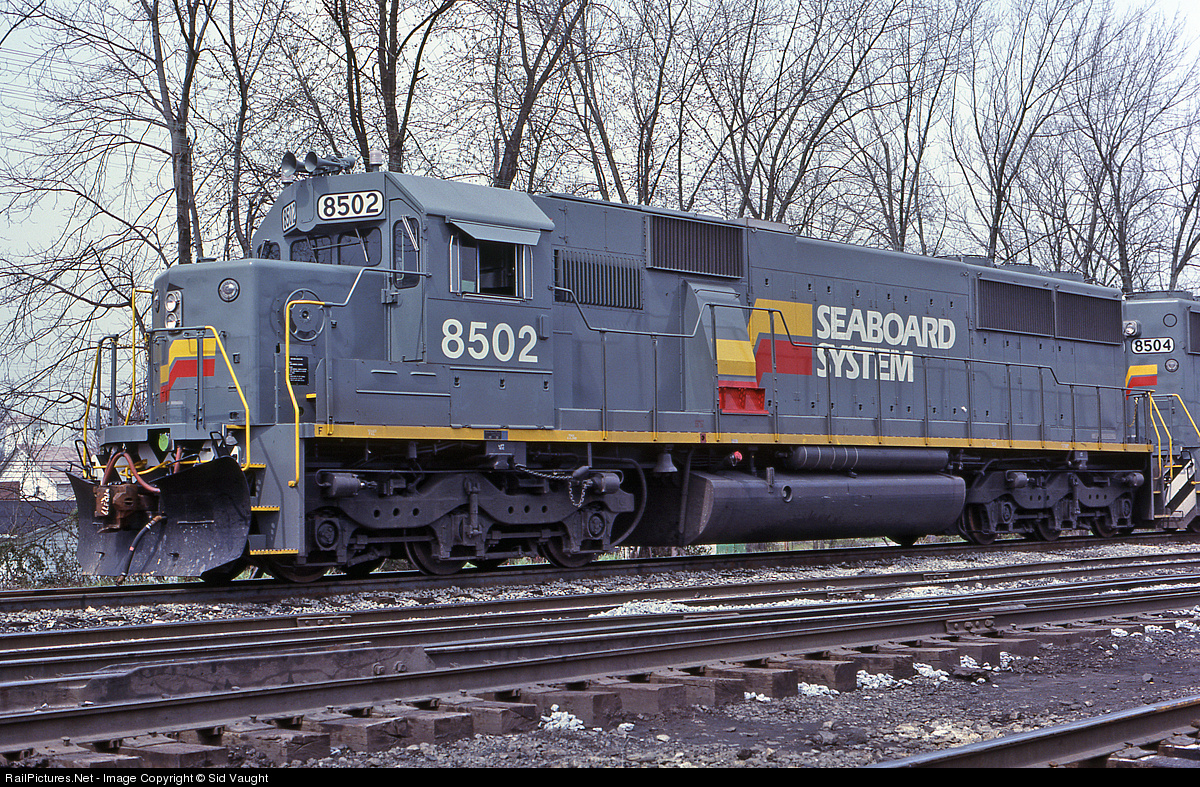
The last locomotives purchased by the L&N were SD50s, but they were all delivered in Seaboard gray. They did, however, retain some of the L&N subtleties such as nose mounted headlights and marker lights. For a kid like me in '83, they were a real shock. Seeing these big matched sets pulling exhaustingly long coal trains was the final end of the Louisville & Nashville railroad forever. They always seemed to come in sets of three and always followed by a mile of coal hoppers. I have built a Seaboard SD50 before, but it passed back into the brick long ago. I knew this time around I would have to do it right and build a 3 unit lashup of these 3500 hp brutes. I'll get back to you on that mile long string of hoppers.
NASA’s Space Launch System (SLS) rocket with the Orion spacecraft aboard is seen atop the mobile launcher at Launch Pad 39B as preparations for launch continue, Thursday, Sept. 1, 2022, at NASA’s Kennedy Space Center in Florida. NASA’s Artemis I flight test is the first integrated test of the agency’s deep space exploration systems: the Orion spacecraft, SLS rocket, and supporting ground systems. Launch of the uncrewed flight test is targeted for Sept. 3 at 2:17 p.m. EDT. Photo Credit: (NASA/Joel Kowsky)
So to my annoyance, Bryan has sold all my Canon gear and bought all Nikon stuff *rolls eyes*. The reason being, is that he wants to use the awesome 14-24mm landscape lens from Nikon, and since I needed a full frame camera anyways, he bought the D700 to go along with it.
This was taken with my new 35mm f/1.4 lens from Nikon. I love the lens, but hate using the Nikon body. I only hold the camera with my right hand to take photos, and because my hands are so tiny, I can't reach any of the dials on the Nikon camera. It is meant to be held with two hands, but since I have one hand on a doll all the time.... well you get the picture...
Anyways, I've missed using a full frame camera... I hate using cropped sensors. This lens also has nicer bokeh than the Canon 35 mm f/1.4 and has more aperature blades. The bokeh is much smoother on this lens. Love the lens, but hate the body... what can you do?
Striped uniforms in general have made a huge comeback into the jail and prison system, for a variety of reasons, such as mistaking jumpsuit-clad workers or scrub-clad nurses/doctors as inmates.
These hinged maximum security cuffs feature a pick resistant wafer lock. When double locked, these are the worlds most difficult cuffs to pick. Utilizing a wafer lock that requires a separate special key, the HSS9 cannot be opened with any other handcuff key. Not even other HSS9 keys.
We need to "uproot the system" - While I didn't ask the protester with the placard what precise meaning she wanted to convey, it seems obvious that we need to challenge the global corporate political system if we are to implement effective measures to combat climate change.
As part of coordinated protest action by tens of thousands of people worldwide, demonstrators took to the streets to demand urgent action to tackle the existential threat of catastrophic climate change. In London, several hundred protesters, many of them students, met in Parliament Square before marching to the Home Office. All part of the Fridays for Future campaign.
Norcal Waste Systems Inc. trucks prepare to depart for waste collection in San Francisco, California, U.S., on Tuesday, Nov. 17, 2009. Golden Gate Disposal & Recycling, a unit of Norcal, is San Francisco's authorized collection company serving businesses in the Financial District and contiguous neighborhoods including North Beach, South of Market, South Beach, Fisherman's Wharf and the Marina District. Photographer: Chip Chipman/Bloomberg via Getty Images