View allAll Photos Tagged Small-cap
A fairy chimney is a conical rock formation, typically found in the Cappadocia region of Turkey. It consists of a cap of hard rock resting on a cone-shaped pinnacle of softer rock.
The geology of areas where fairy chimneys form typically comprises a thick layer of tuff (consolidated volcanic ash), covered by a thin layer of basalt or other volcanic rock that is more resistant to erosion than the underlying tuff. Over time, cracks in the basalt allow the much softer tuff to be eroded and washed away. Fairy chimneys are formed where a small cap or boulder of the original basalt remains, and protects a cone of tuff beneath it from erosion.
Eventually, the tuff will be undercut to the extent that the cap falls off, and the remaining cone is then quickly eroded.
Mycena sp. Collected for mycologist. Small, Caps to 1 cm. Another reason that I check my lawn before mowing. My block.
Black-rumped Flameblack (Dinopium benghalense) Male. The males of this woodpecker have a much larger red 'cap' which almost reaches the base of the upper beak and thus differ from the females which have a smaller 'cap',
Top 10 Flickr Hacks, 2011 Edition. These are ways that you can enhance your Flickr experience through either tools developed outside of Flickr by independent developers or though little known ways that many don't know about to use the site.
I'm an active Flickr user on a daily basis and am always on the lookout for ways to improve my own experience. If you have other hacks that you feel are valuable and know about, feel free to share them in the comments.
1. SuprSetr. Without a doubt the best piece of third-party software ever developed for Flickr. Flickr should buy this software from its developer Jeremy Brooks and integrate it into the entire Flickr experience. SuprSetr allows you to organize your sets on Flickr by keywords or tags. Let's say (for instance) you want to make a set of all of your photos that you've taken in San Francisco (yes, all 17,000+ of them).
Simply tell SuprSetr to create a set by this tag and it will automatically build one for you. It can arrange the photos in your set by interestingness (flickr's internal rating system based on a photo's activity), by date taken or uploaded, or in no particular order. You have control over the main thumbnail for the set as well.
Jeremy hasn't officially released it yet, but I've been testing the final 1.0 release and it's the best version yet. It filters wicked fast.
I'm using SuprSetr to manage my almost 1,500 sets on Flickr and it works like a charm. This is a far more efficient way to manage your sets on Flickr than to manually organize each and every one by hand, having to add a photo to a set every single time you do another upload.
Jeremy's also developed tagerator, a great tool to analyze your flickr tags, make tag clouds, and rank your tags by now many times they are used. I found tagerator a great tool to find misspelled tags of mine and correct them.
2. Flickr Non-Reciprocal Contacts Finder. When Flickr redid their contacts page, they took out some functionality that was in the beta in the final release due to "drama". What they took out was the ability to see who your non-reciprocal contacts are on Flickr. You know the type. They add you. You add them back. And then they dump and you didn't even realize it. Or maybe it's just that you weren't aware that your so called friend of 3 years decided to unfriend you. Unfriending is messy business for any social network -- especially when they want you to feel all warm and fuzzy about your time spent there.
But if *do* want to know who those people who have dumped you are, it's as easy as installing Tom Harrison's Flickr Non-Reciprocal Contacts Finder greasemonkey script. It works for Firefox and Chrome and you can get it here. With Tom's script, under the normal "your contacts page" any who do not reciprocate back are returned in red text. This way you can know who's not following you back better. By the way, this script is working in Firefox for me right now but not Chrome for some reason.
What Flickr taketh away, Tom Harrison giveth back.
3. Google Reader. For over six years now Group Search on Flickr has been broken, badly. If you try to do a search for a term in a Group's discussion threads, results are haphazard at best. Recently it seems that they may have stopped indexing group discussion threads entirely. A group that I started last week Hot Box Uncensored (go check it out, it's the best new group on Flickr) returns zero results for search for every single keyword that I've been able to test thus far.
You would think that Yahoo, of all companies, would know a thing or two about indexing text for search, right? But apparently not.
To get around Yahoo/Flickr's super poor ability to index Flickr Group discussions, simply get a subscription to your favorite group's threads in Google Reader. Google are pure Pros at search (as opposed to those Yahoos at Yahoo) and get it right perfectly every time.
Going forward, any threads in a group discussion will be indexed for you in that RSS feed. Then you can search for a topic/discussion/etc. in your favorite group and get a link in reader right back to it perfectly thanks to Google's wonderful reliability.
Thanks, Ther!
4. Favorite Finder. Want to know how many times someone's faved your photos or how many times you've faved theirs? Want to see which photos your ex-girlfriend is faving of the new guy in her life (joking, joking, completely joking about that). Then check out Big Huge Lab's Favorite Finder.
This tool lets you put any two flickr users names into a form and returns how many (and which) of your photos that they've faved. For instance, you can see the 101 Thomas Hawk photos that Smoothdude has faved here.
Big Huge Labs also has a pretty good app called Flickr DNA where you can put in any Flickr user's name and it returns much more indepth information about them than the basic flickr profile page, including their most interesting photos on Flickr. You can check out my Flickr DNA profile here.
5. h4ppierphotos. Flickr's organizer tool is good. But h4ppierphotos is even better at some things.
For example, let's say you accidentally tagged all of your photos of your recent trip to the desert "dessert" (remember folks dessert has two s because you always like to go back for seconds). Presently with Flickr there is no way to go back and remove the 100 or so bad tags you made. You have to remove them one by one individually. This is where h4ppierphotos can be helpful. Simply tell h4ppierphotos to filter your photos with the tag that you want to remove and then have it remove all of them in bulk for you.
h4ppierphotos does lots of other things as well, want to do bulk date changes on your photos, or privacy or licensing settings? No problem.
6. FlickrMud. Is Flickr blocked at your work? Has your dictator's regime decided to block your flickr? Is there some reason why you can't get in Flickr through the front door at flickr.com? Then go in through the back door with Flickr's unofficial alternate url world FlickrMud.
Instead of accessing thomashawk's flickrstream with the normal url like this: www.flickr.com/photos/thomashawk/. You access it with this url instead: www.flickr.mud.yahoo.com/photos/thomashawk By adding the .mud.yahoo before the .com oftentimes you can access the site because this way of accessing Flickr is much less known and less likely to be blocked.
7. Fitr Flickr. Didn't you just hate it when Yahoo shoved that Yahoo Corp. logo bug down our throats right up there on the top of every page next to the Flickr logo?
If you're like me and hate the constant reminder that Yahoo owns Flickr, use Dan Pupius' Fitr Flickr Chrome Extension (you are using Chrome and not one of those "other" browsers right?) Dan wrote a nice little piece of code that just zaps that little Yahoo logo part out of existence for you (unless you hover over the logo).
But no, that's not really the main reason to use Fitr Flickr. One of the nice things that Fitr Flickr does is shows a photo's EXIF data information (where supplied by a user) in small unobtrusive text, right below the photo. Now instead of having to go hunt for a photos particular iso settings, etc. It's right there for you where you need it. It also includes tag autocomplete functionality that you might find helpful when adding tags on your photos on Flickr as well.
8. Hacking Explore. For those of you not blacklisted from Explore (like I am), there are a couple of interesting tools for exploring Explore, Flickr's section of their top 500 photos each day. First, you can use Scout to find out which of your own photos have appeared in Explore. Next if you want to filter all the "crap" out of explore and only have it return photos of your contact's photos you can use Drew Meyer's script to only show you photos from your contacts that have made it.
9. Get Rid of Paging on the Sets Pages. Don't you just hate paging? I do. Paging sucks!
Flickr used to let you and other users see all of your sets on one page. Then they changed it to a miserly 30 sets per page and paged the sets page. To see all of my sets now I'd have to page through 50 pages (ugh!). This makes it especially hard when you have a lot of sets to find sets or just see everything at a glance.
To get around this limitation simply paste in the code (don't use the quotation marks though) "?page=1&per_page=10000" at the end of any sets url on Flickr. This way you will get to see up to 10,000 of that users (or your own) sets on Flickr on a single page. For example to see all 1,490 of my sets on a single page go to my normal sets page with the code that I added on the end like this: www.flickr.com/photos/thomashawk/sets/?page=1&per_pag...
10. Rich text edit. Like bolding, italicizing, linking things, etc. in your comments on photos but hate having to manually type out the html code to do so? Then get this handy little rich text edit greasemonkey script which gives you a nice little menu at the top of your posts to use.
BONUS TIP:
DID YOU KNOW THAT FLICKR WON'T LET YOU ENTER COMMENTS ON PHOTOS OR POSTS IN GROUP PAGES IN ALL CAPS? I'M NOT SURE WHY, BUT SOMEWHERE ALONG THE WAY SOMEONE DECIDED THAT IF A USER ENTERS SOMETHING IN ALL CAPS THAT FLICKR WOULD AUTOMATICALLY TAKE THAT TEXT OUT OF ALL CAPS.
SO WHEN YOU REALLY WANT TO SHOUT SOMETHING IT MAKES IT HARDER FOR YOU.
TO GET AROUND THIS SILLY LIMITATION, SIMPLY REPLACE ONE OF YOUR LARGE CAP I'S WITH A SMALL CAP L. IT LOOKS THE SAME TO THE USER BUT WITH THE SINGLE SMALL CAP L IN THERE IT ALLOWS YOU TO STILL SHOUT ON FLICKR IF YOU NEED TO.
This morel species, although blessed with a smaller cap than most, is edible nevertheless. I have collected over 50 of these on a single outing in bygone times.
Its not in the best condition but still well worth picking up as these small caps don't come up very often on the rear half of the clips are missing
[Two more panoramas from the incredible Bryce Canyon]
A hoodoo (also called a tent rock, fairy chimney, and earth pyramid) is a tall, thin spire of rock that protrudes from the bottom of an arid drainage basin or badland. Hoodoos consist of relatively soft rock topped by harder, less easily eroded stone that protects each column from the elements.
Hoodoos form typically in areas where a thick layer of a relatively soft rock, such as mudstone, poorly cemented sandstone or tuff (consolidated volcanic ash), is covered by a thin layer of hard rock, such as well-cemented sandstone, limestone or basalt.
Over time, cracks in the resistant layer allow the much softer rock beneath to be eroded and washed away. Hoodoos are formed where a small cap of the resistant layer remains, and protects a cone of the underlying softer layer from erosion. Further erosion of the soft layer causes the cap to be be undercut, eventually falling off, and the remaining cone is then quickly eroded.
[from wikipedia]
Church Rock is an erosional feature carved from the Entrada Sandstone. This monolith is located on private property in Dry Valley, south of Moab. It clearly shows three units of the Entrada - the Dewey Bridge member at the base, the massive Slickrock Member forming the cliff and the Moab Tongue providing a small cap. Despite the name, the rock never had any religious significance. The peaks in the distance are the La Sal Mountains. San Juan Co., Utah.
Paul Valery's grave / Tombe de Paul Valery (face au banc) - Le Cimetière Marin - Sète - Hérault - France.
Paul Valery (1871-1945):
"L'Europe deviendra-t-elle ce qu'elle est en réalité, c’est-à-dire: un petit cap du continent asiatique?"
Variété, la crise de l’esprit (1919)
"L'Europe aspire visiblement à être gouvernée par une commission américaine. Toute sa politique s'y dirige"
Regards sur le monde actuel (1931)
"La faiblesse de la force est de ne croire qu'à la force"
Mauvaises pensées et autres (1941)
"Une religion fournit aux hommes des mots, des actes, des gestes, des pensées pour les circonstances où ils ne savent que dire, que faire, qu'imaginer" Cahiers
"Le mélange de vrai et de faux est énormément plus toxique que le faux pur" Cahiers
"Le problème de notre temps, c'est que le futur n'est plus ce qu'il a été" Variété
"Je ne suis pas toujours de mon avis" Cahiers
"Will Europe become what it really is, that is to say: a small cape of the Asian continent?"
Variety, the crisis of the mind (1919)
"Europe visibly aspires to be governed by an American commission. All its policy is directed there"
Views on the current world (1931)
"The weakness of strength is to believe only in strength"
Bad thoughts and others (1941)
"A religion provides men with words, acts, gestures, thoughts for circumstances where they don't know what to say, what to do, what to imagine" Notebooks
"The mixture of true and false is enormously more toxic than pure false" Notebooks
"The problem of our time is that the future is no longer what it once was" Variety
"I don’t always agree with my opinion" Notebooks
(Traduction by Reverso)
View of the Mourne Mountains from the lower peak of Slieve Bearnagh. You can see the mourne wall going into the distance over Slieve Donard which has a small capping of snow
Here's what the face looks like. The grippers from the front cap with the low center will also work, but the smaller caps with rounded sides for the SRW trucks are different. Part number on the back of this one is 52038271AB. Mrhubcap91
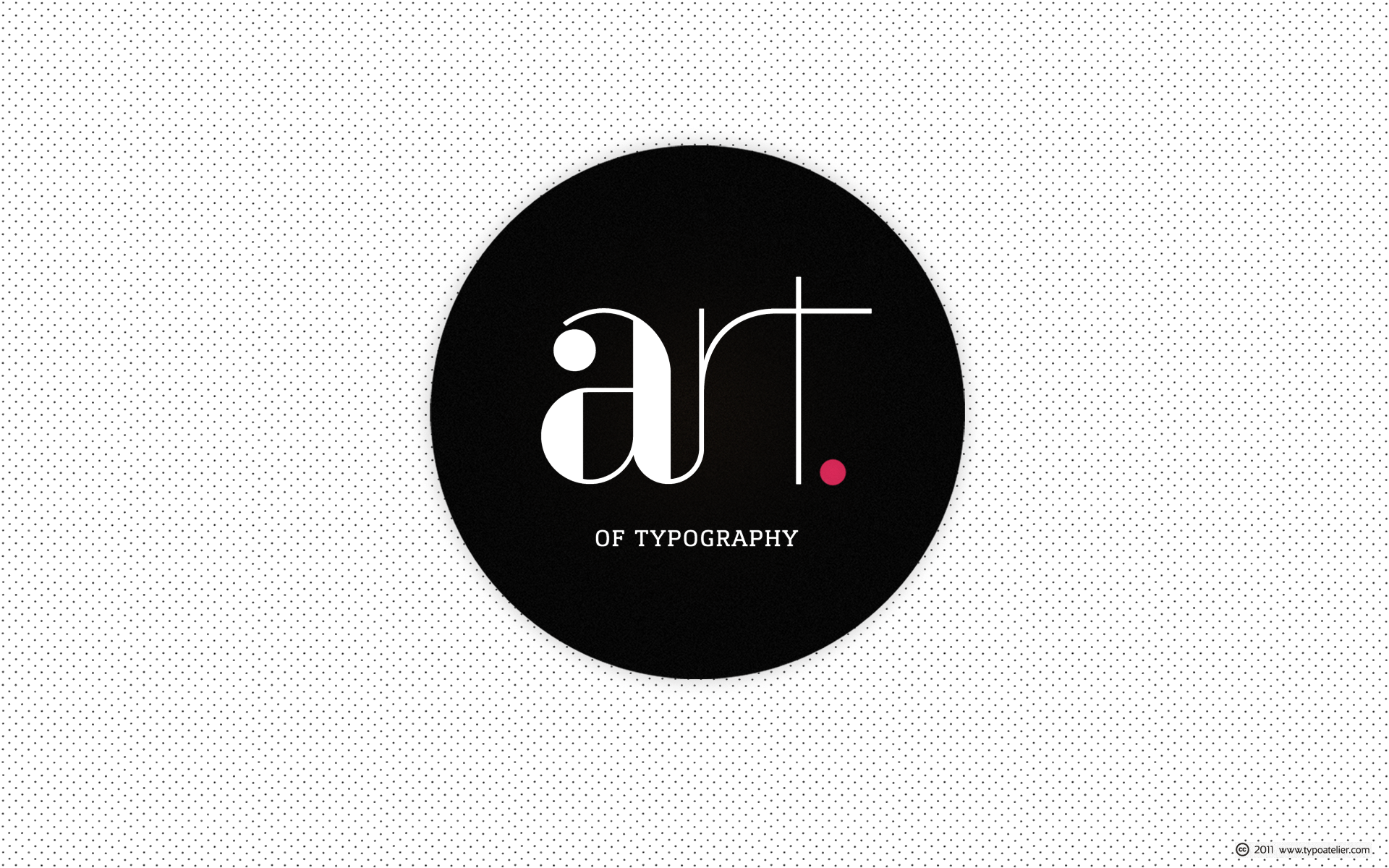
Typeface in use:
Rui Abreu’s (Fountain) balanced, modern slab serif typeface »Foral Pro«.
Foral Pro is a modern slab serif, organic and balanced, with harmonized proportions and polished forms. It is a eight-weight typeface, ranging from Light to Extra Bold with matching italics. It come with Small Caps and a wide range of OpenType features, allowing extensive and versatile use.
ligature »rt«
Corey Holms’ geometric, monoline, sans-serif typeface »Area«.
Area hearkens back to the disco era, reminiscent of nightclub and record advertising.
The rounded simple forms are updated with the implementation of negative kerning, which gives the typeface its unique look and modern feel. It is enhanced by the addition of over 50 ligatures that refine the final type treatment even further.
lowercase »a«
Danila Orlovsky’s (ParaType) fashionable, geometric Didone »Circus Didot«.
Circus Didot typeface presents a rework of a typical neoclassical serif type in a constructivist style. Analyzing the shapes of characters author placed basic geometric figures — triangles, rectangles, circles… above the contours of letters.
Resulting constructions staying recognizable letters at the same time bore a resemblance to pictures of Russian avant-garde artists from 20th century. This discovery has brought an idea to design a typeface where the tendency of a modern serif type to rationalism and geometry is realized in maximum possible extent. The prototypes for the project were taken from the works of Didot, lettering experiments of Russian constructivists and art deco artworks.
The technique of juggling with shapes and overall grotesque approach to the design explains the selection of the name for the font.
© PKG Photography
Kongwatan
This is a charming meadow just a short distance from the river. Among the pines near the river bank there is a small sulphur spring and also a forest rest hut. The place is inhabited by nomadic Gujar shepherds, said to be descendants of the biblical Abraham and Isaac, or Gujar Rajputs, who come each summer from the plains with their flocks of cattle and buffalo to spend July and August in the high meadows. They wear black clothes adorned only with a small cap, embroidered and set with 'Kari' shells. The caps of the women project over the neck to protect from sunburn. The women are very agile and seem to do all the work as well as taking care of the children.
WAY TO KONGWATAN.....
The path to Kongwatan passes through forests on the right bank of river Veshau. Guruatan is 1 km away from Aharbal Galwans are seen roaming around. A bridge has to be crossed at Guruwatan for onward journey. A track here leads to Hurapur, Sedau. On the right bank of Veshau is seen a huge stone, named Pandav dul. It looks as if a big pestel has been turned upside down. Its inner side is polished. After another 4 kms we reach Sangam, where Hakwas nullah alongwith streams from other lakes joins Kaundinya stream. At Sangam the left track leads to Kongwatan, while the right road goes to Ramakansan/Sekijan. A minihydroelectric station is coming up near Sangam at a place called Chori Kholu. A wooden bridge has to be crossed at Sangam on way to Kongwatan. A leisurely walk for another 4 kms (1« hr) takes one to Kongwatan.
This fine looking country house, some 14 miles south-east of Edinburgh, stands at the end of a minor public road, tucked into the hillside below Cake Muir, which is an extension of Fala Muir, where I just came down from. Indeed Fala Luggie Castle is only 3/4 of a mile from here, although quite a lot higher. The castle looks across the shallow valley of the Cakemuir Burn to Blackcastle Farm, which as the name implies, is where a castle once stood, thought to be the predecessor of this building.
Cakemuir as it stands today, is the product of many different building periods. The oldest part is the sturdy and substantial mid-16th century keep at this, the east end. Cakemuir is said to have obtained its name originally from the shelter and hospitality it provided for pilgrims on their way to Melrose Abbey. The words of an old ballad go:
See the way is long and drear,
Empty flasks and sorry cheer,
At Cakemuir there is bread and be'er.
In the name of every saint,
Let not weary pilgrim faint.
The tower is approximately square on plan, with a projecting circular stair-tower on its north-west angle. The stair-tower is rather curiously in-taken at second floor level, and then built out to the square above to form a rather small cap-house at parapet level.
The walls are massive, provided with numerous gun-loops but few windows, now rise four storeys to the parapet, with a garret storey above that. The floor levels have been altered however, as the building used to contain a storey less.
Wallpaper 1920x1200. Designed to be used as Cover for my 1st »Behance Project«—nothing but a selection of my Wallpapers.
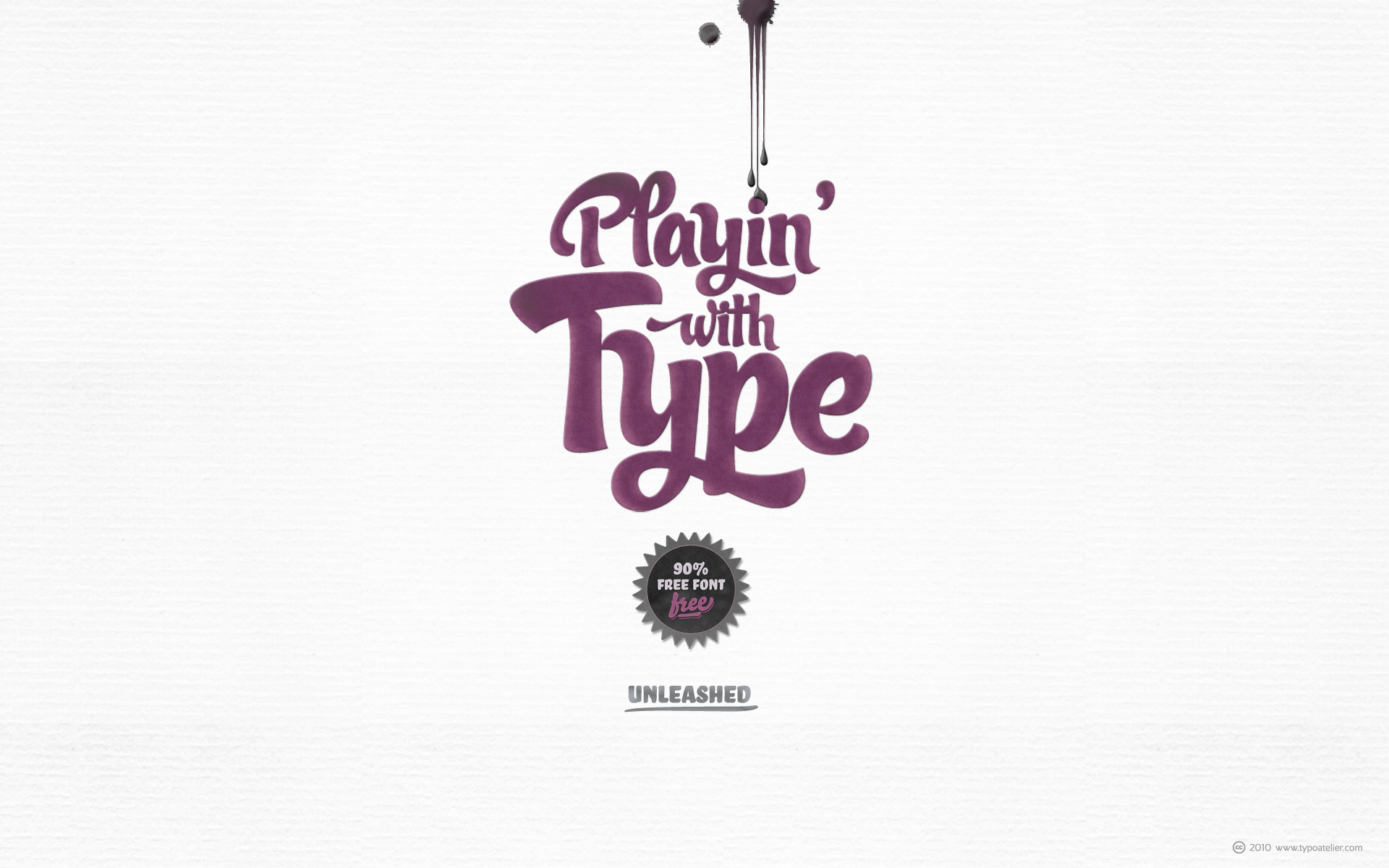
Typefaces in use:
Alejandro Paul’s (SUDTIPOS) unique, striking script face »Candy Script«.
Candy Script: Inspired by Argentina and its culture, Alejandro Paul’s Candy Script captures the country’s spirit. It comes from the tradition of window sign painting, but its thick hand-brushed characters, with alternates for almost every upper and lowercase letter, have a personality all their own.
Also in use:
Bas Jacobs, Akiem Helmling and Sami Kortemäki’s (Underware) brush-drawn, fashionable, lively script face »Bello Pro«.
Bello is a brush typeface for headline point sizes - it’s big & beautiful. Bello has lots of ligatures and start and ending swashes. They are automatic in Bello Pro, which is a cross-platform OpenType font with many OpenType features.
After a period of hand sketching and lettering, we decided to give Bello two main styles: script and small caps. These two fonts create a strong typographic contrast - while Bello Script is flourished and flowing, Bello Small Caps are upright and sturdy. As sturdy as brush lettering allows for, of course.
Careful spacing and kerning ensures that Bello appears like fluently written handwriting. However, that’s not enough for a hand-lettered feel. Therefore Bello comes with a set of 64 ligatures. Some of them are typographic, some made simply to create a more intimate, natural impression. For the same reasons we have added a few ornaments and a set of snap-on beginning and ending swashes which attach to the lowercase letters of Bello.
Mycena sp. Very small, caps 1 cm or less. The following day these changed colour to white [ image No.062 alongside].
My block.
I never actually finished that roundabout search so heres the pictures from the completed search i only just managed to spot this small cap!

Typefaces in use:
lowercase »a«
Danila Orlovsky’s (ParaType) fashionable, geometric Didone »Circus Didot«.
Circus Didot typeface presents a rework of a typical neoclassical serif type in a constructivist style. Analyzing the shapes of characters author placed basic geometric figures — triangles, rectangles, circles… above the contours of letters.
Resulting constructions staying recognizable letters at the same time bore a resemblance to pictures of Russian avant-garde artists from 20th century. This discovery has brought an idea to design a typeface where the tendency of a modern serif type to rationalism and geometry is realized in maximum possible extent. The prototypes for the project were taken from the works of Didot, lettering experiments of Russian constructivists and art deco artworks.
The technique of juggling with shapes and overall grotesque approach to the design explains the selection of the name for the font.
ligature »rt«
Corey Holms’ geometric, monoline, sans-serif typeface »Area«.
Area hearkens back to the disco era, reminiscent of nightclub and record advertising.
The rounded simple forms are updated with the implementation of negative kerning, which gives the typeface its unique look and modern feel. It is enhanced by the addition of over 50 ligatures that refine the final type treatment even further.
and
Silas Dilworth’ (TypeTrust) clean, geometric sans-serif face »Breuer Text«.
Breuer Text is a simple geometric sans with relaxed curves and slightly condensed proportions suitable for moderate lengths of body copy. The italics are optically adjusted obliques with a selection of augmented lowercase glyphs for a warmer read.
Breuer Text offers the distinct aura of technical precision in a personable tone, ideal for instructional copy or safety warnings. Its basic structure and conservative letterforms maintain a level voice without turning robotic or sterile.
Pair with the two-font Breuer Headline family for a simple and complete editorial type system. Breuer Text includes Small Caps, Old Style Figures and Tabular Figures.
Featuring:
- Daniel Daneshrad, Special Counsel, Schulte Roth & Zabel
- Kirsten Hagen, Partner & Co-Founder, Brinley Partners
- Gary A. Binning, Founding Managing Partner, Dominus Capital, L.P.
- Saul Ioffe, Portfolio Manager, Private Assets - Rhode Island, Office of the General Treasurer
"Paria Rimrocks Toadstool Hoodoos trailhead is located in southern Utah, about 72.4 km (45 mi) east of Kanab, Utah and 46.7 km (29 mi) northwest of Page, Arizona. It is also part of the Grand Staircase-Escalante National Monument. President Bill Clinton designated the area as a national monument in 1996. The toadstool found here is a mushroom-shaped feature with a small cap of a resistant layer which protects a cone comprised of underlying softer layer from erosion. Further erosion of the soft layer will cause the cap to be undercut and to eventually fall off, allowing the remaining cone to be quickly eroded."
James Huang TripAdviser Review.
Debossed Grow Collective card using letterpress with 740gsm two-ply Colourplan card in natural white and Baghdad brown.
The type is Georgia by Matthew Carter—I faked small caps and the zero slash—with hand drawn geometric Bauhaus capitals for "collective."
I wish you all a happy and »typographic« New Year!
Wallpaper 1920x1200 created with Hannes von Döhren’s and Livius Dietzel’s drop–dead gorgeous Renaissance Antiqua »Livory«.

Livory is a serif type family of four fonts including small caps, 25 ornaments & 50 ligatures in each style. It was designed by Hannes von Döhren & Livius F. Dietzel between 2005 and 2010. Livory is influenced by the French Renaissance Antiquas from the 16th century.
It has an organic look with a warm touch and was especially developed for long texts. With its melted corners and individual serifs, Livory has also a smooth and handcrafted appearance in display sizes.
With almost 780 glyphs in each font, Livory is equipped for complex, professional typographic work. The OpenType fonts have an extended character set to support Central and Eastern European as well as Western European languages. Each font includes small caps, fractions, old style-, lining-, tabular numbers, scientific superior/inferior figures, ligatures, ornaments and a set of arrows.
Script face in use:
Neil Summerour’s (POSITYPE) outstandingly »appealing«, distressed script face »Nori«
Nori is a hand-lettered typeface that contains over 1100 glyphs, 250 ligatures, 487 alternate characters, 125+ swash and titling alternates, lining and old style numerals.
To make sure it is perfectly clear—Nori is the result of brush and ink on paper. The textures produced in each glyph are real and the imperfections are intentional and add to the sincerity of the letters. I say this to be as blunt as possible in order to avoid confusion and to frame what this typeface represents—calligraphic, handwritten letters captured digitally for their warmth and poetic variation for print and screen.
Like my handwritten, calligraphic or brush-driven faces before it (the Baka series and the TDC2 2010 winning typeface, Fugu), Nori is a product of my analog and digital hand. To view the words and sentences formed by this typeface is to look at how my hands, yes hands, make letters. The fluidity, as well as the irregularity, is human, honest and intentional—to do so lets the brush I am holding breathe life into each letter. Once digital, any number of points and repetitive processes can’t mask its influences—and I like that.
The brush, a simple instrument, my tool, my friend designed to emulate traditional Japanese sumi-e brushes... the Pilot Japan Kanji Fude brush pen. Each letter, each variation was written over and over again until I found the right combination. From there, each was scanned, digitized and optimized. Points were removed in order to ‘clean’ the glyphs up some but I did not want to compromise the integrity of the actual brush stroke. Once this base set of characters (about 350) were completed, the thoughtful manipulation of the glyphs, their gestures and forms were further expanded to solidify the embellishments used within the ligatures, alternates, swashes and additional features.
This process was admittedly self-indulgent to an extent. I wanted the words created with this typeface to have the flexibility of variation and cohesiveness of movement that someone fluidly producing these letters by hand might have.
Gravestone of Sarah and John Wheatly, Bunhill Fields, London. Probably best viewed large (and even, if you can be bothered, inverted); I love the contrast between the wife's epitaph, in glorious cursive copperplate hand, and the husband's, in a workaday serif small cap face.
As I’m looking for our Christmas tree stand, which I still can’t find, I found my wedding dress. Abbie has been asking about it after seeing our wedding pictures recently. She said it was so pretty. It was. I loved it. It was a small cap sleeve and not a pure white, more of a creamy color and for the time it wasn’t what all the gals were wearing. I had friends who had really big puffy sleeves and enormous headpieces with lots of bling. I have always been more simple even back then. It had just the right amount of beading around the sleeves and bodice, and a pretty antique lace around the hem, it was made of silk organza and I was so blessed that my parents gave us such a beautiful wedding. I didn’t want a wedding, I wanted money to start a life but they gave me a wedding and now I’m glad they did, it was one of the happiest days of my life. My ordinary wedding dress. Heavens, it was just crumpled up in the dress bag within a trash bag. I should take it to the cleaners and have it properly boxed. Abbie wants to possibly use parts of it for her dress one day.
Every now and then I feel a dire urge to tackle one of the Dorvack PA kits from the pile, and in early 2021 it was about time to build the next one. This one is canonical, and close to the OOB offering, even though it is not an original kit but rather a re-release (2008) from Aoshima’s PAC-48 twin combo kit. The PAC-48C “Doldian” is a bit obscure, though, because I have never seen this type (or better: its armament) in the OAV. It’s probably the usual alternative to the canonical model variants from the series.
Even though the Dorvack PAs are rather simple kits, they need some skill because the parts do not fit THAT well. However, you have to keep in mind that the molds were created in the early 80ies, as a quick merchandising shot for a new "Real Robot" TV series that were all the rage in Japan at that time, even though the series eventually flopped. The designs are also older than Yokoyama Kow's Ma.K./ZbV3000/Maschinenkrieger stuff, which they actually inspired!
The kit and its assembly:
Since I lacked an “authentic” PAC-48G in my collection, I decided to build the kit only with little modifications/improvements and stick to the OOB livery. As such, the only physical mods include slightly twisted legs (feet canted outwards for a more natural stance) and left arm, and I added some jet nozzles inside of the jump jet exhausts on the back. Fine plastic mesh was added to the gun and to the air intake on the back, in an attempt to hide the lack of depth in the orifices behind it.
To my surprise, the body parts of the kit were molded in an almost translucent, deep purple styrene with added mica pigments!? Weird. The kit went together quite well, but I have enough experience with these PAs to avoid the biggest troubles. For instance, I expanded the joints were plastic hits plastic, and the lower leg construction of the PAC-48, with its integral stabilizer jets on the heels, just does not fit properly.
Painting and markings:
The paint scheme is OOB, and I was lucky to have an original Gunze Sangyo PAC-48G kit and its instructions at hand, because they are better illustrated than the Aoshima documentation. For instance, the Aoshima painting instructions lack a rear view and respective details. The old document also shows better the different shades of metallic grey in which the model is to be painted, and lacks the fact that the helmet, the gun and a small cap/bulge on top of the air intake are in a slightly darker tone than the overall hull of this PA.
The basic overall tone became Humbrol 53 (Gun Metal; OOB this is a mix of silver and steel), a simple but suitable solution, after considering some other tones at hand, including car paints. The previously mentioned, darker sections on the gun and the hull were painted with a 3:1 mix of Humbrol 53 and 22 (Gloss Black), for a subtle difference.
Other hull sections like the upper legs and right arm were painted with Revell 09 (Anthracite), a very dark grey. The original instructions suggest something close to German WWII Panzergrau. The helmet’s front half was painted with Humbrol 19 (Gloss Red), the jump jet nozzle fairing became orange (Humbrol 18, originally it is supposed to be fluorescent orange, but found that rather cheesy) and the smaller veneer jet nozzles were painted with Revell 310 (Lufthansa Yellow). The “chest box” became bright white, a good contrast to the dull rest of this PA.
Deviating slightly from the original, I painted the ball joints on the arms and knees in Revell 91 (Iron Metallic), which is slightly brighter than Humbrol 53. Originally they are supposed to be painted matt dark grey, too, but IMHO this does not make them look like joints at all?
Another personal change is the visor slit’s design; the original PAC-48G features an opaque black surface with a silver/steel frame on the red helmet background, but I changed this into a black frame with a chrome PET foil inlay, with an OOB decal on top. The foil insert was also a cheap trick to hide the recessed seam of the hull halves that runs right down the visor slit, making it hard to sand it away or use putty.
As per usual, the kit received a black ink wash for weathering and some dry-brushing for light effects and panel shading. I also gave the metallic surfaces a treatment with grinded graphite, enhancing the metallic shine and giving the model a noticeably worn look that adds some seriousness to the colorful PA - after all, it is a piece of military equipment, fighting an alien invasion! Once the kit had been prepared this far, decals were added. All stencils and markings come from the PAC-48G's OOB sheet, which is quite exhaustive for such a small model.
After some more detail painting work the PA was sealed with matt acrylic varnish, and I gave the model a dusting with grey-brown mineral artist pigments, simulating dust in general and mud crusts around the feet in specific.
Another member for the growing Dorvack PA family, there are already more than 20 of them in the collection! The PAC-48G was still missing, and it was a quick build, but while the kit itself went together with relatively few problems, but I did not change much and could concentrate on the inherent flaws. It did not end up 100% authentic, and - in hindsight - the Gun Metal as basic color unfortunately turned out to be a little too dark and dull for the model, the Doldian does not look too spectacular in this rather greyish livery.
My sister Carolyn sports some flowy locks in this wallet-size photo from my grandparents' collection.
Written on the back in masculine small-caps:
CAROLYN CECCACCI
1st GRADE
'1981'-'82'
Anguillara Sabazia è un comune di 17.987 abitanti situato nel nord della provincia di Roma (Regione Lazio), 37 km a nord-ovest della Capitale. Il comune è stato insignito nel 2001 del titolo di città. Anguillara si estende su un promontorio sulla sponda sud-orientale del Lago di Bracciano, il terzo per estensione fra i laghi dell'Italia centrale. Ciò ne fa un importante centro turistico e balneare.
Il nome del paese deriva da un'antica villa romana, detta "Angularia", perché edificata dove il lago forma un angolo. Il suffisso Sabazia, derivante dal nome della zona, serve a distinguerlo da un omonimo centro del padovano, Anguillara Veneta. (Fonte: Wikipedia)
Anguillara Sabazia is a town and comune in the Province of Rome, Lazio, central Italy, around 37 km northwest of Rome. It nestles on a small cape on the coast of the Lake Bracciano; its medieval center and its beach make it a popular destination for tourists.
Anguillara is served by a local train ("FR3") which connects it with Rome (stations of Roma Ostiense and of Valle Aurelia) in around 40 minutes.
Three kilometres east of the town lies the small, volcanic Lake Martignano, also popular with tourists. The two lakes and the surrounding area have been declared as Regional Park and are under a strict naturalistic control.
An episode of the popular American sitcom Everybody Loves Raymond was shot in the town. (From: Wikipedia)
Camera Model: Nikon D3
Lens Model: AF-S Zoom-Nikkor 14-24mm f/2.8G ED
Aperture: f/8
Focal Lenght: 24mm
Iso Speed Rating: ISO 200
Shutter Speed: 1/50, 1/100, 1/200, 1/400, 1/800, 1/1600, 1/3200
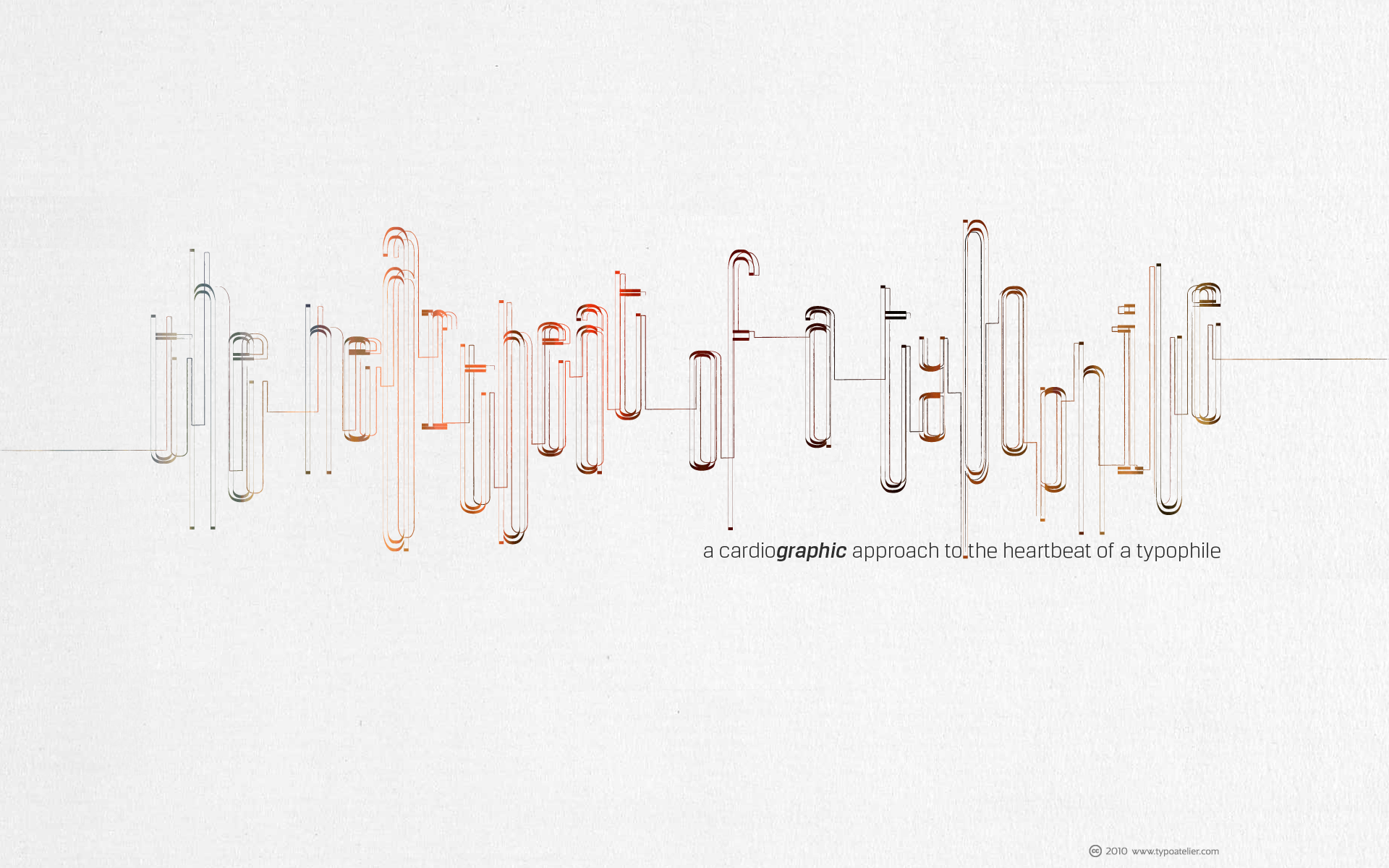
Typefaces in use:
Béla Frank’s (Faberfonts) elegant, gorgeous, slim typeface »FR Pasta Mono«.
FR Pasta Mono family is a monospaced, tall typeface capable to set playful, elegant and catching titles and displays. It compress 4 style: Mono, Decor, Decor Black and Extrude.
FR Pasta Mono family comes with a few OpenType features like case fractions and extended ligature set as well as support for many languages (Nordic, Icelandic, West and Eastern European, Turkish etc.).
and
Silas Dilworth’ (TypeTrust) clean, geometric sans-serif face »Breuer Text«.
Breuer Text is a simple geometric sans with relaxed curves and slightly condensed proportions suitable for moderate lengths of body copy. The italics are optically adjusted obliques with a selection of augmented lowercase glyphs for a warmer read.
Breuer Text offers the distinct aura of technical precision in a personable tone, ideal for instructional copy or safety warnings. Its basic structure and conservative letterforms maintain a level voice without turning robotic or sterile.
Pair with the two-font Breuer Headline family for a simple and complete editorial type system. Breuer Text includes Small Caps, Old Style Figures and Tabular Figures.

This wallpaper is the result of foolin’ around with »Bello Pro« on a cold, gray winter day. »Bello«—the name of an »Underware« typeface—is the italian word for »beautiful«. »Underware« is the brand name of an outstanding Dutch type foundry.
Typeface in use:
Bas Jacobs, Akiem Helmling and Sami Kortemäki’s (Underware) brush-drawn, fashionable, lively script face »Bello Pro«.
Bello is a brush typeface for headline point sizes - it’s big & beautiful. Bello has lots of ligatures and start and ending swashes. They are automatic in Bello Pro, which is a cross-platform OpenType font with many OpenType features.
After a period of hand sketching and lettering, we decided to give Bello two main styles: script and small caps. These two fonts create a strong typographic contrast - while Bello Script is flourished and flowing, Bello Small Caps are upright and sturdy. As sturdy as brush lettering allows for, of course.
Careful spacing and kerning ensures that Bello appears like fluently written handwriting. However, that’s not enough for a hand-lettered feel. Therefore Bello comes with a set of 64 ligatures. Some of them are typographic, some made simply to create a more intimate, natural impression. For the same reasons we have added a few ornaments and a set of snap-on beginning and ending swashes which attach to the lowercase letters of Bello.
None of these botttles are refillable. The tops do not unscrew. So instead of a small cap on a refill every bottle has a trigger using 3x the plastic. Wake up to polluting the planet. We can live without triggers and use a reusable, washable cloth.
23rd July 2019 Home Stafford UK

The title I borrowed from »Cry Freedom«, a 1987 British drama film directed by Richard Attenborough, set in the late 1970s, during the apartheid era of South Africa. It was written from a screenplay by John Briley based on a pair of books by journalist Donald Woods. The film centers on the real-life events involving black activist Steve Biko and his friend Donald Woods, who initially finds him destructive, and attempts to understand his way of life. Denzel Washington stars as Biko, while actor Kevin Kline portrays Woods. Cry Freedom delves into the ideas of discrimination, political corruption, and the repercussions of violence.
I dedicate this wallpaper to all the brave people in the Middle East and North Africa struggling against suppression.
Typefaces in use:
Chris E. Lozos’ (DEZCOM) striking, »multiple-personality« type family »DEZ Boulder«
DEZ Boulder is a Bold Display Family in Three Personalities: ego, id, and alter.
Dez Boulder works like a character actor, presenting the author’s lines but not with the deadpan delivery of a news reporter. Boulder develops the role, adding meaning through facial expression, gesture, and body language.
The Dez Boulder family of display faces acts in a supporting role to give meaning to message and context to content. It is a very bold face, not understated. Each of its three personalities (and their sub-personalities) have a different timbre to speak the nuance of your message in a bold voice.
Dez Boulder averages more than 800 glyphs per style with uppercase, lowercase, small caps, proportional lining figures, small cap figures, superiors, inferiors, fractions, stylistic sets, alternates, ordinals, case specific punctuation, and more. It has a full range of diacritics and covers all European languages using the Latin script.
and
Rae Kaiser’s (Outside the Line) hand-drawn Didone »Fondly Yourz«.
Fondly Yourz is a less than serious, hand drawn serif font. This headline font has nice thick and thin lines. Pair it with a san serif font for body copy for a fresh contemporary look.
Refueling the 'tank. Orange glowing stuff goes into the large hole, yellow-green glowing stuff goes into the small cap next to the hole. The rear bustle rack swings up and out of the way to allow for maintenance and resupply.

This great quote on typography is from the 7th of the »Ten Commandments on Typography« by Kurt Weidemann. I love it!
Typeface in use:
Rui Abreu’s (Fountain) balanced, modern slab serif typeface »Foral Pro«.
Foral Pro is a modern slab serif, organic and balanced, with harmonized proportions and polished forms. It is a eight-weight typeface, ranging from Light to Extra Bold with matching italics. It come with Small Caps and a wide range of OpenType features, allowing extensive and versatile use.
Every now and then I feel a dire urge to tackle one of the Dorvack PA kits from the pile, and in early 2021 it was about time to build the next one. This one is canonical, and close to the OOB offering, even though it is not an original kit but rather a re-release (2008) from Aoshima’s PAC-48 twin combo kit. The PAC-48C “Doldian” is a bit obscure, though, because I have never seen this type (or better: its armament) in the OAV. It’s probably the usual alternative to the canonical model variants from the series.
Even though the Dorvack PAs are rather simple kits, they need some skill because the parts do not fit THAT well. However, you have to keep in mind that the molds were created in the early 80ies, as a quick merchandising shot for a new "Real Robot" TV series that were all the rage in Japan at that time, even though the series eventually flopped. The designs are also older than Yokoyama Kow's Ma.K./ZbV3000/Maschinenkrieger stuff, which they actually inspired!
The kit and its assembly:
Since I lacked an “authentic” PAC-48G in my collection, I decided to build the kit only with little modifications/improvements and stick to the OOB livery. As such, the only physical mods include slightly twisted legs (feet canted outwards for a more natural stance) and left arm, and I added some jet nozzles inside of the jump jet exhausts on the back. Fine plastic mesh was added to the gun and to the air intake on the back, in an attempt to hide the lack of depth in the orifices behind it.
To my surprise, the body parts of the kit were molded in an almost translucent, deep purple styrene with added mica pigments!? Weird. The kit went together quite well, but I have enough experience with these PAs to avoid the biggest troubles. For instance, I expanded the joints were plastic hits plastic, and the lower leg construction of the PAC-48, with its integral stabilizer jets on the heels, just does not fit properly.
Painting and markings:
The paint scheme is OOB, and I was lucky to have an original Gunze Sangyo PAC-48G kit and its instructions at hand, because they are better illustrated than the Aoshima documentation. For instance, the Aoshima painting instructions lack a rear view and respective details. The old document also shows better the different shades of metallic grey in which the model is to be painted, and lacks the fact that the helmet, the gun and a small cap/bulge on top of the air intake are in a slightly darker tone than the overall hull of this PA.
The basic overall tone became Humbrol 53 (Gun Metal; OOB this is a mix of silver and steel), a simple but suitable solution, after considering some other tones at hand, including car paints. The previously mentioned, darker sections on the gun and the hull were painted with a 3:1 mix of Humbrol 53 and 22 (Gloss Black), for a subtle difference.
Other hull sections like the upper legs and right arm were painted with Revell 09 (Anthracite), a very dark grey. The original instructions suggest something close to German WWII Panzergrau. The helmet’s front half was painted with Humbrol 19 (Gloss Red), the jump jet nozzle fairing became orange (Humbrol 18, originally it is supposed to be fluorescent orange, but found that rather cheesy) and the smaller veneer jet nozzles were painted with Revell 310 (Lufthansa Yellow). The “chest box” became bright white, a good contrast to the dull rest of this PA.
Deviating slightly from the original, I painted the ball joints on the arms and knees in Revell 91 (Iron Metallic), which is slightly brighter than Humbrol 53. Originally they are supposed to be painted matt dark grey, too, but IMHO this does not make them look like joints at all?
Another personal change is the visor slit’s design; the original PAC-48G features an opaque black surface with a silver/steel frame on the red helmet background, but I changed this into a black frame with a chrome PET foil inlay, with an OOB decal on top. The foil insert was also a cheap trick to hide the recessed seam of the hull halves that runs right down the visor slit, making it hard to sand it away or use putty.
As per usual, the kit received a black ink wash for weathering and some dry-brushing for light effects and panel shading. I also gave the metallic surfaces a treatment with grinded graphite, enhancing the metallic shine and giving the model a noticeably worn look that adds some seriousness to the colorful PA - after all, it is a piece of military equipment, fighting an alien invasion! Once the kit had been prepared this far, decals were added. All stencils and markings come from the PAC-48G's OOB sheet, which is quite exhaustive for such a small model.
After some more detail painting work the PA was sealed with matt acrylic varnish, and I gave the model a dusting with grey-brown mineral artist pigments, simulating dust in general and mud crusts around the feet in specific.
Another member for the growing Dorvack PA family, there are already more than 20 of them in the collection! The PAC-48G was still missing, and it was a quick build, but while the kit itself went together with relatively few problems, but I did not change much and could concentrate on the inherent flaws. It did not end up 100% authentic, and - in hindsight - the Gun Metal as basic color unfortunately turned out to be a little too dark and dull for the model, the Doldian does not look too spectacular in this rather greyish livery.