View allAll Photos Tagged Procedure
VIDEO: Showing the complicated procedure of putting fish in the oven! :-P
Bloggity blog blog: Cooking in the kitchen
It's time for the weekend, so that means throwing the work laptop in the corner and chill and cook something simple! :)
The summer is really gone, but inside the house.. one can always wear jeans shorts. :-P
What you don't see in the pictures is the actual cooking of vegetables and potatoes. Yes, I do think of all the vitamins. ;-)
Being someone who has done almost 30 years of martial arts.. I can't help but posing with kitchen tools as if they were weapons. Scared yet? :-P
And of course, while waiting for the food to be done.. it's always a good moment to have a quick taste of the wine. :)
Yes, I do miss the summer! :)
VIDEO: Showing the complicated procedure of putting fish in the oven! :-P
Het Stropersbos in Stekene en Sint-Gillis-Waas leent zich met zo'n 500 ha perfect voor een fikse wandeling. Vroeger was het gebied een mozaïek van waardevolle biotopen zoals elzenbroekbossen, heidevelden en heischrale graslanden, die ondertussen in Europa vrij zeldzaam zijn geworden. Dankzij enkele ingrepen werden ideale omstandigheden gecreëerd om deze typische habitats opnieuw de kans te geven zich optimaal te ontwikkelen. (bron: toerisme Waasland)
"The Poachersforest" in Stekene and Sint-Gillis-Waas, about 500 acres, lends itself perfectly for a brisk walk. Previously the area was a mosaic of valuable habitats such as alder forests, heaths and grasslands , which now have become quite rare in Europe. Thanks to some procedures ideal conditions were created for this typical habitats and they have another chance to express their full potential. (source: Tourism Waasland)
please proceed according to station procedures with information Delta, and switch to pad control frequency
Created for the WPC Week 520
original images ,thanks to Jim
"Same procedure as last year ?" is a catchphrase out of the 18 minute one act play 'Dinner for one'. Dinner for one or Der 90. Geburtstag has played on German television every New Year's Eve since 1972.
Starring Freddie Frinton and May Warden, the film shows an old woman and her butler at a dinner table where they pretend her deceased friends are sitting. The butler asks, "The same procedure as last year, Miss Sophie?" The woman replies, "The same procedure as every year, James!" Then the butler proceeds to pour many rounds of drinks for the table, impersonating her friends giving toasts, and drinking all of the alcohol himself. The film ends as the very drunk butler walks the woman to her room and asks, "By the way, the same procedure as last year, Miss Sophie?" She responds, "The same procedure as every year, James!" He says, winking, "Well, I'll do my very best!"
The 18-minute single-take black-and-white 1963 TV recording featuring British comedians Freddie Frinton and May Warden has become an integral component of the New Year's Eve schedule of several German television stations.
They are all very worried about Benny at Ground Control. Could be nothing, but better activate all the emergency procedures. Those also include a rescue expedition to Outpost Alpha. Someone is getting ready for the voyage. Quick, quick! Every minute is precious!
Cheffins vintage and classic auction, Sutton -
"Chassis No. 37862. Engine No. 211850. Built from new for the National Institute of Agricultural Engineers (NIAE) based at Silsoe, and designed for research into tractor development. Housed in the Reeve Burgess coach built box body is a 31.5kVa generator, driven by a 4cylinder diesel engine and a Heenan Magnapower Dynamometer used for testing the horsepower of tractors. The vehicle has been based on the Silsoe site for its entire life and consequently, the recorded 1,568 km is believed to be correct. Fitted with a Force steered tow bar, this is a unique vehicle and part of British agricultural heritage. Never intended for road use, no documents exist for the ERF. There is a wealth of literature supplied with various blue print drawings and test procedures and data. A unique opportunity Estimate £6,500 - £8,000."
Unsold.
PLUS you get a free bag of frozen peas with every procedure
♥Sponsor♥
Nutcracker Clinic Backdrop PBR - The Bearded Guy
● Copy - Mod - No Transfer.
● The backdrop doesn't have physics. Being mod you can make it phantom.
● It's not a full building and it may has transparent or invisible parts.
● Advanced lights are recomended.
=============================
Primfeed:
www.primfeed.com/moluv79.resident/posts/160ef7f3-eb35-4b5...
Thank you in advance for every group recognition, awards and every beautiful comment sprinkled over my page
You gotta take the good with the bad, right? Rusty looks pretty rough but he’s just recovering from anesthesia following a dental cleaning. The pink tape on his leg is where they gave him IV fluids and with the exception of one small extraction the doc said his teeth are looking good for a boy his age. I think I’ll wait until tomorrow to check out his pearly whites for myself. Take your time little guy. There is a walk in the snow with your name on it scheduled for tomorrow.
Having left the Marine Terminal 6X24 circumnavigates Cavendish Dock behind 57305 en route to Salthouse Junction.
As well as being a heavy train it's also a lengthy one, this was the first time I had seen PFAs as barriers between the KXAs on one of these workings.
Southbound grain for Monetta, SC rolls into the sun outside of Cayce, SC with a standard cab Dash 9 leading.
D24764. A 1930s GPO telephone in a 1930s public telephone kiosk.
For those that cannot remember this type of payphone, the procedure was as follows:
1] Pick up the receiver and put the coins in the slot at the top.
2] Dial the number.
3a) If the call is answered, press button ‘A’ and the money drops into the box thus connecting the call. The ‘pips’ will go off after a pre-set time, so have some more money ready to put in the slot or you’ll get cut off.
3b) If the line is engaged, or there is no reply, hang up and press button ‘B’; the money will be returned via the little chute bottom right.
Sometimes, people would forget to press button ‘B’ and leave their money in the system and it was the practice of the kids to go round the phone boxes in their area pressing all the button ‘B’s to see if any coins would drop out.
Sometimes they would be lucky! For kids with only limited pocket money, a few extra pennies was a welcome bonus which would often be spent at the sweets counter in the local Woolworth's.
This historic payphone was seen at Cranmore Station on the East Somerset Railway on Saturday, 21st August, 2021. Copyright © Ron Fisher 2025.
If you have an interest in Auto-mobiles, why not take a look at my collect of images "here"
From the Achieves
I would be most grateful if you would refrain from inserting images, and/or group invites; thank you
The Stanley Motor Carriage Company was an American manufacturer of steam cars that operated from 1902 to 1924, going defunct after it failed to adapt to competition from rapidly improving Internal combustion engine vehicles. The cars made by the company were colloquially called Stanley Steamers although several different models were produced. F. O. Stanley and his wife Flora drove to the top of Mount Washington in New Hampshire to generate publicity for their firm. Twins Francis E. Stanley (1849–1918) and Freelan O. Stanley (1849–1940) founded the company, after selling their photographic dry plate business to Eastman Kodak. They made their first car in 1897. During 1898 and 1899, they produced and sold over 200 cars, more than any other U.S. maker. In 1899, Freelan and his wife Flora drove one of their cars to the top of Mount Washington in New Hampshire, the highest peak in the northeastern United States. The ascent took more than two hours and was notable as being the first time a car had climbed the 7.6 miles (12.2 km) long Mount Washington Carriage Road. The Stanleys later sold the rights to this early design to Locomobile. In 1902 they formed their own Stanley Motor Carriage Company.
Specifications and design The 1912 Stanley steam car, 6hp Stanley steam car engine, with Gasoline burner for a Stanley steam car boiler. Steam generator of a 1919 Stanley Steamer . Early Stanley cars had light wooden bodies mounted on wooden "perch poles" with full-elliptic springs. Steam was generated in a vertical fire-tube boiler, mounted beneath the seat, with a vaporizing gasoline (later, kerosene) burner underneath. The boiler was reinforced by several layers of piano wire wound around it, which gave it a strong but relatively light-weight shell. In early models, the vertical fire-tubes were made of copper, and were expanded into holes in the upper and lower crown sheets. In later models, the installation of a condenser caused oil-fouling in the expansion joints, and welded steel fire-tubes had to be used. The boilers were reasonably safe since they were fitted with safety valves. Even if these failed, any dangerous over pressure would rupture one of the joints long before the boiler shell itself could burst. The resulting leakage would relieve the boiler pressure and douse the burner with very little risk to the passenger. There is not a single documented incident of a Stanley boiler exploding. The engine had two double-acting cylinders, side-by-side and equipped with slide-valves, and it was a simple-expansion type. Drive was transmitted directly by the crankshaft to a rear-mounted differential using a chain. Owners often modified their Locomobiles by adding third-party accessories, including improved lubricators, condensers, and devices which eased the laborious starting procedure. To overcome patent difficulties with the design they had sold to Locomobile, the Stanley brothers developed a new model with twin-cylinder engines geared directly to the rear axle. Later models had aluminium coachwork that resembled the internal combustion cars of the time, but they retained steam-car features by having no transmission, clutch, or driveshaft. They also had a fully sprung tubular steel frame. When they later moved the steam boiler to the front of the vehicle, the owners dubbed it the "coffin nose." The compact engine ran at considerable steam pressure, with the 10-horsepower (7.5 kW) boiler described in 1912 as having the safety valve set at 650 pounds per square inch (4.5 MPa), with the burner set to automatically cut back when pressure reached 500 pounds per square inch (3.4 MPa). The twin-cylinder steam engines were at that time 10 horsepower, with 3+1⁄4-inch (83 mm) bore and 4+1⁄4-inch (108 mm) stroke, and 20 horsepower (15 kW) with 4-inch (102 mm) bore and 5-inch (127 mm) stroke, and made extensive use of ball bearings. In order to improve range, condensers were added from 1915. A Stanley Steamer set the world record for the fastest mile in an automobile (28.2 seconds) in 1906. This record (127 mph or 204 km/h) was not broken by any automobile until 1911, although Glen Curtiss beat the record in 1907 with a V-8-powered motorcycle at 136 mph (219 km/h). The record for steam-powered automobiles was not broken until 2009. Production rose to 519 cars in 1917. The Stanley Steamer was sometimes nicknamed "The Flying Teapot". At least one Stanley Steamer found its way to Castle Hill, New South Wales, Australia where it was driven in the late 1920s.
An extract from the Wikipedia, the free encyclopedia
I followed the procedure, first, as outlined here: brilliantdays.com/archives/2005/10/how_to_create_a.php ,
and in the flickr Amazing Circles group: www.flickr.com/groups/amazingcircles/discuss/116859/
I Am using the basic wondrous polar coordinates transformations as beautiful in and of themselves, but also as starting points for grounding them in their origins and/or creating new relationships for them.
My procedure for taking a long exposure is always the same. I look for what I think will be a nice shot, work out the composition and take it as a normal landscape shot. Check the histogram and see if the shot might need a grad or two on, retake it and check the histogram. If everything is okay all I have to do now is work out the correct long exposure, attach the ten stopper, make sure any areas of light leakage are covered and then take the shot. An area that sometimes doesn't get covered is that most ten stop filters come with a warning that they are actually anywhere between nine and a third and ten and two thirds and NOT exactly ten. That can make quite a big difference - 2/3rds of a stop might be several minutes. I tend to add 25% to my B&W ND110 filter. This shot is the 'test' shot for the long exposure that followed. Invariably I prefer the normal shot but sometimes not......
If you haven't seen any of this series before I should add that the tiny figures on top of the hill are actually a group of tourists on a Rabbies Trail Burners trip led by the inimitable Ross Hutton. What a way to see Scotland.
FROZEN SOAP BUBBLES
My personal procedure: Wait until it's -7 to -11 degrees F in northern Colorado, put on all of your North Pole Expedition outer wear and boots, choose one of the 24 different soap bubble solutions that you have created after doing some online research, take it outside and immediately spill some on your back porch, say a naughty word, decide where you want to create your bubble and then change your mind 62 times, set up your tripod and camera exactly where you need it and then try to lower your frozen tripod legs, say 2 naughty words, begin to blow your bubble, watch it blow away in .0000054 mile per hour breeze, say a REALLY naughty word, continue watching your bubbles blow away, finally get a bubble to begin to freeze and begin shooting, watch the crystals form in the bubble and giggle just a bit, watch the bubble pop, blow some new bubbles, watch them pop over and over again, say MANY nasty words in a row, ignore the frostbite now hitting your exposed skin, it just DOESN'T MATTER! ANYTHING FOR THE SHOT!
Repeat this process at night, early in the morning and late in the afternoon over 3 days.
Nikon D850 with Nikkor 70-200mm F2.8 lens at 200mm and cropped, F11-16, various shutter speeds above 1/250sec, and various ISO's. Remote cable release and continuous focus and shutter release. Tripod.
WT333 bursts into life at Bruntingthorpe.
The starting process is by a cordite charge. Just awesome to watch!
________________________________________________
∎PROCEDURE Glasses
Unrigged Resizable
☑ Copy and Modify
∎PROCEDURE Shirt
Legacy Male
☑ Copy only
∎PROCEDURE Derby Shoes
Legacy Male, Belleza Jake, Unrigged Resizable
☑ Copy only
________________________________________________
Fatpack is ☑Modify ☑Copy
Try demo before purchase.
ARCHIVEFACTION→
maps.secondlife.com/secondlife/The%20Sign%20V/225/131/501
TMD→
“I had been told that the training procedure with cats was difficult. It’s not. Mine had me trained in two days.”
————-————-————-——— —-————-———-————-———-
+ Components Details +
♦️Shape: Kidorable – Lean Bento Shape – Youth / BABY FACE *COMING SOON*
♦️Body:Bebe – Youth Fitted Mesh Body (For 5-12 years look)
♦️Head: GENUS Project- Genus Head – Baby Face
♦️Skin:Bf. Face BAILEE 500 ( Purchased Body Applier Separate: BF Body Slim – Bebe) Available in Tones 300-600 Don’t forget to Try demo. – KIDS-R-US Event
♦️Hair: Unorthodox– Dru Hair ( Comes in 3 base colors which can be color changed via the HSV color hud! / clean and “scruffy” version for those who love the natural look)
————-————-————-——— —-————-———-————-———-
+Apparel Details +
♦️Outfit:{Feral Youth}– SLoodie Soft Collection – Thimble Event
( Oversized Hoodie , Pants & Slippers with texture change. All Items sold separately / Choose a Base Piece - Then Texture with AddOn Huds/ Each Hud comes with 3 prints and the base one in case you just want to leave it white. Huds are: Cloud - Floral - Stars - Hearts - Prints -Stripes )
On picture:
Sloodie Top / Sloodie Pants / Sloodie Slippers ( All with Prints Hud Texture #1 Applied)
————-————-————-——— —-————-———-————-———-
+Decor Details +
♦️ Alchemy/Birdy - Sassy Cat - G - Mao
♦️ Alchemy/Birdy - Sassy Cat - G - Siamese
♦️ Alchemy/Birdy - Sassy Cat B - Stripe
♦️ +Half-Deer+ Dog Clutter - Red - Set
Relax. Dr. C knows what’s best for you.
This weekend at Other World*:
👻 The Lost Ward (1-2 November)
🎵 DJ-s LeeLee (Nov 1) and ana banana (Nov 2) with sonic therapy for the hopelessly deranged (1-3 pm SLT)
💀 Cracked asylum walls, empty beds, and whispers from patients who never left
😷 Dress as patient, orderly, doctor or something hauntingly unhinged
🍷Prescription drinks, sick trivia, and music to lose your sanity to
You'll come out brainwashed with bloodshot eyes: Suicidal Tendencies – Institutionalized
* Yes. My syringe is bigger than yours.
0 IR original
1 auto level
2 swap red-blue channels
3 hue/saturation (sky only)
4 color balance (sky only)
5 hue/saturation (grass only)
……………………………….
Locandina:
pad.mymovies.it/filmclub/2016/04/067/coverlg_home.jpg
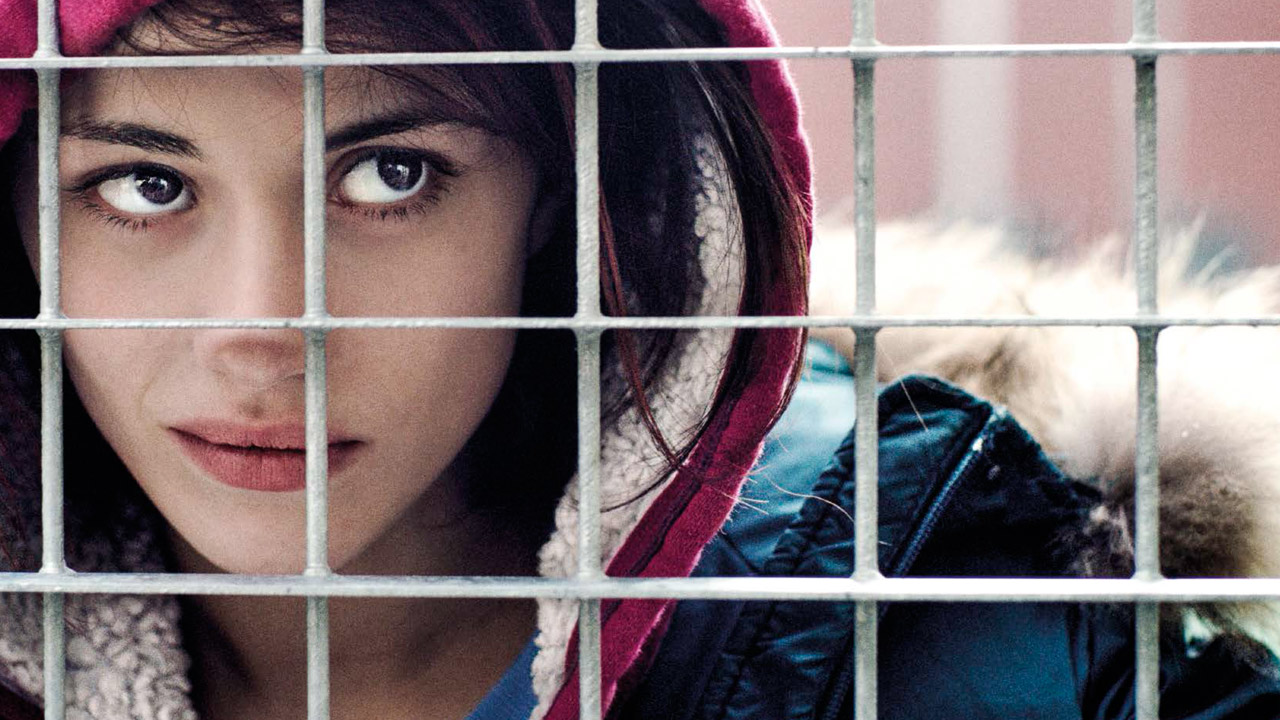
variety.com/wp-content/uploads/2016/05/fiore_06.jpg?w=100...

www.nonsolocinema.com/wp/wp-content/uploads/2016/05/MG_76...

amnc.it/wp-content/uploads/2023/11/perdialogocarcere_post...

www.italyformovies.com/film-serie-tv-games/detail/56/fiore
----------------------------------------------------------
click to activate the small icon of slideshow: the small triangle inscribed in the small rectangle, at the top right, in the photostream (it means the monitor);
or…. Press the “L” button to zoom in the image;
clicca sulla piccola icona per attivare lo slideshow: sulla facciata principale del photostream, in alto a destra c'è un piccolo rettangolo (rappresenta il monitor) con dentro un piccolo triangolo nero;
oppure…. premi il tasto “L” per ingrandire l'immagine;
www.worldphoto.org/sony-world-photography-awards/winners-...
www.fotografidigitali.it/gallery/2726/opere-italiane-segn...
………………………………………………………………………
The municipality of Mongiuffi Melia (ME), not far from Taormina, is made up of two villages, Mongiuffi and Melia, separated by a valley, a bridge joins them, they climb up the opposite ridge of two mountains, looking at each other; in this municipality (defined as a "scattered municipality" for not having a single inhabited center), there are two patron saints, San Sebastian for Melia (his float was built with the money collected by Sicilian soldiers sent to the front, to fight in Greece during the Second World War, hoping in this way to receive His intercession to save their lives), and San Leonard di Noblac (or Abbot) for Mongiuffi; but in this municipality there is also the cult of the "Virgin Mary of the Chain", whose sanctuary attracts pilgrims from everywhere. I have made this description to introduce a singular coincidence that not everyone is aware of, and to do this it is necessary to describe the figure of Saint Leonard (a kind of Saint Francis), and that of the Virgin Mary of the Chain, trying to be concise. Saint Leonard was born in Orléans around 496 (and died in Noblac, on November 6 – the feast day – of 545 or 559), and for most of his life (very interesting) he lived as a hermit; one episode of his life in particular I would like to recall, he received from Clovis, king of the Franks, the privilege of being able to free those prisoners, who he believed had been unjustly imprisoned, so from that moment on, he incessantly committed himself to giving freedom to all those prisoners who were reduced to visibly critical conditions. Let us leave this Saint for a moment, the cult of the “Virgin Mary of the Chain”, this name given to the Blessed Virgin, derives from a prodigious event that occurred in Palermo in 1392, known as the “miracle of the chains”. In short, in August 1392 in Palermo, three men for a glaring miscarriage of justice, were sentenced to death by hanging, shortly before going up to the gallows a violent storm broke out, which forced the three unfortunates and the gendarmes to take refuge in the nearby church of Saint Mary of the Port, close to the sea, also called "Churc of the Chain" due to the presence of a chain that, when positioned, prevented the Saracen pirate ships from accessing the inside of the port; in this holy place, the three condemned, were tied with double chains, in the meantime the door of the church was barred, in fact the storm did not seem to stop and in addition night had come, clearly the execution was now postponed to the next day. The three desperate men, in chains, under the gaze of the gendarmes, approached the painting of the Madonna in tears, imploring her to intercede for them, a voice was heard coming from the painting, which reassured them of their new freedom, this while the chains broke, and the door of the little church was thrown open. From then on, the cult of the Virgin Mary of the Chain spread from Palermo throughout Sicily, and even beyond. Now let's get to the coincidences I mentioned before, both Saint Leonard and the Virgin Mary of the Chain (and also Her Child that She holds in Her arms) carry a long chain in their hands, in fact both the Saint and the Blessed Virgin have given freedom to prisoners, furthermore to access Mongiuffi Melia, coming from Letojanni, you have to pass through a tunnel, called "Gallery of Postoleone" dug in the rock in 1916, with bare hands or with pickaxe blows, as explosives could not be used, by 300 Austrian prisoners, during the First World War (and also on this occasion, in Mongiuffi Melia, there are prisoners forced to do forced labor). Finally, a curiosity, very often from the cult of the Virgin Mary of the Chain, comes a singular name, very common in these parts, both in the masculine with the name of "Cateno" and in the feminine "Catena" (to quote a well-known character, the writer Catena Fiorello). Furthermore, if it rains, whatever the religious procession-feast, with the float carried on the shoulders, the float with the saint does not come out, but if the rain arrives during the event, then the event becomes a source of strong psycho-physical stress for the devotee-bearers (not for the devotee-pullers or devotee-pushers...), as the ground made slippery by the rain (or perhaps, worse, by the presence of mud mixed with water) makes the route risky due to the possibility that one, or more, bearers, could slip, with the possible overturning of the float, and easily imaginable consequences.
The photographic story that I present here was created by assembling photographs taken on November 6, 2022, November 6 and 10 of this year 2024; the heart of the celebration-procession is when the priest hangs a large “cuddurra” (donut) on the hand of Sint Leonard, on that occasion small “cuddure” (donuts) are offered to the population (prepared by hand in the days preceding the procession); there are girls wearing a typical monk's habit-like dress, adorning their head with a veil, they belong to the congregation of the "daughters of Mary" (third order Carmelite); at the end of the procession, with the float that has returned to the church, we witness a rite that has the "affective" purpose of keeping it alive, it is done so as not to lose its memory, even if it has not lost its original meaning, what remains is now only a symbolic fact, it is the ritual of "weighing" (in some centers of Sicily, it has maintained its original meaning) a wooden board is placed "in balance" on one of the two beams that are used to carry the float with the Saint on the shoulders, at the two ends a child is placed on one side, and on the other side a sack with grain, filled until the weight of the grain reaches the weight of the child, and that grain will be given as a gift to the Saint, in reality the symbolic aspect of the procedure remains, and the donation is still made to the Saint, but in paper money.
Postscript: Our Lady of the Chain and Saint Leonard freed from chains, these as such, are not only physical, there are also psychic ones, and perhaps they are the worst….
……………………………..
Il comune di Mongiuffi Melia (ME), non molto distante da Taormina, è formato da due borghi, Mongiuffi e Melia, separati da una vallata, un ponte li congiunge, essi si inerpicano sul crinale opposto di due monti, guardandosi l’un l’altro; in questo comune (definito “comune sparso” per non avere un centro abitato unico), si hanno due santi patroni, San Sebastiano per Melia (la sua vara fu costruita con i soldi racimolati dai soldati Siciliani mandati al fronte, a combattere in Grecia durante la seconda guerra mondiale, sperando così facendo di ricevere la Sua intercessione per avere salva la vita), e San Leonardo di Noblac (o Abate) per Mongiuffi; ma in questo comune vi è anche il culto per la “Madonna della Catena”, il cui santuario attira pellegrini da ogni dove. Ho fatto questa descrizione, per introdurre una singolare coincidenza della quale non tutti sono a conoscenza, e per far questo è necessario descrivere la figura di San Leonardo (una specie di San Francesco), e quella della Madonna della Catena, cercando di essere sintetico. San Leonardo nasce ad Orléans nel 496 circa (e morto a Noblac, il 6 novembre – giorno della festa – del 545 o 559), per gran parte della sua vita (interessantissima) visse da eremita; un episodio della sua vita in particolare desidero ricordare, egli riceve da Clodoveo, re dei Franchi, il privilegio di poter rendere liberi quei prigionieri, che egli riteneva fossero stati incarcerati ingiustamente, egli così, da quel momento, si impegna incessantemente a dare la libertà a tutti quei prigionieri che erano ridotti in condizioni visibilmente critiche. Lasciamo per un attimo questo Santo, il culto della “Madonna della Catena”, questo nome dato alla Beata Vergine, deriva da un evento prodigioso avvenuto a Palermo nel 1392, conosciuto come “miracolo delle catene”. In breve, nell’agosto del 1392 a Palermo, tre uomini per un eclatante errore giudiziario, furono condannati a morte per impiccagione, poco prima di salire sul patibolo si scatenò un violento temporale, che costrinse i tre malcapitati ed i gendarmi a riparare nella vicina chiesa di S. Maria del Porto, a ridosso del mare, detta anche “Chiesa della Catena” per la presenza di una catena che, quando posizionata, impediva alle navi pirata Saracene di accedere all’interno del porto; in questo luogo santo, i tre condannati, furono legati con doppie catene, nel mentre la porta della chiesa veniva sbarrata, infatti il temporale non accennava a smettere ed in più era subentrata la notte, chiaramente l’esecuzione era oramai rimandata al giorno dopo. I tre disperati, in catene, sotto lo sguardo dei gendarmi, si avvicinarono in lacrime al quadro della Madonna implorandola di intercedere per loro, dal quadro si udì provenire una voce, che li rassicurava sulla sopraggiunta libertà, questo mentre le catene si spezzavano, e la porta della chiesetta si spalancava. Da allora il culto per la Madonna della Catena si diffuse da Palermo in tutta la Sicilia, ed anche oltre. Veniamo adesso alle coincidenze di cui accennavo prima, sia San Leonardo che la Madonna della Catena (ed anche il suo Bimbo che regge in braccio) recano in mano una lunga catena, infatti sia San Leonardo che la Beata Vergine hanno dato la liberà a dei prigionieri, inoltre per accedere a Mongiuffi Melia, provenendo da Letojanni, si deve passare necessariamente da una galleria, chiamata “Galleria di Postoleone” scavata nel 1916 nella roccia, a mani nude o con colpi di piccone, in quanto non si poteva usare l’esplosivo, da parte di 300 prigionieri austriaci, durante la prima guerra mondiale (ed anche in questa occasione, a Mongiuffi Melia, si ha la presenza di prigionieri costretti ai lavori forzati). Infine una curiosità, molto spesso dal culto della Madonna della Catena, proviene un singolare nome, molto comune da queste parti, sia al maschile col nome di “Cateno” che al femminile, “Catena” (per citare un personaggio noto, la scrittrice Catena Fiorello). Inoltre, se piove, qualsiasi sia la processione-festa religiosa, con la vara portata in spalla, la vara col santo non esce, se invece la pioggia arriva durante la manifestazione, allora l’evento acquista per i devoti-portatori (non per i devoti-tiratori o devoti-spingitori…) un motivo di forte stress psico-fisico, in quanto il terreno reso scivoloso dalla pioggia (o magari, peggio, dalla presenza di fango misto ad acqua) rende rischioso il percorso per la possibilità che uno, o più portatori, possano scivolare, con il possibile ribaltamento della vara, e conseguenze facilmente immaginabili.
Il racconto fotografico che qui presento, è stato realizzato assemblando fotografie fatte il 6 novembre del 2022, il 6 ed il 10 novembre di quest’anno 2024; il fulcro della festa-processione è quando il sacerdote appende una grande cuddurra (ciambella) sulla mano di San Leonardo, in quella occasione piccole cuddure vengono offerte alla popolazione (preparate ed intrecciate a mano nei giorni precedenti la processione); sono presenti delle ragazze che indossano un tipico vestito “tipo saio di monaco”, adornando il capo con un velo, appartengono alla congregazione delle “figlie di Maria” (terz’ordine carmelitano); alla fine della processione, con la vara che ha fatto rientro in chiesa, si assiste ad un rito che ha lo scopo “affettivo” di tenerlo in vita, viene fatto per non disperderne la memoria, pur non avendo perso il suo significato originario, quel che resta è oramai solamente un fatto simbolico, è il rito della “pesatura” (in alcuni centri della Sicilia, esso ha mantenuto il suo significato originario) un asse di legno viene messo “in equilibrio” su di una delle due travi che servono a portare in spalla la vara col Santo, alle due estremità si pongono da un lato un bimbo/a, e dall’altro lato un sacco con del grano, riempito fino a quando il peso del grano raggiungerà il peso del bimbo/a, e quel grano verrà dato in dono al Santo, in realtà resta l’aspetto simbolico della procedura, la donazione viene ugualmente fatta al Santo, ma in cartamoneta.
P.S. La Madonna della Catena e San Leonardo liberavano dalle catene, queste in quanto tali, non sono solo fisiche, ci sono anche quelle psichiche, e forse sono le peggiori….
……………………………………………………………….
Procedure: 1) Object on the paper in the sun. 2) Rinsing the paper with water 3) Let it dry. Take care that the paper is flat. Most of the time I don`t take care of that - I like it wrinkled and with folds.
Prozedere:
Objekt auf dem Papier in der Sonne.
Mit Wasser spülen.
Trocknen lassen
Using Sunprint Kit (Lawrence Hall of Science University of California, Berkley)
Photography Fotografie: φωτός (phōtos) light, Licht γραφή (graphé): drawing, zeichnen = Drawing with light, zeichnen mit Licht.
As it is said that the invention of drawing was to outline the shadows on the wall, so the invention of photography is that light (and shadows) draw on depictions on chemically treated paper.
The purest way of photographic depiction is the photogram: light, in this case natural light, sunlight shines on a light-sensitive paper. The objects to be depicted are put directly on the paper. According to the translucency and to the shadows the objects are making on the paper the light-sensitive layer reacts.
Die ursprünglichste, purste und direkteste Form der fotografischen Abbildung, des Zeichnens mit Licht ist das Fotogramm. Materialien: Lichtsensitives Papier, Fotopapier, Licht, Sonnenlicht, abzubildende Objekte, Wasser (Entwickler) - Das abzubildende Objekt wird direkt auf das Papier gelegt, Entsprechend der Lichtdurchlässigkeit der Objekte und ihrer Schatten reagiert die lichtsensitive Schicht des Papieres mit verschiedenen Helligkeitsabstufungen.
Berühmte Künstler außer Man Ray und Christian Schad zum Beispiel: Pablo Picasso, László Moholy-Nagy, Imogen Cunningham
Part of the sets: "Memento - zeitweilige Entnichtung" // "aquarius" aggregate state: liquid // Blue Planet, Sunprints from Earth - Photograms, Rayographs, Schadographs, Cyanotypien, Blueprints, Eisenblaudruck, Blaupause // "In Situ an Ort und Stelle on location - the world as studio workshop working room vor ort die Welt als Atelier Werkstatt Arbeitsraum"
Triptych:
DMC-G2 - P1650068 - 2013-07-14
DMC-G2 - P1650073 - 2013-07-14
DMC-G2 - P1650077 - 2013-07-14
The third and final photo of the Cadillac I shot with the old Ansco brick. It's also one of the several double-exposed frames on this roll of film - I don't know if the old camera malfunctioned or I messed up the winding procedure.
Amtrak’s northbound Coast Starlight comes to a stop at the Marsh Street grade crossing in San Luis Obispo, California. Due to a malfunctioning crossing gate, the train is required to comply with Procedure XH (X-Ray Hotel).
According to the General Code of Operating Rules provided by Union Pacific, here is the definition of Procedure XH.
Procedure XH:
Unless otherwise instructed by signal employee in charge, train must approach crossing prepared to stop before entering crossing and if automatic warning devices are:
- Seen to be working* or when instructed by the train dispatcher or proper authority, proceed over the crossing not exceeding 15 MPH without stopping.
* Crossing with broken gate(s) is considered as having working devices when the balance of the automatic warning devices are seen to be working.
- Not working, comply with Procedure XG.
Procedure XG:
Unless otherwise instructed by signal employee in charge, train must stop before fouling crossing regardless of the condition of automatic warning devices. A crew member must be on the ground at the crossing to warn highway traffic. The train may proceed over the crossing as directed by that crew member.
Stopping is not required for Procedure XG or XH when the crew communicates with a flagger before fouling the crossing and receives confirmation that warning is being provided by:
- One equipped flagger who can provide warning for one direction of approaching traffic. Proceed over the crossing not exceeding 15 MPH without stopping until the head end of the train completely occupies the crossing.
- Two or more equipped flaggers who can provide warning in all directions of approaching traffic. Proceed over the crossing at maximum authorized speed.
Once the conductor is back aboard the train, the Coast Starlight will highball San Luis Obispo and begin its climb over Cuesta Pass.
AMTK 330 — AMT14 19 — San Luis Obispo, California
February 19th, 2024
jakemiillephotography.com
The original lamp still hangs from the ceiling of the operating room, Eastern State Penitentiary, Philadelphia, PA.
Both of the zoos in which I volunteer used to bring in actually reindeer for the month of December. Guests could visit them, and even have their pictures taken with a Christmasy backdrop and a reindeer in the foreground.
The practice had to change when new procedures were introduced for quarantining new animals.
Code, the common eland, and the oryx behind him, are not reindeer. And, it wouldn't be safe for humans to pose with them. But, we can imagine them pulling a sleigh!
Another picture made by the same procedure as the previous picture. This time, the background was made from a screenshot of the game 'Fallout 5'. The original screenshot was provided by Xanvast (www.flickr.com/photos/xanvast/).
A short procedure at a hospital on Thursday morning turned into a 3 day ordeal for my wife!! She is at home and feeling great but in need of rest because of the ineptitude of the hospital staff! Not sure when I will be back on but wanted everyone to know where I was at!! Please no emails at this time!! Thank you!!
This is merely a left over photo from a previous session!! Comments were intentionally left off!!!
DSC04983uls
Photographer/Illustrator: Fred H. Politinsky
Subject: Outside the Box Photography
View my photographs on the following websites:
www.flickriver.com/photos/jackpot999
www.fluidr.com/photos/jackpot999
www.flickr.com/photos/jackpot999
GOOGLE at NPR JAZZ PHOTOGRAPHY POOL - FLICKRIVER (Look for photographs by Bebop18.)
ALL OF MY PHOTOGRAPHS ARE COPYRIGHTED. ALL RIGHTS ARE RESERVED. DO NOT USE, EDIT OR COPY ANY OF MY PHOTOGRAPHS WITHOUT MY PERMISSION.
Every six weeks I see the retinal specialist for a procedure that involves an injection in the retina of my right eye...afterwards, because of six different numbing drops, my eye feels like a bowling ball..I see distorted lines, flashes of color, blobs of lacquer red, and a black circle which I'm guessing is the injection site that I am seeing through? and dots of black. Thankfully it is temporary. This is how I think my eye looks and what I see in those few hours after.
Of course, I didn't make enough pictures and when leaving the park I was thinking of all the shots I should have taken but didn't. I can say this, it's a great place to wander around and it's all about magic and FUN. :-)
Landschaftspark Duisburg-Nord --Importance of memory--
Landschaftspark is a public park located in Duisburg-Meiderich, Germany. It was designed in 1991 by Latz + Partner (Peter Latz), with the intention that it work to heal and understand the industrial past, rather than trying to reject it. The park closely associates itself with the past use of the site: a coal and steel production plant (abandoned in 1985, leaving the area significantly polluted) and the agricultural land it had been prior to the mid 19th century
Conception and creation
In 1991, a co-operative-concurrent planning procedure with five international planning teams was held to design the park. Peter Latz’s design was significant, as it attempted to preserve as much of the existing site as possible. Unlike his competitors, Latz recognized the value of the site’s current condition. He allowed the polluted soils to remain in place and be remediated through phytoremediation, and sequestered soils with high toxicity in the existing bunkers. He also found new uses for many of the old structures, and turned the former sewage canal into a method of cleansing the site.
Design
The park is divided into different areas, whose borders were carefully developed by looking at existing conditions (such as how the site had been divided by existing roads and railways, what types of plants had begun to grow in each area, etc.). This piecemeal pattern was then woven together by a series of walkways and waterways, which were placed according to the old railway and sewer systems. While each piece retains its character, it also creates a dialogue with the site surrounding it. Within the main complex, Latz emphasized specific programmatic elements: the concrete bunkers create a space for a series of intimate gardens, old gas tanks have become pools for scuba divers, concrete walls are used by rock climbers, and one of the most central places of the factory, the middle of the former steel mill, has been made into piazza. Each of these spaces uses elements to allow for a specific reading of time.
The site was designed with the idea that a grandfather, who might have worked at the plant, could walk with his grandchildren, explaining what he used to do and what the machinery had been used for. At Landschaftspark, memory was central to the design. Various authors have addressed the ways in which memory can inform the visitor of a site, a concept that became prevalent during Postmodernism.
Source: en.wikipedia.org/wiki/Landschaftspark_Duisburg-Nord
You might also look at these adresses:
www.facebook.com/landschaftspark
Nice footage. China Crisis - Working with fire and steel (1983):
www.youtube.com/watch?v=MZ7vX7xX0G8
Canon EOS 60D
Canon EF100mm f/2.8L Macro IS USM
Aperture f/5
Exposuretime 1/50 sec.
The procedure take place in the compound of Wat Hua Lamphong as part of a religous ceremony.
Before, the believer could write (engrave) prayers and wishes on small bronze tabs for a little donation to the temple.
Then these tabs where added to the melt, so that their wishes was embeded in the statue forever.
The life of an astronaut in space consists of following many step-by-step procedures. We’ve all wished we had an extra arm when following the instructions to self-assembly furniture and for astronauts it is no different – except their procedures, instructions and hardware are more complex as well as their lives often depending on following the instructions correctly.
ESA has developed a system that improves on the basic step-by-step procedures used on the International Space Station that are displayed on a computer. The current system requires constant floating back and forth from the computer to the workplace to check the next step, and mission control cannot easily follow progress.
The mobile procedure viewer or ‘mobiPV’ is a wearable system that displays each step in a task, synchronises between the astronaut, ground control and third parties, automatically logs steps and communication and allows for video conferencing, note-taking and text chat.
In this image, ESA’s Matthias Maurer is testing the system during a simulated space mission 20 m underwater off the coast of Florida, USA, during NASA’s Extreme Environment Mission Operations (NEEMO).
The main part of the equipment is the smartphone and camera on a 3D-printed wrist-band. mobiPV can display the procedure on a separate tablet to see more information. Here Matthias has connected a third device for testing – all three screens are synchronised.
Versions of mobiPV have been tested during NEEMO before and even in space during ESA astronaut Andreas Mogensen’s ‘iriss’ mission last year. This version, branded mobiPV++, uses a redesigned system and tests the device without a head-mounted display.
The NEEMO crew used mobiPV to run a new way of sampling water that shows promise for use on the International Space Station, called Aquapad. The procedure was displayed on the tablet with ground control following from the coast and the mobiPV team watching from ESTEC, ESA’s technical heart in the Netherlands. The astronauts and NEEMO crew were very positive with the results.
The mobiPV team is continuing to refine the system and hope to have a second test on the International Space Station with ESA astronaut Thomas Pesquet during his six-month Proxima mission starting later this year.
Credit: NASA