View allAll Photos Tagged PaperMaking
Brown paper bags don't blend up that well, so give it more blending if you don't like the chunks (which I do).
This is how fine I blend my pulp. How you blend yours is up to personal taste. I like a few chunks. A sturdy blender and some patience will get your finer pulp and therefore finer-grained paper, but if you wanted perfect paper, you would buy it instead of making it.
This is how the pulp looks with some of that blue flyer thrown in. Remember that your dried paper will be one to three shades lighter than your pulp.
Time for the poor man's press. On some floor you can clean easy or don't care about, lay down your post and put your board on top.
Using a screen when draining will help you reclaim any leftover pulp, which can be squeezed out and left to dry. When you make paper later, this pulp can be broken up and re-blended.
Paper pulp will do a number on your pipes, so use your screen or a colander in the sink when you drain your vat.
When you're done making sheets, top off your pile with another 'felt' and some more newspaper. The result is called a "post".
After three to five sheets, you'll find that your paper is getting thin and maybe being a brat about releasing from the screen. Time to add more pulp. This batch is white with some brown paper bag thrown in.
Soak up more water with your sponge through the back of the screen. Move around, paying attention to the edges.
. . . flip it over. The water in the screen should hold the paper to your screen enough for you to do this.
With your sheet formed, tilt your screen to drain the excess water out. When its only dripping intermittently, you can couch it.
This is what you're going for. The paper's cellulose will bind itself, you just need to gather it evenly on your screen.
Mix up your pulp and water by stirring your hand around in it. This is called "charging" your vat. You'll want to do this before you make each sheet, or thereabouts, any time the paper and water start to separate.
Prepare your space. Next to the vat, depending on your handed-ness, lay down some newspaper and then a 'felt'. Have the rest of your newspaper and 'felts' nearby. Once you get going, you're not going to want to search around.
Add your pulp to the vat. I use three blenders of pulp to one blender of water. This will make a nice soup, not too thick, not too watery, and about the right height (near the middle) in the vat.
The lid is very important in this process. If your pulp goes flying all over it will be awful to clean up. You want to blend until your motor sounds a little tired (best explanation), then up your speed and blend for another 10-30 seconds.
If you are using a pulse blender, throw your paper in and then blend. Otherwise, turn it on some medium speed and pop your paper through the hole in the lid.
Starting from a corner, pull your screen off the paper. If it won't let go, plop it back down and soak up more water with the sponge.
Squeeze excess water out of your sponge as you go, you want to get as much water out of your paper as possible so it will release from the screen.
This is a large cast iron bookbinding book press/papermaking press I have built. I have one for sale only. It has large platen size and can put tremendous pressure on for papermaking. It weights over a hunderd pounds. For details on this, email me through the website as it's not listed there.
For other equipment I build for sale, see
www.affordablebindingequipment.com
I can build CUSTOM sizes of anything you see there and if you have an idea of something you can't find, let me know.
I may be able to make if for you.
By now it was raining quite hard, so I grabbed a couple of shots from the other side of the road before going in.
Hello I said to the churchwarden, we've come to photograph the church.
Oh I don't know if that's possible, you might be journalists. What do you want the pictures for?
I explained about the website and liking churches and that we had come from Dover to see this church. I gave he my Moo card, and she said it was OK. And then would not shut up, she told us all about the history of the church, the town, businesses. All nice, but I wanted to snap the church.
In the end, Jools took over and I set about snapping. And very fine it is too.
-------------------------------------------
A huge church that is accessed most days through the coffee shop next door. Saxon in its origins it was extended many times as befits a market town on the main London-Dover road. Today it consists of nave and chancel with aisles and chapels. Much remodelled in the nineteenth century (by Blomfield) and again late in the 20th it may lack atmosphere, but it certainly does not lack appeal.... or its part in national history. The body of Henry V rested here overnight on its journey back from France in 1422. Behind the painting in a medieval vestry, itself a rarity. There are lots of brasses and a large monument to John Spilman who introduced papermaking here in the seventeenth century. In the south chapel is a huge wall painting of St. George - the largest medieval painting in Kent.
www.kentchurches.info/church.asp?p=Dartford+1
-------------------------------------------
DARTFORD
LIES the next parish eastward from Crayford, on the high road from London to Dover, about fifteen miles from the former. It was called in Saxon Derentford, in Latin Derenti Vadum, signifying the forde or passage over the river Derent. (fn. 1) In Domesday it is written Tarentefort.
THIS PARISH takes within its bounds almost the whole both of Dartford-heath and the Brent. It contains about 4300 acres of land. The town has about four hundred houses and about two thousand five hundred inhabitants. The upland parts of the parish are but thin and gravelly, the crops of which are greatly increased by the culture of turnips; the vallies are a sertile and rich loam, the northern part of the parish is marsh land, which reaches to the Thames, containing about eight hundred acres, none of which is ever ploughed. The town of Dartford is situated in a valley, between two hills, which rise suddenly and sleep at each end of it. On that at the western extremity are chalk pits, which have been worked underneath to a considerable extent, and have rather a fearful and dangerous appearance to travellers; the opposite hill is a deep sandy loam. Dartford is at present a handsome and wealthy town, still increasing in size and inhabitants, the principal street of which is the great thoroughfare from London to Dover, on which there are built several good inns. From this street southward branches off the high road through Farningham to Sevenoke, in which stands Horseman's-place, now used, with the gardens, by a public gardener; northward from the high street is the Water-lane (so called from the little stream, the Cranford, which rises about a mile and a half southward of the town, at Hawley, which runs through it) and leads to the wharss at the water side, not far distant from which stands the Place-house, formerly the priory, with the buildings belonging to it, now used as a farm house and offices, adjoining to which is a piece of land, inclosed with a wall, formerly belonging to the priory, exceeding rich, which has been for many years been made use of as a public garden ground. The artichokes growing in it are noted for being the largest and best flavoured of any brought to the London markets, and are called, for distinction sake, the Dartford artichoke.
There is a good market for corn and provisions here on a Saturday, weekly; and a fair yearly, on the 2d and 3d of August. The old market house and shambles stood very inconveniently in the middle of the high street, but they were removed some years ago, and the present market place and shambles were built more commodiously elsewhere, by public subscription, to the great embellishment of the town, and the satisfaction of all travellers; at the same time the old uneasy pavement through the town was removed, and a new road of gravel made in its room, with a handsome footway of curbed stone on each side; near the east end of it stands the church, almost adjoining to the river Darent, which here crosses the high road under a handsome bridge. In king Edward III.'s reign there appears to have been no bridge here, the passage or ferry over the Darent at this place being valued among the rents of the manor; however, there was one built before the end of king Henry VI.'s reign, but it was one most narrow, steep, and dangerous for travellers, which continued so till not many years since it was altered to its present more commodious state, at the public charge of the county. A little below this bridge, the Darent becomes navigable for barges; and at the distance of about two miles, receiving the Cray into its channel, at a like distance empties itself into the Thames. On this creek there was formerly a considerable fishery, as appears by the records before mentioned; for so late as king James I.'s reign, the royal manor of Dartford received for the fishery six salmons yearly, a kind of fish now unknown here; and the manor of Dartford priory received a yearly rent of fifty pounds for a fishery likewise here at the same time; but no fishery at this time exists, nor has for many years past.
The trade and manufacture carried on by the several mills on the Darent contribute much to the flourishing state this town is in at present; for besides the powder-mills, first erected by Sir John Spilman as a paper mill, as before mentioned, situated a quarter of a mile above the town; there is a paper mill at a small distance below it, where there was one so early as 1590, erected by one Geoffry Box of Liege, for the cutting of iron bars into rods, being the first supposed to be erected for this purpose in England, and for the more easy converting of that metal to different uses; lower down, at the east end of the town, are two corn mills, and farther below bridge the ruins of the mill, employed as a cotton manufactory, which was burned down in 1796, and now lies in ruins. It was before made use of as a sawing mill, and before that as a brasel mill, for the slitting of iron bars into rods, nails, &c. being first erected for that purpose by John Browne, soon after the death of king Charles I. Near this is the public wharf, to which hoys and barges come up from the Thames. To this wharf is brought the produce of the woods in this neighbourhood, which are of considerable extent, and the manufactures, which are here shipped for the London market, as are the goods for the subsistence of the town and vicinity of it from the metropolis.
In the return of the survey, made of the several maritime places, in this county, by order of queen Elizabeth, in her 8th year, Dartford is said to contain houses inhabited, 182; persons lacking habitation, 6; keys or landing places; 4; ships and boats, 7; three of three tons, one of six, two of ten, one of fifteen; persons for carriage from Dartford to London, and so back again, 14; Sir Thomas Walsingham, steward of the town; Mr. Asteley, keeper of the queen's house; John Beer's; the wardens of Rochester-bridge.
In the reign of king Henry III. the archbishop of Cologne was sent hither, with several noblemen, by the emperor Frederick, to demand Isabella, the king's sister, in marriage, which was solemnised by proxy in this town, and she was then delivered to them, to be carried over. In 1331, king Edward III. at his return from France, held a famous tornament in this town. In the 5th year of king Richard II. a great commotion of the common people begun at this place, occasioned by Wat Tyler's having beat out the brains of one of the collectors of the poll tax, on account of his insolent behaviour to his daughter. The people, who were in general discontented, being inflamed by this circumstance, broke out into open rebellion, and he soon found himself at the head of one hundred thousand men. (fn. 2)
Thus attended, he marched directly to London, freeing, in the mean time, the prisoners detained in the public goals; among these was a priest, in the neighbourhood of Maidstone, one John Ball, vulgarly called John Straw, who, by his seditious sermons, had raised the people's sury to the utmost heighth, insomuch that, in conformity to his maxims, they resolved to destroy all the nobility and lawyers in the realm, for he had persuaded them that all men, being the sons of Adam, there ought to be no distinction; and, confequently, it was their duty to reduce the world to a perfect equality; in consequence of which he preached to the people on these rhymes:
"When Adam delse, and Eve span,
"Who was then a gentleman ?"
The king, hearing they were advanced as far as Blackheath, sent to know their demands, to which, returning a most insolent answer, they immediately marched towards London, and took possession of the borough of Southwark; and the gates of London bridge being thrown open to them by the citizens, they entered the city, where they committed every scene of barbarity that could be expected from such a body, guided solely by their sury. They then seized on the Tower, where they sound the archbishop and the lord treasurer, whom they immediately beheaded. Upon this the king, dreading the consequences of so powerful a body, repaired to Smithfield, with some few attendants, and sent a knight to Tyler, to come there and confer with him, which this rebel, with much deliberation, at last complied with. At this conference he behaved with such insolence, that William Walworth, lord mayor of London, who attended the king, without considering the consequences that would attend it, discharged such a blow at the rebel's head with his sword, that he instantly fell dead at his feet. However, contrary to expectation, the multitude were so terrified, that they threw down their arms, and sued for mercy; and were all, in the space of a few minutes, dispersed, without the effusion of any blood, except of their leader. (fn. 3)
About a mile south-westward from the town is the large plain, called DARTFORD. HEATH, containing about 500 acres of land. It lies high, and on a fine gravelly soil; on it there are a great many of those pits and holes so frequent in these parts. Some of these reach below the gravel as low as the chalk, others no farther than the sand and gravel; many of them have been stopped up of late years, to prevent the frequent accidents which happen of men and cattle falling into them. The occasion of their being first dug has been already explained, under the adjoining parish of Crayford. This heath has been much noted of late, as being the spot chosen by the corps of Toxopbilites, under the appellation of the Royal Kentish Bowmen, for whose use a house has been fitted up at the western side of the heath, not far from Baldwin's, and is now distinguished by the name of the Lodge, being the scene of their exercise and recreation; at which times, on their gala days, butts, apartments, and company, have made the most splen did and costly appearance. It is as delightful and pleasant a spot as any in these parts.
Less than half a mile eastward from the town, the high road to Rochester crossing it, lies another heath, called DARTFORD-BRENT, vulgarly the BRIMPT. This place is famous for the encampment of the army of Richard Plantagenet, duke of York, in 1452, whilst he waited to obtain a parley with king Henry VI. who then lay encamped on Blackheath. In the year 1648 General Fairfax's army rendevouzed here.
The ROMAN-ROAD shews itself very conspicuously on the south side of the high road between Dartford and the Brent, and when it comes to the latter, it shapes its course more to the south south-east, leaving the high road at a greater distance, on the lefthand, and entering among the inclosures and woods, in its way to a hamlet called Stonewood, it goes on to Wingfield-bank, and thence to Shinglewell, towards Rochester.
At a small distance southward from the Romanroad on the Brent, close to the road to Greenstedgreen, are three small barrows, which seem to have been plundered of their contents.
¶The gravel-pit at the entrance of the Brent from Dartford was, whilst the affizes were held in this town, which was frequently, at the latter end of queen Elizabeth's reign, the place for the public execution of criminals; and in 1772, in digging for gravel here, eight human skeletons were sound, lying contiguous to each other; most probably the remains of some of those unhappy convicts. This spot was likewise made use of in the reign of queen Mary, for the execution of those who suffered for religion.
Our HERBALISTS have taken notice of several scarce plants and herbs sound here:
The camæpytis, herb ivy, or ground pine, not only here, but in the adjoining parishes.
Ruta muraria five salvia vitæ, stone rue, or rue maidenbair, on the wall of the church-yard.
Aphaca, small yellow fetch, in the corn-fields about this place.
Buckthorne, in the bedges of this place.
The juniper tree grows in plenty on the downs southward of Dartford-brent.
Mentastrum, horse mint; valde ramosum flore violaceo rubro.
Orchis five tragorchis max. the greatest goat stones, between Crayford and Dartford.
Orchis hermaphroditica, the butterfly satirion; testiculus vulpinus spegodes, the humble bee orchis; orchis melittias, the bee orchis; orchis myodes, the fly satirion; are found on the downs, southward of Dartford brent.
The lizard orchis, has been found in the lane between Dartford and Darent.
Several forts of the orchis ornithophora are found in the meadows adjoining the river Darent, southward of this town.
Trisolium stellatum glabrum, smooth starry headed tresoil, in Dartford salt marshes. (fn. 4)
Charities.
THOMAS AUDITOR, alias BARNARD, gave by will, in 1536, an annuity of 3s. to buy peas, to be distributed among the poor, in the first week in Lent, payable out of four acres of land, called Docklincrost, which bequest has not been paid for many years.
WILLIAM VAUGHAN gave by deed, in 1596, a rent, to be distributed quarterly to the most poor inhabitants of Dartford, out of a house and garden, vested in trustees, and of the annual produce of 13l. 4s.
JEROME WARRAM gave by will, in 1570, for the use of the poor, a house and garden, in the occupation of Mrs. Bugden, of the annual produce of 5s.
MRS. CATHARINE BAMME gave by deed, in 1572, among other charitable bequests, 20s. to the poor of this parish, to be paid out of an messuage and lands in Gillingham, vested in Edward Taylor, of the annual produce of that sum.
JOHN BYER gave by will, in 1572, for the habitation of the poor of this parish, nine alms houses, in Lowfield, adjoining southward to Horseman's-place, and endowed them with a barn and several pieces of land, in the occupation of Mrs. Glover and Mr. Fleet; the former at 17l. the latter at 5l. annual rent, and for the habitation of four poor aged people, and 20d. to be paid quarterly to each of them; now inhabited by paupers; annual produce 1l. 6s. 8d.
JOHN BARTON gave by will, in 1613, the interest of 130l. yearly, to be bestowed on bread, and distributed to the poor by the vicar and churchwardens. N. B. With this money, in 1623, the parish purchased by deed, of Francis Goldsmith and others, thirteen acres of land in Crayford parish, and a house in Dartford, the former vested in William Flint and others, at 12l. per annum rent; the latter in William Nettlefold, at 11l. 10s. per annum; on condition that 20s. should be yearly distributed to the poor on Shrove Sunday, as his gift, out of the rents of the lands purchased of him by Barton's money. He agreed to abate 15l. out of the purchase money; annual produce 1l.
WILLIAM REYNOLDS and WILLIAM HARRISON gave by will, in 1623, the interest of 50l. and 10l. to be laid out in bread, and distributed among the poor every Sunday in the year,
N. B. With these two gifts were purchased a house and piece of land belonging to it, which house has been taken down, and four new houses have been built on the ground, with monies borrowed upon them, which money the rents have discharged. The houses are let to several tenants, at the yearly rent of 5l. each; 2s. worth of bread have been yearly distributed every Sunday, out of the rent of these houses, as was stipulated when they were purchased; the annual produce 20l. per annum.
ROBERT ROGERS gave by deed, in 1629, rent to be distributed among the poor on Easter Monday, payable out of a house and yard, vested in Mrs. Catharine Tasker; annual produce 4l.
JONATHAN BRETT gave by deed, in 1629, for the relief of the poor inhabitants of this parish, four acres of land, vested in Mr. George Hardres, of the annual produce of 9l.
THOMAS COOPER in 1629, gave an annuity, to be distributed to the poor in bread, payable out of woodland in Bexley parish, in the occupation of James Craster, of the annual produce of 1l.
ANTHONY POULTER gave by will, in 1629, an annuity of 20s. to be distributed by the minister and churchwardens on Easter day, payable out of a house in Dartford, occupied by Mrs. Pettit, of the annual produce of 1l.
JOHN TWISLETON, esq. gave by deed, in 1660, certain rent, to be applied, one-third of it to the alms houses, and the other twothirds to be given to the poor, issuing out of three acres of land, in the occupation of Edward Rawlins, of the annual produce of 5l. 6s. 3d.
JOHN ROUND, in 1682, gave an annuity, to be distributed among the poor on Christmas day, payable out of the Bell inn, in Dartford, in the occupation of John Elliot, of the annual produce of 1l.
THE REV. CHARLES CHAMBERS gave by will, in 1745, the sum of 50l. vested in the 3 per cents. the interest to be distributed by the minister on Christmas day, among twenty-four poor persons, twenty of whom to be widows, annual produce 1l. 10s.
JOHN RANDALL gave by will, in 1771, 200l. now vested in the 3 per cent. the interest to be distributed among poor housekeepers and widows, at 5s. each; annual produce 7l. 8s. 6d. and he gave 100l. since, vested in like manner, the interest to be laid out in bread, and distributed to the poor on Sundays; annual produce 3l. 14s. 3d.
A PERSON UNKNOWN gave three houses for poor parishioners, to dwell in, now inhabited by paupers.
A PIECE OF LAND, on part of which the present workhouse was erected in 1728, by voluntary subscriptions; the other part, used as a garden to it, was given by a person unknown.
This land was let in 1720, for the use of the poor at 1l. per ann.
CHRISTOPHER HEATH gave lands to the next of kin of Ellen Sherrington, on condition that they should pay yearly out of them, to the use of the poor, 1l. 6s. 8d. and to the churchwardens and their successors, to the reparation of the church, 1l. 13s. 4d.
JOHN BEALE, of Swanscombe, devised 40s. per annum, towards the maintenance of a schoolmaster in Dartford, to be paid out of a messuage, called Hamanslay's, in Halsted, formerly occupied by William Watson.
THIS PARISH is within the ECCLESIASTICAL JURISDICTION of the deanry of Dartford, and diocese of Rochester. The church, which is dedicated to the Holy Trinity, stands near the east end of the town, and is a large handsome building, consisting of three isles' and two chancels. In 1793, the whole church was repaired and beautified by the parishioners, at the expence of twelve hundred pounds. The pavement within the altar rails, with the painting and gilding over it, was done at the charge of Charles Manning, gent. in 1702. The tower is at the west end of it, in which there is a clock and a good ring of bells; one of which, of the smaller size, used till of late to be constantly rung, as of old custom, at four o'clock every morning, and again at the time of curfew at night.
The church yard formerly surrounded it, but some few years ago that part of it, which was on the southerin side, was given to the public to make the road more commodious for passengers. There is another burying-ground belonging to this church at some little distance from it, adjoining the high London road at the top of the hill, eastward of the town, of which further mention will be made. It is situated on so high an eminence, that it overlooks even the top of the tower of the church.
Among other monuments and inscriptions in this church, are the following: In the great chancel, on the north side of the altar is a monument for Sir John Spilman, inclosed with iron railing; on it are his essigies in armour and that of his lady, kneeling at a desk, each with a book open, and over their heads, on a tablet of black marble, with an inscription in German text for both of them; he died in 1607; on the top of the monument his arms, Or, a serpent wreathed in pale azure, crested, gules, on a mount in base, vert, two slaunches, gules, each charged with three lions passant, or; beneath, on the tomb, are two coats, Spilman, as above, impaling argent, a man cloathed sable, with a long cap on, holding in his hand an olive branch proper, and standing on a mount, inverted, gules. On the south side of the chancel, an altar tomb, inclosed with rails, and inscription, for Clement Petit, esq. of Joyes, in this parish, whose paternal seat was at Dentelion, in Thanet, obt. 1717. Before the rails of the altar, on a grave stone, are the figures of a man and woman, in brass, under a canopy, with labels from their mouths; round the verge of the stone is an inscription in brass, in part torn away, for Richard Martyn, of Dartford, who died in 14 . . . . she died in 1402. Near it is another stone, which had the figure of a man, with a label from his mouth, and an inscription round the verge, all in brass, now lost; but an inscription in brass still remains, on a plate, for John Hornley, S. T. B. who died in 1477. On another adjoining, are the figures in brass of a woman and six children, that of the man is lost; beneath on a plate, is an inscription for capt. Arthur Bostocke, gent. who married Francis, second daughter of Francis Rogers, esq. he died in 1612. On a grave stone, before the step of the chancel, is the figure in brass, of a woman, and inscription, for Agnes, daughter of John Appleton, wife of Wm. Hesilt, one of the barons of the exchequer of Henry VI. afterwards of Robert, brother of Sir Tho. Molyngton, baron of Wemme; she died in 1454. On the south side of the chancel, a monument for Wm. Burgess, late citizen and salter of London, obt. 1640; arms, a sess sret between three rooks. On the same side, before the altar rails, a memorial for Nicholas Tooke, gent. of Dartford, obt. 1672, æt. 90; arms, Tooke, argent, on a chevton, sable, three plates of the field between three greyhounds heads erased, sable collared, or; but this is cut here very erroneous. On the north side, a memorial for Mr. Mark Fielder, 1753, æt. 91; on the south side, a memorial for Mr. Wm. Tasker, of this parish, ob. 1732; and for Wm. Tasker, jun. their second son, ob. 1733. In the south chancel, a mural monument for John Twisleton, esq. of Horseman's-place, son and heir of John Twisleton, esq. of Drax, in Yorkshire, who was uncle and heir of Sir Geo. Twisleton, bart. of Barley, in that county, the antient paternal seat of the family. A memorial for John Twisleton, esq. late of Horseman's-place, ob. 1721. At the east end an altar tomb, inclosed with wooden rails, and on the south of it an inscription for John Beer, of Dartford, who had Nicholas, Anne, and Dorothy; for Nicholas, who had Clement and Edward, and for Clement Beer, who had John and Clement, who both died, s. p. Edward Beer, their uncle, was their heir, and lived unmarried fifty-nine years, and died in 1627. On the north side, an inscription, shewing, that Christopher Twisleton, esq. of Barley, in Yorkshire, married Anne Beer, by whom he had George Twisleton, who had John Twisleton, and Edward Beer, dying, s. p. gave all his lands in Kent to John Twisleton above mentioned, who erected this monument in 1628. On the west side are two shields, one quarterly, 1st and 4th, quarterly, a canton ermine; 2d and 3d, on a fess, three garbs; the other the same arms, impaling a chevron. A grave stone, having a brass plate for John Beer, esq. of Dartford, and Alice and Joan, his wives, and also for Henry Beer, his son and heir, who married Anne Beer, widow of Rich. Howlett, gent. deceased, and had by her a son, Wm. Beer, deceased, which John Beer died in 1572, and Henry in 1574; above, are two coats in brass, both, a bear rampant, on a canton, five escallop shells. On a grave stone, the figures of a man and his two wives, with children and their shields of arms in brass, all of which are lost, excepting the second wife and four children, and a plate with the inscription, for Wm. Rothele, of Dartford, who died in 1464, and Beatrix and Joane, his wives, and their children. Another on the north side, on which were the figures of a man and woman, in brass, now lost, but part of the inscription remains, for Katryn Burlton, who died 1496, and Rich. Burlton, jantilman, her husband, who died 15 . . . the rest torn off. A mont for Margaret, relict of John Pitt, esq. predent of the S. Sea company at Vera Crux, ob. 1731, æt. 49, arms, Pitt impaling a chevron, ingrailed, betw. three eagles heads erased. In the middle isle, are several memorials of Manning; a grave stone in the south cross isle, having the figures in brass of a man between his two wives, and underneath those of fifteen children, with inscription in black letter, for Wm. Death, gent. principal of Staple's inn, who had two wives, Elizabeth and Anne, by the former he had ten sons and six daughters, ob. 1590, Elizabeth, 1582; above a shield of arms, being death, a grissin passant between three crescents, quartering four other coats. (fn. 46) In the north isle are memorials for the Round's, Woodin, Poulter, Dalling, and Chambers, all of this parish. There are many more memorials and tombs of respectable inhabitants of this populous town and parish, as well in the church as the two church yards, but they are by far too numerous for insertion in this place.
In the 7th year of king Edward III. Thomas de Woldham, bishop of Rochester, caused a new window to be made in the chancel of the church.
William the Conqueror confirmed the gift which Hamo his steward had made of the church of Tarentford, in the king's manor, to the church of St. Andrew of Rochester; (fn. 47) which king Henry I. confirmed, with the churches appendant to it, and the tithes of this parish in corn, pannage, cattle, money, and in all other things, in like manner as St. Austin held the church of Middleton, with the tithes of that parish, in the time of his father, (fn. 48) and also the tithes of his mills in Darenteford.
Gundulph, bishop of Rochester, who was elected to that see in the reign of the Conqueror, having recovered the manors and possessions of his church, which had been dissipated and made away with, separated his own maintenance from that of the monks, in which division he allotted this church, among others, to the support of the almonry, belonging to the convent. (fn. 49) The monks did not continue long in the possession of it, for bishop Gilbert de Glanvill, who came to the see in 1185, on pretence that his predecessor had impoverished the see by his too large donations to the priory, divested them of all right to this church, which he restored to the see of Rochester; however, he reserved and confirmed to the monks their antient pension from it. (fn. 50)
Laurence, bishop of Rochester, in 1253, reserving the tithes of sheaves, and of every kind of hay, demised this church, and all the small tithes, oblations, and obventions, and the tithes of sheaves arising in gardens and curtileges not being ploughed, to the convent of Rochester, at the rent of thirty-eight marcs per annum, on condition that they supplied the cure, and they were to deduct their pension of ten marcs, paid by the rector, out of it. (fn. 51) He afterwards obtained pope Innocent IV.'s leave to appropriate this church, during his life, to the use of his table, which he complained was so slenderly provided for; that he and his family had not at times common necessaries for food; the clear receipts for the bishop's table being but five hundred marcs, which were not more than sufficient for half the expence of it, and the receipts from his manors not exceeding sixty marcs per annum. (fn. 52) This was confirmed to the bishop and his successors by pope Alexander IV. and again by Clement IV. Bishop Laurence, on the appropriation, endowed the vicarage of this church, with the small tithes of it, excepting hay, with two acres of arable, and one of meadow; and also with the tithes of sheaves growing from land dug up with the foot, as well for the support of the vicar, as the discharge of the ordinary burthens of his vicarage, and the payment of the above pension to the monks, the profits of the vicarage being then sound by a jury to be worth forty marcs sterling per annum, communibis sannis; which endowment being lost, bishop Thomas de Woldham, in 1299, confirmed it; and as the vicar had no house belonging to his vicarage, he granted him one standing on the soil belonging to the church, as a vicarage house for himself and his successors; and further, the tithe of twenty-one acres of meadow, called King's-marsh, in Dartford, heretofore taken by the bishop and his predecessors, and he decreed, that the vicar and his successors should keep and maintain the books, vestments, and other ornaments of the church, in a proper state and order, and should sustain and acknowledge all other ordinary burthens of it.
Archbishop Robert Winchelsea further endowed this vicarage with the tithe of hay, to the value of forty shillings, in satisfaction of which the whole tithe of hay, arising from the great salt march in Dartford, (excepting to the bishop of Rochester for the time being, the yearly sum of four shillings, due from the Knights Hospitallers to the bishop, as rector of this church) was decreed to the vicar, by the desinitive sentence of Walter, archbishop of Canterbury, in the year 1315, as an augmentation of his endowment.
Thomas de Woldham, bishop of Rochester, in the above year, granted in mortmain, to Robert Levee, vicar of Dartford, and his successors, a messuage, with its appurtenances, in Overe-street, in Dartford, which the bishop had purchased of Robert de Levee, of Frindsbury. (fn. 53) At the dissolution of the priory of Rochester, in the 32d year of king Henry VIII. the above pension of ten marcs, or 6l. 13s. 4d. was, by the king, in his 33d year, granted, among other pre emises, to his new erected dean and chapter of Rochester, who continue possessed of it at this time. The parsonage and advowson of the vicarage still remain part of the possessions of the bishop of Rochester. (fn. 54)
In the antient valuation of the bishop's revenues, this church was valued at 40l. and the bishop's mill and rent here, at 100s. In the 15th year of king Edward I.'s reign, the church was valued at forty-five marcs, and the vicarage at 100s. In the 33d of king Edward III. the church was valued at the like sum. (fn. 55)
By virtue of a commission of enquiry, in 1650, it was returned, that Dartford was a vicarage, with a house and glebe, all worth, with the privy tithes, seventy pounds per annum, master Charnock then incumbent. (fn. 56) It is a discharged living in the king's books, of the clear yearly certified value of 45l. 5s. 10½d. the yearly tenths of which are 1l. 17s. 1½d. (fn. 57)
This vicarage was, in 1736, augmented by the governors of queen Anne's bounty; at which time the Rev. Mr. Charles Chambers, vicar of Dartford, contributed one hundred pounds for that purpose. (fn. 58)
Bishop Laurence de St. Martin seems to have purchased, in the reign of king Henry III. several of the rents which now constitute the greatest part, if not the whole of the MANOR OF DARTFORD RECTORY, from Robert and Richard de Ripa, John Badecock, William de Wilmington, and others. (fn. 59)
This manor extends over both sides of the Highstreet, in Dartford, from the scite of the old marketplace to the church, and southward, in Lowfield, as far as the house of correction; all which is called the Bishop's liberty. At the leet of this manor, a constable and a borsholder are annually chosen for the liberty. There are several tenants which hold of it in socage, at small quit-rents.
In the 21st year of king Edward I. on a Quo warranto, the jury found that the bishop was feild, in right of his church, of view of frank pledge, and assize of bread and ale of his tenants in Dartford and Stone; and that the bishops, his predecessors, had been possessed of the same beyond memory.
There were TWO CHANTRIES, founded for divine services, in this parish; that of St. Edmund the Martyr, and of St. Mary, otherwise called Stampit. The former stood in the upper burial ground of this parish, which was a cimetary to it, and under this building was a charnel house. This chapel was suppressed at the same time with all other such endowments, and presently sell to ruin; but the cimetary was granted to the parish, as a place of burial for the parishioners, and continues so at this time. The advowson of this chantry was granted to the prioress and convent of Dartford priory, in the 46th year of king Edward III. at their first endowment.
John Bykenore endowed this chapel with five marcs, payable out of lands and tenements in Dartford, for the support of the chaplain of it. This chapel was under the jurisdiction of the archdeacon of the diocese.
¶The latter chantry of the Blessed Virgin St. Mary was subject to the official of the diocese. (fn. 60) It was founded by Thomas de Dertford, alias Art Stampett, vicar of this parish, in 1338, for one chaplain, to celebrate divine offices daily in the parish church of Dartford, in honour of the Blessed Virgin, and for the health of his soul, &c. and he appointed Ralph de Felthorpe the first chaplain of it, and endowed it with several lands and tenements, to the amount of one hundred and twenty acres, (fn. 61) in Dartford, the chaplain paying twelve pence yearly to the vicar of Dartford and his successors; and he gave the patronage of it, and the nomination of a chaplain to it in future, to the bishop of Rochester and his successors; which was confirmed by the bishop and the prior and chapter of Rochester the same year. (fn. 62) In the year 1553, Robert Bacon, incumbent of this chantry, had a pension of six pounds per annum.
DSC_0792pp......a cottage industry in Bhutan.......http://wanderlustandlipstick.com/blogs/debbysdepartures/2012/01/29/the-process-of-making-bhutanese-handmade-paper/
Doors in traditional Korean homes (and palaces) were made with rice paper. Some are sliding doors; others open inwardly or outwardly. Because of the skill used, such homes were warm even in the cold winter months. Before winter, the paper was usually changed and the doors and windows weather-proofed.
Traditional handmade paper was an indispensable material of daily life in Korea. The versatile use of paper can be easily seen in Korean culture throughout its history. Traditional handmade Korean paper was used for calligraphy, books, and envelopes; for doors, walls, and windows; for furniture, such as wardrobes, cabinets, and chests; for craft objects, such as writing brush holders, umbrellas, lanterns, boxes, baskets, fans, and kites; and for clothing and shoes. Koreans seem to be the only people who have been using paper for their floors.
Many traditions have declined in Korea, including traditional paper making. There are still a few paper makers producing papers in the traditional way in Korea, but it has been difficult for them to earn a living.
Paper making probably existed in Korea as early as the third century or at least before the end of the 6th century. This belief is based on a piece of paper unearthed from the 116th ancient tomb in 1931. As this tomb belonged to the Naknang period (108 BCE – 313 CE), it is possible that at least around the beginning of the fourth century, paper making was carried out in Korea.
In 610 Damjing, a Korean Buddhist monk, introduced paper making skills to Japan along with ink sticks, a millstone, and coloring methods.
The most renowned in Poland, the Museum of Papermaking in Duszniki Zdrój, is located in the 17th century paper mill, a unique industrial monument.
More about Poland: www.poland.gov.pl
Muzeum Papiernictwa w Dusznikach Zdroju mieści się w XVII wiecznym młynie papierniczym, unikatowym zabytku techniki.
Fot. Mariusz Cieszewski
The maki-e workshop was followed by one making washi. Some of us got to try our hand at pounding the mulberry pulp. Tiring work but enlightening, especially as it was my first papermaking experience.
By now it was raining quite hard, so I grabbed a couple of shots from the other side of the road before going in.
Hello I said to the churchwarden, we've come to photograph the church.
Oh I don't know if that's possible, you might be journalists. What do you want the pictures for?
I explained about the website and liking churches and that we had come from Dover to see this church. I gave he my Moo card, and she said it was OK. And then would not shut up, she told us all about the history of the church, the town, businesses. All nice, but I wanted to snap the church.
In the end, Jools took over and I set about snapping. And very fine it is too.
-------------------------------------------
A huge church that is accessed most days through the coffee shop next door. Saxon in its origins it was extended many times as befits a market town on the main London-Dover road. Today it consists of nave and chancel with aisles and chapels. Much remodelled in the nineteenth century (by Blomfield) and again late in the 20th it may lack atmosphere, but it certainly does not lack appeal.... or its part in national history. The body of Henry V rested here overnight on its journey back from France in 1422. Behind the painting in a medieval vestry, itself a rarity. There are lots of brasses and a large monument to John Spilman who introduced papermaking here in the seventeenth century. In the south chapel is a huge wall painting of St. George - the largest medieval painting in Kent.
www.kentchurches.info/church.asp?p=Dartford+1
-------------------------------------------
DARTFORD
LIES the next parish eastward from Crayford, on the high road from London to Dover, about fifteen miles from the former. It was called in Saxon Derentford, in Latin Derenti Vadum, signifying the forde or passage over the river Derent. (fn. 1) In Domesday it is written Tarentefort.
THIS PARISH takes within its bounds almost the whole both of Dartford-heath and the Brent. It contains about 4300 acres of land. The town has about four hundred houses and about two thousand five hundred inhabitants. The upland parts of the parish are but thin and gravelly, the crops of which are greatly increased by the culture of turnips; the vallies are a sertile and rich loam, the northern part of the parish is marsh land, which reaches to the Thames, containing about eight hundred acres, none of which is ever ploughed. The town of Dartford is situated in a valley, between two hills, which rise suddenly and sleep at each end of it. On that at the western extremity are chalk pits, which have been worked underneath to a considerable extent, and have rather a fearful and dangerous appearance to travellers; the opposite hill is a deep sandy loam. Dartford is at present a handsome and wealthy town, still increasing in size and inhabitants, the principal street of which is the great thoroughfare from London to Dover, on which there are built several good inns. From this street southward branches off the high road through Farningham to Sevenoke, in which stands Horseman's-place, now used, with the gardens, by a public gardener; northward from the high street is the Water-lane (so called from the little stream, the Cranford, which rises about a mile and a half southward of the town, at Hawley, which runs through it) and leads to the wharss at the water side, not far distant from which stands the Place-house, formerly the priory, with the buildings belonging to it, now used as a farm house and offices, adjoining to which is a piece of land, inclosed with a wall, formerly belonging to the priory, exceeding rich, which has been for many years been made use of as a public garden ground. The artichokes growing in it are noted for being the largest and best flavoured of any brought to the London markets, and are called, for distinction sake, the Dartford artichoke.
There is a good market for corn and provisions here on a Saturday, weekly; and a fair yearly, on the 2d and 3d of August. The old market house and shambles stood very inconveniently in the middle of the high street, but they were removed some years ago, and the present market place and shambles were built more commodiously elsewhere, by public subscription, to the great embellishment of the town, and the satisfaction of all travellers; at the same time the old uneasy pavement through the town was removed, and a new road of gravel made in its room, with a handsome footway of curbed stone on each side; near the east end of it stands the church, almost adjoining to the river Darent, which here crosses the high road under a handsome bridge. In king Edward III.'s reign there appears to have been no bridge here, the passage or ferry over the Darent at this place being valued among the rents of the manor; however, there was one built before the end of king Henry VI.'s reign, but it was one most narrow, steep, and dangerous for travellers, which continued so till not many years since it was altered to its present more commodious state, at the public charge of the county. A little below this bridge, the Darent becomes navigable for barges; and at the distance of about two miles, receiving the Cray into its channel, at a like distance empties itself into the Thames. On this creek there was formerly a considerable fishery, as appears by the records before mentioned; for so late as king James I.'s reign, the royal manor of Dartford received for the fishery six salmons yearly, a kind of fish now unknown here; and the manor of Dartford priory received a yearly rent of fifty pounds for a fishery likewise here at the same time; but no fishery at this time exists, nor has for many years past.
The trade and manufacture carried on by the several mills on the Darent contribute much to the flourishing state this town is in at present; for besides the powder-mills, first erected by Sir John Spilman as a paper mill, as before mentioned, situated a quarter of a mile above the town; there is a paper mill at a small distance below it, where there was one so early as 1590, erected by one Geoffry Box of Liege, for the cutting of iron bars into rods, being the first supposed to be erected for this purpose in England, and for the more easy converting of that metal to different uses; lower down, at the east end of the town, are two corn mills, and farther below bridge the ruins of the mill, employed as a cotton manufactory, which was burned down in 1796, and now lies in ruins. It was before made use of as a sawing mill, and before that as a brasel mill, for the slitting of iron bars into rods, nails, &c. being first erected for that purpose by John Browne, soon after the death of king Charles I. Near this is the public wharf, to which hoys and barges come up from the Thames. To this wharf is brought the produce of the woods in this neighbourhood, which are of considerable extent, and the manufactures, which are here shipped for the London market, as are the goods for the subsistence of the town and vicinity of it from the metropolis.
In the return of the survey, made of the several maritime places, in this county, by order of queen Elizabeth, in her 8th year, Dartford is said to contain houses inhabited, 182; persons lacking habitation, 6; keys or landing places; 4; ships and boats, 7; three of three tons, one of six, two of ten, one of fifteen; persons for carriage from Dartford to London, and so back again, 14; Sir Thomas Walsingham, steward of the town; Mr. Asteley, keeper of the queen's house; John Beer's; the wardens of Rochester-bridge.
In the reign of king Henry III. the archbishop of Cologne was sent hither, with several noblemen, by the emperor Frederick, to demand Isabella, the king's sister, in marriage, which was solemnised by proxy in this town, and she was then delivered to them, to be carried over. In 1331, king Edward III. at his return from France, held a famous tornament in this town. In the 5th year of king Richard II. a great commotion of the common people begun at this place, occasioned by Wat Tyler's having beat out the brains of one of the collectors of the poll tax, on account of his insolent behaviour to his daughter. The people, who were in general discontented, being inflamed by this circumstance, broke out into open rebellion, and he soon found himself at the head of one hundred thousand men. (fn. 2)
Thus attended, he marched directly to London, freeing, in the mean time, the prisoners detained in the public goals; among these was a priest, in the neighbourhood of Maidstone, one John Ball, vulgarly called John Straw, who, by his seditious sermons, had raised the people's sury to the utmost heighth, insomuch that, in conformity to his maxims, they resolved to destroy all the nobility and lawyers in the realm, for he had persuaded them that all men, being the sons of Adam, there ought to be no distinction; and, confequently, it was their duty to reduce the world to a perfect equality; in consequence of which he preached to the people on these rhymes:
"When Adam delse, and Eve span,
"Who was then a gentleman ?"
The king, hearing they were advanced as far as Blackheath, sent to know their demands, to which, returning a most insolent answer, they immediately marched towards London, and took possession of the borough of Southwark; and the gates of London bridge being thrown open to them by the citizens, they entered the city, where they committed every scene of barbarity that could be expected from such a body, guided solely by their sury. They then seized on the Tower, where they sound the archbishop and the lord treasurer, whom they immediately beheaded. Upon this the king, dreading the consequences of so powerful a body, repaired to Smithfield, with some few attendants, and sent a knight to Tyler, to come there and confer with him, which this rebel, with much deliberation, at last complied with. At this conference he behaved with such insolence, that William Walworth, lord mayor of London, who attended the king, without considering the consequences that would attend it, discharged such a blow at the rebel's head with his sword, that he instantly fell dead at his feet. However, contrary to expectation, the multitude were so terrified, that they threw down their arms, and sued for mercy; and were all, in the space of a few minutes, dispersed, without the effusion of any blood, except of their leader. (fn. 3)
About a mile south-westward from the town is the large plain, called DARTFORD. HEATH, containing about 500 acres of land. It lies high, and on a fine gravelly soil; on it there are a great many of those pits and holes so frequent in these parts. Some of these reach below the gravel as low as the chalk, others no farther than the sand and gravel; many of them have been stopped up of late years, to prevent the frequent accidents which happen of men and cattle falling into them. The occasion of their being first dug has been already explained, under the adjoining parish of Crayford. This heath has been much noted of late, as being the spot chosen by the corps of Toxopbilites, under the appellation of the Royal Kentish Bowmen, for whose use a house has been fitted up at the western side of the heath, not far from Baldwin's, and is now distinguished by the name of the Lodge, being the scene of their exercise and recreation; at which times, on their gala days, butts, apartments, and company, have made the most splen did and costly appearance. It is as delightful and pleasant a spot as any in these parts.
Less than half a mile eastward from the town, the high road to Rochester crossing it, lies another heath, called DARTFORD-BRENT, vulgarly the BRIMPT. This place is famous for the encampment of the army of Richard Plantagenet, duke of York, in 1452, whilst he waited to obtain a parley with king Henry VI. who then lay encamped on Blackheath. In the year 1648 General Fairfax's army rendevouzed here.
The ROMAN-ROAD shews itself very conspicuously on the south side of the high road between Dartford and the Brent, and when it comes to the latter, it shapes its course more to the south south-east, leaving the high road at a greater distance, on the lefthand, and entering among the inclosures and woods, in its way to a hamlet called Stonewood, it goes on to Wingfield-bank, and thence to Shinglewell, towards Rochester.
At a small distance southward from the Romanroad on the Brent, close to the road to Greenstedgreen, are three small barrows, which seem to have been plundered of their contents.
¶The gravel-pit at the entrance of the Brent from Dartford was, whilst the affizes were held in this town, which was frequently, at the latter end of queen Elizabeth's reign, the place for the public execution of criminals; and in 1772, in digging for gravel here, eight human skeletons were sound, lying contiguous to each other; most probably the remains of some of those unhappy convicts. This spot was likewise made use of in the reign of queen Mary, for the execution of those who suffered for religion.
Our HERBALISTS have taken notice of several scarce plants and herbs sound here:
The camæpytis, herb ivy, or ground pine, not only here, but in the adjoining parishes.
Ruta muraria five salvia vitæ, stone rue, or rue maidenbair, on the wall of the church-yard.
Aphaca, small yellow fetch, in the corn-fields about this place.
Buckthorne, in the bedges of this place.
The juniper tree grows in plenty on the downs southward of Dartford-brent.
Mentastrum, horse mint; valde ramosum flore violaceo rubro.
Orchis five tragorchis max. the greatest goat stones, between Crayford and Dartford.
Orchis hermaphroditica, the butterfly satirion; testiculus vulpinus spegodes, the humble bee orchis; orchis melittias, the bee orchis; orchis myodes, the fly satirion; are found on the downs, southward of Dartford brent.
The lizard orchis, has been found in the lane between Dartford and Darent.
Several forts of the orchis ornithophora are found in the meadows adjoining the river Darent, southward of this town.
Trisolium stellatum glabrum, smooth starry headed tresoil, in Dartford salt marshes. (fn. 4)
Charities.
THOMAS AUDITOR, alias BARNARD, gave by will, in 1536, an annuity of 3s. to buy peas, to be distributed among the poor, in the first week in Lent, payable out of four acres of land, called Docklincrost, which bequest has not been paid for many years.
WILLIAM VAUGHAN gave by deed, in 1596, a rent, to be distributed quarterly to the most poor inhabitants of Dartford, out of a house and garden, vested in trustees, and of the annual produce of 13l. 4s.
JEROME WARRAM gave by will, in 1570, for the use of the poor, a house and garden, in the occupation of Mrs. Bugden, of the annual produce of 5s.
MRS. CATHARINE BAMME gave by deed, in 1572, among other charitable bequests, 20s. to the poor of this parish, to be paid out of an messuage and lands in Gillingham, vested in Edward Taylor, of the annual produce of that sum.
JOHN BYER gave by will, in 1572, for the habitation of the poor of this parish, nine alms houses, in Lowfield, adjoining southward to Horseman's-place, and endowed them with a barn and several pieces of land, in the occupation of Mrs. Glover and Mr. Fleet; the former at 17l. the latter at 5l. annual rent, and for the habitation of four poor aged people, and 20d. to be paid quarterly to each of them; now inhabited by paupers; annual produce 1l. 6s. 8d.
JOHN BARTON gave by will, in 1613, the interest of 130l. yearly, to be bestowed on bread, and distributed to the poor by the vicar and churchwardens. N. B. With this money, in 1623, the parish purchased by deed, of Francis Goldsmith and others, thirteen acres of land in Crayford parish, and a house in Dartford, the former vested in William Flint and others, at 12l. per annum rent; the latter in William Nettlefold, at 11l. 10s. per annum; on condition that 20s. should be yearly distributed to the poor on Shrove Sunday, as his gift, out of the rents of the lands purchased of him by Barton's money. He agreed to abate 15l. out of the purchase money; annual produce 1l.
WILLIAM REYNOLDS and WILLIAM HARRISON gave by will, in 1623, the interest of 50l. and 10l. to be laid out in bread, and distributed among the poor every Sunday in the year,
N. B. With these two gifts were purchased a house and piece of land belonging to it, which house has been taken down, and four new houses have been built on the ground, with monies borrowed upon them, which money the rents have discharged. The houses are let to several tenants, at the yearly rent of 5l. each; 2s. worth of bread have been yearly distributed every Sunday, out of the rent of these houses, as was stipulated when they were purchased; the annual produce 20l. per annum.
ROBERT ROGERS gave by deed, in 1629, rent to be distributed among the poor on Easter Monday, payable out of a house and yard, vested in Mrs. Catharine Tasker; annual produce 4l.
JONATHAN BRETT gave by deed, in 1629, for the relief of the poor inhabitants of this parish, four acres of land, vested in Mr. George Hardres, of the annual produce of 9l.
THOMAS COOPER in 1629, gave an annuity, to be distributed to the poor in bread, payable out of woodland in Bexley parish, in the occupation of James Craster, of the annual produce of 1l.
ANTHONY POULTER gave by will, in 1629, an annuity of 20s. to be distributed by the minister and churchwardens on Easter day, payable out of a house in Dartford, occupied by Mrs. Pettit, of the annual produce of 1l.
JOHN TWISLETON, esq. gave by deed, in 1660, certain rent, to be applied, one-third of it to the alms houses, and the other twothirds to be given to the poor, issuing out of three acres of land, in the occupation of Edward Rawlins, of the annual produce of 5l. 6s. 3d.
JOHN ROUND, in 1682, gave an annuity, to be distributed among the poor on Christmas day, payable out of the Bell inn, in Dartford, in the occupation of John Elliot, of the annual produce of 1l.
THE REV. CHARLES CHAMBERS gave by will, in 1745, the sum of 50l. vested in the 3 per cents. the interest to be distributed by the minister on Christmas day, among twenty-four poor persons, twenty of whom to be widows, annual produce 1l. 10s.
JOHN RANDALL gave by will, in 1771, 200l. now vested in the 3 per cent. the interest to be distributed among poor housekeepers and widows, at 5s. each; annual produce 7l. 8s. 6d. and he gave 100l. since, vested in like manner, the interest to be laid out in bread, and distributed to the poor on Sundays; annual produce 3l. 14s. 3d.
A PERSON UNKNOWN gave three houses for poor parishioners, to dwell in, now inhabited by paupers.
A PIECE OF LAND, on part of which the present workhouse was erected in 1728, by voluntary subscriptions; the other part, used as a garden to it, was given by a person unknown.
This land was let in 1720, for the use of the poor at 1l. per ann.
CHRISTOPHER HEATH gave lands to the next of kin of Ellen Sherrington, on condition that they should pay yearly out of them, to the use of the poor, 1l. 6s. 8d. and to the churchwardens and their successors, to the reparation of the church, 1l. 13s. 4d.
JOHN BEALE, of Swanscombe, devised 40s. per annum, towards the maintenance of a schoolmaster in Dartford, to be paid out of a messuage, called Hamanslay's, in Halsted, formerly occupied by William Watson.
THIS PARISH is within the ECCLESIASTICAL JURISDICTION of the deanry of Dartford, and diocese of Rochester. The church, which is dedicated to the Holy Trinity, stands near the east end of the town, and is a large handsome building, consisting of three isles' and two chancels. In 1793, the whole church was repaired and beautified by the parishioners, at the expence of twelve hundred pounds. The pavement within the altar rails, with the painting and gilding over it, was done at the charge of Charles Manning, gent. in 1702. The tower is at the west end of it, in which there is a clock and a good ring of bells; one of which, of the smaller size, used till of late to be constantly rung, as of old custom, at four o'clock every morning, and again at the time of curfew at night.
The church yard formerly surrounded it, but some few years ago that part of it, which was on the southerin side, was given to the public to make the road more commodious for passengers. There is another burying-ground belonging to this church at some little distance from it, adjoining the high London road at the top of the hill, eastward of the town, of which further mention will be made. It is situated on so high an eminence, that it overlooks even the top of the tower of the church.
Among other monuments and inscriptions in this church, are the following: In the great chancel, on the north side of the altar is a monument for Sir John Spilman, inclosed with iron railing; on it are his essigies in armour and that of his lady, kneeling at a desk, each with a book open, and over their heads, on a tablet of black marble, with an inscription in German text for both of them; he died in 1607; on the top of the monument his arms, Or, a serpent wreathed in pale azure, crested, gules, on a mount in base, vert, two slaunches, gules, each charged with three lions passant, or; beneath, on the tomb, are two coats, Spilman, as above, impaling argent, a man cloathed sable, with a long cap on, holding in his hand an olive branch proper, and standing on a mount, inverted, gules. On the south side of the chancel, an altar tomb, inclosed with rails, and inscription, for Clement Petit, esq. of Joyes, in this parish, whose paternal seat was at Dentelion, in Thanet, obt. 1717. Before the rails of the altar, on a grave stone, are the figures of a man and woman, in brass, under a canopy, with labels from their mouths; round the verge of the stone is an inscription in brass, in part torn away, for Richard Martyn, of Dartford, who died in 14 . . . . she died in 1402. Near it is another stone, which had the figure of a man, with a label from his mouth, and an inscription round the verge, all in brass, now lost; but an inscription in brass still remains, on a plate, for John Hornley, S. T. B. who died in 1477. On another adjoining, are the figures in brass of a woman and six children, that of the man is lost; beneath on a plate, is an inscription for capt. Arthur Bostocke, gent. who married Francis, second daughter of Francis Rogers, esq. he died in 1612. On a grave stone, before the step of the chancel, is the figure in brass, of a woman, and inscription, for Agnes, daughter of John Appleton, wife of Wm. Hesilt, one of the barons of the exchequer of Henry VI. afterwards of Robert, brother of Sir Tho. Molyngton, baron of Wemme; she died in 1454. On the south side of the chancel, a monument for Wm. Burgess, late citizen and salter of London, obt. 1640; arms, a sess sret between three rooks. On the same side, before the altar rails, a memorial for Nicholas Tooke, gent. of Dartford, obt. 1672, æt. 90; arms, Tooke, argent, on a chevton, sable, three plates of the field between three greyhounds heads erased, sable collared, or; but this is cut here very erroneous. On the north side, a memorial for Mr. Mark Fielder, 1753, æt. 91; on the south side, a memorial for Mr. Wm. Tasker, of this parish, ob. 1732; and for Wm. Tasker, jun. their second son, ob. 1733. In the south chancel, a mural monument for John Twisleton, esq. of Horseman's-place, son and heir of John Twisleton, esq. of Drax, in Yorkshire, who was uncle and heir of Sir Geo. Twisleton, bart. of Barley, in that county, the antient paternal seat of the family. A memorial for John Twisleton, esq. late of Horseman's-place, ob. 1721. At the east end an altar tomb, inclosed with wooden rails, and on the south of it an inscription for John Beer, of Dartford, who had Nicholas, Anne, and Dorothy; for Nicholas, who had Clement and Edward, and for Clement Beer, who had John and Clement, who both died, s. p. Edward Beer, their uncle, was their heir, and lived unmarried fifty-nine years, and died in 1627. On the north side, an inscription, shewing, that Christopher Twisleton, esq. of Barley, in Yorkshire, married Anne Beer, by whom he had George Twisleton, who had John Twisleton, and Edward Beer, dying, s. p. gave all his lands in Kent to John Twisleton above mentioned, who erected this monument in 1628. On the west side are two shields, one quarterly, 1st and 4th, quarterly, a canton ermine; 2d and 3d, on a fess, three garbs; the other the same arms, impaling a chevron. A grave stone, having a brass plate for John Beer, esq. of Dartford, and Alice and Joan, his wives, and also for Henry Beer, his son and heir, who married Anne Beer, widow of Rich. Howlett, gent. deceased, and had by her a son, Wm. Beer, deceased, which John Beer died in 1572, and Henry in 1574; above, are two coats in brass, both, a bear rampant, on a canton, five escallop shells. On a grave stone, the figures of a man and his two wives, with children and their shields of arms in brass, all of which are lost, excepting the second wife and four children, and a plate with the inscription, for Wm. Rothele, of Dartford, who died in 1464, and Beatrix and Joane, his wives, and their children. Another on the north side, on which were the figures of a man and woman, in brass, now lost, but part of the inscription remains, for Katryn Burlton, who died 1496, and Rich. Burlton, jantilman, her husband, who died 15 . . . the rest torn off. A mont for Margaret, relict of John Pitt, esq. predent of the S. Sea company at Vera Crux, ob. 1731, æt. 49, arms, Pitt impaling a chevron, ingrailed, betw. three eagles heads erased. In the middle isle, are several memorials of Manning; a grave stone in the south cross isle, having the figures in brass of a man between his two wives, and underneath those of fifteen children, with inscription in black letter, for Wm. Death, gent. principal of Staple's inn, who had two wives, Elizabeth and Anne, by the former he had ten sons and six daughters, ob. 1590, Elizabeth, 1582; above a shield of arms, being death, a grissin passant between three crescents, quartering four other coats. (fn. 46) In the north isle are memorials for the Round's, Woodin, Poulter, Dalling, and Chambers, all of this parish. There are many more memorials and tombs of respectable inhabitants of this populous town and parish, as well in the church as the two church yards, but they are by far too numerous for insertion in this place.
In the 7th year of king Edward III. Thomas de Woldham, bishop of Rochester, caused a new window to be made in the chancel of the church.
William the Conqueror confirmed the gift which Hamo his steward had made of the church of Tarentford, in the king's manor, to the church of St. Andrew of Rochester; (fn. 47) which king Henry I. confirmed, with the churches appendant to it, and the tithes of this parish in corn, pannage, cattle, money, and in all other things, in like manner as St. Austin held the church of Middleton, with the tithes of that parish, in the time of his father, (fn. 48) and also the tithes of his mills in Darenteford.
Gundulph, bishop of Rochester, who was elected to that see in the reign of the Conqueror, having recovered the manors and possessions of his church, which had been dissipated and made away with, separated his own maintenance from that of the monks, in which division he allotted this church, among others, to the support of the almonry, belonging to the convent. (fn. 49) The monks did not continue long in the possession of it, for bishop Gilbert de Glanvill, who came to the see in 1185, on pretence that his predecessor had impoverished the see by his too large donations to the priory, divested them of all right to this church, which he restored to the see of Rochester; however, he reserved and confirmed to the monks their antient pension from it. (fn. 50)
Laurence, bishop of Rochester, in 1253, reserving the tithes of sheaves, and of every kind of hay, demised this church, and all the small tithes, oblations, and obventions, and the tithes of sheaves arising in gardens and curtileges not being ploughed, to the convent of Rochester, at the rent of thirty-eight marcs per annum, on condition that they supplied the cure, and they were to deduct their pension of ten marcs, paid by the rector, out of it. (fn. 51) He afterwards obtained pope Innocent IV.'s leave to appropriate this church, during his life, to the use of his table, which he complained was so slenderly provided for; that he and his family had not at times common necessaries for food; the clear receipts for the bishop's table being but five hundred marcs, which were not more than sufficient for half the expence of it, and the receipts from his manors not exceeding sixty marcs per annum. (fn. 52) This was confirmed to the bishop and his successors by pope Alexander IV. and again by Clement IV. Bishop Laurence, on the appropriation, endowed the vicarage of this church, with the small tithes of it, excepting hay, with two acres of arable, and one of meadow; and also with the tithes of sheaves growing from land dug up with the foot, as well for the support of the vicar, as the discharge of the ordinary burthens of his vicarage, and the payment of the above pension to the monks, the profits of the vicarage being then sound by a jury to be worth forty marcs sterling per annum, communibis sannis; which endowment being lost, bishop Thomas de Woldham, in 1299, confirmed it; and as the vicar had no house belonging to his vicarage, he granted him one standing on the soil belonging to the church, as a vicarage house for himself and his successors; and further, the tithe of twenty-one acres of meadow, called King's-marsh, in Dartford, heretofore taken by the bishop and his predecessors, and he decreed, that the vicar and his successors should keep and maintain the books, vestments, and other ornaments of the church, in a proper state and order, and should sustain and acknowledge all other ordinary burthens of it.
Archbishop Robert Winchelsea further endowed this vicarage with the tithe of hay, to the value of forty shillings, in satisfaction of which the whole tithe of hay, arising from the great salt march in Dartford, (excepting to the bishop of Rochester for the time being, the yearly sum of four shillings, due from the Knights Hospitallers to the bishop, as rector of this church) was decreed to the vicar, by the desinitive sentence of Walter, archbishop of Canterbury, in the year 1315, as an augmentation of his endowment.
Thomas de Woldham, bishop of Rochester, in the above year, granted in mortmain, to Robert Levee, vicar of Dartford, and his successors, a messuage, with its appurtenances, in Overe-street, in Dartford, which the bishop had purchased of Robert de Levee, of Frindsbury. (fn. 53) At the dissolution of the priory of Rochester, in the 32d year of king Henry VIII. the above pension of ten marcs, or 6l. 13s. 4d. was, by the king, in his 33d year, granted, among other pre emises, to his new erected dean and chapter of Rochester, who continue possessed of it at this time. The parsonage and advowson of the vicarage still remain part of the possessions of the bishop of Rochester. (fn. 54)
In the antient valuation of the bishop's revenues, this church was valued at 40l. and the bishop's mill and rent here, at 100s. In the 15th year of king Edward I.'s reign, the church was valued at forty-five marcs, and the vicarage at 100s. In the 33d of king Edward III. the church was valued at the like sum. (fn. 55)
By virtue of a commission of enquiry, in 1650, it was returned, that Dartford was a vicarage, with a house and glebe, all worth, with the privy tithes, seventy pounds per annum, master Charnock then incumbent. (fn. 56) It is a discharged living in the king's books, of the clear yearly certified value of 45l. 5s. 10½d. the yearly tenths of which are 1l. 17s. 1½d. (fn. 57)
This vicarage was, in 1736, augmented by the governors of queen Anne's bounty; at which time the Rev. Mr. Charles Chambers, vicar of Dartford, contributed one hundred pounds for that purpose. (fn. 58)
Bishop Laurence de St. Martin seems to have purchased, in the reign of king Henry III. several of the rents which now constitute the greatest part, if not the whole of the MANOR OF DARTFORD RECTORY, from Robert and Richard de Ripa, John Badecock, William de Wilmington, and others. (fn. 59)
This manor extends over both sides of the Highstreet, in Dartford, from the scite of the old marketplace to the church, and southward, in Lowfield, as far as the house of correction; all which is called the Bishop's liberty. At the leet of this manor, a constable and a borsholder are annually chosen for the liberty. There are several tenants which hold of it in socage, at small quit-rents.
In the 21st year of king Edward I. on a Quo warranto, the jury found that the bishop was feild, in right of his church, of view of frank pledge, and assize of bread and ale of his tenants in Dartford and Stone; and that the bishops, his predecessors, had been possessed of the same beyond memory.
There were TWO CHANTRIES, founded for divine services, in this parish; that of St. Edmund the Martyr, and of St. Mary, otherwise called Stampit. The former stood in the upper burial ground of this parish, which was a cimetary to it, and under this building was a charnel house. This chapel was suppressed at the same time with all other such endowments, and presently sell to ruin; but the cimetary was granted to the parish, as a place of burial for the parishioners, and continues so at this time. The advowson of this chantry was granted to the prioress and convent of Dartford priory, in the 46th year of king Edward III. at their first endowment.
John Bykenore endowed this chapel with five marcs, payable out of lands and tenements in Dartford, for the support of the chaplain of it. This chapel was under the jurisdiction of the archdeacon of the diocese.
¶The latter chantry of the Blessed Virgin St. Mary was subject to the official of the diocese. (fn. 60) It was founded by Thomas de Dertford, alias Art Stampett, vicar of this parish, in 1338, for one chaplain, to celebrate divine offices daily in the parish church of Dartford, in honour of the Blessed Virgin, and for the health of his soul, &c. and he appointed Ralph de Felthorpe the first chaplain of it, and endowed it with several lands and tenements, to the amount of one hundred and twenty acres, (fn. 61) in Dartford, the chaplain paying twelve pence yearly to the vicar of Dartford and his successors; and he gave the patronage of it, and the nomination of a chaplain to it in future, to the bishop of Rochester and his successors; which was confirmed by the bishop and the prior and chapter of Rochester the same year. (fn. 62) In the year 1553, Robert Bacon, incumbent of this chantry, had a pension of six pounds per annum.
On the second day, we all made a large piece.
In May 2016, the Felting Guild hosted Jiyoung Chung. www.jiyoungchung.com/ She taught us how to make Joomchi. Jiyoung shared so much with us ... the workshop was very enjoyable.
"friends and family" workshop - sharing papermaking and its history with a small group of friends, great fun! everybody brought some food, the sun was out, finally, after many rains
we went to bed late with a full heart, and a full stomach, too...
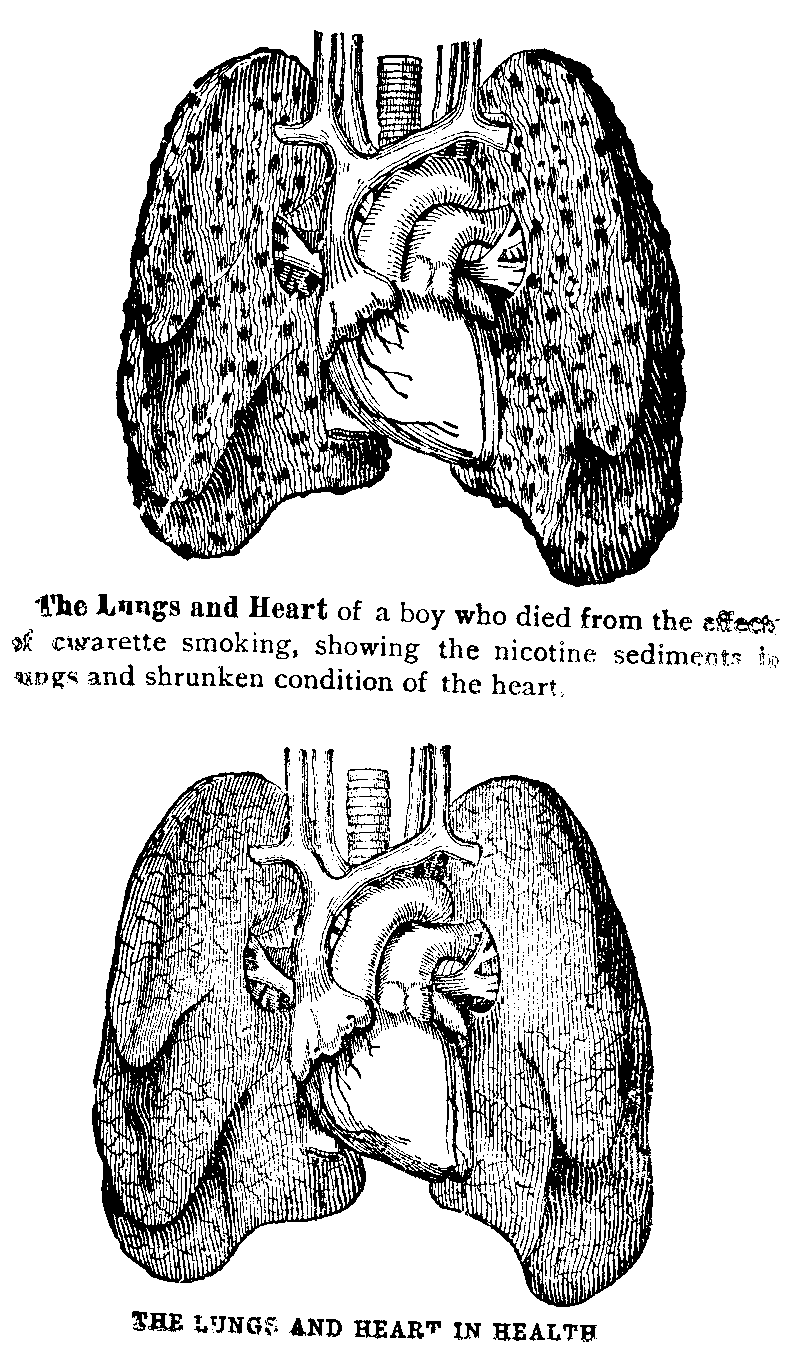
I am very happy with how the lungs/heart turned out. I got the general shapes from this illustration.
a wet clay soup is coming down the hill, above our house, after the many and hefty rains... gladly not towards the hamlet, but turning to the right
the road will need some repair
on the left the papermaking workshop, close to being finished in its basic functions... :)
In this studio intensive taught by artist and award-winning author Aimee Lee '99, students make books and paper by hand in the context of global history and culture.
Photo by Yvonne Gay
We visited a papermaking studio in the western mountains of Japan. Fascinating to see how hand papermaking is done in Japan.
My mother got me a papermaking kit for Christmas! (Thanks Mom!) When I recently hurt my back and decided it would be less painful to just stand up for the rest of the day, I made a batch of paper all by myself for the first time!
This is all the paper I made that afternoon. Some of the sheets are better than others. They're all 5x7, kind of a light purple, and were made from scraps from my recycling bin–envelopes, shredded receipts, junk mail, the latest issue of The Milwaukie Pilot, and I added the label of a Rosarita refried beans can to add flecks of color, which worked beautifully.