View allAll Photos Tagged Normalizes
After decades of rapid and robust growth, the U.S. economy has lost some of its allure. GDP growth averaged 2 percent over the past 5 years, well below the 3 percent or more rates in the two decades before the global financial crisis. Productivity growth is at historic lows and population aging is weighing on labor supply. Some of the lackluster performance can be blamed on the drawn-out recovery, but there is growing evidence that market dynamism had begun to decline well before the Lehman crisis. Business startup and exit rates have fallen since the early 1990s and the labor market has steadily become less and less fluid. Are the gravitational forces of demographic change and productivity normalization finally pulling down growth, or is another innovative burst around the corner? The seminar examines the reasons behind the U.S. growth slowdown, the prospects for a recovery in productivity and dynamism, and the scope for policies to influence current growth trends.
Hypoglycemia
Hello everybody, I am Praveen, a neonatologist at NCRI Neonatal Network. Today I am going to talk about an important condition called hypoglycemia of newborn. Hypoglycemia is a condition where the blood sugar level in the newborn tends to fall down. Normally once the baby is born, they are separated from the mother and the cord is clamped the glucose supply from the mother to the newborn is interrupted. Hence the sugar level tends to fall down, however, as soon as the baby starts breastfeeding on the mother, it tends to normalize. Hence we recommend, as soon as it is possible, once the baby is born they should be fed by the mother. In conditions where the mother is not able to feed the infant, formula feeding should be done.
The symptoms of hypoglycemia are shaking or trembling of the limbs, which is called as jitteriness. Babies can very lethargic, may not be interested in the feeding. They can cry incessantly or become very dull. They might have breathing difficulties or pauses in the breathing and also have bluish discoloration of the fingers and toes. Some babies are at higher risk of developing low sugars in their blood. These infants are either born to mothers with diabetes or have a condition called intrauterine growth retardation or premature infants or infants with infection.
The babies who are at risk of developing low sugars are screened by the way of blood test at regular intervals to identify the low sugar levels early and institute the treatment as soon as possible. The first line of treatment would be encouraging on mother’s milk or giving formula feeding. However in some infants, the sugar level would not normalize even after milk feeding. They would need to be admitted in the newborn unit, monitored closely and might need glucose infusions through the veins. Some of the newborns might need medications to stabilize the blood sugar level. The brain needs a constant supply of glucose. Hence any conditions where the blood glucose level is low can affect the functioning of the brain and when it is very severe, it can lead to fits or seizures or even long term neurological abnormalities. Hence it is very important that babies who are at risk of developing low sugars should be screened regularly and glucose should be normalized as soon as possible
Team Ovum Hospitals
To know more visit our website: ovumhospitals.com
Io Aircraft - www.ioaircraft.com
Drew Blair
www.linkedin.com/in/drew-b-25485312/
io aircraft, phantom express, phantom works, boeing phantom works, lockheed skunk works, hypersonic weapon, hypersonic missile, scramjet missile, scramjet engineering, scramjet physics, boost glide, tactical glide vehicle, Boeing XS-1, htv, Air-Launched Rapid Response Weapon, (ARRW), hypersonic tactical vehicle, hypersonic plane, hypersonic aircraft, space plane, scramjet, turbine based combined cycle, ramjet, dual mode ramjet, darpa, onr, navair, afrl, air force research lab, defense science, missile defense agency, aerospike,
Advanced Additive Manufacturing for Hypersonic Aircraft
Utilizing new methods of fabrication and construction, make it possible to use additive manufacturing, dramatically reducing the time and costs of producing hypersonic platforms from missiles, aircraft, and space capable craft. Instead of aircraft being produced in piece, then bolted together; small platforms can be produced as a single unit and large platforms can be produces in large section and mated without bolting. These techniques include using exotic materials and advanced assembly processes, with an end result of streamlining the production costs and time for hypersonic aircraft; reducing months of assembly to weeks. Overall, this process greatly reduced the cost for producing hypersonic platforms. Even to such an extent that a Hellfire missile costs apx $100,000 but by utilizing our technologies, replacing it with a Mach 8-10 hypersonic missile of our physics/engineering and that missile would cost roughly $75,000 each delivered.
Materials used for these manufacturing processes are not disclosed, but overall, provides a foundation for extremely high stresses and thermodynamics, ideal for hypersonic platforms. This specific methodology and materials applications is many decades ahead of all known programs. Even to the extend of normalized space flight and re-entry, without concern of thermodynamic failure.
*Note, most entities that are experimenting with additive manufacturing for hypersonic aircraft, this makes it mainstream and standardized processes, which also applies for mass production.
What would normally be measured in years and perhaps a decade to go from drawing board to test flights, is reduced to singular months and ready for production within a year maximum.
Unified Turbine Based Combined Cycle (U-TBCC)
To date, the closest that NASA and industry have achieved for turbine based aircraft to fly at hypersonic velocities is by mounting a turbine into an aircraft and sharing the inlet with a scramjet or rocket based motor. Reaction Engines Sabre is not able to achieve hypersonic velocities and can only transition into a non air breathing rocket for beyond Mach 4.5
However, utilizing Unified Turbine Based Combine Cycle also known as U-TBCC, the two separate platforms are able to share a common inlet and the dual mode ramjet/scramjet is contained within the engine itself, which allows for a much smaller airframe footprint, thus engingeers are able to then design much higher performance aerial platforms for hypersonic flight, including the ability for constructing true single stage to orbit aircraft by utilizing a modification/version that allows for transition to outside atmosphere propulsion without any other propulsion platforms within the aircraft. By transitioning and developing aircraft to use Unified Turbine Based Combined Cycle, this propulsion system opens up new options to replace that airframe deficit for increased fuel capacity and/or payload.
Enhanced Dynamic Cavitation
Dramatically Increasing the efficiency of fuel air mixture for combustion processes at hypersonic velocities within scramjet propulsion platforms. The aspects of these processes are non disclosable.
Dynamic Scramjet Ignition Processes
For optimal scramjet ignition, a process known as Self Start is sought after, but in many cases if the platform becomes out of attitude, the scramjet will ignite. We have already solved this problem which as a result, a scramjet propulsion system can ignite at lower velocities, high velocities, at optimal attitude or not optimal attitude. It doesn't matter, it will ignite anyways at the proper point for maximum thrust capabilities at hypersonic velocities.
Hydrogen vs Kerosene Fuel Sources
Kerosene is an easy fuel to work with, and most western nations developing scramjet platforms use Kerosene for that fact. However, while kerosene has better thermal properties then Hydrogen, Hydrogen is a far superior fuel source in scramjet propulsion flight, do it having a much higher efficiency capability. Because of this aspect, in conjunction with our developments, it allows for a MUCH increased fuel to air mixture, combustion, thrust; and ability for higher speeds; instead of very low hypersonic velocities in the Mach 5-6 range. Instead, Mach 8-10 range, while we have begun developing hypersonic capabilities to exceed 15 in atmosphere within less then 5 years.
Conforming High Pressure Tank Technology for CNG and H2.
As most know in hypersonics, Hydrogen is a superior fuel source, but due to the storage abilities, can only be stored in cylinders thus much less fuel supply. Not anymore, we developed conforming high pressure storage technology for use in aerospace, automotive sectors, maritime, etc; which means any overall shape required for 8,000+ PSI CNG or Hydrogen. For hypersonic platforms, this means the ability to store a much larger volume of hydrogen vs cylinders.
As an example, X-43 flown by Nasa which flew at Mach 9.97. The fuel source was Hydrogen, which is extremely more volatile and combustible then kerosene (JP-7), via a cylinder in the main body. If it had used our technology, that entire section of the airframe would had been an 8,000 PSI H2 tank, which would had yielded 5-6 times the capacity. While the X-43 flew 11 seconds under power at Mach 9.97, at 6 times the fuel capacity would had yielded apx 66 seconds of fuel under power at Mach 9.97. If it had flew slower, around Mach 6, same principles applied would had yielded apx 500 seconds of fuel supply under power (slower speeds required less energy to maintain).
Enhanced Fuel Mixture During Shock Train Interaction
Normally, fuel injection is conducted at the correct insertion point within the shock train for maximum burn/combustion. Our methodologies differ, since almost half the fuel injection is conducted PRE shock train within the isolator, so at the point of isolator injection the fuel enhances the combustion process, which then requires less fuel injection to reach the same level of thrust capabilities.
Improved Bow Shock Interaction
Smoother interaction at hypersonic velocities and mitigating heat/stresses for beyond Mach 6 thermodynamics, which extraordinarily improves Type 3, 4, and 5 shock interaction.
6,000+ Fahrenheit Thermal Resistance
To date, the maximum thermal resistance was tested at AFRL in the spring of 2018, which resulted in a 3,200F thermal resistance for a short duration. This technology, allows for normalized hypersonic thermal resistance of 3,000-3,500F sustained, and up to 6,500F resistance for short endurance, ie 90 seconds or less. 10-20 minute resistance estimate approximately 4,500F +/- 200F.
*** This technology advancement also applies to Aerospike rocket engines, in which it is common for Aerospike's to exceed 4,500-5,000F temperatures, which results in the melting of the reversed bell housing. That melting no longer ocurrs, providing for stable combustion to ocurr for the entire flight envelope
Scramjet Propulsion Side Wall Cooling
With old technologies, side wall cooling is required for hypersonic flight and scramjet propulsion systems, otherwise the isolator and combustion regions of a scramjet would melt, even using advanced ablatives and ceramics, due to their inability to cope with very high temperatures. Using technology we have developed for very high thermodynamics and high stresses, side wall cooling is no longer required, thus removing that variable from the design process and focusing on improved ignition processes and increasing net thrust values.
Lower Threshold for Hypersonic Ignition
Active and adaptive flight dynamics, resulting in the ability for scramjet ignition at a much lower velocity, ie within ramjet envelope, between Mach 2-4, and seamless transition from supersonic to hypersonic flight, ie supersonic ramjet (scramjet). This active and dynamic aspect, has a wide variety of parameters for many flight dynamics, velocities, and altitudes; which means platforms no longer need to be engineered for specific altitude ranges or preset velocities, but those parameters can then be selected during launch configuration and are able to adapt actively in flight.
Dramatically Improved Maneuvering Capabilities at Hypersonic Velocities
Hypersonic vehicles, like their less technologically advanced brethren, use large actuator and the developers hope those controls surfaces do not disintegrate in flight. In reality, it is like rolling the dice, they may or may not survive, hence another reason why the attempt to keep velocities to Mach 6 or below. We have shrunken down control actuators while almost doubling torque and response capabilities specifically for hypersonic dynamics and extreme stresses involved, which makes it possible for maximum input authority for Mach 10 and beyond.
Paradigm Shift in Control Surface Methodologies, Increasing Control Authority (Internal Mechanical Applications)
To date, most control surfaces for hypersonic missile platforms still use fins, similar to lower speed conventional missiles, and some using ducted fins. This is mostly due to lack of comprehension of hypersonic velocities in their own favor. Instead, the body itself incorporates those control surfaces, greatly enhancing the airframe strength, opening up more space for hardware and fuel capacity; while simultaneously enhancing the platforms maneuvering capabilities.
A scramjet missile can then fly like conventional missile platforms, and not straight and level at high altitudes, losing velocity on it's decent trajectory to target. Another added benefit to this aspect, is the ability to extend range greatly, so if anyone elses hypersonic missile platform were developed for 400 mile range, falling out of the sky due to lack of glide capabilities; our platforms can easily reach 600+ miles, with minimal glide deceleration.
A CIMMYT technician uses a hand-held sensor to measure NDVI (normalized difference vegetative index) in a wheat field at the center's CENEB experiment station near Ciudad Obregón, Sonora, northern Mexico. NDVI is a spectral index of the green color in plants, and can have a variety of uses in crop research, including indicating nitrogen or chlorophyll content, photosynthetic potential, or ground cover.
Photo credit: Petr Kosina / CIMMYT.
Fig. 3. Size distribution of floating plastic debris collected during the Malaspina circumnavigation at calm conditions. (A) Size distribution in abundance (light blue bars) and abundance normalized by the width (in millimeters) of the size class (blue circles). (B) Measured (blue circles) and modeled (red squares) size distributions of normalized abundance in logarithmic scale. Modeled distribution was strictly based on frag- mentation of large plastic items. (C) Measured (blue circles) and modeled (red squares) size distributions in normalized volume. Green bars indicate the estimated losses of plastic volume by size class (Δi). After smoothing the measured distribution with a Weibull function (black line, R = 0.9979, P < 0.0001), losses by size were estimated from its progressive departure from the modeled distribution. Dashed vertical lines through all three graphs correspond to 1-mm and 5-mm size limits. Because plastic presence declined for sizes over 10 cm, modeling analysis was applied up to 10 cm. Note that the largest size class extends from 10 cm to 1 m, the length of the net mouth. Measured size distributions are built from the plastic collected in tows with u* <0.5 cm·s−1 (4,184 plastic items) to avoid wind-mixing effect. An analysis of the effect of wind mixing on plastic size distribution is shown in SI Appendix, Fig. S7, and size distributions for the whole Malaspina dataset (7,359 plastic items) are graphed in SI Appendix, Fig. S10.
Original file : www.pnas.org/cgi/doi/10.1073/pnas.1314705111
I own no rights on this document. Do not contact me to get diffusion rights. I only archive this image for academic research purpose. Get directly in contact with the author to get the right to use the image yourself. Thanks.
UNFICYP, or the United Nations Peacekeeping Force in Cyprus is mandated with controlling the 180 kilometers of buffer zone in Cyprus as well as keeping peace between the Cypriot and Turkish Armies, issuing civil use permits, and working toward normalization of the island. In addition to UNFICYP, the United Nations operates a Good Offices mission in Cyprus, which directs diplomatic talks, as well as the United Nations Development Program and de-mining operations.
President Richard Nixon signed the Shanghai Communique when he visited China in 1970. President Jimmy Carter reaffirmed the Shanghai Communique in 1978 when he established diplomatic relations with China. In the Shanghai Communique, the U.S. "acknowledges the Chinese position that there is but one China and Taiwan is part of China." With that in mind, why is the U.S. selling arms to Taiwan, other than attempting to provoke China? How does selling arms directly to Taiwan jibe with our One China Policy?
china.usc.edu/jimmy-carter-%E2%80%9Cestablishing-diplomat...
Jimmy Carter, “Establishing Diplomatic Relations with China,” Dec. 15, 1978
President Jimmy Carter reads a joint Communiqué on the establishment of U.S.-Sino relations.
The United States of America and the People's Republic of China reaffirm the principles agreed on by the two sides in the Shanghai Communiqué and emphasize once again that:
—Both wish to reduce the danger of international military conflict.
—Neither should seek hegemony in the Asia-Pacific region or in any other region of the world and each is opposed to efforts by any other country or group of countries to establish such hegemony.
—Neither is prepared to negotiate on behalf of any third party or to enter into agreements or understandings with the other directed at other states.
—The Government of the United States of America acknowledges the Chinese position that there is but one China and Taiwan is part of China.
—Both believe that normalization of Sino-American relations is not only in the interest of the Chinese and American peoples but also contributes to the cause of peace in Asia and the world.
www.cnn.com/2022/09/03/asia/china-retaliate-us-taiwan-arm...
China warns of 'counter-measures' as US approves $1.1bn arms sales to Taiwan
(CNN) China has warned the United States it will take "counter-measures" after the Biden administration approved more than $1.1 billion in arms sales to Taiwan.
Chinese embassy spokesman Liu Pengyu said Saturday China was "firmly opposed" to the sales, which "severely jeopardize China-US relations and peace and stability across the Taiwan Strait," and called on Washington to "immediately revoke" them.
Liu's comments on Twitter came after the Biden administration on Friday formally notified Congress of the proposed sales, which include up to 60 anti-ship missiles and up to 100 air-to-air missiles.
The State Department said the sales are in line with a longstanding US policy of providing defensive weapons to the island and described the "swift provision" of such arms as being "essential for Taiwan's security."
China, however, has accused the US of interfering in what it sees as its internal affairs.
China's Communist Party claims Taiwan, a self-governing democracy, as part of its territory -- despite never having governed it -- and has long vowed to "reunify" the island with the Chinese mainland, by force if necessary.
"The US interferes in China's internal affairs and undermines China's sovereignty and security interests by selling arms to Taiwan," Liu tweeted.
"It sends the wrong signals to 'Taiwan independence' separatist forces and severely jeopardizes China-US relations and peace and stability across the Taiwan Strait," Liu said.
He called on the US to "honor its commitments to the one-China principle" and ended his series of tweets by saying Taiwan is "an inalienable part of the Chinese territory" and warned China will "resolutely take legitimate and necessary counter-measures."
US-China tensions have spiked since House Speaker Nancy Pelosi visited Taiwan last month.
China had warned Pelosi against making the trip, and responded by ordering days' worth of military drills around the island after she had left.
Taiwan said Saturday it "highly welcomes" the latest arms sales and thanked the US government for "continuing to implement its security commitments to Taiwan."
"In response to China's recent continuous military provocations and unilateral changes in the status quo and creating crises, Taiwan's determination to defend itself is extremely firm," Taiwan's Ministry of Foreign Affairs said in a statement Saturday.
"This batch of arms sales includes a large number of various types of missiles that are needed to strengthen Taiwan's self-defense, which fully demonstrates that the great importance the US government attaches to Taiwan's defense needs, assisting our country to obtain the equipment needed for defense in a timely manner and to enhance our national defense capabilities."
In an incident that underscored the heightened tensions, Taiwan's military shot down a drone hovering over one of its island outposts just off the Chinese coast on Thursday.
A day earlier, Taiwan said it had warned off drones hovering over three of the islands it occupies off the coast of the Chinese port city of Xiamen.
apnews.com/article/taiwan-china-congress-government-and-p...
US OKs $1B arms sale to Taiwan as tensions rise with China
WASHINGTON (AP) — The Biden administration on Friday announced a more than $1 billion arms sale to Taiwan as U.S.-China tensions escalate over the status of the island.
The $1.09 billion sale includes $355 million for Harpoon air-to-sea missiles and $85 million for Sidewinder air-to-air missiles, the State Department said.
The largest portion of the sale, however, is a $655 million logistics support package for Taiwan’s surveillance radar program, which provides air defense warnings. Early warning air defense systems have become more important as China has stepped up military drills near Taiwan, which it regards as a renegade province.
The State Department said the equipment is necessary for Taiwan to “maintain a sufficient self-defense capability.” The administration notified Congress of the sale after close of business on Friday.
The administration said the deals comply with the U.S. one-China policy. It also urged Beijing ”to cease its military, diplomatic, and economic pressure against Taiwan and instead engage in meaningful dialogue with Taiwan.”
Laura Rosenberger, the White House’s senior director for China and Taiwan, said late Friday that as China “continues to increase pressure on Taiwan — including through heightened military air and maritime presence around Taiwan — and engages in attempts to change the status quo in the Taiwan Strait, we’re providing Taiwan with what it needs to maintain its self-defense capabilities.”
The acrimony and strident rhetoric between the U.S. and China over Taiwan have increased sharply since House Speaker Nancy Pelosi visited the island last month. Since Pelosi’s trip to Taipei there have been at least two other congressional visits and several by governors of U.S. states, all of which China has condemned.
On Thursday, Taiwan’s military said it shot down a drone hovering over one of its island outposts just off the Chinese coast in an incident that underscored the heightened tensions. A day earlier, Taiwan said it had warned off drones hovering over three of the islands it occupies off the coast of the Chinese port city of Xiamen.
China claims Taiwan as its own territory, to be annexed by force if necessary. The sides split after a civil war in 1949 and have no official relations, with China cutting off even informal contacts following the election of independence-leaning Taiwanese President Tsai Ing-wen in 2016.
Tsai’s administration has pushed for a strengthening of anti-drone defenses as part of a 12.9% increase in its Defense Ministry’s annual budget next year. That would boost defense spending by an additional 47.5 billion New Taiwan dollars ($1.6 billion), for a total of 415.1 billion NTD ($13.8 billion).
The U.S. described Chinese drills last month as a severe overreaction and responded by sailing two guided missile cruisers through the Taiwan Strait, which China has declared to be its sovereign waters.
Io Aircraft - www.ioaircraft.com
Drew Blair
www.linkedin.com/in/drew-b-25485312/
io aircraft, phantom express, phantom works, boeing phantom works, lockheed skunk works, hypersonic weapon, hypersonic missile, scramjet missile, scramjet engineering, scramjet physics, boost glide, tactical glide vehicle, Boeing XS-1, htv, Air-Launched Rapid Response Weapon, (ARRW), hypersonic tactical vehicle, hypersonic plane, hypersonic aircraft, space plane, scramjet, turbine based combined cycle, ramjet, dual mode ramjet, darpa, onr, navair, afrl, air force research lab, defense science, missile defense agency, aerospike,
Advanced Additive Manufacturing for Hypersonic Aircraft
Utilizing new methods of fabrication and construction, make it possible to use additive manufacturing, dramatically reducing the time and costs of producing hypersonic platforms from missiles, aircraft, and space capable craft. Instead of aircraft being produced in piece, then bolted together; small platforms can be produced as a single unit and large platforms can be produces in large section and mated without bolting. These techniques include using exotic materials and advanced assembly processes, with an end result of streamlining the production costs and time for hypersonic aircraft; reducing months of assembly to weeks. Overall, this process greatly reduced the cost for producing hypersonic platforms. Even to such an extent that a Hellfire missile costs apx $100,000 but by utilizing our technologies, replacing it with a Mach 8-10 hypersonic missile of our physics/engineering and that missile would cost roughly $75,000 each delivered.
Materials used for these manufacturing processes are not disclosed, but overall, provides a foundation for extremely high stresses and thermodynamics, ideal for hypersonic platforms. This specific methodology and materials applications is many decades ahead of all known programs. Even to the extend of normalized space flight and re-entry, without concern of thermodynamic failure.
*Note, most entities that are experimenting with additive manufacturing for hypersonic aircraft, this makes it mainstream and standardized processes, which also applies for mass production.
What would normally be measured in years and perhaps a decade to go from drawing board to test flights, is reduced to singular months and ready for production within a year maximum.
Unified Turbine Based Combined Cycle (U-TBCC)
To date, the closest that NASA and industry have achieved for turbine based aircraft to fly at hypersonic velocities is by mounting a turbine into an aircraft and sharing the inlet with a scramjet or rocket based motor. Reaction Engines Sabre is not able to achieve hypersonic velocities and can only transition into a non air breathing rocket for beyond Mach 4.5
However, utilizing Unified Turbine Based Combine Cycle also known as U-TBCC, the two separate platforms are able to share a common inlet and the dual mode ramjet/scramjet is contained within the engine itself, which allows for a much smaller airframe footprint, thus engingeers are able to then design much higher performance aerial platforms for hypersonic flight, including the ability for constructing true single stage to orbit aircraft by utilizing a modification/version that allows for transition to outside atmosphere propulsion without any other propulsion platforms within the aircraft. By transitioning and developing aircraft to use Unified Turbine Based Combined Cycle, this propulsion system opens up new options to replace that airframe deficit for increased fuel capacity and/or payload.
Enhanced Dynamic Cavitation
Dramatically Increasing the efficiency of fuel air mixture for combustion processes at hypersonic velocities within scramjet propulsion platforms. The aspects of these processes are non disclosable.
Dynamic Scramjet Ignition Processes
For optimal scramjet ignition, a process known as Self Start is sought after, but in many cases if the platform becomes out of attitude, the scramjet will ignite. We have already solved this problem which as a result, a scramjet propulsion system can ignite at lower velocities, high velocities, at optimal attitude or not optimal attitude. It doesn't matter, it will ignite anyways at the proper point for maximum thrust capabilities at hypersonic velocities.
Hydrogen vs Kerosene Fuel Sources
Kerosene is an easy fuel to work with, and most western nations developing scramjet platforms use Kerosene for that fact. However, while kerosene has better thermal properties then Hydrogen, Hydrogen is a far superior fuel source in scramjet propulsion flight, do it having a much higher efficiency capability. Because of this aspect, in conjunction with our developments, it allows for a MUCH increased fuel to air mixture, combustion, thrust; and ability for higher speeds; instead of very low hypersonic velocities in the Mach 5-6 range. Instead, Mach 8-10 range, while we have begun developing hypersonic capabilities to exceed 15 in atmosphere within less then 5 years.
Conforming High Pressure Tank Technology for CNG and H2.
As most know in hypersonics, Hydrogen is a superior fuel source, but due to the storage abilities, can only be stored in cylinders thus much less fuel supply. Not anymore, we developed conforming high pressure storage technology for use in aerospace, automotive sectors, maritime, etc; which means any overall shape required for 8,000+ PSI CNG or Hydrogen. For hypersonic platforms, this means the ability to store a much larger volume of hydrogen vs cylinders.
As an example, X-43 flown by Nasa which flew at Mach 9.97. The fuel source was Hydrogen, which is extremely more volatile and combustible then kerosene (JP-7), via a cylinder in the main body. If it had used our technology, that entire section of the airframe would had been an 8,000 PSI H2 tank, which would had yielded 5-6 times the capacity. While the X-43 flew 11 seconds under power at Mach 9.97, at 6 times the fuel capacity would had yielded apx 66 seconds of fuel under power at Mach 9.97. If it had flew slower, around Mach 6, same principles applied would had yielded apx 500 seconds of fuel supply under power (slower speeds required less energy to maintain).
Enhanced Fuel Mixture During Shock Train Interaction
Normally, fuel injection is conducted at the correct insertion point within the shock train for maximum burn/combustion. Our methodologies differ, since almost half the fuel injection is conducted PRE shock train within the isolator, so at the point of isolator injection the fuel enhances the combustion process, which then requires less fuel injection to reach the same level of thrust capabilities.
Improved Bow Shock Interaction
Smoother interaction at hypersonic velocities and mitigating heat/stresses for beyond Mach 6 thermodynamics, which extraordinarily improves Type 3, 4, and 5 shock interaction.
6,000+ Fahrenheit Thermal Resistance
To date, the maximum thermal resistance was tested at AFRL in the spring of 2018, which resulted in a 3,200F thermal resistance for a short duration. This technology, allows for normalized hypersonic thermal resistance of 3,000-3,500F sustained, and up to 6,500F resistance for short endurance, ie 90 seconds or less. 10-20 minute resistance estimate approximately 4,500F +/- 200F.
*** This technology advancement also applies to Aerospike rocket engines, in which it is common for Aerospike's to exceed 4,500-5,000F temperatures, which results in the melting of the reversed bell housing. That melting no longer ocurrs, providing for stable combustion to ocurr for the entire flight envelope
Scramjet Propulsion Side Wall Cooling
With old technologies, side wall cooling is required for hypersonic flight and scramjet propulsion systems, otherwise the isolator and combustion regions of a scramjet would melt, even using advanced ablatives and ceramics, due to their inability to cope with very high temperatures. Using technology we have developed for very high thermodynamics and high stresses, side wall cooling is no longer required, thus removing that variable from the design process and focusing on improved ignition processes and increasing net thrust values.
Lower Threshold for Hypersonic Ignition
Active and adaptive flight dynamics, resulting in the ability for scramjet ignition at a much lower velocity, ie within ramjet envelope, between Mach 2-4, and seamless transition from supersonic to hypersonic flight, ie supersonic ramjet (scramjet). This active and dynamic aspect, has a wide variety of parameters for many flight dynamics, velocities, and altitudes; which means platforms no longer need to be engineered for specific altitude ranges or preset velocities, but those parameters can then be selected during launch configuration and are able to adapt actively in flight.
Dramatically Improved Maneuvering Capabilities at Hypersonic Velocities
Hypersonic vehicles, like their less technologically advanced brethren, use large actuator and the developers hope those controls surfaces do not disintegrate in flight. In reality, it is like rolling the dice, they may or may not survive, hence another reason why the attempt to keep velocities to Mach 6 or below. We have shrunken down control actuators while almost doubling torque and response capabilities specifically for hypersonic dynamics and extreme stresses involved, which makes it possible for maximum input authority for Mach 10 and beyond.
Paradigm Shift in Control Surface Methodologies, Increasing Control Authority (Internal Mechanical Applications)
To date, most control surfaces for hypersonic missile platforms still use fins, similar to lower speed conventional missiles, and some using ducted fins. This is mostly due to lack of comprehension of hypersonic velocities in their own favor. Instead, the body itself incorporates those control surfaces, greatly enhancing the airframe strength, opening up more space for hardware and fuel capacity; while simultaneously enhancing the platforms maneuvering capabilities.
A scramjet missile can then fly like conventional missile platforms, and not straight and level at high altitudes, losing velocity on it's decent trajectory to target. Another added benefit to this aspect, is the ability to extend range greatly, so if anyone elses hypersonic missile platform were developed for 400 mile range, falling out of the sky due to lack of glide capabilities; our platforms can easily reach 600+ miles, with minimal glide deceleration.
Io Aircraft - www.ioaircraft.com
Drew Blair
www.linkedin.com/in/drew-b-25485312/
io aircraft, phantom express, phantom works, boeing phantom works, lockheed skunk works, hypersonic weapon, hypersonic missile, scramjet missile, scramjet engineering, scramjet physics, boost glide, tactical glide vehicle, Boeing XS-1, htv, Air-Launched Rapid Response Weapon, (ARRW), hypersonic tactical vehicle, hypersonic plane, hypersonic aircraft, space plane, scramjet, turbine based combined cycle, ramjet, dual mode ramjet, darpa, onr, navair, afrl, air force research lab, defense science, missile defense agency, aerospike,
Advanced Additive Manufacturing for Hypersonic Aircraft
Utilizing new methods of fabrication and construction, make it possible to use additive manufacturing, dramatically reducing the time and costs of producing hypersonic platforms from missiles, aircraft, and space capable craft. Instead of aircraft being produced in piece, then bolted together; small platforms can be produced as a single unit and large platforms can be produces in large section and mated without bolting. These techniques include using exotic materials and advanced assembly processes, with an end result of streamlining the production costs and time for hypersonic aircraft; reducing months of assembly to weeks. Overall, this process greatly reduced the cost for producing hypersonic platforms. Even to such an extent that a Hellfire missile costs apx $100,000 but by utilizing our technologies, replacing it with a Mach 8-10 hypersonic missile of our physics/engineering and that missile would cost roughly $75,000 each delivered.
Materials used for these manufacturing processes are not disclosed, but overall, provides a foundation for extremely high stresses and thermodynamics, ideal for hypersonic platforms. This specific methodology and materials applications is many decades ahead of all known programs. Even to the extend of normalized space flight and re-entry, without concern of thermodynamic failure.
*Note, most entities that are experimenting with additive manufacturing for hypersonic aircraft, this makes it mainstream and standardized processes, which also applies for mass production.
What would normally be measured in years and perhaps a decade to go from drawing board to test flights, is reduced to singular months and ready for production within a year maximum.
Unified Turbine Based Combined Cycle (U-TBCC)
To date, the closest that NASA and industry have achieved for turbine based aircraft to fly at hypersonic velocities is by mounting a turbine into an aircraft and sharing the inlet with a scramjet or rocket based motor. Reaction Engines Sabre is not able to achieve hypersonic velocities and can only transition into a non air breathing rocket for beyond Mach 4.5
However, utilizing Unified Turbine Based Combine Cycle also known as U-TBCC, the two separate platforms are able to share a common inlet and the dual mode ramjet/scramjet is contained within the engine itself, which allows for a much smaller airframe footprint, thus engingeers are able to then design much higher performance aerial platforms for hypersonic flight, including the ability for constructing true single stage to orbit aircraft by utilizing a modification/version that allows for transition to outside atmosphere propulsion without any other propulsion platforms within the aircraft. By transitioning and developing aircraft to use Unified Turbine Based Combined Cycle, this propulsion system opens up new options to replace that airframe deficit for increased fuel capacity and/or payload.
Enhanced Dynamic Cavitation
Dramatically Increasing the efficiency of fuel air mixture for combustion processes at hypersonic velocities within scramjet propulsion platforms. The aspects of these processes are non disclosable.
Dynamic Scramjet Ignition Processes
For optimal scramjet ignition, a process known as Self Start is sought after, but in many cases if the platform becomes out of attitude, the scramjet will ignite. We have already solved this problem which as a result, a scramjet propulsion system can ignite at lower velocities, high velocities, at optimal attitude or not optimal attitude. It doesn't matter, it will ignite anyways at the proper point for maximum thrust capabilities at hypersonic velocities.
Hydrogen vs Kerosene Fuel Sources
Kerosene is an easy fuel to work with, and most western nations developing scramjet platforms use Kerosene for that fact. However, while kerosene has better thermal properties then Hydrogen, Hydrogen is a far superior fuel source in scramjet propulsion flight, do it having a much higher efficiency capability. Because of this aspect, in conjunction with our developments, it allows for a MUCH increased fuel to air mixture, combustion, thrust; and ability for higher speeds; instead of very low hypersonic velocities in the Mach 5-6 range. Instead, Mach 8-10 range, while we have begun developing hypersonic capabilities to exceed 15 in atmosphere within less then 5 years.
Conforming High Pressure Tank Technology for CNG and H2.
As most know in hypersonics, Hydrogen is a superior fuel source, but due to the storage abilities, can only be stored in cylinders thus much less fuel supply. Not anymore, we developed conforming high pressure storage technology for use in aerospace, automotive sectors, maritime, etc; which means any overall shape required for 8,000+ PSI CNG or Hydrogen. For hypersonic platforms, this means the ability to store a much larger volume of hydrogen vs cylinders.
As an example, X-43 flown by Nasa which flew at Mach 9.97. The fuel source was Hydrogen, which is extremely more volatile and combustible then kerosene (JP-7), via a cylinder in the main body. If it had used our technology, that entire section of the airframe would had been an 8,000 PSI H2 tank, which would had yielded 5-6 times the capacity. While the X-43 flew 11 seconds under power at Mach 9.97, at 6 times the fuel capacity would had yielded apx 66 seconds of fuel under power at Mach 9.97. If it had flew slower, around Mach 6, same principles applied would had yielded apx 500 seconds of fuel supply under power (slower speeds required less energy to maintain).
Enhanced Fuel Mixture During Shock Train Interaction
Normally, fuel injection is conducted at the correct insertion point within the shock train for maximum burn/combustion. Our methodologies differ, since almost half the fuel injection is conducted PRE shock train within the isolator, so at the point of isolator injection the fuel enhances the combustion process, which then requires less fuel injection to reach the same level of thrust capabilities.
Improved Bow Shock Interaction
Smoother interaction at hypersonic velocities and mitigating heat/stresses for beyond Mach 6 thermodynamics, which extraordinarily improves Type 3, 4, and 5 shock interaction.
6,000+ Fahrenheit Thermal Resistance
To date, the maximum thermal resistance was tested at AFRL in the spring of 2018, which resulted in a 3,200F thermal resistance for a short duration. This technology, allows for normalized hypersonic thermal resistance of 3,000-3,500F sustained, and up to 6,500F resistance for short endurance, ie 90 seconds or less. 10-20 minute resistance estimate approximately 4,500F +/- 200F.
*** This technology advancement also applies to Aerospike rocket engines, in which it is common for Aerospike's to exceed 4,500-5,000F temperatures, which results in the melting of the reversed bell housing. That melting no longer ocurrs, providing for stable combustion to ocurr for the entire flight envelope
Scramjet Propulsion Side Wall Cooling
With old technologies, side wall cooling is required for hypersonic flight and scramjet propulsion systems, otherwise the isolator and combustion regions of a scramjet would melt, even using advanced ablatives and ceramics, due to their inability to cope with very high temperatures. Using technology we have developed for very high thermodynamics and high stresses, side wall cooling is no longer required, thus removing that variable from the design process and focusing on improved ignition processes and increasing net thrust values.
Lower Threshold for Hypersonic Ignition
Active and adaptive flight dynamics, resulting in the ability for scramjet ignition at a much lower velocity, ie within ramjet envelope, between Mach 2-4, and seamless transition from supersonic to hypersonic flight, ie supersonic ramjet (scramjet). This active and dynamic aspect, has a wide variety of parameters for many flight dynamics, velocities, and altitudes; which means platforms no longer need to be engineered for specific altitude ranges or preset velocities, but those parameters can then be selected during launch configuration and are able to adapt actively in flight.
Dramatically Improved Maneuvering Capabilities at Hypersonic Velocities
Hypersonic vehicles, like their less technologically advanced brethren, use large actuator and the developers hope those controls surfaces do not disintegrate in flight. In reality, it is like rolling the dice, they may or may not survive, hence another reason why the attempt to keep velocities to Mach 6 or below. We have shrunken down control actuators while almost doubling torque and response capabilities specifically for hypersonic dynamics and extreme stresses involved, which makes it possible for maximum input authority for Mach 10 and beyond.
Paradigm Shift in Control Surface Methodologies, Increasing Control Authority (Internal Mechanical Applications)
To date, most control surfaces for hypersonic missile platforms still use fins, similar to lower speed conventional missiles, and some using ducted fins. This is mostly due to lack of comprehension of hypersonic velocities in their own favor. Instead, the body itself incorporates those control surfaces, greatly enhancing the airframe strength, opening up more space for hardware and fuel capacity; while simultaneously enhancing the platforms maneuvering capabilities.
A scramjet missile can then fly like conventional missile platforms, and not straight and level at high altitudes, losing velocity on it's decent trajectory to target. Another added benefit to this aspect, is the ability to extend range greatly, so if anyone elses hypersonic missile platform were developed for 400 mile range, falling out of the sky due to lack of glide capabilities; our platforms can easily reach 600+ miles, with minimal glide deceleration.
DA NANG, Vietnam (Aug. 12, 2010) Cryptologic Technician 1st Class Cody Perez, assigned to the guided-missile destroyer USS John S. McCain (DDG 56), sings along with children at a Da Nang primary school during a community service project. John S. McCain is on a scheduled port visit to commemorate the 15th anniversary of the normalization of diplomatic relations between Vietnam and the United States. (U.S. Navy photo by Lt. Mike Morley/Released)
Io Aircraft - www.ioaircraft.com
Drew Blair
www.linkedin.com/in/drew-b-25485312/
io aircraft, phantom express, phantom works, boeing phantom works, lockheed skunk works, hypersonic weapon, hypersonic missile, scramjet missile, scramjet engineering, scramjet physics, boost glide, tactical glide vehicle, Boeing XS-1, htv, Air-Launched Rapid Response Weapon, (ARRW), hypersonic tactical vehicle, hypersonic plane, hypersonic aircraft, space plane, scramjet, turbine based combined cycle, ramjet, dual mode ramjet, darpa, onr, navair, afrl, air force research lab, defense science, missile defense agency, aerospike,
Advanced Additive Manufacturing for Hypersonic Aircraft
Utilizing new methods of fabrication and construction, make it possible to use additive manufacturing, dramatically reducing the time and costs of producing hypersonic platforms from missiles, aircraft, and space capable craft. Instead of aircraft being produced in piece, then bolted together; small platforms can be produced as a single unit and large platforms can be produces in large section and mated without bolting. These techniques include using exotic materials and advanced assembly processes, with an end result of streamlining the production costs and time for hypersonic aircraft; reducing months of assembly to weeks. Overall, this process greatly reduced the cost for producing hypersonic platforms. Even to such an extent that a Hellfire missile costs apx $100,000 but by utilizing our technologies, replacing it with a Mach 8-10 hypersonic missile of our physics/engineering and that missile would cost roughly $75,000 each delivered.
Materials used for these manufacturing processes are not disclosed, but overall, provides a foundation for extremely high stresses and thermodynamics, ideal for hypersonic platforms. This specific methodology and materials applications is many decades ahead of all known programs. Even to the extend of normalized space flight and re-entry, without concern of thermodynamic failure.
*Note, most entities that are experimenting with additive manufacturing for hypersonic aircraft, this makes it mainstream and standardized processes, which also applies for mass production.
What would normally be measured in years and perhaps a decade to go from drawing board to test flights, is reduced to singular months and ready for production within a year maximum.
Unified Turbine Based Combined Cycle (U-TBCC)
To date, the closest that NASA and industry have achieved for turbine based aircraft to fly at hypersonic velocities is by mounting a turbine into an aircraft and sharing the inlet with a scramjet or rocket based motor. Reaction Engines Sabre is not able to achieve hypersonic velocities and can only transition into a non air breathing rocket for beyond Mach 4.5
However, utilizing Unified Turbine Based Combine Cycle also known as U-TBCC, the two separate platforms are able to share a common inlet and the dual mode ramjet/scramjet is contained within the engine itself, which allows for a much smaller airframe footprint, thus engingeers are able to then design much higher performance aerial platforms for hypersonic flight, including the ability for constructing true single stage to orbit aircraft by utilizing a modification/version that allows for transition to outside atmosphere propulsion without any other propulsion platforms within the aircraft. By transitioning and developing aircraft to use Unified Turbine Based Combined Cycle, this propulsion system opens up new options to replace that airframe deficit for increased fuel capacity and/or payload.
Enhanced Dynamic Cavitation
Dramatically Increasing the efficiency of fuel air mixture for combustion processes at hypersonic velocities within scramjet propulsion platforms. The aspects of these processes are non disclosable.
Dynamic Scramjet Ignition Processes
For optimal scramjet ignition, a process known as Self Start is sought after, but in many cases if the platform becomes out of attitude, the scramjet will ignite. We have already solved this problem which as a result, a scramjet propulsion system can ignite at lower velocities, high velocities, at optimal attitude or not optimal attitude. It doesn't matter, it will ignite anyways at the proper point for maximum thrust capabilities at hypersonic velocities.
Hydrogen vs Kerosene Fuel Sources
Kerosene is an easy fuel to work with, and most western nations developing scramjet platforms use Kerosene for that fact. However, while kerosene has better thermal properties then Hydrogen, Hydrogen is a far superior fuel source in scramjet propulsion flight, do it having a much higher efficiency capability. Because of this aspect, in conjunction with our developments, it allows for a MUCH increased fuel to air mixture, combustion, thrust; and ability for higher speeds; instead of very low hypersonic velocities in the Mach 5-6 range. Instead, Mach 8-10 range, while we have begun developing hypersonic capabilities to exceed 15 in atmosphere within less then 5 years.
Conforming High Pressure Tank Technology for CNG and H2.
As most know in hypersonics, Hydrogen is a superior fuel source, but due to the storage abilities, can only be stored in cylinders thus much less fuel supply. Not anymore, we developed conforming high pressure storage technology for use in aerospace, automotive sectors, maritime, etc; which means any overall shape required for 8,000+ PSI CNG or Hydrogen. For hypersonic platforms, this means the ability to store a much larger volume of hydrogen vs cylinders.
As an example, X-43 flown by Nasa which flew at Mach 9.97. The fuel source was Hydrogen, which is extremely more volatile and combustible then kerosene (JP-7), via a cylinder in the main body. If it had used our technology, that entire section of the airframe would had been an 8,000 PSI H2 tank, which would had yielded 5-6 times the capacity. While the X-43 flew 11 seconds under power at Mach 9.97, at 6 times the fuel capacity would had yielded apx 66 seconds of fuel under power at Mach 9.97. If it had flew slower, around Mach 6, same principles applied would had yielded apx 500 seconds of fuel supply under power (slower speeds required less energy to maintain).
Enhanced Fuel Mixture During Shock Train Interaction
Normally, fuel injection is conducted at the correct insertion point within the shock train for maximum burn/combustion. Our methodologies differ, since almost half the fuel injection is conducted PRE shock train within the isolator, so at the point of isolator injection the fuel enhances the combustion process, which then requires less fuel injection to reach the same level of thrust capabilities.
Improved Bow Shock Interaction
Smoother interaction at hypersonic velocities and mitigating heat/stresses for beyond Mach 6 thermodynamics, which extraordinarily improves Type 3, 4, and 5 shock interaction.
6,000+ Fahrenheit Thermal Resistance
To date, the maximum thermal resistance was tested at AFRL in the spring of 2018, which resulted in a 3,200F thermal resistance for a short duration. This technology, allows for normalized hypersonic thermal resistance of 3,000-3,500F sustained, and up to 6,500F resistance for short endurance, ie 90 seconds or less. 10-20 minute resistance estimate approximately 4,500F +/- 200F.
*** This technology advancement also applies to Aerospike rocket engines, in which it is common for Aerospike's to exceed 4,500-5,000F temperatures, which results in the melting of the reversed bell housing. That melting no longer ocurrs, providing for stable combustion to ocurr for the entire flight envelope
Scramjet Propulsion Side Wall Cooling
With old technologies, side wall cooling is required for hypersonic flight and scramjet propulsion systems, otherwise the isolator and combustion regions of a scramjet would melt, even using advanced ablatives and ceramics, due to their inability to cope with very high temperatures. Using technology we have developed for very high thermodynamics and high stresses, side wall cooling is no longer required, thus removing that variable from the design process and focusing on improved ignition processes and increasing net thrust values.
Lower Threshold for Hypersonic Ignition
Active and adaptive flight dynamics, resulting in the ability for scramjet ignition at a much lower velocity, ie within ramjet envelope, between Mach 2-4, and seamless transition from supersonic to hypersonic flight, ie supersonic ramjet (scramjet). This active and dynamic aspect, has a wide variety of parameters for many flight dynamics, velocities, and altitudes; which means platforms no longer need to be engineered for specific altitude ranges or preset velocities, but those parameters can then be selected during launch configuration and are able to adapt actively in flight.
Dramatically Improved Maneuvering Capabilities at Hypersonic Velocities
Hypersonic vehicles, like their less technologically advanced brethren, use large actuator and the developers hope those controls surfaces do not disintegrate in flight. In reality, it is like rolling the dice, they may or may not survive, hence another reason why the attempt to keep velocities to Mach 6 or below. We have shrunken down control actuators while almost doubling torque and response capabilities specifically for hypersonic dynamics and extreme stresses involved, which makes it possible for maximum input authority for Mach 10 and beyond.
Paradigm Shift in Control Surface Methodologies, Increasing Control Authority (Internal Mechanical Applications)
To date, most control surfaces for hypersonic missile platforms still use fins, similar to lower speed conventional missiles, and some using ducted fins. This is mostly due to lack of comprehension of hypersonic velocities in their own favor. Instead, the body itself incorporates those control surfaces, greatly enhancing the airframe strength, opening up more space for hardware and fuel capacity; while simultaneously enhancing the platforms maneuvering capabilities.
A scramjet missile can then fly like conventional missile platforms, and not straight and level at high altitudes, losing velocity on it's decent trajectory to target. Another added benefit to this aspect, is the ability to extend range greatly, so if anyone elses hypersonic missile platform were developed for 400 mile range, falling out of the sky due to lack of glide capabilities; our platforms can easily reach 600+ miles, with minimal glide deceleration.
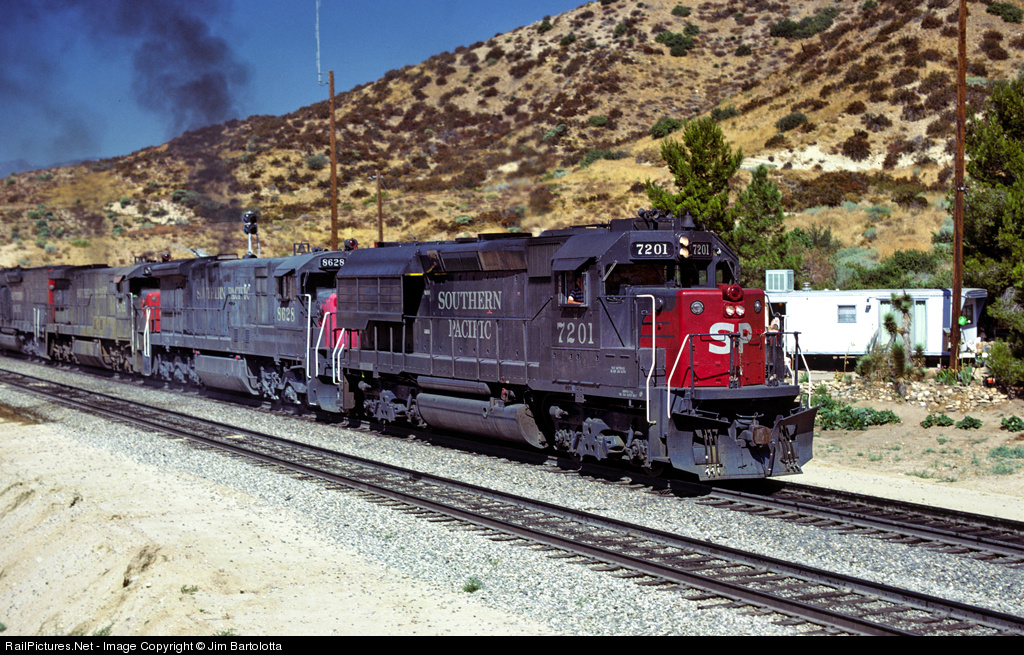
The GP40X was EMD's testbed for the future GP50 and introduced the unpopular HT-B truck. The 'elephant ears' version shown here was an experiment in normalizing the tunnel motor concept. The ears eventually were removed and the HT-B trucks were never reproduced. I needed a powered SP unit to haul around some heavy trains so all those unique qualities fit the bill just right. Originally I wanted to build the UP version, but the SP is more iconic with those elephant ears. The UP version will follow someday.
Reconciliation Pole Raised at UBC ahead of Walk for Reconciliation 2017 in Vancouver
Haida Carver James Hart 'Reconciliation Pole' Totem Was Raised in UBC in April 2017 Ahead of the Walk For Reconciliation, Namayut WE ARE ALL ONE
A Reconciliation Pole by Indigenous Haida master carver James Hart was raised at the University of British Columbia (UBC) on unceded land of the Musqueam people on April 01, 2017. The Walk for Reconciliation takes place in Vancouver on Sep 24, 2017. These events become significant milestones as the country celebrates Canada 150 or the 150th year of the Canadian Confederation in 2017. Canada 150 (1867-2017).
A Haida potlatch (First Nations ceremony) took place as a ceremony to commemorate the thousands of young aboriginal children forcefully taken from their homes and sent to the Indian residential schools to 'normalize' them so that when they grew up, the children would fit into the larger white society. These children were forbidden to speak their native languages, practice their custom and basically stripped of their aboriginal identity. About 6,000 of these children died as a direct result of the different kinds of abuse by those who taught and operated the schools. This incident is widely seen as the Holocaust of the First Nations or native people of Canada. There are many who survived the ordeal but have to live with the horrific memory.
Indigenous residential school survivors and family members are an integral part of the healing process and many of them took part in hammering 6,000 copper nails onto the pole during the carving process. Each nail represents one child who lost their live at the residential schools. James Hart carved the 17-metre (55ft) totem pole that was cut from an 800 year old Red Cedar wood tree to act as a permanent reminder of the sufferings of those who passed on and those who survived.
During the totem pole raising ceremony, Elder Barney Williams related his experience of being raped and abused at a residential school in Meares Island, B.C. Others who also spoke included carver James Hart, UBC President Santa Ono and many BC elders and hereditary chiefs. The pole is now located at the future site of the Indian Residential School History and Dialogue Centre that is slated to open in the 2017-2018 academic year.
A potlatch is a gift-giving feast practiced by the indigenous people of the Pacific Northwest Coast of Canada and the United States. The ceremony associated with the potlatch was banned from being practiced because it was an aboriginal custom that the Canadian government wanted to suppress up until the early 1950s.
“It’s about understanding and moving forward together. We want to be part of Canada. We have lots to offer. Every nation has been here for thousands of years. We’re part of the country. Really, we want to be part of Canada but not the destructive part. My hope for the pole is that it moves people to learn more about the history of residential schools and to understand their responsibility to reconciliation,” said James Hart, Haida master carver and hereditary chief.
“It’s about understanding and moving forward together. We want to be part of Canada. We have lots to offer. My hope for the pole is that it moves people to learn more about the history of residential schools and to understand their responsibility to reconciliation.” ~~ James Hart, Haida master carver
“As a country we need to reconcile, because this is not just a First Nations’ problem, it’s a Canadian problem.” ~~ Elder Barney Williams, Meares Island, B.C.
++++++++++++++++++++++
Ray Van Eng 雷云影 is an accomplished media professional, award-winning screenwriter and movie producer. His work has been part of the Hava Nagila Exhibit at the Museum of Jewish Heritage – A Living Memorial to the Holocaust in Manhattan in New York, NY from Sep 2012 to May 2013.
++++++++++++++++++++++++++++++++++++++
This was a test to see if the "date taken" information on photos is in GMT , UTC or some other normalized time format . Photos tagged "Sunset" are mapped according to the date and time they were taken.
I've mapped two sets of photos, one which corresponds to a rectangle which encompasses Europe, and one which corresponds to a rectangle which encompasses the western edge of the continental United States.
This comfirms my theory that the times appear to be roughly local to the photographer (likely simply the time setting on the camera), and not in GMT or UTC.
It is still unclear why there isn't a more visible artifact from daylight savings.
There is a widening of the band in the summer months, possible due to
a) Some cameras have daylight savings, some don't, so a wider band.
b) More photos taken outdoors in warmer months.
c) More photos submitted recently to Flickr with geotags.--
More stuff by jbum:
Cellnique Moisturizing & Balancing Lotion review by Elaine (elainey0007). View the full review on www.youtube.com/watch?v=C4tjB_BTqX4. An ultra-rich toner formulated to moisturize skin and restore its delicate pH balance. Antioxidants protect skin from the environment, leaving it feeling soft and supple. Recommended for dry or delicate skin types.
Benefits
• Excellent antioxidant properties
• Provides protection from skin damaging free radicals
• pH balancing
Subscribe to our youtube's channel to view more interesting videos:
129/365
Tonight everything finally went back to normal, as the last of our holiday visitors disembarked. It was a great Christmas and a lot of fun to have guests, but man does it feel nice to have Maple Hoo back to ourselves. As is our tradition, we took a picture of a hot cocoa mug on Pookie's restored end table to commemorate the living room going back to normal.
DA NANG, Vietnam (Aug. 12, 2010) Crypotlogic Technician 3rd Class Manuel Dominguez, assigned to the guided-missile destroyer USS John S. McCain (DDG 56), practices basic English phrases with children at a Da Nang primary school during a community service project. John S. McCain is on a scheduled port visit to commemorate the 15th anniversary of the normalization of diplomatic relations between Vietnam and the United States. (U.S. Navy photo by Lt. Mike Morley/Released)
Someone has found the 'Master Equation for All Life Processes':
I = i0* M^(3/4)*e^(–E/(k*T))
I is an individual's metabolic rate, i0 is a normalization constant, M is mass, E is the activation energy, k is Boltzmann's constant, and T is body temperature in kelvins
Unified Turbine Based Combined Cycle (U-TBCC) Turbine + Scramjet Engine - IO Aircraft - Drew Blair
www.ioaircraft.com/hypersonic/ranger.php
Drew Blair
www.linkedin.com/in/drew-b-25485312/
Unified Turbine Based Combined Cycle. Current technologies and what Lockheed is trying to force on the Dept of Defense, for that low speed Mach 5 plane DOD gave them $1 billion to build and would disintegrate above Mach 5, is TBCC. 2 separate propulsion systems in the same airframe, which requires TWICE the airframe space to use.
Unified Turbine Based Combined Cycle is 1 propulsion system cutting that airframe deficit in half, and also able to operate above Mach 10 up to Mach 15 in atmosphere, and a simple nozzle modification allows for outside atmosphere rocket mode, ie orbital capable.
Additionally, Reaction Engines maximum air breather mode is Mach 4.5, above that it will explode in flight from internal pressures are too high to operate. Thus, must switch to non air breather rocket mode to operate in atmosphere in hypersonic velocities. Which as a result, makes it not feasible for anything practical. It also takes an immense amount of fuel to function.
-------------
tbcc, glide breaker, fighter plane, hyperonic fighter, stealth fighter, boeing phantom express, phantom works, boeing phantom works, lockheed skunk works, hypersonic weapon, hypersonic missile, scramjet missile, scramjet engineering, scramjet physics, boost glide, tactical glide vehicle, Boeing XS-1, htv, Air Launched Rapid Response Weapon, (ARRW), hypersonic tactical vehicle, hypersonic plane, hypersonic aircraft, space plane, scramjet, turbine based combined cycle, ramjet, dual mode ramjet, darpa, onr, navair, afrl, air force research lab, office of naval research, defense advanced research project agency, defense science, missile defense agency, aerospike, vtol, vertical take off, air taxi, personal air vehicle, boeing go fly prize, go fly prize,
Advanced Additive Manufacturing for Hypersonic Aircraft
Utilizing new methods of fabrication and construction, make it possible to use additive manufacturing, dramatically reducing the time and costs of producing hypersonic platforms from missiles, aircraft, and space capable craft. Instead of aircraft being produced in piece, then bolted together; small platforms can be produced as a single unit and large platforms can be produces in large section and mated without bolting. These techniques include using exotic materials and advanced assembly processes, with an end result of streamlining the production costs and time for hypersonic aircraft; reducing months of assembly to weeks. Overall, this process greatly reduced the cost for producing hypersonic platforms. Even to such an extent that a Hellfire missile costs apx $100,000 but by utilizing our technologies, replacing it with a Mach 8-10 hypersonic missile of our physics/engineering and that missile would cost roughly $75,000 each delivered.
Materials used for these manufacturing processes are not disclosed, but overall, provides a foundation for extremely high stresses and thermodynamics, ideal for hypersonic platforms. This specific methodology and materials applications is many decades ahead of all known programs. Even to the extend of normalized space flight and re-entry, without concern of thermodynamic failure.
*Note, most entities that are experimenting with additive manufacturing for hypersonic aircraft, this makes it mainstream and standardized processes, which also applies for mass production.
What would normally be measured in years and perhaps a decade to go from drawing board to test flights, is reduced to singular months and ready for production within a year maximum.
Unified Turbine Based Combined Cycle (U-TBCC)
To date, the closest that NASA and industry have achieved for turbine based aircraft to fly at hypersonic velocities is by mounting a turbine into an aircraft and sharing the inlet with a scramjet or rocket based motor. Reaction Engines Sabre is not able to achieve hypersonic velocities and can only transition into a non air breathing rocket for beyond Mach 4.5
However, utilizing Unified Turbine Based Combine Cycle also known as U-TBCC, the two separate platforms are able to share a common inlet and the dual mode ramjet/scramjet is contained within the engine itself, which allows for a much smaller airframe footprint, thus engingeers are able to then design much higher performance aerial platforms for hypersonic flight, including the ability for constructing true single stage to orbit aircraft by utilizing a modification/version that allows for transition to outside atmosphere propulsion without any other propulsion platforms within the aircraft. By transitioning and developing aircraft to use Unified Turbine Based Combined Cycle, this propulsion system opens up new options to replace that airframe deficit for increased fuel capacity and/or payload.
Enhanced Dynamic Cavitation
Dramatically Increasing the efficiency of fuel air mixture for combustion processes at hypersonic velocities within scramjet propulsion platforms. The aspects of these processes are non disclosable.
Dynamic Scramjet Ignition Processes
For optimal scramjet ignition, a process known as Self Start is sought after, but in many cases if the platform becomes out of attitude, the scramjet will ignite. We have already solved this problem which as a result, a scramjet propulsion system can ignite at lower velocities, high velocities, at optimal attitude or not optimal attitude. It doesn't matter, it will ignite anyways at the proper point for maximum thrust capabilities at hypersonic velocities.
Hydrogen vs Kerosene Fuel Sources
Kerosene is an easy fuel to work with, and most western nations developing scramjet platforms use Kerosene for that fact. However, while kerosene has better thermal properties then Hydrogen, Hydrogen is a far superior fuel source in scramjet propulsion flight, do it having a much higher efficiency capability. Because of this aspect, in conjunction with our developments, it allows for a MUCH increased fuel to air mixture, combustion, thrust; and ability for higher speeds; instead of very low hypersonic velocities in the Mach 5-6 range. Instead, Mach 8-10 range, while we have begun developing hypersonic capabilities to exceed 15 in atmosphere within less then 5 years.
Conforming High Pressure Tank Technology for CNG and H2.
As most know in hypersonics, Hydrogen is a superior fuel source, but due to the storage abilities, can only be stored in cylinders thus much less fuel supply. Not anymore, we developed conforming high pressure storage technology for use in aerospace, automotive sectors, maritime, etc; which means any overall shape required for 8,000+ PSI CNG or Hydrogen. For hypersonic platforms, this means the ability to store a much larger volume of hydrogen vs cylinders.
As an example, X-43 flown by Nasa which flew at Mach 9.97. The fuel source was Hydrogen, which is extremely more volatile and combustible then kerosene (JP-7), via a cylinder in the main body. If it had used our technology, that entire section of the airframe would had been an 8,000 PSI H2 tank, which would had yielded 5-6 times the capacity. While the X-43 flew 11 seconds under power at Mach 9.97, at 6 times the fuel capacity would had yielded apx 66 seconds of fuel under power at Mach 9.97. If it had flew slower, around Mach 6, same principles applied would had yielded apx 500 seconds of fuel supply under power (slower speeds required less energy to maintain).
Enhanced Fuel Mixture During Shock Train Interaction
Normally, fuel injection is conducted at the correct insertion point within the shock train for maximum burn/combustion. Our methodologies differ, since almost half the fuel injection is conducted PRE shock train within the isolator, so at the point of isolator injection the fuel enhances the combustion process, which then requires less fuel injection to reach the same level of thrust capabilities.
Improved Bow Shock Interaction
Smoother interaction at hypersonic velocities and mitigating heat/stresses for beyond Mach 6 thermodynamics, which extraordinarily improves Type 3, 4, and 5 shock interaction.
6,000+ Fahrenheit Thermal Resistance
To date, the maximum thermal resistance was tested at AFRL in the spring of 2018, which resulted in a 3,200F thermal resistance for a short duration. This technology, allows for normalized hypersonic thermal resistance of 3,000-3,500F sustained, and up to 6,500F resistance for short endurance, ie 90 seconds or less. 10-20 minute resistance estimate approximately 4,500F +/- 200F.
*** This technology advancement also applies to Aerospike rocket engines, in which it is common for Aerospike's to exceed 4,500-5,000F temperatures, which results in the melting of the reversed bell housing. That melting no longer ocurrs, providing for stable combustion to ocurr for the entire flight envelope
Scramjet Propulsion Side Wall Cooling
With old technologies, side wall cooling is required for hypersonic flight and scramjet propulsion systems, otherwise the isolator and combustion regions of a scramjet would melt, even using advanced ablatives and ceramics, due to their inability to cope with very high temperatures. Using technology we have developed for very high thermodynamics and high stresses, side wall cooling is no longer required, thus removing that variable from the design process and focusing on improved ignition processes and increasing net thrust values.
Lower Threshold for Hypersonic Ignition
Active and adaptive flight dynamics, resulting in the ability for scramjet ignition at a much lower velocity, ie within ramjet envelope, between Mach 2-4, and seamless transition from supersonic to hypersonic flight, ie supersonic ramjet (scramjet). This active and dynamic aspect, has a wide variety of parameters for many flight dynamics, velocities, and altitudes; which means platforms no longer need to be engineered for specific altitude ranges or preset velocities, but those parameters can then be selected during launch configuration and are able to adapt actively in flight.
Dramatically Improved Maneuvering Capabilities at Hypersonic Velocities
Hypersonic vehicles, like their less technologically advanced brethren, use large actuator and the developers hope those controls surfaces do not disintegrate in flight. In reality, it is like rolling the dice, they may or may not survive, hence another reason why the attempt to keep velocities to Mach 6 or below. We have shrunken down control actuators while almost doubling torque and response capabilities specifically for hypersonic dynamics and extreme stresses involved, which makes it possible for maximum input authority for Mach 10 and beyond.
Paradigm Shift in Control Surface Methodologies, Increasing Control Authority (Internal Mechanical Applications)
To date, most control surfaces for hypersonic missile platforms still use fins, similar to lower speed conventional missiles, and some using ducted fins. This is mostly due to lack of comprehension of hypersonic velocities in their own favor. Instead, the body itself incorporates those control surfaces, greatly enhancing the airframe strength, opening up more space for hardware and fuel capacity; while simultaneously enhancing the platforms maneuvering capabilities.
A scramjet missile can then fly like conventional missile platforms, and not straight and level at high altitudes, losing velocity on it's decent trajectory to target. Another added benefit to this aspect, is the ability to extend range greatly, so if anyone elses hypersonic missile platform were developed for 400 mile range, falling out of the sky due to lack of glide capabilities; our platforms can easily reach 600+ miles, with minimal glide deceleration.
Subject: IC 1805 Heart Nebula
Observatory: SkyShed POD XL3
Telescope: Celestron RASA 8" @ f/2
Camera Interface: OctoPi Astro Camera Interface for RASA 8
Mount: Avalon Instruments M-Due
Imaging Camera: ZWO ASI2600MC Pro
Guiding: Celestron OAG w/ ZWO ASI174MM Mini on side-by-side mounted EdgeHD 8"
Filter: IDAS UHS NBZ
191x 30-second Lights
64x Darks
64x Flats
64x Bias
HOO Normalization Pixel Math Script Courtesy of Bill Blanshan
Captured 11/18/2022
Big Rock Observatory, Duvall WA, USA
Io Aircraft - www.ioaircraft.com
Drew Blair
www.linkedin.com/in/drew-b-25485312/
io aircraft, phantom express, phantom works, boeing phantom works, lockheed skunk works, hypersonic weapon, hypersonic missile, scramjet missile, scramjet engineering, scramjet physics, boost glide, tactical glide vehicle, Boeing XS-1, htv, Air-Launched Rapid Response Weapon, (ARRW), hypersonic tactical vehicle, hypersonic plane, hypersonic aircraft, space plane, scramjet, turbine based combined cycle, ramjet, dual mode ramjet, darpa, onr, navair, afrl, air force research lab, defense science, missile defense agency, aerospike,
Advanced Additive Manufacturing for Hypersonic Aircraft
Utilizing new methods of fabrication and construction, make it possible to use additive manufacturing, dramatically reducing the time and costs of producing hypersonic platforms from missiles, aircraft, and space capable craft. Instead of aircraft being produced in piece, then bolted together; small platforms can be produced as a single unit and large platforms can be produces in large section and mated without bolting. These techniques include using exotic materials and advanced assembly processes, with an end result of streamlining the production costs and time for hypersonic aircraft; reducing months of assembly to weeks. Overall, this process greatly reduced the cost for producing hypersonic platforms. Even to such an extent that a Hellfire missile costs apx $100,000 but by utilizing our technologies, replacing it with a Mach 8-10 hypersonic missile of our physics/engineering and that missile would cost roughly $75,000 each delivered.
Materials used for these manufacturing processes are not disclosed, but overall, provides a foundation for extremely high stresses and thermodynamics, ideal for hypersonic platforms. This specific methodology and materials applications is many decades ahead of all known programs. Even to the extend of normalized space flight and re-entry, without concern of thermodynamic failure.
*Note, most entities that are experimenting with additive manufacturing for hypersonic aircraft, this makes it mainstream and standardized processes, which also applies for mass production.
What would normally be measured in years and perhaps a decade to go from drawing board to test flights, is reduced to singular months and ready for production within a year maximum.
Unified Turbine Based Combined Cycle (U-TBCC)
To date, the closest that NASA and industry have achieved for turbine based aircraft to fly at hypersonic velocities is by mounting a turbine into an aircraft and sharing the inlet with a scramjet or rocket based motor. Reaction Engines Sabre is not able to achieve hypersonic velocities and can only transition into a non air breathing rocket for beyond Mach 4.5
However, utilizing Unified Turbine Based Combine Cycle also known as U-TBCC, the two separate platforms are able to share a common inlet and the dual mode ramjet/scramjet is contained within the engine itself, which allows for a much smaller airframe footprint, thus engingeers are able to then design much higher performance aerial platforms for hypersonic flight, including the ability for constructing true single stage to orbit aircraft by utilizing a modification/version that allows for transition to outside atmosphere propulsion without any other propulsion platforms within the aircraft. By transitioning and developing aircraft to use Unified Turbine Based Combined Cycle, this propulsion system opens up new options to replace that airframe deficit for increased fuel capacity and/or payload.
Enhanced Dynamic Cavitation
Dramatically Increasing the efficiency of fuel air mixture for combustion processes at hypersonic velocities within scramjet propulsion platforms. The aspects of these processes are non disclosable.
Dynamic Scramjet Ignition Processes
For optimal scramjet ignition, a process known as Self Start is sought after, but in many cases if the platform becomes out of attitude, the scramjet will ignite. We have already solved this problem which as a result, a scramjet propulsion system can ignite at lower velocities, high velocities, at optimal attitude or not optimal attitude. It doesn't matter, it will ignite anyways at the proper point for maximum thrust capabilities at hypersonic velocities.
Hydrogen vs Kerosene Fuel Sources
Kerosene is an easy fuel to work with, and most western nations developing scramjet platforms use Kerosene for that fact. However, while kerosene has better thermal properties then Hydrogen, Hydrogen is a far superior fuel source in scramjet propulsion flight, do it having a much higher efficiency capability. Because of this aspect, in conjunction with our developments, it allows for a MUCH increased fuel to air mixture, combustion, thrust; and ability for higher speeds; instead of very low hypersonic velocities in the Mach 5-6 range. Instead, Mach 8-10 range, while we have begun developing hypersonic capabilities to exceed 15 in atmosphere within less then 5 years.
Conforming High Pressure Tank Technology for CNG and H2.
As most know in hypersonics, Hydrogen is a superior fuel source, but due to the storage abilities, can only be stored in cylinders thus much less fuel supply. Not anymore, we developed conforming high pressure storage technology for use in aerospace, automotive sectors, maritime, etc; which means any overall shape required for 8,000+ PSI CNG or Hydrogen. For hypersonic platforms, this means the ability to store a much larger volume of hydrogen vs cylinders.
As an example, X-43 flown by Nasa which flew at Mach 9.97. The fuel source was Hydrogen, which is extremely more volatile and combustible then kerosene (JP-7), via a cylinder in the main body. If it had used our technology, that entire section of the airframe would had been an 8,000 PSI H2 tank, which would had yielded 5-6 times the capacity. While the X-43 flew 11 seconds under power at Mach 9.97, at 6 times the fuel capacity would had yielded apx 66 seconds of fuel under power at Mach 9.97. If it had flew slower, around Mach 6, same principles applied would had yielded apx 500 seconds of fuel supply under power (slower speeds required less energy to maintain).
Enhanced Fuel Mixture During Shock Train Interaction
Normally, fuel injection is conducted at the correct insertion point within the shock train for maximum burn/combustion. Our methodologies differ, since almost half the fuel injection is conducted PRE shock train within the isolator, so at the point of isolator injection the fuel enhances the combustion process, which then requires less fuel injection to reach the same level of thrust capabilities.
Improved Bow Shock Interaction
Smoother interaction at hypersonic velocities and mitigating heat/stresses for beyond Mach 6 thermodynamics, which extraordinarily improves Type 3, 4, and 5 shock interaction.
6,000+ Fahrenheit Thermal Resistance
To date, the maximum thermal resistance was tested at AFRL in the spring of 2018, which resulted in a 3,200F thermal resistance for a short duration. This technology, allows for normalized hypersonic thermal resistance of 3,000-3,500F sustained, and up to 6,500F resistance for short endurance, ie 90 seconds or less. 10-20 minute resistance estimate approximately 4,500F +/- 200F.
*** This technology advancement also applies to Aerospike rocket engines, in which it is common for Aerospike's to exceed 4,500-5,000F temperatures, which results in the melting of the reversed bell housing. That melting no longer ocurrs, providing for stable combustion to ocurr for the entire flight envelope
Scramjet Propulsion Side Wall Cooling
With old technologies, side wall cooling is required for hypersonic flight and scramjet propulsion systems, otherwise the isolator and combustion regions of a scramjet would melt, even using advanced ablatives and ceramics, due to their inability to cope with very high temperatures. Using technology we have developed for very high thermodynamics and high stresses, side wall cooling is no longer required, thus removing that variable from the design process and focusing on improved ignition processes and increasing net thrust values.
Lower Threshold for Hypersonic Ignition
Active and adaptive flight dynamics, resulting in the ability for scramjet ignition at a much lower velocity, ie within ramjet envelope, between Mach 2-4, and seamless transition from supersonic to hypersonic flight, ie supersonic ramjet (scramjet). This active and dynamic aspect, has a wide variety of parameters for many flight dynamics, velocities, and altitudes; which means platforms no longer need to be engineered for specific altitude ranges or preset velocities, but those parameters can then be selected during launch configuration and are able to adapt actively in flight.
Dramatically Improved Maneuvering Capabilities at Hypersonic Velocities
Hypersonic vehicles, like their less technologically advanced brethren, use large actuator and the developers hope those controls surfaces do not disintegrate in flight. In reality, it is like rolling the dice, they may or may not survive, hence another reason why the attempt to keep velocities to Mach 6 or below. We have shrunken down control actuators while almost doubling torque and response capabilities specifically for hypersonic dynamics and extreme stresses involved, which makes it possible for maximum input authority for Mach 10 and beyond.
Paradigm Shift in Control Surface Methodologies, Increasing Control Authority (Internal Mechanical Applications)
To date, most control surfaces for hypersonic missile platforms still use fins, similar to lower speed conventional missiles, and some using ducted fins. This is mostly due to lack of comprehension of hypersonic velocities in their own favor. Instead, the body itself incorporates those control surfaces, greatly enhancing the airframe strength, opening up more space for hardware and fuel capacity; while simultaneously enhancing the platforms maneuvering capabilities.
A scramjet missile can then fly like conventional missile platforms, and not straight and level at high altitudes, losing velocity on it's decent trajectory to target. Another added benefit to this aspect, is the ability to extend range greatly, so if anyone elses hypersonic missile platform were developed for 400 mile range, falling out of the sky due to lack of glide capabilities; our platforms can easily reach 600+ miles, with minimal glide deceleration.
Iron Soldier and KATUSA competition was held at Camp Henry’s Victory field, Sept. 2. This competition sponsored by Daegu USO to give a motivation for staying combat ready. 13 U.S. and KATUSA Soldiers from Area IV participated in this competition, doing push-up, sit-up and 2 Mile run. The winner for male Soldier competition was Pfc. Hernandez, Enrique from Camp Carroll with scores of 358; 82 push-ups, 115 sit-ups and 11:58 for 2 Mile run while Pfc. Dommer, Jessica, Digital Liaison Detachment-Rear, won the female competition with scores of 321; 43 push-ups, 90 sit-ups and 14:45 for 2 Mile run. The awards for winners were presented by 19th Expeditionary Sustainment Command Sgt. Major, Brian S. Connie.
U.S. Army photo by Cpl. Park, Kyung Rock
Jiva Sattva Diabetes Healthcare Pack is excellent for diabetic patients, whether congenital or acquired. It rejuvenates the body systems so as to restore natural hormonal secretions. The combination of tablets, powder, and tea has some of the most powerful and versatile ingredients known in Ayurveda that help to normalize sugar level in the blood. The pack does not interfere with any other medication that the patient may take. As the ingredients of the pack are totally natural and herbal, there are no side-effects.
Session 5: Managing Capital Flows
This session will focus on the challenges in the region associated with the normalization of U.S. and other advanced economy monetary conditions, including ongoing and possible spillovers to Asia, appropriate policies to be implemented by spillover-receiving countries, and the possible role for international policy coordination in ameliorating the negative impact of volatile capital flows. Key themes to be addressed include: How EM policy makers can prepare for / cope with financial volatility associated with asynchronous AE monetary policy stances. Experience with macroprudential policies and their potential role in managing capital flows. Regional insurance mechanisms, and their role in containing contagion from financial turbulence. Past experience of the IMF in facilitating coordination of macro-financial policies among key economies and possible ways forward.
Moderator:
Maurice Obstfeld, Economic Counsellor and Head of Research Department, IMF
Panelists:
Sukudhew Singh, Deputy Governor, Bank Negara Malaysia
In-chang Song, Deputy Minister of the Ministry of Finance and Strategy, Korea
Yiping Huang, Professor, National School of Development, Peking University
Chatib Basri, Former Minister of Finance of Indonesia and Senior Lecturer Department of Economics University of Indonesia
Eswar Prasad, Professor of Economics, Cornell University
Michael Ruberto Synthacon and Jurgen Haible Compact Clone Krautrock Phaser. I added attenuverters on each of the filter inputs. The jacks are normalized such that you can use the attenuverts seperate from the filter.
Io Aircraft - www.ioaircraft.com
Drew Blair
www.linkedin.com/in/drew-b-25485312/
io aircraft, phantom express, phantom works, boeing phantom works, lockheed skunk works, hypersonic weapon, hypersonic missile, scramjet missile, scramjet engineering, scramjet physics, boost glide, tactical glide vehicle, Boeing XS-1, htv, Air-Launched Rapid Response Weapon, (ARRW), hypersonic tactical vehicle, hypersonic plane, hypersonic aircraft, space plane, scramjet, turbine based combined cycle, ramjet, dual mode ramjet, darpa, onr, navair, afrl, air force research lab, defense science, missile defense agency, aerospike,
Advanced Additive Manufacturing for Hypersonic Aircraft
Utilizing new methods of fabrication and construction, make it possible to use additive manufacturing, dramatically reducing the time and costs of producing hypersonic platforms from missiles, aircraft, and space capable craft. Instead of aircraft being produced in piece, then bolted together; small platforms can be produced as a single unit and large platforms can be produces in large section and mated without bolting. These techniques include using exotic materials and advanced assembly processes, with an end result of streamlining the production costs and time for hypersonic aircraft; reducing months of assembly to weeks. Overall, this process greatly reduced the cost for producing hypersonic platforms. Even to such an extent that a Hellfire missile costs apx $100,000 but by utilizing our technologies, replacing it with a Mach 8-10 hypersonic missile of our physics/engineering and that missile would cost roughly $75,000 each delivered.
Materials used for these manufacturing processes are not disclosed, but overall, provides a foundation for extremely high stresses and thermodynamics, ideal for hypersonic platforms. This specific methodology and materials applications is many decades ahead of all known programs. Even to the extend of normalized space flight and re-entry, without concern of thermodynamic failure.
*Note, most entities that are experimenting with additive manufacturing for hypersonic aircraft, this makes it mainstream and standardized processes, which also applies for mass production.
What would normally be measured in years and perhaps a decade to go from drawing board to test flights, is reduced to singular months and ready for production within a year maximum.
Unified Turbine Based Combined Cycle (U-TBCC)
To date, the closest that NASA and industry have achieved for turbine based aircraft to fly at hypersonic velocities is by mounting a turbine into an aircraft and sharing the inlet with a scramjet or rocket based motor. Reaction Engines Sabre is not able to achieve hypersonic velocities and can only transition into a non air breathing rocket for beyond Mach 4.5
However, utilizing Unified Turbine Based Combine Cycle also known as U-TBCC, the two separate platforms are able to share a common inlet and the dual mode ramjet/scramjet is contained within the engine itself, which allows for a much smaller airframe footprint, thus engingeers are able to then design much higher performance aerial platforms for hypersonic flight, including the ability for constructing true single stage to orbit aircraft by utilizing a modification/version that allows for transition to outside atmosphere propulsion without any other propulsion platforms within the aircraft. By transitioning and developing aircraft to use Unified Turbine Based Combined Cycle, this propulsion system opens up new options to replace that airframe deficit for increased fuel capacity and/or payload.
Enhanced Dynamic Cavitation
Dramatically Increasing the efficiency of fuel air mixture for combustion processes at hypersonic velocities within scramjet propulsion platforms. The aspects of these processes are non disclosable.
Dynamic Scramjet Ignition Processes
For optimal scramjet ignition, a process known as Self Start is sought after, but in many cases if the platform becomes out of attitude, the scramjet will ignite. We have already solved this problem which as a result, a scramjet propulsion system can ignite at lower velocities, high velocities, at optimal attitude or not optimal attitude. It doesn't matter, it will ignite anyways at the proper point for maximum thrust capabilities at hypersonic velocities.
Hydrogen vs Kerosene Fuel Sources
Kerosene is an easy fuel to work with, and most western nations developing scramjet platforms use Kerosene for that fact. However, while kerosene has better thermal properties then Hydrogen, Hydrogen is a far superior fuel source in scramjet propulsion flight, do it having a much higher efficiency capability. Because of this aspect, in conjunction with our developments, it allows for a MUCH increased fuel to air mixture, combustion, thrust; and ability for higher speeds; instead of very low hypersonic velocities in the Mach 5-6 range. Instead, Mach 8-10 range, while we have begun developing hypersonic capabilities to exceed 15 in atmosphere within less then 5 years.
Conforming High Pressure Tank Technology for CNG and H2.
As most know in hypersonics, Hydrogen is a superior fuel source, but due to the storage abilities, can only be stored in cylinders thus much less fuel supply. Not anymore, we developed conforming high pressure storage technology for use in aerospace, automotive sectors, maritime, etc; which means any overall shape required for 8,000+ PSI CNG or Hydrogen. For hypersonic platforms, this means the ability to store a much larger volume of hydrogen vs cylinders.
As an example, X-43 flown by Nasa which flew at Mach 9.97. The fuel source was Hydrogen, which is extremely more volatile and combustible then kerosene (JP-7), via a cylinder in the main body. If it had used our technology, that entire section of the airframe would had been an 8,000 PSI H2 tank, which would had yielded 5-6 times the capacity. While the X-43 flew 11 seconds under power at Mach 9.97, at 6 times the fuel capacity would had yielded apx 66 seconds of fuel under power at Mach 9.97. If it had flew slower, around Mach 6, same principles applied would had yielded apx 500 seconds of fuel supply under power (slower speeds required less energy to maintain).
Enhanced Fuel Mixture During Shock Train Interaction
Normally, fuel injection is conducted at the correct insertion point within the shock train for maximum burn/combustion. Our methodologies differ, since almost half the fuel injection is conducted PRE shock train within the isolator, so at the point of isolator injection the fuel enhances the combustion process, which then requires less fuel injection to reach the same level of thrust capabilities.
Improved Bow Shock Interaction
Smoother interaction at hypersonic velocities and mitigating heat/stresses for beyond Mach 6 thermodynamics, which extraordinarily improves Type 3, 4, and 5 shock interaction.
6,000+ Fahrenheit Thermal Resistance
To date, the maximum thermal resistance was tested at AFRL in the spring of 2018, which resulted in a 3,200F thermal resistance for a short duration. This technology, allows for normalized hypersonic thermal resistance of 3,000-3,500F sustained, and up to 6,500F resistance for short endurance, ie 90 seconds or less. 10-20 minute resistance estimate approximately 4,500F +/- 200F.
*** This technology advancement also applies to Aerospike rocket engines, in which it is common for Aerospike's to exceed 4,500-5,000F temperatures, which results in the melting of the reversed bell housing. That melting no longer ocurrs, providing for stable combustion to ocurr for the entire flight envelope
Scramjet Propulsion Side Wall Cooling
With old technologies, side wall cooling is required for hypersonic flight and scramjet propulsion systems, otherwise the isolator and combustion regions of a scramjet would melt, even using advanced ablatives and ceramics, due to their inability to cope with very high temperatures. Using technology we have developed for very high thermodynamics and high stresses, side wall cooling is no longer required, thus removing that variable from the design process and focusing on improved ignition processes and increasing net thrust values.
Lower Threshold for Hypersonic Ignition
Active and adaptive flight dynamics, resulting in the ability for scramjet ignition at a much lower velocity, ie within ramjet envelope, between Mach 2-4, and seamless transition from supersonic to hypersonic flight, ie supersonic ramjet (scramjet). This active and dynamic aspect, has a wide variety of parameters for many flight dynamics, velocities, and altitudes; which means platforms no longer need to be engineered for specific altitude ranges or preset velocities, but those parameters can then be selected during launch configuration and are able to adapt actively in flight.
Dramatically Improved Maneuvering Capabilities at Hypersonic Velocities
Hypersonic vehicles, like their less technologically advanced brethren, use large actuator and the developers hope those controls surfaces do not disintegrate in flight. In reality, it is like rolling the dice, they may or may not survive, hence another reason why the attempt to keep velocities to Mach 6 or below. We have shrunken down control actuators while almost doubling torque and response capabilities specifically for hypersonic dynamics and extreme stresses involved, which makes it possible for maximum input authority for Mach 10 and beyond.
Paradigm Shift in Control Surface Methodologies, Increasing Control Authority (Internal Mechanical Applications)
To date, most control surfaces for hypersonic missile platforms still use fins, similar to lower speed conventional missiles, and some using ducted fins. This is mostly due to lack of comprehension of hypersonic velocities in their own favor. Instead, the body itself incorporates those control surfaces, greatly enhancing the airframe strength, opening up more space for hardware and fuel capacity; while simultaneously enhancing the platforms maneuvering capabilities.
A scramjet missile can then fly like conventional missile platforms, and not straight and level at high altitudes, losing velocity on it's decent trajectory to target. Another added benefit to this aspect, is the ability to extend range greatly, so if anyone elses hypersonic missile platform were developed for 400 mile range, falling out of the sky due to lack of glide capabilities; our platforms can easily reach 600+ miles, with minimal glide deceleration.
Iron Soldier and KATUSA competition was held at Camp Henry’s Victory field, Sept. 2. This competition sponsored by Daegu USO to give a motivation for staying combat ready. 13 U.S. and KATUSA Soldiers from Area IV participated in this competition, doing push-up, sit-up and 2 Mile run. The winner for male Soldier competition was Pfc. Hernandez, Enrique from Camp Carroll with scores of 358; 82 push-ups, 115 sit-ups and 11:58 for 2 Mile run while Pfc. Dommer, Jessica, Digital Liaison Detachment-Rear, won the female competition with scores of 321; 43 push-ups, 90 sit-ups and 14:45 for 2 Mile run. The awards for winners were presented by 19th Expeditionary Sustainment Command Sgt. Major, Brian S. Connie.
U.S. Army photo by Cpl. Park, Kyung Rock
The pincer movement of two army corps liberated Vyborg in August 1941, but the damage to the city severely dampened the atmosphere of the actual victory.
In the photo, Linnansilta land supports exploded while Finnish troops were preparing for the occupation parade, which took place on August 31, 1941.
The retreating Red Army had set off plenty of explosive charges in the city.
Of the buildings behind, at least the decorative one on the left still exists. Today, it probably houses the Viipur Pedagogical College.
Finns lost Vyborg again in 1944, and life there did not have time to normalize between 1941-44.
SA photo # 40763 by Leminen. Date unknown, but the end of Aug. 1941.
A few weeks ago the atmosphere over Greece was filled with a seasonal and unwanted visitor. If you think I am referring to birds then you guessed wrong. The air was filled with particles of African sand, that travel north (to Greece and the Balkans) driven by southern winds. This might sound a bit strange to my friends living in northern Europe but it's a common and, I must add, irritating phenomenon in the south. Especially when you wake up in the morning and the car has changed its colour overnight into something between red and brown...
On the other hand and despite the altered colour of the car, those dust particles are added to the already congested (this word sounds better than the word "dirty") late afternoon atmosphere and they create some deeper red and purple tones, which is good of course!
While I was shooting I got really low on the ground to fit as much of my foreground as I could with those wonderful purple "Carpobrotus" family plants. I focused on the hyperfocal distance and I exposed to the right (ETTR). In Lightroom I added a graduated filter to normalize the exposure of the sky, while adding some contrast and cooler tones. Then I made some global contrast, exposure and clarity changes. Finally I added a radial filter on the foreground to warm up the flowers. The next stage of post processing took place in Photoshop. I exported the original RAW file in TIFF and then in Photoshop CC I made some detailed corrections in the colours of the sky and the center of the frame, using Tony Kuyper's Luminosity Masks.
I used a Lee 0.9GND filter to keep the sky within the dynamic range limits of my Canon 450d and a Manfrotto 055XPROB with 804RC2 head to keep everything rock steady.
The Surprising Cause Of High Blood Pressure shows you what really causes hypertension and exactly what you need to do to normalize your blood pressure naturally.
Iron Soldier and KATUSA competition was held at Camp Henry’s Victory field, Sept. 2. This competition sponsored by Daegu USO to give a motivation for staying combat ready. 13 U.S. and KATUSA Soldiers from Area IV participated in this competition, doing push-up, sit-up and 2 Mile run. The winner for male Soldier competition was Pfc. Hernandez, Enrique from Camp Carroll with scores of 358; 82 push-ups, 115 sit-ups and 11:58 for 2 Mile run while Pfc. Dommer, Jessica, Digital Liaison Detachment-Rear, won the female competition with scores of 321; 43 push-ups, 90 sit-ups and 14:45 for 2 Mile run. The awards for winners were presented by 19th Expeditionary Sustainment Command Sgt. Major, Brian S. Connie.
U.S. Army photo by Cpl. Park, Kyung Rock
The Simla Agreement
This agreement, popularly known as Simla Pact, arose out of the 1971 war between the two countries over developments in the eastern wing of Pakistan. The agreement sought to lay down the principles that should govern their future relations. It also envisaged steps to be taken for further normalization of bilateral relations. Most importantly, it bound the two countries "to settle their differences by peaceful means through bilateral negotiations".
Text of the India-Pakistan Agreement on the Promotion of a Friendly Relationship (signed in Simla on July 2, 1972)
1. The Government of India and the Government of Pakistan are resolved that the two countries put an end to the conflict and confrontation that have hitherto marred their relations and work fro the promotion of a friendly and harmonious relationship and the establishment of durable peace in the subcontinent, so that both countries may henceforth devote their resources and energies to the pressing task of advancing the welfare of their peoples. In order to achieve this objective, the Government of India and the Government of Pakistan have agreed as follows:
(i) That the principles and purposes of the Charter of the United Nations shall govern the relations between the two countries;
(ii) That the two countries are resolved to settle their differences by peaceful means through bilateral negotiations or by any other peaceful means mutually agreed upon between them. Pending the final settlement of any of the problems between the two countries, neither side shall unilaterally alter the situation and both shall prevent the organization, assistance or encouragement of any acts detrimental to the maintenance of peaceful and harmonious relations.
(iii) That the pre-requisite for reconciliation, good neighborliness and durable peace between them is a commitment by both the countries to peaceful coexistence, respect for each other's territorial integrity and sovereignty and non-interference in each other's internal affairs, on the basis of equality and mutual benefit;
(iv) That the basic issues and causes of conflict which have bedevilled the relations between the two countries for the last 25 years shall be resolved by peaceful means;
(v) That they shall always respect each other's national unity, territorial integrity, political independence and sovereign equality;
(vi) That in accordance with the Charter of the United Nations, they will refrain from the threat or use of force against the territorial integrity or political independence of each other.
2. Both Governments will take all steps within their power to prevent hostile propaganda directed against each other. Both countries will encourage the dissemination of such information as would promote the development of friendly relations between them.
3. In order to progressively restore and normalize relations between the two countries step by step, it was agreed that:
(i) Steps shall be taken to resume communications, postal, telegraphic, sea, land including border posts and air links including over-flights.
(ii) Appropriate steps shall be taken to promote travel facilities for the nationals of the other country.
(iii) Trade and cooperation in economic and agreed fields will be resumed as far as possible.
(iv) Exchange in the fields of science and culture will be promoted. In this connection, delegations from the two countries will meet from time to time to work out the necessary details.
4. In order to initiate the process of the establishment of durable peace, both the Governments agreed that:
(i) Indian and Pakistani forces shall be withdrawn to their side of the international border.
(ii) In Jammu and Kashmir the line of control resulting from the cease-fire of December 17, 1971 shall be respected by both sides without prejudice to the recognized position of either side. Neither side shall seek to alter it unilaterally irrespective of mutual differences and legal interpretations. Both sides further undertake to refrain from the threat or the use of force in violation of this line.
(iii) The withdrawals shall commence upon entry into force of this Agreement and shall be completed within a period of 30 days thereafter.
5. This agreement will be subject to ratification by both countries in accordance with their respective constitutional procedures and will come into force with effect from the date on which the Instruments of Ratification are exchanged.
6. Both Governments agree that their respective Heads will meet again at a mutually convenient time in the future and that, in the meanwhile, the representatives of the two sides will meet to discuss further the modalities and arrangements for the establishment of durable peace and normalization of relations, including the questions of prisoners of war and civilian internees, a final settlement of Jammu and Kashmir and the resumption of diplomatic relations.
Sd./-
(Indira Gandhi)
Prime Minister
Republic of India
Sd./-
(Zulfiqar Ali Bhutto)
President
Islamic Republic of Pakistan
Simla, the 2nd July, 1972.
The Agreement was ratified on July 28, 1972 and came into force from August 4, 1972.
The free town of Christiania in Denmark is threatened by politicians who want to "normalize" it. The red flag with three yellow dots is the official flag of Christiania, and the idea to claim the Moon and other places for expansion of Christiania was mine.
To illustrate the increasing use of ontologies, we mined PubMed abstracts for occurrences of the words ontology and gene ontology (and the plural forms thereof). We normalized for the general growth of PubMed by converting the raw counts per year to “hits per million abstracts.” The plot shows a steady increase in the awareness of ontologies over the past decade, and that GO became the dominating biological ontology over a period of just five years (note the logarithmic scale). However, ontologies appear to have reached a plateau over in the past three years, at least in terms of how often they are mentioned in abstracts. In contrast, the citations to GO and associated resources are steadily rising (end of 2009>5500) and imply a further increasing use.
Taken from Figure 2: The growth of ontologies in biomedicine by Lars Juhl Jensen and Peer Bork
Io Aircraft - www.ioaircraft.com
Drew Blair
www.linkedin.com/in/drew-b-25485312/
io aircraft, phantom express, phantom works, boeing phantom works, lockheed skunk works, hypersonic weapon, hypersonic missile, scramjet missile, scramjet engineering, scramjet physics, boost glide, tactical glide vehicle, Boeing XS-1, htv, Air-Launched Rapid Response Weapon, (ARRW), hypersonic tactical vehicle, hypersonic plane, hypersonic aircraft, space plane, scramjet, turbine based combined cycle, ramjet, dual mode ramjet, darpa, onr, navair, afrl, air force research lab, defense science, missile defense agency, aerospike,
Advanced Additive Manufacturing for Hypersonic Aircraft
Utilizing new methods of fabrication and construction, make it possible to use additive manufacturing, dramatically reducing the time and costs of producing hypersonic platforms from missiles, aircraft, and space capable craft. Instead of aircraft being produced in piece, then bolted together; small platforms can be produced as a single unit and large platforms can be produces in large section and mated without bolting. These techniques include using exotic materials and advanced assembly processes, with an end result of streamlining the production costs and time for hypersonic aircraft; reducing months of assembly to weeks. Overall, this process greatly reduced the cost for producing hypersonic platforms. Even to such an extent that a Hellfire missile costs apx $100,000 but by utilizing our technologies, replacing it with a Mach 8-10 hypersonic missile of our physics/engineering and that missile would cost roughly $75,000 each delivered.
Materials used for these manufacturing processes are not disclosed, but overall, provides a foundation for extremely high stresses and thermodynamics, ideal for hypersonic platforms. This specific methodology and materials applications is many decades ahead of all known programs. Even to the extend of normalized space flight and re-entry, without concern of thermodynamic failure.
*Note, most entities that are experimenting with additive manufacturing for hypersonic aircraft, this makes it mainstream and standardized processes, which also applies for mass production.
What would normally be measured in years and perhaps a decade to go from drawing board to test flights, is reduced to singular months and ready for production within a year maximum.
Unified Turbine Based Combined Cycle (U-TBCC)
To date, the closest that NASA and industry have achieved for turbine based aircraft to fly at hypersonic velocities is by mounting a turbine into an aircraft and sharing the inlet with a scramjet or rocket based motor. Reaction Engines Sabre is not able to achieve hypersonic velocities and can only transition into a non air breathing rocket for beyond Mach 4.5
However, utilizing Unified Turbine Based Combine Cycle also known as U-TBCC, the two separate platforms are able to share a common inlet and the dual mode ramjet/scramjet is contained within the engine itself, which allows for a much smaller airframe footprint, thus engingeers are able to then design much higher performance aerial platforms for hypersonic flight, including the ability for constructing true single stage to orbit aircraft by utilizing a modification/version that allows for transition to outside atmosphere propulsion without any other propulsion platforms within the aircraft. By transitioning and developing aircraft to use Unified Turbine Based Combined Cycle, this propulsion system opens up new options to replace that airframe deficit for increased fuel capacity and/or payload.
Enhanced Dynamic Cavitation
Dramatically Increasing the efficiency of fuel air mixture for combustion processes at hypersonic velocities within scramjet propulsion platforms. The aspects of these processes are non disclosable.
Dynamic Scramjet Ignition Processes
For optimal scramjet ignition, a process known as Self Start is sought after, but in many cases if the platform becomes out of attitude, the scramjet will ignite. We have already solved this problem which as a result, a scramjet propulsion system can ignite at lower velocities, high velocities, at optimal attitude or not optimal attitude. It doesn't matter, it will ignite anyways at the proper point for maximum thrust capabilities at hypersonic velocities.
Hydrogen vs Kerosene Fuel Sources
Kerosene is an easy fuel to work with, and most western nations developing scramjet platforms use Kerosene for that fact. However, while kerosene has better thermal properties then Hydrogen, Hydrogen is a far superior fuel source in scramjet propulsion flight, do it having a much higher efficiency capability. Because of this aspect, in conjunction with our developments, it allows for a MUCH increased fuel to air mixture, combustion, thrust; and ability for higher speeds; instead of very low hypersonic velocities in the Mach 5-6 range. Instead, Mach 8-10 range, while we have begun developing hypersonic capabilities to exceed 15 in atmosphere within less then 5 years.
Conforming High Pressure Tank Technology for CNG and H2.
As most know in hypersonics, Hydrogen is a superior fuel source, but due to the storage abilities, can only be stored in cylinders thus much less fuel supply. Not anymore, we developed conforming high pressure storage technology for use in aerospace, automotive sectors, maritime, etc; which means any overall shape required for 8,000+ PSI CNG or Hydrogen. For hypersonic platforms, this means the ability to store a much larger volume of hydrogen vs cylinders.
As an example, X-43 flown by Nasa which flew at Mach 9.97. The fuel source was Hydrogen, which is extremely more volatile and combustible then kerosene (JP-7), via a cylinder in the main body. If it had used our technology, that entire section of the airframe would had been an 8,000 PSI H2 tank, which would had yielded 5-6 times the capacity. While the X-43 flew 11 seconds under power at Mach 9.97, at 6 times the fuel capacity would had yielded apx 66 seconds of fuel under power at Mach 9.97. If it had flew slower, around Mach 6, same principles applied would had yielded apx 500 seconds of fuel supply under power (slower speeds required less energy to maintain).
Enhanced Fuel Mixture During Shock Train Interaction
Normally, fuel injection is conducted at the correct insertion point within the shock train for maximum burn/combustion. Our methodologies differ, since almost half the fuel injection is conducted PRE shock train within the isolator, so at the point of isolator injection the fuel enhances the combustion process, which then requires less fuel injection to reach the same level of thrust capabilities.
Improved Bow Shock Interaction
Smoother interaction at hypersonic velocities and mitigating heat/stresses for beyond Mach 6 thermodynamics, which extraordinarily improves Type 3, 4, and 5 shock interaction.
6,000+ Fahrenheit Thermal Resistance
To date, the maximum thermal resistance was tested at AFRL in the spring of 2018, which resulted in a 3,200F thermal resistance for a short duration. This technology, allows for normalized hypersonic thermal resistance of 3,000-3,500F sustained, and up to 6,500F resistance for short endurance, ie 90 seconds or less. 10-20 minute resistance estimate approximately 4,500F +/- 200F.
*** This technology advancement also applies to Aerospike rocket engines, in which it is common for Aerospike's to exceed 4,500-5,000F temperatures, which results in the melting of the reversed bell housing. That melting no longer ocurrs, providing for stable combustion to ocurr for the entire flight envelope
Scramjet Propulsion Side Wall Cooling
With old technologies, side wall cooling is required for hypersonic flight and scramjet propulsion systems, otherwise the isolator and combustion regions of a scramjet would melt, even using advanced ablatives and ceramics, due to their inability to cope with very high temperatures. Using technology we have developed for very high thermodynamics and high stresses, side wall cooling is no longer required, thus removing that variable from the design process and focusing on improved ignition processes and increasing net thrust values.
Lower Threshold for Hypersonic Ignition
Active and adaptive flight dynamics, resulting in the ability for scramjet ignition at a much lower velocity, ie within ramjet envelope, between Mach 2-4, and seamless transition from supersonic to hypersonic flight, ie supersonic ramjet (scramjet). This active and dynamic aspect, has a wide variety of parameters for many flight dynamics, velocities, and altitudes; which means platforms no longer need to be engineered for specific altitude ranges or preset velocities, but those parameters can then be selected during launch configuration and are able to adapt actively in flight.
Dramatically Improved Maneuvering Capabilities at Hypersonic Velocities
Hypersonic vehicles, like their less technologically advanced brethren, use large actuator and the developers hope those controls surfaces do not disintegrate in flight. In reality, it is like rolling the dice, they may or may not survive, hence another reason why the attempt to keep velocities to Mach 6 or below. We have shrunken down control actuators while almost doubling torque and response capabilities specifically for hypersonic dynamics and extreme stresses involved, which makes it possible for maximum input authority for Mach 10 and beyond.
Paradigm Shift in Control Surface Methodologies, Increasing Control Authority (Internal Mechanical Applications)
To date, most control surfaces for hypersonic missile platforms still use fins, similar to lower speed conventional missiles, and some using ducted fins. This is mostly due to lack of comprehension of hypersonic velocities in their own favor. Instead, the body itself incorporates those control surfaces, greatly enhancing the airframe strength, opening up more space for hardware and fuel capacity; while simultaneously enhancing the platforms maneuvering capabilities.
A scramjet missile can then fly like conventional missile platforms, and not straight and level at high altitudes, losing velocity on it's decent trajectory to target. Another added benefit to this aspect, is the ability to extend range greatly, so if anyone elses hypersonic missile platform were developed for 400 mile range, falling out of the sky due to lack of glide capabilities; our platforms can easily reach 600+ miles, with minimal glide deceleration.