View allAll Photos Tagged Normalizes
Screen Capture.
www.youtube.com/watch?v=vt7PvTwYF3E&feature=share&...
Full Feature in 9 Parts
American International Pictures lived up to its name on this project. Terrore nello spazio was a Spanish/Italian/American effort. The American release title, Planet of the Vampires (PoV) suggests a campier film than it is. There actually aren't any vampires in the usual sense. Yet, it is still a horror/sci-fi hybrid. Director Mario Bava (famous for horror pictures) gives the dark screenplay by Ib Melchior a good presentation, despite a low budget.
Synopsis
Mysterious signals received from a distant planet named Aura suggest some intelligent life, perhaps a distress call. Two interplanetary space ships are sent to investigate. The Galliot goes in first, but seems to crash. The crew of the Argos go lower to check on them. A sudden increase of gravity pins everyone to the floors and the Argos seems to be doomed to crash. At the last minute, the gravity normalizes and Captain Mark Markary is able to land the Argos. When various members of the crew awaken, they go viciously homicidal temporarily. Captain Mark is able to restore order. The Galliot is found near by, perfectly intact. When a team of the Argos investigate, they find the entire crew of the Galliot dead. They killed each other. The Galliot's "Meteor Rejector" device is smashed, making the ship unspaceworthy. The Argos team return later to find no bodies. (They are rising from the dead, but the Argos crew don't know this yet.) A team from the Argos find a derelict alien ship with a huge alien skeleton out front. Mark and Sanya check it out and almost become trapped inside. Various crewmen, usually given lone sentry jobs, disappear one by one. Two Galliot crewmen appear with a story of being unconscious after the landing. They are taken aboard the Argos, but it was a trick. They were zombies who came to steal the Argos's "Meteor Rejector" device. One zombie explains that Aura is inhabited by a race of energy beings. The Auran sun is dying but they cannot construct spaceships. So, they lured other race's ships to Aura to hijack their bodies and flee. The takeover can be done willingly too. Captain Mark says "Never". Mark, Sanya and Wess steal back the Meteor Rejector and plant bombs aboard the Galliot. They take off in the Argos. Wess discovers that Mark and Sanya are possessed by the Aurans. He smashes the Meteor Rejector, thinking he's stopping the Aurans. He dies in the process. Possessed Mark and Sanya decide to set down on an obscure little planet: Earth. The End.
PoV has the quirky charm typical of Italian sci-fi, but also some visual fun via Bava's sense of art.
The American title is a misnomer, but probably deemed better (by A.I.P.) for marketing. The dead bodies, re-animated by the Auran energy beings, were more the classic zombie than the classic vampire. There is no sucking of blood or needing of human blood, etc. The whole rising-from-the-grave scene is clearly in the zombie idiom. Mixed into the zombie trope is the familiar 50s theme of alien-takeover.
Like many B movies, the production budget for PoV was very tight. Modern viewers could easily scoff at the modest special effects and simple sets. Yet, fans of B sci-fi can appreciate how much mileage Bava got from his shoestring budget. He made an entire alien planet out of a few "rock" props left over from a prior sword-and-sandal film, making use of lots of dry ice fog to disguise how sparse things were. The ship models were quite small (and therefore cheaper), but he manages to make them look larger. To save on matte art and optical effects, Bava used mirrors to put actors and small models into the same shot. Of course, having the Argos and Galliot be identical ships meant handy double use. The giant alien skeleton was probably his biggest expense, but well worth it.
Bava also made ample use of strong color to make things look "alien." Pairs of red-green, or red-blue, or green-orange lights add a vivid other-worldliness. The lighting is reminiscent of that used in the soviet film: Mechte Navstrechu ('62) ("A Dream Come True"). American audiences wouldn't get to see the soviet footage until 1966 when A.I.P. created another of their mash-ups, this one entitled: Queen of Blood.
Some viewers see an inspiration for Ridley Scott's famous Alien (1979). Certainly the scene in which Mark and Sanya discover and explore the derelict alien ship bears a strong resemblance. Even though this scene in PoV is more of a sidetrack than pivotal, it is certainly possible that Scott drew upon it as a portion of his story.
Screenwriter Ib Melchior was fond of the notion that alien planets harbored mysterious danger. His dark vision was quite the opposite of the almost glib notion that alien beings would be pretty women in short skirts. Melchior's Angry Red Planet ('60) featured ominous unseen Martians who tell the earthlings to get lost and never ever come back. Journey to the Seventh Planet ('62) featured a malicious intellect being that messed with the earthlings' minds and was trying to get off its cold, dark moon, to a better planet -- like earth.
The ending of PoV is decidedly un-hollywood. Most of the crew die. Even the last uncompromised humans (Wess) dies trying to stop the Aurans. He fails, despite his heroic sacrifice. Auran-Mark and Auran-Sanya fly down to an unsuspecting earth. The danger of the mind-controlling energy being Aurans was about to be loosed on our simple civilization. On its own, such an ending does have nihilist overtones. It also smacks of a potential sequel along the Body Snatchers line.
Bottom line? PoV will not impress modern viewers who rate movies by how lavish the effects are. It is still a budget film. It also suffers some of the usual pitfalls of foreign films repackaged for American release. There are almost too many characters who are easy to mix up (everyone wore identical leather suits) Nonetheless, it one of the better B movies of the 60s.
Discovery STO - 70 Ton, Single Stage to Orbit Fixed Wing Aircraft - Space Plane - Hypersonic Plane, U-TBCC / Unified Turbine Based Combined Cycle & Aerospike
Iteration 1, Mach 8-10 in amtmosphere, 195ft long, Heavy Lift Single Stage To Orbit Fixed Wing Aircraft. 70 TONS, ie 140,000 LBS, 60 ft X 15ft X 15ft payload bay. Up in the Falcon Heavy and Delta IV class, except not $400 million to launch giant payloads into orbit, but below $250 per lbs, or about $28 million to launch giant payloads, and normalized orbital flight, as normal as a 737 commercial flight. Load up, refuel, take off in an afternoon. I estimate this aircraft would cost about $750 million each for space capable. In atmosphere commercial, roughly $300 million each for a 200 passenger M8-10 (not designed yet)
--------------
www.ioaircraft.com/hypersonic/ranger.php
Drew Blair
www.linkedin.com/in/drew-b-25485312/
--------------
Unified Turbine Based Combined Cycle. Current technologies and what Lockheed is trying to force on the Dept of Defense, for that low speed Mach 5 plane DOD gave them $1 billion to build and would disintegrate above Mach 5, is TBCC. 2 separate propulsion systems in the same airframe, which requires TWICE the airframe space to use.
Unified Turbine Based Combined Cycle is 1 propulsion system cutting that airframe deficit in half, and also able to operate above Mach 10 up to Mach 15 in atmosphere, and a simple nozzle modification allows for outside atmosphere rocket mode, ie orbital capable.
Additionally, Reaction Engines maximum air breather mode is Mach 4.5, above that it will explode in flight from internal pressures are too high to operate. Thus, must switch to non air breather rocket mode to operate in atmosphere in hypersonic velocities. Which as a result, makes it not feasible for anything practical. It also takes an immense amount of fuel to function.
-------------
tbcc, glide breaker, fighter plane, hyperonic fighter, stealth fighter, boeing phantom express, phantom works, boeing phantom works, lockheed skunk works, hypersonic weapon, hypersonic missile, scramjet missile, scramjet engineering, scramjet physics, boost glide, tactical glide vehicle, Boeing XS-1, htv, Air Launched Rapid Response Weapon, (ARRW), hypersonic tactical vehicle, hypersonic plane, hypersonic aircraft, space plane, scramjet, turbine based combined cycle, ramjet, dual mode ramjet, darpa, onr, navair, afrl, air force research lab, office of naval research, defense advanced research project agency, defense science, missile defense agency, aerospike, vtol, vertical take off, air taxi, personal air vehicle, boeing go fly prize, go fly prize,
Advanced Additive Manufacturing for Hypersonic Aircraft
Utilizing new methods of fabrication and construction, make it possible to use additive manufacturing, dramatically reducing the time and costs of producing hypersonic platforms from missiles, aircraft, and space capable craft. Instead of aircraft being produced in piece, then bolted together; small platforms can be produced as a single unit and large platforms can be produces in large section and mated without bolting. These techniques include using exotic materials and advanced assembly processes, with an end result of streamlining the production costs and time for hypersonic aircraft; reducing months of assembly to weeks. Overall, this process greatly reduced the cost for producing hypersonic platforms. Even to such an extent that a Hellfire missile costs apx $100,000 but by utilizing our technologies, replacing it with a Mach 8-10 hypersonic missile of our physics/engineering and that missile would cost roughly $75,000 each delivered.
Materials used for these manufacturing processes are not disclosed, but overall, provides a foundation for extremely high stresses and thermodynamics, ideal for hypersonic platforms. This specific methodology and materials applications is many decades ahead of all known programs. Even to the extend of normalized space flight and re-entry, without concern of thermodynamic failure.
*Note, most entities that are experimenting with additive manufacturing for hypersonic aircraft, this makes it mainstream and standardized processes, which also applies for mass production.
What would normally be measured in years and perhaps a decade to go from drawing board to test flights, is reduced to singular months and ready for production within a year maximum.
Unified Turbine Based Combined Cycle (U-TBCC)
To date, the closest that NASA and industry have achieved for turbine based aircraft to fly at hypersonic velocities is by mounting a turbine into an aircraft and sharing the inlet with a scramjet or rocket based motor. Reaction Engines Sabre is not able to achieve hypersonic velocities and can only transition into a non air breathing rocket for beyond Mach 4.5
However, utilizing Unified Turbine Based Combine Cycle also known as U-TBCC, the two separate platforms are able to share a common inlet and the dual mode ramjet/scramjet is contained within the engine itself, which allows for a much smaller airframe footprint, thus engingeers are able to then design much higher performance aerial platforms for hypersonic flight, including the ability for constructing true single stage to orbit aircraft by utilizing a modification/version that allows for transition to outside atmosphere propulsion without any other propulsion platforms within the aircraft. By transitioning and developing aircraft to use Unified Turbine Based Combined Cycle, this propulsion system opens up new options to replace that airframe deficit for increased fuel capacity and/or payload.
Enhanced Dynamic Cavitation
Dramatically Increasing the efficiency of fuel air mixture for combustion processes at hypersonic velocities within scramjet propulsion platforms. The aspects of these processes are non disclosable.
Dynamic Scramjet Ignition Processes
For optimal scramjet ignition, a process known as Self Start is sought after, but in many cases if the platform becomes out of attitude, the scramjet will ignite. We have already solved this problem which as a result, a scramjet propulsion system can ignite at lower velocities, high velocities, at optimal attitude or not optimal attitude. It doesn't matter, it will ignite anyways at the proper point for maximum thrust capabilities at hypersonic velocities.
Hydrogen vs Kerosene Fuel Sources
Kerosene is an easy fuel to work with, and most western nations developing scramjet platforms use Kerosene for that fact. However, while kerosene has better thermal properties then Hydrogen, Hydrogen is a far superior fuel source in scramjet propulsion flight, do it having a much higher efficiency capability. Because of this aspect, in conjunction with our developments, it allows for a MUCH increased fuel to air mixture, combustion, thrust; and ability for higher speeds; instead of very low hypersonic velocities in the Mach 5-6 range. Instead, Mach 8-10 range, while we have begun developing hypersonic capabilities to exceed 15 in atmosphere within less then 5 years.
Conforming High Pressure Tank Technology for CNG and H2.
As most know in hypersonics, Hydrogen is a superior fuel source, but due to the storage abilities, can only be stored in cylinders thus much less fuel supply. Not anymore, we developed conforming high pressure storage technology for use in aerospace, automotive sectors, maritime, etc; which means any overall shape required for 8,000+ PSI CNG or Hydrogen. For hypersonic platforms, this means the ability to store a much larger volume of hydrogen vs cylinders.
As an example, X-43 flown by Nasa which flew at Mach 9.97. The fuel source was Hydrogen, which is extremely more volatile and combustible then kerosene (JP-7), via a cylinder in the main body. If it had used our technology, that entire section of the airframe would had been an 8,000 PSI H2 tank, which would had yielded 5-6 times the capacity. While the X-43 flew 11 seconds under power at Mach 9.97, at 6 times the fuel capacity would had yielded apx 66 seconds of fuel under power at Mach 9.97. If it had flew slower, around Mach 6, same principles applied would had yielded apx 500 seconds of fuel supply under power (slower speeds required less energy to maintain).
Enhanced Fuel Mixture During Shock Train Interaction
Normally, fuel injection is conducted at the correct insertion point within the shock train for maximum burn/combustion. Our methodologies differ, since almost half the fuel injection is conducted PRE shock train within the isolator, so at the point of isolator injection the fuel enhances the combustion process, which then requires less fuel injection to reach the same level of thrust capabilities.
Improved Bow Shock Interaction
Smoother interaction at hypersonic velocities and mitigating heat/stresses for beyond Mach 6 thermodynamics, which extraordinarily improves Type 3, 4, and 5 shock interaction.
6,000+ Fahrenheit Thermal Resistance
To date, the maximum thermal resistance was tested at AFRL in the spring of 2018, which resulted in a 3,200F thermal resistance for a short duration. This technology, allows for normalized hypersonic thermal resistance of 3,000-3,500F sustained, and up to 6,500F resistance for short endurance, ie 90 seconds or less. 10-20 minute resistance estimate approximately 4,500F +/- 200F.
*** This technology advancement also applies to Aerospike rocket engines, in which it is common for Aerospike's to exceed 4,500-5,000F temperatures, which results in the melting of the reversed bell housing. That melting no longer ocurrs, providing for stable combustion to ocurr for the entire flight envelope
Scramjet Propulsion Side Wall Cooling
With old technologies, side wall cooling is required for hypersonic flight and scramjet propulsion systems, otherwise the isolator and combustion regions of a scramjet would melt, even using advanced ablatives and ceramics, due to their inability to cope with very high temperatures. Using technology we have developed for very high thermodynamics and high stresses, side wall cooling is no longer required, thus removing that variable from the design process and focusing on improved ignition processes and increasing net thrust values.
Lower Threshold for Hypersonic Ignition
Active and adaptive flight dynamics, resulting in the ability for scramjet ignition at a much lower velocity, ie within ramjet envelope, between Mach 2-4, and seamless transition from supersonic to hypersonic flight, ie supersonic ramjet (scramjet). This active and dynamic aspect, has a wide variety of parameters for many flight dynamics, velocities, and altitudes; which means platforms no longer need to be engineered for specific altitude ranges or preset velocities, but those parameters can then be selected during launch configuration and are able to adapt actively in flight.
Dramatically Improved Maneuvering Capabilities at Hypersonic Velocities
Hypersonic vehicles, like their less technologically advanced brethren, use large actuator and the developers hope those controls surfaces do not disintegrate in flight. In reality, it is like rolling the dice, they may or may not survive, hence another reason why the attempt to keep velocities to Mach 6 or below. We have shrunken down control actuators while almost doubling torque and response capabilities specifically for hypersonic dynamics and extreme stresses involved, which makes it possible for maximum input authority for Mach 10 and beyond.
Paradigm Shift in Control Surface Methodologies, Increasing Control Authority (Internal Mechanical Applications)
To date, most control surfaces for hypersonic missile platforms still use fins, similar to lower speed conventional missiles, and some using ducted fins. This is mostly due to lack of comprehension of hypersonic velocities in their own favor. Instead, the body itself incorporates those control surfaces, greatly enhancing the airframe strength, opening up more space for hardware and fuel capacity; while simultaneously enhancing the platforms maneuvering capabilities.
A scramjet missile can then fly like conventional missile platforms, and not straight and level at high altitudes, losing velocity on it's decent trajectory to target. Another added benefit to this aspect, is the ability to extend range greatly, so if anyone elses hypersonic missile platform were developed for 400 mile range, falling out of the sky due to lack of glide capabilities; our platforms can easily reach 600+ miles, with minimal glide deceleration.
Signal Chain details for the folks over at the Pedal Board group:
*NOTE: all LC's pedals and instramentation utilized Planet Waves cables...we wouldn't want to lose that juicy endorsement deal now would we?
1. Electro-Harmonix Nano Clone...a phaser
2. Voodoo Labs Analog Chorus... fa la la la right
3. Boss Chronomatic Tuner... for normalizing
4. Boss Digital Delay... second oldest pedal on the board, about 15 years old...
5 Audio/Visual Jekyll & Hyde...distortion and fuzz, true-bypass goodness...
6. Guyatone TZ2...more fuzz
7. Electro Harmonix Holy Grail Reverb....on and off again...
8. Whirlwind ABY Selector... play this amp or that amp..or box of 'em at the same time!
9. Fender Twin Reverb Foot Switch... the oldest pedal on board, manufactored in Fullerton, CA back in 71
The board is an SBK PS-45... all pro gear... enough shop, I need a sandwich.
I don't usually jog, but when I do, I stop to take a lot of "photo breaks."
This was taken at Lowes Creek County Park in Eau Claire, WI, during a drizzling, misty morning. The original shot out of the iPhone was way too normalized and not at all like I had seen this scene that morning. I did some processing with Snapseed, tweaked it with a film look in VSCOcam and did some quick burning and dodging with PhotoToaster. The result is much closer to what I remember seeing.
As an aside, I'd love to find an iPhone app that does burning and dodging really well. Any suggestions?
The International Space Station transiting the moon, about 3 hours before the total lunar eclipse.
Images Plus: Frame extraction, normalize, align, rotate 180deg.
Lightroom: contrast, dehaze, sharpening, noise reduction
Photoshop: brightness (for web), video render
31 frames extracted from HD video (1920x1080 @ 24fps), ISO200, 1/3200secs.
Nikon D7000, Celestron Omni XLT 150 (6" f/5 reflector) on CG-4 mount.
Oakville, ON
www.youtube.com/watch?v=vt7PvTwYF3E&feature=share&...
Full Feature in 9 Parts
American International Pictures lived up to its name on this project. Terrore nello spazio was a Spanish/Italian/American effort. The American release title, Planet of the Vampires (PoV) suggests a campier film than it is. There actually aren't any vampires in the usual sense. Yet, it is still a horror/sci-fi hybrid. Director Mario Bava (famous for horror pictures) gives the dark screenplay by Ib Melchior a good presentation, despite a low budget.
Synopsis
Mysterious signals received from a distant planet named Aura suggest some intelligent life, perhaps a distress call. Two interplanetary space ships are sent to investigate. The Galliot goes in first, but seems to crash. The crew of the Argos go lower to check on them. A sudden increase of gravity pins everyone to the floors and the Argos seems to be doomed to crash. At the last minute, the gravity normalizes and Captain Mark Markary is able to land the Argos. When various members of the crew awaken, they go viciously homicidal temporarily. Captain Mark is able to restore order. The Galliot is found near by, perfectly intact. When a team of the Argos investigate, they find the entire crew of the Galliot dead. They killed each other. The Galliot's "Meteor Rejector" device is smashed, making the ship unspaceworthy. The Argos team return later to find no bodies. (They are rising from the dead, but the Argos crew don't know this yet.) A team from the Argos find a derelict alien ship with a huge alien skeleton out front. Mark and Sanya check it out and almost become trapped inside. Various crewmen, usually given lone sentry jobs, disappear one by one. Two Galliot crewmen appear with a story of being unconscious after the landing. They are taken aboard the Argos, but it was a trick. They were zombies who came to steal the Argos's "Meteor Rejector" device. One zombie explains that Aura is inhabited by a race of energy beings. The Auran sun is dying but they cannot construct spaceships. So, they lured other race's ships to Aura to hijack their bodies and flee. The takeover can be done willingly too. Captain Mark says "Never". Mark, Sanya and Wess steal back the Meteor Rejector and plant bombs aboard the Galliot. They take off in the Argos. Wess discovers that Mark and Sanya are possessed by the Aurans. He smashes the Meteor Rejector, thinking he's stopping the Aurans. He dies in the process. Possessed Mark and Sanya decide to set down on an obscure little planet: Earth. The End.
PoV has the quirky charm typical of Italian sci-fi, but also some visual fun via Bava's sense of art.
The American title is a misnomer, but probably deemed better (by A.I.P.) for marketing. The dead bodies, re-animated by the Auran energy beings, were more the classic zombie than the classic vampire. There is no sucking of blood or needing of human blood, etc. The whole rising-from-the-grave scene is clearly in the zombie idiom. Mixed into the zombie trope is the familiar 50s theme of alien-takeover.
Like many B movies, the production budget for PoV was very tight. Modern viewers could easily scoff at the modest special effects and simple sets. Yet, fans of B sci-fi can appreciate how much mileage Bava got from his shoestring budget. He made an entire alien planet out of a few "rock" props left over from a prior sword-and-sandal film, making use of lots of dry ice fog to disguise how sparse things were. The ship models were quite small (and therefore cheaper), but he manages to make them look larger. To save on matte art and optical effects, Bava used mirrors to put actors and small models into the same shot. Of course, having the Argos and Galliot be identical ships meant handy double use. The giant alien skeleton was probably his biggest expense, but well worth it.
Bava also made ample use of strong color to make things look "alien." Pairs of red-green, or red-blue, or green-orange lights add a vivid other-worldliness. The lighting is reminiscent of that used in the soviet film: Mechte Navstrechu ('62) ("A Dream Come True"). American audiences wouldn't get to see the soviet footage until 1966 when A.I.P. created another of their mash-ups, this one entitled: Queen of Blood.
Some viewers see an inspiration for Ridley Scott's famous Alien (1979). Certainly the scene in which Mark and Sanya discover and explore the derelict alien ship bears a strong resemblance. Even though this scene in PoV is more of a sidetrack than pivotal, it is certainly possible that Scott drew upon it as a portion of his story.
Screenwriter Ib Melchior was fond of the notion that alien planets harbored mysterious danger. His dark vision was quite the opposite of the almost glib notion that alien beings would be pretty women in short skirts. Melchior's Angry Red Planet ('60) featured ominous unseen Martians who tell the earthlings to get lost and never ever come back. Journey to the Seventh Planet ('62) featured a malicious intellect being that messed with the earthlings' minds and was trying to get off its cold, dark moon, to a better planet -- like earth.
The ending of PoV is decidedly un-hollywood. Most of the crew die. Even the last uncompromised humans (Wess) dies trying to stop the Aurans. He fails, despite his heroic sacrifice. Auran-Mark and Auran-Sanya fly down to an unsuspecting earth. The danger of the mind-controlling energy being Aurans was about to be loosed on our simple civilization. On its own, such an ending does have nihilist overtones. It also smacks of a potential sequel along the Body Snatchers line.
Bottom line? PoV will not impress modern viewers who rate movies by how lavish the effects are. It is still a budget film. It also suffers some of the usual pitfalls of foreign films repackaged for American release. There are almost too many characters who are easy to mix up (everyone wore identical leather suits) Nonetheless, it one of the better B movies of the 60s.
Always wanted to see one of these in person. Picked up this stereo pair in magic lantern format for a few bucks from a seller in France -- obviously this is just one side. One of these days will have to get a stereo viewer and try it out, though the original is pretty dense, so would require good strong daylight to see. The color is normalized a bit here, too, the original is faded. Still love the colors in these things; I like my Dufaycolor slides better, but I think that's just the particular images and condition, rather than a statement on the process. I'll keep an eye out for better Autochrome examples
Looks like the south of France, perhaps the Côte d'Azur.
The wearer favors fewer US government restrictions on travel to the island. Cuban-Americans are divided about US policy toward Cuba. They will play an important role in its future. See
Usable with attribution and link to: futureatlas.com/blog/
President Barack Obama meets with Vietnamese Communist party secretary general Nguyen Phu Trong in the Oval Office of the White House, on Tuesday, July 7, 2015, in Washington. Trong is the de facto leader of Vietnam despite holding no official government post, and is visiting Washington to boost ties 20 years after the U.S. and Vietnam normalized relations following the Vietnam War. (AP Photo/Evan Vucci)
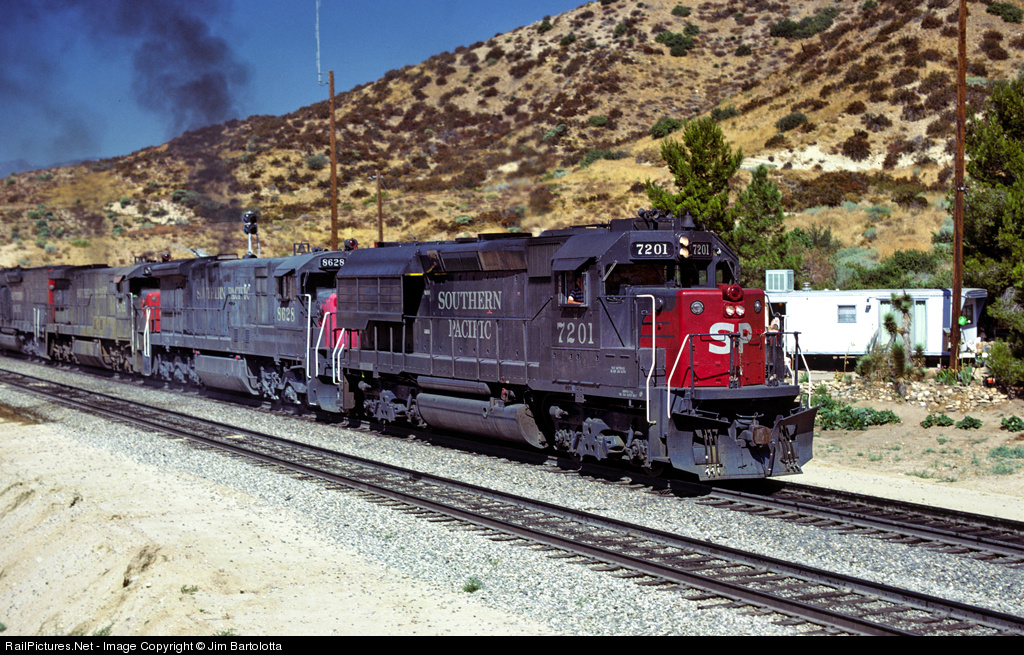
The GP40X was EMD's testbed for the future GP50 and introduced the unpopular HT-B truck. The 'elephant ears' version shown here was an experiment in normalizing the tunnel motor concept. The ears eventually were removed and the HT-B trucks were never reproduced. I needed a powered SP unit to haul around some heavy trains so all those unique qualities fit the bill just right. Originally I wanted to build the UP version, but the SP is more iconic with those elephant ears. The UP version will follow someday.
"In the grand tradition of generals and surrealists, we have been playing games. People learn things better through the open-ended, empathetic participation in knowledge-making that games allow. Just dispensing information to people-- though at times enlightening-- can also encourage apathy or forgetfulness. Lately, we have been using games to critically examine the dynamics and assumptions of larger social givens.Our new game SET was inspired by toy collectors, tourists, and museum curators. Throughout the game, players "play" by intervening and reorganizing existing groups of objects, thus questioning categories by constructing and redrawing them. In foregrounding the player's relation to the categories, SET explores the value of one's authorship in the production of knowledge. While games often risk normalizing power relationships by setting social roles and rules in stone, we have tried here to do just the opposite."
People learn things better through the open-ended, empathetic participation in knowledge-making that games allow. Just dispensing information to people-- though at times enlightening-- can also encourage apathy or forgetfulness. A project developed by Erik Carver and Marisa Jahn, SET is a game that critically examines the dynamics and assumptions of larger social givens. It's a game inspired by toy collectors, tourists, and museum curators. Throughout the game, players "play" by intervening and reorganizing existing groups of objects, thus questioning categories by constructing and redrawing them. In foregrounding the player's relation to the categories, SET explores the value of one's authorship in the production of knowledge. While games often risk normalizing power relationships by setting social roles and rules in stone, SET tries to do just the opposite.
--
Erik Carver
Erik Carver is an architect and artist. He is a founder of the Institute for Advanced Architecture (advancedarchitecture.org)-- an organization dedicated to advancing architecture through research, exchange, and exhibition-- as well as the Common Room exhibition space (common-room.net) and the interdisciplinary art group Seru. He lives in Brooklyn and teaches architecture at Rensselaer Polytechnic Institute.
Erik has worked for the firms of Diller+Scofidio, Laura Kurgan, and Lyn Rice before starting his own practice. These designs have included a student center renovation, an art museum, apartment renovations, a vacation home, exhibitions, a performance space/bar, an expo pavilion, schools, offices and an interpretation center.
His work has appeared in Volume magazine, Art in America, and Nature, and he has shown work and lectured at venues including Exit Art, the Ise Foundation, and Columbia's Neiman Gallery, and the Storefront for Art and Architecture (NYC), The Institute of Contemporary Art (Philadelphia), CAVS (MIT), Basekamp (Philadelphia), the Contemporary Art Center (North Adams, MA), and Pond (San Francisco).
Marisa Jahn
Of Ecuadorian and Chinese descent, Marisa Jahn is an artist whose work explores, constructs, and intervenes natural and social systems. In 2000, Jahn has co-founded Pond: art, activism, and ideas (www.mucketymuck.org), a non-profit organization dedicated to showcasing experimental art. Jahn has presented and exhibited work in museums, galleries, and spaces at venues such as The Institute of Contemporary Art (Philadelphia), the Asian Art Museum of San Francisco, Yerba Buena Center for the Arts (San Francisco), ISEA/Zero One 06/08 (San Jose, CA), MoKS (Estonia), the Moore Space (Miami), the Museum of Contemporary Art (North Miami), in galleries and public places in Tokyo, Honduras, Estonia, Turkey, North America, and Taiwan. Jahn's work has been reviewed in Art in America, Frieze, Punk Planet, Clamor, San Francisco Chronicle, the Fader, Artweek, Metropolis, the Discovery Channel, and Canadian Broadcasting Corporation (CBC). She has received awards and grants such as the Robert & Colleen Haas Scholarship, MIT Department of Architecture Fellowship (2005-8), CEC Artslink, and is an artist in residence at the MIT Media Lab (2007-9) and at the Headlands Center for the Arts (2008). She received her BA from UC Berkeley and an MS from MIT's Visual Arts Program. She lives between Boston and New York, where she functions as the Immediator of art-activist campaigns for The Church of Stop Shopping/Reverend Billy. www.marisajahn.com, www.mucketymuck.org
Nikon D5600 RAW dynamic range compare with D5500, Canon 80D and Canon 5D Mark IV and Fujifilm X-Pro2!..
-
You can download original RAW files from under the small box window. Here link : www.dpreview.com/reviews/image-comparison/fullscreen?attr...
-
This is the less-detailed, overview graph of everything we listened to in 2013.
Basically, the Top 15 bands I listened to in 2013 are graphed at 2 week intervals, and normalized so the shape is approximately rectangular. I then hand-edited the labels to make them easier to read.
www.last.fm/user/ClintJCL, bands, chart, music graph.
music: Cats Millionaire. music: D.O.A. music: Death Piggy. music: Gwar. music: KMFDM. music: Kreator. music: My Life With The Thrill Kill Kult. music: My Little Pony: Friendship Is Magic. music: NOFX. music: Slayer. music: The Dave Brockie Experience. music: They Might Be Giants. music: X-Cops.
top 15.
December 31, 2013.
... Read my blog at ClintJCL at wordpress.com
... View KMFDM's official website at kmfdm.net/
Look at the crap on this cover. Glorifying (normalizing) a trump offspring, Kenya (whatever) and other people I've never heard of. Our present and future is on this magazine cover.
Folkloric
· In the Philippines, flower buds, beaten to a paste, applied as poultice to boils, cancerous swellings, and mumps.
·Poultice of leaves and flower buds applied externally to swellings; the same mixture, with the addition of lime, hastens the maturation of tumors.
· Mumps, infection of the urinary tract: use dried drug materials 15 to 30 gms, boil to decoction and drink.
· For abscesses, carbuncles and boils: crush fresh leaves and poultice the infected area.
· Decoction of roots, barks, leaves and flowers used as an emollient.
· Decoction from roots of red and white-flowered plants is a Kelantan antidote for poison. Same decoction is drunk for venereal diseases and fevers.
· Decoction of roots also used for coughs.
· Decoction of flowers and or roots used as natural diuretic.
· Bark is an emmenagogue; also used to normalize menstruation.
· Malays uses a decoction of leaves as a lotion for fevers, and the roots for glands in the neck.
· Infusion or poultice of leaves used for headaches.
· In China, leaves used as emollient, anodyne, and a gentle aperient.
· Decoction of root used as drops for sore eyes.
· Seeds used as a stimulant and for cramps.
· Decoction of leaves for fevers.
· For headaches, an infusion of leaves or poultice of leaves.
· Leaves are mildly laxative.
· Mucilage applied during labor.
· Juice of leaves, along with that of Vernonia cinerea, used by midwives to stimulate the expulsion of the placenta
· In the Dutch Indies the red flowers are used to regulate menstruation; also, considered somewhat purgative and sometimes said to cause abortion
· In Sind, flowers are fried in clarified butter and used for checking excessive menstruation
· Red flowers used for sprue.
· Infusion of flowers and leaves used as expectorant in bronchitis
· The Chinese and Annamites use the flowers for paralysis and dysmenorrhea.
· Infusion of flowers, exposed all night to the dew, used for gonorrhea.
· Flowers fried in ghee, given for menorrhagia. The dark red petals are used as a mucilaginous infusion for painful urination, strangury, cystitis, and other irritable genitourinary conditions
· Infusion used as a refrigerant drink for fevers and as demulcent for coughs.
· Red flowers are purgative; when taken with papaya seeds, may be abortive.
· Hair stimulant: oil made by mixing the juice of fresh petals and olive oil in equal proportions, and boiled till the water has evaporated, used for stimulating hair growth.
· Seeds, pounded to a pulp and mixed with water, used for gonorrhea.
· In Costa Rica, used as a purgative.
· In Venezuela, used to treat tumors.
· In the Caribbean, used as analgesic, anti-inflammatory.
· In the Dominican Republic, used to treat hematomas.
source: stuart xchange
DA NANG, Vietnam (Aug. 12, 2010) - Sailors assigned to the guided-missile destroyer USS John S. McCain (DDG 56), meet Sailors from the Vietnamese People's Navy volleyball team before a friendly match. McCain is on a scheduled port visit to commemorate the 15th anniversary of the normalization of diplomatic relations between Vietnam and the United States. (U.S. Navy photo by Mass Communication Specialist 2nd Class Jessica Bidwell)
** Interested in following U.S. Pacific Command? Engage and connect with us at www.facebook.com/pacific.command and twitter.com/PacificCommand and www.pacom.mil/
70 Ton Payload, Single Stage to Orbit Fixed Wing Aircraft - Hypersonic Plane - Space Plane
Earlier, pre Iteration 1, Just felt like posting this online, working out the physics/geometries/energy requirements and contruction.
Mach 8-10 in amtmosphere, 195ft long, Heavy Lift Single Stage To Orbit Fixed Wing Aircraft. 70 TONS, ie 140,000 LBS, 60 ft X 15ft X 15ft payload bay. Up in the Falcon Heavy and Delta IV class, except not $400 million to launch giant payloads into orbit, but below $250 per lbs, or about $28 million to launch giant payloads, and normalized orbital flight, as normal as a 737 commercial flight. Load up, refuel, take off in an afternoon. I estimate this aircraft would cost about $750 million each for space capable. In atmosphere commercial, roughly $300 million each for a 200 passenger M8-10 (not designed yet)
--------------
www.ioaircraft.com/hypersonic/ranger.php
Drew Blair
www.linkedin.com/in/drew-b-25485312/
--------------
Unified Turbine Based Combined Cycle. Current technologies and what Lockheed is trying to force on the Dept of Defense, for that low speed Mach 5 plane DOD gave them $1 billion to build and would disintegrate above Mach 5, is TBCC. 2 separate propulsion systems in the same airframe, which requires TWICE the airframe space to use.
Unified Turbine Based Combined Cycle is 1 propulsion system cutting that airframe deficit in half, and also able to operate above Mach 10 up to Mach 15 in atmosphere, and a simple nozzle modification allows for outside atmosphere rocket mode, ie orbital capable.
Additionally, Reaction Engines maximum air breather mode is Mach 4.5, above that it will explode in flight from internal pressures are too high to operate. Thus, must switch to non air breather rocket mode to operate in atmosphere in hypersonic velocities. Which as a result, makes it not feasible for anything practical. It also takes an immense amount of fuel to function.
-------------
tbcc, glide breaker, fighter plane, hyperonic fighter, stealth fighter, boeing phantom express, phantom works, boeing phantom works, lockheed skunk works, hypersonic weapon, hypersonic missile, scramjet missile, scramjet engineering, scramjet physics, boost glide, tactical glide vehicle, Boeing XS-1, htv, Air Launched Rapid Response Weapon, (ARRW), hypersonic tactical vehicle, hypersonic plane, hypersonic aircraft, space plane, scramjet, turbine based combined cycle, ramjet, dual mode ramjet, darpa, onr, navair, afrl, air force research lab, office of naval research, defense advanced research project agency, defense science, missile defense agency, aerospike, vtol, vertical take off, air taxi, personal air vehicle, boeing go fly prize, go fly prize,
Advanced Additive Manufacturing for Hypersonic Aircraft
Utilizing new methods of fabrication and construction, make it possible to use additive manufacturing, dramatically reducing the time and costs of producing hypersonic platforms from missiles, aircraft, and space capable craft. Instead of aircraft being produced in piece, then bolted together; small platforms can be produced as a single unit and large platforms can be produces in large section and mated without bolting. These techniques include using exotic materials and advanced assembly processes, with an end result of streamlining the production costs and time for hypersonic aircraft; reducing months of assembly to weeks. Overall, this process greatly reduced the cost for producing hypersonic platforms. Even to such an extent that a Hellfire missile costs apx $100,000 but by utilizing our technologies, replacing it with a Mach 8-10 hypersonic missile of our physics/engineering and that missile would cost roughly $75,000 each delivered.
Materials used for these manufacturing processes are not disclosed, but overall, provides a foundation for extremely high stresses and thermodynamics, ideal for hypersonic platforms. This specific methodology and materials applications is many decades ahead of all known programs. Even to the extend of normalized space flight and re-entry, without concern of thermodynamic failure.
*Note, most entities that are experimenting with additive manufacturing for hypersonic aircraft, this makes it mainstream and standardized processes, which also applies for mass production.
What would normally be measured in years and perhaps a decade to go from drawing board to test flights, is reduced to singular months and ready for production within a year maximum.
Unified Turbine Based Combined Cycle (U-TBCC)
To date, the closest that NASA and industry have achieved for turbine based aircraft to fly at hypersonic velocities is by mounting a turbine into an aircraft and sharing the inlet with a scramjet or rocket based motor. Reaction Engines Sabre is not able to achieve hypersonic velocities and can only transition into a non air breathing rocket for beyond Mach 4.5
However, utilizing Unified Turbine Based Combine Cycle also known as U-TBCC, the two separate platforms are able to share a common inlet and the dual mode ramjet/scramjet is contained within the engine itself, which allows for a much smaller airframe footprint, thus engingeers are able to then design much higher performance aerial platforms for hypersonic flight, including the ability for constructing true single stage to orbit aircraft by utilizing a modification/version that allows for transition to outside atmosphere propulsion without any other propulsion platforms within the aircraft. By transitioning and developing aircraft to use Unified Turbine Based Combined Cycle, this propulsion system opens up new options to replace that airframe deficit for increased fuel capacity and/or payload.
Enhanced Dynamic Cavitation
Dramatically Increasing the efficiency of fuel air mixture for combustion processes at hypersonic velocities within scramjet propulsion platforms. The aspects of these processes are non disclosable.
Dynamic Scramjet Ignition Processes
For optimal scramjet ignition, a process known as Self Start is sought after, but in many cases if the platform becomes out of attitude, the scramjet will ignite. We have already solved this problem which as a result, a scramjet propulsion system can ignite at lower velocities, high velocities, at optimal attitude or not optimal attitude. It doesn't matter, it will ignite anyways at the proper point for maximum thrust capabilities at hypersonic velocities.
Hydrogen vs Kerosene Fuel Sources
Kerosene is an easy fuel to work with, and most western nations developing scramjet platforms use Kerosene for that fact. However, while kerosene has better thermal properties then Hydrogen, Hydrogen is a far superior fuel source in scramjet propulsion flight, do it having a much higher efficiency capability. Because of this aspect, in conjunction with our developments, it allows for a MUCH increased fuel to air mixture, combustion, thrust; and ability for higher speeds; instead of very low hypersonic velocities in the Mach 5-6 range. Instead, Mach 8-10 range, while we have begun developing hypersonic capabilities to exceed 15 in atmosphere within less then 5 years.
Conforming High Pressure Tank Technology for CNG and H2.
As most know in hypersonics, Hydrogen is a superior fuel source, but due to the storage abilities, can only be stored in cylinders thus much less fuel supply. Not anymore, we developed conforming high pressure storage technology for use in aerospace, automotive sectors, maritime, etc; which means any overall shape required for 8,000+ PSI CNG or Hydrogen. For hypersonic platforms, this means the ability to store a much larger volume of hydrogen vs cylinders.
As an example, X-43 flown by Nasa which flew at Mach 9.97. The fuel source was Hydrogen, which is extremely more volatile and combustible then kerosene (JP-7), via a cylinder in the main body. If it had used our technology, that entire section of the airframe would had been an 8,000 PSI H2 tank, which would had yielded 5-6 times the capacity. While the X-43 flew 11 seconds under power at Mach 9.97, at 6 times the fuel capacity would had yielded apx 66 seconds of fuel under power at Mach 9.97. If it had flew slower, around Mach 6, same principles applied would had yielded apx 500 seconds of fuel supply under power (slower speeds required less energy to maintain).
Enhanced Fuel Mixture During Shock Train Interaction
Normally, fuel injection is conducted at the correct insertion point within the shock train for maximum burn/combustion. Our methodologies differ, since almost half the fuel injection is conducted PRE shock train within the isolator, so at the point of isolator injection the fuel enhances the combustion process, which then requires less fuel injection to reach the same level of thrust capabilities.
Improved Bow Shock Interaction
Smoother interaction at hypersonic velocities and mitigating heat/stresses for beyond Mach 6 thermodynamics, which extraordinarily improves Type 3, 4, and 5 shock interaction.
6,000+ Fahrenheit Thermal Resistance
To date, the maximum thermal resistance was tested at AFRL in the spring of 2018, which resulted in a 3,200F thermal resistance for a short duration. This technology, allows for normalized hypersonic thermal resistance of 3,000-3,500F sustained, and up to 6,500F resistance for short endurance, ie 90 seconds or less. 10-20 minute resistance estimate approximately 4,500F +/- 200F.
*** This technology advancement also applies to Aerospike rocket engines, in which it is common for Aerospike's to exceed 4,500-5,000F temperatures, which results in the melting of the reversed bell housing. That melting no longer ocurrs, providing for stable combustion to ocurr for the entire flight envelope
Scramjet Propulsion Side Wall Cooling
With old technologies, side wall cooling is required for hypersonic flight and scramjet propulsion systems, otherwise the isolator and combustion regions of a scramjet would melt, even using advanced ablatives and ceramics, due to their inability to cope with very high temperatures. Using technology we have developed for very high thermodynamics and high stresses, side wall cooling is no longer required, thus removing that variable from the design process and focusing on improved ignition processes and increasing net thrust values.
Lower Threshold for Hypersonic Ignition
Active and adaptive flight dynamics, resulting in the ability for scramjet ignition at a much lower velocity, ie within ramjet envelope, between Mach 2-4, and seamless transition from supersonic to hypersonic flight, ie supersonic ramjet (scramjet). This active and dynamic aspect, has a wide variety of parameters for many flight dynamics, velocities, and altitudes; which means platforms no longer need to be engineered for specific altitude ranges or preset velocities, but those parameters can then be selected during launch configuration and are able to adapt actively in flight.
Dramatically Improved Maneuvering Capabilities at Hypersonic Velocities
Hypersonic vehicles, like their less technologically advanced brethren, use large actuator and the developers hope those controls surfaces do not disintegrate in flight. In reality, it is like rolling the dice, they may or may not survive, hence another reason why the attempt to keep velocities to Mach 6 or below. We have shrunken down control actuators while almost doubling torque and response capabilities specifically for hypersonic dynamics and extreme stresses involved, which makes it possible for maximum input authority for Mach 10 and beyond.
Paradigm Shift in Control Surface Methodologies, Increasing Control Authority (Internal Mechanical Applications)
To date, most control surfaces for hypersonic missile platforms still use fins, similar to lower speed conventional missiles, and some using ducted fins. This is mostly due to lack of comprehension of hypersonic velocities in their own favor. Instead, the body itself incorporates those control surfaces, greatly enhancing the airframe strength, opening up more space for hardware and fuel capacity; while simultaneously enhancing the platforms maneuvering capabilities.
A scramjet missile can then fly like conventional missile platforms, and not straight and level at high altitudes, losing velocity on it's decent trajectory to target. Another added benefit to this aspect, is the ability to extend range greatly, so if anyone elses hypersonic missile platform were developed for 400 mile range, falling out of the sky due to lack of glide capabilities; our platforms can easily reach 600+ miles, with minimal glide deceleration.
Pictured are my sister and brother-in-law, with their two interracial sons. This photo shows the mixing of races in today's society that is now more and more normalized.
Ranked Programme set Flash Clip Contrast Normalize Movie contrast example without ffmpeg command MS Windows10 7.
Io Aircraft - www.ioaircraft.com
Drew Blair
www.linkedin.com/in/drew-b-25485312/
io aircraft, phantom express, phantom works, boeing phantom works, lockheed skunk works, hypersonic weapon, hypersonic missile, scramjet missile, scramjet engineering, scramjet physics, boost glide, tactical glide vehicle, Boeing XS-1, htv, Air-Launched Rapid Response Weapon, (ARRW), hypersonic tactical vehicle, hypersonic plane, hypersonic aircraft, space plane, scramjet, turbine based combined cycle, ramjet, dual mode ramjet, darpa, onr, navair, afrl, air force research lab, defense science, missile defense agency, aerospike,
Advanced Additive Manufacturing for Hypersonic Aircraft
Utilizing new methods of fabrication and construction, make it possible to use additive manufacturing, dramatically reducing the time and costs of producing hypersonic platforms from missiles, aircraft, and space capable craft. Instead of aircraft being produced in piece, then bolted together; small platforms can be produced as a single unit and large platforms can be produces in large section and mated without bolting. These techniques include using exotic materials and advanced assembly processes, with an end result of streamlining the production costs and time for hypersonic aircraft; reducing months of assembly to weeks. Overall, this process greatly reduced the cost for producing hypersonic platforms. Even to such an extent that a Hellfire missile costs apx $100,000 but by utilizing our technologies, replacing it with a Mach 8-10 hypersonic missile of our physics/engineering and that missile would cost roughly $75,000 each delivered.
Materials used for these manufacturing processes are not disclosed, but overall, provides a foundation for extremely high stresses and thermodynamics, ideal for hypersonic platforms. This specific methodology and materials applications is many decades ahead of all known programs. Even to the extend of normalized space flight and re-entry, without concern of thermodynamic failure.
*Note, most entities that are experimenting with additive manufacturing for hypersonic aircraft, this makes it mainstream and standardized processes, which also applies for mass production.
What would normally be measured in years and perhaps a decade to go from drawing board to test flights, is reduced to singular months and ready for production within a year maximum.
Unified Turbine Based Combined Cycle (U-TBCC)
To date, the closest that NASA and industry have achieved for turbine based aircraft to fly at hypersonic velocities is by mounting a turbine into an aircraft and sharing the inlet with a scramjet or rocket based motor. Reaction Engines Sabre is not able to achieve hypersonic velocities and can only transition into a non air breathing rocket for beyond Mach 4.5
However, utilizing Unified Turbine Based Combine Cycle also known as U-TBCC, the two separate platforms are able to share a common inlet and the dual mode ramjet/scramjet is contained within the engine itself, which allows for a much smaller airframe footprint, thus engingeers are able to then design much higher performance aerial platforms for hypersonic flight, including the ability for constructing true single stage to orbit aircraft by utilizing a modification/version that allows for transition to outside atmosphere propulsion without any other propulsion platforms within the aircraft. By transitioning and developing aircraft to use Unified Turbine Based Combined Cycle, this propulsion system opens up new options to replace that airframe deficit for increased fuel capacity and/or payload.
Enhanced Dynamic Cavitation
Dramatically Increasing the efficiency of fuel air mixture for combustion processes at hypersonic velocities within scramjet propulsion platforms. The aspects of these processes are non disclosable.
Dynamic Scramjet Ignition Processes
For optimal scramjet ignition, a process known as Self Start is sought after, but in many cases if the platform becomes out of attitude, the scramjet will ignite. We have already solved this problem which as a result, a scramjet propulsion system can ignite at lower velocities, high velocities, at optimal attitude or not optimal attitude. It doesn't matter, it will ignite anyways at the proper point for maximum thrust capabilities at hypersonic velocities.
Hydrogen vs Kerosene Fuel Sources
Kerosene is an easy fuel to work with, and most western nations developing scramjet platforms use Kerosene for that fact. However, while kerosene has better thermal properties then Hydrogen, Hydrogen is a far superior fuel source in scramjet propulsion flight, do it having a much higher efficiency capability. Because of this aspect, in conjunction with our developments, it allows for a MUCH increased fuel to air mixture, combustion, thrust; and ability for higher speeds; instead of very low hypersonic velocities in the Mach 5-6 range. Instead, Mach 8-10 range, while we have begun developing hypersonic capabilities to exceed 15 in atmosphere within less then 5 years.
Conforming High Pressure Tank Technology for CNG and H2.
As most know in hypersonics, Hydrogen is a superior fuel source, but due to the storage abilities, can only be stored in cylinders thus much less fuel supply. Not anymore, we developed conforming high pressure storage technology for use in aerospace, automotive sectors, maritime, etc; which means any overall shape required for 8,000+ PSI CNG or Hydrogen. For hypersonic platforms, this means the ability to store a much larger volume of hydrogen vs cylinders.
As an example, X-43 flown by Nasa which flew at Mach 9.97. The fuel source was Hydrogen, which is extremely more volatile and combustible then kerosene (JP-7), via a cylinder in the main body. If it had used our technology, that entire section of the airframe would had been an 8,000 PSI H2 tank, which would had yielded 5-6 times the capacity. While the X-43 flew 11 seconds under power at Mach 9.97, at 6 times the fuel capacity would had yielded apx 66 seconds of fuel under power at Mach 9.97. If it had flew slower, around Mach 6, same principles applied would had yielded apx 500 seconds of fuel supply under power (slower speeds required less energy to maintain).
Enhanced Fuel Mixture During Shock Train Interaction
Normally, fuel injection is conducted at the correct insertion point within the shock train for maximum burn/combustion. Our methodologies differ, since almost half the fuel injection is conducted PRE shock train within the isolator, so at the point of isolator injection the fuel enhances the combustion process, which then requires less fuel injection to reach the same level of thrust capabilities.
Improved Bow Shock Interaction
Smoother interaction at hypersonic velocities and mitigating heat/stresses for beyond Mach 6 thermodynamics, which extraordinarily improves Type 3, 4, and 5 shock interaction.
6,000+ Fahrenheit Thermal Resistance
To date, the maximum thermal resistance was tested at AFRL in the spring of 2018, which resulted in a 3,200F thermal resistance for a short duration. This technology, allows for normalized hypersonic thermal resistance of 3,000-3,500F sustained, and up to 6,500F resistance for short endurance, ie 90 seconds or less. 10-20 minute resistance estimate approximately 4,500F +/- 200F.
*** This technology advancement also applies to Aerospike rocket engines, in which it is common for Aerospike's to exceed 4,500-5,000F temperatures, which results in the melting of the reversed bell housing. That melting no longer ocurrs, providing for stable combustion to ocurr for the entire flight envelope
Scramjet Propulsion Side Wall Cooling
With old technologies, side wall cooling is required for hypersonic flight and scramjet propulsion systems, otherwise the isolator and combustion regions of a scramjet would melt, even using advanced ablatives and ceramics, due to their inability to cope with very high temperatures. Using technology we have developed for very high thermodynamics and high stresses, side wall cooling is no longer required, thus removing that variable from the design process and focusing on improved ignition processes and increasing net thrust values.
Lower Threshold for Hypersonic Ignition
Active and adaptive flight dynamics, resulting in the ability for scramjet ignition at a much lower velocity, ie within ramjet envelope, between Mach 2-4, and seamless transition from supersonic to hypersonic flight, ie supersonic ramjet (scramjet). This active and dynamic aspect, has a wide variety of parameters for many flight dynamics, velocities, and altitudes; which means platforms no longer need to be engineered for specific altitude ranges or preset velocities, but those parameters can then be selected during launch configuration and are able to adapt actively in flight.
Dramatically Improved Maneuvering Capabilities at Hypersonic Velocities
Hypersonic vehicles, like their less technologically advanced brethren, use large actuator and the developers hope those controls surfaces do not disintegrate in flight. In reality, it is like rolling the dice, they may or may not survive, hence another reason why the attempt to keep velocities to Mach 6 or below. We have shrunken down control actuators while almost doubling torque and response capabilities specifically for hypersonic dynamics and extreme stresses involved, which makes it possible for maximum input authority for Mach 10 and beyond.
Paradigm Shift in Control Surface Methodologies, Increasing Control Authority (Internal Mechanical Applications)
To date, most control surfaces for hypersonic missile platforms still use fins, similar to lower speed conventional missiles, and some using ducted fins. This is mostly due to lack of comprehension of hypersonic velocities in their own favor. Instead, the body itself incorporates those control surfaces, greatly enhancing the airframe strength, opening up more space for hardware and fuel capacity; while simultaneously enhancing the platforms maneuvering capabilities.
A scramjet missile can then fly like conventional missile platforms, and not straight and level at high altitudes, losing velocity on it's decent trajectory to target. Another added benefit to this aspect, is the ability to extend range greatly, so if anyone elses hypersonic missile platform were developed for 400 mile range, falling out of the sky due to lack of glide capabilities; our platforms can easily reach 600+ miles, with minimal glide deceleration.
Mach 10 Hypersonic Plane - Turbine Based Combined Cycle - IO Aircraft
Drew Blair
www.linkedin.com/in/drew-b-25485312/
20 Passengers plus 3 crew
10,000 mile range
Mach 10 Cruise
io aircraft, phantom express, phantom works, boeing phantom works, lockheed skunk works, hypersonic weapon, hypersonic missile, scramjet missile, scramjet engineering, scramjet physics, boost glide, tactical glide vehicle, Boeing XS-1, htv, Air-Launched Rapid Response Weapon, (ARRW), hypersonic tactical vehicle, hypersonic plane, hypersonic aircraft, space plane, scramjet, turbine based combined cycle, ramjet, dual mode ramjet, darpa, onr, navair, afrl, air force research lab, defense science, missile defense agency, aerospike,
Advanced Additive Manufacturing for Hypersonic Aircraft
Utilizing new methods of fabrication and construction, make it possible to use additive manufacturing, dramatically reducing the time and costs of producing hypersonic platforms from missiles, aircraft, and space capable craft. Instead of aircraft being produced in piece, then bolted together; small platforms can be produced as a single unit and large platforms can be produces in large section and mated without bolting. These techniques include using exotic materials and advanced assembly processes, with an end result of streamlining the production costs and time for hypersonic aircraft; reducing months of assembly to weeks. Overall, this process greatly reduced the cost for producing hypersonic platforms. Even to such an extent that a Hellfire missile costs apx $100,000 but by utilizing our technologies, replacing it with a Mach 8-10 hypersonic missile of our physics/engineering and that missile would cost roughly $75,000 each delivered.
Materials used for these manufacturing processes are not disclosed, but overall, provides a foundation for extremely high stresses and thermodynamics, ideal for hypersonic platforms. This specific methodology and materials applications is many decades ahead of all known programs. Even to the extend of normalized space flight and re-entry, without concern of thermodynamic failure.
*Note, most entities that are experimenting with additive manufacturing for hypersonic aircraft, this makes it mainstream and standardized processes, which also applies for mass production.
What would normally be measured in years and perhaps a decade to go from drawing board to test flights, is reduced to singular months and ready for production within a year maximum.
Unified Turbine Based Combined Cycle (U-TBCC)
To date, the closest that NASA and industry have achieved for turbine based aircraft to fly at hypersonic velocities is by mounting a turbine into an aircraft and sharing the inlet with a scramjet or rocket based motor. Reaction Engines Sabre is not able to achieve hypersonic velocities and can only transition into a non air breathing rocket for beyond Mach 4.5
However, utilizing Unified Turbine Based Combine Cycle also known as U-TBCC, the two separate platforms are able to share a common inlet and the dual mode ramjet/scramjet is contained within the engine itself, which allows for a much smaller airframe footprint, thus engingeers are able to then design much higher performance aerial platforms for hypersonic flight, including the ability for constructing true single stage to orbit aircraft by utilizing a modification/version that allows for transition to outside atmosphere propulsion without any other propulsion platforms within the aircraft. By transitioning and developing aircraft to use Unified Turbine Based Combined Cycle, this propulsion system opens up new options to replace that airframe deficit for increased fuel capacity and/or payload.
Enhanced Dynamic Cavitation
Dramatically Increasing the efficiency of fuel air mixture for combustion processes at hypersonic velocities within scramjet propulsion platforms. The aspects of these processes are non disclosable.
Dynamic Scramjet Ignition Processes
For optimal scramjet ignition, a process known as Self Start is sought after, but in many cases if the platform becomes out of attitude, the scramjet will ignite. We have already solved this problem which as a result, a scramjet propulsion system can ignite at lower velocities, high velocities, at optimal attitude or not optimal attitude. It doesn't matter, it will ignite anyways at the proper point for maximum thrust capabilities at hypersonic velocities.
Hydrogen vs Kerosene Fuel Sources
Kerosene is an easy fuel to work with, and most western nations developing scramjet platforms use Kerosene for that fact. However, while kerosene has better thermal properties then Hydrogen, Hydrogen is a far superior fuel source in scramjet propulsion flight, do it having a much higher efficiency capability. Because of this aspect, in conjunction with our developments, it allows for a MUCH increased fuel to air mixture, combustion, thrust; and ability for higher speeds; instead of very low hypersonic velocities in the Mach 5-6 range. Instead, Mach 8-10 range, while we have begun developing hypersonic capabilities to exceed 15 in atmosphere within less then 5 years.
Conforming High Pressure Tank Technology for CNG and H2.
As most know in hypersonics, Hydrogen is a superior fuel source, but due to the storage abilities, can only be stored in cylinders thus much less fuel supply. Not anymore, we developed conforming high pressure storage technology for use in aerospace, automotive sectors, maritime, etc; which means any overall shape required for 8,000+ PSI CNG or Hydrogen. For hypersonic platforms, this means the ability to store a much larger volume of hydrogen vs cylinders.
As an example, X-43 flown by Nasa which flew at Mach 9.97. The fuel source was Hydrogen, which is extremely more volatile and combustible then kerosene (JP-7), via a cylinder in the main body. If it had used our technology, that entire section of the airframe would had been an 8,000 PSI H2 tank, which would had yielded 5-6 times the capacity. While the X-43 flew 11 seconds under power at Mach 9.97, at 6 times the fuel capacity would had yielded apx 66 seconds of fuel under power at Mach 9.97. If it had flew slower, around Mach 6, same principles applied would had yielded apx 500 seconds of fuel supply under power (slower speeds required less energy to maintain).
Enhanced Fuel Mixture During Shock Train Interaction
Normally, fuel injection is conducted at the correct insertion point within the shock train for maximum burn/combustion. Our methodologies differ, since almost half the fuel injection is conducted PRE shock train within the isolator, so at the point of isolator injection the fuel enhances the combustion process, which then requires less fuel injection to reach the same level of thrust capabilities.
Improved Bow Shock Interaction
Smoother interaction at hypersonic velocities and mitigating heat/stresses for beyond Mach 6 thermodynamics, which extraordinarily improves Type 3, 4, and 5 shock interaction.
6,000+ Fahrenheit Thermal Resistance
To date, the maximum thermal resistance was tested at AFRL in the spring of 2018, which resulted in a 3,200F thermal resistance for a short duration. This technology, allows for normalized hypersonic thermal resistance of 3,000-3,500F sustained, and up to 6,500F resistance for short endurance, ie 90 seconds or less. 10-20 minute resistance estimate approximately 4,500F +/- 200F.
*** This technology advancement also applies to Aerospike rocket engines, in which it is common for Aerospike's to exceed 4,500-5,000F temperatures, which results in the melting of the reversed bell housing. That melting no longer ocurrs, providing for stable combustion to ocurr for the entire flight envelope
Scramjet Propulsion Side Wall Cooling
With old technologies, side wall cooling is required for hypersonic flight and scramjet propulsion systems, otherwise the isolator and combustion regions of a scramjet would melt, even using advanced ablatives and ceramics, due to their inability to cope with very high temperatures. Using technology we have developed for very high thermodynamics and high stresses, side wall cooling is no longer required, thus removing that variable from the design process and focusing on improved ignition processes and increasing net thrust values.
Lower Threshold for Hypersonic Ignition
Active and adaptive flight dynamics, resulting in the ability for scramjet ignition at a much lower velocity, ie within ramjet envelope, between Mach 2-4, and seamless transition from supersonic to hypersonic flight, ie supersonic ramjet (scramjet). This active and dynamic aspect, has a wide variety of parameters for many flight dynamics, velocities, and altitudes; which means platforms no longer need to be engineered for specific altitude ranges or preset velocities, but those parameters can then be selected during launch configuration and are able to adapt actively in flight.
Dramatically Improved Maneuvering Capabilities at Hypersonic Velocities
Hypersonic vehicles, like their less technologically advanced brethren, use large actuator and the developers hope those controls surfaces do not disintegrate in flight. In reality, it is like rolling the dice, they may or may not survive, hence another reason why the attempt to keep velocities to Mach 6 or below. We have shrunken down control actuators while almost doubling torque and response capabilities specifically for hypersonic dynamics and extreme stresses involved, which makes it possible for maximum input authority for Mach 10 and beyond.
Paradigm Shift in Control Surface Methodologies, Increasing Control Authority (Internal Mechanical Applications)
To date, most control surfaces for hypersonic missile platforms still use fins, similar to lower speed conventional missiles, and some using ducted fins. This is mostly due to lack of comprehension of hypersonic velocities in their own favor. Instead, the body itself incorporates those control surfaces, greatly enhancing the airframe strength, opening up more space for hardware and fuel capacity; while simultaneously enhancing the platforms maneuvering capabilities.
A scramjet missile can then fly like conventional missile platforms, and not straight and level at high altitudes, losing velocity on it's decent trajectory to target. Another added benefit to this aspect, is the ability to extend range greatly, so if anyone elses hypersonic missile platform were developed for 400 mile range, falling out of the sky due to lack of glide capabilities; our platforms can easily reach 600+ miles, with minimal glide deceleration.
Reframing the Pap Smear – Opening Reception
Monday, January 9, 2012
Venue: Art Bar
Visual Arts
Don’t fear the smear! Women’s health doctor demystifies the speculum as a tool to embrace, not avoid.
Reframe the Pap – the creation of women’s health doctor Sheila Wijayasinghe – looks at images of the speculum, the medical tool used in Pap tests to normalize the instrument by placing it in various familiar surroundings – with the view that women should be equally comfortable with regular pap testing as they would be with everyday objects.
“Pap testing is a women’s best defense against cervical cancer. Women should embrace the speculum as a tool of positivity and not fear the smear,” says Dr. Wijayasinghe.
Every year in Canada over 1,300 women are diagnosed with cervical cancer and almost 400 women will die annually of this disease. While the Pap Test itself is a short procedure, it can invoke a great deal of anxiety in women. Some women are afraid of the speculum, the plastic or metal tool used for the Pap Test, and avoid seeing their doctor.
“Art and social media are some the best tools to promote healthy life choices. By starting a conversation about rarely discussed health topics we can increase awareness and help women make active choices to support their well-being,” added Dr. Wijayasinghe.
All proceeds raised from Reframe the Pap will go towards the Immigrant Women’s Health Center (IWHC) in Toronto, a sexual health clinic serving immigrant, refugee and marginalized women across the City of Toronto.
More About Reframing the Pap Smear Here
Art Bar: The Art Bar (named after a weekly figure drawing class ongoing since 1957) is our storefront room with large windows facing Queen Street West. It is an intimate space for parties, meetings, conferences or exhibitions.
Photos by: Laynna Meyler
Christiania will probably soon be closed or "normalized". No matter what precisely happens after that, I'm pretty sure it newer again will be so charming and beautiful to take a walk around Stadsgraven on a sunny day as today...
Genomic organization, phylogeny, and expression of the An. gambiae OXR1 gene.
(A) Genomic organization of AgOXR1 gene and splice forms transcript B, C, and I. (B) Phylogenetic tree based on the sequence alignment of the deduced amino acid sequence of members of the OXR1 family from different species. (Hs = Homo sapiens, Mm = Mus musculus, Dm = Drosophila melanogaster, Ae = Aedes aegypti, Ag = Anopheles gambiae, At = Arabidopsis thaliana and Sc = Saccharomyces cerevisiae). The sequence alignment used to build the dendrogram is shown in Figure S1. (C) Changes in Catalase, Glutathione peroxidase, JNK and OXR1 (TLDc domain region) mRNA levels 6 h after H2O2 injection (T) compared with water-injected control mosquitoes (C) in A. gambiae. Values were normalized using An. gambiae ribosomal protein S7 mRNA levels as an internal reference. Mean ± SEM. (D) Changes in mRNAs levels of specific OXR-1 isoforms (OXR1-C, OXR1-I and OXR1-E18) and of all OXR1 transcripts (OXR1-all, in which primers from the shared TLDc domain were used) were determined 6 h after injection of H2O2 (T = treated group) or water control (C = control group) in An. gambiae (G3 strain). Values were normalized using An. gambiae ribosomal protein S7 mRNA levels as an internal reference. Mean ± SEM. * indicates significant differences (p<0.05) by ANOVA.
A-Ha's entire "Take on Me" music video, mean averaged and normalized.
See more video amalgams here: www.flickr.com/photos/patdavid/sets/72157635597155264
Coca-Cola is sponsor of the American Academy of Family Physicians Assembly in Washington, DC. Their booth is located at the front of the hall, and appears to normalize the health impact of sugary, artificially sweetened drinks.
Smashing Pumpkins "Tonight, Tonight" video, mean averaged and normalized.
See more video amalgams here: www.flickr.com/photos/patdavid/sets/72157635597155264
The GP40X was EMD's testbed for the future GP50 and introduced the unpopular HT-B truck. The 'elephant ears' version shown here was an experiment in normalizing the tunnel motor concept. The ears eventually were removed and the HT-B trucks were never reproduced. I needed a powered SP unit to haul around some heavy trains so all those unique qualities fit the bill just right. Originally I wanted to build the UP version, but the SP is more iconic with those elephant ears. The UP version will follow someday.
Reframing the Pap Smear – Opening Reception
Monday, January 9, 2012
Venue: Art Bar
Visual Arts
Don’t fear the smear! Women’s health doctor demystifies the speculum as a tool to embrace, not avoid.
Reframe the Pap – the creation of women’s health doctor Sheila Wijayasinghe – looks at images of the speculum, the medical tool used in Pap tests to normalize the instrument by placing it in various familiar surroundings – with the view that women should be equally comfortable with regular pap testing as they would be with everyday objects.
“Pap testing is a women’s best defense against cervical cancer. Women should embrace the speculum as a tool of positivity and not fear the smear,” says Dr. Wijayasinghe.
Every year in Canada over 1,300 women are diagnosed with cervical cancer and almost 400 women will die annually of this disease. While the Pap Test itself is a short procedure, it can invoke a great deal of anxiety in women. Some women are afraid of the speculum, the plastic or metal tool used for the Pap Test, and avoid seeing their doctor.
“Art and social media are some the best tools to promote healthy life choices. By starting a conversation about rarely discussed health topics we can increase awareness and help women make active choices to support their well-being,” added Dr. Wijayasinghe.
All proceeds raised from Reframe the Pap will go towards the Immigrant Women’s Health Center (IWHC) in Toronto, a sexual health clinic serving immigrant, refugee and marginalized women across the City of Toronto.
More About Reframing the Pap Smear Here
Art Bar: The Art Bar (named after a weekly figure drawing class ongoing since 1957) is our storefront room with large windows facing Queen Street West. It is an intimate space for parties, meetings, conferences or exhibitions.
Photos by: Laynna Meyler
Some shots are easier to take with a phone than a camera and in this case I tried :-)
This week's theme for the 52 weeks: the 2021 edition group was "confidence" and this little hole in my arm in which 3ml of vaccine solution was shot gave me more confidence that we will soon see a more normalized society.
Obareyna is good for a newly give birth women,normalize the blood,cleaning up the ovary,normalize the menstruation,hips pain,and ovary inlargement.It is also effective for curing the cough,gas pain,dizziness,diarhea,lack of sleep,heart failure,nervous,ulcer and colds.
Io Aircraft - www.ioaircraft.com
Drew Blair
www.linkedin.com/in/drew-b-25485312/
io aircraft, phantom express, phantom works, boeing phantom works, lockheed skunk works, hypersonic weapon, hypersonic missile, scramjet missile, scramjet engineering, scramjet physics, boost glide, tactical glide vehicle, Boeing XS-1, htv, Air-Launched Rapid Response Weapon, (ARRW), hypersonic tactical vehicle, hypersonic plane, hypersonic aircraft, space plane, scramjet, turbine based combined cycle, ramjet, dual mode ramjet, darpa, onr, navair, afrl, air force research lab, defense science, missile defense agency, aerospike,
Advanced Additive Manufacturing for Hypersonic Aircraft
Utilizing new methods of fabrication and construction, make it possible to use additive manufacturing, dramatically reducing the time and costs of producing hypersonic platforms from missiles, aircraft, and space capable craft. Instead of aircraft being produced in piece, then bolted together; small platforms can be produced as a single unit and large platforms can be produces in large section and mated without bolting. These techniques include using exotic materials and advanced assembly processes, with an end result of streamlining the production costs and time for hypersonic aircraft; reducing months of assembly to weeks. Overall, this process greatly reduced the cost for producing hypersonic platforms. Even to such an extent that a Hellfire missile costs apx $100,000 but by utilizing our technologies, replacing it with a Mach 8-10 hypersonic missile of our physics/engineering and that missile would cost roughly $75,000 each delivered.
Materials used for these manufacturing processes are not disclosed, but overall, provides a foundation for extremely high stresses and thermodynamics, ideal for hypersonic platforms. This specific methodology and materials applications is many decades ahead of all known programs. Even to the extend of normalized space flight and re-entry, without concern of thermodynamic failure.
*Note, most entities that are experimenting with additive manufacturing for hypersonic aircraft, this makes it mainstream and standardized processes, which also applies for mass production.
What would normally be measured in years and perhaps a decade to go from drawing board to test flights, is reduced to singular months and ready for production within a year maximum.
Unified Turbine Based Combined Cycle (U-TBCC)
To date, the closest that NASA and industry have achieved for turbine based aircraft to fly at hypersonic velocities is by mounting a turbine into an aircraft and sharing the inlet with a scramjet or rocket based motor. Reaction Engines Sabre is not able to achieve hypersonic velocities and can only transition into a non air breathing rocket for beyond Mach 4.5
However, utilizing Unified Turbine Based Combine Cycle also known as U-TBCC, the two separate platforms are able to share a common inlet and the dual mode ramjet/scramjet is contained within the engine itself, which allows for a much smaller airframe footprint, thus engingeers are able to then design much higher performance aerial platforms for hypersonic flight, including the ability for constructing true single stage to orbit aircraft by utilizing a modification/version that allows for transition to outside atmosphere propulsion without any other propulsion platforms within the aircraft. By transitioning and developing aircraft to use Unified Turbine Based Combined Cycle, this propulsion system opens up new options to replace that airframe deficit for increased fuel capacity and/or payload.
Enhanced Dynamic Cavitation
Dramatically Increasing the efficiency of fuel air mixture for combustion processes at hypersonic velocities within scramjet propulsion platforms. The aspects of these processes are non disclosable.
Dynamic Scramjet Ignition Processes
For optimal scramjet ignition, a process known as Self Start is sought after, but in many cases if the platform becomes out of attitude, the scramjet will ignite. We have already solved this problem which as a result, a scramjet propulsion system can ignite at lower velocities, high velocities, at optimal attitude or not optimal attitude. It doesn't matter, it will ignite anyways at the proper point for maximum thrust capabilities at hypersonic velocities.
Hydrogen vs Kerosene Fuel Sources
Kerosene is an easy fuel to work with, and most western nations developing scramjet platforms use Kerosene for that fact. However, while kerosene has better thermal properties then Hydrogen, Hydrogen is a far superior fuel source in scramjet propulsion flight, do it having a much higher efficiency capability. Because of this aspect, in conjunction with our developments, it allows for a MUCH increased fuel to air mixture, combustion, thrust; and ability for higher speeds; instead of very low hypersonic velocities in the Mach 5-6 range. Instead, Mach 8-10 range, while we have begun developing hypersonic capabilities to exceed 15 in atmosphere within less then 5 years.
Conforming High Pressure Tank Technology for CNG and H2.
As most know in hypersonics, Hydrogen is a superior fuel source, but due to the storage abilities, can only be stored in cylinders thus much less fuel supply. Not anymore, we developed conforming high pressure storage technology for use in aerospace, automotive sectors, maritime, etc; which means any overall shape required for 8,000+ PSI CNG or Hydrogen. For hypersonic platforms, this means the ability to store a much larger volume of hydrogen vs cylinders.
As an example, X-43 flown by Nasa which flew at Mach 9.97. The fuel source was Hydrogen, which is extremely more volatile and combustible then kerosene (JP-7), via a cylinder in the main body. If it had used our technology, that entire section of the airframe would had been an 8,000 PSI H2 tank, which would had yielded 5-6 times the capacity. While the X-43 flew 11 seconds under power at Mach 9.97, at 6 times the fuel capacity would had yielded apx 66 seconds of fuel under power at Mach 9.97. If it had flew slower, around Mach 6, same principles applied would had yielded apx 500 seconds of fuel supply under power (slower speeds required less energy to maintain).
Enhanced Fuel Mixture During Shock Train Interaction
Normally, fuel injection is conducted at the correct insertion point within the shock train for maximum burn/combustion. Our methodologies differ, since almost half the fuel injection is conducted PRE shock train within the isolator, so at the point of isolator injection the fuel enhances the combustion process, which then requires less fuel injection to reach the same level of thrust capabilities.
Improved Bow Shock Interaction
Smoother interaction at hypersonic velocities and mitigating heat/stresses for beyond Mach 6 thermodynamics, which extraordinarily improves Type 3, 4, and 5 shock interaction.
6,000+ Fahrenheit Thermal Resistance
To date, the maximum thermal resistance was tested at AFRL in the spring of 2018, which resulted in a 3,200F thermal resistance for a short duration. This technology, allows for normalized hypersonic thermal resistance of 3,000-3,500F sustained, and up to 6,500F resistance for short endurance, ie 90 seconds or less. 10-20 minute resistance estimate approximately 4,500F +/- 200F.
*** This technology advancement also applies to Aerospike rocket engines, in which it is common for Aerospike's to exceed 4,500-5,000F temperatures, which results in the melting of the reversed bell housing. That melting no longer ocurrs, providing for stable combustion to ocurr for the entire flight envelope
Scramjet Propulsion Side Wall Cooling
With old technologies, side wall cooling is required for hypersonic flight and scramjet propulsion systems, otherwise the isolator and combustion regions of a scramjet would melt, even using advanced ablatives and ceramics, due to their inability to cope with very high temperatures. Using technology we have developed for very high thermodynamics and high stresses, side wall cooling is no longer required, thus removing that variable from the design process and focusing on improved ignition processes and increasing net thrust values.
Lower Threshold for Hypersonic Ignition
Active and adaptive flight dynamics, resulting in the ability for scramjet ignition at a much lower velocity, ie within ramjet envelope, between Mach 2-4, and seamless transition from supersonic to hypersonic flight, ie supersonic ramjet (scramjet). This active and dynamic aspect, has a wide variety of parameters for many flight dynamics, velocities, and altitudes; which means platforms no longer need to be engineered for specific altitude ranges or preset velocities, but those parameters can then be selected during launch configuration and are able to adapt actively in flight.
Dramatically Improved Maneuvering Capabilities at Hypersonic Velocities
Hypersonic vehicles, like their less technologically advanced brethren, use large actuator and the developers hope those controls surfaces do not disintegrate in flight. In reality, it is like rolling the dice, they may or may not survive, hence another reason why the attempt to keep velocities to Mach 6 or below. We have shrunken down control actuators while almost doubling torque and response capabilities specifically for hypersonic dynamics and extreme stresses involved, which makes it possible for maximum input authority for Mach 10 and beyond.
Paradigm Shift in Control Surface Methodologies, Increasing Control Authority (Internal Mechanical Applications)
To date, most control surfaces for hypersonic missile platforms still use fins, similar to lower speed conventional missiles, and some using ducted fins. This is mostly due to lack of comprehension of hypersonic velocities in their own favor. Instead, the body itself incorporates those control surfaces, greatly enhancing the airframe strength, opening up more space for hardware and fuel capacity; while simultaneously enhancing the platforms maneuvering capabilities.
A scramjet missile can then fly like conventional missile platforms, and not straight and level at high altitudes, losing velocity on it's decent trajectory to target. Another added benefit to this aspect, is the ability to extend range greatly, so if anyone elses hypersonic missile platform were developed for 400 mile range, falling out of the sky due to lack of glide capabilities; our platforms can easily reach 600+ miles, with minimal glide deceleration.
A moderated discussion with David Lipton, First Deputy Managing Director of the IMF, which will cover key new issues facing the global economy, including normalization of monetary policy, digitalization, and other topical issues. How should policy makers be thinking about these new challenges and their potential impact? Come join the discussion.
Últimamente siento que me he estado normalizando y malgasto mi tiempo en ser productivo... Hurgando en mi memoria encontré esta foto, tomada en lo que alguna vez fue un puerto guanero. En la bitácora del viaje estaba este fragmento
"Quienes tiraron sus relojes desde el techo, para emitir su voto por una eternidad fuera del tiempo y cayeron despertadores sobre sus cabezas toda la década siguiente" A,G... Coincidencias.
//
Lately I feel that I've been normalizing and wasting my time being productive ... Looking for in my memory I found this photo, it has taken in a abandoned guano port. I found this fragment In the log book of the trip
"who threw their watches off the roof to cast their ballot for Eternity outside of Time, & alarm clocks fell on their heads every day for the next decade" A.G... Coincidences
April 19, 2015 - New York City - Governor Andrew M. Cuomo has dinner at the Intercontinental Hotel in New York City Sunday April 19, 2015 with leaders from business and higher education that will be joining New York's trade mission to Cuba. This is the first Governor-led state trade mission to Cuba since President Obama began the process to normalize diplomatic relations between the United States and Cuba. (Office of the Governor - Kevin P. Coughlin)
Io Aircraft - www.ioaircraft.com
Drew Blair
www.linkedin.com/in/drew-b-25485312/
io aircraft, phantom express, phantom works, boeing phantom works, lockheed skunk works, hypersonic weapon, hypersonic missile, scramjet missile, scramjet engineering, scramjet physics, boost glide, tactical glide vehicle, Boeing XS-1, htv, Air-Launched Rapid Response Weapon, (ARRW), hypersonic tactical vehicle, hypersonic plane, hypersonic aircraft, space plane, scramjet, turbine based combined cycle, ramjet, dual mode ramjet, darpa, onr, navair, afrl, air force research lab, defense science, missile defense agency, aerospike,
Advanced Additive Manufacturing for Hypersonic Aircraft
Utilizing new methods of fabrication and construction, make it possible to use additive manufacturing, dramatically reducing the time and costs of producing hypersonic platforms from missiles, aircraft, and space capable craft. Instead of aircraft being produced in piece, then bolted together; small platforms can be produced as a single unit and large platforms can be produces in large section and mated without bolting. These techniques include using exotic materials and advanced assembly processes, with an end result of streamlining the production costs and time for hypersonic aircraft; reducing months of assembly to weeks. Overall, this process greatly reduced the cost for producing hypersonic platforms. Even to such an extent that a Hellfire missile costs apx $100,000 but by utilizing our technologies, replacing it with a Mach 8-10 hypersonic missile of our physics/engineering and that missile would cost roughly $75,000 each delivered.
Materials used for these manufacturing processes are not disclosed, but overall, provides a foundation for extremely high stresses and thermodynamics, ideal for hypersonic platforms. This specific methodology and materials applications is many decades ahead of all known programs. Even to the extend of normalized space flight and re-entry, without concern of thermodynamic failure.
*Note, most entities that are experimenting with additive manufacturing for hypersonic aircraft, this makes it mainstream and standardized processes, which also applies for mass production.
What would normally be measured in years and perhaps a decade to go from drawing board to test flights, is reduced to singular months and ready for production within a year maximum.
Unified Turbine Based Combined Cycle (U-TBCC)
To date, the closest that NASA and industry have achieved for turbine based aircraft to fly at hypersonic velocities is by mounting a turbine into an aircraft and sharing the inlet with a scramjet or rocket based motor. Reaction Engines Sabre is not able to achieve hypersonic velocities and can only transition into a non air breathing rocket for beyond Mach 4.5
However, utilizing Unified Turbine Based Combine Cycle also known as U-TBCC, the two separate platforms are able to share a common inlet and the dual mode ramjet/scramjet is contained within the engine itself, which allows for a much smaller airframe footprint, thus engingeers are able to then design much higher performance aerial platforms for hypersonic flight, including the ability for constructing true single stage to orbit aircraft by utilizing a modification/version that allows for transition to outside atmosphere propulsion without any other propulsion platforms within the aircraft. By transitioning and developing aircraft to use Unified Turbine Based Combined Cycle, this propulsion system opens up new options to replace that airframe deficit for increased fuel capacity and/or payload.
Enhanced Dynamic Cavitation
Dramatically Increasing the efficiency of fuel air mixture for combustion processes at hypersonic velocities within scramjet propulsion platforms. The aspects of these processes are non disclosable.
Dynamic Scramjet Ignition Processes
For optimal scramjet ignition, a process known as Self Start is sought after, but in many cases if the platform becomes out of attitude, the scramjet will ignite. We have already solved this problem which as a result, a scramjet propulsion system can ignite at lower velocities, high velocities, at optimal attitude or not optimal attitude. It doesn't matter, it will ignite anyways at the proper point for maximum thrust capabilities at hypersonic velocities.
Hydrogen vs Kerosene Fuel Sources
Kerosene is an easy fuel to work with, and most western nations developing scramjet platforms use Kerosene for that fact. However, while kerosene has better thermal properties then Hydrogen, Hydrogen is a far superior fuel source in scramjet propulsion flight, do it having a much higher efficiency capability. Because of this aspect, in conjunction with our developments, it allows for a MUCH increased fuel to air mixture, combustion, thrust; and ability for higher speeds; instead of very low hypersonic velocities in the Mach 5-6 range. Instead, Mach 8-10 range, while we have begun developing hypersonic capabilities to exceed 15 in atmosphere within less then 5 years.
Conforming High Pressure Tank Technology for CNG and H2.
As most know in hypersonics, Hydrogen is a superior fuel source, but due to the storage abilities, can only be stored in cylinders thus much less fuel supply. Not anymore, we developed conforming high pressure storage technology for use in aerospace, automotive sectors, maritime, etc; which means any overall shape required for 8,000+ PSI CNG or Hydrogen. For hypersonic platforms, this means the ability to store a much larger volume of hydrogen vs cylinders.
As an example, X-43 flown by Nasa which flew at Mach 9.97. The fuel source was Hydrogen, which is extremely more volatile and combustible then kerosene (JP-7), via a cylinder in the main body. If it had used our technology, that entire section of the airframe would had been an 8,000 PSI H2 tank, which would had yielded 5-6 times the capacity. While the X-43 flew 11 seconds under power at Mach 9.97, at 6 times the fuel capacity would had yielded apx 66 seconds of fuel under power at Mach 9.97. If it had flew slower, around Mach 6, same principles applied would had yielded apx 500 seconds of fuel supply under power (slower speeds required less energy to maintain).
Enhanced Fuel Mixture During Shock Train Interaction
Normally, fuel injection is conducted at the correct insertion point within the shock train for maximum burn/combustion. Our methodologies differ, since almost half the fuel injection is conducted PRE shock train within the isolator, so at the point of isolator injection the fuel enhances the combustion process, which then requires less fuel injection to reach the same level of thrust capabilities.
Improved Bow Shock Interaction
Smoother interaction at hypersonic velocities and mitigating heat/stresses for beyond Mach 6 thermodynamics, which extraordinarily improves Type 3, 4, and 5 shock interaction.
6,000+ Fahrenheit Thermal Resistance
To date, the maximum thermal resistance was tested at AFRL in the spring of 2018, which resulted in a 3,200F thermal resistance for a short duration. This technology, allows for normalized hypersonic thermal resistance of 3,000-3,500F sustained, and up to 6,500F resistance for short endurance, ie 90 seconds or less. 10-20 minute resistance estimate approximately 4,500F +/- 200F.
*** This technology advancement also applies to Aerospike rocket engines, in which it is common for Aerospike's to exceed 4,500-5,000F temperatures, which results in the melting of the reversed bell housing. That melting no longer ocurrs, providing for stable combustion to ocurr for the entire flight envelope
Scramjet Propulsion Side Wall Cooling
With old technologies, side wall cooling is required for hypersonic flight and scramjet propulsion systems, otherwise the isolator and combustion regions of a scramjet would melt, even using advanced ablatives and ceramics, due to their inability to cope with very high temperatures. Using technology we have developed for very high thermodynamics and high stresses, side wall cooling is no longer required, thus removing that variable from the design process and focusing on improved ignition processes and increasing net thrust values.
Lower Threshold for Hypersonic Ignition
Active and adaptive flight dynamics, resulting in the ability for scramjet ignition at a much lower velocity, ie within ramjet envelope, between Mach 2-4, and seamless transition from supersonic to hypersonic flight, ie supersonic ramjet (scramjet). This active and dynamic aspect, has a wide variety of parameters for many flight dynamics, velocities, and altitudes; which means platforms no longer need to be engineered for specific altitude ranges or preset velocities, but those parameters can then be selected during launch configuration and are able to adapt actively in flight.
Dramatically Improved Maneuvering Capabilities at Hypersonic Velocities
Hypersonic vehicles, like their less technologically advanced brethren, use large actuator and the developers hope those controls surfaces do not disintegrate in flight. In reality, it is like rolling the dice, they may or may not survive, hence another reason why the attempt to keep velocities to Mach 6 or below. We have shrunken down control actuators while almost doubling torque and response capabilities specifically for hypersonic dynamics and extreme stresses involved, which makes it possible for maximum input authority for Mach 10 and beyond.
Paradigm Shift in Control Surface Methodologies, Increasing Control Authority (Internal Mechanical Applications)
To date, most control surfaces for hypersonic missile platforms still use fins, similar to lower speed conventional missiles, and some using ducted fins. This is mostly due to lack of comprehension of hypersonic velocities in their own favor. Instead, the body itself incorporates those control surfaces, greatly enhancing the airframe strength, opening up more space for hardware and fuel capacity; while simultaneously enhancing the platforms maneuvering capabilities.
A scramjet missile can then fly like conventional missile platforms, and not straight and level at high altitudes, losing velocity on it's decent trajectory to target. Another added benefit to this aspect, is the ability to extend range greatly, so if anyone elses hypersonic missile platform were developed for 400 mile range, falling out of the sky due to lack of glide capabilities; our platforms can easily reach 600+ miles, with minimal glide deceleration.
"We will not go back to normal. Normal never was. Our pre-corona existence was not normal other than we normalized greed, inequity, exhaustion, depletion, extraction, disconnection, confusion, rage, hoarding, hate and lack. We should not long to return, my friends. We are being given the opportunity to stitch a new garment. One that fits all of humanity and nature."
Sonya Renee Taylor
Image from stacking
36x300s 3h
-Pre Processing-
Image Calibration
Cosmetic Correction
Debayer
Subframe Selector
Star Alignement
Local Normalization
Drizzle x2
Crop the black bands from the stacking
Christiania will probably soon be closed or "normalized". No matter what precisely happens after that, I'm pretty sure it newer again will be so charming and beautiful to take a walk around Stadsgraven on a sunny day as today...
Some of the first images I ever took with my new astrophotography camera last year was of deep sky objects in the constellation Orion. My favorite is the Horsehead Nebula. Also seen in this image is the Flame Nebula to the left, and the smaller, bright blue emission/reflection nebula NGC 2023.
This image was recently reprocessed to better normalize the color channels and brighten the details in the nebulae.
Latão antigo que continha óleo de Murta ( myrtle oil ). Coisa mais llinda.....em breve um sabonete muito delicado para peles sensiveis.....ótimo no banho para quem tem problemas respiratórios.
Myrtle essential oil comes from a large, very fragrant bush native to North Africa. Green myrtle oil is considered the most useful in aromatherapy, as it has the most pleasant aroma of the Myrtle varieties. Historically, the leaves and berries have been used for 'drying and binding, good for diarrhea and dysentery…' (Culpepper, Complete Herbal). Myrtle was prescribed by Dioscorides for lung and bladder infections in the form of an extract made by macerating the leaves in wine. The leaves and flowers were the primary ingredient of 'angel's water', a 16th century skin care lotion. The essential oil of Myrtle is a natural astringent with balancing and harmonizing actions to the skin making it useful in cases of acne and oily skin in particular.
Myrtle essential oil has been researched for normalizing hormonal imbalances of the thyroid and ovaries, as well as balancing in cases of hypothyroidism. Myrtle has also been researched for its soothing effects on the respiratory system and in instances of asthma. A gentle and mild aroma, Green Myrtle is an excellent choice for supporting the respiratory system. Non-irritating and non-sensitizing, Myrtle is a good choice for use with children. The Myrtle Oil's aroma is thought to be elevating and euphoric; the oil is a pale yellow to orange liquid with a clear, fresh, camphoraceous, sweet herbal scent somewhat similar to Eucalyptus.
Mildly sedative oil, Myrtle can be helpful for those with difficulty sleeping especially those with insomnia. Myrtle is thought to have a cleansing effect on the emotional body and may be helpful to those with addictive patterns that they are working to transform. Myrtle may be helpful in the cessation of smoking as the green color is associated with the heart charka and helps to release blocks associated with the emotions.
( retirado do site anandaapothecary.com)
( retirado da Wikipedia )
Murta (Myrtus L.) é um género botânico que compreende uma ou duas espécies de plantas com flor, da família das Myrtaceae, nativo do sudoeste da Europa e do Norte de África.
São plantas arbustivas ou arborescentes, com muitos ramos, de folha persistente, que podem crescer até 5 m de altura. As suas folhas, coriáceas e verde-escuras, medem 3 a 5 cm de comprimento e cerca de 1,5 cm de largura, com um cheiro geralmente considerado agradável quando esmagadas devido ao seu óleo essencial disposto por diversas pontuações ao longo do limbo. As folhas são inteiras, ovado-lanceoladas, agudas, em filotaxia oposta-cruzada ou decussada (o par de folhas superior encontra-se em situação cruzada com o inferior, e cada par encontra-se disposto ao mesmo nível, pecíolo contra pecíolo). As flores, geralmente brancas (podem ter também uma coloração rosada), têm cinco pétalas e um número elevado de estames. O fruto é uma pseudobaga carnuda, elipsóide, azul-escura ou negra, contendo várias sementes. A polinização é feita por insectos e a dispersão das sementes é efectuada por pássaros que se alimentam das bagas.
Na mitologia grega, a murta era consagrada a Afrodite. O mesmo aconteceria na mitologia romana, em que Vénus recebia o título de Murcia, que a relaciona a esta planta. De facto, desde a antiguidade que esta espécie está relacionada com rituais e cerimónias solenes - já os Gregos a utilizavam para adornar as noivas com grinaldas, como ainda por vezes acontece hoje em dia, existindo também referências no Antigo Testamento a este modo de adornar as noivas. A madeira de murta (Mirra) era ainda usada para incensar cerimónias religiosas na Grécia Antiga.
Murta com as pseudobagas carregadas de sementes.São cultivadas ainda por causa do seu óleo essencial, usado em perfumaria e mesmo como condimento. São utilizadas também como plantas ornamentais e na prática do xeriscaping (conservação da humidade, valorizando-se a sua capacidade de tolerância às altas temperaturas e verões secos. A sua madeira é bastante apreciada na criação de artefactos, usando tornos mecânicos. As raízes e a casca são utilizadas na extracção de tanino. Tem sido considerada como planta medicinal por diversas práticas de medicina tradicional.
Nas ilhas da Sardenha e Córsega produz-se um licor digestivo, chamado mirto, macerando bagas de murta em álcool; ao licor atribuem-se virtudes curativas de doenças da boca e sistema digestivo.
Das folhas e flores destiladas faz-se uma água usada como cosmético, chamada água-de-anjo.
Usam-se também ramos e folhas de murta (Mirra)/ (Hadass) no lulav, durante a festividade judaica do Sucot.Diz uma lenda que a origem dos Murta surgiu no Antigo Egito, com um faraó de grande poder chamado Danielos Murta. Sua origem é desconhecida, assim como sua idade e relativos. Um sábio, chamado Alípios Casalli disse uma vez: "porque os Murta hão de dominar o mundo um dia". Alípios tinha grande relação com os Murta, conhecia bem a família, e manteve sua origem em uma sociedade secreta, existente até os dias de hoje, com vários Casallis espalhados pelo mundo. Seus objetivos nunca foram revelados.
The goal of "SlutWalk" is to bring together people of all genders, ages, professions, religions, ethnicities, sexual orientations, and economic statuses to create a dialogue and bring an end to attitudes that normalize victim blaming and slut shaming and to ultimately put an end to rape culture.
Licensing information: Due to the nature of this event and its goal to protect victims of violence everywhere, all photos are copyrighted and may not be used without explicit permission.
If you would like to use this photo to protect survivors of sexual assault and prevent violence, feel free to send me a request. for more information see www.slutwalkdc.com
Any other use, including embedding, is a violation of the license. Thank you and thanks for promoting the health of people and the communities they bring health to.