View allAll Photos Tagged Maximum
Britannia 70032 (Tennyson) climbing Shap near Shap Wells on a down freight with a 2-6-4T banking. 1 April 1967.
Operator | Bataan Transit Co, Inc.
Fleet Number | 752
Classification | Regular-Airconditioned Bus
Coachbuilder | Hyundai Motors Korea
Model | Hyrundai Universe Space Luxury Premium
Chassis | Hyundai KMJKJ18BPSC
Engine | Hyundai D6AB (Q300)
Suspension Type | AirSuspension
Seat Configuration | 2x2
Maximum Capacity | 45+2
Shot Location | Sison Pangasinan
Many thanks for your visits, faves and comments. Cheers.
Superb Fairy-wren
Scientific Name: Malurus cyaneus
Description: Adult male Superb Fairy-wrens are among the most brightly coloured of the species, especially during the breeding season. They have rich blue and black plumage above and on the throat. The belly is grey-white and the bill is black. Females and young birds are mostly brown above with a dull red-orange area around the eye and a brown bill. Females have a pale greenish gloss, absent in young birds, on the otherwise brown tail. The legs are brown in both sexes. Males from further inland and in the south-west of the range have more blue on the back and underparts.
Similar species: Several other species of fairy-wren are found in Australia. The males of each species are quite distinct, but the females and young birds are often difficult to separate. Of the species that overlap in range with the Superb Fairy-wren, the female White-winged Fairy-wren Malurus leucopterus and Red-backed Fairy-wren M. melanocephalus lacks the chestnut colour around the eye, while the female Variegated Fairy-wren M. lamberti has a dull grey-blue wash. Both the Superb and White-winged Fairy-wrens are similar in size. The Variegated Fairy-wren is slightly larger in size and has a longer tail.
Distribution: Superb Fairy-wrens are found south of the Tropic of Capricorn through eastern Australia and Tasmania to the south-eastern corner of South Australia.
Habitat: Seen in most habitat types where suitable dense cover and low shrubs occur. They are common in urban parks and gardens, and can be seen in small social groups. These groups normally consist of one dominant male and several females and young birds.
Feeding: Superb Fairy-wrens feed on insects and other small arthropods. These are caught mostly on the ground, but may also be taken from low bushes. Feeding takes place in small social groups.
Breeding: The nest is a dome-shaped structure of grasses and other fine material. It is usually placed in a low bush and is constructed by the female. The female incubates the eggs alone, but both sexes feed the young. Other members of the group will also help with the feeding of the young.
Male Superb Fairy-wrens have been labelled as 'the least faithful birds in the world'. Females may be courted by up to 13 males in half an hour, and 76% of young are sired by males from outside the social group.
Calls: The Superb Fairy-wren gives a series of high pitched trills, which are given by both sexes. The male often extends these trills into song.
Minimum Size: 13cm
Maximum Size: 14cm
Average size: 14cm
Average weight: 10g
Clutch Size: Three to four.
(Source: www.birdsinbackyards.net)
© Chris Burns 2017
__________________________________________
All rights reserved.
This image may not be copied, reproduced, distributed, republished, downloaded, displayed, posted or transmitted in any form or by any means, including electronic, mechanical, photocopying and recording without my written consent.
Photography: Fred Zinggl
Hair & Makeup: Mish Bratsos
Modelling & Retouching: Kelly Kooper
Swimwear: Sheridyn Swim
If you like my stuff, please follow my YouTube Channel www.youtube.com/channel/UCbEcSqT2He97gccnLhxilow?view_as=...
Photographed at 9:12PM PST from Penticton, British Columbia.
The colours of this total lunar eclipse seemed a little subdued compared to a few other lunar eclipses I have seen in recent years. Did not seem at all ominous or portending doom to a simple, optimistic guy like me.
SUNSET - Saint Augustine, Florida - U.S.A. - July 4th, 2025
Saint Augustine Harbor - looking West from the Bridge of Lions
calm scene - Summer '25 - waiting for fireworks over the harbor!
Fourth of July Holiday - North-East Florida - The Treasure Coast
--------------------Independence Day 2025----------------------------
*[left-double-click for a closer look - summer sunset over the harbor]
*[an unexpected gift after the concert and just before the fireworks!]
en.wikipedia.org/wiki/St._augustine_florida
en.wikipedia.org/wiki/St._Johns_County,_Florida
en.wikipedia.org/wiki/St._Augustine_Light
factoidz.com/beautiful-lighthouses-in-florida-are-great-t...
en.wikipedia.org/wiki/Bridge_of_Lions
en.wikipedia.org/wiki/Bascule_bridge
en.wikipedia.org/wiki/Matanzas_River
en.wikipedia.org/wiki/Castillo_de_San_Marcos
en.wikipedia.org/wiki/Flagler_College
This image is included in 2 galleries 1) "Favourite Landscapes" curated by MK Hardy and 2) "PRIMER PREMIO. - Buzón de oro. Gouldner Briefkasten No. 17" by Luis Siabala Valer.
Lake Powell is an artificial reservoir on the Colorado River in Utah and Arizona, United States. It is the second largest artificial reservoir by maximum water capacity in the United States behind Lake Mead, storing 24,322,000 acre-feet (3.0001×10¹⁰ m3) of water when full. However, due to high water withdrawals for human and agricultural consumption, and because of subsequent droughts in the area, Lake Mead has fallen below Lake Powell in size several times during the 21st century in terms of volume of water, depth and surface area.
Lake Powell is named for Civil War veteran Major John Wesley Powell, who explored the Green and Colorado rivers in 1869 down through Grand Canyon. In August, 1869, Powell and his eight companions passed through the site of present day Glen Canyon Dam. Extending nearly one-third of a mile across from canyon rim to rim, the dam created the reservoir known as Lake Powell.
On the right hand side above the horizon is probably Tower Butte, which is a 5,287-foot (1,611 meter) elevation sandstone summit located south of Lake Powell, in northern Arizona. It is situated 9 miles (14 km) northeast of the town of Page.
This was taken at Wahweap Viewpoint near Page, Arizona, after viewing the Horseshoe Bend of the Grand Canyon before moving on to Zion National Park in Utah.
A few days ago I illustrated the offside of VDL Pulsar 2651 - CX07 CUA with its new branding applied. Here we see the nearside with the route branding this time in English for MAX route 51. The bus hurries through Bodelwyddan bound for Denbigh, Lenten Pool. Above the doorway it says 'fast frequent connections from ARRIVA'.
Here's one of the shots I snapped of the total lunar eclipse on September 27, 2015 at Frosty Drew Observatory in Charlestown, Rhode Island, USA. This shot was taken during maximum eclipse.
Photo Details:
Camera: Canon 60D MagicLantern
1370mm
f/9
ISO: 640
Exposure: 4 seconds
-Scott MacNeill
Went to the Galisteo Rodeo yesterday, and managed to duck out just before a massive thunderstorm turned the arena and parking lot into a muddy bog. But as I was heading back to Albuquerque, I spotted this old Truckstop Diner along South Hwy41, and stopped to shoot it with that incredible storm behind it. This shot to me felt like a scene out of maybe a Stephen King movie.
Paradise Falls Truck Stop somewhere between Galisteo and Stanley, New Mexico.
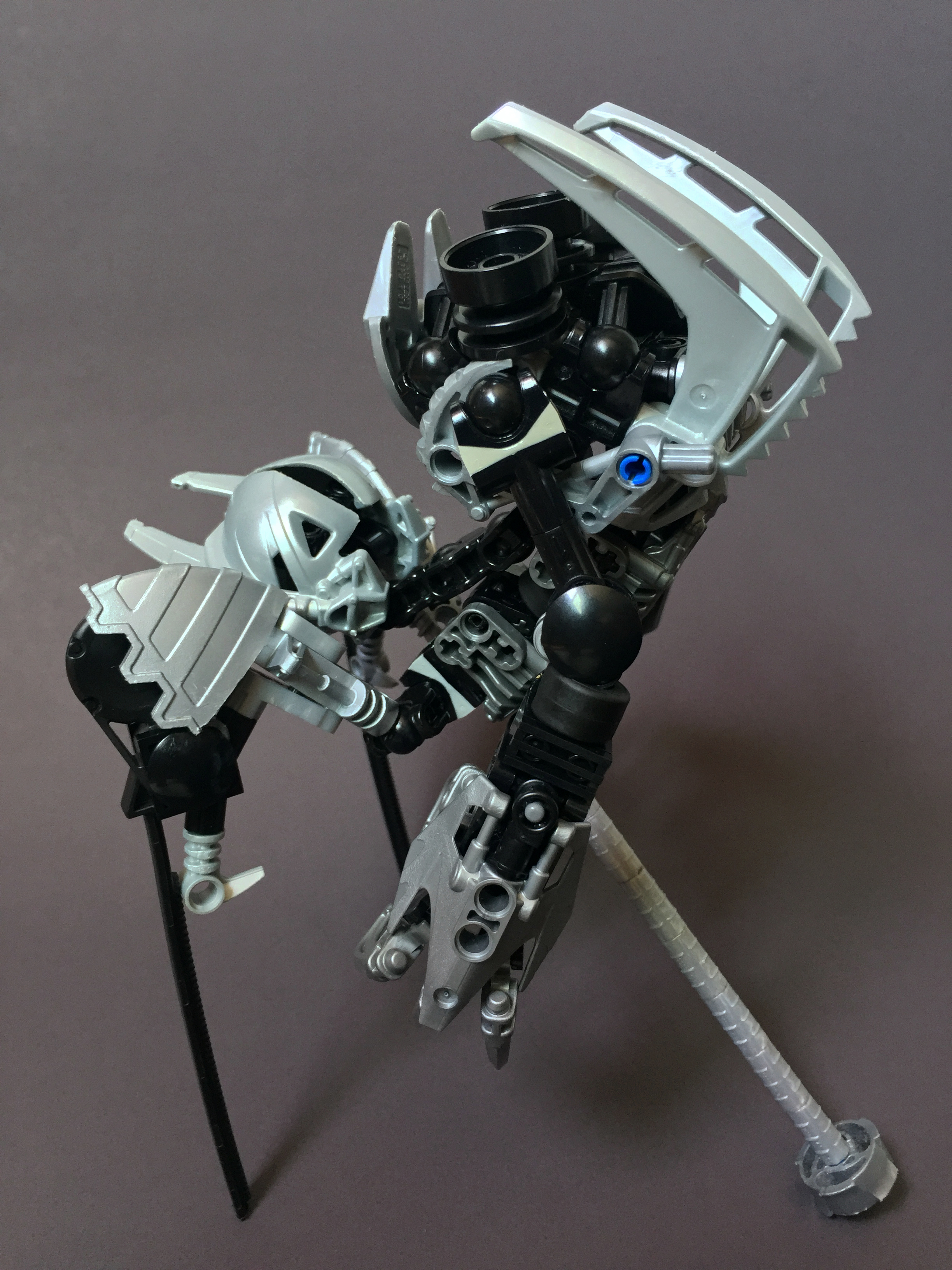
A sadistic machine created to watch over the workers. It is programmed to ensure maximum production and minimum happiness.
Gallery (When Public)
Luckily since being on this new keto diet, I am just under the limit!
A few details from a recent visit to the Slate Museum in Llanberis.
A very interesting and emotive place to visit. Plus it's free and a great wet weather venue.
Day 11
My son starting taking electric guitar lessons last week. Hearing "Smoke on the water" blasting out of his amp is now becoming a regular part of our daily routine.
or IN WORLD in:
HM store (temporary location) 👉 HERE
--------------------------------------
SPONSORS:
▶ SKIN - Stray Dog - Orso Skin EvoX, it's available in the ALPHA event November Round!!!

--------------------------------------
Made for LeLUTKA Kris Head 4.0 EvoX
This shape fits the bodies:
- [LEGACY] Meshbody (m) Athletic Edition (1.6)
- -Belleza- Mesh Body Jake
- [ INITHIUM ] KARIO
- [Signature] Davis - Mesh Body - v1.2
- [Signature] Gianni - Mesh Body - v6.1
COMPLETE STYLECARD INCLUDED
If you have any doubt feel free to question me in world!
====================
SEE MORE IN:
📌 MY BLOG
📌 X POST
#roundandsquare
More new thread!
A whole circle of happy colours and like naughty little faces!
Reels of sewing thread...
A sewing circle is group of people, especially women, who meet regularly for the purpose of sewing, often for charitable causes.
Fun in the studio...
Some days I need colour!!!
And today is again one of them.
When it is grey outside...
I am spending a lot of time in the studio again at the moment.
A photographer friend asked an interesting question, why do YOU take photographs?
One answer for me is I love the challenge, the thrill, and it still and always is!
Lately, I've made it even more challenging, not only because it's on black, which gives off 'negative' reflection, also here it is with lighting, reflective objects and making it all work together the way I want it, with maximum texture, and still be surprised, ALWAYS thrilled.
More creative than ever...
How can I resist, such superb colours, another photo begging to be taken.
Have a wonderful day, filled with love and beauty, M, (*_*)
And for more: www.indigo2photography.com
Please do not COPY or use any of my images on websites, blogs or any other media without my explicit permission. © All rights reserved
Span: Parque Sarmiento en la Ciudad Autónoma de Buenos Aires.
Clic 2x para máx' ampliacion.
Engl: Sarmiento Park in the Autonomous City of Buenos Aires.
Click 2x for maximum enlargment.
RegioJet class 162 electric loco 113 (also displaying the European Vehicle Number CZ-RJ 91 54 7 162 113-5) stands at Praha hlavní nádraží (Prague Main Station), at the head of a RegioJet service.
RegioJet a.s. is a Czech open-access operator, owned by travel agency Student Agency. It also has a sister company in Slovakia. Student Agency started operating international coach services in 1996, expanding into regular coach transport in 2004. The Czech and Slovak subsidiaries called RegioJet were set up in 2009 and 2010 respectively, and rail operations began in 2010 - initially on an occasional basis but, from September 2011, on regular routes as an open-access operator. Coach operations were brought into the RegioJet operations in 2015 (Slovakia) and 2016 (Czech Republic).
The nine RegioJet class 162 electric locos were built by Škoda as part of an order for Czechoslovak Railways, but financial problems resulting from the "Velvet War" meant the order was not fulfilled, the locos being modified and sold to the Italian company FNM instead; the first was delivered to FNM in 1992, as class E.630. The nine returned to the Czech Republic in 2010 when they were bought from FNM by RegioJet, and were renumbered 112 to 120. There are also 162s operated by ČD, as well as the almost identical class 163 - the difference being the bogies: class 162 have a 140km/h maximum speed and class 163 only 120km/h. Both use 3kV dc, but there were at one time plans to convert the RegioJet 162s for dual 3kV dc and 25kV ac operation, becoming class 362 in the process.
I was travelling from Brno to Parchim (north of Berlin, in Germany) towards the end of my European trip based around the Branch Line Society "The Carinthian Explorer", a tour which visited six foreign countries over fourteen days. I changed trains here and had a lengthy connection, so took the opportunity for a few photos, although the slightly hazy sun when I first arrived didn't last very long as the sun went behind cloud (despite there still being blue sky in all of my pictures).
Visit Brian Carter's Non-Transport Pics to see my photos of landscapes, buildings, bridges, sunsets, rainbows and more.
The Palazzo d’Avalos, commonly known as the Procida Castle, sits atop (at 91 meters above sea level) a limestone cliff overlooking the sea. It’s about two miles across to the mainland. A healthy swim if you’re in shape. The building was erected in the 1560s on the commission of cardinal Innico d’Avalos, whose family governed the island until the arrival of the Bourbons in 1734. The inhabited center of the island was situated behind the building; the cardinal also had a wall erected around the small town to protect it from incursions by Saracen pirates. That section of the modern island is still called the “terra murata,” the “walled land.”
In 1815, following the restoration of the Bourbon monarchy after the Napoleonic Wars, the Palazzo d’Avalos became a military academy, and in 1830 was transformed into a penitentiary by Ferdinand II. It functioned as such throughout the 19th century and most of the 20th century. It was upgraded after WWII into a maximum security prison, which is where that swim comes in. (I don’t know if anyone ever made it off this particular “Rock.” The prison was finally closed in 1988. Recent notices (summer, 2013) from Procida have made a grand show of the fact that the building has finally been acquired by the Procida city government, which has ambitious plans for turning it towards social uses such as a youth center, museum, exhibit hall, etc.
Darwin Harbour is the body of water close to Darwin in the Australian Northern Territory. It opens to the north at a line from Charles Point in the west to Lee Point in the east into the Beagle Gulf and connects via the Clarence Strait with the Van Diemen Gulf. It contains Port Darwin, which is flanked by Frances Bay to the east and Cullen Bay to the west.
Name
It was named after the naturalist Charles Darwin who sailed with Robert Fitzroy on the ship HMS Beagle around parts of Australia. However, Darwin and Fitzroy sailed in 1836 from King George's Sound (Western Australia) directly to the Cocos-Keeling Islands, at the south coast of Java, and from there to Cape Town and back to England. They stayed thus away from Darwin Harbour by 3000 sea miles and did not know of its existence.
Climate
The climate of the Darwin Harbour region is monsoon tropical with two distinct seasons: the Dry and the Wet. The Dry lasts for 6 months between April and September with an average rainfall of 24 mm, whereas the Wet lasts between October and March with an average monthly rainfall of 254 mm/month (according to the Bureau of Meteorology, 1999). The majority of the rain falls between December and April. Runoff varies between 250–1000 mm. Riverine discharge is relatively low with the exception of the Blackmore River and Elizabeth River. Peak flow for these rivers occurs in February, respectively 605Ml/day and 389 Ml/day, after which it slowly decreases until July when there is no freshwater input into Darwin Harbour until the onset of the following wet season (Padovan 1997). Cyclone frequency is low to moderate.
Marine life
Darwin Harbour supports very high fish diversity with 415 fish species now known. Darwin Harbour provides a unique opportunity to see dugongs in the wild, because their favourite food is located off Casuarina and Vestey’s beaches. Seagrass meadows are also the main diet of green turtles and provide habitats for many smaller marine animals including commercially important species such as prawns and fish.
Oceanography
The tides at Port Darwin are macro-tidal with a maximum tidal range of 7.8 m, a mean spring range of 5.5 m and a mean neap range of 1.9 m (Padovan, 1997). The currents caused by these tides are complex and strong.
Estuaries
The Elizabeth River Bridge across Elizabeth River, upstream the East Arm of Darwin Harbour
Darwin Harbour is a drowned river valley and consist of ria shorelines and extensive headlands.
Catchment
The catchment of Darwin Harbour occupies a total area of approximately 3,230 square kilometres (1,247 sq mi), of this 2,010 square kilometres (776 sq mi) is land based and the other 1,220 square kilometres (471 sq mi) are estuarine areas at the high water mark.
Italien / Südtirol - Pragser Wildsee
Early morning
Früher Morgen
Der Pragser Wildsee (italienisch Lago di Braies) ist ein Bergsee im Pragser Tal in der Südtiroler Gemeinde Prags. Er liegt wenige Kilometer südlich des Hochpustertals zwischen Bruneck und Toblach in den Pragser Dolomiten. Er ist Teil des Naturparks Fanes-Sennes-Prags und ein geschütztes Naturdenkmal.
Der See liegt auf 1494 m s.l.m. Höhe und hat eine Wasserfläche von 31 Hektar. Er ist durchschnittlich 17 Meter tief und weist eine maximale Tiefe von 36 Metern auf. Der geologische Ursprung des Sees ist auf die Entstehung eines natürlichen Staudammes infolge eines Murenabgangs zurückzuführen. Der See wird beherrscht vom imposanten Massiv des Seekofels (2810 m). Der See ist Ausgangspunkt des Dolomiten-Höhenweges Nr. 1.
In der Südtiroler Sagenwelt spielt der See ebenfalls eine Rolle. Von ihm aus konnten mit dem Boot die unterirdischen Teile des Reiches der Fanes erreicht werden. Das inzwischen verschüttete Tor zur Unterwelt soll am Südende des Sees Richtung Seekofel gelegen haben, weshalb dieser auf ladinisch Sass dla Porta (Torberg) heißt.
Die touristische Erschließung des Sees nahm erst 1899 an Fahrt auf. In diesem Jahr wurde die Eröffnung des direkt am Seeufer stehenden Grandhotel Pragser Wildsee gefeiert, das vom Architekten Otto Schmid für den aus Niederdorf stammenden Eduard Hellenstainer und dessen Mutter Emma Hellenstainer geplant worden war. Der Bau eines Hotels am Pragser Wildsee war zunächst nicht unumstritten gewesen. Der Grazer Universitätslehrer und Alpinist Viktor Wolf von Glanvell, der in den 1880er Jahren als Stammgast in Prags seine Sommerferien verbracht hatte, hatte sich 1891 mit anderen Unterzeichnern in einer Erklärung „allen Wirten und Speculanten zum Trotze“ gegen die Errichtung eines Hotels am idyllisch gelegenen Bergsee ausgesprochen. 1904 wurde der Hotelbau durch die ebenfalls nach Plänen Schmids verwirklichte Marienkapelle ergänzt.
Rund um das Hotel spielte sich Ende April, Anfang Mai 1945 ein wichtiges Ereignis des Zweiten Weltkriegs ab. Seit Ende 1944 ließ der „Reichsführer SS“ Heinrich Himmler in Abstimmung mit dem Chef des Reichssicherheitshauptamts (RSHA), Ernst Kaltenbrunner, die prominentesten politischen Häftlinge des NS-Staats aus den deutschen Konzentrationslagern zunächst in das KZ Dachau und im April 1945 schließlich nach Niederdorf im Südtiroler Pustertal bringen. Die SS-Wachmannschaften hatten Befehl, die Gefangenen nicht lebend in Feindeshand geraten zu lassen. Durch das mutige Handeln des Offiziers der Wehrmacht Wichard von Alvensleben konnten die schließlich im Hotel Pragser Wildsee untergebrachten Gefangenen dort am 4. Mai 1945 von der US-Armee befreit werden.
Der Hintergrund: Nach dem Waffenstillstand vom 8. September 1943 zwischen den Westalliierten und Italien hatte das Deutsche Reich Südtirol und Teile Norditaliens sowie des heutigen Sloweniens (also den ehemals österreich-ungarischen Herrschaftsbereich) als „Operationszonen“ de facto annektiert. Neben Südtirol und dem Trentino gehörte die Provinz Belluno zur „Operationszone Alpenvorland“ und war wie das Friaul, Julisch Venetien, Istrien und Dalmatien („Operationszone Adriatisches Küstenland“) der Hoheit des faschistischen Marionettenstaats Repubblica Sociale Italiana entzogen. Ein Teil der NS-Führung hoffte, die Alpen, propagandistisch zur sogenannten „Alpenfestung“ hochstilisiert, von Bayern bis ins Trentino gegen die vorrückenden Alliierten verteidigen zu können. Himmler, der in den letzten Wochen und Monaten des NS-Regimes seine eigene Geheimdiplomatie vor allem in Richtung der Amerikaner betrieb, und Kaltenbrunner glaubten, sich durch Erpressung eine günstige Verhandlungsposition gegenüber den Alliierten verschaffen zu können. Die insgesamt 139 sogenannten Sonderhäftlinge aus siebzehn europäischen Nationen sowie eine Gruppe von Sippenhäftlingen sollten dafür als Geiseln eingesetzt werden.
Unter den prominenten Gefangenen befanden sich unter anderen der ehemalige österreichische Bundeskanzler Kurt von Schuschnigg mit Frau und Tochter, der frühere französische Ministerpräsident Léon Blum mit Ehefrau, Hitlers früherer Reichswirtschaftsminister Hjalmar Schacht, der britische Geheimagent Sigismund Payne Best, der ehemalige ungarische Ministerpräsident Miklós Kállay, der Oberbefehlshaber des griechischen Heeres, General Alexandros Papagos mit seinem gesamten Generalstab, der französische Bischof von Clermont-Ferrand, Gabriel Piguet, der evangelische Pastor Martin Niemöller, sowie Familienangehörige des Hitler-Attentäters Oberst Claus Schenk Graf von Stauffenberg.
Die Geiselpläne scheiterten. Ein deutscher Offizier, Hauptmann Wichard von Alvensleben, hatte von dem Gefangenentransport erfahren und ließ am 30. April 1945 die Gefangenen in Niederdorf im Pustertal von einem Wehrmacht-Stoßtrupp aus der Gewalt der SS befreien. Noch am selben Tag wurden die Häftlinge ins nahegelegene Hotel Pragser Wildsee gebracht, wo sie von der Hotelbesitzerin Emma Heiss-Hellenstainer versorgt wurden. Am 4. Mai 1945 traf die US-Armee im Hotel ein und nahm die deutschen Soldaten gefangen. Die Amerikaner führten die befreiten Häftlinge in zwei Konvois am 8. und 10. Mai weiter über Verona nach Neapel und auf die Insel Capri. Erst nach weiteren Verhören bekam ein Teil der Befreiten schließlich die Erlaubnis zur Heimkehr, während ein anderer Teil in Kriegsgefangenschaft ging.
Heute befindet sich in dem Hotel, in dem sich jedes Jahr um den 20. Juli herum Angehörige Stauffenbergs und anderer Widerstandskämpfer treffen, das Zeitgeschichtsarchiv Pragser Wildsee, das die Erinnerung an das Geschehen im April und Mai 1945 wachhalten soll. Das Zeitgeschichtsarchiv Pragser Wildsee ist das erste Archiv, das sich ganzheitlich der Geiselnahme von 1945 widmet. Um das historisch wertvolle Archivmaterial für die Nachwelt zu sichern, wurde es aus der gesamten Welt zusammengetragen und ist nun im Hotel Pragser Wildsee untergebracht.
Der See ist Teil des Naturparks Fanes-Sennes-Prags, in dem viele verschiedened Schmetterlingsarten wie z. B. der Ameisenbläuling, der Alpenapollo oder der Trauerfalter, aber auch Vögel wie der Sperlingskauz, der Schwarzspecht und der Grauspecht vorkommen, die sich auch direkt am See beobachten lassen.
Im See gibt es Lachsforellen, Seeforellen und Bachforellen sowie Seesaiblinge und Elritzen, weswegen hier der Angelsport betrieben wird. Der südtirolerische Fischereiverein FIPSAS hat hier das Fischereirecht und gibt Tageskarten aus.
Der Pragser Wildsee ist Teil des UNESCO-Welterbe Dolomiten und heute einer der meistbesuchten Seen in Südtirol, auch wenn sich dort abgesehen vom immer noch bestehenden historischen Hotel, einem Bootshaus und einigen Wanderwegen praktisch keine touristischen Infrastrukturen befinden. Unter anderem war der See Drehort der italienischen Erfolgsserie Die Bergpolizei mit Terence Hill. Die Serie lockte zahlreiche italienische Tagestouristen zum See. Im Hochpustertal ist der Pragser Wildsee eines der beliebtesten Ausflugsziele. Vor allem die Seeumrundung ist ein beliebter Nachmittagsausflug für Einheimische und Touristen. Außerdem ist der Bergsee Ausgangspunkt für viele Wanderungen und Bergtouren der Pragser Dolomiten, wie z. B. zum Seekofel und zur gleichnamigen Hütte, aber auch zur Rossalm oder zum Hochalpenkopf.
(Wikipedia)
The Pragser Wildsee, or Lake Prags, Lake Braies (Italian: Lago di Braies; German: Pragser Wildsee) is a lake in the Prags Dolomites in South Tyrol, Italy. It belongs to the municipality of Prags which is located in the Prags Valley.
During World War II it was the scene of the transport of concentration camp inmates to Tyrol.
In recent years, the lake earn the nickname of "Pearl of the Alps" due to its increasing popularity among tourists.
The name of the lake is attested in 1296 as Hünz an den Se, in 1330 as Praxersee, in 1400 as See in Prags, in 1620 as Pragsersee and in 1885 as Pragser Wildsee; the appellation of wild is therefore nineteenth-century, and perhaps to be connected to mountaineering which in that period began to become a mass phenomenon. The Italian name "Lago di Braies" dates back to 1940, while in the first Handbook of 1923 it still appears only as "Pragser Wildsee".
The lake lies at the foot of the imposing rock face of the Seekofel (Italian Croda del Becco, Ladin Sass dla Porta 2,810 m) and is located within the Fanes - Sennes - Prags nature park.
It has an extension of about 31 hectares with a length of 1.2 km and a width of 300-400 meters. It is one of the deepest lakes in the autonomous province of Bolzano, with a maximum depth of 36 meters and an average depth of 17. The maximum water temperature is 14 °C. It is a barrage lake, as its creation is due to the barrage of the Prags River due to a landslide detached from the Herrstein.
The lake is a tourist destination, which attracts visitors for the blue / emerald green color of its clear waters and for the natural scenery in which it is immersed. In fact, the lake is surrounded on three sides by Dolomite peaks, including the Seekofel. The lake is the starting point of the Alta via n. 1 of the Dolomites called "The classic" which reaches Belluno at the foot of the Schiara Group.
In recent years, thanks to popularity of the Italian TV series Un passo dal cielo, the Pragser Wildsee became one of the most visited places of the region Trentino-South Tyrol as it started attracting the attention of countless travel bloggers and professional photographers. The large inflow of tourism brought local administrators to think of ways to reduce the number of visits to keep preserve the sustainability of the mountain-lake ecosystem.
To visit the lake, it must be approached from the north side. To reach the lake, you need to reach the Prags Valley between the villages of Welsberg and Niederdorf in Puster Valley.
After traveling a few kilometers, you will come across the only crossroads and take the road towards the lake. After passing the villages of Schmieden and St. Veit, you arrive at the car park (to pay in the tourist season), where there is a large hotel-restaurant, the Hotel Pragser Wildsee linked to the pioneering figure of Emma Hellenstainer.
It is possible to take a tour around the banks of the lake. This route is flat and wide on the west bank, while on the east bank it is steep and narrow, with some stairways. Despite this, the beautiful walk that leads to the foot of the Seekofel can be tackled by any hiker. During the winter period these paths (especially the one on the eastern shore) are often closed, due to the danger of avalanches. It is however possible to make an excursion around the lake, since its surface is solidly frozen.
In the summer of 2010, on the shores of Pragser Wildsee, the Italian television series "Un Passo dal Cielo" was shot, broadcast by Rai 1 since 2011, focusing on the life of Pietro (played by Terence Hill), a team commander of the Forestry Corps of the autonomous province of Bolzano from Innichen. In the summer of 2012, the second series of the fiction was shot, the third, the fourth and in 2018 the fifth season. On 28 December 2016, the second episode of the documentary series Speciali Storia - Hostages of the SS was broadcast on Rai Storia, which reconstructs with actors the story of April 1945 of the prisoners of the Pragser Wildsee.
Since 2012, curling competitions have been held on the frozen surface of the lake during the winter season.
(Wikipedia)
I made some changes. Most noticeable change is the windshield.
Small changes include more sloped front, lower overall height by raising maximum wheel height, slight changes to the rear, different brake light pieces used, back window, more overall stability
↣ MANHOOD, OUTERNAKED, GUILTY, CIN & HOMINIS MAXIMUM ↢
Manhood stuff:
▶ SKIN - outernaked #evox - shane skin

▶ SHIRT - Guilty 223 Kaneda Shirt

▶ TATTOO - CIN// 307.B.INK

All of them are available at MANHOOD (click here to go there) event!!!
*Until July 21th!!!!
---------------------------------------
Stuff out of Manhood event:
▶ SHAPE - HOMINIS MAXIMUM - LELUTKA - KRIS - SHAPE AITOR |TO BUY IT:
🏬 Visit our MAINSTORE
======================
SEE MORE IN:
📌 MY BLOG
I felt the surface brightness darker a bit compared to that during former total eclipse in November 2022. Maximum exposure was 4 seconds then with the same optics and camera, and 6 seconds this time.
Lunar Occultation of Uranus during Total Lunar Eclipse in Tokyo November 8, 2022: www.flickr.com/photos/hiroc/52518361993
Equipment: Takahashi FOA-60, Extender R 1.7x, and EOS R-SP4II, modified by Seo San on ZWO AM5n Equatorial Mount, autoguided at a star nearby with Fujinon 1:2.8/75mm C-Mount Lens, Pentax x2 Extender, ZWO ASI 174MM-mini, and PHD2 Guiding
Exposure: 6 seconds at ISO 1,600, f/15, and focal length 900mm
Exposure at 18:12:27 September 7, 2025 UTC
site: 983m above sea level at lat. 35 25 20 North and long. 138 54 06 East near Lake Yamanaka 山中湖畔
Ambient temperature was around 18 degrees Celsius or 64 degrees Fahrenheit. Wind was mild.
or IN WORLD in GLOOM Mainstore!!! 👉 @Taxi_GLOOM
--------------------------------------
SPONSORS:
The SKIN used is the Gloom - Dmitri Skin (EvoX), it's available exclusively at the MANHOOD event July-August round!!!

--------------------------------------
Made for LeLUTKA Paxton Head 4.0 EvoX
This shape fits the bodies:
- [LEGACY] Meshbody (m) Athletic Edition (1.6)
- -Belleza- Mesh Body Jake
- [ INITHIUM ] KARIO
- [Signature] Davis - Mesh Body - v1.2
- [Signature] Gianni - Mesh Body - v6.1
COMPLETE STYLECARD INCLUDED
If you have any doubt feel free to question me in world!
======================
SEE MORE IN:
📌 MY BLOG
📌 X POST
“What has interested me in taking photographs is the maximum — the maximum that exists in a situation and the maximum I can produce from it.” – Josef Koudelka
↣INEED & HOMINIS MAXIMUM↢
▶ EARRINGS - iNeed Forge LelEvoX -M available in sales today
by Crafty Weekend event til November 24th!!! | 👉 @Taxi_INEED
▶ NECKLACE - iNeed Grim Blessings Necklace M available in Ineed mainstore | 👉 @Taxi_INEED
▶ SHAPE - HOMINIS MAXIMUM - LELUTKA - EON - SHAPE SERAPHIN | 👉 BUY IT HERE
==============================
A visitor stands atop one of the pinnacles of Cheddar Gorge, the highest inland limestone cliff formation in Britain. The gorge, lying on the southern edge of the Mendip Hills, has a maximum depth of 137 m and is classified as an AONB (Area of Outstanding Natural Beauty).
37 years ago today on May 28th 1984 Maude made her only solo appearance beyond Glenfinnan.
Here she struggles away from Glenfinnan suggesting further adventures lie ahead on Beasdale bank. Indeed she set off several lineside fires and her journey was terminated a Arisaig before returning having to take water out of Lock Dubh and taking a couple of breathers on the climb above Loch Eilt.
It seems the lineside has again been on fire this week in the Glenfinnan area..
A bit of model engineers R&D. The engine is a two-cylinder single acting high speed marine steam engine made from a kit of rough castings, forgings and raw materials supplied by Stuart Turner (now Stuart Models). This one I didn't build originally but renovated from a rusty garage find. The dynamo is from a PM Research kit of parts. As the Stuart model, castings and raw materials are supplied with a pre wound amateur and the modeler does the rest. Somewhere in my galleries is a photo of the two direct coupled through a simple CV (Constant Velocity) joint but there was a problem. The mighty 1/20th hp engine has a maximum rated speed of 6,000 rpm while the dynamo only develops a 1.5V at 6,000 rpm so the engine runs like the clappers, sprays oil in all directions and only manages to illuminate one solitary torch bulb.
To remedy this, I decided on a 1 to 2.5 accession drive so when the dynamo is spinning at 6000 rpm, the motor is only rotating at 2,400 rpm. I also wanted to take a drive to another model, which is currently in build. A model of an off-hand pedestal grinder so I wanted to achieve the same step up in revolutions but be able to engage and disengage the grinder. A feature of a long-term project to build a model Victorian line shaft steam workshop. The dog-clutch does that with ball bearings to cut down fiction.
Drive is via a commercial Delrin Chain, available from a well-known distributor online. I was not sure it could take the load of the dynamo at speed but so far, no problems. This is the rough development build, next to remake a couple of components, Add a few "Victorian style twiddly bits" and give it a coat of paint.