View allAll Photos Tagged Increased
Soo Line train 214, powered by lone EMD SD60M No. 6061, waits for a signal at Milwaukee, Wisconsin, on November 27, 1992. Passing by on the main line is Amtrak train 338 to Chicago, substituted with Chicago Metra commuter equipment. For several years in the early 1990’s, Amtrak would borrow some equipment from Metra to substitute on the Chicago to Milwaukee “Hiawatha” corridor during the Thanksgiving holiday weekend. This would allow Amtrak to move equipment normally used on the run to expand capacity on other trains to handle increased holiday ridership.
Anaklia (Georgian: ანაკლია) is a town and seaside resort in western Georgia. It is located in the Samegrelo-Zemo Svaneti region, at the place where the Enguri River flows into the Black Sea.
The earliest settlement on Anaklia's territory dates back to the mid-Bronze Age and is typical to the Colchian culture. It is the Classical Heraclea of Colchis, Anaclia of later authors, and Anarghia of Archangelo Lamberti and Jean Chardin (both the 17th-century travelers). After the fragmentation of the Kingdom of Georgia in the 15th century, it was an important fortified town, sea port and fishing station within the Principality of Mingrelia. In 1723, the town was captured by the Ottoman Empire and converted into its maritime outpost and slave-trading locale. Western Georgian kingdom of Imereti regained control over Anaklia in 1770, seizing the opportunity of Ottoman Empire being at war with Russia (Russo-Turkish War (1768–1774)). Solomon I, the king of Imereti, was supposed to be supported in this endeavor by a small Russian contingent under General Totleben, but the Russian troops retreated before a clash against the Turks.
In 1802, Kelesh-Bey Sharvashidze, the pro-Turkish ruler of the neighboring Principality of Abkhazia, capitalized on the internecine feuds in Mingrelia, and forced Prince Grigol Dadiani of Mingrelia into surrendering Anaklia, taking Grigol’s son and heir, Levan, as a hostage. When Mingrelia accepted the Russian protectorate in 1803, the Russian commander in Georgia, Prince Tsitsianov, demanded that Kelesh-Bey release Levan. On his refusal, Tsitsianov sent Major General Ion Rykgof into Abkhazia. In March 1805, the Russians took hold of Anaklia and threatened to march against Sukhum-Kaleh, forcing the Abkhazian prince to release Dadiani. The capture of Anaklia drew an Ottoman protest, however, and Tsitsianov hastened to disavow his subordinate and even apologize for his action, removing a Russian garrison from Anaklia. However, the incident added to an increasing tension between the two empires. When the next Russo-Turkish War broke out in 1806, the Russian forces restored Redoubt Kali and Anaklia to the Mingrelian prince Levan who would later relinquish the control of these forts to the Russian administration. (See Russian conquest of the Caucasus#Black Sea Coast.) In the 1850s, Anaklia was a small but strongly fortified seaport, which had a custom-house and carried on a considerable trade with Turkey.
Subsequently, the importance of the Anaklia port significantly reduced, but it remained a minor Black Sea Fleet base in the Soviet times.
After the War in Abkhazia (1992–93), a Russian peacekeeping post was opened at Anaklia in 1994. In 2006, the Ministry of Defense of Georgia reported numerous damages inflicted by the Russian soldiers upon the 17th-century fortress of Anaklia and accused the peacekeepers of installing latrines and baths within the walls of the fort. Following a series of protests by the Georgians, the Russian military post was withdrawn in July 2007.
A monument has been erected in Anaklia on May 21, 2012, commemorating Russia's expulsion of the Circassian people from the region following the conclusion of the Caucasian War in the 1860s. The May 21 date was chosen to coincide with the day on which the Circassian people themselves commemorate the expulsion, which the Georgian government has recognized as an act of genocide. The monument was designed by Khusen Kochesokov, a sculptor from the North Caucasus region of Kabardino-Balkaria.
The original existing portion of All Saints dates from the year 1230. Various subsequent additions have been made such as the tower in 1330, the north aisle and vestries in 1937, and a northern extension in 1981.
Source: southwark.anglican.org/church/sanderstead-all-saints/
Panorama stitched from five camera jpegs then edited in SilkyPix to increase exposure.
With the increased free time on my hands I have decided to return back to blogging c:
.。゚+..。.。゚+..。 sponsored by:
୨୧ Loki
.。゚+..。.。゚+..。 wearing:
༺。° anatomy° 。༻
。 Ebody - Reborn
。 Lelutka - Ceylon
。 Doux - Cintia
。 Aii - Demonic Touch
༺。° clothing° 。༻
。 Loki - Marie Wrap Top @Anthem Event
。 Triggered - Evy Skirt
。 Sour - Milky Glasses
。 Random Matter - Potioneer Set - Alchemy Book
༺。° cosmetics ° 。༻
。 eerie - Star Eyeshadow
。 eerie - Scratches
。 eerie - Curtana
。 eerie - Smol Names (sneak peek)
。 eerie - Cross Lipgloss
。 eerie - Face Cuts
WWT Slimbridge.
The Glossy Ibis has become more familiar to birdwatchers following a series of mass arrivals in the 2000s. Increasing numbers of reports since then mirror an increase in the breeding population located in the south-west of Europe. There have been a number of breeding attempts here in the UK. It is likely that more regular breeding will be a feature in the future.
Climate change is thought to have supported the growth in visiting Glossy Ibis to Britain, with milder winters aiding their survival and enabling individuals to attempt breeding attempts the following year. (BTO).
Not as large as I thought it might be. About the size of a Curlew (which surprised me). This Glossy Ibis was in a field north of the entrance road into WWT Slimbridge. Not actually in the main reserve. I believe this is a juvenile bird, it didn’t seem to mind people at all.
By the time I got to it, the sun was already much higher in the sky than I would normally like and there was already a small crowd of people, birders and others watching it. It has been hanging around WWT Slimbridge for a few days now.
This shot is a little bit over-exposed where there’s some water on the beak and a little on the right leg, but I’m ok with that considering! For me this is a first, I’ve never seen one before!
My thanks to anyone who views, faves or comments on any of my photos. It is much appreciated.
Who knew? Google knew.
The Lazuli Bunting has increased its range in Canada since the late 1960s, spreading north from the Thompson Valley into the valleys of the Cariboo-Chilcotin Plateau of central British Columbia
The Egitarso peninsula is the place of the village of San Vito Lo Capo, legendary for its Sanctuary-Fortress, surrounded by Monte Monaco, Cozzo Mondello, Pizzo Castelluzzo and Monte Cofano. The Sanctuary-Fortress dates back to 299 A.C. the legend tells of the young Vito martyred by the local populations and the Conturrana landslide, sent as divine punishment and witnessed by the nurse who later became Santa Crescienza. The Sanctuary suffered many attacks by Turkish pirates and corsairs, including Dragut, increasing the notoriety of the holy place.
I know not everybody likes them being here but I love them and the numbers on the South coast are increasing.
Taken with a macro lens in Emsworth.
The increased height of the new sea defences on Black Rock has been questioned by quite a few in Brighton including me. The comments were mainly about it being unnecessarily high. I took this photo around lunch time today and before Storm Barra had arrived. I'm not sure it's high enough now ;-(((. The engineers on top the sheet piling seem to be taking it all in.
The Urban Fox
Wild foxes have learned to adapt to the urban environment in order to survive. By nature, foxes are nocturnal and hunt at night, whereas the urban fox has adapted its behavior to survive and can be seen during daylight hours.
Locally, a fox vixen has located her den in the foundational remains of a razed building complex along the boardwalk at the Jersey Shore. She has six Kits, which can be seen frolicking in the debris and along the dunes during the day. The fox family has become local celebrities and unfortunately people have begun feeding them. Never feed wild animals. Although you may feel as if you’re helping them survive, you are actually harming them. Feeding foxes can alter their natural behavior and they may lose its fear of humans.
“Wildlife that is fed by people become less experienced at forging for their natural food and may become dependent on handouts that are not a part of their natural diets. This is especially true in juvenile animals that have not yet developed their own foraging skills and have little ability to fend for themselves once handouts cease.” ~ Julie King, Senior Wildlife Biologist
Please Do Not Feed the Wildlife!
Red Fox
The Red Fox, Vulpes vulpes, is the largest of the true foxes and the most abundant wild member of the Carnivora, being present across the entire Northern Hemisphere from the Arctic Circle to North Africa, North America and Eurasia. It is listed as least concern by the IUCN. Its range has increased alongside human expansion, having been introduced to Australia, where it is considered harmful to native mammals and bird populations. Due to its presence in Australia, it is included among the list of the "world's 100 worst invasive species".
For more info: en.wikipedia.org/wiki/Red_fox
The colour yellow is primarily associated with spreading happiness and joy; however, it is also the ideal colour for symbolizing friendship. With their bright hue and cheery personality, yellow flowers can be used to better someone's day and increase the positive energy in a room.
Yellow roses whisper the secrets of
laughter and long talks with friends.
(unknown)
Weekly Theme Challenge - Yellow
Looking close... on Friday! - FILL THE FRAME with ONE FLOWER
(photo by Freya, edit by me)
Thanks for views, faves and comments!
Ducks are increasing in number day by day here. You can enjoy several kinds of duck-watching until they leave here in Spring.
Okies for Monarchs is reporting that newly released data show the eastern monarch butterfly population has grown for a second consecutive year, offering a hopeful sign for a species that has declined by approximately 85–90% since the mid-1990s.
The latest annual survey of overwintering monarchs in Mexico estimates the population at 2.93 hectares, according to the latest survey released by the World Wildlife Fund–Telmex Telcel Foundation Alliance (WWF) and Mexico’s National Commission of Protected Natural Areas (CONANP). This represents about a 64% increase compared to last year’s estimate of 1.79 hectares.
“While these gains are encouraging, monarch populations remain below historic levels. Scientists generally consider six hectares of overwintering monarchs the threshold for a resilient population capable of withstanding environmental pressures,” said Katie Hawk, Executive Director of the Oklahoma Monarch Society. “Two years of growth is promising and gives us hope that the population will reach that benchmark.”
Do your part for Monarch conservation, plant some milkweed. It's the only plant Monarchs will lay eggs on.
Increased the wing span by 4 studs and extended the landing gear. I am not sure about the twin boom tail... and I really dislike the nose section below the canopy.
Salton Sea is a lake in California that got (re)created accidentally in 1905 when an irrigation canal of the Colorado River broke and flooded the Salton Basin for two years. After repairing the irrigation canal, inflow of fresh water stopped. It became a popular resort destination until several fish and bird die offs occurred in the 1980s. The die-offs were caused by toxic farm runoffs which increased the salinity of the water. More efficient farming approaches lead to a reduction water runoffs. This caused the water levels to drop, leading to clouds of toxic dust in the current century.
Salton Sea is peppered with ghost towns and ruins. This was taken in Bombay Beach. If you like to take pictures, spend a week in the area.
Having experienced a high the previous night from extensive auroras we hoped for a repeat night. NOAA forecasted a dip in aurora activity during the day but predicted increased activity by nightfall. As the day rolled by so did the clouds in the south of Iceland by Jökulsárlón. Hoping to find some clear skies Aaron, Alan, Rebecca, and I headed east after sunset towards Vestrahorn, where clouds were forecasted to subside by the morning hours. On our way we ended up stopping at Höfn for a langoustine dinner. The grilled langoustine was delicious: tender, buttery, and sweet. It set the stage for a wondrous night.
Once we arrived at Vestrahorn the near full moon aided us in scouting out the location. While scouting we noticed some faint aurora low in the sky. Though weak it was still a pleasure to see and photograph but soon the incoming clouds spoiled the show. Hence we called it a night in our Happy Campers and waited it out for the morning hours.
Snoozing away, Aaron suddenly opened our van door and yelled for us to get up at 5am. The majority of the clouds had cleared and the aurora activity picked up to a KP4. From then on time flew by as we blasted away until after sunrise.
Sony A7r
Rokinon 14mm f/2.8
This was my first attempt at a combined 4 hour exposure. The seeing was average, and got increasing worse, with clouds in the middle, my camera ran out of battery... always learning. It's the first time I even captured this though. Hoping to get more detail in the future!
Modified Nikon D750 (sensor filter removed)
Nikon 70-200mm f2.8 with TC-14: 280mm f/4
Optlong L-Pro filter, LXD75 mount
46x90" iso800 shots stacked with DeepSkyStacker, processed in Ps & Lr
Encounter, part 2. This is the same cinnamon Black Bear seen in yesterday's post. Its body language is very different. It takes a worried bear to give me a look like that. Interesting comparison, I think.
After I'd been working with it alone for 15 minutes or so and this bear had accepted me as non-threatening, along came a couple of tourists in their car. There was a slight bend in the road behind me, where my car was, about 50 feet away and slightly to the right. Instead of pulling up directly behind me, they stopped 75 feet short, triangulating the bear. Behind the bear was a mountain wall.
Its stress level went straight up. Ears back, fear in its eyes. I began talking to it in a soft voice and slowly backing up, trying not to trip over roots and branches, while it considered possible options. And all ended well, as I was able to give it a clear escape path, which it took.
Then I walked over and had a little talk with the tourists. I was calm. You can't teach people by yelling at them. I told them they had created a dangerous situation for me, and why: "You effectively surrounded the bear, and that put me at risk."
Of course, I knew from the start this might happen. I had my own escape route in mind all along. After a few minutes with this bear, I was pretty sure we could read each other and no one would get his nose out of joint. But tourists always increase the danger level, because "reading" wildlife is a foreign concept to them and they unwittingly do dumb things. I'd much rather photograph bears in the back country.
Photographed in Waterton Lakes National Park, Alberta (Canada). Don't use this image on websites, blogs, or other media without explicit permission ©2012 James R. Page - all rights reserved.
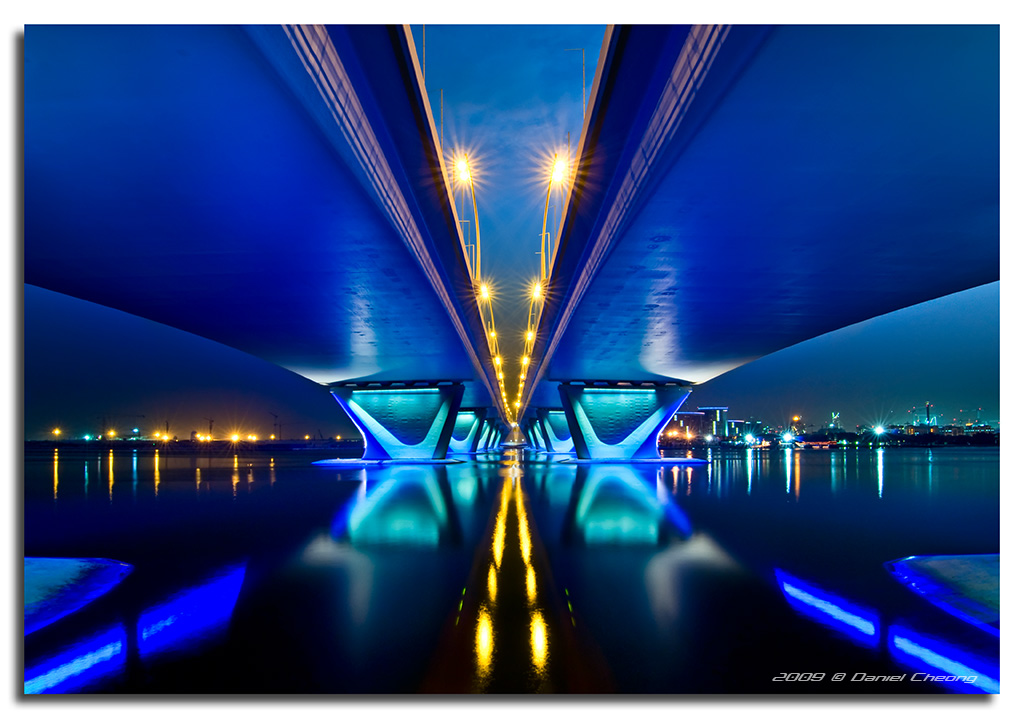
My dear Friends, after a rather long flickr break, I am back! I still don't have enough 'flickr worthy' material to post regularly, but I've started going out again to shoot, despite the heat here in Dubai.
Note: I was planning to come back with shots of the inauguration of the Burj Dubai on 9-9-9, but unfortunately the tallest tower in the world is still not completed. Hopefully it will be by the end of this year!
I'll be slowly catching up on your streams, so please bear with me!
Wish you all a great week end!
Samyang 100mm f/2.8
Another experiment of mine. Correctly exposed light produces interesting results.
Abysinnian Wolf is a canine native to the Ethiopian Highlands.
It is a highly specialised feeder of Afroalpine rodents with very specific habitat requirements. It is one of the world's rarest canids, and Africa's most endangered carnivore. Rates as Endangered (EN) by the IUCN.
Threats include increasing pressure from expanding human populations, resulting in habitat degradation through overgrazing, and disease transference and interbreeding from free-ranging dogs.
The greater flamingo (Phoenicopterus roseus) is the most widespread and largest species of the flamingo family. It is found in Africa, on the Indian subcontinent, in the Middle East, and in southern Europe.
This is the largest species of flamingo, averaging 110–150 cm (43–59 in) tall and weighing 2–4 kg (4.4–8.8 lb). The largest male flamingos have been recorded at up to 187 cm (74 in) tall and 4.5 kg (9.9 lb). It is closely related to the American flamingo and Chilean flamingo, with which it has sometimes been considered conspecific.
Subadult with gray white coloration
Like all flamingos, this species lays a single chalky-white egg on a mud mound. Most of the plumage is pinkish white, but the wing coverts are red and the primary and secondary flight feathers are black. The bill is pink with a restricted black tip, and the legs are entirely pink. The call is a goose-like honking.
Subadult flamingos are whitish grey and only attain the pink coloration several years into their adult life. The coloration comes from the carotenoid pigments in the organisms that live in their feeding grounds. Secretions of the uropygial gland also contain carotenoids. During the breeding season, greater flamingos increase the frequency of their spreading uropygial secretions over their feathers and thereby enhance their color. This cosmetic use of uropygial secretions has been described as applying "make-up".
The bird resides in mudflats and shallow coastal lagoons with salt water. Using its feet, the bird stirs up the mud, then sucks water through its bill and filters out small shrimp, seeds, blue-green algae, microscopic organisms, and mollusks. The greater flamingo feeds with its head down, and its upper jaw is movable and not rigidly fixed to its skull.
For more information, please visit en.wikipedia.org/wiki/Greater_flamingo
The increased activity of a pair of Blue Jays in Janice's yard has been a delightful addition to my visits, lately...before, they were rather standoffish, only occasionally stopping to grab a snack!
Samyang 100 mm f / 2.8
When I look at this photo, my eyes gather together.
I still can't get uniform bubbles. I continue to experiment.
Many thanks for your visits, faves and comments. Cheers.
There is a large herd of about 50 or more deer on the Lagoon Creek reserve.
Deer – Chital
Scientific name - Cervus axis
Other common names - Chital deer, Axis deer, Indian spotted deer.
Origin - India, Nepal and Sri Lanka
Distinctive characteristics - White throat patch and white spots. Dark dorsal stripe and band over muzzle. Noticeably long tail compared with other deer species.
Identification - Feral chital deer are a small-medium sized species. Their coat colour is variable, but is often dark to rusty red with uniformly marked white spots in lines along the body. They have a distinctive white throat patch and a dark muzzle. The coat colour of the inner legs and underside of the belly is white-beige. This species is often found in medium to large groups. Mature males have antlers that are smooth and slender with usually three tines on each, though the number of tines is influenced by animal condition. Antlers may be 70-89 cm in length. Males are larger in size and weight (90 cm and 85 kg) than females (80cm and 60 kg). Chital have a distinctive high-pitch alarm call when disturbed. Scats are small cylindrical pellets sometimes with an indentation at one end.
History and Biology - Chital deer were initially introduced to Australia from Sri Lanka and India in 1802 but did not survive. They were later successfully released into Queensland in the 1860's. Chital deer are herbivores that browse on a variety of grasses, fruit and leaves. They are gregarious and can form groups of more than 100 individuals. They do not have a defined breeding season, and are capable of producing three offspring in two years. Chital deer will eat their shed antlers if their diet is lacking the vitamins and minerals. Females will separate from the herd during birthing and rearing of young.
Distribution - Feral chital deer occur in many areas throughout Queensland, small areas in NSW, Victoria and the south-east of South Australia. They are absent from other regions.
Habitat - They can be found in a variety of habitats, including open grasslands, open and closed woodlands, thick forests and heavily timbered farmland.
Damage - Feral chital deer are a growing pest threat. They can cause significant browsing damage to native vegetation, damage sensitive habitats and compete with livestock for pasture. They can damage forestry plantations and ornamental gardens. They are not often found in close proximity to humans but they do present a serious motorway hazard. Feral chital deer may carry and spread livestock diseases that can cause production losses and increased management costs.
(Source: www.feralscan.org.au/deerscan/pagecontent.aspx?page=deer_...)
__________________________________________
© Chris Burns 2025
All rights reserved.
This image may not be copied, reproduced, distributed, republished, downloaded, displayed, posted or transmitted in any form or by any means, including electronic, mechanical, photocopying and recording without my written consent.
У культурних сортів, листя яких може включати один або кілька відтінків зеленого, білого, кремового, жовтого, рожевого, червоного, бордового та темно-бордового, темно фіолетовий. Зелене забарвлення обумовлене кількістю хлорофілу, що є присутнім у хлоропластах листя. Червоний, фіолетовий, рожевий та помаранчевий кольори обумовлені антоціанами – водорозчинними флавоноїдними біосинтетичним пігментами, що містяться у листі крім хлорофілу. Збільшення виробництва антоціанів супроводжується зниженням виробництва хлорофілу. На виробництво антоціанів та хлорофілу впливає рівень освітленості; чим більше світла, тим більше антоціанів виробляється, що обернено пропорційно виробництву хлорофілу. Антоціани створюються всередині клітини та полегшують фотосинтез у листі, яке піддається дуже інтенсивному або тривалому сонячному світлу, забезпечуючи захист від пошкоджень, викликаних ультрафіолетовим світлом. Деякі сорти колеуса виробляють надмірну кількість антоціанів та недостатню кількість хлорофілу, що перешкоджає оптимальному зростанню.
They were made to increase rank thu soul count and to be drained, their blood sold, so common among Bloodlines players.
They look real. but they stand in groups - around 40 of them - on a platform. After serving their Bloodlines purpose, they are now bots. Forever standing, empty, fake, silent (but for JayrodDrew, who has a talking script if you write on local).
40 bots day and night have increased traffic there to 36,000++.
When I saw them, vacant pixel corpses, some 6 months old, I wished they were real, alive people 'behind' them, with a happy soul.
I took the opportunity of our increased radius for exercise recently to head over to Woodlands.
There were quite a number Roos with joeys of different ages, snug and protected in their pouch homes.
The reproductive capabilities of Kangaroos have always impressed me. The females become sexually mature at just under two years and are capable of giving birth after this time. The pregnancy lasts around 36 days. The joey leaves the pouch for short periods at around nine months but continues to be suckled until it is about 18 months of age. Mothers can be looking after up to three joeys of different ages at a time. The properties of the milk change to meet the growing needs of the joey. When a mother has two joeys of different ages she has two unique milk compositions coming out of different nipples at the same time!
Kangaroos can also pause their pregnancies until the current joey has finished suckling or in times of stress.
Pretty amazing don't you think!
The SBB De 4/4 1679 was built in 1928 and is the only operational luggage railcar in the possession of SBB Historic (Team Winterthur). Luggage railcars are a separate vehicle category - passenger and luggage coaches as well as traction units. They have passenger and/or luggage compartments as well as their own drive and driver's cab and can therefore be operated autonomously, i.e. without an additional locomotive.
With the rapid electrification of the Swiss railway network in the 1920s, the demand for electric traction units increased. The 25 De 4/4 1661-1685 luggage railcars were in use throughout Switzerland from the very beginning.
Bullfinch often heard but not seen, however looks like their numbers have increased this year as being seen and heard more often!
Because the world’s elephants are in trouble and need your help.
Image taken in Northern Botswana
Elephant numbers have dropped by 62% over the last decade, and they could be mostly extinct by the end of the next decade. An estimated 100 African elephants are killed each day by poachers seeking ivory, meat and body parts, leaving only 400,000 remaining. An insatiable lust for ivory products in the Asian market makes the illegal ivory trade extremely profitable, and has led to the slaughter of tens of thousands of African elephants. Between 2010 and 2014, the price of ivory in China tripled, driving illicit poaching through the roof. If the elephants are to survive, the demand for ivory must be stopped . As of 2011, the world is losing more elephants than the population can reproduce, threatening the future of African elephants across the continent. Bull elephants with big tusks are the main targets and their numbers have been diminished to less than half of the females. Female African elephants have tusks and are also killed, which has a terrible effect on the stability of elephant societies, leaving an increasing number of orphaned baby elephants. There are still more African elephants being killed for ivory than are being born . . . elephant populations continue to decline.
Se prendre pour Moïse, l’espace d’un instant, et fendre l’eau à pied ou à vélo. Incongrue, l’expérience est pourtant possible, à Bokrijk, dans le Limbourg. Inaugurée en avril 2016, « Traverser l’Eau à vélo » est une expérience cycliste unique qui permet de parcourir la distance 212 mètres à travers un étang de la réserve de Wijers, dans « le pays des 1.001 étangs ». D’une rive à l’autre. Au milieu du parcours, l’eau est au niveau des yeux offrant une vue magnifique et unique sur la nature. Parfois, les yeux dans les yeux avec un cygne ou un canard. Le plus amusant est de voir les têtes des cyclistes passer à la surface de l’eau. Bien sûr, la piste cyclable est également accessible aux marcheurs et aux joggeurs.
Non seulement la création de cette piste a boosté la popularité de l’industrie du cyclo dans le Limbourg, mais elle a également eu un impact environnemental positif sur la réserve De Wijers. La qualité de l’eau dans la région s’est améliorée. Comme les digues ont été ouvertes, les étangs restent propres plus longtemps ce qui est une bonne chose pour le biotope des amphibiens dont le nombre a considérablement augmenté. De son côté, la croissance du tourisme a entraîné un financement accru pour les projets de conservation de la nature dans la réserve.
Take yourself for Moses, for a moment, and go through the water on foot or by bicycle. Incongruously, the experience is nevertheless possible, in Bokrijk, in Limburg. Inaugurated in April 2016, "Crossing the Water by bike" is a unique cycling experience that allows you to cover the distance of 212 meters through a pond in the Wijers reserve, in "the land of 1.001 ponds". From one bank to the other. In the middle of the course, the water is at eye level offering a magnificent and unique view of nature. Sometimes eye to eye with a swan or a duck. The funniest part is watching the heads of the cyclists pass over the surface of the water. Of course, the cycle path is also accessible to walkers and joggers.
Not only did the creation of this track boost the popularity of the Limburg cyclo industry, it also had a positive environmental impact on the De Wijers reserve. The quality of water in the region has improved. As the dikes have been opened, the ponds stay clean longer which is a good thing for the amphibian habitat, which has increased in number considerably. For its part, the growth of tourism has resulted in increased funding for nature conservation projects in the reserve.
Abitibi-Témiscamingue, QC. Canada
[FR] Les signaux visuels basé sur la couleur est un aspect important de la communication chez plusieurs espèces d’oiseaux. Chez les tétraonidés un de ces signaux est le peigne superciliaire, cet ornement formé de peau qui se gonfle chez le mâle durant la pariade en raison de l’augmentation du flux sanguin vers les tissus. Des recherches ont démontré qu’il y aurait une corrélation positive entre la grandeur mesuré des peignes, du niveau de testostérone et du succès copulatoire. Par contre il n’y aurait pas de de corrélation entre la dimensions observé des peignes et les comportement de combats entre mâles. Ceux-ci rétractant leurs peignes durant les affrontement probablement pour protéger cet attribut.
[EN] Color-based visual cues is an important aspect of communication in several bird species. One of these signals in grouse species is the supra orbital comb, this ornament formed of skin that male raise during courtship due to increased blood flow to the tissues. Research has shown that there is a positive correlation between the measured size of the combs the level of testosterone and copulatory success. On the other hand there is no correlation between the observed dimensions of the combs and the fighting behavior between males. These are retracting their combs during confrontation probably to protect this attribute.
All rights reserved ©André Bhérer
I posted a frame-filler of the male Black-winged Stilt, so here's a frame-filler of the female. The first fully documented breeding was in 1945 when three pairs were at Nottingham Sewage Works, raising four young. Breeding attempts since then have been sporadic, but with increasing frequency. This year there have been about half a dozen breeding attempts. But generally speaking they are still only a scarce visitor to Britain, and vary in numbers from year to year. Occasional birds stay for long periods, such as "Sammy the Stilt" frequented the Titchwell area of North Norfolk for more than a decade (Aug 1993 - May 2005) and provided many bird listers with a welcome year tick. This pair have moved around various wetland sites in South and West Yorkshire and I photographed them at Adwick Washlands.
Peul (Fulani, Fulbe, Fula) herdsmen with traditional wide-brimmed fibre-and-leather conical hats meet at the weekly market in front of Djenné's Great Mosque. A colourful multiethnic gathering of herders and traders converges at the mosque from the surrounding regions and fertile flood plains of the Niger River inland delta in central Mali. Digital film scan, Asahi Pentax Spotmatic, shot directly under the noonday sun, circa 1976.
The Great Mosque of Djenné towers over the market in a seemingly apocalyptic backdrop on this day. The mosque is considered the world’s largest adobe building and one of the greatest achievements of Sudano-Sahelian architecture, unique to the semi-arid Sahel zone that stretches across northern Africa just south of an encroaching Sahara.
These Peul herdsmen are likely from the class of “free nobles” (mostly nomadic herders, religious and political leaders, some tradesmen and sedentary cultivators) at the top of a highly stratified caste-based Peul society.
Ethnographers distinguish this class from lower-tiered occupational groups or “castes” (griot story tellers and song-praisers, artisans, blacksmiths, potters, woodworkers, dress makers) and descendants of slaves (labourers, brick makers, house builders).
~~~
Postrscript - The enchanting Arabian Nights imagery emanating out of this ancient marketplace at the time if this photo shoot (1976) is reminiscent of a seemingly bygone Sahelian era devoid of smartphones, credit cards and packaged safari tours.
Nowadays, nascent tourism is on hold and easy access to markets, pastures and farmlands is hampered as ethnic strife and inter-communal violence continue to erupt under a fragile or failed Malian state with a troubled history of military coups.
The current military junta relies on mercenaries from the private Russian-backed Wagner Group for its security needs, coinciding with the recent French withdrawal of troops from the region. By providing protection to the Malian military regime, the Moscow-centered paramilitary group has increased its power and access to Mali's scarce natural resources.
In 2018, Human Rights Watch reported that the Mopti region of central Mali has become an epicentre of inter-rethnic conflict, fuelled by a steady escalation of violence by armed Islamist groups largely allied with Al Qaeda’s advance from the north since 2015.
Recruitment to the militant Islamist movement from Peul pastoral herding communities has inflamed tensions within sedentary agrarian communities (Bambara, Dogon, Tellem, Bozo and others) who rely on access to agricultural lands for their livelihood.
Predominantly Muslim but opposing ethnic self-defence militias on both sides have been formed for the protection of their own respective communities. This has contributed to a continuous cycle of violent attacks and reprisals touching villages and hamlets, pastures and farmlands, and some marketplaces.
While communal tensions are profoundly connected to a larger ethnopolitical conflict unfolding in northern Mali, chronic insecurities around the ancient town of Djenné and in the broader central regions of Mali are exacerbated by longstanding indigenous concerns over a struggle for scarce natural resources - agricultural land for settled farmers versus water and grazing land for semi-nomadic Peul herdsmen.
Efforts at mediation in the area around Djenné and the grand mosque include a Humanitarian Agreement specifically among Bambara and Bozo farmers, Dogan "hunters" protecting farmers' interests and Peul herders, all committed to guaranteeing the freedom of movement of people, goods and livestock in the "Circle of Djenné" situated in the Mopti region of central Mali.
© All rights to these photos and descriptions are reserved. Any use of this work requires my prior written permission. explore#19
Social Documentary | Documentary Portraiture | Lonely Planet | National Geographic
Brazil
Cuiaba River
The Pantanal
South America
This image celebrates International Jaguar Day.
International Jaguar Day was created to raise awareness about the increasing threats facing the jaguar and the critical conservation efforts ensuring its survival from Mexico to Argentina.
Observed annually on November 29, International Jaguar Day celebrates the Americas’ largest wild cat as an umbrella species for biodiversity conservation and an icon for sustainable development and the centuries-old cultural heritage of Central and South America.
The jaguar (Panthera onca) is a large felid species and the only extant member of the genus Panthera native to the Americas. The jaguar's present range extends from Southwestern United States and Mexico in North America, across much of Central America, and south to Paraguay and northern Argentina in South America.
It is listed as Near Threatened on the IUCN Red List; and its numbers are declining. Threats include loss and fragmentation of habitat.
Overall, the jaguar is the largest native cat species of the New World and the third largest in the world. This spotted cat closely resembles the leopard, but is usually larger and sturdier. It ranges across a variety of forested and open terrains, but its preferred habitat is tropical and subtropical moist broadleaf forest, swamps and wooded regions.
The jaguar enjoys swimming and is largely a solitary, opportunistic, stalk-and-ambush predator at the top of the food chain. As a keystone species it plays an important role in stabilizing ecosystems and regulating prey populations.
2019 ISLE OF SKYE PHOTO WORKSHOPS
22nd - 27th Feb 2019 £795
melvinnicholsonphotography.co.uk/product/skye-photography...
26th - 30th Nov 2019 £1195
melvinnicholsonphotography.co.uk/product/skye-photography...
.
.
What a morning that was back in 2014.
Arriving at Elgol pre-dawn and walking the fifteen minute tramp to the water's edge and setting up just as the light breaks through and the sky increases in colour.
Wow, magical times on the Isle of Skye. Here's my client John, stood in front of a huge rock that from this angle looks to have a castle top. In the background is Rum and Canna. Beautiful morning, wonderful memories.
Canon 7D
Sigma 17-35mm @ 25mm
f13
1/25 secs
ISO100
LEE 0.9 ND Grad filter
.
.
.
.
UK & Iceland Landscape Photography Workshops, 1-2-1 Private Tuition, print sales and camera club lectures available
website: www.melvinnicholson.co.uk
email: info@melvinnicholson.co.uk
facebook: www.facebook.com/melvinnicholsonphotography
flickr: www.flickr.com/photos/melvin_nicholson
youtube: www.youtube.com/c/melvinnicholsonphotographycom
tripadvisor: Search for Melvin Nicholson Photography
SIGN UP FREE for my regular NEWSLETTER
all phenomena bear the mark of Emptiness;
their true nature is the nature of
no Birth no Death,
no Being no Non-being,
no Defilement no Purity,
no Increasing no Decreasing
Description 📄:
The concept of ‘Retica 30’ aims to increase train connections between Landquart and Davos Platz to every half hour. To make this possible, it was decided to combine the two lines RE1 (Landquart-Filisur) and RE3 (Lanquart-St. Moritz) up to Kloster Platz, where they separate and continue individually. In addition, the existing RE4 (Landquart-Scuol Tarasp) line was taken and joined up to Kloster Platz with a new RE2 line running to Davos Platz. By combining these lines, it was possible to achieve half-hourly connections between Lanquart and Davos Platz by creating just one new line.
However, it was now necessary to have vehicles capable of putting this project into practice. The Rhaetian Railway needed trains that were up to date and in step with the times. They had to be able to couple and uncouple automatically and quickly, which was not possible with the old ‘Allegra’ trains, which still have a traditional coupling system with a hook and tensioner. So the first 27 trains were ordered from Stadler, which six months later became 36. Later on, the Canton of Graubünden gave the go-ahead to order another 20 units, bringing the total to 56. In 2024, the last six trains were ordered, bringing the current total of the ABe 4/16 fleet to 62.
The trains, named “Capricorn”, consist of four carriages and 16 axles, including four powered axles. The innovation of these trains for the Rhaetian Railway is the “Schwaab” automatic coupling, which allows up to four trains to be coupled together during periods of high demand.
This type of train, in service since 2019, has already broken two world records. The first record was set by the Capricorn 3113, which reached a maximum speed of 163.02 km/h during tests in July 2022. This became the world record for speed on narrow-gauge railways. Just three months later, another record was broken, namely that of “the world's longest narrow-gauge passenger train”. Twenty-five Capricorn units were coupled together and travelled 25 km, reaching a total length of 1,906 metres.
Information ℹ️:
Date 📅: 18.10.2025, 11:35
Place 📍: La Punt-Chamues-ch, Switzerland
Train 🚄: ABe 4/16 3138 "Muttler"
Train Company 🏢: RhB
Line 🔢: R15 1929
Start 🚩: Scuol-Tarasp
Destination 🏁: Pontresina
©️The photo was taken and edited by Nathan Urriani. Use of the image by others is only allowed with my permission.
I found this spot during my ride 2 mornings prior, along route US 28, known as Moonshiner, just past the Fontana Dam in North Carolina. Instantly I knew I had to come back. Only early in the morning, it seems, there is this amazing low fog that hugs the river as it winds in between the forest covered mountains. I knew I had to capture it.
When I got to this spot for my shoot, I was greeted with such a dense low fog that I couldn't even see the mountains in the near distance. As the fog cleared, it became a thinly veiled mist gently glazing the low mountains and river. With blue skies and yet still many clouds below the hilltops, I knew I had my shot.
The final component, after firing off several long exposure shots, came when some fishermen dropped their boat into the lake and took off towards the bridge that is obscured by fog in this photo.
As their wake settled, I decided to increase my shutter speed to 1/4s (and open up my aperture to compensate) and ended up with the beautiful paint-like water surface you see here.
This image invites me and evokes feelings of being in nature and in the mountains. I hope it conveys something magical for you, as well. Enjoy!
Edit:
Woo-hoo, my first Explore! :)
( Explored 8/18/2015 # 247 )
www.flickr.com/photos/davidkhaykin/20062869774/in/explore...
I try to spend either the morning or evening on the last day of Daylight Savings Time out photographing for a bit. I hate the time change and the increasing darkness deep into my soul. However, I was happy for a pretty morning today.
Patapsco River, Daniels Area, Howard County, MD
►►► Explore the world of HDR with me at farbspiel-photo.com - View. Learn. Connect.
______________________________________________________________________
About | HDR Cookbook | Before-and-After | Making-of | Pics to play with
______________________________________________________________________
(Hit 'f' to fave this image)
The story of this photo:
I am revisiting the shots I took in Thailand earlier this year. Unfortunately, many of the exterior shots suffer from a very misty and dull sky. So I processed this interior shot of Wat Phratat Doi Suthep. What bothers me about his shot though, is that it is not perfectly symmetrical. I did not pay enough attention when shooting - an illness from which I suffer quite often. But it is getting better slowly. LOL
This scene had a very high contrast, and I only had a monopod with me. So no chance to do more than 3 exposures. Also, I had to step up the ISO quite heavily. Thus, there was quite some noise in the final tonemapped image. I decided to turn this bug into a feature and cleaned up the noise quite aggressively with different tools. Afterwards I merged the outcome with a charcoal-like version of the image to get more of a painting-like look.
I hope it works for you!
Take a look at my "HDR Cookbook"! It contains some more information on my techniques.
How it was shot:
> Taken with a monopod
> Three exposures (0, -2, +2 ev) autobracketed and merged to get and HDR
> Camera: Nikon D90
> Lens: Sigma 10-20mm F3,5 EX DC HSM
> Details can be found here
How it was tonemapped:
> Preparation: developed the raw files with ACR mainly in order to reduce the CA [details]
> Photomatix version 3.1 (Detail Enhancer)
How it was post-processed:
> Post-processing was done in Photoshop
> Topaz Adjust on the entire image to get back the colors and the details [details]
> Topaz Denoise [details]
> Topaz Clean to clean regions of excessive noise
> Topaz Simplify on a copy of the original image layer to create a charcoal drawing look
> Blended the charcoal drawing layer with the original image to enhance that painting-like look
> Selective masking of the charcoal layer where it did not produce a good look
> Saturaton layer on the golden elements (yellows)
> Levels layer on the ivory (increased brightness)
> Global saturation and levels layer to tune the colors, contrast and brightness
> Vignette effect using a masked fill layer [details]
> Sharpening using the high-pass filter [details]
______________________________________________________________________
Learn these techniques at farbspiel-photo.com - View. Learn. Connect.
- Thanks for viewing!
SOOC!! only increased saturation to compensate for color suppression by camera software...not even cropped...
I'm disappointed as the frame is too tight in the left side...
for those who don't know hindi..."Latke Matke" translates to 'hanging pots"...hindi one kinda rhymes :)
English: The Koper - Divača line was built in 1968 to link this Adriatic port with the Slovenian Karst Plateau and Eastern Europe, making a huge leap over the existing gradient. The large increase in goods traffic has led to the construction of a new variant, which will enter service in 2026 and which will considerably reduce the distance and travel time, thanks to the route in viaducts and tunnels. If the great scenic value of this line already justifies its fame among railway fans, the future opening of the new line surely makes it much more fashionable now, as can be seen here on Flickr. So, during my recent trip to Slovenia I couldn't pass up the opportunity to visit a couple of mythical places on the line. In this photograph, Slovenian Railways (SŽ) locomotive Alsthom 363 036 arrives at the top of the ramp towing locomotive 363 017 and a mixed train consisting of Habbiins, Rnoos and Eanos wagons, mostly from Rail Cargo Austria. It is possibly a traffic between the port of Koper and Villach.
Català: La línia Koper - Divača va ser construïda l'any 1968 per enllaçar aquest port de l'Adriàtic amb l'altiplà càrstic eslovè i l'est d'Europa, tot fent una gran llaçada per superar el desnivell existent. El fort increment del trànsit de mercaderies ha dut a la construcció d'una nova variant, que entrarà en servei el 2026 i que reduirà considerablement la distància i el temps de trajecte, gràcies al traçat en viaductes i túnels. Si el gran valor paisatgístic d'aquesta línia ja justifica la seva fama entre els aficionats al ferrocarril, la futura obertura de la nova línia segurament fa que actualment estigui molt més de moda, tal com es pot constatar aquí a Flickr. Així doncs, durant el meu recent viatge a Eslovènia no podia deixar escapar l'oportunitat de visitar un parell d'indrets mítics de la línia. En aquesta fotografia, la locomotora Alsthom 363 036 dels ferrocarrils eslovens (SŽ) arriba al capdamunt de la rampa remolcant la locomotora 363 017 i un tren mixt format per vagons Habbiins, Rnoos i Eanos, majoritàriament de Rail Cargo Austria. Possiblement es tracti d'una circulació entre el port de Koper i Villach.
Castellano: La línea Koper - Divača fue construida en 1968 para enlazar este puerto del Adriático con el altiplano kárstico esloveno y el este de Europa, haciendo una gran lazada para superar el desnivel existente. El fuerte incremento del tráfico de mercancías ha llevado a la construcción de una nueva variante, que entrará en servicio en 2026 y que reducirá considerablemente la distancia y el tiempo de trayecto, gracias al trazado en viaductos y túneles. Si el gran valor paisajístico de esta línea ya justifica su fama entre los aficionados al ferrocarril, la futura apertura de la nueva línea seguramente hace que actualmente esté mucho más de moda, tal y como se puede constatar aquí en Flickr. Así, durante mi reciente viaje a Eslovenia no podía dejar escapar la oportunidad de visitar un par de lugares míticos de la línea. En esta fotografía, la locomotora Alsthom 363 036 de los ferrocarriles eslovenos (SŽ) llega a lo más alto de la rampa remolcando la locomotora 363 017 y un tren mixto formado por vagones Habbiins, Rnoos y Eanos, mayoritariamente de Rail Cargo Austria. Posiblemente se trate de una circulación entre el puerto de Koper y Villach.