Import Cars
View allAll Photos Tagged IMPORTS
Bocciolo di rosa.
_____
Per chi non avesse il PC. e fosse interessato al video appena pubblicato
Questo è il link:
www.flickr.com/photos/65831537@N04/48934455446/in/datepos...
L’importante è avere un telefonino o Tablet che entri in Internet
Lo si vede con il proprio Browser …
Tipo: “Chrome - Firefox - Internet - Explorer” etc. etc.
Con il mio Tablet - lo apro con il Browser - Chrome,
Parte con la freccetta piccola - (con quella grande NON si vede)
_____
Buon fine settimana amici cari da Liliana.
African Carder Bee (Pseudoanthidium repetitum)
Only the second time I have seen one of these. The first being in January last year.
I add the description that I got at that time.
This is a recently introduced exotic African carder bee, (Pseudoanthidium repetitum). It differs from the native Megachile bees in that the white bands across the abdomen are coloured cuticle rather than coloured hair as found in native bees. The common name carder comes from the way females construct a brood cell. Some native Megachile bees use cut leaves to build a cell while others gather plant resin. This bee scrapes or carders plant fibres from the leaves of a few plant families and makes a cotton wool like brood cell. First found in Australia in 2000 in Brisbane and was recorded in Perth in 2020. These bees often nest in human made boxes (especially fuse boxes) so get transported easily by us. An interesting bee to have in your garden.
E' solo una nuvola di moscerini, nati dai fanghi dei bassi fondali lagunari. Una foto difficile, che riscuoterà pochi consensi. Eppure l'importanza ecologica di questi minuscoli organismi è notevole. Senza di loro rimarrebbero senza cibo rondini, balestrucci, beccamoschini, cannaiole e moltri altri piccoli predatori. Benvenuti mescerini, allora ..... ..
African Carder Bee (Pseudoanthidium repetitum)
The first of these I have seen this season.
These were first sighted in Australia in 2000. My first sighting was in 2022.
I am having tech problems today, hopefully I can upload these images and I will catch up when I can - it may be tomorrow.
Happy Wing Wednesday!
Magnolia and Cabbage Tree side by side, they have no problems who is and Immigrant or Native
Sunday afternoon walk under blue sky and relative warmth
Parque Nacional Las Tablas de Daimiel, Villarrubia de los Ojos, Ciudad Real, Castilla-La Mancha, España.
El parque nacional de las Tablas de Daimiel es un espacio natural protegido español que protege el humedal homónimo. Se encuentra situado en los términos municipales de Daimiel y Villarrubia de los Ojos, en la provincia de Ciudad Real, comunidad autónoma de Castilla-La Mancha. Es además una zona de especial protección para las aves (ZEPA) y parte de la Reserva de la Biosfera La Mancha Húmeda. Con 192 025 visitantes anualmente (2015), las Tablas de Daimiel es el decimotercer parque nacional más visitado de España.
Las Tablas son uno de los últimos representantes de un ecosistema denominado tablas fluviales que se forman al desbordarse los ríos en sus tramos medios, favorecidos por fenómenos de semiendorreísmo y la escasez de pendientes. El humedal se forma en la confluencia del río Guadiana y su afluente Cigüela y es uno de los ecosistemas acuáticos más importantes de la península ibérica por la variedad y calidad de la fauna y flora que habitan en ella, así como por aquellas aves que la emplean en los pasos migratorios. Las Tablas sirve de refugio a más de 2.000 especies (plantas, aves, insectos, peces, réptiles... ).
Las Tablas son el último representante de un ecosistema denominado tablas fluviales que se forman por los desbordamientos de los ríos en sus tramos medios, favorecidos por fenómenos de semiendorreísmo y por la escasez de pendientes.
El parque cuenta con unos humedales formados a partir de la confluencia del río Guadiana y su afluente Gigüela y es uno de los ecosistemas acuáticos más importantes de España debido a la fauna y flora que habitan en ella. También es importante por el gran número de aves migratorias que pasan por la zona como los ánades y los ánsares.
Las Tablas de Daimiel pueden considerarse, dentro de una clasificación hidrológica-estructural de los humedales, como un "hidrohumedal de recarga"; en teoría, con disposición plurianual de agua superficial, que recarga constantemente el acuífero infrayacente. Aunque en los tiempos actuales, a veces se asemeja más a un "higrohumedal", de recarga temporal.
Las Tablas de Daimiel están formadas por las aguas de dos ríos de diferente naturaleza, lo que las convierte en un ecosistema privilegiado: el agua del río Gigüela que procede de los páramos de Cabrejas en la serranía conquense aporta aguas salobres, mientras que el río Guadiana aporta aguas dulces que surgen de sus ojos aproximadamente a unos 15 km al norte del parque nacional, en el término municipal de Villarrubia de los Ojos.
The Tablas de Daimiel National Park is a protected natural area in Spain that protects the wetland of the same name. It is located in the municipalities of Daimiel and Villarrubia de los Ojos, in the province of Ciudad Real, autonomous community of Castilla-La Mancha. It is also a special protection area for birds (ZEPA) and part of the La Mancha Húmeda Biosphere Reserve. With 192,025 visitors annually (2015), the Tablas de Daimiel is the thirteenth most visited national park in Spain.
The Tablas are one of the last representatives of an ecosystem called river tables that are formed when rivers overflow in their middle sections, favoured by semi-endorrheism phenomena and the lack of slopes. The wetland is formed at the confluence of the Guadiana River and its tributary Cigüela and is one of the most important aquatic ecosystems in the Iberian Peninsula due to the variety and quality of the fauna and flora that inhabit it, as well as the birds that use it for migratory passages. Las Tablas serves as a refuge for more than 2,000 species (plants, birds, insects, fish, reptiles...).
Las Tablas is the last representative of an ecosystem called river tables, which are formed by the overflow of rivers in their middle sections, favoured by semi-endorheism phenomena and by the lack of slopes.
The park has wetlands formed from the confluence of the Guadiana River and its tributary Gigüela and is one of the most important aquatic ecosystems in Spain due to the fauna and flora that inhabit it. It is also important because of the large number of migratory birds that pass through the area, such as ducks and geese.
The Tablas de Daimiel can be considered, within a hydrological-structural classification of wetlands, as a "recharge hydro-wetland"; in theory, with a multi-year supply of surface water, which constantly recharges the underlying aquifer. Although in current times, it is sometimes more similar to a "hygro-wetland", with temporary recharge.
The Tablas de Daimiel are formed by the waters of two rivers of different nature, which makes them a privileged ecosystem: the water of the Gigüela river that comes from the Cabrejas moors in the Cuenca mountain range provides brackish water, while the Guadiana river provides fresh water that emerges from its springs approximately 15 km north of the national park, in the municipality of Villarrubia de los Ojos.
Bristol Airport’s WX19 LYC is seen leaving the Staff Transport Hub working a Staff Shuttle. This vehicle was formerly with SBS Transit as SG4004B and recently imported to the UK. One of very few (if not the only) Citaro Hybrid in the UK currently.
10 Jahre Import Export!
10 Jahre Musik, Kunst und Soziokultur • 10 Jahre offener Raum für Experimente • 10 Jahre Treffpunkt und Rückzugsort • 10 Jahre buntes und vielfältiges Treiben.
4 Tage Geburtstagsfeier mit Lichtinstallationen und Videomapping und Live VJing von Genelabo - hier Paniprojektion
Yay, an upload! :D
I got my MRU order today and I'm so-so with it. I'll most likely trade/sell my dot44 guy so offer?
I know the German has the wrong pouches...
Inspired by Lincoln.
Also, I'm having trouble with my E8 tank and need a BL order so, yup. :P
Also working on an M3 halftrack in 1/45th scale!
~Victor
Great Barrington, MA, is the home of a huge store that imports all manner of wood carvings and art from Asia. I loved a lot of items - but these carved wooden fish were the only thing I could afford!
A huge container ship sails under the bridge from Savannah, Georgia into South Carolina, as it prepares to unload its cargo imported from the far east.
British Car Club Day @ Houten - 2022
------------------------------------
55-YD-65
1975 Chassis and engine from Mini 1275 GT
Rebodied in 1984 or later
Imported in 2019
XP-89-ZH
1989
Original Dutch License
-----------------------------------
B+W Cir-Pol
Tonemapped
Paeoniaceae or Peony Rose. A bit early in the year for these here down under so i bought imported blooms!
100 Flowers in 2019 16/100
Photo collab with the new Alfa Romeo 4C for Prestige Imports in Miami.
Original Photo: Emil David Garcia
Post-Production: Myself
……………………………….
Poster (Locandina):
i.pinimg.com/736x/6a/23/6f/6a236fcef857df1ff73a6137240d61...

pics.filmaffinity.com/The_Dreamers-559553522-large.jpg

www.artribune.com/wp-content/uploads/2024/01/The-Dreamers...
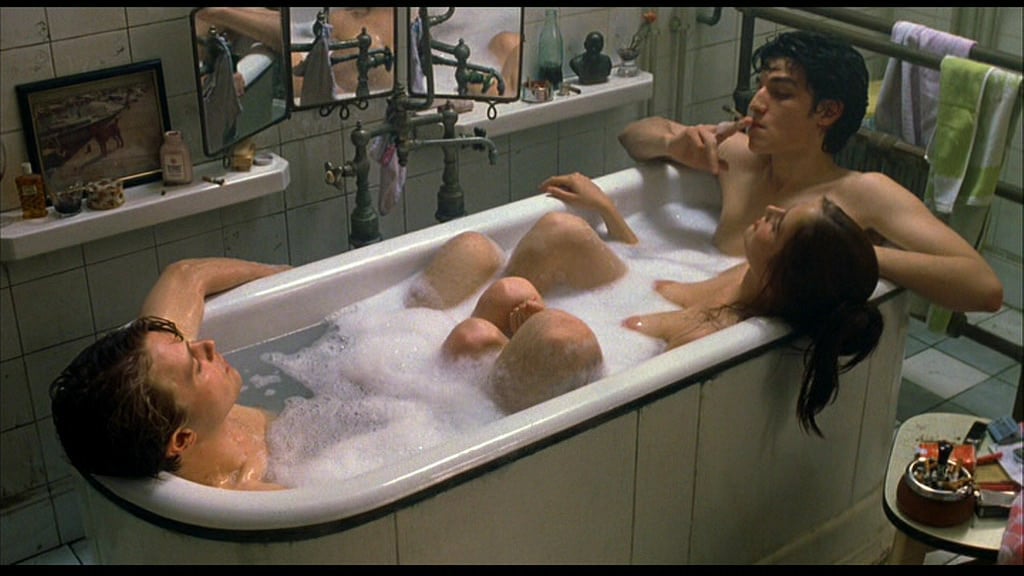
movieplayer.net-cdn.it/t/images/2003/01/04/louis-garrel-e...
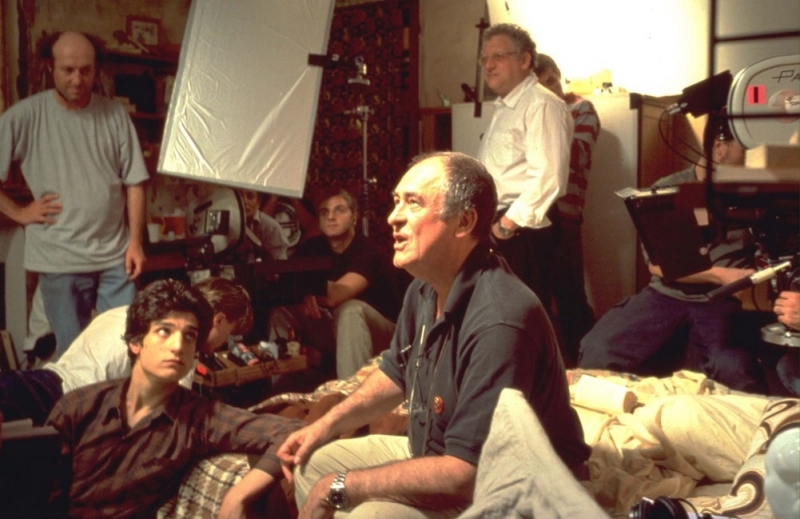
----------------------------------------------------------
click to activate the small icon of slideshow: the small triangle inscribed in the small rectangle, at the top right, in the photostream (it means the monitor);
or…. Press the “L” button to zoom in the image;
clicca sulla piccola icona per attivare lo slideshow: sulla facciata principale del photostream, in alto a destra c'è un piccolo rettangolo (rappresenta il monitor) con dentro un piccolo triangolo nero;
oppure…. premi il tasto “L” per ingrandire l'immagine;
www.worldphoto.org/sony-world-photography-awards/winners-...
www.fotografidigitali.it/gallery/2726/opere-italiane-segn...
………………………………………………………………………
A proverb that comes from an ancient Latin proverb says “semel in anno licet insanire”, or translated “once a year it is permissible to go mad”…! The carnival celebration has ancient origins, dating back to the period of pagan religion, from the Saturnalia of ancient Rome and also from the Dionysian festivals of the classical period of ancient Greece, and the disguise itself dates back to the times of Apuleius and the Egyptian goddess Isis, during which there were numerous masked groups, a custom that was imported into the Roman Empire. I present here a series of photographs, taken during the carnival in Taormina (taken on Sunday and Tuesday), with posed or caught portraits, people belonging to masked groups combined with the allegorical floats, or people masked on their own, all having in common the desire, the wish to have fun, or rather, as the ancient Latin saying goes, with the desire all to … “go mad”, at least… (once a year…!).
.……………………………
Un proverbio che deriva da un antico motto in lingua latina recita “semel in anno licet insanire”, ovvero tradotto “una volta l’anno è lecito impazzire“…! La festa del carnevale ha origini antiche, risale al periodo della religione pagana, dai Saturnali della Roma antica ed anche dalle feste dionisiache del periodo classico dell’antica Grecia, e lo stesso travestimento risale ai tempi di Apuleio e della dea egizia Iside, durante la quale erano presenti numerosi gruppi mascherati, usanza questa che venne importata nell’Impero Romano. Presento qui una serie di fotografie, realizzate durante il carnevale a Taormina (realizzate la domenica ed il martedì), con ritratti posati o colti al volo, persone appartenenti a gruppi mascherati abbinati ai carri allegorici, oppure persone mascherate per proprio conto, aventi tutti in comune la voglia, il desiderio di divertirsi, anzi, come recita l’antico detto latino, col desiderio tutti di …“impazzire”, almeno…(una volta l’anno…!).
……………………
Imported steel leaves Cardiff Ryan Docks for Margam (6B81) headed by Class 66 No. 66005, seen heading towards Cardiff Tidal with a view of Cardiff Celsa Tremorfa works in the background.