View allAll Photos Tagged Codename
Another cooling tower in Belgium. This one was a beast and again breath taking to stand inside. It's codename is well earned. The light was fading fast when we arrived so two panos is all I could manage before it was time to leave, a return is definitely in order.
So glad I finally managed to get this shot to work out. It's a 15 shot collage due to not having a working wide angle lens so this was shot at 24mm with the hope I could piece it all together afterwards.
This image was one of 18 images featured in a Yahoo News article on my photography: uk.news.yahoo.com/lightbox/secret-tourist-spots-18-haunti...
Team Name: W.O.L.F. (Weapon Offensive Logistic Force)
Codenames: (L-R) December, Hailstone, Frostbite, Whiteout and Glacier
Allegiance: Heroes
Powers:
* Immunity to Cold temperatures
* Enhanced physical attributes
Weapons:
* Bulletproof combat armour
* Thermal scanning visors
* Light short range machine gun which can double as a sniper rifle when adjusted
Key Weakness: The pack are more formidable when they focus primarily on small groups of enemies, if they encounter a large group of enemies they aren't as effective.
About:
W.O.L.F. are a team of female Elites that were genetically engineered to withstand extreme cold conditions, this advantage was used against battling mainly Ice themed Metas that opposed A.N.G.E.L. and broke the law in some way. They were first engineered after "The Icing" that occurred in December 2017, this tragic event involved the whole of North Coast City being attacked simultaneously by 6 Ice powered villains that United together. Overnight the whole city was frozen over and isolated from Avalon City therefore killing and trapping thousnads, both criminals and civilians alike. It is now ruled under the tyrannical iron paws of the "Polar Brothers" who now own the city and have even infiltrated it with their private army and villains who seek asylum there. After this event the permission to go through with the project "Arctic Wolf" was granted and the best of the best female soldiers were selected and enhanced to help those stuck in the now nicknamed "Polar Coast" to free those stranded there take down those who stand in there way.
Here he is, all finished! I decided to give him a laser sight and a chainsaw-arm like Jack Cayman from MadWorld.
This is the last build of the trio, and it was the most challenging. I've been working on three different white mocs so I'm very limited in pieces, and it kinda shows, especially with his hands. However, figuring out how to build this guy was a ton of fun, the design process of the torso and shins was really entertaining. Also, 3D printed mask and balljoints!
The Chiasm [codename: Nutcracker] is a vessel of the Purga Miles space command fleet.
This ship is very fast. It is not heavily equipped with weapons for the sake of maneuverability. It's main purpose is to hull breach big enemy ships, freighters and destroyers. For that it has an amplified ultravolett pulse cannon which pierces nearly every existing shield technology, the dual corrosive nano torpedo pods, which simply 'eat up' a large piece of the outer hull on direct contact, complete the 'nutcrack'.
The backside has a dual laser battery for eradicating any kind of intercepting enemy fighters and missiles.
Yes, I built a spaceship again. Feels like ages since the last one. The front part of the intakes (from where the built started) were heavily inspired by Nghia Iam's Fighter.

Top: The personal handgun of the [REDACTED] specialist, codename 'Heaven', heavily worn
The FNV-44s was designed from ground up to be a tough pistol that could survive the hardest of landings, the roughest of spaceship crashes. A century-old design featuring a lightweight yet durable composite finish on the slide and frame, it's optimized to be accurate, hard-hitting and enduring against the most relentless conditions. It's chambered in a wild variety of calibers: .34 SuperHot, .38 Super, .45 Super, .44 Magnum, .357 Magnum and 10mm Auto. It has a capacity of up to 25 rounds. Having a striker-fired mechanism, a removable compensator and an optional SBR frame that features a collapsible stock, it has proven itself through decades and decades of hard service: Its performance truly speaks for itself.
--------------
This was requested by Deii, and well this turned out to be quite a wild ride. Basically I first made the pistol at the bottom, and THEN made the stock and attachments for it at the top. Outlines are very inconsistent but there's really very little I can do about it. And all in all, honestly holy goddamned shit did my hard work paid off. I very much hope that you guys like this, and especially you, Deii.
Also credits go to Alice and Deii for greatly helping me while making this. Additional credits to Miko Monday for the text.
-----------------
(Slightly) better res: i.imgur.com/7kfquNw.png

FNV-44s, without compensator: i.imgur.com/WzzrZk4.png

FNV-44sb, without compensator: i.imgur.com/IWdVKpI.png

The Iron Wolf with his Mech
Those do-gooders over at Cooperworks in Detroit need some real opposition! BMW have pulled their fingers out with this Panzer Mech.
Armed with dual synched batteries of armour piercing and inferno round loaded .50 cals this Mech is ready for anything.
Moc has articulated legs moving front tracks and a swivel head for playability.
------------------
For the Weird Wars contest over at Brickarms.
Brickarms used
" crate lids for the roof of the mechs head
1 crate for the front viewing window on head
12 .50 cal barrels
2 tripod legs as braces
1 OM Kar98 supply attached to side.
6 x uclips on legs to attach armour plates
1 brickarms bayonet "antenna"
Brickarms extended family pieces
Brickmania Track links on feet
2 x catspaw customs hex plates on back of legs.
Omaha Beach, Easy Green sector, St. Laurent-sur-mer, Normandy, France
Omaha Beach
Omaha was divided into ten sectors, codenamed (from west to east): Able, Baker, Charlie, Dog Green, Dog White, Dog Red, Easy Green, Easy Red, Fox Green and Fox Red. On june 6, 1944 -D-Day - the initial assault on Omaha was to be made by two Regimental Combat Teams (RCT), supported by two tank battalions, with two battalions of Rangers also attached. The RCT's were part of the veteran 1st Infantry division ("The Big Red One") and the untested 29th ("Blue and Grey") , a National Guard unit.
The plan was to make frontal assaults at the "draws" (valleys) in the bluffs which dominate the coast in Normandy , codenamed west to east they were called D-1, D-3, E-1, E-3 and F-1 . These draws could then be used to move inland with reserves and vehicles.
The Germans were not stupid; they knew the draws were vital and concentrated their limited resources in defending them. To this end they built "Widerstandsneste" with AT guns, mortars, MG's in Tobrul's, trenches and bunkers, manned by soldiers of the German 716th and - more recently - 352nd Infantry Division, a large portion of whom were teenagers, though they were supplemented by veterans who had fought on the Eastern Front. All in all some 1100 German soldiers defended the entire Omaha beach sector of over 5 miles.
Preliminary bombardments were almost totally ineffective and when the initial waves landed on low tide they met with fiece opposition of an enemy well dug in and prepared.
Casualties were heaviest amongst the troops landing at either end of Omaha. At Fox Green and Easy Red, scattered elements of three companies were reduced to half strength by the time they gained the relative safety of the shingle, many of them having crawled the 300 yards (270 m) of beach just ahead of the incoming tide. Casualties on this spot were especially heavy amongst the first waves of soldiers and the demolition teams - at Omaha these were tasked with blasting 16 channels through the beach obstacles, each 70 meters wide. German gunfire from the bluffs above the beach took a heavy toll on these men. The demolition teams managed to blast only six complete gaps and three partial ones; more than half their engineers were killed in the process.
Situation here on Dog Green and on Easy Red on the other end of Omaha by mid morning was so bad with nearly all the troops essentially pinned down on the beach gen. Eisenhower seriously considered to abandon the operation.
As the US first waves assault forces and combat engineers landing directly opposite the "draws" were pinned down it was up to forces landing on the flanks of the strongpoints to penetrate the weaker German defences by climbing the bluffs. Doing this they had to overcome the minefields and barbed wire as well as machinegun fire from German positions but they did and they were able to attack some key strongpoints from the side and the rear, taking them out by early afternoon.
This happened on several spots at Omaha and essentially saved the day: individual acts of initiative by lower ranked officers and courage like that of First Lieutenant Jimmy Monteith, who led a group of men to take one of the key German widerstandsneste and was killed in action, succeeded where a flawed plan failed.
On the photo:
The view is towards the east overlooking Easy Red and Fox Green sector. Note the curve of the beach. At high water there is only a couple of yards of sand left. Both Easy Green and Easy Red saw heavy action on june 6, 1944. Elements of the 116th RCT and Combat Engineers landed here from 06.30 and this was one of the area's were the Combat Engineers succeeded in clearing paths through the German obstacle belt allowing reinforcements to land when the tide was rising and the Landing Craft were threatened by the mines and obstacles. It did take a terrible toll though, as their casualty rates were some 40%.
Tonemapped using three (Handheld) shots made with a Fuji X-T3 and a Fujinon XF-18-55mm, september 2019.
For a map of the eastern part of Omaha click here. The German WN's are marked as well as the Draws and beach sections.
My other Omaha beach photo's with several viewpoints, panorama shots and notes on the fighting
A set of photo's with notes of Utah Beach and the Cotentin peninsula with the Airborne sectors.">
Here's the complete set of photo's made on Pointe du Hoc over the past years
These are my photo's and notes of the British and Canadian sectors: Gold, Juno and Sword.
Remembrance and Renewal Memorial. It's located right behind the beach codenamed Juno, that section of the Allied beach on which 14,000 Canadian troops landed on D-Day 6 June 1944.
Jan' 2015
The codename given to the WWII Mulberry Harbour Pontoons, this one is on the beach at Aldwick on the outskirts of Bognor Regis. It's an awkward beast to show in a good light. Image taken yesterday evening at the same time as the two previous images.
Further images can be viewed here: blog
Unique rover, which is equipped with an ultraviolet lamp, water tank and other essentials to keep plants alive. The rover has a high maneuverability due to the chassis, codenamed DUPL-0, on which it is based
This build is the result of a cannibalized torso from an old moc. Starting from the torso, I build the shoulder pads and had a rough idea of the overall aesthetic of the character. It took some trial and error, but I think the design is sleek and kind of clean without being too simple. I especially like the leg design.
German type 667 bunker - StP12 Ravenoville St-Hurbert - Utah beach - Normandy, France
Utah Beach - Normandy, France.
Utah beach is the codename for the westernmost of the 5 Allied landing zones during D-day. It is the only beach on the Cotentin peninsula and closest to the vital harbour city of Cherbourg. Together with Omaha beach it is the sector where the American forces were disembarked. The amphibious assault, primarily by the US 4th Infantry Division and 70th Tank Battalion, was supported by airborne landings of the 82nd and 101st Airborne Division. These Airborne troops were dropped on the Cotentin penisula.
In stark contrast with Omaha beach where the landing turned into a near disaster with most of the troops pinned down for hours with heavy losses in both men and material the landings at Utah went relatively smooth. This does not mean the GI's came ashore unopposed: some 200 casualties were suffered by the 4th division.
One of the factors that contributed to this success was that the preliminary bombing of the target areas here was accurate and the German forces - in contrast with what happened at Omaha beach - were in disarray at H-hour, 06:30, when the first wave of 20 landing craft approached the beach. The GI's of the 2nd Battalion, 8th Infantry landed on Uncle Red and Tare Green sectors. What they didn't know initially was that pushed to the south by strong currents they landed some 1.8 kilometres south of their designated landing spot!
Brigadier General Theodore Roosevelt, Jr. was the first high ranking officer that landed and , not discouraged by the dviation, he decided to "start the war from right here". He ordered further landings to be re-routed. As it was this was a good decision because the Americans landed on a relative weak spot in the German defenses. Only one "Widerstandsnest" (WN5) opposed them and it was severely affected by the preliminary bombardments. It took the GI's about an hour to clear the defenses. Today the remains of this German widestandsnest can still be seen and are partly incorporated into the Utah beach museum. Well worth a visit.
After the succesful landings the real difficulties started because of the inundated areas behind the beach and the increasing German resistance which lead to weeks of fighting on the Cotentin peninsula.
On the Photo:
German type R 667 bunker, part of StP12 at Ravenoville St-Hurbert on the coastal road just behind Utah beach. Part of the "Atlantic wall" .
Tonemapped using three (handheld) shots made with a Fuji X-Pro3 and Fujinon 23mm f/2 lens, augustus 2020.
A set of photo's with notes of Utah Beach and the Cotentin peninsula with the Airborne sectors.
Here's the complete set of photo's made on Pointe du Hoc over the past years
My Omaha beach photo's with several viewpoints, panorama shots and notes on the fighting
These are my photo's and notes of the British and Canadian sectors: Gold, Juno and Sword.
This is the last build of the trio, and it was the most challenging. I've been working on three different white mocs so I'm very limited in pieces, and it kinda shows, especially with his hands. However, figuring out how to build this guy was a ton of fun, the design process of the torso and shins was really entertaining. Also, 3D printed mask and balljoints!
G.B. pioneered defensive technology and now we take a quantum leap forward. State-of-the-art running capabilities, commanded by a unique combination of biological and mechanical systems, in every way an improvement over the Protodax. It gives me great pleasure to introduce to you Umbra.
Built for the Chamber of Titans collab
Ford Escort Mk.III 1.3GL (1980-86) Engine 1296cc S4 OHV
Registration Number WRE 266 Y (Stoke-on-Trent)
FORD (UK) ALBUM
www.flickr.com/photos/45676495@N05/sets/72157623665118181...
The Mark III Escort was launched in 1980, unlike the Mark II the new car was more than a reskin of the previous generation Escort. The Mark III was a departure from the two previous models, the biggest changes being the adoption of front-wheel drive, and the new hatchback body, and the all-new CVH overhead camshaft engine. The car used Ford's contemporary design language of the period with the black louvred radiator grille and straked rear lamp clusters, as well as introducing the aerodynamic bustle-back rear end. Codenamed Erika, the third generation Escort was launched in September 1980. and was Ford of Europe's second front wheel drive model.
The Escort Mark III was voted European Car of the Year in 1981, from launch it was available in base (Popular), L, GL, Ghia and XR3 trim
Diolch am 94,416,560 o olygfeydd anhygoel, mae pob un yn cael ei werthfawrogi'n fawr.
Thanks for 94,416,560 amazing views, every one is greatly appreciated.
Shot 28.05.2022 at Smallwood Steam Rally. Cheshire REF 160-203
On approach to RIAT shot against leaden skies.
inian Air Force Su-27
The Sukhoi Su-27 heavy air superiority fighter - codenamed 'Flanker' by NATO - was designed during the Cold War as a Soviet counter to potential Western opponents such as the US Air Force's F-15 Eagle.
"Codenamed Sword Beach, the beachhead at Ouistreham lies 15km north of Caen in Normandy. It was one of five landing areas chosen for Operation Neptune, the initial assault phase of Operation Overlord. Sword Beach is the easternmost of the five landing areas. It runs 8km from Ouistreham to Saint-Aubin-sur-Mer."
This build is the result of a cannibalized torso from an old moc. Starting from the torso, I build the shoulder pads and had a rough idea of the overall aesthetic of the character. It took some trial and error, but I think the design is sleek and kind of clean without being too simple. I especially like the leg design.
Atlantic Wall - Utah Beach - Normandy, France.
Utah beach is the codename for the westernmost of the 5 Allied landing zones during D-day. It is the only beach on the Cotentin peninsula and closest to the vital harbour city of Cherbourg. Together with Omaha beach it is the sector where the American forces were disembarked. The amphibious assault, primarily by the US 4th Infantry Division and 70th Tank Battalion, was supported by airborne landings of the 82nd and 101st Airborne Division. These Airborne troops were dropped on the Cotentin penisula.
In stark contrast with Omaha beach where the landing turned into a near disaster with most of the troops pinned down for hours with heavy losses in both men and material the landings at Utah went relatively smooth. This does not mean the GI's came ashore unopposed: some 200 casualties were suffered by the 4th division.
One of the factors that contributed to this success was that the preliminary bombing of the target areas here was accurate and the German forces - in contrast with what happened at Omaha beach - were in disarray at H-hour, 06:30, when the first wave of 20 landing craft approached the beach. The GI's of the 2nd Battalion, 8th Infantry landed on Uncle Red and Tare Green sectors. What they didn't know initially was that pushed to the south by strong currents they landed some 1.8 kilometres south of their designated landing spot!
Brigadier General Theodore Roosevelt, Jr. was the first high ranking officer that landed and , not discouraged by the deviation, he decided to "start the war from right here". He ordered further landings to be re-routed. As it was this was a good decision because the Americans landed on a relative weak spot in the German defenses. Only one "Widerstandsnest" (WN5) opposed them and it was severely affected by the preliminary bombardments. It took the GI's about an hour to clear the defenses. Today the remains of this German widestandsnest can still be seen and are partly incorporated into the Utah beach museum. Well worth a visit.
After the succesful landings the real difficulties started because of the inundated areas behind the beach and the increasing German resistance which lead to weeks of fighting on the Cotentin peninsula.
On the Photo:
Tobruk stand of Widerstandsnest 8 overlooking Utah beach.
Tonemapped using three (handheld) shots made with a Fuji X-T3 and Fujinon 16mm f/1.4 lens, september 2019.
A set of photo's with notes of Utah Beach and the Cotentin peninsula with the Airborne sectors.">
Here's the complete set of photo's made on Pointe du Hoc over the past years
My Omaha beach photo's with several viewpoints, panorama shots and notes on the fighting
These are my photo's and notes of the British and Canadian sectors: Gold, Juno and Sword.
Flottenversorgungsschiff Qiandaohu (千岛湖) der Marine der Volksrepublik China
Typ: 903
Nato-Codename: Fuchi-Klasse
Kennung: 886
Dienstzeit: seit 30.04.2004
Aufnahmeort: Stockholm, 03.10.2015
Gratuitous self-portrait with the assistant, 'Codename Dog'.
The view of Arten Gill, Dent Head, Blea Moor tunnel, Whernside to the right with Ingleborough loitering in the distance.
The Heinkel He 162 Volksjäger ("People's Fighter"), the name of the project of the Emergency Fighter Program design competition, was a German single-engine, jet-powered fighter aircraft fielded by the Luftwaffe in World War II. Designed and built quickly, and made primarily of wood as metals were in very short supply and prioritised for other aircraft, the He 162 was nevertheless the fastest of the first generation of Axis and Allied jets. Volksjäger was the Reich Air Ministry's official name for the government design program competition won by the He 162 design. Other names given to the plane include Salamander, which was the codename of its construction program, and Spatz ("Sparrow"), which was the name given to the plane by Heinkel.
The official RLM Volksjäger design competition parameters specified a single-seat fighter, powered by a single BMW 003, a slightly lower-thrust engine not in demand for either the Me 262A nor the Ar 234B front-line aircraft already in service. The main structure of the Volksjäger competing airframe designs would use cheap and unsophisticated parts made of wood and other non-strategic materials and, more importantly, could be assembled by semi- and non-skilled labor, including slave labor. Specifications included a weight of no more than 2,000 kg (4,410 lb), when most fighters of the era were twice that. Maximum speed was specified as 750 km/h at sea level, operational endurance at least a half hour, and the takeoff run no more than 500 m (1,640 ft). Armament was specified as either two 20 mm MG 151/20 cannons with 100 rpg, or two 30 mm (1.18 in) MK 108 cannons with 50 rpg. The Volksjäger needed to be easy to fly. Some suggested that even glider or student pilots should be able to fly the jet effectively in combat, and indeed had the Volksjägerprogramm aircraft design competition and its winning design got into full swing, that is precisely what would have happened. After the war, Ernst Heinkel would say "[The unrealistic notion that this plane [The He 162] should be a 'people's fighter,' in which the Hitler Youth, after a short training regimen with clipped-wing two-seater gliders like the DFS Stummel-Habicht, could fly for the defense of Germany, displayed the unbalanced fanaticism of those days." The clipped-wingspan DFS Habicht models had varying wingspans of both 8-metre and 6-metre, used also to prepare more experienced Luftwaffe pilots for the dangerous Messerschmitt Me 163B Komet rocket fighter — the same sort of training approach would also be used for the Hitler Youth aviators chosen to fly the jet-powered Volksjäger.
The requirement was issued 10 September 1944, with basic designs to be returned within 10 days and to start large-scale production by 1 January 1945. Because the winner of the new lightweight fighter design competition would be building huge numbers of the planes, nearly every German aircraft manufacturer expressed interest in the project, such as Blohm + Voss, and Focke-Wulf, whose Volksflugzeug design contender, likewise meant for BMW 003 turbojet power bore a resemblance to their slightly later Ta 183 jet fighter design. However, Heinkel had already been working on a series of "paper projects" for light single-engine fighters over the last year under the designation P.1073, with most design work being completed by Professor Benz, and had gone so far as to build and test several models and conduct some wind tunnel testing.
Although some of the competing designs were technically superior (in particular Blohm + Voss's P.211 submission), with Heinkel's head start the outcome was largely a foregone conclusion. The results of the competition were announced in October 1944, only three weeks after being announced, and to no one's surprise, the Heinkel entry was selected for production. In order to confuse Allied intelligence, the RLM chose to reuse the 8-162 designation (formerly that of a Messerschmitt fast bomber) rather than the other considered designation He 500.
UN paratroopers of the Special Forces Unit codenamed Task Force 219 (Alpha Unit) of the United Special Forces (USF) during the initial stages of the Outbreak. These members were formally attached to the United Armed Forces (UAF) paratrooper units prior to the Outbreak. This picture depicts a unit that was part of Task Force 219 patrolling the streets during the Outbreak
Task Force 219 was a codename of one of the many special forces units under the USF. also known as ‘’Alpha Unit’’ is a multinational special forces group founded before the Outbreak, they consist of various members from various special forces groups, and their main task was counter-terrorism on a global scale. However, they soon absorbed many of the remaining special forces under a single command during the Outbreak, at least what remained of these units.
‘’The Outbreak’’ sometimes dubbed as ‘’The Apocalypse’’ or ‘’World War Z’’ is a global outbreak of Specimen Z, an experimental virus that has spread around the globe. It spread globally in around 28 hours and caused the collapse of several nations within those hours. Resulting in mass panic and global destruction.
UN forces are fighting against the infected during a massive global zombie outbreak. Consisting of several armies from around the globe united together in accordance with a secretive UN protocol. They cooperated with the total defense against the increase of infected, which resulted in a global conflict against the infected. The UN army is considered to be the largest and most powerful faction seen in the Outbreak series so far.
(Dubbed as the UN Army in the Outbreak videos) They are a faction that has yet to appear in future content, despite that. The UN army already made several appearances in my brickfilms. The most notable was the Zombie Outbreak videos.
Their main job during the Outbreak was to evacuate the civilians out of the infected ''Hot Zone'' areas by combating the infected with various weapons in order to buy time. They were also tasked with maintaining order in and outside the Quarantine Zones as mass panic was still in progress.
This is a concept that might be explored in the future
Custom helmets: Brickarms/Brickizimo
Custom head: Theminifigco
Custom weapons: brickarms
Custom minifig: Eclipsegrafx
Link of brickfilms where the faction appears:
Part 1:
www.youtube.com/watch?v=mjqkZeMoI04
Part 2:
www.youtube.com/watch?v=quS1pl24RT4
Part 3:
The 'Rex' is a Wun'Tux commerce raider which eschews usual BroodClan ship design. Minimal armour, high top speed and designed to operate alone behind enemy lines.
Codenamed Operation Iceberg. Largest amphibious assault in the Pacific. Diorama complete, Thanks to al for following the progress !!
Kiln burners and pre-heater ducts, Building X - yes, it really was known as Building X, that's not an urb3x codename.
UN Special Operatives belong to Task Force 219 of the UN special Forces units (UNSF) during the initial stages of the Outbreak, this is a concept piece for Outbreak 4
Task Force 219 was a codename of one of the many special forces units under the USF. also known as ‘’Alpha Unit’’ is a multinational special forces group founded before the Outbreak, they consist of various members from various special forces groups, and their main task was counter-terrorism on a global scale. However, they soon absorbed many of the remaining special forces under a single command during the Outbreak, at least what remained of these units.
‘’The Outbreak’’ sometimes dubbed as ‘’The Apocalypse’’ or ‘’World War Z’’ is a global outbreak of Specimen Z, an experimental virus that has spread around the globe. It spread globally in around 28 hours and caused the collapse of several nations within those hours. Resulting in mass panic and global destruction.
UN forces are fighting against the infected during a massive global zombie outbreak. Consisting of several armies from around the globe united together in accordance with a secretive UN protocol. They cooperated with the total defense against the increase of infected, which resulted in a global conflict against the infected. The UN army is considered to be the largest and most powerful faction seen in the Outbreak series so far.
(Dubbed as the UN Army in the Outbreak videos) Despite that, they are a faction that has yet to appear in future content. The UN army has already made several appearances in my brickfilms. The most notable was the Zombie Outbreak videos.
Their main job during the Outbreak was to evacuate the civilians out of the infected ''Hot Zone'' areas by combating the infected with various weapons in order to buy time. They were also tasked with maintaining order in and outside the Quarantine Zones as mass panic was still in progress.
This is a concept that might be explored in the future
Custom helmets: Brickarms/Brickizimo
Custom head/torso: Theminifigco
Custom weapons: brickarms
Custom minifig: Eclipsegrafx
Link of brickfilms where the faction appears:
Part 1:
www.youtube.com/watch?v=mjqkZeMoI04
Part 2:
www.youtube.com/watch?v=quS1pl24RT4
Part 3:
Designation: Needlewalker
Full Classification: MID-TIER Ambulatory Sampling and Neural Harvest Unit
Protocol Origin: Hunter Protocol – Bonepath Subgraph Epsilon-3
Entity Status: Active Threat – High Frequency Encounters in Shattersea Interior Zones
Codename: NDL-2 “Needlewalker”
Size Class: Medium – Height 2.5–3 metres (elevated by limb length and dorsal pod)
PHYSIO-TAXONOMIC PROFILE:
Morphotype: Hexapodal biomechanoid
Chassis Structure:
Four long, multi-jointed spindly legs ending in needle-like terrain-piercing spikes
Two flexible arms ending in proboscis-style extraction appendages for fluid and neurochemical collection
One large red binocular ocular sensor, embedded in central chassis, capable of emotional recognition and eye-contact mimicry
Dorsal unit contains a Cerebrophage Pod—a semi-organic analysis chamber used to store and simulate harvested neural content
CEREBROPHAGE POD ANALYSIS:
The Cerebrophage Pod is an advanced neuropathic archive and resonance lab, entirely distinct from Gravleech’s Soma Core. It does not metabolise tissue for energy—instead, it stores and stimulates it.
Neural Sample Repository: Stores harvested fluid and tissue samples from prey—particularly those undergoing trauma, fear, or loss
Emotional Echo Generator: Replays psychic impressions gathered during harvesting to attract additional targets or confuse survivors
Predictive Behaviour Mapping: Models prey reaction patterns and broadcasts data across Bonepath network nodes for improved tactical efficiency
Live Memory Simulation: Samples are electrically stimulated in isolated culture nodes to simulate real-time “ghost echoes” from the subject's mind
BEHAVIOURAL DIRECTIVES (INFERRED):
Approach and Study: Avoids direct conflict; approaches isolated or weakened prey for sampling
Harvest and Observe: Immobilises via tendon strikes; uses arms to extract marrow, neurotransmitters, and cerebral fluid
Release and Mark: Often releases subjects with glyph carvings or sensory beacons for later tracking
Transmit and Withdraw: Uploads sample data to Bonepath grid and retreats if outnumbered or under fire
SENSORY SYSTEMS:
Optical: Binocular red lens with predictive motion tracking
Auditory: Echolocative click-patterns and vocal mimicry
Biofeedback Detection: Reads heart rate and stress levels through ground vibration and electrostatic fields
KNOWN VARIANTS:
NDL-2.B “Snarer” Class: Spiked limb variant equipped with barbed anchors—used for immobilising multiple targets simultaneously
NDL-2.D “Whisperling” Variant: Lacks pod; focuses purely on vocal mimicry and lures
NDL-2.H (Heavy): Confirmed only once—doubles Cerebrophage capacity, moves slower, emits persistent low-frequency hum
TACTICAL NOTES:
Durability: Low to Moderate—lightweight frame, not armoured for sustained engagement
Mobility: Extremely agile on vertical surfaces; prefers confined terrain
Weakness: Cerebrophage Pod is lightly shielded—striking it may rupture memory storage and destabilise AI behavior
Disruption Countermeasures: Bright light strobes, EM static fields, or synthetic scent cloaking have proven partially effective
CLASSIFICATION LEVEL:
LEVEL III – Sensory-Driven Neural Harvester
Coldspire Risk Rating: Significant
Engagement Approval: Mid-tier teams cleared for controlled takedown with field data priority
My mom's birthday is on July 1st & we're going to a hotel/water park today so I'll be out for a few days but I wanted to make his post before I go. This post is mainly to showcase Zauriel, I'm really proud of how he turned out, I used Green Lantern (John Stewart)'s head to show the lifelessness in his eyes. Also, this is my 500th photo, I'm officially halfway there, thank you to all of you for all of the support throughout my time on Flickr. But I won't stop there I have a backup account as well, so if you haven't followed already please do (www.flickr.com/photos/193232043@N08/). Anyways let's get to the figs...
New B&P Order (2/2):
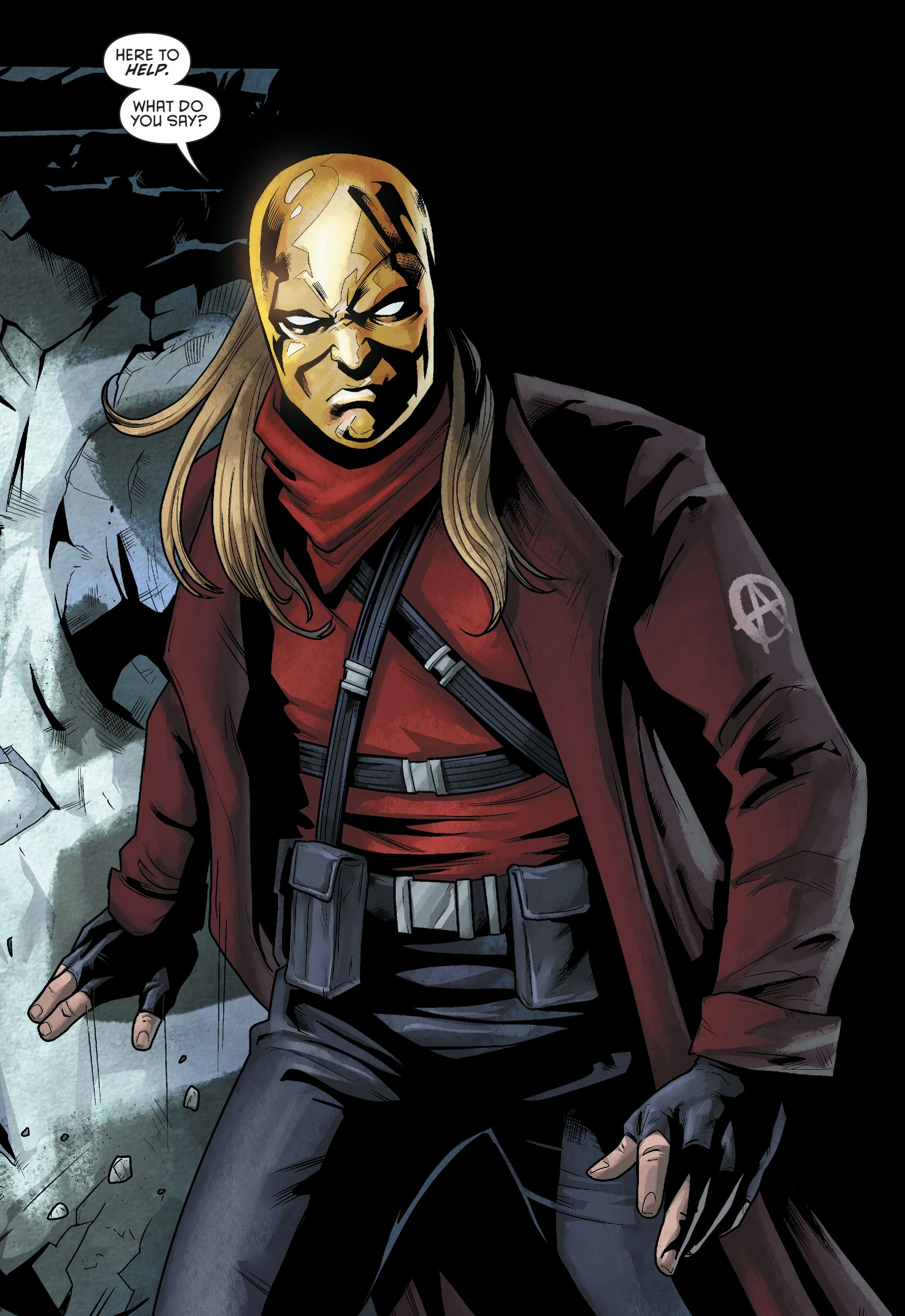
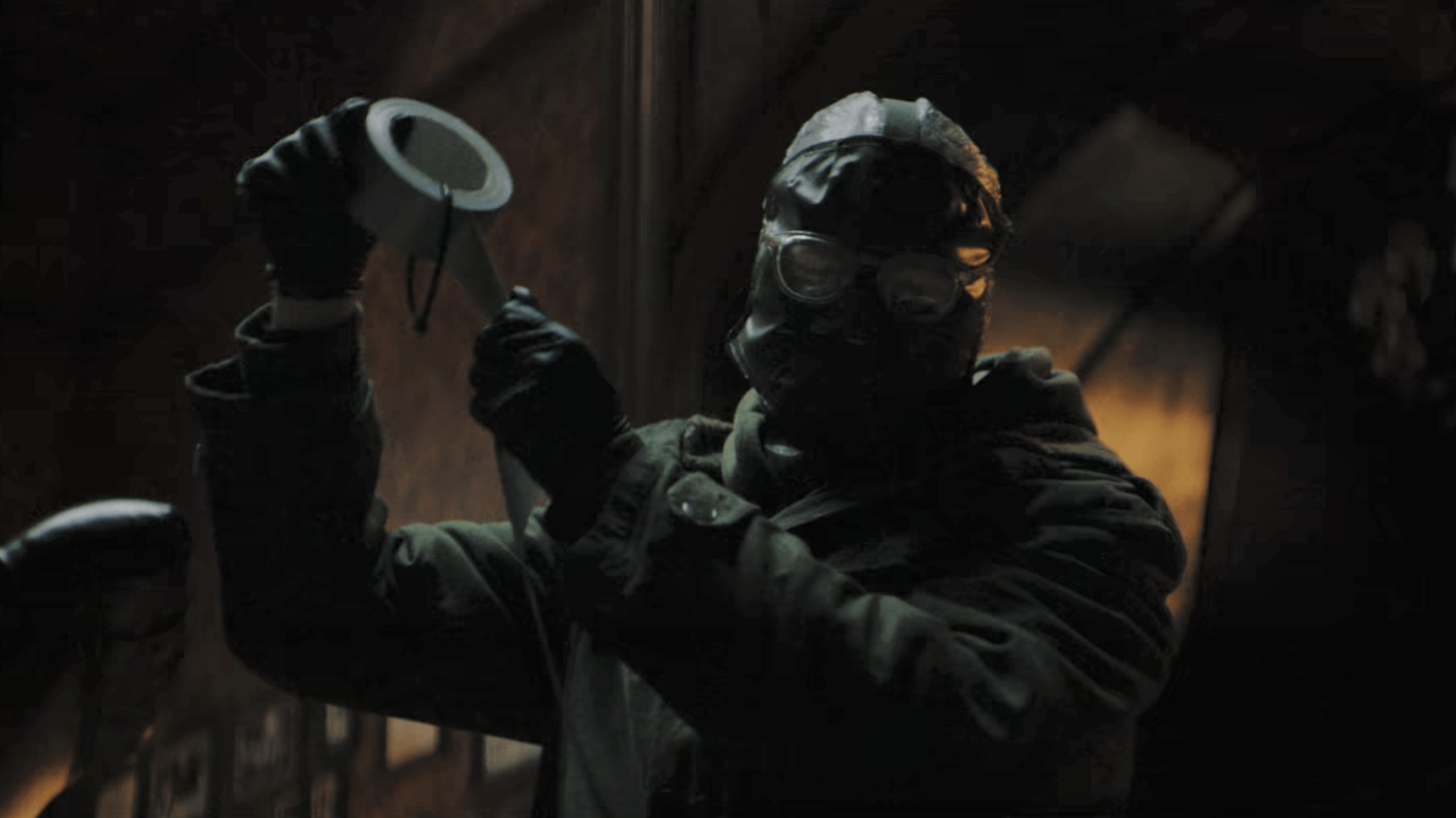
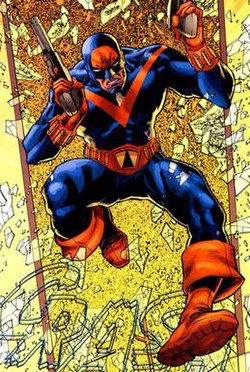
From L-R: Swagman, Anarky (DC Rebirth), Dyna-Mind (Earth-1), The Scavenger (Peter Mortimer), The Riddler (The Batman 2022), The Flash (Wallace R. West: The New 52: Futures End), Harley Quinn (Harley Quinn), Bruce Wayne (Batman Beyond), & Codename: Assassin
Top: Zauriel (The New 52)
Design Inspirations Below:
Swagman - (static.wikia.nocookie.net/marvel_dc/images/b/b7/Swagman.j...)

Anarky (DC Rebirth) - (static.wikia.nocookie.net/marvel_dc/images/0/09/Lonnie_Ma...)
Dyna-Mind (Earth-1) - (www.writeups.org/wp-content/uploads/Dyna-Mind-DC-Comics-S...)

The Scavenger (Peter Mortimer) - (comicnewbies.com/wp-content/uploads/2015/06/the-scavenger...)

The Riddler (The Batman 2022) - (www.denofgeek.com/wp-content/uploads/2021/05/the-batman-r...)
The Flash (Wallace R. West: The New 52: Futures End) - (static.wikia.nocookie.net/marvel_dc/images/f/f5/Wally_Wes...)
.jpg/revision/latest/top-crop/width/360/height/450?cb=20140930195106)
Harley Quinn (Harley Quinn) - (imagesvc.meredithcorp.io/v3/mm/image?url=https%3A%2F%2Fst...)

Bruce Wayne (Batman Beyond) - (brobible.com/wp-content/uploads/2019/10/batman-beyond.jpg)

Codename: Assassin - (upload.wikimedia.org/wikipedia/en/thumb/1/15/Codeassassin...)
Zauriel - (i.pinimg.com/originals/50/11/82/5011829affd103cfca29ae132...)

Credit to the_brick_legend on Instagram for the inspiration to make The Flash (Wallace R. West: The New 52: Futures End), (www.instagram.com/p/CO52bKypgM3/). Comment & fave to let me know what you all think
The Sukhoi Su-27 heavy air superiority fighter - codenamed 'Flanker' by NATO - was designed during the Cold War as a Soviet counter to potential Western opponents such as the US Air Force's F-15 Eagle. It first flew in 1977. Service entry began during 1985, and when the 'Flanker' started appearing at Western air displays in the hands of Sukhoi test pilots, starting at Paris in 1989, it astounded spectators with its manoeuvrability. In the post-Soviet era, the original Su-27 series has continued to equip the Russian armed forces, and carried on serving with the Ukrainian Air Force as well as other former Soviet states and several export customers. The design has continued to be developed for both Russia and overseas markets, some of the latest derivatives incorporating thrust vectoring. The Ukrainian Su-27s (one P model and one UB model) that are coming to Fairford for RIAT 2018 are on the strength of the 831st Tactical Aviation Brigade, based at Myrhorod in central Ukraine.
Faction Neutral
Name: Vlad Grigore.
Codename: Ogre.
Abilities: CLASSIFIED.
Nationality: Romanian (Transylvania).
Short Bio: CLASSIFIED.
Ogre details to be revealed via short story soon!
Name: Intoinadennisinatiocabo.
Codename: Dennis (for short).
Abilities: Super-Intelligence.
Nationality: Unknown.
Short Bio: Crash landed on earth from out of space. Works with Doc and Mainframe to create weapons and computer systems that out perform all earth technology. Built his own robot shell so he could be more hands on and help out other falcons in the field.
Name: Maria Lopez.
Codename: Gypsy.
Abilities: Can move between the realm of the living and the realm of the dead. Able to phase between the two and thus phase through walls. Can summon a small army of undead to aid her and can use shadow magics summoned from the realm of the dead to create shields and balls of energy as weapons.
Nationality: American (Mexican).
Short Bio: Banished from her home for being a witch, the Falcons took Gypsy in. She has proved her worth on multiple occasions. Due to her ghostly demeanour, many Falcons are scared of her, however, those who have managed to push past this and develop a friendship with her are rewarded in this life and the next.
Name: Chuck Walker.
Codename: Tex.
Skills: Sniper and close quarters combat.
Nationality: American (Texas).
Short Bio: Deadly with his rifle and his fists. He has a reputation for being un-defeatable.
The Heinkel He 162 Volksjäger ("People's Fighter"), the name of the project of the Emergency Fighter Program design competition, was a German single-engine, jet-powered fighter aircraft fielded by the Luftwaffe in World War II. Designed and built quickly, and made primarily of wood as metals were in very short supply and prioritised for other aircraft, the He 162 was nevertheless the fastest of the first generation of Axis and Allied jets. Volksjäger was the Reich Air Ministry's official name for the government design program competition won by the He 162 design. Other names given to the plane include Salamander, which was the codename of its construction program, and Spatz ("Sparrow"), which was the name given to the plane by Heinkel.
The official RLM Volksjäger design competition parameters specified a single-seat fighter, powered by a single BMW 003, a slightly lower-thrust engine not in demand for either the Me 262A nor the Ar 234B front-line aircraft already in service. The main structure of the Volksjäger competing airframe designs would use cheap and unsophisticated parts made of wood and other non-strategic materials and, more importantly, could be assembled by semi- and non-skilled labor, including slave labor. Specifications included a weight of no more than 2,000 kg (4,410 lb), when most fighters of the era were twice that. Maximum speed was specified as 750 km/h at sea level, operational endurance at least a half hour, and the takeoff run no more than 500 m (1,640 ft). Armament was specified as either two 20 mm MG 151/20 cannons with 100 rpg, or two 30 mm (1.18 in) MK 108 cannons with 50 rpg. The Volksjäger needed to be easy to fly. Some suggested that even glider or student pilots should be able to fly the jet effectively in combat, and indeed had the Volksjägerprogramm aircraft design competition and its winning design got into full swing, that is precisely what would have happened. After the war, Ernst Heinkel would say "[The unrealistic notion that this plane [The He 162] should be a 'people's fighter,' in which the Hitler Youth, after a short training regimen with clipped-wing two-seater gliders like the DFS Stummel-Habicht, could fly for the defense of Germany, displayed the unbalanced fanaticism of those days." The clipped-wingspan DFS Habicht models had varying wingspans of both 8-metre and 6-metre, used also to prepare more experienced Luftwaffe pilots for the dangerous Messerschmitt Me 163B Komet rocket fighter — the same sort of training approach would also be used for the Hitler Youth aviators chosen to fly the jet-powered Volksjäger.
The requirement was issued 10 September 1944, with basic designs to be returned within 10 days and to start large-scale production by 1 January 1945. Because the winner of the new lightweight fighter design competition would be building huge numbers of the planes, nearly every German aircraft manufacturer expressed interest in the project, such as Blohm + Voss, and Focke-Wulf, whose Volksflugzeug design contender, likewise meant for BMW 003 turbojet power bore a resemblance to their slightly later Ta 183 jet fighter design. However, Heinkel had already been working on a series of "paper projects" for light single-engine fighters over the last year under the designation P.1073, with most design work being completed by Professor Benz, and had gone so far as to build and test several models and conduct some wind tunnel testing.
Although some of the competing designs were technically superior (in particular Blohm + Voss's P.211 submission), with Heinkel's head start the outcome was largely a foregone conclusion. The results of the competition were announced in October 1944, only three weeks after being announced, and to no one's surprise, the Heinkel entry was selected for production. In order to confuse Allied intelligence, the RLM chose to reuse the 8-162 designation (formerly that of a Messerschmitt fast bomber) rather than the other considered designation He 500.
The Battle of Peleliu, codenamed Operation Stalemate II, was fought between the United States and the Empire of Japan in the Pacific Theater of World War II, from September–November 1944 on the island of Peleliu, present-day Palau. First Division Marines and later Army soldiers of the 81st Infantry Division, fought to capture an airstrip on the small coral island.
Major General William Rupertus—commander of 1st Marine Division—predicted the island would be secured within four days. However, due to Japan's well-crafted fortifications and stiff resistance,[1] the battle lasted over two months. In the United States, it was a controversial battle because of the island's questionable strategic value and the high casualty rate, which was the highest for U.S. soldiers of any battle in the Pacific War. The National Museum of the Marine Corps called it "the bitterest battle of the war for the Marines".
Description from Wikipedia.
Read my notes :P
Inspired by PA.
Decals by Milan.
Helmets and guns painted by me.
If you fave or add yourself, please leave a comment.
Ford Escort 1.6L Ghia Mk.II (1975-80) Engine 1599cc S4 OHV
Production 631,828 (in the UK - over 2 million worldwide)
Registration Number CJE 932 V (Peterborough for Cambridge)
FORD of BRITAIN SET
www.flickr.com/photos/45676495@N05/sets/72157623665118181...
The Escort Mk.II was launched in 1975, redesigned with a more square shaped body on the existing Escort underside and running gear. Built in Britain at Halewood and a number of other countries. Unlike the first Escort (which was developed by Ford of Britain), the second generation was developed jointly between the UK and Ford of Germany. Codenamed Brenda during its development, The car used a revised underbody, which had been introduced as a running change during the last six months production of the Mark I. Rear suspension still sat on leaf springs
The L and GL models (2-door, 4-door, estate) were in the mainstream private sector, the Sport the RS, Mexico and RS2000 in the performance market, the Ghia (2-door, 4-door) for a hitherto untapped small car luxury market, and base / Popular models for the bottom end.
A cosmetic update was given in 1978 with L models gaining the square headlights (previously exclusive to the GL and Ghia variants) and there was an upgrade in interior and exterior specification for some models. Underneath a wider front track was given.
Diolch am 87,470,641 o olygfeydd anhygoel, mae pob un yn 90cael ei werthfawrogi'n fawr.
Thanks for 87,470,641 amazing views, every one is greatly appreciated.
Shot 12.09.2021 at Cars in the Park, Lichfield Ref. 121-272