View allAll Photos Tagged Acknowledgment
This colourful image shows a cosmic lighthouse known as the Egg Nebula, which lies around 3000 light-years from Earth. The image, taken with the NASA/ESA Hubble Space Telescope, has captured a brief but dramatic phase in the life of a Sun-like star.
The Egg Nebula is a ‘preplanetary nebula’. These objects occur as a dying star’s hot remains briefly illuminates material it has expelled, lighting up the gas and dust that surrounds it.
These objects will one day develop into planetary nebulas which, despite the name, have nothing at all to do with planets. They gained their rather misleading title because when they were discovered in the 18th century they resembled planets in our Solar System when viewed through a telescope.
Although the dying star is hidden behind the thick dust lane that streaks down the centre of this image, it is revealed by the four lighthouse-like beams clearly visible through the veil of dust that lies beyond the central lane.
The light beams were able to penetrate the central dust lane due to paths carved out of the thick cloud by powerful jets of material expelled from the star, although the cause of these jets is not yet known.
The concentric rings seen in the less dense cloud surrounding the star are due to the star ejecting material at regular intervals – typically every hundred years – during a phase of the star’s evolution just prior to this preplanetary nebula phase. These dusty shells are not usually visible in these nebulas, but when they are it provides astronomers with a rare opportunity to study their formation and evolution.
The fleeting nature of this phase in a star’s life – which occupies only a few thousand of the star’s few billion years of existence – and the fact that they are fairly faint make it rare to capture them in action. In fact, the Egg Nebula, the first of its kind to be identified, was discovered only 40 years ago.
This image was taken with Hubble’s Advanced Camera for Surveys. Artificial colours are used to represent how the light from the star reflects off the dust – this can tell scientists about the physical properties of the dust.
The image combines observations with three different polarising filters, each showing light vibrating at a specific orientation. The three filters have been coloured red, blue and green, and all three observations were made at a wavelength of 0.606 microns. The image spans 1.2 light-years. North is to the right and east is up.
This image was previously published on the NASA Hubble Heritage website.
Credit: NASA/ESA/Hubble Heritage Team (STScI/AURA). Acknowledgment: W. Sparks (STScI) & R. Sahai (JPL)
This visualization provides a three-dimensional perspective on Hubble's 25th anniversary image of the nebula Gum 29 with the star cluster Westerlund 2 at its core. The flight traverses the foreground stars and approaches the lower left rim of the nebula Gum 29. Passing through the wispy darker clouds on the near side, the journey reveals bright gas illuminated by the intense radiation of the newly formed stars of cluster Westerlund 2. Within the nebula, several pillars of dark, dense gas are being shaped by the energetic light and strong stellar winds from the brilliant cluster of thousands of stars. Note that the visualization is intended to be a scientifically reasonable interpretation and that distances within the model are significantly compressed.
Download here: hubblesite.org/newscenter/archive/releases/2015/12/video/
Credit: NASA, ESA, G. Bacon, L. Frattare, Z. Levay, and F. Summers (Viz3D Team, STScI), and J. Anderson (STScI)
Acknowledgment: The Hubble Heritage Team (STScI/AURA), A. Nota (ESA/STScI), the Westerlund 2 Science Team, and ESO
NASA Goddard Space Flight Center enables NASA’s mission through four scientific endeavors: Earth Science, Heliophysics, Solar System Exploration, and Astrophysics. Goddard plays a leading role in NASA’s accomplishments by contributing compelling scientific knowledge to advance the Agency’s mission.
Follow us on Twitter
Like us on Facebook
Find us on Instagram
Unfortunately, I don't know what I'm looking at here. My first inclination was that it was a Grackle...but somehow that doesn't seem quite right. I liked the photo a bit too much to not at least show it.
First good identification of this bird gets a special acknowledgment...and much appreciation.
Pro-Palestinian protesters are getting paid to protest…shocker!
“What many have suspected has now been confirmed by this newspaper and a few courageous Canadians: pro-Palestine — and, increasingly, pro-Hamas — protestors are being paid to protest. To block highways and roads. To intimidate and threaten Jews and non-Jews. To cause chaos.” —Toronto Sun
Every time there is a cause for the communists to latch onto they pull out the paid protesters. Even Obama was a community (collectivist/communist) organizer.
“Community organizing is most identified with the left-wing Chicago activist Saul Alinsky (1909-72), who pretty much defined the profession.” —CBS News
“Alinsky’s techniques and teachings influenced generations of community and labor organizers, including the church-based group hiring a young [Barack] Obama to work on Chicago’s South Side in the 1980s.... Alinsky impressed a young [Hillary] Clinton, who was growing up in Park Ridge at the time Alinsky was the director of the Industrial Areas Foundation in Chicago.” —Chicago Sun-Times
“Lest we forget at least an over the shoulder acknowledgment to the very first radical: from all our legends, mythology and history (and who is to know where mythology leaves off and history begins - or which is which), the very first radical known to man who rebelled against the establishment and did it so effectively that he at least won his own kingdom - Lucifer.” —Saul Alinsky, Rules for Radicals
The communists must overthrow the West, specifically the US. Once the US falls, democracy will be snuffed out for good. Then we will own nothing and be happy as we live under global authoritarianism.
2 Peter 2:1 “But false prophets arose among the people, just as there will be false teachers among you. These false teachers will infiltrate your midst with destructive heresies, even to the point of denying the Master who bought them. As a result, they will bring swift destruction on themselves.”
A beautiful pink sky at sunset over the RNLI Lifeboat Station at Selsey. I've wanted to do a sunset shot here for a while, and recently found out that this iconic building is soon to be demolished to make way for a modern lifeboat house, so decided to get it whilst it was still there!
Selsey Lifeboat Station is an RNLI station located in the town of Selsey in the English county of West Sussex in the United Kingdom.
The station operates a Tyne-class lifeboat RNLB Voluntary Worker (ON 1146) which is launched via slipway from the main boathouse which stands away from the shore on a piled platform. The station also operates a D-class (IB1) inshore lifeboat, RNLB Betty and Thomas Moore (D-691) which is kept in its own purpose built boathouse close to the approach gangway of the main station.
The establishment of a lifeboat service in Selsey was in 1861 with RNLB The Friend; she was launched from the beach by means of skids. For the station's first 25 years the lifeboat's Coxswain was James Lawrence. On his retirement from the service in 1886 he was awarded a RNLI silver medal in acknowledgment of his long and valuable lifesaving service, highlighting rescues such as those of the brigs Governor Maclean (1875) and Sharah Ann (1871), the schooners Exel (1872) and Henrietta (1875), the barques Sueine Meinde (1878), and Tranmere (1883), and the schooner Kyanite (1881). In 1925 work began on the construction of a new boathouse built on a piled platform with a gangway leading to it from the shore. The gangway incorporated a trolley track. In 1927 the boathouse was once more re-built to enable it to house the station's new motor lifeboat.
During the Second World War the station had a busy time. The Watson-class lifeboat RNLB Canadian Pacific (ON 803) made many trips to rescue pilots from fallen aeroplanes and was launched on service 50 times. In one rescue on the 11 July 1940, the lifeboat saved the life of Squadron Leader John Peel, the commanding officer of 145 Squadron based at Tangmere. He was forced to ditch his Hurricane (P3400) into the sea off Selsey Bill after sustaining damage in a fight with German Bombers. Peel was in the water with just a Mae West life saving jacket, but he was pulled from the water by Canadian Pacific only minutes after ditching. Canadian Pacific remained on station until 1969 and records show that she went on 286 services and rescued 157 lives.
In 1952 and into 1953 the boathouse's substructure was improved and strengthened and the slipway was lengthened. In 1958 the boathouse was re-built as the old structure had become unsafe and unserviceable due to years of coastal erosion. The new station was built with reinforced concrete and the deep water roller slipway was re-configured to have a gradient of 1:5. The station was also given a new fabricated steel approach gangway from the shore.
In 1968 the service at Selsey was enhanced with the establishment of an inshore lifeboat rescue division. This new service started in March of that year with the new lifeboat kept in a boathouse located by the approach gangway to the all weather boathouse. The inshore lifeboat was launched on a newly constructed gangway laid on the shingle beach to the eastern side of the main slipway. The first inshore lifeboat was a D-class lifeboat. Further improvements were made to the inshore service with the construction of a new boathouse in 1987, the new structure including a new crew room, storeroom and a souvenir shop.
In 2011 the station celebrated its 150 years as a continuously active lifeboat station. The occasion was marked by the RNLI by awarding the station as a whole an award on Vellum which recognised the station's 150 years of dedicated service in the pursuit of saving lives at sea.
As if this Hubble Space Telescope picture isn't cluttered enough with myriad galaxies, nearby asteroids photobomb the image, their trails sometimes mimicking background astronomical phenomena.
The stunningly beautiful galaxy cluster Abell 370 contains an astounding assortment of several hundred galaxies tied together by the mutual pull of gravity. Located approximately four billion light years away in the constellation Cetus, the Sea Monster, this immense cluster is a rich mix of a variety of galaxy shapes.
Entangled among the galaxies are thin, white trails that look like curved or S-shaped streaks. These are trails from asteroids that reside, on average, only about 260 million kilometres from Earth – right around the corner in astronomical terms. The trails appear in multiple Hubble exposures that have been combined into one image. Of the 22 total asteroid sightings for this field, five are unique objects. These asteroids are so faint that they were not previously identified.
The asteroid trails look curved due to an observational effect called parallax. As Hubble orbits around Earth, an asteroid will appear to move along an arc with respect to the vastly more distant background stars and galaxies. The motion of Earth around the Sun, and the motion of the asteroids along their orbits, are other contributing factors to the apparent skewing of asteroid paths.
All the asteroids were found manually, the majority by “blinking” consecutive exposures to capture apparent asteroid motion. Astronomers found a unique asteroid for every 10 to 20 hours of exposure time.
These asteroid trails should not be confused with the mysterious-looking arcs of blue light that are actually distorted images of distant galaxies behind the cluster. Many of these far-flung galaxies are too faint for Hubble to see directly. Instead, in a dramatic example of “gravitational lensing,” the cluster functions as a natural telescope, warping space and affecting light traveling through the cluster toward Earth.
The study was part of the Frontier Fields program and the image, assembled from several exposures taken in visible and infrared light, was first published on 6 November 2017.
The field’s position on the sky is near the ecliptic, the plane of our Solar System. This is the zone in which most asteroids reside, which is why Hubble astronomers saw so many crossings. Hubble deep-sky observations taken along a line-of-sight near the plane of our Solar System commonly record asteroid trails.
Every year on 30 June, the global “Asteroid Day” event takes place to raise awareness about asteroids and what can be done to protect Earth from possible impact. The day falls on the anniversary of the Tunguska event that took place on 30 June 1908, the most harmful known asteroid related event in recent history. This year, ESA is co-hosting a live webcast with the European Southern Observatory packed with expert interviews, news on some of the most recent asteroid science results, and the truth about the dinosaurs. Watch 30 June at 13:00 CEST via our Asteroid Day website.
Credits: NASA, ESA, and B. Sunnquist and J. Mack (STScI) Acknowledgment: NASA, ESA, and J. Lotz (STScI) and the HFF Team, CC BY 4.0
Fluidr: www.fluidr.com/photos/barrentrees
And Thanks to Whom?
Regarding the origin of music: “I've often wondered, how did it all start? Who found out that nothing can capture a heart
like a melody can?” Lead vocalist Agnetha Fältskog gives a decidedly ambiguous answer: “Well, whoever it was, I'm a fan.” The mysterious Muse is appreciated, but unknown.
Johann Sebastian Bach would have given the question “Who created music?” a very different answer. Bach once said, “I play the notes as they are written but it is God who makes the music.” No uncertainty there. No vague equivocations. The Giver of Music is God. At the beginning and end of each piece of sacred music he composed, Bach wrote the letters “S.D.G.” an abbreviation of Soli Deo gloria (“glory to God alone”). Bach’s dedication of each song was a simple acknowledgment of his view of the music’s source.
Both Bach and ABBA agree that music is a joyful thing. Both used music to communicate to the world. A key difference between them, besides the instruments they played, is their view of the origin of music. Bach saw music as a personal gift from the Creator of the universe. ABBA was curious enough to ask the question “who?” but then shrugged and concluded that it didn’t really matter.
So, where does music come from? Biblically speaking, Bach was right. His assessment of music’s origin was the same as David’s, who said, “He has put a new song in my mouth” (Psalm 40:3). David sang, but it was God who made the music.
Music is a creation of God, a gift that He has bestowed upon humanity. Music was present at the creation of the world, when “the morning stars sang together” (Job 38:7). The Bible is full of songs. Whole books are dedicated to preserving the Spirit-inspired songs of God’s people (Psalms, Song of Solomon). Many of the prophets, including Isaiah, Jeremiah, and Habakkuk, wrote songs as part of their oracles.
The inescapable conclusion is that God is a musical God, and He has made us musical creatures. Our ability to produce, understand, and enjoy music is evidence of God’s image in us. Jesus sang with His disciples (Mark 14:26); God is depicted as singing for joy over His people (Zephaniah 3:17); when Gods Spirit fills a person, He brings a song with Him (Ephesians 5:18-19; Colossians 3:16). (excerpts by Kevin Stone)
Music washes away from the soul the dust of everyday life. ~Berthold Auerbach
Music is what feelings sound like. ~Author Unknown
There is nothing in the world so much like prayer as music is. ~William P. Merrill
In 1959 Derek Chaplin accompanied BBC broadcaster Wynford Vaughan Thomas making a radio broadcast catching trains only from Cardiff to North Wales and calling in on both the embryonic Talyllyn and Ffestiniog railways. Here they have made it to Ynys Mon where a special train has been arranged. This looks like a preserved line special but it's actually a British Railways operation. Subsequently, Derek made up a 35mm slide show called " Trains of Wales 1959" which he showed at railway societies. These 137 mainly Kodachrome slides have been found by his family preserved in a dry wooden storage box and I am privileged to scan them for people to see again. The notes on each slide are minimalist and with no actual dates so anybody who can add interesting information is appreciated.
5541 is happily now a working preserved locomotive on the Dean Forest Railway.
Due to the recent unauthorized publication of my images in a magazine. newspaper and two published books without payment I have to now make this statement. I keep attending online Railway Soc events where speakers brazenly show my images without any acknowledgment of the photographer. Hence I have been forced to add a copyright sign in the corner.
This image is the copyright of © Peter Brabham; Any users, found to replicate, reproduce, circulate, distribute, download, manipulate or otherwise use my images without my written consent will be in breach of copyright laws. I will retrospectively claim £50 per print image if prior written authorization for publication has not been sought. Please contact me at pete.brabham@ntlworld.com for permission to use any of my FLICKR photographs in hard copy publication. I will usually give permission free of charge to Heritage Railways and steam loco restoration project advertising, but profit making magazines and book authors must pay a reproduction fee. Authors should know the provenance of high quality digital images that they use.
You are standing on the Barry railway looking down on the Taff Vale, Rhymney and Cardiff railway lines plus the Glamorganshire canal. You can see what a bottleneck the taff Gorge was geographically. A view up the Taff valley much changed today with the A470 Dual carriageway and the new South Wales Metro Depot under construction. Natgarw colliery and coke works in the far background.
In 1959 Derek Chaplin accompanied BBC broadcaster Wynford Vaughan Thomas making a radio broadcast catching trains only from Cardiff to North Wales and calling in on both the embryonic Talyllyn and Ffestiniog railways. Subsequently, Derek made up a 35mm slide show called " Trains of Wales 1959" which he showed at railway societies. These 137 mainly Kodachrome slides have been found by his family preserved in a dry wooden storage box and I am privileged to scan them for people to see again. The notes on each slide are minimalist and with no actual dates so anybody who can add interesting information is appreciated.
Due to the recent unauthorized publication of my images in a magazine. newspaper and two published books without payment I have to now make this statement. I keep attending online Railway Soc events where speakers brazenly show my images without any acknowledgment of the photographer. Hence I have been forced to add a copyright sign in the corner.
This image is the copyright of © Peter Brabham; Any users, found to replicate, reproduce, circulate, distribute, download, manipulate or otherwise use my images without my written consent will be in breach of copyright laws. I will retrospectively claim £50 per print image if prior written authorization for publication has not been sought. Please contact me at pete.brabham@ntlworld.com for permission to use any of my FLICKR photographs in hard copy publication. I will usually give permission free of charge to Heritage Railways and steam loco restoration project advertising, but profit making magazines and book authors must pay a reproduction fee. Authors should know the provenance of high quality digital images that they use.
Wayang also known as Wajang, is a form of puppet theatre art found in Indonesia and other parts of Southeast Asia, wherein a dramatic story is told through shadows thrown by puppets and sometimes combined with human characters.
The art form celebrates the Indonesian culture and artistic talent; its origins are traced to the spread of Hinduism in the medieval era and the arrival of leather-based puppet arts called Tholu bommalata from southern India.
Wayang refers to the entire dramatic show. Sometimes the leather puppet itself is referred to as wayang.[6] Performances of shadow puppet theatre are accompanied by a gamelan orchestra in Java, and by gender wayang in Bali.
The dramatic stories depict mythologies, such as episodes from the Hindu epics the Ramayana, the Mahabharata as well as local adaptations of cultural legends.
Traditionally, a wayang is played out in a ritualized midnight-to-dawn show by a dalang, an artist and spiritual leader; people watch the show from both sides of the screen.
UNESCO designated wayang kulit, a shadow puppet theatre and the best known of the Indonesian wayang, as a Masterpiece of Oral and Intangible Heritage of Humanity on 7 November 2003.
In return for the acknowledgment, UNESCO required Indonesians to preserve their heritage. Wayang has also been a significant historical art form in Malaysia, Thailand, Cambodia and Laos.
Constructed in 1930 and burned by arson in 2016. Demolished in 2023.
The community of Lincoln Heights was formed out of the impetus of two groups in 1926. The first group was a mix of African American southern migrants and Cincinnati residents. The other group included White land speculators from out of town. These speculators provided few improvements to the land, which was subdivided and sold in an effort to maximize profit. Out of this new community arose the Lincoln Heights Elementary School in 1930. For some African Americans, Lincoln Heights offered an opportunity to escape the crowds, blight, and crime of downtown Cincinnati. For those who came from the south, it was a chance to own property and build a home that they could afford.
In January of 2015, the entire 65,500 square foot Lincoln Heights Elementary School building failed to attract the attention of buyers, despite being listed for a little under one dollar per square foot. Its replacement school was constructed in 2006, resulting in the abandonment of this school. We have lost this part of our history because of neglect and the story (all too common) of wanting to forget the inequalities inherent in space and place. This building held memories and community. The decision to demolish and destroy our history happens over time, as a frog is boiled. We can't accept the destruction of our painful past. We must tell the stories of discrimination and segregation. Without this acknowledgment, we can't move forward.
Nanda Devi is a two-peaked massif, forming a 2 kilometres (1.2 mi) long high ridge, oriented east-west. The west summit is higher at 7,816 m - 25,643 ft. (left side in the photo), and the eastern summit is called Nanda Devi East at 7,434 m - 24,390 ft. (right side in the photo). Together the peaks are referred to as the twin peaks of the goddess Nanda. The eastern summit earlier called Nanda Devi East is now also referred to as Sunanda Devi. Together the peaks may be referred to as the peaks of the goddesses Nanda and Sunanda. This picture was snapped from a considerable height and after a good long trekking. ______________________________________________________________________ _______________
Copyright © learning.photography.
All rights reserved. All images contained in this Photostream remain the property of learning.photography and is protected by applicable Copyright Law. Any images from this Photostream may not be reproduced, copied, or used in any way without my written permission.
Thanks for your Visit, Comments, Favs and Awards !
No private group or multiple group invites please !
Where Rank is specified underneath any Explored Photo, that means that is the highest Rank achieved in Explore.
Those who have not uploaded any photograph yet, or have uploaded a very few photographs, should not mark me Contacts or comment on my photo. I may block them.
______________________________________________________________________ _______________
Nanda Devi (Hindi: नन्दा देवी ) is the second highest mountain in India and the highest entirely within the country (Kangchenjunga being on the border of India and Nepal); owing to this geography it was considered the highest known mountain in the world until computations on Dhaulagiri by western surveyors in 1808. It was also the highest mountain in India before Sikkim joined the Indian Union. It is part of the Kumaon Himalayas, and is located in the state of Uttarakhand, between the Rishiganga valley on the west and the Goriganga valley on the east. Its name means Bliss-Giving Goddess. The peak is regarded as the patron-goddess of the Uttarakhand Himalaya. In acknowledgment of its religious significance and for the protection of the its fragile ecosystem, the peak as well as the circle of high mountains surrounding it—the Nanda Devi sanctuary—were closed to both locals and climbers in 1983. The surrounding Nanda Devi National Park was declared a UNESCO World Heritage Site in 1988.
Nanda Devi is a two-peaked massif, forming a 2 kilometres (1.2 mi) long high ridge, oriented east-west. The west summit is higher, and the eastern summit is called Nanda Devi East. Together the peaks are referred to as the twin peaks of the goddess Nanda. The main summit stands guarded by a barrier ring comprising some of the highest mountains in the Indian Himalayas (one of which is Nanda Devi East), twelve of which exceed 6,400 m (21,000 ft) in height, further elevating its sacred status as the daughter of the Himalaya in Indian myth and folklore. The interior of this almost insurmountable ring is known as the Nanda Devi Sanctuary, and is protected as the Nanda Devi National Park. Nanda Devi East lies on the eastern edge of the ring (and of the Park), at the border of Chamoli, Pithoragarh and Bageshwar districts.
The eastern summit earlier called Nanda Devi East is now also referred to as Sunanda Devi . Together the peaks may be referred to as the peaks of the goddesses Nanda and Sunanda. These goddesses have occurred together in ancient Sanskrit literature (Srimad Bhagvatam or Bhagavata Purana) and are worshipped together as twins in the Kumaon division of India as well as elsewhere. The first published reference to Nanda Devi east as Sunanda Devi appears to be in a recent novel (Malhotra 2011) that has the Kumaon region as backdrop.
In addition to being the 23rd highest independent peak in the world, Nanda Devi is also notable for its large, steep rise above local terrain. It rises over 3,300 metres (10,800 ft) above its immediate southwestern base on the Dakkhni Nanda Devi Glacier in about 4.2 kilometres (2.6 mi), and its rise above the glaciers to the north is similar. This makes it among the steepest peaks in the world at this scale, closely comparable, for example, to the local profile of K2. Nanda Devi is also impressive when considering terrain that is a bit further away, as it is surrounded by relatively deep valleys. For example, it rises over 6,500 metres (21,300 ft) above the valley of the Ghoriganga in only 50 km (30 mi).
On the northern side of the massif lies the Uttari Nanda Devi Glacier, flowing into the Uttari Rishi Glacier. To the southwest, one finds the Dakkhni Nanda Devi Glacier, flowing into the Dakkhni Rishi Glacier. All of these glaciers are located within the Sanctuary, and drain west into the Rishiganga. To the east lies the Pachu Glacier, and to the southeast lie the Nandaghunti and Lawan Glaciers, feeding the Lawan Gad; all of these drain into the Milam Valley. To the south is the Pindari Glacier, draining into the Pindar River. Just to the south of Nanda Devi East, dividing the Lawan Gad drainage from the Dakkhni Nanda Devi Glacier, is Longstaff Col, 5,910 m (19,390 ft), one of the high passes that guard access to the Nanda Devi Sanctuary.
Source (also for further reading) : en.wikipedia.org/wiki/Nanda_Devi
Rosa 'Souvenir de St. Anne's' (bourbon rose, acc nr 66002-H, HG-URN), Urn Bed, National Herb Garden, US National Arboretum, Washington, DC
land acknowledgment: unceded Nacotchtank land
This 3-D visualization flies across a small portion of the Veil Nebula as photographed by the Hubble Space Telescope. This region is a small part of a huge expanding remnant from a star that exploded many thousands of years ago. Hubble resolves tangled rope-like filaments of glowing gases. The 3-D model has been created for illustrative purposes and shows that that the giant bubble of gas has a thin, rippled surface. It also highlights that the emission from different chemical elements arises from different layers of gas within the nebula. In the imagery, emission from hydrogen, sulfur, and oxygen are shown in red, green, and blue, respectively.
Credit: NASA, ESA, and F. Summers, G. Bacon, Z. Levay, and L. Frattare (Viz 3D Team, STScI)
Acknowledgment: NASA, ESA, and the Hubble Heritage Team (STScI/AURA)
This NASA/ESA Hubble Space Telescope image zooms in on the feathery spiral arms of the galaxy NGC 45, which lies just 22 million light-years away in the constellation Cetus (the Whale).
The portrait uses data drawn from two complementary observing programs. The first took a broad view of 50 nearby galaxies, leveraging Hubble’s ability to observe ultraviolet through visible into near-infrared light to study star formation in these galaxies. The second program examined many of the same nearby galaxies as the first, narrowing in on a particular wavelength of red light called H-alpha. Star-forming nebulae are powerful producers of H-alpha light, and several of these regions are visible across NGC 45 as bright pink-red patches.
Credit: ESA/Hubble & NASA, D. Calzetti, R. Chandar; Acknowledgment: M. H. Özsaraç
#NASAMarshall #NASA #NASAHubble #Hubble #NASAGoddard #galaxy
The now derelict Erwood station south of Builth Wells is now a nice craft and coffee shop.
In 1959 Derek Chaplin accompanied BBC broadcaster Wynford Vaughan Thomas making a radio broadcast catching trains only from Cardiff to North Wales and calling in on both the embryonic Talyllyn and Ffestiniog railways. Subsequently, Derek made up a 35mm slide show called " Trains of Wales 1959" which he showed at railway societies. These 137 mainly Kodachrome slides have been found by his family preserved in a dry wooden storage box and I am privileged to scan them for people to see again. The notes on each slide are minimalist and with no actual dates so anybody who can add interesting information is appreciated.
Due to the recent unauthorized publication of my images in a magazine. newspaper and two published books without payment I have to now make this statement. I keep attending online Railway Soc events where speakers brazenly show my images without any acknowledgment of the photographer. Hence I have been forced to add a copyright sign in the corner.
This image is the copyright of © Peter Brabham; Any users, found to replicate, reproduce, circulate, distribute, download, manipulate or otherwise use my images without my written consent will be in breach of copyright laws. I will retrospectively claim £50 per print image if prior written authorization for publication has not been sought. Please contact me at pete.brabham@ntlworld.com for permission to use any of my FLICKR photographs in hard copy publication. I will usually give permission free of charge to Heritage Railways and steam loco restoration project advertising, but profit making magazines and book authors must pay a reproduction fee. Authors should know the provenance of high quality digital images that they use.
Galaxy with tidal stellar stream (demo)
Credit: DESI LIS, David Martínez-Delgado, Giuseppe Donatiello
Acknowledgment:
Data from DECam Legacy Survey (g, r, z filters) obtained at the Blanco Telescope, Cerro Tololo Inter-American Observatory, NSF’s NOIRLab.
Image used here:
satlantis.com/arrakihs-surpasses-the-payload-phase-a-in-r...
www.cefca.es/noticias/mostrar/267
www.ucm.es/mision-arrakihs-supera-fase-a-carga-util
ifca.unican.es/es-es/news/Paginas/ARRAKIHS-supera-tiempo-...
elseptimocielo.fundaciondescubre.es/noticias/la-mision-ar...
Messier 33
Credit: DESI LIS, Giuseppe Donatiello
(J2000) RA: 01h 33m 50.02s Dec: +30° 39′ 36.7″
Messier 33 is a low-luminosity flocculent spiral galaxy at 3 million light-years in Triangulum. It is catalogued also as NGC 598 and known as Triangulum Galaxy. The galaxy is the smallest spiral galaxy in the Local Group and it is believed to be a big satellite of the Andromeda Galaxy.
M33 has two asymmetric faint arms, and an interstellar medium rich in gaseous filaments that extends for about 7 kpc. Although the inner disk is relatively undisturbed, the northern arm is less regular in shape than the southern one. M33, is a bulge-free galaxy with only two optically luminous dwarf galaxies believed to be its satellites: AndXXII (McConnachie et al., 2009; Martin et al., 2016) and Pisces VII (Martínez-Delgado et al., 2022), discovered by me in 2020. However, given its mass, ΛCDM cosmological simulations predict that M33 should host a larger number of satellites, at least 10.
The neutral hydrogen (HI) disk is three times larger than the star-forming disk and is clearly warped. The outer disk has the same inclination as the inner one with respect to our line of sight but the position angle of the major axis changes by about 30 degrees compared to the inner disk and is more aligned with the M31 direction. While M33's undisturbed inner disk indicates that no major collisions between M31 and M33 or between M33 and a satellite have occurred in the past, the distortion could be the result of a flyby about 9 billion years ago. Timing assessments make this scenario unlikely and favor the hypothesis of a first fall of M33 in the region of influence of M31.
This is a 50% of the original raw version. Some data gaps in the filters have been surrogated with Sdss and Pan-STARRS data.
Acknowledgment
Data from DECam Legacy Survey (g, r, z filters) obtained at the Blanco Telescope, Cerro Tololo Inter-American Observatory, NSF’s NOIRLab.
Acknowledgments: Legacy Surveys / D. Lang (Perimeter Institute)
Some of you may have seen this photo in a different format.
Back when I worked for the Soo/CP they asked me for some photos for the cover of thier timetable. I gave them a bunch to choose from and the US rule team selected this one. It was published on the timetable with little fanfare. Or so I thought. I came to find out that the "Leadership" in Calgary did not like the fact the bridge said "Soo Line" on it and were upset. Heavan forbid a little nod to history. This was during the "Hey we are CP, and it will ONLY be CP" era. Hey, I didn't make the call on using the photo. I know the guy who did, and he had balls of steel. Great guy too! It blew over after a bit, and I got many great acknowledgments from other employees who liked it. To this day, I get a good laugh out of it.
It's also weird to me, to see this timetable show up on eBay from time to time. Hey, if you buy one, I'll sign it for you!
© Eric T. Hendrickson 2015 All Rights Reserved
Excerpt from nowtoronto.com:
In honour of National Indigenous Peoples Day, the Toronto sign at Nathan Phillips Square has gotten two upgrades: a custom-vinyl wrap around its famous photo-op letters and the addition of a Medicine Wheel.
The wrap, which resembles birch bark inlaid with Indigenous symbols of significance, was designed by Maaiingan Productions, an Indigenous owned and operated communications firm based in Toronto and Wasauksing First Nation. The Medicine Wheel was chosen in consultation with the Toronto Council Fire Native Cultural Centre.
“The Medicine Wheel is a healing depiction. There’s a lot of teachings that are in it,” says Frances Sanderson, co-chair of the city's Aboriginal Affairs Advisory Committee. She adds that its purpose is to spark conversations and to prompt education and understanding.
According to Sanderson, the addition shows the City of Toronto’s support for Indigenous communities and the work that has been accomplished together.
However, both fixtures are only temporary – the Medicine Wheel will be taken down after Canada Day and the vinyl wrap will be removed in the fall. Sanderson says the Aboriginal Affairs Advisory Committee plans to reuse both elements in public installations in the future.
In early October, the Medicine Wheel will appear again outside City Hall for the Indian Residential School Survivors (IRSS) Legacy Celebration.
The additions to the Toronto sign coincide with the launch of a public awareness campaign to increase Indigenous visibility in the city. The City of Toronto and Toronto Aboriginal Support Services Council (TASSC) hope to “raise awareness about Toronto Indigenous heritage and the resilience of Indigenous peoples in Toronto” with the fifth phase of its Toronto For All campaign.
Created by social impact agency PUBLIC Inc., the campaign features a land acknowledgment statement and will appear on social media and transit ads this month.
IMG_0510 edit. Some years ago I set up a Flickr account for Mrs Caunt. Unfortunately she is extremely disinclined to use it. Despite that she takes some smashing photos that deserve to be seen, so I post them here on my account but full acknowledgment goes to her.
I am so 😊 happy to announce that I have won 🏆 1st place at ‘Birds’ photography contest for this capture!!!!!! ✌️
Out of 4606 submissions from 2409 photographers, this photo was part of the top 1%. 😮
I am thrilled with this respectable acknowledgment of my work… I am 🙏 thankful to all of you for being with me on my journey and building this supportive and creative community…
#photography #birdsphotography #photocrowd #award
A morning shot at Terengganu Sports Complex - 2 photos combined together in Photoshop
View large - farm4.static.flickr.com/3542/3438624086_b1f4f2d6ff_o.jpg
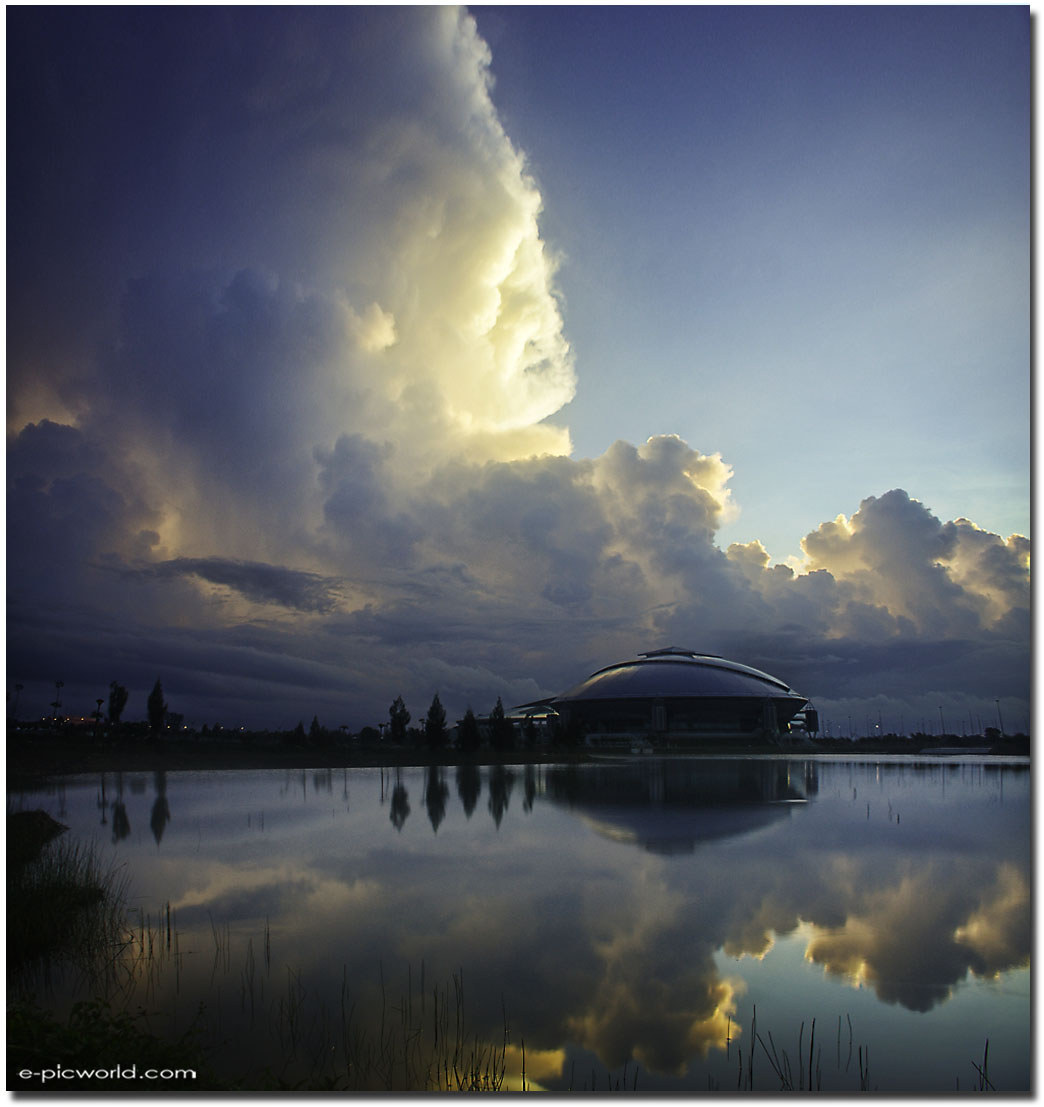
Acknowledgment and credit to Panorama Paul - the pioneer and master in Vertorama :D
Thanx for all comments and faves, all the best. Have a nice days ahead! We're all belong to each other and came from same father and mother (Adam and Eve), so peace and justice for all :)
"O God You do not create this to waste , The Exalted One please protect us from hellfire" SubhanAllah .......
Upa Pues, apoyemos a los guias locales!
We end our holiday (Botanic and Birding) with our friends ( Joy Chaisua and Jeff Petters)
It was wonderful and we saw a large number of birds (424 species) , almost 71 orchids species also the other plants. Our acknowledgment to all great local guides whom
Gilberto Collazos Bolaños Edison Javier Cañon Daniel F López Martínez Montezuma Rainforest Harvy Murillo Gonzalez Asociación Comunitaria Yarumo Blanco
without his help, we would not have seen many of the species so we are grateful to his knowledge, dedication and effort in this respect.
Tour operated for bogotabirding.com/
Bogota Birding and Birdwatching Colombia Tours
spray acrylic, carbon transfer, egg tempera, gold leaf, ballpoint & oil on board // 25X20cm. // self therapy & an acknowledgment of the extraordinary ordinary NHS workers who saved my life last October.
On a historic winter's eve, the charming station building of Douglas came alive once again!
As the sound of chugging steam filled the air, after several decades of absence, the local townsfolk flocked to the station, curious to witness this spectacle. For many, it marked their very first encounter with a steam locomotive, and the sight of the mighty, fire-breathing Class 25NC must have felt otherworldly!
In this captivating scene, the beautifully restored No. 3437 gracefully pulls its load out of the siding and into the heart of the station.
This mesmerizing moment was captured during an extraordinary Farrail tour, meticulously organized by the exceptional team at New Cape Central Railway. A heartfelt acknowledgment is also owed to Steamnet 2000, whose invaluable assistance made this experience possible!
Douglas, Northern Cape
June 2023
It’s beginning to look a lot like the holiday season in this NASA Hubble Space Telescope image of a blizzard of stars, which resembles a swirling snowstorm in a snow globe.
The stars are residents of the globular star cluster Messier 79, or M79, located 41,000 light-years from Earth, in the constellation Lepus. The cluster is also known as NGC 1904.
Globular clusters are gravitationally bound groupings of as many as 1 million stars. M79 contains about 150,000 stars packed into an area measuring only 118 light-years across. These giant “star-globes” contain some of the oldest stars in our galaxy, estimated to be 11.7 billion years old.
In the Hubble image, Sun-like stars appear yellow. The reddish stars are bright giants that represent the final stages of a star’s life. Most of the blue stars sprinkled throughout the cluster are aging “helium-burning” stars. These bright blue stars have exhausted their hydrogen fuel and are now fusing helium in their cores.
A scattering of fainter blue stars are “blue stragglers.” These unusual stars glow in blue light, mimicking the appearance of hot, young stars. Blue stragglers form either by the merger of stars in a binary system or by the collision of two unrelated stars in M79’s crowded core.
The star cluster was discovered by Pierre Méchain in 1780. Méchain reported the finding to Charles Messier, who included it in his catalog of non-cometary objects. About four years later, using a larger telescope than Messier’s, William Herschel resolved the stars in M79, and described it as a “globular star cluster.”
Credit: NASA and ESA, Acknowledgment: S. Djorgovski (Caltech) and F. Ferraro (University of Bologna)
NASA Goddard Space Flight Center enables NASA’s mission through four scientific endeavors: Earth Science, Heliophysics, Solar System Exploration, and Astrophysics. Goddard plays a leading role in NASA’s accomplishments by contributing compelling scientific knowledge to advance the Agency’s mission.
Follow us on Twitter
Like us on Facebook
Find us on Instagram
"This hall, 18 metres (59 ft) high, 54 metres (177 ft) long and 13 metres (43 ft) wide, was designed to act as a drawing room for Paris society. It was restored in 2004. Its ceiling was painted by Paul-Jacques-Aimé Baudry and represents various moments in the history of music. The foyer opens onto an outside loggia and is flanked by two octagonal salons with ceilings painted by Jules-Élie Delaunay in the eastern salon and Félix-Joseph Barrias in the western salon. The octagonal salons open to the north into the Salon de la Lune at the western end of the Avant-Foyer and the Salon du Soleil at its eastern end.
The Palais Garnier (French: [palɛ ɡaʁnje], Garnier Palace) or Opéra Garnier (French: [ɔpeʁa ɡaʁnje], Garnier Opera), is a 1,979-seat opera house at the Place de l'Opéra in the 9th arrondissement of Paris, France. It was built for the Paris Opera from 1861 to 1875 at the behest of Emperor Napoleon III. Initially referred to as "le nouvel Opéra de Paris" (the new Paris Opera), it soon became known as the Palais Garnier, "in acknowledgment of its extraordinary opulence" and the architect Charles Garnier's plans and designs, which are representative of the Napoleon III style. It was the primary theatre of the Paris Opera and its associated Paris Opera Ballet until 1989, when a new opera house, the Opéra Bastille, opened at the Place de la Bastille. The company now uses the Palais Garnier mainly for ballet. The theatre has been a monument historique of France since 1923.
The Palais Garnier has been called "probably the most famous opera house in the world, a symbol of Paris like Notre Dame Cathedral, the Louvre, or the Sacré Coeur Basilica." This is at least partly due to its use as the setting for Gaston Leroux's 1910 novel The Phantom of the Opera and, especially, the novel's subsequent adaptations in films and the popular 1986 musical. Another contributing factor is that among the buildings constructed in Paris during the Second Empire, besides being the most expensive, it has been described as the only one that is "unquestionably a masterpiece of the first rank." This opinion is far from unanimous however: the 20th-century French architect Le Corbusier once described it as "a lying art" and contended that the "Garnier movement is a décor of the grave".
The Palais Garnier also houses the Bibliothèque-Musée de l'Opéra de Paris (Paris Opera Library-Museum), which is managed by the Bibliothèque Nationale de France and is included in unaccompanied tours of the Palais Garnier.
The 9th arrondissement of Paris (IXe arrondissement) is one of the 20 arrondissements of the capital city of France. In spoken French, it is referred to as le neuvième ([nœvjɛm]; "ninth").
The arrondissement, called Opéra, is located on the right bank of the River Seine. It contains many places of cultural, historical and architectural interest, including the Palais Garnier (home to the Paris Opera), on the Place de l'Opéra, together with the InterContinental Paris Le Grand Hotel's Café de la Paix, as well as Boulevard Haussmann, with the Galeries Lafayette and Printemps, two large department stores, in addition to the Le Figaro newspaper. It hosts two historic churches, noted for their classical architecture, art and decoration:: Saint-Louis-d'Antin (18th c.) and Notre-Dame-de-Lorette (19th c.).
The arrondissement also contains a number of theatres and music venues including the Olympia, Folies Bergère, Théâtre Mogador, Théâtre Édouard VII and Théâtre de Paris. Along with the 2nd and 8th arrondissements, it hosts one of the business centres of Paris, located around the Palais Garnier.
In 2019, the 9th arrondissement had a population of 60,026.
Paris (French pronunciation: [paʁi]) is the capital and most populous city of France, with an estimated population of 2,150,271 residents as of 2020, in an area of 105 square kilometres (41 square miles). Since the 17th century, Paris has been one of Europe's major centres of finance, diplomacy, commerce, fashion, science and arts. The City of Paris is the centre and seat of government of the Île-de-France, or Paris Region, which has an estimated official 2020 population of 12,278,210, or about 18 percent of the population of France. The Paris Region had a GDP of €709 billion ($808 billion) in 2017. According to the Economist Intelligence Unit Worldwide Cost of Living Survey in 2018, Paris was the second most expensive city in the world, after Singapore, and ahead of Zürich, Hong Kong, Oslo and Geneva. Another source ranked Paris as most expensive, on a par with Singapore and Hong Kong, in 2018.
The city is a major railway, highway and air-transport hub served by two international airports: Paris–Charles de Gaulle (the second busiest airport in Europe) and Paris–Orly. Opened in 1900, the city's subway system, the Paris Métro, serves 5.23 million passengers daily; it is the second busiest metro system in Europe after the Moscow Metro. Gare du Nord is the 24th busiest railway station in the world, but the first located outside Japan, with 262 million passengers in 2015 Paris is especially known for its museums and architectural landmarks: the Louvre was the most visited art museum in the world in 2019, with 9.6 million visitors. The Musée d'Orsay, Musée Marmottan Monet, and Musée de l'Orangerie are noted for their collections of French Impressionist art, the Pompidou Centre Musée National d'Art Moderne has the largest collection of modern and contemporary art in Europe, and the Musée Rodin and Musée Picasso exhibit the works of two noted Parisians. The historical district along the Seine in the city centre is classified as a UNESCO Heritage Site, and popular landmarks in the city centre included the Cathedral of Notre Dame de Paris, on the Île de la Cité, now closed for renovation after the 15 April 2019 fire. Other popular tourist sites include the Gothic royal chapel of Sainte-Chapelle, also on the Île de la Cité; the Eiffel Tower, constructed for the Paris Universal Exposition of 1889; the Grand Palais and Petit Palais, built for the Paris Universal Exposition of 1900; the Arc de Triomphe on the Champs-Élysées, and the Basilica of Sacré-Coeur on the hill of Montmartre.
Paris received 38 million visitors in 2019, measured by hotel stays, with the largest numbers of foreign visitors coming from the United States, the United Kingdom, Germany and China. It was ranked as the second most visited travel destination in the world in 2019, after Bangkok and just ahead of London. The football club Paris Saint-Germain and the rugby union club Stade Français are based in Paris. The 80,000-seat Stade de France, built for the 1998 FIFA World Cup, is located just north of Paris in the neighbouring commune of Saint-Denis. Paris hosts the annual French Open Grand Slam tennis tournament on the red clay of Roland Garros. The city hosted the Olympic Games in 1900, 1924 and will host the 2024 Summer Olympics. The 1938 and 1998 FIFA World Cups, the 2007 Rugby World Cup, as well as the 1960, 1984 and 2016 UEFA European Championships were also held in the city. Every July, the Tour de France bicycle race finishes on the Avenue des Champs-Élysées in Paris." - info from Wikipedia.
Summer 2019 I did a solo cycling tour across Europe through 12 countries over the course of 3 months. I began my adventure in Edinburgh, Scotland and finished in Florence, Italy cycling 8,816 km. During my trip I took 47,000 photos.
Now on Instagram.
Title.
Central Park sidewalk.
( LUMIX G3 shot )
Central Park, Manhattan, New York, USA. 2017. ... 7 / 9
(Today's photo. It's unpublished.)
Images:
The Beatles … Across The Universe
youtu.be/eqUzU552X8A?si=LDd91wXz4ROBUYco
++++++++++++++++++++++++++++++++++++++
++++++++++++++++++++++++++++++++++++++
My new novel
B♭ (B Flat)
Volume 15 😄
The following is still in its draft stage and will be revised further.
Key parts are not disclosed.
The order of the content shown here is mixed.
(Of course, this is not the final version.)
++++++++++++++++++++++++++++++++++++++
++++++++++++++++++++++++++++++++++++++
My new novel
B♭ (B Flat)
The summer afternoon light in Manhattan flashed off the glass faces of the towers; each time the asphalt’s heat shimmered through an alley, the vast edifice of the FBI’s New York field office seemed to inhale the city’s clamor and, while remaining immovably composed, exuded the taut vigilance and tension within. Behind the heavy iron door set at that corner, the countless gazes of surveillance cameras and the movements of guards intertwined, announcing an order that would not be shaken by the heat waves or the bustle outside.
Special Agent Veronica Reeves—bearing a wealth of experience yet possessed of an uncompromising, honed gaze—sat reading, in quiet concentration, through the sheaf of reports that had been compiled so far, spread across the long table by the window. Whenever the summer breeze outside brushed the glass and rippled the air, her thought answered in kind, narrowing to the tiniest details and sculpting, in three dimensions within her mind, the range and consequences of the incident.
Her hands reconstructed the numbers and map symbols on the pages as if to include the city’s heated pedestrian flows, traffic lines, and the density of clustered buildings; her methodical ordering of the initial response bore a cold, tranquil certainty. The white glare of the overhead fluorescents trembled across the papers; even the shadows that wavered at the edge of her sight seemed to be folded into her analysis as unknown variables. With a fingertip she traced a point on the map, instantaneously combining thoroughfares, crowd densities, and building concentrations, rendering a volumetric sense of the scene inside her head.
The ring of telephones, the faint hiss of radios, and the distant wail of sirens in the streets were not mere noise to her but additional strata of information to be quietly assimilated. Her eyes were the very image of composure; yet the slight twitch in some muscles, the tremor in her fingers, betrayed a crisis-awareness coiled within—she displayed no outward emotion, advancing only with facts and inference.
She gathered the documents, exhaled deeply, and, staring out at the summer light and heat beyond the window, quietly contemplated her next move. Slowly she settled into her chair, arranged the bundle of reports before her, and with the city’s wavering heat at her back began to reconstruct the timeline in her mind. The intersections where red and green signals interlaced, the scent of exhaust hanging at street corners, the walking pace of passersby, the shadows of cars parked along curbs—each of these linked to the figures on the page and the marks on the map to conjure the three-dimensional flow of New York within her thought.
Fragments of reports arriving via radio and phone were drawn into the net of her analysis and placed into time and space. At what moment, and in which place, did the flow of people shift? Who might have entered which building? Combining traffic congestion, crowd movement, and the structure of buildings, she sought to reconstruct the entirety of the scene with minimal margin for error.
Her eyes remained calm, yet the fine tension of her muscles hinted at the vigilance beneath. Tracing a point on the map with a fingertip, she called up memories of past incidents and urban-planning data, calculating risk for each scenario. City layout, crowd density, locations of exits—every element was aligned upon a grid of logic, and all conceivable contingencies were hypothesized.
The outside heat warped the window glass; the city’s murmur and the distant siren did not break her focus but rather deepened the realism of the scenario she ran in her mind. Numbers on the page and the city’s tangible image overlapped within a cold rationality, and she prepared to derive the next action with precision.
Her gaze rested on photographs among the documents; she scrutinized the expressions of the crowd, the placement of security personnel, the positions of obstacles. Her look was merciless and exacting, missing no slight incongruity, refusing to be swayed by the city’s heat, attempting instead to enclose every variable within the net of reason.
In the office, where the cool air from the conditioning braided with summer’s heat, her thinking increased in speed—quietly, inexorably. What might happen next? Which routes were safe and which dangerous? Momentary judgments here could determine the safety of the crowd and the candidate’s life. Logic, steady and unyielding, wound through her hands like the thread that could untangle the city’s complexity.
Before her lay not only papers but computer screens and radio displays—sources of fragmented information that gained meaning only after passing through Veronica’s filter. The work of composing the whole from data and observed reality advanced, cool and silent, amid the city’s warmth.
Each time her fingertip traced the map, Manhattan’s streets materialized three-dimensionally in her mind: building density, pedestrian flows, surveillance-camera arcs, guard positions—linked together by a merciless chain of logic that suggested the next moves. Veronica inhaled and exhaled deeply; in that mute rhythm she connected all variables, fixing her attention on the heart of the matter. The distant sirens, car horns, and the footfalls of people pausing at an intersection became pieces of a puzzle that melted into a stream of reason. The city shimmered under heat; light and shadow fractured and scattered—but Veronica’s mind passed through that heat and outlined the incident in its entirety.
She reached for the office extension, feeling the cool resin of the handset between her fingers, and called Deputy Special Agent Elliot. “Put me through to Jack Vance of the Secret Service,” she said.
“Copy. I’ll contact Jack immediately.”
On the other end, his voice feigned calm while carrying a filament of tension. His eyes were on the streets beyond the window, unconsciously tracking intersections and pedestrian flows, instantly computing each possible outcome. Fingers rested on the keyboard; he checked the radio terminal and looped the next potential events into the net of his thought. Elliot’s “copy” was not a mere acknowledgment but a confirmation of steady judgement in the face of urban turbulence—and a quiet testament to his faith in Veronica.
A black Ford SUV tore through the heat of the streets. Jack gripped the wheel; impatience etched his profile. In the back seat, Anna drew herself close, stretching an arm protectively over the children while still forcing her voice out. “Watch the road, Jack!” The vehicle bucked under its own motion; the children’s voices rose—part cheer, part scream—caught between terror and exhilaration. Beside them, Mika bit her lip and, speechless, stitched her gaze to the window.
Behind, a pursuing car growled; bullets kissed the asphalt and left a metallic tang in the air. Sparks flared against concrete facades; gunfire scraped at the city’s skin. Jack’s Ford ignored lights and crowds alike, mounting the sidewalk as if to fling aside the screams of the throng in its wake.
Soon the massive shadow of the Jacob K. Javits Federal Building fell across them. The tower of steel and glass reflected the noonday light with a hard edge, standing high and concentrated like the city’s own tension made architecture. Veronica Reeves stood by the window and followed the car’s black silhouette at her feet. “…No,” she said under her breath. “That Ford tearing along the sidewalk—surely that isn’t you?”
Jack’s voice crackled over the radio, rough and breathless. “We were being chased! We just happened to come here—this isn’t my doing!”
Veronica held her breath and instantly issued orders to Deputy Special Agent Elliot. “Contact the NYPD now. Lock down every street and avenue.”
++++++++++++++++++++++++++++++++++++++
++++++++++++++++++++++++++++++++++++++
My new novel:
B♭ (B-flat)
There’s still more to come. 😃
(This is not the final draft.)
Set in New York City.
14
www.flickr.com/photos/stealaway/54771288620/in/dateposted...
13
www.flickr.com/photos/stealaway/54769008619/in/dateposted...
12
www.flickr.com/photos/stealaway/54758538180/in/dateposted...
11
www.flickr.com/photos/stealaway/54743658539/in/dateposted...
10
www.flickr.com/photos/stealaway/54737038151/in/dateposted...
9
www.flickr.com/photos/stealaway/54720346098/in/dateposted...
8
www.flickr.com/photos/stealaway/54713957969/in/dateposted...
7
www.flickr.com/photos/stealaway/54703714420/in/dateposted...
6
www.flickr.com/photos/stealaway/54696914108/in/dateposted...
5
www.flickr.com/photos/stealaway/54686544606/in/dateposted...
4
www.flickr.com/photos/stealaway/54653035442/in/dateposted...
3
www.flickr.com/photos/stealaway/54639396885/in/dateposted...
2
www.flickr.com/photos/stealaway/54628511025/in/dateposted...
1
www.flickr.com/photos/stealaway/54599616429/in/dateposted...
Soundtrack.
music.apple.com/jp/playlist/b-my-novel-soundtrack/pl.u-47...
Note: I gave a brief explanation of this novel in the following video:
youtu.be/3w65lqUF-YI?si=yG7qy6TPeCL9xRJV
iTunes Playlist Link::
music.apple.com/jp/playlist/b/pl.u-47DJGhopxMD
My new novel:
B♭ (B-flat)
Notes
1. "Bombay Blood Type (hh type)"
•Characteristics: A rare blood type that lacks the usual ABO antigens — cannot be classified as A, B, or O.
•Discovery: First identified in 1952 in Mumbai, India (formerly Bombay).
•Prevalence: Roughly 1 in 10,000 people in India; globally, about 1 in 2.5 million.
•Transfusion Compatibility: Only compatible with blood from other Bombay type donors.
2. 2024 Harvard University Valedictorian Speech – The Power of Not Knowing
youtu.be/SOUH8iVqSOI?si=Ju-Y728irtcWR71K
3. Shots Fired at Trump Rally
youtu.be/1ejfAkzjEhk?si=ASqJwEmkY-2rW_hT
++++++++++++++++++++++++++++++++++++++
++++++++++++++++++++++++++++++++++++++
Title.
セントラルパークの側道。
( LUMIX G3 shot )
マンハッタン。ニューヨーク。アメリカ。2017. … 7 / 9
(今日の写真。それは未発表です。)
Images:
The Beatles … Across The Universe 和訳
note.com/yutosn/n/na8a3ff93b391
++++++++++++++++++++++++++++++++++++++
++++++++++++++++++++++++++++++++++++++
僕の新しい小説。
B♭ (ビーフラット)
第15弾。 😄
以下は、まだ初稿の段階です。まだ推敲します。
重要な部分は公開していません。
公開している内容の順番はバラバラです。
(もちろん最終稿ではありません。)
++++++++++++++++++++++++++++++++++++++
++++++++++++++++++++++++++++++++++++++
僕の新しい小説。
B♭ (ビーフラット)
マンハッタンの夏の午後の光が高層ビル群のガラスにぎらつき、アスファルトの熱気が路地を揺らすたびに、FBIニューヨーク支局の巨大な建物は都市の喧騒を吸い込み、どっしりと静けさを保ちながらも、その内部に張り詰めた警戒と緊張をにじませていた。その角に設えられた厚い鉄の扉の向こうでは、監視カメラの無数の視線と警備員の動きが絡み合い、外界の熱波や人々のざわめきにも揺るがぬ秩序を守っていることを告げていた。
ヴェロニカ・リーヴス特別捜査官は、豊富な経験を背負いながらもなお研ぎ澄まされた眼差しで、窓際の長机に広げられた、これまでに起こった報告がまとめられた資料の束を静かに読み解いていた。外の夏風がわずかに窓に当たり、空気を揺らすたび、彼女の思考もそれに呼応するように細部まで集中され、事件の可能性や影響範囲を論理の中に立体的に描き出していった。
書類に記された数字や地図の記号を、熱せられた街の動線や人々の流れ、ビルの密集度までを含めるかのように頭の中で再構築し、事件の初動を論理的に整理していく手つきには、冷たくも静かな確信が宿っていた。
天井の蛍光灯の白い光が、紙面に落ちる影を揺らし、視界の隅で揺れるその影さえも、未知の変数として分析に取り込まれているかのようであった。ヴェロニカは指先で地図上の一点をなぞり、都市の動線、人の密度、建築の密集度を瞬時に組み合わせ、頭の中で現場の立体的な状況を描き出していた。
電話のベルや無線のかすかなノイズ、外の街路で響く遠いサイレンの音も、彼女にとっては雑音ではなく、分析のための情報の層として静かに整理されていった。
瞳は冷静そのもので、しかし微細な筋肉の動きや指の震えは、内側に潜む危機意識を示し、見る者には感情を一切表さず、事実と推論だけを前に進める姿勢が伝わってきた。
ヴェロニカは書類をまとめ、深く息を吐き、窓の向こうに広がる夏の都市の光と熱を見据えながら、静かに次の一手を思案していた。
ヴェロニカはゆっくりと椅子に腰を下ろし、資料の束を前に整えると、窓の外で揺れる熱気を背に、まず事件の時間軸を頭の中で再構築しはじめた。信号の赤や青が交錯する交差点、街角に漂う排気ガスの匂い、通行人の歩行速度、路上に停められた車の影――それらすべてが、紙面の数字や地図上の印と結びつき、ニューヨークという巨大な都市の立体的な動線を彼女の思考に浮かび上がらせた。
無線や電話からの断片的な報告も、彼女の分析の網に吸い込まれ、時間と空間に配置される。どの瞬間に、どの場所で、人々の流れが変化したか。誰がどの建物に潜入した可能性があるか。交通の混雑状況と、観衆の動き、建築物の構造を組み合わせ、最小の推測誤差で現場の全貌を描く。
彼女の瞳は冷静そのもので、しかし微細な筋肉の緊張が、その奥に潜む危機意識を示していた。手元の地図の一点を指でなぞり、過去の事件や都市計画のデータを呼び出しながら、シナリオごとにリスクを計算する。都市の構造、観衆の密度、出口の配置――あらゆる要素を論理のグリッドに沿って並べ、想像されるすべての事態を仮定する。
外の熱気は窓ガラスを揺らし、街のざわめきや遠くで響くサイレンは、彼女の集中をかき乱すどころか、逆に現場の臨場感を補強し、頭の中のシミュレーションに奥行きを与えた。紙面の数字と街の実像が、冷たい理性の中で重なり合い、彼女は次の一手を論理的に導き出す準備を整えていった。
ヴェロニカは資料の中の写真に目を留め、観衆の表情や警備員の配置、障害物の位置を詳細に分析した。その視線は冷徹でありながらも、微細な違和感や不自然さを見逃さず、都市の熱気に流されることなく、論理の網の中に全ての変数を捕らえようとしていた。
冷房の空気と夏の熱気が交錯するオフィス内で、彼女の思考は静かに、しかし確実に速度を上げていく。次に何が起こりうるか、どのルートが安全で、どのルートが危険か。瞬間ごとの判断が、観衆の安全と候補者の命を左右する。論理は揺るぎなく、都市の複雑さを紐解く糸のように彼女の手の中で絡まり合った。
彼女の前には資料だけでなく、コンピュータの画面や無線のディスプレイも並ぶ。それらは断片的な情報の源にすぎず、ヴェロニカの思考というフィルターを通すことで初めて意味を持つ。データと現実の光景を繋ぎ、事件の全体像を構築する作業は、夏の街の熱気の中でも冷たく静かに進行した。
彼女の指先が地図をなぞるたび、都市の街路が脳内で立体的に浮かび上がり、建物の密度、通行人の流れ、監視カメラの視野、警備員の位置が、冷徹な論理の中で連鎖し、次の行動を示唆する。ヴェロニカは深く息を吸い、吐き出すと同時に、無言のうちに全ての変数を繋ぎ合わせ、事件の核心へと視線を固定した。その瞬間、遠くの街路から聞こえるサイレンの音や車のクラクション、交差点で立ち止まる人々の足音が、彼女の頭の中ではパズルのピースとなり、論理的な流れの中に溶け込んでいった。都市は暑さに揺れ、光と影が乱反射するが、ヴェロニカの思考は静かに、その熱気を透過して事件の全体像を描き出していった。
ヴェロニカは、静かに内線電話の受話器を手に取り、その冷たい樹脂の感触を指先で確かめながら、エリオット副特別捜査官を呼び出し、いった。
「シークレットサービスのジャックバンスにつないで」
「了解。ジャックに直ちに連絡する。」
受話器の向こうで、彼の声は冷静を装いながらも、微細な緊張を含んでいた。目は窓の外に向けられ、街路の交差点や通行人の流れを無意識に追い、あらゆる可能性を瞬時に計算する。手元のキーボードに指を触れ、無線端末を確認しながら、次に何が起こるかを思考の網にかける。
エリオットの「了解」は、単なる返事ではなく、都市の混沌を前にした冷静な判断の証であり、ヴェロニカへの信頼を静かに裏付けていた。
黒のSUVフォードは、夏の熱気を押し裂くように街路を駆け抜けていた。ハンドルを握るジャックの横顔には焦燥が張りつき、後部座席に身を寄せたアナは、子供たちを庇うように腕を伸ばしながら、それでも必死に声を張り上げた。
「前を見て、ジャック!」
車体の振動に身を揺らしながら、子供たちは歓声とも悲鳴ともつかぬ声をあげ、恐怖と興奮の境を知らぬままに笑った。その隣でミカは唇を噛み、言葉を失ったまま窓の外に視線を縫いつけられていた。
背後では追撃の車が唸りを上げ、硝煙の匂いを残して弾丸がアスファルトを跳ねた。コンクリートの壁面に火花が散り、都市の皮膚を削るようにして銃声が響く。ジャックのフォードは信号も人波も無視し、歩道へと飛び込み、群衆の悲鳴を振り払うように疾走した。
やがて、ジェイコブ・K・ジャヴィッツ連邦ビルがその巨大な影を落とした。
鉄とガラスの塔は真昼の光を硬質に反射し、都市の緊張を凝縮させてそびえ立っていた。ヴェロニカ・リーヴス特別捜査官は窓辺に立ち、視線を落とした足元に黒い車体の影を認めた。
「……まさか。歩道を突っ走っているあのフォード、あなたたちじゃないでしょうね?」
無線に混じってジャックの声が荒々しく返る。
「追われてたんだ! たまたまここに来ただけだ、俺のせいじゃない!」
ヴェロニカは息を詰め、即座にエリオット副特別捜査官へと指示を放った。
「すぐにNYPDへ。すべてのストリートとアヴェニューを封鎖して。」
++++++++++++++++++++++++++++++++++++++
++++++++++++++++++++++++++++++++++++++
僕の新しい小説。
B♭ (ビーフラット)
舞台はニューヨークです。
14
www.flickr.com/photos/stealaway/54771288620/in/dateposted...
13
www.flickr.com/photos/stealaway/54769008619/in/dateposted...
12
www.flickr.com/photos/stealaway/54758538180/in/dateposted...
11
www.flickr.com/photos/stealaway/54743658539/in/dateposted...
10
www.flickr.com/photos/stealaway/54737038151/in/dateposted...
9
www.flickr.com/photos/stealaway/54720346098/in/dateposted...
8
www.flickr.com/photos/stealaway/54713957969/in/dateposted...
7
www.flickr.com/photos/stealaway/54703714420/in/dateposted...
6
www.flickr.com/photos/stealaway/54696914108/in/dateposted...
5
www.flickr.com/photos/stealaway/54686544606/in/dateposted...
4
www.flickr.com/photos/stealaway/54653035442/in/dateposted...
3
www.flickr.com/photos/stealaway/54639396885/in/dateposted...
2
www.flickr.com/photos/stealaway/54628511025/in/dateposted...
1
www.flickr.com/photos/stealaway/54599616429/in/dateposted...
Soundtrack.
music.apple.com/jp/playlist/b-my-novel-soundtrack/pl.u-47...
追記 この小説を多少説明しました。
youtu.be/3w65lqUF-YI?si=yG7qy6TPeCL9xRJV
メモ
1
「Bombay型(ボンベイ型、hh型)」
•特徴:通常のABO血液型を持たない(A、B、Oに分類されない)特殊な型。
•発見地:1952年、インド・ムンバイ(旧ボンベイ)で初めて確認。
•発生頻度:インドでは1万人に1人程度だが、世界的には約250万人に1人とも。
•輸血制限:同じBombay型しか輸血できない。
2
2024年ハーバード大学首席の卒業式スピーチ『知らないことの力』
youtu.be/SOUH8iVqSOI?si=Ju-Y728irtcWR71K
3
Shots fired at Trump rally
youtu.be/1ejfAkzjEhk?si=ASqJwEmkY-2rW_hT
++++++++++++++++++++++++++++++++++++++
++++++++++++++++++++++++++++++++++++++
The handwriting on this slide is very hard to read and I cant make it out. I Think its LONGHOPE by X referencing other images.
Due to the recent unauthorized publication of my images in a magazine. newspaper and two published books without payment I have to now make this statement. I keep attending online Railway Soc events where speakers brazenly show my images without any acknowledgment of the photographer or the fact they have just stolen them off my FLICKR site. Hence I have been forced to add a copyright sign in the corner.
This image is the copyright of © Peter Brabham or © Derek Chaplin family ; Any users, found to replicate, reproduce, circulate, distribute, download, manipulate or otherwise use my images without my written consent will be in breach of copyright laws. I will retrospectively claim £50 per print image if prior written authorization for publication has not been sought. Please contact me at pete.brabham@ntlworld.com for permission to use any of my FLICKR photographs in hard copy publication. I will usually give permission free of charge to Heritage Railways and steam loco restoration project advertising, but profit making magazines and book authors must pay a reproduction fee. Authors should know the provenance of high quality digital images that they use.
That was an amazing day out yesterday. so much to chat about and i am pleased to announce i wasn't the only trans girl out and dressed at the event. we did however just pass each other with no acknowledgment, Problem is i am rubbish with names and so its a little awkward making that first contact. I did recognise her though.
Anyway i had just had a spin around the dance floor with a very capable dancer and was feeling a little giddy so after watching a bunch of jeeps drive past i went for a drink.
Taking a step as a seat i sat to watch the world go by admiring the many fab outfits being worn. Some correct for the period some more 50s and some modern. So many times i got dress and woman envy and at one point i oddly got guy envy lol.
OK let me explain it was a bunch of lads on a jeep de kitted smoking (not my thing), just relaxing and looking as friggin cool as you like, A proper image of a guy you could depend on.
while i was sat having a nice fruit cider a guy started taking photos of myself said thank you and wondered off. It really was a day like that. Remined me of my days re enacting where you couldn't walk more than a few yards without someone wanting to take a photo of/with me.
Have to say his photo would have been a good shot as he got the full Helen treatment with glimpse of slip showing and those shoes of mine.
More little stories to follow but sadly not many full length photos
I have been recently working with a Civil War Re-enactment model who has been very patient and enthusiastic. Certainly not straight out of camera but I felt it appropriate to have the image look as period as possible.
I hope that this will draw some positive attention. Definitely a departure from my previous work. Another Flickr account is starting to become a favorable choice for my portrait and theme imaging.
Thank you all for your patience, understanding, favs and comments. You are all great artists.
[Explore] 11-08-2017 Totally unexpected recognition. I cannot begin to express my gratefulness to Flickr & "Explore". There is no end to your kindness. I'm so appreciative of your acknowledgment. Thank you!
Three forms arranged on a minimalist stage: two black silhouettes and one pale sculptural object between them. Each represents a different perspective on the same reality—each observer convinced of their truth, each technically correct from their vantage point.
This image explores the philosophical proposition that truth is often relative to perspective. What appears as one shape from the left looks entirely different from the right. Both observers possess valid perceptions, yet neither grasps the complete reality. The actual truth exists somewhere in between—in the synthesis of multiple viewpoints, in the acknowledgment that our individual perspective, however certain, captures only a fragment of the whole.
A visual meditation on epistemology and the limits of perception: How do we know what we know? Can absolute truth exist when reality shifts with every angle of observation? The answer may lie not in choosing one perspective over another, but in embracing the complexity that emerges when we consider them all.
In 1959 Derek Chaplin accompanied BBC broadcaster Wynford Vaughan Thomas making a radio broadcast catching trains only from Cardiff to North Wales and calling in on both the embryonic Talyllyn and Ffestiniog railways. Subsequently, Derek made up a 35mm slide show called " Trains of Wales 1959" which he showed at railway societies. These 137 mainly Kodachrome slides have been found by his family preserved in a dry wooden storage box and I am privileged to scan them for people to see again. The notes on each slide are minimalist and with no actual dates so anybody who can add interesting information is appreciated.
Due to the recent unauthorized publication of my images in a magazine. newspaper and two published books without payment I have to now make this statement. I keep attending online Railway Soc events where speakers brazenly show my images without any acknowledgment of the photographer. Hence I have been forced to add a copyright sign in the corner.
This image is the copyright of © Peter Brabham; Any users, found to replicate, reproduce, circulate, distribute, download, manipulate or otherwise use my images without my written consent will be in breach of copyright laws. I will retrospectively claim £50 per print image if prior written authorization for publication has not been sought. Please contact me at pete.brabham@ntlworld.com for permission to use any of my FLICKR photographs in hard copy publication. I will usually give permission free of charge to Heritage Railways and steam loco restoration project advertising, but profit making magazines and book authors must pay a reproduction fee. Authors should know the provenance of high quality digital images that they use.
Upa Pues, apoyemos a los guias locales!
We end our holiday (Botanic and Birding) with our friends ( Joy Chaisua and Jeff Petters)
It was wonderful and we saw a large number of birds (424 species) , almost 71 orchids species also the other plants. Our acknowledgment to all great local guides whom
Gilberto Collazos Bolaños Edison Javier Cañon Daniel F López Martínez Montezuma Rainforest Harvy Murillo Gonzalez Asociación Comunitaria Yarumo Blanco
without his help, we would not have seen many of the species so we are grateful to his knowledge, dedication and effort in this respect.
Tour operated for bogotabirding.com/
Bogota Birding and Birdwatching Colombia Tours
I am dedicating this image to Petra. Not just because she is a great friend, a very special artist and generous beyond compare but because she has paid me a much appreciated (and possibly undeserved) tribute.
I chose this shot as I like it a lot myself and believe that it really exemplifies my 'style' that Petra and other followers of my stream seem to like.
An acknowledgment is due to another good friend and artist, Beatrice, whose recent posting has directly inspired me
This visualization journeys into the famous star-forming region of the Orion Nebula based on an image from the Hubble Space Telescope. This exhilarating trip begins by flying through a layer of gas above the nebula, called the "veil." The descent to the gaseous surface provides an overview of the structure of the region as the winds and radiation from the central cluster have carved out a long "valley" in the cloud. The massive bright stars are responsible for heating the gas to temperatures at which it glows.
To view the 360° video go to: facebook.com/NASASHubble
Credits: Frank Summers, Greg Bacon, Zolt Levay, Lisa Frattare, Massimo Robberto (STScI)
Acknowledgment: Robert Gendler. Music: "Blizzard (PON I)", Kai Engel, CC BY-NC
NASA Goddard Space Flight Center enables NASA’s mission through four scientific endeavors: Earth Science, Heliophysics, Solar System Exploration, and Astrophysics. Goddard plays a leading role in NASA’s accomplishments by contributing compelling scientific knowledge to advance the Agency’s mission.
Follow us on Twitter
Like us on Facebook
Find us on Instagram
In 1959 Derek Chaplin accompanied BBC broadcaster Wynford Vaughan Thomas making a radio broadcast catching trains only from Cardiff to North Wales and calling in on both the embryonic Talyllyn and Ffestiniog railways. Subsequently, Derek made up a 35mm slide show called " Trains of Wales 1959" which he showed at railway societies. These 137 mainly Kodachrome slides have been found by his family preserved in a dry wooden storage box and I am privileged to scan them for people to see again. The notes on each slide are minimalist and with no actual dates so anybody who can add interesting information is appreciated.
Due to the recent unauthorized publication of my images in a magazine. newspaper and two published books without payment I have to now make this statement. I keep attending online Railway Soc events where speakers brazenly show my images without any acknowledgment of the photographer. Hence I have been forced to add a copyright sign in the corner.
This image is the copyright of © Peter Brabham; Any users, found to replicate, reproduce, circulate, distribute, download, manipulate or otherwise use my images without my written consent will be in breach of copyright laws. I will retrospectively claim £50 per print image if prior written authorization for publication has not been sought. Please contact me at pete.brabham@ntlworld.com for permission to use any of my FLICKR photographs in hard copy publication. I will usually give permission free of charge to Heritage Railways and steam loco restoration project advertising, but profit making magazines and book authors must pay a reproduction fee. Authors should know the provenance of high quality digital images that they use.
The Samuel Beckett Bridge in Dublin Ireland on the River Liffey illuminated in the colours of the Ukrainian flag.
Ireland's national day, "St Patrick's Day", a day when fun filled and musical parades take place across the country will include a “Ukrainian theme” this year in acknowledgment and support of the Ukrainian people.
be unruly even if under good emperors
music:
youtu.be/TmDkzVvherk?si=eC1eY3LbPaqYqHOZ
Portishead - Only You
youtu.be/wyUSfuL9dxY?si=CxSvJx7W6LzY1Z4r
Forest Swords - Panic (Official Video)
.
youtu.be/YD-yg0bpF7A?si=YQOlgrzeDuKMeN4F
Twilight of American Democracy: Mapping A Democratic Breakdown in the USA, with Bernard E. Harcourt
youtu.be/i6TaQD_4pfY?si=rmjTgFU7NoTOlbzA
Hegel and the Heritage Foundation: Family Resemblance and New Beginnings [Full Intro to Hegel 13/13]
Hegelian self-consciousness through the master-slave dialectic
Hegelian self-consciousness is the state where a being recognizes itself as a distinct, independent entity through its interaction with and acknowledgment by another self-conscious being. It is a dynamic process of self-reflection mediated by the "other" (another person or an object). For Hegel, a purely isolated consciousness cannot achieve true self-consciousness; recognition from another is necessary for one's existence to be affirmed, leading to the development of a unified, self-aware self.
Hegel's Master-Slave dialectic describes how self-consciousness develops through a life-or-death struggle for recognition between two individuals, leading to a reversal where the slave, through labor and engagement with the world, achieves a more profound and independent sense of self than the master, who remains dependent and dependent on the servant for sustenance and affirmation.
youtu.be/Da6cbuAfnbA?si=cDtz3SFrBZri_s4f
I, CLAUDIUS - 'Lost your stutter, too, I see' ( + ̂ )
youtu.be/bKz-HtOPvjE?si=3RoK3jCCflelHB_r
Hegel: the master-servant dialectic
youtu.be/9Dqyq-UjoVA?si=shtyiOKOfR3gCcxr
Hegel: Philosophy of world history and spirit
How do freedom, reason, passion, the state, and ethical life fit into the world-historical process?
youtu.be/EpFFyQ7rv8Q?si=VjFoh2I-oq5HQgmr
Mary Beard and Why America Isn’t Rome (And Why That Matters) | The David Frum Show
youtu.be/5i5mDO6ai_c?si=9He2nMD7lhDsyP_f
Rulers and Power | Mary Beard and David Mitchell
self-consciousness
unruly
I hope Americans never get to have a good emperor
forsan et haec olim meminisse iuvabit
perhaps even these things will be good to remember one day
Vincit qui se vincit
Felicior Augusto, melior Traiano
what have the romans ever done for us?
they believed in the republic... that's why they were killed
youtu.be/FeCTilEwRmY?si=oAHndul3fLoE3P-8
Claudius gets some valuable advice.
.
.
photo:
Portrait of Trajan
Venice, National Archaeological Museum
Inv. N. 5
Marble, 57 cm
Roman Imperial period
legate of Domenico Grimani, 1523
www.meravigliedivenezia.it/en/virtual-objects/MAN_128.html
National Archaeological Museum of Venice
Ritratto di Traiano
Venezia, Museo Archeologico Nazionale
Inv. N. 5
Marmo, h cm 57
Epoca romana imperiale
Legato di Domenico Grimani, 1523
www.meravigliedivenezia.it/it/oggetti-virtuali/MAN_128.html
Museo Archeologico Nazionale di Venezia
Do we need a master to self-actualize?
No, you do not need a "master" to self-actualize; it is an individual journey to realize one's full potential, and a master can be an unnecessary intermediary. Maslow's theory views self-actualization as an innate desire to become the best version of oneself, a process achievable by anyone through personal growth, self-acceptance, and engaging in fulfilling work that aligns with their aptitudes.
Understanding Self-Actualization
An inherent need: Self-actualization is a fundamental drive to fulfill one's potential.
An individual journey: The path to self-actualization is unique for each person and is not defined by external success, fame, or status.
A process, not an endpoint: It's a continuous journey of personal growth, not a final state of perfection.
What is Required for Self-Actualization?
Instead of a master, the focus should be on personal development:
Self-awareness and acceptance: Understanding and accepting yourself is a crucial first step.
Personal growth: This involves continuous learning, developing skills, and working on relationships.
Fulfillment: Engaging in activities that align with your intrinsic values and aptitudes brings a sense of fulfillment.
Mindfulness and presence: Living in the moment and letting go of self-doubt can foster progress.
Purpose and authenticity: Living a life aligned with your inner truth and purpose is key to self-actualization.
Upa Pues, apoyemos a los guias locales!
We end our holiday (Botanic and Birding) with our friends ( Joy Chaisua and Jeff Petters)
It was wonderful and we saw a large number of birds (424 species) , almost 71 orchids species also the other plants. Our acknowledgment to all great local guides whom
Gilberto Collazos Bolaños Edison Javier Cañon Daniel F López Martínez Montezuma Rainforest Harvy Murillo Gonzalez Asociación Comunitaria Yarumo Blanco
without his help, we would not have seen many of the species so we are grateful to his knowledge, dedication and effort in this respect.
Tour operated for bogotabirding.com/
Bogota Birding and Birdwatching Colombia Tours
[S188]
Due to the recent unauthorized publication of my images in a magazine. newspaper and two published books without payment I have to now make this statement. I keep attending online Railway Soc events where speakers brazenly show my images without any acknowledgment of the photographer or the fact they have just stolen them off my FLICKR site. Hence I have been forced to add a copyright sign in the corner.
This image is the copyright of copyright Peter Brabham or copyright Derek Chaplin family ; Any users, found to replicate, reproduce, circulate, distribute, download, manipulate or otherwise use my images without my written consent will be in breach of copyright laws. I will retrospectively claim £50 per print image if prior written authorization for publication has not been sought. Please contact me at pete.brabham@ntlworld.com for permission to use any of my FLICKR photographs in hard copy publication. I will usually give permission free of charge to Heritage Railways and steam loco restoration project advertising, but profit-making magazines and book authors must pay a reproduction fee. Authors should know the provenance of high quality digital images that they use.
Hair: TRUTH HAIR - Lola
Necklace: [LF] - Glam Necklace Silver
Dress: LeCastle - Frilly Dress / Maitreya / Slink / FATPACK
High Heels: aDiva - Precious Sandal Silver
Acknowledgment: I thank the owner of LeCastle store Frank Castlee for believing in my work, visit the LeCastle store.
Callicarpa bodinieri var. giraldini 'Profusion' (beauty berry, acc nr 50302-H, HG-AS), Asian Garden, National Herb Garden, US National Arboretum, Washington DC
land acknowledgment: unceded Nacotchtank land
Wayang (Krama Javanese: Ringgit) is a Javanese word for particular kinds of theatre. When the term is used to refer to kinds of puppet theatre, sometimes the puppet itself is referred to as wayang. Performances of shadow puppet theatre are accompanied by a gamelan orchestra in Java, and by gender wayang in Bali.
UNESCO designated wayang kulit, a shadow puppet theatre and the best known of the Indonesian wayang, as a Masterpiece of Oral and Intangible Heritage of Humanity on 7 November 2003. In return for the acknowledgment, UNESCO required Indonesians to preserve their heritage.
Textured view of the Teton Range taken from the walk to Cunningham Cabin. I apologize but I can't remember who provided the texture. I know it was some kind soul on Flickr. If anyone recognizes the texture let me know and I will add the link and acknowledgment.
View the Entire - Photoshop-Before and After Set
View the entire Tetons - East and West Set
View the entire Textured Images Set
View my - Most Interesting according to Flickr
In 1959 Derek Chaplin accompanied BBC broadcaster Wynford Vaughan Thomas making a radio broadcast catching trains only from Cardiff to North Wales and calling in on both the embryonic Talyllyn and Ffestiniog railways. Subsequently, Derek made up a 35mm slide show called " Trains of Wales 1959" which he showed at railway societies. These 137 mainly Kodachrome slides have been found by his family preserved in a dry wooden storage box and I am privileged to scan them for people to see again. The notes on each slide are minimalist and with no actual dates so anybody who can add interesting information is appreciated.
Due to the recent unauthorized publication of my images in a magazine. newspaper and two published books without payment I have to now make this statement. I keep attending online Railway Soc events where speakers brazenly show my images without any acknowledgment of the photographer. Hence I have been forced to add a copyright sign in the corner.
This image is the copyright of © Peter Brabham; Any users, found to replicate, reproduce, circulate, distribute, download, manipulate or otherwise use my images without my written consent will be in breach of copyright laws. I will retrospectively claim £50 per print image if prior written authorization for publication has not been sought. Please contact me at pete.brabham@ntlworld.com for permission to use any of my FLICKR photographs in hard copy publication. I will usually give permission free of charge to Heritage Railways and steam loco restoration project advertising, but profit making magazines and book authors must pay a reproduction fee. Authors should know the provenance of high quality digital images that they use.
Life has its own rhythm—sometimes full of motion and noise, sometimes hushed and still. So often, we find ourselves chasing, striving for the next thing, convinced that happiness or fulfillment lies just beyond our reach. But what if we stopped running? What if we paused long enough to realize that what we’re searching for is already here?
It’s in those quieter moments that we begin to see what we have: the rustling of leaves, the gentle ripples of water, or the glow of light that surrounds us. These small, ordinary wonders remind us that beauty isn’t something we have to chase—it’s something that quietly exists, waiting to be noticed. Life isn’t about endlessly looking for what’s missing. Sometimes, it’s about recognizing what’s already present.
The contentment we seek isn’t in the next destination—it’s in pausing to appreciate what’s here, right now. By letting go of the search, we open ourselves to the magic of what we’ve already found. In these moments, life whispers to us—reminding us that we don’t need to look further.
What if the answers were here all along, just waiting for us to stop and see them?
Peering deep into the core of the Crab Nebula, this close-up image reveals the beating heart of one of the most historic and intensively studied remnants of a supernova, an exploding star. The inner region sends out clock-like pulses of radiation and tsunamis of charged particles embedded in magnetic fields.
The neutron star at the very center of the Crab Nebula has about the same mass as the sun but compressed into an incredibly dense sphere that is only a few miles across. Spinning 30 times a second, the neutron star shoots out detectable beams of energy that make it look like it's pulsating.
The NASA Hubble Space Telescope snapshot is centered on the region around the neutron star (the rightmost of the two bright stars near the center of this image) and the expanding, tattered, filamentary debris surrounding it. Hubble's sharp view captures the intricate details of glowing gas, shown in red, that forms a swirling medley of cavities and filaments. Inside this shell is a ghostly blue glow that is radiation given off by electrons spiraling at nearly the speed of light in the powerful magnetic field around the crushed stellar core.
The neutron star is a showcase for extreme physical processes and unimaginable cosmic violence. Bright wisps are moving outward from the neutron star at half the speed of light to form an expanding ring. It is thought that these wisps originate from a shock wave that turns the high-speed wind from the neutron star into extremely energetic particles.
When this "heartbeat" radiation signature was first discovered in 1968, astronomers realized they had discovered a new type of astronomical object. Now astronomers know it's the archetype of a class of supernova remnants called pulsars - or rapidly spinning neutron stars. These interstellar "lighthouse beacons" are invaluable for doing observational experiments on a variety of astronomical phenomena, including measuring gravity waves.
Observations of the Crab supernova were recorded by Chinese astronomers in 1054 A.D. The nebula, bright enough to be visible in amateur telescopes, is located 6,500 light-years away in the constellation Taurus.
Credits: NASA and ESA, Acknowledgment: J. Hester (ASU) and M. Weisskopf (NASA/MSFC)
NASA Goddard Space Flight Center enables NASA’s mission through four scientific endeavors: Earth Science, Heliophysics, Solar System Exploration, and Astrophysics. Goddard plays a leading role in NASA’s accomplishments by contributing compelling scientific knowledge to advance the Agency’s mission.
Follow us on Twitter
Like us on Facebook
Find us on Instagram