View allAll Photos Tagged Acknowledgment
This family was in a garden restaurant in Birmingham and was looking around for a convenient table (I guess). The lovely kid took my attention and I started clicking them from the other side table with my family. But they noticed that they were framed, first had a surprise, that changed into a shy full acknowledgment and that mood reflected obviously, that’s it the fabulous shyness.
The majestic spiral galaxy NGC 4666 lies about 80 million light-years away in the constellation Virgo and is undergoing particularly intense star formation. Astronomers refer to galaxies that rapidly form stars as starburst galaxies. NGC 4666’s starburst is likely due to gravitational interactions with its unruly neighbors – including the nearby galaxy NGC 4668 and a dwarf galaxy, which is a small galaxy made up of a few billion stars.
NGC 4666’s burst of star formation is driving an unusual form of extreme weather known as a superwind – a gigantic transfer of gas from the bright central heart of the galaxy out into space. This superwind is the result of driving winds from short-lived massive stars formed during NGC 4666’s starburst as well as spectacularly energetic supernova explosions. Two supernovae occurred in NGC 4666 within the last decade – one in 2014 and the other in 2019. The star that led to the 2019 supernova was 19 times as massive as our Sun!
The torrent of superheated gas emanating from NGC 4666 extends for tens of thousands of light-years, but it is invisible in this image. The superwind’s extremely high temperature makes it stand out as a luminous plume in X-ray or radio observations, but it doesn’t show up at the visible wavelengths imaged by Hubble’s Wide Field Camera 3.
Image credit: ESA/Hubble & NASA, O. Graur; Acknowledgment: L. Shatz
NASA Goddard Space Flight Center enables NASA’s mission through four scientific endeavors: Earth Science, Heliophysics, Solar System Exploration, and Astrophysics. Goddard plays a leading role in NASA’s accomplishments by contributing compelling scientific knowledge to advance the Agency’s mission.
Follow us on Twitter
Like us on Facebook
Find us on Instagram
He's not sure what to think. He just walked up out of the brush and finds me sitting there, watching him. Both of us quite surprised by the other. So as to not to give away his intimidation he just nods his head in acknowledgment and walks right next to me, so close I had to put the camera down to keep him from hitting it. Life is full of surprises. ❤️
------------------------------ JESUS ✝️ SAVES-------------------------------
SALVATION THROUGH FAITH IN CHRIST JESUS ALONE!
❤️❤️ IT'S ALL JESUS AND NONE OF OURSELVES! ❤️❤️
1. Now, brothers, I want to remind you of the gospel I preached to you, which you received and on which you have taken your stand. 2. BY THIS GOSPEL YOU ARE SAVED, if you hold firmly to the word I preached to you. Otherwise, you have believed in vain.
3. For what I received I passed on to you as of first importance: that Christ died for our sins according to the Scriptures, 4. that he was buried, that he was raised on the third day according to the Scriptures, 5. and that he appeared to Peter, and then to the Twelve. 6. After that, he appeared to more than five hundred of the brothers at the same time, most of whom are still living, though some have fallen asleep. 7. Then he appeared to James, then to all the apostles, 8. and last of all he appeared to me also, as to one abnormally born.
9. For I am the least of the apostles and do not even deserve to be called an apostle, because I persecuted the church of God. 10. But by the grace of God I am what I am, and his grace to me was not without effect. No, I worked harder than all of them--yet not I, but the grace of God that was with me. 11. Whether, then, it was I or they, this is what we preach, and this is what you believed. (1 Corinthians 15:1-11)
7. Therefore Jesus said again, "I tell you the truth, I am the gate for the sheep. 8. All who ever came before me were thieves and robbers, but the sheep did not listen to them. 9. I am the gate; whoever enters through me WILL BE SAVED. He will come in and go out, and find pasture. 10. The thief comes only to STEAL and KILL and DESTROY; I have come that they may have LIFE, and have it to the FULL. (John 10:7-10)
Jesus came to bring spiritual LIFE to the spiritually dead and set the captives FREE! FREE from RELIGION, ERROR and outright LIES, so they might serve THE LIVING GOD! In SPIRIT and in TRUTH! Because JESUS LOVES YOU! ❤️ ✝️ ❤️
For the best Biblical teaching in the last 2 centuries! Please listen to and down load these FREE audio files that were created with YOU in mind. It's ALL FREE, if you like it, please share it with others. ❤️
archive.org/details/PeopleToPeopleByBobGeorgeFREE-ARCHIVE...
CLICK THE LETTER "L" TO ENLARGE OR
CLICK ON THE IMAGE TO ENLARGE.
My THANK'S in advance to all who fave and/or comment on my photos I very much appreciate it! ❤️
© All Rights reserved no publication or copying without permission from the author.
This unusual lenticular galaxy, which is between a spiral and elliptical shape, has lost almost all the gas and dust from its signature spiral arms, which used to orbit around its center. Known as NGC 1947, this galaxy was discovered almost 200 years ago by James Dunlop, a Scottish-born astronomer who later studied the sky from Australia. NGC 1947 can only be seen from the southern hemisphere, in the constellation Dorado (the Dolphinfish).
Residing around 40 million light-years away from Earth, this galaxy shows off its structure by backlighting its remaining faint gas and dust disk with millions of stars. In this picture, taken with the NASA/ESA Hubble Space Telescope, the faint remnants of the galaxy’s spiral arms can still be made out in the stretched thin threads of dark gas encircling it. Without most of its star-forming material, it is unlikely that many new stars will be born within NGC 1947, leaving this galaxy to continue fading with time.
Image credit: ESA/Hubble & NASA, D. Rosario; Acknowledgment: L. Shatz
#NASA #MarshallSpaceFlightCenter #MSFC #Marshall #HubbleSpaceTelescope #HST #astronomy #space #astrophysics #solarsystemandbeyond #gsfc #Goddard #GoddardSpaceFlightCenter #ESA #EuropeanSpaceAgency #galaxy
A portrait of a magnificent himalayan peak which has wrapped around itself a godly aura and mystic.For the people of Uttarakhand she is a diety helped not a least bit by its inaccessability. Ascent on this enormous peak is still not allowed and those who have climbed it found it to be tougher than Mt Everest.
Nanda Devi is the second highest mountain in India, and the highest located entirely within the country. (Kangchenjunga, which is higher, is on the border of India and Nepal.) It is the 23rd-highest peak in the world. It was considered the highest mountain in the world before computations in 1808 proved Dhaulagiri to be higher. It was also the highest mountain in India before 1971 when Sikkim, the state in which Kangchenjunga is located, joined the Republic of India. It is part of the Garhwal Himalayas, and is located in the state of Uttarakhand, between the Rishiganga valley on the west and the Goriganga valley on the east. The peak, whose name means "Bliss-Giving Goddess". is regarded as the patron-goddess of the Uttarakhand Himalaya. In acknowledgment of its religious significance and for the protection of its fragile ecosystem, the peak as well as the circle of high mountains surrounding it—the Nanda Devi sanctuary—were closed to both locals and climbers in 1983. It's height is 25643ft or7818mtrs ASL.
September 11, 2008. © Copyright Brian Lipski - all rights reserved
***I have had to add the copyright to this photograph because it has been repeatedly stolen/used without my permission or without acknowledgment by both private persons and commercial entities. I hope it does not detract from the image too much***
I almost gave up on this hike twice after starting it, but was rewarded with this when I reached the saddle. After a little, I realized I had brought way too much gear and my backpack was really heavy. I was going to go back down and load off some gear, but decided to stick with it. After more hiking, I still hadn't seen that the sun had come out, and it looked overcast everywhere. I didn't think the sunset would pan out and almost turned around again. But as soon as I reached the top of the saddle, the sun peeked out through a sliver of empty sky near the horizon and lit everything with a golden glow.
This photograph is not in the public domain and may not be used in any form or on websites, blogs, or in other media without advance permission from Brian Lipski.
This is not my poster. This is my acknowledgment to Sylvia Ramos.
I feel it is essential to keep these points in mind when I personally photograph wildlife. I no longer do nature walks with a guide, so I need to be mindful of these pointers.
Photo captured via Minolta MD W.Rokkor-X 28mm F/2.8 Lens. In the city of Redmond. King County, Washington. Early November 2015.
Exposure Time: 1/125 sec. * ISO Speed: ISO-400 * Aperture: F/4.5 * Bracketing: None
This NASA/ESA Hubble Space Telescope image features two interacting galaxies that are so intertwined, they have a collective name – Arp 91. Their delicate galactic dance takes place more than 100 million light-years from Earth. The two galaxies comprising Arp 91 have their own names: the lower galaxy, which looks like a bright spot, is NGC 5953, and the oval-shaped galaxy to the upper right is NGC 5954. In reality, both of them are spiral galaxies, but their shapes appear very different because of their orientation with respect to Earth.
Arp 91 provides a particularly vivid example of galactic interaction. NGC 5953 is clearly tugging at NGC 5954, which looks like it is extending one spiral arm downward. The immense gravitational attraction of the two galaxies is causing them to interact. Such gravitational interactions are common and an important part of galactic evolution. Most astronomers think that collisions between spiral galaxies lead to the formation of another type of galaxy, known as elliptical galaxies. These extremely energetic and massive collisions, however, happen on timescales that dwarf a human lifetime. They take place over hundreds of millions of years, so we should not expect Arp 91 to look any different over the course of our lifetimes!
Image credit: ESA/Hubble & NASA, J. Dalcanton; Acknowledgment: J. Schmidt
#NASA #MarshallSpaceFlightCenter #MSFC #Marshall #HubbleSpaceTelescope #HST #astronomy #space #astrophysics #solarsystemandbeyond #gsfc #Goddard #GoddardSpaceFlightCenter #ESA #EuropeanSpaceAgency #galaxy #EinsteinRing #gravitationallensing
I take only editing acknowledgments, as this was taken (as a raw file) by my sister (with he phone), at Wisely Arboretum. I via her lightroom was invited to edit.
I use these colourful leaf images as backdrops for my indoor macro shots.
This image features the spiral galaxy NGC 691, imaged in fantastic detail using Hubble’s Wide Field Camera 3 (WFC3). This galaxy is a member of the NGC 691 galaxy group named after it, which features a group of gravitationally bound galaxies that lie about 120 million light-years from Earth.
Hubble observes objects such as NGC 691 using a range of filters. Each filter only allows certain wavelengths of light to reach Hubble’s WFC3. The resulting filtered images are colored by specialists who make informed choices about which color best corresponds to the wavelengths of light from the astronomical object that are transmitted by each filter. Combining the colored images from individual filters creates a full-color image. This detailed process provides us with remarkably good insight into the nature and appearance of these objects.
Image credit: ESA/Hubble & NASA, A. Riess et al.; Acknowledgment: M. Zamani
#NASA #MarshallSpaceFlightCenter #MSFC #Marshall #HubbleSpaceTelescope #HST #astronomy #space #astrophysics #solarsystemandbeyond #gsfc #Goddard #GoddardSpaceFlightCenter #ESA #EuropeanSpaceAgency #galaxy
If the fish swam out of the ocean
and grew legs and they started walking
and the apes climbed down from the trees
and grew tall and they started talking
and the stars fell out of the sky
and my tears rolled into the ocean
now i'm looking for a reason why
you even set my world into motion
'cause if you're not really here
then the stars don't even matter
now i'm filled to the top with fear
but it's all just a bunch of matter
'cause if you're not really here
then i don't want to be either
i wanna be next to you
black and gold
black and gold
black and gold
You can listen to more here.
Time for Apologies
I've kind of "intentionally" twisted my life these days =(. I need time to sort it out. I have been away & will continue to be away for some time from flickr. I am sorry for not visiting your streams or replying to your emails but i shall make amends soon. I just need some time... or perhaps i am badly wishing for some divine intervention.
Acknowledgment
This was not possible without the beautiful textures from Telzey. Thanks dear (=
NGC 2336 is the quintessential galaxy — big, beautiful, and blue — and it is captured here by the NASA/ESA Hubble Space Telescope. The barred spiral galaxy stretches an immense 200,000 light-years across and is located approximately 100 million light-years away in the northern constellation of Camelopardalis (the Giraffe).
Its spiral arms glitter with young stars, visible in their bright blue light. In contrast, the redder central part of the galaxy is dominated by older stars.
NGC 2336 was discovered in 1876 by German astronomer Wilhelm Tempel, using a 0.28 meter (11 inch) telescope. This Hubble image is so much better than the view Tempel would have had — Hubble’s main mirror is 2.4 meters (7.9 feet) across, nearly 10 times the size of the telescope Tempel used. In 1987, NGC 2336 experienced a Type-Ia supernova, the only observed supernova in the galaxy since its discovery 111 years earlier.
Image credit: ESA/Hubble & NASA, V. Antoniou; Acknowledgment: Judy Schmidt
NASA Goddard Space Flight Center enables NASA’s mission through four scientific endeavors: Earth Science, Heliophysics, Solar System Exploration, and Astrophysics. Goddard plays a leading role in NASA’s accomplishments by contributing compelling scientific knowledge to advance the Agency’s mission.
Follow us on Twitter
Like us on Facebook
Find us on Instagram
Two enormous galaxies capture your attention in this spectacular image taken with the NASA/ESA Hubble Space Telescope using the Wide Field Camera 3 (WFC3). The galaxy on the left is a lenticular galaxy, named 2MASX J03193743+4137580. The side-on spiral galaxy on the right is more simply named UGC 2665. Both galaxies lie approximately 350 million light-years from Earth, and they both form part of the huge Perseus galaxy cluster.
Perseus is an important figure in Greek mythology, renowned for slaying Medusa the Gorgon – who is herself famous for the unhappy reason that she was cursed to have living snakes for hair. Given Perseus’s impressive credentials, it seems appropriate that the galaxy cluster is one of the biggest objects in the known universe, consisting of thousands of galaxies, only a few of which are visible in this image. The wonderful detail in the image is thanks to the WFC3’s powerful resolution and sensitivity to both visible and near-infrared light, the wavelengths captured in this image.
Image credit: ESA/Hubble & NASA, W. Harris; Acknowledgment: L. Shatz
#NASA #MarshallSpaceFlightCenter #MSFC #Marshall #HubbleSpaceTelescope #HST #astronomy #space #astrophysics #solarsystemandbeyond #gsfc #Goddard #GoddardSpaceFlightCenter #ESA #EuropeanSpaceAgency #galaxy
This image from the NASA/ESA Hubble Space Telescope feels incredibly three-dimensional for a piece of deep-space imagery. The image shows Arp 282, an interacting galaxy pair composed of the Seyfert galaxy NGC 169 (bottom) and the galaxy IC 1559 (top). Interestingly, both galaxies have monumentally energetic cores known as active galactic nuclei (AGN), although that is difficult to tell from this image, which is fortunate. If the image revealed the full emission of both AGNs, their brilliance would obscure the beautifully detailed tidal interactions we see in this image. Tidal forces occur when an object’s gravity causes another object to distort or stretch. The direction of tidal forces is away from the lower-mass object and toward the higher mass object. When two galaxies tidally interact, gas, dust, and even entire star systems can move toward one galaxy and away from the other. The image reveals this process in action as delicate streams of matter visibly link the two galaxies.
Astronomers now accept that an important aspect of how galaxies evolve is the way they interact with one another. Galaxies can merge, collide, or brush past one another – each interaction significantly affecting their shapes and structures. As common as such interactions may be, it is rare to capture an image of two galaxies interacting in such a visibly dynamic way.
Text credit: European Space Agency (ESA)
Image credit: ESA/Hubble & NASA, J. Dalcanton, Dark Energy Survey, Department of Energy (DOE), Cerro Tololo Inter-American Observatory/NoirLab/National Science Foundation/Association of Universities for Research in Astronomy (AURA), Sloan Digital Sky Survey (SDSS); Acknowledgment: J. Schmidt
For more information: www.nasa.gov/image-feature/goddard/2022/hubble-views-a-co...
(adj.) *Unwritten
1. Not written or recorded
2. Not written on; blank.
Unwritten Story.......2005 archives.
PixQuote:
" ...innocence of eye has a quality of its own. It means to see as a child sees, with freshness and acknowledgment of the wonder; it also means to see as an adult sees who has gone full circle and once again sees as a child - with freshness and an even deeper sense of wonder."
-Minor White
In Business and in Life one should treat others as one would like others to treat oneself.
This golden rule of reciprocity is often "forgotten" by some individuals who believe they are strong enough to impose their own point of view to others while being self reliable enough to do without acknowledgment from others.
a lesson some business men forgot to study, it's only a matter of time and they will make a fatal error in their project (of life)
-------------
The Voyage Of Demether - The Cove Of Stacked Stones by Daniel Arrhakis (3879)
In 2136, one of the pioneering missions in the exploration of the Orion Nebula was launched - The Demether Mission.
The Demether probe, with state-of-the-art AI technology and powerful laser thrusters, would travel 1,500 light-years until reaching its main objective, an exoplanet analogous to Earth called Demether, a planetary body beyond the influence of the four brightest stars in Orion Nebula, known as the Trapezium.
The space mission, dubbed by many as "Mission Impossible", was developed by the Mars Business Consortium, a private consortium exploring mines on Mars.
Several hundred years passed when in 3878 some images appeared on one of the ancient screens of the Mining Museum of Valles Marineris on Mars. Nothing more, nothing less than the first images sent by Demether of the planet of the same name.
These are some of those images...
Acknowledgments: Images Data Base - Mars Library - Valles Marineris Interpretive Center - Mars / Mars Business Consortium Foundation - VM/Demether - Orion Mission
This image combines Hubble observations of M 106 with additional information captured by amateur astronomers Robert Gendler and Jay GaBany. Gendler combined Hubble data with his own observations to produce this stunning colour image. M 106 is a relatively nearby spiral galaxy, a little over 20 million light-years away.
Credits: NASA, ESA, the Hubble Heritage Team (STScI/AURA), and R. Gendler (for the Hubble Heritage Team). Acknowledgment: J. GaBany, A van der Hoeven
This image shows the spiral galaxy NGC 5037, in the constellation of Virgo. First documented by William Herschel in 1785, the galaxy lies about 150 million light-years away from Earth. Despite this distance, we can see the delicate structures of gas and dust within the galaxy in extraordinary detail. This detail is possible using Hubble’s Wide Field Camera 3 (WFC3), whose combined exposures created this image.
WFC3 is a very versatile camera, as it can collect ultraviolet, visible, and infrared light, thereby providing a wealth of information about the objects it observes. WFC3 was installed on Hubble by astronauts in 2009, during Servicing Mission 4 (SM4). SM4 was Hubble’s final space shuttle servicing mission, expected to prolong Hubble’s life for at least another five years. Twelve years later, both Hubble and WFC3 remain very active and scientifically productive.
Image credit: ESA/Hubble & NASA, D. Rosario; Acknowledgment: L. Shatz
These two interacting spiral galaxies are so intertwined that they have a collective name: Arp 91. Their delicate galactic dance takes place more than 100 million light-years from Earth. The lower galaxy, NGC 5953, is tugging at NGC 5954, which appears to be extending one spiral arm downward.
Arp 91 provides a particularly vivid example of galaxy interactions, which are common and an important part of galaxy evolution. Most astronomers think collisions between spiral galaxies lead to the formation of elliptical galaxies. These extremely energetic and massive collisions, however, happen on timescales that dwarf a human lifetime. They take place over hundreds of millions of years, so we should not expect Arp 91 to look any different over the course of our lifetimes!
Image credit: ESA/Hubble & NASA, J. Dalcanton; Acknowledgment: J. Schmidt
NASA Goddard Space Flight Center enables NASA’s mission through four scientific endeavors: Earth Science, Heliophysics, Solar System Exploration, and Astrophysics. Goddard plays a leading role in NASA’s accomplishments by contributing compelling scientific knowledge to advance the Agency’s mission.
Follow us on Twitter
Like us on Facebook
Find us on Instagram
At around 60 million light-years from Earth, the Great Barred Spiral Galaxy, NGC 1365, is captured beautifully in this image by the NASA/ESA Hubble Space Telescope. Located in the constellation of Fornax (the Furnace), the blue and fiery orange swirls show us where stars have just formed and the dusty sites of future stellar nurseries.
At the outer edges of the image, enormous star-forming regions within NGC 1365 can be seen. The bright, light-blue regions indicate the presence of hundreds of baby stars that formed from coalescing gas and dust within the galaxy's outer arms.
This Hubble image was captured as part of a joint survey with the Atacama Large Millimeter/submillimeter Array (ALMA) in Chile. The survey will help scientists understand how the diversity of galaxy environments observed in the nearby universe, including NGC 1365 and other galaxies such as NGC 2835 and NGC 2775, influence the formation of stars and star clusters. Expected to image over 100,000 gas clouds and star-forming regions beyond our Milky Way, the PHANGS survey is expected to uncover and clarify many of the links between cold gas clouds, star formation, and the overall shape and morphology of galaxies.
Image Credit: ESA/Hubble & NASA, J. Lee and the PHANGS-HST Team; Acknowledgment: Judy Schmidt (Geckzilla)
#NASA #MarshallSpaceFlightCenter #MSFC #Marshall #HubbleSpaceTelescope #HST #astronomy #space #astrophysics #solarsystemandbeyond #gsfc #Goddard #GoddardSpaceFlightCenter #ESA #EuropeanSpaceAgency #galaxy
How did a package restore my faith in humanity?
A happy girl and mom all thanks to (Nicole) flickr.com/photos/murfysflaw/ . An amazing box of clothes was waiting at our door Monday after work. We dusted off the snow and found inside the most beautiful dresses, full of bows and dots. Topping it off was this gorgeous blue coat with fur lining the hood and cuffs and a hand muff with a dog poking out of the top. I squealed with delight yelling to Loren to come and see the awesomeness I was staring at and Larra proceeded to go "pfff pff" her way of saying woof. Instantly, plans started in my head of wearing one dress to her birthday party and another for Christmas.
How did this kind act from a virtual flickr friend restore my faith in humanity? Larra spent 2 months in the NICU and for those of you who have been there you know the hell and happiness that this type of journey brings. Friends and family gifted us beautiful preemie outfits and knitted Larra adorable hats to keep my spirits high. As babies do, Larra eventually outgrew these outfits. After hearing that our neighbors coworker had triplet girls in the NICU just a few months after Larra was discharged I decided that I would give her those clothes. I did this twice because she outgrew more clothes while they were still there. Never a thanks, not a card, not a voicemail not a single word I ever heard from this woman. Eventually I confirmed with one of the nurses that she had in fact, received the clothes and she had. I can't say I am proud that I was bummed that I didn't receive any type of acknowledgement but I have to say I was disappointed.
Tuesday when I was sharing my exciting news of the box that arrived with my co-worker, Randi she said, "this box, it is the universe thanking you You didn't get an immediate acknowledgment but someone just paid it forward to you".
So Nicole, a simple kind gesture rocked my world. Thanks---a million times.
Sunset for yesterday. A bit darker at the ground, i don't really have a mood for sunset lately :D This moment usually happen only a few seconds at dusk just after the sun down, we must wait for it ;)
View large - farm4.static.flickr.com/3571/3483999776_7dbcb28ac3_o.jpg
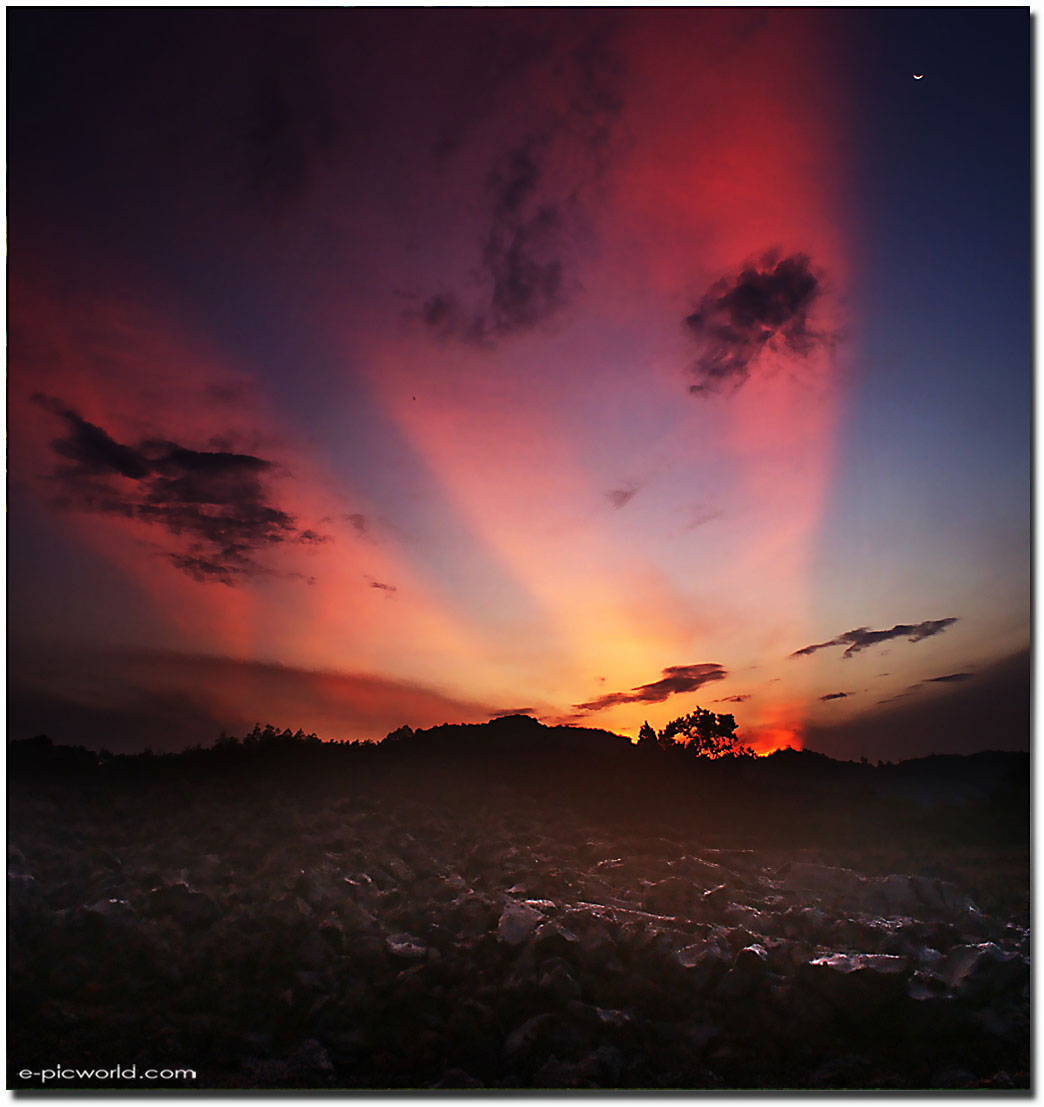
Acknowledgment and credit to Panorama Paul - the pioneer and master in Vertorama
Thanx for all comments and faves, all the best. Have a nice days ahead! We're all belong to each other and came from same father and mother (Adam and Eve), so peace and justice for all :)
"O God You do not create this to waste , The Exalted One please protect us from hellfire" SubhanAllah .......
"The Dome of Light", International acknowledgment of Kaohsiung MRT Stations, Kaohsiung's Formosa Boulevard and Central Park Station. The glass masterpiece designed by Italian artist Maestro Narcissus Quagliata was composed of 4500 pieces of stained glass and is the world's largest glass masterpiece. It features penetrating light through evolving scenes.
Due to intense harm and evil choices of others you are faced with so much darkness, devastation, difficulty, physical and emotional pain and suffering, unpredictability, fear, terror and so many other challenges that almost completely crush you which you are unable to express with words. And amidst all this suffering, when it feels like too much and you want to quit trying to survive, you work to keep looking for light and moving forward in healthy ways even when it seems impossible. Thank you for pressing on at a pace appropriate for you by working to care for yourself through many forms of nourishment, working to receive healthy support through God’s faithfulness and people who deeply care for you, through rest, tears, and graceful acknowledgment of truth and reality. You still have a long way to go on this journey and it is amazing how far you’ve come.
#NotetoSelf
_________________
These images were created simply using my phone during two of my recent hospitalizations for some intense difficulties following a very overwhelming procedure which all stems from and activates the effects of childhood trauma/abuse. This was one of my efforts to try to help myself cope during this extremely challenging time.
“The light shines in the darkness, and the darkness can never extinguish it.”
John 1:5
[this series of images created on 6-13 & 17-2023]
you only fail when you give up
you only fall when you stop moving forward
you only vanish when you stop talking
when you stop moving
when you stop caring
when you let yourself be forgotten.
being relevant is hard, and i freely admit, it's probably a lot harder than i am willing to work at the moment, but i am still working. still making art. just not promoting it at the moment. my focus is more on the art, not the desire to be noticed or important or acclaimed or anything else really. granted, i do appreciate the times i am noticed, the times people do say nice things about what i do, but, in the end, i do it for myself. i do it for the others. i do it for the stories, for the lives, for outlet for the comfort, for the self acknowledgment of everyone. no other reason.
i started to care for a bit, about what others did think, about if i was popular enough, noticed enough, famous enough. and in those moments, i vanished. i was only my fame, i was only important when i was recognized. and honestly, it sucked. i want to be important to myself, to those who love me, and to those i love. if by chance, the fates decide i need more, i will not hide from it, but i won't seek it out.
i don't do this for anyone else. i do it for us.
This image from the NASA/ESA Hubble Space Telescope feels incredibly three-dimensional for a piece of deep-space imagery. The image shows Arp 282, an interacting galaxy pair composed of the Seyfert galaxy NGC 169 (bottom) and the galaxy IC 1559 (top). Interestingly, both galaxies have monumentally energetic cores known as active galactic nuclei (AGN), although that is difficult to tell from this image, which is fortunate. If the image revealed the full emission of both AGNs, their brilliance would obscure the beautifully detailed tidal interactions we see in this image. Tidal forces occur when an object’s gravity causes another object to distort or stretch. The direction of tidal forces is away from the lower-mass object and toward the higher mass object. When two galaxies tidally interact, gas, dust, and even entire star systems can move toward one galaxy and away from the other. The image reveals this process in action as delicate streams of matter visibly link the two galaxies.
Astronomers now accept that an important aspect of how galaxies evolve is the way they interact with one another. Galaxies can merge, collide, or brush past one another – each interaction significantly affecting their shapes and structures. As common as such interactions may be, it is rare to capture an image of two galaxies interacting in such a visibly dynamic way.
Image Credit: ESA/Hubble & NASA, J. Dalcanton, Dark Energy Survey, Department of Energy (DOE), Cerro Tololo Inter-American Observatory/NoirLab/National Science Foundation/Association of Universities for Research in Astronomy (AURA), Sloan Digital Sky Survey (SDSS); Acknowledgment: J. Schmidt
#NASA #NASAMarshall #Hubble #HST #galaxy
[S142]
Looks like the crew are having a break. Lovely destinations are available on the sign in 1959 by changing trains here in this remote station located a few miles west of the actual Builth Wells town. You need a car to visit any of these towns today.
Due to the recent unauthorized publication of my images in a magazine. newspaper and two published books without payment I have to now make this statement. I keep attending online Railway Soc events where speakers brazenly show my images without any acknowledgment of the photographer or the fact they have just stolen them off my FLICKR site. Hence I have been forced to add a copyright sign in the corner.
This image is the copyright of © Peter Brabham or © Derek Chaplin family ; Any users, found to replicate, reproduce, circulate, distribute, download, manipulate or otherwise use my images without my written consent will be in breach of copyright laws. I will retrospectively claim £50 per print image if prior written authorization for publication has not been sought. Please contact me at pete.brabham@ntlworld.com for permission to use any of my FLICKR photographs in hard copy publication. I will usually give permission free of charge to Heritage Railways and steam loco restoration project advertising, but profit-making magazines and book authors must pay a reproduction fee. Authors should know the provenance of high quality digital images that they use.
NGC 2336 is the quintessential galaxy — big, beautiful, and blue — and it is captured here by the NASA/ESA Hubble Space Telescope. The barred spiral galaxy stretches an immense 200,000 light-years across and is located approximately 100 million light-years away in the northern constellation of Camelopardalis (the Giraffe).
Its spiral arms glitter with young stars, visible in their bright blue light. In contrast, the redder central part of the galaxy is dominated by older stars.
NGC 2336 was discovered in 1876 by German astronomer Wilhelm Tempel, using a 0.28 meter (11 inch) telescope. This Hubble image is so much better than the view Tempel would have had — Hubble’s main mirror is 2.4 meters (7.9 feet) across, nearly 10 times the size of the telescope Tempel used. In 1987, NGC 2336 experienced a Type-Ia supernova, the only observed supernova in the galaxy since its discovery 111 years earlier.
Text credit: European Space Agency (ESA)
Image credit: ESA/Hubble & NASA, V. Antoniou; Acknowledgment: Judy Schmidt
For more information: www.nasa.gov/image-feature/goddard/2021/hubble-beholds-a-...
Notes from John Hodge: This is the 6.30am Swansea to Paddn, 8am ex-Cardiff, and as you can see, it is hauled by an 81A Britannia, which I can see is 70020 Mercury. This dates it to pre January 1958 when all the WR Britannias were allocated to Cardiff, and also predates when the train was the up Capitals as it has no roof boards, I would say just after the engine was allocated to OOC as it still looks in good nick. It may well be the engine off the down papers (12.45am Pdn) as the 8am Cdf was a Canton turn, and perhaps the 81A engine off the papers had been stepped up to work the 8am.
Due to the recent unauthorized publication of my images in a magazine. newspaper and two published books without payment I have to now make this statement. I keep attending online Railway Soc events where speakers brazenly show my images without any acknowledgment of the photographer or the fact they have just stolen them off my FLICKR site. Hence I have been forced to add a copyright sign in the corner.
This image is the copyright of © Peter Brabham or © Derek Chaplin family ; Any users, found to replicate, reproduce, circulate, distribute, download, manipulate or otherwise use my images without my written consent will be in breach of copyright laws. I will retrospectively claim £50 per print image if prior written authorization for publication has not been sought. Please contact me at pete.brabham@ntlworld.com for permission to use any of my FLICKR photographs in hard copy publication. I will usually give permission free of charge to Heritage Railways and steam loco restoration project advertising, but profit-making magazines and book authors must pay a reproduction fee. Authors should know the provenance of high quality digital images that they use.
Nestled among the vast clouds of star-forming regions like this one lie potential clues about the formation of our own solar system.
This image from the NASA/ESA Hubble Space Telescope features AFGL 5180, a beautiful stellar nursery located in the constellation of Gemini (the Twins).
At the center of the image, a massive star is forming and blasting cavities through the clouds with a pair of powerful jets, extending to the top right and bottom left of the image. Light from this star is mostly escaping and reaching us by illuminating these cavities, like a lighthouse piercing through the storm clouds.
Stars are born in dusty environments and although this dust makes for spectacular images, it can prevent astronomers from seeing stars embedded in it. Hubble’s Wide Field Camera 3 (WFC3) instrument is designed to capture detailed images in both visible and infrared light, meaning that the young stars hidden in vast star-forming regions like AFGL 5180 can be seen much more clearly.
Text credit: European Space Agency (ESA)
Image credit: ESA/Hubble & NASA, J. C. Tan (Chalmers University & University of Virginia), R. Fedriani (Chalmers University); Acknowledgment: Judy Schmidt
For more information: www.nasa.gov/image-feature/goddard/2021/hubble-peers-into...
Time: 2020 May 23rd 00:50
Place: ITelescope, Mayhill, NM
Equipment: RASA 11'' + ZWO ASI071 pro
Exposure time: 2min*6 + 3min*3
Author: Chi-Jui Chen
Acknowledgment: Jeremy Chou provides observation time, and Evan Tsai provides some subs to form this work.
Jill and I made our first visit to the Museum today since the Covid Pandemic started over 2 years ago.
In fact, it was our first time travelling on a train, bus or tram for that time also!
All 3 in one day.
How about that for sticking to the rules !
“ So What did you do there, my blue eyed Son?
What did you see there my charming young one?
We saw many people with no masks on their faces,
We stifled inside overcrowded places,
We admired many images of animal species,
We heard children's voices raised in excitement.”
But, above all………..
We regained our desire to LIVE again”.
With acknowledgment to Bob Dylan.
Stellar life and death unfold in this “born again” star! 💫
After exhausting the nuclear fuel in their cores, stars with a mass of around 0.8 to eight times the mass of our Sun collapse to form dense and hot white dwarf stars.
As this process occurs, the dying star will throw off its outer layers of material, forming an elaborate cloud of gas and dust known as a planetary nebula.
This phenomenon is not uncommon, and planetary nebulae are a popular focus for astrophotographers because of their often beautiful and complex shapes. However, a few like the one pictured here (Abell 78) are the result of a so-called “born again” star.
Although the core of the star has stopped burning hydrogen and helium, a thermonuclear runaway at its surface ejects material at high speeds.
This ejecta shocks and sweeps up the material of the old nebula, producing the filaments and irregular shell around the central star seen in this image, which features data from NASA's Hubble Space Telescope.
Image credit: ESA/Hubble & NASA, M. Guerrero; Acknowledgment: Judy Schmidt
NASA Goddard Space Flight Center enables NASA’s mission through four scientific endeavors: Earth Science, Heliophysics, Solar System Exploration, and Astrophysics. Goddard plays a leading role in NASA’s accomplishments by contributing compelling scientific knowledge to advance the Agency’s mission.
Follow us on Twitter
Like us on Facebook
Find us on Instagram
This celestial cloudscape from the NASA/ESA Hubble Space Telescope captures the colorful region in the Orion Nebula surrounding the Herbig-Haro object HH 505. Herbig-Haro objects are luminous regions surrounding newborn stars that form when stellar winds or jets of gas spew from these infant stars creating shockwaves that collide with nearby gas and dust at high speeds. In the case of HH 505, these outflows originate from the star IX Ori, which lies on the outskirts of the Orion Nebula around 1,000 light-years from Earth. The outflows themselves are visible as gracefully curving structures at the top and bottom of this image. Their interaction with the large-scale flow of gas and dust from the core of the nebula distorts them into sinuous curves.
Captured with Hubble's Advanced Camera for Surveys (ACS) by astronomers studying the properties of outflows and protoplanetary disks, the image reveals bright shockwaves formed by the outflows as well as slower moving currents of stellar material. The Orion Nebula is awash in intense ultraviolet radiation from bright young stars. Hubble’s sensitivity to ultraviolet light allows astronomers to directly observe these high-energy outflows and learn more about their structures.
The Orion Nebula is a dynamic region of dust and gas where thousands of stars are forming. It is the closest region of massive star formation to Earth, making it one of the most scrutinized areas of the night sky and often a target for Hubble. This observation was also part of a spellbinding Hubble mosaic of the Orion Nebula, which combined 520 ACS images in five different colors to create the sharpest view ever taken of the region.
Image credit: ESA/Hubble & NASA, J. Bally; Acknowledgment: M. H. Özsaraç
#NASA #MarshallSpaceFlightCenter #MSFC #Marshall #HubbleSpaceTelescope #HST #astrophysics #NASAGoddard #gsfc #nebula
Facebook Page | Images by JHAmes808 | Portraits
I had a lot of practice doing macro in our own backyard. Not a lot of subjects but sometimes I get lucky to have visitors like this bee here. Looking at my old photos makes me feel like shooting macro again. I haven't done macrography for a long time now. Hopefully this coming weekend, I'll get some chance to shoot again.
I received a lot of questions about my macro shots and to those who replied back to my message, I appreciate the acknowledgment. :-)
Have a great day my friends.
Excerpt from the plaque:
Mrs. Hughes
The practical and nurturing housekeeper of Downton Abbey, Mrs. Hughes is a source of wisdom and stability for both the staff and the Crawley family. Her steadfast moral compass and gentle guidance often help resolve conflicts. Her marriage to Mr. Carson is a touching acknowledgment of the deep affection they’ve shared as heads of the Downton staff.
Head of housekeeping, Mrs. Hughes’ style is practical and no-nonsense, with only a little trim and embellishment reflecting her elevated status within the household. She always wears her chatelaine – a chain of keys for all the doors and drawers around the house. Featured florals include banyan roots, rose petals, and wheat roots.
It was built for the Paris Opera from 1861 to 1875 at the behest of Emperor Napoleon III. It soon became known as the Palais Garnier, "in acknowledgment of its extraordinary opulence" and the architect Charles Garnier's plans and designs. It was the primary theatre of the Paris Opera and its associated Paris Opera Ballet until 1989, when a new opera house, the Opéra Bastille, opened at the Place de la Bastille.
This image from the NASA/ESA Hubble Space Telescope reveals tendrils of dark dust threading across the heart of the spiral galaxy NGC 7172. The galaxy lies approximately 110 million light-years from Earth in the constellation Piscis Austrinus. The lane of dust threading its way across NGC 7172 is obscuring the luminous heart of the galaxy, making NGC 7172 appear to be nothing more than a normal spiral galaxy viewed from the side.
When astronomers inspected NGC 7172 across the electromagnetic spectrum they quickly discovered that there was more to it than meets the eye: NGC 7172 is a Seyfert galaxy – a type of galaxy with an intensely luminous active galactic nucleus powered by matter accreting onto a supermassive black hole.
This image combines data from two sets of Hubble observations, both proposed to study nearby active galactic nuclei. The image also combines data from two instruments -– Hubble’s Advanced Camera for Surveys and Wide Field Camera 3.
Image credit: ESA/Hubble & NASA, D. J. Rosario, A. Barth; Acknowledgment: L. Shatz
#NASA #NASAMarshall #Hubble #nebula #galaxy
This image features the spiral galaxy NGC 691, captured in fantastic detail using Hubble’s Wide Field Camera 3 (WFC3). This galaxy is a member of the NGC 691 galaxy group named after it: a group of gravitationally bound galaxies about 120 million light-years from Earth.
Hubble observes objects such as NGC 691 using a range of filters. Each filter only allows certain wavelengths of light to reach Hubble’s WFC3. The resulting filtered images are colored by specialists who make informed choices about which color best corresponds to the wavelengths of light from the astronomical objects that are transmitted by each filter. Combining the colored images from individual filters creates a full-color image. This detailed process provides us with remarkably good insight into the nature and appearance of these objects.
Credit: ESA/Hubble & NASA, A. Riess et al.; Acknowledgment: M. Zamani
NASA Goddard Space Flight Center enables NASA’s mission through four scientific endeavors: Earth Science, Heliophysics, Solar System Exploration, and Astrophysics. Goddard plays a leading role in NASA’s accomplishments by contributing compelling scientific knowledge to advance the Agency’s mission.
Follow us on Twitter
Like us on Facebook
Find us on Instagram
"I would like to talk about commitment: about a photographer’s or the teacher’s acknowledgment of his function — his purpose. I don’t think that commitment is an optional thing for the creative person. I don’t even think it’s an optional thing for a productive person. I think it’s an indispensable thing. In one form or another, only commitment can rescue us from boredom and frustration."
John Szarkowski, former Director of Photography at the Museum of Modern Art in New York
"You're never going to get anywhere in life if you don't live up to your obligations."
Robert Mapplethorpe
"The nicest thing about the promise of spring is that sooner or later she'll have to keep it."
Mark Beltaire
My brother Atsushi in Japan was awarded the decoration in acknowledgment of his achievements in international relations, and promotion of fencing in Japan, and was granted an audience by the Japanese Akihito Emperor at the Imperial Palace on Nov. 12, 2018.
At around 60 million light-years from Earth, the Great Barred Spiral Galaxy, NGC 1365, is captured beautifully in this image by the NASA/ESA Hubble Space Telescope.
Located in the constellation of Fornax (the Furnace), the blue and fiery orange swirls show us where stars have just formed and the dusty sites of future stellar nurseries.
At the outer edges of the image, enormous star-forming regions within NGC 1365 can be seen. The bright, light-blue regions indicate the presence of hundreds of baby stars that formed from coalescing gas and dust within the galaxy's outer arms.
This Hubble image was captured as part of a joint survey with the Atacama Large Millimeter/submillimeter Array (ALMA) in Chile. The survey will help scientists understand how the diversity of galaxy environments observed in the nearby universe, including NGC 1365 and other galaxies such as NGC 2835 and NGC 2775, influence the formation of stars and star clusters. Expected to image over 100,000 gas clouds and star-forming regions beyond our Milky Way, the PHANGS survey is expected to uncover and clarify many of the links between cold gas clouds, star formation, and the overall shape and morphology of galaxies.
Credit: ESA/Hubble & NASA, J. Lee and the PHANGS-HST Team; Acknowledgment: Judy Schmidt (Geckzilla)
NASA Goddard Space Flight Center enables NASA’s mission through four scientific endeavors: Earth Science, Heliophysics, Solar System Exploration, and Astrophysics. Goddard plays a leading role in NASA’s accomplishments by contributing compelling scientific knowledge to advance the Agency’s mission.
Follow us on Twitter
Like us on Facebook
Find us on Instagram
I asked for permission with a thumbs up and received shrugged shoulders as an acknowledgment. I took that as fire away. Rittenhouse Square on a warm fall afternoon in Philadelphia.
Situated outside the northern community of Iqaluit, Nunavut, Canada, this cemetery was completed in 2014 by Lees and Associates Landscape Architects. Their design won an award of excellence by the Canadian Society of Landscape Architects in 2017. Erik Lees, the principal of the firm, explained that the:
“ …[Iqaluit Cemetery] celebrates the landscape, especially with the bowhead whale bones and the first hunt in many years," he said. "It's a celebration of that event and a connection of the community to the land." (1)
While some of the tombs can be seen in the middle ground, the majority are situated off-camera behind me. The reasons for the emplacement of the new cemetery are well explained in the CBC News article, but this dreamy picture does not portray the very harsh realities of the high suicide rate that plagues the communities of Canada’s indigenous peoples. In the ten years between 2007 and 2017, there have been 335 (2) reported suicides in Nunavut’s population of nearly 38,000 people (3). The cultural, social and economic conditions lie at the root of this sad situation and their examination is beyond the scope of this very brief narrative.
I interpret the whale bones to have a greater spiritual meaning. In addition to the off-camera tombs, the modern infrastructure of Iqaluit and the community of Apex extends far into the distance behind me. The whale bones resemble a gateway to the unspoiled tundra and waters of Frobisher Bay, where the true culture and the way of the Inuit can be imagined by an outsider such as myself. However, as one arrives at this symbolic point, the graves — many of which have been dug much too early — block the path to that past. It reminds us that there can be no return to the traditional cultural ways found there. Sadly, the tombs also tell us that they are the grit of inevitable clash of civilizations, between the colonizing post-European and indigenous peoples of North America. For the Inuit, the acknowledgment of Nunavut by the Canadian government established a new path to self-governance. With a lot more work to be done, the path leads to a new horizon that lies beyond the symbolic gateway marked by the bones of the bowhead whale, and around the markers of the recent past. Wishbones, they are not.
1. CBC News, Angela Hill, 28 April 2017, www.cbc.ca/news/canada/north/iqaluit-cemetery-award-1.408....
2. CBC News, Nick Murray, 25 January 2018, www.cbc.ca/news/canada/north/2017-nunavut-suicide-statist....
3. 2017 population reported by Statistics Canada.
Clustered at the center of this image are six brilliant spots of light, four of them creating a circle around a central pair. Appearances can be deceiving, however, as this formation is not composed of six individual galaxies, but is actually two separate galaxies and one distant quasar imaged four times. Data from the NASA/ESA Hubble Space Telescope also indicates that there is a seventh spot of light in the very center, which is a rare fifth image of the distant quasar. This rare phenomenon is the result of the two central galaxies, which are in the foreground, acting as a lens.
The four bright points around the galaxy pair, and the fainter one in the very center, are in fact five separate images of a single quasar (known as 2M1310-1714), an extremely luminous but distant object. The reason we see this quintuple effect is a phenomenon called gravitational lensing. Gravitational lensing occurs when a celestial object with an enormous amount of mass – such as a pair of galaxies – causes the fabric of space to warp. When light from a distant object travels through that gravitationally warped space, it is magnified and bent around the huge mass. This allows humans here on Earth to observe multiple, magnified images of the far-away source. The quasar in this image actually lies farther away from Earth than the pair of galaxies. The galaxy pair’s enormous mass bent and magnified the light from the distant quasar, giving the incredible appearance that the galaxies are surrounded by four quasars – when in reality, a single quasar lies far beyond them!
Hubble’s Wide Field Camera 3 (WFC3) imaged the trio in spectacular detail. It was installed on Hubble in 2009 during Hubble Servicing Mission 4, Hubble’s final servicing mission. WFC3 continues to provide both top-quality data and fantastic images 12 years after its installation.
Image credit: ESA/Hubble & NASA, T. Treu; Acknowledgment: J. Schmidt
NASA Goddard Space Flight Center enables NASA’s mission through four scientific endeavors: Earth Science, Heliophysics, Solar System Exploration, and Astrophysics. Goddard plays a leading role in NASA’s accomplishments by contributing compelling scientific knowledge to advance the Agency’s mission.
Follow us on Twitter
Like us on Facebook
Find us on Instagram
The commissioner of the Metropolitan police went on the offensive today, defending his officers for an "astonishing" police operation during the G20 that he said had received international praise.
Sir Paul Stephenson said his comments were made in the context of a man having died during the demonstration, and of footage that was deeply concerning. But he went out of his way to praise what he said were an overwhelming majority of officers who carried out a professional job on the day.
Picking out the territorial support group (TSG) – which is at the centre of two IPCC investigations into Ian Tomlinson's death and an assault on a woman protester – Stephenson said it was a specialist unit the Met relied on.
"These and others are our first line response to some of the most difficult and challenging situations," he said.
The commissioner, who has spoken personally to TSG officers in a bid to raise their morale, said all knew they were individually accountable for their actions.
He said officers who were found to have deliberately hidden their numbers would be severely disciplined. "If someone is trying to deliberately avoid being identified and their reason is so they can behave inappropriately, criminally, then of course they could face the sack," Stephenson said.
He planned to tackle the problem of police identification by examining whether every officer should wear name tags.
The commissioner said there were supervision problems with some groups of officers and he wanted this improved. "The overwhelming majority did [wear their numbers]. There is not sufficient concentration on intrusive supervision.
"That is what I believe in. It is the job of supervisors to go and find out how good your people are so that you can say well done and sometimes to find out where they are going wrong."
The commissioner spoke as a pathologist was carrying out the third postmortem on Ian Tomlinson's body. It was done at the request of lawyers for the TSG officer seen in footage obtained by the Guardian apparently attacking Tomlinson. The Met will be present at the postmortem after receiving advice from its lawyers.
The IPCC is investigating the circumstances of Tomlinson's death; a second incident in which a TSG sergeant is seen hitting a woman protester; and a third case that resulted from another complaint from a protester about police violence.
Stephenson has asked for a review of all footage in the Met's possession. This is being carried out by the Met's department of professional standards. Denis O'Connor, Her Majesty's inspector of constabulary, has been asked to examine the tactics used by the Met for public order events, specifically the issue of containing demonstrators for several hours.
Stephenson said the use of containment had begun after a demonstration in June 1999 when protesters caused £13m worth of damage. "The policy of containment has come from our history. As a consequence of this we … developed a policy of graduated control which at some point may involve containment. If there is a better way to do it we are up for learning it, but we don't know of a way."
Stephenson said he had received acknowledgment from police forces internationally for what the Met achieved during the G20.
"Part of the headlines should be … astonishing operation pulled off by the Met who did a first-class job," he said.
"The overwhelming majority of officers, whatever the stress or provocation, carried out their duties in a professional manner and I want to give them credit for what they achieved." He said his comments were in the context that some of the footage he had seen caused him deep concern, and the Met was cooperating with the IPCC to help provide the answers that Tomlinson's family wanted.
Stephenson said the Met had never misled anyone in the aftermath of Tomlinson's death. He said the scene where he collapsed was secured, sealed off and treated as a crime scene and the press statement the Met released in the aftermath of the death was approved by the Independent Police Complaints Commission.
www.guardian.co.uk/politics/2009/apr/22/tomlinson-g20-met...
In this spectacular image captured by the NASA/ESA Hubble Space Telescope, the galaxy NGC 2799 (on the left) is seemingly being pulled into the center of the galaxy NGC 2798 (on the right).
Interacting galaxies, such as these, are so named because of the influence they have on each other, which may eventually result in a merger or a unique formation. Already, these two galaxies have seemingly formed a sideways waterspout, with stars from NGC 2799 appearing to fall into NGC 2798 almost like drops of water.
Galactic mergers can take place over several hundred million to over a billion years. While one might think the merger of two galaxies would be catastrophic for the stellar systems within, the sheer amount of space between stars means that stellar collisions are unlikely and stars typically drift past each other.
Credit: ESA/Hubble & NASA, SDSS, J. Dalcanton; Acknowledgment: Judy Schmidt (Geckzilla)
NASA Goddard Space Flight Center enables NASA’s mission through four scientific endeavors: Earth Science, Heliophysics, Solar System Exploration, and Astrophysics. Goddard plays a leading role in NASA’s accomplishments by contributing compelling scientific knowledge to advance the Agency’s mission.
Follow us on Twitter
Like us on Facebook
Find us on Instagram