View allAll Photos Tagged Accompaniment
Technically jumping the gin by a couple of days, but it¡s *almost* March and the weather's (finally) turned dry and sunny. The spring flowers have suddenly burst forth and the first hints of 'the greening' have begun. Due to the odd weather, we actually have snowdrops at the same time as the later spring flowers - lesser celandines, mini-daffodils and crocuses. Coffee with freshly baked lemon cupcakes provide a suitably spring-like accompaniment.
My first foray into the Fannichs. Two munros done, on the way to the third of the day. Looking towards Sgurr nan Each and Loch Fannich from the slopes of Sgurr nan Clach Geala. Fionn Bheinn in the distance on the right. All to the accompaniment of numerous stags roaring in the glen.
(Für die deutsche Version siehe bitte: www.vlachbild.de/chopin-preludes-op-28-1-agitato-c-dur/ )
Start of new project: for February 2013: personal photographic interpretations of Chopins 24 Preludes op.28
1.Agitato. C-Major.
Short, very short. C major, one of the most used and most sunny keys, just gets less the a minute of playing time. The arabesque melody itself is quite uninteresting itself - only its accompaniment gives it subtlety and results into a tiny, very beautiful gem. One without the other is boring, both together form something beautiful. Chopin was in haste when he wanted to meet his lover George Sand in order to move to Mallorca .....
Listen to it here eg.:
This pairing is also from Cafe Grace in Fitzroy where I could have easily spent hours just photographing this wonderful place.
Pictured here is part of the street art along the front of the cafe and the little accompaniments that are on each table outside.
You can see all my 'What's Brewing' images here: 100 x What's Brewing: The 2016 edition.
You can see more of my Colour Palette series here:
Lovely, gentle light and colours to the east one winter's dawn this past month.
The sky over the ocean was a delight at that time. It was a beautifully tranquil, peaceful, calm moment with just the rolling waves as an auditory accompaniment.
© All rights reserved.
Le terme casse-croûte, aussi orthographié casse-croute désigne différentes réalités apparentées au domaine de l'alimentation.
À l'origine, le terme casse-croûte est utilisé en France pour désigner un outil à l'usage des vieillards édentés, employé pour broyer les croûtes de pain.
Depuis la fin du XIXe siècle, ce terme désigne aussi, en français européen, le repas sommaire que prennent les ouvriers pendant une pause de leur travail. Par extension, l'on nomme aussi casse-croûte un repas très simple, ou simplement un sandwich.
En français québécois, le terme casse-croûte désigne un restaurant servant des repas légers. Il est donc utilisé comme synonyme de snack-bar, ce dernier terme relevant du registre familier au Québec, mais du registre standard en France. Le casse-croûte typique est un établissement de restauration rapide, sans prétention, situé en bordure de route.
A snack is a small portion of food generally eaten between meals. Snacks come in a variety of forms including packaged snack foods and other processed foods, as well as items made from fresh ingredients at home.
Traditionally, snacks are prepared from ingredients commonly available at home without a great deal of preparation. Often cold cuts, fruits, leftovers, nuts, sandwiches, and sweets are used as snacks. With the spread of convenience stores, packaged snack foods became a significant business.
Snack foods are typically designed to be portable, quick, and satisfying. Processed snack foods, as one form of convenience food, are designed to be less perishable, more durable, and more portable than prepared foods. They often contain substantial amounts of sweeteners, preservatives, and appealing ingredients such as chocolate, peanuts, and specially-designed flavors (such as flavored potato chips).
In the United States, a popular snack food is the peanut. Peanuts first arrived from South America via slave ships and became incorporated into African-inspired cooking on southern plantations. After the Civil War, the taste for peanuts spread north, where they were incorporated into the culture of baseball games and vaudeville theatres.
Along with popcorn, snacks bore the stigma of being sold by unhygienic street vendors. The middle-class etiquette of the Victorian era (1837–1901) categorized any food that did not require proper usage of utensils as lower-class.
Pretzels were introduced to North America by the Dutch, via New Amsterdam in the 17th century. In the 1860s, the snack was still associated with immigrants, unhygienic street vendors, and saloons. Due to loss of business during the Prohibition era (1920-1933), pretzels underwent rebranding to make them more appealing to the public. As packaging revolutionized snack foods, allowing sellers to reduce contamination risk, while making it easy to advertise brands with a logo, pretzels boomed in popularity, bringing many other types of snack foods with it. By the 1950s, snacking had become an all-American pastime, becoming an internationally recognized emblem of middle American life.
Indonesia has a rich collection of snacks called kue (cakes and pastry), both savoury and sweet. Traditional kue is usually made from rice flour, coconut milk, and coconut sugar, and is mostly steamed or fried rather than baked. Traditional kue are popularly known as kue basah ("wet kue") that has a moist, soft texture because of rich coconut milk. Kue kering (dried kue) is the local name for cookies. Indonesia has several variations of kue, both native and foreign-influenced
Traditional crackers are called krupuk, made from bits of shrimp, fish, vegetables or nuts, which are usually consumed as a crunchy snack or an accompaniment to meals. These crispy snacks are sometimes added to main dishes for their crunchy texture.
Japan has a very wide range of snack foods ranging from onigiri to Melon pan. For more details see List of Japanese snacks and Japanese cuisine.
In the Middle East, one of the most important snacks that contains a huge amount of proteins is Lupinus, commonly known as lupin. Lupin contains around 33-40% protein. Another common snack in the Middle East is hummus made of chickpeas. Source Wikipedia.
TD : Leica M4-P 35 mm f/1.4 Summilux. Kodak Tri-X Pan 35mm film, exposure ISO 400, natural daylight, developed in D-76 1+1 20° 9'45". Scanned with Alpha 6000 edited in ACR, inverted in CS6.
The morning of the first snow in the village found me outdoors with the camera. There's such an enchanted feeling about this moment for me, seeing my surroundings covered in fluffy white. It's all very reminiscent of a vintage Currier & Ives print. It's only been a matter of months since the snow melted off last spring. But seeing the first snow always seems to make it feel much longer. I wandered about in the back woods, taking in the scenes and finding new ways to visually interpret what I was seeing through my lens. My takeaway moment however was not the snow, but the dull late autumn sky I found reflecting off the surface of the pond. About a third of it was covered in a thin layer of ice. But the open water revealed a myriad of bare tree branches and wonderfully muted sky tones that are a signature of Northern winter. It was like looking at a real-life impressionist painting. The stirring strains of Handel's water music composition instantly came to mind and formed a perfect accompaniment to this photo. Timeless. Listen here:
Ok. My play on words for these sweet potatoes which were served as an accompaniment to a recent dinner. I used a little oil, some lemon juice, nutmeg and all spice on top, and then roasted them in the oven.
For “Looking close... on Friday!” theme of “Orange”
Have a great day! I wish you good health. 😀
Three my original pictures processed on Ps CC
Semolina and pine nut sweets served with the classic Arabic cardamom coffee brewed in dallah, the traditional brass coffee pot.
In its most basic form, the Arabic coffee has simple ingredients and preparation: water, lightly roasted coffee, and ground cardamom are boiled in a dallah for 10 minutes to several hours, depending on the preference of the drinker. It is served unfiltered and bitter in demitasse cups. Other traditional and regional recipes include saffron or other spices.
To make up for the bitter flavor, coffee is usually served with something sweet – dates are a traditional accompaniment – and other desserts are often served along with a tray of coffee cups.
MUSIC: "Beyond the Sea," Bobby Darin
It's all about the colors and composition for me on this one....I thought it was worth another round on the front page with a little Bobby Darin accompaniment.... :))
This is part of the stop motion that I made for English class. It is based off of Viola's monologue in Twelfth Night by William Shakespeare. I wrote the song, and Heidi wrote the accompaniment. She is on the piano, I am doing vocals.
For the whole thing, click here.
All the pictures are SOOC because I was too lazy to edit all 300+ of them.
A mere 8 days after a dozen or more railfans in 6 vehicles were at Jeffrey Road for a well lit 900 South here's another one with nowhere near the photographic accompaniment. I though I would be here alone for the first few minutes but it wound up being a party of 5 as Mr. Kos & Schreiner rolled up with kiddos in tow for this really nice U717.
The Santa Monica Pier is a large double-jointed pier at the foot of Colorado Avenue in Santa Monica, California. With an iconic entrance, the pier is popular with residents and visitors as a landmark that is over 100 years old.
Santa Monica has had several piers; however, the Santa Monica Pier is two adjoining piers that long had separate owners. The long, narrow Municipal Pier opened September 9, 1909, primarily to carry sewer pipes beyond the breakers, and had no amenities. The short, wide adjoining Pleasure Pier to the south, a.k.a. Newcomb Pier, was built in 1916 by Charles I. D. Looff and his son Arthur, amusement park pioneers. Attractions on the Pleasure Pier eventually included the Santa Monica Looff Hippodrome building (which now houses the current carousel and is listed on the National Register of Historic Places), the Blue Streak Racer wooden roller coaster (which was purchased from the defunct Wonderland amusement park in San Diego), the Whip, merry-go-rounds, Wurlitzer organs, and a funhouse.
The Carousel was built in 1922 on what was often referred to as a Pleasure Pier and features 44 hand-carved horses. It was rebuilt in 1990 inside the Hippodrome. A calliope provides musical accompaniment.
The La Monica Ballroom opened on July 23, 1924. Designed by T.H. Eslick with a Spanish façade and French Renaissance interior, it was the largest dance hall on the west coast, accommodating 5,000 dancers on its 15,000-square-foot (1,400 m2) hard maple floor. Country music star Spade Cooley began broadcasting his weekly television show from the ballroom in 1948, where the enormously popular program remained until 1954. In the summer of 1955, the Hollywood Autocade opened at the La Monica with one-hundred famous and unusual cars, including Jack Benny’s Maxwell and a Rumpler Drop Car. From 1958 until 1962, the ballroom served as a roller skating rink; first as Skater's Ballroom, and later as the Santa Monica Roller Rink, where the speed skating club won many state and regional championships. The La Monica Ballroom was demolished in 1963.
The Pleasure Pier thrived during the 1920s but faded during the Great Depression. During the 1930s, the pier was mainly used as a ferry landing, while most of the amusement park facilities were closed down and its attractions sold off.[8]
The bridge and entry gate to Santa Monica Pier were built in 1938 by the federal Works Project Administration, and replaced the former grade connection.
The Newcomb Pier was privately owned until it was acquired by the city in 1974.During the 1960s and 1970s various plans were proposed that would entail removal of the pier. The strangest one called for the construction of an artificial island with a 1500-room hotel. It was approved by the City Council, but citizens formed "Save Santa Monica Bay" to preserve the pier.[11] The outstanding order to raze the pier was revoked by the city council in 1973. Within that same year, the Carousel and Hippodrome were memorable sets featured in the film The Sting, although the story was set in Chicago.
In the 1950s, Enid Newcomb suggested to family friend Morris "Pops" Gordon that his two sons, George and Eugene, purchase and operate the Pier’s arcade. It didn’t take much persuasion, for the Gordons instantly took to the Pier and ultimately made Playland Arcade into the Pier’s longest running enterprise offering the day’s contemporary games alongside those of yesterday, providing inexpensive entertainment to a diverse crowd. George’s daughters Marlene and Joanie have kept the business within the family, and the next generation of Gordons is already in training to maintain the family tradition.
In 1983, the Santa Monica Pier experienced a significant loss. On January 27, there were reported swells of 10-feet during this winter storm. When the storm was over, the lower deck of the pier was destroyed. The City of Santa Monica began repairs on March 1, 1983, when another storm rolled in. A crane which was being used to repair the west end was dragged into the water and acted as a battering ram against the pilings. Over one-third of the Pier was completely destroyed.
The City of Santa Monica created a non-profit in response to the damage and called it Santa Monica Pier Restoration Corporation (SMPRC). SMPRC conducted the daily operations of the Santa Monica Pier, such as managing events, filming, promotions, tenants, and street performers. To date, SMPRC has produced the Santa Monica Pier Paddle Board Race and the Twilight Summer Concert Series. Also, in 2011, SMPRC changed the company name to the Santa Monica Pier Corporation (SMPC).
The famous “Binns Clock” on the corner of Princes Street and Hope Street in Edinburgh has been restored. The building used to be occupied by the department store Binns which was taken over by House of Fraser in 1953. The clock was installed in 1960 and was an iconic meeting place. The Frasers store closed in 2018 and the building is currently being converted into the Johnnie Walker Experience. The clock restoration work was carried out by the Cumbria Clock Company who also repaired the musical mechanism which plays traditional Scottish tunes every half an hour as the kilted figures march out of the clock. In keeping with tradition, the Highland figures will emerge to the musical accompaniment every seven and 37 minutes past the hour.
Audio accompaniment suggestion is Illiad by Malibu: open.spotify.com/track/3WOQrwzk66ACqHOu1l8zBp?si=e92e6897...
The haka (/ˈhɑːkə/; plural haka, in both Māori and English) is a ceremonial dance or challenge in Māori culture. It is a posture dance performed by a group, with vigorous movements and stamping of the feet with rhythmically shouted accompaniment. Although commonly associated with the traditional battle preparations of male warriors, haka have long been performed by both men and women, and several varieties of the dance fulfill social functions within Māori culture. Haka are performed to welcome distinguished guests, or to acknowledge great achievements, occasions or funerals. Wikipedia
It's my one year flickr birthday.
Thanks to fred, thao, morocco girl, dimitri, penny, katia, ana, joli, maggie, dani, charlotte a, penny, leuntje, aurelio z, sir cam, eleanora, diana s, moonchild, narly, bookish, pati, denis, ray + terence, h@ru, mr. shark, the pub quiz winners and so many more for your visits and your support.
You are all invited to the party!
'Let the wild rumpus start!' as maurice sendak would say.
and some music for the party (thanks to ana lee)
Romantic Place @ Schloss Hof in Winequarter
Something sweet as a musical accompaniment:
www.youtube.com/watch?v=LjhCEhWiKXk
(Bruno Mars - Just The Way You Are)
More pictures you can see here:
www.lady-sunshine-photos.at/home/aktivitäten/schloss-hof...
Thanks very much for visiting, favs and comments !
Sleep Dirt is an acoustic guitar duet featuring Frank Zappa and James Youman on Zappa's album Sleep Dirt that pursues the close-up intimacy of Zoot Allures as an insistent peaceful motif with conventional evocation. The song as well as the album was named after the secretion that accumulates in the corner of the eye during sleep.
The song's tone is described as intimate as Frank Zappa's sliding left hand gives it a special flavor. Zappa played a fast paced solo, while Youman played the accompaniment.
The track has some of the dreamy intensity of half-conscious perception as Youman falters at the end and Zappa asks, "you getting tired?"; "no, my fingers got stuck."
27th December 1991
37071 37083 and 47479 pass Waitby with 09:40 Leeds - Carlisle on one of several occasions when services over the S&C were given some freight loco haulage (in the accompaniment of a 47/4)
Peruvanam pooram began a long time ago. Legend has it that it started in the form of an Utsavam (a bit different in rituals from Pooram and extending to 28 days) which went on for 500 years. After that, it was stopped for a period of time. Later it was restarted in the form of two poorams Peruvanam and Arattupuzha. The new version has been in existence now for 1425 years. It is held in the Malayalam month of Meenam (usually, April). There will be an Ezhunnallippu (Malayalam word which means taking out a temple deity atop a caparisoned elephant along with many jumbos—here totalling seven—to the accompaniment of traditional percussion ensembles like Panchari melam or Pandi melam. For the Peruvanam pooram, the first ezhunnallippu starts in the evening. More such processions follow, and the festival ends in the morning.
A carousel or carrousel (mainly North American English), merry-go-round (international), roundabout (British English), or hurdy-gurdy (an old term in Australian English, in SA
is a type of amusement ride consisting of a rotating circular platform with seats for riders. The "seats" are traditionally in the form of rows of wooden horses or other animals mounted on posts, many of which are moved up and down by gears to simulate galloping, to the accompaniment of looped circus music.
One grated carrot, some chopped onion and chopped fennel dressed with safflower oil and lemon juice. Served as an accompaniment to a herby potato and onion frittata.
So called as, however long I 'tweaked', I couldn't get the three to work as cohesively as I wanted, they still seem to be isolated elements? Maybe Black Sabbath, loud, ain't the ideal editing accompaniment?
This is the last night sky photo from Downpatrick Head. A beautiful sea stack with the accompaniment of stars.
The image consists of ten combined images with 25s exposure each. Hope you will like it
Photo taken in an orphanage/AIDS hospice/preschool in slums of Bangkok. The Mercy Centre is run by a slum Catholic priest named Father Joe Maier.
--
© 2007 Wiley Books
Photo of a rock garden playground at an AIDS orphanage/hospice/preschool in slums of Bangkok. The following is true:
--
The chorus that christens the morning begins sharply at seven o'clock. Its crescendo rises softly in a child's soprano, then quickens into a staccato that flits like wind chimes through the slum priest's windows and the entire Mercy courtyard. Nothing about it is orchestrated. You couldn't if you wanted.
"Does a rock have life?" he asked me one day.
Silly question.
"Do rocks make noise?"
Sure, if you throw them against something.
Outside his house is a preschool playground with no swings, slides or ropes to climb, just beige sand and giant boulders, plenty of both. When Mercy constructed it from donated materials, the staff envisioned an aesthetic touch to the school yard. A rock garden, it's called. Then the preschoolers saw it and took off their shoes. They burrowed their toes into the sand and hopped from boulder to boulder, as if a creek gurgled underfoot. They patted and stroked the rough granite, pampered it like a pet, then marched around it smiling, laughing, joking. Turns out rocks and sand are good for more than their looks. The children were cut loose, told to go wild.
And that's when the Mercy morning received its gleeful accompaniment.
One of the kids told the priest that if one boulder is touched or climbed on then every boulder must be touched or climbed on. Seems all the preschoolers know this rule. You don't leave even one rock out, feelings get hurt that way. The priest shook his head at the obvious wisdom.
"Neither you nor I would ever think we could offend a rock, but actually it is a very (spiritual) concept, very cosmic, that all creation has life," he says. "So … does a rock have life?"
It can enrich it, I guess. Who knew? But left alone it's still just rock, and like the proverbial tree falling in the forest, maybe no one hears it, sees it or cares. That's where I figure he's headed: the Buddhist philosophy of interdependency. Everything affects everything else. Life does not exist in isolation. We receive by giving and vice versa. It's why Father Joe calls it a privilege for abused/orphaned/sick children to allow him to serve them. Their trust is electric.
"Yes, a rock is a form of life," he says finally. "Not one of the higher forms."
For more information on Father Joe's work and chairty visit the Mercy Centre website or its USA tax-deductible equivalent here
if you have never seen the haka performed, please watch this- it is well worth it!!
www.youtube.com/watch?v=uHW1K2LeQXE&feature=related
A haka is a traditional dance form of the Māori of New Zealand. It is a posture dance with shouted accompaniment, performed by a group. The most well-known haka is "Ka Mate", attributed to Te Rauparaha, war leader of the Ngāti Toa tribe. The Ka Mate haka is classified as a "Haka Taparahi" - a ceremonial haka. "Ka Mate" is a Māori haka composed by Te Rauparaha, war leader of the Ngāti Toa tribe of the North Island of New Zealand. Te Rauparaha composed Ka Mate as a celebration of life over death (Pōmare 2006) after his lucky escape from pursuing Ngati Maniapoto and Waikato enemies. He had hidden from them in a food-storage pit, and climbed back into the light to be met by a chief friendly to him - Te Whareangi (the "hairy man").
"Ka Mate" is the most widely known haka in New Zealand and elsewhere because it has traditionally been performed by the All Blacks, New Zealand's international rugby union team, immediately prior to test (international) matches. Since 2005 the All Blacks have occasionally performed another haka, "Kapa o Pango".
Ka mate, ka mate! ka ora! ka ora!
Ka mate! ka mate! ka ora! ka ora!
Tēnei te tangata pūhuruhuru
Nāna nei i tiki mai whakawhiti te rā
Ā, upane! ka upane!
Ā, upane, ka upane, whiti te ra!
’Tis death! ‘tis death! (or: I may die) ’Tis life! ‘tis life! (or: I may live)
’Tis death! ‘tis death! ’Tis life! ‘tis life!
This the hairy man that stands here...
…who brought the sun and caused it to shine
A step upward, another step upward!
A step upward, another... the Sun shines!
No 2. Music, words and flute accompaniment. Headpiece illustration of woman leaning against a rock in the countryside with a town in the distance. Set to Music by Mr Lampe. First line: Blow on ye winds.
Calliope, or, English harmony is a collection of English and Scottish songs engraved & sold by Henry Roberts, engraver & printseller in London between 1739-1746.
My new work, whose idea has come to me in April %)
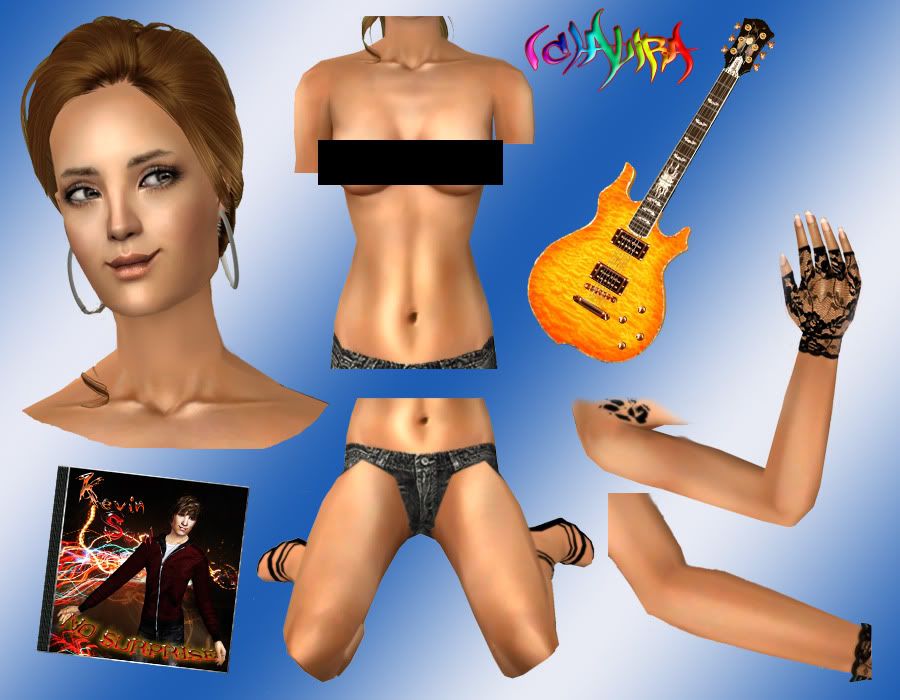
Model: Margarita Soul (she is baby and teen)
Almost-prototype: Rock and Roll by ~dalecogan
Accompaniment: Theory Of A Deadman - Bad Girlfriend (YouTube)
This has been a PPW{ (Paul Puppet Warp Production) No term papers were harmed or killed in the production of this image. Offer void where prohibited by law. Some restrictions may apply.
Don Potata on facebook suggested "Let's do the Time Warp Again" from "The Rocky Horror Picture Show" as the perfect musical accompaniment to the Puppet Warp medium! www.youtube.com/watch?v=Rtkdo7bOmJc
The morning of the Great American Eclipse of 2017 began with this. After a night of freezing weather spent in our cars, my friends and I got out and set up shop on the shores of Stanley Lake in Idaho.
The eclipse was to start 3 hours later when the McGowan peak and the sawtooth range lit up in the warm alpenglow revealing the glacier as well as the wispy clouds that had slid down around the base of the peaks. There was some threat of wildfire smoke obscuring the eclipse but luckily for us they stayed away for the duration of the eclipse.
The serene Stanley lake, majestic Sawtooth mountains and the cool fresh air made a perfect accompaniment for the extraordinary spectacle that unfolded over the next few hours.
Jubilee class 45690 "Leander" is in fine fettle as she powers past Gisburn with eleven on, and without the insurance of a diesel on the rear - hey, no sweat for this 81 years young LMS engine!
And, as well as the three cylinder rapid beat, there's the after effect of the coaches going clickety-clack over the joints of the bullhead track - a splendid musical accompaniment to the whiff of soot and disappearing beat of the engine as the train heads towards Hellifield.
For the record, it's the 8.08am Lancaster - Carlisle "The Fellsman" (1Z52). I snapped two shots here and was in two minds about which one to upload - a more distant take where the exhaust featured nicely against the backdrop of the trees, or this one where the lines of the loco showed to better effect but the exhaust less prominent. Seeing as this stream sees so few steam shots I ended up opting for the latter.
22nd August 2017
X-Pro2 • XF23/2
Cambria, CA
September 2022
Acros SOOC aside from flip
Foggier accompaniment to previous.
Schuberts Ave Maria mit Posaunenbegleitung in der Peterskirche in Wien. Wundebar fürs Ohr, die Lichtsituation tat ein Übriges fürs Auge.
Schubert's Ave Maria with trombone accompaniment in St. Peter's Church in Vienna. Wonderful for the ear, the light situation did the rest for the eye.
Immediately following the departure of the NS business train that was spinning itself at this location ( flic.kr/p/2rbXiRS ), the KCS 5010 came rolling north over the ASB Bridge in North Kansas City, MO with a westbound empty grain train. This was CPKC's train 375-15, and it would stop shortly ahead in BNSF's Murray Yard for a new crew.
Regarding this location, I was here with permission and accompaniment from RR personnel. I wouldn't try this on my own.
…and they’ll be no catching him this time.
A quiet illumination, feathered and glistening in and out and among the wavy, dancing reeds. Yes, it shimmered and yes, it wasn’t shy about it either. Not loud and brash, of course. Rather, a demur passing, eyes flashing momentarily under the wreath of light cast off by the overhead streetlamp. So softly did it touch, a gentle caress causing the heart to flutter, to warm over and swell and ever so proud of the prolonged effect of it all.
Casually, as if not a care beyond this very moment, I made to reach out, offering a sincere yet slightly cautious greeting. Something caught my attention from out of the corner of my eye and there was nothing demur about it, I fear. Merely steeping that climatic interaction in barrage of memories, telltale ways of how and why we ended up at this point and forgiveness unfolded with intent, just was not going to cut it this time. I genuflected… my reflection a lie.
It is not this way, is it? Not surely will the horizon once again rise and greet the dawn off in the distance. Not surely will we rely on the worse, if the reverse were true. It wasn’t as it was how I remembered it and it wasn’t going to be how it was remembered either. Because it, that filament burning with such quiet illumination, is new. As real as the worse lie ever told and as essential to the blood, the lifeblood of all it interacted with and lay its presence upon.
Musical accompaniment: 'The Lacemaker’ (Extended version)’ - This Mortal Coil.
Antwerp, Belgium: This little boy wandered into a vacant corner of the hall, at a wedding feast, to watch the lively dancing of the men and the accompaniment of the musicians.
Sometimes flowers need little or no accompaniment. This is about as simple setup as can be although it still needed a ridiculous amount of post processing to make sure the background was true black and show the sunflowers off as well as possible.
The royal road of spiritual accompaniment, its alpha and omega, is the cultivation of a contemplative attitude toward the world and one’s own life. Spiritual accompaniment can be of assistance to nobody unless it teaches the practice of inner attunement, the art of detaching oneself from life on the surface and “going deeper,” of achieving free dispassion and detachment, of perceiving and experiencing one’s life from a broader perspective. The mission of the spiritual companion is to say to clients what Jesus said when he first addressed his future disciples: launch out into the deep and wait in silence. But they must also be taught how to do it—to be initiated into the art of contemplation. For only in this way can they find contact with meaning and restore balance and direction in their lives in liminal and crisis situations.
-The Afternoon of Christianity The Courage to Change, Tomáš Halík