View allAll Photos Tagged 2--making
The City and Borough of Juneau, more commonly known simply as Juneau (/ˈdʒuːnoʊ/ JOO-noh; Tlingit: Dzánti K'ihéeni [ˈtsʌ́ntʰɪ̀ kʼɪ̀ˈhíːnɪ̀]), is the capital city of the state of Alaska. Located in the Gastineau Channel and the Alaskan panhandle, it is a unified municipality and the second-largest city in the United States by area. Juneau was named the capital of Alaska in 1906, when the government of what was then the District of Alaska was moved from Sitka as dictated by the U.S. Congress in 1900. The municipality unified on July 1, 1970, when the city of Juneau merged with the city of Douglas and the surrounding Greater Juneau Borough to form the current municipality, which is larger by area than both Rhode Island and Delaware.
Downtown Juneau (58°18′00″N 134°24′58″W) is nestled at the base of Mount Juneau and across the channel from Douglas Island. As of the 2020 census, the City and Borough had a population of 32,255,[2] making it the third-most populous city in Alaska after Anchorage and Fairbanks. Juneau experiences a daily influx of roughly 6,000 people from visiting cruise ships between the months of May and September.[citation needed]
The city is named after a gold prospector from Quebec, Joe Juneau, though the place was once called Rockwell and then Harrisburg (after Juneau's co-prospector, Richard Harris). The Tlingit name of the town is Dzántik'i Héeni ("Base of the Flounder's River," dzánti 'flounder,' –kʼi 'base,' héen 'river'), and Auke Bay just north of Juneau proper is called Áak'w ("Little lake," áa 'lake,' -kʼ 'diminutive') in Tlingit. The Taku River, just south of Juneau, was named after the cold t'aakh wind, which occasionally blows down from the mountains.
Juneau is unique among the 49 U.S. capitals on mainland North America in that there are no roads connecting the city to the rest of the state or North America. Honolulu, Hawaii, is the only other state capital not connected by road to the rest of North America. The absence of a road network is due to the extremely rugged terrain surrounding the city. This in turn makes Juneau a de facto island city in terms of transportation, since all goods coming in and out must go by plane or boat, in spite of the city's location on the Alaskan mainland. Downtown Juneau sits at sea level, with tides averaging 16 feet (5 m), below steep mountains about 3,500 to 4,000 feet (1,100 to 1,200 m) high. Atop these mountains is the Juneau Icefield, a large ice mass from which about 30 glaciers flow; two of these, the Mendenhall Glacier and the Lemon Creek Glacier, are visible from the local road system. The Mendenhall glacier has been gradually retreating; its front face is declining in width and height.
The Alaska State Capitol in downtown Juneau was built as the Federal and Territorial Building in 1931. Prior to statehood, it housed federal government offices, the federal courthouse and a post office. It also housed the territorial legislature and many other territorial offices, including that of the governor. Today, Juneau remains the home of the state legislature and the offices of the governor and lieutenant governor. Some other executive branch offices have moved elsewhere in the state. WIKIPEDIA
I heard it before I saw it. This mint looking, classic 1967 Chevelle SS rumbled the streets of Juneau Alaska.
The front plate's bragging rights: 'SS 454'
The rear customized Alaskan plate read 'WAYBAK'
One sweet ride !!!
Artistic impression
Thank-you for all the overwhelming support and many friendships.
Stay Healthy
~Christie
*Best experienced in full screen
Portrait of the Magicicada Septendecim or Cicada, Brood 2 making it's adult appearance in Blairstown, New Jersey after spending the last 17 years underground.
For more information please visit: www.cicadamania.com/
The setting sun lights up the tower at Groundhog Mountain as high winds cause clouds to zip on by during this long exposure.
No Photoshop effects, just color correction and dust cleaning, this is the actual behind the scene setup.
“No matter how old are you, if you’re brave enough to do this, you’ll feel the true freedom” :)
*Imagine they are running with a slow motion effect with this song.
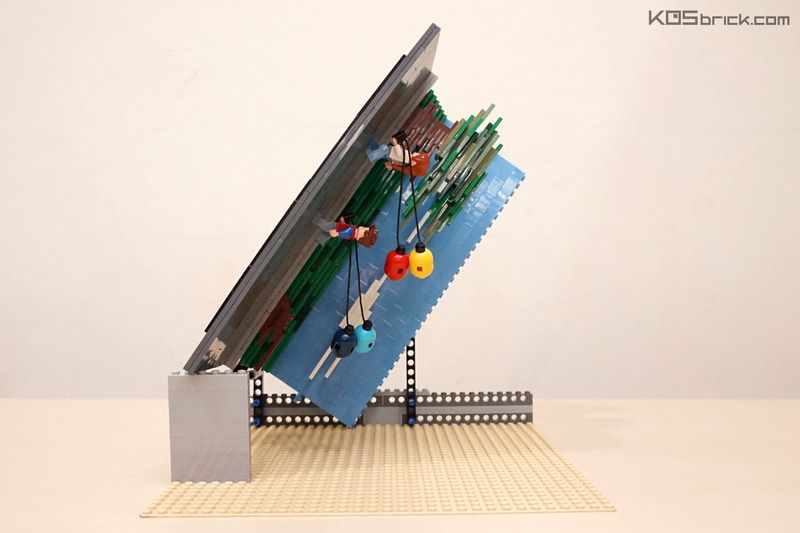
Again, maybe it’s nothing new using the dome piece as a balloon, but I have this ideas for quite a while, which are:
1. Taking an upside down build to use gravity on strings or chains.
2. Making a moving/motion blur effect (panning photography) with bricks.
And it turns out this mystery part fits for me to finally make those ideas into reality, though it turns out it really took a very long time to shot this scene to get the right lighting and angle…I guess I won’t do this kind of trick for a long time…hahahaha
It’s my 5th entry for Iron Builder competition vs. Gilcelio Chagas. The secret ingredient for this round is 2 x 2 Domes in Dark Blue.
▬▬▬▬▬▬▬▬▬▬▬▬▬
Poke me at:
▬▬▬▬▬▬▬▬▬▬▬▬▬
Featured on:
▬▬▬▬▬▬▬▬▬▬▬▬▬
First Glasgow Caledonia Depot based Alexander Dennis Enviro 300 Euro 6 (67829) branded green for Service 2 making a rare appearance on Service 64 seen at the Osborne Street terminus in Glasgow City Centre before it`s departure to Carmyle
I like the detail I can get with the 100-400 mk 2 making it a perfect all rounder for nature photography
I wonder what her wish was... ?
See CHMURKA's BIRTHDAY MOVIE here: www.youtube.com/watch?v=nkzIvzF3sJU
Lady of Legend, part 2...
Making its debut on another pres line (SVR) away from Didcot only a year late due to Covid!
GWR 2900 Class No.2999 "Lady of Legend" is seen shortly after departing Bridgnorth at Eardington Summit with the ex0905 Bridgnorth to Kidderminster Town 'Spring Steam Up' service on the Severn Valley Railway.
Taken on the 17th April 2021.
Would you call LHF running N&W or Southern style? NS never really dropped the practice, too ingrained in their roots. Well, that's really because NS D41 here has to run around its train in Urbana when it's time to come home, but still.
I originally set out to shoot this train at CP Mills, hoping for a northbound at those signals to complete my Wabash signal roster, but I was a bit too slow. I did nab him at Lodge and also here, just south of Mansfield. NS2717 is a recently re-activated SD70M-2, making it a current hot item on NS. Of course, it does look identical to SD70ACes, and while I'm personally not a big fan of the ACe/M2, it's still better than the SD60E that we were cursed with for so long. I dare say that the 6975 might have been sent away at last... if this is its replacement, I won't even complain. Could be a lot worse, no?
Anyways, farm fields, telegraph lines, and long-hood-forward EMDs. How much more N&W style can we get today?
After risking my life shooting this Q438 off the Pulaski Skyway in Jersey City, I opted for a safer (by comparison) shot before heading home at the bathtub in North Bergen. Sadly the Q410 was on track 2 making the usually wider shot from the west side of the tracks impossible. A quick wedge shot was the only solution as Q438 came up to North Bergen Yard for a recrew.
CSX Q438-26 @ North Bergen, NJ
CN C40-8M #2425
CN C44-9W #2536
long time no see flickr PEEPS <3 got tagged :)
5 things i need to stop doing
1. being so sensitive to what people say or do. im like a marshmallow
2. making cupcakes. .... and eating them all by myself
3. scratching my ears
4. dyen my hair hahaha its addicitve.
5. laughing when my dog falls off my bed ? hahahahaha
I created this greeting card as one of the free project ideas for my online book called "Creating Paper Lace", which is posted online at paperlaces.com. You can click here to view the supply list and instructions for this greeting card.
nrhp # 66000367- The Fairbanks House in Dedham, Massachusetts is a historic house built ca. 1641,[1][2] making it the oldest surviving timber-frame house in North America that has been verified by dendrochronology testing. Puritan settler Jonathan Fairbanks constructed the farm house for his wife Grace (née Smith) and their family. The house was occupied and then passed down through eight generations of the family until the early 20th century. Over several centuries the original portion was expanded as architectural styles changed and the family grew.
from Wikipedia
They are fast-moving hares that are common in the high desert. They can reach a length of about 2' making them one of the largest North American hares.
Earlier this year hares and rabbits in Southern California were dying in fairly large numbers due to a highly infectious and fatal disease RHDV2. Over about a two month period we found three dead rabbits on our property and disposed of them per instructions from CDFW. Then it seemed to run its course and we have not found any since.
Please visit My Website
The coal power station occupies a prominent position close to junction 24 of the M1, the River Trent and the Midland Main Line (adjacent to East Midlands Parkway station) and dominates the skyline for many miles around with its eight cooling towers and 199 m (653 ft) tall chimney. It has four coal-fired boilers made by Babcock and Wilcox, each of which drive a 500 megawatt (MW) Parsons generator set. This gives the station a total generating capacity of 2,000 MW, which is enough electricity to meet the needs of approximately 2 million homes.[1]
E.ON UK has its Technology Centre at the site, now known as E.ON New Build and Technology, where it carries out research and development on power generation.
Environmental performance
The plant emits some 8–10 million tonnes of CO2 annually[2] making it the 18th highest CO2 emitting power station in Europe.[3] Some 48 million cubic metres of cooling water is taken from the nearby River Trent.[vague] Evaporative losses through the eight cooling towers account for some 11 million cubic metres of that water.[citation needed]
Ratcliffe power station is compliant with the Large Combustion Plant Directive (LCPD),[4] an EU directive that aims to reduce acidification, ground level ozone and particulates by controlling the emissions of sulphur dioxide, oxides of nitrogen and dust from large combustion plants. To reduce emissions of Sulphur the plant is fitted with Flue Gas Desulphurisation, and also with a Boosted Over Fire Air system to reduce the concentration of oxides of nitrogen in the flue gas.[5]
The little Branford Steam Railroad has long been on my to photography do list since despite all my travels both past and recent in New England, I'd never photographed them.
But, like so many other local roads, their primary 'road' power is a leased GATX GP38-2 making it rather indistinguishable from so many other area roads. However, for the last couple weeks that geep has been away getting a wheel true and some contract repairs up at the Providence and Worcester shop.
Consequently SW1001 7357 which was built new for the operation in July 1976 has been back in public view shuttling trains between the quarry and the docks. Given that the leaser is expected back soon I decided now was a good time to finally go check this off my list.
The Branford Steam is unique in the area given that it is not a common carrier railroad and exists solely as a 'conveyer' belt for its parent company's massive quarry in North Branford. Much of the the traffic on the 6.2 mile long route is insular, moving loaded hoppers of quarried trap rock from the mine on Totoket Mountain to the dock at Juniper Point on the shore of Long Island Sound for barging to New York construction customers.
But the road also interchanges cars with the Providence and Worcester Railroad that moves them to the company's other facilities in Connecticut as well as all the way to interchange with the New York and Atlantic Railroad in Queens, NY. Furthermore they supply ballast to Amtrak which also interchanges MofW hoppers in the same small Pine Orchard Yard for forwarding up to the quary for loading.
The oldest portion of the route can trace its history to 1903 and the quarry it serves has been in operation for 107 years mining trap rock (hard igneous rock) under the aegis of assorted owners. At the time of the railroad's 1909 incorporation the name 'Steam Railroad' was used to distinguish the new railroad from the nearby Branford Electric Railway which was a separate streetcar system. The latter is long gone but you can still go for a pleasant shoreside walk along the causeways it built nearby.
Originally known as the New Haven Trap Rock Company, mining has followed the west face of Totoket Mountain in Jurassic Holyoke Basalt for nearly three miles producing one of the longest continuous quarry faces in the world. The little private railroad moves in excess of one million tons annually and is an impressive if obscure operation. Now operated as a subsidiary of Dublin, Ireland based CRH it seems that there is no end in sight.
To learn more about the railroad and one of its surving quarry steam locomotives check out this excellent link: www.nps.gov/parkhistory/online_books/steamtown/shs2m.htm
Anyway, here is the little EMD switcher arriving in the Pine Orchard yard about to cut away, run around their train and shove the cut of loaded hoppers up the north leg of the wye to the P&W/Amtrak interchange yard.
Branford, Connecticut
Friday August 13, 2021
As a westbound manifest rolls along track #1 of the UP Geneva Sub, Global III RCO SD40-2s work along Global III 7,200 ft West lead track #2 making up an outbound.
The little Branford Steam Railroad has long been on my to photography do list since despite all my travels both past and recent in New England, I'd never photographed them.
But, like so many other local roads, their primary 'road' power is a leased GATX GP38-2 making it rather indistinguishable from so many other area roads. However, for the last couple weeks that geep has been away getting a wheel true and some contract repairs up at the Providence and Worcester shop.
Consequently SW1001 7357 which was built new for the operation in July 1976 has been back in public view shuttling trains between the quarry and the docks. Given that the leaser is expected back soon I decided now was a good time to finally go check this off my list.
The Branford Steam is unique in the area given that it is not a common carrier railroad and exists solely as a 'conveyer' belt for its parent company's massive quarry in North Branford. Much of the the traffic on the 6.2 mile long route is insular, moving loaded hoppers of quarried trap rock from the mine on Totoket Mountain to the dock at Juniper Point on the shore of Long Island Sound for barging to New York construction customers.
But the road also interchanges cars with the Providence and Worcester Railroad that moves them to the company's other facilities in Connecticut as well as all the way to interchange with the New York and Atlantic Railroad in Queens, NY. Furthermore they supply ballast to Amtrak which also interchanges MofW hoppers in the same small Pine Orchard Yard for forwarding up to the quary for loading.
The oldest portion of the route can trace its history to 1903 and the quarry it serves has been in operation for 107 years mining trap rock (hard igneous rock) under the aegis of assorted owners. At the time of the railroad's 1909 incorporation the name 'Steam Railroad' was used to distinguish the new railroad from the nearby Branford Electric Railway which was a separate streetcar system. The latter is long gone but you can still go for a pleasant shoreside walk along the causeways it built nearby.
Originally known as the New Haven Trap Rock Company, mining has followed the west face of Totoket Mountain in Jurassic Holyoke Basalt for nearly three miles producing one of the longest continuous quarry faces in the world. The little private railroad moves in excess of one million tons annually and is an impressive if obscure operation. Now operated as a subsidiary of Dublin, Ireland based CRH it seems that there is no end in sight.
To learn more about the railroad and one of its surving quarry steam locomotives check out this excellent link: www.nps.gov/parkhistory/online_books/steamtown/shs2m.htm
Anyway, here is the little EMD switcher arriving in the Pine Orchard yard about to cut away, run around their train and shove the cut of loaded hoppers up the north leg of the wye to the P&W/Amtrak interchange yard.
Branford, Connecticut
Friday August 13, 2021
Visiting my parents to eat "Æbleskiver", a kind of Fritters, usually associated with the Christmas season. Took a few pictures.
Date Taken: October 3, 2015
Two of Frohlich Tours' flagship coaches on the side & Jeepney Tours' Sky Jeepney Mk. 2 making up an impressive line-up.
Left:
Operator: Fröhlich Tours Tourist Transport Service, Inc.
Model: Higer KLQ6122F
For Details and Specifications, refer this photo:
Middle:
Operator: Jeepney Tours
Model: Sky Jeepney
For Details and Specifications, refer this photo:
Right:
Operator: Fröhlich Tours Tourist Transport Service, Inc.
Model: King Long XMQ6129Y5 "Longwei" (龙威)
For Details and Specifications, refer this photo:
Our Official Facebook Fan Page: Philippine Bus Enthusiasts Society (PhilBES)
Messier 3 (ook M3 of NGC 5272) is een bolvormige sterrenhoop in het sterrenbeeld Jachthonden (Canes Venatici). Deze bolhoop is een van de grootste en helderste aan de hemel en bestaat uit ongeveer 500 000 sterren. Hij is net niet met het blote oog te zien, op magnitude 6.2. Vanuit mijn achtertuin in de stad lukt dat sowiesio niet.
Met mijn 15cm refractor kun je al veel individuele sterren in de kern zien, omgeven door een wazige vlek aan onopgeloste sterren. Door te fotograferen kom je een stuk dieper en zie je zeer veel sterren.
Opname : ruim 20 minuten met een "normale" Canon EOS90D - gecombineerd in Deep Sky Stacker en nabewerkt in Photoshop.
Kijker: APM 152ED f/7.9 refractor op AZ/EQ6 Montering.
Globular Cluster M3 - Messier 3
Messier 3 (M3; also NGC 5272) is a globular cluster of stars in the northern constellation of Canes Venatici. This cluster is one of the largest and brightest clusters, and is made up of around 500,000 stars
M3 has an apparent magnitude of 6.2 making it a difficult naked eye target even with dark conditions with averted vision.
After more that 30 years of visually looking at the stars through telescopes this is one of my first images taken with my refractor :-)
More then 20 minutes exposure, stacked in Deep Sky Stacker. and processed with Photoshop.
Canon EOS90D on an APM 152ED refractor on AZ-EQ6 mount.
I was about to paste some info about this area from the local tourist office but it's almost all in Swenglish www.upplev.norrkoping.se/attgora.asp/id/604005/lid/70499
Concurso Fotográfico Amamos Blythes & Animais - #2 Dia do Contrário
Scarlett: Nada como ir à praia no polo norte e congelar sua bundinha no gelo, com direito a um urso polar nervoso e alguns pinguins engraçados... que friiiiio!
+2 making of
Big Lake, AZ
Aspens are all native to cold regions with cool summers, in the north of the Northern Hemisphere, extending south at high altitudes in the mountains. They are all medium-sized deciduous trees reaching 15–30 m (49–98 ft) tall.
All of the aspens typically grow in large clonal colonies, derived from a single seedling, and spread by means of root suckers; new stems in the colony may appear at up to 30–40 m (98–131 ft) from the parent tree. Each individual tree can live for 40–150 years above ground, but the root system of the colony is long-lived. In some cases, this is for thousands of years, sending up new trunks as the older trunks die off above ground. For this reason, it is considered to be an indicator of ancient woodlands. One such colony in Utah, given the nickname of "Pando", is estimated to be 80,000 years old,[2] making it possibly the oldest living colony of aspens. Some aspen colonies become very large with time, spreading about 1 m (3.3 ft) per year, eventually covering many hectares. They are able to survive forest fires, because the roots are below the heat of the fire, with new sprouts growing after the fire burns out.
Aspens do not thrive in the shade, and it is difficult for seedlings to grow in an already mature aspen stand. Fire indirectly benefits aspen trees, since it allows the saplings to flourish in open sunlight in the burned landscape. Lately, aspens have an increased popularity in forestry, mostly because of their fast growth rate and ability to regenerate from sprouts, making the reforestation after harvesting much cheaper, since no planting or sowing is required.
In contrast with many trees, aspen bark is base-rich,[clarification needed] meaning aspens are important hosts for bryophytes[3] and act as food plants for the larvae of butterfly (Lepidoptera) species—see List of Lepidoptera that feed on poplars.
Young aspen bark is an important seasonal forage for the European hare and other animals in early spring. Aspen is also a tree of choice of the European beaver.
Join my Colorado - Arizona - Utah Landscapes group at: www.flickr.com/groups/us_southwest/pool/
©All rights reserved © sundeepkullu.com ™©® SunDeep™©® Bhardwaj Kullu
Share this Photostory (As i call it..) Publically with these URL Links below (Embedding Not Allowed) :
www.flickr.com/photos/wittysam/6793659046/in/photostream or
www.flickr.com/photos/wittysam/6793659046/in/photostream/...
©SunDeep™©® Bhardwaj Kullu
SDBWP™©® SunDeep™ Bhardwaj World Photography™©®,
70+Countries 300+Destinations across 7 Continents™©®
"The World is my Studio"™©®
"I live with one vision to create things that would outlast me. I discovered photography as a means for me to connect with my innerself."
Travel Photographer-Entrepreneur-Business Development Manager-Himachal Cultural Village-Environmentalist
*Friends ***DO COMMENT*** on my flickr Photostream. Thanks for your valuable feedback, comments, likes, favourites and sharing my work within my website and flickr URL's.Your comments are like a fuel to my passion of this Art of Photography ( *I have made a group for the same on flickr & facebook too as listed below)
( *I have made a group for the same on flickr & facebook too as listed below)
Do join these groups no matter you are photo admirer amatuer serious or professional photographer and even compete for Monthly Amwards & Titles-
AOP WORLD FLICKR GROUP www.flickr.com/groups/prodigious/ or short link - bit.ly/ProdigiousAOP
AOP WORLD FACEBOOK GROUP www.facebook.com/groups/111942842150274/ or short link - htp://on.fb.me/AOPworld or bit.ly/AOPworld
FLICKR AOP PRODIGIOUS AWARDS www.flickr.com/groups/candid/ or short lnk - bit.ly/AOPawards
or visit
sundeepkullu.com
™©® or
flickr.com/photos/wittysam or flickr.com/photos/wittysam/show to access all the Photostories.
Quebec City
Quebec ( /kw?'b?k/ or /k?'b?k/; French: Québec [keb?k] ( listen)), also Québec, Quebec City or Québec City (French: Ville de Québec) is the capital of the Canadian province of Quebec. As of 2011, the city has a population of 516,622,[1] and the metropolitan area has a population of 765,706[2], making it the second most populous city in Quebec after Montreal, which is about 233 kilometres (145 mi) to the southwest.
The narrowing of the Saint Lawrence River approximate to the city's promontory, Cap-Diamant (Cape Diamond), and Lévis, on the opposite bank, provided the name given to the city, Kébec, an Algonquin word meaning "where the river narrows". Founded in 1608 by Samuel de Champlain, Quebec City is one of the oldest cities in North America. The ramparts surrounding Old Quebec (Vieux-Québec) are the only remaining fortified city walls that still exist in the Americas north of Mexico, and were declared a World Heritage Site by UNESCO in 1985 as the 'Historic District of Old Québec'.[3][4]
According to the federal and provincial governments, Québec is the city's official name in both French and English, although Quebec City is commonly used, particularly to distinguish the city from the province. The city's most famous landmark is the Château Frontenac, a hotel which dominates the skyline. The National Assembly of Quebec, the Musée national des beaux-arts du Québec (National Gallery of Quebec), and the Musée de la civilisation (Museum of Civilization) are found within or near Vieux-Québec.
Quebec
Quebec /kw?'b?k/ or /k?'b?k/ (French: Québec [keb?k] ( listen))[7] is a province in east-central Canada.[8][9] It is the only Canadian province with a predominantly French-speaking population and the only one whose sole official language is French at the provincial level. Quebec is Canada's largest province by area and its second-largest administrative division; only the territory of Nunavut is larger. It is bordered to the west by the province of Ontario, James Bay and Hudson Bay, to the north by Hudson Strait and Ungava Bay, to the east by the Gulf of Saint Lawrence and the provinces of Newfoundland and Labrador and New Brunswick. It is bordered on the south by the US states of Maine, New Hampshire, Vermont, and New York. It also shares maritime borders with Nunavut, Prince Edward Island, and Nova Scotia.
Quebec is Canada's second most populous province, after Ontario. Most inhabitants live in urban areas near the Saint Lawrence River between Montreal and Quebec City, the capital. English-speaking communities and English-language institutions are concentrated in the west of the island of Montreal but are also significantly present in the Outaouais, Eastern Townships, and Gaspé regions. The Nord-du-Québec region, occupying the northern half of the province, is sparsely populated and inhabited primarily by Aboriginal peoples.[10]
Sovereignty plays a large role in the politics of Quebec, and the official opposition social democratic Parti Québécois advocates national sovereignty for the province and secession from Canada. Sovereignist governments have held referendums on independence in 1980 and 1995; both were voted down by voters, the latter defeated by a very narrow margin.[11] In 2006, the Canadian House of Commons passed a symbolic motion, the Québécois nation motion, recognizing the "Québécois as a nation within a united Canada."[12][13]
While the province's substantial natural resources have long been the mainstay of its economy, sectors of the knowledge economy such as aerospace, information and communication technologies, biotechnology and the pharmaceutical industry also play leading roles. These many industries have all contributed to helping Quebec become the second most economically influential province, second only to Ontario.[14]
Old Quebec
Historic District of Old Quebec *
UNESCO World Heritage Site
Old Quebec (French: Vieux-Québec) is a historic neighbourhood of Quebec City, the capital of the province of Quebec in Canada. Comprising the Upper Town (French: Haute-Ville) and Lower Town (French: Basse-Ville), the area is a UNESCO World Heritage Site. Administratively, Old Quebec is part of the Vieux-Québec–Cap-Blanc–colline Parlementaire district in the borough of La Cité–Limoilou.
The area is sometimes referred to as the Latin Quarter (French: Quartier latin), but this title refers more to area around the Séminaire de Québec, the original site of Laval University.
History
Old Quebec is the oldest part of Quebec City, chosen in 1608 by Samuel de Champlain as the location for the Chateau Saint-Louis. Old Quebec maintained a strong military and administrative presence from its beginning, a use determined by the strategic heights of Cap Diamant. While the Lower Town was populated with merchants and craftsmen, the Upper Town was inhabited by military officials and members of the clergy.
This strong military presence long limited the city's expansion. At the end of the 19th century, many wanted to demolish the fortifications, judging them to be unnecessary and a hindrance to urban development. However, Governor Dufferin successfully managed to preserve the character of the walled city, while adapting the further expansion of the modern city.
Despite having undergone some degradation in the 1950s, the Old City has been subject to somewhat of a renaissance period since the 1970s.
The rich historic nature of Old Quebec is marked by the city's ramparts, fortifications, and many historic houses and buildings. The legacy of previous generations and the beauty of the district make it particularly unique.
The majority of buildings in the neighborhood date from 19th century, although the construction of some date back to 17th and 18th centuries. It also is home to several commercial streets, including Rue Saint-Jean, Rue Sainte-Anne and Rue De Buade. Many institutions are still housed in the heart of the city, such as the Quebec City Council, the Séminaire de Québec, the Ursulines Convent, and the Augustinian monastery. As a popular tourist destination, Old Quebec is also home to several hotels, including the famous Château Frontenac. Guided ghosts tours are also of interest to its residents and visitors.
Ramparts of Quebec City
World Heritage site by UNESCO in 1985
National Historic Site of Canada in 1948
Located in Canada, the Ramparts of Quebec City are the only remaining fortified city walls in the Americas, north of Mexico.[1] The English began fortifying the existing walls,[2] after they took Quebec City from the French in the Battle of the Plains of Abraham in 1759.
The wall surrounds most of Old Quebec, which was declared a World Heritage site by UNESCO in 1985.[3] The fortifications were designated a National Historic Site of Canada in 1948.
***Text is available under the Creative Commons Attribution-ShareAlike License
Wikipedia® is a registered trademark of the Wikimedia Foundation, Inc., a non-profit organization.
External Links:
en.wikipedia.org/wiki/Category:World_Heritage_Sites_in_Ca...
en.wikipedia.org/wiki/Ramparts_of_Quebec_City
en.wikipedia.org/wiki/Old_Quebec
en.wikipedia.org/wiki/Quebec_City
www.flickr.com/photos/wittysam/show
sundeepkullu.com ™©®
*** My URL's:
phototube.co ™©® - Developer
Eureka Photography & Web Design™©® - Director
himachalculturalvillage.com ™©® Environmentalist, Exclusive Artist , Business Development Manager ( Offshore ) & NGO Founder
Getty Images - Contributer
sundeepkullu.com ™©® - Founder & CEO
I travelled to most exotic places on this earth in last 9 years since 2003. I was exploring India from east to west and north to south till mid 2007. Then i started my World tour to 6 continents in May 2007 & entering 2012, my World tour is still on & i am exploring more and more exotic places around all major countries. I believe "World is just amazing" and every place & face has a unique story to tell. I connect to my subjects as to my soul.
Do not forget to subscribe or login from toolbar at the base of any page on my official website sundeepkullu.com ™©® ( Includes connect with my facebook profile/facebook page/facebook group/facebook Like/twitter/twitter follow/Google Plus/Google Buzz/Google +1/LinkedIn/You Tube/Twitter/Facebook subscribe and not to forget TRANSLATE button to translate al tet to al major languages for subscribers followers & fans from all parts of the World.
Cheers!!!
These are reduced sized pictures.Orignal pictures shot in 5,616 × 3,744 (21.1 megapixels) using Canon EOS 5D Mark II FULL FRAME DSLR CAMERA or 3872 x 2592 (10.2 million effective pixels) using NIKON D60 DSLR or 4,288 × 2,848 (12.3 effective megapixels) USING NIKON D90 DSLR's.For full size images contact me.
Contacts:-
Primary :
wittysam@gmail.com ( E-mail/Skype/Whatsapp/Google+/LinkedIn/Fring/Yoono/Twitter/Gmail/Instagram/http://sundeepkullu.com & Photography & Videography and Quote for Assignments related)
World Roaming +974 55344547 (Facebook Mobile/Viber/Facetime/WhatsApp)
India New Delhi & Himachal Roaming +91 8527745789 (Google Plus)
sb@sundeepkullu.com ( Facebook & Personal Mail )
Secondary :
eurekasun@yahoo.com ( Flickr & Yahoo Messenger )
admin@phototube.co ( phototube.co related )
enquiries@himachalculturalvillage.com ( himachalculturalvillage.com related )
SunDeep™©® Bhardwaj Kullu
MBA-Sales & Mktg.(Symbiosis,Pune)
B.Pub.Admn.(H.P.University,Summer Hills, Shimla)
BHM (GCC-Bangalore)
***Publishing Photostories clicked in the most exotic places on earth in 15 countries that I visited in last 6 months. For all stories of 70+ Countries go to my oficial website sundeepkullu.com ™©®
My latest 15 explored destinations in my 6th year of World tour so far to 70+Countries & 300+Destinations across 6 Continents and 9 th year of Travel Photography & Videography of Places People Culture Landscapes.Recently explored these exotic places in JAPAN Horyuji Temple 1300 years old Japan's most sacred place & UNESCO site UAE-Al Ain-Abu Dhabi-Dubai-Burj Al Arab-Al Khaleefa Tallest building in the World, SWEDEN-Stocholm-National Parks, AUSTRALIA-Melbourne-Great Ocean Road-Twelve Apostles this week. BELGIUM Brussels, DENMARK-Copenhagen, VIETNAM Hanoi-Halong Bay MALAYSIA-Kuala Lumpur-Kanting Falls-Batu Caves-Petronas Twin Towers , CANADA-Quebec-Ontario-Montreal, ATLANTIC-GREENLAND-LABRADOR PENINSULA-Lebrador Sea, SOUTH AFRICA Johnnesburg-The Cradle of Mankind-Stolkfontien Caves and Lion & Rino Park with others INDIA-Kashmir-Gulmarg-Srinagar CHINA-Shanghai-Zhejiang-Hangzhou-The West Lake GERMANY-BAVERIA-Black Forest-Oberbayern-Garmich Patenkirchen-Eibsee Lake-Zugspitze HIMACHAL-Kullu-Manali-Shimla-Lahaul-Spiti -Dharamshala-Kinnaur-Udaipur-Leh-Laddakh UK-SCOTLAND Glencoe-Fort William-Castle around Scotland-Lochness INDIA Jog Falls Ooty Goa Athirappily & Vazhachal Falls Kerala UK-ENGLAND-London-Manchester-Glasgow & others ITALY-Rome-Vatican City and Other UNESCO Heritage Sites around Rome. Soon my first book on 111 MIRACULOUS WONDERS OF WORLD YOU MYST SEE WHEN U ALIVE will be out with "111 WOW" i Phone application by the end of this year. Updating my official website sundeepkullu.com
KINDLY NOTE***The Stock samples of SDBWP SunDeep Bhardwaj World Photography in flickr Photostream cannot be Copied,Distributed,Published or Used in any form,full or in part,or in any kind of media without prior permission from Sundeep Bhardwaj the owner of these images.Utilization in other websites,intenet media,pages,blogs etc without written consent is PROHIBITED.
The images are also available for licence through GETTY IMAGES or directly by contacting me.
Add me as a friend on my facebook profile 2 as my facebook profile 1 is allmost full with 4000 plus friends here - www.facebook.com/sundeephimachal
Slide Shows | Full Screen Mode | Adobe Flash or Mobile
I covered cardboard with thin wood grain paper (like wrapping paper) for the door frame, door, and window frame. Found the paper at Michael's. It is a huge roll for school bulletin boards and easier to wrap around cardboard than stiff scrapbook paper.
Contact me here: butchpetty.com/contactus.html
This is a 1958 "Field & Stream" Travel Trailer ( canned ham ). This vintage style of camping trailers were referred to as "car trailers" back when they were being built because of their size, light weight and ease of towing. The cabin part of the trailer is 12' long, the tongue is 2' making the total length only 14'. It pulls beautifully going down the highway, no fish tailing at all. You can forget your pulling a trailer.
This trailer is 95% original, no modifications. This trailer has not been restored and I have only made a couple of small repairs. If you are looking for a great platform for making a complete restoration then this would be an absolutely great trailer for such a project.
The interior is all wood, top to bottom and front to back and it is all original wood. I have installed a self-contained 12 volt electrical system and it doesn't need 120 volt. Everything runs off of 12 volts. However all of the original 120 volt wiring is still in place and hasn't been touched, even the original 120v light fixtures are still in place. All of the cabinet hardware is still in place, working and original. All the hinges, handles, and everything is original. The original "icebox" and oven/stove are still in the camper and work great. It also has the original factory installed "Kenmore" cabin heater and it also works great.
When I got the trailer someone had changed the paint scheme so I re-painted it to the original design. The rear couch makes into a double bed. Above the rear couch it has a removable bunk bed/hammock that is original factory equipment also. The dinette also makes into a double bed. There is a lot of storage in the camper. It also has a 10 gallon fresh water tank with a manual hand pump.
The trailer also comes with 2 30 lb propane tanks, a new spare tire and wheel.
The following items are new in the past three months:
New Interior 12 volt light throughout the camper
New 240 watt solar panel
New "Sunforce" 12v, 30 amp charge controller
4 new "Everstart" 750 cold crank amp deep cell marine batteries
New "Cen-Tech" 1500 watt continuous , 3000 surge 120v power inverter (for microwave, etc.)
New Rival 700 watt microwave
New manual water pump for sink
New Shakespeare SeaWatch 15" Marine TV Antenna (model 3015)
Toshiba 17' Flat Screen TV
All new blinds on the windows
New roof top vent
This is one great little camper. I bought it for hunting plus the nostalgia. It was used this past hunting season and worked great. However with four adult men it was a little cramped. So I plan to up size for next year. I pulled it off road in BLM land in Teller County and down in the Phantom Canyon area and had no problems at all.
Because this trailer is extremely rare there are not many sources of photos to be had but you can follow the link below to another "Field & Stream" trailer. As you can see the interiors are very similar as it is all original like mine: girlcamper.blogspot.com/2015_07_01_archive.html
(Update) You can see a video of the interior of my camper here: youtu.be/NA1VfPU8Sd8
Now the best part last: YES, I DO HAVE A CLEAN CLEAR TITLE IN HAND, AND CURRENT REGISTRATION ALSO. So unlike most trailers you see of this vintage you will not have a problem with registration and it will be registered as a "Field and Stream" not a home-made trailer as is usually the case with trailers bought without a title.
If you have questions please ask. I am asking $5000.00 cash, make offer, no trades. I will sell it to the first person who makes me an agreeable offer with CASH ONLY. I will consider local delivery after the cash transaction.
Contact me here: butchpetty.com/contactus.html
This is a 1958 "Field & Stream" Travel Trailer ( canned ham ). This vintage style of camping trailers were referred to as "car trailers" back when they were being built because of their size, light weight and ease of towing. The cabin part of the trailer is 12' long, the tongue is 2' making the total length only 14'. It pulls beautifully going down the highway, no fish tailing at all. You can forget your pulling a trailer.
This trailer is 95% original, no modifications. This trailer has not been restored and I have only made a couple of small repairs. If you are looking for a great platform for making a complete restoration then this would be an absolutely great trailer for such a project.
The interior is all wood, top to bottom and front to back and it is all original wood. I have installed a self-contained 12 volt electrical system and it doesn't need 120 volt. Everything runs off of 12 volts. However all of the original 120 volt wiring is still in place and hasn't been touched, even the original 120v light fixtures are still in place. All of the cabinet hardware is still in place, working and original. All the hinges, handles, and everything is original. The original "icebox" and oven/stove are still in the camper and work great. It also has the original factory installed "Kenmore" cabin heater and it also works great.
When I got the trailer someone had changed the paint scheme so I re-painted it to the original design. The rear couch makes into a double bed. Above the rear couch it has a removable bunk bed/hammock that is original factory equipment also. The dinette also makes into a double bed. There is a lot of storage in the camper. It also has a 10 gallon fresh water tank with a manual hand pump.
The trailer also comes with 2 30 lb propane tanks, a new spare tire and wheel.
The following items are new in the past three months:
New Interior 12 volt light throughout the camper
New 240 watt solar panel
New "Sunforce" 12v, 30 amp charge controller
4 new "Everstart" 750 cold crank amp deep cell marine batteries
New "Cen-Tech" 1500 watt continuous , 3000 surge 120v power inverter (for microwave, etc.)
New Rival 700 watt microwave
New manual water pump for sink
New Shakespeare SeaWatch 15" Marine TV Antenna (model 3015)
Toshiba 17' Flat Screen TV
All new blinds on the windows
New roof top vent
This is one great little camper. I bought it for hunting plus the nostalgia. It was used this past hunting season and worked great. However with four adult men it was a little cramped. So I plan to up size for next year. I pulled it off road in BLM land in Teller County and down in the Phantom Canyon area and had no problems at all.
Because this trailer is extremely rare there are not many sources of photos to be had but you can follow the link below to another "Field & Stream" trailer. As you can see the interiors are very similar as it is all original like mine: girlcamper.blogspot.com/2015_07_01_archive.html
(Update) You can see a video of the interior of my camper here: youtu.be/NA1VfPU8Sd8
Now the best part last: YES, I DO HAVE A CLEAN CLEAR TITLE IN HAND, AND CURRENT REGISTRATION ALSO. So unlike most trailers you see of this vintage you will not have a problem with registration and it will be registered as a "Field and Stream" not a home-made trailer as is usually the case with trailers bought without a title.
If you have questions please ask. I am asking $5000.00 cash, make offer, no trades. I will sell it to the first person who makes me an agreeable offer with CASH ONLY. I will consider local delivery after the cash transaction.
©All rights reserved © sundeepkullu.com ™©® SunDeep™©® Bhardwaj Kullu
Share this Photostory (As i call it..) Publically with these URL Links below (Embedding Not Allowed) :
www.flickr.com/photos/wittysam/6938965409/in/photostream/ or
www.flickr.com/photos/wittysam/6938965409/in/photostream/...
©SunDeep™©® Bhardwaj Kullu
SDBWP™©® SunDeep™ Bhardwaj World Photography™©®,
70+Countries 300+Destinations across 7 Continents™©®
"The World is my Studio"™©®
"I live with one vision to create things that would outlast me. I discovered photography as a means for me to connect with my innerself."
Travel Photographer-Entrepreneur-Business Development Manager-Himachal Cultural Village-Environmentalist
*Friends ***DO COMMENT*** on my flickr Photostream. Thanks for your valuable feedback, comments, likes, favourites and sharing my work within my website and flickr URL's.Your comments are like a fuel to my passion of this Art of Photography ( *I have made a group for the same on flickr & facebook too as listed below)
( *I have made a group for the same on flickr & facebook too as listed below)
Do join these groups no matter you are photo admirer amatuer serious or professional photographer and even compete for Monthly Amwards & Titles-
AOP WORLD FLICKR GROUP www.flickr.com/groups/prodigious/ or short link - bit.ly/ProdigiousAOP
AOP WORLD FACEBOOK GROUP www.facebook.com/groups/111942842150274/ or short link - htp://on.fb.me/AOPworld or bit.ly/AOPworld
FLICKR AOP PRODIGIOUS AWARDS www.flickr.com/groups/candid/ or short lnk - bit.ly/AOPawards
sundeepkullu.com
™©®
or Visit
flickr.com/photos/wittysam or flickr.com/photos/wittysam/show to access all the Photostories.
Quebec City
Quebec ( /kw?'b?k/ or /k?'b?k/; French: Québec [keb?k] ( listen)), also Québec, Quebec City or Québec City (French: Ville de Québec) is the capital of the Canadian province of Quebec. As of 2011, the city has a population of 516,622,[1] and the metropolitan area has a population of 765,706[2], making it the second most populous city in Quebec after Montreal, which is about 233 kilometres (145 mi) to the southwest.
The narrowing of the Saint Lawrence River approximate to the city's promontory, Cap-Diamant (Cape Diamond), and Lévis, on the opposite bank, provided the name given to the city, Kébec, an Algonquin word meaning "where the river narrows". Founded in 1608 by Samuel de Champlain, Quebec City is one of the oldest cities in North America. The ramparts surrounding Old Quebec (Vieux-Québec) are the only remaining fortified city walls that still exist in the Americas north of Mexico, and were declared a World Heritage Site by UNESCO in 1985 as the 'Historic District of Old Québec'.[3][4]
According to the federal and provincial governments, Québec is the city's official name in both French and English, although Quebec City is commonly used, particularly to distinguish the city from the province. The city's most famous landmark is the Château Frontenac, a hotel which dominates the skyline. The National Assembly of Quebec, the Musée national des beaux-arts du Québec (National Gallery of Quebec), and the Musée de la civilisation (Museum of Civilization) are found within or near Vieux-Québec.
Quebec
Quebec /kw?'b?k/ or /k?'b?k/ (French: Québec [keb?k] ( listen))[7] is a province in east-central Canada.[8][9] It is the only Canadian province with a predominantly French-speaking population and the only one whose sole official language is French at the provincial level. Quebec is Canada's largest province by area and its second-largest administrative division; only the territory of Nunavut is larger. It is bordered to the west by the province of Ontario, James Bay and Hudson Bay, to the north by Hudson Strait and Ungava Bay, to the east by the Gulf of Saint Lawrence and the provinces of Newfoundland and Labrador and New Brunswick. It is bordered on the south by the US states of Maine, New Hampshire, Vermont, and New York. It also shares maritime borders with Nunavut, Prince Edward Island, and Nova Scotia.
Quebec is Canada's second most populous province, after Ontario. Most inhabitants live in urban areas near the Saint Lawrence River between Montreal and Quebec City, the capital. English-speaking communities and English-language institutions are concentrated in the west of the island of Montreal but are also significantly present in the Outaouais, Eastern Townships, and Gaspé regions. The Nord-du-Québec region, occupying the northern half of the province, is sparsely populated and inhabited primarily by Aboriginal peoples.[10]
Sovereignty plays a large role in the politics of Quebec, and the official opposition social democratic Parti Québécois advocates national sovereignty for the province and secession from Canada. Sovereignist governments have held referendums on independence in 1980 and 1995; both were voted down by voters, the latter defeated by a very narrow margin.[11] In 2006, the Canadian House of Commons passed a symbolic motion, the Québécois nation motion, recognizing the "Québécois as a nation within a united Canada."[12][13]
While the province's substantial natural resources have long been the mainstay of its economy, sectors of the knowledge economy such as aerospace, information and communication technologies, biotechnology and the pharmaceutical industry also play leading roles. These many industries have all contributed to helping Quebec become the second most economically influential province, second only to Ontario.[14]
Old Quebec
Historic District of Old Quebec *
UNESCO World Heritage Site
Old Quebec (French: Vieux-Québec) is a historic neighbourhood of Quebec City, the capital of the province of Quebec in Canada. Comprising the Upper Town (French: Haute-Ville) and Lower Town (French: Basse-Ville), the area is a UNESCO World Heritage Site. Administratively, Old Quebec is part of the Vieux-Québec–Cap-Blanc–colline Parlementaire district in the borough of La Cité–Limoilou.
The area is sometimes referred to as the Latin Quarter (French: Quartier latin), but this title refers more to area around the Séminaire de Québec, the original site of Laval University.
History
Old Quebec is the oldest part of Quebec City, chosen in 1608 by Samuel de Champlain as the location for the Chateau Saint-Louis. Old Quebec maintained a strong military and administrative presence from its beginning, a use determined by the strategic heights of Cap Diamant. While the Lower Town was populated with merchants and craftsmen, the Upper Town was inhabited by military officials and members of the clergy.
This strong military presence long limited the city's expansion. At the end of the 19th century, many wanted to demolish the fortifications, judging them to be unnecessary and a hindrance to urban development. However, Governor Dufferin successfully managed to preserve the character of the walled city, while adapting the further expansion of the modern city.
Despite having undergone some degradation in the 1950s, the Old City has been subject to somewhat of a renaissance period since the 1970s.
The rich historic nature of Old Quebec is marked by the city's ramparts, fortifications, and many historic houses and buildings. The legacy of previous generations and the beauty of the district make it particularly unique.
The majority of buildings in the neighborhood date from 19th century, although the construction of some date back to 17th and 18th centuries. It also is home to several commercial streets, including Rue Saint-Jean, Rue Sainte-Anne and Rue De Buade. Many institutions are still housed in the heart of the city, such as the Quebec City Council, the Séminaire de Québec, the Ursulines Convent, and the Augustinian monastery. As a popular tourist destination, Old Quebec is also home to several hotels, including the famous Château Frontenac. Guided ghosts tours are also of interest to its residents and visitors.
***Text is available under the Creative Commons Attribution-ShareAlike License
Wikipedia® is a registered trademark of the Wikimedia Foundation, Inc., a non-profit organization.
External Links:
en.wikipedia.org/wiki/Category:World_Heritage_Sites_in_Ca...
en.wikipedia.org/wiki/Old_Quebec
en.wikipedia.org/wiki/Quebec_City
www.flickr.com/photos/wittysam/show
sundeepkullu.com ™©®
*** My URL's:
phototube.co ™©® - Developer
Eureka Photography & Web Design™©® - Director
himachalculturalvillage.com ™©® Environmentalist, Exclusive Artist , Business Development Manager ( Offshore ) & NGO Founder
Getty Images - Contributer
sundeepkullu.com ™©® - Founder & CEO
I travelled to most exotic places on this earth in last 9 years since 2003. I was exploring India from east to west and north to south till mid 2007. Then i started my World tour to 6 continents in May 2007 & entering 2012, my World tour is still on & i am exploring more and more exotic places around all major countries. I believe "World is just amazing" and every place & face has a unique story to tell. I connect to my subjects as to my soul.
Do not forget to subscribe or login from toolbar at the base of any page on my official website sundeepkullu.com ™©® ( Includes connect with my facebook profile/facebook page/facebook group/facebook Like/twitter/twitter follow/Google Plus/Google Buzz/Google +1/LinkedIn/You Tube/Twitter/Facebook subscribe and not to forget TRANSLATE button to translate al tet to al major languages for subscribers followers & fans from all parts of the World.
Cheers!!!
These are reduced sized pictures.Orignal pictures shot in 5,616 × 3,744 (21.1 megapixels) using Canon EOS 5D Mark II FULL FRAME DSLR CAMERA or 3872 x 2592 (10.2 million effective pixels) using NIKON D60 DSLR or 4,288 × 2,848 (12.3 effective megapixels) USING NIKON D90 DSLR's.For full size images contact me.
Contacts:-
Primary :
wittysam@gmail.com ( E-mail/Skype/Whatsapp/Google+/LinkedIn/Fring/Yoono/Twitter/Gmail/Instagram/http://sundeepkullu.com & Photography & Videography and Quote for Assignments related)
World Roaming +974 55344547 (Facebook Mobile/Viber/Facetime/WhatsApp)
India New Delhi & Himachal Roaming +91 8527745789 (Google Plus)
sb@sundeepkullu.com ( Facebook & Personal Mail )
Secondary :
eurekasun@yahoo.com ( Flickr & Yahoo Messenger )
admin@phototube.co ( phototube.co related )
enquiries@himachalculturalvillage.com ( himachalculturalvillage.com related )
SunDeep™©® Bhardwaj Kullu
MBA-Sales & Mktg.(Symbiosis,Pune)
B.Pub.Admn.(H.P.University,Summer Hills, Shimla)
BHM (GCC-Bangalore)
***Publishing Photostories clicked in the most exotic places on earth in 15 countries that I visited in last 6 months. For all stories of 70+ Countries go to my oficial website sundeepkullu.com ™©®
My latest 15 explored destinations in my 6th year of World tour so far to 70+Countries & 300+Destinations across 6 Continents and 9 th year of Travel Photography & Videography of Places People Culture Landscapes.Recently explored these exotic places in JAPAN Horyuji Temple 1300 years old Japan's most sacred place & UNESCO site UAE-Al Ain-Abu Dhabi-Dubai-Burj Al Arab-Al Khaleefa Tallest building in the World, SWEDEN-Stocholm-National Parks, AUSTRALIA-Melbourne-Great Ocean Road-Twelve Apostles this week. BELGIUM Brussels, DENMARK-Copenhagen, VIETNAM Hanoi-Halong Bay MALAYSIA-Kuala Lumpur-Kanting Falls-Batu Caves-Petronas Twin Towers , CANADA-Quebec-Ontario-Montreal, ATLANTIC-GREENLAND-LABRADOR PENINSULA-Lebrador Sea, SOUTH AFRICA Johnnesburg-The Cradle of Mankind-Stolkfontien Caves and Lion & Rino Park with others INDIA-Kashmir-Gulmarg-Srinagar CHINA-Shanghai-Zhejiang-Hangzhou-The West Lake GERMANY-BAVERIA-Black Forest-Oberbayern-Garmich Patenkirchen-Eibsee Lake-Zugspitze HIMACHAL-Kullu-Manali-Shimla-Lahaul-Spiti -Dharamshala-Kinnaur-Udaipur-Leh-Laddakh UK-SCOTLAND Glencoe-Fort William-Castle around Scotland-Lochness INDIA Jog Falls Ooty Goa Athirappily & Vazhachal Falls Kerala UK-ENGLAND-London-Manchester-Glasgow & others ITALY-Rome-Vatican City and Other UNESCO Heritage Sites around Rome. Soon my first book on 111 MIRACULOUS WONDERS OF WORLD YOU MYST SEE WHEN U ALIVE will be out with "111 WOW" i Phone application by the end of this year. Updating my official website sundeepkullu.com
Add me as a friend on my facebook profile 2 as my facebook profile 1 is allmost full with 4000 plus friends here - www.facebook.com/sundeephimachal
Slide Shows | Full Screen Mode | Adobe Flash or Mobile
Contax RTS II, 50mm Carl Zeiss Lens, T-Max, Minolta Scan Multi Pro Scanner
© All rights reserved.
Been out with the flu/cold this past week. But I'm now "Back On The Block".
Cunard's Queen Mary 2 making her turn out of Greenock Ocean Terminal at the conclusion of her first visit in almost ten years.
I have been traveling to Leuven once a month for some 17 months now, and have not, until yesterday, visited the church of St Peter.
It stands in the centre of the town, opposite the ornate Town Hall, and around most of it is a wide pedestrianised area, so it doesn't feel hemmed in.
It is undergoing renovation, and a large plastic sheet separates the chancel from the rest of the church, and in the chancel, called the treasury, are many wonderful items of art. And maybe due to the €3 entrance fee, I had the chancel to myself, and just my colleagues with me when I photographed the rest.
----------------------------------------------
Saint Peter's Church (Dutch: Sint-Pieterskerk) of Leuven, Belgium, is situated on the city's Grote Markt (main market square), right across the ornate Town Hall. Built mainly in the 15th century in Brabantine Gothic style, the church has a cruciform floor plan and a low bell tower that has never been completed. It is 93 meters long.
The first church on the site, made of wood and presumably founded in 986, burned down in 1176.[1] It was replaced by a Romanesque church, made of stone, featuring a West End flanked by two round towers like at Our Lady's Basilica in Maastricht. Of the Romanesque building only part of the crypt remains, underneath the chancel of the actual church.
Construction of the present Gothic edifice, significantly larger than its predecessor, was begun approximately in 1425, and was continued for more than half a century in a remarkably uniform style, replacing the older church progressively from east (chancel) to west. Its construction period overlapped with that of the Town Hall across the Markt, and in the earlier decades of construction shared the same succession of architects as its civic neighbor: Sulpitius van Vorst to start with, followed by Jan II Keldermans and later on Matheus de Layens. In 1497 the building was practically complete,[1] although modifications, especially at the West End, continued.
In 1458, a fire struck the old Romanesque towers that still flanked the West End of the uncompleted building. The first arrangements for a new tower complex followed quickly, but were never realized. Then, in 1505, Joost Matsys (brother of painter Quentin Matsys) forged an ambitious plan to erect three colossal towers of freestone surmounted by openwork spires, which would have had a grand effect, as the central spire would rise up to about 170 m,[2] making it the world's tallest structure at the time. Insufficient ground stability and funds proved this plan impracticable, as the central tower reached less than a third of its intended height before the project was abandoned in 1541. After the height was further reduced by partial collapses from 1570 to 1604, the main tower now rises barely above the church roof; at its sides are mere stubs. The architect had, however, made a maquette of the original design, which is preserved in the southern transept.
Despite their incomplete status, the towers are mentioned on the UNESCO World Heritage List, as part of the Belfries of Belgium and France.
The church suffered severe damage in both World Wars. In 1914 a fire caused the collapse of the roof and in 1944 a bomb destroyed part of the northern side.
The reconstructed roof is surmounted at the crossing by a flèche, which, unlike the 18th-century cupola that preceded it, blends stylistically with the rest of the church.
A very late (1998) addition is the jacquemart, or golden automaton, which periodically rings a bell near the clock on the gable of the southern transept, above the main southern entrance door.
Despite the devastation during the World Wars, the church remains rich in works of art. The chancel and ambulatory were turned into a museum in 1998, where visitors can view a collection of sculptures, paintings and metalwork.
The church has two paintings by the Flemish Primitive Dirk Bouts on display, the Last Supper (1464-1468) and the Martyrdom of St Erasmus (1465). The street leading towards the West End of the church is named after the artist. The Nazis seized The Last Supper in 1942.[3] Panels from the painting had been sold legitimately to German museums in the 1800s, and Germany was forced to return all the panels as part of the required reparations of the Versailles Treaty after World War I.[3]
An elaborate stone tabernacle (1450), in the form of a hexagonal tower, soars amidst a bunch of crocketed pinnacles to a height of 12.5 meters. A creation of the architect de Layens (1450), it is an example of what is called in Dutch a sacramentstoren, or in German a Sakramentshaus, on which artists lavished more pains than on almost any other artwork.
In side chapels are the tombs of Duke Henry I of Brabant (d. 1235), his wife Matilda (d. 1211) and their daughter Marie (d. 1260). Godfrey II of Leuven is also buried in the church.
A large and elaborate oak pulpit, which is transferred from the abbey church of Ninove, is carved with a life-size representation of Norbert of Xanten falling from a horse.
One of the oldest objects in the art collection is a 12th-century wooden head, being the only remainder of a crucifix burnt in World War I.
There is also Nicolaas de Bruyne's 1442 sculpture of the Madonna and Child enthroned on the seat of wisdom (Sedes Sapientiae). The theme is still used today as the emblem of Katholieke Universiteit Leuven.
+++ DISCLAIMER +++
Nothing you see here is real, even though the conversion or the presented background story might be based historical facts. BEWARE!
Some background:
In the late 1970s the Mikoyan OKB began development of a hypersonic high-altitude reconnaissance aircraft. Designated "Izdeliye 301" (also known as 3.01), the machine had an unusual design, combining a tailless layout with variable geometry wings. The two engines fueled by kerosene were located side by side above the rear fuselage, with the single vertical fin raising above them, not unlike the Tu-22 “Blinder” bomber of that time, but also reminiscent of the US-American SR-71 Mach 3 reconnaissance aircraft.
Only few and rather corny information leaked into the West, and the 301 was believed not only to act as a reconnaissance plane , it was also believed to have (nuclear) bombing capabilities. Despite wind tunnel testing with models, no hardware of the 301 was ever produced - aven though the aircraft could have become a basis for a long-range interceptor that would replace by time the PVO's Tupolew Tu-28P (ASCC code "Fiddler"), a large aircraft armed solely with missiles.
Despite limitations, the Tu-28P served well in its role, but the concept of a very fast interceptor aircraft, lingered on, since the Soviet Union had large areas to defend against aerial intruders, esp. from the North and the East. High speed, coupled with long range and the ability to intercept an incoming target at long distances independently from ground guidance had high priority for the Soviet Air Defence Forces. Even though no official requirement was issued, the concept of Izdeliye 301 from the Seventies was eventually developed further into the fixed-wing "Izdeliye 701" ultra-long-range high-altitude interceptor in the 1980ies.
The impulse for this new approach came when Oleg S. Samoylovich joined the Mikoyan OKB after having worked at Suchoi OKB on the T-60S missile carrier project. Similar in overall design to the former 301, the 701 was primarily intended as a kind of successor for the MiG-31 Foxhound for the 21st century, which just had completed flight tests and was about to enter PVO's front line units.
Being based on a long range cruise missile carrier, the 701 would have been a huge plane, featuring a length of 30-31m, a wing span of 19m (featuring a highly swept double delta wing) and having a maximum TOW of 70 tons! Target performance figures included a top speed of 2.500km/h, a cruising speed of 2.100km/h at 17.000m and an effective range of 7.000km in supersonic or 11.000km in subsonic mode. Eventually, the 701 program was mothballed, too, being too ambitious and expensive for a specialized development that could also have been a fighter version of the Tu-22 bomber!
Anyway, while the MiG-31 was successfully introduced in 1979 and had evolved in into a capable long-range interceptor with a top speed of more than Mach 3 (limited to Mach 2.8 in order to protect the aircraft's structural integrity), MiG OKB decided in 1984 to take further action and to develop a next-generation technology demonstrator, knowing that even the formidable "Foxhound" was only an interim solution on the way to a true "Four plus" of even a 6th generation fighter. Other new threats like low-flying cruise missiles, the USAF's "Project Pluto" or the assumed SR-71 Mach 5 successor “Aurora” kept Soviet military officials on the edge of their seats, too.
Main objective was to expand the Foxhound's state-of the-art performance, and coiple it with modern features like aerodynamic instability, supercruise, stealth features and further development potential.
The aircraft's core mission objectives comprised:
- Provide strategic air defense and surveillance in areas not covered by ground-based air defense systems (incl. guidance of other aircraft with less sophisticated avionics)
- Top speed of Mach 3.2 or more in a dash and cruise at Mach 3.0 for prolonged periods
- Long range/high speed interception of airspace intruders of any kind, including low flying cruise missiles, UAVs and helicopters
- Intercept cruise missiles and their launch aircraft from sea level up to 30.000m altitude by reaching missile launch range in the lowest possible time after departing the loiter area
Because funding was scarce and no official GOR had been issued, the project was taken on as a private venture. The new project was internally known as "Izdeliye 710" or "71.0". It was based on both 301 and 701 layout ideas and the wind tunnel experiences with their unusual layouts, as well as Oleg Samoylovich's experience with the Suchoi T-4 Mach 3 bomber project and the T-60S.
"Izdeliye 710" was from the start intended only as a proof-of-concept prototype, yet fully functional. It would also incorporate new technologies like heat-resistant ceramics against kinetic heating at prolonged high speeds (the airframe had to resist temperatures of 300°C/570°F and more for considerable periods), but with potential for future development into a full-fledged interceptor, penetrator and reconnaissance aircraft.
Overall, “Izdeliye 710" looked like a shrinked version of a mix of both former MiG OKB 301 and 701 designs, limited to the MiG-31's weight class of about 40 tons TOW. Compared with the former designs, the airframe received an aerodynamically more refined, partly blended, slender fuselage that also incorporated mild stealth features like a “clean” underside, softened contours and partly shielded air intakes. Structurally, the airframe's speed limit was set at Mach 3.8.
From the earlier 301 design,the plane retained the variable geometry wing. Despite the system's complexity and weight, this solution was deemed to be the best approach for a combination of a high continuous top speed, extended loiter time in the mission’s patrol areas and good performance on improvised airfields. Minimum sweep was a mere 10°, while, fully swept at 68°, the wings blended into the LERXes. Additional lift was created through the fuselage shape itself, so that aerodynamic surfaces and therefore drag could be reduced.
Pilot and radar operator sat in tandem under a common canopy with rather limited sight. The cockpit was equipped with a modern glass cockpit with LCD screens. The aircraft’s two engines were, again, placed in a large, mutual nacelle on the upper rear fuselage, fed by large air intakes with two-dimensional vertical ramps and a carefully modulated airflow over the aircraft’s dorsal area.
Initially, the 71.0 was to be powered by a pair of Soloviev D-30F6 afterburning turbofans with a dry thrust of 93 kN (20,900 lbf) each, and with 152 kN (34,172 lbf) with full afterburner. These were the same engines that powered the MiG-31, but there were high hopes for the Kolesov NK-101 engine: a variable bypass engine with a maximum thrust in the 200kN range, at the time of the 71.0's design undergoing bench tests and originally developed for the advanced Suchoj T-4MS strike aircraft.
With the D-30F6, the 71.0 was expected to reach Mach 3.2 (making the aircraft capable of effectively intercepting the SR-71), but the NK-101 would offer in pure jet mode a top speed in excess of Mach 3.5 and also improve range and especially loiter time when running as a subsonic turbofan engine.
A single fin with an all-moving top and an additional deep rudder at its base was placed on top of the engine nacelle. Additional maneuverability at lower speed was achieved by retractable, all-moving foreplanes, stowed in narrow slits under the cockpit. Longitudinal stability at high speed was improved through deflectable stabilizers: these were kept horizontal for take-off and added to the overall lift, but they could be folded down by up to 60° in flight, acting additionally as stabilizer strakes.
Due to the aircraft’s slender shape and unique proportions, the 71.0 quickly received the unofficial nickname "жура́вль" (‘Zhurávl' = Crane). The aircaft’s stalky impression was emphasized even more through its unusual landing gear arrangement: Due to the limited internal space for the main landing gear wells between the weapons bay, the wing folding mechanisms and the engine nacelle, MiG OKB decided to incorporate a bicycle landing gear, normally a trademark of Yakovlew OKB designs, but a conventional landing gear could simply not be mounted, or its construction would have become much too heavy and complex.
In order to facilitate operations from improvised airfields and on snow the landing gear featured twin front wheels on a conventional strut and a single four wheel bogie as main wheels. Smaller, single stabilizer wheels were mounted on outriggers that retracted into slender fairings at the wings’ fixed section trailing edge, reminiscent of early Tupolev designs.
All standard air-to-air weaponry, as well as fuel, was to be carried internally. Main armament would be the K-100 missile (in service eventually designated R-100), stored in a large weapons bay behind the cockpit on a rotary mount. The K-100 had been under development at that time at NPO Novator, internally coded ‘Izdeliye 172’. The K-100 missile was an impressive weapon, and specifically designed to attack vital and heavily defended aerial targets like NATO’s AWACS aircraft at BVR distance.
Being 15’ (4.57 m) long and weighing 1.370 lb (620 kg), this huge ultra-long-range weapon had a maximum range of 250 mi (400 km) in a cruise/glide profile and attained a speed of Mach 6 with its solid rocket engine. This range could be boosted even further with a pair of jettisonable ramjets in tubular pods on the missile’s flanks for another 60 mi (100 km). The missile could attack targets ranging in altitude between 15 – 25,000 meters.
The weapon would initially be allocated to a specified target through the launch aircraft’s on-board radar and sent via inertial guidance into the target’s direction. Closing in, the K-100’s Agat 9B-1388 active seeker would identify the target, lock on, and independently attack it, also in coordination with other K-100’s shot at the same target, so that the attack would be coordinated in time and approach directions in order to overload defense and ensure a hit.
The 71.0’s internal mount could hold four of these large missiles, or, alternatively, the same number of the MiG-31’s R-33 AAMs. The mount also had a slot for the storage of additional mid- and short-range missiles for self-defense, e .g. three R-60 or two R-73 AAMs. An internal gun was not considered to be necessary, since the 71.0 or potential derivatives would fight their targets at very long distances and rather rely on a "hit-and-run" tactic, sacrificing dogfight capabilities for long loitering time in stand-by mode, high approach speed and outstanding acceleration and altitude performance.
Anyway, provisions were made to carry a Gsh-301-250 gun pod on a retractable hardpoint in the weapons bay instead of a K-100. Alternatively, such pods could be carried externally on four optional wing root pylons, which were primarily intended for PTB-1500 or PTB-3000 drop tanks, or further missiles - theoretically, a maximum of ten K-100 missiles could be carried, plus a pair of short-range AAMs.
Additionally, a "buddy-to-buffy" IFR set with a retractable drogue (probably the same system as used on the Su-24) was tested (71.2 was outfitted with a retractable refuelling probe in front of the cockpit), as well as the carriage of simple iron bombs or nuclear stores, to be delivered from very high altitudes. Several pallets with cameras and sensors (e .g. a high resolution SLAR) were also envisioned, which could easily replace the missile mounts and the folding weapon bay covers for recce missions.
Since there had been little official support for the project, work on the 710 up to the hardware stage made only little progress, since the MiG-31 already filled the long-range interceptor role in a sufficient fashion and offered further development potential.
A wooden mockup of the cockpit section was presented to PVO and VVS officials in 1989, and airframe work (including tests with composite materials on structural parts, including ceramic tiles for leading edges) were undertaken throughout 1990 and 1991, including test rigs for the engine nacelle and the swing wing mechanism.
Eventually, the collapse of the Soviet Union in 1991 suddenly stopped most of the project work, after two prototype airframes had been completed. Their internal designations were Izdeliye 71.1 and 71.2, respectively. It took a while until the political situation as well as the ex-Soviet Air Force’s status were settled, and work on Izdeliye 710 resumed at a slow pace.
After taking two years to be completed, 71.1 eventually made its roll-out and maiden flight in summer 1994, just when MiG-31 production had ended. MiG OKB still had high hopes in this aircraft, since the MiG-31 would have to be replaced in the next couple of years and "Izdeliye 710" was just in time for the potential procurement process. The first prototype wore a striking all-white livery, with dark grey ceramic tiles on the wings’ leading edges standing out prominently – in this guise and with its futuristic lines the slender aircraft reminded a lot of the American Space Shuttle.
71.1 was primarily intended for engine and flight tests (esp. for the eagerly awaited NK-101 engines), as well as for the development of the envisioned ramjet propulsion system for full-scale production and further development of Izdeliye 710 into a Mach 3+ interceptor. No mission avionics were initially fitted to this plane, but it carried a comprehensive test equipment suite and ballast.
Its sister ship 71.2 flew for the first time in late 1994, wearing a more unpretentious grey/bare metal livery. This plane was earmarked for avionics development and weapons integration, especially as a test bed for the K-100 missile, which shared Izdeliye 710’s fate of being a leftover Soviet project with an uncertain future and an even more corny funding outlook.
Anyway, aircraft 71.2 was from the start equipped with a complete RP-31 ('Zaslon-M') weapon control system, which had been under development at that time as an upgrade for the Russian MiG-31 fleet being part of the radar’s development program secured financial support from the government and allowed the flight tests to continue. The RP-31 possessed a maximum detection range of 400 km (250 mi) against airliner-sized targets at high altitude or 200 km against fighter-sized targets; the typical width of detection along the front was given as 225 km. The system could track 24 airborne targets at one time at a range of 120 km, 6 of which could be simultaneously attacked with missiles.
With these capabilities the RP-31 suite could, coupled with an appropriate carrier airframe, fulfil the originally intended airspace control function and would render a dedicated and highly vulnerable airspace control aircraft (like the Beriev A-50 derivative of the Il-76 transport) more or less obsolete. A group of four aircraft equipped with the 'Zaslon-M' suite would be able to permanently control an area of airspace across a total length of 800–900 km, while having ultra-long range weapons at hand to counter any intrusion into airspace with a quicker reaction time than any ground-based fighter on QRA duty. The 71.0, outfitted with the RP-31/K-100 system, would have posed a serious threat to any aggressor.
In March 1995 both prototypes were eventually transferred to the Kerchenskaya Guards Air Base at Savasleyka in the Oblast Vladimir, 300 km east of Mocsow, where they received tactical codes of '11 Blue' and '12 Blue'. Besides the basic test program and the RP-31/K-100 system tests, both machines were directly evaluated against the MiG-31 and Su-27 fighters by the Air Force's 4th TsBPi PLS, based at the same site.
Both aircraft exceeded expectations, but also fell short in certain aspects. The 71.0’s calculated top speed of Mach 3.2 was achieved during the tests with a top speed of 3,394 km/h (2.108 mph) at 21,000 m (69.000 ft). Top speed at sea level was confirmed at 1.200 km/h (745 mph) indicated airspeed.
Combat radius with full weapon load and internal fuel only was limited to 1,450 km (900 mi) at Mach 0.8 and at an altitude of 10,000 m (33,000 ft), though, and it sank to a mere 720 km (450 mi) at Mach 2.35 and at an altitude of 18,000 m (59,000 ft). Combat range with 4x K-100 internally and 2 drop tanks was settled at 3,000 km (1,860 mi), rising to 5,400 km (3,360 mi) with one in-flight refueling, tested with the 71.2. Endurance at altitude was only slightly above 3 hours, though. Service ceiling was 22,800 m (74,680 ft), 2.000 m higher than the MiG-31.
While these figures were impressive, Soviet officials were not truly convinced: they did not show a significant improvement over the simpler MiG-31. MiG OKB tried to persuade the government into more flight tests and begged for access to the NK-101, but the Soviet Union's collapse halted this project, too, so that both Izdeliye 710 had to keep the Soloviev D-30F6.
Little is known about the Izdeliye 710 project’s progress or further developments. The initial tests lasted until at least 1997, and obviously the updated MiG-31M received official favor instead of a completely new aircraft. The K-100 was also dropped, since the R-33 missile and later its R-37 derivative sufficiently performed in the long-range aerial strike role.
Development on the aircraft as such seemed to have stopped with the advent of modernized Su-27 derivatives and the PAK FA project, resulting in the Suchoi T-50 prototype. Unconfirmed reports suggest that one of the prototypes (probably 71.1) was used in the development of the N014 Pulse-Doppler radar with a passive electronically scanned array antenna in the wake of the MFI program. The N014 was designed with a range of 420 km, detection target of 250km to 1m and able to track 40 targets while able to shoot against 20.
Most interestingly, Izdeliye 710 was never officially presented to the public, but NATO became aware of its development through satellite pictures in the early Nineties and the aircraft consequently received the ASCC reporting codename "Fastback".
Until today, only the two prototypes have been known to exist, and it is assumed – had the type entered service – that the long-range fighter had received the official designation "MiG-41".
General characteristics:
Crew: 2 (Pilot, weapon system officer)
Length (incl. pitot): 93 ft 10 in (28.66 m)
Wingspan:
- minimum 10° sweep: 69 ft 4 in (21.16 m)
- maximum 68° sweep: 48 ft 9 in (14,88 m)
Height: 23 ft 1 1/2 in (7,06 m )
Wing area: 1008.9 ft² (90.8 m²)
Weight: 88.151 lbs (39.986 kg)
Performance:
Maximum speed:
- Mach 3.2 (2.050 mph (3.300 km/h) at height
- 995 mph (1.600 km/h) supercruise speed at 36,000 ft (11,000 m)
- 915 mph (1.470 km/h) at sea level
Range: 3.705 miles (5.955 km) with internal fuel
Service ceiling: 75.000 ft (22.500 m)
Rate of climb: 31.000 ft/min (155 m/s)
Engine:
2x Soloviev D-30F6 afterburning turbofans with a dry thrust of 93 kN (20,900 lbf) each
and with 152 kN (34,172 lbf) with full afterburner.
Armament:
Internal weapons bay, main armament comprises a flexible missile load; basic ordnance of 4x K-100 ultra long range AAMs plus 2x R-73 short-range AAMs: other types like the R-27, R-33, R-60 and R-77 have been carried and tested, too, as well as podded guns on internal and external mounts. Alternatively, the weapon bay can hold various sensor pallets.
Four hardpoints under the wing roots, the outer pair “wet” for drop tanks of up to 3.000 l capacity, ECM pods or a buddy-buddy refueling drogue system. Maximum payload mass is 9000 kg.
The kit and its assembly
The second entry for the 2017 “Soviet” Group Build at whatifmodelers.com – a true Frankenstein creation, based on the scarce information about the real (but never realized) MiG 301 and 701 projects, the Suchoj T-60S, as well as some vague design sketches you can find online and in literature.
This one had been on my project list for years and I already had donor kits stashed away – but the sheer size (where will I leave it once done…?) and potential complexity kept me from tackling it.
The whole thing was an ambitious project and just the unique layout with a massive engine nacelle on top of the slender fuselage instead of an all-in-one design makes these aircraft an interesting topic to build. The GB was a good motivator.
“My” fictional interpretation of the MiG concepts is mainly based on a Dragon B-1B in 1:144 scale (fuselage, wings), a PM Model Su-15 two seater (donating the nose section and the cockpit, as well as wing parts for the fin) and a Kangnam MiG-31 (for the engine pod and some small parts). Another major ingredient is a pair of horizontal stabilizers from a 1:72 Hasegawa A-5 Vigilante.
Fitting the cockpit section took some major surgery and even more putty to blend the parts smoothly together. Another major surgical area was the tail; the "engine box" came to be rather straightforward, using the complete rear fuselage section from the MiG-31 and adding the intakes form the same kit, but mounted horizontally with a vertical splitter.
Blending the thing to the cut-away tail section of the B-1 was quite a task, though, since I not only wanted to add the element to the fuselage, but rather make it look a bit 'organic'. More than putty was necessary, I also had to made some cuts and transplantations. And after six PSR rounds I stopped counting…
The landing gear was built from scratch – the front wheel comes mostly from the MiG-31 kit. The central bogie and its massive leg come from a VEB Plasticart 1:100 Tu-20/95 bomber, plus some additional struts. The outriggers are leftover landing gear struts from a Hobby Boss Fw 190, mated with wheels which I believe come from a 1:200 VEB Plasticart kit, an An-24. Not certain, though. The fairings are slender MiG-21 drop tanks blended into the wing training edge. For the whole landing gear, the covers were improvised with styrene sheet, parts from a plastic straw(!) or leftover bits from the B-1B.
The main landing gear well was well as the weapons’ bay themselves were cut into the B-1B underside and an interior scratched from sheet and various leftover materials – I tried to maximize their space while still leaving enough room for the B-1B kit’s internal VG mechanism.
The large missiles (two were visible fitted and the rotary launcher just visibly hinted at) are, in fact, AGM-78 ‘Standard’ ARMs in a fantasy guise. They look pretty Soviet, though, like big brothers of the already not small R-33 missiles from the MiG-31.
While not in the focus of attention, the cockpit interior is completely new, too – OOB, the Su-15 cockpit only has a floor and rather stubby seats, under a massive single piece canopy. On top of the front wheel well (from a Hasegawa F-4) I added a new floor and added side consoles, scratched from styrene sheet. F-4 dashboards improve the decoration, and I added a pair of Soviet election seats from the scrap box – IIRC left over from two KP MiG-19 kits.
The canopy was taken OOB, I just cut it into five parts for open display. The material’s thickness does not look too bad on this aircraft – after all, it would need a rather sturdy construction when flying at Mach 3+ and withstanding the respective pressures and temperatures.
Painting
As a pure whif, I was free to use a weirdo design - but I rejected this idea quickly. I did not want a garish splinter scheme or a bright “Greenbottle Fly” Su-27 finish.
With the strange layout of the aircraft, the prototype idea was soon settled – and Soviet prototypes tend to look very utilitarian and lusterless, might even be left in grey. Consequently, I adapted a kind of bare look for this one, inspired by the rather shaggy Soviet Tu-22 “Blinder” bombers which carried a mix of bare metal and white and grey panels. With additional black leading edges on the aerodynamic surfaces, this would create a special/provisional but still purposeful look.
For the painting, I used a mix of several metallizer tones from ModelMaster and Humbrol (including Steel, Magnesium, Titanium, as well as matt and polished aluminum, and some Gun Metal and Exhaust around the engine nozzles, partly mixed with a bit of blue) and opaque tones (Humbrol 147 and 127). The “scheme” evolved panel-wise and step by step. The black leading edges were an interim addition, coming as things evolved, and they were painted first with black acrylic paint as a rough foundation and later trimmed with generic black decal stripes (from TL Modellbau). A very convenient and clean solution!
The radomes on nose and tail and other di-electric panels became dark grey (Humbrol 125). The cockpit tub was painted with Soviet Cockpit Teal (from ModelMaster), while the cockpit opening and canopy frames were kept in a more modest medium grey (Revell 57). On the outside of the cabin windows, a fat, deep yellow sealant frame (Humbrol 93, actually “Sand”) was added.
The weapon bay was painted in a yellow-ish primer tone (seen on pics of Tu-160 bombers) while the landing gear wells received a mix of gold and sand; the struts were painted in a mixed color, too, made of Humbrol 56 (Aluminum) and 34 (Flat White). The green wheel discs (Humbrol 131), a typical Soviet detail, stand out well from the rather subdued but not boring aircraft, and they make a nice contrast to the red Stars and the blue tactical code – the only major markings, besides a pair of MiG OKB logos under the cockpit.
Decals were puzzled together from various sheets, and I also added a lot of stencils for a more technical look. In order to enhance the prototype look further I added some photo calibration markings on the nose and the tail, made from scratch.
A massive kitbashing project that I had pushed away for years - but I am happy that I finally tackled it, and the result looks spectacular. The "Firefox" similarity was not intended, but this beast really looks like a movie prop - and who knwos if the Firefox was not inspired by the same projects (the MiG 301 and 701) as my kitbash model?
The background info is a bit lengthy, but there's some good background info concerning the aforementioned projects, and this aircraft - as a weapon system - would have played a very special and complex role, so a lot of explanations are worthwhile - also in order to emphasize that I di not simply try to glue some model parts together, but rather try to spin real world ideas further.
Mighty bird!
Next I made a simple elastic waist skirt. Pilgrim women wore a thick belt around their waist to give their dresses volume at the hips.
I have been traveling to Leuven once a month for some 17 months now, and have not, until yesterday, visited the church of St Peter.
It stands in the centre of the town, opposite the ornate Town Hall, and around most of it is a wide pedestrianised area, so it doesn't feel hemmed in.
It is undergoing renovation, and a large plastic sheet separates the chancel from the rest of the church, and in the chancel, called the treasury, are many wonderful items of art. And maybe due to the €3 entrance fee, I had the chancel to myself, and just my colleagues with me when I photographed the rest.
----------------------------------------------
Saint Peter's Church (Dutch: Sint-Pieterskerk) of Leuven, Belgium, is situated on the city's Grote Markt (main market square), right across the ornate Town Hall. Built mainly in the 15th century in Brabantine Gothic style, the church has a cruciform floor plan and a low bell tower that has never been completed. It is 93 meters long.
The first church on the site, made of wood and presumably founded in 986, burned down in 1176.[1] It was replaced by a Romanesque church, made of stone, featuring a West End flanked by two round towers like at Our Lady's Basilica in Maastricht. Of the Romanesque building only part of the crypt remains, underneath the chancel of the actual church.
Construction of the present Gothic edifice, significantly larger than its predecessor, was begun approximately in 1425, and was continued for more than half a century in a remarkably uniform style, replacing the older church progressively from east (chancel) to west. Its construction period overlapped with that of the Town Hall across the Markt, and in the earlier decades of construction shared the same succession of architects as its civic neighbor: Sulpitius van Vorst to start with, followed by Jan II Keldermans and later on Matheus de Layens. In 1497 the building was practically complete,[1] although modifications, especially at the West End, continued.
In 1458, a fire struck the old Romanesque towers that still flanked the West End of the uncompleted building. The first arrangements for a new tower complex followed quickly, but were never realized. Then, in 1505, Joost Matsys (brother of painter Quentin Matsys) forged an ambitious plan to erect three colossal towers of freestone surmounted by openwork spires, which would have had a grand effect, as the central spire would rise up to about 170 m,[2] making it the world's tallest structure at the time. Insufficient ground stability and funds proved this plan impracticable, as the central tower reached less than a third of its intended height before the project was abandoned in 1541. After the height was further reduced by partial collapses from 1570 to 1604, the main tower now rises barely above the church roof; at its sides are mere stubs. The architect had, however, made a maquette of the original design, which is preserved in the southern transept.
Despite their incomplete status, the towers are mentioned on the UNESCO World Heritage List, as part of the Belfries of Belgium and France.
The church suffered severe damage in both World Wars. In 1914 a fire caused the collapse of the roof and in 1944 a bomb destroyed part of the northern side.
The reconstructed roof is surmounted at the crossing by a flèche, which, unlike the 18th-century cupola that preceded it, blends stylistically with the rest of the church.
A very late (1998) addition is the jacquemart, or golden automaton, which periodically rings a bell near the clock on the gable of the southern transept, above the main southern entrance door.
Despite the devastation during the World Wars, the church remains rich in works of art. The chancel and ambulatory were turned into a museum in 1998, where visitors can view a collection of sculptures, paintings and metalwork.
The church has two paintings by the Flemish Primitive Dirk Bouts on display, the Last Supper (1464-1468) and the Martyrdom of St Erasmus (1465). The street leading towards the West End of the church is named after the artist. The Nazis seized The Last Supper in 1942.[3] Panels from the painting had been sold legitimately to German museums in the 1800s, and Germany was forced to return all the panels as part of the required reparations of the Versailles Treaty after World War I.[3]
An elaborate stone tabernacle (1450), in the form of a hexagonal tower, soars amidst a bunch of crocketed pinnacles to a height of 12.5 meters. A creation of the architect de Layens (1450), it is an example of what is called in Dutch a sacramentstoren, or in German a Sakramentshaus, on which artists lavished more pains than on almost any other artwork.
In side chapels are the tombs of Duke Henry I of Brabant (d. 1235), his wife Matilda (d. 1211) and their daughter Marie (d. 1260). Godfrey II of Leuven is also buried in the church.
A large and elaborate oak pulpit, which is transferred from the abbey church of Ninove, is carved with a life-size representation of Norbert of Xanten falling from a horse.
One of the oldest objects in the art collection is a 12th-century wooden head, being the only remainder of a crucifix burnt in World War I.
There is also Nicolaas de Bruyne's 1442 sculpture of the Madonna and Child enthroned on the seat of wisdom (Sedes Sapientiae). The theme is still used today as the emblem of Katholieke Universiteit Leuven.
Contact me here: butchpetty.com/contactus.html
This is a 1958 "Field & Stream" Travel Trailer ( canned ham ). This vintage style of camping trailers were referred to as "car trailers" back when they were being built because of their size, light weight and ease of towing. The cabin part of the trailer is 12' long, the tongue is 2' making the total length only 14'. It pulls beautifully going down the highway, no fish tailing at all. You can forget your pulling a trailer.
This trailer is 95% original, no modifications. This trailer has not been restored and I have only made a couple of small repairs. If you are looking for a great platform for making a complete restoration then this would be an absolutely great trailer for such a project.
The interior is all wood, top to bottom and front to back and it is all original wood. I have installed a self-contained 12 volt electrical system and it doesn't need 120 volt. Everything runs off of 12 volts. However all of the original 120 volt wiring is still in place and hasn't been touched, even the original 120v light fixtures are still in place. All of the cabinet hardware is still in place, working and original. All the hinges, handles, and everything is original. The original "icebox" and oven/stove are still in the camper and work great. It also has the original factory installed "Kenmore" cabin heater and it also works great.
When I got the trailer someone had changed the paint scheme so I re-painted it to the original design. The rear couch makes into a double bed. Above the rear couch it has a removable bunk bed/hammock that is original factory equipment also. The dinette also makes into a double bed. There is a lot of storage in the camper. It also has a 10 gallon fresh water tank with a manual hand pump.
The trailer also comes with 2 30 lb propane tanks, a new spare tire and wheel.
The following items are new in the past three months:
New Interior 12 volt light throughout the camper
New 240 watt solar panel
New "Sunforce" 12v, 30 amp charge controller
4 new "Everstart" 750 cold crank amp deep cell marine batteries
New "Cen-Tech" 1500 watt continuous , 3000 surge 120v power inverter (for microwave, etc.)
New Rival 700 watt microwave
New manual water pump for sink
New Shakespeare SeaWatch 15" Marine TV Antenna (model 3015)
Toshiba 17' Flat Screen TV
All new blinds on the windows
New roof top vent
This is one great little camper. I bought it for hunting plus the nostalgia. It was used this past hunting season and worked great. However with four adult men it was a little cramped. So I plan to up size for next year. I pulled it off road in BLM land in Teller County and down in the Phantom Canyon area and had no problems at all.
Because this trailer is extremely rare there are not many sources of photos to be had but you can follow the link below to another "Field & Stream" trailer. As you can see the interiors are very similar as it is all original like mine: girlcamper.blogspot.com/2015_07_01_archive.html
(Update) You can see a video of the interior of my camper here: youtu.be/NA1VfPU8Sd8
Now the best part last: YES, I DO HAVE A CLEAN CLEAR TITLE IN HAND, AND CURRENT REGISTRATION ALSO. So unlike most trailers you see of this vintage you will not have a problem with registration and it will be registered as a "Field and Stream" not a home-made trailer as is usually the case with trailers bought without a title.
If you have questions please ask. I am asking $5000.00 cash, make offer, no trades. I will sell it to the first person who makes me an agreeable offer with CASH ONLY. I will consider local delivery after the cash transaction.
+++ DISCLAIMER +++
Nothing you see here is real, even though the conversion or the presented background story might be based historical facts. BEWARE!
Some background:
In the late 1970s the Mikoyan OKB began development of a hypersonic high-altitude reconnaissance aircraft. Designated "Izdeliye 301" (also known as 3.01), the machine had an unusual design, combining a tailless layout with variable geometry wings. The two engines fueled by kerosene were located side by side above the rear fuselage, with the single vertical fin raising above them, not unlike the Tu-22 “Blinder” bomber of that time, but also reminiscent of the US-American SR-71 Mach 3 reconnaissance aircraft.
Only few and rather corny information leaked into the West, and the 301 was believed not only to act as a reconnaissance plane , it was also believed to have (nuclear) bombing capabilities. Despite wind tunnel testing with models, no hardware of the 301 was ever produced - aven though the aircraft could have become a basis for a long-range interceptor that would replace by time the PVO's Tupolew Tu-28P (ASCC code "Fiddler"), a large aircraft armed solely with missiles.
Despite limitations, the Tu-28P served well in its role, but the concept of a very fast interceptor aircraft, lingered on, since the Soviet Union had large areas to defend against aerial intruders, esp. from the North and the East. High speed, coupled with long range and the ability to intercept an incoming target at long distances independently from ground guidance had high priority for the Soviet Air Defence Forces. Even though no official requirement was issued, the concept of Izdeliye 301 from the Seventies was eventually developed further into the fixed-wing "Izdeliye 701" ultra-long-range high-altitude interceptor in the 1980ies.
The impulse for this new approach came when Oleg S. Samoylovich joined the Mikoyan OKB after having worked at Suchoi OKB on the T-60S missile carrier project. Similar in overall design to the former 301, the 701 was primarily intended as a kind of successor for the MiG-31 Foxhound for the 21st century, which just had completed flight tests and was about to enter PVO's front line units.
Being based on a long range cruise missile carrier, the 701 would have been a huge plane, featuring a length of 30-31m, a wing span of 19m (featuring a highly swept double delta wing) and having a maximum TOW of 70 tons! Target performance figures included a top speed of 2.500km/h, a cruising speed of 2.100km/h at 17.000m and an effective range of 7.000km in supersonic or 11.000km in subsonic mode. Eventually, the 701 program was mothballed, too, being too ambitious and expensive for a specialized development that could also have been a fighter version of the Tu-22 bomber!
Anyway, while the MiG-31 was successfully introduced in 1979 and had evolved in into a capable long-range interceptor with a top speed of more than Mach 3 (limited to Mach 2.8 in order to protect the aircraft's structural integrity), MiG OKB decided in 1984 to take further action and to develop a next-generation technology demonstrator, knowing that even the formidable "Foxhound" was only an interim solution on the way to a true "Four plus" of even a 6th generation fighter. Other new threats like low-flying cruise missiles, the USAF's "Project Pluto" or the assumed SR-71 Mach 5 successor “Aurora” kept Soviet military officials on the edge of their seats, too.
Main objective was to expand the Foxhound's state-of the-art performance, and coiple it with modern features like aerodynamic instability, supercruise, stealth features and further development potential.
The aircraft's core mission objectives comprised:
- Provide strategic air defense and surveillance in areas not covered by ground-based air defense systems (incl. guidance of other aircraft with less sophisticated avionics)
- Top speed of Mach 3.2 or more in a dash and cruise at Mach 3.0 for prolonged periods
- Long range/high speed interception of airspace intruders of any kind, including low flying cruise missiles, UAVs and helicopters
- Intercept cruise missiles and their launch aircraft from sea level up to 30.000m altitude by reaching missile launch range in the lowest possible time after departing the loiter area
Because funding was scarce and no official GOR had been issued, the project was taken on as a private venture. The new project was internally known as "Izdeliye 710" or "71.0". It was based on both 301 and 701 layout ideas and the wind tunnel experiences with their unusual layouts, as well as Oleg Samoylovich's experience with the Suchoi T-4 Mach 3 bomber project and the T-60S.
"Izdeliye 710" was from the start intended only as a proof-of-concept prototype, yet fully functional. It would also incorporate new technologies like heat-resistant ceramics against kinetic heating at prolonged high speeds (the airframe had to resist temperatures of 300°C/570°F and more for considerable periods), but with potential for future development into a full-fledged interceptor, penetrator and reconnaissance aircraft.
Overall, “Izdeliye 710" looked like a shrinked version of a mix of both former MiG OKB 301 and 701 designs, limited to the MiG-31's weight class of about 40 tons TOW. Compared with the former designs, the airframe received an aerodynamically more refined, partly blended, slender fuselage that also incorporated mild stealth features like a “clean” underside, softened contours and partly shielded air intakes. Structurally, the airframe's speed limit was set at Mach 3.8.
From the earlier 301 design,the plane retained the variable geometry wing. Despite the system's complexity and weight, this solution was deemed to be the best approach for a combination of a high continuous top speed, extended loiter time in the mission’s patrol areas and good performance on improvised airfields. Minimum sweep was a mere 10°, while, fully swept at 68°, the wings blended into the LERXes. Additional lift was created through the fuselage shape itself, so that aerodynamic surfaces and therefore drag could be reduced.
Pilot and radar operator sat in tandem under a common canopy with rather limited sight. The cockpit was equipped with a modern glass cockpit with LCD screens. The aircraft’s two engines were, again, placed in a large, mutual nacelle on the upper rear fuselage, fed by large air intakes with two-dimensional vertical ramps and a carefully modulated airflow over the aircraft’s dorsal area.
Initially, the 71.0 was to be powered by a pair of Soloviev D-30F6 afterburning turbofans with a dry thrust of 93 kN (20,900 lbf) each, and with 152 kN (34,172 lbf) with full afterburner. These were the same engines that powered the MiG-31, but there were high hopes for the Kolesov NK-101 engine: a variable bypass engine with a maximum thrust in the 200kN range, at the time of the 71.0's design undergoing bench tests and originally developed for the advanced Suchoj T-4MS strike aircraft.
With the D-30F6, the 71.0 was expected to reach Mach 3.2 (making the aircraft capable of effectively intercepting the SR-71), but the NK-101 would offer in pure jet mode a top speed in excess of Mach 3.5 and also improve range and especially loiter time when running as a subsonic turbofan engine.
A single fin with an all-moving top and an additional deep rudder at its base was placed on top of the engine nacelle. Additional maneuverability at lower speed was achieved by retractable, all-moving foreplanes, stowed in narrow slits under the cockpit. Longitudinal stability at high speed was improved through deflectable stabilizers: these were kept horizontal for take-off and added to the overall lift, but they could be folded down by up to 60° in flight, acting additionally as stabilizer strakes.
Due to the aircraft’s slender shape and unique proportions, the 71.0 quickly received the unofficial nickname "жура́вль" (‘Zhurávl' = Crane). The aircaft’s stalky impression was emphasized even more through its unusual landing gear arrangement: Due to the limited internal space for the main landing gear wells between the weapons bay, the wing folding mechanisms and the engine nacelle, MiG OKB decided to incorporate a bicycle landing gear, normally a trademark of Yakovlew OKB designs, but a conventional landing gear could simply not be mounted, or its construction would have become much too heavy and complex.
In order to facilitate operations from improvised airfields and on snow the landing gear featured twin front wheels on a conventional strut and a single four wheel bogie as main wheels. Smaller, single stabilizer wheels were mounted on outriggers that retracted into slender fairings at the wings’ fixed section trailing edge, reminiscent of early Tupolev designs.
All standard air-to-air weaponry, as well as fuel, was to be carried internally. Main armament would be the K-100 missile (in service eventually designated R-100), stored in a large weapons bay behind the cockpit on a rotary mount. The K-100 had been under development at that time at NPO Novator, internally coded ‘Izdeliye 172’. The K-100 missile was an impressive weapon, and specifically designed to attack vital and heavily defended aerial targets like NATO’s AWACS aircraft at BVR distance.
Being 15’ (4.57 m) long and weighing 1.370 lb (620 kg), this huge ultra-long-range weapon had a maximum range of 250 mi (400 km) in a cruise/glide profile and attained a speed of Mach 6 with its solid rocket engine. This range could be boosted even further with a pair of jettisonable ramjets in tubular pods on the missile’s flanks for another 60 mi (100 km). The missile could attack targets ranging in altitude between 15 – 25,000 meters.
The weapon would initially be allocated to a specified target through the launch aircraft’s on-board radar and sent via inertial guidance into the target’s direction. Closing in, the K-100’s Agat 9B-1388 active seeker would identify the target, lock on, and independently attack it, also in coordination with other K-100’s shot at the same target, so that the attack would be coordinated in time and approach directions in order to overload defense and ensure a hit.
The 71.0’s internal mount could hold four of these large missiles, or, alternatively, the same number of the MiG-31’s R-33 AAMs. The mount also had a slot for the storage of additional mid- and short-range missiles for self-defense, e .g. three R-60 or two R-73 AAMs. An internal gun was not considered to be necessary, since the 71.0 or potential derivatives would fight their targets at very long distances and rather rely on a "hit-and-run" tactic, sacrificing dogfight capabilities for long loitering time in stand-by mode, high approach speed and outstanding acceleration and altitude performance.
Anyway, provisions were made to carry a Gsh-301-250 gun pod on a retractable hardpoint in the weapons bay instead of a K-100. Alternatively, such pods could be carried externally on four optional wing root pylons, which were primarily intended for PTB-1500 or PTB-3000 drop tanks, or further missiles - theoretically, a maximum of ten K-100 missiles could be carried, plus a pair of short-range AAMs.
Additionally, a "buddy-to-buffy" IFR set with a retractable drogue (probably the same system as used on the Su-24) was tested (71.2 was outfitted with a retractable refuelling probe in front of the cockpit), as well as the carriage of simple iron bombs or nuclear stores, to be delivered from very high altitudes. Several pallets with cameras and sensors (e .g. a high resolution SLAR) were also envisioned, which could easily replace the missile mounts and the folding weapon bay covers for recce missions.
Since there had been little official support for the project, work on the 710 up to the hardware stage made only little progress, since the MiG-31 already filled the long-range interceptor role in a sufficient fashion and offered further development potential.
A wooden mockup of the cockpit section was presented to PVO and VVS officials in 1989, and airframe work (including tests with composite materials on structural parts, including ceramic tiles for leading edges) were undertaken throughout 1990 and 1991, including test rigs for the engine nacelle and the swing wing mechanism.
Eventually, the collapse of the Soviet Union in 1991 suddenly stopped most of the project work, after two prototype airframes had been completed. Their internal designations were Izdeliye 71.1 and 71.2, respectively. It took a while until the political situation as well as the ex-Soviet Air Force’s status were settled, and work on Izdeliye 710 resumed at a slow pace.
After taking two years to be completed, 71.1 eventually made its roll-out and maiden flight in summer 1994, just when MiG-31 production had ended. MiG OKB still had high hopes in this aircraft, since the MiG-31 would have to be replaced in the next couple of years and "Izdeliye 710" was just in time for the potential procurement process. The first prototype wore a striking all-white livery, with dark grey ceramic tiles on the wings’ leading edges standing out prominently – in this guise and with its futuristic lines the slender aircraft reminded a lot of the American Space Shuttle.
71.1 was primarily intended for engine and flight tests (esp. for the eagerly awaited NK-101 engines), as well as for the development of the envisioned ramjet propulsion system for full-scale production and further development of Izdeliye 710 into a Mach 3+ interceptor. No mission avionics were initially fitted to this plane, but it carried a comprehensive test equipment suite and ballast.
Its sister ship 71.2 flew for the first time in late 1994, wearing a more unpretentious grey/bare metal livery. This plane was earmarked for avionics development and weapons integration, especially as a test bed for the K-100 missile, which shared Izdeliye 710’s fate of being a leftover Soviet project with an uncertain future and an even more corny funding outlook.
Anyway, aircraft 71.2 was from the start equipped with a complete RP-31 ('Zaslon-M') weapon control system, which had been under development at that time as an upgrade for the Russian MiG-31 fleet being part of the radar’s development program secured financial support from the government and allowed the flight tests to continue. The RP-31 possessed a maximum detection range of 400 km (250 mi) against airliner-sized targets at high altitude or 200 km against fighter-sized targets; the typical width of detection along the front was given as 225 km. The system could track 24 airborne targets at one time at a range of 120 km, 6 of which could be simultaneously attacked with missiles.
With these capabilities the RP-31 suite could, coupled with an appropriate carrier airframe, fulfil the originally intended airspace control function and would render a dedicated and highly vulnerable airspace control aircraft (like the Beriev A-50 derivative of the Il-76 transport) more or less obsolete. A group of four aircraft equipped with the 'Zaslon-M' suite would be able to permanently control an area of airspace across a total length of 800–900 km, while having ultra-long range weapons at hand to counter any intrusion into airspace with a quicker reaction time than any ground-based fighter on QRA duty. The 71.0, outfitted with the RP-31/K-100 system, would have posed a serious threat to any aggressor.
In March 1995 both prototypes were eventually transferred to the Kerchenskaya Guards Air Base at Savasleyka in the Oblast Vladimir, 300 km east of Mocsow, where they received tactical codes of '11 Blue' and '12 Blue'. Besides the basic test program and the RP-31/K-100 system tests, both machines were directly evaluated against the MiG-31 and Su-27 fighters by the Air Force's 4th TsBPi PLS, based at the same site.
Both aircraft exceeded expectations, but also fell short in certain aspects. The 71.0’s calculated top speed of Mach 3.2 was achieved during the tests with a top speed of 3,394 km/h (2.108 mph) at 21,000 m (69.000 ft). Top speed at sea level was confirmed at 1.200 km/h (745 mph) indicated airspeed.
Combat radius with full weapon load and internal fuel only was limited to 1,450 km (900 mi) at Mach 0.8 and at an altitude of 10,000 m (33,000 ft), though, and it sank to a mere 720 km (450 mi) at Mach 2.35 and at an altitude of 18,000 m (59,000 ft). Combat range with 4x K-100 internally and 2 drop tanks was settled at 3,000 km (1,860 mi), rising to 5,400 km (3,360 mi) with one in-flight refueling, tested with the 71.2. Endurance at altitude was only slightly above 3 hours, though. Service ceiling was 22,800 m (74,680 ft), 2.000 m higher than the MiG-31.
While these figures were impressive, Soviet officials were not truly convinced: they did not show a significant improvement over the simpler MiG-31. MiG OKB tried to persuade the government into more flight tests and begged for access to the NK-101, but the Soviet Union's collapse halted this project, too, so that both Izdeliye 710 had to keep the Soloviev D-30F6.
Little is known about the Izdeliye 710 project’s progress or further developments. The initial tests lasted until at least 1997, and obviously the updated MiG-31M received official favor instead of a completely new aircraft. The K-100 was also dropped, since the R-33 missile and later its R-37 derivative sufficiently performed in the long-range aerial strike role.
Development on the aircraft as such seemed to have stopped with the advent of modernized Su-27 derivatives and the PAK FA project, resulting in the Suchoi T-50 prototype. Unconfirmed reports suggest that one of the prototypes (probably 71.1) was used in the development of the N014 Pulse-Doppler radar with a passive electronically scanned array antenna in the wake of the MFI program. The N014 was designed with a range of 420 km, detection target of 250km to 1m and able to track 40 targets while able to shoot against 20.
Most interestingly, Izdeliye 710 was never officially presented to the public, but NATO became aware of its development through satellite pictures in the early Nineties and the aircraft consequently received the ASCC reporting codename "Fastback".
Until today, only the two prototypes have been known to exist, and it is assumed – had the type entered service – that the long-range fighter had received the official designation "MiG-41".
General characteristics:
Crew: 2 (Pilot, weapon system officer)
Length (incl. pitot): 93 ft 10 in (28.66 m)
Wingspan:
- minimum 10° sweep: 69 ft 4 in (21.16 m)
- maximum 68° sweep: 48 ft 9 in (14,88 m)
Height: 23 ft 1 1/2 in (7,06 m )
Wing area: 1008.9 ft² (90.8 m²)
Weight: 88.151 lbs (39.986 kg)
Performance:
Maximum speed:
- Mach 3.2 (2.050 mph (3.300 km/h) at height
- 995 mph (1.600 km/h) supercruise speed at 36,000 ft (11,000 m)
- 915 mph (1.470 km/h) at sea level
Range: 3.705 miles (5.955 km) with internal fuel
Service ceiling: 75.000 ft (22.500 m)
Rate of climb: 31.000 ft/min (155 m/s)
Engine:
2x Soloviev D-30F6 afterburning turbofans with a dry thrust of 93 kN (20,900 lbf) each
and with 152 kN (34,172 lbf) with full afterburner.
Armament:
Internal weapons bay, main armament comprises a flexible missile load; basic ordnance of 4x K-100 ultra long range AAMs plus 2x R-73 short-range AAMs: other types like the R-27, R-33, R-60 and R-77 have been carried and tested, too, as well as podded guns on internal and external mounts. Alternatively, the weapon bay can hold various sensor pallets.
Four hardpoints under the wing roots, the outer pair “wet” for drop tanks of up to 3.000 l capacity, ECM pods or a buddy-buddy refueling drogue system. Maximum payload mass is 9000 kg.
The kit and its assembly
The second entry for the 2017 “Soviet” Group Build at whatifmodelers.com – a true Frankenstein creation, based on the scarce information about the real (but never realized) MiG 301 and 701 projects, the Suchoj T-60S, as well as some vague design sketches you can find online and in literature.
This one had been on my project list for years and I already had donor kits stashed away – but the sheer size (where will I leave it once done…?) and potential complexity kept me from tackling it.
The whole thing was an ambitious project and just the unique layout with a massive engine nacelle on top of the slender fuselage instead of an all-in-one design makes these aircraft an interesting topic to build. The GB was a good motivator.
“My” fictional interpretation of the MiG concepts is mainly based on a Dragon B-1B in 1:144 scale (fuselage, wings), a PM Model Su-15 two seater (donating the nose section and the cockpit, as well as wing parts for the fin) and a Kangnam MiG-31 (for the engine pod and some small parts). Another major ingredient is a pair of horizontal stabilizers from a 1:72 Hasegawa A-5 Vigilante.
Fitting the cockpit section took some major surgery and even more putty to blend the parts smoothly together. Another major surgical area was the tail; the "engine box" came to be rather straightforward, using the complete rear fuselage section from the MiG-31 and adding the intakes form the same kit, but mounted horizontally with a vertical splitter.
Blending the thing to the cut-away tail section of the B-1 was quite a task, though, since I not only wanted to add the element to the fuselage, but rather make it look a bit 'organic'. More than putty was necessary, I also had to made some cuts and transplantations. And after six PSR rounds I stopped counting…
The landing gear was built from scratch – the front wheel comes mostly from the MiG-31 kit. The central bogie and its massive leg come from a VEB Plasticart 1:100 Tu-20/95 bomber, plus some additional struts. The outriggers are leftover landing gear struts from a Hobby Boss Fw 190, mated with wheels which I believe come from a 1:200 VEB Plasticart kit, an An-24. Not certain, though. The fairings are slender MiG-21 drop tanks blended into the wing training edge. For the whole landing gear, the covers were improvised with styrene sheet, parts from a plastic straw(!) or leftover bits from the B-1B.
The main landing gear well was well as the weapons’ bay themselves were cut into the B-1B underside and an interior scratched from sheet and various leftover materials – I tried to maximize their space while still leaving enough room for the B-1B kit’s internal VG mechanism.
The large missiles (two were visible fitted and the rotary launcher just visibly hinted at) are, in fact, AGM-78 ‘Standard’ ARMs in a fantasy guise. They look pretty Soviet, though, like big brothers of the already not small R-33 missiles from the MiG-31.
While not in the focus of attention, the cockpit interior is completely new, too – OOB, the Su-15 cockpit only has a floor and rather stubby seats, under a massive single piece canopy. On top of the front wheel well (from a Hasegawa F-4) I added a new floor and added side consoles, scratched from styrene sheet. F-4 dashboards improve the decoration, and I added a pair of Soviet election seats from the scrap box – IIRC left over from two KP MiG-19 kits.
The canopy was taken OOB, I just cut it into five parts for open display. The material’s thickness does not look too bad on this aircraft – after all, it would need a rather sturdy construction when flying at Mach 3+ and withstanding the respective pressures and temperatures.
Painting
As a pure whif, I was free to use a weirdo design - but I rejected this idea quickly. I did not want a garish splinter scheme or a bright “Greenbottle Fly” Su-27 finish.
With the strange layout of the aircraft, the prototype idea was soon settled – and Soviet prototypes tend to look very utilitarian and lusterless, might even be left in grey. Consequently, I adapted a kind of bare look for this one, inspired by the rather shaggy Soviet Tu-22 “Blinder” bombers which carried a mix of bare metal and white and grey panels. With additional black leading edges on the aerodynamic surfaces, this would create a special/provisional but still purposeful look.
For the painting, I used a mix of several metallizer tones from ModelMaster and Humbrol (including Steel, Magnesium, Titanium, as well as matt and polished aluminum, and some Gun Metal and Exhaust around the engine nozzles, partly mixed with a bit of blue) and opaque tones (Humbrol 147 and 127). The “scheme” evolved panel-wise and step by step. The black leading edges were an interim addition, coming as things evolved, and they were painted first with black acrylic paint as a rough foundation and later trimmed with generic black decal stripes (from TL Modellbau). A very convenient and clean solution!
The radomes on nose and tail and other di-electric panels became dark grey (Humbrol 125). The cockpit tub was painted with Soviet Cockpit Teal (from ModelMaster), while the cockpit opening and canopy frames were kept in a more modest medium grey (Revell 57). On the outside of the cabin windows, a fat, deep yellow sealant frame (Humbrol 93, actually “Sand”) was added.
The weapon bay was painted in a yellow-ish primer tone (seen on pics of Tu-160 bombers) while the landing gear wells received a mix of gold and sand; the struts were painted in a mixed color, too, made of Humbrol 56 (Aluminum) and 34 (Flat White). The green wheel discs (Humbrol 131), a typical Soviet detail, stand out well from the rather subdued but not boring aircraft, and they make a nice contrast to the red Stars and the blue tactical code – the only major markings, besides a pair of MiG OKB logos under the cockpit.
Decals were puzzled together from various sheets, and I also added a lot of stencils for a more technical look. In order to enhance the prototype look further I added some photo calibration markings on the nose and the tail, made from scratch.
A massive kitbashing project that I had pushed away for years - but I am happy that I finally tackled it, and the result looks spectacular. The "Firefox" similarity was not intended, but this beast really looks like a movie prop - and who knwos if the Firefox was not inspired by the same projects (the MiG 301 and 701) as my kitbash model?
The background info is a bit lengthy, but there's some good background info concerning the aforementioned projects, and this aircraft - as a weapon system - would have played a very special and complex role, so a lot of explanations are worthwhile - also in order to emphasize that I di not simply try to glue some model parts together, but rather try to spin real world ideas further.
Mighty bird!
Game of Thrones: The Complete First Season (DVD, 2012, 5-Disc Set)
Game of Thrones Season 1, Set of 5 DVDs in Case
Prior owner's statement: Had I known how much sleazy “adult” content this series contains, I would never have purchased it in the first place. (Always read product packaging carefully!) Though a very professional production with some positive qualities (an interesting combination of gritty realism with subtle fantasy), I felt dirtied by the experience of watching (even with all the fast-forwarding) and would definitely not want to watch it again! Though I should toss these in a bonfire, as would Savonarola of old, I really need the money, and the market's already saturated with this kind of garbage anyway, right?
Seller's statement: Well, now you know what you're in for! If this is the sort of programming you find entertaining, or if you share the sentiments of the prior owner but think reviewing the series will somehow make you better able to “engage with contemporary American pop culture,” or even if you just plan to follow Savonarola's example and need a few extra items for the fire, then place your bid today!
Full disclosure: The seller shares the prior owner's feelings toward the series' content. Preferring video lectures and clean classic films to most contemporary cinema, he is unlikely ever to appreciate Game of Thrones. However, commerce must take priority, and many individuals may have good reasons to view/inspect/review a series as popular as this one. So, to reiterate, place your bid today!
5 DVDs in artful presentation/storage case in excellent, viewed-once condition.
Scans of the actual item have been uploaded, and the same scans plus a couple more may be see at
www.flickr.com/photos/millionthseller/sets/72157631740936...
With apologies to buyers in Canada, Mexico, and other nations, the seller notes that he can only offer domestic shipping (USPS Media Mail).
Category
DVDs & Movies > DVDs & Blu-ray Discs
Product details
Genre: Television
Leading Role: Lena Headey, Sean Bean, Peter Dinklage, Harry Lloyd
Format: DVD
Release Date: 03/06/2012
Region: Region 1
Additional Information about Game of Thrones: The Complete First Season (DVD, 2012, 5-Disc Set)
Adapted from author R.R. Martin's best-selling fantasy series, the HBO series GAME OF THRONES details the political struggles and epic battles between various warring factions in a world where royalty, family, and dinosaur eggs all feature prominently. This set contains every episode from the show's debut season., Get one of HBO’s most watched series of all time, “Game of Thrones: The Complete First Season”, now available in a five-disc set. Taking place in a time not known by many, this series portrays how a community of kingdoms goes from being peaceful to battling each other for the iron throne. A place where winter goes on for months on end and where dragons rise again, “Game of Thrones: The Complete First Season” is something that will have you hooked on as fast as chocolate. Packed with lies, deceit, sex, violence, and loads of bloodshed, this action series keeps the story real and entertaining. Featuring a number of characters from mages, kings, lords, queens, dwarfs, and midgets, the action series certainly proves to be versatile. “Game of Thrones: The Complete First Season” was originally derived from a book by author George R.R. Martin, and certainly gives justice to it. Moreover, this five-disc set also comes bundled with a few additional features including 15 Character Profile Clips, the making of the movie, and others.
Product Details
Number of Discs: 5
UPC: 883929191475
Additional Details
Genre: Television
Format: DVD
Region: Region 1
Item specifics
Condition: Very Good
Genre: Television
Run Time: Approximately 600 minutes
Leading Role: Lena Headey, Sean Bean, Peter Dinklage, Harry Lloyd
Aspect Ratio: 16:9
Format: DVD
Release Date: 03/06/2012
Region: Region 1
Rating: TV-MA
Region Code: DVD: 1
Edition: Box Set
Audio: English 5.1, French 5.1, Spanish 2.0
Bonus Features 1: Complete Guide to Westeros
Bonus Features 2: Making Game of Thrones
Bonus Features 3: From the Book to the Screen
Bonus Features 4: Character Profiles
Bonus Features 5: The Night's Watch
Bonus Features 6: Creating The Dothraki Language
Bonus Features 7: Audio Commentaries
Bonus Features Notes 1: Bonus Features not rated or captioned
Bonus Features Audio: May be English 5.1 only
Subtitles (1 of 3): English, French, Latin Spanish
Subtitles (2 of 3): Brazilian Portuguese, Complex Chinese, Thai
Subtitles (3 of 3): Korean
Game of Thrones: The Complete First Season (DVD, 2012, 5-Disc Set)
Game of Thrones Season 1, Set of 5 DVDs in Case
Prior owner's statement: Had I known how much sleazy “adult” content this series contains, I would never have purchased it in the first place. (Always read product packaging carefully!) Though a very professional production with some positive qualities (an interesting combination of gritty realism with subtle fantasy), I felt dirtied by the experience of watching (even with all the fast-forwarding) and would definitely not want to watch it again! Though I should toss these in a bonfire, as would Savonarola of old, I really need the money, and the market's already saturated with this kind of garbage anyway, right?
Seller's statement: Well, now you know what you're in for! If this is the sort of programming you find entertaining, or if you share the sentiments of the prior owner but think reviewing the series will somehow make you better able to “engage with contemporary American pop culture,” or even if you just plan to follow Savonarola's example and need a few extra items for the fire, then place your bid today!
Full disclosure: The seller shares the prior owner's feelings toward the series' content. Preferring video lectures and clean classic films to most contemporary cinema, he is unlikely ever to appreciate Game of Thrones. However, commerce must take priority, and many individuals may have good reasons to view/inspect/review a series as popular as this one. So, to reiterate, place your bid today!
5 DVDs in artful presentation/storage case in excellent, viewed-once condition.
Scans of the actual item have been uploaded, and the same scans plus a couple more may be see at
www.flickr.com/photos/millionthseller/sets/72157631740936...
With apologies to buyers in Canada, Mexico, and other nations, the seller notes that he can only offer domestic shipping (USPS Media Mail).
Category
DVDs & Movies > DVDs & Blu-ray Discs
Product details
Genre: Television
Leading Role: Lena Headey, Sean Bean, Peter Dinklage, Harry Lloyd
Format: DVD
Release Date: 03/06/2012
Region: Region 1
Additional Information about Game of Thrones: The Complete First Season (DVD, 2012, 5-Disc Set)
Adapted from author R.R. Martin's best-selling fantasy series, the HBO series GAME OF THRONES details the political struggles and epic battles between various warring factions in a world where royalty, family, and dinosaur eggs all feature prominently. This set contains every episode from the show's debut season., Get one of HBO’s most watched series of all time, “Game of Thrones: The Complete First Season”, now available in a five-disc set. Taking place in a time not known by many, this series portrays how a community of kingdoms goes from being peaceful to battling each other for the iron throne. A place where winter goes on for months on end and where dragons rise again, “Game of Thrones: The Complete First Season” is something that will have you hooked on as fast as chocolate. Packed with lies, deceit, sex, violence, and loads of bloodshed, this action series keeps the story real and entertaining. Featuring a number of characters from mages, kings, lords, queens, dwarfs, and midgets, the action series certainly proves to be versatile. “Game of Thrones: The Complete First Season” was originally derived from a book by author George R.R. Martin, and certainly gives justice to it. Moreover, this five-disc set also comes bundled with a few additional features including 15 Character Profile Clips, the making of the movie, and others.
Product Details
Number of Discs: 5
UPC: 883929191475
Additional Details
Genre: Television
Format: DVD
Region: Region 1
Item specifics
Condition: Very Good
Genre: Television
Run Time: Approximately 600 minutes
Leading Role: Lena Headey, Sean Bean, Peter Dinklage, Harry Lloyd
Aspect Ratio: 16:9
Format: DVD
Release Date: 03/06/2012
Region: Region 1
Rating: TV-MA
Region Code: DVD: 1
Edition: Box Set
Audio: English 5.1, French 5.1, Spanish 2.0
Bonus Features 1: Complete Guide to Westeros
Bonus Features 2: Making Game of Thrones
Bonus Features 3: From the Book to the Screen
Bonus Features 4: Character Profiles
Bonus Features 5: The Night's Watch
Bonus Features 6: Creating The Dothraki Language
Bonus Features 7: Audio Commentaries
Bonus Features Notes 1: Bonus Features not rated or captioned
Bonus Features Audio: May be English 5.1 only
Subtitles (1 of 3): English, French, Latin Spanish
Subtitles (2 of 3): Brazilian Portuguese, Complex Chinese, Thai
Subtitles (3 of 3): Korean
Contact me here: butchpetty.com/contactus.html
This is a 1958 "Field & Stream" Travel Trailer ( canned ham ). This vintage style of camping trailers were referred to as "car trailers" back when they were being built because of their size, light weight and ease of towing. The cabin part of the trailer is 12' long, the tongue is 2' making the total length only 14'. It pulls beautifully going down the highway, no fish tailing at all. You can forget your pulling a trailer.
This trailer is 95% original, no modifications. This trailer has not been restored and I have only made a couple of small repairs. If you are looking for a great platform for making a complete restoration then this would be an absolutely great trailer for such a project.
The interior is all wood, top to bottom and front to back and it is all original wood. I have installed a self-contained 12 volt electrical system and it doesn't need 120 volt. Everything runs off of 12 volts. However all of the original 120 volt wiring is still in place and hasn't been touched, even the original 120v light fixtures are still in place. All of the cabinet hardware is still in place, working and original. All the hinges, handles, and everything is original. The original "icebox" and oven/stove are still in the camper and work great. It also has the original factory installed "Kenmore" cabin heater and it also works great.
When I got the trailer someone had changed the paint scheme so I re-painted it to the original design. The rear couch makes into a double bed. Above the rear couch it has a removable bunk bed/hammock that is original factory equipment also. The dinette also makes into a double bed. There is a lot of storage in the camper. It also has a 10 gallon fresh water tank with a manual hand pump.
The trailer also comes with 2 30 lb propane tanks, a new spare tire and wheel.
The following items are new in the past three months:
New Interior 12 volt light throughout the camper
New 240 watt solar panel
New "Sunforce" 12v, 30 amp charge controller
4 new "Everstart" 750 cold crank amp deep cell marine batteries
New "Cen-Tech" 1500 watt continuous , 3000 surge 120v power inverter (for microwave, etc.)
New Rival 700 watt microwave
New manual water pump for sink
New Shakespeare SeaWatch 15" Marine TV Antenna (model 3015)
Toshiba 17' Flat Screen TV
All new blinds on the windows
New roof top vent
This is one great little camper. I bought it for hunting plus the nostalgia. It was used this past hunting season and worked great. However with four adult men it was a little cramped. So I plan to up size for next year. I pulled it off road in BLM land in Teller County and down in the Phantom Canyon area and had no problems at all.
Because this trailer is extremely rare there are not many sources of photos to be had but you can follow the link below to another "Field & Stream" trailer. As you can see the interiors are very similar as it is all original like mine: girlcamper.blogspot.com/2015_07_01_archive.html
(Update) You can see a video of the interior of my camper here: youtu.be/NA1VfPU8Sd8
Now the best part last: YES, I DO HAVE A CLEAN CLEAR TITLE IN HAND, AND CURRENT REGISTRATION ALSO. So unlike most trailers you see of this vintage you will not have a problem with registration and it will be registered as a "Field and Stream" not a home-made trailer as is usually the case with trailers bought without a title.
If you have questions please ask. I am asking $5000.00 cash, make offer, no trades. I will sell it to the first person who makes me an agreeable offer with CASH ONLY. I will consider local delivery after the cash transaction.
City Hall, also known as City Hall Loop,[4] was the original southern terminal station of the first line of the New York City Subway, built by the Interborough Rapid Transit Company (IRT), named the "Manhattan Main Line", and now part of the IRT Lexington Avenue Line.[5] Opened on October 27, 1904,[1] this station underneath the public area in front of City Hall was designed to be the showpiece of the new subway. The station was designed by Rafael Guastavino.[6] The main consulting architects on the IRT stations were George Lewis Heins and Christopher Grant LaFarge for the company Heins & LaFarge.[7] This station is unusually elegant in architectural style, and is unique among the original IRT stations, employing Romanesque Revival architecture.[8] The platform and mezzanine feature Guastavino tile, skylights, colored glass tilework and brass chandeliers. Passenger service was discontinued on December 31, 1945,[2] making it a ghost station, although the station is still used as a turning loop for 6 and trains.
- Wikipedia, City Hall (IRT Lexington Avenue Line) Page -
Can you see a Raynox in his eyes? :D
The jumping spider family (Salticidae) contains more than 500 described genera and about 5,000 described species,[2] making it the largest family of spiders with about 13% of all species.[3]
Jumping spiders have good vision and use it for hunting and navigating. They are capable of jumping from place to place, secured by a silk tether. Both their book lungs and the tracheal system are well-developed, as they depend on both systems (bimodal breathing).
Technical info:
Canon 100mm f2.8 macro + 20mm ET + Raynox DCR-250
ISO250
1/125
f16
The jumping spider family (Salticidae) contains more than 500 described genera and about 5,000 described species,[2] making it the largest family of spiders with about 13% of all species.[3]
Jumping spiders have good vision and use it for hunting and navigating. They are capable of jumping from place to place, secured by a silk tether. Both their book lungs and the tracheal system are well-developed, as they depend on both systems (bimodal breathing).
Technical info:
Canon 100mm f2.8 macro + 20mm ET + Raynox DCR-250
ISO250
1/125
f16