View allAll Photos Tagged worldwarII
Not sure exactly what this i but I do know that it is from WWII when my Grandfather was in the Navy.
Photo by Charles Ward, photochop by Steve O. Reno.
Photochop based on THIS photo taken by fellow flickrer Charles Ward. Take a looksee HERE for the image I used for the 'Bandit', which is itself a simple photchop of this photo by Andreas Zeitler.
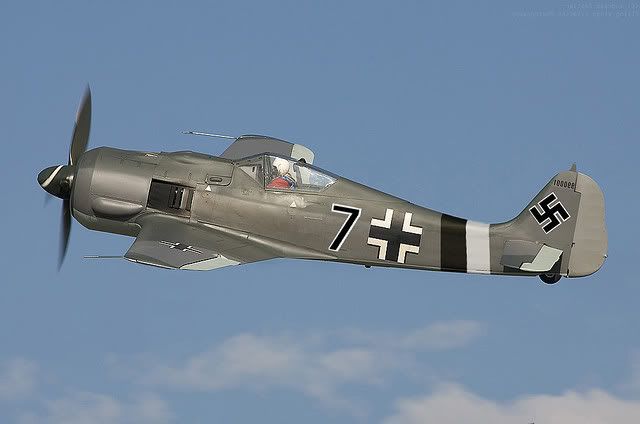

Thanks for lettin' me mess wit 'yer pikshur, Chuck!
Fade to Black...
ⓒRebecca Bugge, All Rights Reserved
Do not use without permission.
At Pointe du Hoc, the place of World War II D-day Normandy landings (6 June 1944) fame. The place is situated to the east of Utah beach and to the west of Omaha beach and was a part of the German Atlantic wall. Pointe du Hoc (which really isn't a beach but a set of very, very steep - not to say generally speaking vertical - cliffs) was taken by the American Ranger Assault Group, which included occupying the German fortification at the top.
German war tunnels of Jersey, built by thousands of slave labor imported from Russia, Poland, France & Spain, most just boys or even too old to work - some 40% of them perished during the German occupation!
1992. Illustrated by Michael Hague. Although "South Pacific" was based on Michener's "Tales of the South Pacific" they were quite different. Here Michener retells the story as Rodgers and Hammerstein changed it for the play.
Panzer Vorwärts! (Armor Forward!). During a combined operations with infantry, the panzer unit battlecry must be "protect the Infantry!" and the infantry's battlecry is "protect the Tanks!" “The panzer division in modern warfare today holds the former place of cavalry as the decisive arm of combat. Tank officers must carry on in the tradition of the cavalry, take up its aggressive spirit on behalf of the Panzer arm. Therefore take note, as a basic combat principle, of Marshall Blucher's motto, ´FORWARD AND THROUGH!´ but with intelligence” (written during the Second World War by a German company commander
----------------
Hier führte in den letzten Kriegstagen
im April 1945
der Leidensweg
der Häftlinge
aus dem Konzentrationslager
Dachau
vorbei ins Ungewisse
---------------
en 1942. C'est une photo d'une ancienne photo. Mon oncle, il est mort sur les plages de Normandie à l'âge de 20 ans. Je ne le connaissais pas, mais cette photo et les histoires partagées par ma grand-mère ont un effet fort sur moi. Il était tellement beau, ce jeune homme, plein de vie et de potentiel. Dommage...
____________
in 1942. This is a photo of an old photo. My uncle died on the beaches of Normandie at the age of 20. I never knew him, but this photo and the stories shared by my grandmother have a strong effect on me. He was so handsome, this young man, full of life and potential. What a shame....
The ruin of Saint Peters Church in Bristol. Built in 1106 and destroyed during the Bristol Blitz of World War II.
East Wind ~ восточный ветер ~ Paris ~ MjYj
Ветер с востока — кинофильм совместного, французско-швейцарского производства, биографическая драма, в основе которой реальная история судьбы генерала Смысловского и его подчинённых.
в основе которой лежит реальная
Tumblr | Flickriver | Twitter | Facebook | Ipernity | DeviantArt | Windows Live | Livejournal | Yahoo Pulse | 500pix | StumbleUpon | Myspace | Wordpress | Fluidr | SkyRock | Digg | Youtube | Google Buzz | Dailymotion | Artlimited | BlogSpot
Please don't use this image on websites, blogs or other
media without my explicit permission.
MjYj© All rights reserved
1945, 8th May, Walthamstow, London. The Pegrum's in Walthamstow join in the VE Day Celebrations.
With the unconditionally surrendered of Nazi Germany to the Allies, World War II in Europe ends.
During the war my dad and auntie were evacuated , lived through the blitz and said goodbye to two older brothers, one who never returned.
More about VE Day over at Brick to the Past .
Notre Dame de Paris, perhaps the most famous cathedral in the world, sits on Île de la Cité in downtown Paris.
See what Notre Dame looks like today over on Google Maps.
National Museum of Nuclear Science and History
en.wikipedia.org/wiki/National_Museum_of_Nuclear_Science_...
National Museum of Nuclear Science and History
en.wikipedia.org/wiki/National_Museum_of_Nuclear_Science_...
Date: [between 1940-1945]
Format: Photograph
Find out more about this photographic collection: acms.sl.nsw.gov.au/item/itemDetailPaged.aspx?itemID=153524
Search for more great images in the State Library's collections: acms.sl.nsw.gov.au/search/SimpleSearch.aspx
From the collection of the State Library of New South Wales: www.sl.nsw.gov.au
A B-24 at the National Museum of the U.S. Air Force in Dayton, Ohio.
My dad, Ralph Syverson, was a gunner on B-24s during WW II.
He was in the 8th Air Force, 93rd CBW, 493rd Bombardment Group (Heavy), 860 Squadron from May to September 1944. He was stationed in Debach, England.
He was in the 15 Air Force, 720th CBW, 450th Bombardment Group (Heavy) from September 1944 until April 1945. He was stationed in Manduria, Italy.
He flew a total of 51 missions between the 8th and 15th Air Forces.
In December 2018 my four sons and I visited the museum to see their B-24. We thought of my dad as we viewed the plane.
World War 2 Pillbox in Cudmore Grove Country Park, Mersea Island 03 July 2021.
Built to defend two coastal artillery guns.
In 1940, as Germany advanced through Europe during World War II, despite the reluctance of Prime Minister Winston Churchill, the British government decided that the Channel Islands had no strategic importance and would not be defended. Four fifths of the children and almost half Guernsey's population were evacuated to England.
The Wehrmacht occupied the Channel Islands on 30 June 1940. Later, when it became clear that conquering Britain would be impossible, Hitler issued orders to convert the Channel Islands into an impregnable fortress as part of his infamous ‘Atlantic Wall’, heavily fortifying the only British territory he would ever conquer.
Mainly between 1941 and 1943 thousands of foreign prisoners and labourers were shipped to the Islands to complete the construction. Skilled labourers brought over from Germany and Europe were provided with a suitable wage. The manual labourers - mainly prisoners of war - were treated like slaves, housed in camps, poorly fed and forced to work long hours without respite.
After five years of occupation, on May 9th 1945 the island was liberated, as the war ended, without a fight .
Marine Peilstand (MP4) here is one of many of the fortifications retained and restored. The bunker was built in 1942 and has 2 meters thick walls and 5 floors. For observation and fire control, the openings in the front of the bunker were used.
It was surprising to see how much an OR aboard a WWII battleship is pretty much like an OR today. I prefer my OR ashore and peace time, though.
Able Seaman Arthur Thomas Wood was born 21 April 1921 at Berry in New South Wales, and joined the Royal Australian Navy in 1938 at the age of 17. After training at HMAS CEREBUS he joined HMAS SYDNEY in early 1939. When World War II was declared, SYDNEY was ordered to serve in the Mediterranean for escort duty. Wood was aboard SYDNEY when it sank the Italian cruisers ESPERO and BARTOLOMEO COLLEONI in July 1940.
These photographs and postcards depict some of the sailors, equipment and activities of HMAS SYDNEY in the months prior to the sinking of the vessel. They provide an interesting commentary of the operations and work carried out aboard HMAS SYDNEY prior to its fateful end, such as the sinking of Italian ships ESPERO and BARTOLOMEO COLLEONI in the Mediterranean.
The Australian National Maritime Museum undertakes research and accepts public comments that enhance the information we hold about images in our collection. If you can identify a person, vessel or landmark, write the details in the Comments box below.
Thank you for helping caption this important historical image.
Object number ANMS0845[048].
Servicemen and women in WWII were faithful to the family! When they had time, they wrote home. Homesick, no doubt!
Look at the cost of these letter sets! They are thick with multiple fold-out postcards inside! Notice the stamped dates are1944 and 1945. And the stamps were only 3 cents back then!
How times have changed!
Able Seaman Arthur Thomas Wood was born 21 April 1921 at Berry in New South Wales, and joined the Royal Australian Navy in 1938 at the age of 17. After training at HMAS CEREBUS he joined HMAS SYDNEY in early 1939. When World War II was declared, SYDNEY was ordered to serve in the Mediterranean for escort duty. Wood was aboard SYDNEY when it sank the Italian cruisers ESPERO and BARTOLOMEO COLLEONI in July 1940.
These photographs and postcards depict some of the sailors, equipment and activities of HMAS SYDNEY in the months prior to the sinking of the vessel. They provide an interesting commentary of the operations and work carried out aboard HMAS SYDNEY prior to its fateful end, such as the sinking of Italian ships ESPERO and BARTOLOMEO COLLEONI in the Mediterranean.
The Australian National Maritime Museum undertakes research and accepts public comments that enhance the information we hold about images in our collection. If you can identify a person, vessel or landmark, write the details in the Comments box below.
Thank you for helping caption this important historical image.
Object number ANMS0845[047].
Able Seaman Arthur Thomas Wood was born 21 April 1921 at Berry in New South Wales, and joined the Royal Australian Navy in 1938 at the age of 17. After training at HMAS CEREBUS he joined HMAS SYDNEY in early 1939. When World War II was declared, SYDNEY was ordered to serve in the Mediterranean for escort duty. Wood was aboard SYDNEY when it sank the Italian cruisers ESPERO and BARTOLOMEO COLLEONI in July 1940.
These photographs and postcards depict some of the sailors, equipment and activities of HMAS SYDNEY in the months prior to the sinking of the vessel. They provide an interesting commentary of the operations and work carried out aboard HMAS SYDNEY prior to its fateful end, such as the sinking of Italian ships ESPERO and BARTOLOMEO COLLEONI in the Mediterranean.
The Australian National Maritime Museum undertakes research and accepts public comments that enhance the information we hold about images in our collection. If you can identify a person, vessel or landmark, write the details in the Comments box below.
Thank you for helping caption this important historical image.
Object number ANMS0845[058].
Able Seaman Arthur Thomas Wood was born 21 April 1921 at Berry in New South Wales, and joined the Royal Australian Navy in 1938 at the age of 17. After training at HMAS CEREBUS he joined HMAS SYDNEY in early 1939. When World War II was declared, SYDNEY was ordered to serve in the Mediterranean for escort duty. Wood was aboard SYDNEY when it sank the Italian cruisers ESPERO and BARTOLOMEO COLLEONI in July 1940.
These photographs and postcards depict some of the sailors, equipment and activities of HMAS SYDNEY in the months prior to the sinking of the vessel. They provide an interesting commentary of the operations and work carried out aboard HMAS SYDNEY prior to its fateful end, such as the sinking of Italian ships ESPERO and BARTOLOMEO COLLEONI in the Mediterranean.
The Australian National Maritime Museum undertakes research and accepts public comments that enhance the information we hold about images in our collection. If you can identify a person, vessel or landmark, write the details in the Comments box below.
Thank you for helping caption this important historical image.
Object number ANMS0845[040].
Able Seaman Arthur Thomas Wood was born 21 April 1921 at Berry in New South Wales, and joined the Royal Australian Navy in 1938 at the age of 17. After training at HMAS CEREBUS he joined HMAS SYDNEY in early 1939. When World War II was declared, SYDNEY was ordered to serve in the Mediterranean for escort duty. Wood was aboard SYDNEY when it sank the Italian cruisers ESPERO and BARTOLOMEO COLLEONI in July 1940.
These photographs and postcards depict some of the sailors, equipment and activities of HMAS SYDNEY in the months prior to the sinking of the vessel. They provide an interesting commentary of the operations and work carried out aboard HMAS SYDNEY prior to its fateful end, such as the sinking of Italian ships ESPERO and BARTOLOMEO COLLEONI in the Mediterranean.
The Australian National Maritime Museum undertakes research and accepts public comments that enhance the information we hold about images in our collection. If you can identify a person, vessel or landmark, write the details in the Comments box below.
Thank you for helping caption this important historical image.
Object number ANMS0845[010].
Meet Alfred Newman, 3rd Marine Division, WWII. Mr. Newman, 91, is one of the eleven remaining Navajo Code Talkers from World War II. He signed a book for me, 'It Had To Be Done', a collection of stories from the code talkers themselves. Learn more about what's being done to preserve this legacy at www.dinecodetalkers.com or facebook.com/DineCodeTalkers. It was such an honor to meet Alfred and I have to admit, I had a good cry afterwards. I have a special place in my heart for all WWII veterans. We are slowly loosing them....ask questions, let them teach us.
Able Seaman Arthur Thomas Wood was born 21 April 1921 at Berry in New South Wales, and joined the Royal Australian Navy in 1938 at the age of 17. After training at HMAS CEREBUS he joined HMAS SYDNEY in early 1939. When World War II was declared, SYDNEY was ordered to serve in the Mediterranean for escort duty. Wood was aboard SYDNEY when it sank the Italian cruisers ESPERO and BARTOLOMEO COLLEONI in July 1940.
These photographs and postcards depict some of the sailors, equipment and activities of HMAS SYDNEY in the months prior to the sinking of the vessel. They provide an interesting commentary of the operations and work carried out aboard HMAS SYDNEY prior to its fateful end, such as the sinking of Italian ships ESPERO and BARTOLOMEO COLLEONI in the Mediterranean.
The Australian National Maritime Museum undertakes research and accepts public comments that enhance the information we hold about images in our collection. If you can identify a person, vessel or landmark, write the details in the Comments box below.
Thank you for helping caption this important historical image.
Object number ANMS0845[045].
Able Seaman Arthur Thomas Wood was born 21 April 1921 at Berry in New South Wales, and joined the Royal Australian Navy in 1938 at the age of 17. After training at HMAS CEREBUS he joined HMAS SYDNEY in early 1939. When World War II was declared, SYDNEY was ordered to serve in the Mediterranean for escort duty. Wood was aboard SYDNEY when it sank the Italian cruisers ESPERO and BARTOLOMEO COLLEONI in July 1940.
These photographs and postcards depict some of the sailors, equipment and activities of HMAS SYDNEY in the months prior to the sinking of the vessel. They provide an interesting commentary of the operations and work carried out aboard HMAS SYDNEY prior to its fateful end, such as the sinking of Italian ships ESPERO and BARTOLOMEO COLLEONI in the Mediterranean.
The Australian National Maritime Museum undertakes research and accepts public comments that enhance the information we hold about images in our collection. If you can identify a person, vessel or landmark, write the details in the Comments box below.
Thank you for helping caption this important historical image.
Object number ANMS0845[060].
Duich, Paul A. Photo Collection Image--Please tag these photos so information can be recorded.---Note: This material may be protected by Copyright Law (Title 17 U.S.C.)--Repository: San Diego Air and Space Museum
Able Seaman Arthur Thomas Wood was born 21 April 1921 at Berry in New South Wales, and joined the Royal Australian Navy in 1938 at the age of 17. After training at HMAS CEREBUS he joined HMAS SYDNEY in early 1939. When World War II was declared, SYDNEY was ordered to serve in the Mediterranean for escort duty. Wood was aboard SYDNEY when it sank the Italian cruisers ESPERO and BARTOLOMEO COLLEONI in July 1940.
These photographs and postcards depict some of the sailors, equipment and activities of HMAS SYDNEY in the months prior to the sinking of the vessel. They provide an interesting commentary of the operations and work carried out aboard HMAS SYDNEY prior to its fateful end, such as the sinking of Italian ships ESPERO and BARTOLOMEO COLLEONI in the Mediterranean.
The Australian National Maritime Museum undertakes research and accepts public comments that enhance the information we hold about images in our collection. If you can identify a person, vessel or landmark, write the details in the Comments box below.
Thank you for helping caption this important historical image.
Object number ANMS0845[022].
If you have come to this photo to read the story that used to be here, it is being edited, expanded and published as a series on my blog, Travel with a Beveridge.
Here is the link to James R. Beveridge, a lucky soldier, part I: scottbeveridge.blogspot.com/2009/10/lucky-soldier.html